Stanza · Audio guide
Galleria Sabauda Audio Guide
A place to remember. A story to take with you.
The Savoy Gallery is an art collection in the Italian city of Turin. It contains the royal art collections amassed by the House of Savoy over the centuries and is located at Via XX Settembre, 86.
Download Stanza, then search for “Galleria Sabauda”.
About the tour
One guide. Your kind of visit.
The Savoy Gallery is an art collection in the Italian city of Turin. It contains the royal art collections amassed by the House of Savoy over the centuries and is located at Via XX Settembre, 86.
The Galleria Sabauda guide tells the stories of 22 artworks, including Scenes from the Passion of Christ (Hans Memling), Annunciation Triptych (Rogier van der Weyden), Gualino Madonna (Duccio di Buoninsegna), Deianira Listens to Fame (Peter Paul Rubens), Tobias and the Angel (Piero del Pollaiuolo), Dormition of Theotokos (Andreas Ritzos), Three Angels and Young Tobias (Filippino Lippi), and Equestrian portrait of Prince Tomaso of Savoy-Carignan (Anthony van Dyck). Every artwork is free to hear in the Stanza app until 1 January.
Ready when you are.
- 01Get the free Stanza app.
iOS & Android
- 02Find your guide.
“Galleria Sabauda”
- 03Download before you go.
Works offline
Audio guide / 22 artworks
Inside the guide
Get to know a few of the stories before you go. Open a stop to read more.
01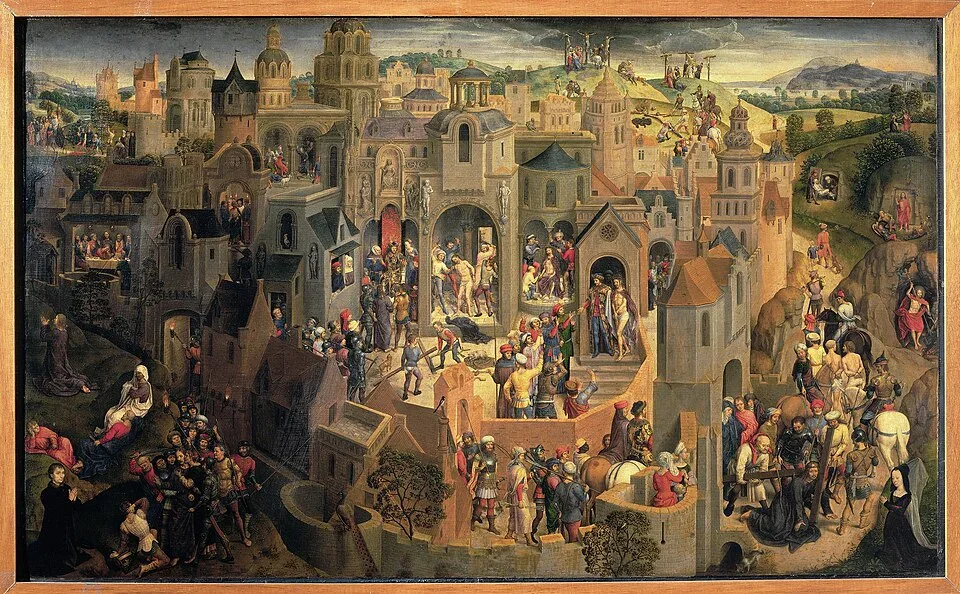
Scenes from the Passion of Christ
The light in this painting comes from inside the picture. It is the rising sun, far over on the right. The buildings there glow pink, and low rays reach the brick gates away in the left distance. The front left stays in shadow. Giving one picture a single source of light like this was rare at the time. Only two figures seem to sit outside that light. They kneel in the bottom corners. It was the first time Memling told the Passion across one continuous city, with no single scene made to dominate. The high viewpoint makes Calvary visible above the city. The story starts at the top left, with Christ entering Jerusalem, then winds down through the streets and out to the Garden of Gethsemane. It climbs to the Crucifixion, set apart in the background, and ends at the top right with the risen Christ appearing in the distance. Those kneeling figures are Tommaso Portinari, a banker in Bruges who ordered the painting, and his wife Maria Baroncelli. The idea was to let a believer travel through Jerusalem in imagination, following the crusaders' journey. Where Portinari meant it to hang is not known, though it may have been his chapel in the church of Saint Jacob in Bruges.
Listen in the appHans Memling · Public domain
02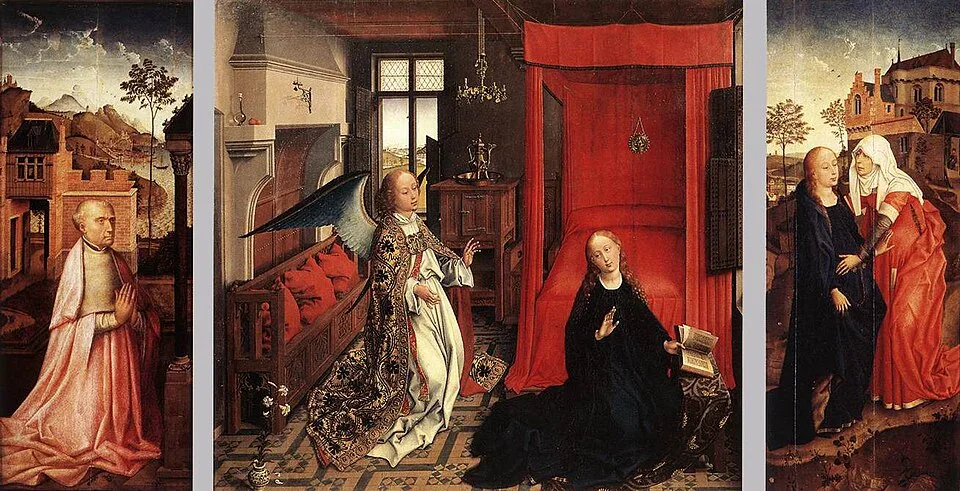
Annunciation Triptych
Two panels face you where there should be three. The middle one carried the Annunciation. Rogier van der Weyden, or his workshop, painted all three as one altarpiece. After 1635 the three panels belonged to the House of Savoy and were kept in Turin. In 1799, during the French Revolution, the middle panel was taken to France. It is in the Louvre in Paris now. Only these two wings stayed. On the left a man kneels, the donor who ordered the work. On the right Mary visits Elizabeth. Both scenes open into bright landscapes, and the farthest things fade into haze until they disappear. The donor was probably a member of the Villa family, bankers from Piedmont living in the Netherlands. It was most likely meant for their chapel in the church of San Domenico in Chieri.
Listen in the appRogier van der Weyden · Public domain
03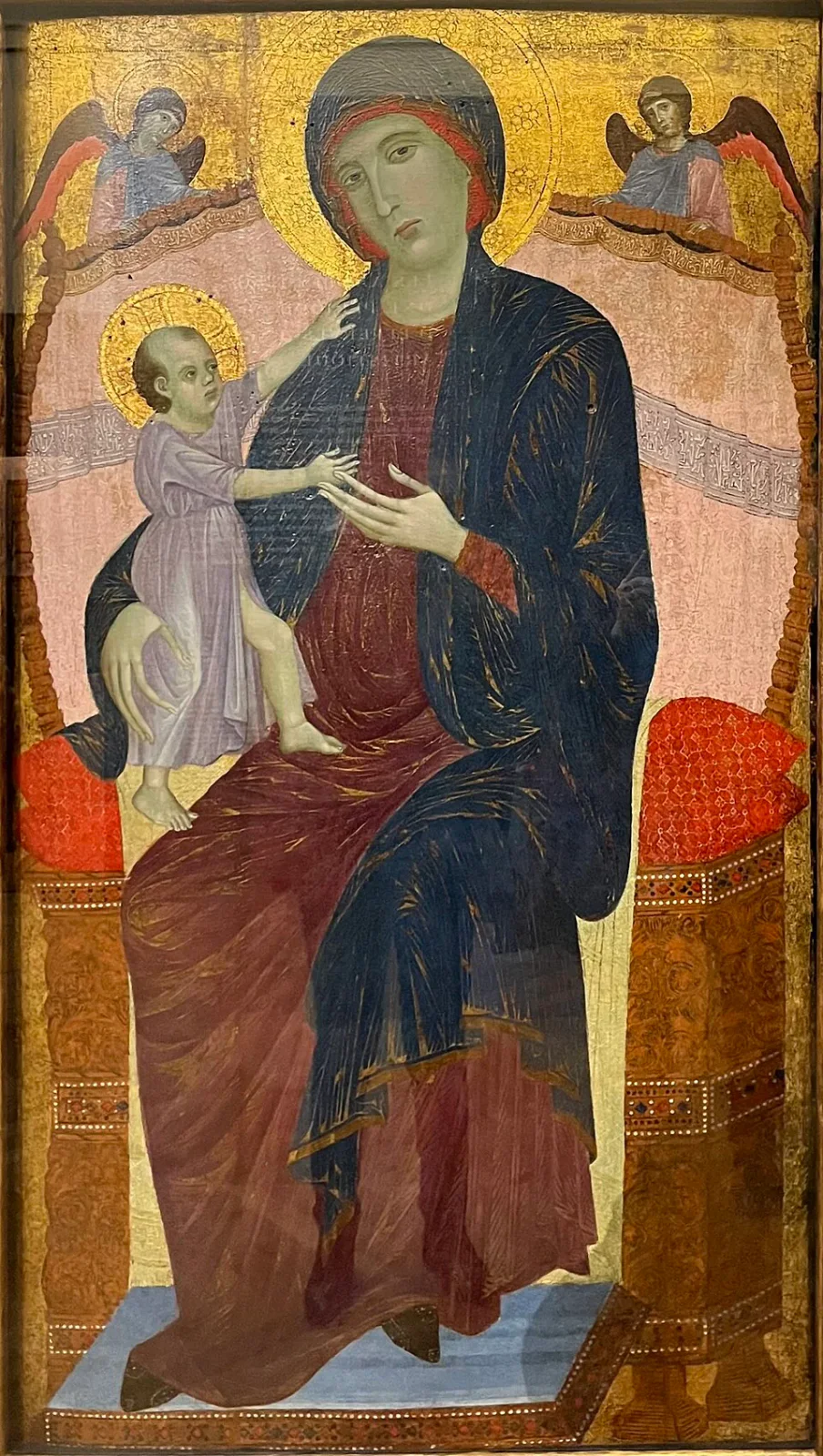
Gualino Madonna
No one knows where this picture came from. Nobody can say who asked for it. It turns up in Florence in 1910, under a layer of paint added in the sixteenth century. In 1920 that later paint was stripped off, and the painting beneath has been argued over ever since. It carries no signature, and no document names its maker. The credit has gone sometimes to Cimabue, sometimes to Duccio. Duccio was a young painter in Siena who in his earliest years followed Cimabue almost to the letter. Much of it does look like Cimabue's work. But the small things pull the other way. The child has a little potato of a nose. Mary's dress, under the dark cloak, is wrapped in tight bands of fine gold lines. And the colors, pink on the child, wine red on Mary, blue on the footstool, are Sienese, ones Duccio would use again. Behind the throne, two small angels are cut off at the waist and set to one side. That is not Cimabue's way with angels.
Listen in the appIsmoon (talk) 12:30, 8 February 2025 (UTC) · CC BY-SA 4.0
04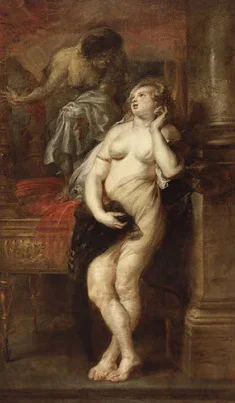
Deianira Listens to Fame
A woman holds a tunic, and blood has soaked into the cloth. Deianira listens. The blood came from Nessus, a centaur. Deianira is Hercules' wife, and she believes this tunic will make him true to her for ever. Rubens painted this as a companion to his Hercules in the Garden of the Hesperides. The cloth she trusts to keep him faithful is the one that kills him.
Listen in the appRubens · Public domain
05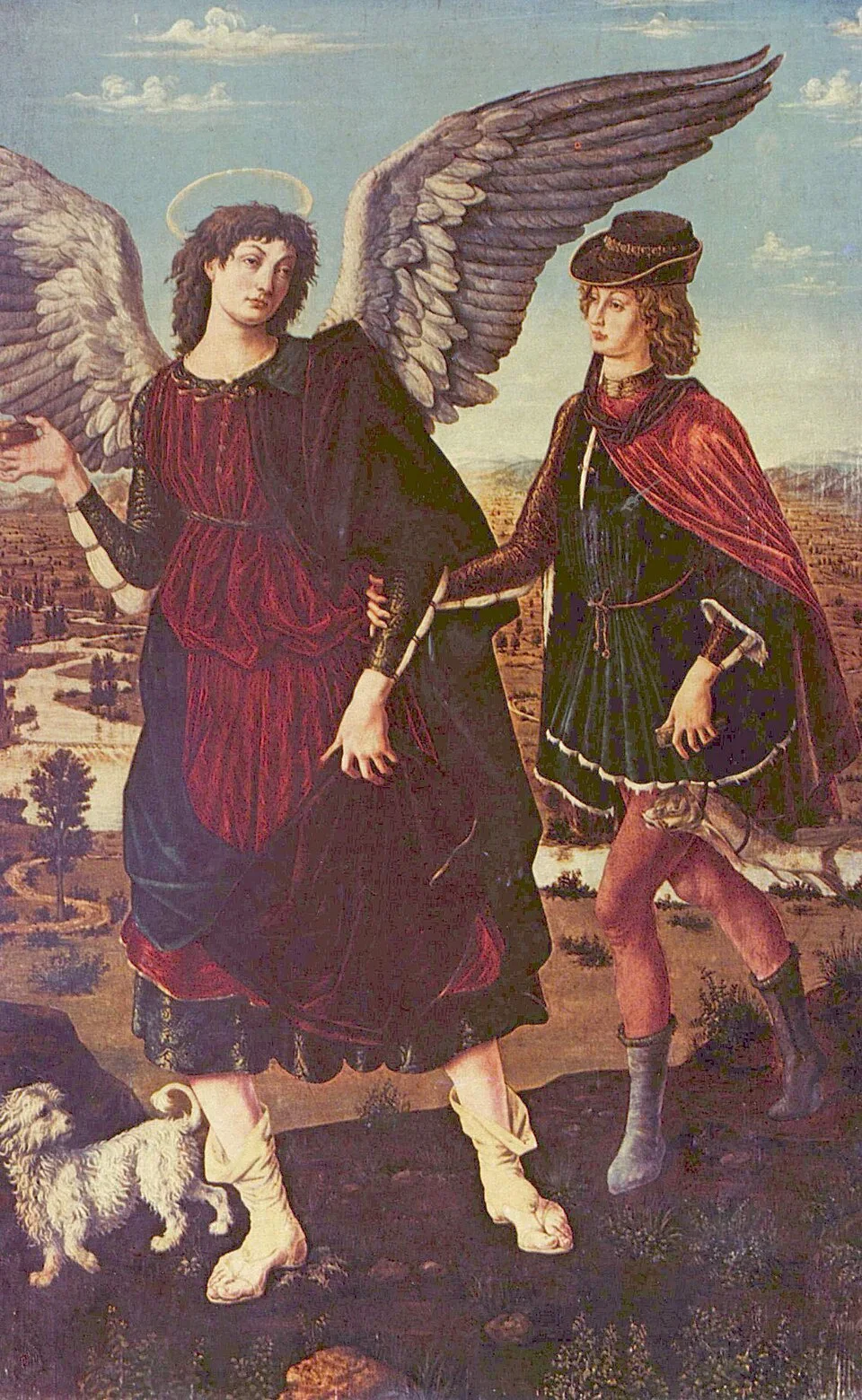
Tobias and the Angel
Why is this young man walking with a fish in his hand? He is on a journey. Beside him a companion leads him by the arm, and the boy's hand closes around it. In his other hand he holds the string the fish is tied to, and the receipt for the debt owed to his father. A small white dog walks on ahead. The fish is not for supper. The companion told the boy to take it from the Tigris, where it was about to bite his foot. Its bile, kept in the little box the companion carries, will cure his father's blindness. The father had gone blind and sent him to collect the money. And the companion is not who he seems. He is the angel Raphael, sent to watch over the boy. In the story he claimed to be a relative, and went with him without ever saying who he was. Here his wings are already showing, and Tobias looks at him without surprise. Piero del Pollaiuolo dressed him in the richest clothes of the day. Florentine merchants often sent their own children abroad and looked to Raphael to protect them. That is probably why they wanted this story painted. Tobias took the bile home and gave his father his sight back, and only then did the angel reveal himself.
Listen in the appAntonio del Pollaiuolo / Piero del Pollaiuolo · Public domain
06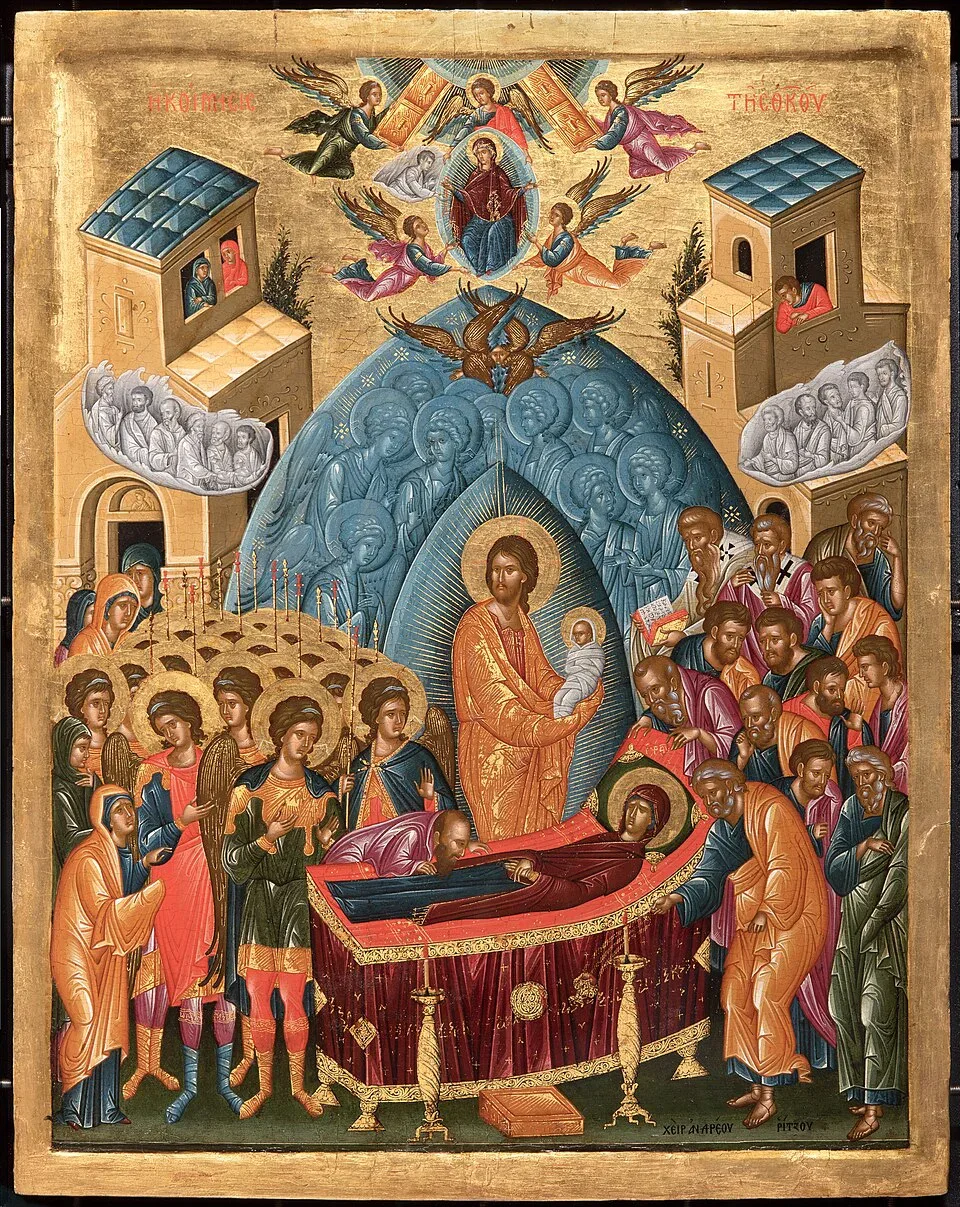
Dormition of Theotokos
In Jesus's arms is a swaddled baby. It is Mary. Her body lies on the funeral bier below, but here she is a newborn child. This is her soul, pure, beginning a new life as it enters heaven. On the bier her head is to our right. Saint Peter stands at her head and swings incense over her body. Right above her, John grasps the bier and gazes at her. Jesus had asked John to care for his mother. At her feet Saint Paul bows, his body lying on the funeral bier. Peter and Paul are the pillars of the church. Behind Paul, an army of angels has come to carry Mary's body to heaven, and every face is the same. Jesus and the child are enclosed in a large frame shaped like half an egg, ringed by angels of high rank. Eleven apostles stand to either side. The twelfth, Thomas, appears in the upper left in a second, smaller frame. There Mary hands him her girdle, because he missed the Dormition by three days. Andreas Ritzos signed this painting.
Listen in the appAndreas Ritzos · Public domain
07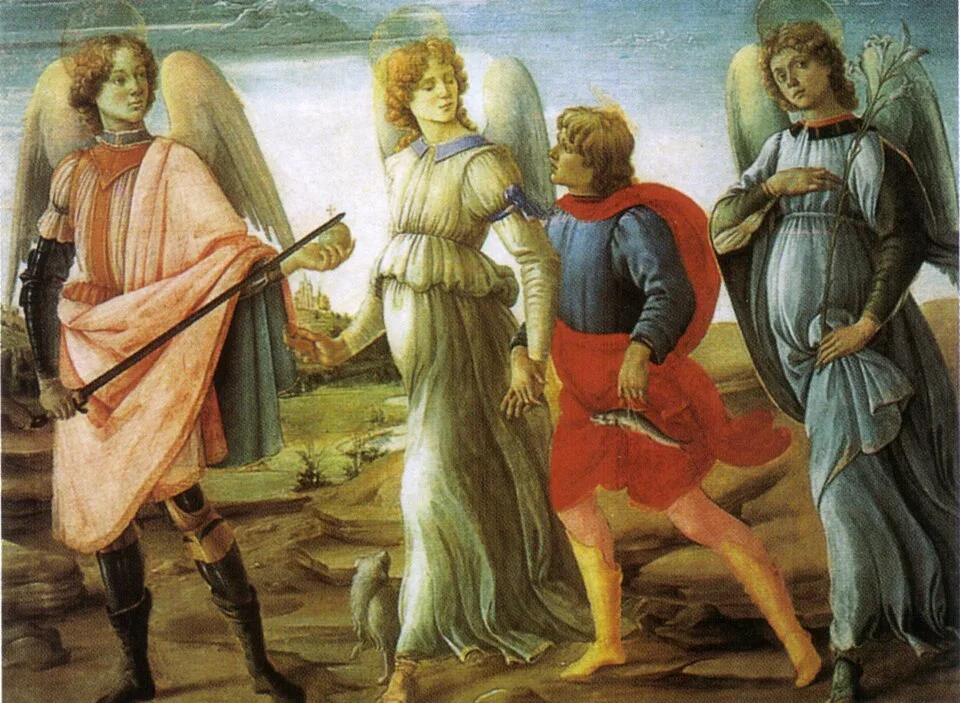
Three Angels and Young Tobias
The three angels and the boy follow the same group in an earlier painting of the subject, by Francesco Botticini. That one once hung in a church in Florence, and it is now in the Uffizi. The rocky landscape behind them resembles the one in the Adoration of the Magi in London. The faces of the angels are close to the ones Filippino painted in his fresco of Saint Peter set free. That fresco is in the Brancacci Chapel, painted in those same years. The robes drift and flutter, light and flowing, the way they do in the work of his teacher, Botticelli. And the picture was once taken for a Botticelli, or for something out of his workshop.
Listen in the appFilippino Lippi · Public domain
08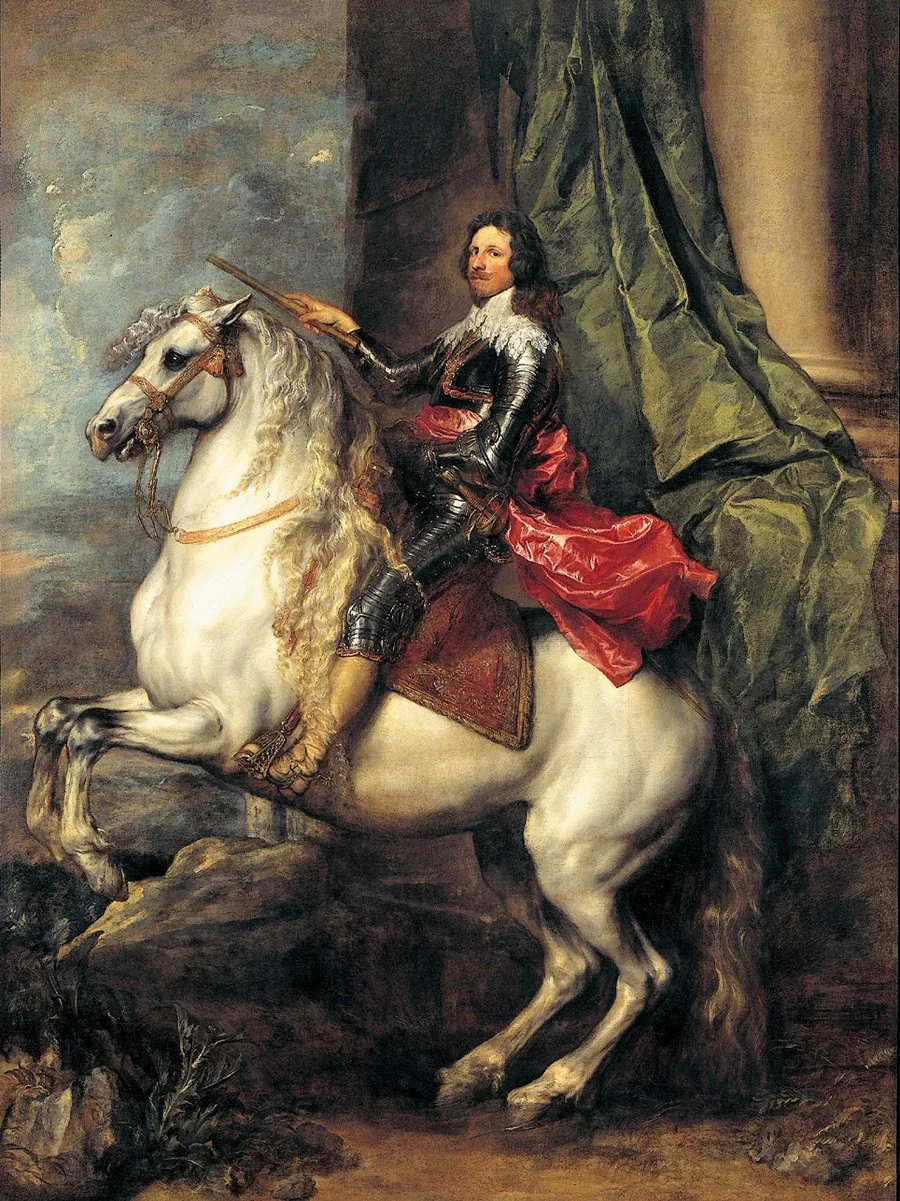
Equestrian portrait of Prince Tomaso of Savoy-Carignan
A prince on a horse that rises up on its hind legs, with a general's baton. In the old tradition of portraits on horseback, a rearing horse stands for the rider's power to keep command even in difficult moments. Van Dyck drew on that tradition. The rider is Tommaso Francesco, at the height of his military career. He served Philip the Second of Spain, who had made him regent of the Southern Netherlands. In 1634 he commissioned two portraits. This horseback portrait is one. The other shows only his upper body and was later given to the sovereigns of England. In 1742 this painting was sold to the King of Sardinia. The red sash and the insignia of the Order of the Annunciation that he wears were a gift from his father. Charles Emmanuel the First gave them to him in 1616.
Listen in the appAnthony van Dyck · Public domain
09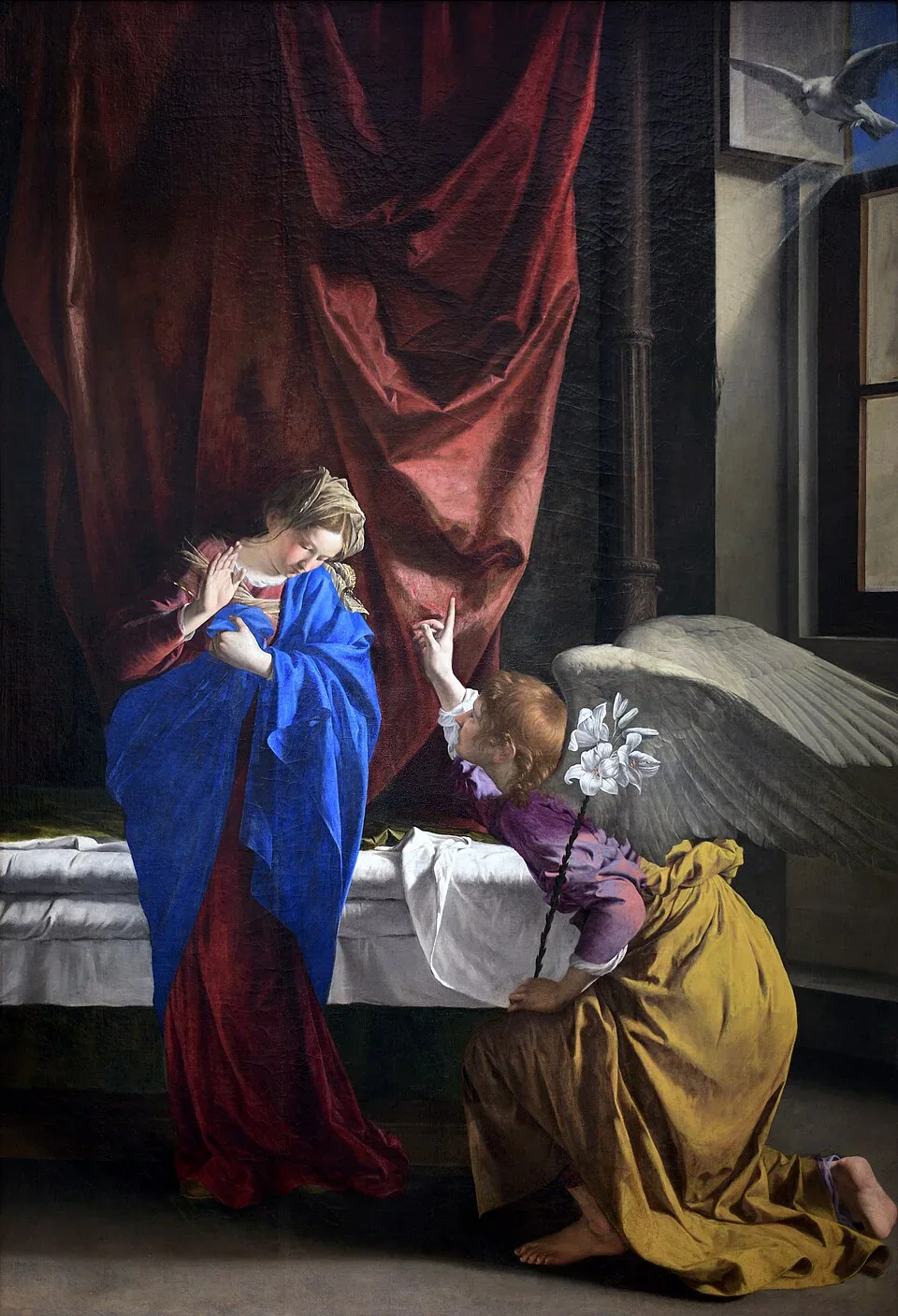
Annunciation
Orazio Gentileschi wanted a job at court, and he painted this to get it. In 1623 he sent it to Charles Emmanuel the First, the Duke of Savoy, in Turin. With it went a letter pointing out other work he had done for the House of Savoy. Savoy had its own Supreme Order of the Most Holy Annunciation. A scene of Gabriel telling Mary she would bear a son was no random choice. The huge red curtain behind Mary's white bed comes from Caravaggio's Death of the Virgin, which he had seen in Rome. But Caravaggio set that scene at night. Here the light is warm and daytime. He laid the colour on freely, the way Rubens and Van Dyck did. Their pictures could be seen in Genoa, where he was then working. The fine drawing came from his Tuscan background. The Duke accepted the gift but gave him no post. He moved to Paris, and then London.
Listen in the appOrazio Gentileschi · Public domain
10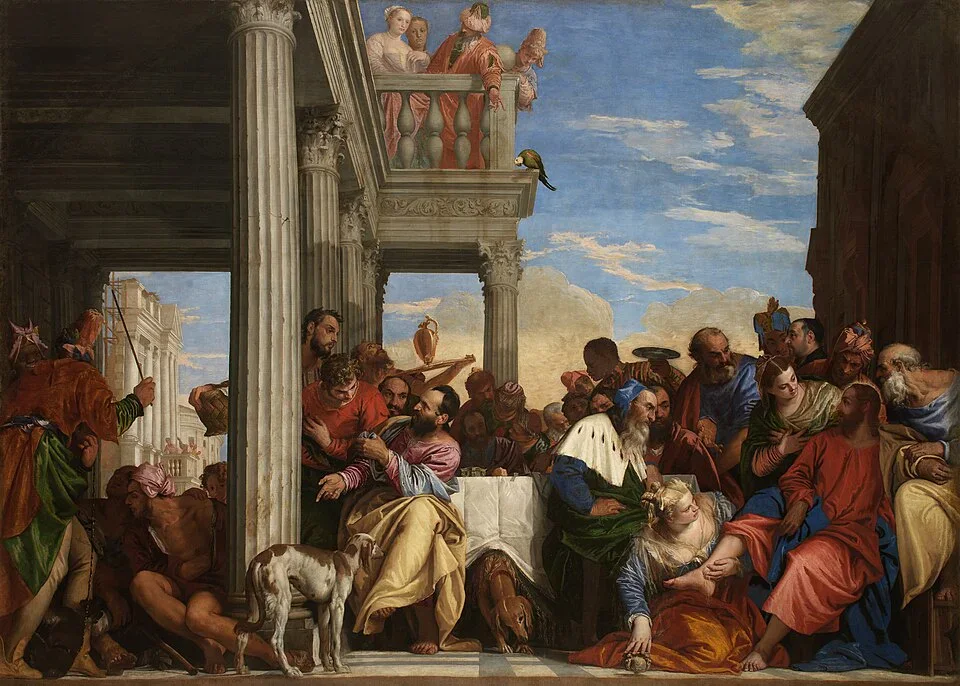
The Feast in the House of Simon the Pharisee (Veronese, Turin)
At the right edge, a woman has sunk to the floor at Christ's feet. She has just washed them with her tears and dried them with her hair. Now she holds his right foot and reaches for the ointment jar on the floor. Christ, dining at Simon the Pharisee's house, tells of two men who owed money. One owed much, the other little, and both were forgiven. Which loved the lender more? Simon says the one forgiven more, and Christ tells him her great love shows her sins are forgiven. In the middle, one man makes a sweeping gesture. That is Judas, objecting that the ointment should have been sold and the money given to the poor. He is planning to betray Christ, and his devotion is as false as the building at the left, where only the facade is finished. Veronese staged the scene as a Venetian party, with richly dressed guests and a parrot on the balcony rail. He painted it for the dining hall at Santi Nazaro e Celso in Verona, commissioned by its abbot, Mauro Vercelli. In 1646 it was sold to a noble family in Genoa, and in 1824 to Sardinia's king. In 1837 the next king wanted it in Turin. The Genoese objected, so he left a copy in its place and had the real one carried away in secret by artillery soldiers.
Listen in the appPaolo Veronese · Public domain
- 11
Virgin and Child with Saints
Andrea Mantegna · c. 1500
- 12
The three oldest children of Charles I Stuart (1600-1649) and Henrietta Maria de Bourbon (1609-1669), Charles (1630-1685), Mary (1631-1666) and James (1633-1685)
Anthony van Dyck · 1635
- 13
Venus
Sandro Botticelli · 1485–1496
- 14
Bust of Cardinal Maurizio of Savoy
François Duquesnoy · 1635
- 15
Madonna with child and saints
Gerolamo Giovenone · 1514
- 16
Mars and Venus with Cupid
Paolo Veronese · 1575–1580
- 17
Return of the Prodigal Son
Guercino · 1617
- 18
A Girl in a Window with a Bunch of Grapes
Gerrit Dou · 1662
- 19
The Theorbo Player
Antiveduto Grammatica · 1605–1615
- 20
Four Bulls
Paulus Potter · 1652
- 21
Portrait of a girl aged 10
Cornelis de Vos · 17th century
- 22
Turin, the Royal Palace from the West
Bernardo Bellotto · 1745
Galleria Sabauda
Frequently asked questions
How much does the guide cost?
Free app download. Free until 1 January. Listed guide price: $0.99. Audio guide only. Venue admission is separate.
Can I listen without internet?
Yes. Download the guide’s audio, images, and maps in the app before your visit. Your downloaded content is then available offline.
Can I listen in my language?
In English for now. More languages soon.
Do I need to follow a schedule?
No. This is a self-guided experience. Choose your stops, pause whenever you like, and return to a story at your own pace.
Which artworks are in the Galleria Sabauda audio guide?
22 artworks, including Scenes from the Passion of Christ (Hans Memling), Annunciation Triptych (Rogier van der Weyden), Gualino Madonna (Duccio di Buoninsegna), Deianira Listens to Fame (Peter Paul Rubens), Tobias and the Angel (Piero del Pollaiuolo), Dormition of Theotokos (Andreas Ritzos), Three Angels and Young Tobias (Filippino Lippi), and Equestrian portrait of Prince Tomaso of Savoy-Carignan (Anthony van Dyck). The full list is on this page.
Is this the museum’s official audio guide?
No. Stanza is an independent audio guide app and is not affiliated with Galleria Sabauda. Museum admission is separate.
At your own pace
Explore Galleria Sabauda.
Download Stanza, then search for “Galleria Sabauda”.
Free app download · Guide price shown in the app
Keep exploring
Nearby audio guides
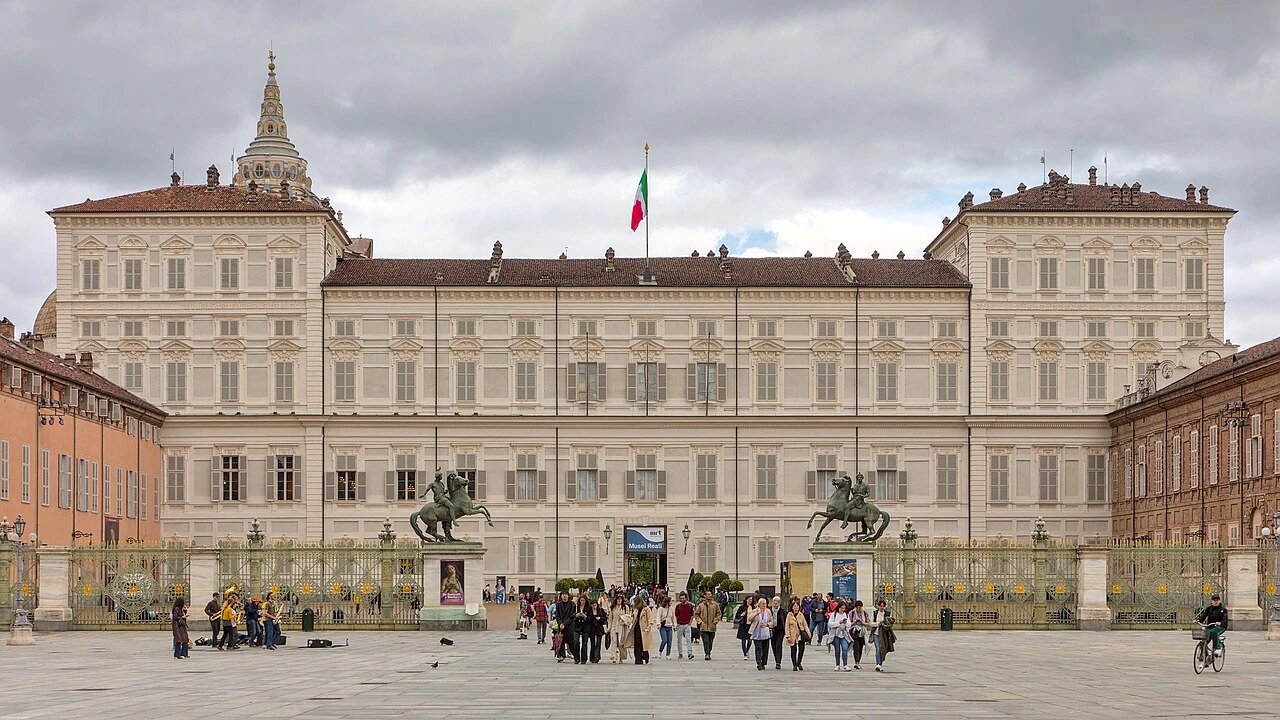
Turin · 1 km
Royal Palace of Turin
Content & sources
Benjamin Smith · CC BY-SA 4.0
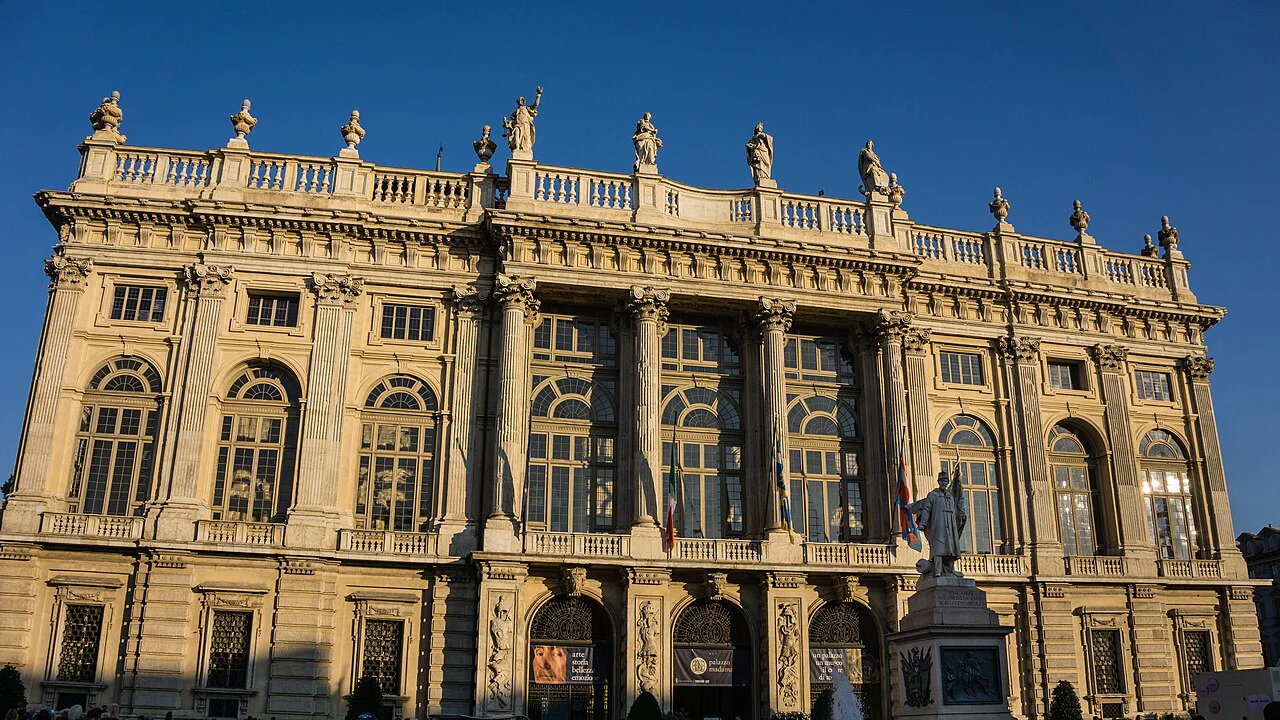
Turin · 1 km
Palazzo Madama e Casaforte degli Acaja
Content & sources
Photo: Andbog · CC BY-SA 4.0
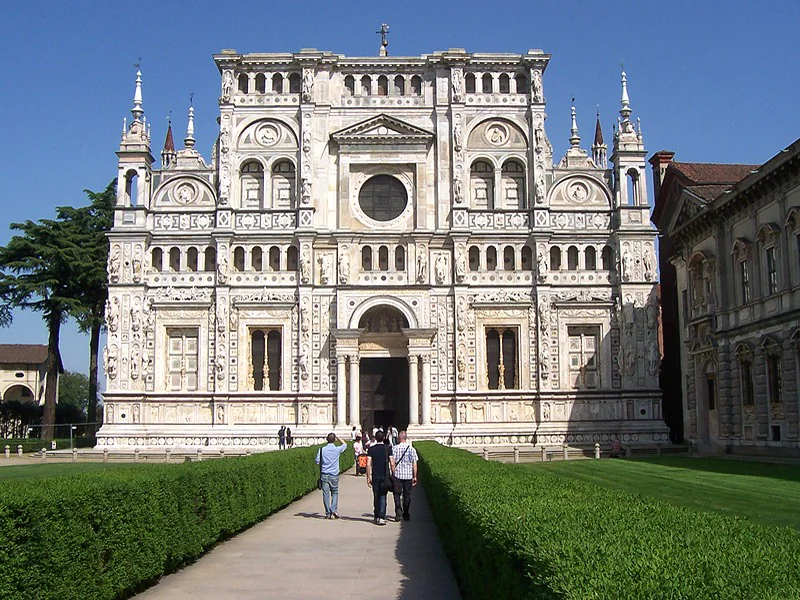
Certosa di Pavia · 116 km
Certosa di Pavia
Content & sources
Photo: Geobia · CC BY-SA 3.0
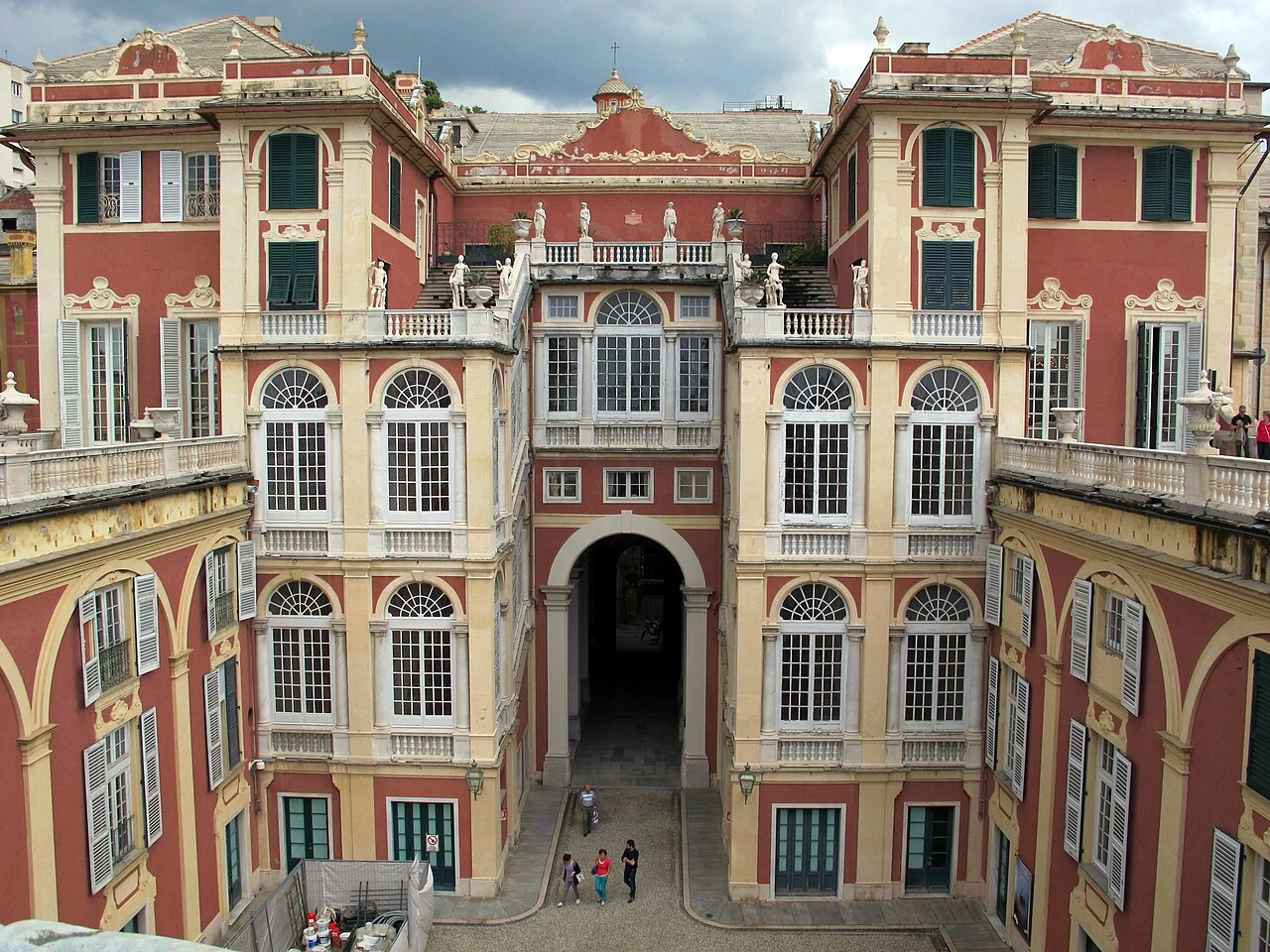
Genoa · 122 km
Palazzo Reale di Genova
Content & sources
Photo: Sailko · CC BY 3.0
Art museums
More art museum audio guides
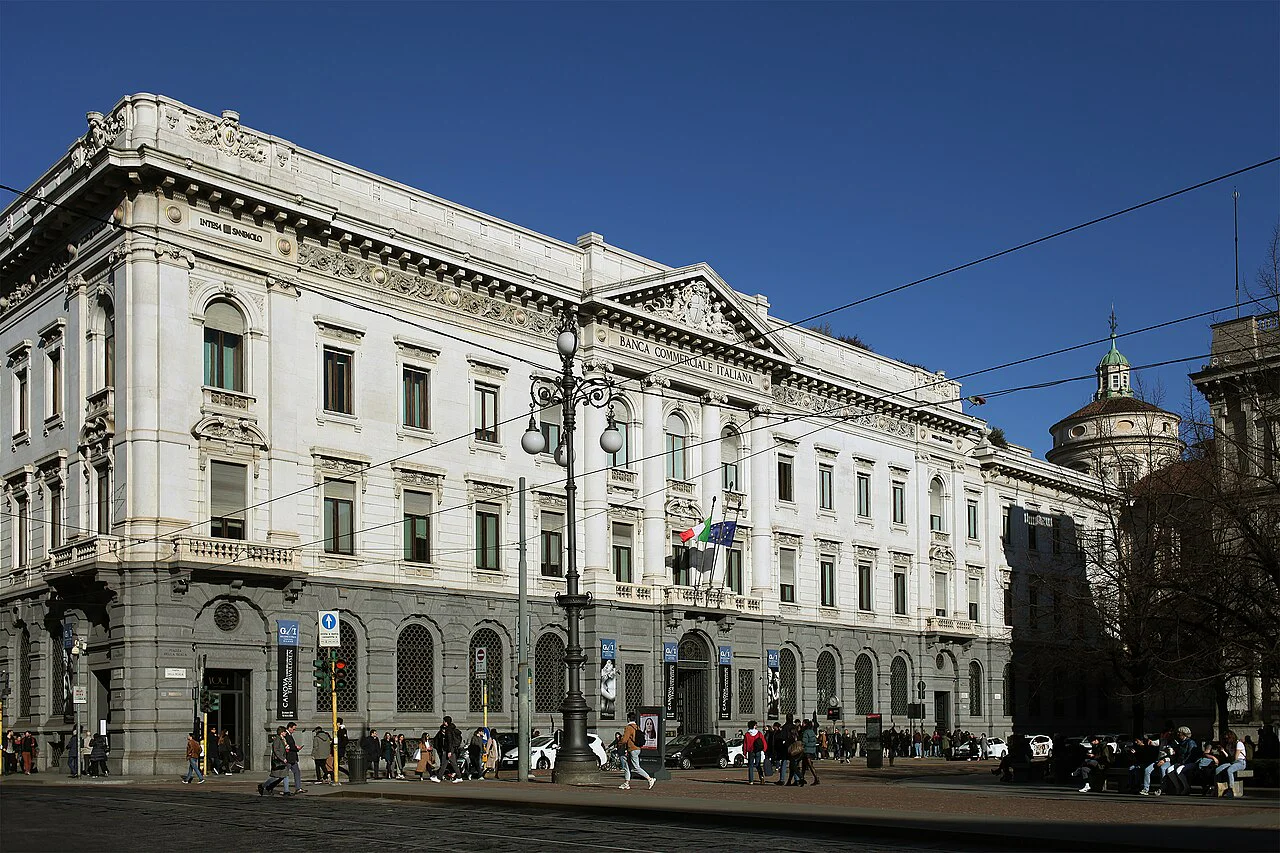
Milan · 87 artworks
Gallerie d'Italia - Milano
Content & sources
Photo: Paolobon140 · CC BY-SA 4.0
Milan · 137 artworks
Pinacoteca di Brera
Milan · 30 artworks
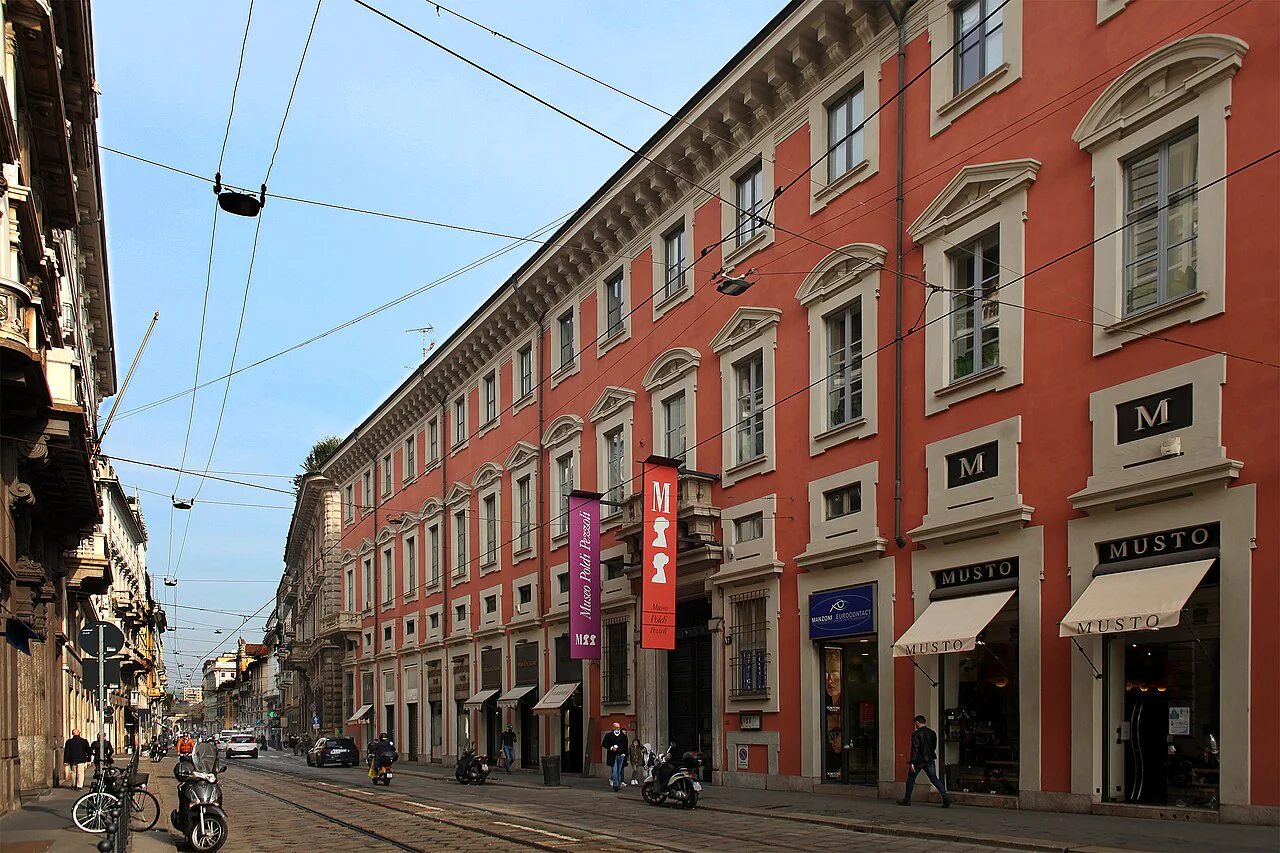
Museo Poldi Pezzoli
Content & sources
Photo: Paolobon140 · CC BY-SA 4.0
Grenoble · 53 artworks
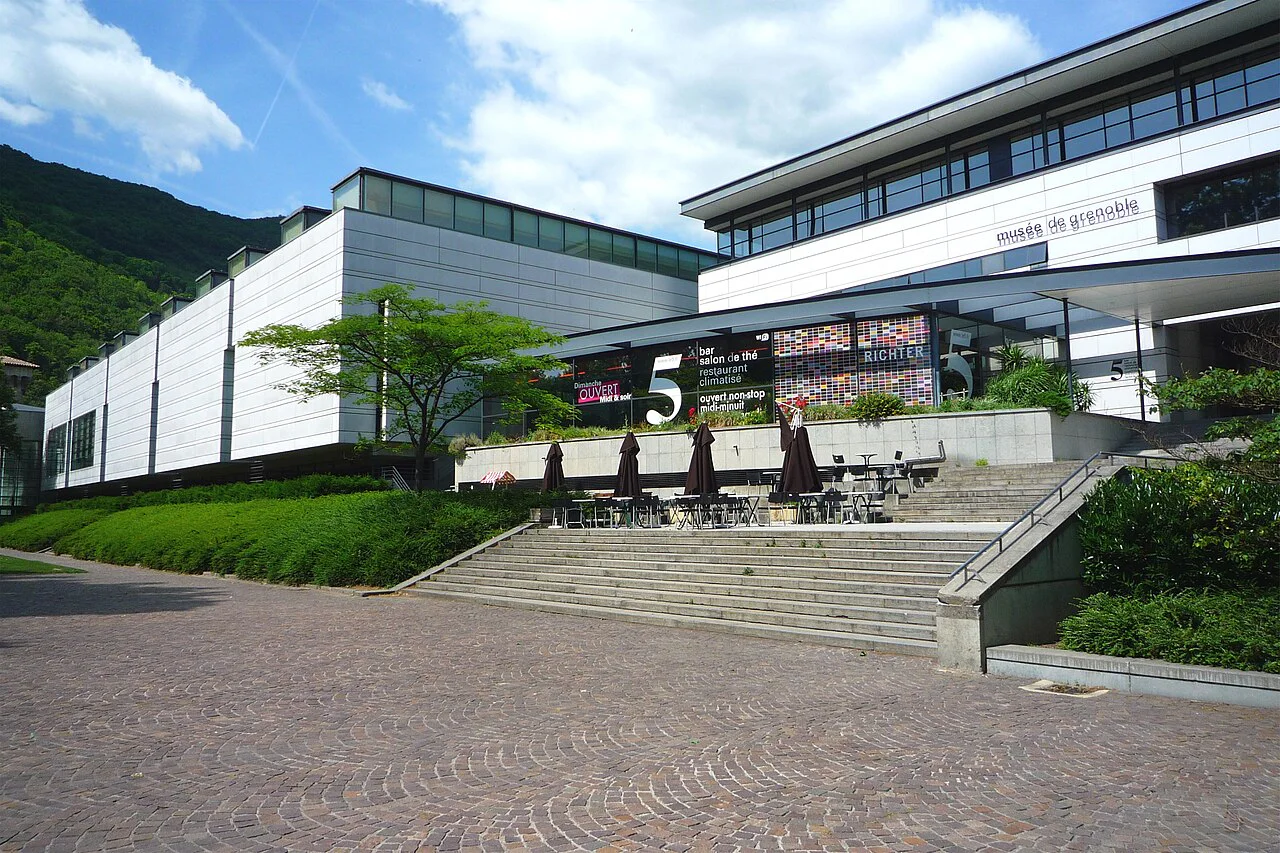
Musée de Grenoble
Content & sources
Photo: Milky · CC BY-SA 3.0
Bergamo · 66 artworks
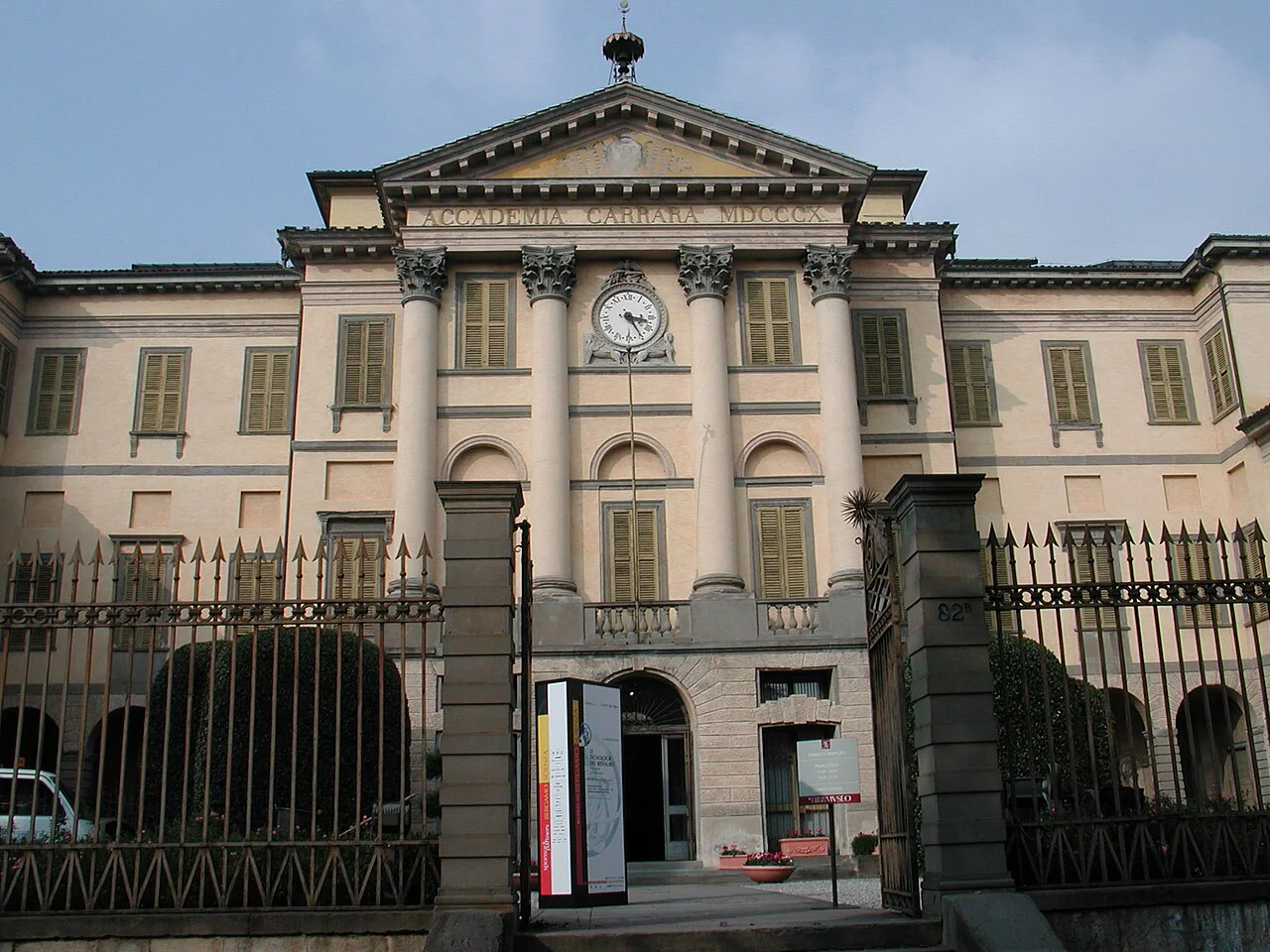
Accademia Carrara
Content & sources
No machine-readable author provided. Paolo da Reggio~commonswiki assumed (based on copyright claims). · CC BY-SA 3.0
Parma · 62 artworks
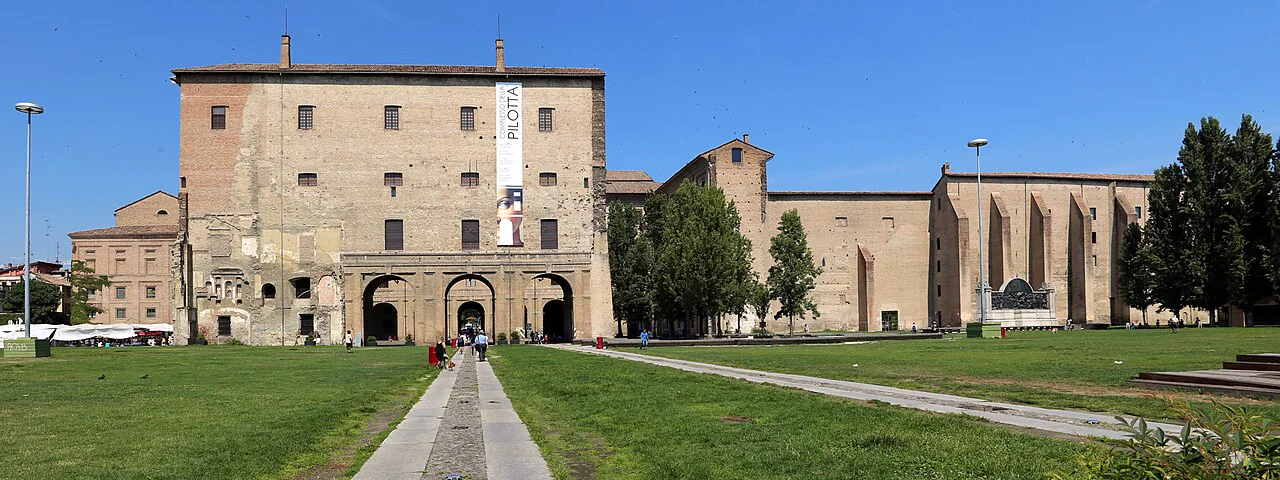
Palazzo della Pilotta
Content & sources
Photo: Sailko · CC BY-SA 4.0