 Stanza / Audio guide
Content & sources
Stanza · Audio guide
Monte Albán Audio guide
A place to remember. A story to take with you.
Monte Albán is a large pre-Columbian archaeological site located in the state of Oaxaca, known for being one of the earliest cities in Mesoamerica. It served as the socio-political and economic center of the…
Download Stanza, then search for “Monte Albán”.
About the tour
One guide. Your kind of visit.
Monte Albán is a large pre-Columbian archaeological site located in the state of Oaxaca, known for being one of the earliest cities in Mesoamerica. It served as the socio-political and economic center of the Zapotec civilization for nearly a millennium.
Ready when you are.
- 01Get the free Stanza app.
iOS & Android
- 02Find your guide.
“Monte Albán”
- 03Download before you go.
Works offline
Audio guide / 15 narrated stops
Inside the guide
Get to know a few of the stories before you go. Open a stop to read more.
01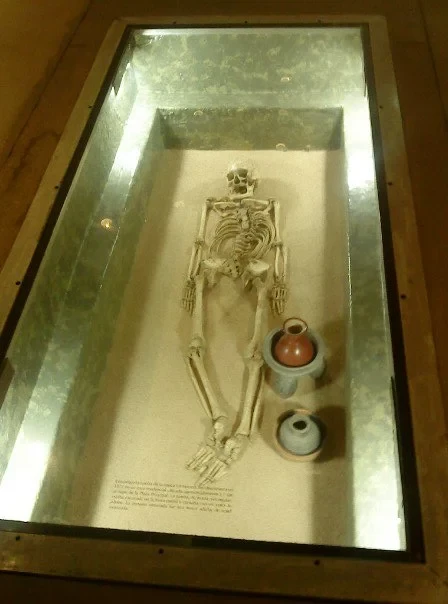 Site Museum and ArrivalZapotec Tomb Exhibit
Welcome to the ancient world of the Zapotecs. Here in the site museum lobby, a carefully reconstructed burial display introduces a core aspect of life at Monte Albán: the deep, enduring connection between the living and the dead. Archaeologists have discovered over 170 subterranean tombs built directly beneath the houses, courtyards, and plazas of this ancient mountain city. Instead of separating the deceased in far-off cemeteries, the Zapotecs integrated burials directly into their residential architecture, meaning families literally slept above the remains of their ancestors. In this exhibit, you can see a skeleton surrounded by ceramic vessels positioned around the feet and sides. These vessels were not mere decoration; they served a vital spiritual purpose, filled with food and drink to sustain the soul on its long, arduous journey through the underworld. Family members would periodically reopen these family crypts to perform rituals, leave new offerings, or place newly deceased relatives inside. Such close physical proximity kept the lineage strong, linking family authority directly to the ancestors resting just beneath the floorboards.
Photo: France N. Roseau · CC BY-SA 3.0
02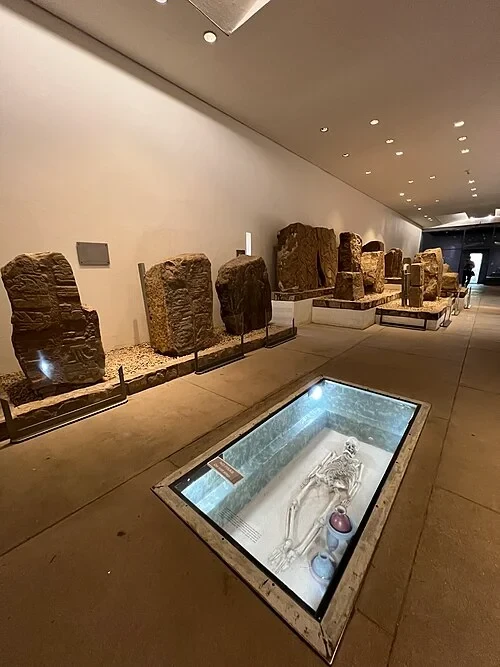 Site Museum and ArrivalSite Museum Gallery
Around the year 500 BC, the valleys of Oaxaca witnessed a monumental shift as thousands of people abandoned their low-lying villages to construct a brand-new capital on a rugged, deforested mountain ridge. Historians call this rapid, highly organized consolidation 'synoikism,' a process that established Monte Albán as one of the first true cities in Mesoamerica. To understand how the new ruling elite managed this massive population and asserted their authority, examine the large stone stelae standing against the walls of this gallery. Rather than simple decorative carvings, these heavy monuments functioned as the state's official newspapers and propaganda boards. Long before the Spanish arrival, Zapotec leaders carved complex hieroglyphs and pictorial scenes into these slabs to broadcast military triumphs, secure political alliances, and demand tribute. The carvings served as public declarations of power, meant to be read by visiting emissaries and local residents alike. By walking among these stelae, you can see how written language and stone carvings became vital tools of state control, transforming a newly assembled population into a highly unified and formidable empire.
Photo: WendyAvilesR · CC BY 4.0
03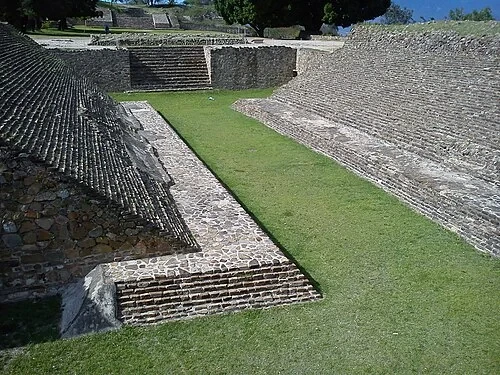 The Great BallcourtThe Great Ballcourt
Steep, stone-faced sloping walls define the playing field of the Great Ballcourt, highlighting the physical intensity of the ancient Mesoamerican ballgame. Players competed on this paved surface using only their hips, knees, and elbows to keep a heavy, solid rubber ball in motion, never allowing their hands or feet to touch it. Given the density of the rubber, making contact required immense strength and protective gear to avoid serious injury. The Great Ballcourt is one of five ballcourts discovered throughout Monte Albán, indicating the enormous cultural and religious significance of the sport. Far more than a simple athletic competition, the game served as a powerful tool for religious diplomacy. It was frequently used as an alternative to warfare to resolve critical land disputes or tribute disagreements between rival factions. The movement of the bouncing ball itself was believed to replicate the path of celestial bodies, turning every match into a living reenactment of cosmic order. Win or lose, the high-stakes game reinforced the balance between human society, political alliances, and the gods who controlled the natural world.
Listen in the appPhoto: Ihiroalfonso · CC BY-SA 3.0
04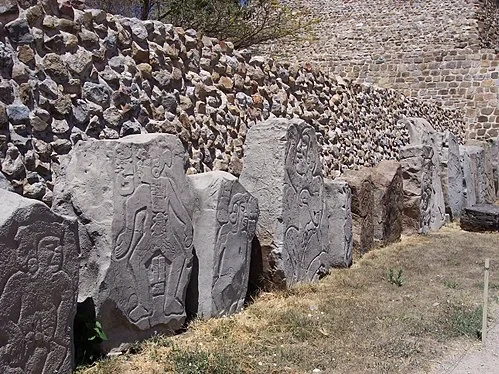 Plaza of the Danzantes and Building LDanzantes Relief Slabs
Early European explorers who first encountered these contorted stone figures called them "Los Danzantes," or the dancers, believing the strange poses represented people celebrating. Modern archaeological research has thoroughly corrected this romantic misconception, revealing a much darker historical truth. The carved relief slabs actually depict captured, tortured, and humiliated rival leaders defeated by the rulers of Monte Albán. If you examine the physical details carved into the stone, the grim reality becomes clear. The figures are shown with closed eyes, open mouths, limp, lifeless limbs, and systematic genital mutilation. These were not joyful dancers but war captives, stripped of their clothing and dignity to be displayed as trophies of state violence. By carving these brutal images into enduring stone, the Zapotec rulers created a permanent record of their military superiority. Any visitor, diplomat, or potential rival entering the city would walk past these graphic warnings, immediately understanding the severe consequences of defying the power of the mountain capital.
Listen in the appUser:Gengiskanhg · CC BY-SA 3.0
05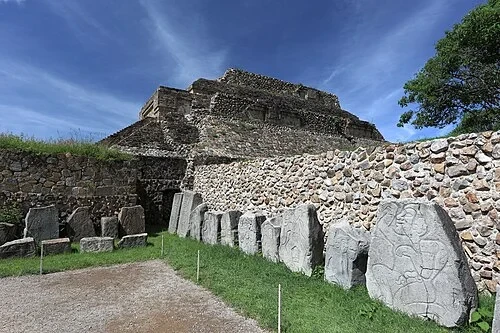 Plaza of the Danzantes and Building LBuilding L Conquest Gallery
Aligning the base of Building L, the famous Danzantes stelae were integrated directly into the public architecture of the Main Plaza, creating an unavoidable open-air gallery of conquest. Placing these graphic depictions of defeated enemies at eye level ensured that every person entering the heart of the city was forced to confront the physical evidence of Zapotec military power. As you look at the structure, note the distinct, contrasting masonry styles. The lower section features rougher, irregularly shaped relief stones that represent some of the oldest carvings at the site. Directly above this older layer, the pyramid rises with monumental, cleanly cut stone blocks, reflecting later architectural phases and a more refined construction technique. This layering of styles shows how successive Zapotec rulers literally built their grand monuments on top of their historic victories. By incorporating the older war trophies into the foundations of their newer temples, the elite continually reinforced the narrative of their long-standing, unchallenged authority over the surrounding valleys.
Listen in the appGUSTAVO VON · CC BY-SA 3.0
06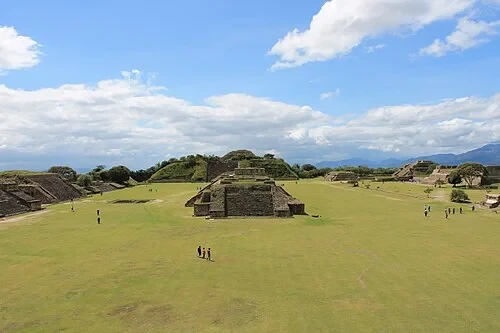 The Main PlazaMain Plaza Viewpoint
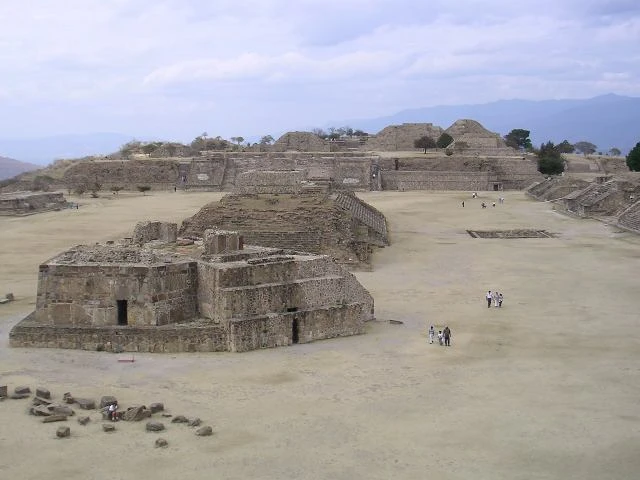
Standing at this scenic overlook, you can fully appreciate the immense engineering feat required to construct the heart of Monte Albán. To create the flat, expansive Main Plaza, Zapotec builders manually leveled the entire natural mountain ridge. Working without iron tools, draft animals, or the wheel, workers moved millions of baskets filled with earth and stone, transforming a jagged peak into a flat plateau that sits approximately 1,940 meters above sea level. This massive modification of the landscape served a vital political and visual purpose. By flattening the summit, the Zapotecs created an imposing, elevated stage that could be seen from miles away in every direction. Looking out across the vast, level expanse, you can imagine how this elevated plaza allowed the rulers to project absolute dominance over the surrounding valleys. Anyone looking up from the valley floor would see the monumental temples silhouetted against the sky, a constant reminder of the organized labor, advanced planning, and supreme authority concentrated at the top of the sacred mountain.
Listen in the appPhoto: DavidConFran · CC BY-SA 3.0
07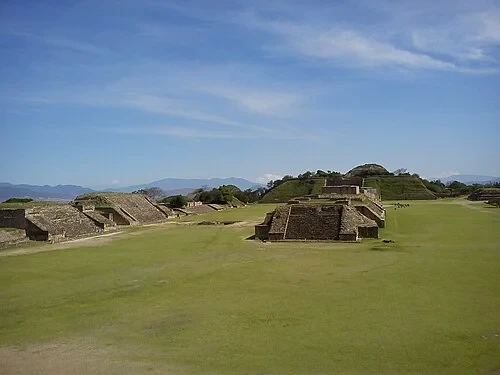 The Main PlazaThe Ceremonial Plaza
Spanning roughly 300 meters by 150 meters, the Main Plaza served as the massive central stage for public life at Monte Albán. The spatial organization of this area balances wide, open grassy plazas with imposing, central temple mounds that rise dramatically from the flat ground. During the city's peak in the Monte Albán II phase, this grand space accommodated an urban population exceeding 17,200 people, functioning as a bustling civic and ceremonial hub. On any given day, the open plazas would transform to host vibrant markets filled with traders from across the region, bringing in obsidian, cacao, and fine ceramics. During major religious holidays or political triumphs, the entire space filled with citizens gathering to witness elaborate mass rituals, priestly sacrifices, and military parades. The design of the plaza allowed thousands of people to gather simultaneously, fostering a shared urban identity while keeping the central temples physically distinct to preserve the sacred authority of the priests and rulers who controlled the ceremonies.
Listen in the appPhoto: Ihiroalfonso · CC BY-SA 3.0
08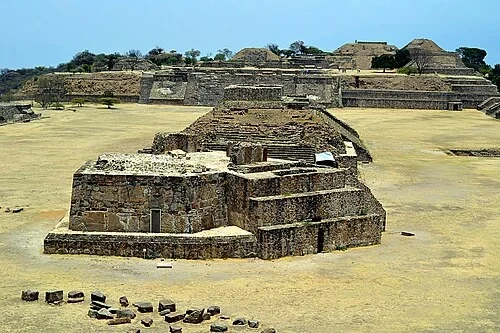 Building J (The Observatory)The Observatory
Breaking from the strict, grid-like alignment of the rest of the Main Plaza, Building J, commonly known as the Observatory, features a highly unusual arrowhead shape. While most buildings at Monte Albán align to a North-South axis, this structure was deliberately constructed at a 45-degree angle. This dramatic architectural misalignment was not a mistake; it was carefully designed to track specific celestial movements essential to the Zapotec agricultural and ritual calendars. From this distinct angle, ancient priests could observe the zenith passage of the sun, the moments when the sun casts no shadow at midday. The building's orientation also aligns with the rising point of the bright star Capella on the horizon. By mastering these celestial cycles, the Zapotec elite could accurately predict seasonal changes, dictate the ideal times for planting and harvesting, and schedule critical religious festivals. Such precise alignments physically demonstrated the rulers' connection to the cosmos, convincing the populace that their leaders held the power to interpret the movements of the gods in the night sky.
Listen in the appPhoto: Mesoamerican · CC BY-SA 4.0
09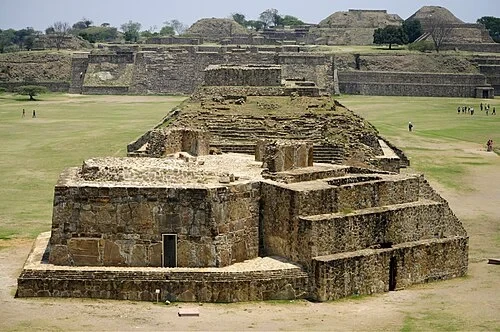 Building J (The Observatory)The Arrowhead Structure
Closer inspection of Building J reveals the practical details of ancient Zapotec astronomy and state power. The exterior of the arrowhead structure features dark openings, narrow doorways, and internal tunnels. Zapotec priests utilized these dark, specialized chambers to block out ambient light, allowing them to make precise astronomical calculations through narrow viewing slits. Yet, the structure was not dedicated solely to science; it also served as a tool of political intimidation. Set directly into its exterior walls are forty carved stone slabs known as conquest slabs. Each slab depicts an inverted head, a place-name glyph, and symbols of defeat, representing specific provinces conquered by Monte Albán. By combining astronomical precision with graphic records of military triumphs, the rulers made a powerful public statement. The structure proved that the Zapotec elite did not just understand the movements of the stars; they also possessed the physical power to conquer earthly enemies. It was a visual declaration that the rulers held absolute dominion over both the heavens above and the lands below.
Listen in the appAbdeel Yañez Quintanar · CC BY-SA 3.0
10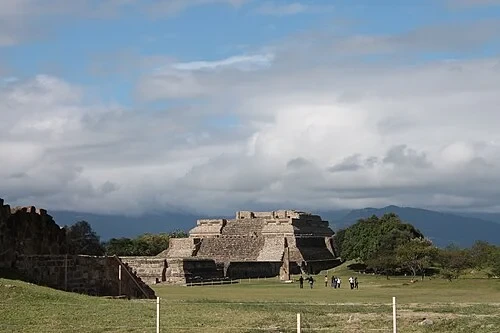 System IV and Building KSystem Four Temple
Showcasing the classic Zapotec temple-patio-altar layout, the architectural complex known as System IV, alongside Building K, highlights the standardized design of public worship at Monte Albán. The stepped tiers of the structures feature clean, sharp angles and monumental staircases rising to elevated platforms where temples once stood. A closer look at the facade reveals a distinct architectural style known as 'talud-tablero'—characterized by sloping walls, or taluds, paired with flat, vertical panels, or tableros. This specific design element is a clear stylistic import from Teotihuacan, the massive metropolis located hundreds of miles to the north in central Mexico. Such a distinctive design element is a clear trade, political, and cultural indicator that linked the Oaxaca Valley to other great Mesoamerican powers. Rather than existing in isolation, the rulers of Monte Albán actively adopted prestigious foreign styles to enhance their own local authority, blending regional Zapotec traditions with international architectural trends.
Listen in the appPhoto: DavidConFran · CC BY-SA 3.0
Monte Albán
Frequently asked questions
How much does the guide cost?
Free app download. Listed guide price: $2.99. Guide price shown in the app. Audio guide only. Venue admission is separate.
Can I listen without internet?
Yes. Download the guide’s audio, images, and maps in the app before your visit. Your downloaded content is then available offline.
Can I listen in my language?
This audio guide is available in 15 languages, including English.
Do I need to follow a schedule?
No. This is a self-guided experience. Choose your stops, pause whenever you like, and return to a story at your own pace.
At your own pace
Explore Monte Albán.
Download Stanza, then search for “Monte Albán”.
Free app download · Guide price shown in the app
Keep exploring
Audio guides — Mexico
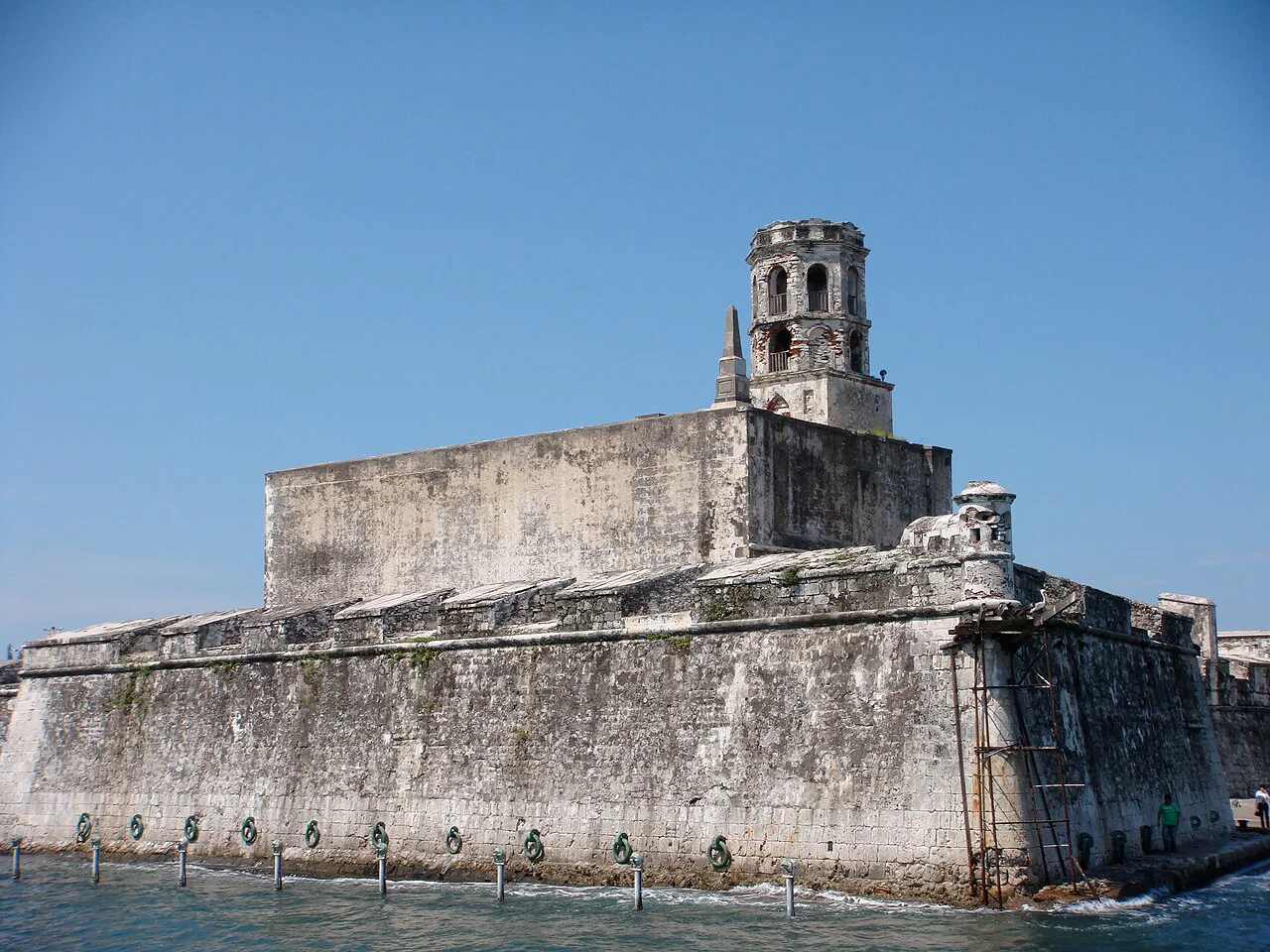
Veracruz
San Juan de Ulúa
Content & sources
Victor Pineda · CC BY-SA 2.0
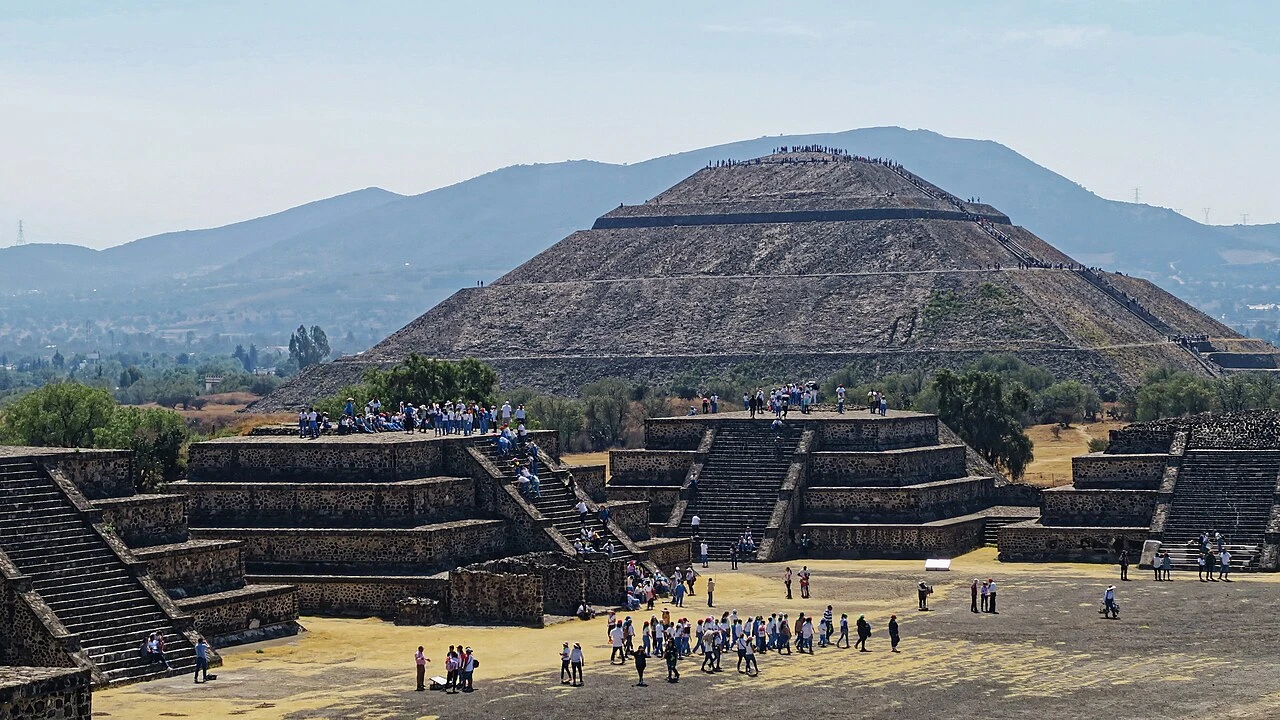
San Francisco Mazapa
Teotihuacan
Content & sources
Burkhard Mücke · CC BY-SA 4.0
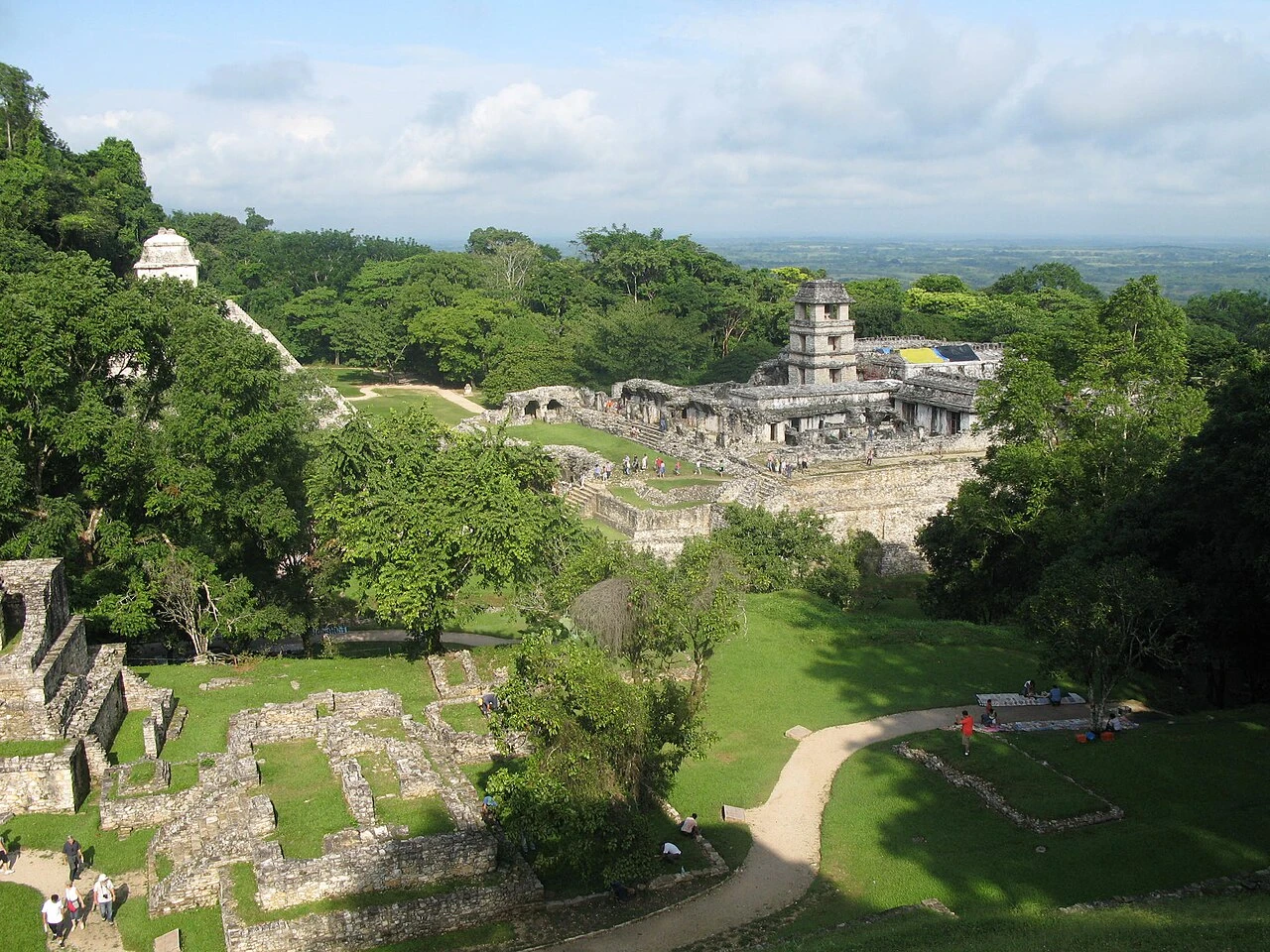
Palenque
Palenque
Content & sources
Ljuba brank at Slovenian Wikipedia · CC BY-SA 3.0
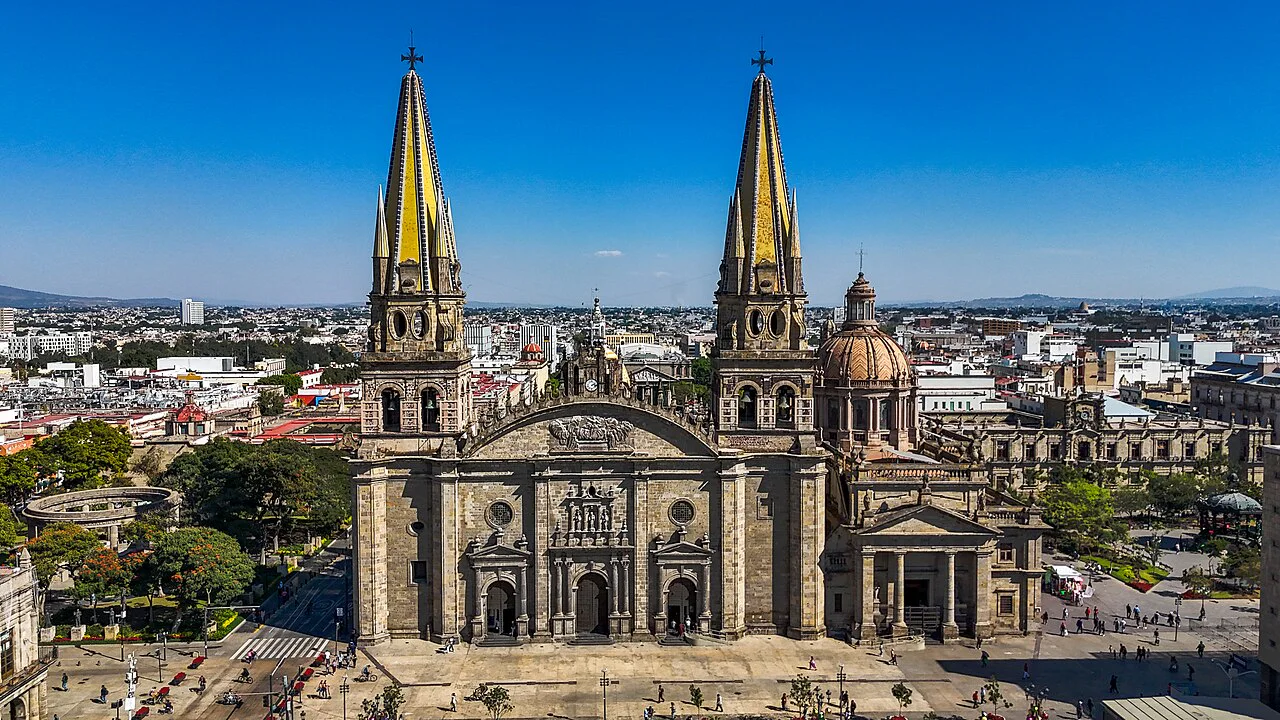
Guadalajara
Catedral metropolitana de Guadalajara
Content & sources
Photo: ProtoplasmaKid · CC BY-SA 4.0