Stanza · Audio guide
San Juan de Ulúa Audio guide
A place to remember. A story to take with you.
San Juan de Ulúa is a large complex of fortresses, prisons, and a former palace located on an island in the Gulf of Mexico. It is historically significant as the site where Hernan Cortés met with emissaries…
Download Stanza, then search for “San Juan de Ulúa”.
About the tour
One guide. Your kind of visit.
San Juan de Ulúa is a large complex of fortresses, prisons, and a former palace located on an island in the Gulf of Mexico. It is historically significant as the site where Hernan Cortés met with emissaries from the Aztec Empire in 1519.
Ready when you are.
- 01Get the free Stanza app.
iOS & Android
- 02Find your guide.
“San Juan de Ulúa”
- 03Download before you go.
Works offline
Audio guide / 13 narrated stops
Inside the guide
Get to know a few of the stories before you go. Open a stop to read more.
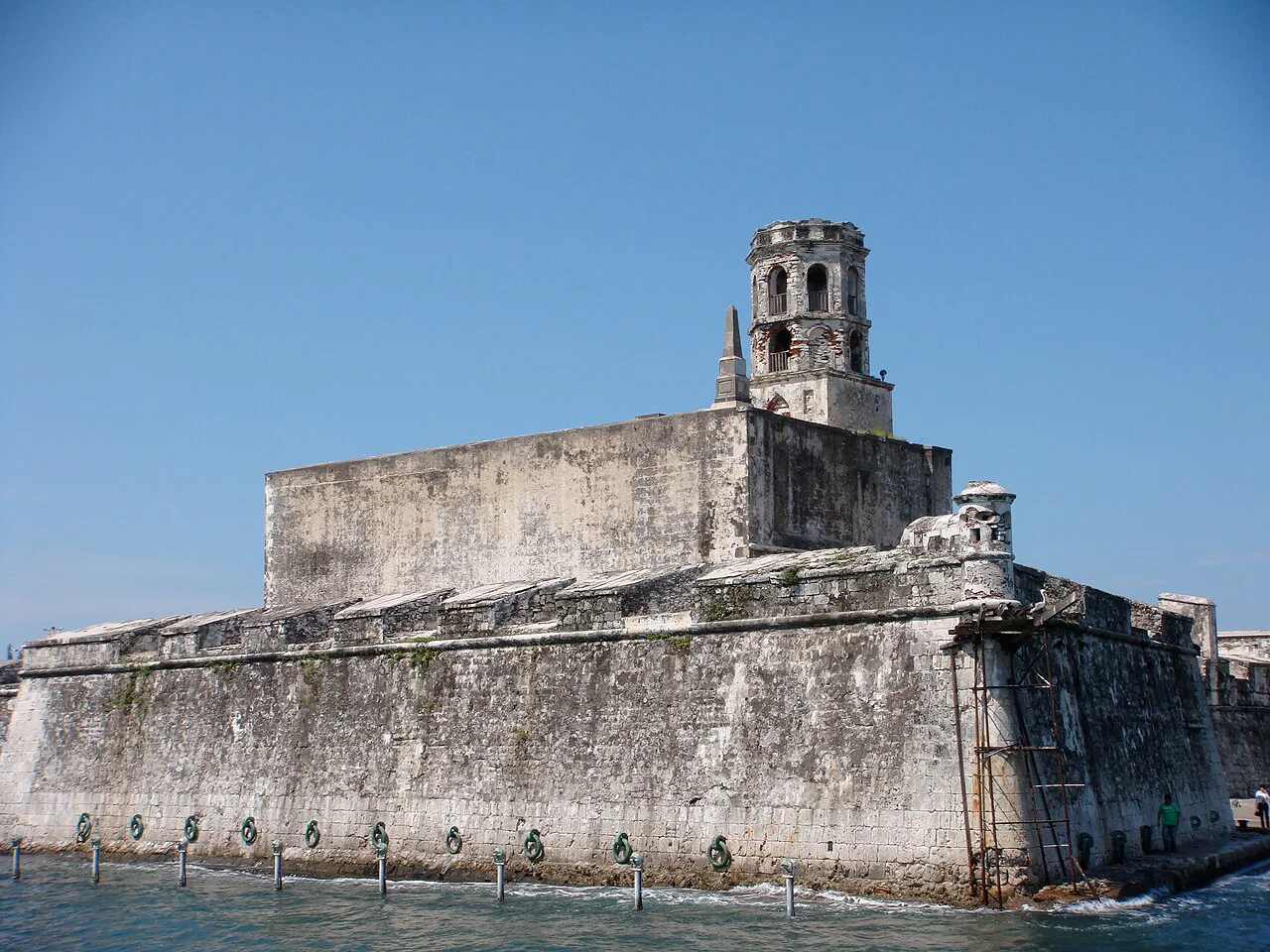
01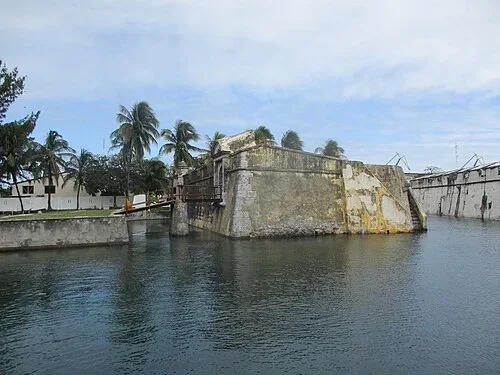 Outer Moat and Main GatewayThe Fortress from the Water: Where the Story Begins
Welcome to San Juan de Ulúa, the island fortress that guards the harbor of Veracruz. It rises straight out of the Gulf of Mexico, a walled compound surrounded by water on every side. Spanish authorities began building here in 1535, to shelter their transatlantic galleons from bad weather and from pirate attacks. The island had carried its name since 1518, when the expedition of Juan de Grijalva charted this coast. They added San Juan to Ulúa, the name the place already bore. Over the centuries the fortress grew into the most formidable fortification of its time in this part of the hemisphere. Its story runs from treasure fleets to battles, then to prison cells, and finally to a museum. Each stop along the way takes one chapter of that long life.
Photo: August Dominus · CC BY-SA 4.0
02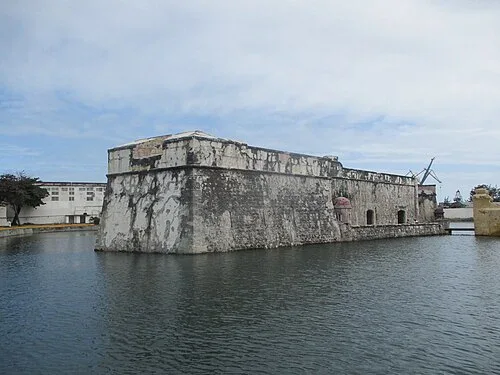 Outer Moat and Main GatewayBuilt from the Reef: The Coral Stone Walls
The walls here have a rough, pitted face, quite unlike the smooth stone of most old fortresses. That texture comes from the material itself. From about 1535 onward, the builders cut coral stone from the reef around the island, a local stone known as piedra muca. A sandy island like this offered no proper quarries, so the reef supplied what the land could not. The sea-facing walls show the fossilized coral most clearly, hardened into a pale, porous masonry. Builders of the time believed this stone would stand up well to salt air, and some say it also absorbed the shock of cannon fire. However it worked, the fortress grew into the most formidable fortification of its day in this part of the hemisphere.
Photo: August Dominus · CC BY-SA 4.0
03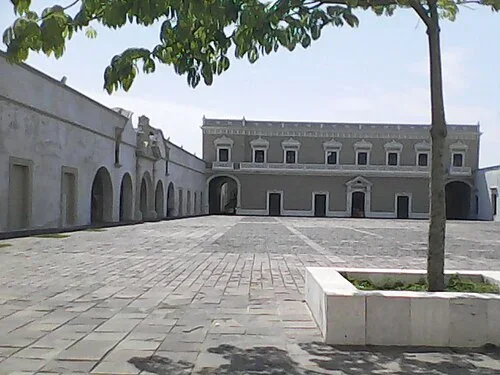 Central Parade Ground (Plaza de Armas)The Plaza de Armas: Two and a Half Centuries of Building
This great courtyard is the Plaza de Armas, the drill ground at the heart of the fortress. The ranges around it record an unusually long building story. Construction ran from 1535 all the way to 1769, more than two centuries of continuous military engineering. In the 1580s the Italian engineer Battista Antonelli redesigned the fortress during a stopover on his way to the Gulf of Fonseca. Late in the seventeenth century, the engineer Jaime Franck added walls and semi-bastions that finally closed the compound into a single ring. French engineers arrived in the early eighteenth century, now as allies, and proposed full bastions in place of the half-measures. Only the Baluarte de la Soledad was built from those plans. After the Seven Years' War, Manuel de Santisteban drew up fresh regularizations and expanded the outer works.
Listen in the appangel Gabriel Alaffita guzman · CC BY-SA 4.0
04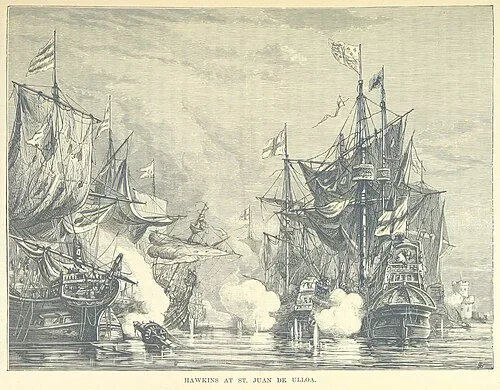 Central Parade Ground (Plaza de Armas)Hawkins at San Juan de Ulúa, 1568
On the twenty-third of September, 1568, this harbor became the scene of one of the famous fights of the age. A Spanish escort fleet under General Francisco Luján caught a squadron of English privateers inside the bay. Their commander was John Hawkins, and among his captains was his young cousin Francis Drake. The Spanish trapped the privateers against the fortress and opened fire with their cannon. Several ships were sunk, and others were damaged beyond repair and scuttled along the Mexican coast. Many sailors aboard were killed. Hawkins cut his losses and escaped on his own warship, abandoning the shipwrecked men, who settled among the local population. Drake got away too, and the encounter is credited with planting his intense hatred of Spain and of Catholicism. The fight was later commemorated in engravings, made long after the smoke cleared.
Listen in the appFrederick Whymper · Public domain
05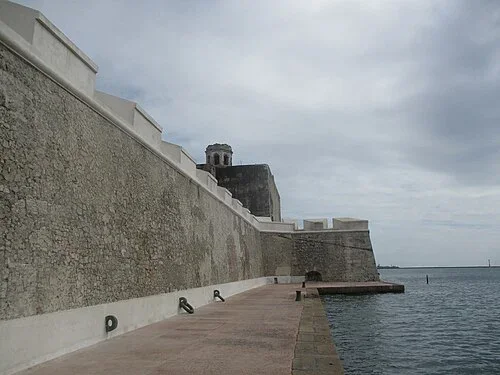 Muro de las Argollas (The Mooring Wall)The Mooring Wall: Where the Silver Fleet Tied Up
Along this seawall, iron rings are set deep into the stonework. This is the Muro de las Argollas, the mooring wall, and those rings are the physical trace of the harbor it once was. The galleons that carried the silver of New Spain moored here, on the sheltered side of the reef. What they feared most came in autumn and winter, when fierce Gulf storms known as nortes swept the coast. An open roadstead offered no protection from those winds. Here, behind the fortress, the treasure ships could tie up fast and ride out the season. The wall answered the very purpose for which the Spanish first began building on this island. The rings you can see are the last working detail of that whole system.
Listen in the appPhoto: August Dominus · CC BY-SA 4.0
06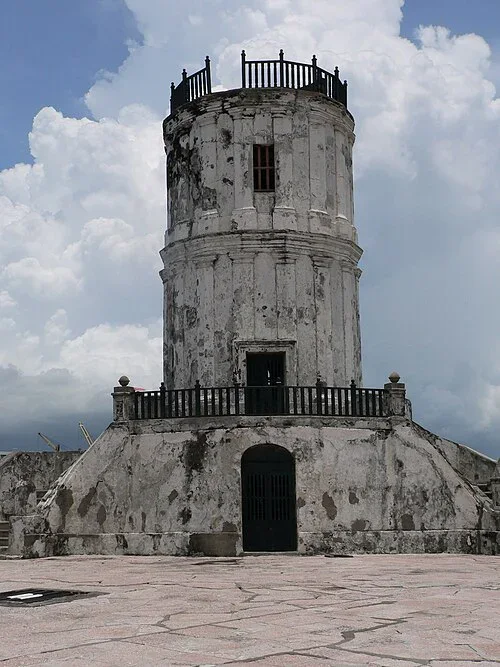 Baluarte de San Pedro and the Historic LighthouseThe Faro de San José: First Light of Hispanoamérica
This round tower crowns the Baluarte de San Pedro, the bastion guarding the entrance to the port. Between 1793 and 1796 it received the Faro de San José, a lighthouse bought in London. It burned oil, with lamps set on a triangular base of glass. A clockwork mechanism made the light flash in intermittent beams, instead of shining steadily. It was the first modern lighthouse in New Spain and in all of Hispanoamérica. The tower also belonged to a ritual of arrival. The fortress kept the icon of the Virgen de La Escalera, the Virgin of the Staircase, in a chapel beneath a stone staircase. Whenever ships entered the bay, the icon was raised to the top of the tower to greet them, and the ships answered with cannon salutes. The original icon has been missing for hundreds of years, lost after Mexico won its independence.
Listen in the appPhotographer: Frank C. Müller · CC BY-SA 2.5
07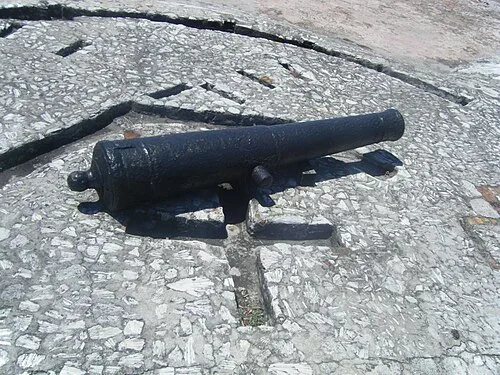 Baluarte de San Pedro and the Historic LighthouseA Gun on the Ramparts
A single black cannon lies mounted on the stone rampart here, its barrel pointing out over the grounds. Guns like this were the working heart of a bastioned sea fortress. The ramparts stand high above the waterline, giving artillery a clear sweep across the bay and its approaches. The fortifications follow the Italian style of trace, the geometry of angled bastions that European military engineers spread across the Americas in the sixteenth century. A gun emplaced here covered the harbor that the whole complex existed to protect. The age and foundry of this particular barrel are not recorded, so its own story stays quiet. What it represents is easier to say: the reason soldiers, powder and shot were kept on this island for centuries.
Listen in the appalvaro_qc · CC BY-SA 2.0
08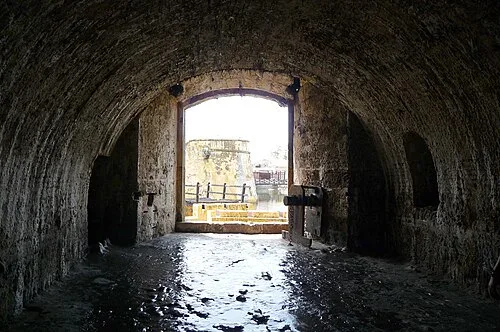 Puente del Último Suspiro (Bridge of the Last Sigh)The Bridge of the Last Sigh
The name of this passage says everything about it: the Puente del Último Suspiro, the Bridge of the Last Sigh. Prisoners crossed this dark, vaulted way on their way into the island's prison vaults. It was a walk taken in the knowledge that many who made it never came back out. From the nineteenth century into the early twentieth, San Juan de Ulúa served as one of Mexico's most feared penal institutions. The fortress that had guarded treasure fleets now held convicts behind the same thick walls. For political opponents of the government, a sentence here was among the harshest the state could give. What waited on the other side of the bridge is the story of the vaults themselves.
Listen in the appRodrigo SanSs · CC BY-SA 3.0
09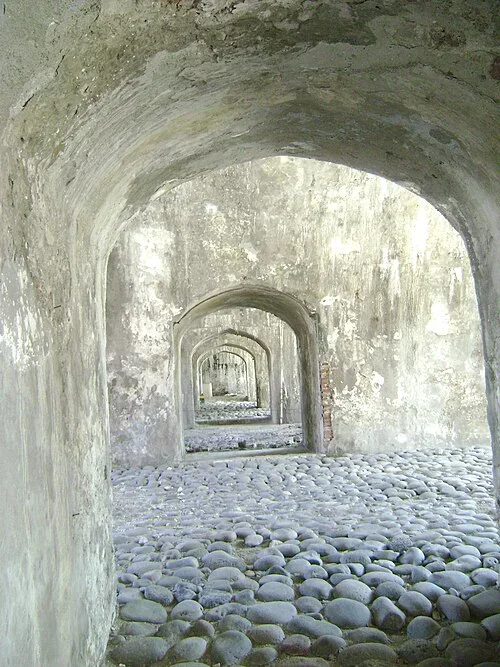 The Vaulted Dungeons and Inquisitorial CellsInside the Dungeons
These long vaults of rough coral masonry, floored with cobblestones, were the prison's innermost rooms. Conditions here were brutal in a slow, grinding way. The vaults were damp and poorly ventilated, and seawater seeped through the stone at high tide. The prisoners sweltered in the heat, and disease spread easily among the men held inside. For much of the nineteenth century the cells housed political prisoners, judged to be opponents of whoever held power. Especially under President Porfirio Díaz, the island became a byword for political imprisonment. Among the well-known figures who did time here were Fray Servando Teresa de Mier, the defiant priest and writer, and Benito Juárez, years before he became president. Prominent Mexican politicians often spent time in these vaults while they were out of favor, and returned to power later.
Listen in the appPhoto: GATOMICO90 · CC BY-SA 3.0
10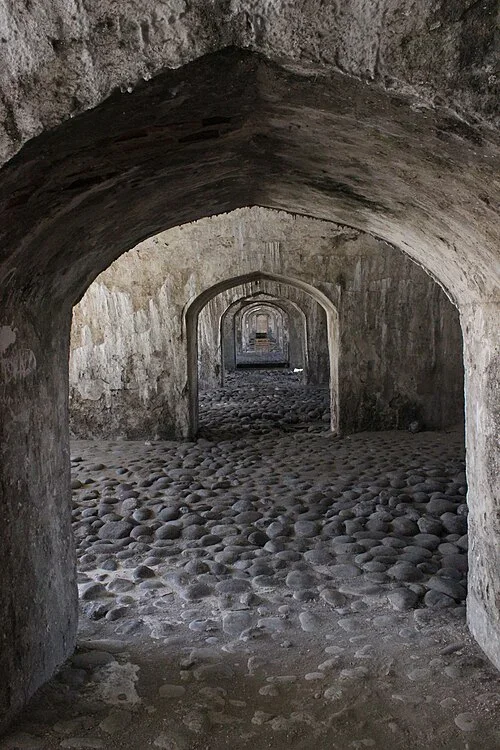 The Vaulted Dungeons and Inquisitorial CellsLegends of the Vaulted Stores
The folklore of this prison is as famous as its walls, and the best-known tale belongs to La Mulata de Córdoba. The story goes that she was accused of witchcraft and held by the Inquisition. In her cell she painted a sailing ship on the wall, in charcoal, bound for the horizon. Then, so the tale runs, she escaped aboard it. The most famous real inmate was Jesús Arriaga, known to all Mexico as Chucho el Roto, a Robin Hood-style bandit of the Porfirio Díaz years. He was celebrated above all because he escaped from these walls more than once. Some people also say sharks were placed in the surrounding waters to stop anyone from swimming away, though that claim was never firmly attributed. Whether true or not, the story fit the island perfectly: a prison ringed by sea.
Listen in the appPhoto: Juan Carlos Costal Pérez · CC BY-SA 4.0
San Juan de Ulúa
Frequently asked questions
How much does the guide cost?
Free app download. Listed guide price: $0.99. Guide price shown in the app. Audio guide only. Venue admission is separate.
Can I listen without internet?
Yes. Download the guide’s audio, images, and maps in the app before your visit. Your downloaded content is then available offline.
Can I listen in my language?
This audio guide is available in 15 languages, including English.
Do I need to follow a schedule?
No. This is a self-guided experience. Choose your stops, pause whenever you like, and return to a story at your own pace.
At your own pace
Explore San Juan de Ulúa.
Download Stanza, then search for “San Juan de Ulúa”.
Free app download · Guide price shown in the app
Keep exploring
Audio guides — Mexico
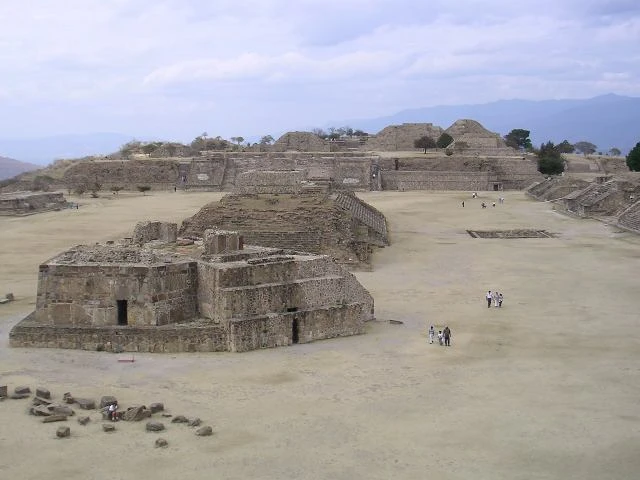
Santa Cruz Xoxocotlán
Monte Albán
Content & sources
Photo: Petrusbarbygere · CC BY-SA 3.0
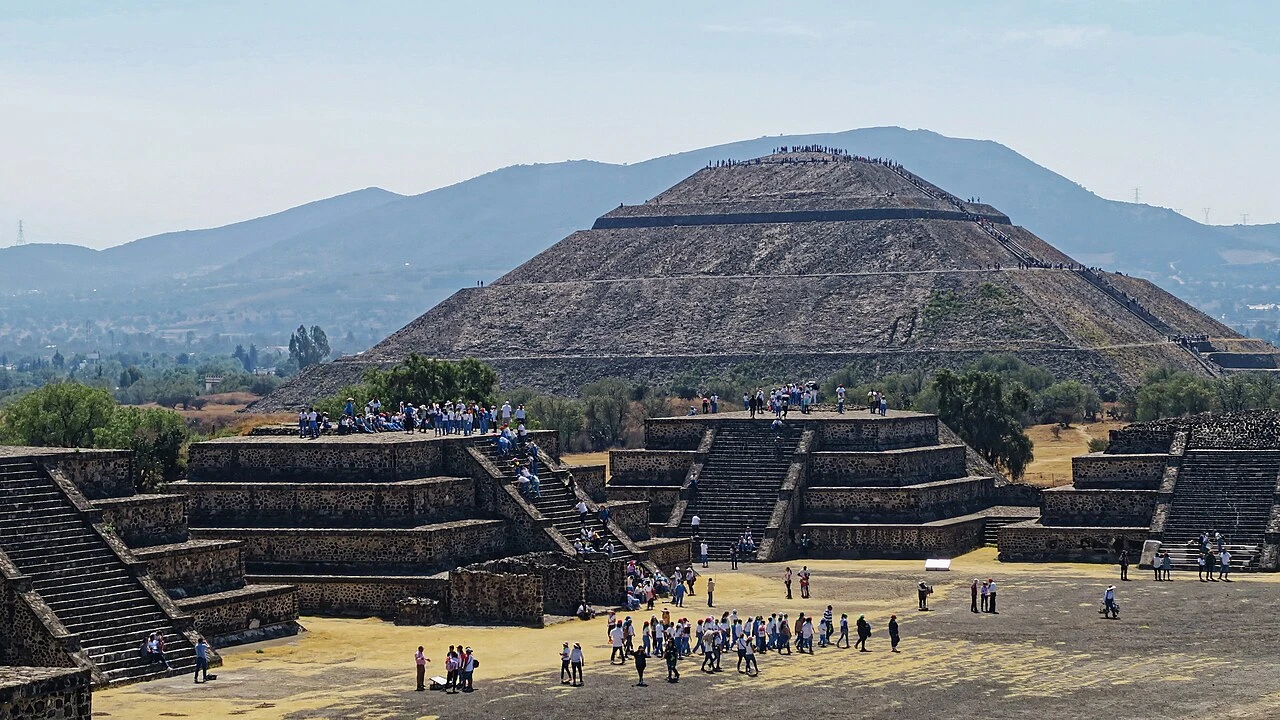
San Francisco Mazapa
Teotihuacan
Content & sources
Burkhard Mücke · CC BY-SA 4.0
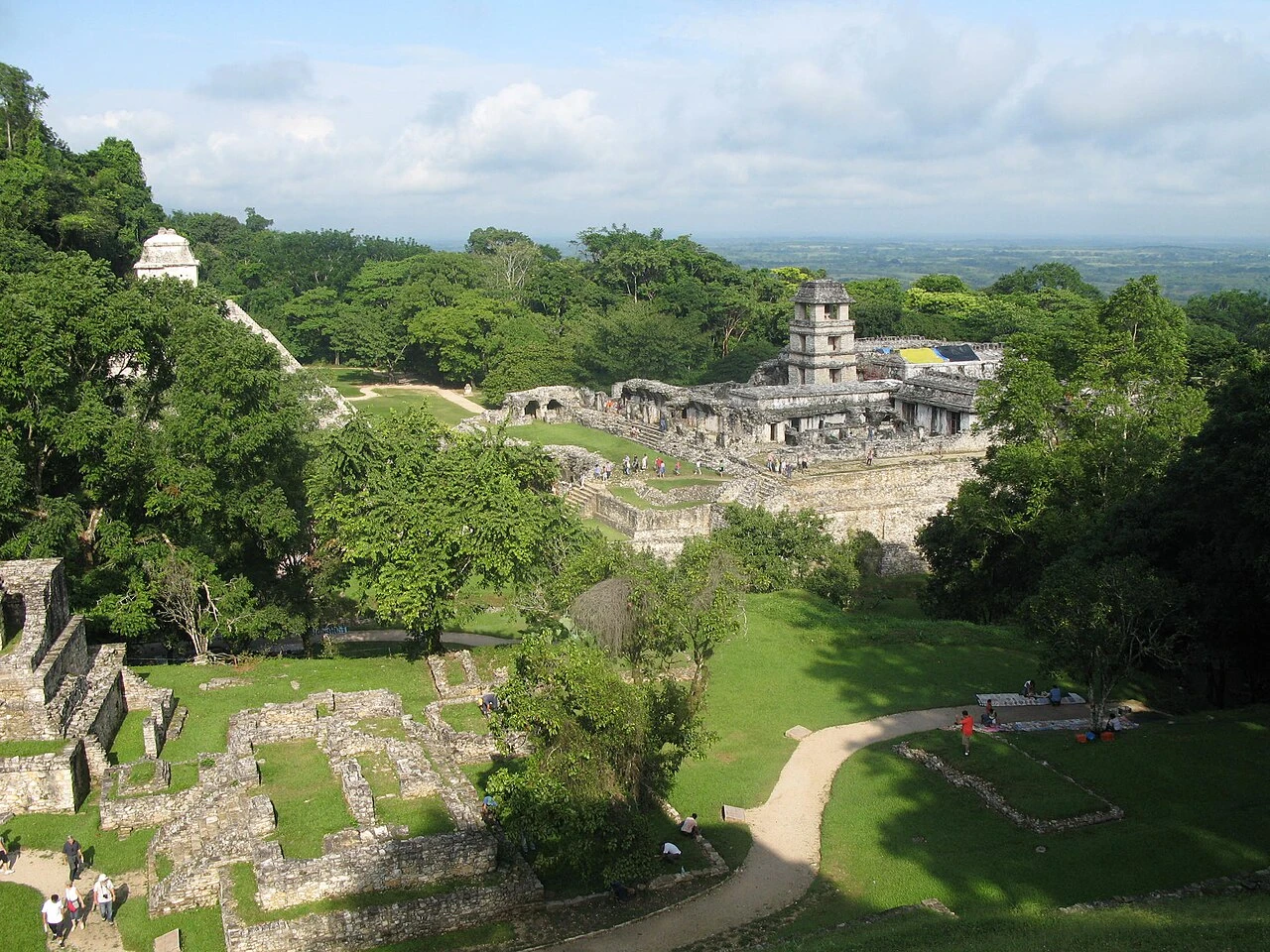
Palenque
Palenque
Content & sources
Ljuba brank at Slovenian Wikipedia · CC BY-SA 3.0
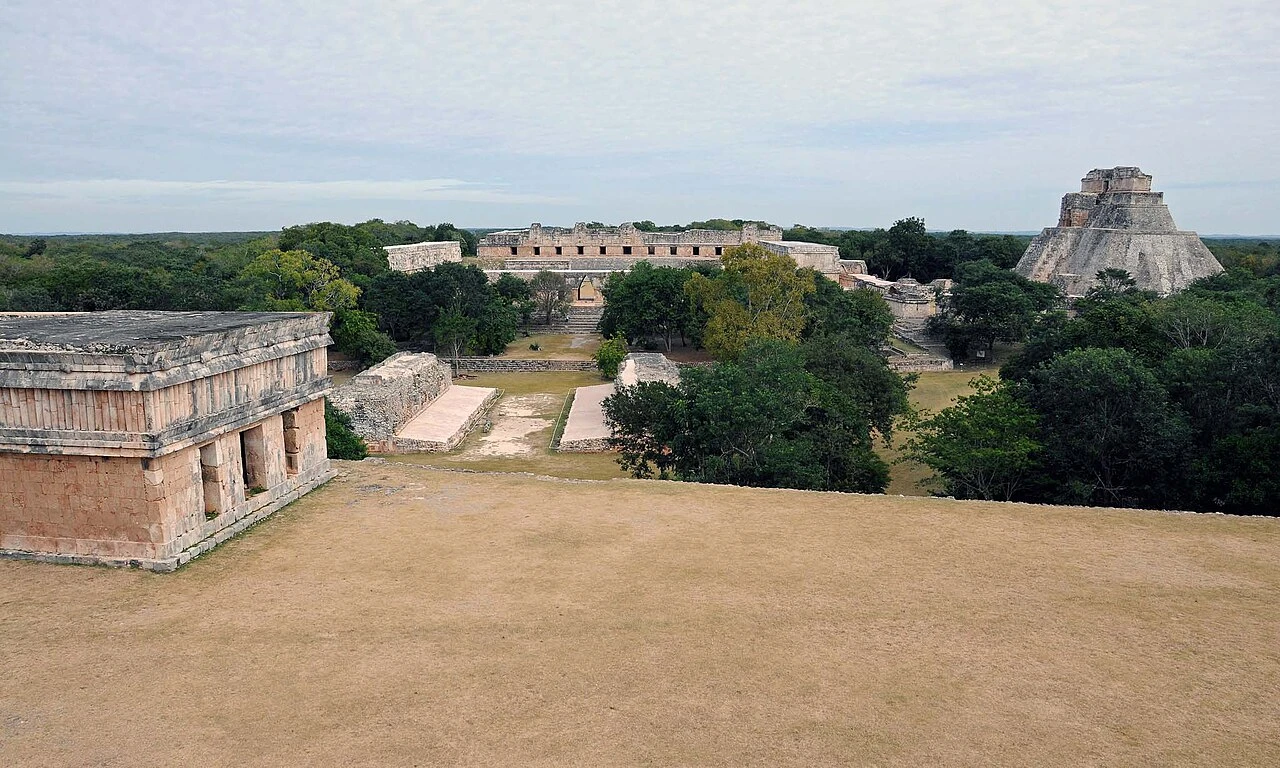
Uxmal
Uxmal
Content & sources
Photo: Adrian Hernandez · CC BY-SA 4.0