Stanza · Audio guide
Apsley House Audio Guide
A place to remember. A story to take with you.
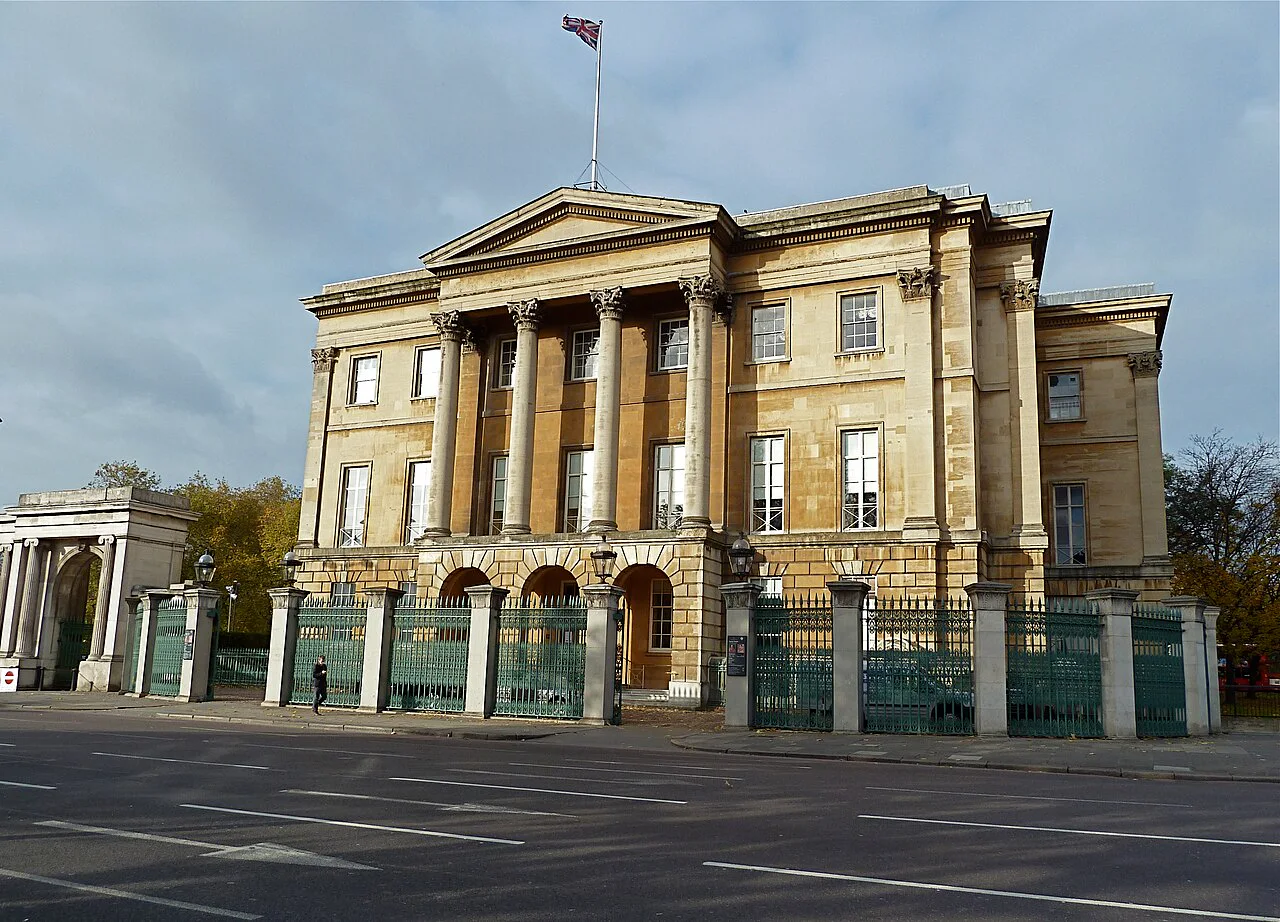
Apsley House is the London townhouse of the Dukes of Wellington. It is a Grade I listed building that stands at Hyde Park Corner, on the south-east corner of Hyde Park, facing the traffic roundabout in the…
Download Stanza, then search for “Apsley House”.
About the tour
One guide. Your kind of visit.
Apsley House is the London townhouse of the Dukes of Wellington. It is a Grade I listed building that stands at Hyde Park Corner, on the south-east corner of Hyde Park, facing the traffic roundabout in the centre of which stands the Wellington Arch.
The Apsley House guide tells the stories of 24 artworks, including The Waterseller of Seville (Diego Velázquez), Napoleon as Mars the Peacemaker (Antonio Canova), The Doctor's Visit in a Rich Interior (Jan Steen), Agony in the Garden (Antonio da Correggio), Two Young Men Eating at a Humble Table (Diego Velázquez), Equestrian Portrait of the 1st Duke of Wellington (Francisco Goya), Arthur Wellesley (1769–1852), 1st Duke of Wellington (Thomas Lawrence), and Chelsea Pensioners reading the Waterloo Dispatch (David Wilkie). Every artwork is free to hear in the Stanza app until 1 January.
Ready when you are.
- 01Get the free Stanza app.
iOS & Android
- 02Find your guide.
“Apsley House”
- 03Download before you go.
Works offline
Audio guide / 24 artworks
Inside the guide
Get to know a few of the stories before you go. Open a stop to read more.
01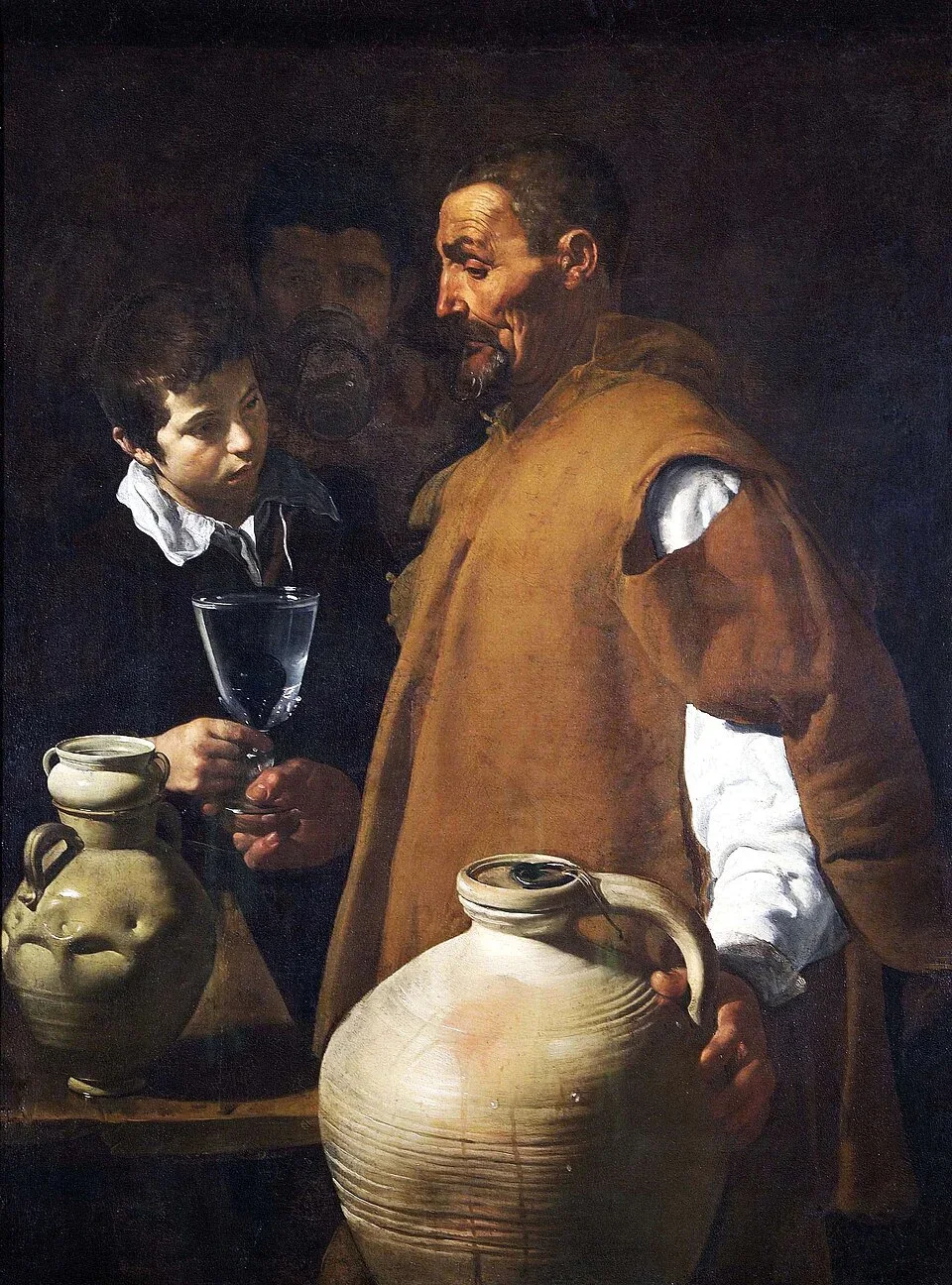
The Waterseller of Seville
Velázquez was still young, working in Seville. He set out to paint ordinary life exactly as it looked, down to the smallest surface. No one had asked for the picture. His own teacher thought scenes like this deserved more credit than they got. In the front of the picture, the larger of the two water jars is cut off at the bottom. It seems to push out into your space, and the old man's hand rests on it. Light coming from the left catches beads of water on its curve. The glass he hands the boy is thin and clear. A fig sits in it to freshen the water's taste, as people still do in Seville. The old man's face is thoughtful and deeply lined. With his short hair and plain clothes, he might pass for a monk. He and the boy both touch the glass, but they never look at one another. Their difference in age may have something to do with it. Wellington won it back from Joseph Bonaparte at the Battle of Vitoria, and it has stayed here at Apsley House ever since.
Listen in the appDiego Velázquez · Public domain
02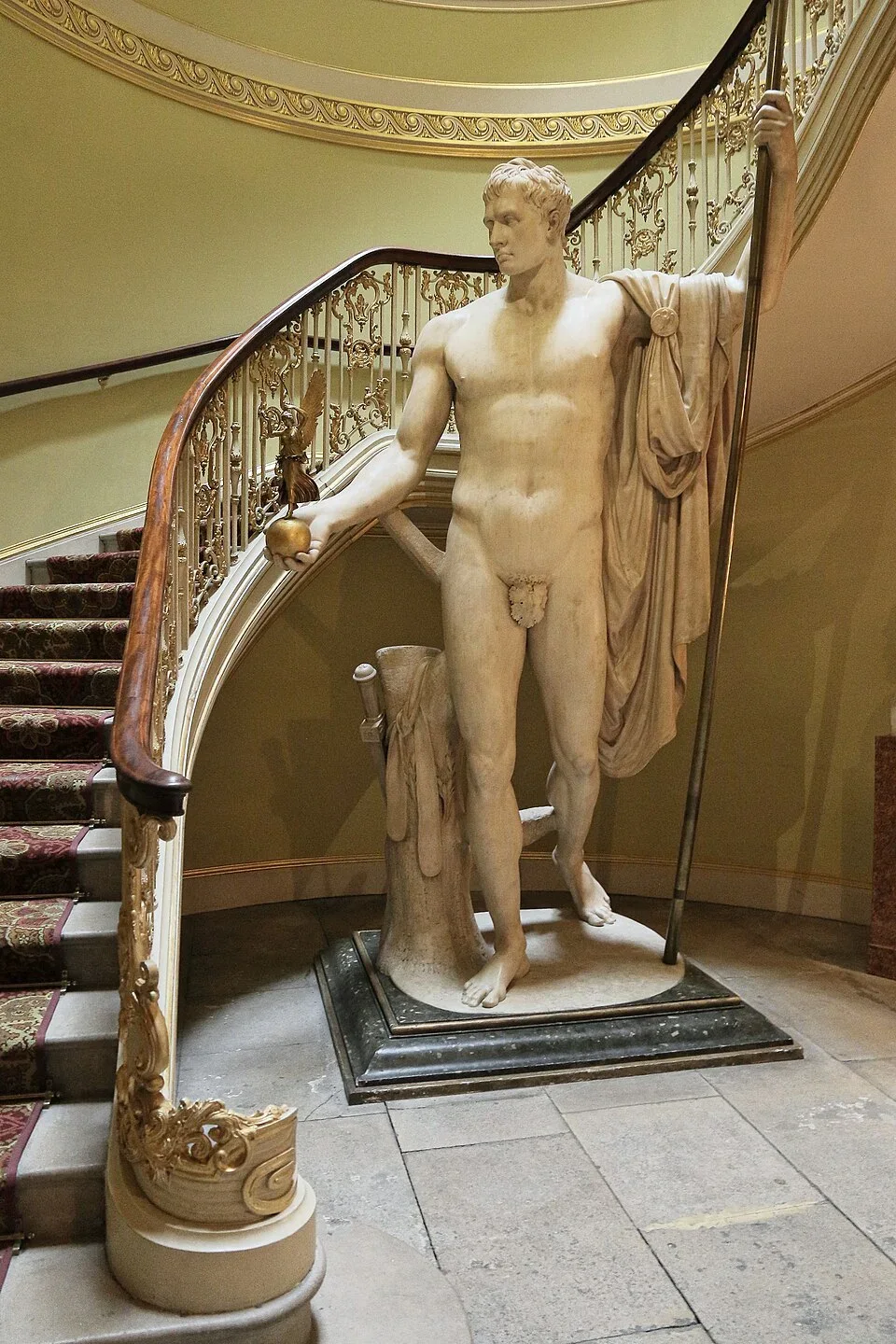
Napoleon as Mars the Peacemaker
A colossal naked figure stands before you, a military cloak over the left shoulder. The left arm rises, holding a staff. In the right hand is a gilded globe with a winged Victory standing on it. A tree trunk takes the weight. The face is Napoleon's, shown as the Roman god Mars. Yet this monument to victory was refused by the very man it honors. In 1802 Canova came to Paris at Napoleon's insistence and modeled his bust. Back in Rome he carved the colossal figure, finishing it in 1806. It reached Paris in 1811, and when Napoleon saw it he turned it down, calling it too athletic. He banned the public from seeing it, and for a time it stood hidden behind a canvas. After Waterloo the British government bought it, and the Prince Regent gave it to the Duke of Wellington, the victor of that battle. Wellington brought it here in 1817, and the floor beneath had to be strengthened to carry the weight. The sculptor never meant it for an open square. He made it for an indoor entrance hall.
Listen in the appAntonio Canova · CC BY-SA 3.0
03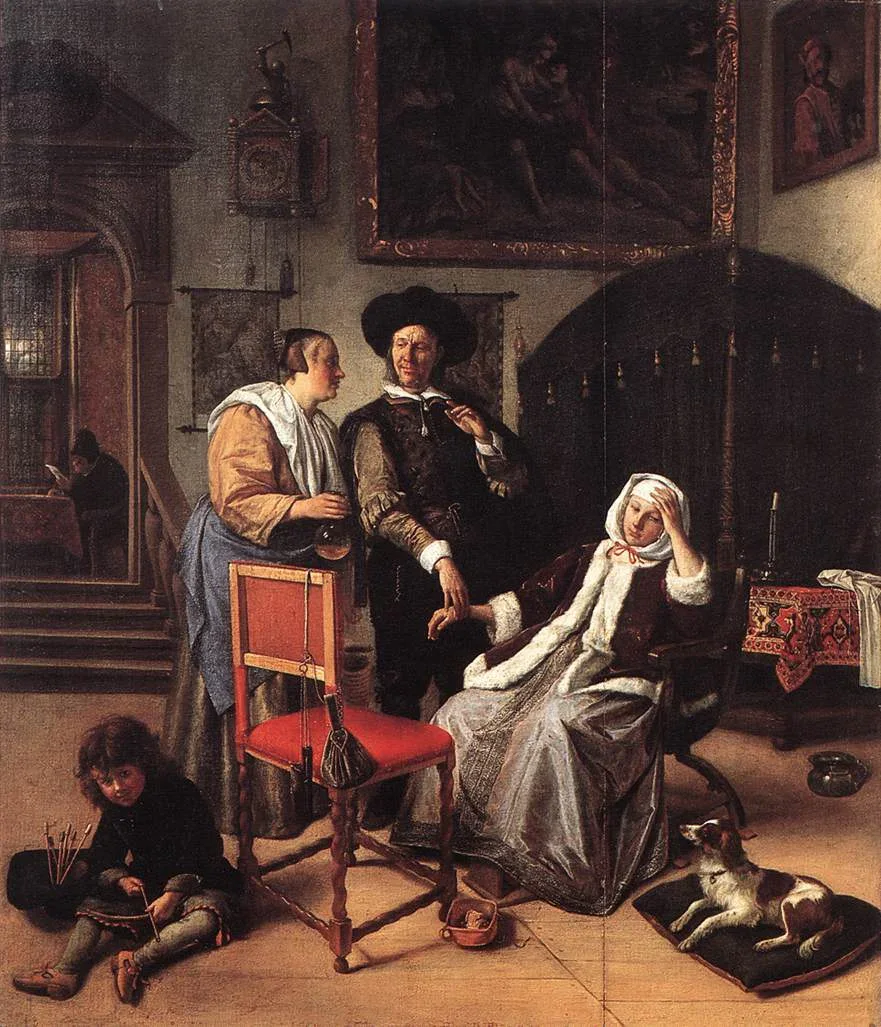
The Doctor's Visit in a Rich Interior
Jan Steen made this as a comedy about a doctor, and he built the joke into the details of the room. A doctor takes the woman's pulse with a great show of seriousness. He wears a costume that is out of date, perhaps even meant for the stage. The boy in the foreground is Cupid, in seventeenth-century clothes, smiling at you as if he knows the secret. The woman may not be ill at all. She may be lovesick. On the wall hangs Venus and Adonis, and high on the right is a comic picture by Frans Hals, the Jester Pickle-Herring. A ribbon dipped in urine smoulders in the brazier at her feet, a test for pregnancy. Jokes at the time mocked doctors who claimed they could tell a woman's trouble from a urine sample. Here a maid holds one up for him. Whether the doctor ever works out what is really wrong with her is something we cannot tell.
Listen in the appJan Steen · Public domain
04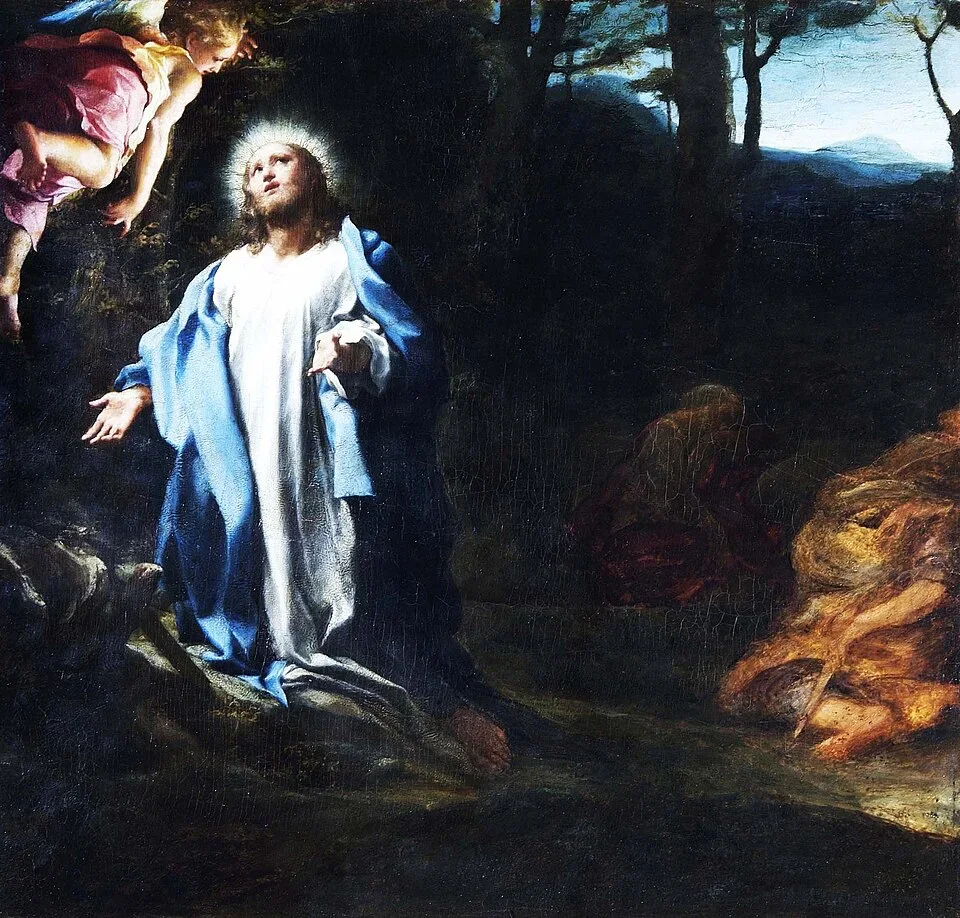
Agony in the Garden
At the foot of the mountain, three small figures lie asleep. They are Peter, James and John. Christ had brought them to the garden of Gethsemane, on the Mount of Olives, and asked them to stay awake and pray with him. Then he went a little way off to pray alone. An angel came, and still they slept. They knew nothing of his anguish. Above them Christ kneels a little apart, his hands open. The angel has come to comfort him, yet his eyes go past the angel and up to heaven. He already knows that Judas will betray him, and that suffering and death lie ahead. He asks that the cup might pass from him, then accepts God's will. He prays three times, and each time they sleep. Light comes from Christ and falls on the angel, brighter than the dawn over the distant mountains. It is the light of one who said he was the light of the world. Correggio made it small, for private prayer. Fire damaged the right side and the edge was cut away. Until cleaning in 1949 and 1950, the three sleepers were too dark to see. It brought them back, and showed that small figures of Judas and Roman soldiers, added later, had been removed.
Listen in the appAntonio da Correggio · Public domain
05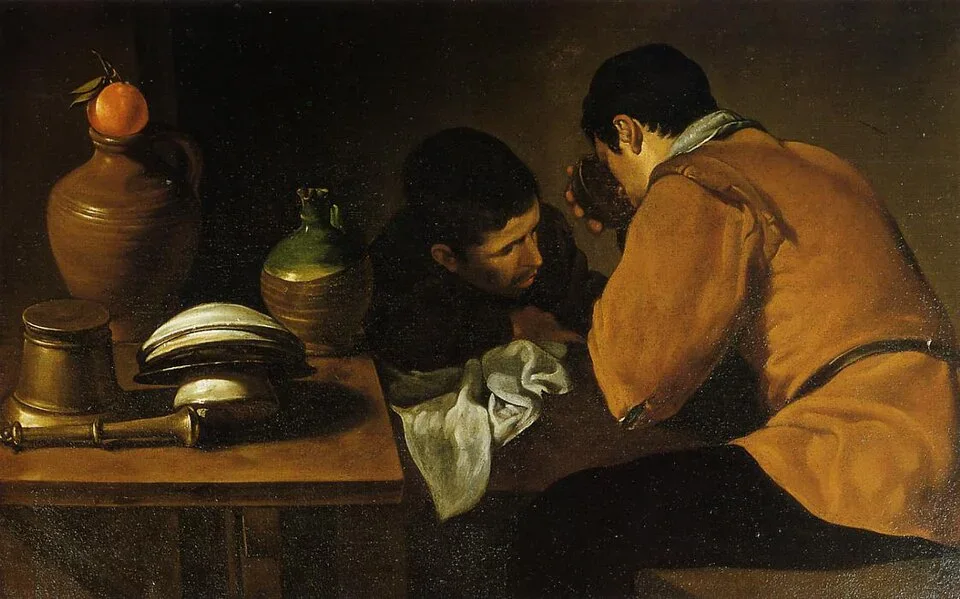
Two Young Men Eating at a Humble Table
Young Diego Velázquez was about to leave Seville for Madrid, and he probably painted this to get his hand in. He was trying to break away from the models he had followed until then. He chose a humble kitchen scene. Two poor men eat at a plain table, with earthenware pots, oranges and bread set out around them, every object observed with patient care. Yet the men fare no better than the pots. Only half of each face shows, and both are drunk. He has set them at the same level as the things around them, part of the still life.
Listen in the appDiego Velázquez · Public domain
06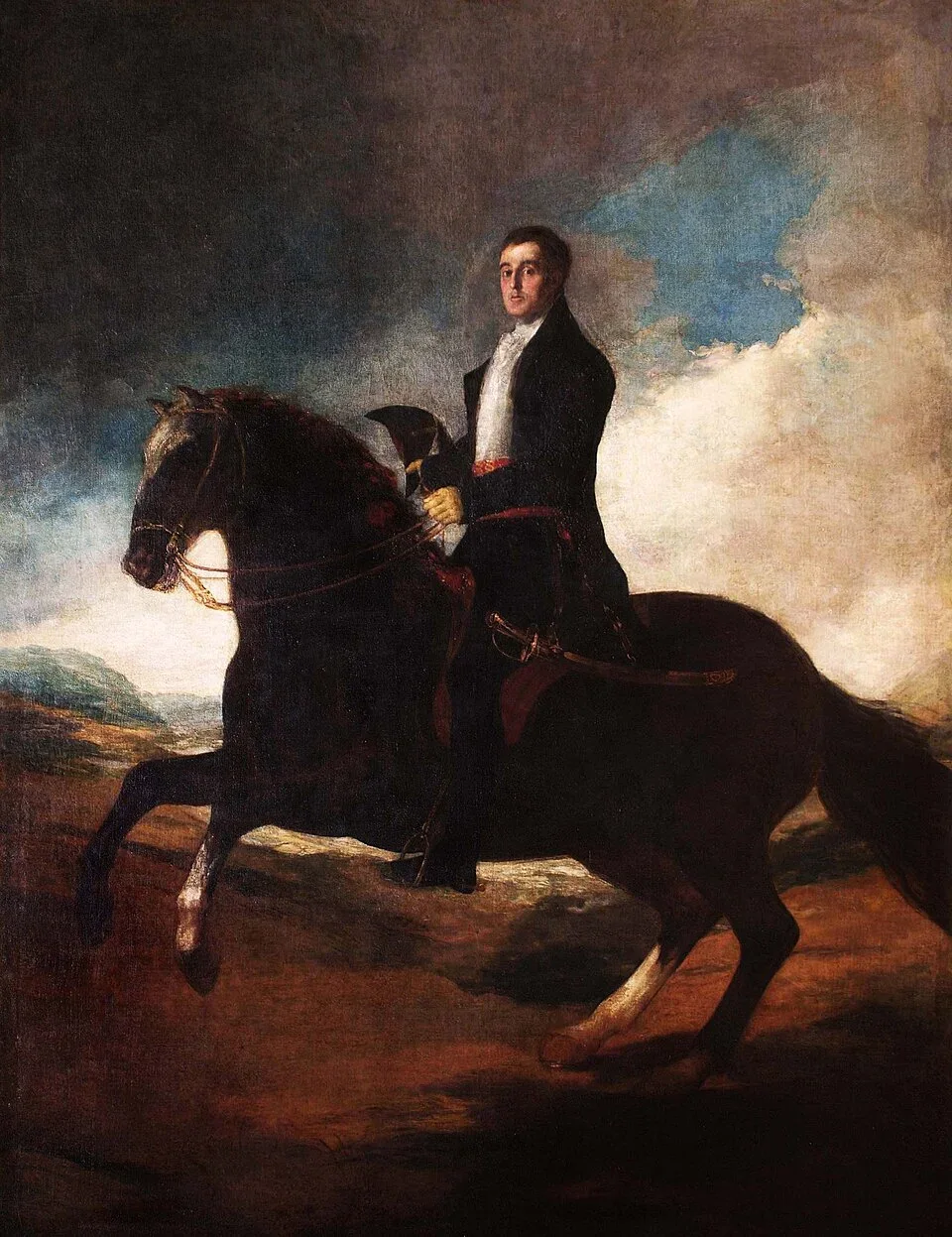
Equestrian Portrait of the 1st Duke of Wellington
Goya painted this in a hurry, and he did not start with a clean canvas. He painted Wellington over an older picture. An X-ray shows the first rider, with a large hat, a star on his chest and a sash. It was probably a politician who had lost power, left unfinished. Wellington had entered Madrid in August 1812 after winning at Salamanca, and Spain had made him Duke of Ciudad Rodrigo. He was leaving on the second of September to go on fighting. Goya had less than three weeks. The haste is still in the painting. In places the brush runs so fast it looks like a sketch. The rider's shape does not quite match Wellington's figure, probably because Goya was adapting another man's portrait. Even the red sash and sabre are Spanish dress, most likely his own addition. Wellington preferred a plain civilian riding coat, even in battle. There is a story about the day Wellington came to the workshop. He thought he looked too stocky in the saddle. Goya was deaf now and knew no English, so his son Javier signed to him while a Spanish officer translated for the general. Voices were raised. Javier kept the worst of the criticism from his father, who could not understand, and tried to calm him. What really passed between the two men that day is still not known.
Listen in the appFrancisco Goya · Public domain
07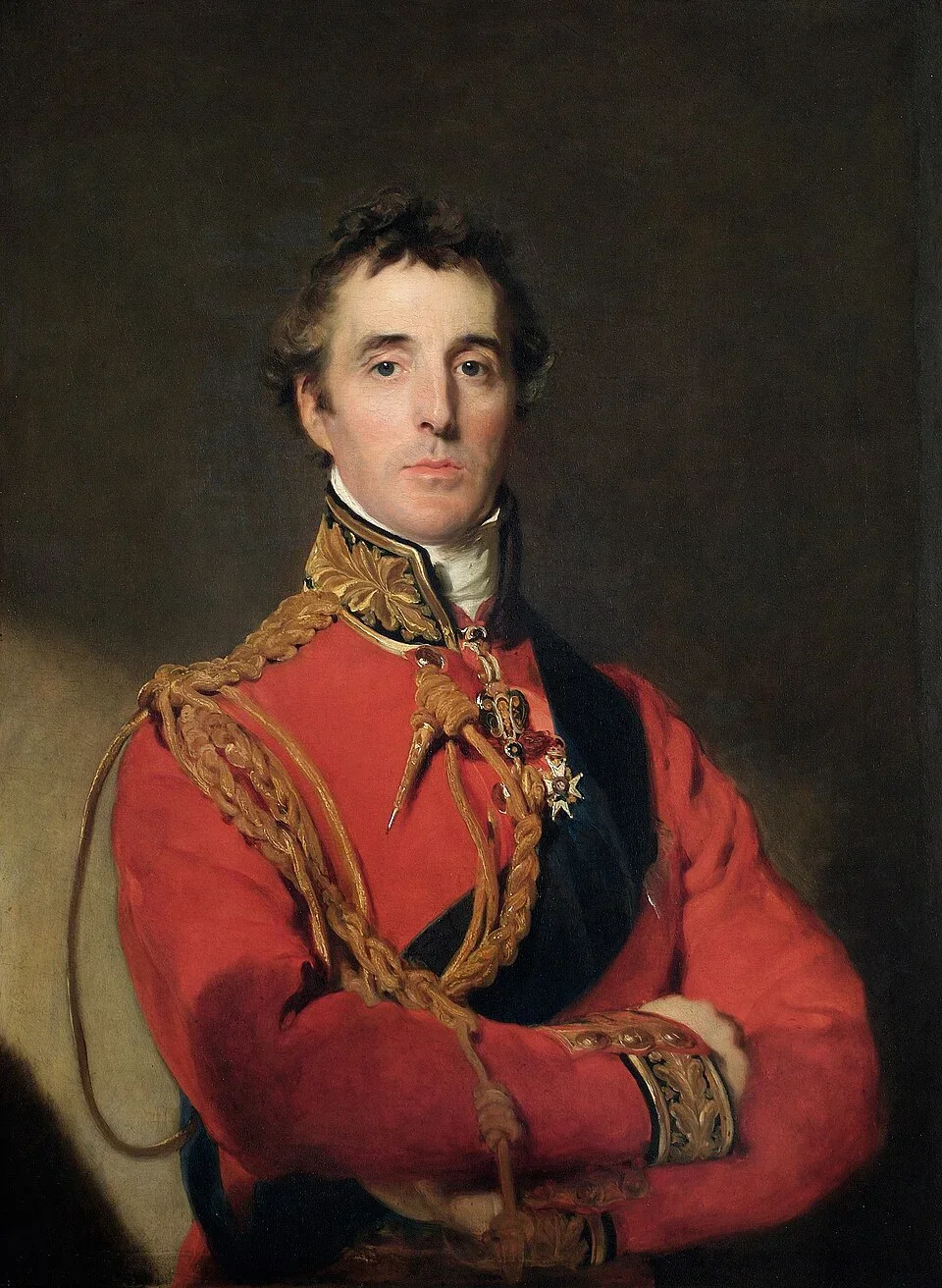
Arthur Wellesley (1769–1852), 1st Duke of Wellington
He faces you in military uniform, calm and distant. Thomas Lawrence, Britain's leading portrait painter, began this portrait in early 1815. Wellington had just won in the Peninsular War. Waterloo was still ahead of him. Soon after, he defeated Napoleon at Waterloo, and then led the allied occupation of France under his command. On his uniform are the Order of the Garter, the Order of the Golden Fleece and the Order of the Bath.
Listen in the appThomas Lawrence · Public domain
08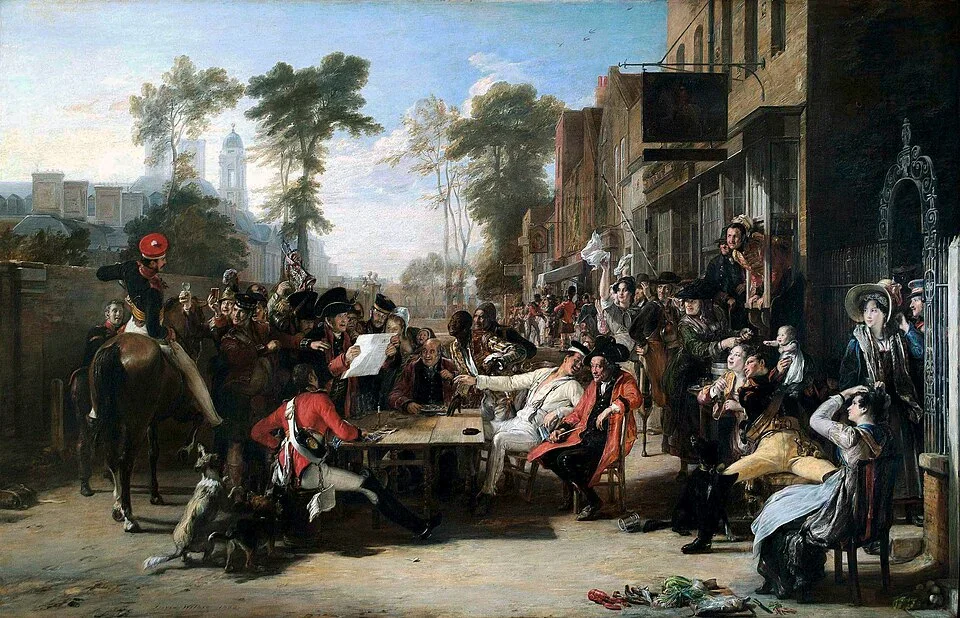
Chelsea Pensioners reading the Waterloo Dispatch
What has brought a crowd of old soldiers around a wooden table outside a Chelsea pub? One of them stands reading the London Gazette. It carries the dispatch Wellington sent immediately after Waterloo. The reader is a Chelsea pensioner who was at Quebec with General Wolfe in 1759. An old man, reading news of a new battle. Wilkie usually painted scenes of ordinary life. Here he tried something different. He showed a great event through the ordinary people it reached, in their own time and place. There are no ancient heroes and no Bible stories. Wellington had asked for it in 1816, a year after the battle. Around the table, a soldier's wife waits, pregnant and pale, for news of her husband's fate. When the picture went on show in 1822, the crowds were so great that a rail had to be put up to protect it. No Royal Academy exhibition had ever needed one before. The Duke did not see the first sketch until 1819. He asked for more soldiers to be added, and younger ones.
Listen in the appDavid Wilkie · Public domain
09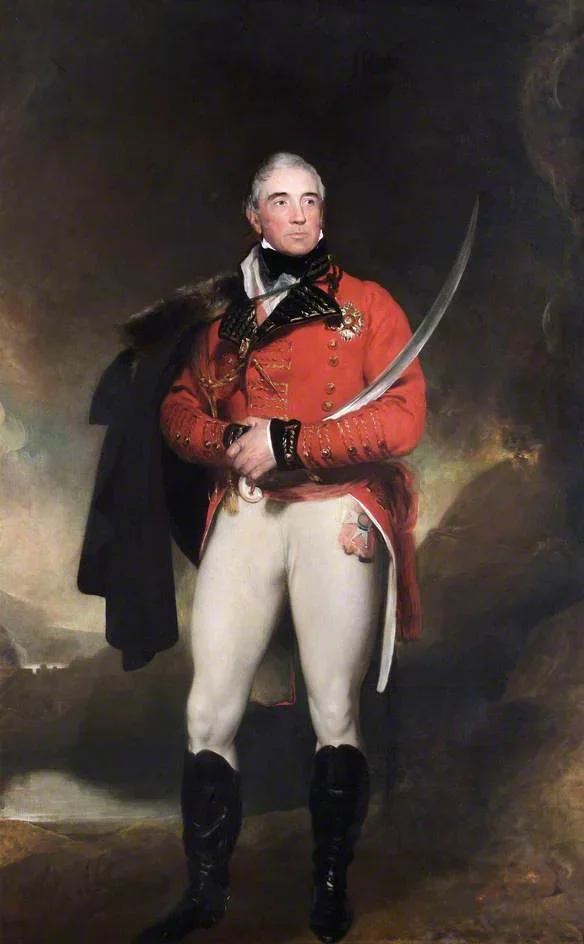
Portrait of Lord Lynedoch
The sword is drawn, but it is not a British blade. It is a curved Turkish sword called a shamshir. Thomas Graham founded a regiment in 1794, the ninetieth Perthshire Volunteers, and in 1801 they took this sword from an armory in Cairo. So the blade in his hand was taken by his own men. He served in the Peninsular War from 1808 and rose to be Wellington's second in command. Given command of his own, he won the Battle of Barossa in 1811, in an attempt to break the French siege of Cadiz. Behind him stands the fortress of San Sebastian in Spain. He later commanded British forces in the Liberation of the Netherlands, and in 1814 he was made Baron Lynedoch. Thomas Lawrence painted him at full length in a general's uniform, with the Order of the Bath and a gold Peninsular medal under his collar. The sword itself is now in a museum in Edinburgh.
Listen in the appThomas Lawrence · Public domain
10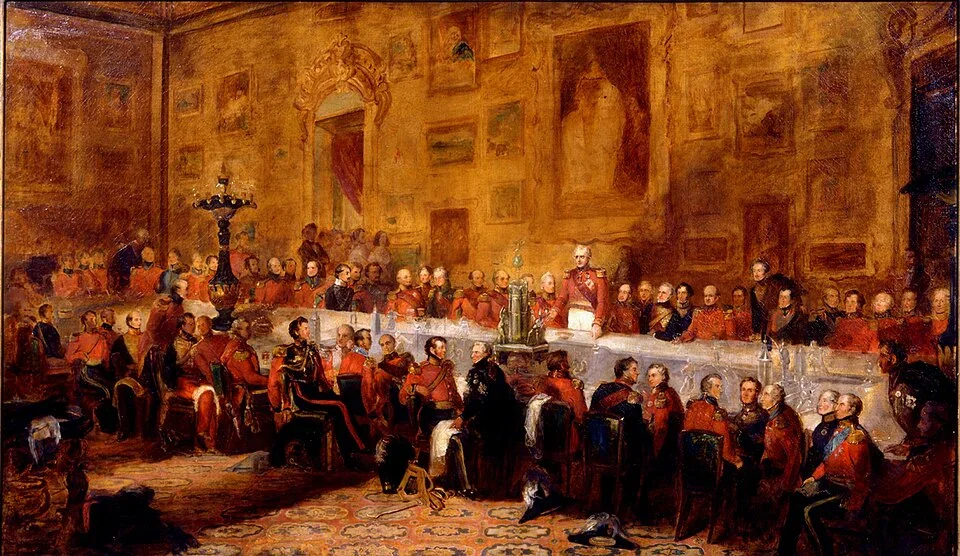
The Waterloo Banquet
On the eighteenth of June in 1836, a young man was riding in Hyde Park. He heard a banquet at the house on Hyde Park Corner, and saw it. He wanted to paint it. The house was the Duke of Wellington's, and this dinner marked the victory at Waterloo. When the young man proposed a painting, the Duke refused. He thought him too inexperienced for a picture with so many people in it. But the painter's patron, Lady Berghersh, the Duke's niece, took the proposal to him, and the Duke gave way. He let the painter into the room to study the ornaments. William Salter spent five years at his studio in Pall Mall, chasing the men to sit for him. He wanted every one of them shown, and chose the moment the Duke proposes a toast. The men on the near side sit in talking groups, full face or in profile, rather than from behind. Some of them had died before 1836. They had been at earlier banquets, and he painted them in as well. Down the middle of the table runs the centrepiece, a gift from the government of Portugal, made from coins melted into silver. Its metalwork shows the victories of the Napoleonic wars.
Listen in the appWilliam Salter · Public domain
- 11
Saint Rosalie Crowned with Roses by Two Angels
Anthony van Dyck · c. 1625
- 12
Marshal Nicolas Jean-de-Dieu Soult (1769–1852), Duc de Dalmatie
George Peter Alexander Healy · 1840
- 13
The Greenwich Pensioners Commemorating Trafalgar
John Burnet · 1837
- 14
His Last Return from Duty
James William Glass · 1853
- 15
The Illicit Highland Whisky Still
Edwin Landseer · 1829
- 16
Pauline Bonaparte, Princess Borghese (1780–1825)
Robert Lefèvre · 1806
- 17
Lieutenant General Sir Thomas Picton (1758–1815), GCB
William Beechey · c. 1815
- 18
Napoleon in the Prison of Nice in 1794
Edward Matthew Ward · 1841
- 19
The Battle of Waterloo
William Allan · 1843
- 20
The Passage of the Danube by Napoleon before the Battle of Wagram
Joseph-François Swebach · 1810
- 21
Mars as a Warrior
Guercino · 1629–1630
- 22
Venus and Cupid
Guercino · 1629–1630
- 23
Portrait of a Man (possibly José Nieto)
Diego Velázquez · c. 1649
- 24
Judith Slaying Holofernes
Adam Elsheimer · 1601–1603
Apsley House
Frequently asked questions
How much does the guide cost?
Free app download. Free until 1 January. Listed guide price: $0.99. Audio guide only. Venue admission is separate.
Can I listen without internet?
Yes. Download the guide’s audio, images, and maps in the app before your visit. Your downloaded content is then available offline.
Can I listen in my language?
In English for now. More languages soon.
Do I need to follow a schedule?
No. This is a self-guided experience. Choose your stops, pause whenever you like, and return to a story at your own pace.
Which artworks are in the Apsley House audio guide?
24 artworks, including The Waterseller of Seville (Diego Velázquez), Napoleon as Mars the Peacemaker (Antonio Canova), The Doctor's Visit in a Rich Interior (Jan Steen), Agony in the Garden (Antonio da Correggio), Two Young Men Eating at a Humble Table (Diego Velázquez), Equestrian Portrait of the 1st Duke of Wellington (Francisco Goya), Arthur Wellesley (1769–1852), 1st Duke of Wellington (Thomas Lawrence), and Chelsea Pensioners reading the Waterloo Dispatch (David Wilkie). The full list is on this page.
Is this the museum’s official audio guide?
No. Stanza is an independent audio guide app and is not affiliated with Apsley House. Museum admission is separate.
At your own pace
Explore Apsley House.
Download Stanza, then search for “Apsley House”.
Free app download · Guide price shown in the app
Keep exploring
Nearby audio guides
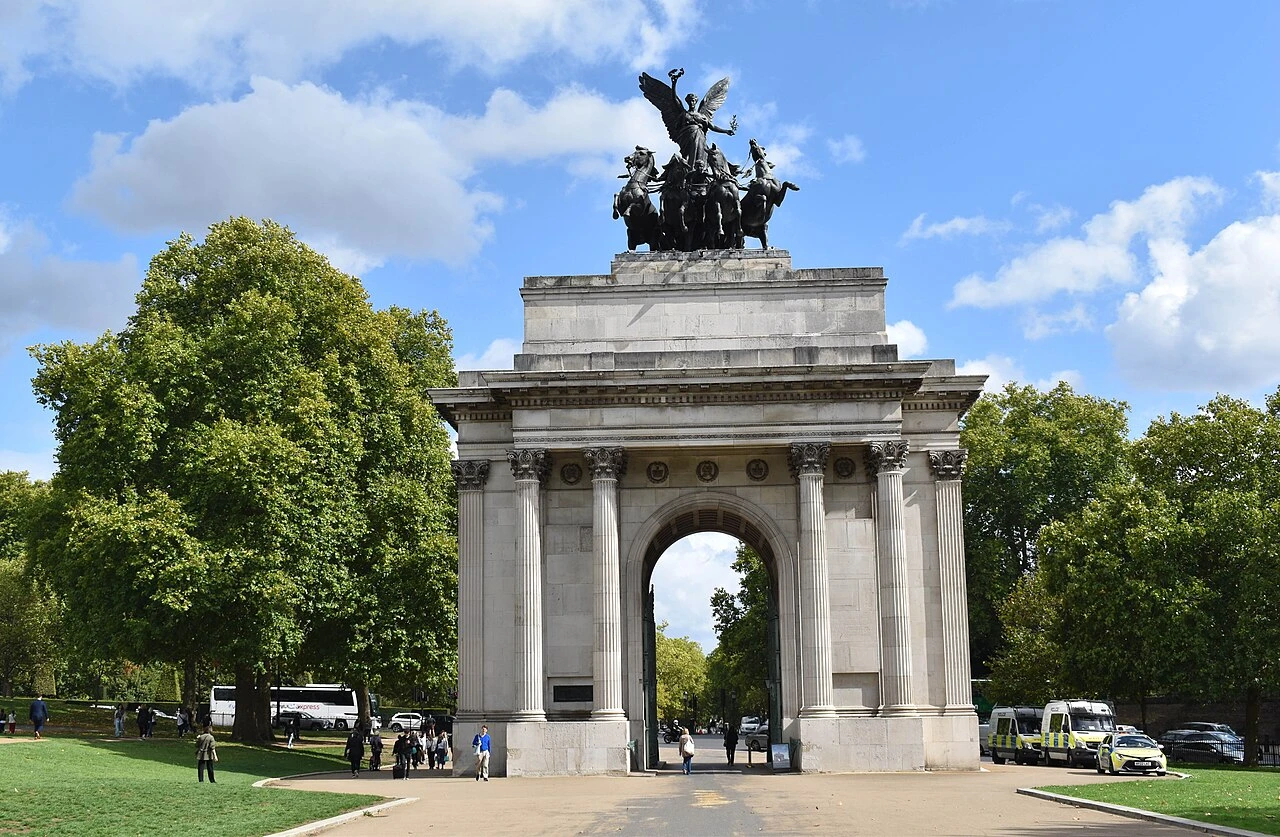
London · 1 km
Wellington Arch
Content & sources
Photo: Canaan · CC BY-SA 4.0
London · 1 km
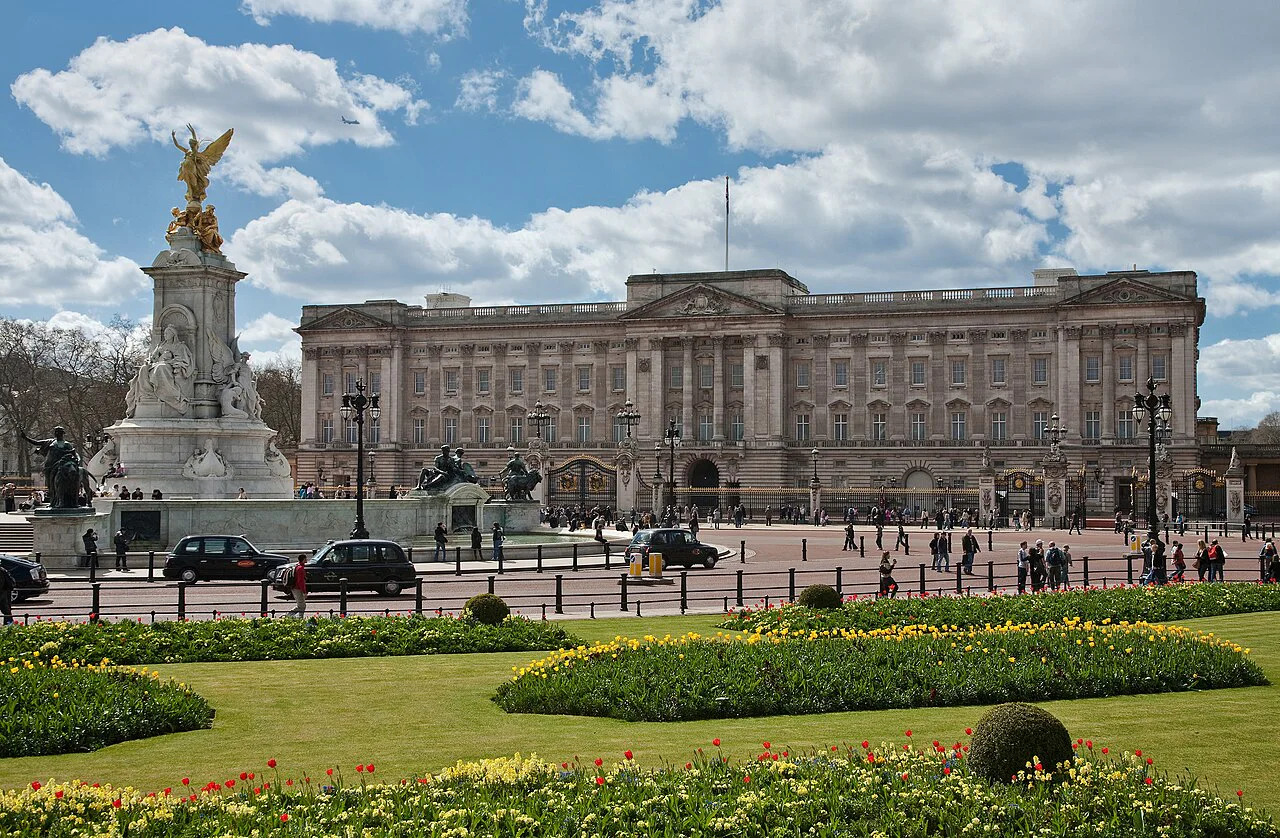
Buckingham Palace
Content & sources
Photo: Diliff · CC BY-SA 3.0
City of Westminster · 1 km
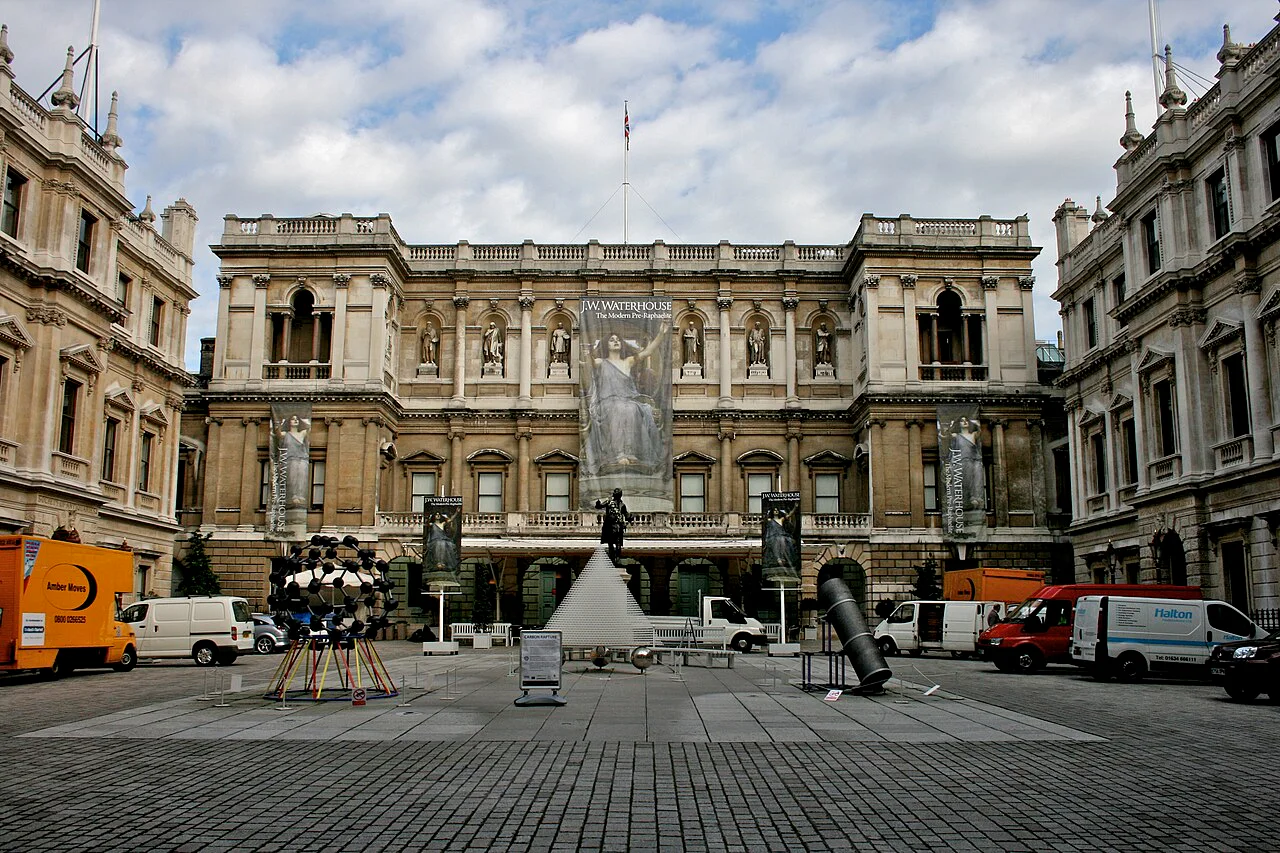
Royal Academy of Arts
Content & sources
Photograph by Mike Peel (www.mikepeel.net). · CC BY-SA 4.0
London · 1 km
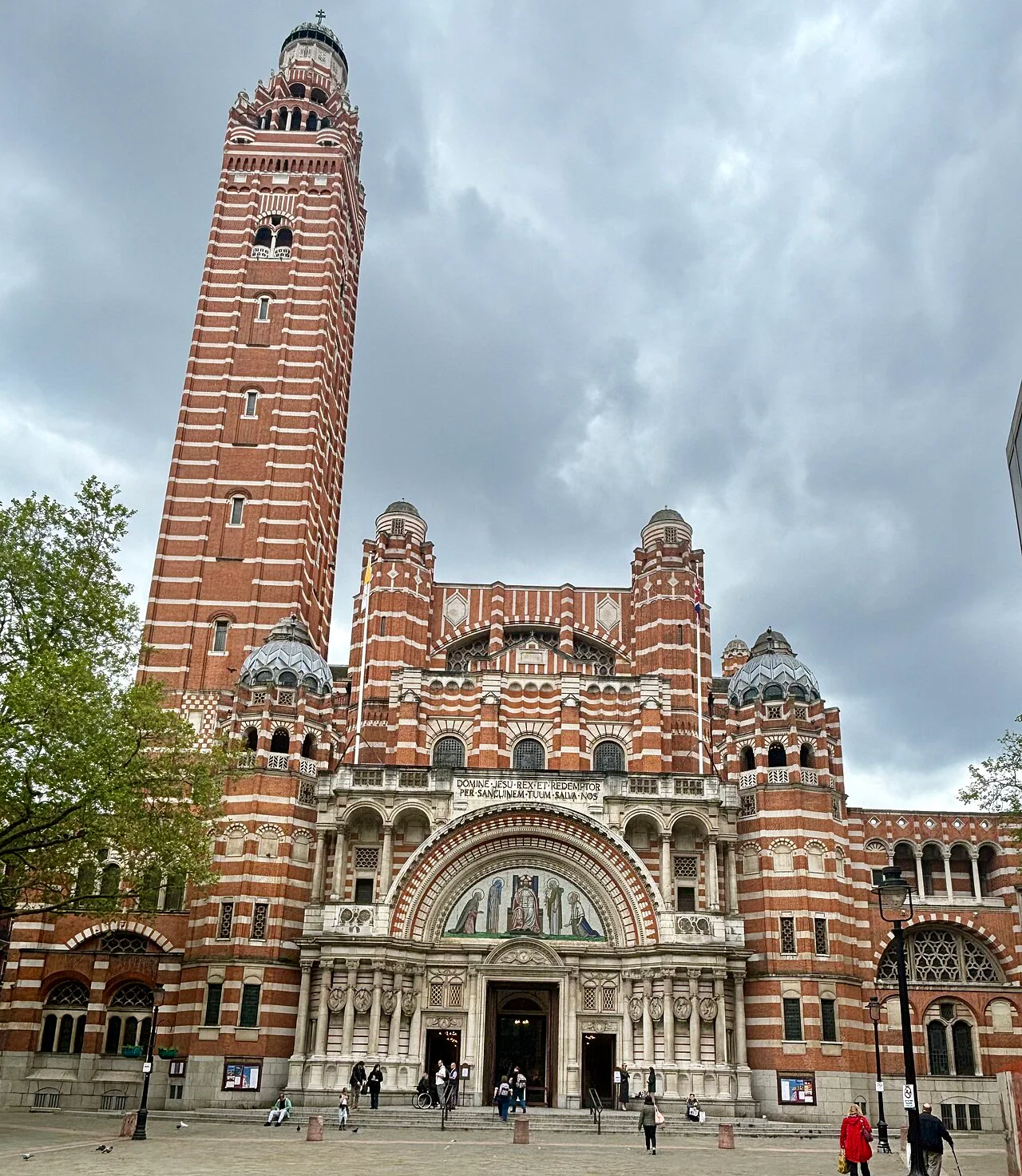
Westminster Cathedral
Content & sources
Frank Kovalchek · CC BY 2.0
Art museums
More art museum audio guides
London · 50 artworks
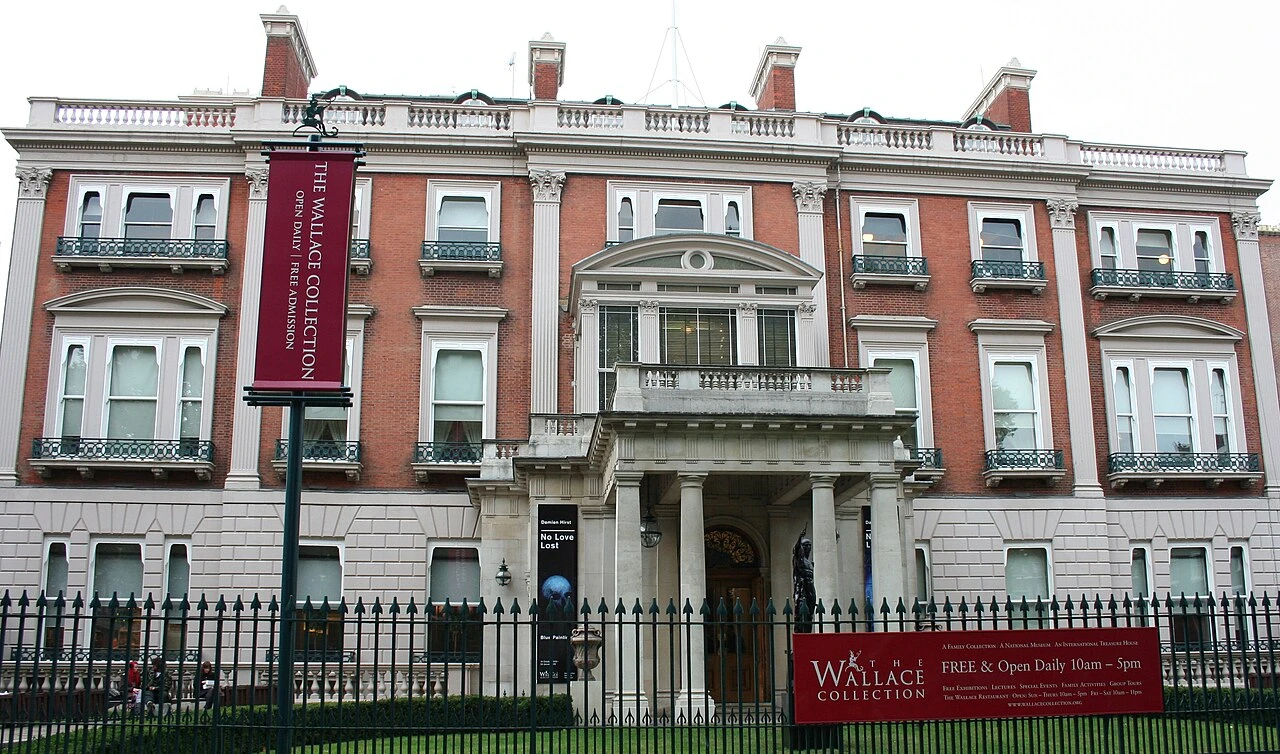
Royal Academy of Arts
Content & sources
Photograph by Mike Peel (www.mikepeel.net). · CC BY-SA 4.0
London · 605 artworks
Wallace Collection
Content & sources
Photo: Peter Clarke · CC BY-SA 3.0
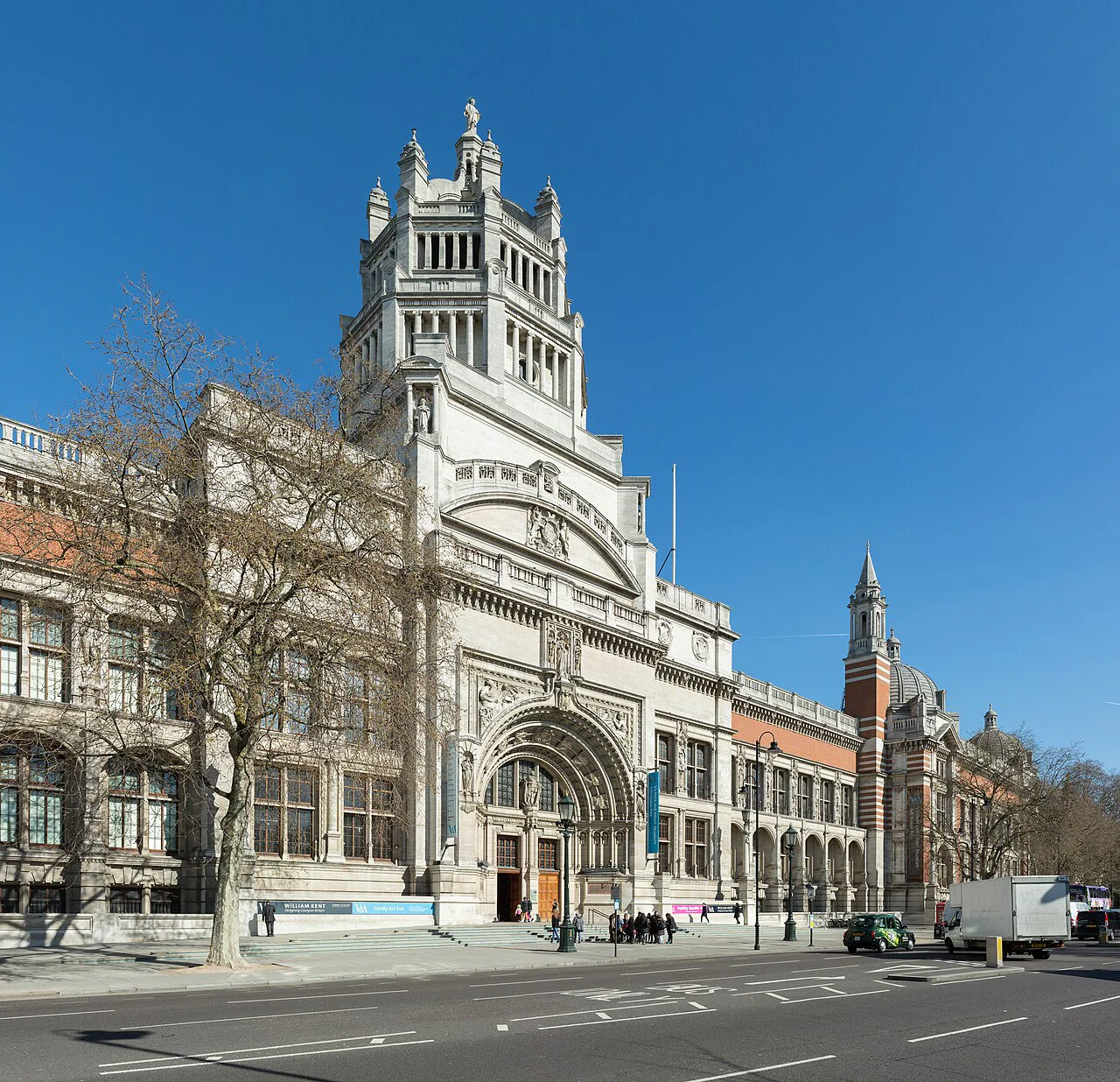
Royal Borough of Kensington and Chelsea · 181 artworks
Victoria and Albert Museum
Content & sources
Photo: Diliff · CC BY-SA 3.0
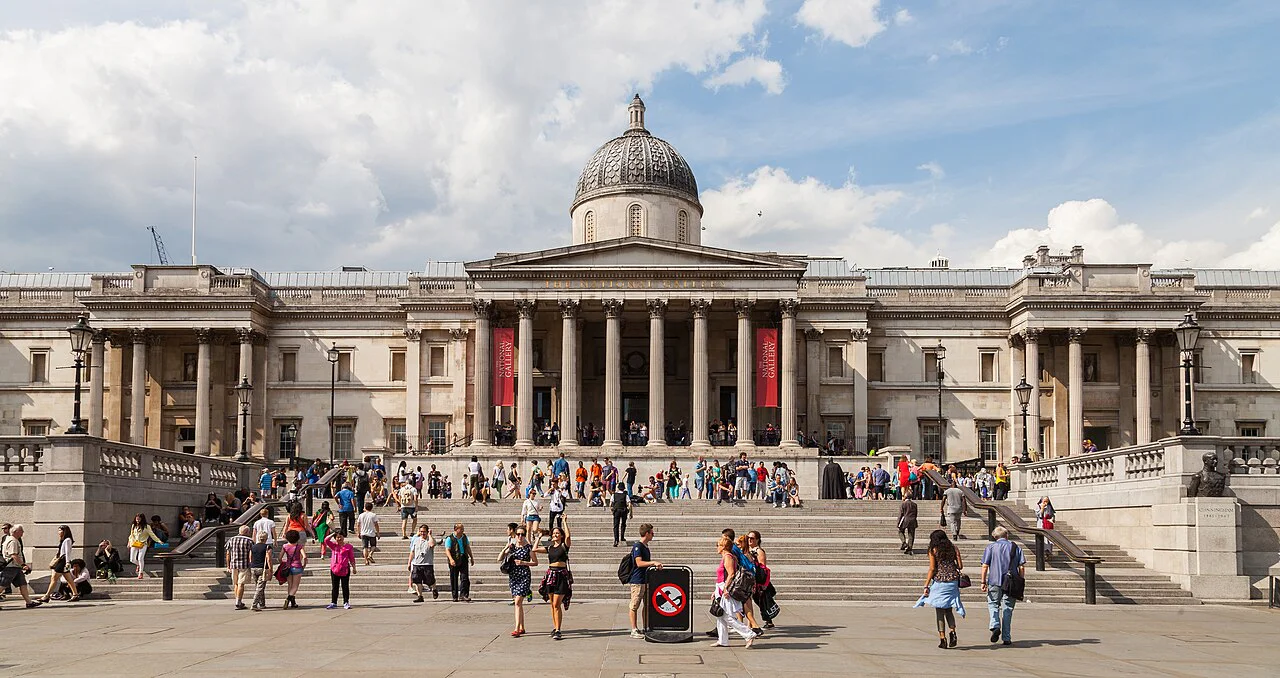
London · 617 artworks
National Gallery, London
Content & sources
Diego Delso · CC BY-SA 4.0
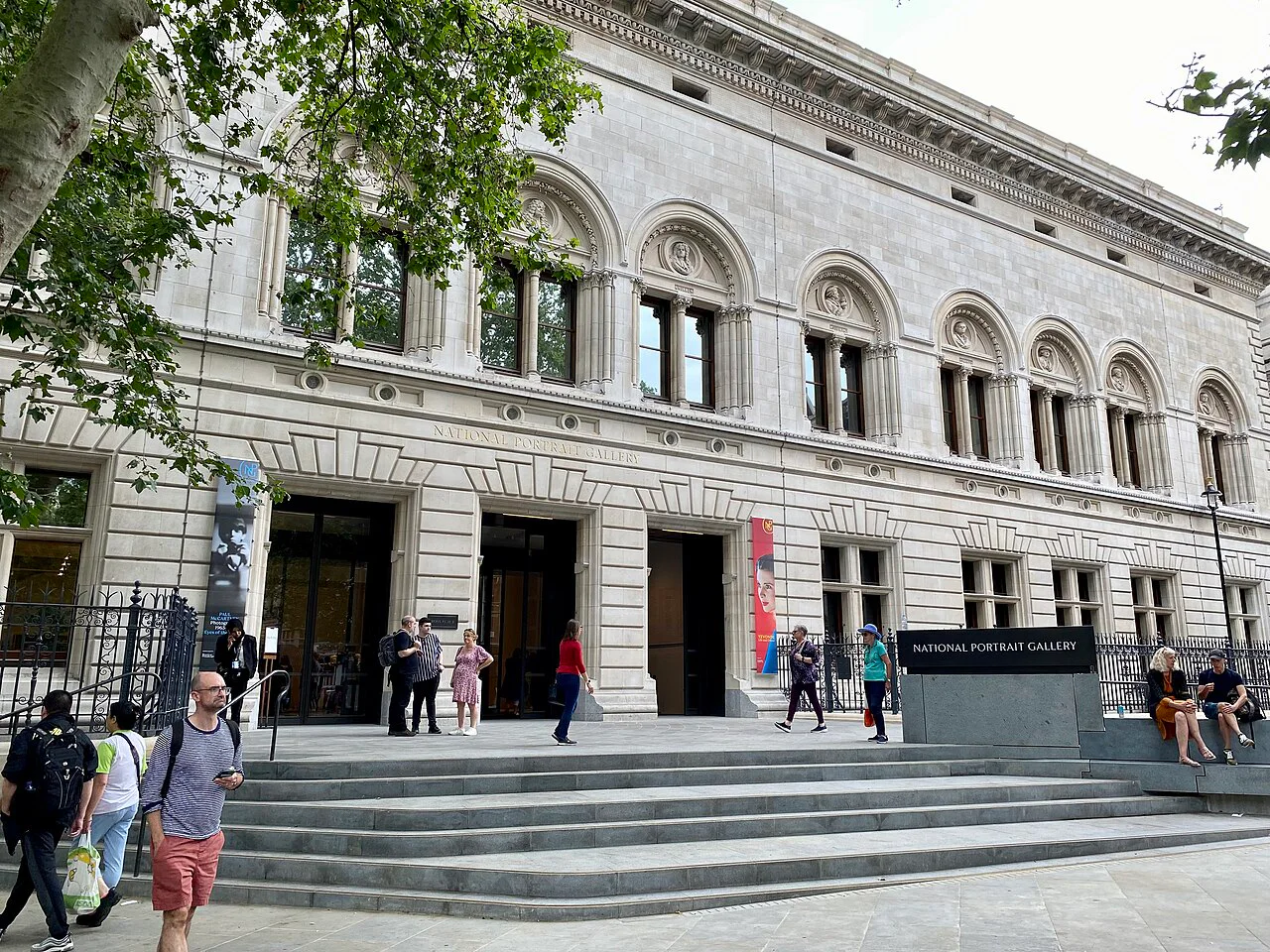
London · 164 artworks
National Portrait Gallery, London
Content & sources
Photo: No Swan So Fine · CC BY-SA 4.0
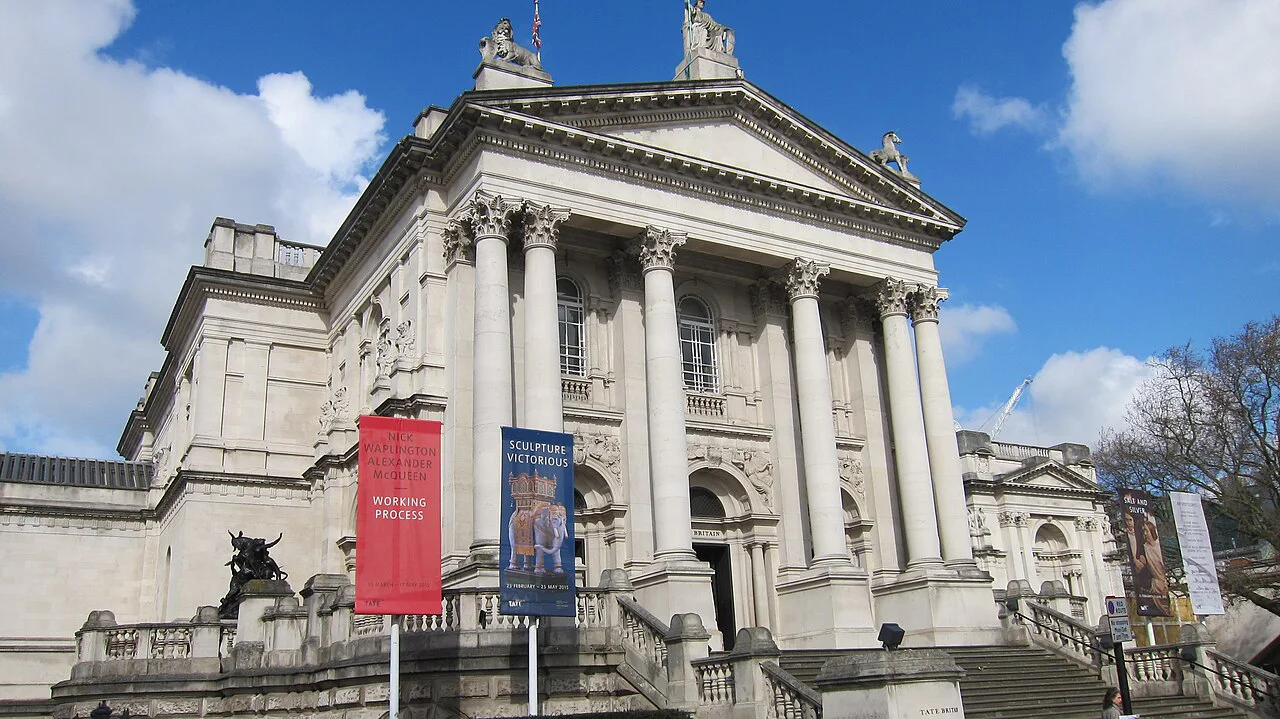
London · 133 artworks
Tate Britain
Content & sources
Carlos Cunha · CC BY-SA 3.0