Stanza · Audio guide
StonehengeAudio guide
A place to remember. A story to take with you.
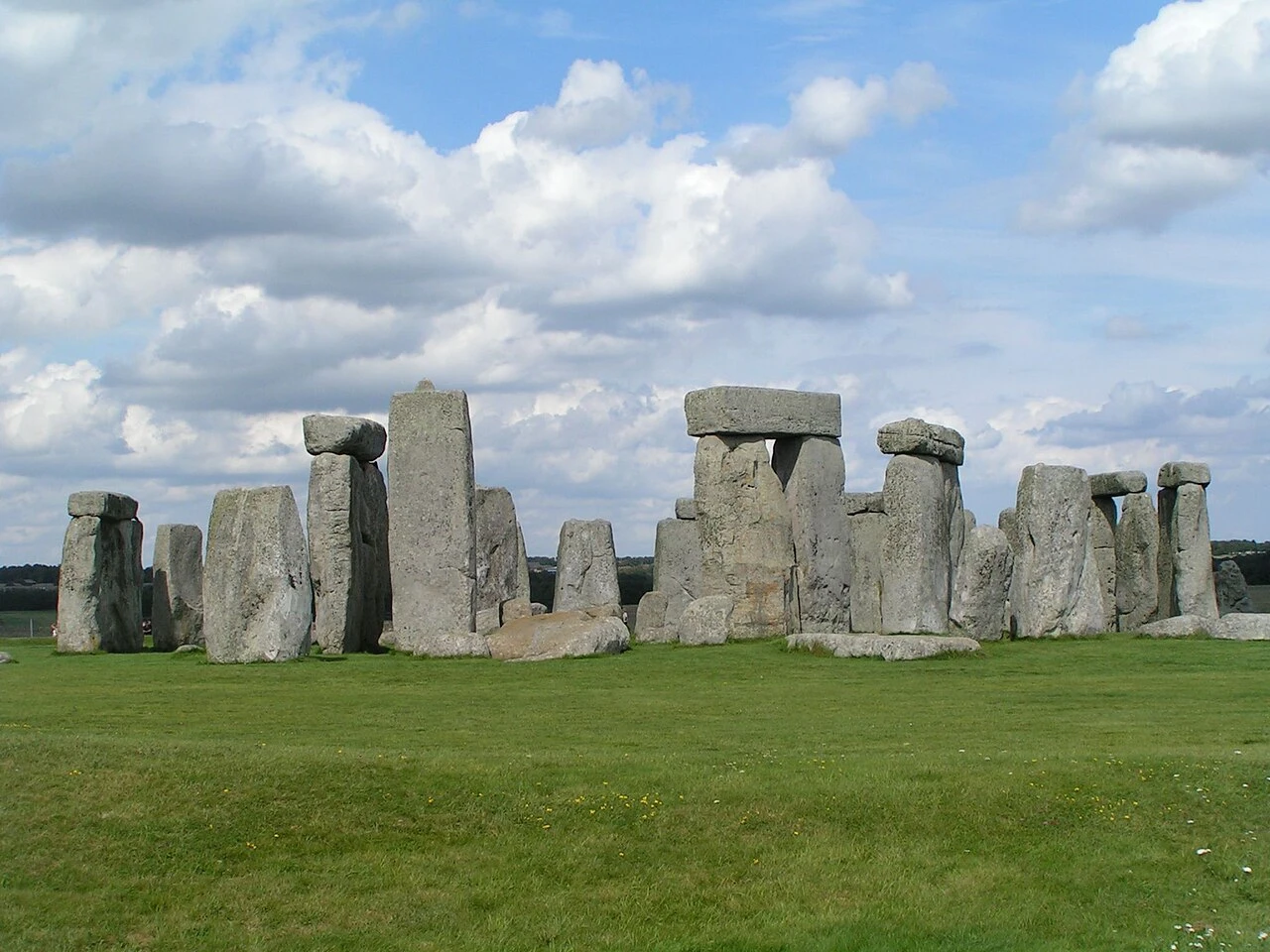
Stonehenge is a prehistoric monument located in Wiltshire, England, consisting of a ring of standing stones. It is a world-famous archaeological site believed to have been built from 3000 BC to 2000 BC.
Download Stanza, then search for “Stonehenge”.
About the tour
One guide. Your kind of visit.
Stonehenge is a prehistoric monument located in Wiltshire, England, consisting of a ring of standing stones. It is a world-famous archaeological site believed to have been built from 3000 BC to 2000 BC.
Ready when you are.
- 01Get the free Stanza app.
iOS & Android
- 02Find your guide.
“Stonehenge”
- 03Download before you go.
Works offline
Audio guide / 17 narrated stops
Inside the guide
Get to know a few of the stories before you go. Open a stop to read more.
01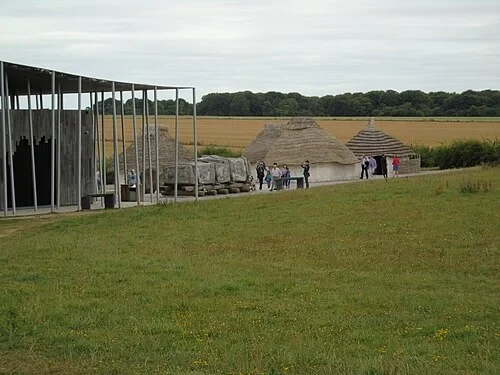 The Neolithic GatewayRecreated Neolithic Houses
These dwellings are based on archaeological discoveries at Durrington Walls, a massive Neolithic settlement located just a short distance away. While the stone circle served as a sacred space for the dead, Durrington Walls was likely a "land of the living," bustling with families, laborers, and rituals during the monument's construction. Around 3100 BC, when the first earthworks began, people lived in small, square houses like these. Inside, you can see the hard-packed white chalk floors and simple hearths that would have provided warmth and light. The walls were constructed using wattle and daub, while the roofs were thickly thatched to withstand the British weather. Walking through these spaces helps humanize the monumental effort required to move and shape the massive stones. It reminds us that behind the mystery of Stonehenge was a highly organized society of people who needed homes, food, and community. These replicas bring to life the domestic side of prehistory, showing that the builders' lives were intertwined with the sacred landscape they were creating. Notice the small size of the entrance, designed to keep heat trapped inside during cold Wiltshire nights.
Fernando Losada Rodríguez · CC BY-SA 4.0
02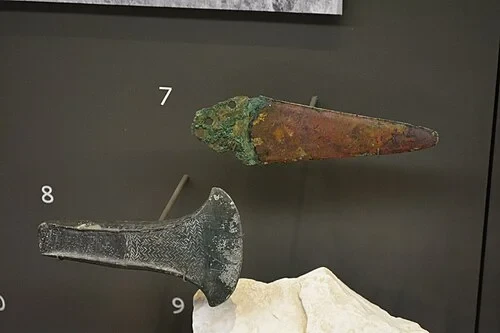 The Neolithic GatewayEarly Bronze Age Tools
Discovered in burial mounds surrounding Stonehenge, these items illustrate the arrival of the Bronze Age in Britain. The people who visited and maintained the site during this period were no longer isolated; they were part of a sophisticated, international trade network that stretched across Europe. Metalworking required materials like copper and tin, which were often sourced from hundreds of miles away. A prime example of this connectivity is the famous "Amesbury Archer," whose grave was found nearby. Chemical analysis of his teeth revealed that he was raised in the Alpine region of Central Europe before traveling to the Stonehenge landscape 4,000 years ago. He was buried with some of the earliest gold and copper objects found in Britain, suggesting he held high status. The tools you see here weren't just functional; they were symbols of wealth and technological mastery. They prove that by the time the stone circle reached its most complex form, the region was a bustling hub for travelers and traders from across the continent, drawn to the spiritual power of the stones. Look for the distinct green patina on the metal, a result of thousands of years of oxidation in the soil.
TobyEditor · CC BY 4.0
03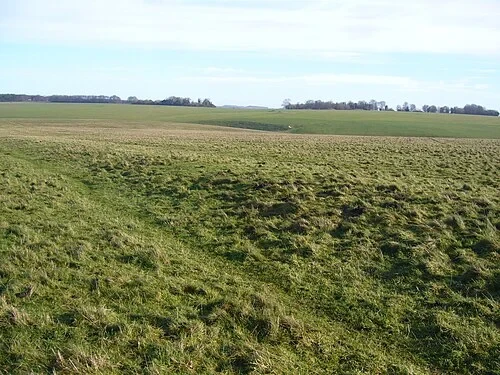 The Sacred ApproachThe Processional Avenue
Known as the Processional Avenue, this feature consists of two parallel banks and ditches that cut through the rolling Salisbury Plain. Archaeologists believe this was the primary ritual route for those approaching the monument. The path likely served a symbolic purpose, acting as a transition between the world of the living and the world of the ancestors. Tradition suggests that funeral processions would travel from the river—a source of life—along this designated track until they reached the "land of the dead" at the stone circle. Interestingly, the first 500 yards of the Avenue from the monument entrance align precisely with the summer solstice sunrise. This suggests that the landscape itself was engineered to guide movement in harmony with the movements of the sun. While much of the earthwork has been worn down by centuries of farming, the alignment still dictates how we perceive the relationship between the monument and the surrounding environment. It transformed Stonehenge from a solitary structure into the focal point of a vast, orchestrated sacred geography. Today, the path is best seen when the sun is low, casting long shadows across the shallow ridges.
Listen in the appPhoto: Ashley Columbus · CC BY-SA 3.0
04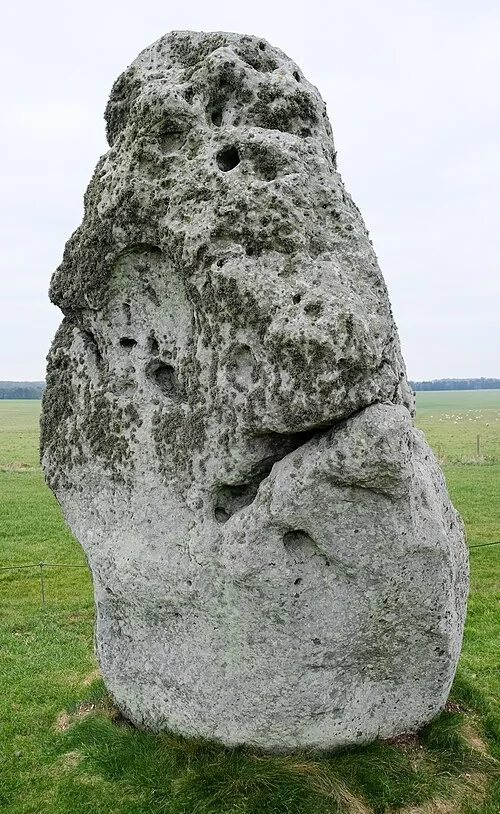 The Sacred ApproachThe Heel Stone
Unlike the carefully shaped stones within the main circle, the Heel Stone remains in its natural, rugged state. Its presence is shrouded in folk legend; one famous story tells of the Devil throwing the stone at a fleeing friar, striking his heel and pinning the rock into the ground forever. However, its true significance lies in its astronomical precision. If you stand at the center of the monument and look toward this stone, you are looking toward the spot where the sun rises on the longest day of the year: the summer solstice. At that moment, the sun appears to hover directly over the top of the Heel Stone, flooding the main axis of the monument with light. This alignment confirms that the Neolithic builders had a sophisticated understanding of solar cycles. The stone likely marked a crucial threshold, a boundary where the profane world ended and the sacred space began. It has stood in this exact position for thousands of years, serving as a permanent marker for the most important dawn in the ancient calendar. You can see how its rough surface contrasts with the smooth, worked stones just a few yards away.
Listen in the appPhoto: DeFacto · CC BY-SA 4.0
05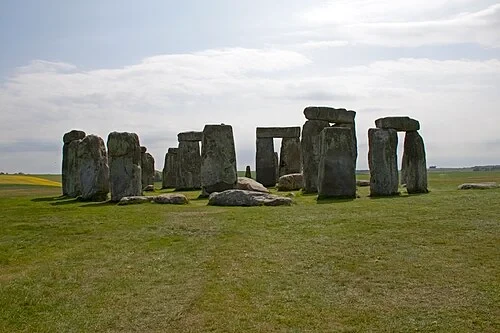 The Outer EnclosureThe Sarsen Circle
This outer circle, measuring about 98 feet in diameter, represents the sheer physical scale of the monument’s most iconic phase. "Sarsen" is a type of incredibly hard silcrete sandstone. Geochemical testing has traced these stones to the Marlborough Downs, located roughly 20 miles north of this site. To move blocks of this size across the rugged Neolithic landscape would have required an immense, coordinated communal effort. Researchers believe teams of hundreds of people used timber rollers, sledges, and grease to haul the stones over hills and through valleys. Once on site, the stones were meticulously shaped using stone hammers called "mauls." Looking at the circle today, we see only a portion of the original structure; many stones were removed or fell over the centuries. However, the remaining uprights still convey the architectural ambition of a society that could organize thousands of hours of labor for a single monument. This circle formed a continuous, enclosed ring, creating a private space for ceremonies that was visually separated from the surrounding plains. The sheer uniformity of the stones creates a sense of rhythmic solidity as you walk around the perimeter.
Listen in the appTony Hisgett from Birmingham, UK · CC BY 2.0
06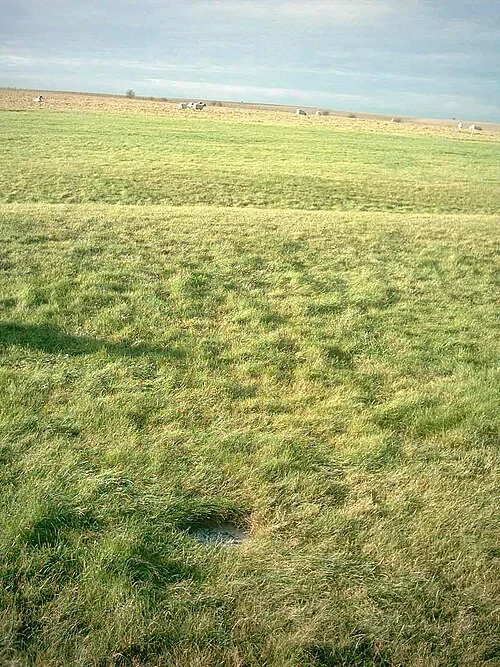 The Outer EnclosureThe Aubrey Holes
Named after the 17th-century antiquarian John Aubrey, who first recorded them, these pits represent the earliest architectural phase of Stonehenge, dating back to roughly 3100 BC. Long before the giant sarsens were raised, this site was a large earthwork enclosure defined by a bank and ditch. The Aubrey Holes were dug just inside that bank. For many years, their purpose was a mystery, but recent excavations have revealed that they served as a massive cremation cemetery. The remains of hundreds of men, women, and children were placed within these pits over several centuries. This discovery fundamentally changed our understanding of the site, proving that Stonehenge was a sacred place of burial and ancestor worship for nearly 500 years before it became a stone monument. The individuals buried here were likely part of an elite dynasty, as their remains were treated with great care. These humble-looking markers are actually the footprints of the monument's origins, anchoring its history in the deep traditions of the Neolithic people who lived here first. Each pit was dug into the natural white chalk bedrock, which is why they appear as bright spots in the green grass today.
Listen in the appAdamsan (talk) (Uploads) · Public domain
07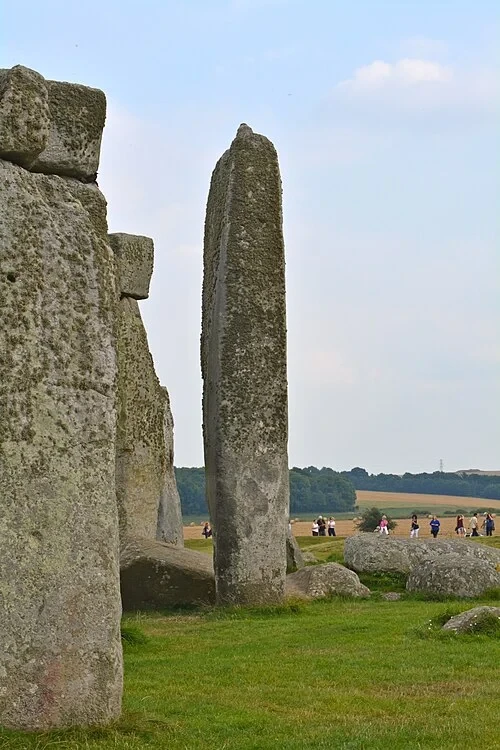 Neolithic EngineeringPrehistoric Stone Joinery
One of the most unique features of Stonehenge is the "woodworking" technique used to secure the structure. If you look at an upright stone that has lost its horizontal cap, you can see a protruding bump known as a "tenon." This was designed to fit into a corresponding "mortise" hole carved into the underside of the horizontal lintel. This mortise-and-tenon joint is a classic carpentry technique, yet here it is rendered in solid sandstone. The builders even used "tongue-and-groove" joints to connect the lintels to one another in a continuous ring. This level of sophisticated joinery is unique to Stonehenge; no other prehistoric stone monument in the world displays this degree of architectural refinement. It suggests that the people who built Stonehenge may have been more accustomed to working with timber and simply translated those familiar skills into the more permanent medium of stone. This engineering ensured the stability of the monument, allowing the heavy horizontal blocks to remain balanced precariously high above the ground for thousands of years, even as the landscape shifted beneath them. You can still see the rounded shape of the tenon on several of the standing pillars.
Listen in the appPhoto: TobyEditor · CC BY 4.0
08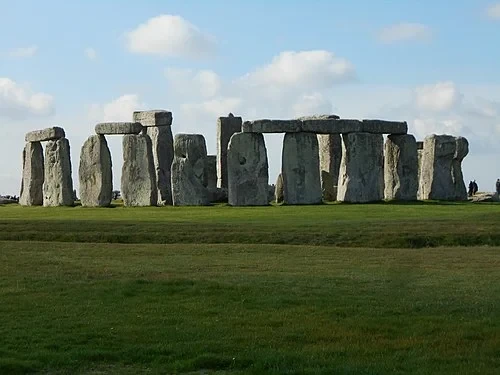 Neolithic EngineeringThe Floating Lintels
These capping stones, known as lintels, are not just flat blocks. To create the appearance of a perfect circle from the ground, the builders slightly curved the sides of each lintel. If they had been straight, the outer ring would have looked like a jagged polygon rather than a smooth curve. Additionally, the ground at Stonehenge slopes significantly from north to south. To compensate for this uneven terrain, the Neolithic engineers meticulously leveled the tops of the lintels. This meant that while the upright stones varied in height to reach the same level, the horizontal line they created remained perfectly flat against the horizon. This level of precision is staggering given the tools available at the time. The lintels also feature "bespoke" shaping, being wider at the top than at the bottom to counteract the effects of perspective when viewed from below. These sophisticated visual corrections prove that Stonehenge was designed with an intended "viewer" in mind, prioritizing the aesthetic harmony and geometric perfection of the structure as seen from within the sacred circle. Notice how the light catches the upper edge of the lintels, emphasizing the horizontal line they create.
Listen in the appPhoto: Hadrianus1959 · CC BY-SA 4.0
09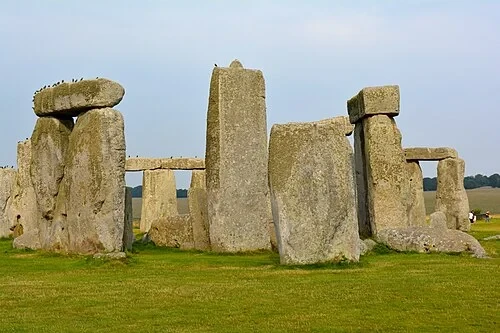 The Great Trilithon HorseshoeThe Trilithon Horseshoe
This inner sanctum represents the peak of the monument's architectural ambition. The word "trilithon" comes from the Greek for "three stones," referring to the two massive uprights capped by a single horizontal lintel. These five trilithons were the final major stone setting to be completed, and they dominate the interior space. The horseshoe opens toward the northeast, perfectly framing the entrance and the Heel Stone beyond. As you move from the outer Sarsen Circle toward this inner U-shape, the stones significantly increase in size. This transition creates a sense of rising drama and importance as one approaches the center of the site. The massive scale of these stones would have restricted views of the ceremonies taking place inside, suggesting that the horseshoe was a privileged space reserved for the most important members of society. While the outer circle is a communal boundary, this inner horseshoe is the spiritual core, where the most significant celestial alignments were anchored and where the connection between the earth and the sky was most intensely felt. The stones here are some of the most meticulously smoothed surfaces in the entire monument.
Listen in the appPhoto: TobyEditor · CC BY 4.0
10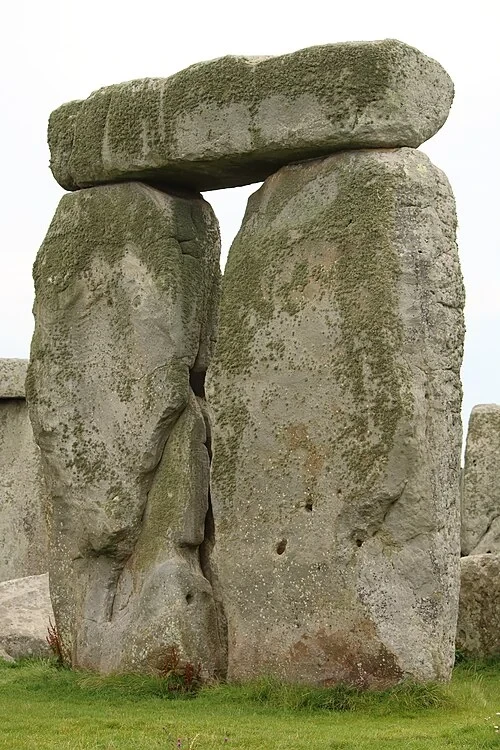 The Great Trilithon HorseshoeThe Great Trilithon
This massive upright is part of what archaeologists call the Great Trilithon. Originally, it stood as a pair with another stone, supporting a giant lintel 20 feet above the ground. Today, only one upright stands at its full height, while its partner lies broken on the grass. Raising a 30-ton block of stone vertically was an incredible engineering challenge. Builders had to dig a deep pit with one sloped side, slide the stone in, and then use timber A-frames, heavy ropes, and pure human strength to haul it upright. Gravity did the rest of the work as the stone settled into the chalk bedrock. You may notice that some stones here lean at dramatic angles. Much of this is due to centuries of natural settling and the activities of early antiquarians who dug around the bases. During the 20th century, several of these stones were straightened and set in concrete to prevent them from collapsing entirely. Despite the damage of time, the sheer verticality of the Great Trilithon remains the most imposing sight within the circle. Look at the base to see where the stone tapers slightly to fit into its original foundation pit.
Listen in the appPhoto: FrDr · CC BY-SA 4.0
Stonehenge
Frequently asked questions
How much does the guide cost?
Free app download. Listed guide price: $1.99. Guide price shown in the app. Audio guide only. Venue admission is separate.
Can I listen without internet?
Yes. Download the guide’s audio, images, and maps in the app before your visit. Your downloaded content is then available offline.
Can I listen in my language?
Stanza supports 15 languages. Check the app for the languages available for this guide.
Do I need to follow a schedule?
No. This is a self-guided experience. Choose your stops, pause whenever you like, and return to a story at your own pace.
At your own pace
Explore Stonehenge.
Download Stanza, then search for “Stonehenge”.
Free app download · Guide price shown in the app
Keep exploring
Nearby audio guides
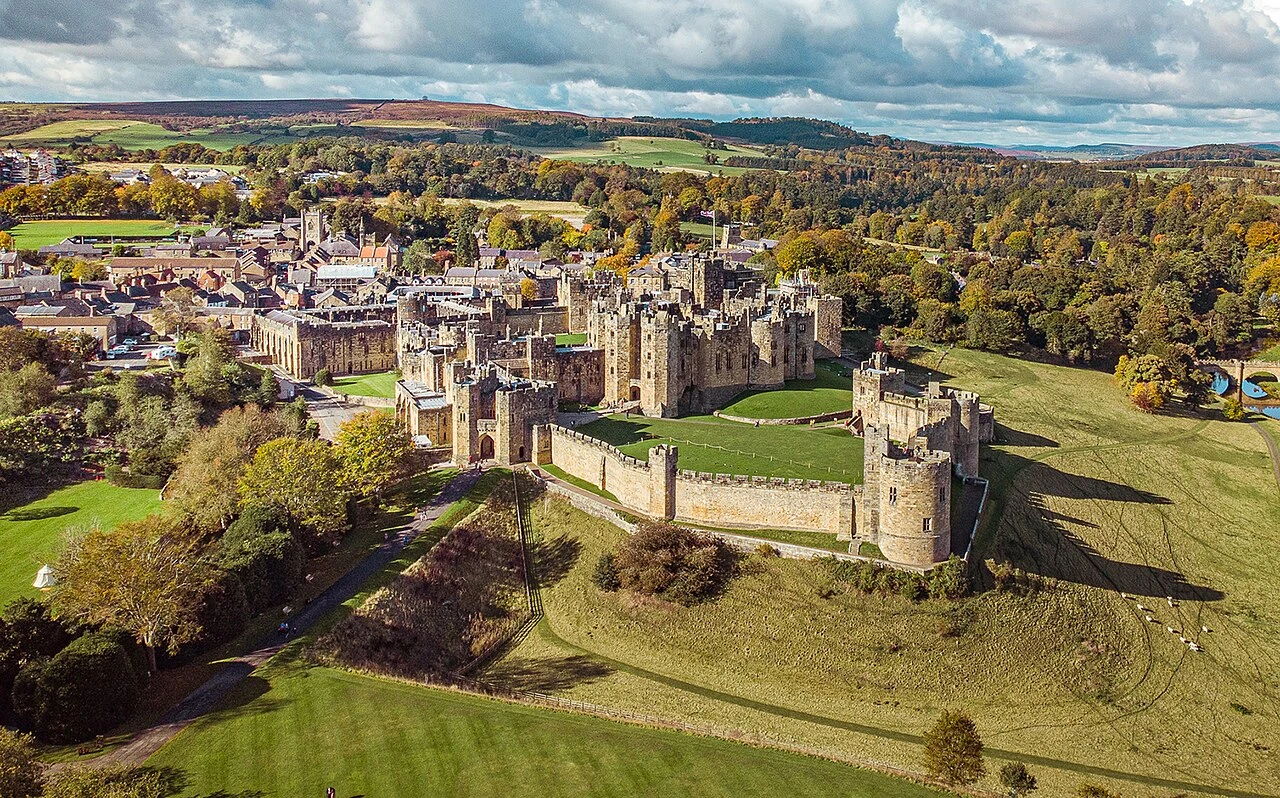
Alnwick
Alnwick Castle
Content & sources
Clementp.fr · CC BY-SA 4.0
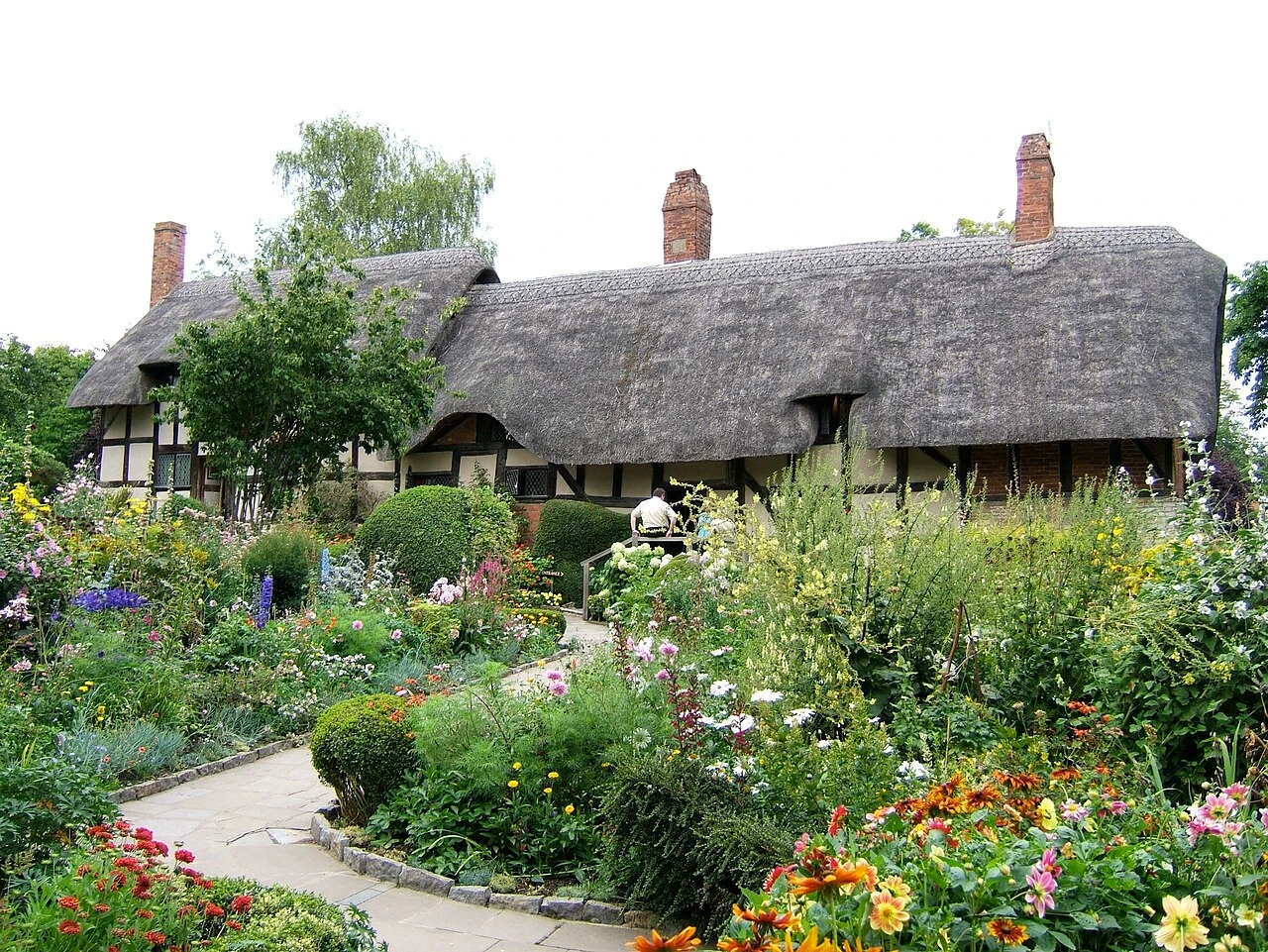
Stratford-on-Avon
Anne Hathaway's Cottage
Content & sources
Richard Peat · CC BY-SA 2.0
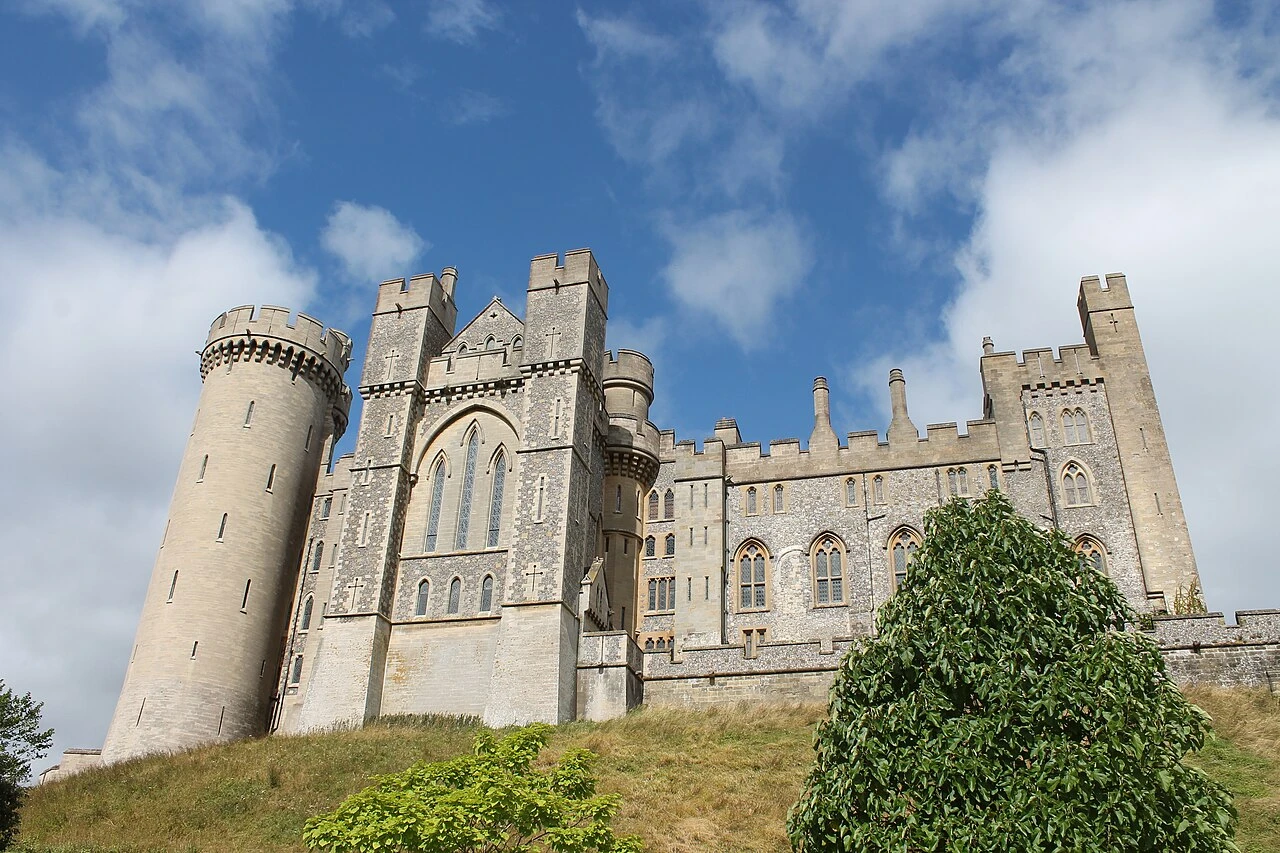
Arun
Arundel Castle
Content & sources
Photo: Egjoni98 · CC BY-SA 4.0
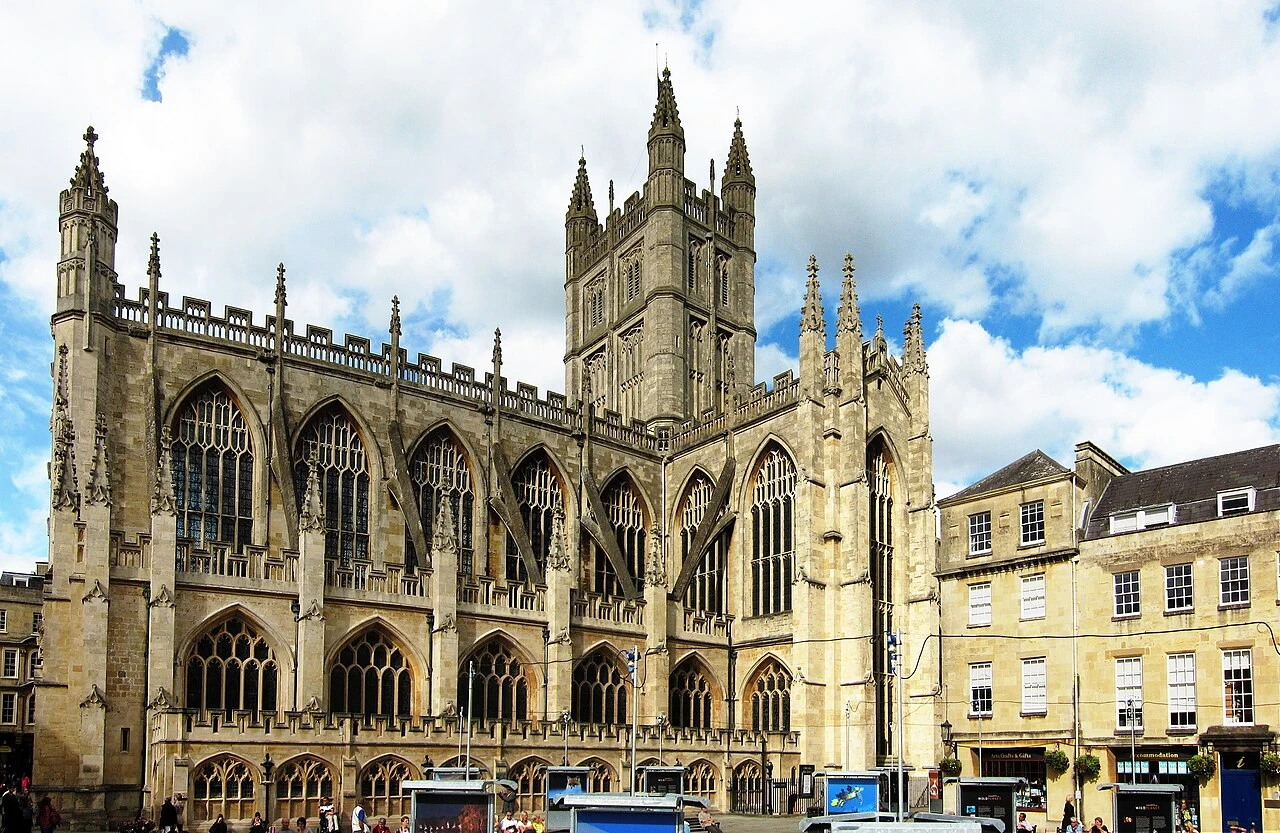
Bath
Bath Abbey
Content & sources
Photo: Velvet · CC BY-SA 3.0