Languages
15Hoover Dam Audio Guide
Hoover Dam is a landmark in Clark County, United States. Explore it with Stanza's GPS-triggered offline audio guide — available in 15 languages.
Quick Facts
20
Stops
15
Languages
100%
Offline
📍 Clark County, United States · 36.0158°N, -114.7378°E
About Hoover Dam
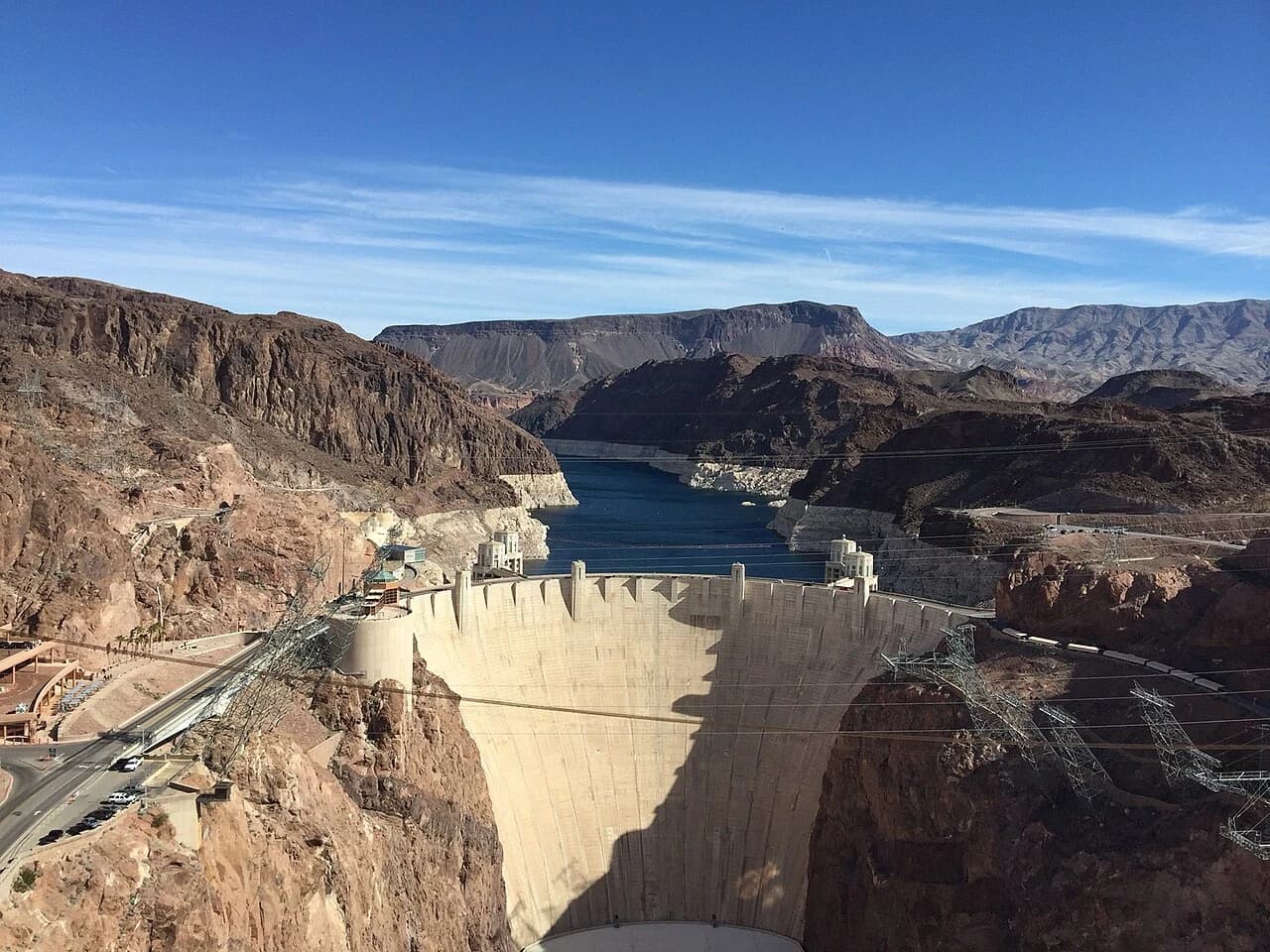
Hoover Dam is an arch-gravity dam on the Colorado River, straddling the border between Arizona and Nevada. It serves as a major hydroelectric power station and a prominent tourist attraction.
Hoover Dam is also known as Boulder Dam.
This self-guided audio tour features 20 narrated stops organized across 7 sections. As a dam, Hoover Dam offers a unique cultural experience in the heart of Clark County, United States.
The Stanza audio guide is available in 15 languages and works entirely offline — download the complete tour including audio narration, maps, and images before your visit. As you walk through Hoover Dam, GPS-triggered narration plays automatically at each point of interest.
Last updated:
What you will hear
Building a Modern Marvel: Visitor Center and History
Focus on the human element of the project, using the Visitor Center POI and the High Scaler statue to tell the story of the 5,000+ workers during the Great Depression.
The High Scaler Statue
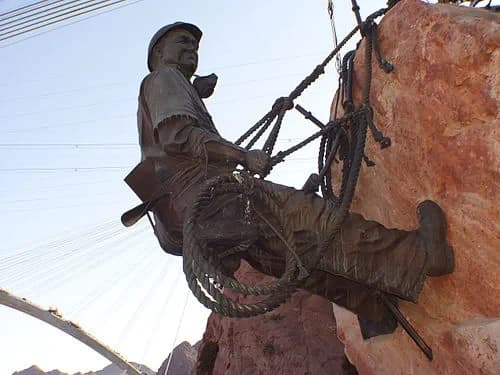
Among the thousands of laborers who built the dam, few took on more risk than the 'high scalers.' Their job was to clear loose rock from the canyon walls to ensure the dam and powerhouses would have a stable foundation. These men worked while suspended from ropes hundreds of feet in the air, using heavy jackhammers and even sticks of dynamite to chip away at the cliffs. They were often buffeted by high winds and the extreme desert heat, with only their physical strength and simple ropes keeping them from falling into the abyss. One worker became a legend among his peers: a man known as the 'Human Pendulum.' He was famous for his ability to swing himself across the canyon, using his momentum to move supplies or perform daring stunts for the early tourists who gathered to watch the construction from above. High scalers were also known for their 'hard hats,' which were often just cloth hats dipped in tar to protect against falling rocks�a precursor to modern safety gear. This statue captures a high scaler in a characteristic pose, leaning back against his harness, a reminder of the immense physical courage required to build this monument.
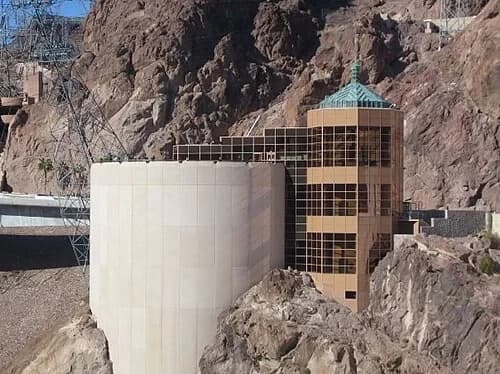
The Visitor Center
While the dam is primarily a triumph of engineering, its visual identity is equally significant. In the early stages of planning, the structure was intended to be purely functional, with little regard for appearance. However, the government eventually brought in architect Gordon Kaufmann to refine the design. Kaufmann was a leading figure in the Art Deco movement, and he sought to give the project a sense of permanence and grandeur that matched its scale. You can see his influence in the streamlined turrets and the clean, modernist lines of the surrounding buildings. Kaufmann stripped away traditional ornamentation, replacing it with the bold, geometric forms that were popular in the 1930s. This aesthetic transition turned the dam from a simple industrial utility into a monument of American achievement. The Visitor Center and the surrounding structures exhibit this 'Stripped Classical' style, emphasizing the dam's power through simplicity and strength. These features ensure that even the functional components, like the elevator towers and powerhouses, contribute to the site�s unified and dignified appearance, making it as much a work of art as it is a powerhouse.
The Heart of the Dam: Powerhouse Interior
Take the visitor deep inside the U-shaped powerhouse to see the 17 main turbine-generators, illustrating the dam's primary purpose: hydroelectric power.
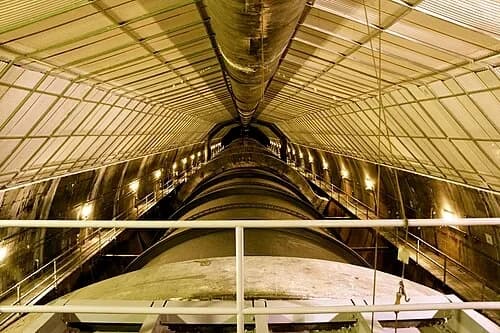
The Cooling System
One of the greatest challenges in building a dam of this size was the heat generated by the curing concrete. If the dam had been poured as a single, solid block, the chemical reaction of the cement would have created so much internal heat that it would have taken over 125 years to cool down to ambient temperatures. During that time, the concrete would have contracted and cracked, likely causing the dam to fail. This is known as the '125-year cooling problem.' To solve this, engineers designed the dam as a series of interlocking blocks rather than one mass. Inside these blocks, they embedded 582 miles of one-inch steel pipes. Once the concrete was poured, they circulated ice-cold water from a massive onsite refrigeration plant through these pipes. This allowed the engineers to 'shrink' the dam artificially and at a much faster rate. Once a section was cooled, the pipes were filled with grout to become a permanent part of the structure. You can see remnants of this internal infrastructure in the service tunnels and galleries. This cooling system was a world-first on this scale and remains one of the most brilliant solutions devised by the project's engineering team.
Walking the Crest: Engineering and Intake Towers
Moving onto the top of the dam, focus on the Art Deco intake towers and the 'arch-gravity' design that holds back Lake Mead.
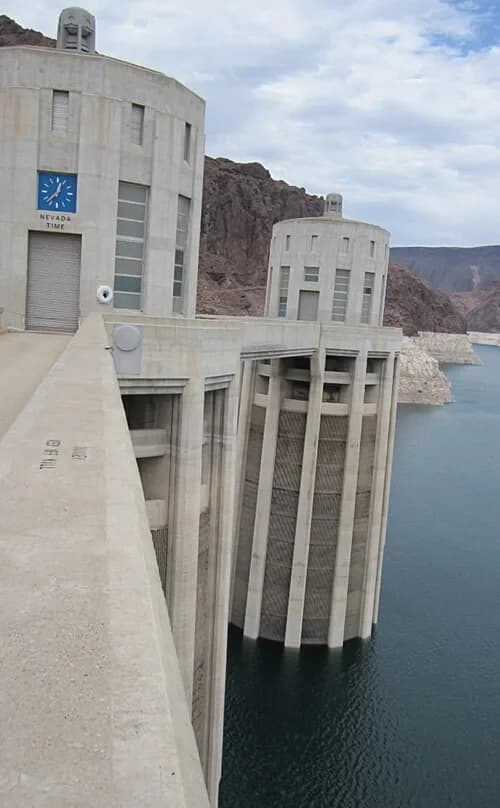
The Art Deco Clocks
As you observe the intake towers, you will notice large clock faces prominently displayed on their upper levels. These aren't just for telling time; they symbolize the dam's unique position on the border between two states and two time zones. One tower represents Nevada time, while the other represents Arizona time. Because Arizona does not observe Daylight Saving Time, the clocks often show different hours depending on the season, highlighting the regional complexity the dam helps manage. These clocks were an integral part of Gordon Kaufmann�s Art Deco vision. He wanted the dam to be a place of utility and artistic flair, and these clock faces are a perfect example of that philosophy. The bold blue backgrounds and simple, white markers are hallmarks of the modernist aesthetic of the 1930s. Beyond their artistic value, they serve as a constant reminder of the dam's role as a connector. It bridges the gap between these two states, not just physically through its crest, but also economically and socially through the water and power it distributes. The clocks stand as small but significant details that humanize the massive concrete structures they inhabit, blending the mechanical precision of the dam with the daily lives of the people it serves.
The Dedication Plaza: Winged Figures and Star Map
This is the artistic highlight of the tour. Use the bronze statues and the terrazzo floor to explain the celestial map and the 'Spirit of American Achievement'.
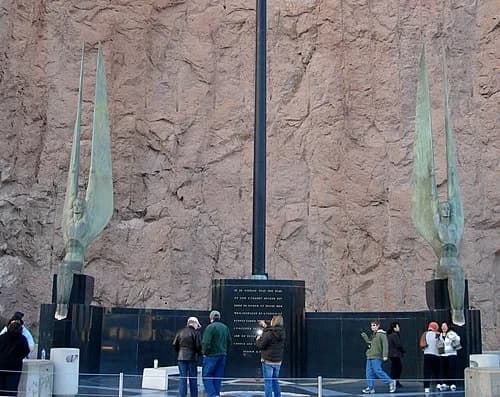
Winged Figures of the Republic
Oskar J. W. Hansen · 1937 · bronze, diorite
Standing as silent sentinels over the dam's dedication plaza, the Winged Figures of the Republic are among the most recognizable artistic features of the site. These two figures, each standing 30 feet tall, were crafted from bronze and have developed a distinct weathered green patina over the decades. Their towering, vertical wings are designed to symbolize the upward reach of human achievement and the soaring spirit that made the construction of the dam possible. Created by sculptor Oskar J.W. Hansen, the statues are meant to embody the dignity and strength of the American people during the Great Depression. They sit on a base of black diorite, framing a flagpole that stands at the center of the plaza. This area served as the stage for the official ceremony on March 1, 1936, when the dam was formally turned over to the federal government. It is a tradition for visitors to rub the toes of these massive figures for good luck, which has polished the bronze in those spots to a bright, golden shine. These figures are not just decorations; they are a tribute to the collective effort of thousands of workers and a symbol of the nation�s ability to overcome seemingly insurmountable challenges through unity and perseverance.
Controlling the River: Arizona Side and Spillways
Explore the Arizona side of the canyon to see the massive spillway structures and explain the diversion tunnels that were blasted through the rock.
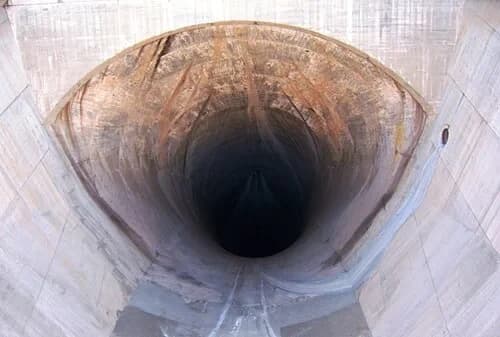
Cavitation and the 1983 Flood
Looking down into the depths of the spillway tunnel, you are seeing the site of a dramatic engineering crisis that occurred during the massive floods of 1983. As heavy snowmelt pushed Lake Mead to its limits, the spillways were forced into action for an extended period. The volume and speed of the water were so great that they triggered a phenomenon known as 'cavitation.' This occurs when fast-moving water creates areas of low pressure, forming vacuum bubbles that collapse with explosive force against the tunnel walls. The power of these collapsing bubbles was so immense that it acted like a giant jackhammer, literally tearing massive chunks of rock and concrete out of the tunnel linings. In some places, the water chewed through three feet of steel-reinforced concrete and thirty feet of solid volcanic rock. Engineers were forced to come up with a creative solution mid-flood, using large plywood 'flashboards' to raise the lake level and buy time. After the flood subsided, the tunnels were repaired with specialized air slots designed to prevent cavitation from ever happening again. This event remains a legendary story in the history of the dam, illustrating the incredible, almost incomprehensible forces that engineers must account for when managing the Colorado River.
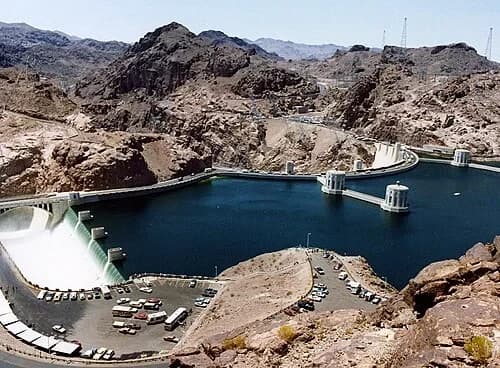
The Creation of Lake Mead
Standing here, the view of the deep blue water stretching into the horizon is a stark contrast to the surrounding desert peaks. This is Lake Mead, the reservoir created by the construction of the Hoover Dam. When it was completed in the mid-1930s, it held the title of the largest man-made reservoir in the world. Its sheer volume is staggering, capable of holding enough water to cover the entire state of Pennsylvania in a foot of liquid. While the dam's hydroelectric power often captures the imagination, the reservoir�s primary mission is actually much more fundamental: water security. Lake Mead acts as a massive storage tank for the Colorado River, regulating its flow to ensure a steady supply for over one million acres of farmland in Nevada, Arizona, and California. Before the dam, the river was unpredictable�alternating between devastating floods and periods of drought. Now, this water supports the growth of everything from winter vegetables to citrus groves, making it the lifeblood of the Southwest's agricultural industry. As you look out at the white mineral stripe along the canyon walls�often called the "bathtub ring"�you can see the history of the water levels recorded on the rock itself, a visual reminder of the ongoing challenge of managing this precious resource in an increasingly thirsty region.
Electrifying the Southwest: The Switchyards
Conclude the technical part of the tour by looking at the switchyards and transmission towers that distribute power across three states.
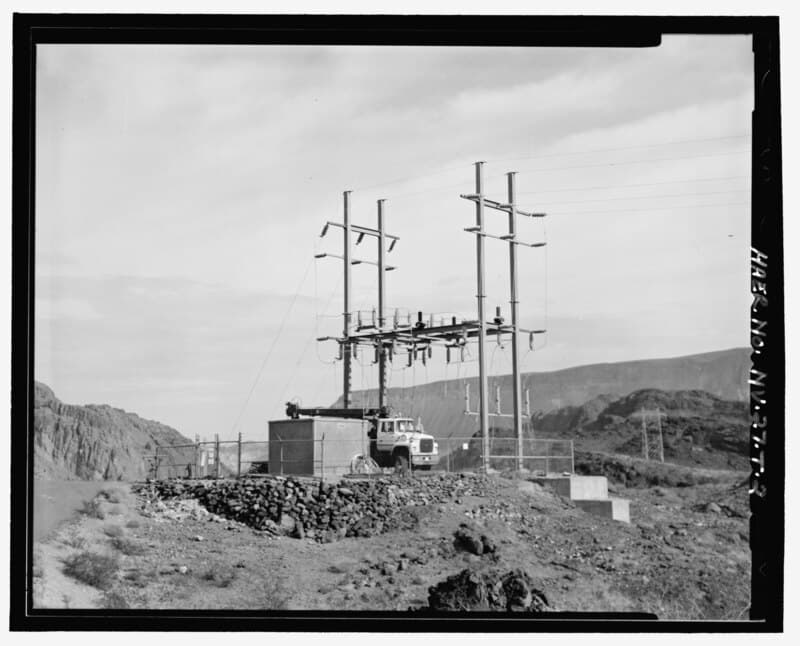
The Historic Switchyards
As you scan the jagged canyon walls, you may notice clusters of electrical equipment and frameworks perched on the steep slopes. These are the historic switchyards, and they play a vital role in the dam's power cycle. The electricity generated deep within the powerhouse at the base of the dam is created at relatively low voltages. To send that power hundreds of miles across the hot, unforgiving desert to growing metropolises like Los Angeles and Las Vegas without losing it all to resistance, it must be "stepped up." These switchyards house massive transformers that boost the electrical voltage to much higher levels, allowing it to travel efficiently over long distances. Managing this distribution is an incredible feat of logistics and engineering. Think of the power grid as a complex circulatory system, with these switchyards acting as the valves that direct the flow. In the early days, this infrastructure was pioneering, helping to fuel the rapid urban and industrial expansion of the American West. Today, they remain a hub of activity, connecting the renewable energy captured from the river's flow to the massive grid that supports millions of people. The placement of these switchyards on such vertical terrain was no accident; it was a necessity of the narrow canyon geography, requiring engineers to build rugged foundations directly into the volcanic rock to support the heavy electrical components.
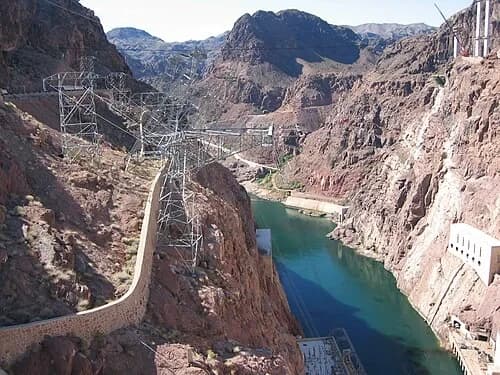
Canyon Transmission Lines
One of the most striking visual features of the Black Canyon landscape is the sight of high-voltage transmission towers that appear to be leaning over the abyss at a precarious 45-degree angle. These aren't the result of shifting ground or poor construction; they were intentionally designed this way. By tilting the towers out over the rim, engineers were able to ensure that the heavy electrical cables remained safely away from the jagged canyon walls as they ascended from the powerhouse far below. This prevents the cables from rubbing against the rock or causing electrical arcs that could damage the system. These lines are the literal "veins" of the Southwest's power grid, carrying the energy harvested from the Colorado River toward the distant coastal cities and desert hubs. The logistics of stringing these lines across the chasm was a monumental task in itself, requiring workers to navigate the vertical heights with precision. Each tower is anchored deep into the rock to withstand the high winds that frequently whip through the canyon. They stand as a testament to the ingenuity required to not just generate power in this remote location, but to successfully transport it across some of the most challenging terrain in the country. Without these tilted towers, the massive energy potential created by the dam would have remained trapped at the bottom of the canyon.
The Skywalk Perspective: Memorial Bridge
The final stop is the bypass bridge, offering the most spectacular aerial view of the dam's face and the powerhouse below.
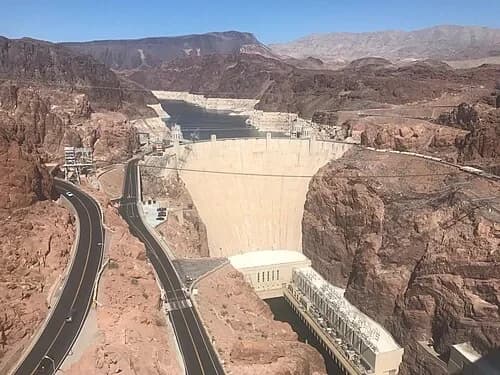
The Boulder Dam Controversy
While we know it today as the Hoover Dam, the name of this massive structure was once a subject of intense political debate. In 1930, the Secretary of the Interior announced the project would be named after then-President Herbert Hoover. However, as the Great Depression deepened, Hoover's popularity plummeted. When Franklin D. Roosevelt took office in 1933, his administration referred to the project simply as "Boulder Dam," after the original proposed site in Boulder Canyon�despite the fact that it was actually built here in Black Canyon. For over a decade, the "Boulder Dam" name was used on official signs, maps, and even in the dedication speech. It wasn't until 1947, during the Truman administration, that a joint resolution of Congress officially restored the name to Hoover Dam. This controversy highlights the dam's status not just as a piece of infrastructure, but as a potent symbol of American resilience and government ambition. Regardless of what it was called, the project�s impact was undeniable. Born in the depths of the Depression, the dam provided hope and employment for thousands of workers. It tamed a wild river, provided the water and power necessary for the desert to bloom, and laid the foundation for the industrial and agricultural powerhouse that the American West would become. As you look at the dam one final time, consider how this concrete monument transformed a barren wilderness into the vibrant region we see today.
Want to hear the rest?
Download the Stanza app to unlock all 20 stops and full GPS-guided navigation.
Frequently Asked Questions
How long does the Hoover Dam audio tour take?
The Hoover Dam audio guide includes 20 narrated stops. Most visitors spend 45 minutes to 1.5 hours exploring the complete tour, though you can listen at your own pace and skip or revisit any stop.
Is the Hoover Dam audio guide available in my language?
Stanza supports 15 languages: English, Spanish, French, German, Italian, Portuguese, Russian, Japanese, Chinese, Korean, Arabic, Hindi, Polish, Dutch, Hebrew. Check the guide in the app to confirm the languages currently available for this tour.
Can I use the audio guide offline at Hoover Dam?
Yes! Download the complete Hoover Dam tour — including all audio, maps, and images — before your visit. The Stanza app works completely offline, so you don't need WiFi or mobile data at the venue.
How much does the Hoover Dam audio guide cost?
The Stanza app is free to download. The current listed price for the Hoover Dam audio guide is $2.99; app-store region and currency may affect the final price.
How do I use the Stanza audio guide at Hoover Dam?
Download the free Stanza app, search for "Hoover Dam", and download the tour. When you arrive at the venue, the app uses GPS to detect your location and automatically plays the relevant narration as you move between points of interest — completely hands-free.
What makes the Stanza audio guide different from other Hoover Dam tours?
Stanza offers GPS-triggered narration that plays automatically as you walk through Hoover Dam — no need to manually select stops. The tour is available in 15 languages, works fully offline, and includes 20 expertly narrated stops with images and historical context.
What other audio guides are available near Hoover Dam?
Stanza offers multiple audio guides in Clark County, United States and nearby areas. After downloading the app, browse the map to discover all available tours near Hoover Dam. Each guide can be downloaded for offline use.