Languages
15Hearst Castle Audio Guide
Hearst Castle is a landmark in San Luis Obispo County, United States. Explore it with Stanza's GPS-triggered offline audio guide — available in 15 languages.
Quick Facts
21
Stops
15
Languages
100%
Offline
📍 San Luis Obispo County, United States · 35.6853°N, -121.1678°E
About Hearst Castle
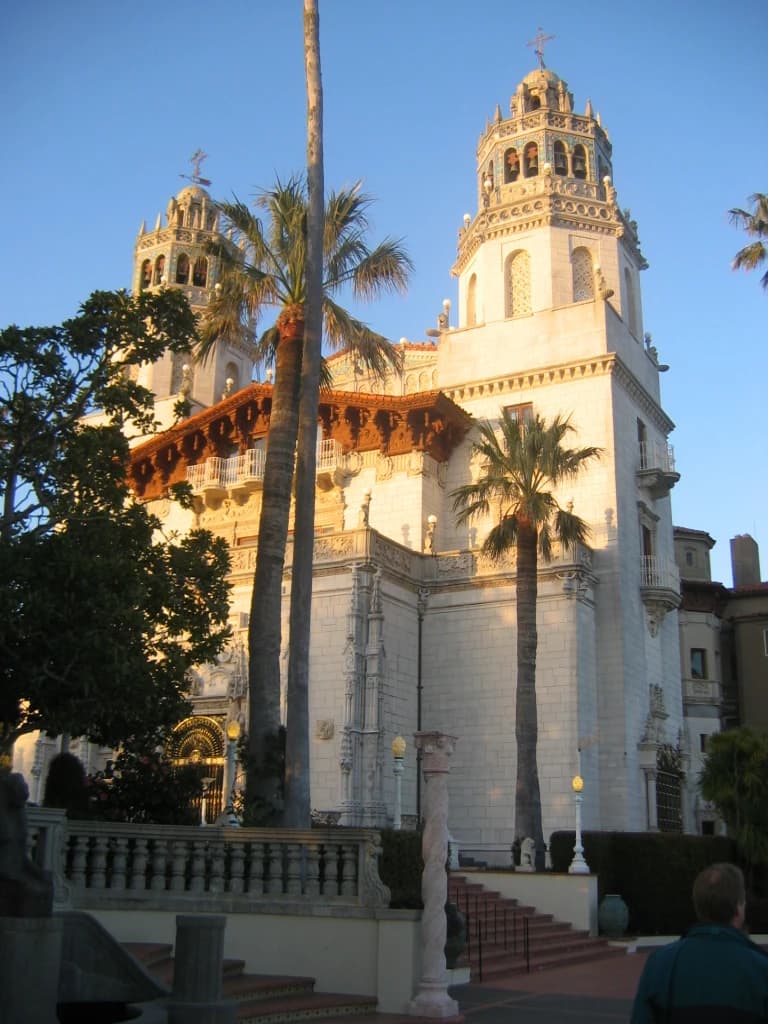
Hearst Castle is a National Historic Landmark and California Historical Landmark located on the Central Coast of California. It is a grand mansion and architectural landmark now operating as a state historic park.
This self-guided audio tour features 21 narrated stops organized across 7 sections. As a manor, Hearst Castle offers a unique cultural experience in the heart of San Luis Obispo County, United States.
The Stanza audio guide is available in 15 languages and works entirely offline — download the complete tour including audio narration, maps, and images before your visit. As you walk through Hearst Castle, GPS-triggered narration plays automatically at each point of interest.
Last updated:
What you will hear
The Esplanade and Gardens
Explores the lush Mediterranean gardens and the Sekhmet fountain, showcasing Hearst's love for antiquity and exotic animals. Includes the Egyptian fountain and a signature garden sculpture.
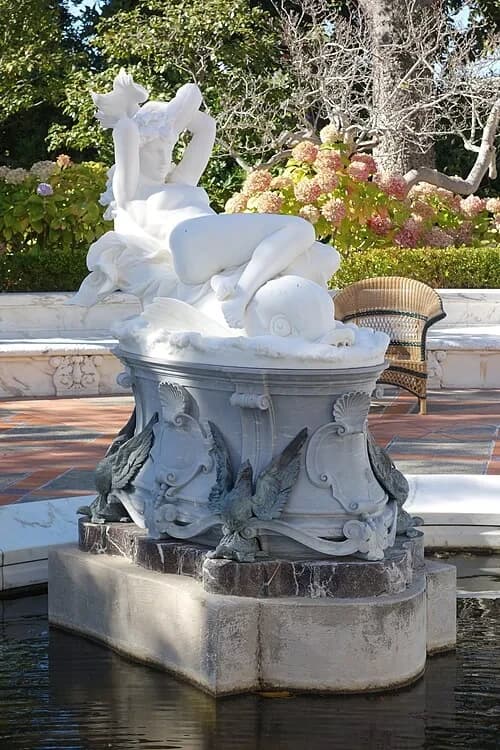
Galatea on a Dolphin
Standing gracefully among the greenery is a white marble sculpture titled "Galatea on a Dolphin." It was carved by the artist Leopoldo Ansiglioni and depicts a scene from Greek mythology. Galatea, a sea-nymph or Nereid, is shown in a relaxed pose atop the back of a dolphin, her hair flowing as if caught in a coastal breeze. Hearst frequently used classical European garden art like this to provide a sense of structure and history to the pathways connecting his guest houses. By placing high-quality marble works in the outdoor spaces, he bridged the gap between the untamed natural beauty of the California coast and the refined luxury of the estate’s interior. The bright stone stands out against the dark foliage and the blue of the sky, acting as a visual anchor for visitors moving between the various villas. These sculptures were not just decorations; they were part of a deliberate effort to recreate the feel of a traditional European manor garden on a remote American ridge. The choice of a sea-themed subject is particularly fitting given the estate's proximity to the Pacific Ocean, which can often be seen shimmering in the distance from this very spot. The sculpture remains an example of how Hearst utilized classical subjects to frame the modern views of the California coastline.
The Guest Houses: Casa del Sol and Casa del Mar
Highlights the luxury guest villas built before the main house. Focuses on the Mediterranean facades and intricate tile work mentioned in the Enriching essentials.
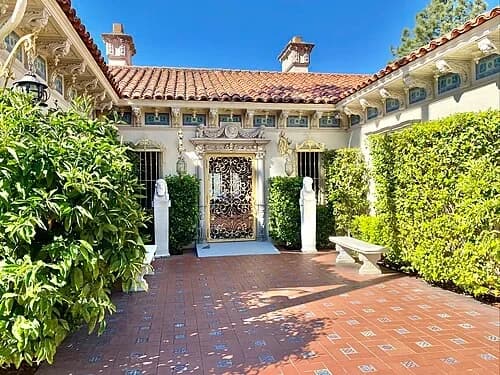
House of the Sea
Casa del Mar, the "House of the Sea," holds a special place in the history of the Enchanted Hill as the largest of the three guest houses. In fact, William Randolph Hearst lived here himself for several years while the main house, Casa Grande, was still under construction. This villa feels more like a private residence than temporary guest quarters, featuring an intimate courtyard that provides a sense of enclosure and privacy. One of its most striking features is the gold-leafed gate, which adds a touch of regal elegance to the entrance. The architectural details here are more personal, reflecting Hearst's own tastes before the grander scale of the main house took over the project. The courtyard design encourages outdoor living, with paths that lead to secluded garden nooks and viewpoints overlooking the coastline. Hearst’s presence is still felt in the proportions of the rooms and the quality of the finishes. Living here allowed him to supervise the daily progress of the massive construction site just up the hill. Even today, the villa retains a quieter, more domestic atmosphere than the cavernous halls of the main building, offering a glimpse into the lifestyle Hearst enjoyed when he was not hosting dozens of guests at once in the primary social rooms.
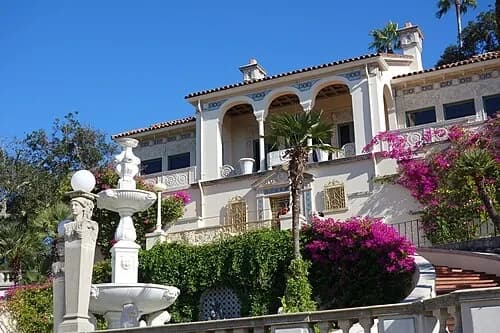
House of the Sun
Casa del Sol, or the "House of the Sun," was specifically oriented to capture the light of the setting sun over the Pacific Ocean. This eighteen-room guest house is a prime example of the Mediterranean style that Julia Morgan and Hearst favored for the estate's villas. Notice the vibrant bougainvillea that climbs across the pale walls, adding a splash of natural color that complements the intricate tilework. Much of the decorative tiling here draws inspiration from Persian designs, featuring geometric patterns and deep colors that reflect Hearst's interest in the Near East. Interestingly, while many elements of the castle are authentic antiques, others are clever reproductions. The stonework around the windows and doors often uses cast-stone—a specialized concrete mixture—to mimic the texture and appearance of aged European limestone. This allowed Morgan to create a cohesive look while ensuring the buildings could endure the California climate. The villa’s layout includes multiple levels and private terraces, providing guests with secluded spots to enjoy the coastal views. It represents the high standard of luxury for the time, offering friends and family of the Hearst family a Mediterranean escape that felt worlds away from the busy cities of the coast. Hearst and Morgan spent years perfecting the terraces to maximize the visual impact of the Pacific horizon.
Casa Grande: The Main Facade
Focuses on Julia Morgan's Spanish Cathedral-inspired design and her pioneering use of reinforced concrete. Features the 137-foot twin bell towers.
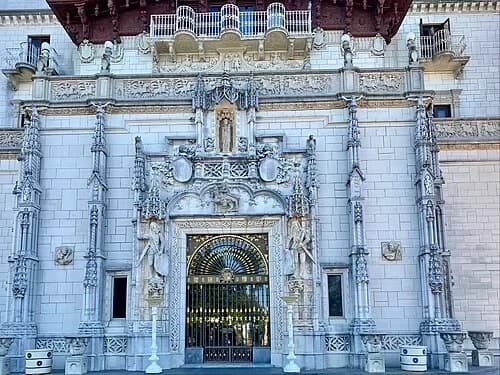
The Main Entrance
Stepping toward the main entrance of Casa Grande, you encounter a perfect example of William Randolph Hearst’s "integrated antiquities" philosophy. Rather than simply displaying his art collection in a gallery, Hearst had Julia Morgan build it directly into the fabric of the building. This central portal is an authentic sixteenth-century Spanish architectural element that was shipped from Europe and carefully set into the modern concrete wall. Above the doorway, you can see intricate stone carvings depicting Mary and the Christ Child, surrounded by saints and delicate floral motifs. This portal sets the tone for the entire interior, where ancient artifacts and modern living spaces are combined. The craftsmanship of the original Spanish masons is still evident in the weathered stone, providing a sense of age and gravity that new construction alone could not achieve. Hearst believed that living with art was far superior to merely observing it, and this entrance served as the threshold into a world where history was a part of daily life. The heavy doors and the shadowed archway create a sense of transition, leading from the bright California sunshine into the grand, dimly lit halls where Hollywood stars and world leaders once gathered for Hearst's famous weekend parties. The combination of ancient craftsmanship and modern utility is evident in every stone of the archway.
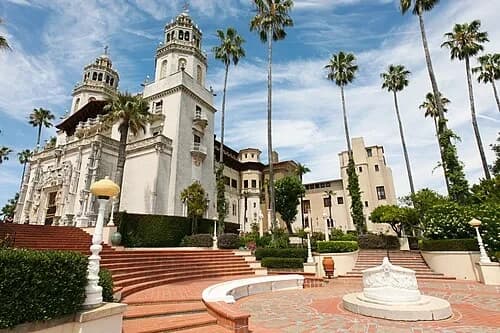
Facade of Casa Grande
The towering facade of Casa Grande serves as the architectural centerpiece of the entire estate. Its twin bell towers reach a height of 137 feet and were inspired by the Church of Santa María la Mayor in Ronda, Spain. This dramatic skyline gives the main house its cathedral-like appearance, a look that Hearst and Julia Morgan meticulously refined over many years. While the exterior looks like ancient stone, the structure is actually built from reinforced concrete. Julia Morgan insisted on this material to ensure the building could withstand California's frequent earthquakes. To achieve the desired historic aesthetic, the concrete was faced with limestone, blending modern engineering with traditional European materials. The bells in the towers are not merely decorative; they were a gift from Hearst's mother, Phoebe Apperson Hearst, and their ringing once signaled the start of dinner or other social gatherings. The facade is covered in intricate carvings and niches, many of which house authentic sculptures from Hearst's vast collection. This blend of Spanish Renaissance style and early twentieth-century American engineering defines the unique character of the castle. Standing before this massive structure, the sheer ambition of the project becomes clear, representing a decades-long effort to create a permanent home for a world-class art collection in a remote mountain setting. It remains California's most ambitious private residence.
The Assembly Room
Covers the social heart of the castle where guests gathered for cocktails. Highlights the Renaissance ceiling and the massive fireplace mentioned in the MUST-SEE essentials.
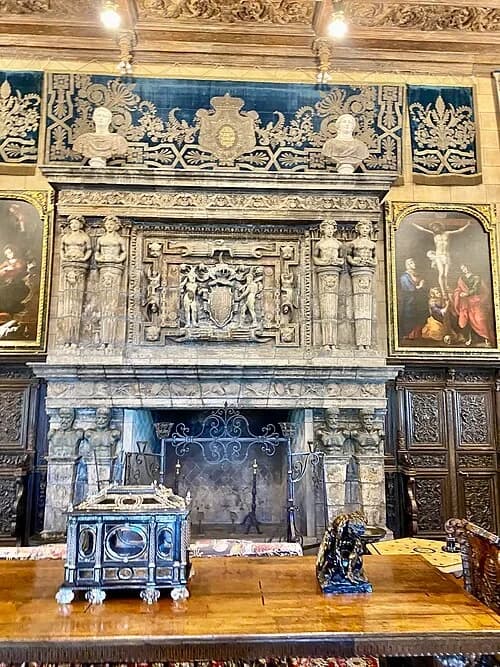
The Great Fireplace
Dominating one end of the Assembly Room is the "Barney Mantel," a colossal fireplace that Hearst acquired from a sixteenth-century French chateau. Its massive scale is almost medieval, featuring heavy stone carvings and a deep hearth that could hold large logs. In the early days of the castle, before modern heating was fully realized, this fireplace was essential for keeping guests warm during the damp, foggy evenings typical of the Central Coast. Hearst’s guests would often huddle near the fire, creating a cozy contrast to the high-society glamour found elsewhere in the room. The mantel’s height and intricate detail make it a work of art in its own right, showcasing the exceptional skill of French Renaissance stone carvers. It serves as a reminder of Hearst’s voracious appetite for European architectural fragments. By incorporating such a significant piece into his main living space, he provided a sense of permanence and ancestral history that was rare in California at the time. The flickering firelight against the carved stone and the surrounding tapestries created a dramatic atmosphere, setting the stage for the legendary parties that took place within these walls. It remains one of the most prominent and recognizable interior features of the entire estate, often serving as the primary backdrop for photographs of the room.
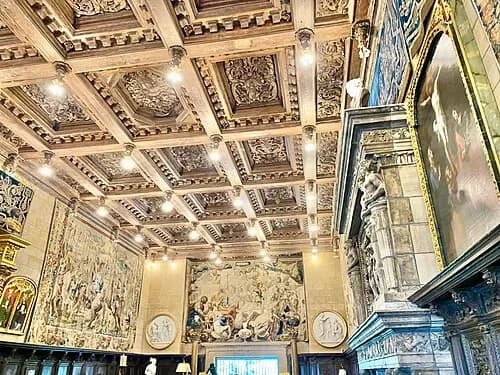
The Assembly Room
The Assembly Room was the social center of life at Hearst Castle. At 2,500 square feet, this grand space was where guests would meet every evening for cocktails and conversation before dinner. Famous figures of the era, from Charlie Chaplin and Cary Grant to world leaders, spent their nights here, lounging on the sofas and discussing the events of the day. Looking around the walls, you see massive Flemish tapestries that add warmth and a sense of history to the cavernous room. These textiles depict scenes of mythology and history, serving as both art and decoration for the thick walls. Above you, a massive Italian Renaissance ceiling looks down on the room. Like many other features in the house, it was purchased in Europe and reassembled here to fit the proportions of the space. Despite its grand scale, the room was designed for comfort, with multiple seating areas arranged to encourage small-group socializing. Hearst himself would often be found here, moving from group to group. This room captures the essence of the San Simeon experience: a place where the most powerful and famous people in the world could relax surrounded by some of the finest art and architecture ever created. The sheer volume of the room allowed for large gatherings while maintaining an atmosphere of private luxury.
The Refectory
Showcases the only dining room, resembling a medieval cathedral hall. Highlights the silk Palio banners and the integrated monastery tables.
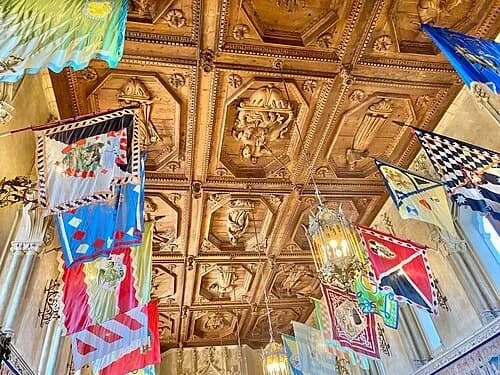
The Cathedral Ceiling
Looking upward in the Refectory, your gaze is met by a magnificent sixteenth-century Spanish ceiling. These carved wooden sections were purchased from a historic building in Spain and carefully reassembled by Julia Morgan’s team to fit the cathedral-like proportions of this room. The verticality of the space, combined with the dark wood and high windows, mimics the feel of a medieval choir hall. Hanging prominently from the walls are colorful silk banners known as Palio flags. These are original race flags from the famous Palio di Siena, an ancient horse race held twice a year in Italy. Each banner represents a different "contrada," or district, of the city. Their bright colors and heraldic designs provide a vibrant contrast to the somber tones of the stone and wood below. Hearst’s inclusion of these flags is another example of his desire to surround himself with authentic pieces of European tradition and competition. The ceiling and banners together create a sense of height and history, drawing the eye upward and emphasizing the grand scale of the room. This architectural focus on the upper reaches of the hall was a common feature in European noble houses, intended to impress visitors and create an atmosphere of awe during important gatherings and meals. The banners have remained in this position for decades, witnessing countless dinner parties.
The Gothic Suite
Covers Hearst's private sanctuary on the third floor, including his bedroom with its 14th-century Spanish ceiling.
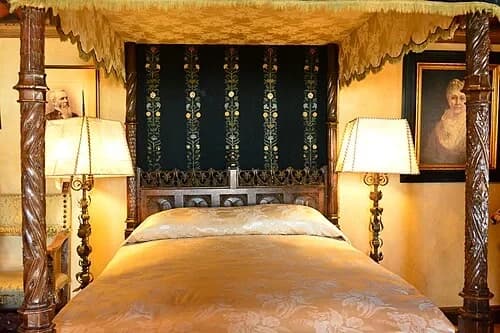
Hearst's Bedroom
Hearst’s personal bedroom is located within the private Gothic Suite, an area of the house where he could truly retreat from his many guests. Looking up, you will see a fourteenth-century Spanish ceiling, a genuine relic of the late Middle Ages that adds a somber, historical weight to the room. Surprisingly, the bed itself is relatively modest in size, especially when compared to the grand, oversized furniture found throughout the rest of Casa Grande. This space wasn't just for rest; it was a high-stakes command center for his vast media empire. From this very room, Hearst could communicate directly with his offices in New York and San Francisco via a private telephone line and telegraph. Despite being thousands of miles away from the bustling city newsrooms, he remained firmly at the helm of his newspaper and movie businesses. The room reflects a man who surrounded himself with ancient history while maintaining a firm grip on the modern world. It is one of the few places in the castle that feels genuinely personal rather than performative.
The Roman Pool
The indoor masterpiece of mosaic art, inspired by 5th-century mausoleums and covered in blue and gold Venetian glass tiles.
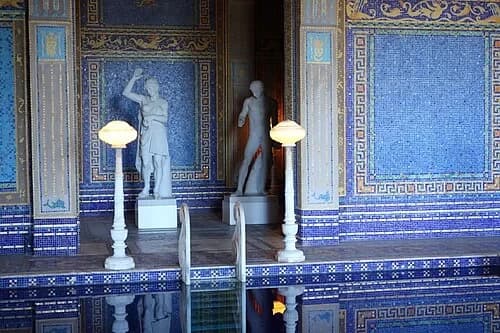
Tiles of the Roman Pool
Looking closely at the walls and floor of the indoor Roman Pool reveals a level of detail that is staggering in its complexity. The surfaces are covered in millions of tiny Venetian glass tiles. These tesserae come primarily in a deep cobalt blue, but the truly remarkable elements are the clear tiles with fused 24-karat gold leaf sandwiched inside them. This technique allows the gold to catch the light and shimmer from beneath the surface of the water without ever tarnishing. The intricate geometric patterns and star-filled motifs were not a random choice; they were directly inspired by the mosaics found in the fifth-century Mausoleum of Galla Placidia in Ravenna, Italy. Julia Morgan’s design team spent years meticulously planning and installing these tiles to replicate the atmosphere of a Late Antiquity baptistery or bathhouse. The result is a space that feels submerged in color and precious metal. Even the bottom of the deep pool is fully tiled, ensuring that the rich blue hue remains consistent throughout the entire room. This focus on individual detail contributes to the overall feeling of being inside a jewel box rather than a simple swimming facility.
Want to hear the rest?
Download the Stanza app to unlock all 21 stops and full GPS-guided navigation.
Frequently Asked Questions
How long does the Hearst Castle audio tour take?
The Hearst Castle audio guide includes 21 narrated stops. Most visitors spend 45 minutes to 1.5 hours exploring the complete tour, though you can listen at your own pace and skip or revisit any stop.
Is the Hearst Castle audio guide available in my language?
Stanza supports 15 languages: English, Spanish, French, German, Italian, Portuguese, Russian, Japanese, Chinese, Korean, Arabic, Hindi, Polish, Dutch, Hebrew. Check the guide in the app to confirm the languages currently available for this tour.
Can I use the audio guide offline at Hearst Castle?
Yes! Download the complete Hearst Castle tour — including all audio, maps, and images — before your visit. The Stanza app works completely offline, so you don't need WiFi or mobile data at the venue.
How much does the Hearst Castle audio guide cost?
The Stanza app is free to download. The current listed price for the Hearst Castle audio guide is $1.99; app-store region and currency may affect the final price.
How do I use the Stanza audio guide at Hearst Castle?
Download the free Stanza app, search for "Hearst Castle", and download the tour. When you arrive at the venue, the app uses GPS to detect your location and automatically plays the relevant narration as you move between points of interest — completely hands-free.
What makes the Stanza audio guide different from other Hearst Castle tours?
Stanza offers GPS-triggered narration that plays automatically as you walk through Hearst Castle — no need to manually select stops. The tour is available in 15 languages, works fully offline, and includes 21 expertly narrated stops with images and historical context.
What other audio guides are available near Hearst Castle?
Stanza offers multiple audio guides in San Luis Obispo County, United States and nearby areas. After downloading the app, browse the map to discover all available tours near Hearst Castle. Each guide can be downloaded for offline use.