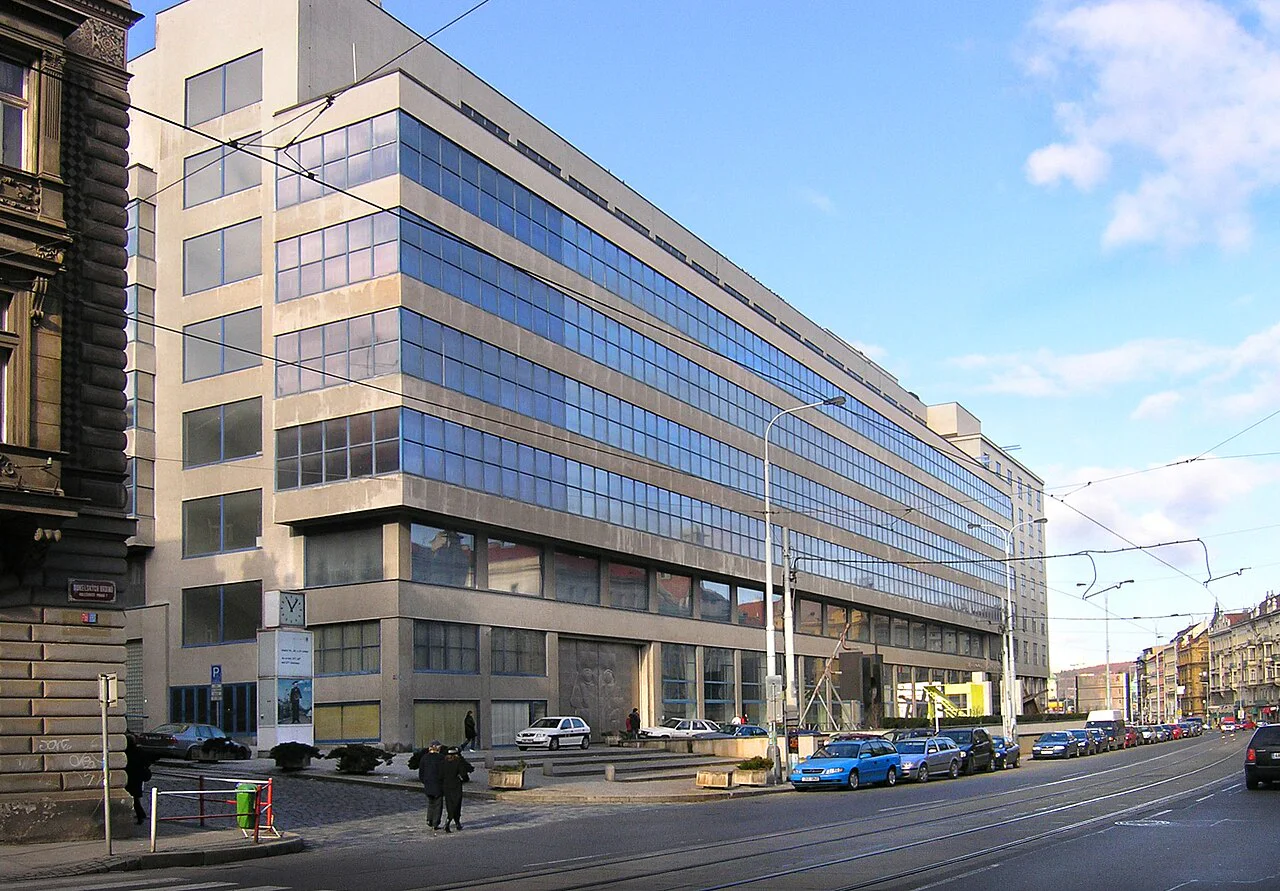
Stanza · Audio guide
National Gallery Prague Audio Guide
A place to remember. A story to take with you.
The National Gallery Prague is a state-owned art gallery that manages the largest collection of art in the Czech Republic. Founded in 1796, it is one of the world's oldest public art galleries and one of the…
Download Stanza, then search for “National Gallery Prague”.
About the tour
One guide. Your kind of visit.
The National Gallery Prague is a state-owned art gallery that manages the largest collection of art in the Czech Republic. Founded in 1796, it is one of the world's oldest public art galleries and one of the largest museums in Central Europe.
The National Gallery Prague guide tells the stories of 93 artworks, including Feast of the Rosary (Albrecht Durer), Green Wheat Field with Cypress (Vincent van Gogh), St. Jerome in His Study (Albrecht Durer), The Maiden (Gustav Klimt), Myself: Portrait – Landscape (Henri Rousseau), Třeboň Altarpiece (Master of the Třeboň Altarpiece), Martyrdom of Saint Thomas (Peter Paul Rubens), and Saint Sebastian (Bohumil Kubišta). Every artwork is free to hear in the Stanza app until 1 January.
Ready when you are.
- 01Get the free Stanza app.
iOS & Android
- 02Find your guide.
“National Gallery Prague”
- 03Download before you go.
Works offline
Audio guide / 93 artworks
Inside the guide
Get to know a few of the stories before you go. Open a stop to read more.
01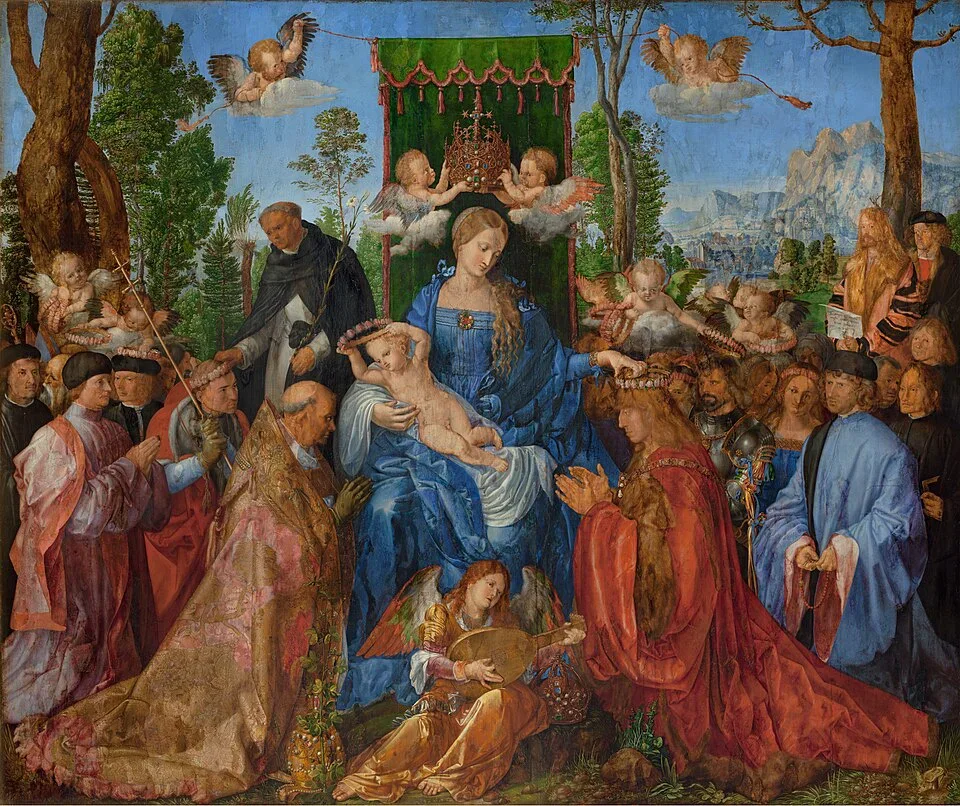
Feast of the Rosary
A woman sits on a throne at the centre with a child on her lap. Two angels hold a crown of gold and jewels above her. People kneel in rows on either side while rose garlands are handed out. At the head of the left row kneels Pope Julius the Second, his tiara set aside. At the head of the right kneels an emperor with his crown removed. The face is Maximilian's, which Dürer put on the emperor. The crown above her is about to make her Queen of Heaven, and at that same moment she lays a rosary on the emperor's head. It suggests his power reaches him straight from her, with no need for the Church to pass it on. The Pope kneels too, to receive the Child's blessing. The picture may also honour Maximilian's first wife, Mary of Burgundy, with her as the woman on the throne and Philip the Fair as the child on her lap. If so, that crown is coming down on the wife he had lost.
Listen in the appAlbrecht Dürer · Public domain
02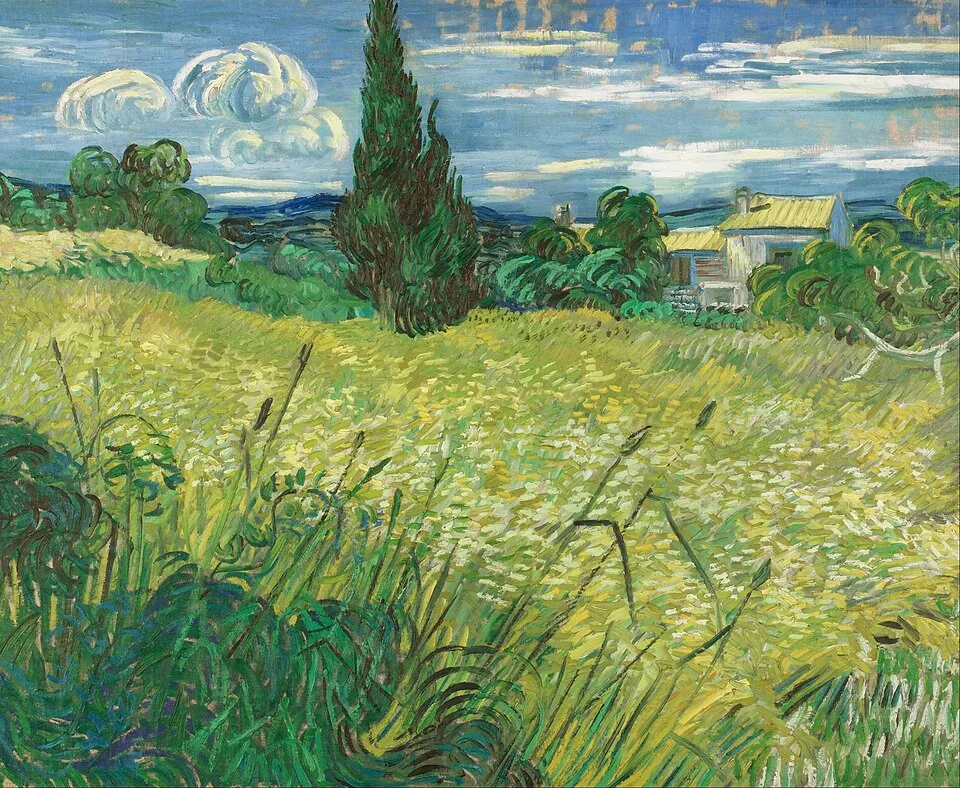
Green Wheat Field with Cypress
For a while Vincent van Gogh was kept within the grounds of the asylum at Saint-Rémy, where he had placed himself. In June 1889 he was allowed out with his paints, and within days this field was done. The wheat is still mostly green, with parts ripening to yellow, and a tall dark cypress stands at the centre. He wrote to his sister Wil on the sixteenth of June, straight after finishing it. The dark cypress, he told her, stood against distant hills of purple and blue. Pink streaked the blue sky, and at the end of the field was a little pink house. In July he sent his brother Theo an ink drawing of the painting. The painting itself probably followed in September. The ears of wheat were heavy, he wrote, and warm as the crust of a loaf of bread. To him these fields held the cycle of life and death, and painting them gave him comfort.
Listen in the appVincent van Gogh · Public domain
03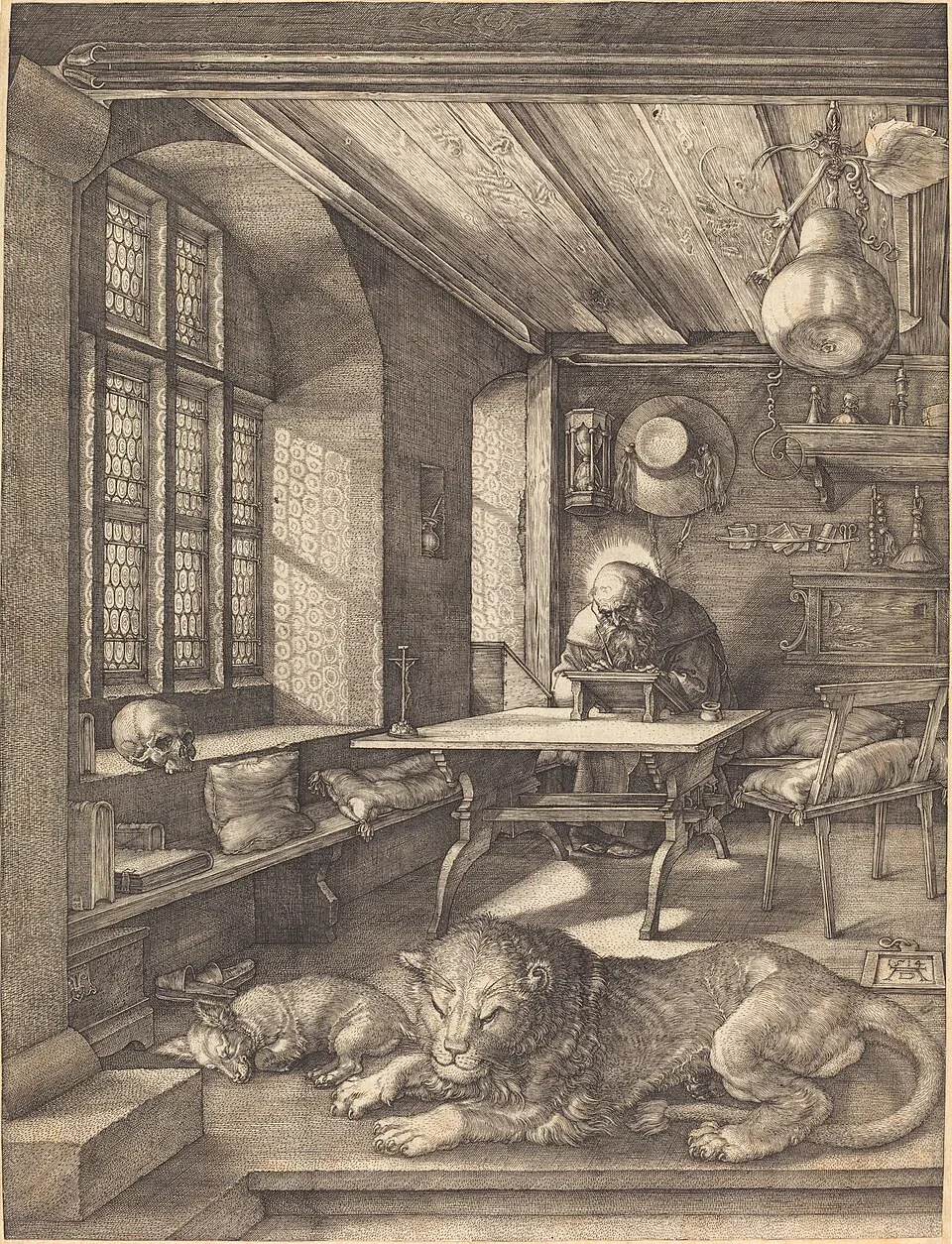
St. Jerome in His Study
Jerome, the translator of the Bible, sits behind his desk, deep in thought. Sunlight streams through the window panes and falls on him. In front of him a lion rests, and beside it a dog sleeps. The lion belongs to the traditional pictures of Jerome. The dog stands for loyalty. Both come from the old stories told about him. On the windowsill is a skull. Above him hangs an hourglass. On the corner of his desk is a cross, set so that when Jerome looks at it, he also sees the skull. The cross speaks of Christ rising from the dead. The skull is the death that Adam brought into the world. The hourglass is the span of time a man has, running out. Together they say that life is short, and that the soul is what must be saved. Dürer laid out the room so that its lines draw you close, as if you were stepping inside. But this closeness seems to be Jerome's, not yours. He is the one absorbed in his study and his meditation. What we do not know for certain is whether he meant this print as one of a set of four on the human temperaments.
Listen in the appAlbrecht Dürer · CC0
04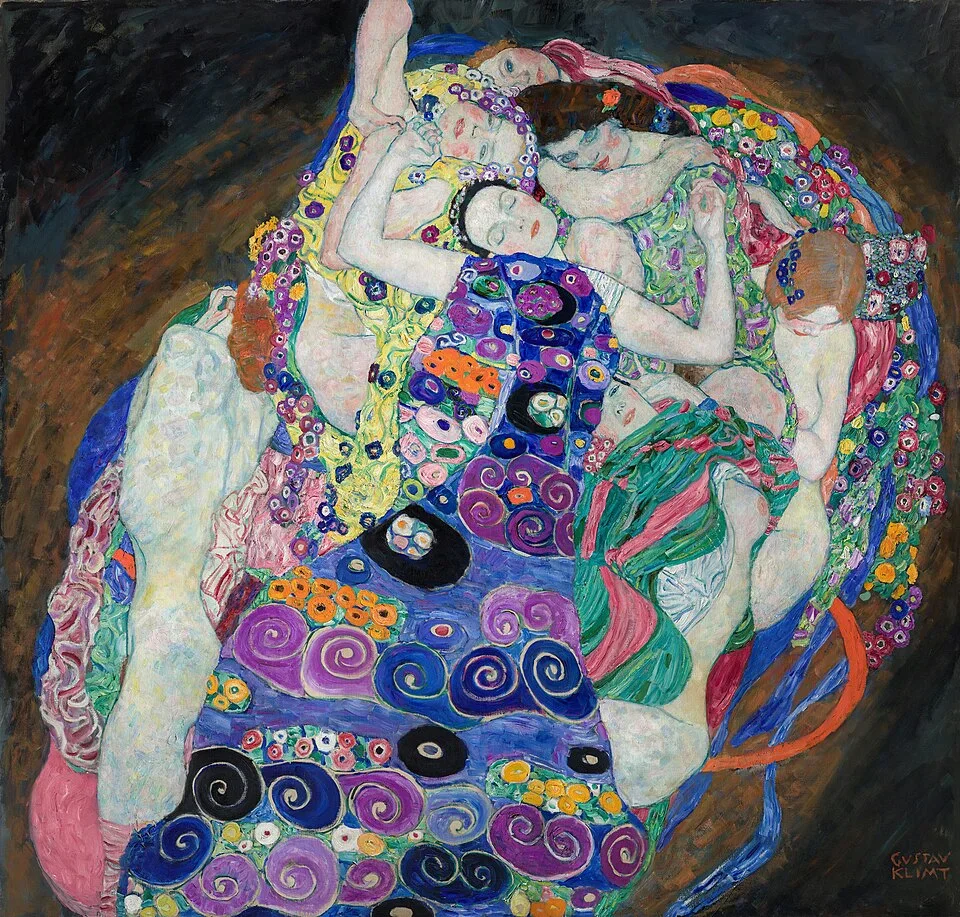
The Maiden
Nobody can say for certain how many women fill this picture. Six, perhaps, or one woman shown from several sides. Their bodies wind into a ring, arms and legs running through one another, impossible but smooth. You lose track of where one ends and the next begins. Some keep their eyes closed. Others seem to have only just woken. Each one stands for a stage of life, from a girl still asleep to a woman waking. The central one sleeps too, her head bent at an almost impossible angle. Klimt gave her the face of his life partner, Emilie Flöge. Flowers crowd around them, and their fullness marks the change into womanhood. Her gown falls in blue and purple spirals, and it promises a child, new life beginning before the last life is done.
Listen in the appGustav Klimt · Public domain
05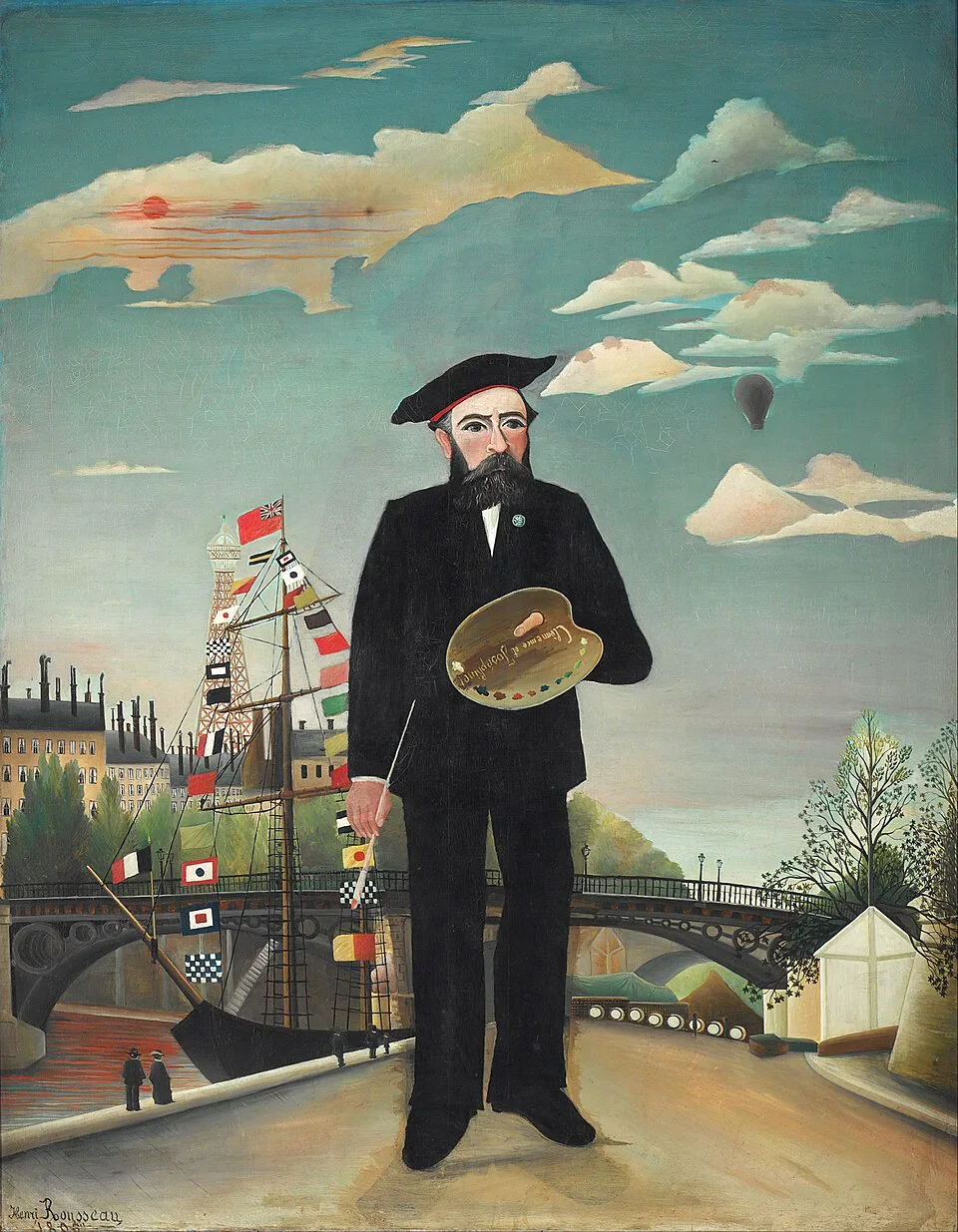
Myself: Portrait – Landscape
Portrait and landscape were two separate kinds of painting, and this one refuses to choose. Rousseau set himself down right in the middle and called the mixture his own invention. He showed it in 1890, early in his career, at the Salon of the Independents. The portrait half is a man in a black suit, with beret, palette and brush, the marks of a painter. On the palette, in gold letters, are the names of his two wives. Clémence had died, and Joséphine was added after their marriage in 1899, painted over the name of an acquaintance. In the buttonhole sits the badge of the academic palms. That honour went to a man with the same name, never to him. He added it after he began teaching drawing. The landscape half is the modern city. The Eiffel Tower is barely visible behind the mast of a boat, with a hot air balloon's shadow in the air. The metal Pont du Carrousel, now gone, crosses the scene. He set himself in the middle of contemporary life. In 1912 the ship's bow, mast, bridge and Eiffel Tower from this background reappeared in a painting of Paris by Robert Delaunay.
Listen in the appHenri Rousseau · Public domain
06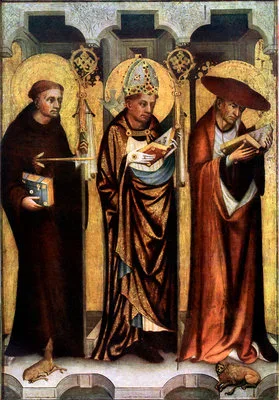
Třeboň Altarpiece
Why does each person here grieve alone? Joseph of Arimathea and Nicodemus are laying Christ in the tomb, his body almost weightless under a transparent cloth. The Virgin Mary, held up by Saint John, has the face of a young woman. The blood on her headdress recalls what Christ suffered on the cross. Mary Magdalene stands on the left. Behind her, Mary of Cleophas turns toward Saint John. No one here shares another's sorrow. These three wings were once part of a much larger altarpiece, painted on both sides. When it stood open, a single red background joined all the Passion scenes, inviting each worshipper to meditate on their own. This fits Devotio Moderna, an Augustinian movement that urged people to seek God in private. In the Resurrection scene, Christ rises free of all earthly weight. The amazement on the faces of the guards who have been woken makes him present to whoever stands here. The painter's name is unknown. He made this for the church of Saint Giles in Třeboň.
Listen in the appMaster of the Třeboň Altarpiece · Public domain
07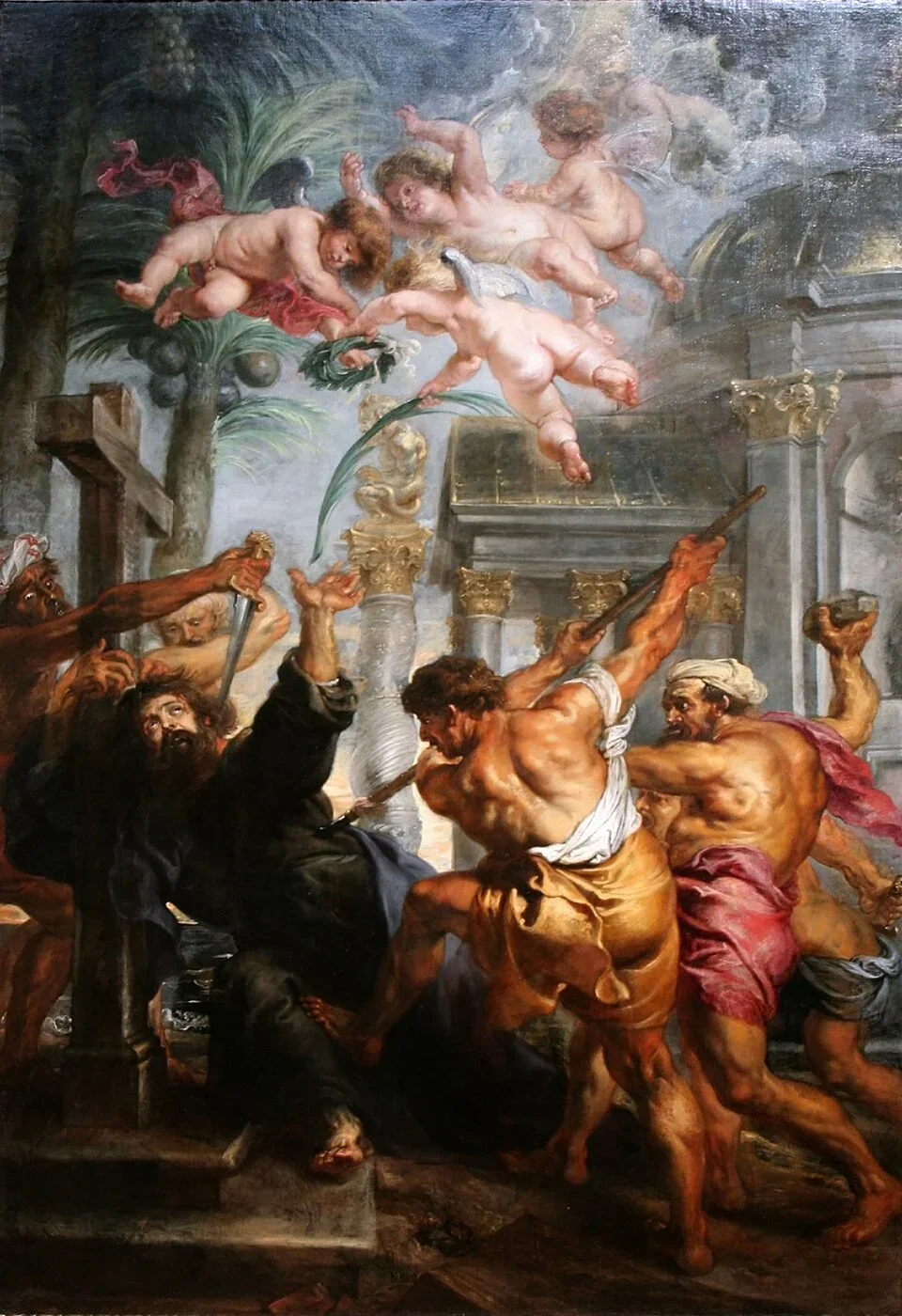
Martyrdom of Saint Thomas
At the top of a twisted column behind the martyr is an idol with two horns, a tail and feet like an animal's. It stands for a Hindu god, but Rubens gave it a devil's look. Anything against the Christian faith was the devil's work. This is meant to be India, where Thomas was killed. The domed building is Roman, and the attackers are shaped like Europeans. Rubens never went to India. He built it from books, and his India came out looking like Rome. In the old story, Thomas went there to build a king a palace, but gave the money to the people. The king's brother wanted a palace too. When Thomas refused, he sent men to find and torture him. Thomas said he would worship the idol only if God did not destroy it on the spot. If it did, the men sent to kill him would have to become Christians. As he bent down, the idol melted like wax. Instead of converting, they killed him with a spear. Jan Svitavsky, prior of Prague's Augustinian monastery, ordered this for the church's high altar. Thomas is barefoot in a cowl like the friars, so the monks could see him as a model of faith. In the background are two palm trees. For Christians the palm means eternal life, and here it stands for the life Thomas has after martyrdom.
Listen in the appPeter Paul Rubens · Public domain
08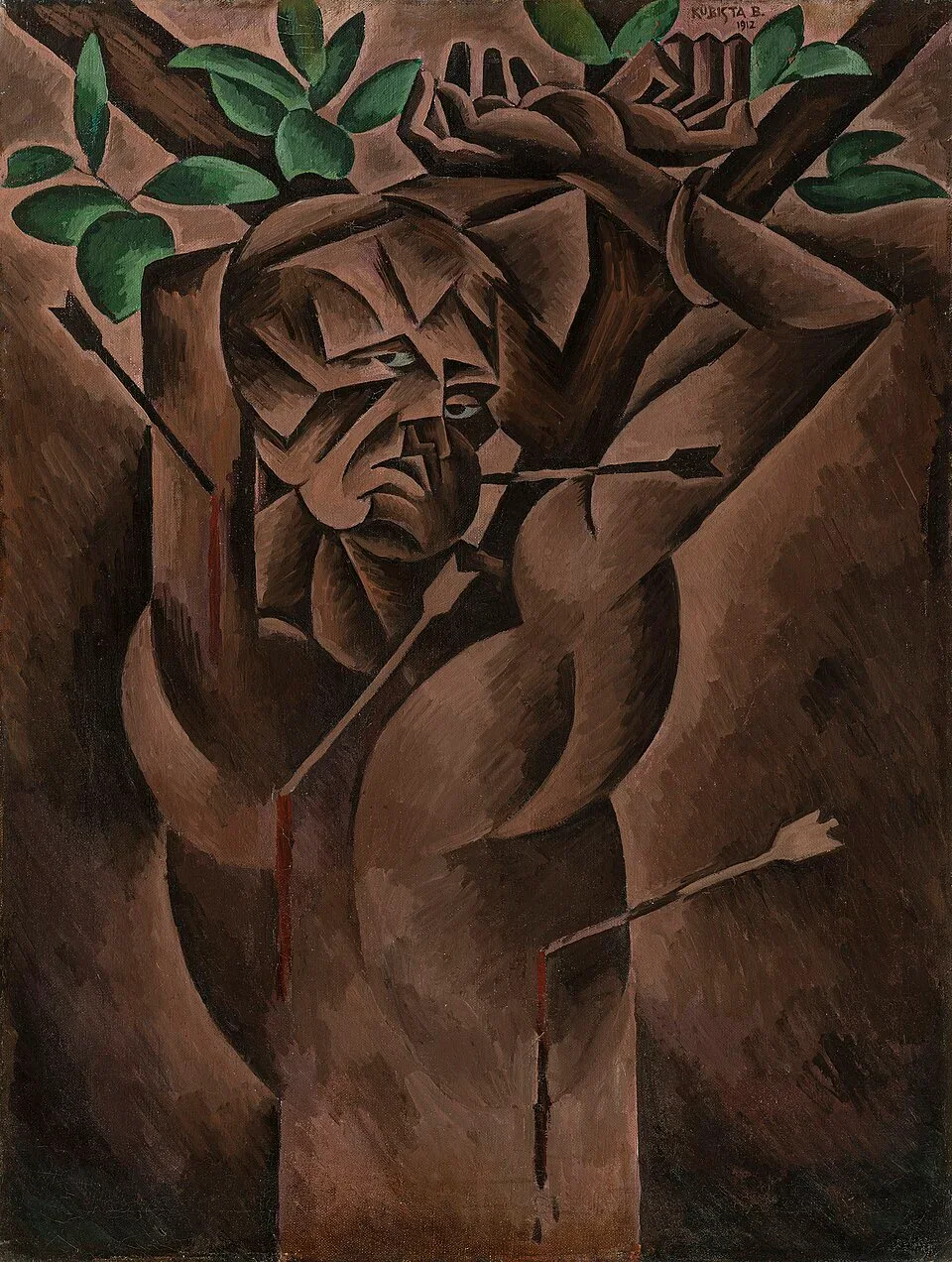
Saint Sebastian
The face at the center of this picture is the painter's own. He put his features on Saint Sebastian, the martyr shot with arrows. Yet he was not painting the suffering. He pictured himself as an artist nobody understood, and wanted the strength to rise above it. He built the whole picture like a construction, working out every line. The head sits at the center, held inside a triangle. He tipped that triangle off its perfect position, and in that tilt he shows the tragedy of the subject. His body is made of rounded, oval forms. His head is built from triangles and straight lines. The arrows slant along a spiral running through the whole picture, his way of showing life and death, restlessness and the uncertainty of being. He painted his own rejection into the saint. Critics did not understand his work, and it earned him almost nothing. The next year he joined the army as an officer in the coastal artillery. He kept the colours to a narrow range, mostly browns. In Christian symbolism that brown shows the saint winning over his suffering through will. And set against all that brown is the cold green of the tree's leaves. That green is a symbol of death.
Listen in the appBohumil Kubišta · Public domain
09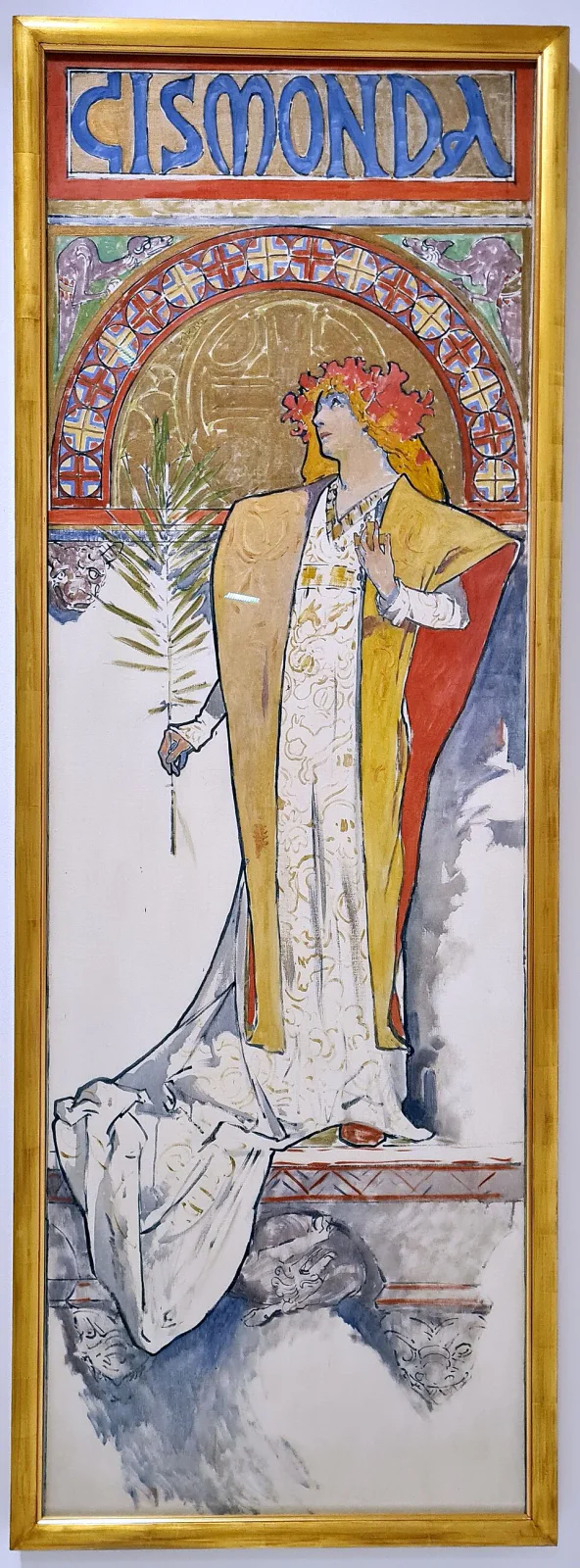
Gismonda
Why does this woman hold a palm leaf? She is Sarah Bernhardt as Gismonda, who rules Athens as regent for her young son. The orchid wreath on her head and the grand robe turn her into an exotic Byzantine aristocrat. Alphonse Mucha made this poster in 1894, and it made his name in France and led to six years as Bernhardt's main designer. Early in the play, the boy is pushed into a tiger pit, part of a plot to seize her duchy. A man leaps in and kills the tiger with a dagger through the eye. Gismonda swears before God to marry and share her rule with whoever saved her son. Then she learns he is a commoner, and tries every way out, even asking the Pope to release her. But she comes to love him. In the last scene, in a church, the people of Athens carry palms and demand that Gismonda announce her marriage to Almerio.
Listen in the appAlphonse Mucha · CC BY 4.0
10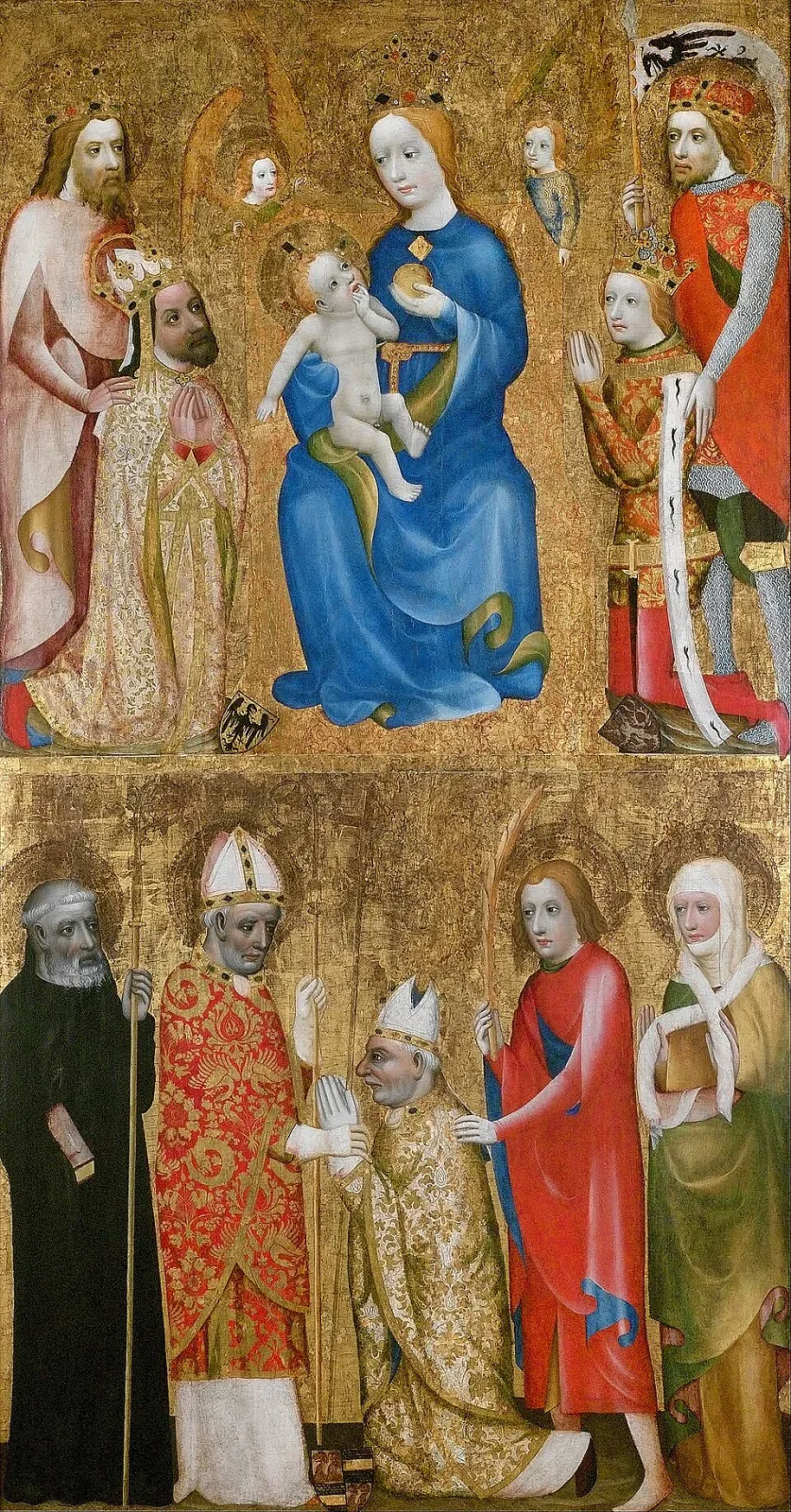
Votive Panel of Jan Očko of Vlašim
An archbishop has just knelt before a saint and is placing his hands into the saint's hands. His own coat of arms is there with him. This is Jan Očko of Vlašim. He had this enormous picture made for a chapel newly built at Roudnice Castle, where Prague's archbishops lived. The chapel was consecrated in 1371 to the Virgin and the patron saints of Bohemia, and that is probably when the painting was finished. It is one of the largest medieval pictures in Bohemia. It was so costly that only a man of high rank and great wealth could afford it. Yet here he gives himself the lowest place of all. He is the only figure shown in strict profile. The kings and saints are all turned partway. The saint taking his hands is Adalbert, who held the same office before him. Above them the Virgin sits on her throne with the naked infant, facing us directly, the highest place of all. Charles the Fourth kneels on one side with his imperial arms. On the other kneels his young son, King Wenceslaus the Fourth, with the Bohemian arms. Both kneel, set beneath her, with their patron saints standing behind. Who painted it is still not known.
Listen in the appCircle of Theodoric of Prague · Public domain
- 11
John the Baptist
Auguste Rodin · 1877–1881
- 12
Madonna of Zbraslav
Unknown Artist · 1340–1360
- 13
Madonna of Michle
Master of the Madonna of Michle · 1340
- 14
Water Castle
Gustav Klimt · 1908–1910
- 15
Sbratření
Karel Pokorný · 1951
- 16
Lamentation of Christ
Master Of Mourning from The Beggar · c. 1510
- 17
St. Peter of Slivice
Master of the Krumlov Madonna · c. 1395
- 18
Law and Grace
Lucas Cranach the Elder · 1529
- 19
Seated Woman with Bent Knees
Egon Schiele · 1917
- 20
Madonna of Žebrák
Maestro de la Virgen de Mendigo · c. 1380
- 21
Portrait of Antonio Proust
Édouard Manet · 1855–1856
- 22
Portrait of the Gem-Cutter Dionysius Miseroni and His Family
Karel Škréta · 1653–1655
- 23
Hohenfurther cycle
Master of Vyšší Brod · 1345–1350
- 24
St. Vitus Madonna
Meister der Madonna von St. Veit · 1420
- 25
Saint Catherine
Theodoric of Prague · 14th century
- 26
Saint Karel Veliký
Theodoric of Prague · 1360
- 27
Matthew the Apostle
Theodoric of Prague · 1359–1365
- 28
Crucifixion from Nové Sady
Master of the Rajhrad Altarpiece · 1440
- 29
Altarpiece of the Holy Trinity
Master of the Litoměřice Altarpiece · c. 1520
- 30
Luke the Evangelist
Theodoric of Prague · c. 1360
- 31
Adam and Eve
Lucas Cranach the Elder · c. 1538
- 32
Madonna of Roudnice
Master of the Třeboň Altarpiece · 1385–1390
- 33
Lady with a Muff
Gustav Klimt · 1916–1917
- 34
Portrait of Don Miguel De Lardizábal
Francisco Goya · 1815
- 35
Mountain Landscape with the Temptation of Christ
Joos de Momper the Younger, Sebastiaen Vrancx · 1630
- 36
Franciscan Madonna (Pilsen)
Unknown Artist
- 37
Roudnice Altarpiece
Unknown Artist
- 38
Madonna of Strakonice
Unknown Artist · c. 1300–1330
- 39
Lovers
Pierre-Auguste Renoir · 1875
- 40
Village at Full Moon
Jan Brueghel the Elder, Joos de Momper the Younger · 1620
- 41
Epitaph of Goldsmith Nicolas Müller of Prague
Bartholomeus Spranger · c. 1592–1593
- 42
Joaquina
Henri Matisse · 1911
- 43
Bonjour Monsieur Gauguin
Paul Gauguin · 1889
- 44
The Four Horsemen, from The Apocalypse
Albrecht Durer · 1497–1498
- 45
Peter Perez Burdett and his First Wife Hannah
Joseph Wright of Derby · 1765
- 46
St George's Altar
Unknown Artist · c. 1470
- 47
Velhartice Ark
Unknown Artist · 1490–1500
- 48
The Martyr
Auguste Rodin · 1885
- 49
Beheading of St Dorothea
Hans Baldung Grien · 1516
- 50
Self-portrait
Giuseppe Arcimboldo · 1570
- 51
At the Moulin Rouge: Two women waltzing
Henri de Toulouse-Lautrec · 1892
- 52
Antwerp Cathedral (Wenceslaus Hollar), National Gallery in Prague
Wenceslaus Hollar · 1649
- 53
The Adoration of the Magi, altarpiece with shutters; left shutter, the donor with St Bavo; right shutter, the donor's spouse with St Adrian
Geertgen tot Sint Jans · 1480–1485
- 54
Self-portrait
Petr Brandl · 1722–1725
- 55
Group of Seven Horses in a Forest (Hans Baldung Grien), National Gallery in Prague
Hans Baldung Grien · 1534
- 56
Phaethon from the Four Disgracers series
Hendrik Goltzius · 1588
- 57
Sudarium of Saint Veronica
Claude Mellan · 1649
- 58
Large View of Mainz (Wenceslaus Hollar), National Gallery in Prague
Wenceslaus Hollar · 1632
- 59
Allegorical Double Portrait of Bartholomeus Spranger and his Late Wife Christina (Egidius Sadeler), National Gallery in Prague
Aegidius Sadeler · 1600
- 60
Curriculum vitae christianae
Hans von Aachen · 1589
- 61
Apotheosis of Art (Jan Harmensz. Muller), National Gallery in Prague
Jan Harmensz. Muller · 1597
- 62
Abraham and Isaac
Anthony van Dyck · c. 1617
- 63
The Madonna of Rome
anonymní malíř, 14. stol. · 1350–1355
- 64
Madonna of Březnice
Unknown Artist · 1396
- 65
Karel Škréta Annunciation
Karel Škréta · 1670
- 66
The Return of the Prodigal Son
Petr Brandl · c. 1710
- 67
Crucifixion
Antoine de Lonhy · c. 1460
- 68
St. John the Evangelist, Master of the Týn Calvary (c. 1410), National Gallery in Prague
Mistr Týnské kalvárie · c. 1410
- 69
Madonna with Child
Master of the Madonna of Neuhaus · c. 1460
- 70
Assumpta from Deštná
Unknown Artist
- 71
St Gregory
Theodoric of Prague · c. 1370
- 72
Portrait of Painter Josef Heintz
Hans von Aachen · c. 1584
- 73
Portrait of a Mining Official
Petr Brandl · c. 1728
- 74
Collection of graphics and drawings of the National Gallery in Prague
Unknown Artist
- 75
The Crucifixion with Six Passion Stories
Master of Jacques de Besançon · c. 1490
- 76
The Temptation of St. Anthony
Lucas Cranach the Elder · 1506
- 77
Adoration of the Christ Child with St. Lucy (Giulio Campi, National Gallery in Prague)
Giulio Campi · 1535–1540
- 78
Martyrdom of St. Lawrence (Karel Škréta), National Gallery in Prague
Karel Škréta the Younger · 1650
- 79
Pieta from Nesvačily (c. 1420-1430), National Gallery in Prague
Unknown Artist · c. 1410–1415
- 80
Votive Panel from Dubeček
Unknown Artist
- 81
Virgin and Child / Vera Icon
Unknown Artist · 1435
- 82
Vyšebrodská Madonna
Unknown Artist · c. 1420
- 83
Madonna from Dolní Kalná (1340-1350), National Gallery in Prague (2)
Unknown Artist · 1340–1350
- 84
The Whore of Babylon
Albrecht Durer · 1497–1498
- 85
Northern Sea in the Moonlight
Caspar David Friedrich · 1823–1824
- 86
Portrait of Jasper Schade van Westrum
Frans Hals · c. 1645
- 87
Eleonora of Toledo
Bronzino · 1543
- 88
Portrait of Anna du Pire as Granida
Bartholomeus van der Helst · 1660
- 89
Nocturnal Serenade
Jan Steen · c. 1675
- 90
Portrait of Willem Marienburg II
Gerard ter Borch · 1660–1662
- 91
Peasant on the Way to Market
Frans Snyders · 1610s
- 92
Nativity
Master of Vyšší Brod · c. 1350
- 93
Christ Washing the Feet of the Disciples
Paolo Veronese · 1580s
National Gallery Prague
Frequently asked questions
How much does the guide cost?
Free app download. Free until 1 January. Listed guide price: $1.99. Audio guide only. Venue admission is separate.
Can I listen without internet?
Yes. Download the guide’s audio, images, and maps in the app before your visit. Your downloaded content is then available offline.
Can I listen in my language?
In English for now. More languages soon.
Do I need to follow a schedule?
No. This is a self-guided experience. Choose your stops, pause whenever you like, and return to a story at your own pace.
Which artworks are in the National Gallery Prague audio guide?
93 artworks, including Feast of the Rosary (Albrecht Durer), Green Wheat Field with Cypress (Vincent van Gogh), St. Jerome in His Study (Albrecht Durer), The Maiden (Gustav Klimt), Myself: Portrait – Landscape (Henri Rousseau), Třeboň Altarpiece (Master of the Třeboň Altarpiece), Martyrdom of Saint Thomas (Peter Paul Rubens), and Saint Sebastian (Bohumil Kubišta). The full list is on this page.
Is this the museum’s official audio guide?
No. Stanza is an independent audio guide app and is not affiliated with National Gallery Prague. Museum admission is separate.
At your own pace
Explore National Gallery Prague.
Download Stanza, then search for “National Gallery Prague”.
Free app download · Guide price shown in the app
Keep exploring
Nearby audio guides
Prague · 1 km
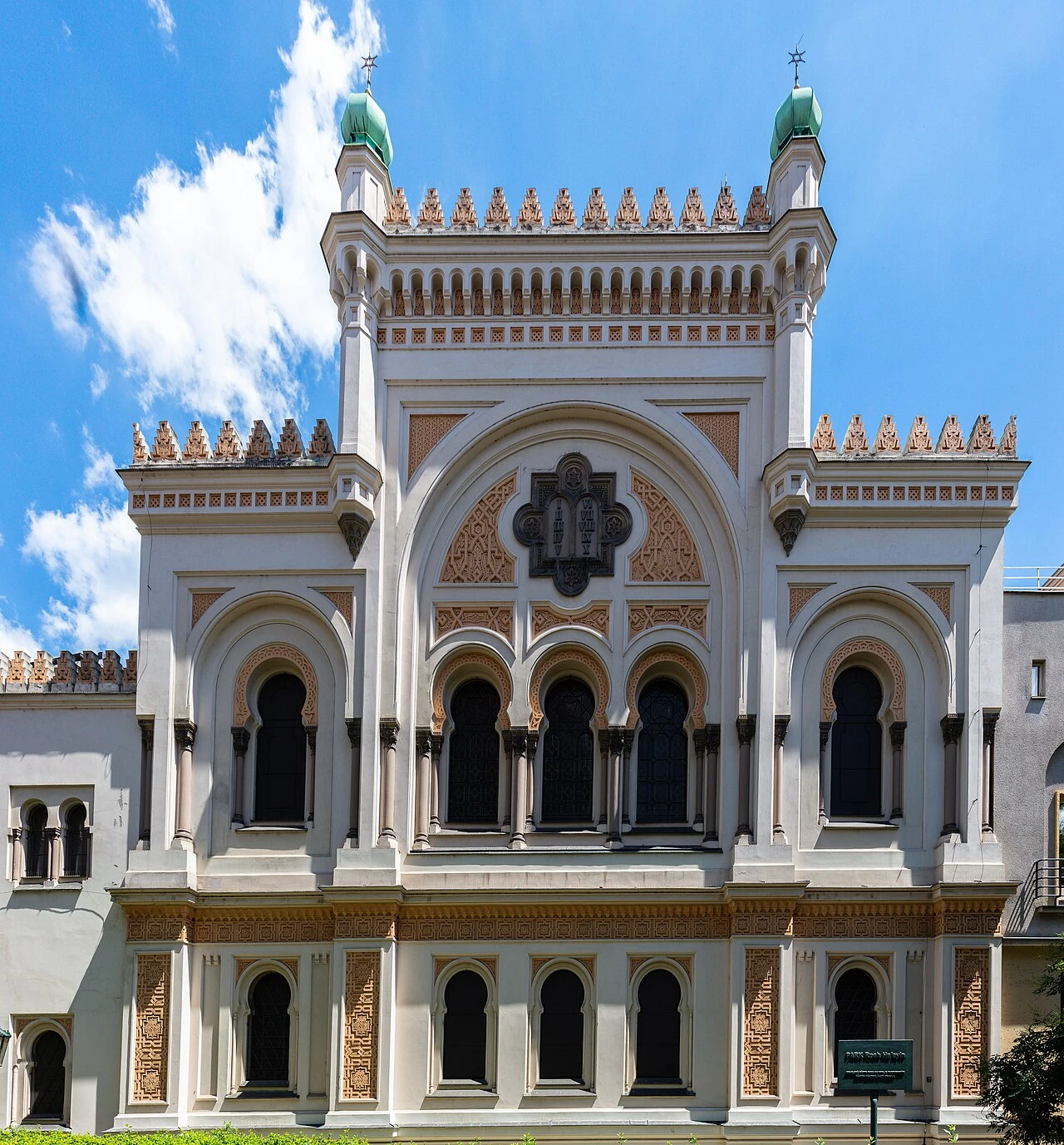
Spanish Synagogue
Content & sources
Diego Delso · CC BY-SA 4.0
Prague · 2 km
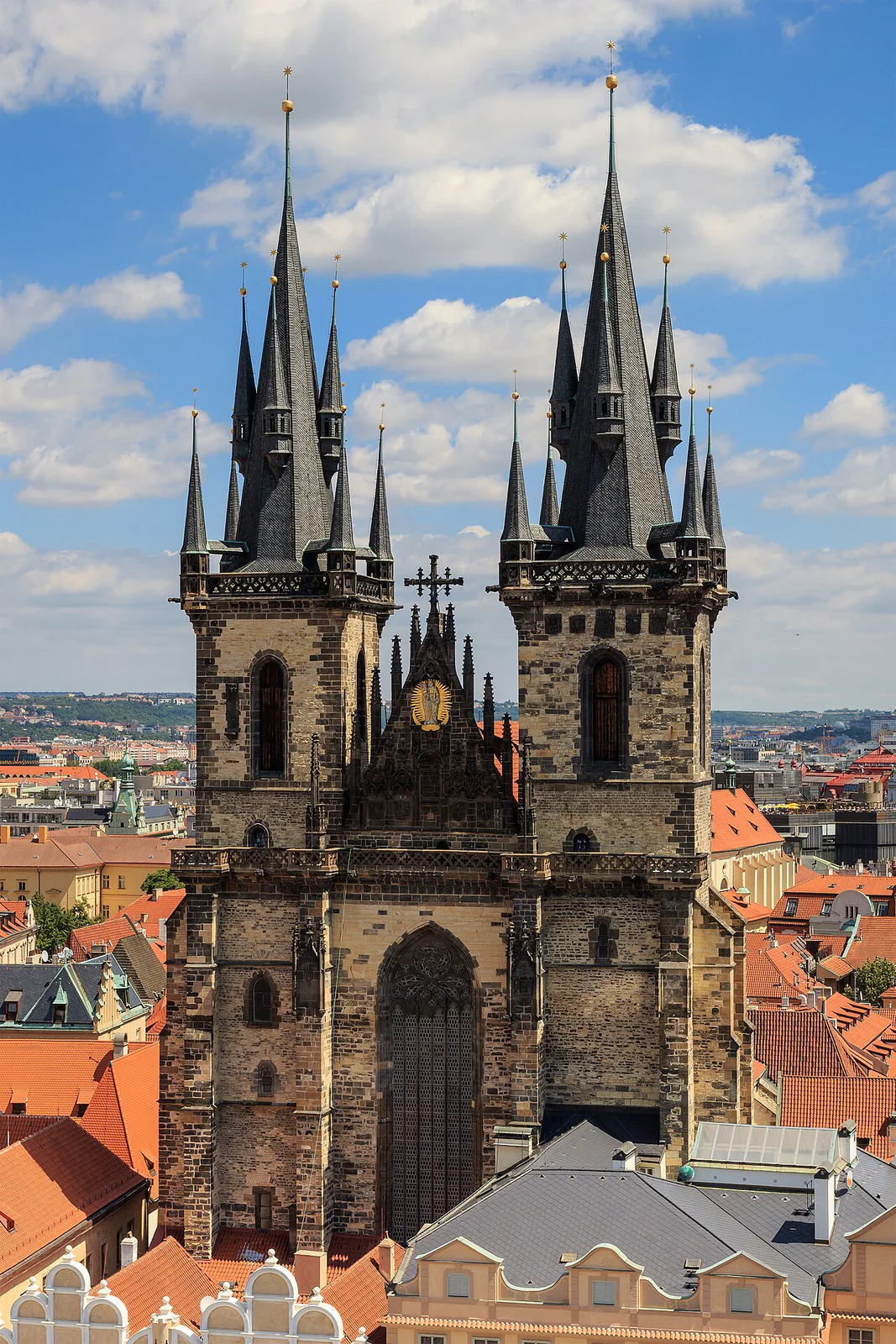
Church of Our Lady before Týn
Content & sources
Photo: A.Savin · FAL
Prague · 2 km
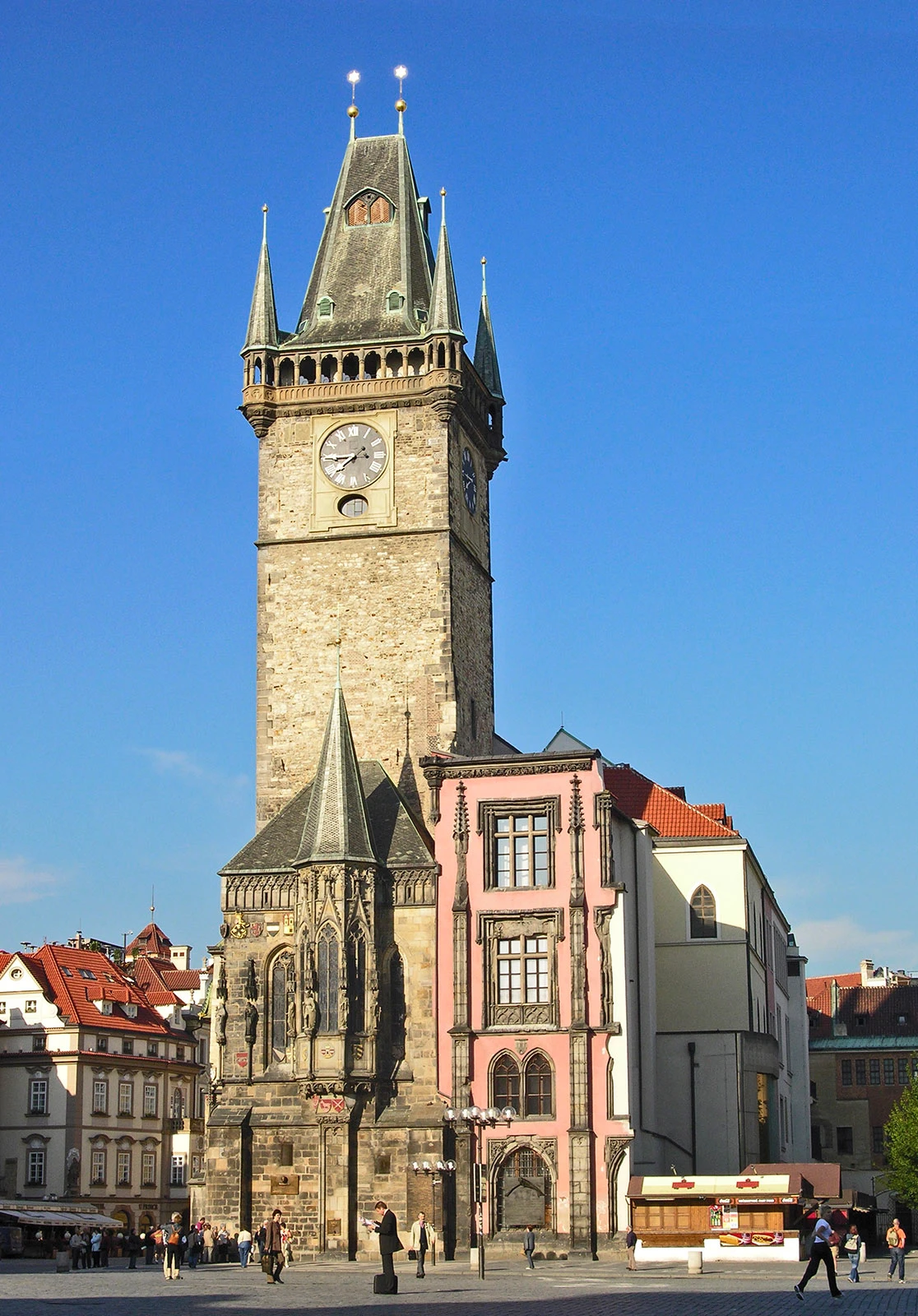
Old Town Hall
Content & sources
Hans Peter Schaefer, http://www.reserv-a-rt.de · CC BY-SA 3.0
Prague · 2 km
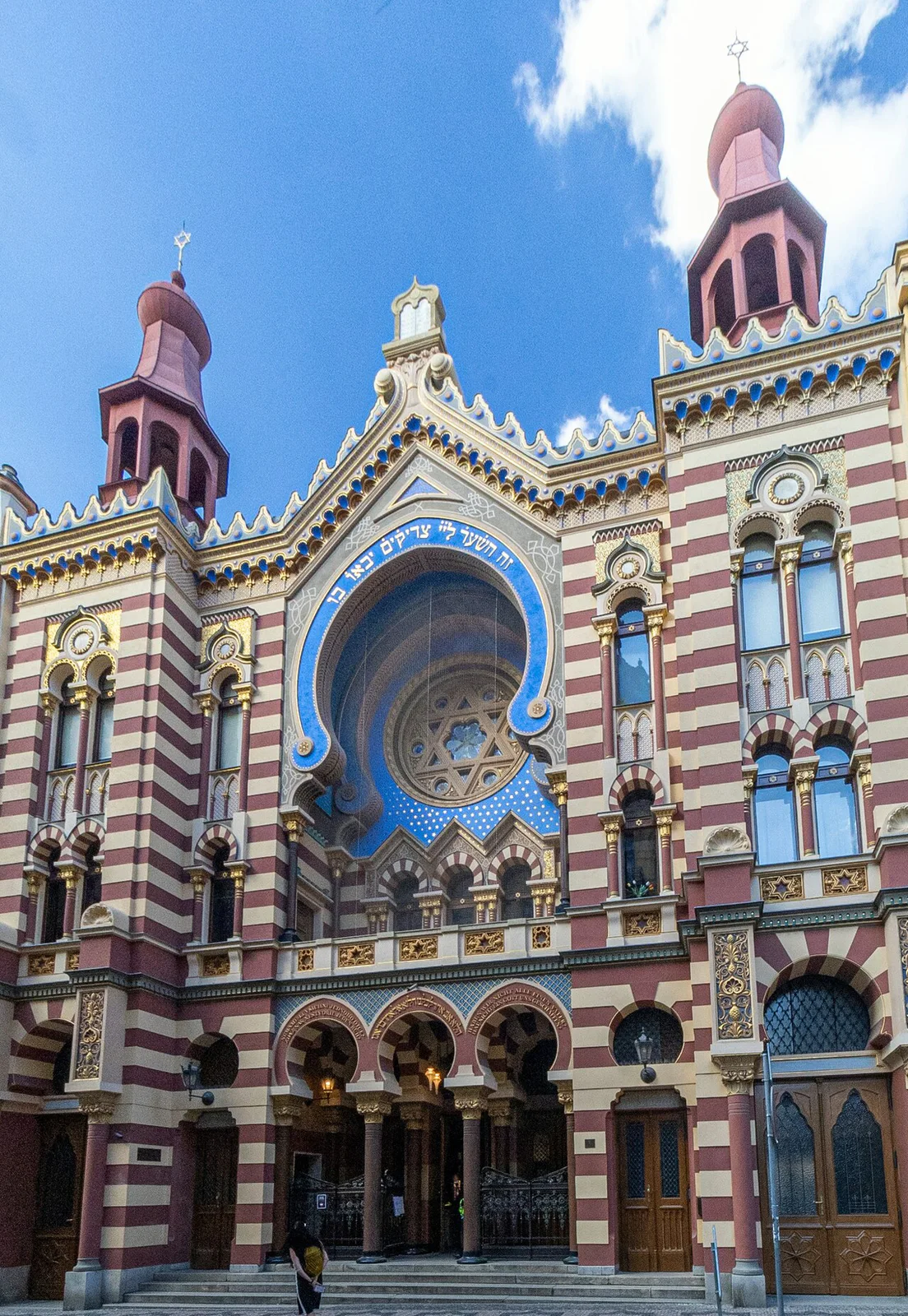
Jubilee Synagogue
Content & sources
Vit · CC BY-SA 4.0
Art museums
More art museum audio guides
Dresden · 162 artworks
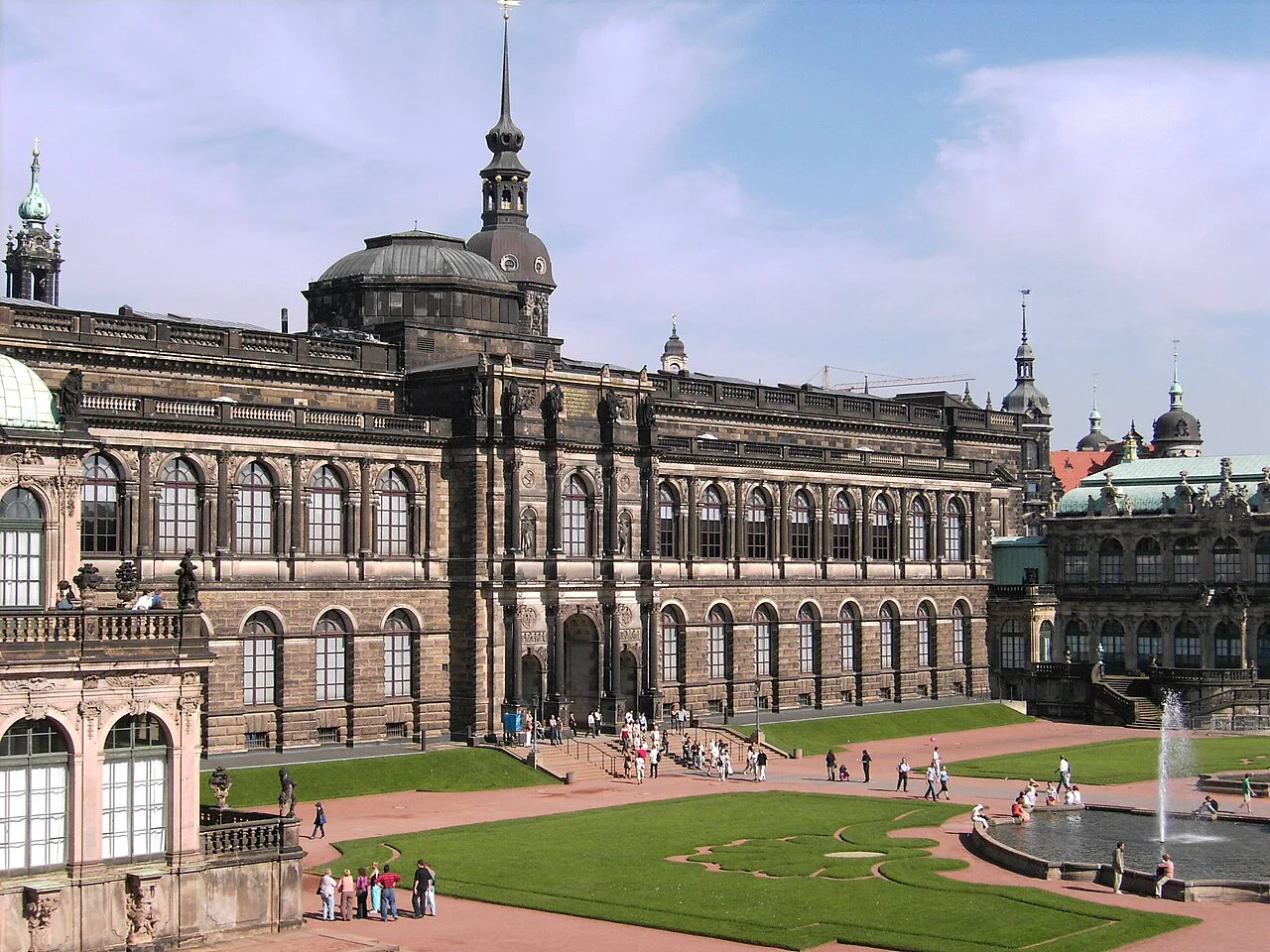
Gemäldegalerie Alte Meister
Content & sources
Photo: Ingersoll · Public domain
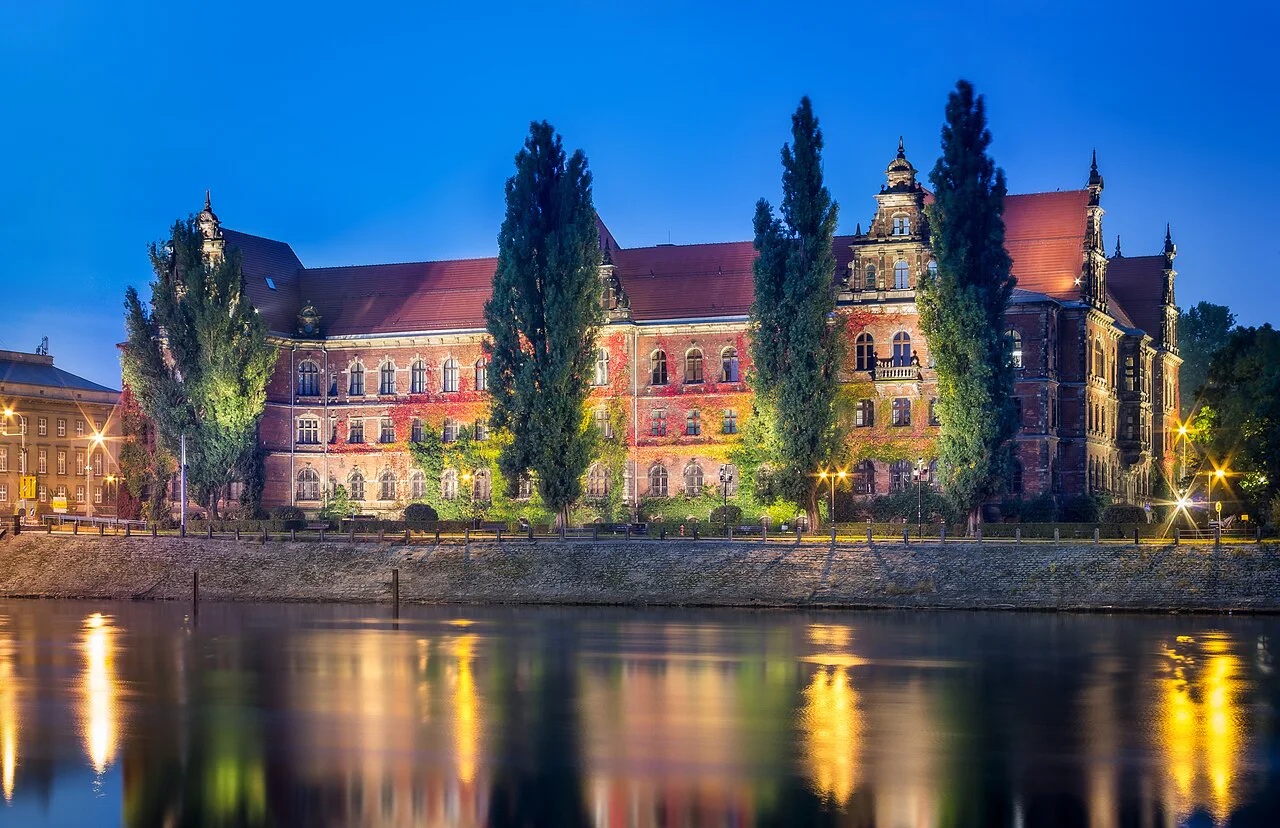
Wrocław · 44 artworks
Muzeum Narodowe we Wrocławiu
Content & sources
Photo: Jar.ciurus · CC BY-SA 3.0 pl
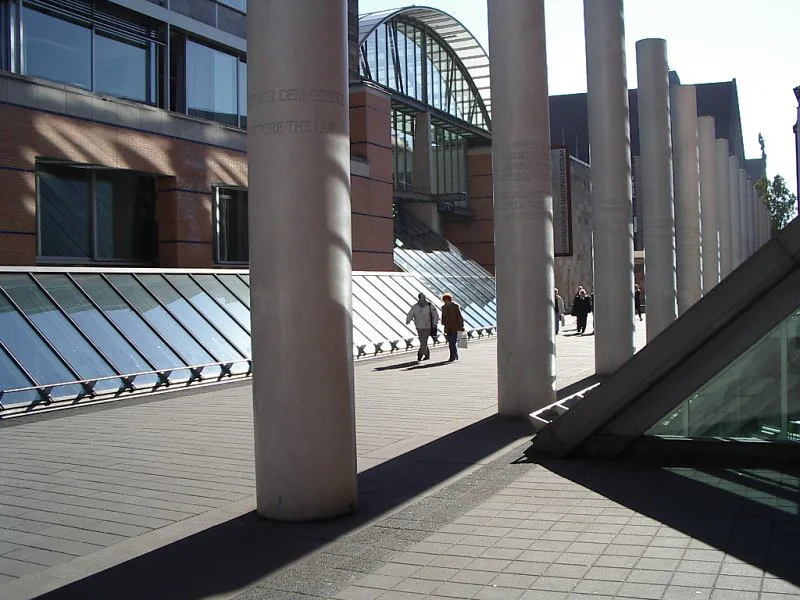
Nuremberg · 54 artworks
Germanisches Nationalmuseum
Content & sources
The original uploader was Keichwa at German Wikipedia. · CC BY-SA 3.0
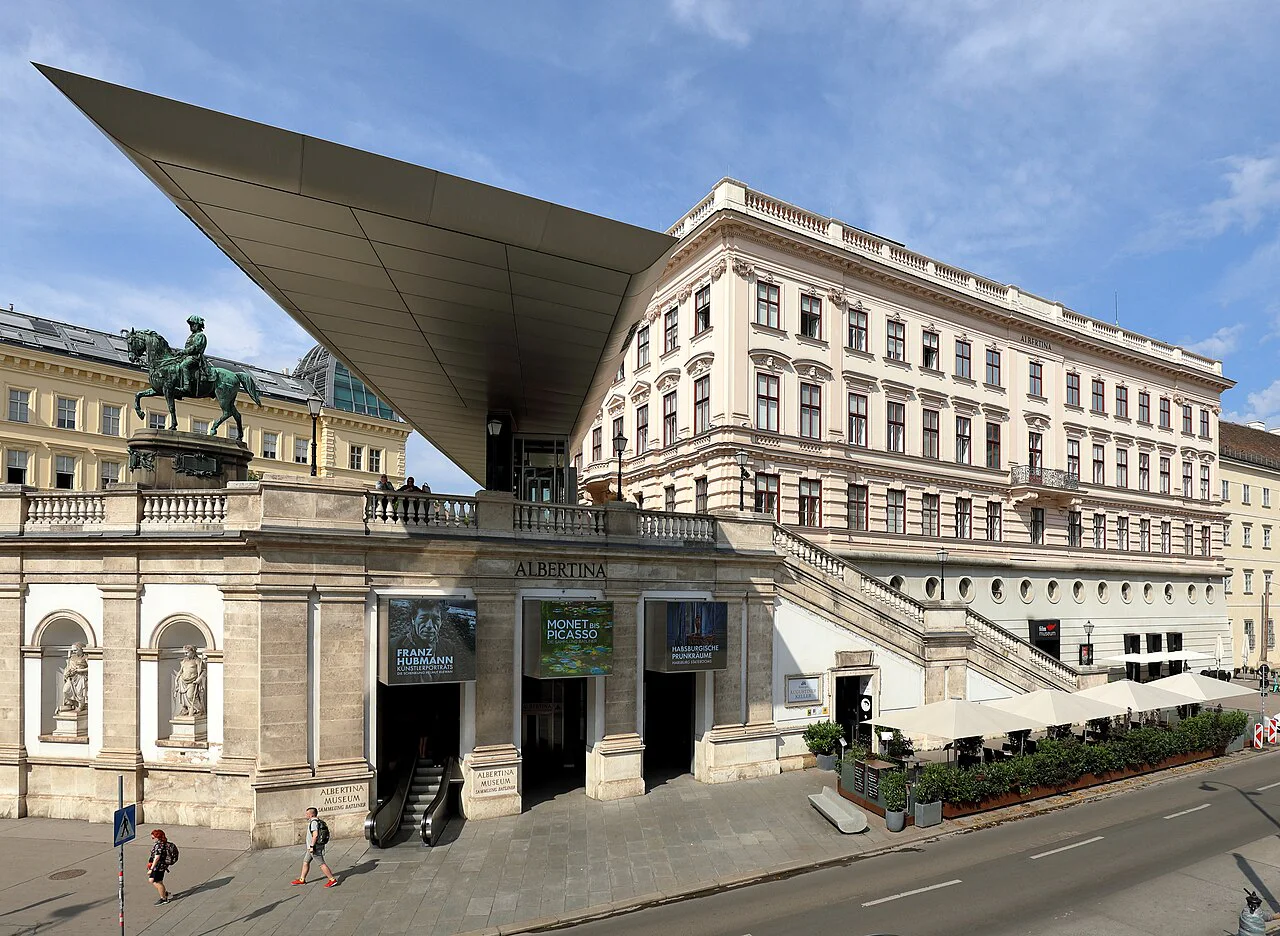
Vienna · 46 artworks
Albertina
Content & sources
C.Stadler/Bwag · CC BY-SA 4.0
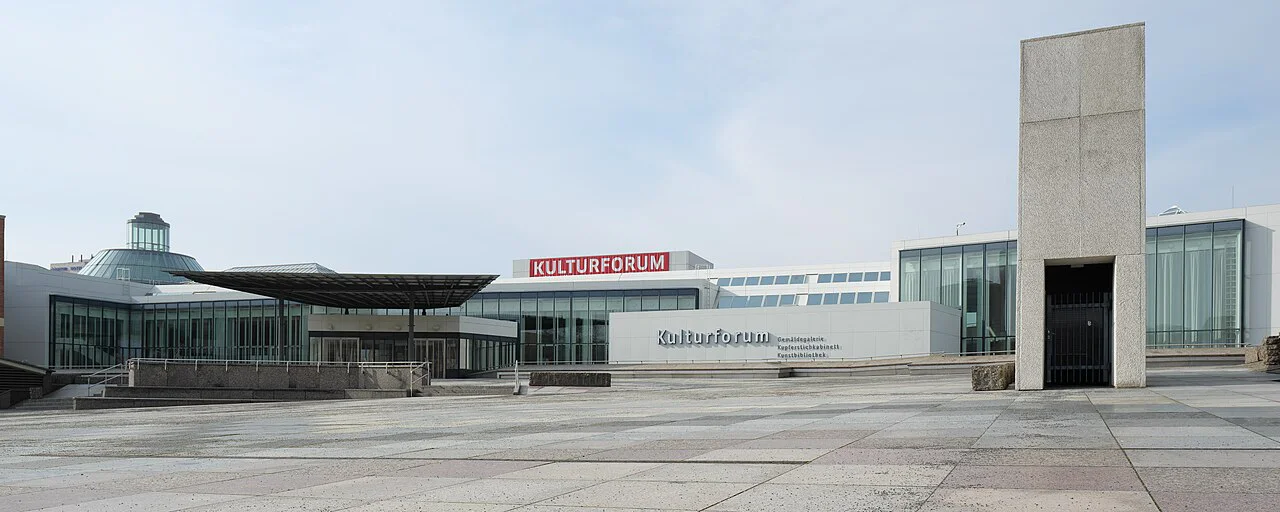
Berlin · 218 artworks
Gemäldegalerie, Berlin
Content & sources
Photo: Membeth · CC0
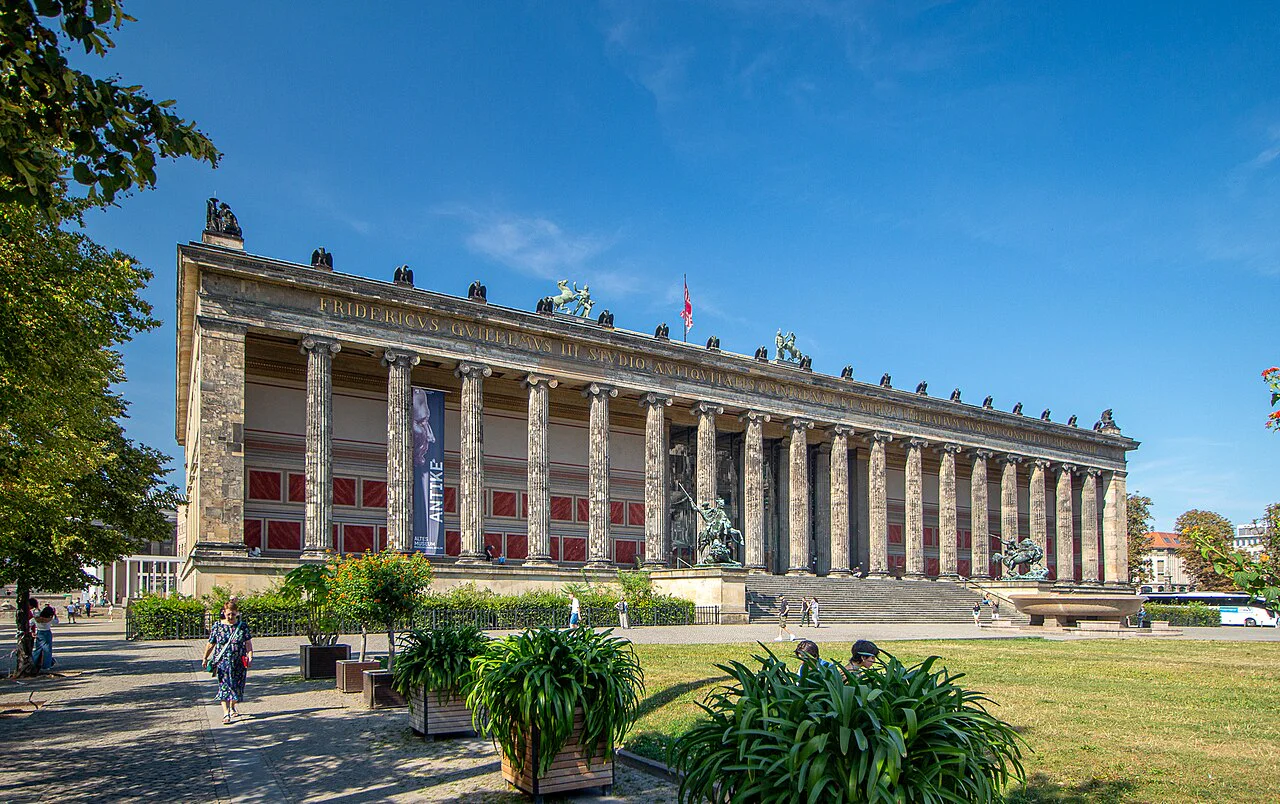
Berlin · 47 artworks
Altes Museum
Content & sources
Vit · CC BY-SA 4.0