Stanza · Audio guide
National Gallery of Denmark Audio Guide
A place to remember. A story to take with you.
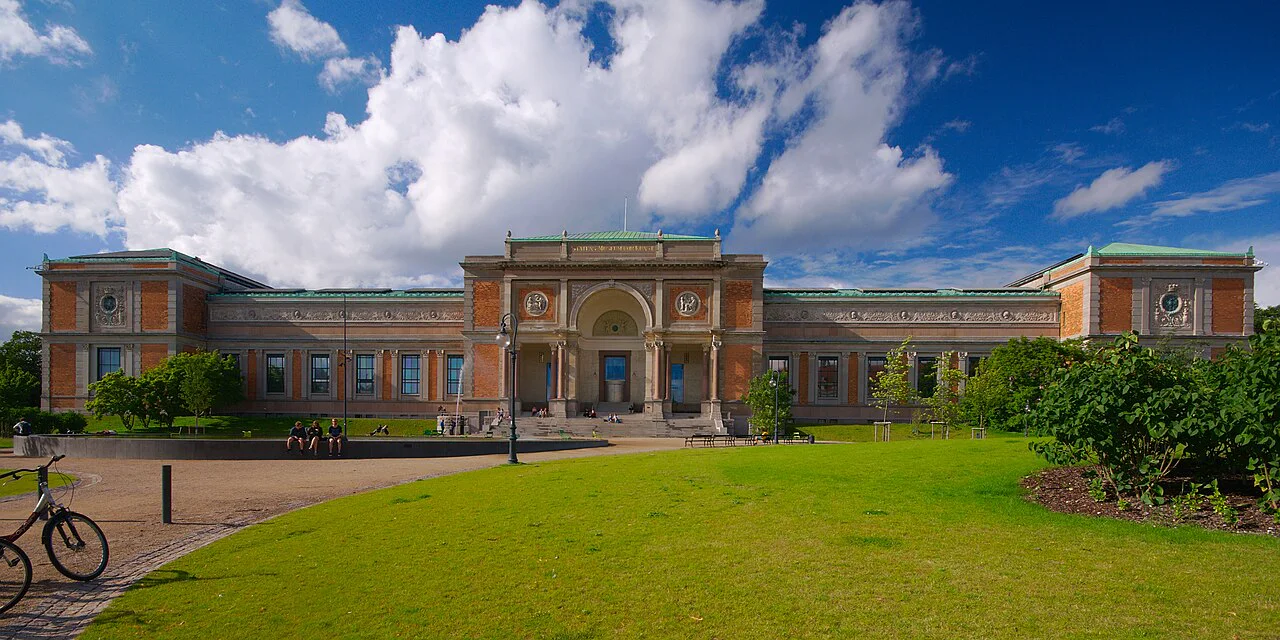
The National Gallery of Denmark is the Danish national gallery. It is located in the centre of Copenhagen.
Download Stanza, then search for “National Gallery of Denmark”.
About the tour
One guide. Your kind of visit.
The National Gallery of Denmark is the Danish national gallery. It is located in the centre of Copenhagen.
The National Gallery of Denmark guide tells the stories of 101 artworks, including The Rhinoceros (Albrecht Durer), The Green Stripe (Henri Matisse), Study of a Nude (Paul Gauguin), View from the Artist's Window (Martinus Rørbye), Alice (Amedeo Modigliani), In a Roman Osteria (Carl Bloch), Christ as the Suffering Redeemer (Andrea Mantegna), and The Fall of the Titans (Cornelis van Haarlem). Every artwork is free to hear in the Stanza app until 1 January.
Ready when you are.
- 01Get the free Stanza app.
iOS & Android
- 02Find your guide.
“National Gallery of Denmark”
- 03Download before you go.
Works offline
Audio guide / 101 artworks
Inside the guide
Get to know a few of the stories before you go. Open a stop to read more.
01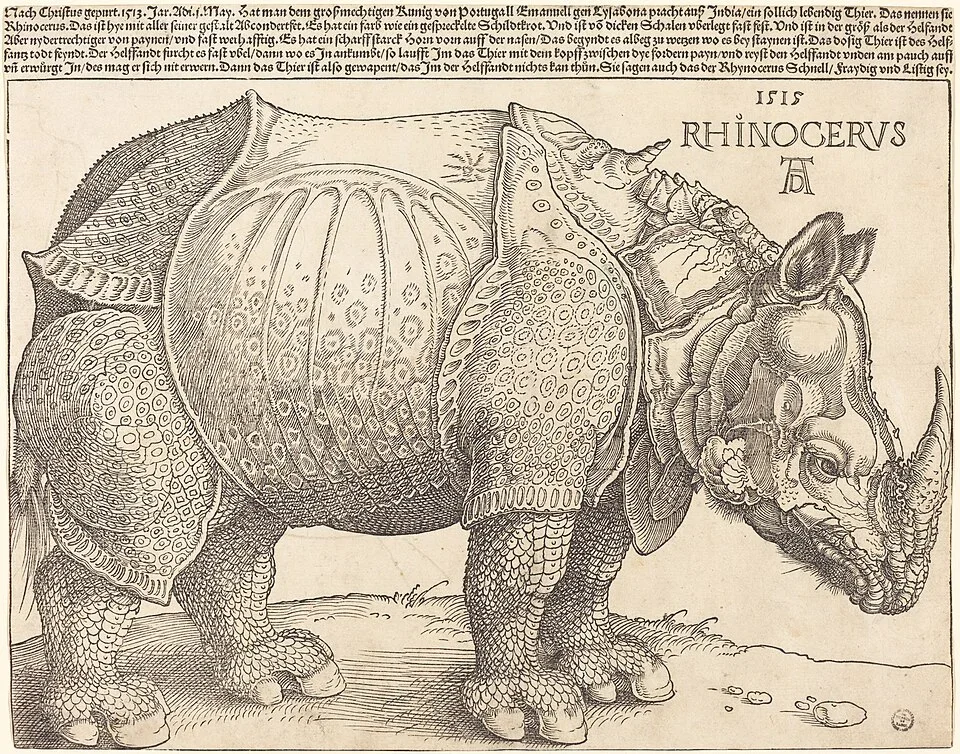
The Rhinoceros
Dürer cut this rhinoceros into wood without ever having seen one. What he had was a letter sent from Lisbon to Nuremberg, with a sketch enclosed. From that he made a pen and ink drawing, then printed it in reverse. What he did not know shows in the animal itself. Hard plates cover its body like armour. Rivets seem to run along the seams. There is a plate at the throat, a breastplate that looks solid, and a small twisted horn on its back. Its legs are scaly, its hindquarters shaped like a saw. None of that belongs to a real rhinoceros. The Indian rhinoceros does have deep folds in its skin, though, which from a distance can pass for armour. The living animal had reached Lisbon in May 1515, the first in Europe since Roman times. A governor in Portuguese India received it as a gift and passed it to King Manuel. Manuel meant it for Pope Leo the Tenth, hoping to keep the Pope's support for Portugal's claims in the Far East. But it never got there. A storm wrecked the ship off the Italian coast, and chained to the deck, the rhinoceros drowned. The print outlived the animal by centuries. Copied for three hundred years, it was taken for a true likeness into the late eighteenth century. The person who drew that sketch is still unknown.
Listen in the appAlbrecht Dürer · CC0
02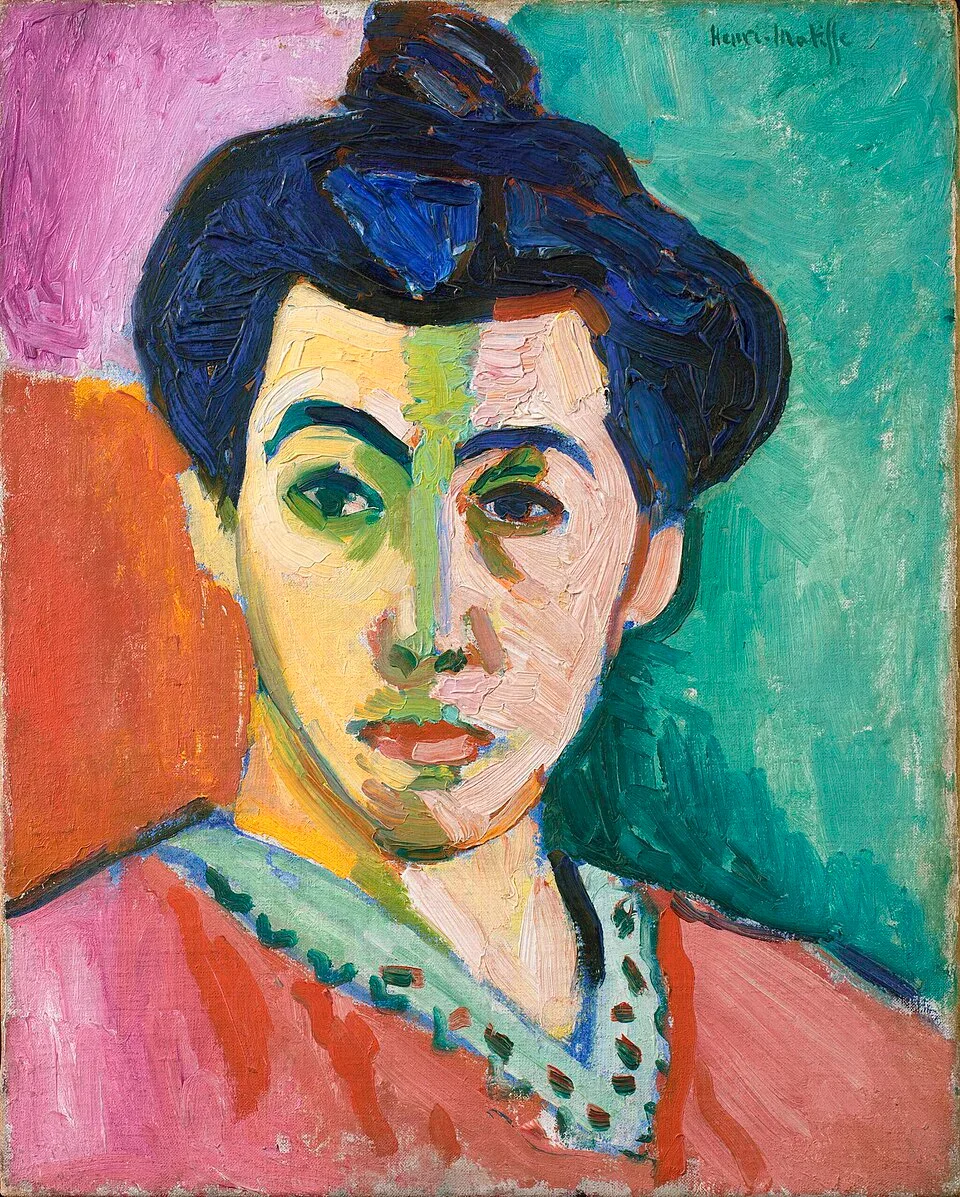
The Green Stripe
Why is there a green stripe down the middle of this woman's face? It starts at the hairline, crosses the nose, and stops at the upper lip. One half of her face is pink and orange, with red along the chin and ear. The other is yellow. Her hair and eyes are deep blue, her neckline teal. The background is pink and orange on one side, teal on the other. The stripe came out of the summer of 1905, when Matisse painted at Collioure with André Derain. They were testing how far colour could be pushed. Green did not have to mean grass, he said, or blue mean sky. Set colours against each other, and the space between them opens in your mind. He called colour a force. The woman is his wife, Amélie, and he turned the experiment on her. She came out almost less than human. The lines are harder than in his other portrait of her, Woman with a Hat, and everything is fixed on her face. A friend of the owners called it a mad caricature of a portrait. In 1910 someone called it Matisse's punishment of Amélie, meant to make people see something strange and terrible in her. In 1917 a gallery seized the painting at a pretended auction. Two years later a dealer acting for the first owners had it back in Paris.
Listen in the appHenri Matisse · Public domain
03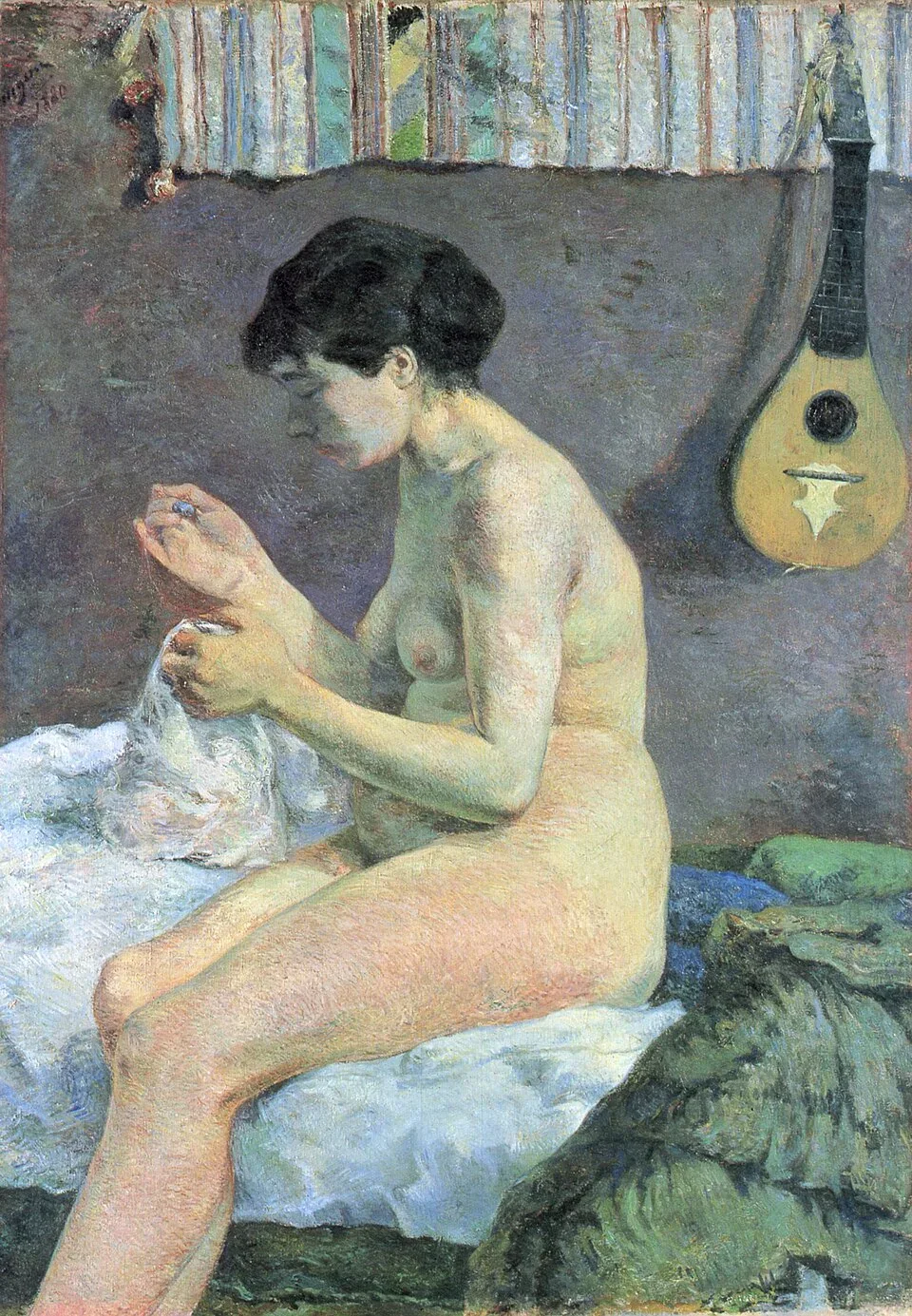
Study of a Nude
Paul Gauguin was still working as a stockbroker, painting in his spare time, when he made this, the first nude he ever painted. He painted a body as it really looked, not an idealized one. She sits on an unmade bed, head in profile, arranging a garment. There are rolls around her stomach, and her hands are bigger than they should be. He put it in the Impressionist exhibition of 1881, and people were shocked. They hunted for a reason. She must be sewing her own shirt, they said, and she must be pregnant. His wife Mette had a portrait of herself in the same show. She asked that this nude be hung far from it, so no one would get the wrong idea. Critics called the painting cruel and horrifying. Then Huysmans praised it. He said it showed a woman of our time, a realism no painter of the day could match, and he compared her with Rembrandt's nudes. But the painter said Huysmans had understood nothing. All he had been after was to express an experience.
Listen in the appPaul Gauguin · Public domain
04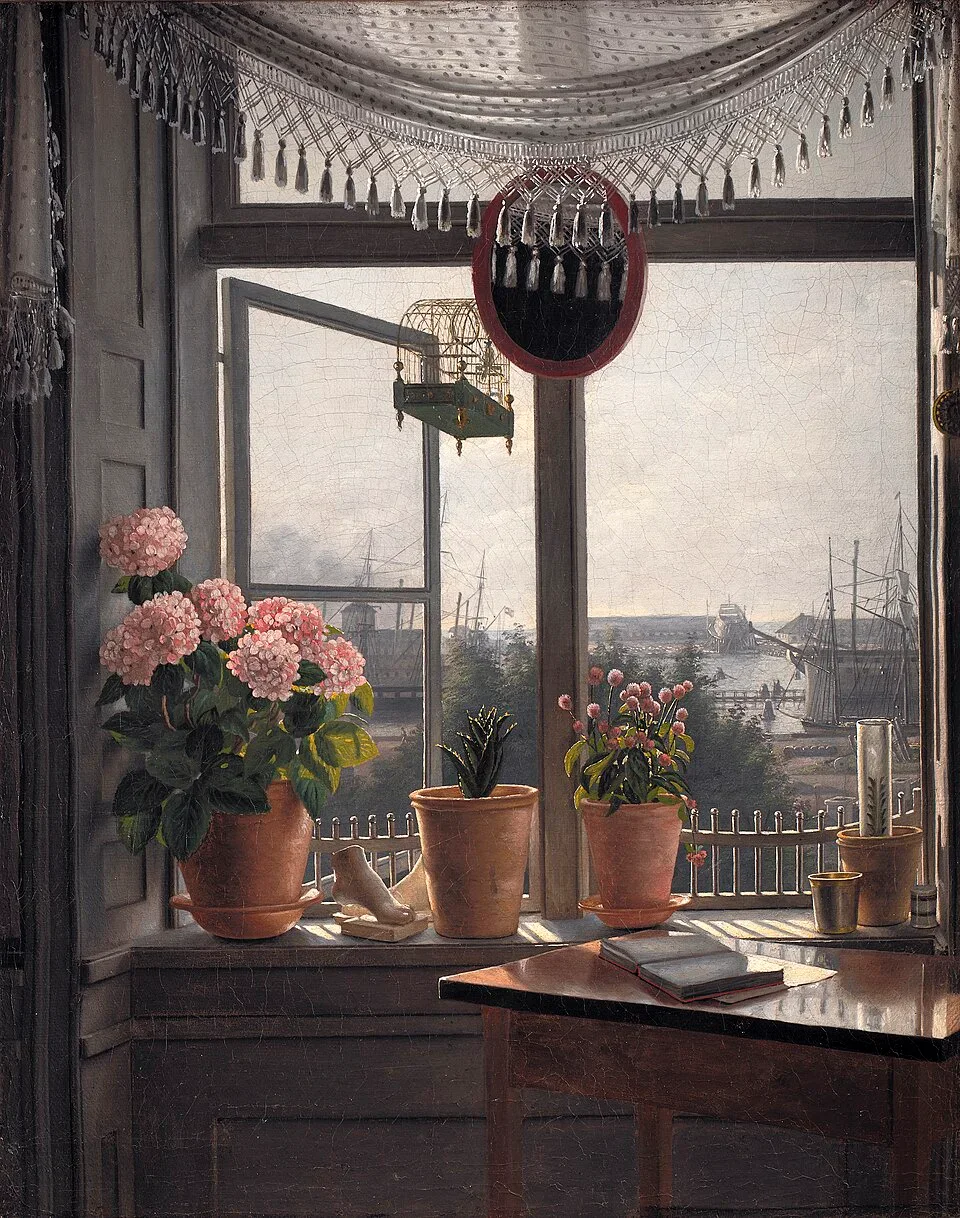
View from the Artist's Window
Beyond the window, ships head out from a naval dockyard in Copenhagen, one of them still on the building slips. Along the sill in front stands a row of potted plants. There is no face in the picture. The plants are a portrait of the painter, and together they tell a whole life. An unsprouted seed, a cutting shut in a glass tube, a young agave, a hydrangea in full flower, then a withered amaranth. For the Romantics, a plant was the image of creative genius, growing from its own seed by its own law. Two casts of feet say the same thing. A child's foot just touches the surface, while the adult's is planted firmly. Above the window, a caged bird hangs, caught between the room and the world outside. The ships out there stand for a longing to go where he has not been. A sketchbook with blank pages waits on the sill. The oval mirror hangs too high to catch his face, but the room he paints in is reflected in it. Rørbye painted this just as he was about to leave his childhood home, while his ideas about art were changing under Eckersberg.
Listen in the appMartinus Rørbye · Public domain
05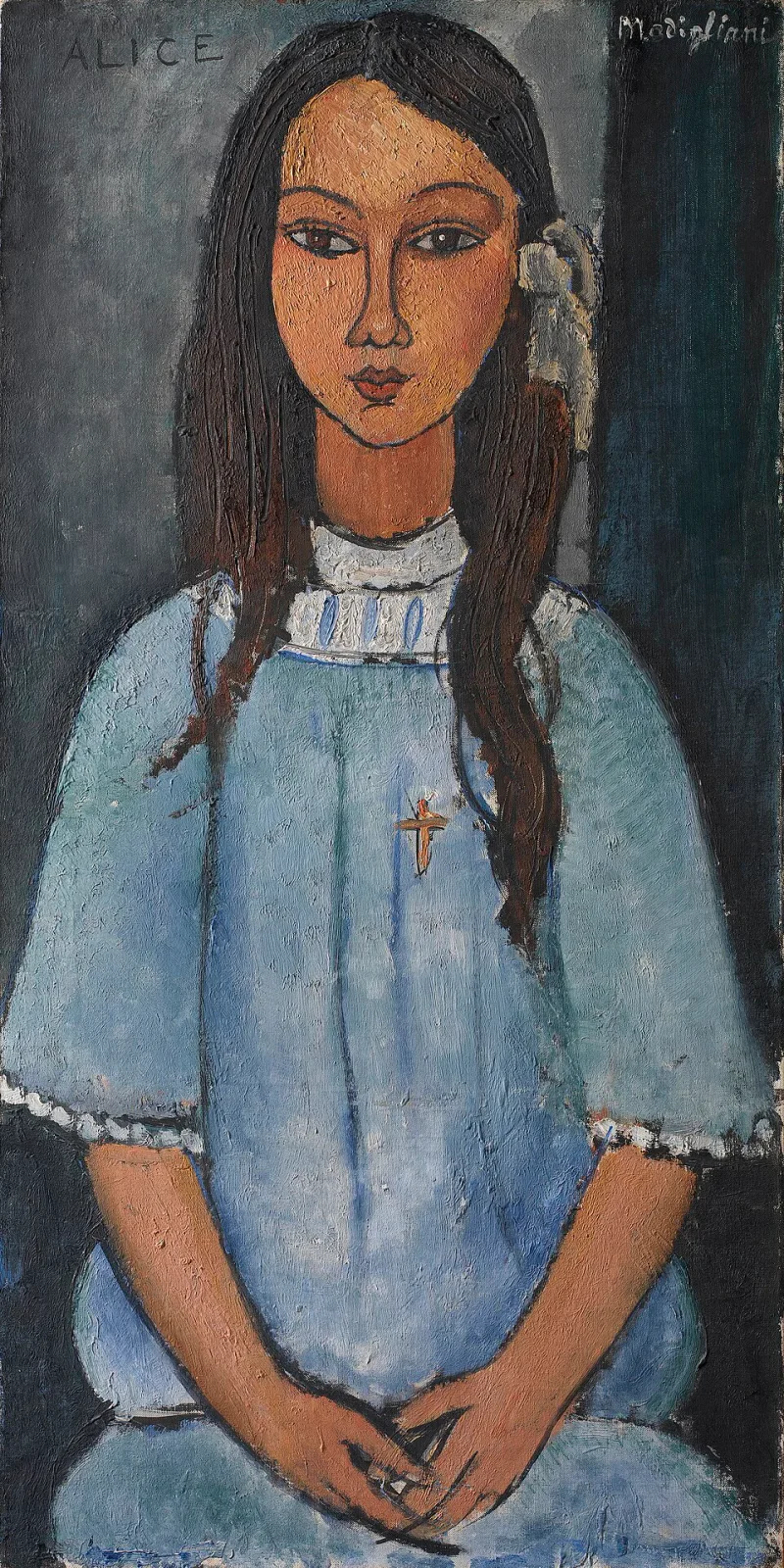
Alice
A gold cross lies on her blue Sunday dress, at her chest. She is a young girl, but her face is not a little girl's face. Her eyes are large and almond-shaped, and they meet yours straight on. Her head is egg-shaped, her neck almost a cylinder, and her face is shaped like an African mask. Modigliani painted more than three hundred portraits between 1915 and 1920, and he kept stretching the human face. He drew on Parmigianino and Botticelli for her long proportions. The tall canvas draws her out even more. The color stays close, blue shifting into terracotta, and that contrast brings the picture to life without breaking its quiet. Her hair falls onto the dress, and it is not smooth. He spread the paint on thick and drew the back of a brush through it, leaving ridges.
Listen in the appAmedeo Modigliani · Public domain
06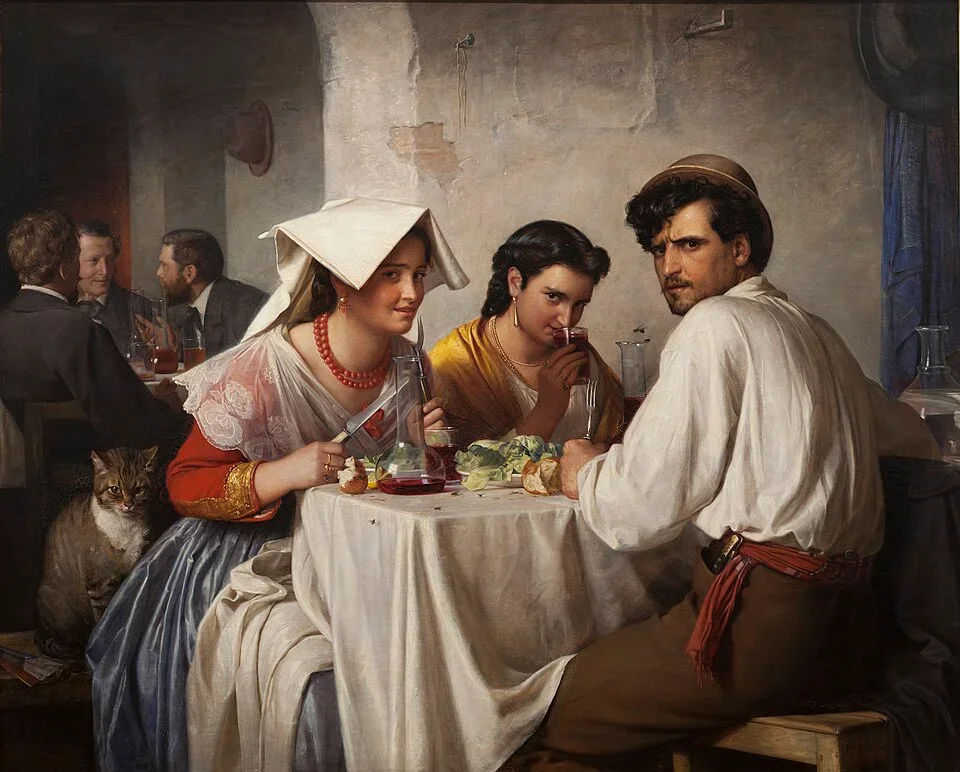
In a Roman Osteria
Three people at this table are not looking at one another. They are looking at you. A young man has turned toward you, his face angry. The woman at his right smiles at you. The other woman, probably a little older, looks amused, and a cat sits to the young woman's left, silently judging you. The merchant Moritz Melchior ordered this painting. He asked for a scene like another picture he knew, an Italian inn where a girl welcomes someone coming in. His friend Carl Bloch painted this room, and made the person arriving part of it. That person is you. But the two men behind it all are not at this table. Both are in the background. One is Melchior himself. The other is the painter, and his back is turned to you.
Listen in the appCarl Bloch · Public domain
07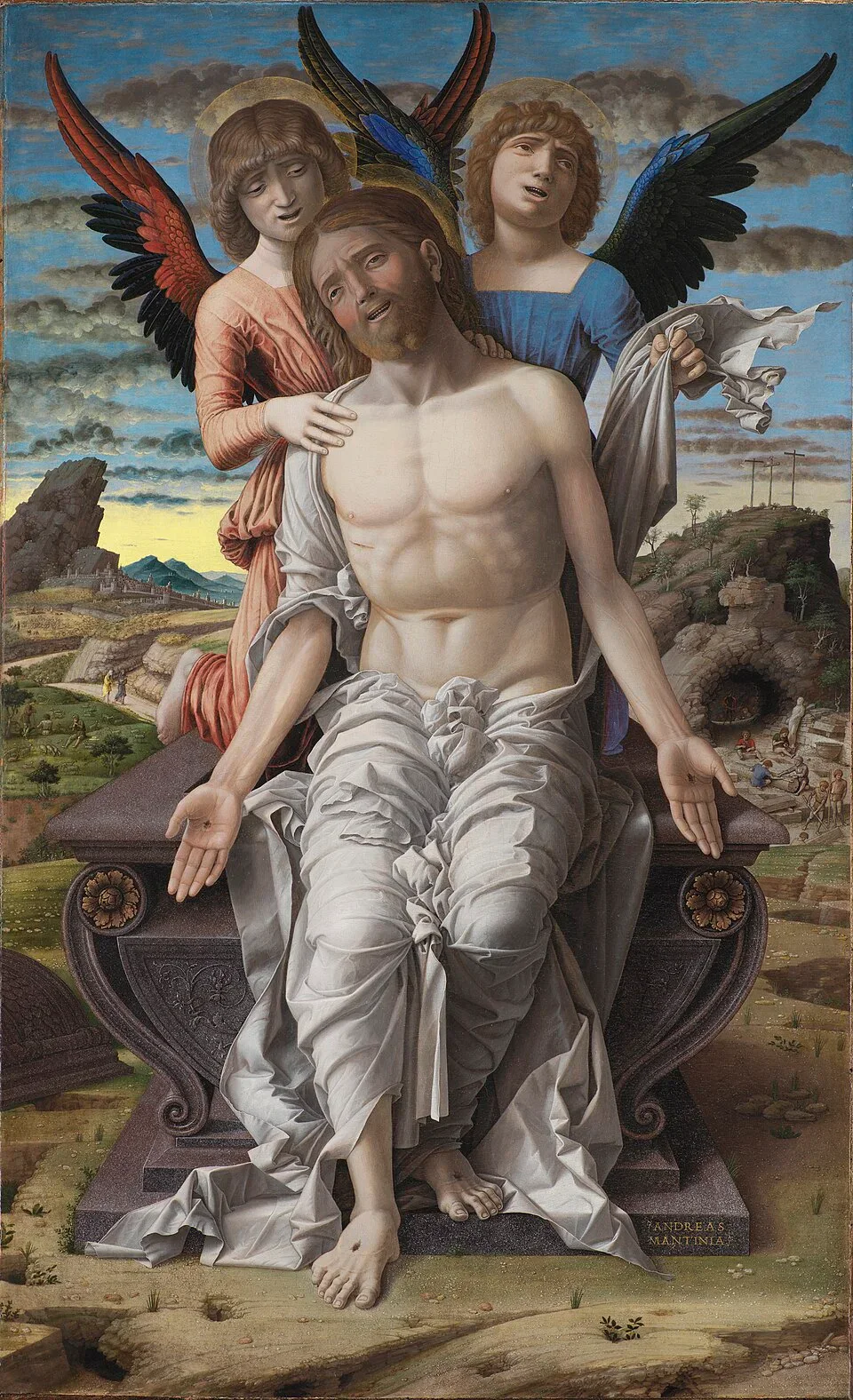
Christ as the Suffering Redeemer
Christ is seated on his own tomb, and the tomb is an ancient Roman sarcophagus. His skin is pale and smooth, like carved marble, the tendons standing out in his arms, and his hair and beard are golden brown. Mantegna, who had studied Roman remains, chose to tell the story of Christ's death in the forms of the Roman world. The sarcophagus is carved with curling scrolls and rosettes, the ornaments of classical architecture. It tilts toward you, its sides running back to meet at the horizon, so the figure rises above the small landscape behind him. Christ opens his hands to show the wounds, with the wound in his side as well. Two angels kneel behind him on the tomb, the red one supporting his body, the blue one lifting the end of the white shroud. Their four wings cross his outstretched arms and meet at the centre of his body, forming an X. And on the right, in a quarry, men carve a column and a statue. The picture holds two rebirths, Christ rising again and the ancient Roman world coming back. What is still not known is the stone of the tomb, whether porphyry, marble or jasper.
Listen in the appAndrea Mantegna · Public domain
08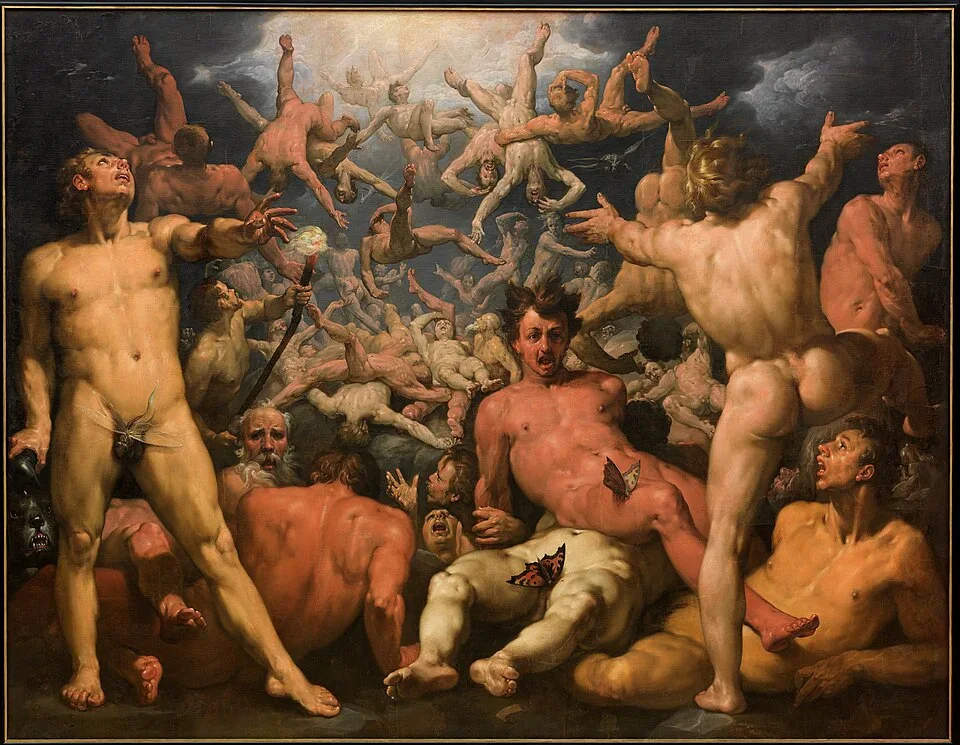
The Fall of the Titans
Naked bodies come down through a break in the clouds, one after another, in every kind of pose. They are the Titans, arriving in Tartarus, the Greek hell, at the end of their war. The clouds across the top mark the border between heaven and earth, and the gap is where the defeated ones pass through. For ten years Zeus could not defeat them. Then Gaia told him to free the Cyclopes and the three giants with a hundred hands, shut away underground. The Cyclopes gave him thunderbolts, and the thunderbolts blinded the Titans. The giants with a hundred hands threw rocks the size of mountains and crushed them. Cornelis van Haarlem took on this whole crowd of falling men to show what he could do with the human body. Down on the ground, those who have already landed are exhausted. Not one of them has the will to fight.
Listen in the appCornelis van Haarlem · Public domain
09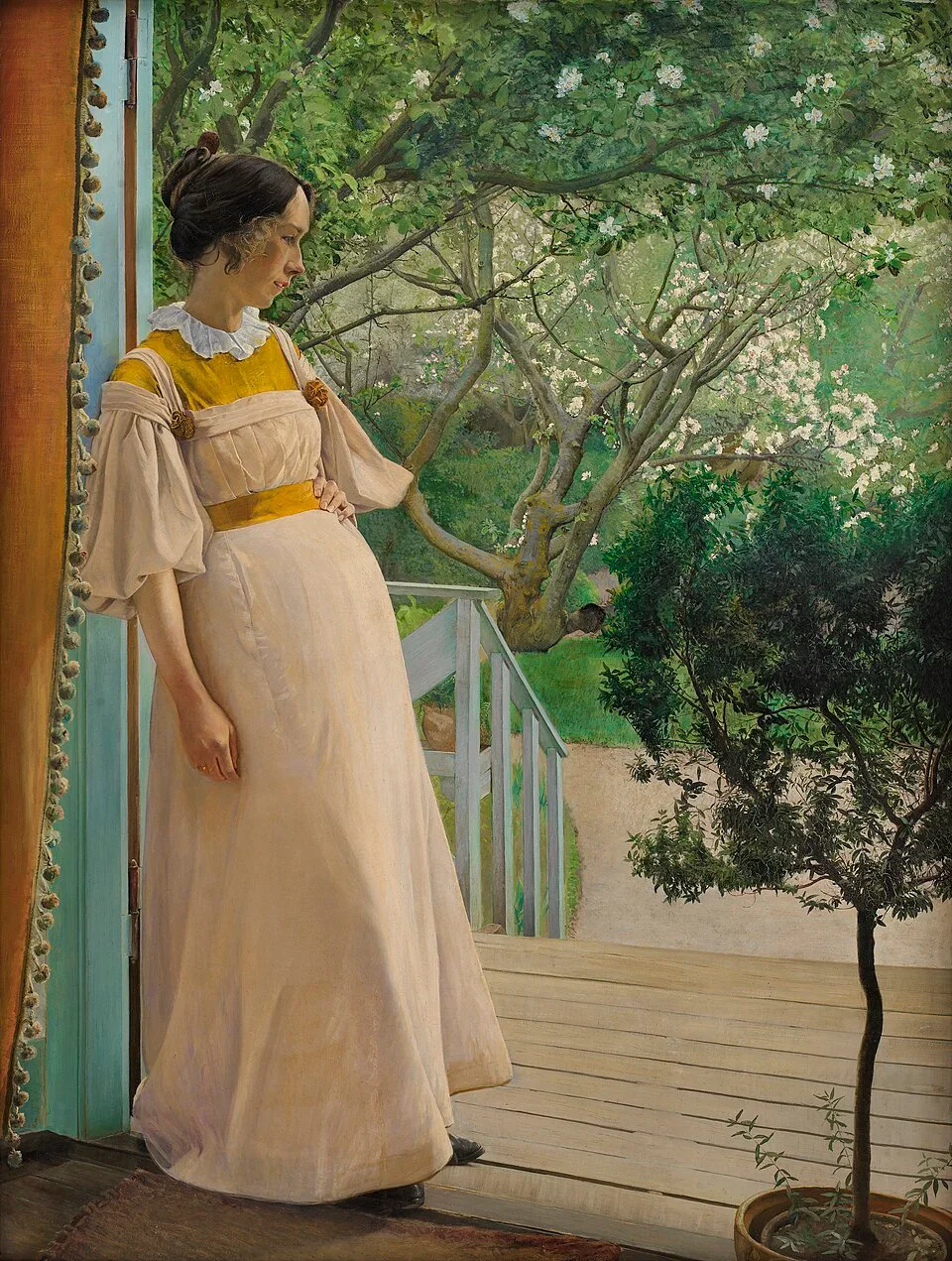
At the French Windows. The Artist's Wife
She is in the garden doorway, looking out at the plants coming into flower. Spring is almost here, and so is the child she carries. Laurits Andersen Ring married Sigrid the year before and is painting her now. Above her head hang branches of myrtle. In Greek myth, myrtle belongs to Aphrodite, and in Denmark it was used to decorate a bride at her wedding. Her gaze is turned toward the spring flowers, and the whole picture reads like a love letter to his pregnant wife. Near her stomach, though, the stems and branches are almost crippled. He set one beside the other to suggest how fragile human life is, and how fragile a life just beginning. A gloom runs through the picture, and it may stand for death. He set warm orange and yellow in the curtain and dress against cooler greens and blues behind her. That is what makes the doorway feel deep.
Listen in the appLaurits Andersen Ring · Public domain
10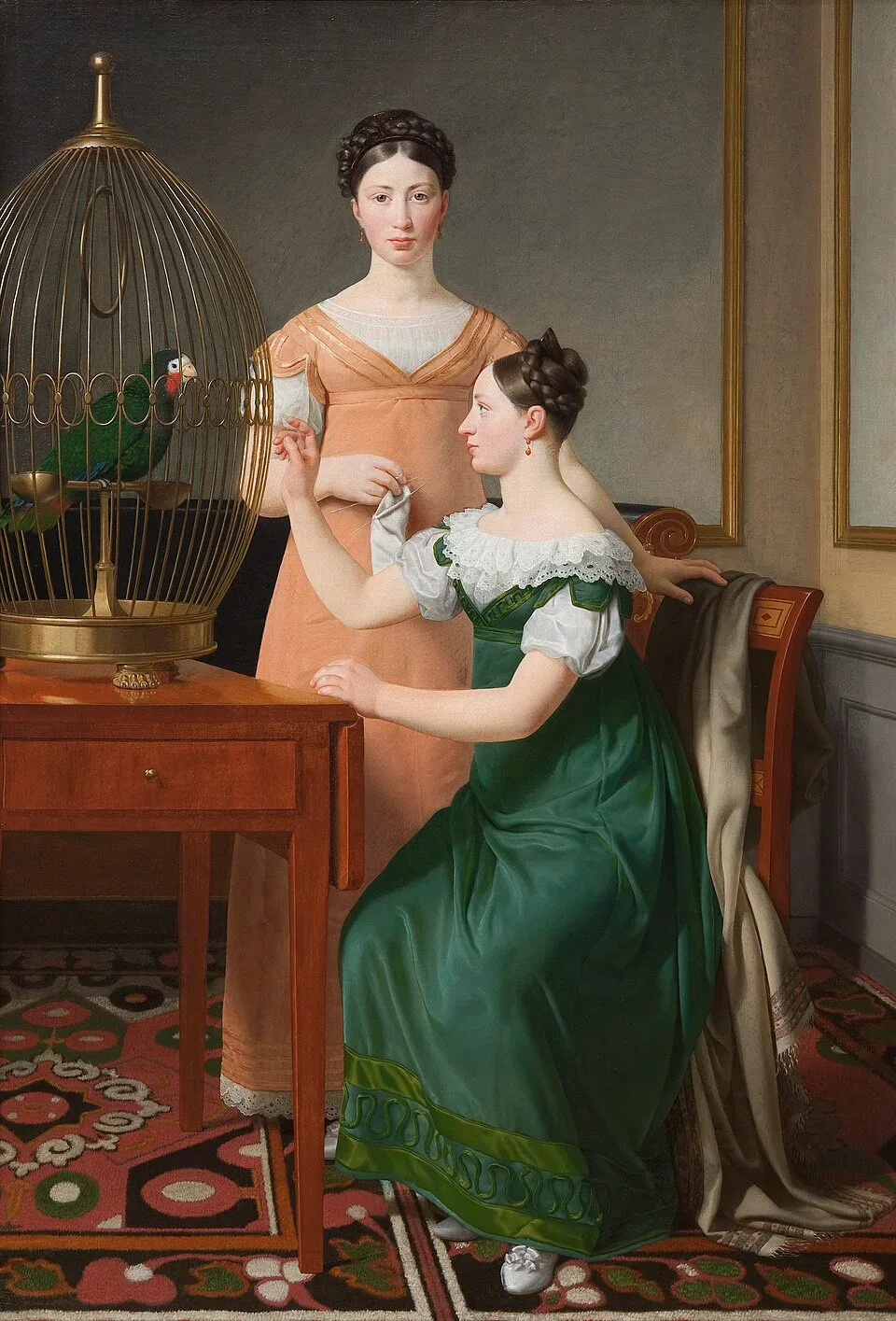
Bella and Hanna. The Eldest Daughters of M. L. Nathanson
Hanna's eyes are on the green parrot in its cage, and her right hand is lifting toward it. She is seventeen, seated in profile in a green dress. Bella, the elder, is nineteen and standing, one hand loose on her sister's chair, the other holding her knitting. Their father, the merchant Mendel Levin Nathanson, wanted two large family portraits and had backed Christoffer Wilhelm Eckersberg early in his career. This is one of them, and the commission gave the painter enough money to marry. Eckersberg set the sisters in different poses, yet made them look so much alike, two versions of the same young woman. The room has a high ceiling. A reddish patterned carpet covers the floor, and this is one of the early paintings to show a carpet in a Danish home. The cage sits on the table. We do not know whether the caged parrot means the sisters longed to leave the safety of home for real life.
Listen in the appChristoffer Wilhelm Eckersberg · CC0
- 11
Portrait of Lorenzo Cybo
Parmigianino · 1524
- 12
Portrait of a Man
El Greco · 1570–1575
- 13
Gottorfer Codex
Hans Simon Holtzbecker · 1649–1659
- 14
A View through Three of the North-Western Arches of the Third Storey of the Coliseum
Christoffer Wilhelm Eckersberg · 1815
- 15
Melancholy
Lucas Cranach the Elder · 1532
- 16
A Young Artist (Ditlev Blunck) Examining a Sketch in a Mirror
Wilhelm Bendz · 1826
- 17
Amalienborg Square, Copenhagen
Vilhelm Hammershøi · 1896
- 18
The Sculptor Jens Adolf Jerichau, the Artist's Husband
Elisabeth Baumann · 1846
- 19
Man in plumed beret
Rembrandt · 1655–1661
- 20
The Artist's Mother Ane Hedvig Brøndum in the Red Room
Anna Ancher · 1909
- 21
A Group of Danish Artists in Rome
Constantin Hansen · 1837
- 22
Ten Women of Stralsund
Melchior Lorck · c. 1571
- 23
The Russian Ship of the Line "Asow" and a Frigate at Anchor in the Roads of Elsinore
Christoffer Wilhelm Eckersberg · 1828
- 24
Self-Portrait in a Striped T-shirt
Henri Matisse · 1906
- 25
Erasmus of Rotterdam
Albrecht Durer · 1526
- 26
The Tribute Money. Peter Finding the Silver Coin in the Mouth of the Fish. Also called "The Ferry Boat to Antwerp"
Jacob Jordaens · 1616–1634
- 27
An Egyptian Pot Seller at Gizeh
Elisabeth Baumann · 1874–1878
- 28
Bust of Camilla Barbadori
Gian Lorenzo Bernini · 1619
- 29
Portrait of the Venetian Painter Giovanni Bellini (?)
Titian · c. 1511–1512
- 30
Familien Waagepetersen
Wilhelm Bendz · 1830
- 31
Trompe l'oeil. The reverse of a framed painting.
Cornelis Norbertus Gijsbrechts · 1670
- 32
A Seascape. The coast of the Island of Rügen in Evening Light
Johan Christian Dahl · 1818
- 33
Don Miguel de Castro, Emissary of Congo
Jaspar Beckx · 1643
- 34
Portrait of Matthaeus Yrsselius (1541-1629), Abbot of Sint-Michiel's Abbey in Antwerp
Peter Paul Rubens · c. 1624
- 35
Church-Goers Arriving by Boat at the Parish Church of Leksand on Siljan Lake, Sweden
Wilhelm Marstrand · 1853
- 36
Mountainous Landscape Behind Saint-Paul Hospital
Vincent van Gogh · 1889
- 37
The Green Blouse
Henri Matisse · 1936
- 38
The Judgement of Solomon
Peter Paul Rubens · c. 1615–1618
- 39
A Street Scene in the Dogdays
Wilhelm Marstrand · 1832
- 40
Young Woman Looking at the Sea, Stormy Weather
Henri Matisse · 1923
- 41
Odalisque with a Screen
Henri Matisse · 1923
- 42
Mermaid
Anne Marie Carl-Nielsen · 1921
- 43
The Marble Steps Leading to the Church of Santa Maria in Aracoeli in Rome
Christoffer Wilhelm Eckersberg · 1814–1816
- 44
Le Luxe II
Henri Matisse · 1907–1908
- 45
The Wounded Philoctetes
Nicolai Abildgaard · 1775
- 46
Interior with a Violin
Henri Matisse · 1918
- 47
At a Window in the Artist's Studio
Christoffer Wilhelm Eckersberg · 1852
- 48
A View towards the Swedish Coast from the Ramparts of Kronborg Castle
Christoffer Wilhelm Eckersberg · 1826–1829
- 49
Nymph and Faun
Henri Matisse · 1907
- 50
The Four Horsemen, from The Apocalypse
Albrecht Durer · 1497–1498
- 51
Death and the Mother
Niels Hansen Jacobsen · 1892
- 52
Hercules Kicking Faunus out of Omfale's Bed
Abraham Bloemaert, Abraham Janssens I · 1607
- 53
A View of Lake Sortedam from Dosseringen Looking towards the Suburb Nørrebro outside Copenhagen
Christen Købke · 1838
- 54
Christ Crowned with Thorns
Hendrick ter Brugghen · 1620
- 55
Seated Female Nude
Vilhelm Hammershøi · 1889
- 56
The Prison of Copenhagen
Martinus Rørbye · 1831
- 57
The Mill Stream
John Constable · 1814
- 58
Storm in the Skerries. "The Flying Dutchman"
August Strindberg · 1892
- 59
View of the Square in Amalfi
Martinus Rørbye · 1835
- 60
A Danish Coast. View from Kitnæs on Roskilde Fjord. Zealand
Johan Lundbye · 1842–1843
- 61
The Drowned Fisherman
Michael Ancher · 1896
- 62
A Girl with Sunflowers
Michael Ancher · 1889
- 63
A Corvette on the Stocks. Copenhagen
Christoffer Wilhelm Eckersberg · 1828
- 64
Portrait of Otto Marstrand's two daughters and their nanny
Wilhelm Marstrand · 1857
- 65
Niels Ryberg with his Son Johan Christian and his Daughter-in-Law Engelke, née Falbe
Jens Juel · 1797
- 66
Samson and the Philistines
Carl Bloch · 1863
- 67
Harvest
Laurits Andersen Ring · 1885
- 68
The Death of Queen Sophie Amalie
Kristian Zahrtmann · 1882
- 69
The Lifeboat is Taken through the Dunes
Michael Ancher · 1883
- 70
The Abduction on a Unicorn
Albrecht Durer · 1516
- 71
Whitewashing the Old House
Laurits Andersen Ring · 1908
- 72
Churchyard at Fløng
Laurits Andersen Ring · 1904
- 73
Loki and Sigyn
Christoffer Wilhelm Eckersberg · 1810
- 74
Madam Anna Seekamp, the Artist's Sister
Bertha Wegmann · 1882
- 75
The girl from Andros
Nicolai Abildgaard · 1801–1804
- 76
Portrait of a Little Girl, Elise Købke, with a Cup in front of her
Constantin Hansen · 1837
- 77
A Wounded Danish Soldier
Elisabeth Baumann · 1865
- 78
Latinus Offering his Daughter Lavinia to Aeneas in Matrimony
Giovanni Battista Tiepolo · c. 1753–1754
- 79
The Death of Socrates
Jean-François Pierre Peyron · 1786–1787
- 80
The Judgement of Midas. The Musical Contest between Apollo and Marsyas
Giovanni Battista Cima da Conegliano · 1507–1509
- 81
Woman in a Chemise
André Derain · 1906
- 82
Christian II i fængslet på Sønderborg Slot
Carl Bloch · 1871
- 83
A Country Road near Vognserup Manor, Zealand. The Painter J.Th. Lundbye Sketching by the Roadside
P. C. Skovgaard · 1849
- 84
Queen Christina in Palazzo Corsini
Kristian Zahrtmann · 1908
- 85
Portrait of the Painter Nils Kreuger
Richard Bergh · 1883
- 86
After Sunset
Laurits Andersen Ring · 1899
- 87
Winter Landscape. Utterslev near Copenhagen
Albert Gottschalk · 1887
- 88
A Croft at Lodskov near Vognserup Manor, Zealand
Johan Lundbye · 1847
- 89
After the Storm
Caspar David Friedrich · 1817
- 90
A beautiful lie - Eckersberg
Christoffer Wilhelm Eckersberg
- 91
The Old People by the Beach
Richard Bergh · 1903
- 92
Sound of Waves
Anders Zorn · 1887
- 93
View of a Street in Østerbro outside Copenhagen. Morning Light
Christen Købke · 1836
- 94
The Testament of Eudamidas
Nicolas Poussin · c. 1644–1648
- 95
Playing Children, Enghave Square
Peter Hansen · 1907–1908
- 96
A Beech Wood in May near Iselingen Manor, Zealand
P. C. Skovgaard · 1857
- 97
Springtime in Hals, Jutland
Laurits Andersen Ring · 1892
- 98
Skyggen
Niels Hansen Jacobsen · 1897–1898
- 99
The Royal Collection of Graphic Art
Unknown Artist · 1521
- 100
Five Soldiers and a Turk on Horseback
Albrecht Durer · c. 1495
- 101
Man of Sorrows with Hands Bound
Albrecht Durer · 1512
National Gallery of Denmark
Frequently asked questions
How much does the guide cost?
Free app download. Free until 1 January. Listed guide price: $1.99. Audio guide only. Venue admission is separate.
Can I listen without internet?
Yes. Download the guide’s audio, images, and maps in the app before your visit. Your downloaded content is then available offline.
Can I listen in my language?
In English for now. More languages soon.
Do I need to follow a schedule?
No. This is a self-guided experience. Choose your stops, pause whenever you like, and return to a story at your own pace.
Which artworks are in the National Gallery of Denmark audio guide?
101 artworks, including The Rhinoceros (Albrecht Durer), The Green Stripe (Henri Matisse), Study of a Nude (Paul Gauguin), View from the Artist's Window (Martinus Rørbye), Alice (Amedeo Modigliani), In a Roman Osteria (Carl Bloch), Christ as the Suffering Redeemer (Andrea Mantegna), and The Fall of the Titans (Cornelis van Haarlem). The full list is on this page.
Is this the museum’s official audio guide?
No. Stanza is an independent audio guide app and is not affiliated with National Gallery of Denmark. Museum admission is separate.
At your own pace
Explore National Gallery of Denmark.
Download Stanza, then search for “National Gallery of Denmark”.
Free app download · Guide price shown in the app
Keep exploring
Nearby audio guides
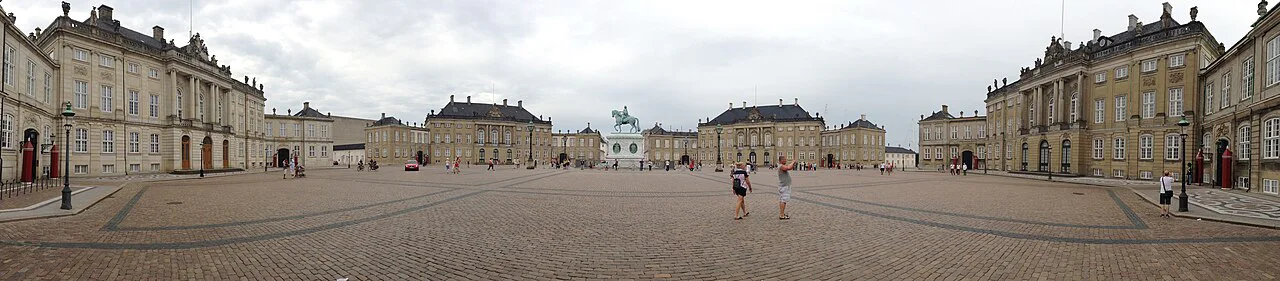
Copenhagen · 1 km
Amalienborg
Content & sources
Photo: Janeway666 · CC BY-SA 3.0
Copenhagen · 1 km
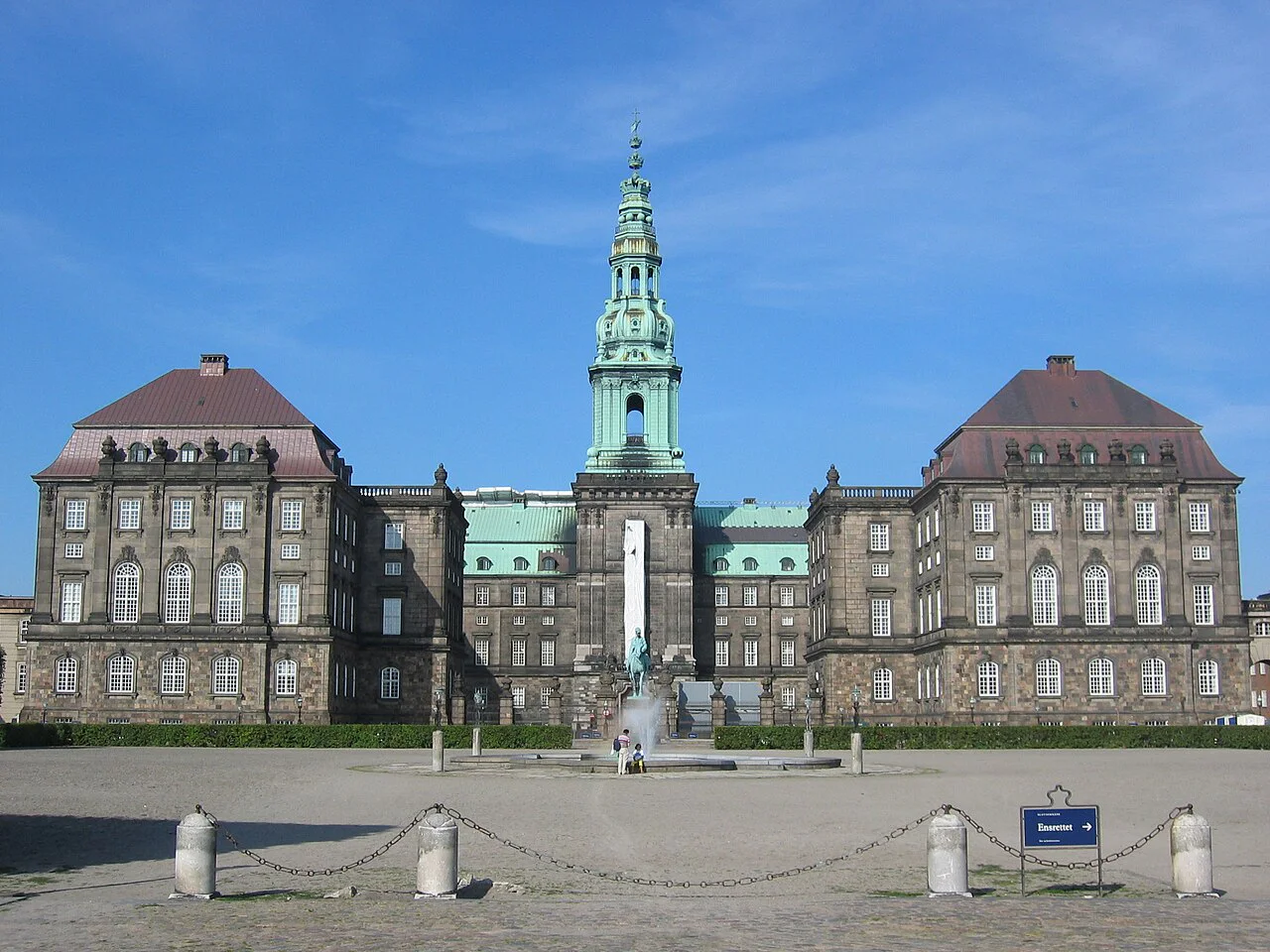
Christiansborg Palace
Content & sources
eimoberg from Changwon, South Korea · CC BY 2.0
Copenhagen · 2 km
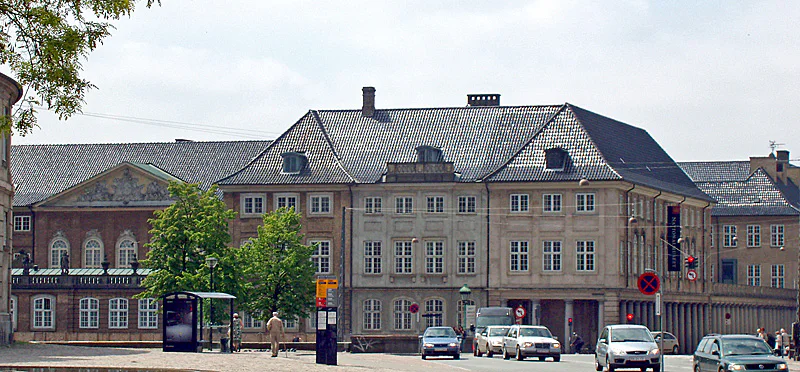
National Museum of Denmark
Content & sources
No machine-readable author provided. Nico-dk assumed (based on copyright claims). · CC BY-SA 3.0
Elsinore · 39 km
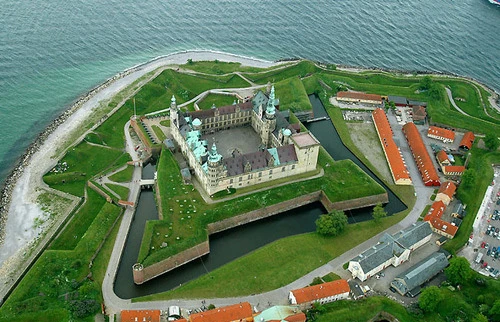
Kronborg Castle
Content & sources
H.C. Steensen · CC BY-SA 3.0
Art museums
More art museum audio guides
Copenhagen · 62 artworks
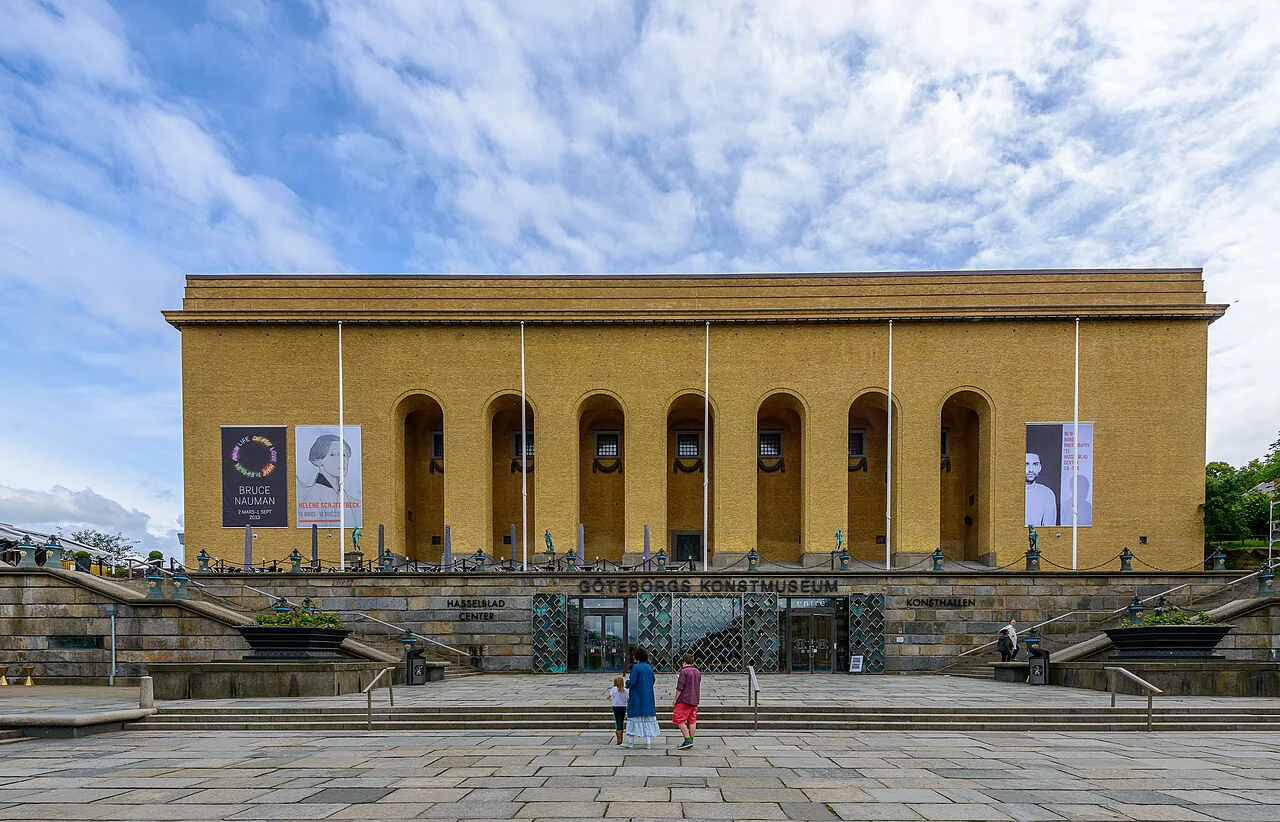
National Museum of Denmark
Content & sources
No machine-readable author provided. Nico-dk assumed (based on copyright claims). · CC BY-SA 3.0
Gothenburg · 21 artworks
Gothenburg Museum of Art
Content & sources
Photo: Bolstermage · CC BY-SA 3.0
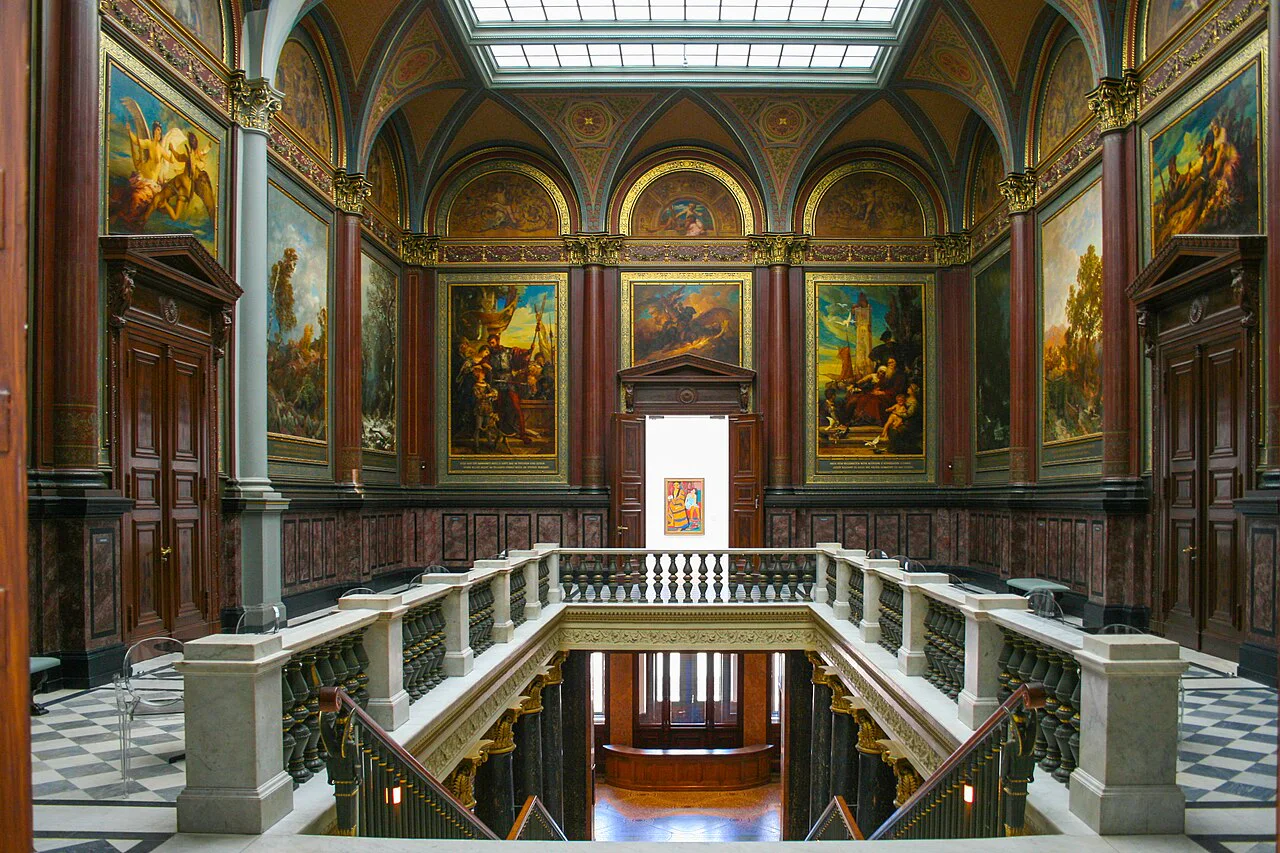
Hamburg · 64 artworks
Hamburger Kunsthalle
Content & sources
Photo: Daniela Kloth · GFDL 1.2
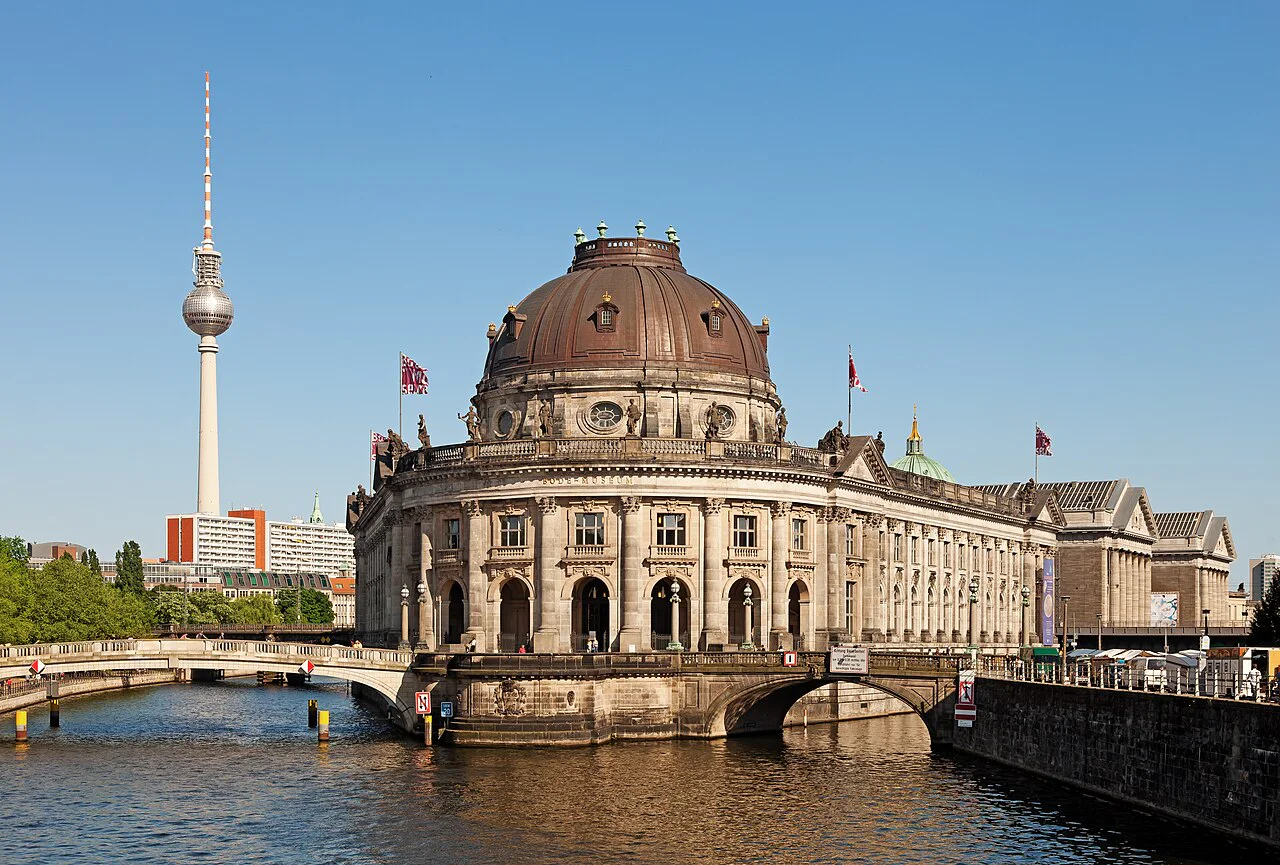
Berlin · 38 artworks
Bode-Museum
Content & sources
Thomas Wolf, www.foto-tw.de · CC BY-SA 3.0
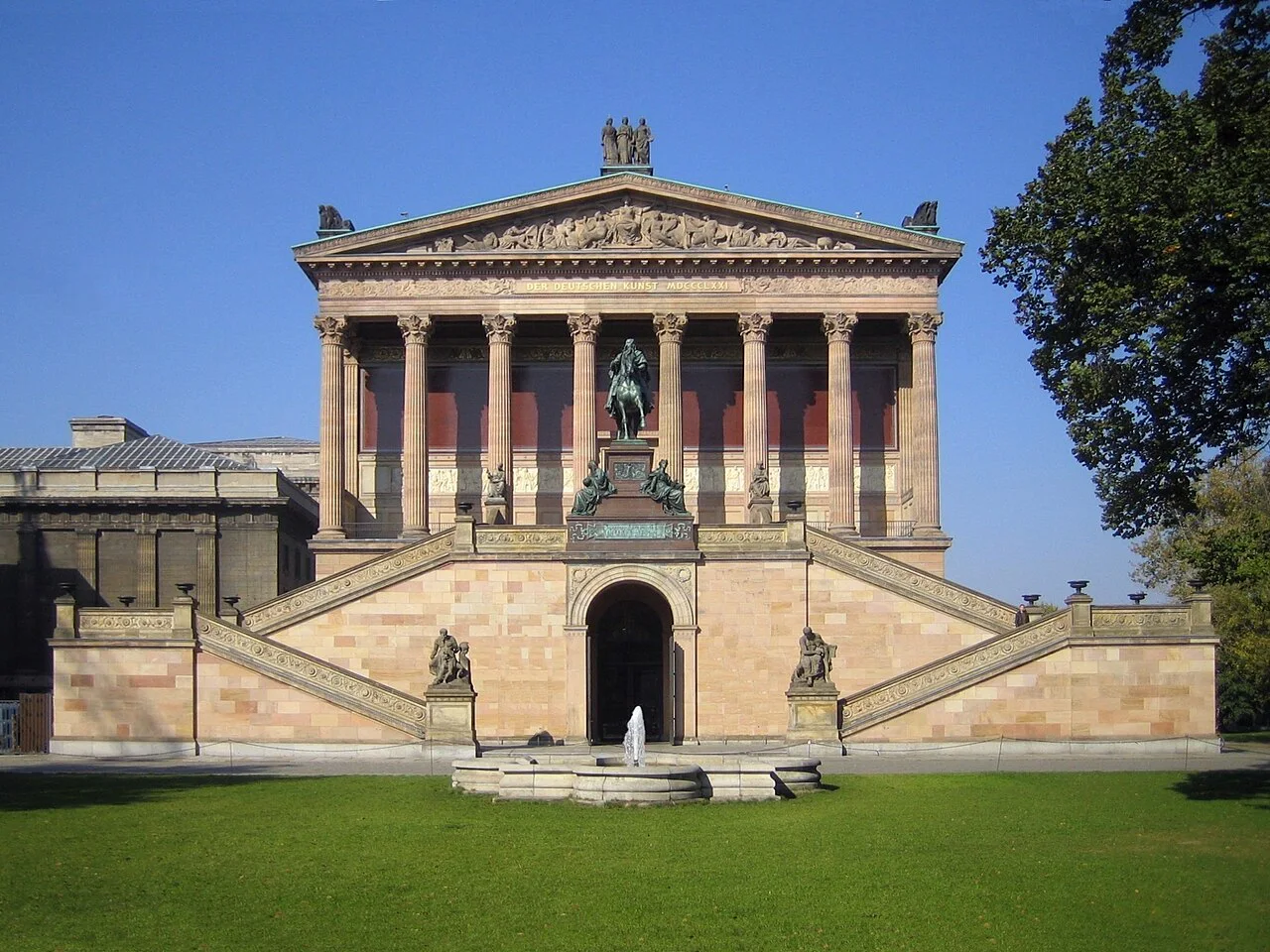
Berlin · 123 artworks
Alte Nationalgalerie
Content & sources
Manfred Brückels · Public domain
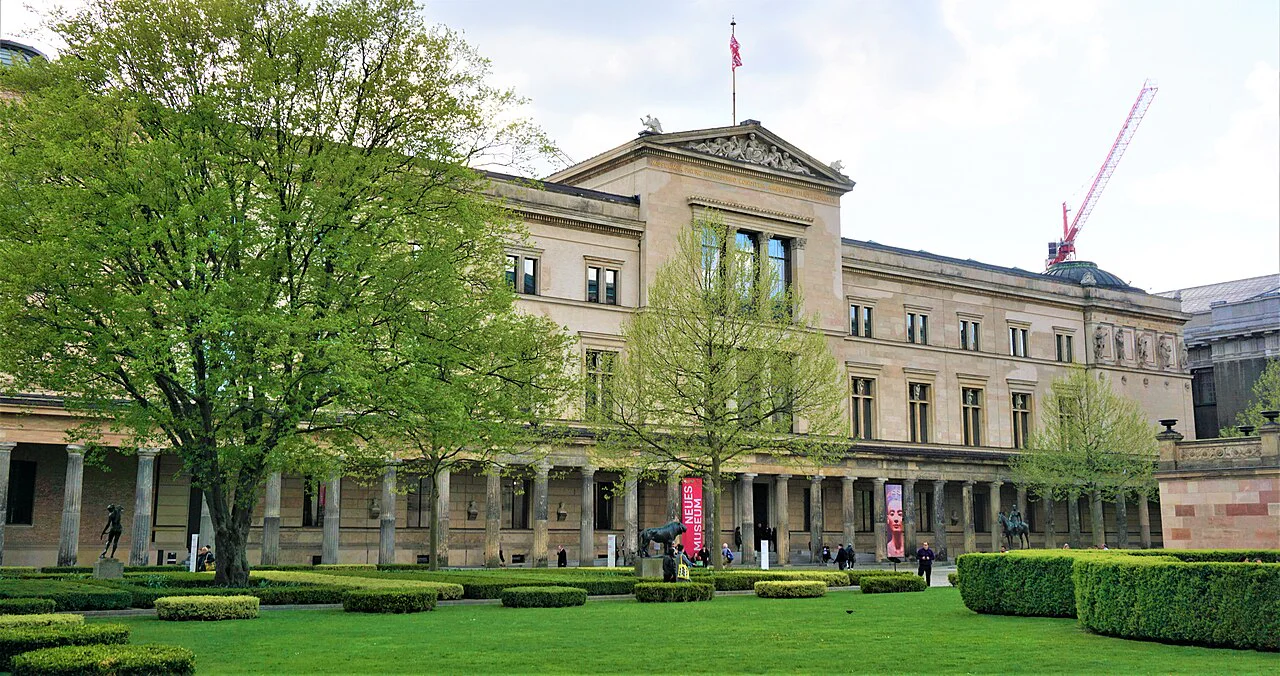
Berlin · 34 artworks
Neues Museum
Content & sources
Photo: Joyofmuseums · CC BY-SA 4.0