Stanza · Audio guide
Gothenburg Museum of Art Audio Guide
A place to remember. A story to take with you.
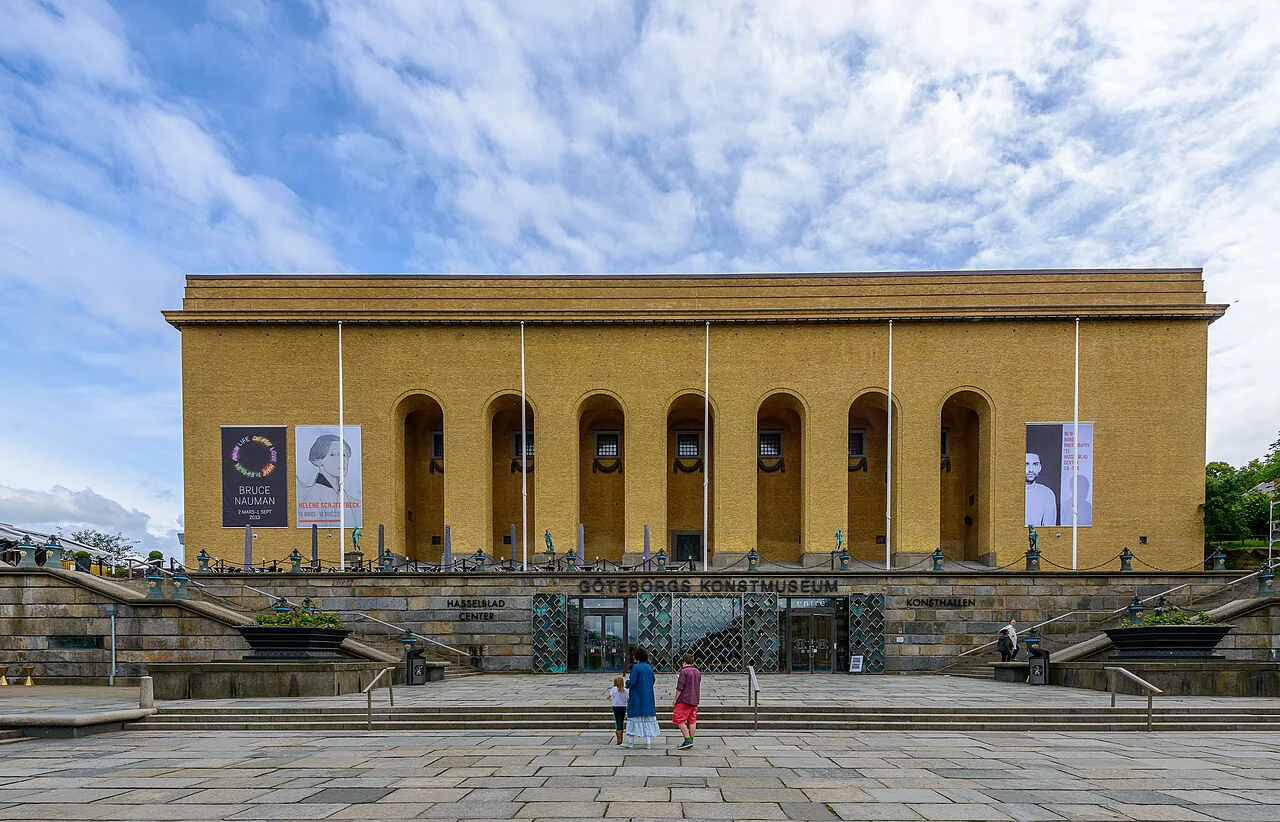
The Gothenburg Museum of Art is an art museum located in the city of Gothenburg, Sweden, with a collection of more than 70,000 works, most of which are Nordic art from the 15th century until today. It is the…
Download Stanza, then search for “Gothenburg Museum of Art”.
About the tour
One guide. Your kind of visit.
The Gothenburg Museum of Art is an art museum located in the city of Gothenburg, Sweden, with a collection of more than 70,000 works, most of which are Nordic art from the 15th century until today. It is the third largest museum in Sweden by number of art works, succeeded only by the Swedish National Museum and the Modern Museum in Stockholm, and is part of the Gothenburg Cultural Administration.
The Gothenburg Museum of Art guide tells the stories of 21 artworks, including Hip, Hip, Hurrah! (Peder Severin Krøyer), Boys drawing (Sofie Ribbing), Venny Soldan-Brofeldt, Artist (Hanna Hirsch-Pauli), Man with a Falcon (possibly St. Bavo) (Rembrandt), Henry IV at the siege of Amiens (Peter Paul Rubens, Peter Snayers, Lodewijk de Vadder), Village Street, Vétheuil. (Claude Monet), Messalina (Peder Severin Krøyer), and Nordic summer's evening (Richard Bergh). Every artwork is free to hear in the Stanza app until 1 January.
Ready when you are.
- 01Get the free Stanza app.
iOS & Android
- 02Find your guide.
“Gothenburg Museum of Art”
- 03Download before you go.
Works offline
Audio guide / 21 artworks
Inside the guide
Get to know a few of the stories before you go. Open a stop to read more.
01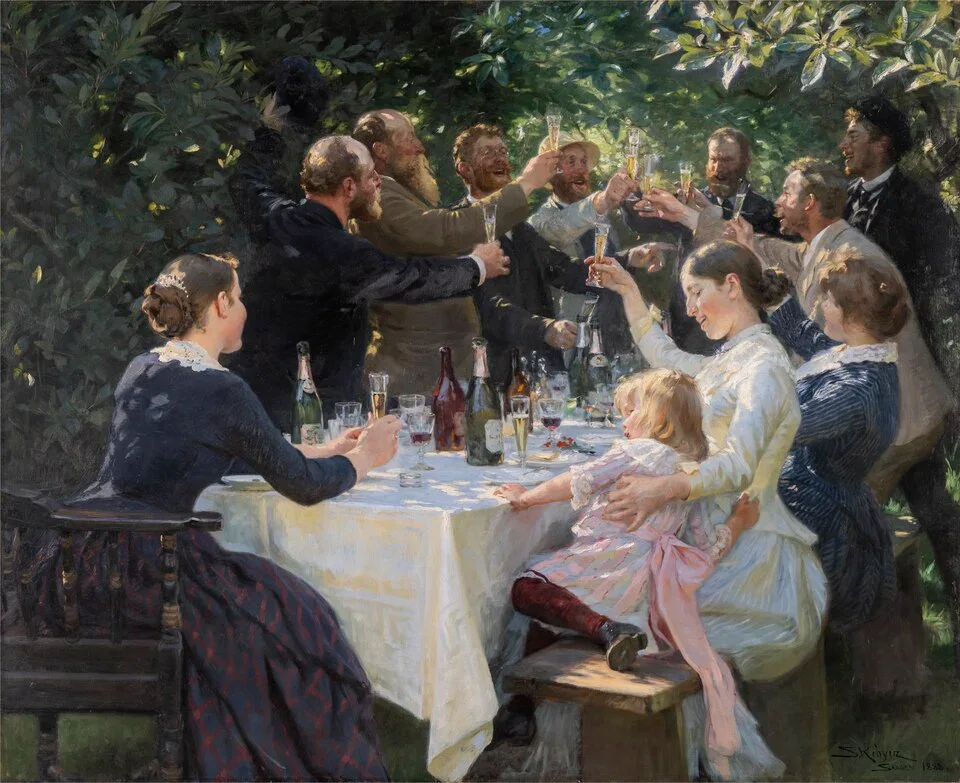
Hip, Hip, Hurrah!
What are they celebrating? There is a table in a garden, and a group of artists gathered around it for a champagne toast. They are the Skagen Painters, artists from Denmark, Norway and Sweden who formed a community at Skagen, at the northern tip of Jutland. It looks spontaneous. It began the morning after a party at Michael Ancher's house in 1884. Krøyer came back uninvited, with his easel and paints. He expected to come and go as he liked. Ancher had only just moved out there to escape the noise of town, and he was annoyed. It was their first serious quarrel. They made up soon after. But he never got the free run of the garden he had hoped for. He worked from photographs of the party, and from life when he could, making do with the garden of Ancher's old apartment. Four years passed before the picture was done. Ancher's daughter Helga was under a year old at the party. Here she is older. A photograph of the painting in his studio shows an earlier version, before the older Helga was added. A Swedish collector, Pontus Fürstenberg, bought it before it was finished. It went on show at Charlottenborg in 1888, and he later gave it to Gothenburg, where it has hung ever since.
Listen in the appPeder Severin Krøyer · Public domain
02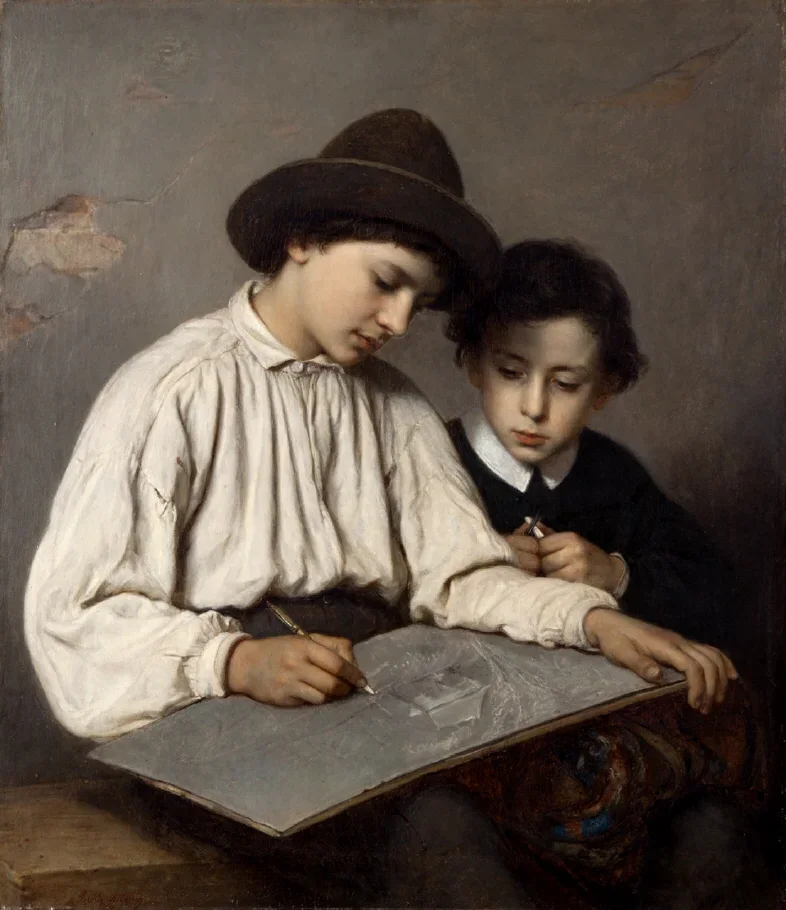
Boys drawing
Two boys are absorbed in their drawing. A soft light falls on them, and it makes the whole scene calm and unhurried, so they can give themselves to the work. This is the kind of ordinary moment Sofie Ribbing looked for. In the 1860s she studied in Düsseldorf with Karl Ferdinand Sohn, and that teaching turned her toward scenes from everyday life. A couple of boys at their drawing is subject enough. But this quiet picture did not stay small. It was bought for the museum, and over time it came to hold a central place in Swedish art. In 2016 it was chosen as one of the ten greatest works of art in Sweden. The colour is soft and even right through the picture.
Listen in the appSofie Ribbing · Public domain
03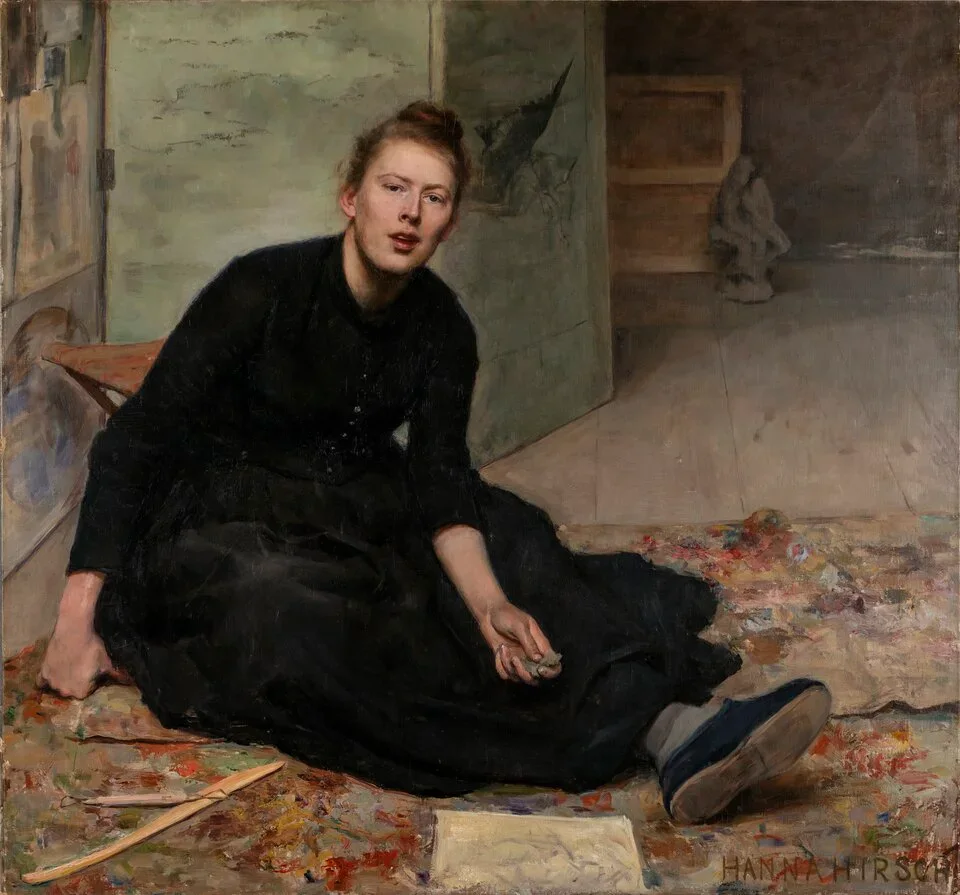
Venny Soldan-Brofeldt, Artist
Hanna Hirsch wanted to paint her friend just as she was, not in a stiff, proper pose. They shared a studio in Montparnasse, and there Venny Soldan sits on the floor, bent forward with her legs stretched out. Her mouth is open, her clothes casual, a kind of radiance about her. At the time, that was improper. A respectable woman was expected to be composed and well dressed, not stretched out on a studio floor. The two were in their early twenties. Both had come to Paris, among the young Nordic women who arrived after a school for women artists opened there. They studied at the Académie Colarossi. Both married in the years that followed, and they stayed friends for life, writing to each other. The portrait was expected to go to the Paris Salon in 1887, but whether it was ever shown there, we do not know.
Listen in the appHanna Hirsch-Pauli · Public domain
04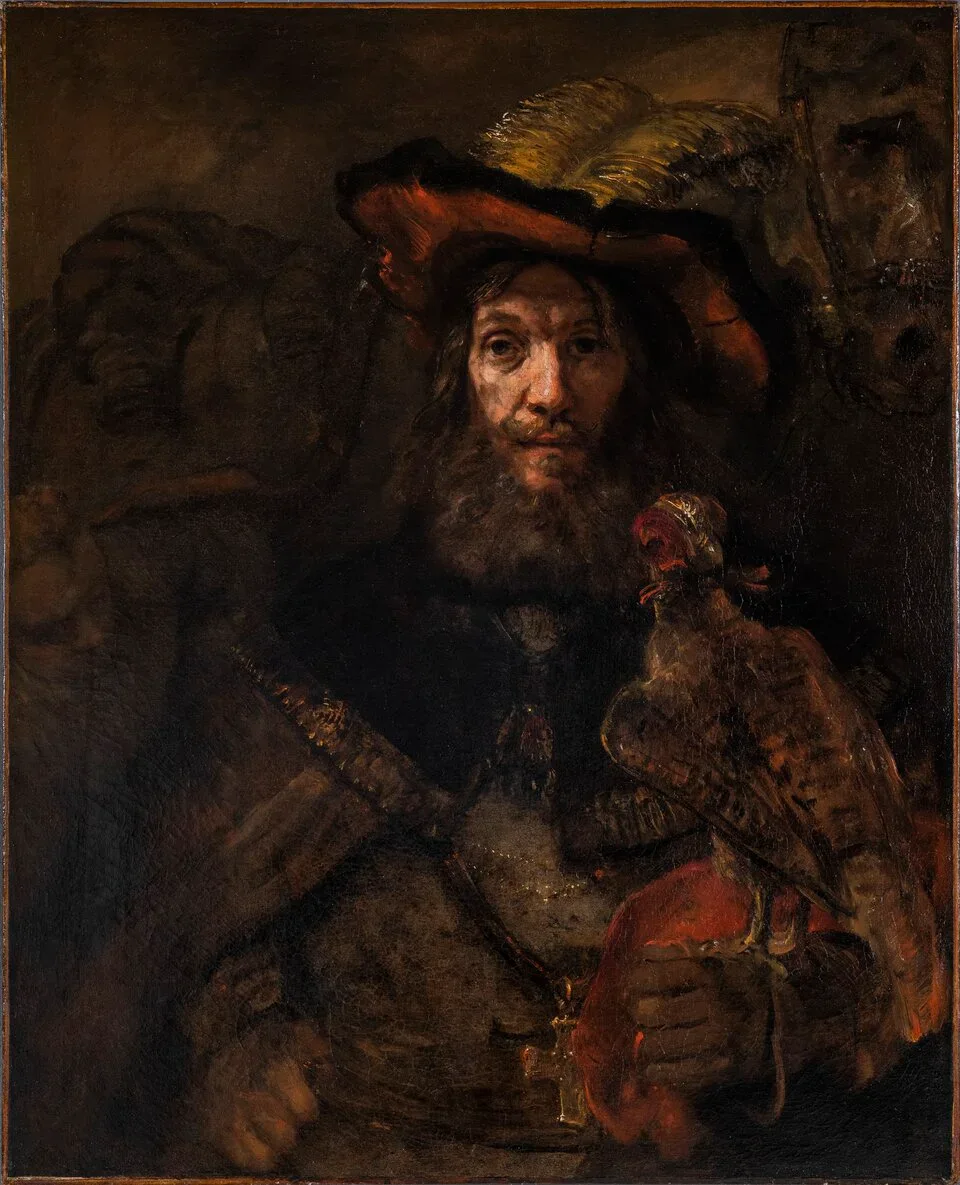
Man with a Falcon (possibly St. Bavo)
A man in a dark cloak wears a red beret crowned with an ostrich feather. A cross glimmers on the band at his neck. A hooded falcon sits on his gloved left hand. Behind him, a horse in profile and a riding servant keep the background moving, while the man stays calm. The falcon, the cross and the feathered beret are Saint Bavo's marks. He lived in the seventh century and is the patron saint of Ghent and Haarlem, so the man is probably that saint. Rembrandt painted the holy figures of these years as human beings, without the shining halos that church tradition gave them. The same face turns up in several of his paintings from this time. He worked from living models, often people from the artisans' quarter on the edge of Amsterdam.
Listen in the appRembrandt · CC BY 4.0
05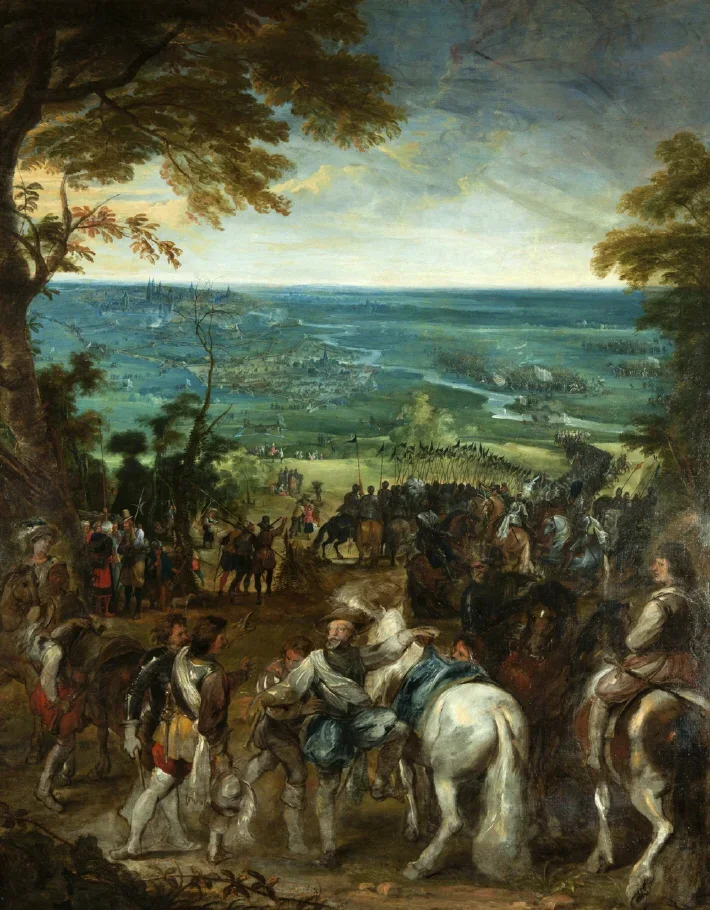
Henry IV at the siege of Amiens
You cannot tell from this battle why it was left unfinished. The answer begins with a queen, Maria de Medici. Her new palace in Paris was the Palais du Luxembourg. She wanted a gallery there to honour her husband Henry the Fourth, murdered in 1610, as a hero of war. Sixteen of the paintings were to be battles he had fought, tall canvases meant to hang between the windows. Rubens signed the contract in 1622, but work on them began only in 1630. The next year Maria's son Louis the Thirteenth sent her into exile, and the paintings stopped. Six canvases had been started. Five survive in museums, one is lost, and this is one of the five. Because it was left incomplete, the work of three painters is easy to tell apart. The large figures near you are Rubens's own, and their unfinished state lets you trace how he painted. Pieter Snayers, who specialised in battles, filled the distance with hundreds of small, finely worked figures. The large trees that frame the figures and give it depth are probably by the landscape painter Lodewijk de Vadder. Far back, a long column of cavalry rides into the depth of the picture. The river Somme runs the same way, drawing the flat landscape toward a misty horizon, as though it went on without end.
Listen in the appPeter Paul Rubens / Peter Snayers / Lodewijk de Vadder · Public domain
06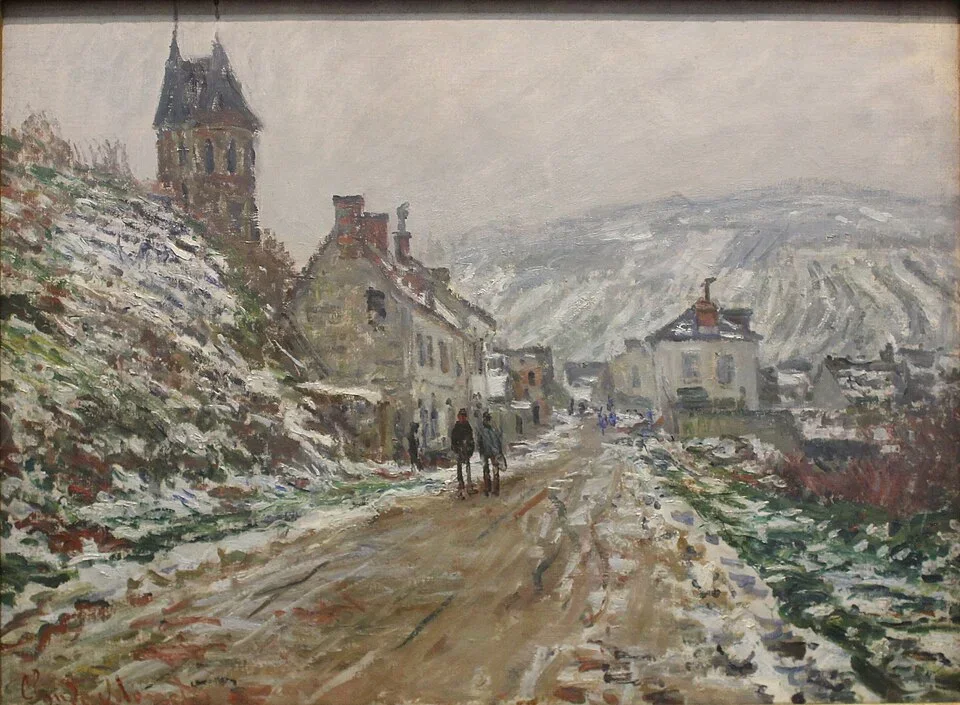
Village Street, Vétheuil.
A village street in winter. It lies in Vétheuil, a small place sixty kilometres northwest of Paris that the factories had not yet reached. Monet brought his family here in the summer of 1878, short of money, to take up a patron's offer of a place to stay with Ernest Hoschedé and his family. He painted this road in 1879. His wife Camille's health had failed during her pregnancy with their second son, Michel, and she died of cancer that September. Then Hoschedé went bankrupt and moved to Belgium, and his wife Alice helped care for the two boys. After months of grief he painted again, around a hundred and fifty pictures, mostly landscapes, here in Vétheuil. He and Alice left in 1881, settled in Giverny in 1883, and married in 1892, after Ernest Hoschedé died.
Listen in the appClaude Monet · Public domain
07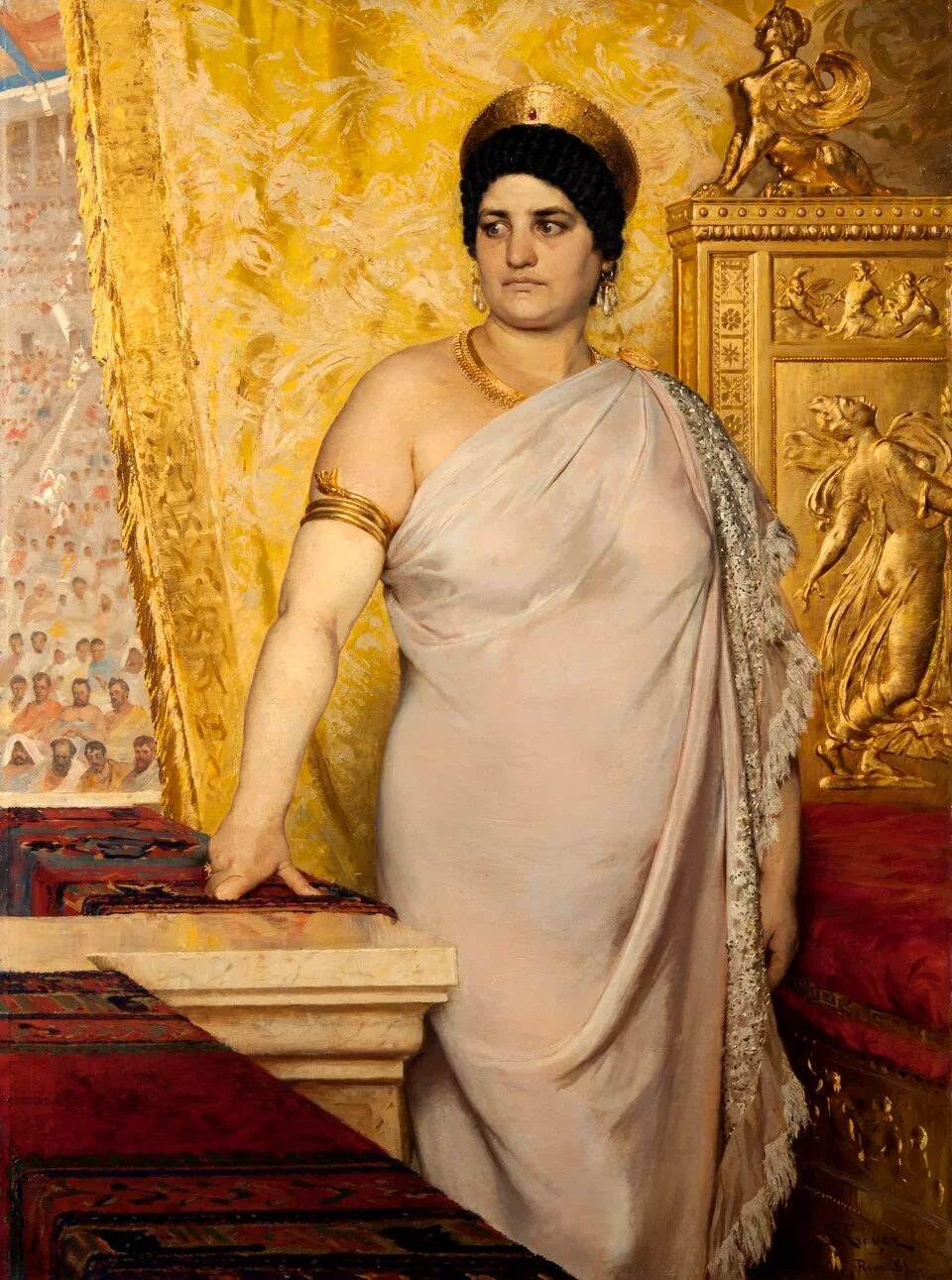
Messalina
The robe is so thin you can almost see through it. The woman in it stands in the royal box at the amphitheatre. She is Messalina, the wife of the Roman emperor Claudius. Her private life was notorious. She was involved in conspiracies, and in the end she was executed for them. The model was an Italian woman named Vittoria. Not long before, she had also posed for Aimé Morot's Medea, which Krøyer had seen at the Paris Salon, an art exhibition, in 1877. When his own picture was finished in 1881, he chose not to send it to that exhibition. He sent it to the Nordic Art Exhibition in Gothenburg, Sweden, instead. It was painted in Rome, while he was there.
Listen in the appPeder Severin Krøyer · CC BY 4.0
08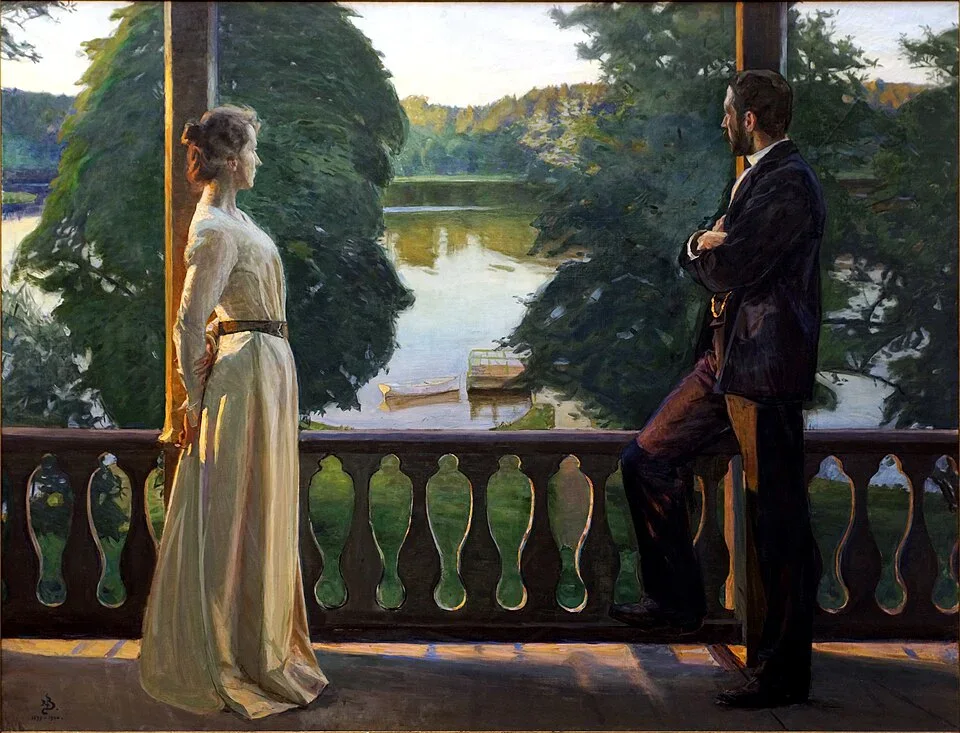
Nordic summer's evening
A man and a woman stand on a terrace, their backs to us, looking out over the water on a summer evening. A glow hangs above the forests and is reflected in the still water. Bergh knew them both. The singer Karin Pyk and Prince Eugen, who painted, were his friends, and he liked to hide meanings in his pictures. Both were bound by marriage and convention, yet an unspoken tension runs between them. They look out in silence. The whole scene is held inside tight horizontal and vertical lines, a symmetry he borrowed from the early Renaissance. That strict order keeps the sadness in check. Below the terrace, a small boat bobs beside the jetty. It stands for escape, the chance to simply leave.
Listen in the appRichard Bergh · Public domain
09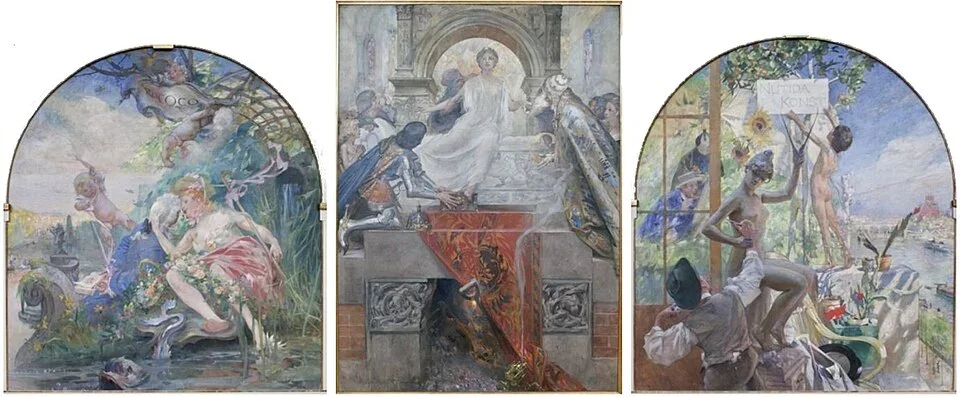
Rococo - Renaissance - Contemporary art
A man in Gothenburg wanted the stairway of his home painted. Pontus Fürstenberg, an art patron, asked Carl Larsson to do it, and Larsson proposed three walls showing three periods of art. Those were the Renaissance, Rococo and modern art. In the middle, the goddess of art wakes from a sleep of centuries on an ancient sarcophagus. The pope takes her hand and a prince lays his crown before her. On one side is Rococo. A shepherdess rests in a shell drawn by a dolphin, stroking a cavalier whose hands cupids have tied with flower garlands. The third panel is modern art. A clay woman is so lifelike that she smiles and takes the sculptor by the wrist, and the Eiffel Tower stands under construction. Larsson could only do the work in Paris, so he went back in 1888. By the world exhibition the following year, the three pictures were ready for the Swedish section. But when they were hung, the stairway had been rebuilt. One wall was now an open portico of columns, leaving no room. The triptych had to be taken apart. Rococo and modern art went on two walls at an angle, with a door to a narrow room where the Renaissance was hung. The white frame from Paris no longer fitted, so new frames were made. Larsson was unhappy with the placement. Years later he called the finished result meaningless and silly.
Listen in the appCarl Larsson · Public domain
10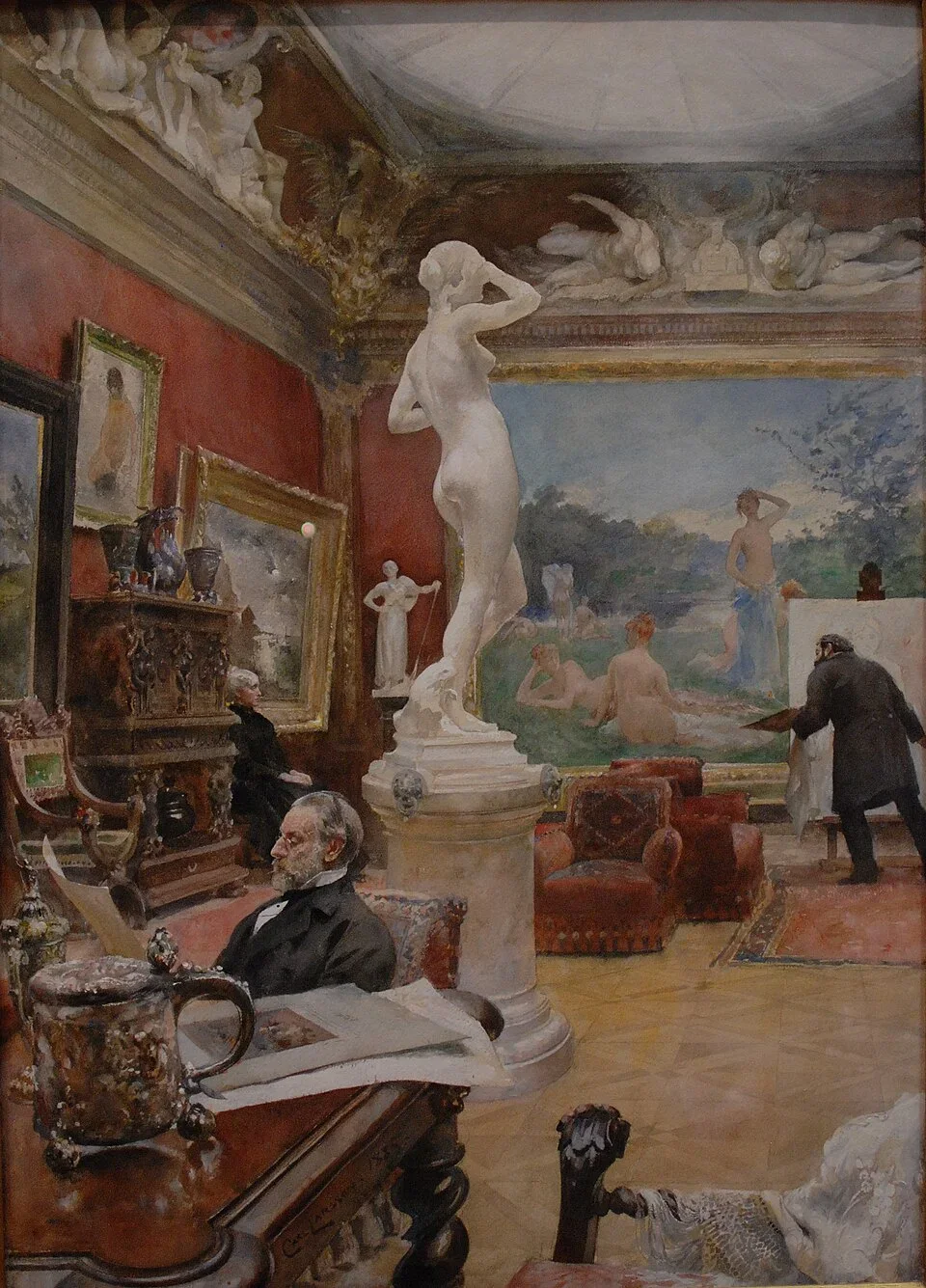
Interior of the Fürstenberg Gallery
Is this a home, or a gallery? It is both. Paintings hang on the walls, and a sculpture called Snowdrop stands in the middle of the room. In the background hangs a large painting called Summer. Göthilda Fürstenberg sits by the left wall in black while Ernst Josephson paints her portrait. He started it and never finished. In the foreground, her husband Pontus studies a work on paper. Pontus and Göthilda were the greatest art collectors of their time. From 1885 this gallery was open, in principle, to anyone who wanted to come in. This was their attic in the Fürstenberg palace in Gothenburg, the first private house in the city with electric light. Carl Larsson painted the room that same year. The couple later left the collection, about two hundred and sixty works, to the city. In 1922 it came here, and their home was rebuilt here around it.
Listen in the appCarl Larsson · Public domain
- 11
Portrait of Roseta Mauri
Anders Zorn · 1888
- 12
My Wife
Richard Bergh · 1886
- 13
At Sea
Albert Edelfelt · 1883
- 14
Impressions de Londres
Anders Zorn · 1890
- 15
Landscape from Halland
Richard Bergh · 1895
- 16
Double Portrait
Alexander Roslin · 1754
- 17
Fåfängan, Stockholm
Karl Nordström · 1891
- 18
Winter Evening in Roslagstull
Karl Nordström · 1897–1900
- 19
The Hunting Party
Pierre Bonnard · c. 1908
- 20
Girl Picking Flowers
Richard Bergh · 1884
- 21
Mars and Venus by Johan Tobias Sergel
Johan Tobias Sergel · 1775
Gothenburg Museum of Art
Frequently asked questions
How much does the guide cost?
Free app download. Free until 1 January. Listed guide price: $0.99. Audio guide only. Venue admission is separate.
Can I listen without internet?
Yes. Download the guide’s audio, images, and maps in the app before your visit. Your downloaded content is then available offline.
Can I listen in my language?
In English for now. More languages soon.
Do I need to follow a schedule?
No. This is a self-guided experience. Choose your stops, pause whenever you like, and return to a story at your own pace.
Which artworks are in the Gothenburg Museum of Art audio guide?
21 artworks, including Hip, Hip, Hurrah! (Peder Severin Krøyer), Boys drawing (Sofie Ribbing), Venny Soldan-Brofeldt, Artist (Hanna Hirsch-Pauli), Man with a Falcon (possibly St. Bavo) (Rembrandt), Henry IV at the siege of Amiens (Peter Paul Rubens, Peter Snayers, Lodewijk de Vadder), Village Street, Vétheuil. (Claude Monet), Messalina (Peder Severin Krøyer), and Nordic summer's evening (Richard Bergh). The full list is on this page.
Is this the museum’s official audio guide?
No. Stanza is an independent audio guide app and is not affiliated with Gothenburg Museum of Art. Museum admission is separate.
At your own pace
Explore Gothenburg Museum of Art.
Download Stanza, then search for “Gothenburg Museum of Art”.
Free app download · Guide price shown in the app
Keep exploring
Audio guides — Sweden
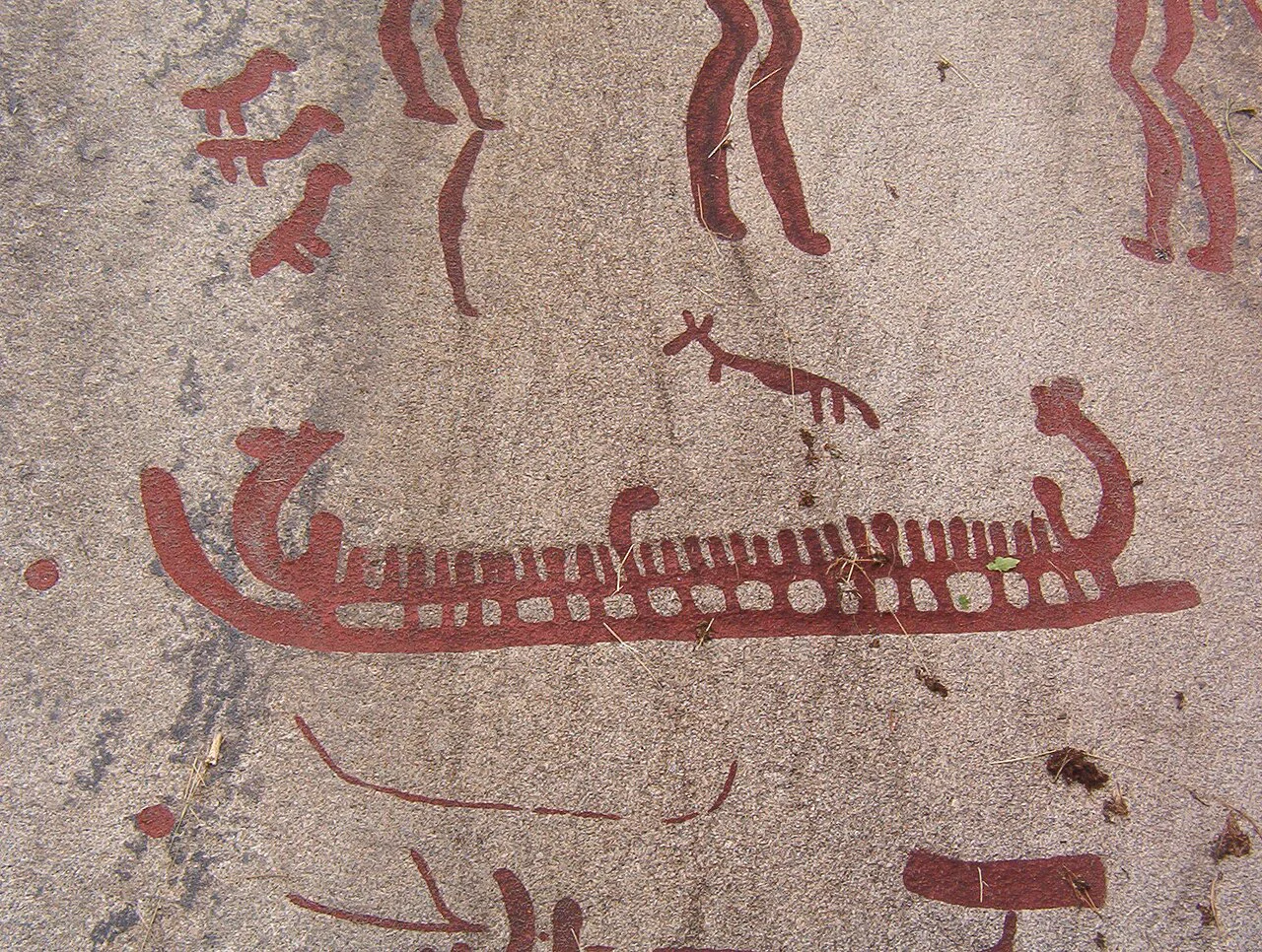
Tanumshede · 118 km
Rock Carvings in Tanum
Content & sources
Photo: Fred J · Public domain
Lidköping Municipality · 131 km
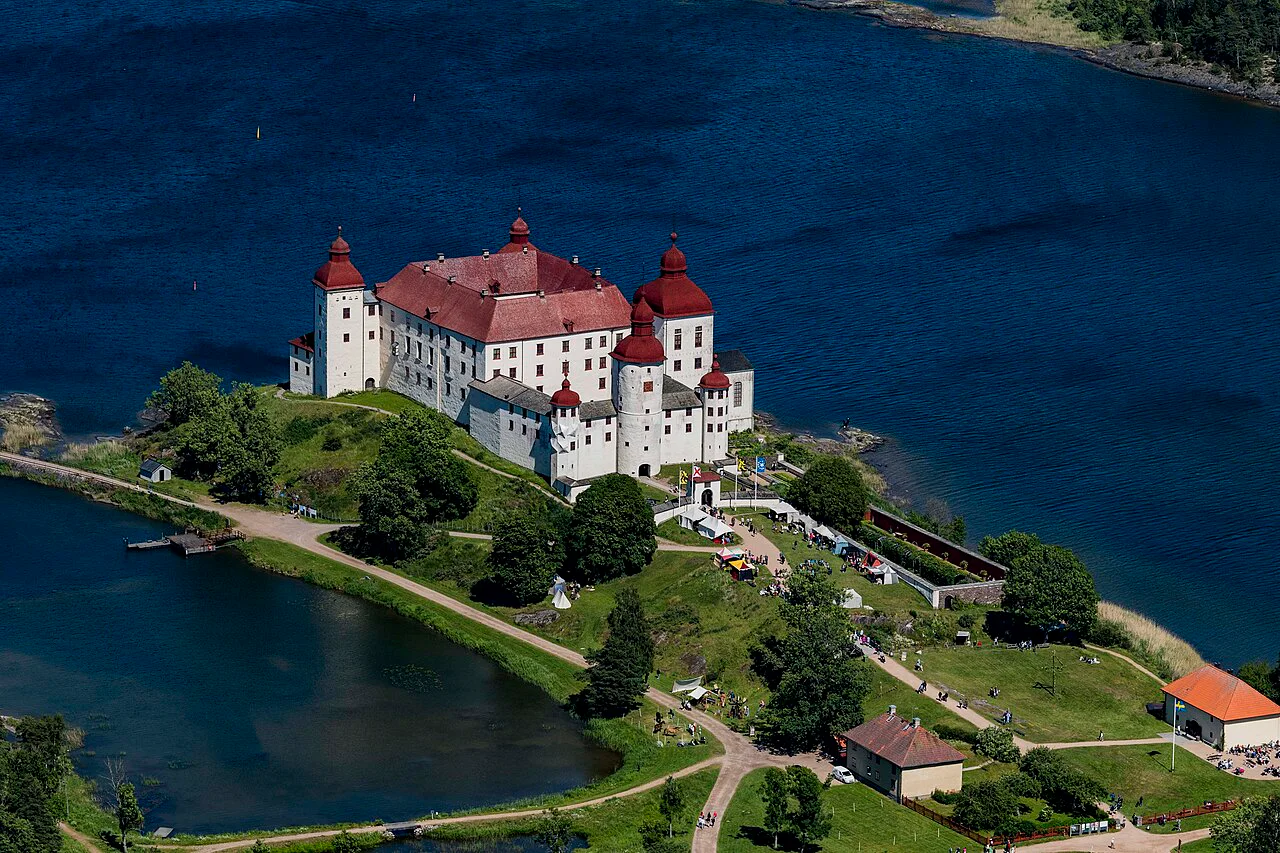
Läckö Castle
Content & sources
Photo: L.G.foto · CC BY-SA 4.0
Aalborg · 142 km
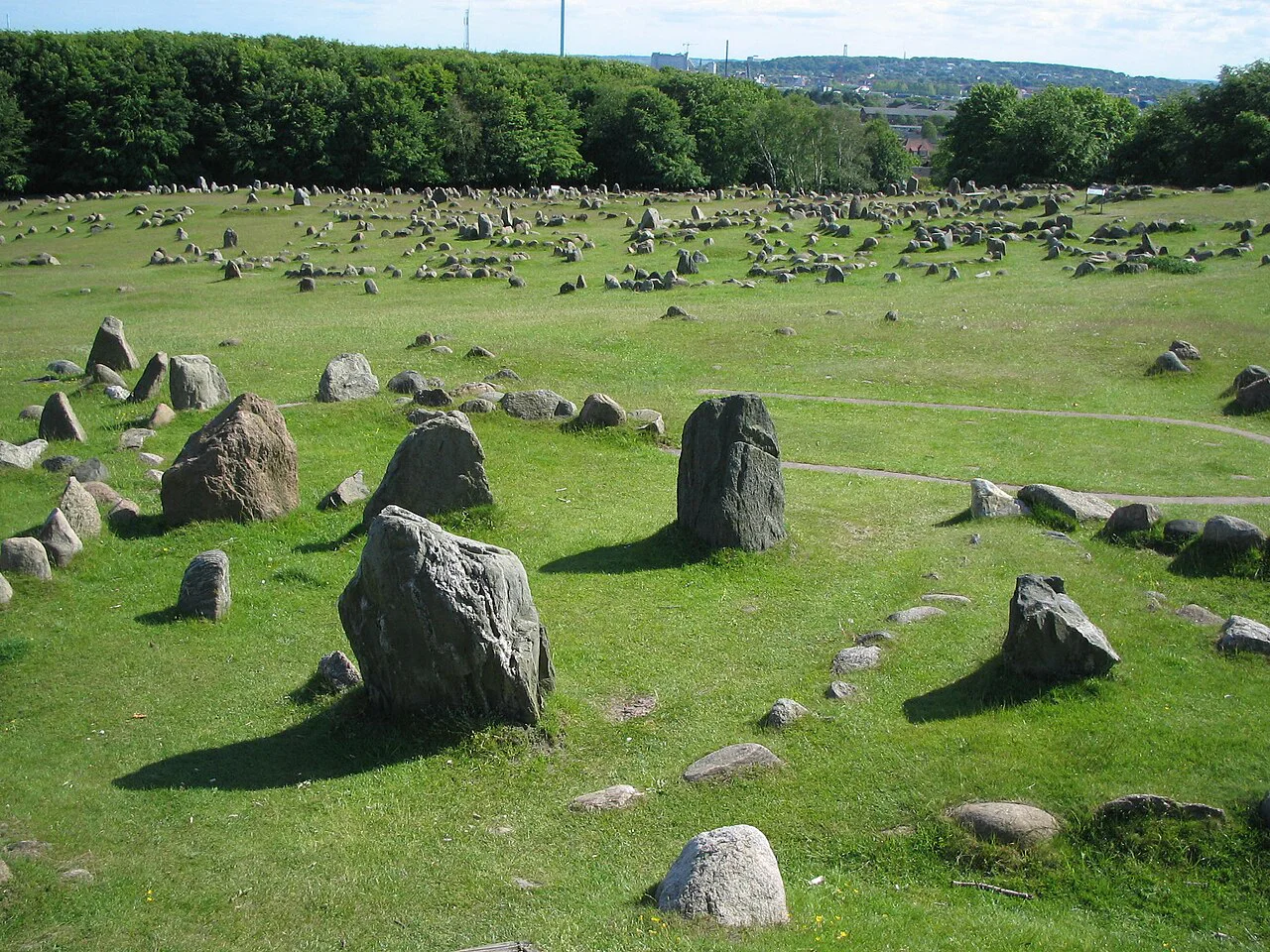
Lindholm Høje
Content & sources
Simon Wedege Petersen · CC BY 3.0
Kivik
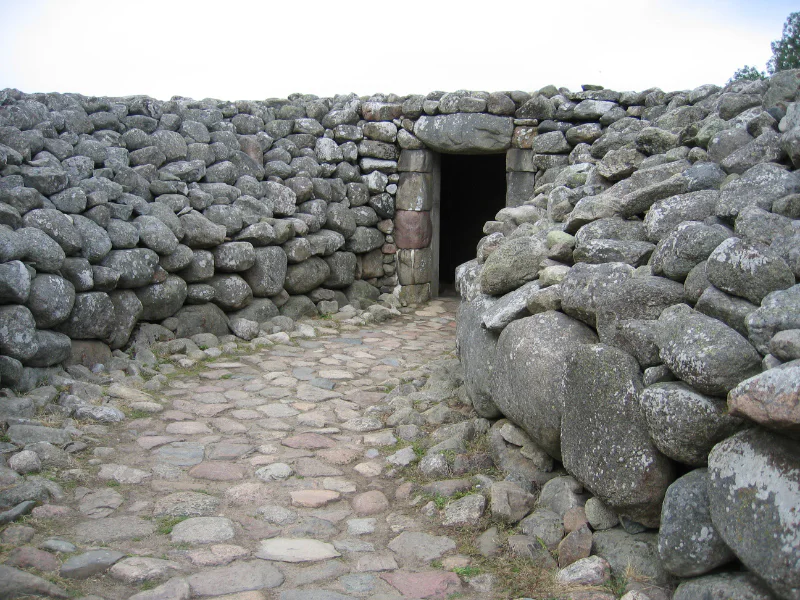
The King's Grave
Content & sources
Abelson at English Wikipedia · CC BY 2.5
Art museums
More art museum audio guides
Copenhagen · 101 artworks
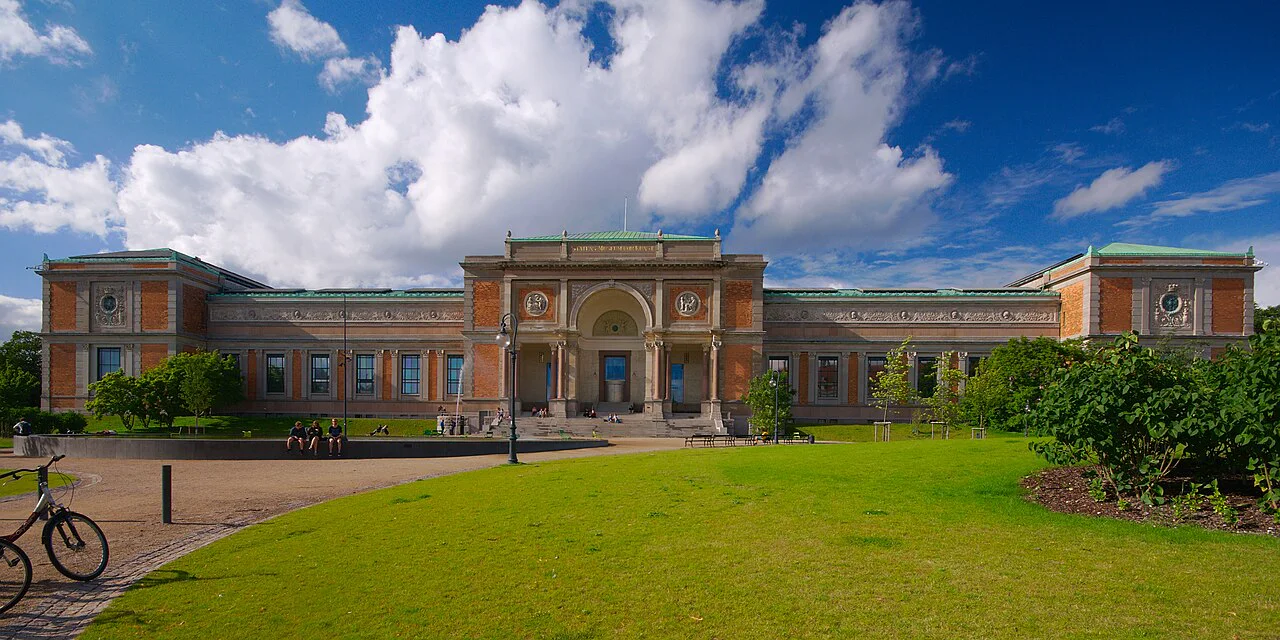
National Gallery of Denmark
Content & sources
Photo: Jiří Komárek · CC BY-SA 4.0
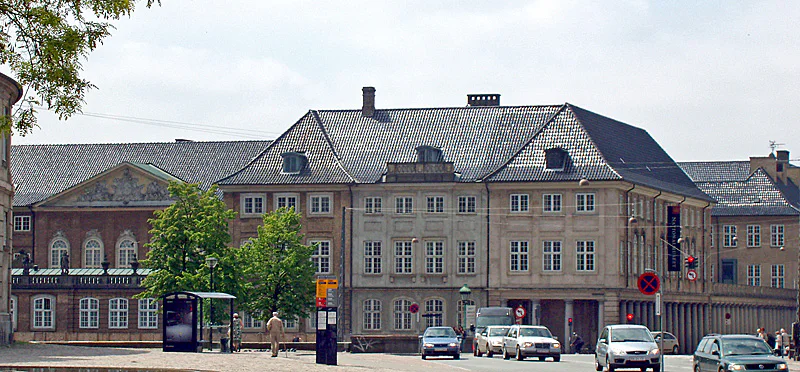
Copenhagen · 62 artworks
National Museum of Denmark
Content & sources
No machine-readable author provided. Nico-dk assumed (based on copyright claims). · CC BY-SA 3.0

Oslo · 20 artworks
Munch Museum
Content & sources
Photo: Premeditated · CC BY-SA 4.0
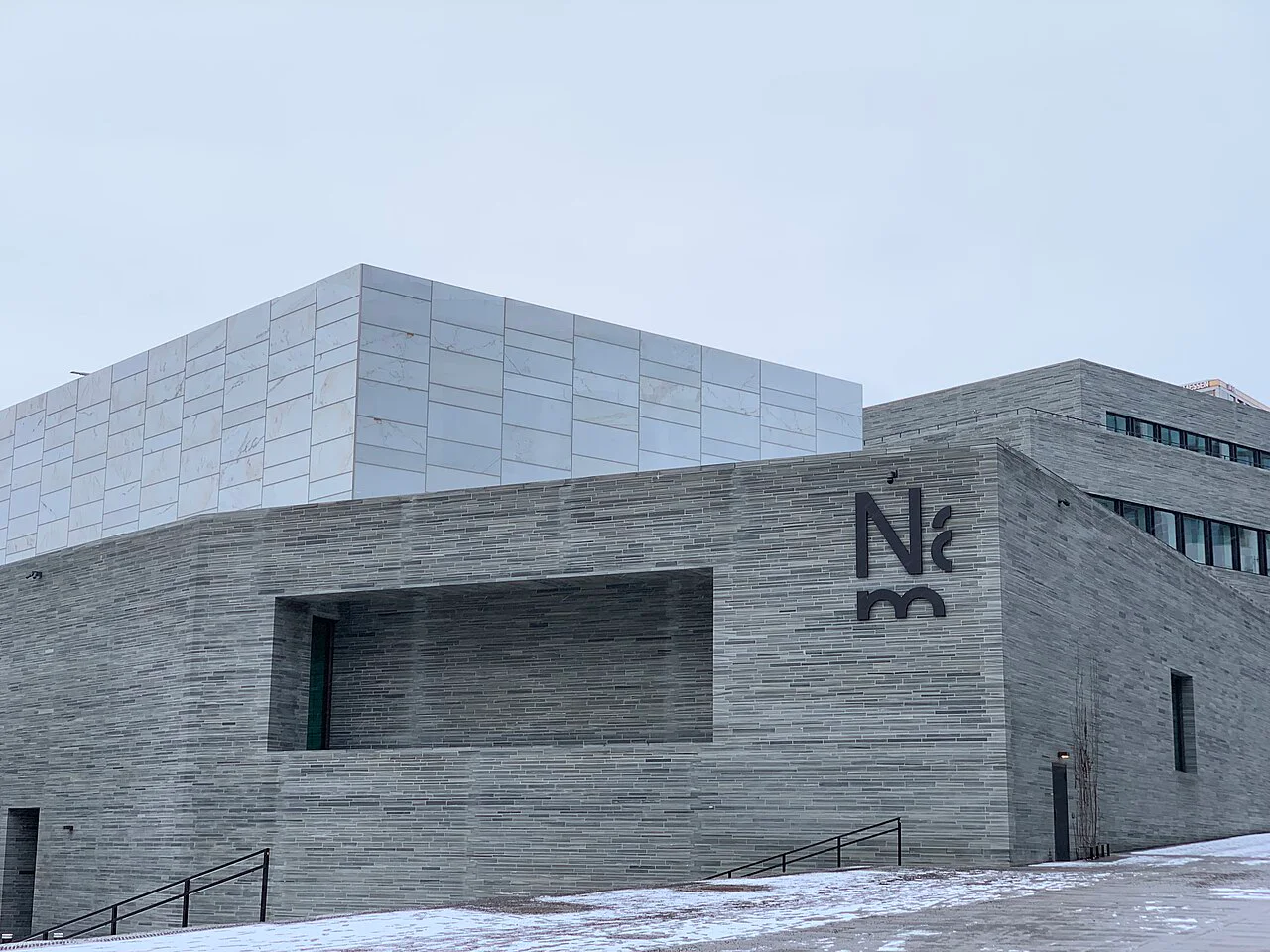
Oslo · 60 artworks
National Museum of Norway
Content & sources
Photo: Premeditated · CC BY-SA 4.0
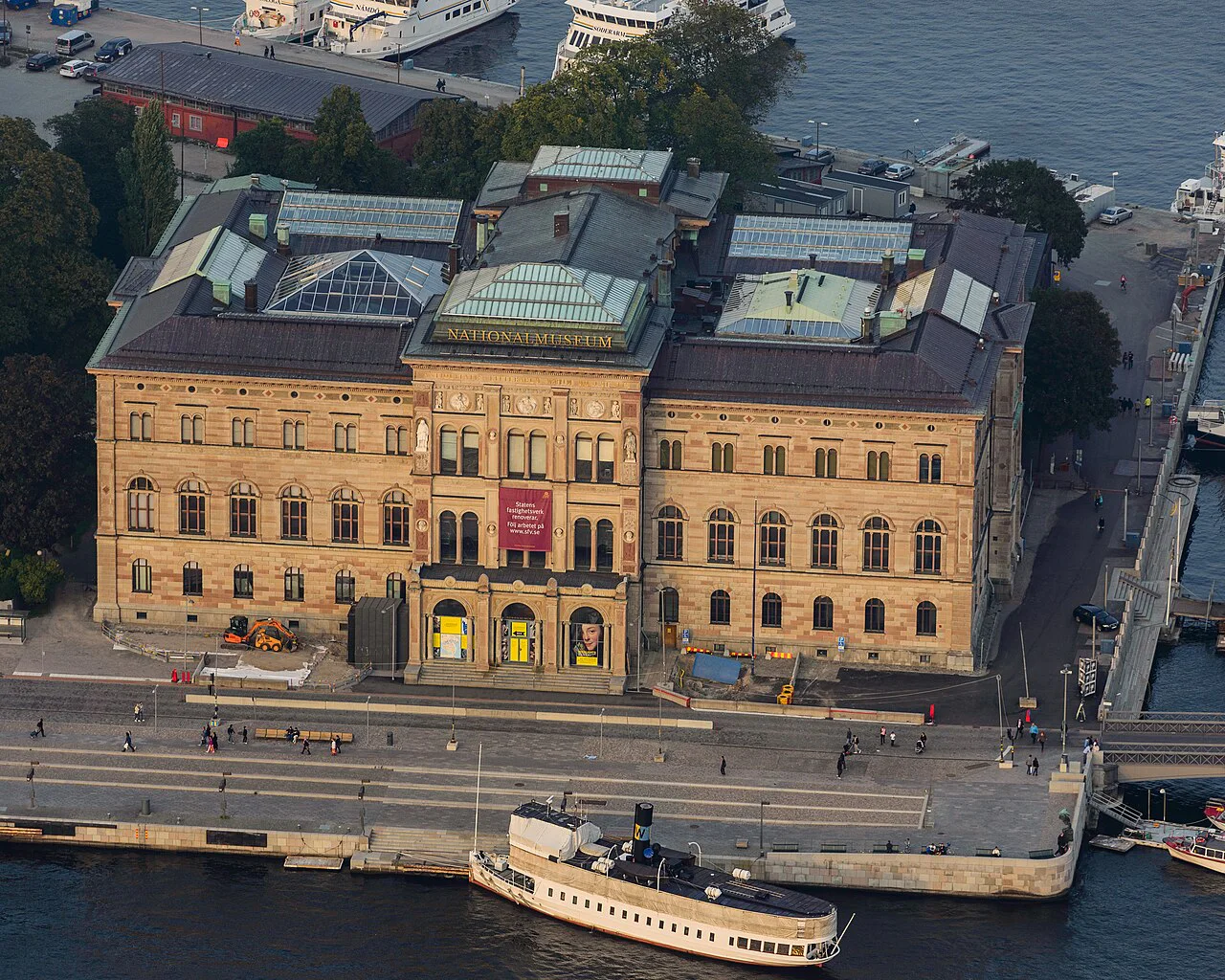
Stockholm · 164 artworks
Nationalmuseum
Content & sources
Arild Vågen · CC BY-SA 4.0
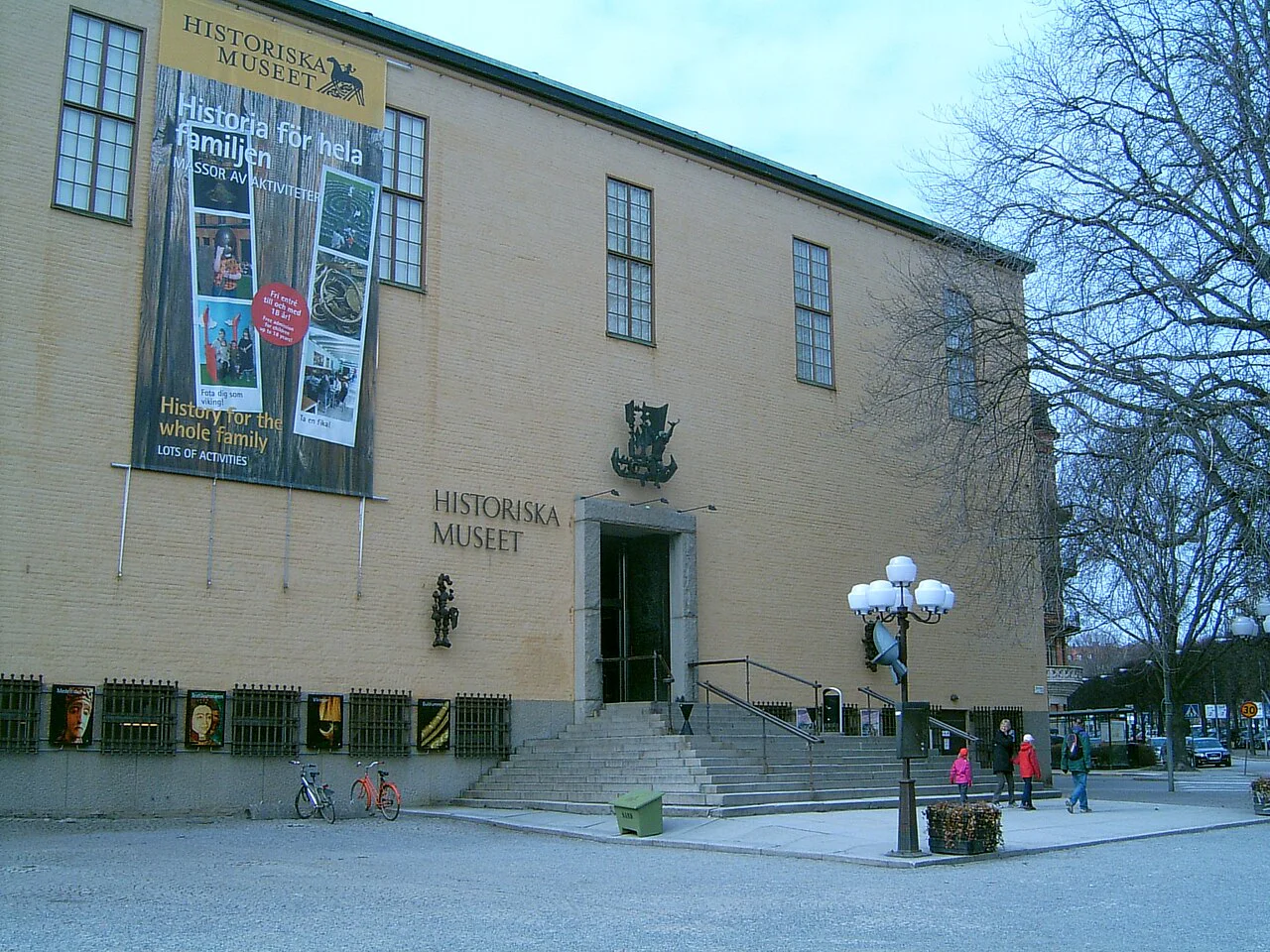
Stockholm · 55 artworks
Swedish History Museum
Content & sources
Mr Bullitt · CC BY-SA 3.0