Stanza · Audio guide
Swedish History Museum Audio Guide
A place to remember. A story to take with you.
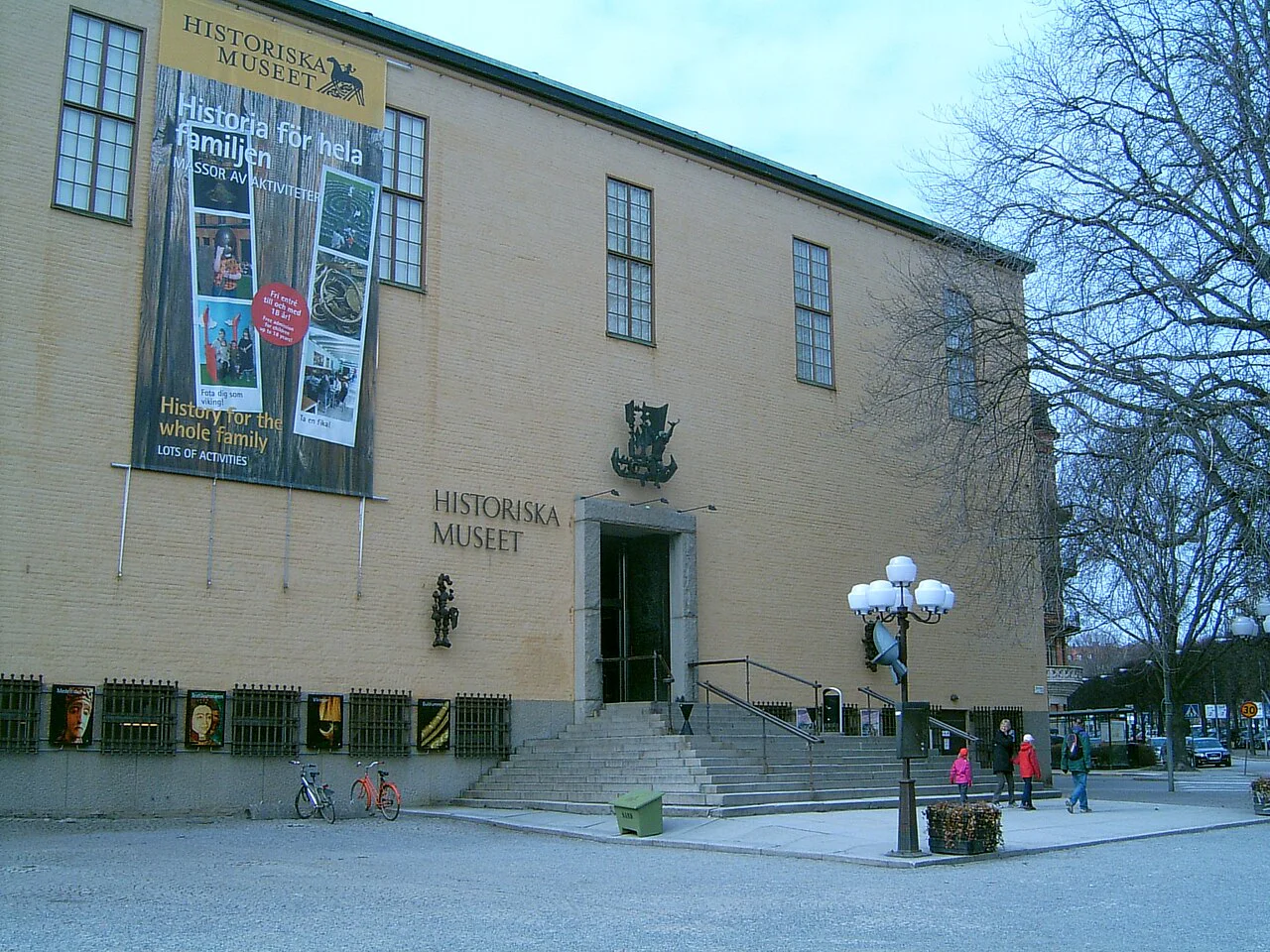
The Swedish History Museum is a museum located in Stockholm that covers Swedish archaeology and cultural history from the Mesolithic period to the present day. It is tasked with preserving Swedish historical…
Download Stanza, then search for “Swedish History Museum”.
About the tour
One guide. Your kind of visit.
The Swedish History Museum is a museum located in Stockholm that covers Swedish archaeology and cultural history from the Mesolithic period to the present day. It is tasked with preserving Swedish historical items and making knowledge about history available to the public.
The Swedish History Museum guide tells the stories of 55 artworks, including Tjängvide image stone (Historiska museet), Torslunda helmet plate patrices (Unknown Artist), Snow White and The Madness of Truth (Dror Feiler, Gunilla Sköld-Feiler), Noleby Runestone (John-Björn Huber SHM), Rö runestone (John-Björn Huber SHM), Istaby Runestone (Unknown Artist), Alunda moose (Unknown Artist), and Möjbro Runestone (Bengt A. Lundberg). Every artwork is free to hear in the Stanza app until 1 January.
Ready when you are.
- 01Get the free Stanza app.
iOS & Android
- 02Find your guide.
“Swedish History Museum”
- 03Download before you go.
Works offline
Audio guide / 55 artworks
Inside the guide
Get to know a few of the stories before you go. Open a stop to read more.
01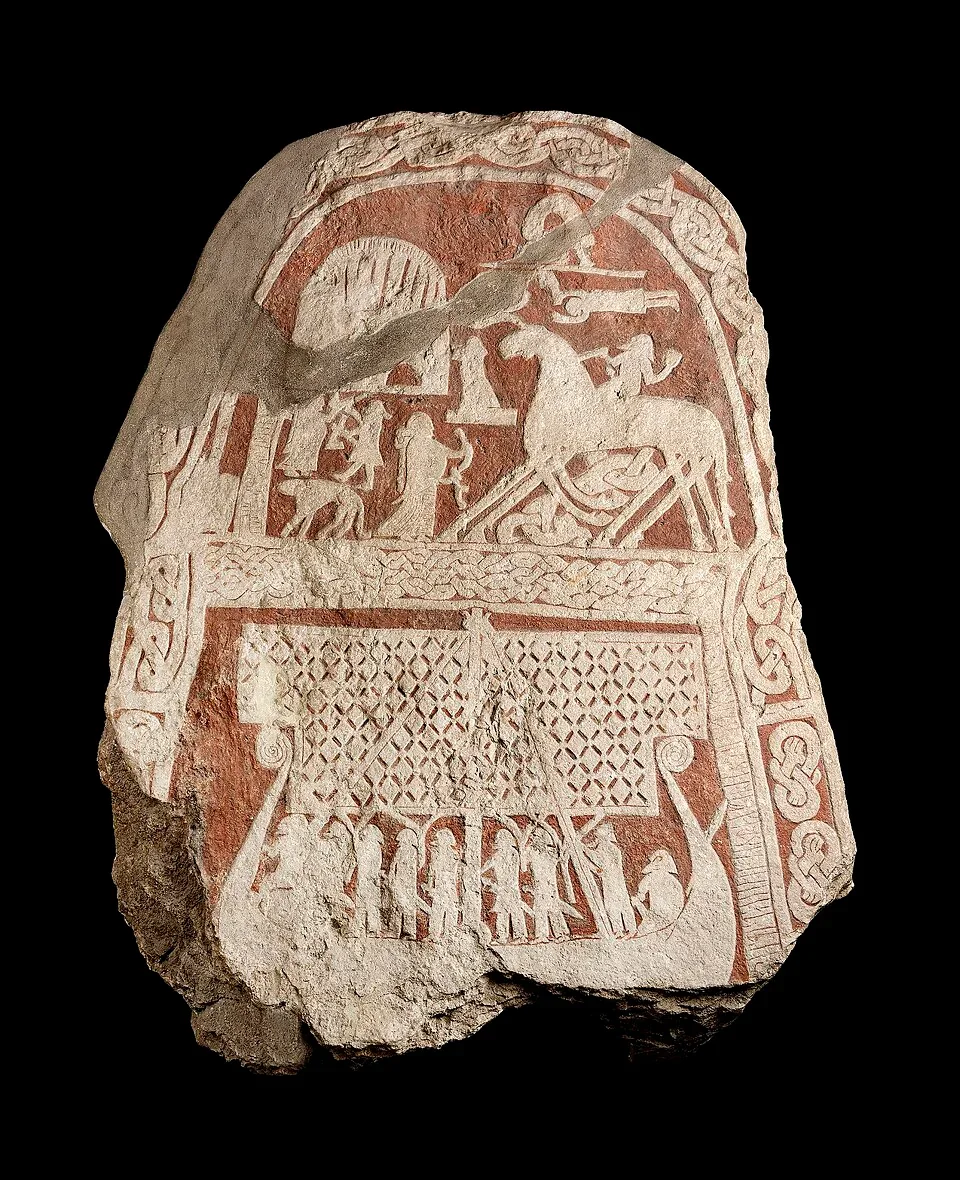
Tjängvide image stone
Before it came here, this stone was built into the wall of a cellar on a farm on Gotland. It stayed there until it was found in 1844. Now the little rider carved on it is the museum's own logo. The upper field shows a small rider on a large horse with eight feet. A woman offers him a drinking horn, as though welcoming him. The horse is probably Sleipnir, Odin's own. The rider is probably a dead man arriving in Valhalla, and the woman a valkyrie. No cross was found on the stone, so it seems to be pagan. Yet the runes say the stone was raised for a man. Someone set it up in memory of his brother Hiorulf, a name that means sword wolf. But so much of the runes is lost that we cannot tell whether the pictures were ever meant to speak of him at all.
Listen in the appHistoriska museet · CC BY 2.5
02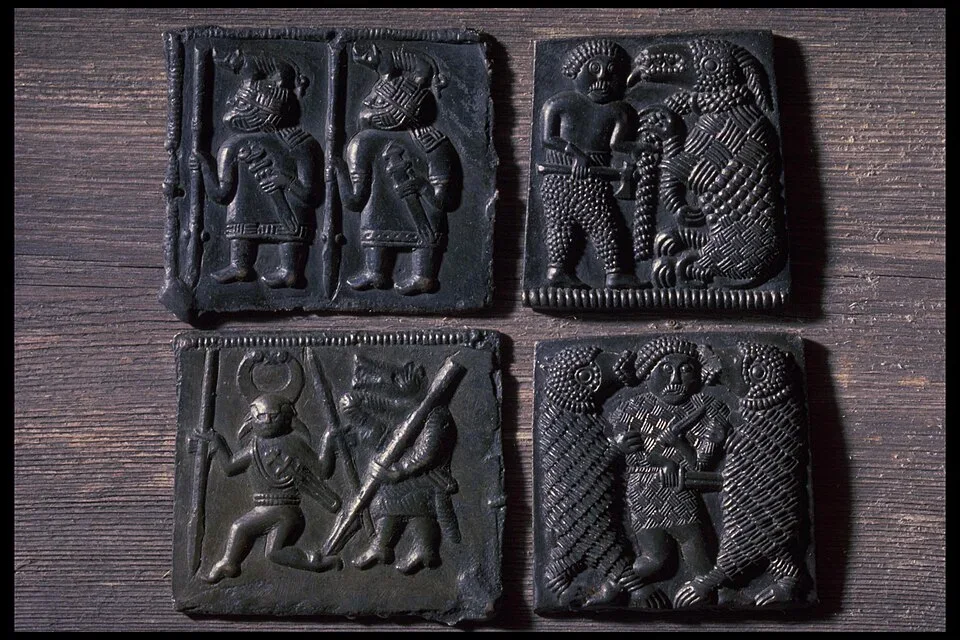
Torslunda helmet plate patrices
The dance is already under way. A warrior in a wolfskin has a spear in his hand, and the figure beside him is missing his right eye. A laser scan showed the eye was struck out, likely on the original this mould came from. That points to Odin, the one-eyed Norse god who gave an eye for a drink from a well of wisdom. The wolfskin warrior is probably a berserker, one of the wolf warriors the god of frenzy leads. Yet these plates were never meant to be displayed. They are bronze stamps. Thin foil was laid over the raised figures and pressed from behind, stamping out the same image again and again. Those gilded foils decorated the rich helmets of the Vendel period. Four plates were found in a cairn on Öland between 1870 and 1874. They are famous because they carry whole mythological scenes, while the foils themselves survive only as scraps. No one knows who made them.
Listen in the appPhoto: LinneaKarlberg · CC BY 4.0
03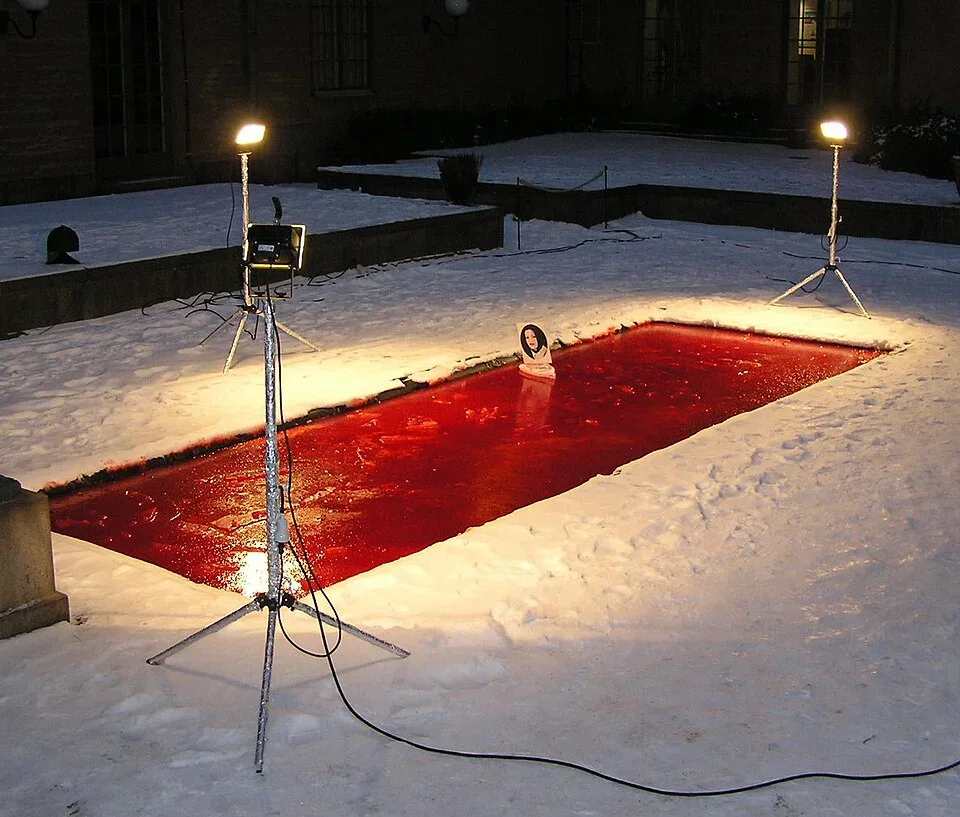
Snow White and The Madness of Truth
No one can say for sure what drove the man who wrecked this work. In January 2004, Israel's ambassador to Sweden came in here and pulled the plug. To Swedish reporters he said he had only just seen it and lost his temper. To Israeli reporters he said he had planned it before he ever set eyes on it. Both cannot be true. In front of him was a long pool of water dyed blood red. A small white boat drifted on it, with a woman's smiling face where a sail should have been. She was Hanadi Jaradat, the Palestinian suicide bomber who killed twenty-one people and injured fifty-one more. Bach played, a cantata that begins with the words my heart swims in blood. The two artists made it to show how weak people, left alone, can do terrible things. The ambassador called it glorification of suicide bombers and hatred of Israelis. He tipped a light into the water, causing a short circuit. Asked to leave, he refused, and security escorted him out while the cameras filmed. The man responsible for the exhibition was attacked and got more than four hundred threatening emails. The work came down on February the eighth. They named the boat Snow White, partly because of the photograph. In it she had black hair, pale skin and red lips, like the girl in the story.
Listen in the appFabian Norlin (alias Fabben on Swedish Wikipedia) · CC BY-SA 3.0
04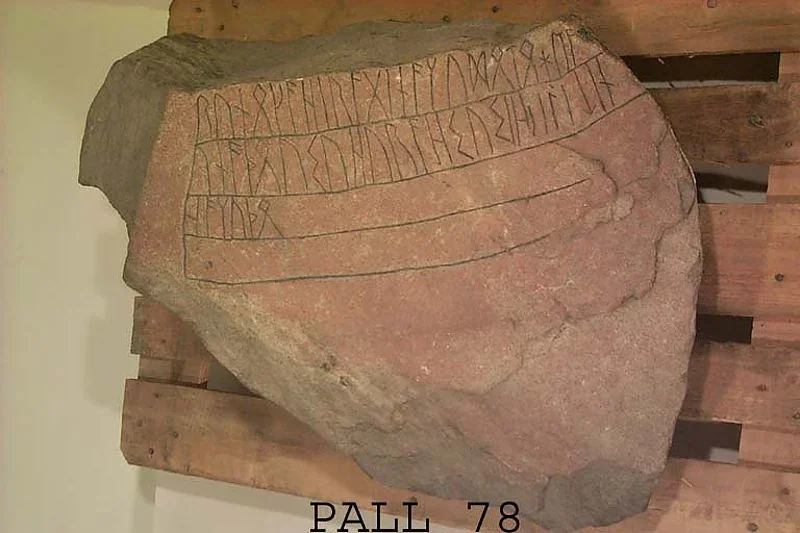
Noleby Runestone
Notice the empty fourth line on this stone. Four lines were carved, yet only three were filled. The middle of those three has never been translated. People have tried to read it again and again since the first attempt in 1897. That first reading was changed several times, then set aside. The first line, though, is clear. It says runes, and it says they come from the gods. That is the earliest place this idea appears anywhere. The same phrase turns up later on the Sparlösa stone and in the old poem Hávamál. So what the poem tells was already being said long before anyone wrote it down. Even within that clear line, one word is now read in two different ways. The carver is not known. From its size, the stone was probably set up inside a grave.
Listen in the appJohn-Björn Huber SHM · CC BY 2.5 se
05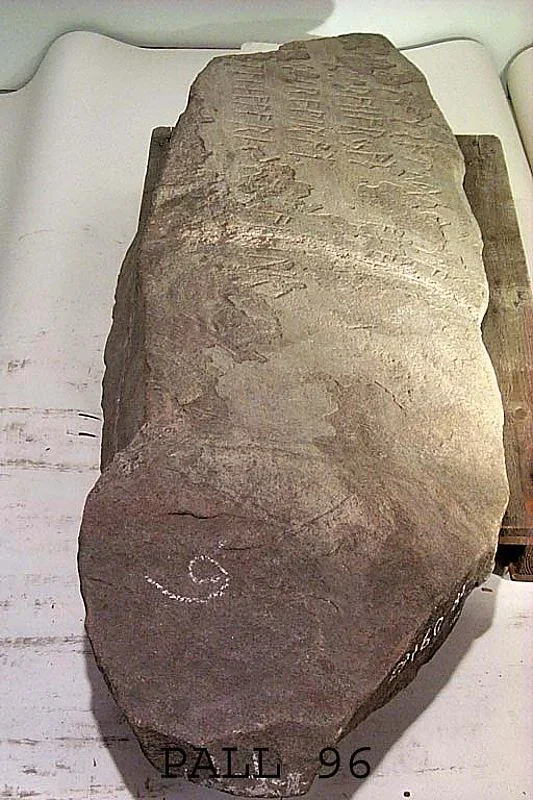
Rö runestone
A man named Hrazaz wanted a warrior remembered, and this is the stone he raised for him. The warrior is named here as well, a Suebian with wide wounds. His name and Hrazaz's run in four rows down the flat surface. There are more than sixty runes, in a language that still kept endings later lost. The runes suggest the early fifth century, and this is the longest inscription from before the seventh century found in Sweden. A third name closes the rows. Stainawarijaz made the marks, and that name means keeper of stones. The word he used for the work is usually read as carved, but it really means painted. Runestones often had their letters painted, though there is no evidence this one was, beyond that word. The stone stood beside an ancient sailing route, so the writing may be the work of visitors rather than people who lived here. It was found in 1919 at a farm on Otterö and set up again near where it lay. Today the original is in Stockholm, and a copy stands on the island.
Listen in the appJohn-Björn Huber SHM · CC BY 2.5
06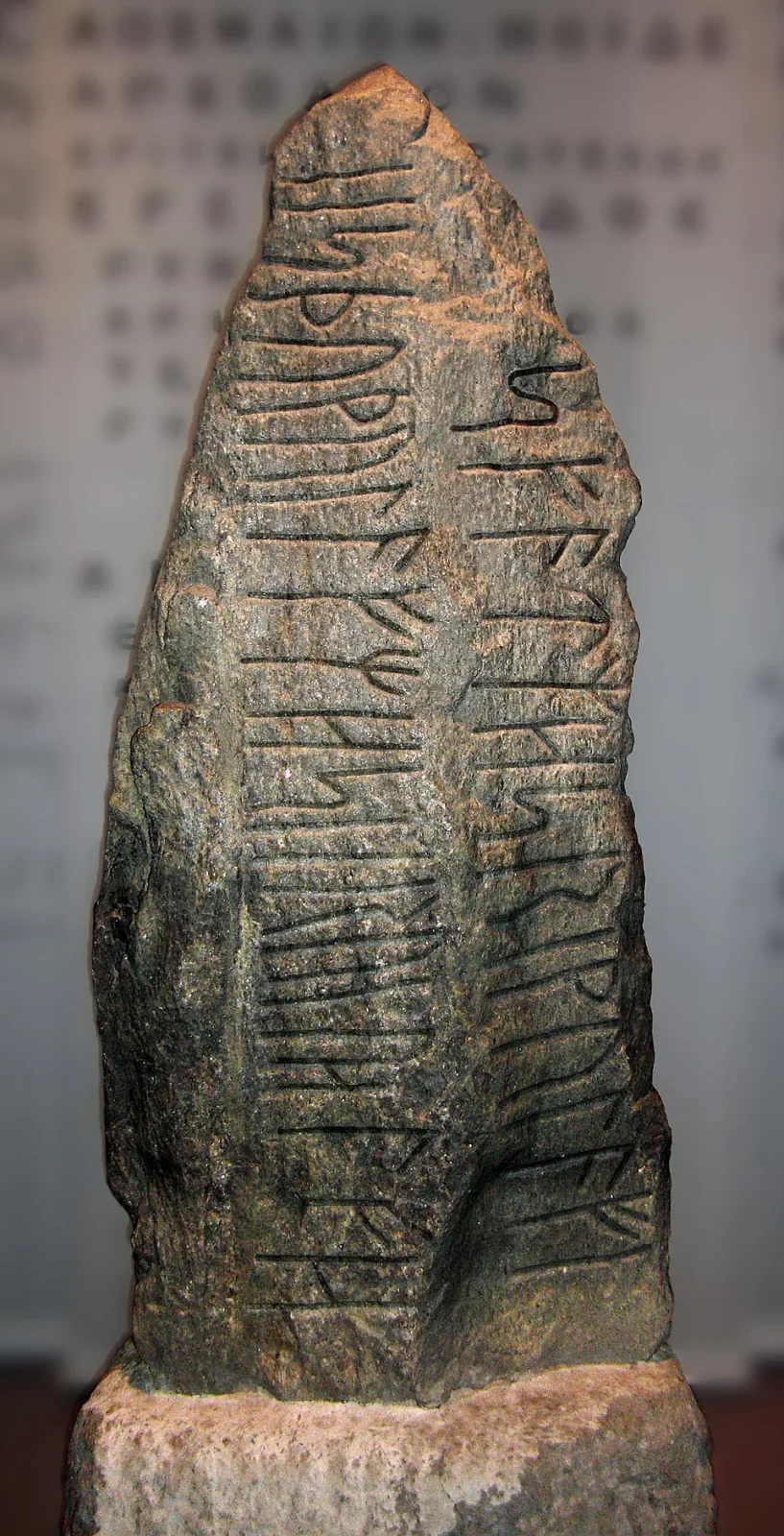
Istaby Runestone
A man cut these letters into stone, and they carry three names. They seem to be the oldest in Scandinavia we know from any Nordic source. He set them in three straight lines down the face of the stone, big and neatly cut. All three end in the word for wolf. The stone was raised in memory of Hariwulf. Haduwulf cut the runes, and he gives his own father's name as well, Heruwulf. Heruwulf means something like of the family of Sword Wolf. The wolf word was a soldier's word, for the hired fighters in a war band, and the three names begin with the same sound, as a chieftain family's names did. The same names appear on other stones nearby, and they point to a family of chieftains on Listerlandet. Those stones stood beside roads and marked land and boundaries. This one is different, raised for a man who had died. On the narrow side, a short line says that he wrote these runes.
Listen in the appPhoto: Achird · CC BY-SA 3.0
07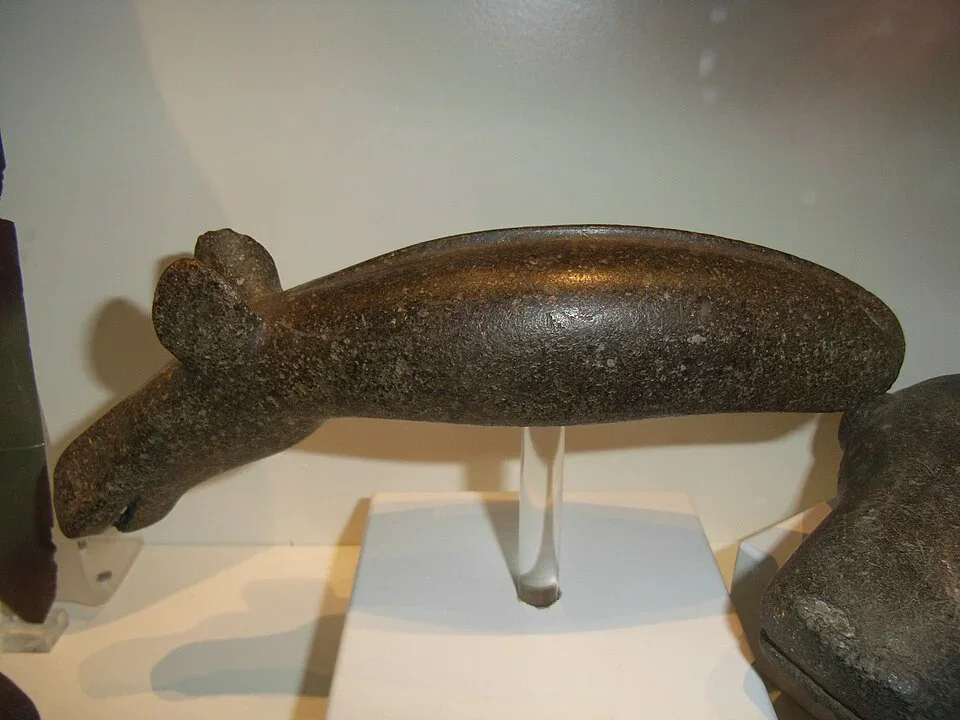
Alunda moose
One end of this axe is a moose's head, long and narrow, with ears standing upright. It is a female moose. At the other end is an axe blade with a hole for a handle. But the hole was never bored all the way through. No handle could ever fit in it. So this was never a working axe. It had another purpose. It was made around 2500 B.C. Someone placed it in clay at the center of an artificial mound. A drainage ditch dug near a farm in Uppland brought it back to light. Axes with animal heads like this are known from Karelia, and this one probably came from there. In rock carvings in northern Sweden, people are shown carrying staffs topped with moose heads. What that purpose was is still not known.
Listen in the appPhoto: Notafly · CC BY-SA 3.0
08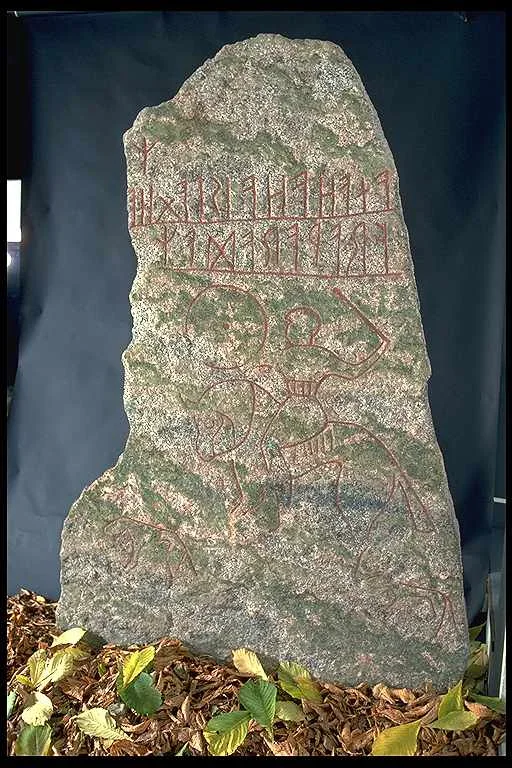
Möjbro Runestone
For as long as a hundred and thirty years this stone may have lain flat, its carved face up, where the cattle came to drink. Hooves may have worn its picture. When it was found again in 1862, it lay unbroken, right in front of the animals' watering place. Look at the picture those years left so hard to read. It shows a rider on a horse, drawn with a sweep you would not expect on a runestone. The horse bends its neck, and its eye is far too large and downcast, as if it almost revered its rider. The lines are so shallow that by 1946 you could make some of them out only in good light. Visitors from Uppsala complained they could not make out the figure. A few decided it was not even there. For a long time no one saw the two dogs that follow the rider. All anyone made out was a couple of strokes from the front one, taken for a fallen enemy, or a rise in the ground. The dogs were spotted only in 1952. The writing is much clearer than the picture. The one sure thing in it is a man's name, Frawaradaz. No one knows who cut the stone. The most common reading of the rest ends with a word for slain. It was probably raised as a memorial for him.
Listen in the appBengt A. Lundberg · CC BY 2.5
09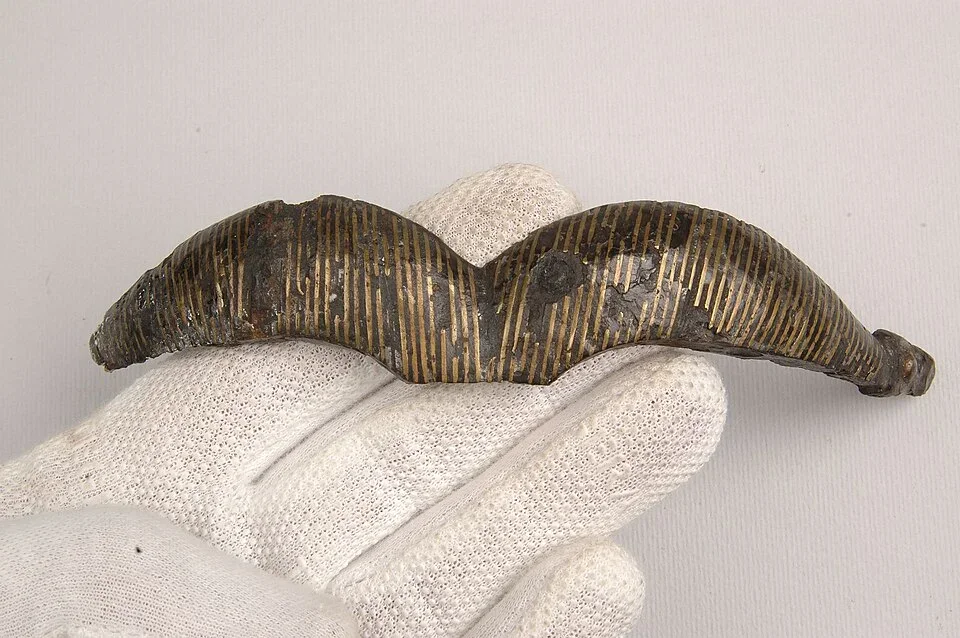
Broe helmet
An iron eyebrow lies here almost intact, inlaid with fine strips that may be silver, an animal head at each end. Above it, when the helmet was whole, rose another animal head, its eyes set with garnets. Little else of the helmet survived whole. The helmet was found around 1904 in a cremation grave on Gotland, uncovered while someone was digging a garden. Everything in that grave had burned except one round bronze clasp with three animal heads. The helmet itself was broken into so many pieces that it cannot be dated on its own. But decorated iron fragments from this grave carry the same stamped pattern as fragments from a burial at Vendel. One piece here even holds the impression of an animal head unlike the one that survives. It suggests a second head once sat at the back. In 1969 the fragments were used for a speculative reconstruction of the whole helmet, the closest we can come to the one buried at Broe.
Listen in the appUlrik Skans/Statens historiska museum · CC BY 2.5
10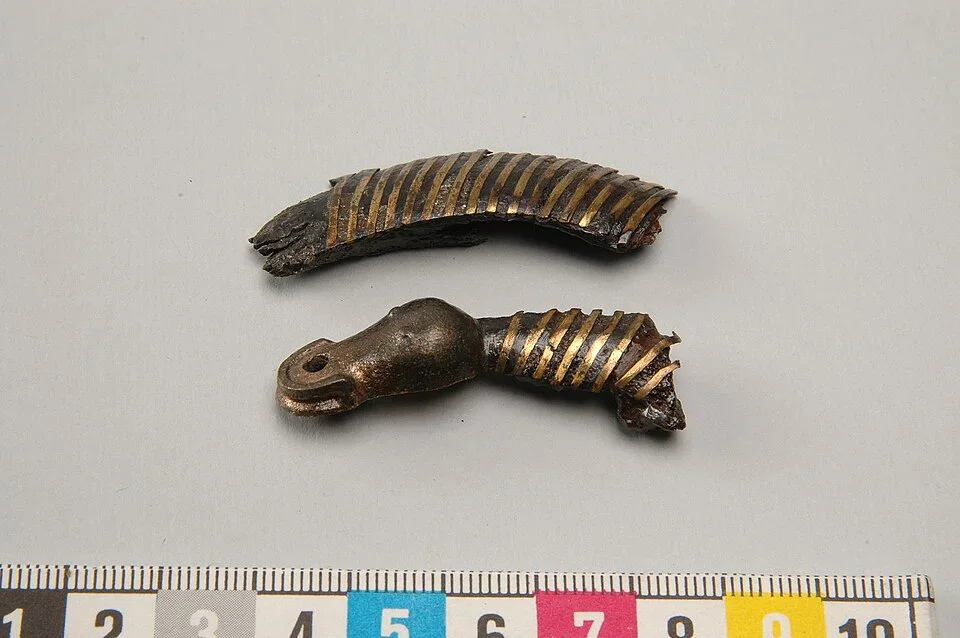
Hellvi helmet eyebrow
Nobody knows who made it, or how it was found. What survives is two small pieces of iron, each about four centimetres long, decorated with vertical strips of silver. The smaller one ends in a bronze animal head. Together they formed one continuous arch, the eyebrow of a helmet. Its helmet was one of the crested kind, with a rounded cap. Such helmets usually had a crest running from the nose to the nape of the neck. Helmets like that appeared in England and Scandinavia between about 550 and 600. This one reached the museum in November 1880, a gift from a watchmaker named Unnerus. Other objects came with it, said to be from a grave at Hellvi on Gotland. It took until 1969 for the two pieces to be shown as one arch, and a written description came six years later. Before 1977, more conservation showed how it had been made. The iron was hardened and set in a mould, then the molten bronze was cast on to form the animal head. The helmet it belonged to has never been found.
Listen in the appElisabet Pettersson/Statens historiska museum · CC BY 2.5
- 11
Kvinneby amulet
Ulrik Skans SHMM
- 12
Rällinge statuette
Unknown Artist
- 13
helmet and spurs of Saint Olaf
Statens historiska museum
- 14
Mästermyr chest
Unknown Artist
- 15
Grödinge tapestry
Unknown Artist · c. 15th century
- 16
Grumpan bracteate
Unknown Artist · 6th century
- 17
Gotland Runic Inscription 181
Unknown Artist
- 18
Sigtuna box
Unknown Artist
- 19
The Botkyrka monument
ingen uppgift
- 20
Elizabeth Reliquary
Unknown Artist
- 21
Blekingeguldskålen
Ulrik Skans SHM · c. 1000 BC
- 22
Sm 50 M
Arnbjörn
- 23
Marby rug
Unknown Artist · 2000
- 24
Eskatorpsbrakteaten
Ulf Bruxe SHM
- 25
Norrlandaorgeln
Ola Myrin, Statens historiska museum · 1370–1430
- 26
Bollebygdsklockan
not provided · 1200s
- 27
Holm 40523
Statens historiska museum
- 28
Närkes runinskrifter 2
Bengt A. Lundberg
- 29
Ugglum Church
not provided
- 30
Gotlands runinskrifter 114
Bengt A. Lundberg
- 31
Västmanlands runinskrifter 14
Bengt A. Lundberg · early 14th century
- 32
Hoard from Loshult Scania
Sara Kusmin, Statens Historista Museet · -1399
- 33
Staff
Unknown Artist
- 34
Bronze Age figurine from St. Olof
Unknown Artist
- 35
Västergötlands runinskrifter 95
not provided
- 36
Näs Church
Harald Faith-Ell
- 37
Uppland Runic Inscription 522
John-Björn Huber
- 38
Bragby Sword
Inga Ullén · c. 1700–1500 BC
- 39
G 204 and G 205
Ulf Bruxe, SHM
- 40
Vg228 Trollhättan
Bengt A. Lundberg
- 41
Bautil 943 - Vg 96
Johan Göransson
- 42
Dune hoard
Unknown Artist
- 43
Stige treasure
Unknown Artist
- 44
Embroidered roundels from Biskopskulla kyrka
Unknown Artist · 1190
- 45
Mosjömadonnan
Unknown Artist
- 46
Gårdlösa fibula
Unknown Artist · 3rd century AD
- 47
Apollo Grannus vase
Unknown Artist
- 48
Bohusläns runinskrifter NIYR;3
Unknown Artist · 12th century
- 49
Hemsjö Church baptismal font
Unknown Artist · 1250–1300
- 50
Hossmo church baptismal font
Unknown Artist
- 51
Ardre Church
Unknown Artist · c. 1100–1130
- 52
Upplands runinskrifter 664
Unknown Artist
- 53
Historical Museum, Grave slab, 2009-07-19-2
Unknown Artist
- 54
G 94
Unknown Artist
- 55
Gs 21 Axmar, Sundsmarnäset
Unknown Artist
Swedish History Museum
Frequently asked questions
How much does the guide cost?
Free app download. Free until 1 January. Listed guide price: $1.99. Audio guide only. Venue admission is separate.
Can I listen without internet?
Yes. Download the guide’s audio, images, and maps in the app before your visit. Your downloaded content is then available offline.
Can I listen in my language?
In English for now. More languages soon.
Do I need to follow a schedule?
No. This is a self-guided experience. Choose your stops, pause whenever you like, and return to a story at your own pace.
Which artworks are in the Swedish History Museum audio guide?
55 artworks, including Tjängvide image stone (Historiska museet), Torslunda helmet plate patrices (Unknown Artist), Snow White and The Madness of Truth (Dror Feiler, Gunilla Sköld-Feiler), Noleby Runestone (John-Björn Huber SHM), Rö runestone (John-Björn Huber SHM), Istaby Runestone (Unknown Artist), Alunda moose (Unknown Artist), and Möjbro Runestone (Bengt A. Lundberg). The full list is on this page.
Is this the museum’s official audio guide?
No. Stanza is an independent audio guide app and is not affiliated with Swedish History Museum. Museum admission is separate.
At your own pace
Explore Swedish History Museum.
Download Stanza, then search for “Swedish History Museum”.
Free app download · Guide price shown in the app
Keep exploring
Nearby audio guides
Stockholm · 1 km
Vasa Museum
Content & sources
Photo: Hanay · CC BY-SA 3.0
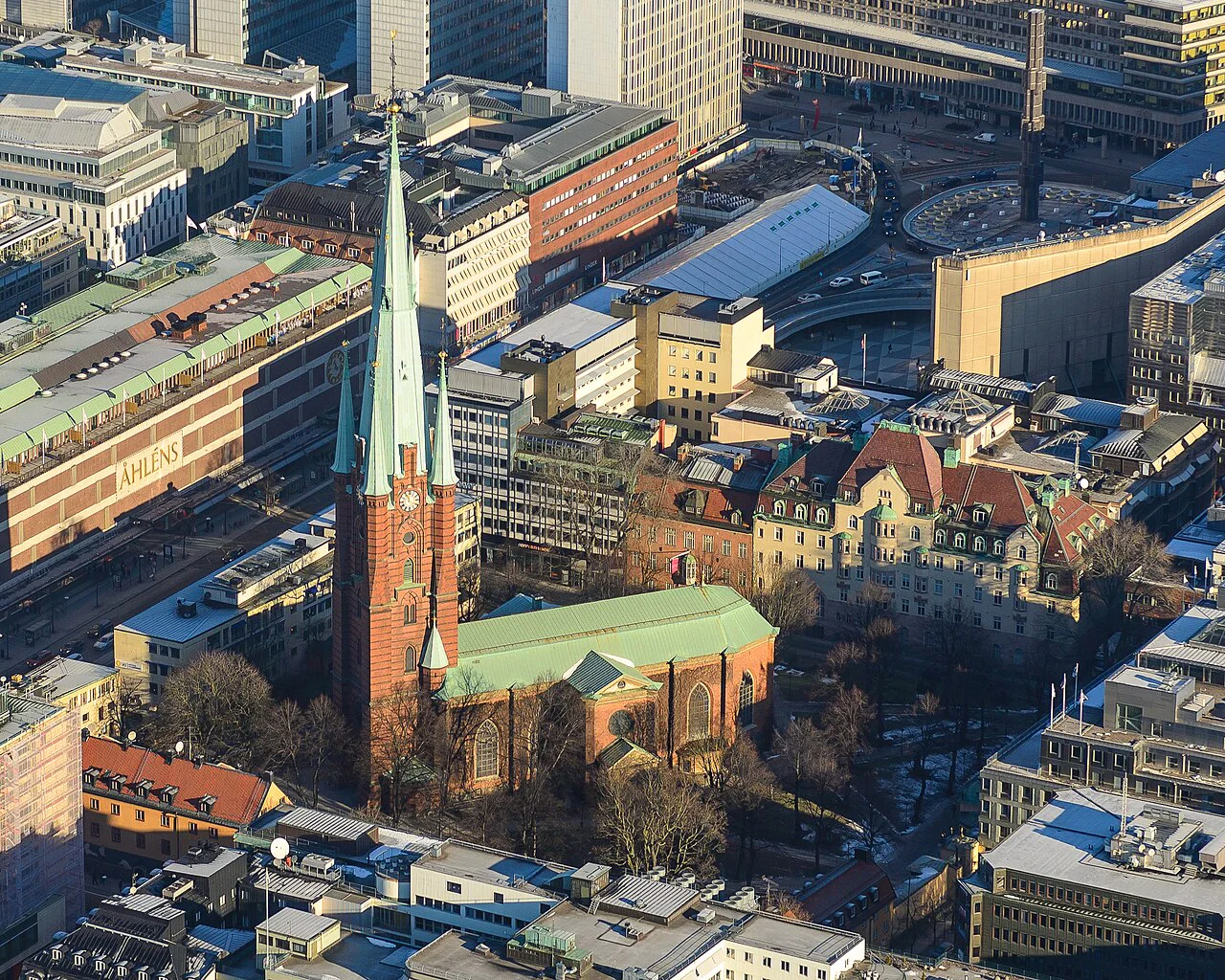
Stockholm · 2 km
Klara Church
Content & sources
Arild Vågen · CC BY-SA 3.0
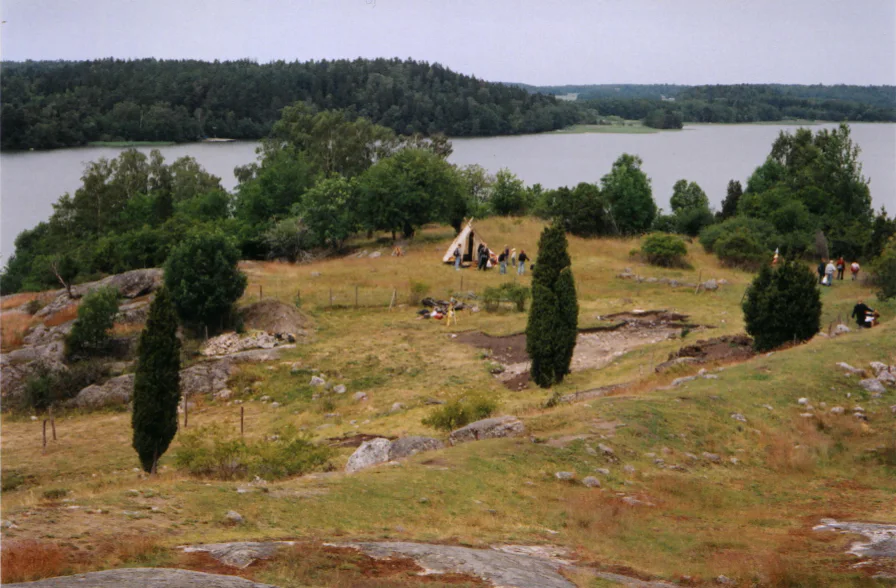
Ekerö kommun · 31 km
Birka
Content & sources
Alex Peterson · CC BY-SA 3.0
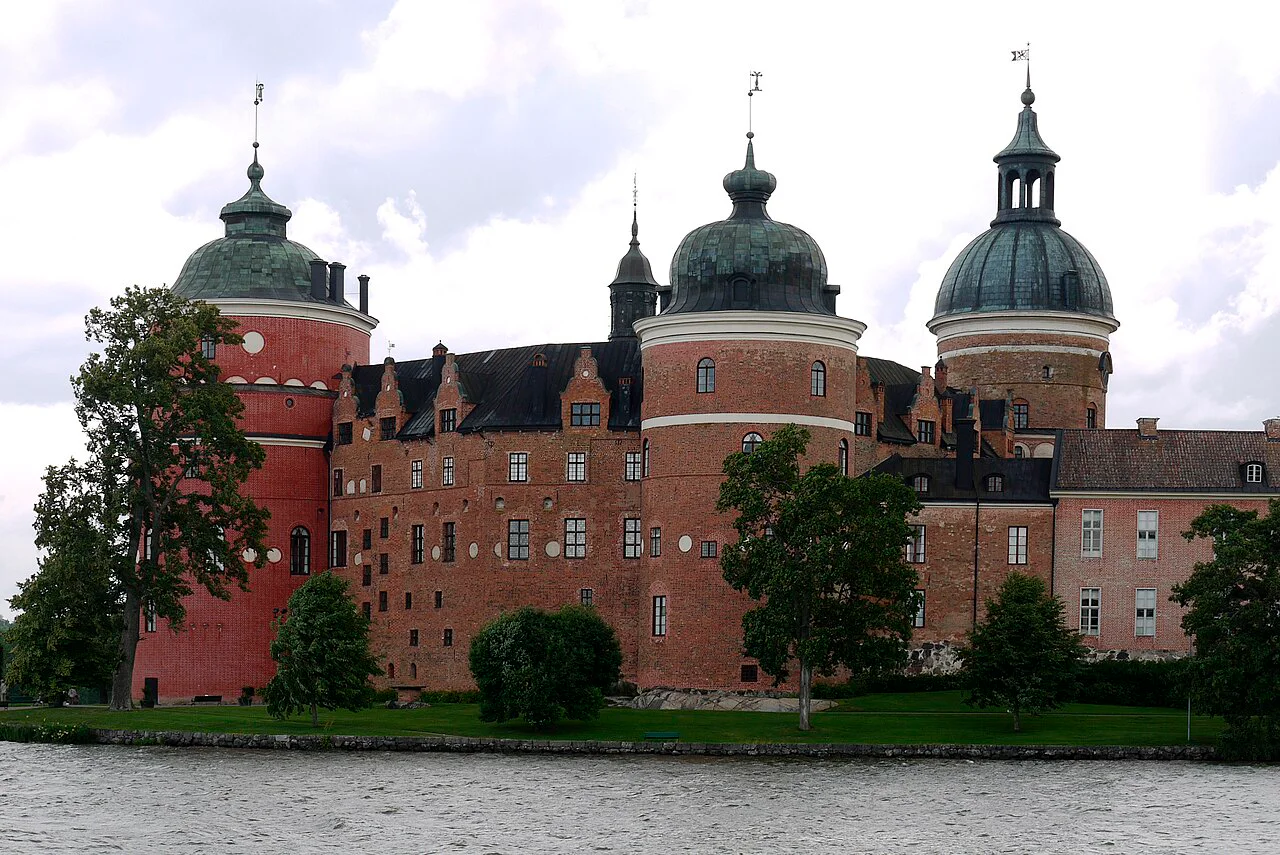
Mariefred · 50 km
Gripsholm Castle
Content & sources
Xauxa Håkan Svensson · CC BY-SA 3.0
Art museums
More art museum audio guides

Oslo · 20 artworks
Munch Museum
Content & sources
Photo: Premeditated · CC BY-SA 4.0
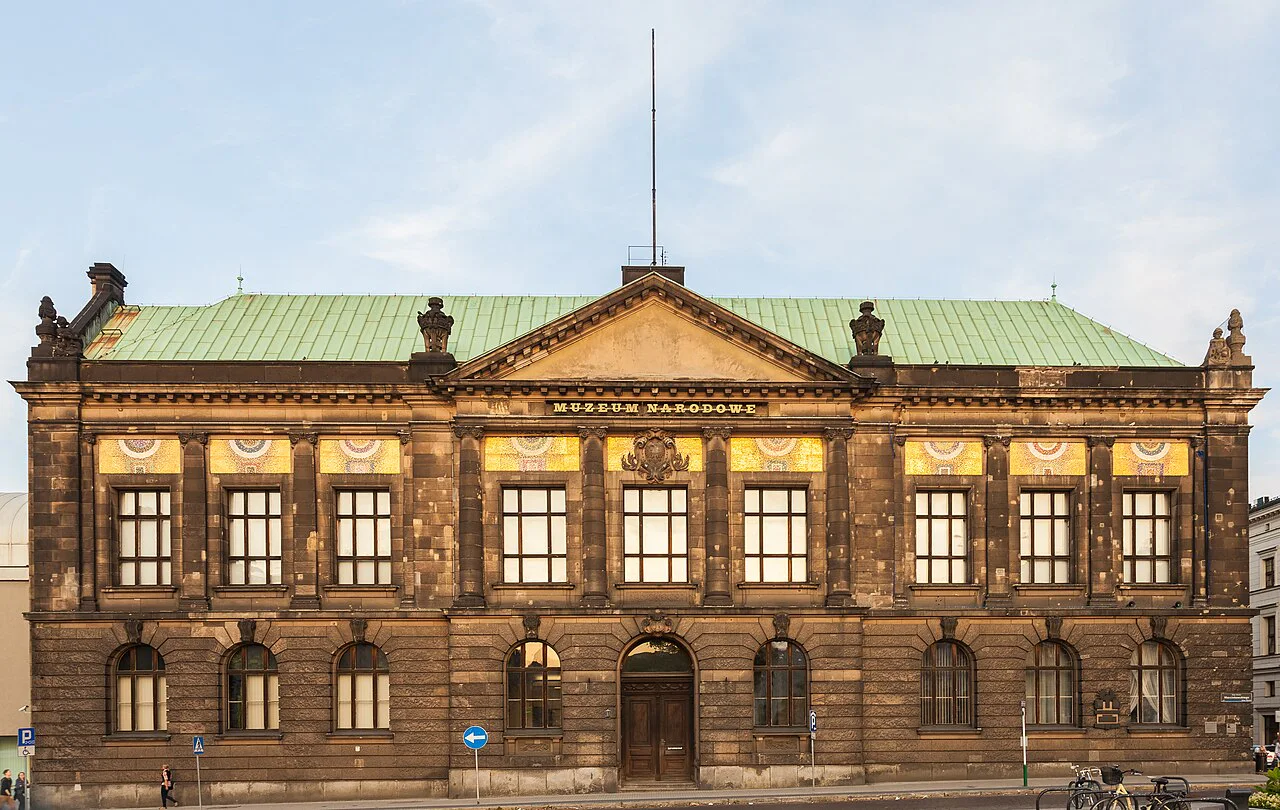
Poznań · 28 artworks
Muzeum Narodowe w Poznaniu
Content & sources
Diego Delso · CC BY-SA 4.0
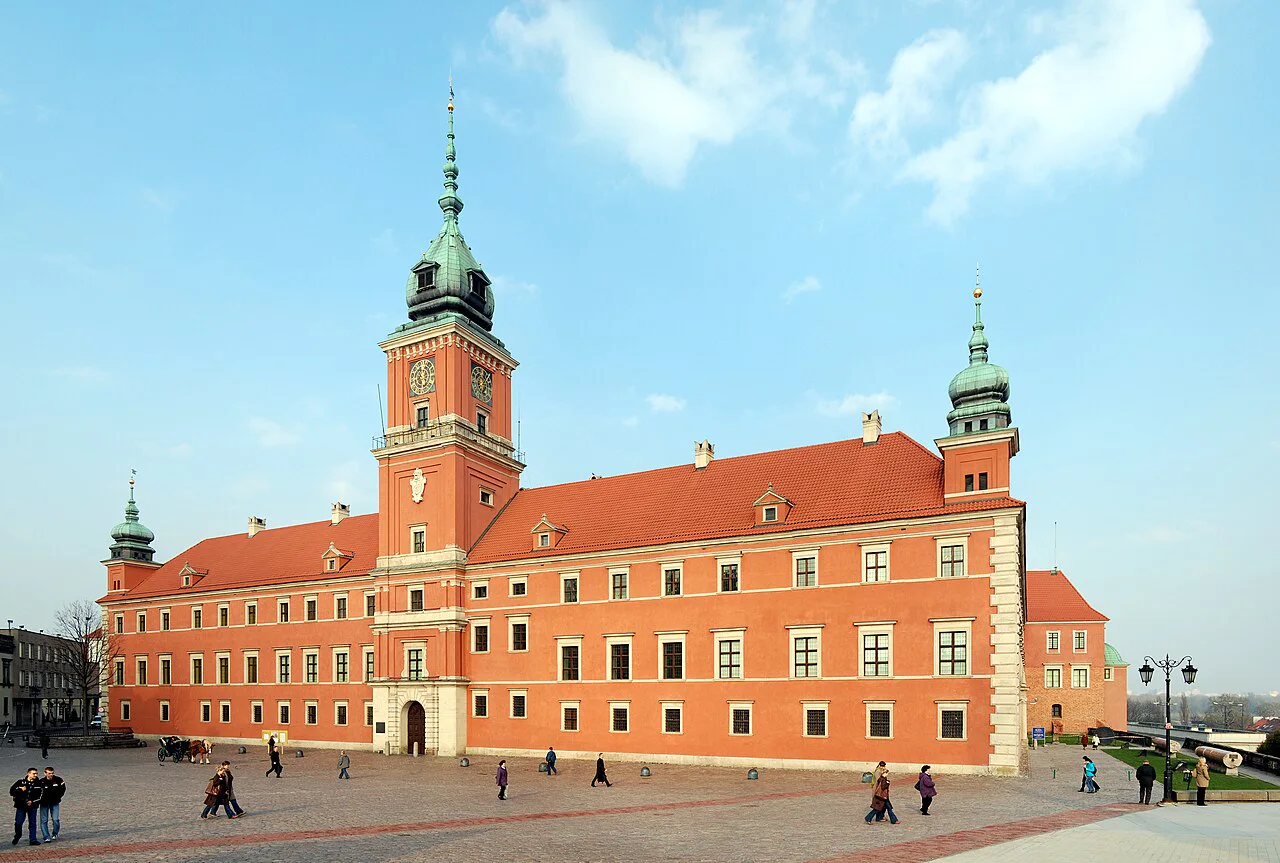
Warsaw · 17 artworks
Zamek Królewski w Warszawie
Content & sources
Marcin Białek · CC BY-SA 3.0
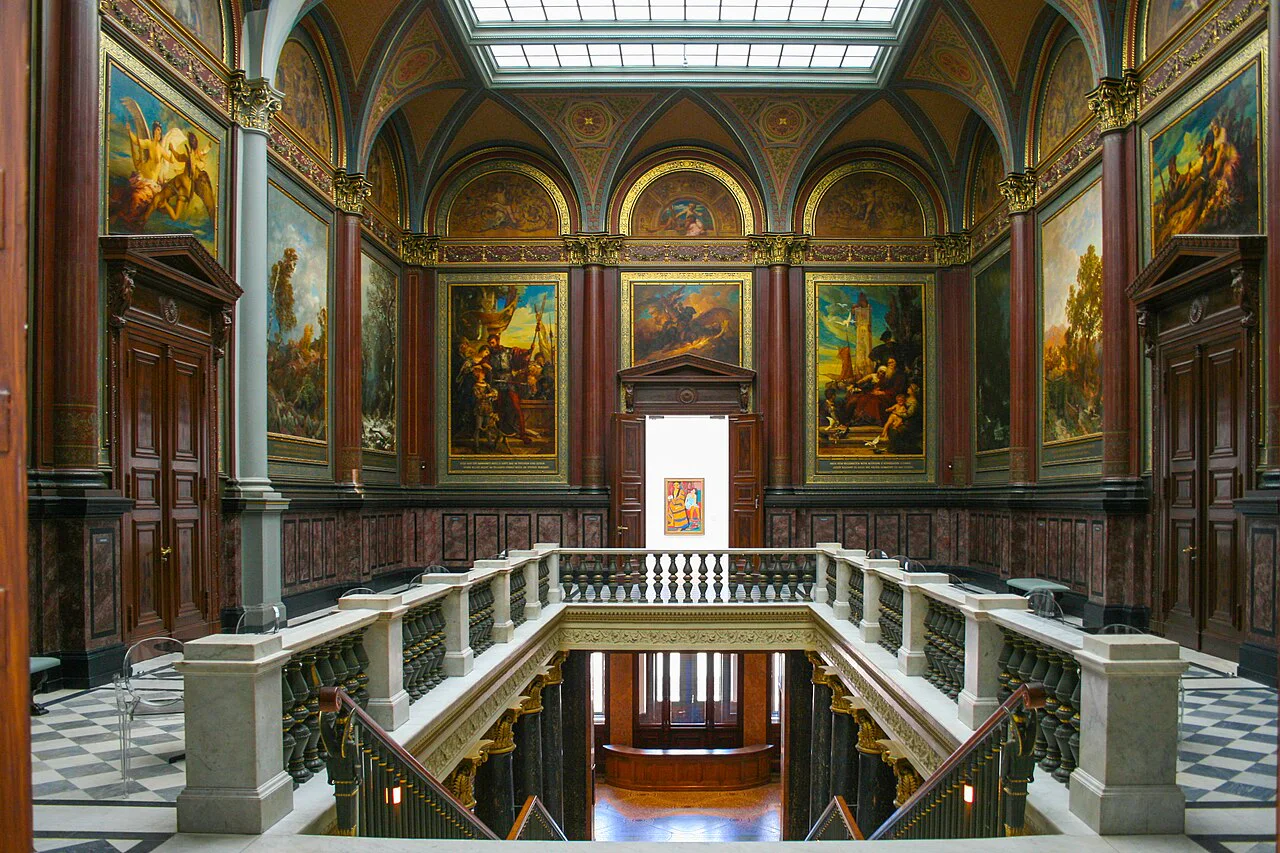
Hamburg · 64 artworks
Hamburger Kunsthalle
Content & sources
Photo: Daniela Kloth · GFDL 1.2
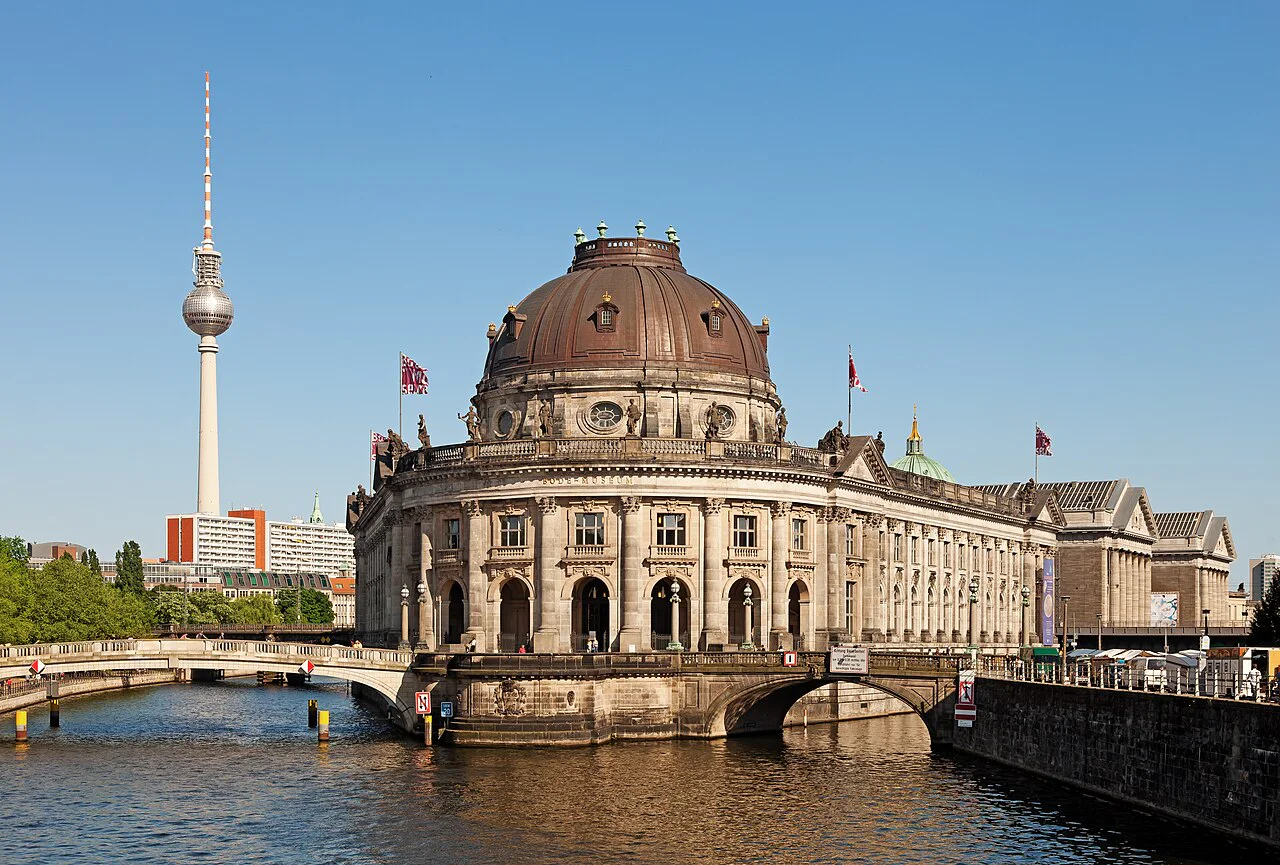
Berlin · 38 artworks
Bode-Museum
Content & sources
Thomas Wolf, www.foto-tw.de · CC BY-SA 3.0
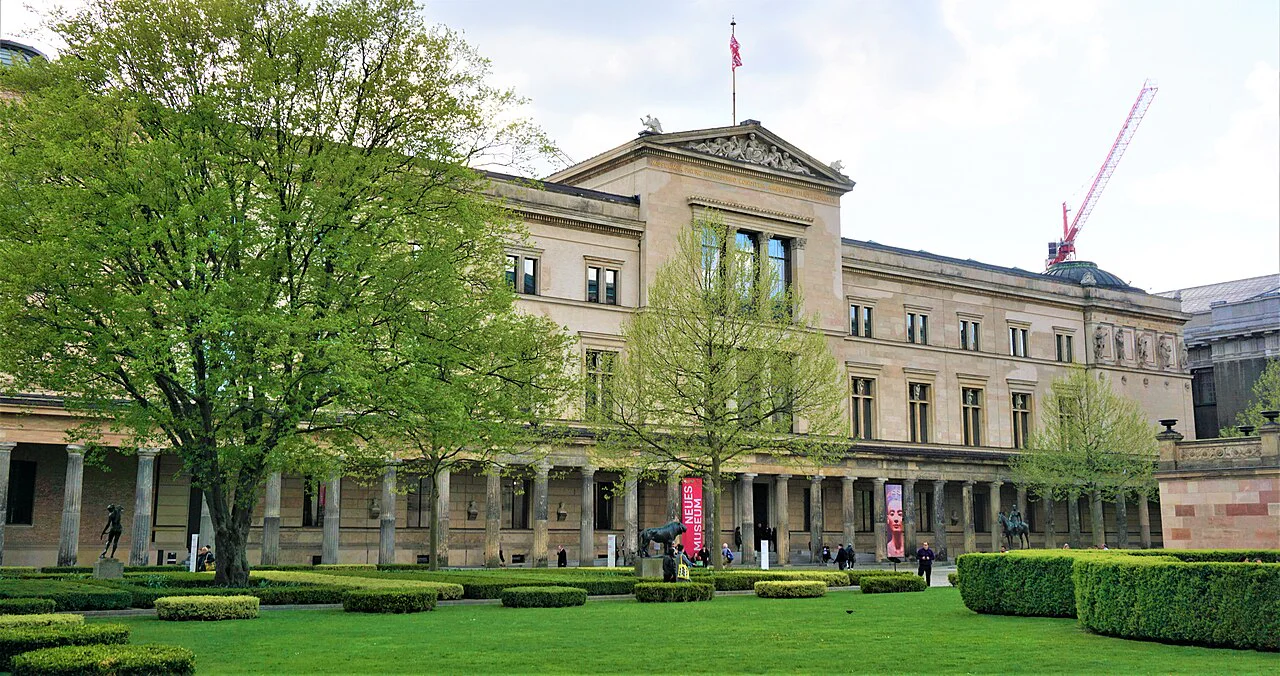
Berlin · 34 artworks
Neues Museum
Content & sources
Photo: Joyofmuseums · CC BY-SA 4.0