Stanza · Audio guide
Zamek Królewski w Warszawie Audio Guide
A place to remember. A story to take with you.
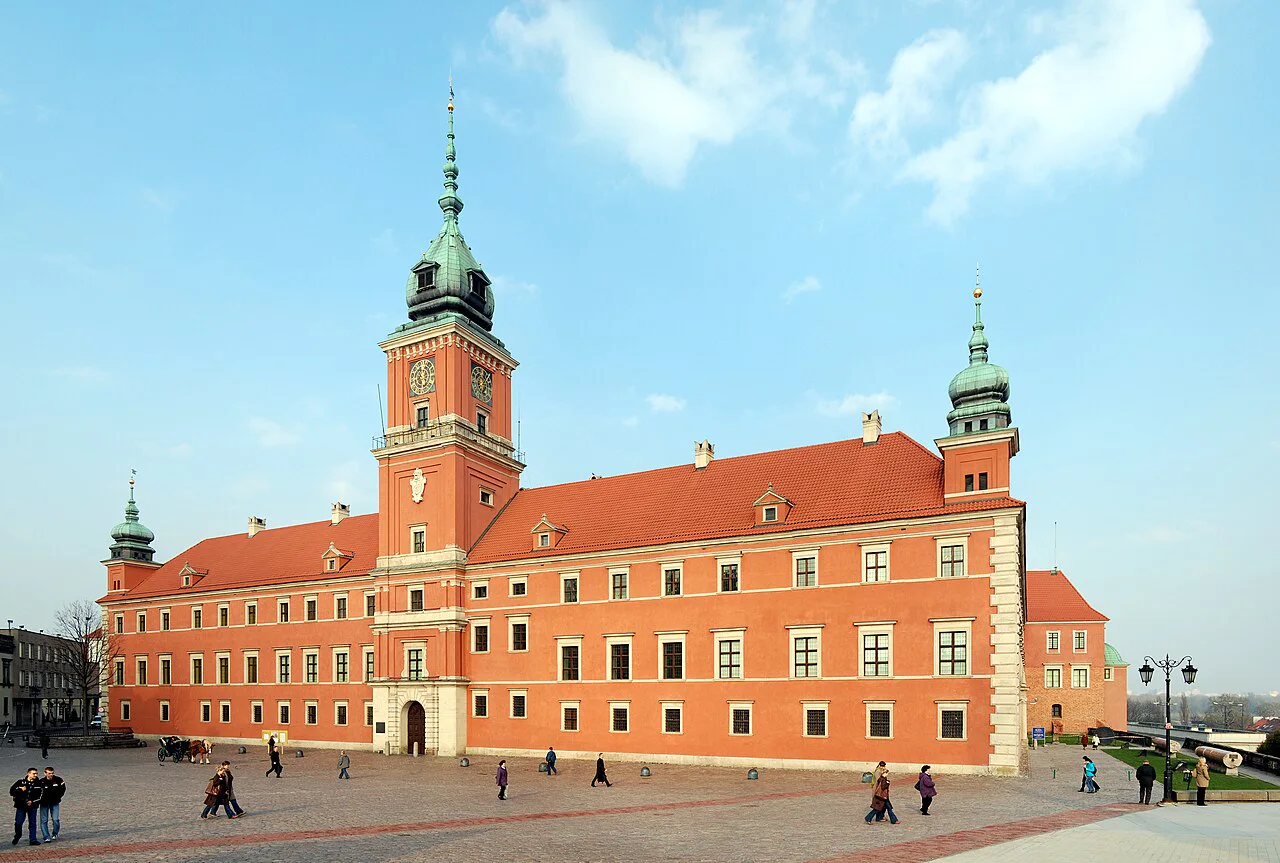
The Royal Castle in Warsaw is a former royal residence and seat of government in Poland. It now houses a state museum with collections of Polish and European art.
Download Stanza, then search for “Zamek Królewski w Warszawie”.
About the tour
One guide. Your kind of visit.
The Royal Castle in Warsaw is a former royal residence and seat of government in Poland. It now houses a state museum with collections of Polish and European art.
The Zamek Królewski w Warszawie guide tells the stories of 17 artworks, including Girl in a Picture Frame (Rembrandt), Scholar at his desk (Rembrandt), Constitution of May 3, 1791 (Jan Matejko), Rejtan (Jan Matejko), Stephen Báthory at Pskov (Jan Matejko), Election of Stanislas Augustus (Bernardo Bellotto), Miodowa Street in Warsaw (Bernardo Bellotto), and Stockholm Roll (Balthasar Gebhardt). Every artwork is free to hear in the Stanza app until 1 January.
Ready when you are.
- 01Get the free Stanza app.
iOS & Android
- 02Find your guide.
“Zamek Królewski w Warszawie”
- 03Download before you go.
Works offline
Audio guide / 17 artworks
Inside the guide
Get to know a few of the stories before you go. Open a stop to read more.
01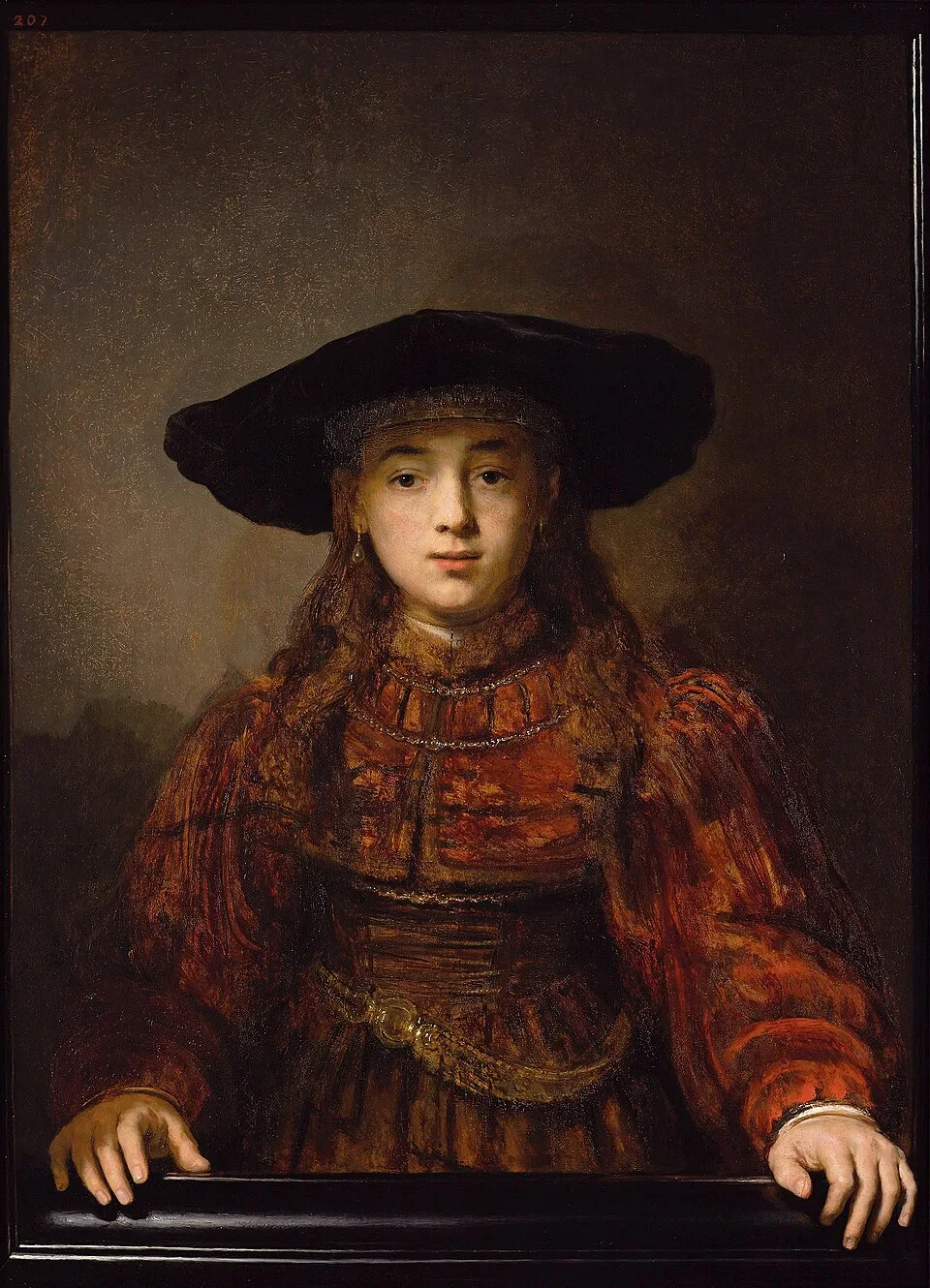
Girl in a Picture Frame
Her right hand hangs just above the bottom edge of the picture. Below it is a frame painted into the painting itself, and only its bottom and right sides are there. Rembrandt painted that false frame so the scene could push out past the real one, toward you. He was drawn to this trick in the late 1630s and early 1640s, breaking a picture's space and finding new ways to show movement. It is one of only a few pictures where he tried it, and perhaps the earliest. The girl is not a portrait of anyone. She is a study of a head and shoulders, with nothing to name her and no action to explain her. Her right arm is drawn back slightly, part of that same sense of movement. The pearl earring at her right ear seems to stir. The fabric of the right sleeve moves with it, as though the motion runs right through her.
Listen in the appRembrandt · Public domain
02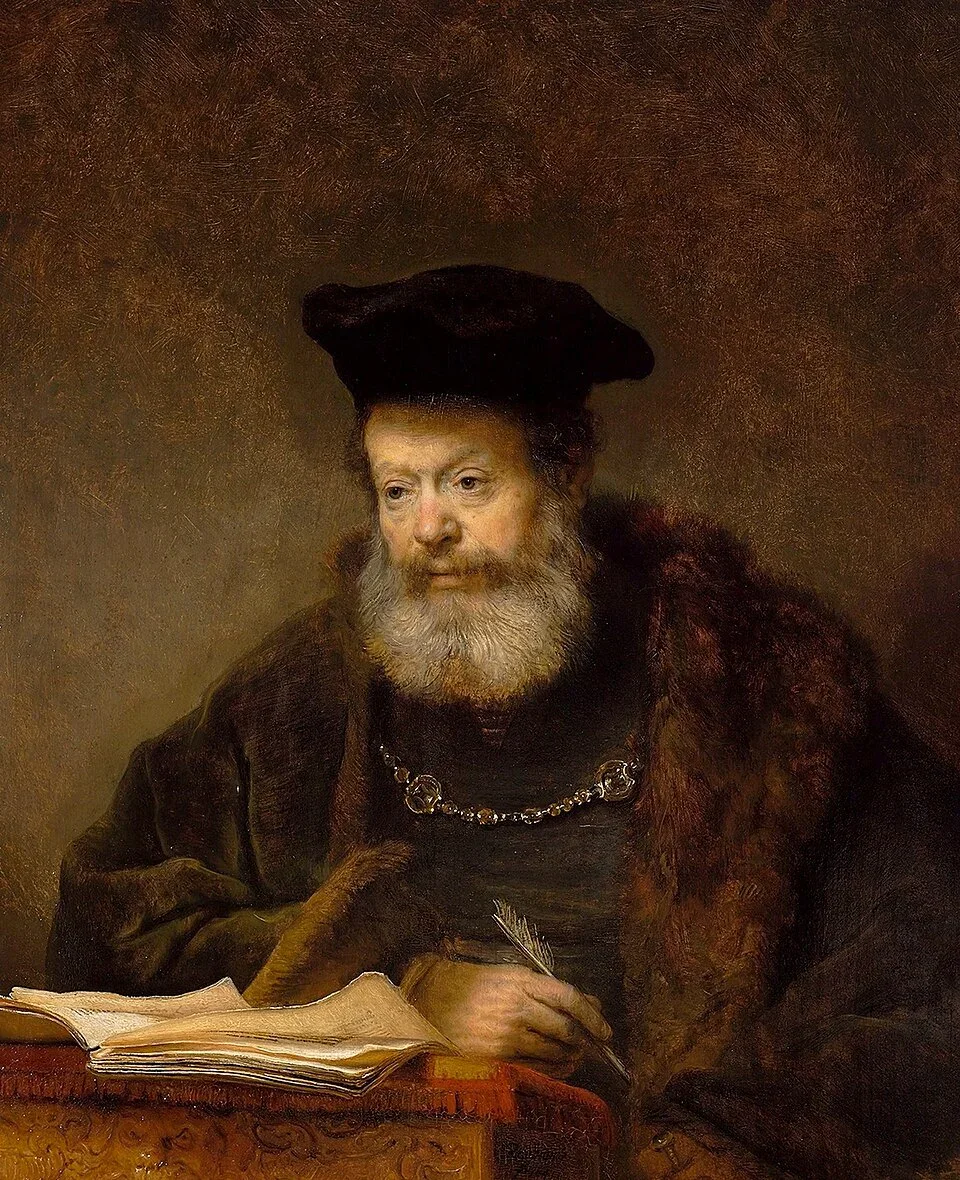
Scholar at his desk
The old man in front of you is writing. A book lies on the wooden lectern, and he holds the pen in his right hand. Light falls on the pages and on his face. A wart on his left cheek and a red nose mark him out as one particular man. And that particular painting very nearly vanished. The Gestapo seized it during the Second World War. It went back to its owners in 1947, was taken to Hohenems Castle, and in 1950 was placed in a Swiss bank vault. After that it was treated as lost, and people knew what it looked like only from old reproductions. Doubts about who had painted it began in 1969. In 1989 it was left out of a record of Rembrandt's paintings, because it could not be reached. Then in 1994 Karolina Lanckorońska gave it to the Royal Castle, where at last it could be examined. In February 2006 it was confirmed that Rembrandt himself had painted it.
Listen in the appRembrandt · Public domain
03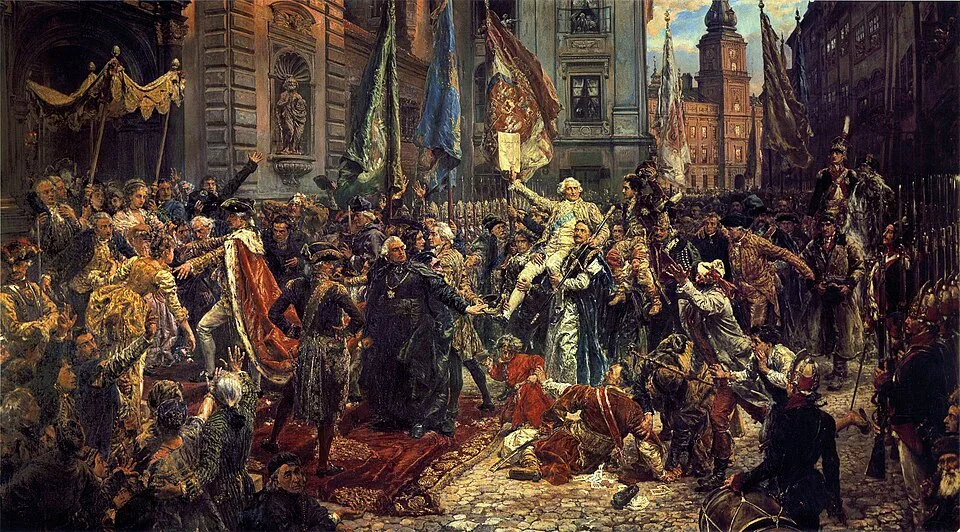
Constitution of May 3, 1791
A man is carried above a crowd, one hand lifting a document high. Soldiers present their weapons, and Warsaw residents surround him. The man is the marshal of parliament, and the document is a constitution adopted that very day. Deputies are on their way to the church. The procession happened. This exact gathering did not. Matejko built the moment because no single real scene could hold what the constitution meant. It was in force just over a year, and then the country was lost. For more than one hundred and twenty-three years it stood for the hope of Poland's independence. He painted this in 1891 for the hundredth anniversary, and said he would have preferred to paint any other century. Under the raised document, Tadeusz Kościuszko wears a bandage on his head. It points to a battle in 1794, three years after the day shown. In the middle, a deputy lunges at his own son with a knife, and another man catches the hand that holds it. Cards spill from his pocket, a sign that he was bribed. That scene happened inside the Royal Castle, not here. At the church door, the mayor of Warsaw bows to the king. He was already dead, painted in for the townspeople, who had just gained new rights. The painter left no key to the figures, so some faces in this crowd are still unidentified.
Listen in the appJan Matejko · Public domain
04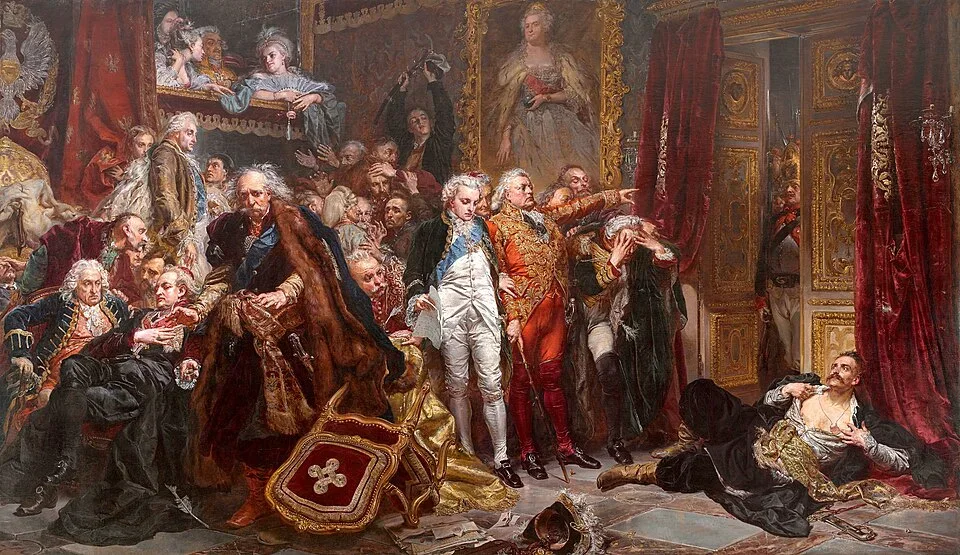
Rejtan
In Paris, some critics mistook it for a gambling hall. Others saw a man stretched out on the floor and decided he was drunk. A talk was going around at the time about Poles and drink, and they read it into the picture. They were wrong. That man is Tadeusz Rejtan. He lies across the doorway, chest bared, blocking the exit with his own body. The story goes he did this in 1773. If the deputies walked out, the debate would end and Poland's land would go to Russia, Prussia and Austria. Rejtan meant to stop them. Jan Matejko painted this nearly a hundred years later, and he filled the room with accusations. Coins spill from a purse toward the marshal, Adam Poniński, who points at the door, a hint at why he wants the debate closed. In his hand is a plain wooden stick, not a marshal's staff, because Rejtan stole the real one the day before. In the open doorway behind Rejtan stands a Russian soldier, though the troops guarding the Sejm that day were Prussian. One of the men in the room was already dead when the Sejm met. Still he is there, put in on purpose to stand for the great families, defeated and caring only for themselves. The whole scene was meant to stand for all three partitions of Poland.
Listen in the appJan Matejko · Public domain
05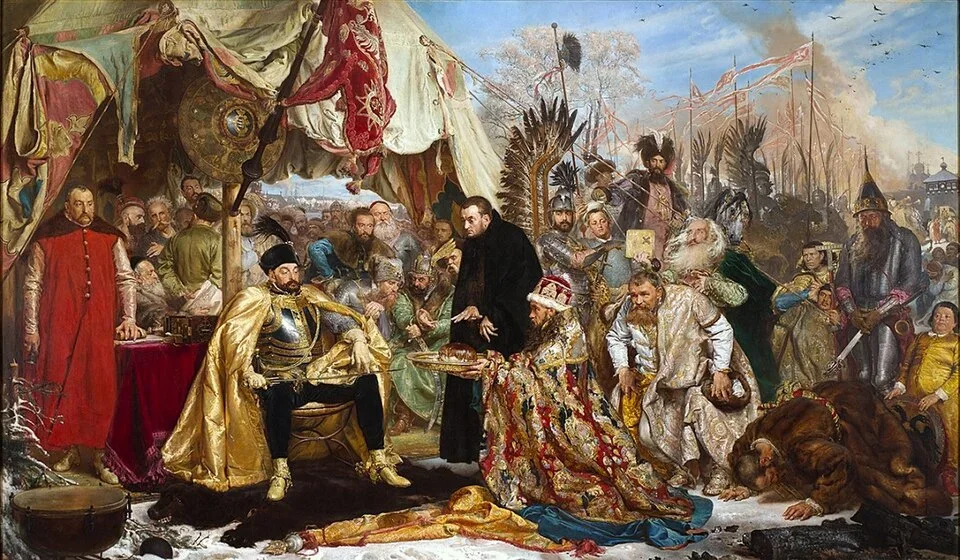
Stephen Báthory at Pskov
No one ever saw this meeting. It never took place. The real talks were not held under Pskov's walls, and Báthory did not conduct them in person. Yet here are the Russian envoys, kneeling before the king and asking for peace. Báthory sits outside his tent with a bare saber across his knees. The fingers of his left hand rest on the blade, a sign of what would follow if the truce broke. His feet are on a bearskin, perhaps the bear of the north, meaning Russia. A Russian banner lies beside it, a symbol of the defeated enemy. At the centre stands Antonio Possevino, the papal legate in a black Jesuit robe, shown as the peacemaker. In the real negotiations he pressed Báthory's case and shouted at the Russian envoys, even seizing one by the collar. Matejko wanted one picture to carry the meaning of that victory. He joined the embassy received after Velikie Luki fell in 1580 to the truce signed at Yam Zapolsky in 1582.
Listen in the appJan Matejko · Public domain
06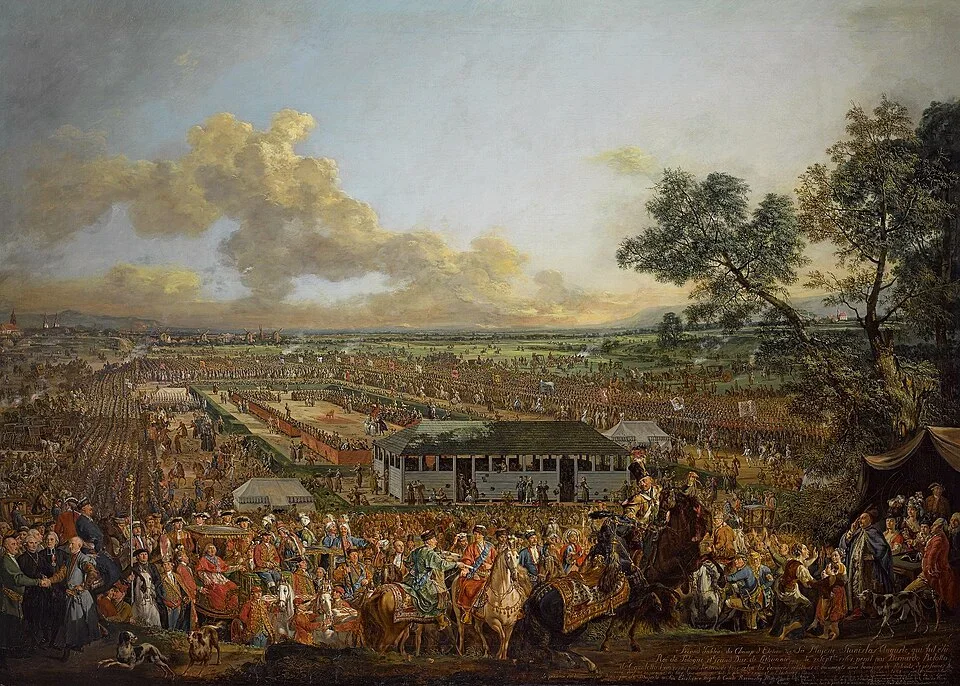
Election of Stanislas Augustus
On a hill at the left, nobles shake hands, and clergy are there too. It is a small thing, easy to walk past in a crowd this size. But it was set there on purpose. King Stanisław August gave instructions about what to include, because he wanted the picture to show that everyone agreed. This is the last free royal election in the history of the Polish-Lithuanian Commonwealth, held in September 1764 in the election field at Wola. The king cared so much about how it looked that he turned down the first version, painted in 1776. Bernardo Bellotto painted a second in 1778, exactly as the king directed. This is that second version. At the centre, the voivode of Płock hands his province's voting protocol to the marshal of the election sejm. The primate was ill at the time, so the marshal received the last votes in his place. That was meant to show the election was legal. The serious faces of the men handing it over show the importance of the event and the majesty of the Commonwealth. Behind them, hats rise into the air, thrown up with joy by the nobles.
Listen in the appBernardo Bellotto · Public domain
07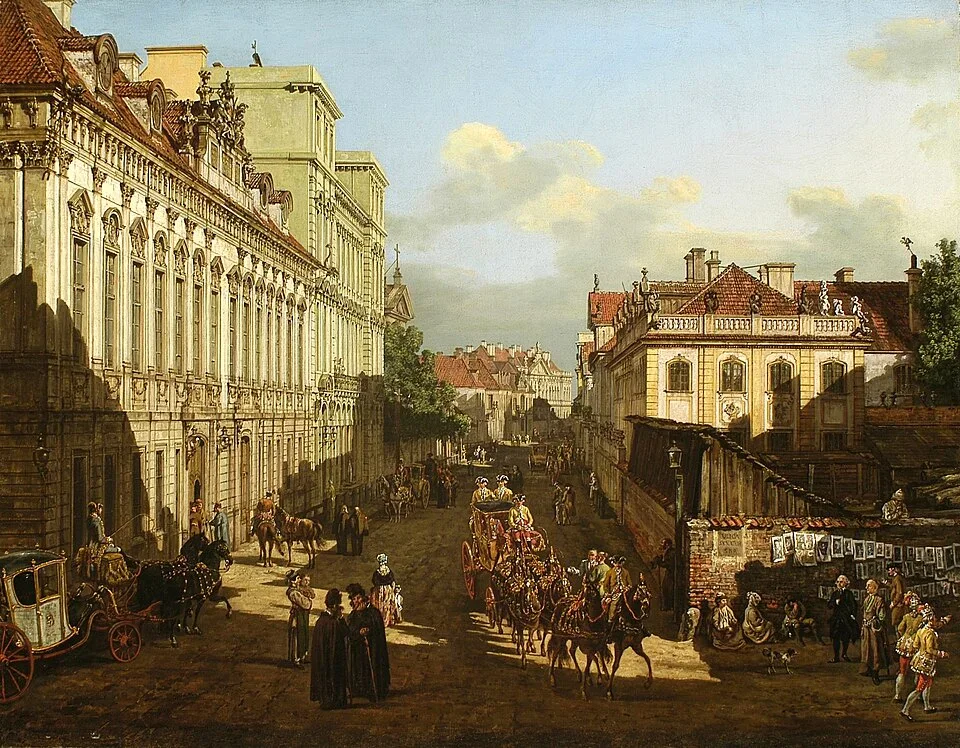
Miodowa Street in Warsaw
A carriage is driving down the middle of Miodowa Street. People have stopped in groups to talk, and along the right side stand the gawkers, the print sellers and the beggars. The street is full of the people of Warsaw. Bellotto painted this while he was court painter to King Stanisław August Poniatowski. It was one of twenty-two views of the city he made, a record of the capital as it stood. On the left stands the palace of the bishops of Krakow, with the Tepper Palace just behind it. On the right is the Branicki Palace, and further off, the Krasiński Palace. That record outlived the buildings. After the Second World War, the bishops' palace and the Branicki Palace were rebuilt, and this painting supplied the evidence. The Tepper Palace did not come back.
Listen in the appBernardo Bellotto · Public domain
08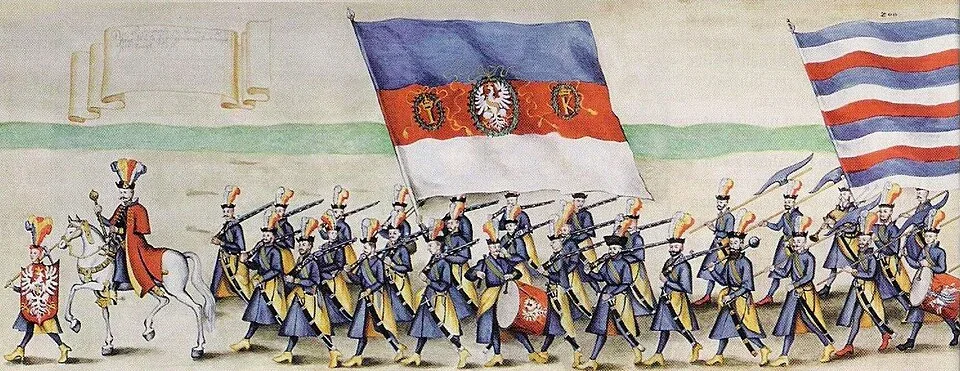
Stockholm Roll
Where are all these people going? The answer stretches along this long roll of paper. Several hundred figures make up the procession. Among them are the newlyweds, King Sigismund the Third and Constance, entering Krakow on the fourth of December, 1605, for their wedding. The court, the nobles and the army are here too, with some rather rare pictures of hussars. In the crowd is a Russian embassy, five riders and two on foot. They came for the betrothal of False Dmitry the First and Marina Mniszek. No one knows for certain who painted this. Some name the court painter Balthasar Gebhard. Whoever it was, the work follows the notes of the master of ceremonies, which set the exact order of the march. The roll belonged to the royal collection until 1655, when Swedish troops took Warsaw and carried it off as a trophy. For centuries it lay forgotten in the royal armory in Stockholm. In April 1974, Sweden's prime minister Olof Palme gave it back to the rebuilt Royal Castle in Warsaw. It is one of the few Polish works the Swedes took that ever came home.
Listen in the appBalthasar Gebhardt · Public domain
09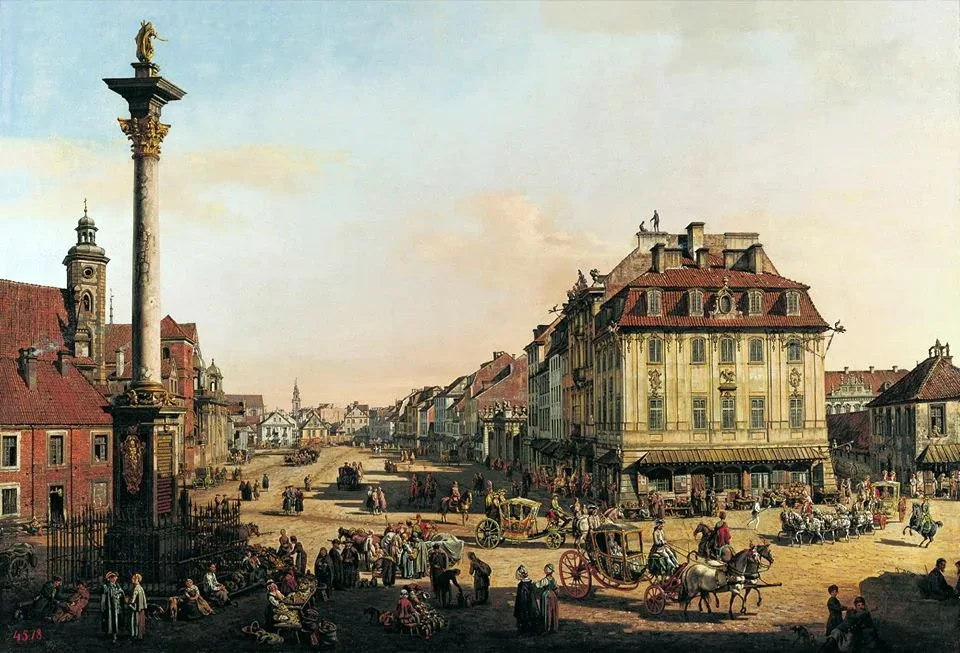
Cracow Suburb as seen from the Cracow Gate
Bernardo Bellotto wanted this street recorded down to the last detail. To draw it he used a camera obscura, a device that throws a scene onto a surface so you can trace it. That is why part of Castle Square is here with such precision, down to Sigismund's Column. The Church of Saint Clare appears too, though it no longer stands. Everyday life is here as well, carriages, traders and chimney sweeps, recorded almost like a photograph. Between 1767 and 1780 he painted twenty-six views of Warsaw like this one, meant for the Senatorial Antechamber of the Royal Castle. He had found work at the court of King Stanisław August Poniatowski. This was among the first, painted between 1767 and 1768, and it entered the king's own collection. Then the view was carried away. After the November Uprising it went to Russia with the castle's furnishings. In Saint Petersburg, after 1832, a red inventory number was painted on it, low down on the left. After the Treaty of Riga in 1921 all the Warsaw views came back, though not to the Castle. They survived the war. When Warsaw was rebuilt after the war, the precision of these views, this one among them, was used to bring the city back.
Listen in the appBernardo Bellotto · Public domain
10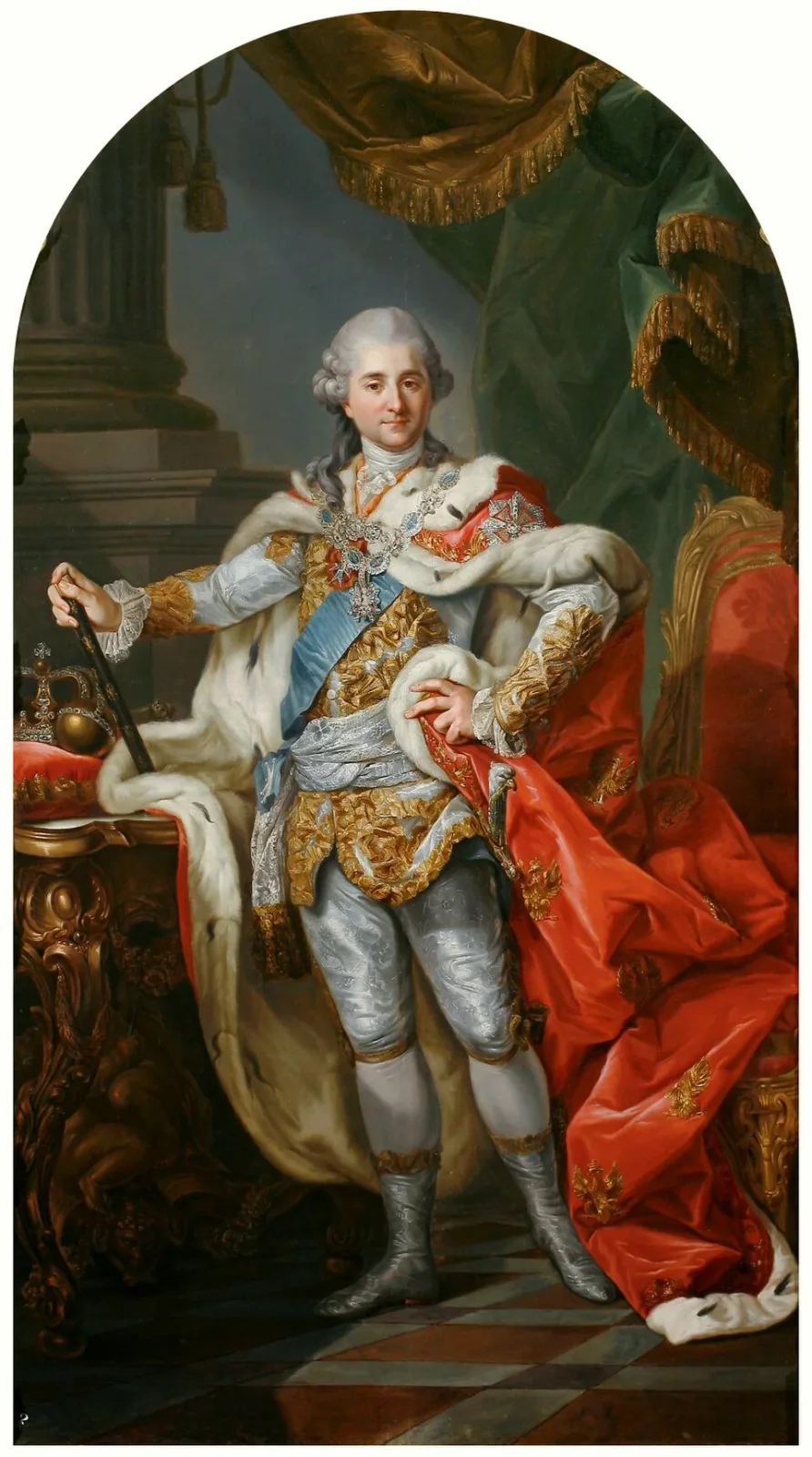
Portrait of Stanislaus Augustus in coronation robes
He wears a purple coronation mantle lined with ermine. At his left side is a ceremonial sword, and the chain of the Order of the White Eagle is at his neck. This is Stanislaus Augustus, king of Poland and Grand Duke of Lithuania, shown from head to foot, one hand at his left hip. Marcello Bacciarelli, an Italian painter who worked in Poland, painted this between 1768 and 1771. Stanislaus Augustus was the last king of Poland. And the crown and the royal orb are not on him. They lie on a table on the left, set down beside him rather than worn or held. The figure comes out light, refined and graceful, just as the fashion of the time wanted.
Listen in the appMarcello Bacciarelli · Public domain
- 11
The Constitution of May 3. Four-Year Sejm. Educational Commission. Partition. A.D. 1795.
Jan Matejko · 1888
- 12
View of Warsaw from Praga
Bernardo Bellotto · 1770
- 13
Ceremonial Sword of the Order of White Eagle of Stanisław August Poniatowski
Unknown Artist · 1764
- 14
St. George and the Dragon
Melchiorre Gherardini · 1635–1649
- 15
Hercules
Unknown Artist · 1650
- 16
Photo-clock-2022-04-wladyslaw-meller
Unknown Artist · 1974
- 17
Royal Scepter of Stanisław August Poniatowski
Unknown Artist · 1800
Zamek Królewski w Warszawie
Frequently asked questions
How much does the guide cost?
Free app download. Free until 1 January. Listed guide price: $0.99. Audio guide only. Venue admission is separate.
Can I listen without internet?
Yes. Download the guide’s audio, images, and maps in the app before your visit. Your downloaded content is then available offline.
Can I listen in my language?
In English for now. More languages soon.
Do I need to follow a schedule?
No. This is a self-guided experience. Choose your stops, pause whenever you like, and return to a story at your own pace.
Which artworks are in the Zamek Królewski w Warszawie audio guide?
17 artworks, including Girl in a Picture Frame (Rembrandt), Scholar at his desk (Rembrandt), Constitution of May 3, 1791 (Jan Matejko), Rejtan (Jan Matejko), Stephen Báthory at Pskov (Jan Matejko), Election of Stanislas Augustus (Bernardo Bellotto), Miodowa Street in Warsaw (Bernardo Bellotto), and Stockholm Roll (Balthasar Gebhardt). The full list is on this page.
Is this the museum’s official audio guide?
No. Stanza is an independent audio guide app and is not affiliated with Zamek Królewski w Warszawie. Museum admission is separate.
At your own pace
Explore Zamek Królewski w Warszawie.
Download Stanza, then search for “Zamek Królewski w Warszawie”.
Free app download · Guide price shown in the app
Keep exploring
Audio guides — Poland
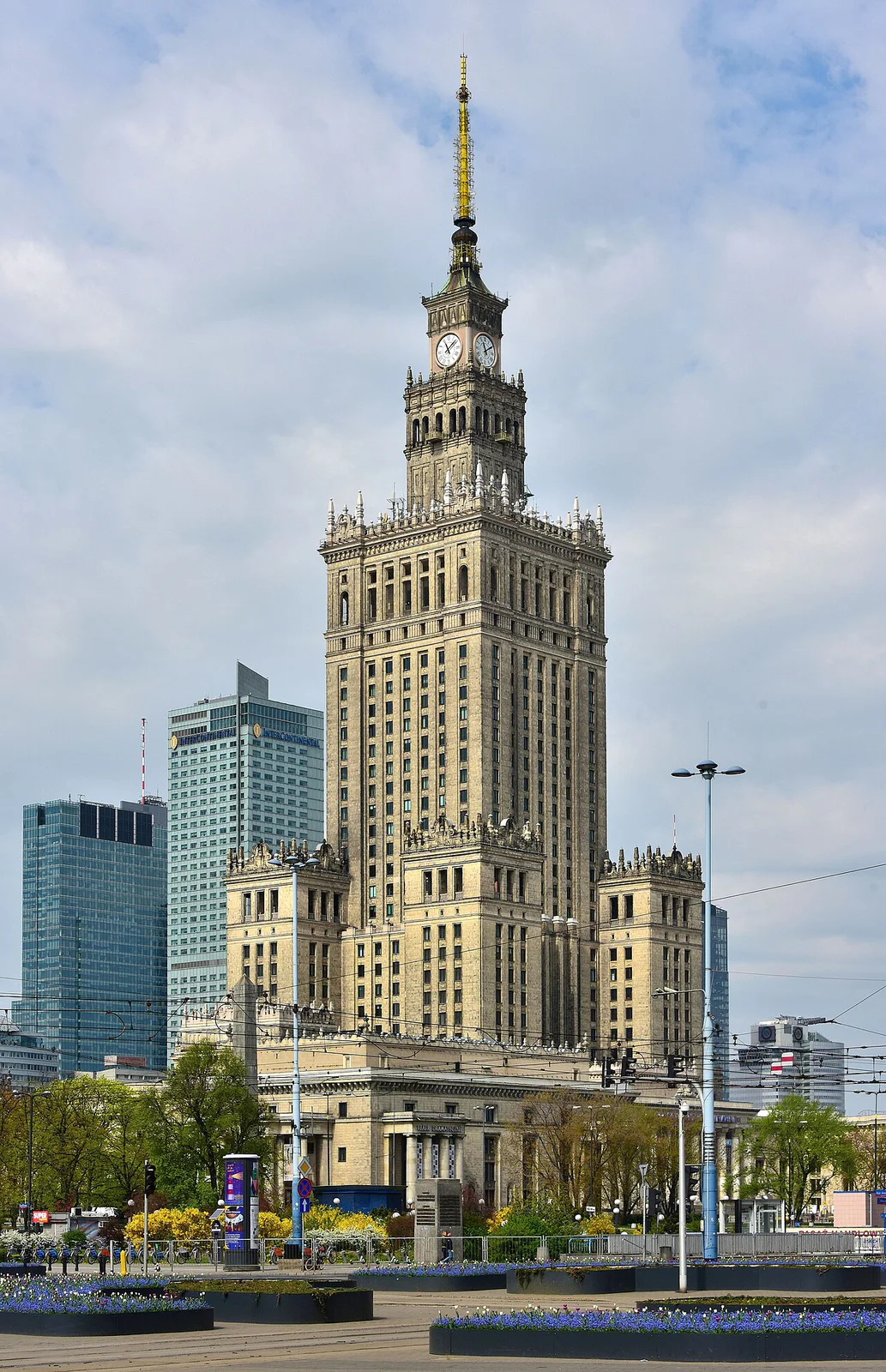
Warsaw · 2 km
Pałac Kultury i Nauki
Content & sources
Adrian Grycuk · CC BY-SA 3.0 pl
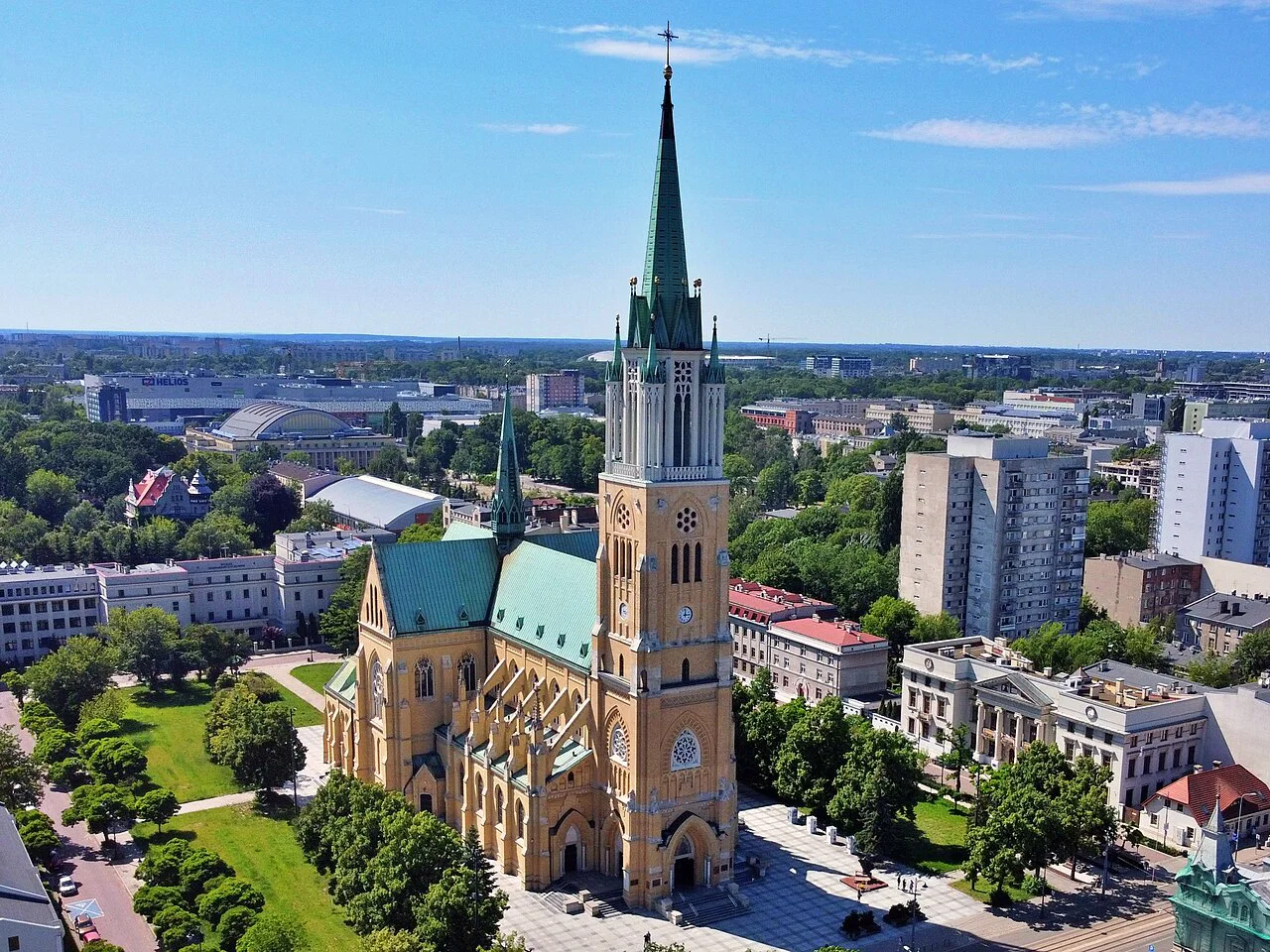
Łódź · 120 km
Bazylika Archikatedralna św. Stanisława Kostki w Łodzi
Content & sources
Photo: Kapitel · CC BY-SA 4.0
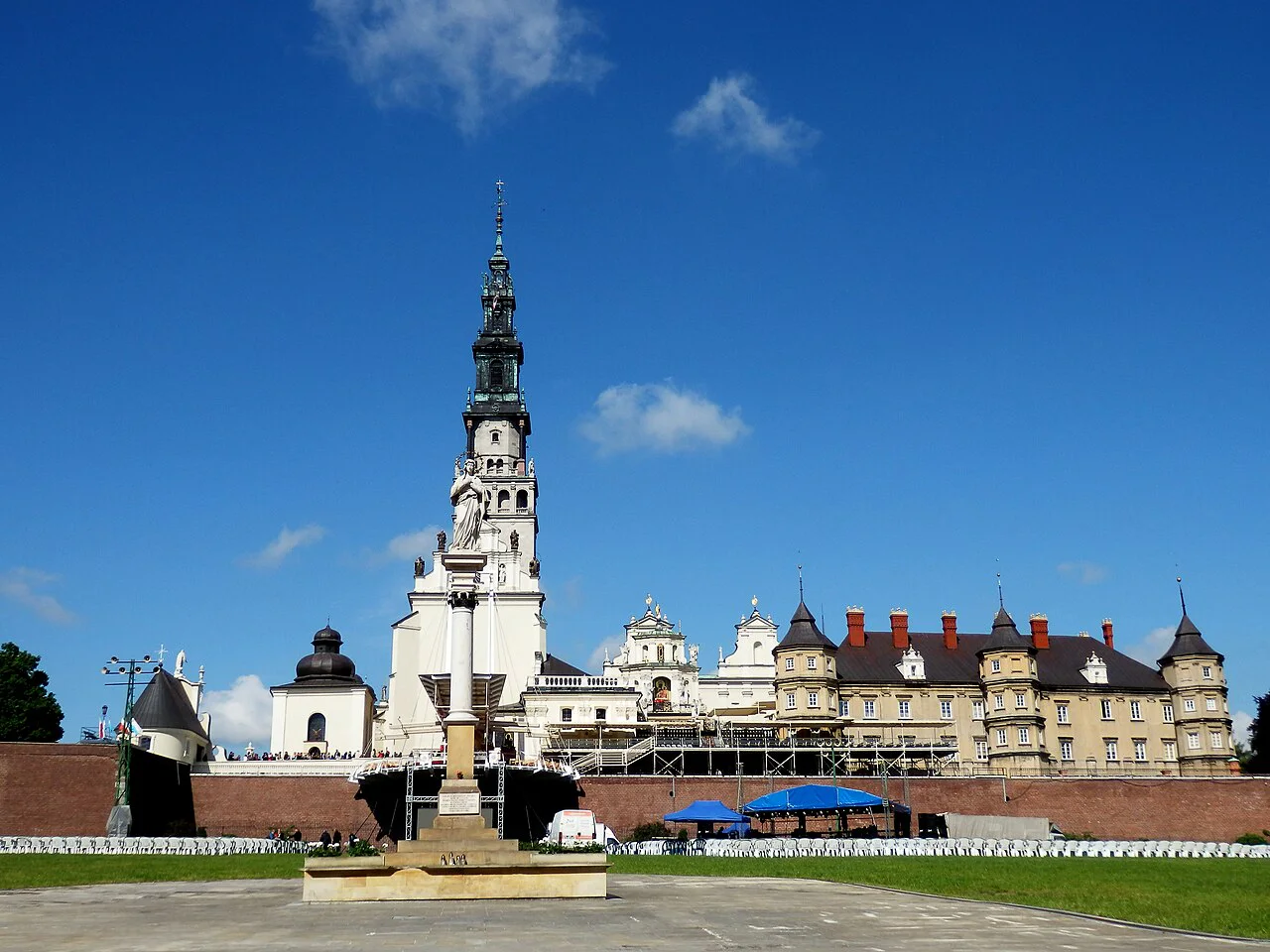
Częstochowa
Jasna Góra
Content & sources
Photo: Ebielmaj · CC BY-SA 3.0 pl
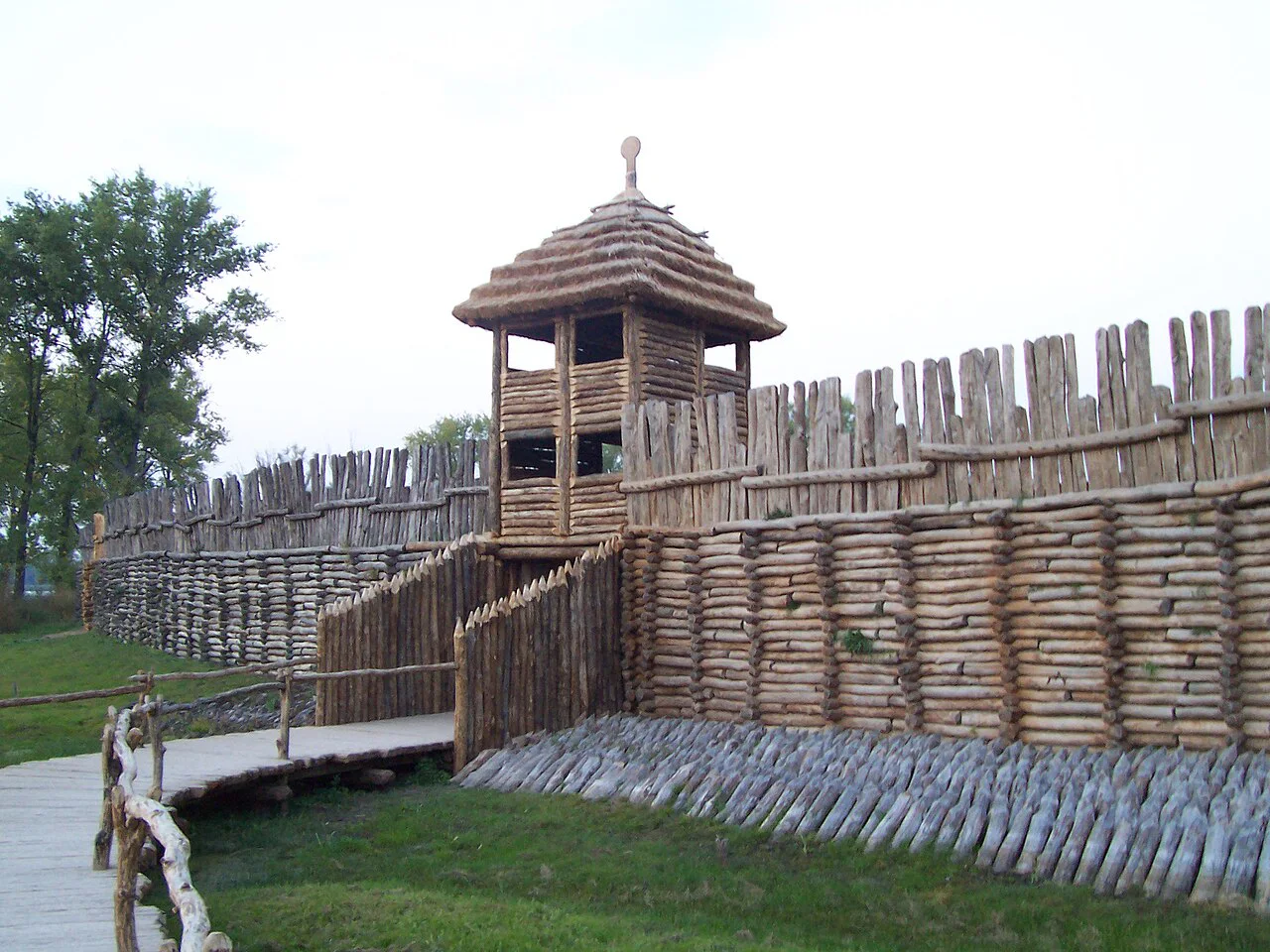
Biskupin
Biskupin
Content & sources
User:Fazer · CC BY-SA 2.5
Art museums
More art museum audio guides
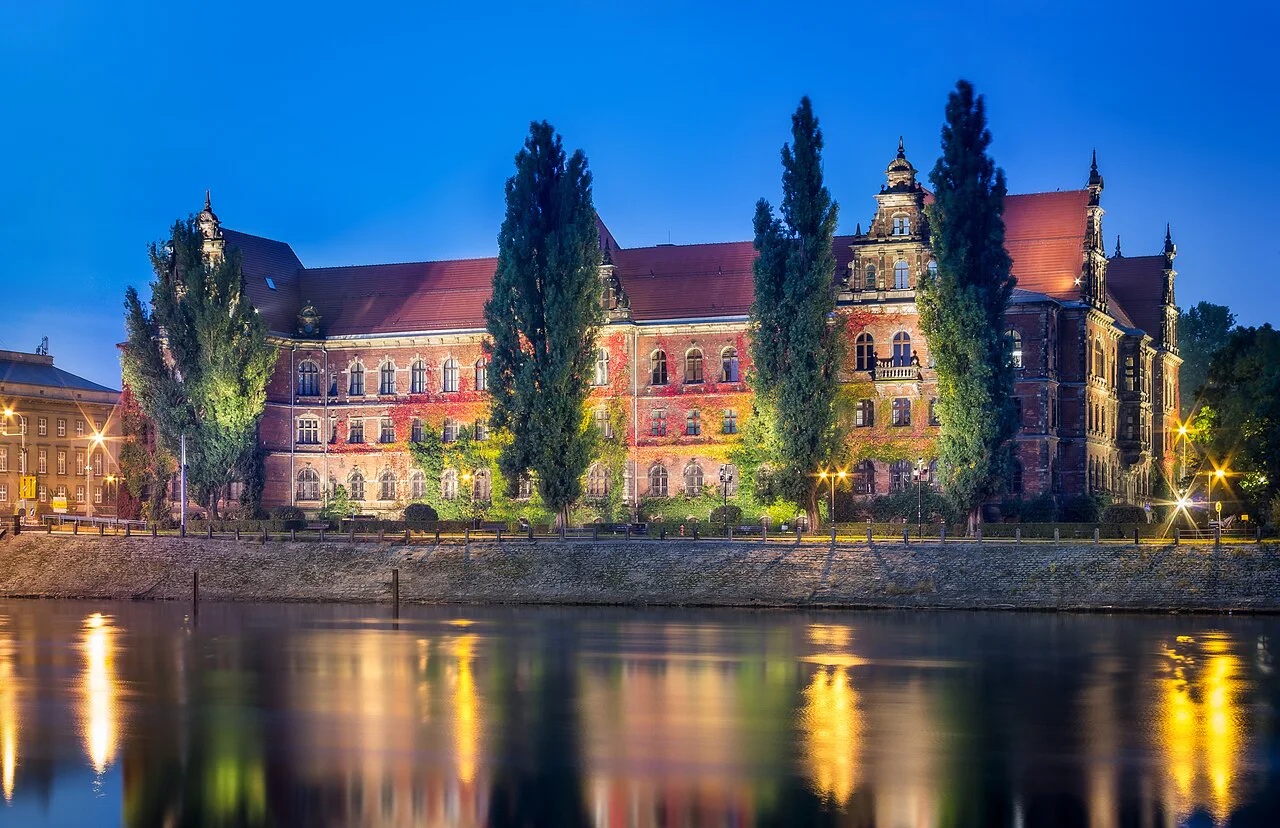
Wrocław · 44 artworks
Muzeum Narodowe we Wrocławiu
Content & sources
Photo: Jar.ciurus · CC BY-SA 3.0 pl
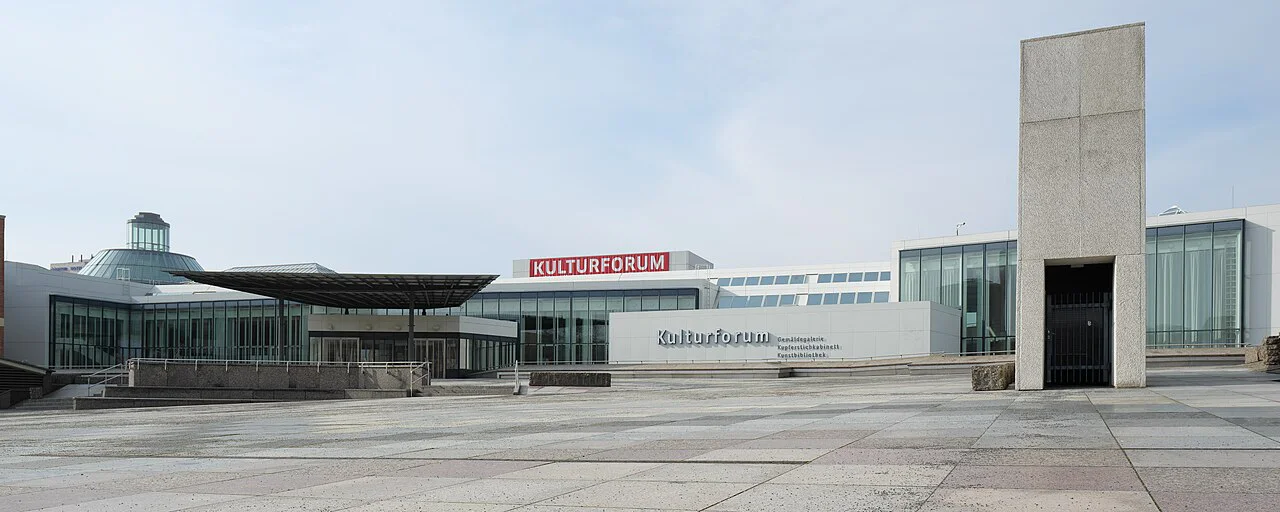
Berlin · 218 artworks
Gemäldegalerie, Berlin
Content & sources
Photo: Membeth · CC0
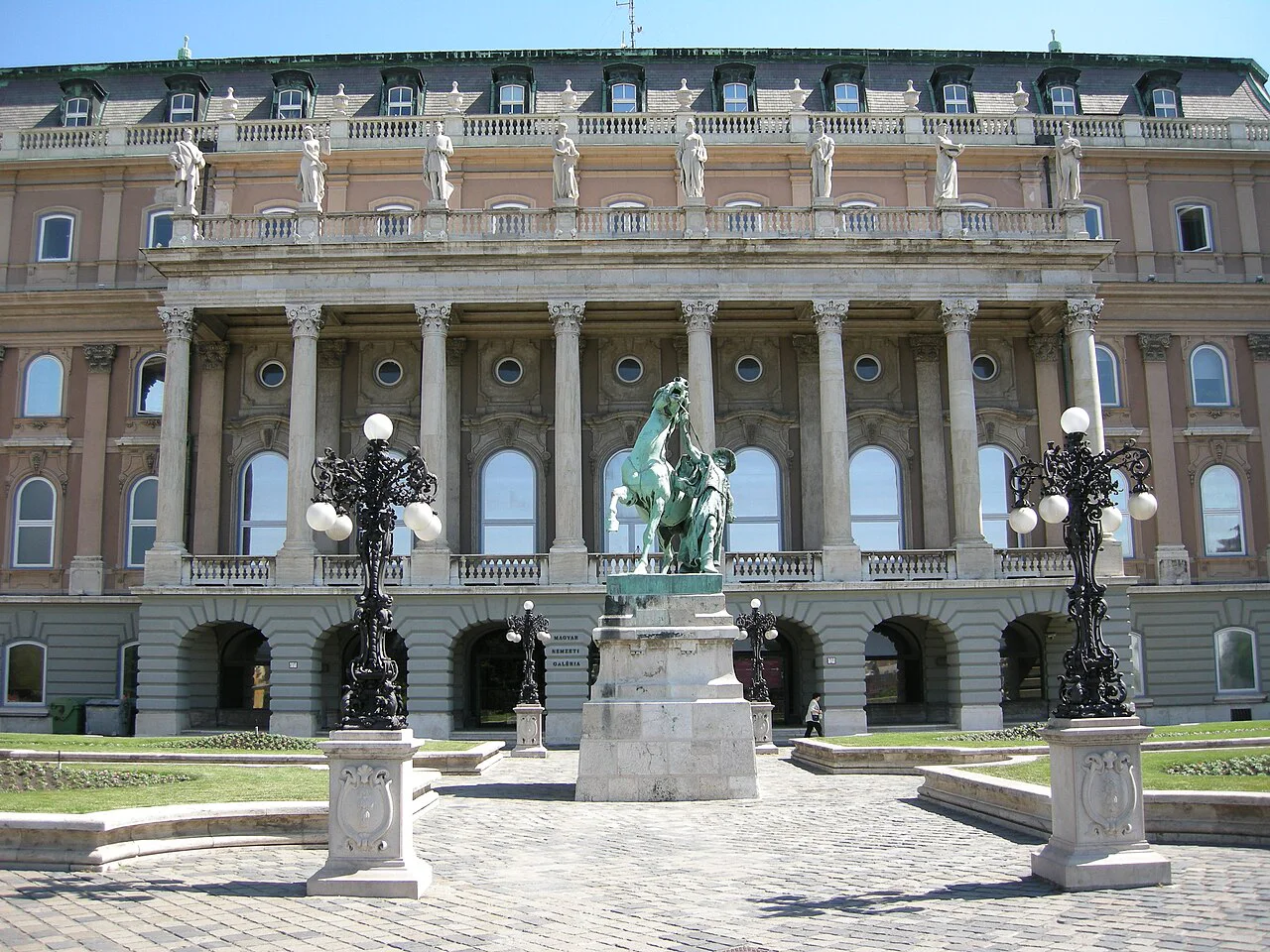
Budapest · 29 artworks
Hungarian National Gallery
Content & sources
Yoav Dothan · Public domain
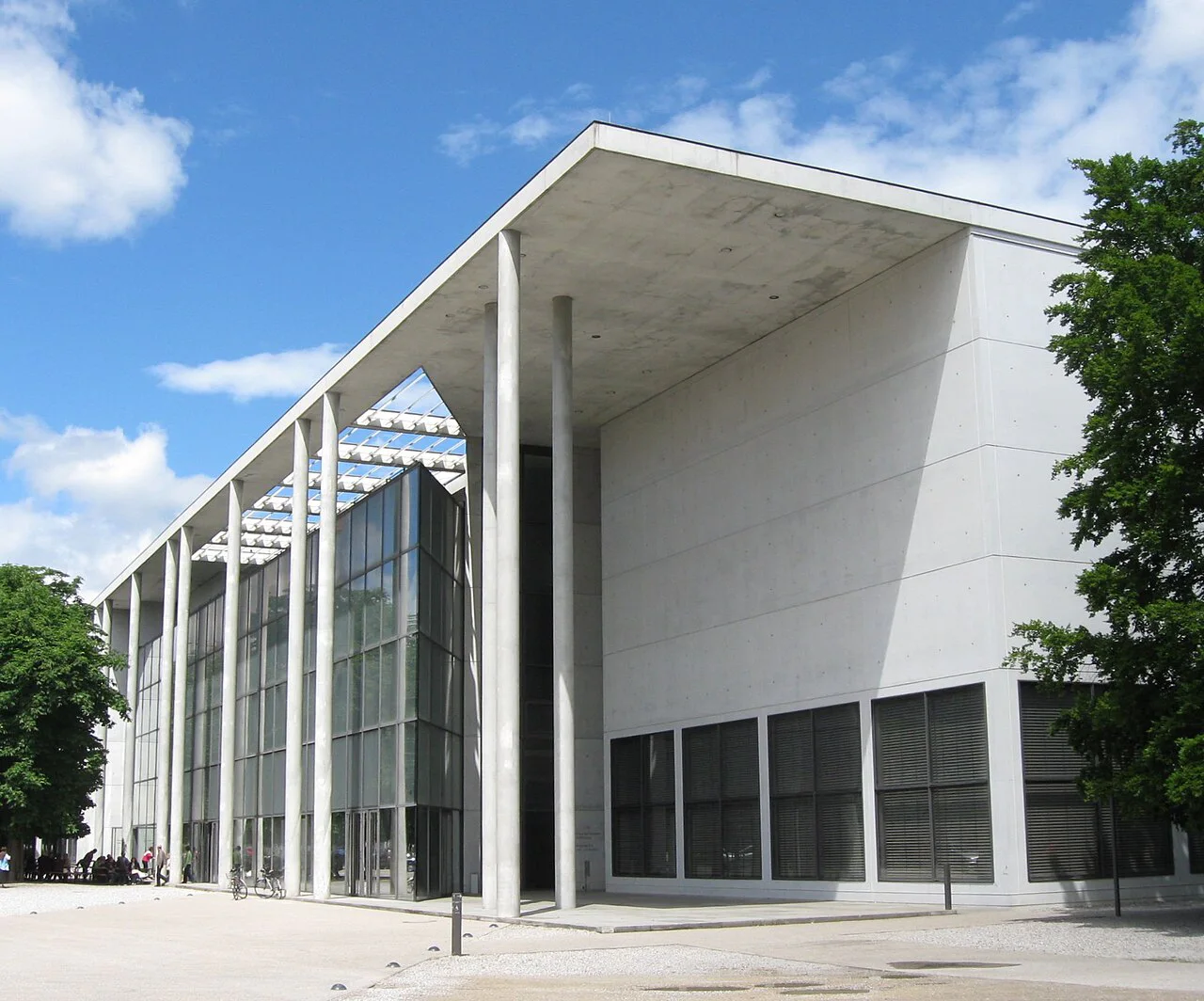
Munich · 6 artworks
Pinakothek der Moderne
Content & sources
Photo: Rufus46 · CC BY-SA 3.0
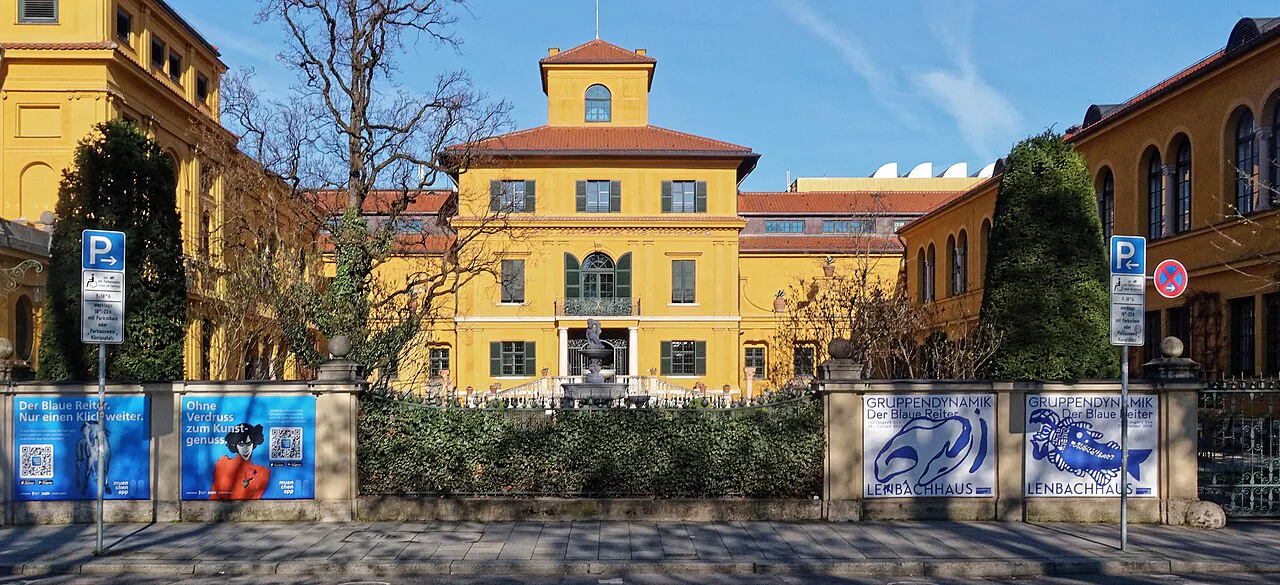
Munich · 33 artworks
Städtische Galerie im Lenbachhaus
Content & sources
Burkhard Mücke · CC BY-SA 4.0
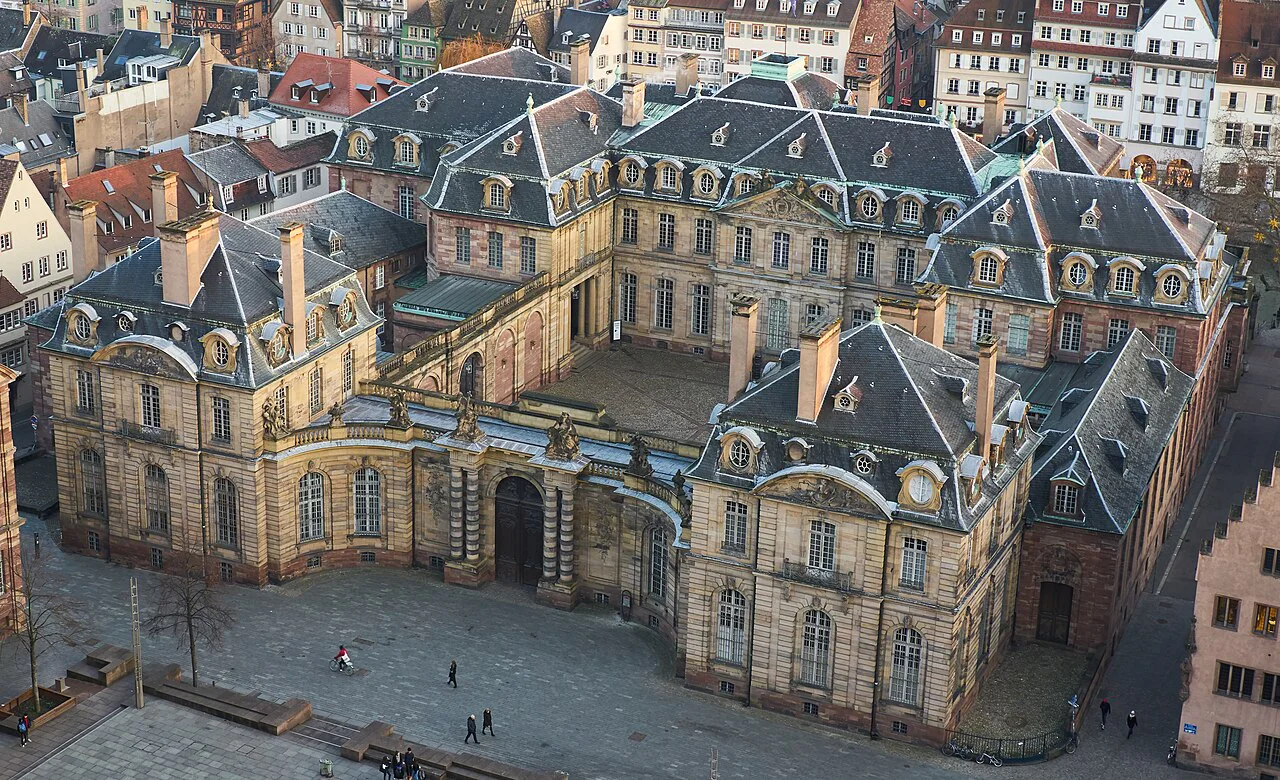
Strasbourg · 92 artworks
Musée des Beaux-Arts de Strasbourg
Content & sources
Radek Kucharski · CC BY 2.0