Stanza · Audio guide
Valle dei TempliAudio guide
A place to remember. A story to take with you.
An archaeological site in Sicily, Italy, renowned for its seven magnificent ancient Greek temples. It is a UNESCO World Heritage Site, showcasing exceptional examples of Doric architecture.
Download Stanza, then search for “Valle dei Templi”.
About the tour
One guide. Your kind of visit.
An archaeological site in Sicily, Italy, renowned for its seven magnificent ancient Greek temples. It is a UNESCO World Heritage Site, showcasing exceptional examples of Doric architecture.
Ready when you are.
- 01Get the free Stanza app.
iOS & Android
- 02Find your guide.
“Valle dei Templi”
- 03Download before you go.
Works offline
Audio guide / 22 narrated stops
Inside the guide
Get to know a few of the stories before you go. Open a stop to read more.
01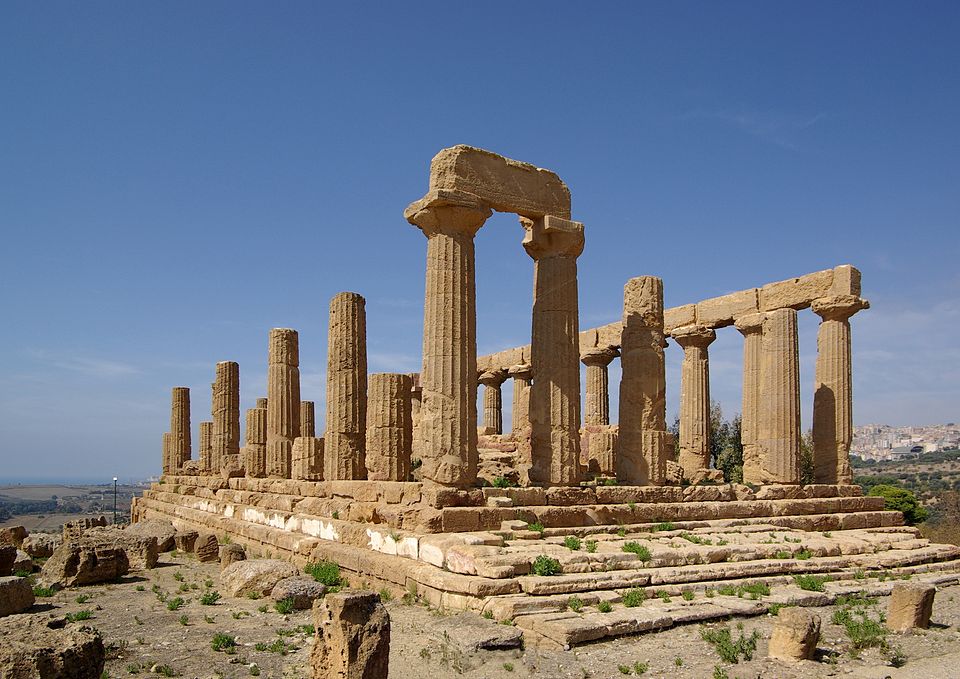 Temple of JunoTemple of Juno
Welcome to one of the most extraordinary archaeological sites in the world. Standing here at the highest point of the southern ridge, you are looking at the Temple of Juno, also known as the Temple of Hera Lacinia. Built in the mid-5th century BC, this structure is a classic example of the Doric style, which is characterized by its sturdy, fluted columns and simple, unadorned capitals. Originally, this temple featured 34 columns that enclosed the inner sanctuary, or cella, where a statue of the goddess would have stood. From this vantage point, take a moment to look out toward the Mediterranean Sea. The panoramic view of the ridge and the water below sets the scene for the ancient city of Akragas. Founded in 582 BC by colonists from nearby Gela and the island of Rhodes, the city grew to become one of the wealthiest and most powerful in the ancient Greek world. This temple was strategically placed here not just for religious devotion, but as a statement of power, visible to any ship approaching the coast. While time and seismic activity have taken their toll, many of the columns remain standing, holding the weight of centuries and offering a quiet, majestic introduction to your journey through this ancient landscape.
Berthold Werner · CC BY-SA 3.0
02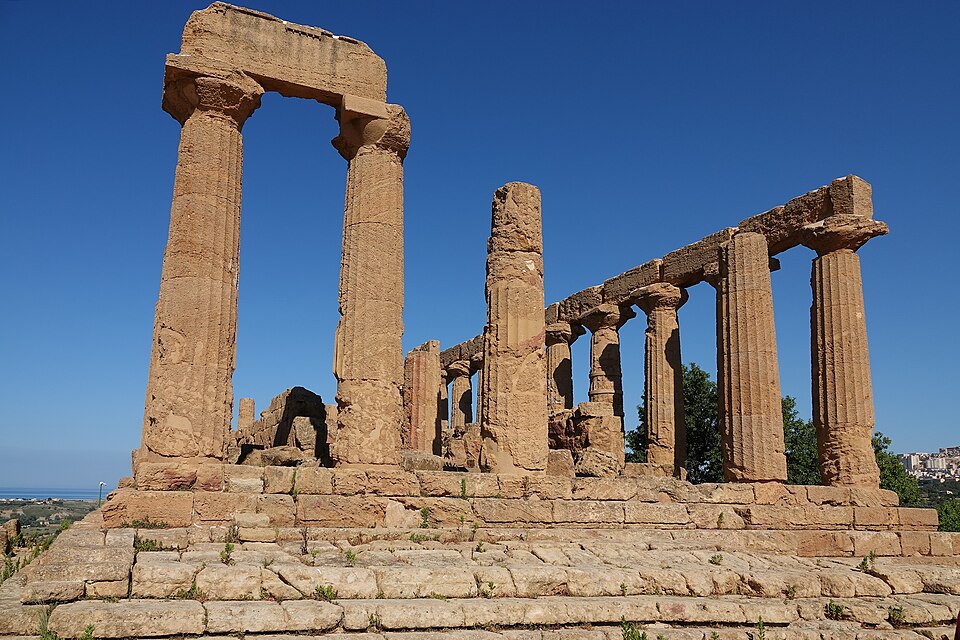 Temple of JunoThe Scars of History
While the Temple of Juno appears as a serene ruin today, a closer look at the stone reveals a more violent history. Notice the reddish staining and discoloration visible on many of the blocks and columns. Historians believe these are not natural markings or mineral deposits, but rather the permanent scorch marks from a massive fire. This inferno occurred in 406 BC, when the city of Akragas fell to a brutal siege by the Carthaginians. The fires were so intense that they baked the iron out of the local stone, leaving these haunting red 'scars' as a reminder of the city's fall. As you examine the columns, feel the texture of the material. This is local shell-limestone, quarried from the very ridge you are standing on. It is a porous, yellowish stone filled with tiny fossilized shells and sand. In antiquity, these rough surfaces would have been covered in a smooth layer of white marble-dust plaster and painted in vibrant colors, hiding the humble origin of the stone. Today, the loss of that protective plaster has exposed the raw, weathered limestone to the elements, making it feel rough and ancient under the Sicilian sun. These scars and textures tell a story of resilience—of a structure that survived the flames of war to stand as a testament to the endurance of Akragas.
Photo: Luciano Tronati · CC BY-SA 4.0
03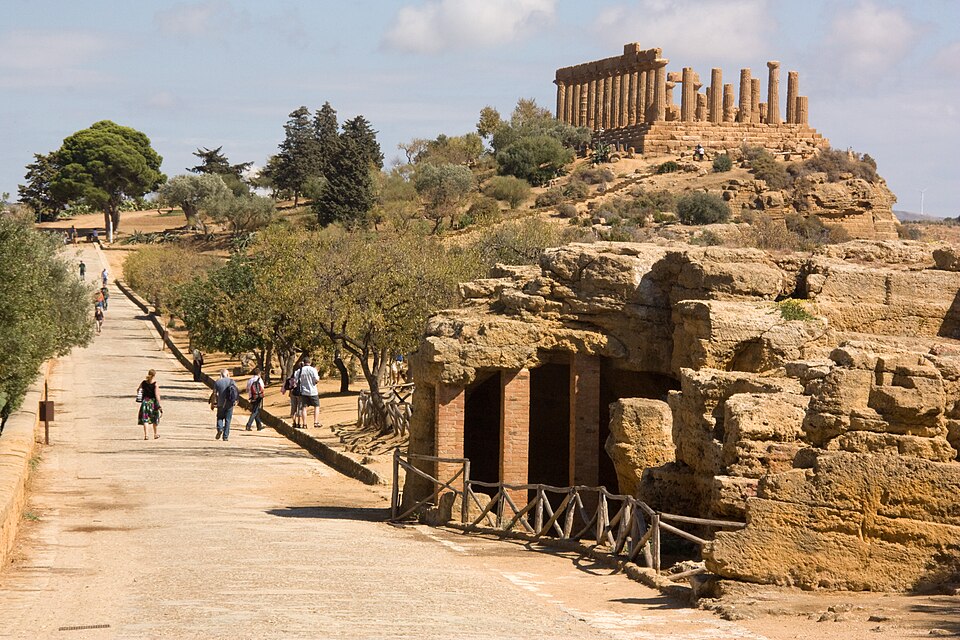 Arcosoli BizantiniArcosoli Bizantini
As you continue along the ancient path known as the Via Sacra, or Sacred Way, you are walking the same route that ancient pilgrims and citizens used to connect the city's major religious sites. To your right, you will notice the remnants of the city's original Greek defensive walls. These walls were built during the 6th and 5th centuries BC to protect the southern edge of the plateau, using the natural steep drop-off of the ridge as a defensive advantage. However, what you see here is not just a Greek fortification. This site is a palimpsest—a layer of history written over another. Centuries after the Greeks founded the city, subsequent Roman and Byzantine inhabitants looked at these massive walls and saw a different purpose. Instead of defense, they used the thick, solid stone as a place of rest for their dead. They carved directly into the bedrock and the existing structures to create a new funerary landscape. This integration of the city of the living and the city of the dead highlights the shifting priorities of the people who called this ridge home. As you walk, observe how the landscape itself has been sculpted and repurposed, reflecting a transition from a pagan Greek stronghold into a sacred space for the Christian communities that would follow.
Listen in the appPhoto: Poudou99 · CC BY-SA 3.0
04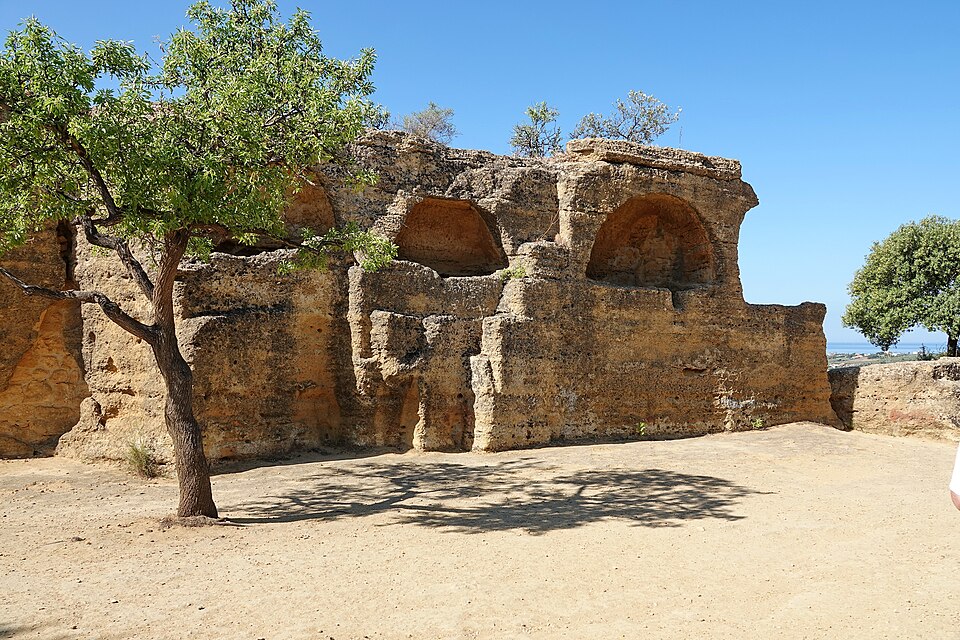 Arcosoli BizantiniThe Byzantine Arcosoli
These striking arched niches cut directly into the vertical rock faces are known as 'arcosoli.' They represent a significant shift in the site's history, dating primarily to the Byzantine era between the 4th and 5th centuries AD. Long after the glory of the Greek temples had faded, the Christian population of Agrigentum utilized the existing Greek city walls as a necropolis. An arcosolium consists of an arched recess carved into the rock, beneath which a sarcophagus-like tomb was hollowed out. This repurposing of the defensive walls is a powerful illustration of the transition from a city of the living to a city of the dead. Where once soldiers stood guard and lookouts scanned the horizon for Carthaginian ships, families now gathered to commemorate their departed. You can see how the builders carefully exploited the soft limestone, carving deep into the stone to create multi-generational family plots. Some areas feature several levels of these niches stacked upon one another. The presence of these tombs directly alongside the main thoroughfare suggests that, for the Byzantine inhabitants, the barrier between the mundane world and the sacred space of memory was very thin. These hollowed-out chambers stand as silent witnesses to the generations of diverse cultures that found sanctuary on this ridge, each leaving their own unique mark on the landscape.
Listen in the appPhoto: Luciano Tronati · CC BY-SA 4.0
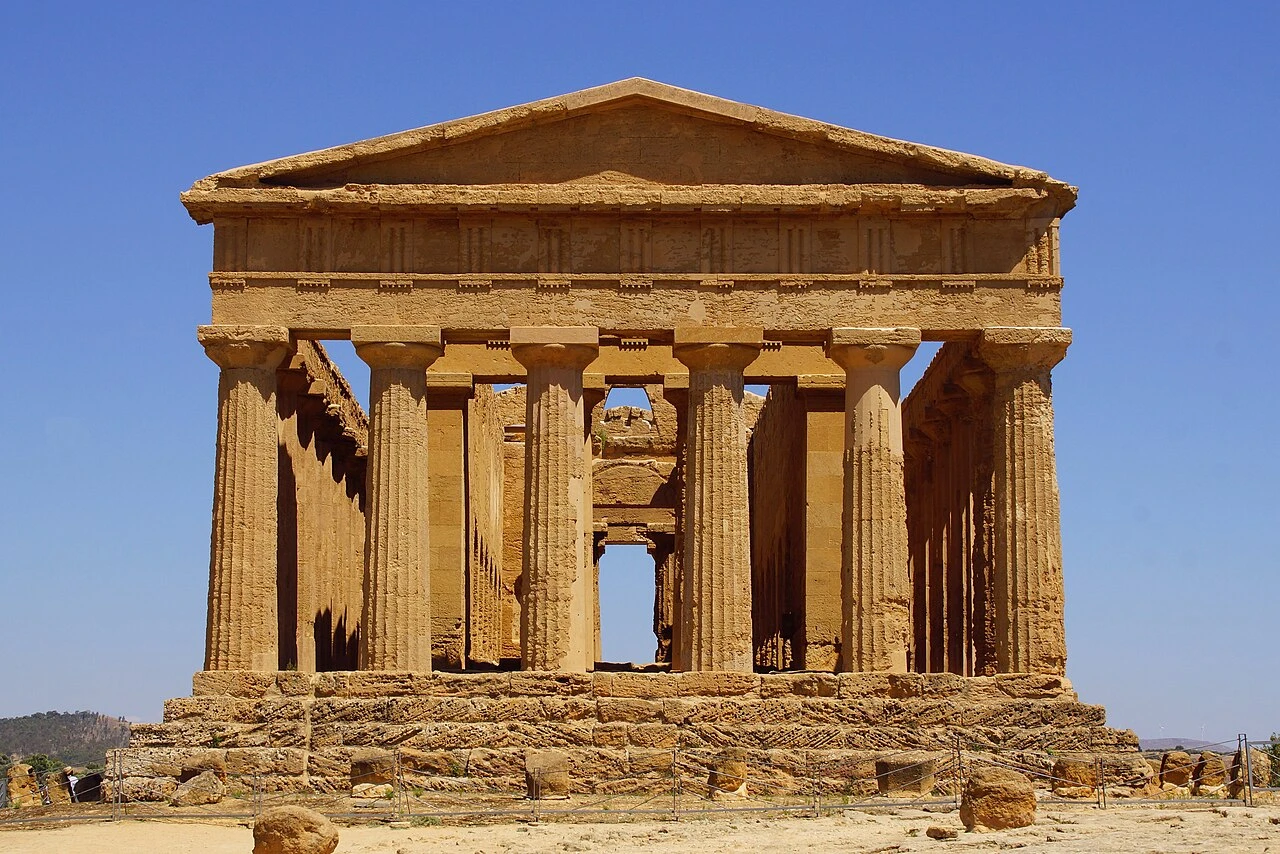
05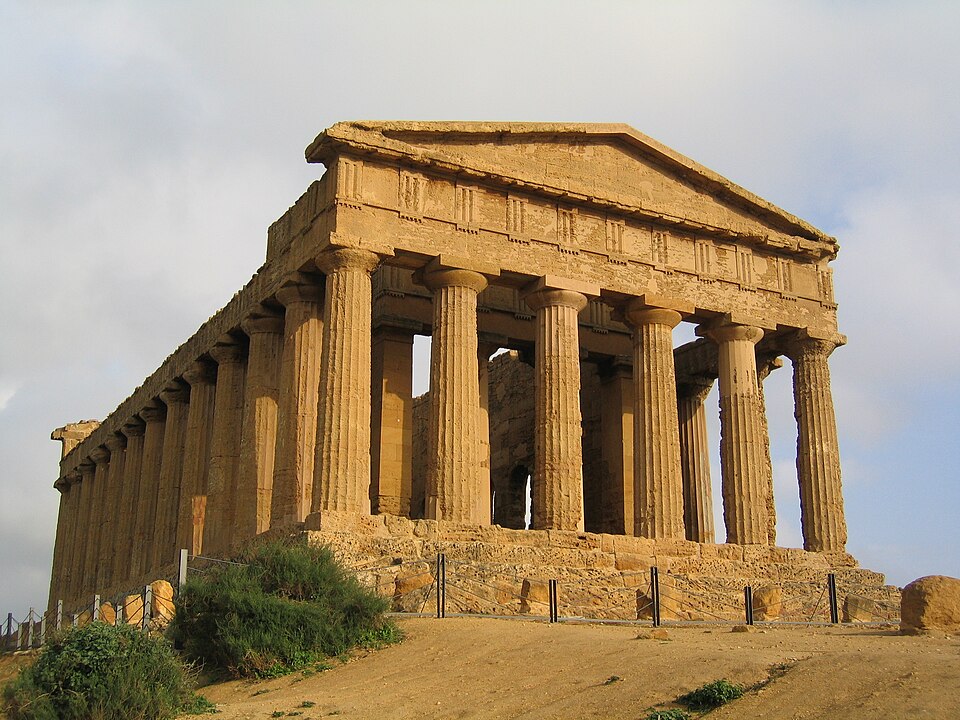 Temple of ConcordiaTemple of Concordia
Standing before you is the Temple of Concordia, widely considered one of the best-preserved Greek temples in existence. Built between 440 and 430 BC, it is a masterpiece of the Doric order. Its survival is nothing short of miraculous, as most ancient temples were either destroyed by earthquakes or scavenged for building materials. The secret to its longevity lies in the 6th century AD, when Bishop Gregory of Agrigento chose this site for his new cathedral. By converting the pagan temple into a Christian church dedicated to the Apostles Peter and Paul, he ensured its continuous maintenance and protection for over a thousand years. As you look at the structure, notice the perfect proportions that define the Classical Greek aesthetic. It features 6 columns across the front and back, and 13 along each side—a ratio that creates a sense of balanced harmony. The columns themselves exhibit 'entasis,' a subtle swelling in the middle that corrects the optical illusion of sagging, making them appear perfectly straight from a distance. Because the building remained largely intact, we can still see the pediment and much of the entablature that would have supported a tiled roof. It serves as an architectural time capsule, allowing us to see the exact forms that ancient builders believed represented divine order and stability.
Listen in the appEvan Erickson · Public domain
06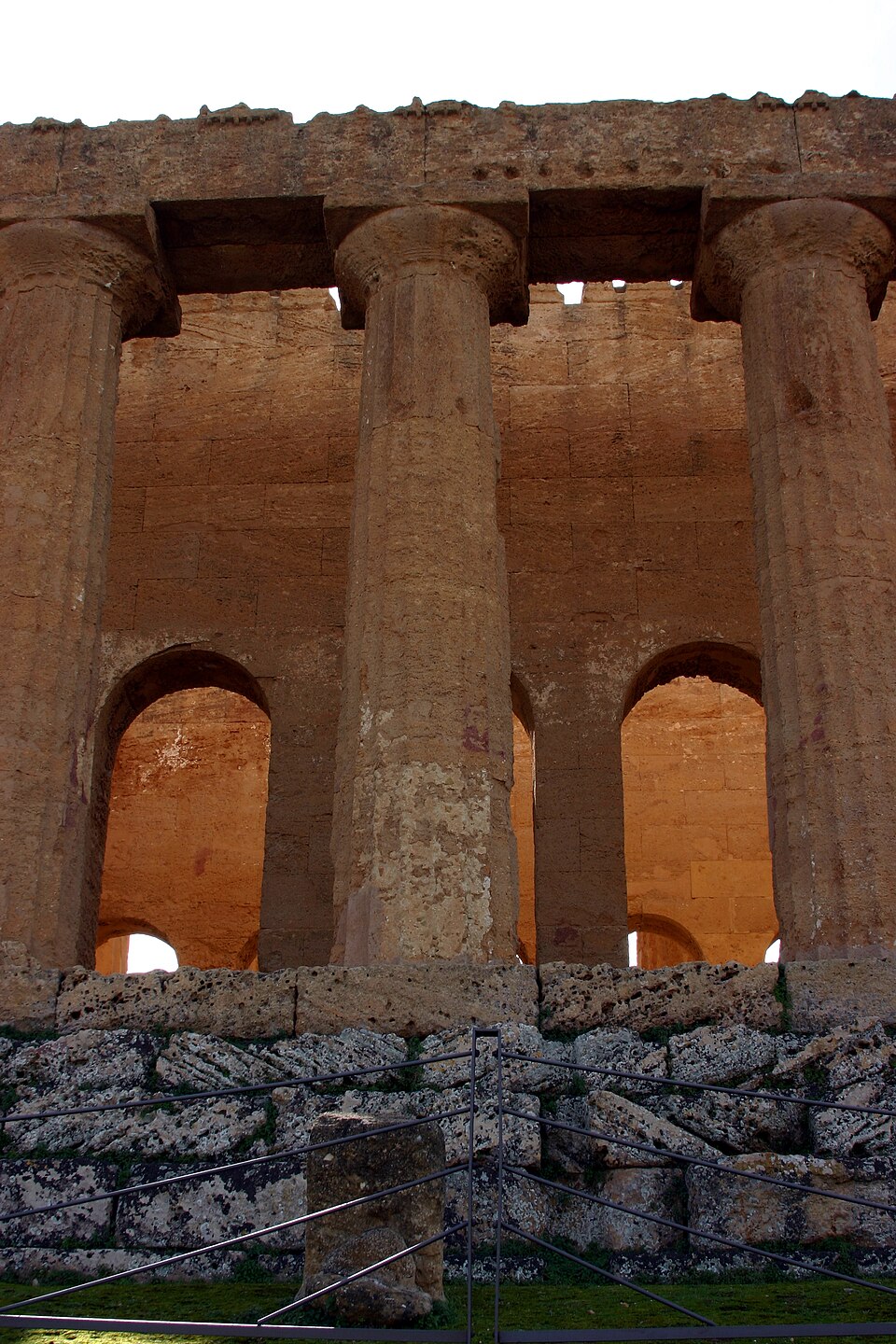 Temple of ConcordiaThe Christian Transformation
To understand why the Temple of Concordia is so well-preserved, you must look closely at the walls between the columns and the interior structure. During its conversion into a Christian basilica in the late 6th century, significant architectural changes were made. The most obvious are the twelve arched openings cut into the walls of the 'cella,' the central inner chamber that originally held the cult statue of a Greek deity. These arches transformed the dark, enclosed sanctuary into a more open space suitable for a Christian congregation, essentially creating the side aisles of a church. Additionally, the spaces between the outer columns were originally filled in with solid masonry, creating a continuous wall that enclosed the temple. This effectively turned the open-air Greek structure into a walled building. While these later additions were removed during 18th-century restoration efforts to return the temple to its 'pure' Greek form, the traces of this transformation are still clearly visible in the stone. By treating the temple as a shell for a new faith, Bishop Gregory inadvertently saved it from the ruin that befell its neighbors. This site is a physical bridge between two worlds: the mathematical perfection of the Greek intellect and the spiritual devotion of the early Christian era, both written into the same golden limestone.
Listen in the appJosГ© Luiz · CC BY-SA 4.0
07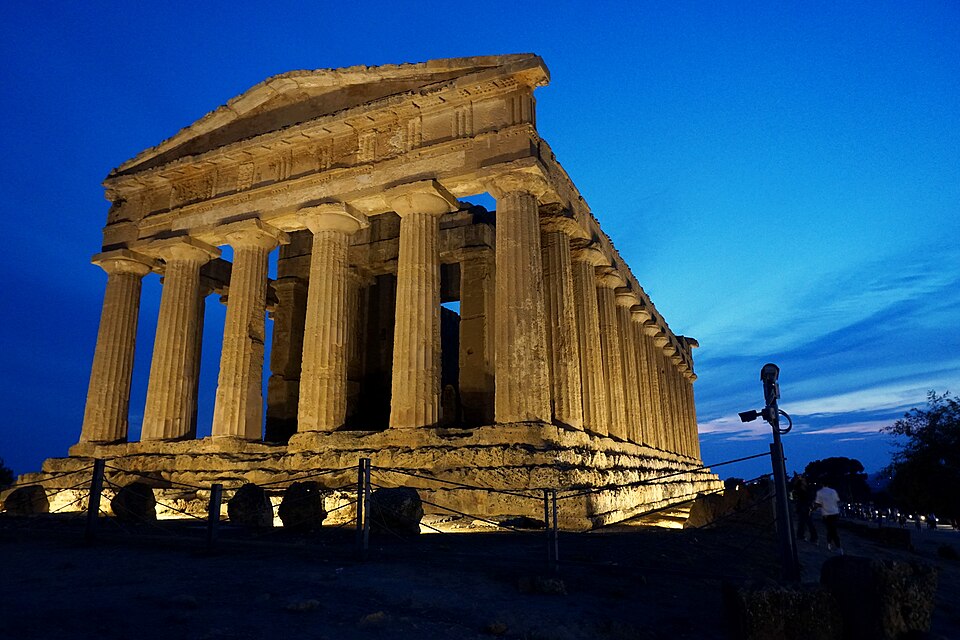 Temple of ConcordiaA Beacon of Preservation
The Temple of Concordia is more than just a local landmark; it is a global icon of cultural heritage. In 1997, the entire Valley of the Temples was designated a UNESCO World Heritage site, and this temple is its most recognizable symbol. Interestingly, the name 'Concordia' is not its original Greek name, which remains unknown. The title was adopted by 16th-century historians who discovered a Latin inscription nearby referencing the 'Concord of the People of Agrigento,' though that inscription actually dates to a later Roman period. Regardless of its original dedication, the temple’s presence is undeniable. If you are here toward the end of the day, you may witness the dramatic effect of the temple glowing against the darkening sky. Modern lighting has been carefully designed to highlight the warm tones of the limestone, making the structure look almost like a beacon on the ridge. This visual prominence reminds us of the temple's original purpose: to be seen from afar, a solid anchor for the community against the chaos of the world. Standing here, it is easy to understand why this site has captivated travelers for centuries, from the pilgrims of antiquity to the poets of the Grand Tour and the visitors of today. It remains a timeless symbol of human aspiration and architectural brilliance.
Listen in the appErik Albers · CC0
08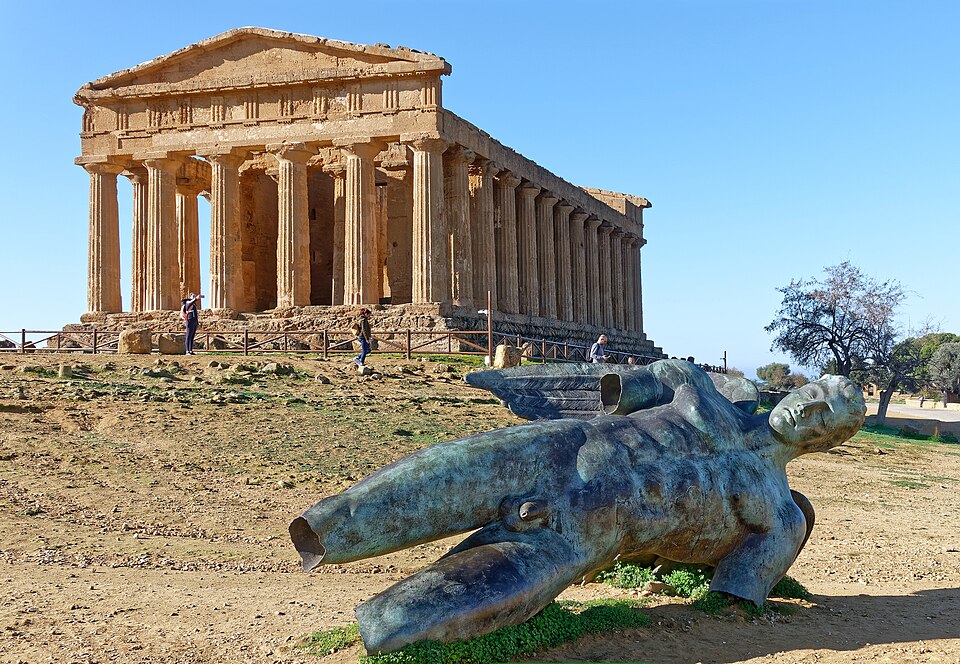 Icaro CadutoIcaro Caduto
Resting on the earth just outside the Temple of Concordia is a striking modern addition to this ancient landscape: 'Icaro Caduto,' or the Fallen Icarus. This monumental bronze sculpture was created by the renowned Polish-born artist Igor Mitoraj and was donated to the park following a major exhibition of his work here in 2011. Mitoraj’s style is deeply influenced by classical Greco-Roman aesthetics, but he reinterprets them through a modern lens of fragmentation and loss. Notice how the figure of Icarus is incomplete, with limbs missing and a fractured torso. This intentional damage mirrors the broken columns and weathered ruins that surround it. Icarus, the mythological figure who flew too close to the sun only to have his waxen wings melt and fall to his death, serves as a poignant metaphor for human ambition and fragility. The dark, heavy bronze creates a powerful visual contrast with the light, golden sandstone of the Temple of Concordia standing in the background. While the temple represents the triumph of architectural order, Mitoraj’s Icarus represents the inevitable passage of time and the beauty that remains in things that are broken. It invites us to reflect on the nature of history—not as something perfect and finished, but as a collection of fragments that we must piece together in our own minds.
Listen in the appPhoto: Holger Uwe Schmitt · CC BY-SA 4.0
09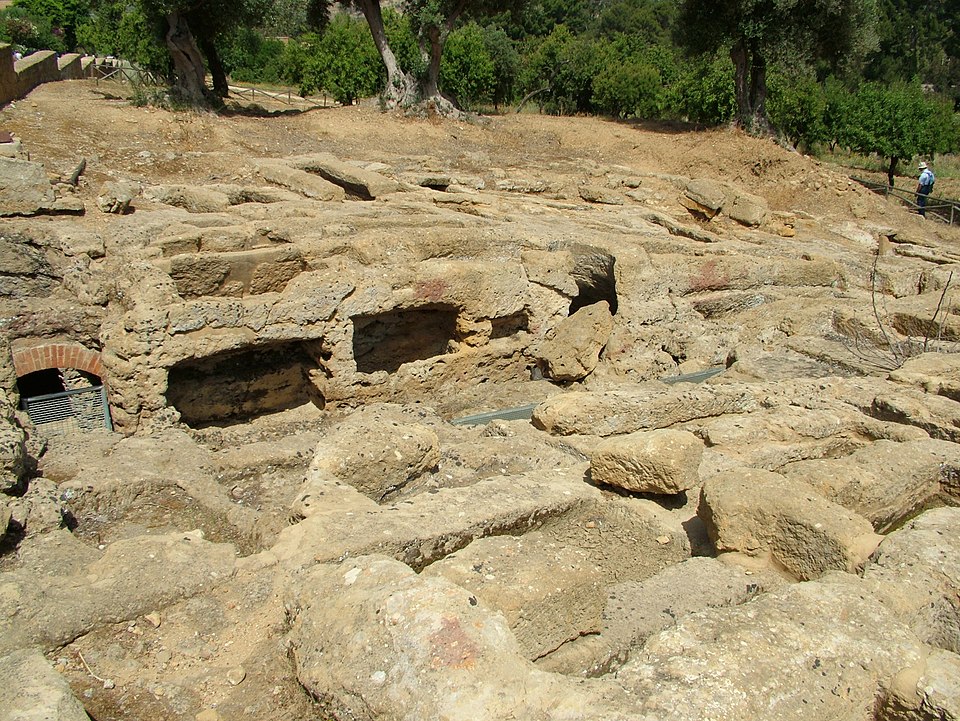 Necropoli paleocristiane - Tombe ad arcosolioNecropoli Paleocristiana
In the area surrounding the Temple of Concordia, the ground itself reveals another layer of the site's history. This is the Necropoli Paleocristiana, an early Christian cemetery that dates roughly from the 3rd to the 6th centuries AD. These are 'sub-divo' tombs, meaning they were placed 'under the sky,' carved directly into the hard limestone plateau. Instead of vertical walls, the burials here are horizontal, hollowed out of the flat rock surface beneath your feet. As you look at the various rectangular depressions, you will notice a significant diversity in their sizes and depths. Some are simple, shallow troughs meant for single individuals, while others are larger and more elaborate, potentially serving as family plots. This variation provides historians with clues about the social structure of the early Christian community in Agrigento. Wealthier families could afford larger, more prominently placed tombs, while the common citizens were laid to rest in simpler graves. The density of burials in this specific area is due to the 'sanctity of place'—the desire to be buried near the newly converted church of Saints Peter and Paul. Over time, the limestone plateau became a sea of these rock-cut graves, a silent city of stone that reflects the profound religious transformation that took place on this ridge long after the era of the Greek gods had ended.
Listen in the appPhoto: Clemensfranz · CC BY 2.5
10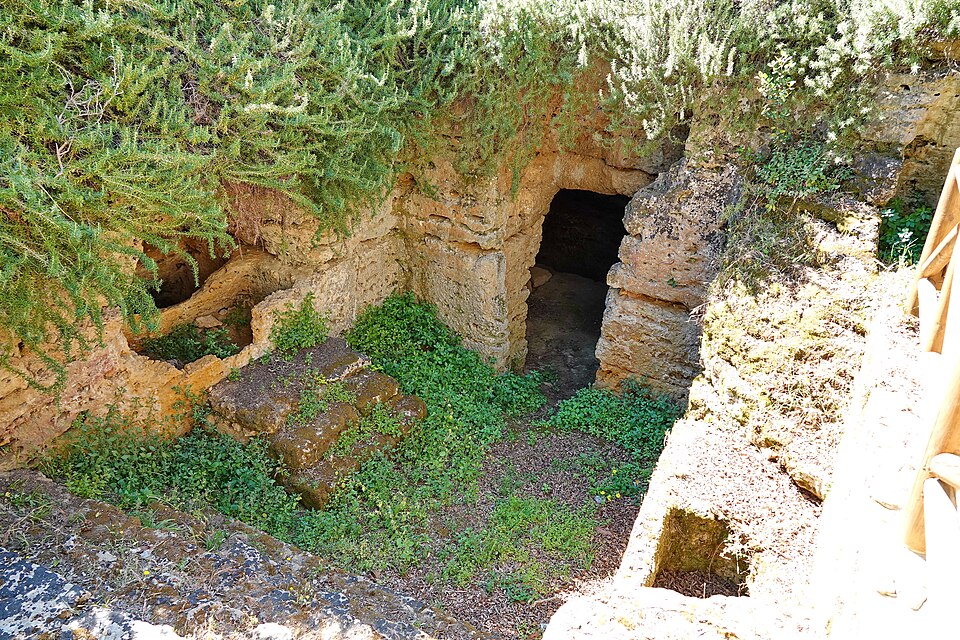 Tombe e ipogei funerari di Villa AureaTombe e ipogei funerari di Villa Aurea
Located within the lush gardens of Villa Aurea are several fascinatng hypogea, or underground burial chambers. These subterranean passages and rooms were carved into the rock to provide more space for burials during the late Roman and early Christian periods. Stepping into these cool, dark spaces offers a complete change in atmosphere from the sunny plateau above. The walls are lined with niches that once held the remains of the city's inhabitants, further expanding the vast necropolis that surrounds the nearby temples. The Villa Aurea itself has a more modern connection to the preservation of this site. In the early 20th century, it was the private residence of Sir Alexander Hardcastle, a retired British army captain. Hardcastle fell in love with the ruins of Akragas and devoted his personal fortune and the rest of his life to their restoration. He funded the re-erection of columns at several temples and supported extensive archaeological excavations. Before his efforts, many of the structures you see standing today were simply piles of rubble on the ground. Hardcastle's passion helped turn the Valley of the Temples into the world-class archaeological park it is today. His former home and its surrounding gardens now serve as a gateway to these hidden underground chambers, bridging the gap between ancient burial traditions and the modern era of historical conservation.
Listen in the appPhoto: Luciano Tronati · CC BY-SA 4.0
Valle dei Templi
Frequently asked questions
How much does the guide cost?
Free app download. Listed guide price: $2.99. Guide price shown in the app. Audio guide only. Venue admission is separate.
Can I listen without internet?
Yes. Download the guide’s audio, images, and maps in the app before your visit. Your downloaded content is then available offline.
Can I listen in my language?
Stanza supports 15 languages. Check the app for the languages available for this guide.
Do I need to follow a schedule?
No. This is a self-guided experience. Choose your stops, pause whenever you like, and return to a story at your own pace.
At your own pace
Explore Valle dei Templi.
Download Stanza, then search for “Valle dei Templi”.
Free app download · Guide price shown in the app
Keep exploring
Nearby audio guides
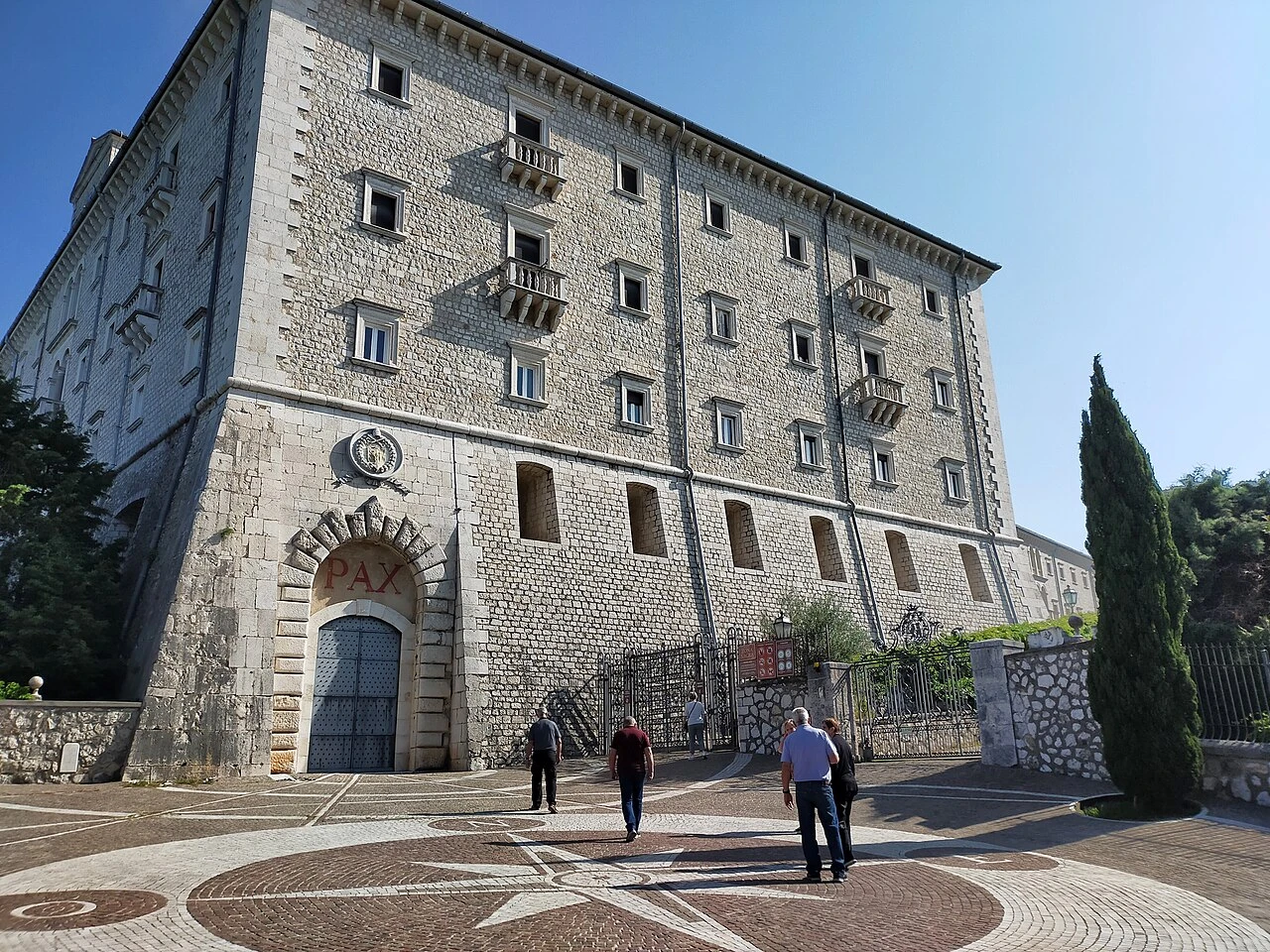
Cassino
Abbey of Monte Cassino
Content & sources
Photo: Marica Massaro · CC BY-SA 4.0
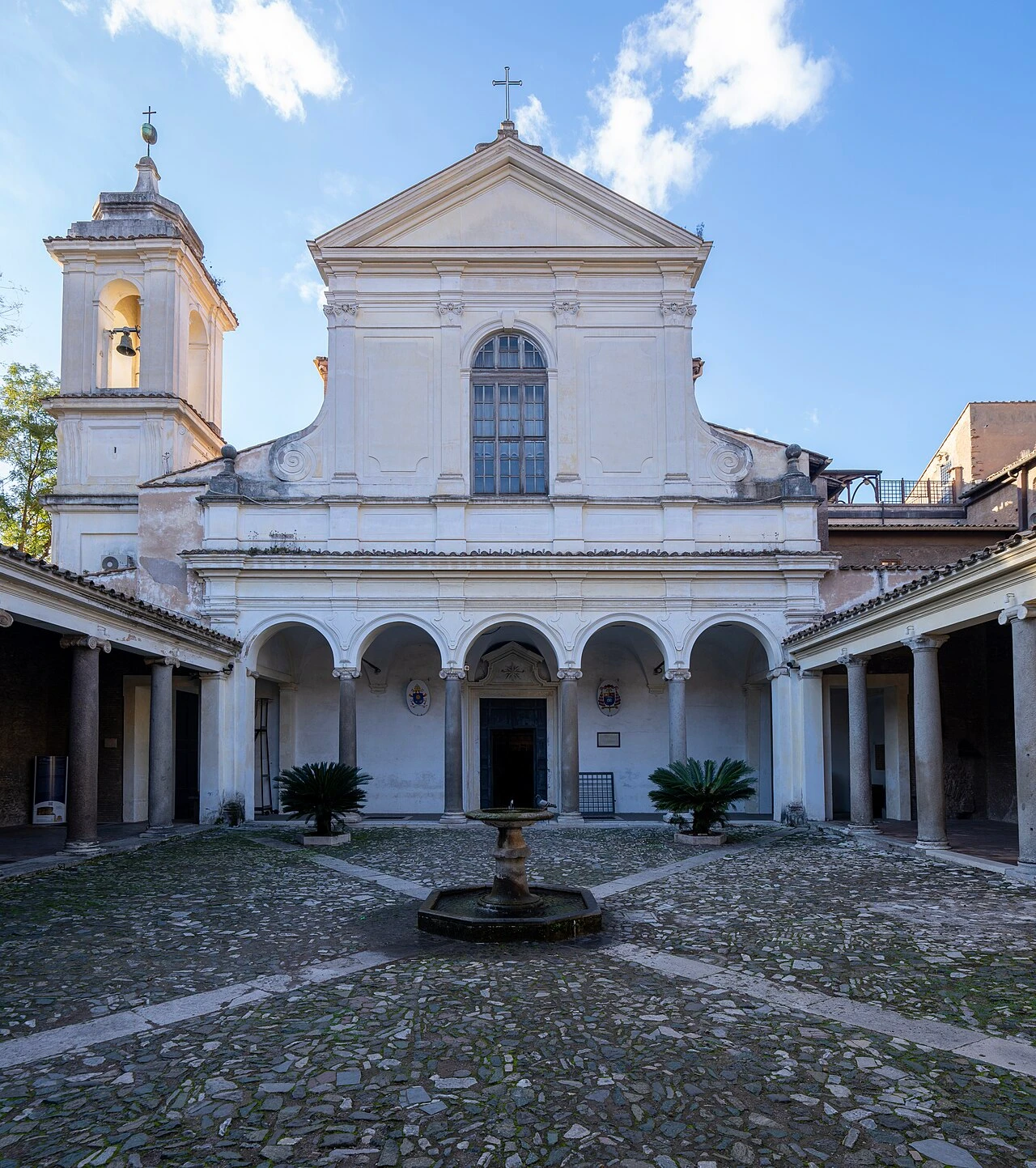
Rome
Basilica di San Clemente
Content & sources
Photo: Labicanense · CC BY-SA 4.0
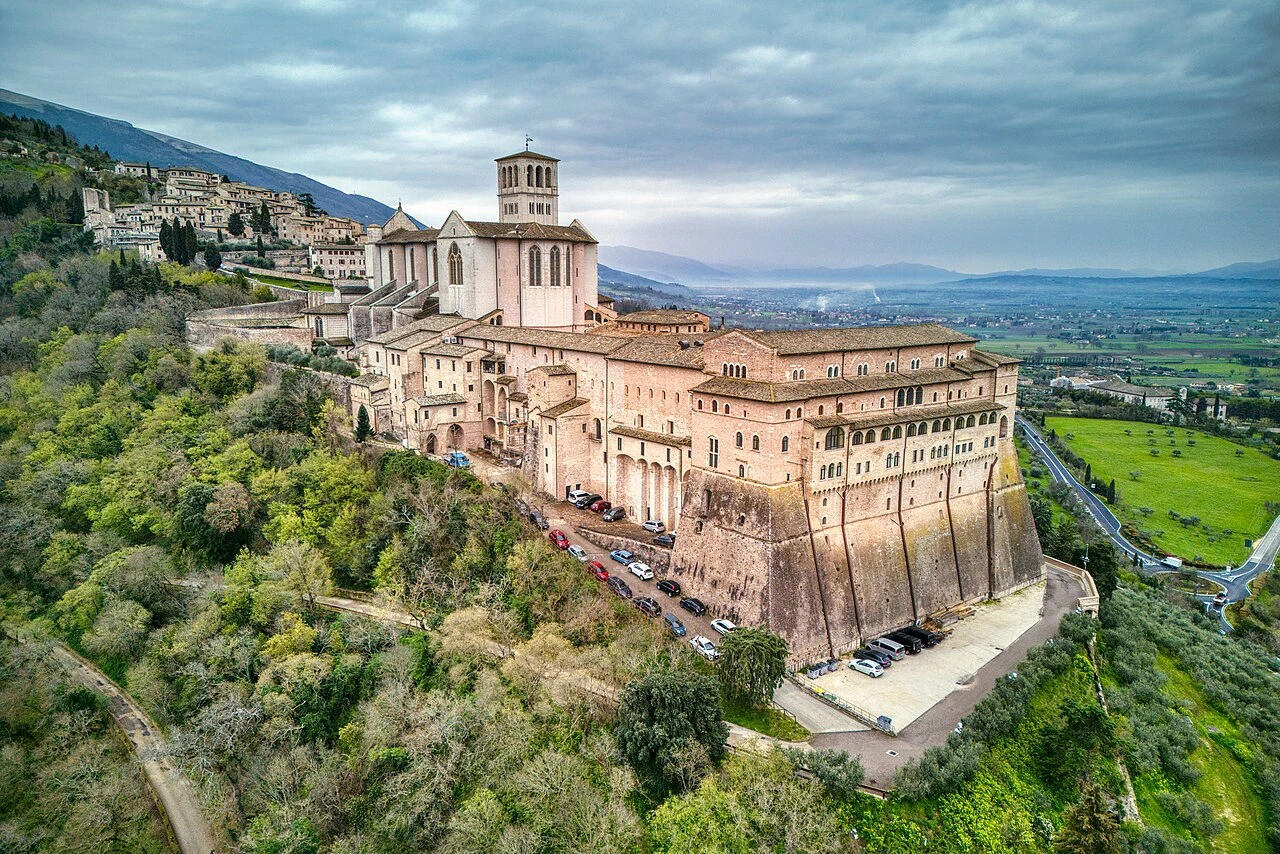
Assisi
Basilica di San Francesco
Content & sources
Hagai Agmon-Snir حچاي اچمون-سنير חגי אגמון-שניר · CC BY-SA 4.0
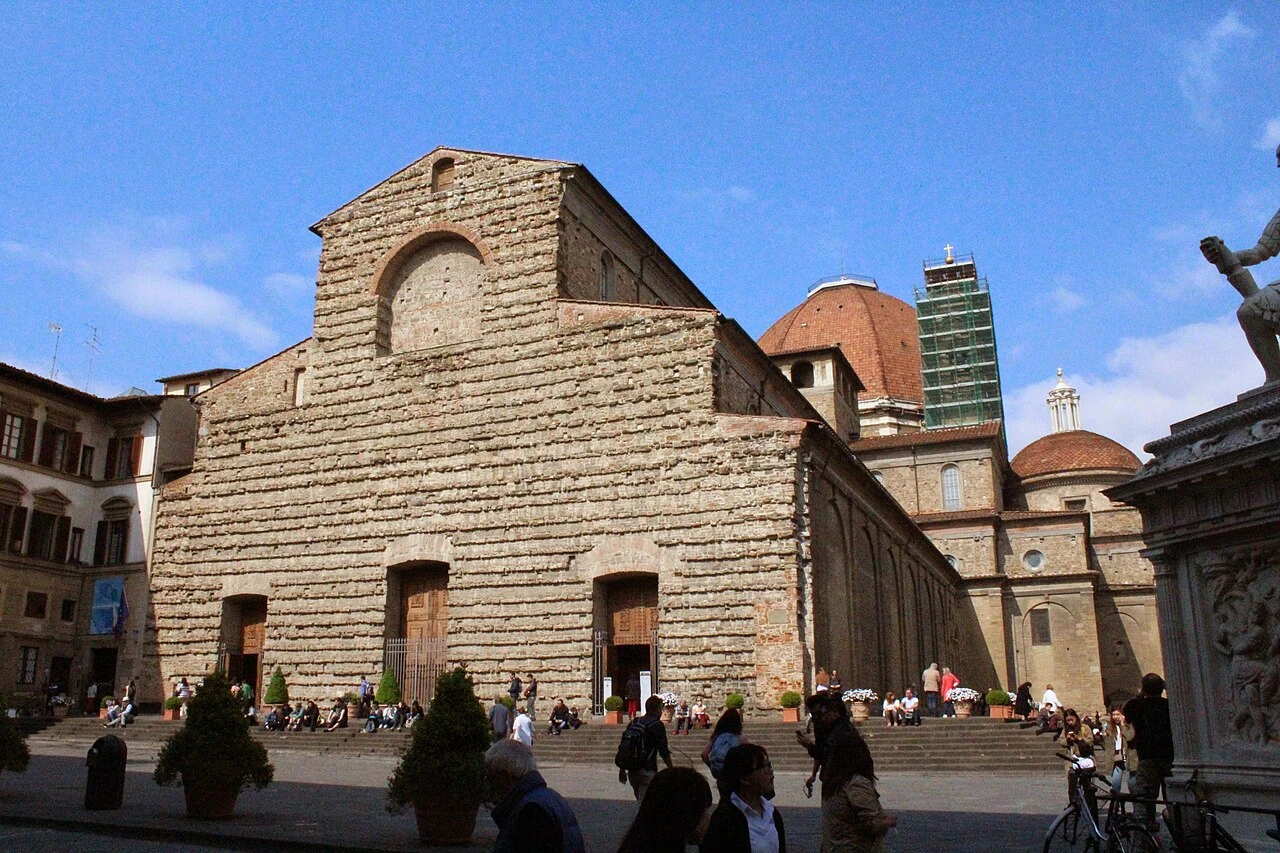
Florence
Basilica di San Lorenzo
Content & sources
Nelson Pérez · CC BY-SA 3.0