Stanza · Audio guide
Pinacoteca nazionale Audio Guide
A place to remember. A story to take with you.
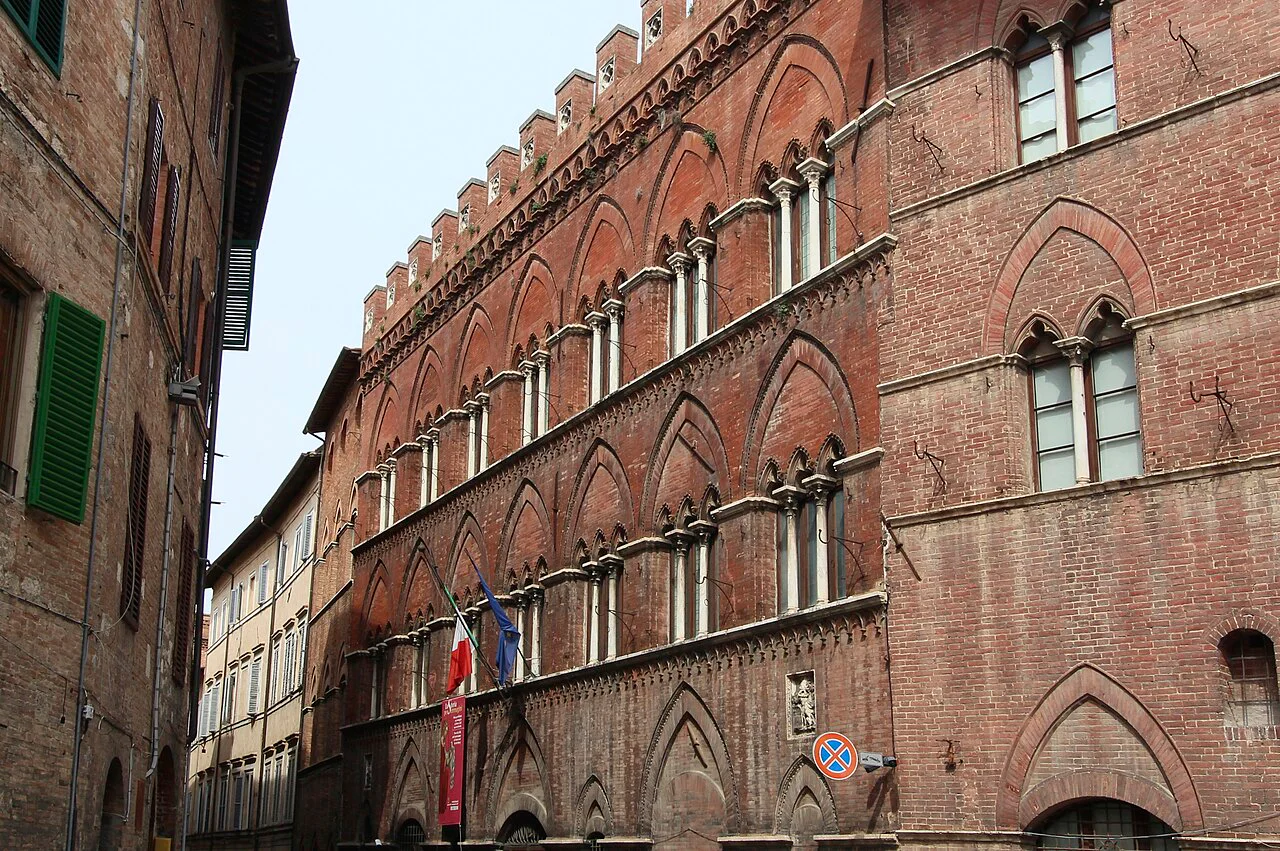
The Pinacoteca Nazionale is a national museum in Siena, Tuscany, Italy, inaugurated in 1932. It houses especially late medieval and Renaissance paintings from Italian artists and is located in the Brigidi and…
Download Stanza, then search for “Pinacoteca nazionale”.
About the tour
One guide. Your kind of visit.
The Pinacoteca Nazionale is a national museum in Siena, Tuscany, Italy, inaugurated in 1932. It houses especially late medieval and Renaissance paintings from Italian artists and is located in the Brigidi and Buonsignori palaces in the city's center.
The Pinacoteca nazionale guide tells the stories of 37 artworks, including Annunciation (Ambrogio Lorenzetti), Mystical Marriage of Saint Catherine (Michelino Molinari da Besozzo), Bernardino Campi Painting Sofonisba Anguissola (Sofonisba Anguissola), Triptych of Saint Augustine (Simone Martini), Trinity (Domenico Beccafumi), The Descent of Christ into Limbo (Domenico Beccafumi), The Coronation of the Virgin (Domenico Beccafumi), and The Fall of the Rebel Angels (Domenico Beccafumi). Every artwork is free to hear in the Stanza app until 1 January.
Ready when you are.
- 01Get the free Stanza app.
iOS & Android
- 02Find your guide.
“Pinacoteca nazionale”
- 03Download before you go.
Works offline
Audio guide / 37 artworks
Inside the guide
Get to know a few of the stories before you go. Open a stop to read more.
01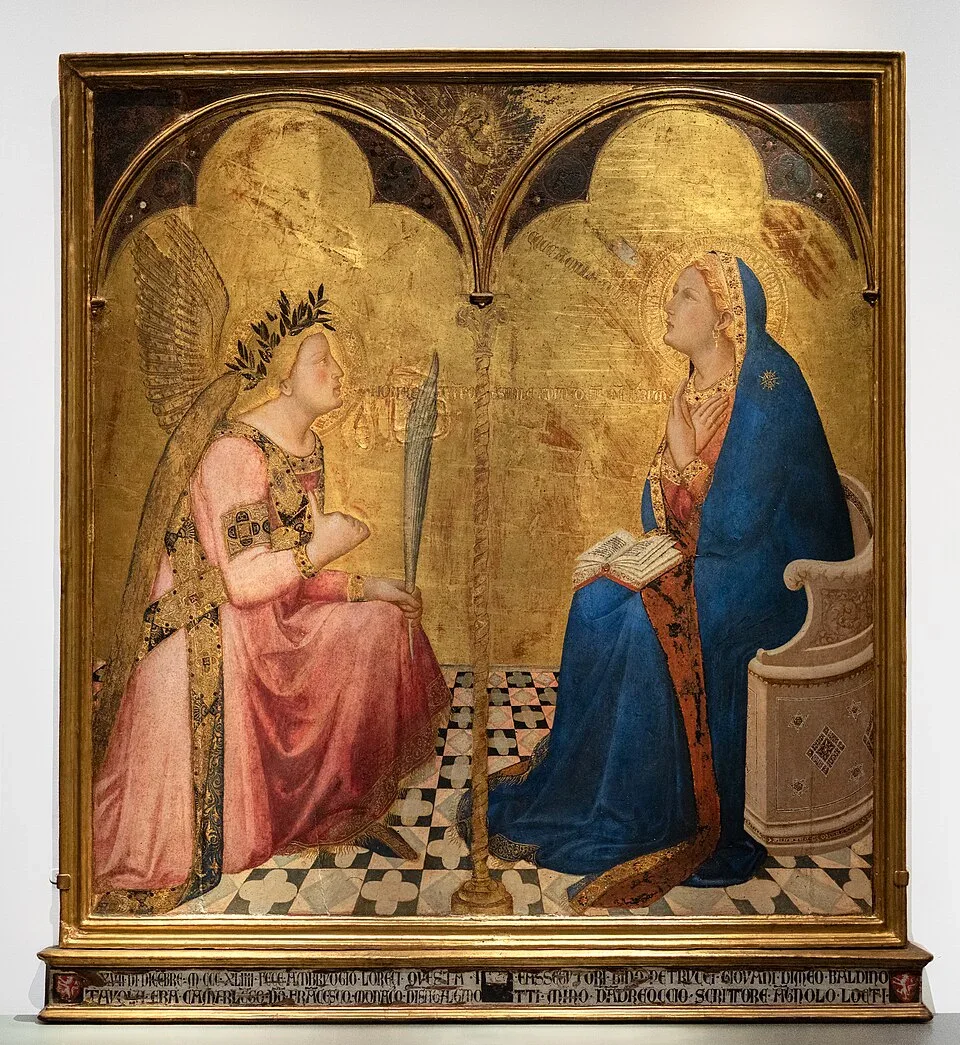
Annunciation
Written on Mary's halo is the angel's first greeting. Hail Mary, full of grace, the Lord is with you. The custom was to show the angel's appearance and announcement. Lorenzetti has put that greeting on the halo and painted the explanation, Mary's acceptance, and the conception itself instead. Between the angel's mouth and Mary's chest are his words. Nothing is impossible for God's word. His finger points upward, toward God the Father. Mary looks upward, toward God the Father. Her hands are crossed on her chest. The book she had open on her knees lies abandoned. The conception is not forced on Mary. It is a request, and God himself waits for her answer. Her answer, here is God's maid, is spoken to God the Father, not to the angel. It is her yes. A dove, the Holy Spirit, is sent from God toward her. At the bottom, a two line signature gives the year 1344. It names the tax magistrates who commissioned it for the Office of the Tax of the commune of Siena.
Listen in the appGleb Simonov · Public domain
02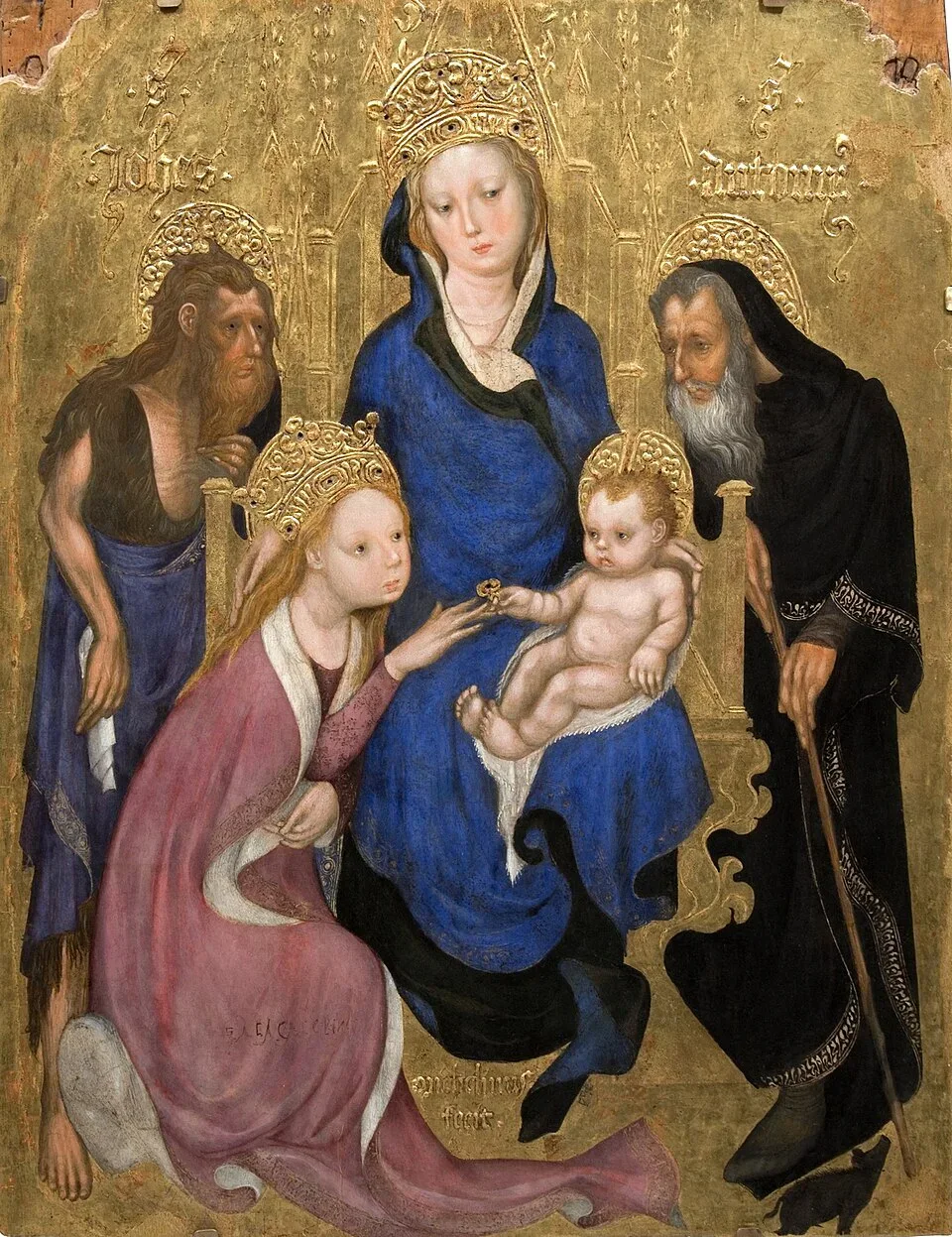
Mystical Marriage of Saint Catherine
The child sits on his mother's knees and holds out a ring to a woman kneeling before him. She wears a rose cloak lined with fur and a gold crown, and her hair is long and blond. Two saints are at the sides. No such wedding ever happened. This is a vision, the marriage of the child Christ and Saint Catherine. Below Mary's robe the painter left his name, Michelinus. The gold behind the figures is one radiance. Ground, throne and air share the same light, with nothing to divide them. You cannot tell where the throne meets the floor, or where anyone's feet would rest. The hems drift in waves rather than settling. Only the decorated arms of the throne show through, against the dark figures of the saints. Yet a vision needs something solid to be believed. The five figures are painted with gentle light and shade, and their skin runs from pale to dark brown. That softness is what makes the scene believable, while everything around it stays weightless. Why the figures float so free of the ground is still not known. Perhaps he wanted to show that none of it really happened.
Listen in the appMichelino Molinari da Besozzo · Public domain
03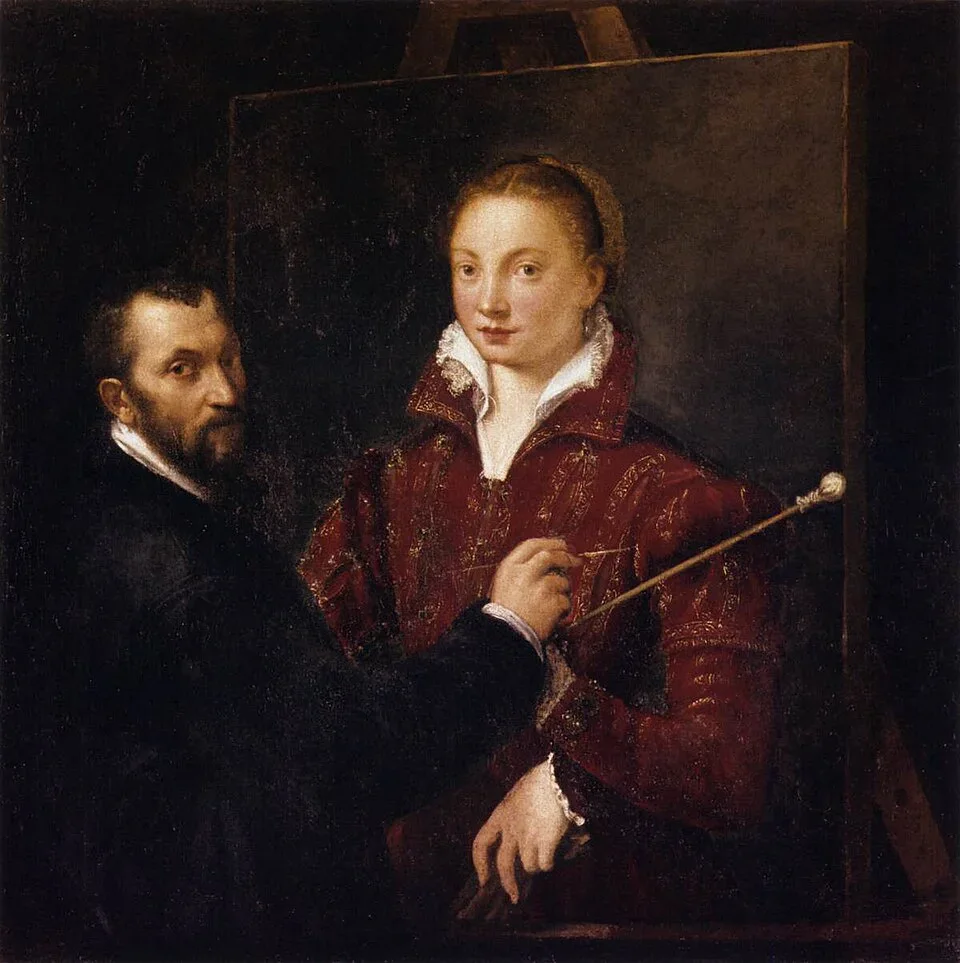
Bernardino Campi Painting Sofonisba Anguissola
The painter in this picture never looks at what he is painting. He turns away from it and looks out at you, because you are the person sitting for him. The woman on the canvas looks back. That woman was painted by another hand. Sofonisba Anguissola painted her own teacher at his easel, and painted herself as the woman before him. Artists often showed themselves at an easel. She turned it around. Here the brush is in the teacher's hand, and the one who made the picture is the one being painted. Painting was thought to be men's work. A painter wrote to Campi and called her his creation. So she may have given him the brush and the credit, and let the picture show the talent was hers. A maulstick is here too, the padded stick amateurs use to steady the hand. She had painted herself holding one as his student. Here it may be a small joke at his expense. You stand where she would have sat for him. Both figures watch you, and you are drawn into her trick. When it arrived here it was taken for an anonymous Venetian, even Tintoretto or Paolo Veronese, before Sofonisba was named as its painter.
Listen in the appSofonisba Anguissola · Public domain
04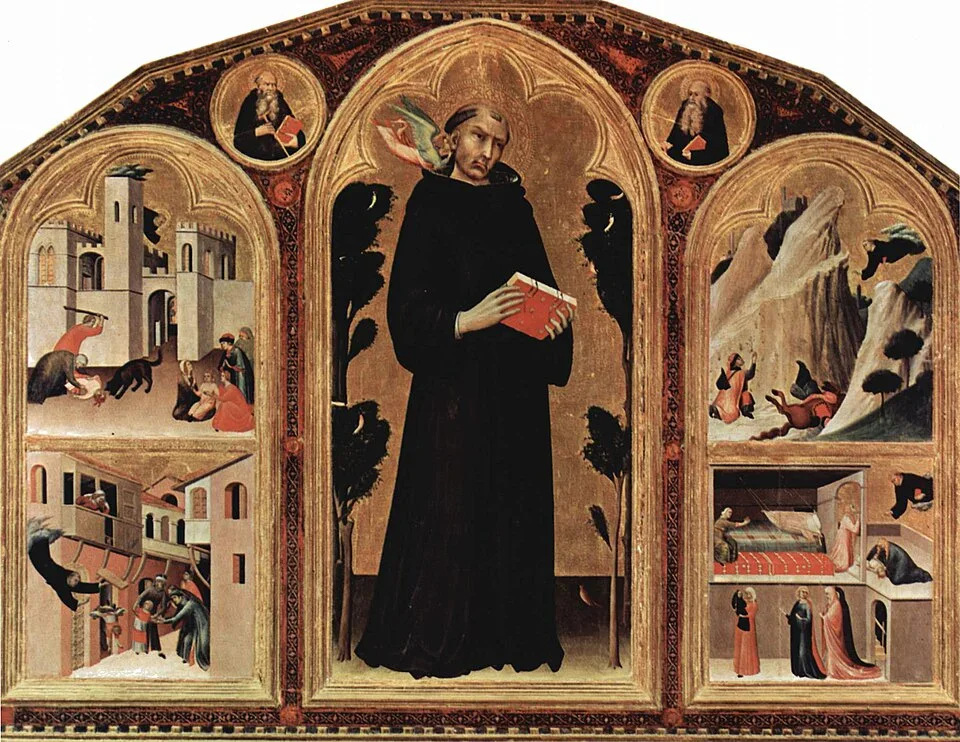
Triptych of Saint Augustine
Two small round panels show Fathers of the Church, and no one knows which Fathers they are. The man at the center is no mystery. He is Agostino Novello, holding a red book of his order's rules, which he edited. His story is written all around him. He had been a soldier before he became an Augustinian monk. Around 1290 he led the order as its prior general, then withdrew to a hermitage at San Leonardo al Lago, near Siena. He died in 1309, and after that miracles were told of him. Simone Martini had just come back to Siena from Assisi, Pisa and Orvieto to paint at the Palazzo Pubblico. He made this for the church of Sant'Agostino between 1324 and 1328. The side panels show four of those miracles. A child is attacked by a wolf and another falls from a balcony. A knight drops into a ravine, and a child falls from its cradle. Each scene follows the same shape. There is the accident, the saint appearing more than once, the prayer that follows, and the city or countryside of Siena. The hope was to make him the patron saint of Siena. It never happened. In the central panel a small angel with blue wings whispers into his right ear. The whisper is divine inspiration.
Listen in the appSimone Martini · Public domain
05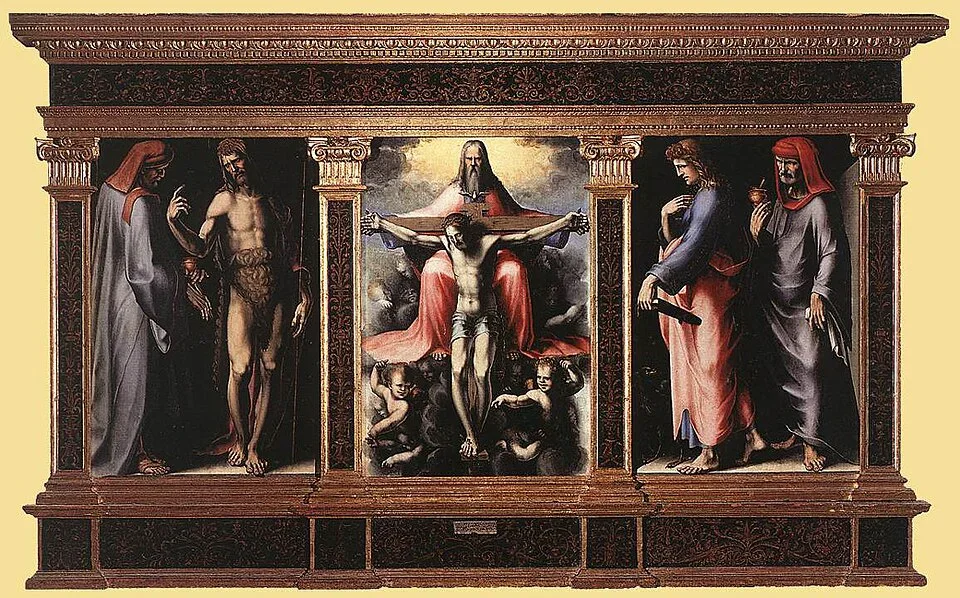
Trinity
Why would a picture of the Trinity have two doctors at its outer edges? Because it was made for a hospital chapel. The doctors are Saints Cosmas and Damian. Closer in are Saint John the Baptist and Saint John the Evangelist, with the Trinity at the centre. The chapel belonged to Santa Maria della Scala in Siena, an important and wealthy hospital. A man named Battista d'Antonio da Ceva commissioned it. An inscription on the frame says he wanted it for his devotion. It was delivered in February and March of 1513, for no more than thirty five florins. The painter was probably Domenico Beccafumi, just back from Rome. The cherubs in that bright cloud bring to mind Raphael's Foligno Madonna, which he may have seen being finished there. For the hospital, this was a prestigious commission, and it marked his return to Siena. The panel stayed in that chapel until 1818.
Listen in the appDomenico Beccafumi · Public domain
06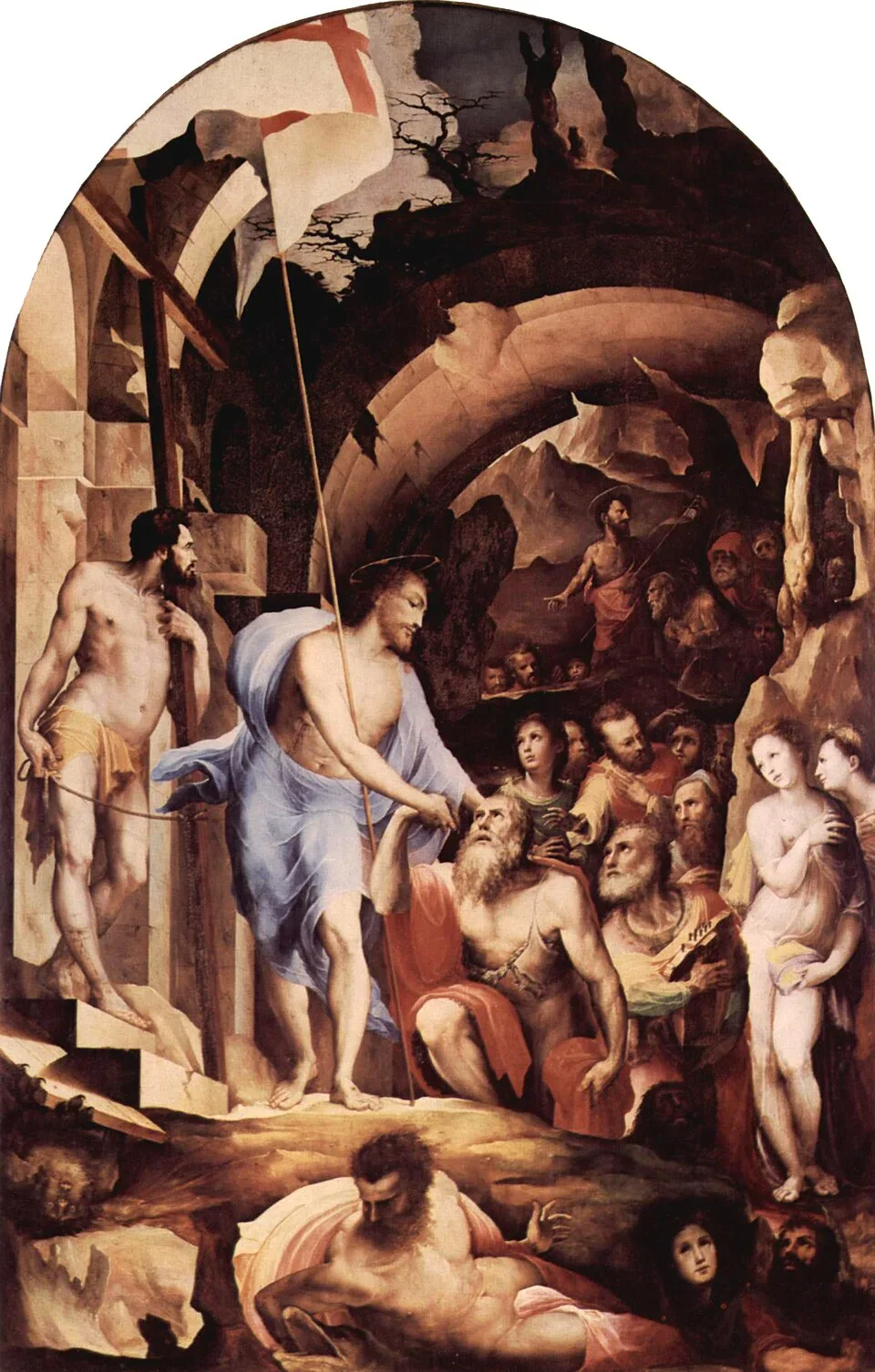
The Descent of Christ into Limbo
The door of hell has just been forced open and now lies on the ground across a demon, whose hooked hands still clutch the wood. Christ steps through in the shroud he was buried in, his cross banner held high. He is about to lead the souls out, and one old man is getting to his feet, his face toward Christ, held in Christ's hands. Among the souls kept here since the beginning of the world are Adam, King David with his lyre and Eve. The cave is lit by sudden flashes from the flames. Beccafumi painted this for the Marsili family's chapel in the church of San Francesco in Siena, one of the last works they asked him for. In 1655 a fire damaged the painting, and the marks still show beneath the broken arch. Whether the man with the cross behind Christ is Dismas, the good thief, is still not known.
Listen in the appDomenico Beccafumi · Public domain
07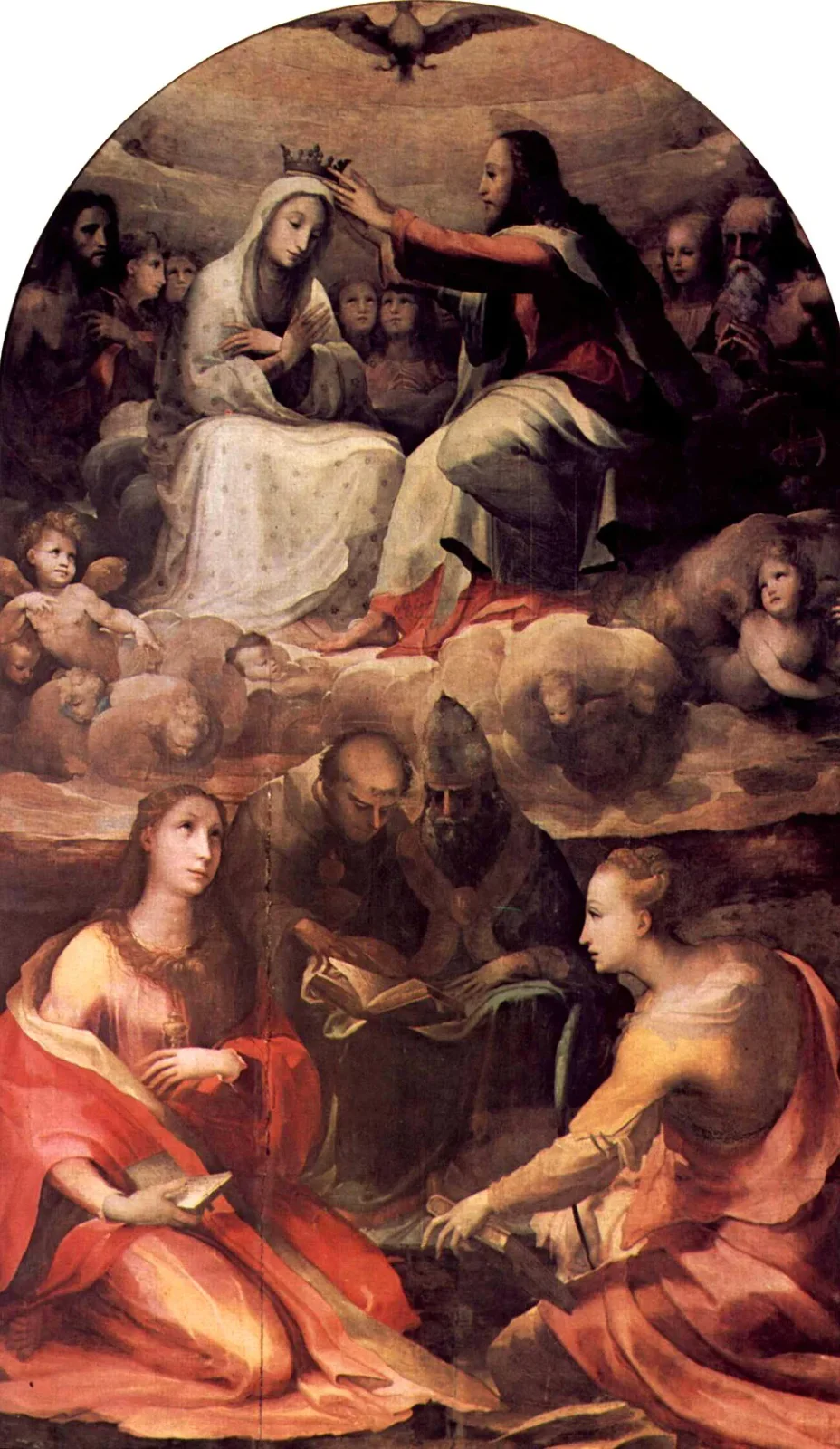
The Coronation of the Virgin
Down at the bottom of this painting, the apostles you would expect are missing. In their place are three saints and a pope. They trade glances and gestures as they check the Scriptures, confirming that the prophecies came true and that Mary is glorified in heaven. Among them is Gregory the Eleventh, the pope who listened to Catherine of Siena. The painting was made for the community at Ognissanti in Siena. Above them is the coronation itself. Christ sets the crown on Mary's head. A semicircle of saints forms the backdrop, and the dove of the Holy Spirit blesses the scene. A cloud of cherubs forms the base, and the whole scene is curved for depth, in a way that recalls Raphael. Beccafumi gave these figures a thin, almost transparent look. The fluid colour removes their solidity, even from figures that echo Michelangelo and Rosso Fiorentino. When the church at Ognissanti was destroyed, the painting moved to Santo Spirito, and only in recent years was it brought here for safekeeping.
Listen in the appDomenico Beccafumi · Public domain
08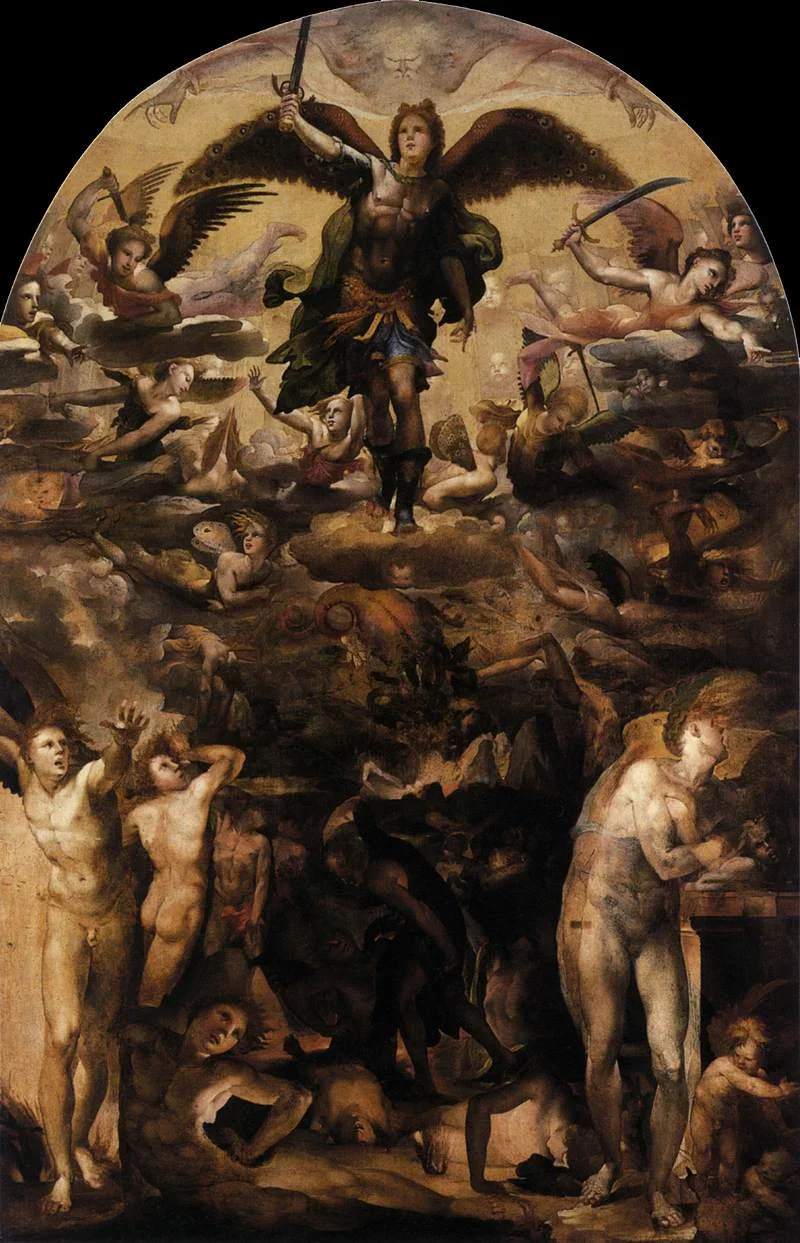
The Fall of the Rebel Angels
Domenico Beccafumi was after something new here, a painting that could show the goodness and fine thoughts of his soul. He meant it for San Niccolò al Carmine in Siena. At the top, Saint Michael raises his sword, with God the Father half transparent above him and armed angels around him. Michael drives the rebels down, and they have become demons, crowding into the darker lower part. Into that conflict he sent a shower of naked bodies. He was drawing on Michelangelo's ceiling in the Sistine Chapel, uncovered only a few years before. On the left, a young man leans forward, drawn from the Crucifixion of Haman on that ceiling. But instead of Michelangelo's massive muscular power, he set ghostly, fading figures moving fluidly across the painting. He left this version unfinished and later made another version for the same church. In the dark centre of this one, a monstrous Lucifer coils on himself, with parts from several animals. That figure may owe something to Bosch's strange animal hybrids, known in Italy through prints.
Listen in the appDomenico Beccafumi · Public domain
09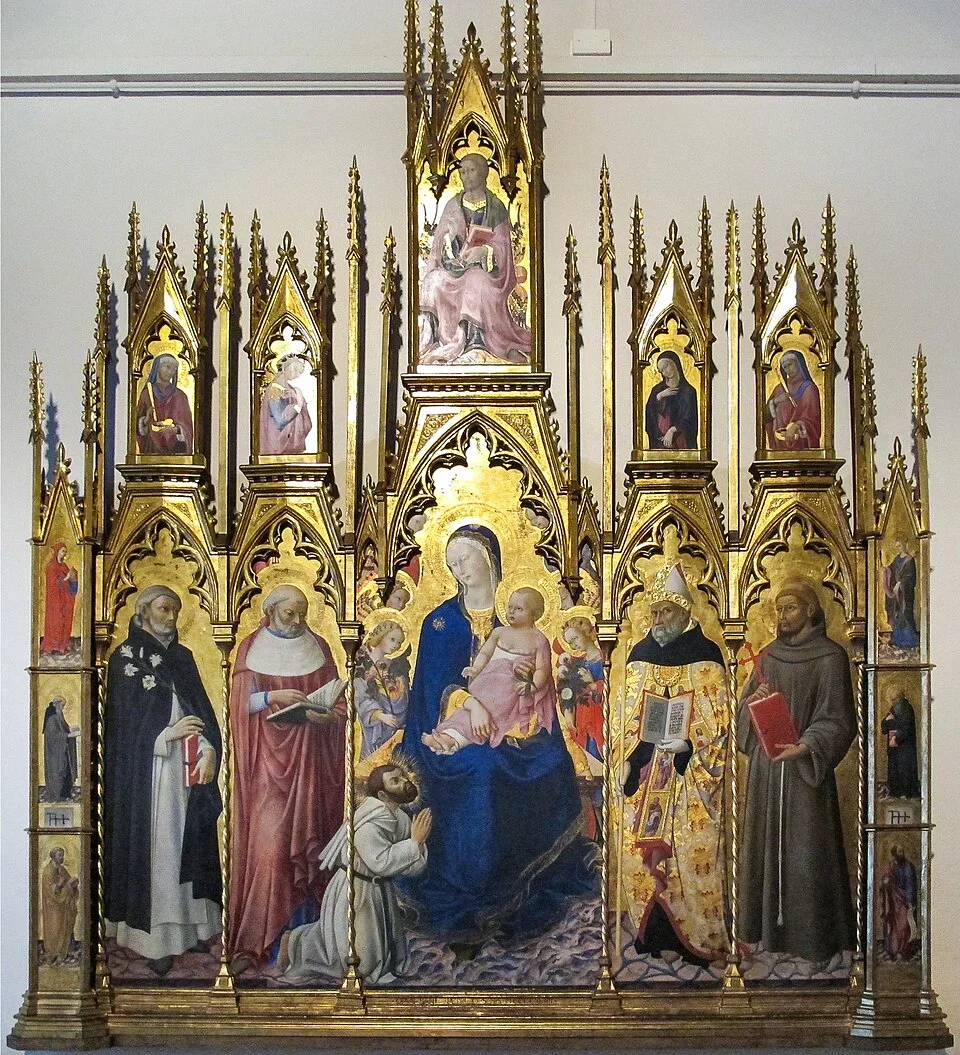
Polittico dei Gesuati
Who is this man kneeling before the Virgin? He prays at the feet of the Madonna and Child, enthroned with six angels beside her. He is Giovanni Colombini, founder of the Gesuati order. The Company of the Virgin commissioned this altarpiece for his order's church of San Girolamo in Siena. Sano di Pietro signed and dated it in 1444, his first documented work. When it was new, the panels all belonged together. Above the Virgin, Christ sits enthroned and blesses, with seraphim of coloured wings around him. Saints fill the panels down both sides, and along the bottom six panels told the life of Saint Jerome. Those six panels are not here. They went first to the marchese Rinuccini. Giampietro Campana bought them in 1852, and when he went bankrupt in 1861, the Louvre acquired them. They still hang in Paris, while the rest of the altarpiece stayed in Siena. But Jerome is still here, one of the four full length saints beside the Virgin, the saint this church was named after.
Listen in the appSano di Pietro · CC BY-SA 3.0
10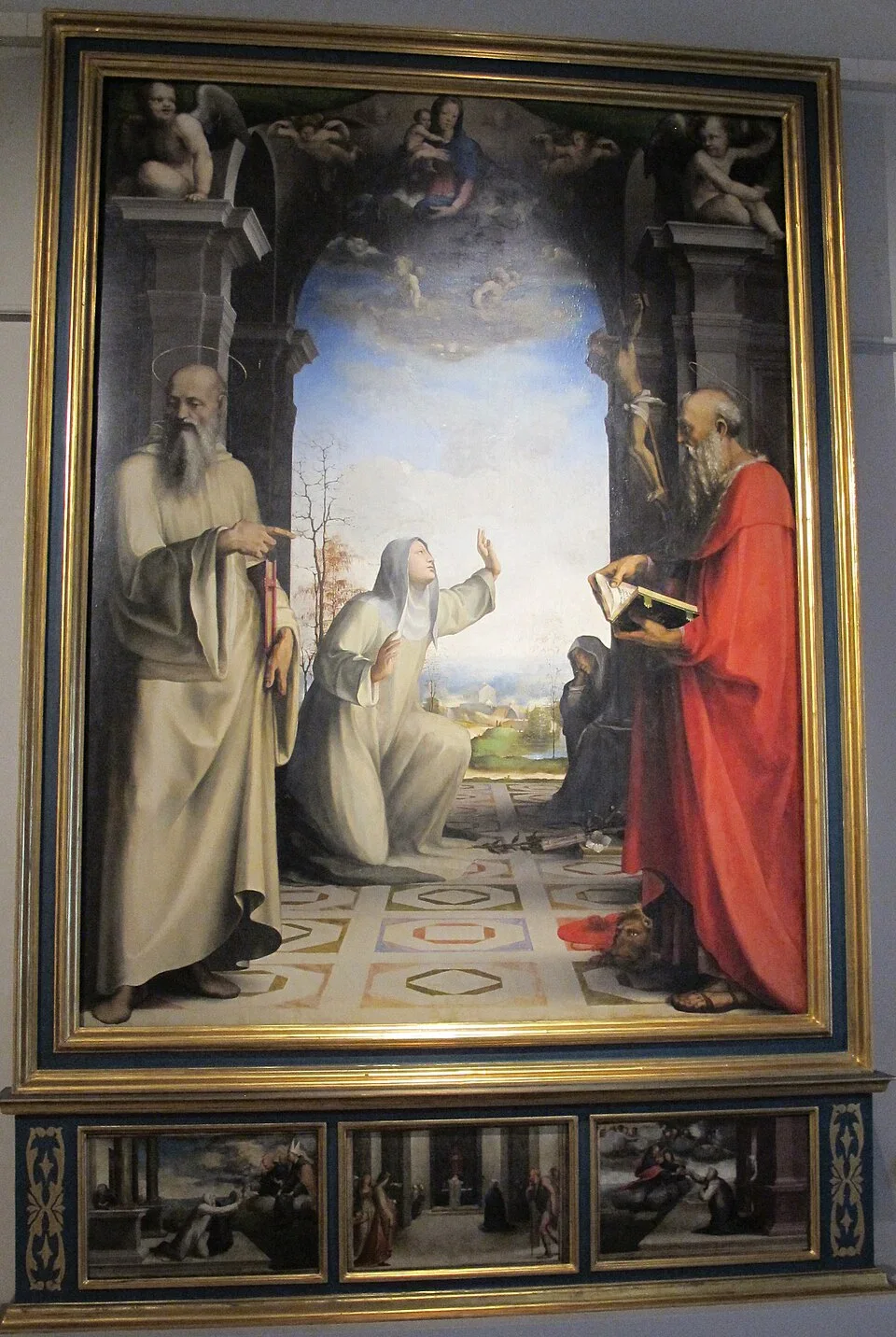
Saint Catherine of Siena receiving the stigmata between Saints Benedict and Jerome
First the little paintings beneath this scene were taken away and taken apart. Later they turned up in the apartments of the order's Father General. The Olivetan monastery outside Porta Tufi, where this picture hung, is gone now. In 1830 a Florentine named Gagliardi restored the whole work. Catherine kneels before a crucifix and receives the stigmata, the marks of Christ's wounds. The Virgin appears above her with the Christ Child, among angels. Saint Benedict stands at one side, pointing her out as a nun of his own order. Saint Jerome stands at the other, known by the little lion and the cardinal's hat at his feet. In the shadow a sister nun watches. On the ground lie a book and a white lily, and the lily stands for purity. The way Beccafumi showed Catherine receiving the wounds came from the old stories of Saint Francis of Assisi. The sister in the shadow is there the way Brother Leo is always there in those stories.
Listen in the appDomenico Beccafumi · Public domain
- 11
Nativity of the Virgin
Domenico Beccafumi · 1540–1543
- 12
Madonna and Child with Saints Polyptych
Duccio di Buoninsegna · 1305–1318
- 13
St. Anthony Beaten by Devils
Sassetta · 1423–1432
- 14
Madonna with child
Domenico Beccafumi · c. 1515
- 15
Madonna and Child with four Saints
Guido of Siena · 1270
- 16
Madonna and child
Dietisalvi di Speme · c. 1265
- 17
Madonna and Child n. 583
Simone Martini · 1305–1310
- 18
Painted crucifix
Ambrogio Lorenzetti · 1320–1331
- 19
Lavanda di Gesù Bambino
Lorenzo Lotto · 1521–1527
- 20
Madonna and Child with Saints
Duccio di Buoninsegna · c. 1300–1305
- 21
Madonna and child
Guido of Siena, Dietisalvi di Speme · 1262
- 22
The Savior Blessing and Stories of the True Cross
Maestro di Tressa · 1215
- 23
Triptych of the Transfiguration, Christ in Jerusalem, and the resurrection of Lazarus
Guido of Siena · c. 1270–1275
- 24
Scenes from the life of Saint Peter
Guido di Graziano · c. 1280–1290
- 25
The Madonna of the Franciscans
Duccio di Buoninsegna · 1280–1285
- 26
Mary with child and saints
Pietro Lorenzetti · 1327–1329
- 27
Madonna and Child between Saint Bernardino and Saint Catarina
Neroccio di Bartolomeo de' Landi · 1490
- 28
Madonna and Child between St Jerome and St Bernardino of Siena
Neroccio di Bartolomeo de' Landi · c. 1476
- 29
Neroccio di Bartolomeo Landi, Madonna and Child with Saints, 1492
Neroccio di Bartolomeo de' Landi · 1492
- 30
Painted crucifix No. 21 from San Giusto in the Pinacoteca Nazionale
Segna di Bonaventura · 1310–1315
- 31
Neroccio di Bartolomeo Landi, Madonna and Child with Saints John the Baptist and Mary Magdalene
Neroccio di Bartolomeo de' Landi · c. 1476
- 32
Sienese Master of the early 13th century, Crucifix, from S. Chiara, Siena
Unknown Artist
- 33
Deposition from the Cross
Il Sodoma · 1510–1513
- 34
Anbetung der Könige
Bartolo di Fredi · 1385–1388
- 35
Madonna of Humility
Giovanni di Paolo · c. 1435
- 36
Annunciation
Francesco di Giorgio · 1470–1472
- 37
The Virgin of the Assumption with St Thomas Receiving the Girdle
Bartolomeo Bulgarini · 1360s
Pinacoteca nazionale
Frequently asked questions
How much does the guide cost?
Free app download. Free until 1 January. Listed guide price: $0.99. Audio guide only. Venue admission is separate.
Can I listen without internet?
Yes. Download the guide’s audio, images, and maps in the app before your visit. Your downloaded content is then available offline.
Can I listen in my language?
In English for now. More languages soon.
Do I need to follow a schedule?
No. This is a self-guided experience. Choose your stops, pause whenever you like, and return to a story at your own pace.
Which artworks are in the Pinacoteca nazionale audio guide?
37 artworks, including Annunciation (Ambrogio Lorenzetti), Mystical Marriage of Saint Catherine (Michelino Molinari da Besozzo), Bernardino Campi Painting Sofonisba Anguissola (Sofonisba Anguissola), Triptych of Saint Augustine (Simone Martini), Trinity (Domenico Beccafumi), The Descent of Christ into Limbo (Domenico Beccafumi), The Coronation of the Virgin (Domenico Beccafumi), and The Fall of the Rebel Angels (Domenico Beccafumi). The full list is on this page.
Is this the museum’s official audio guide?
No. Stanza is an independent audio guide app and is not affiliated with Pinacoteca nazionale. Museum admission is separate.
At your own pace
Explore Pinacoteca nazionale.
Download Stanza, then search for “Pinacoteca nazionale”.
Free app download · Guide price shown in the app
Keep exploring
Nearby audio guides
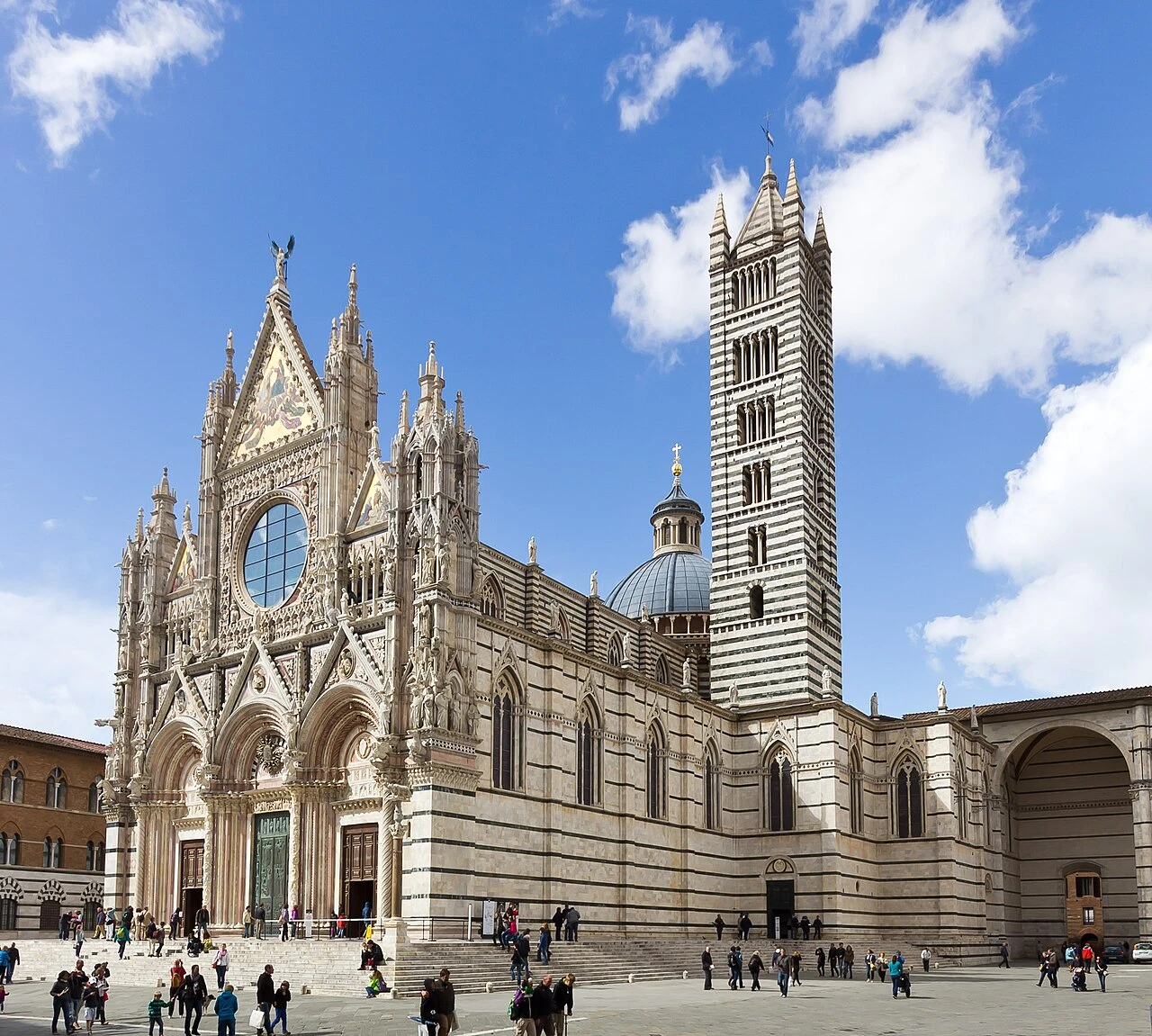
Siena · 1 km
Siena Cathedral
Content & sources
Raimond Spekking · CC BY-SA 4.0
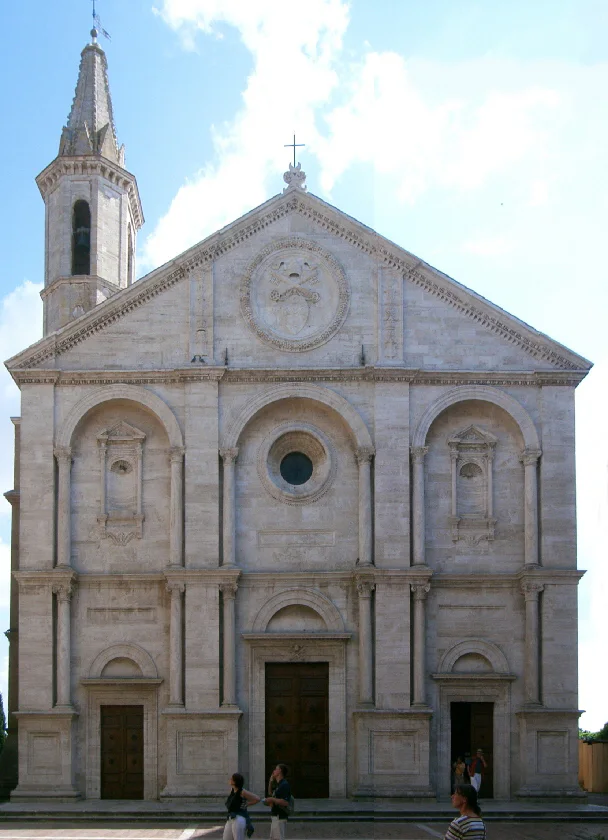
Pienza · 39 km
Duomo di Pienza
Content & sources
Photo: Beckstet · CC BY-SA 3.0
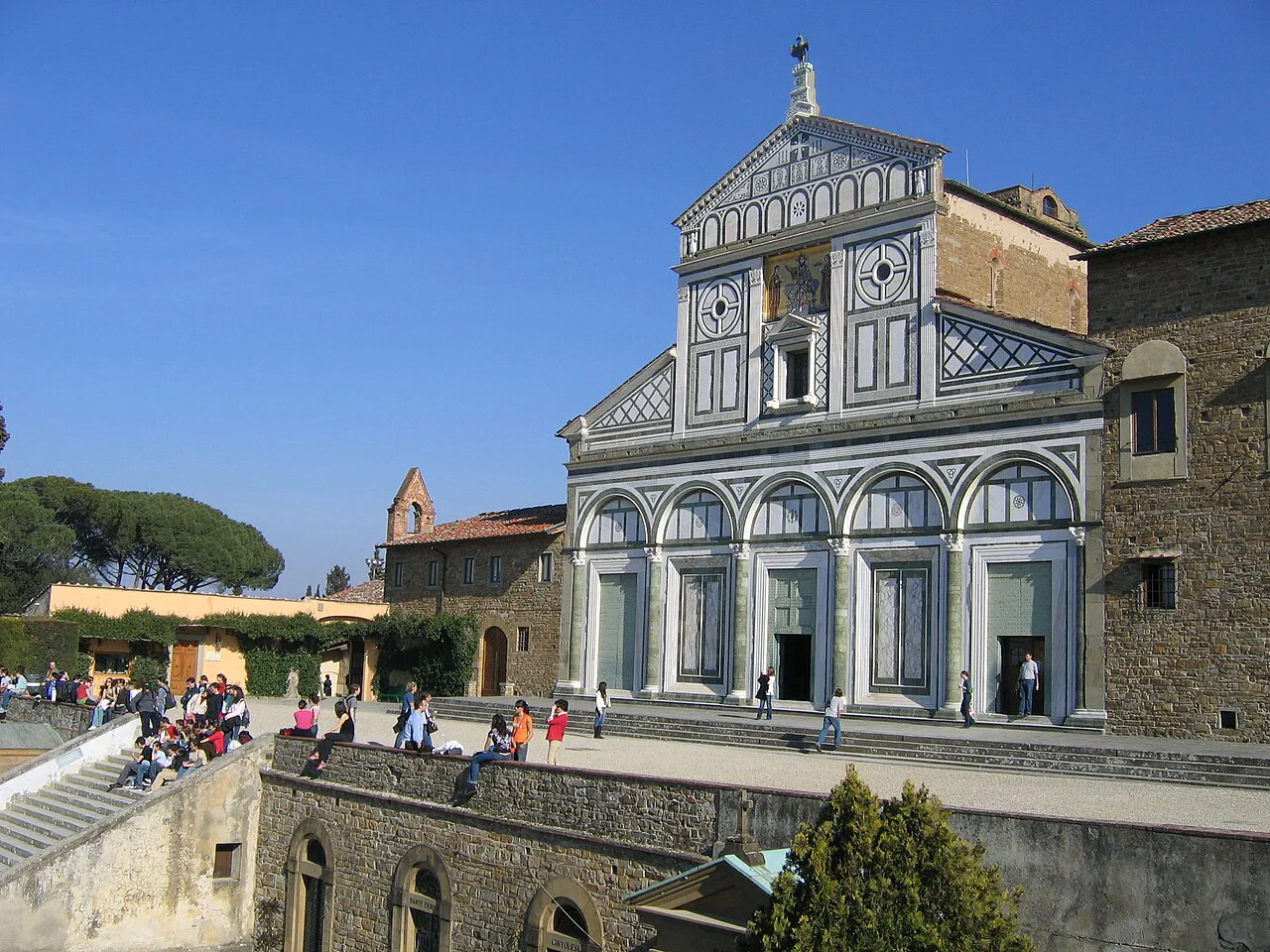
Florence · 50 km
Basilica di San Miniato al Monte
Content & sources
Photo: Richardfabi~commonswiki · Public domain
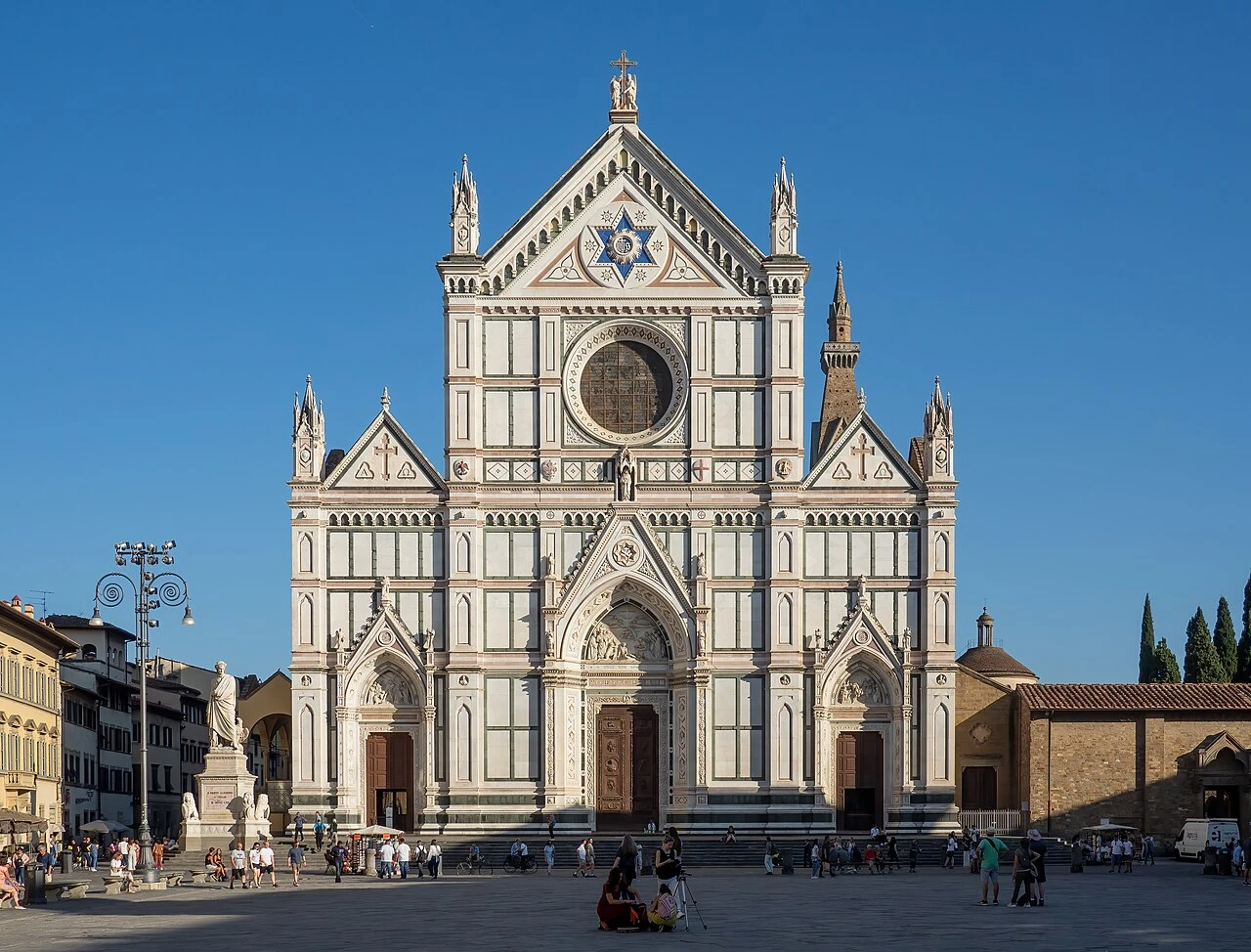
Florence · 51 km
Basilica of Santa Croce
Content & sources
Photo: Rhododendrites · CC BY-SA 4.0
Art museums
More art museum audio guides
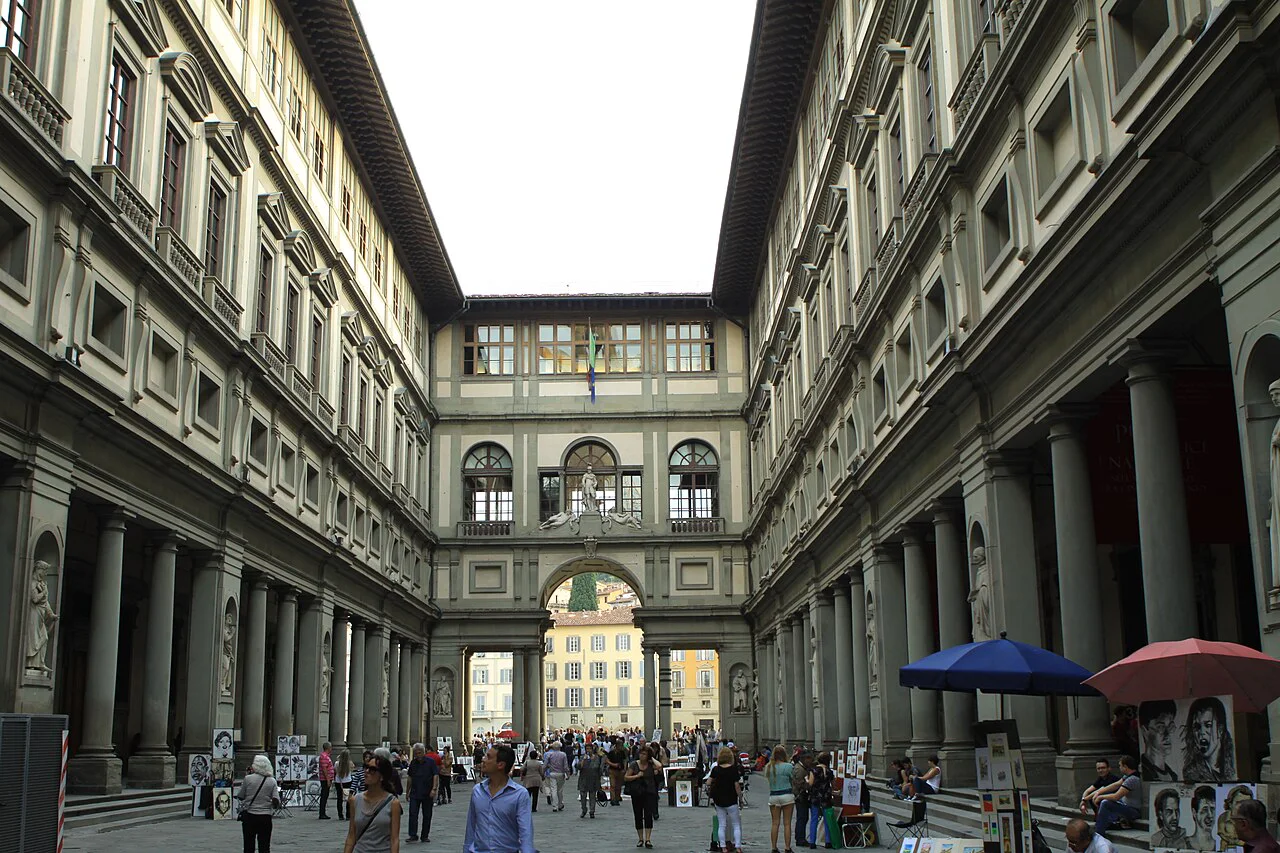
Florence · 70 artworks
Uffizi Gallery
Content & sources
Arek N. · CC BY-SA 3.0
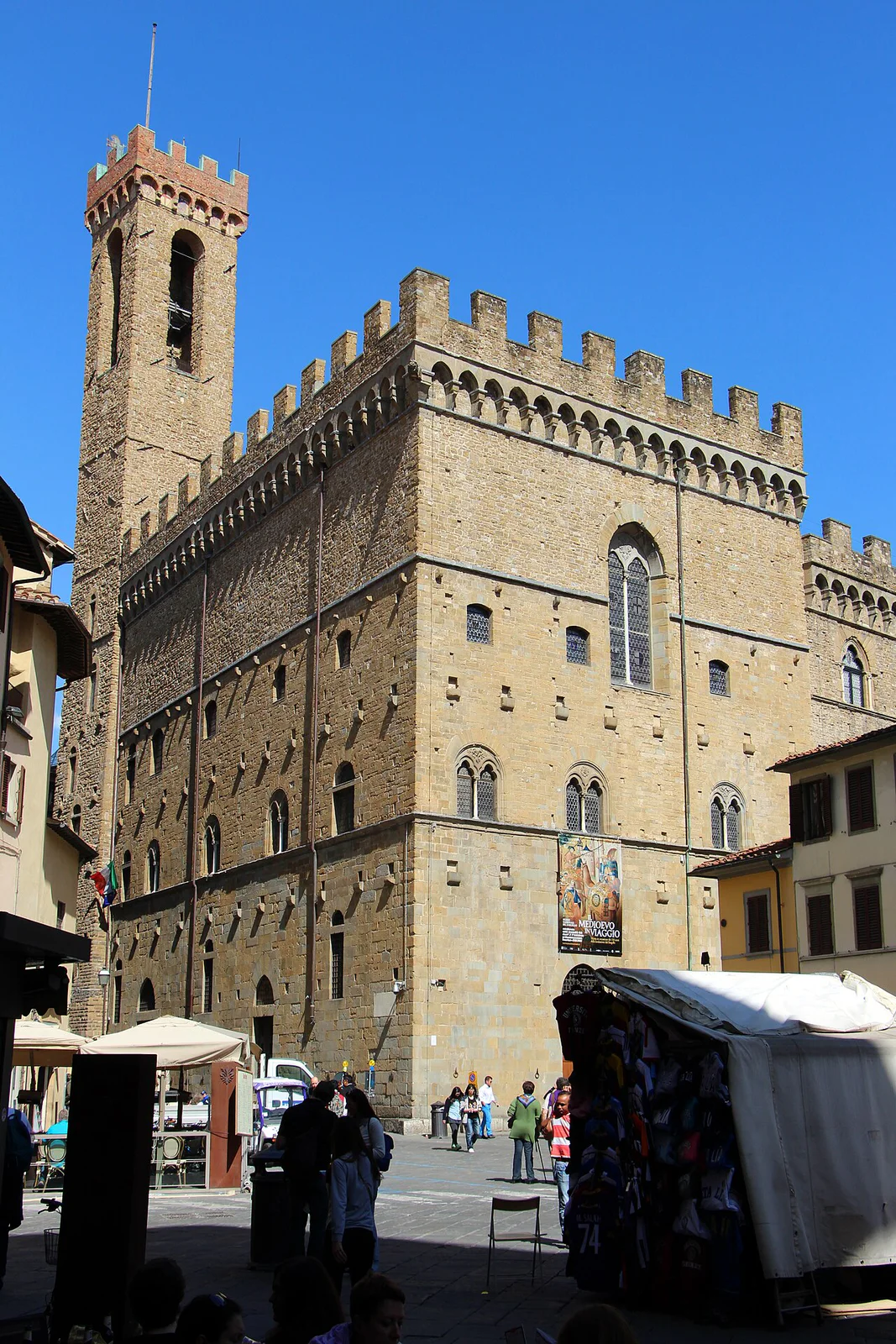
Florence · 37 artworks
Museo nazionale del Bargello
Content & sources
Photo: Sailko · CC BY 3.0
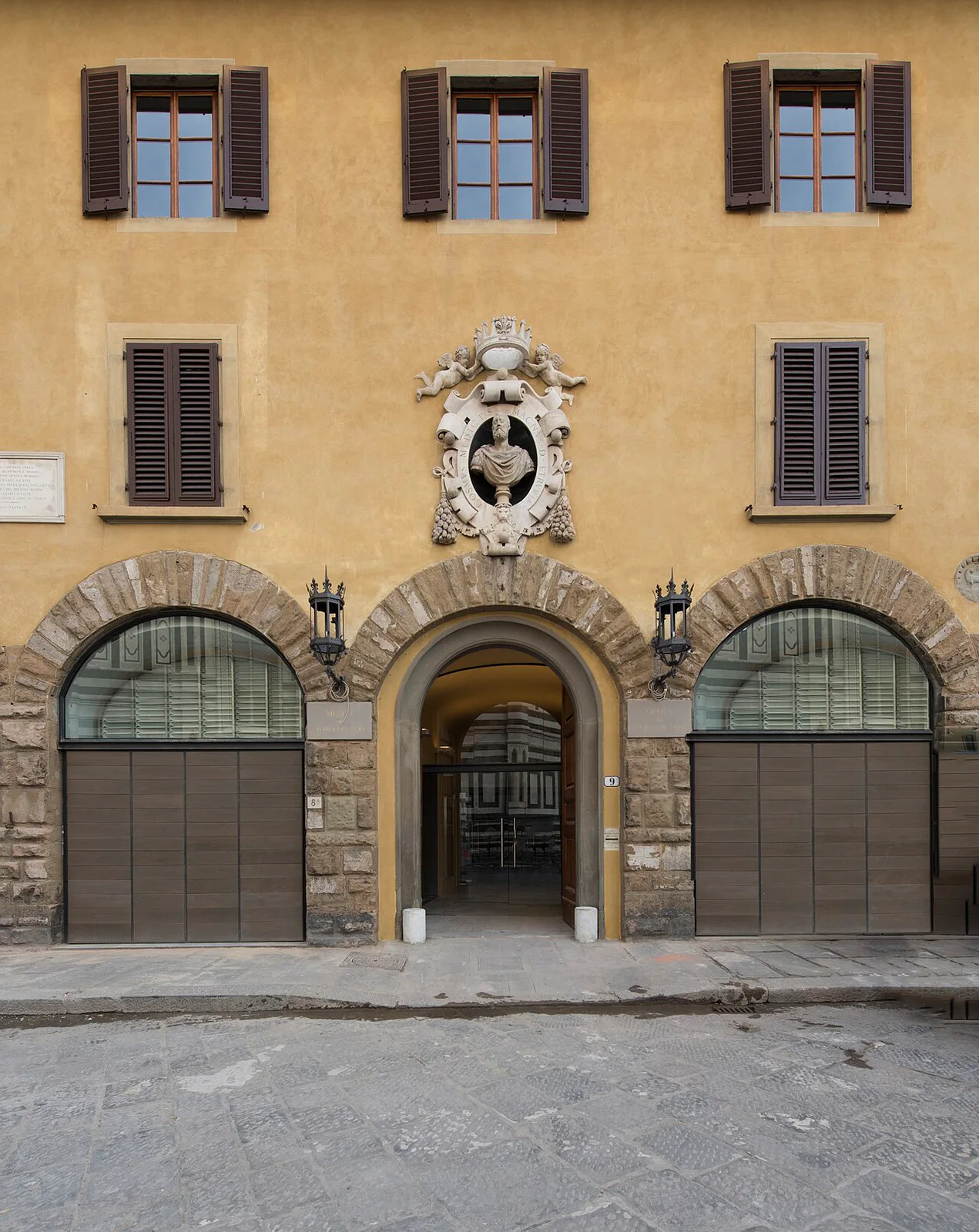
Florence · 27 artworks
Museo dell'Opera del Duomo
Content & sources
Photo: Giovanni Serafini · CC0
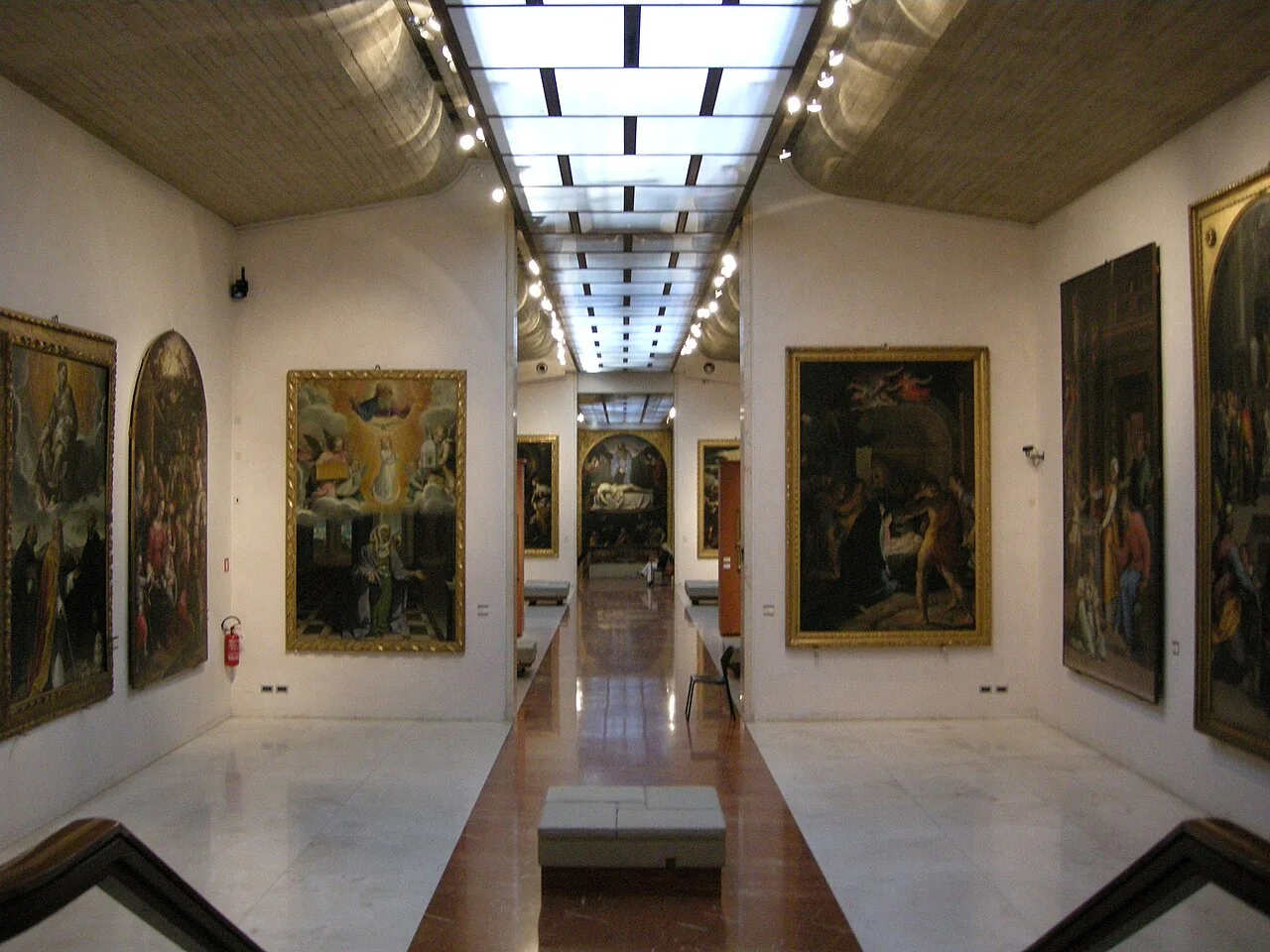
Bologna · 38 artworks
Pinacoteca nazionale di Bologna
Content & sources
Photo: Sailko · CC BY-SA 3.0
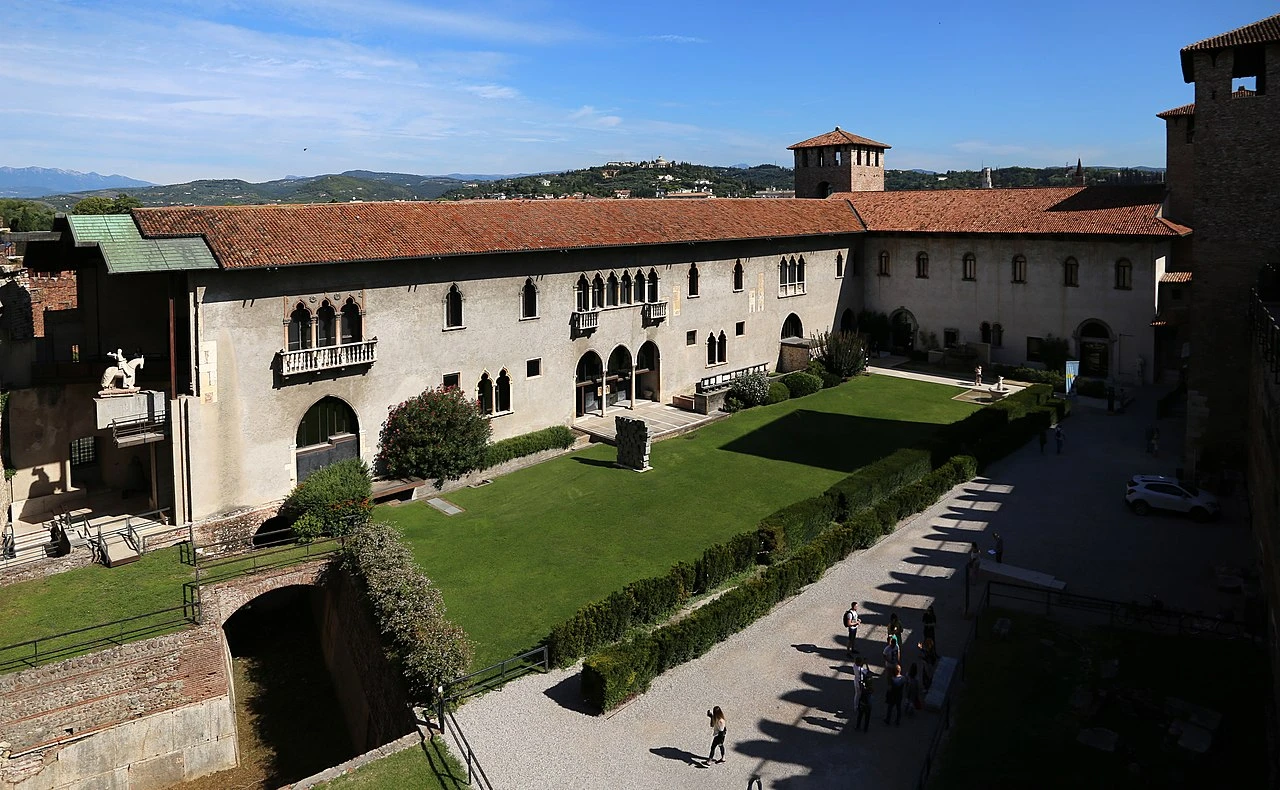
Verona · 65 artworks
Castelvecchio Museum
Content & sources
Photo: Sailko · CC BY-SA 4.0
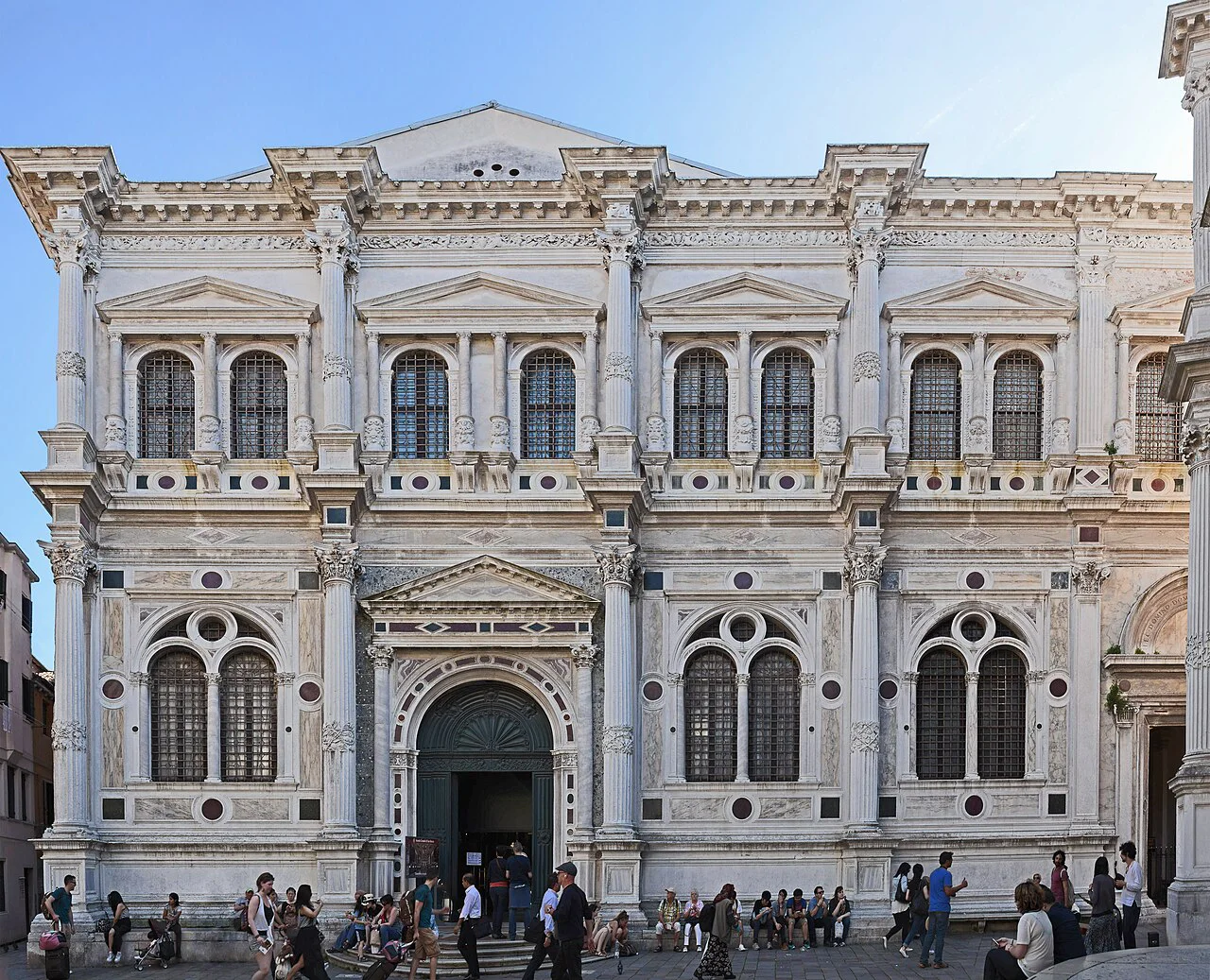
Venice · 23 artworks
Scuola Grande di San Rocco
Content & sources
Didier Descouens · CC BY-SA 4.0