Stanza · Audio guide
Museo dell'Opera del Duomo Audio Guide
A place to remember. A story to take with you.
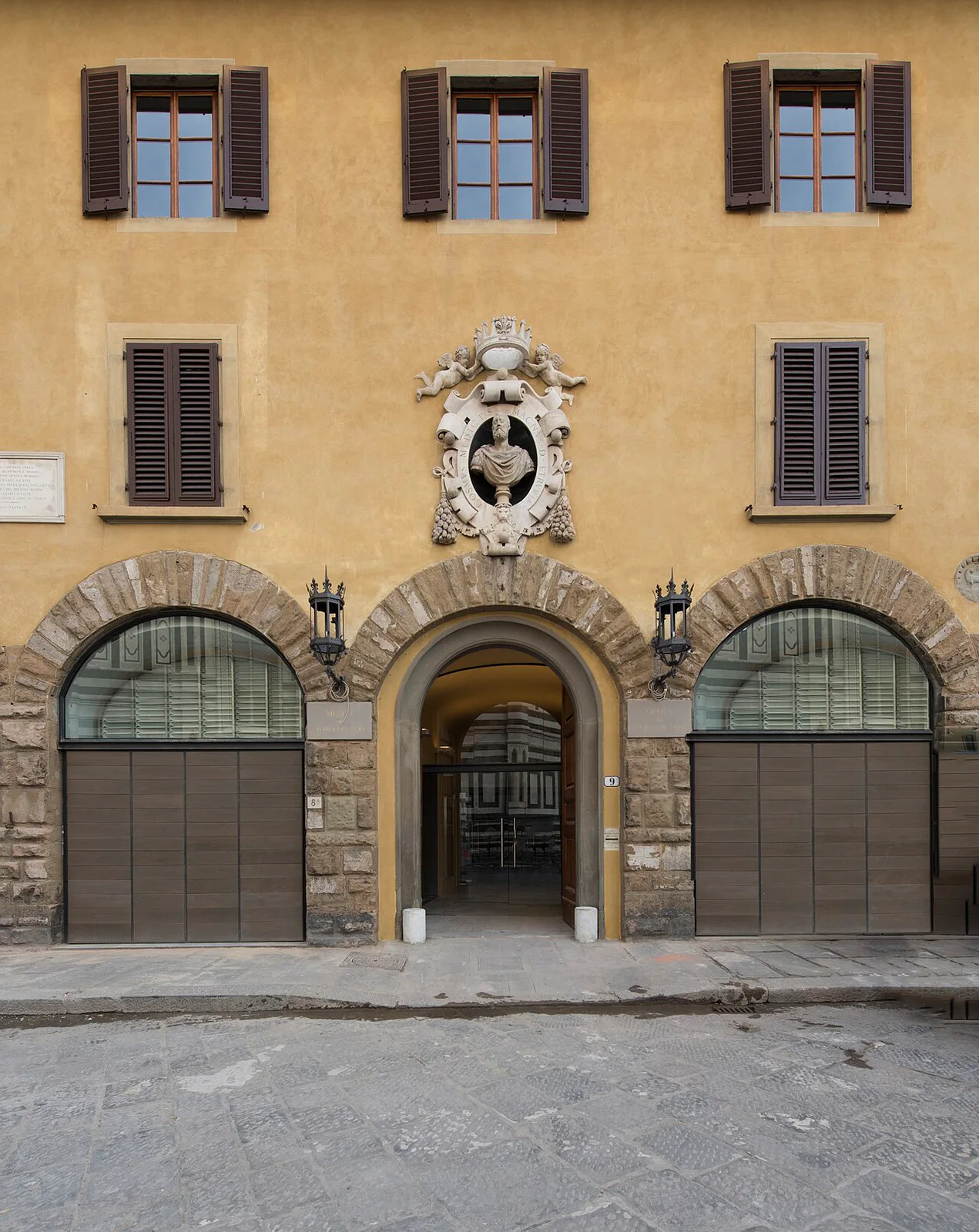
The Museo dell'Opera del Duomo in Florence is a museum containing many of the original works of art created for Florence Cathedral, including the adjacent Florence Baptistery and Giotto's campanile. Most of…
Download Stanza, then search for “Museo dell'Opera del Duomo”.
About the tour
One guide. Your kind of visit.
The Museo dell'Opera del Duomo in Florence is a museum containing many of the original works of art created for Florence Cathedral, including the adjacent Florence Baptistery and Giotto's campanile. Most of the exterior sculptures have been removed from these buildings, usually replaced by replica pieces, with the museum conserving the originals.
The Museo dell'Opera del Duomo guide tells the stories of 27 artworks, including The Deposition (Michelangelo), Penitent Magdalene (Donatello), Zuccone (Donatello), Gates of Paradise (Lorenzo Ghiberti), North Doors of the Florence Baptistery (Lorenzo Ghiberti), The Sacrifice of Isaac (Donatello), Saint John the Evangelist (Donatello), and Jeremiah (Donatello). Every artwork is free to hear in the Stanza app until 1 January.
Ready when you are.
- 01Get the free Stanza app.
iOS & Android
- 02Find your guide.
“Museo dell'Opera del Duomo”
- 03Download before you go.
Works offline
Audio guide / 27 artworks
Inside the guide
Get to know a few of the stories before you go. Open a stop to read more.
01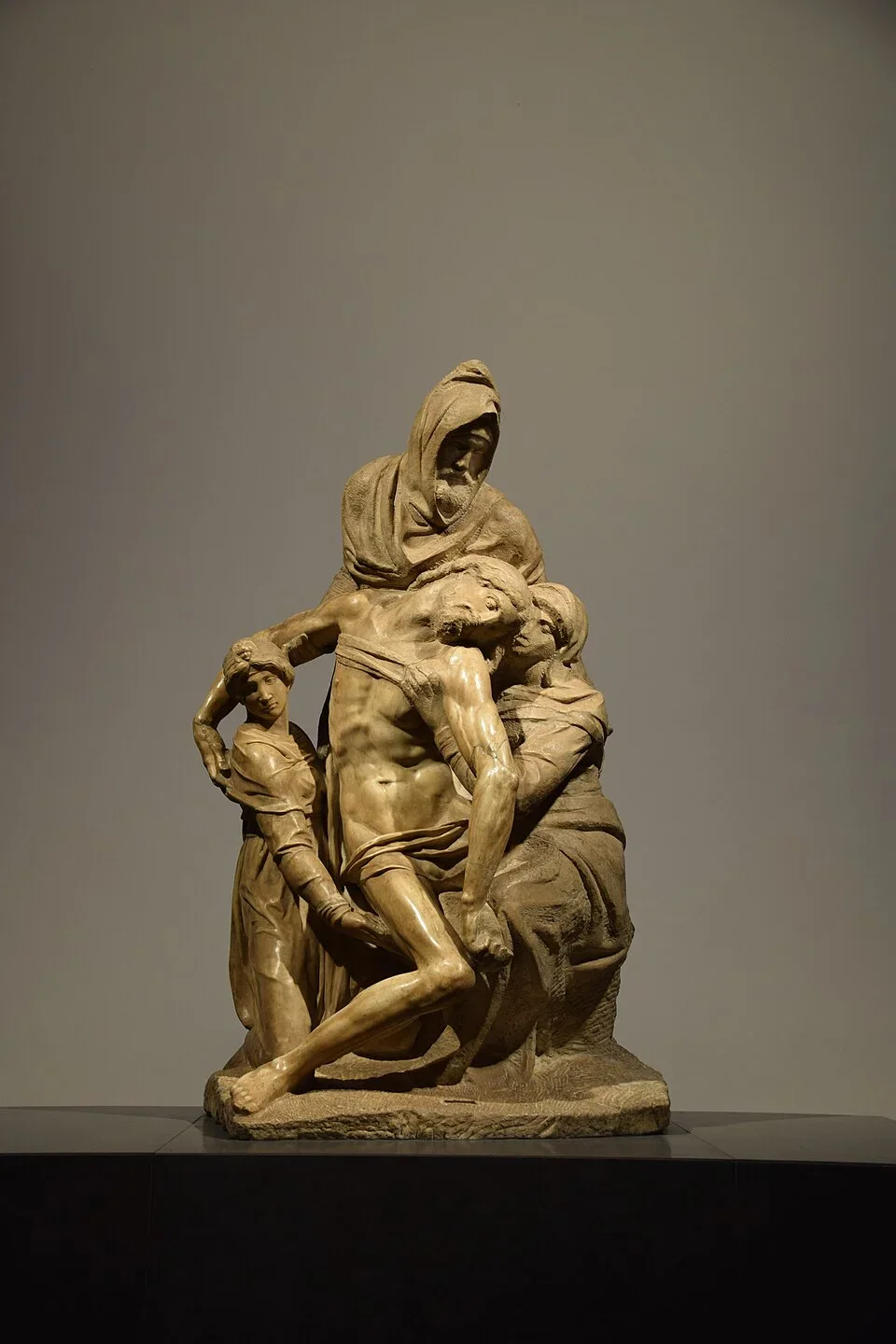
The Deposition
One night, the man who carved this took a hammer to it and tried to break it apart. The marks are still here. There are breaks on Christ's elbow, his chest and shoulder, and on Mary's hand. Christ's left leg is gone altogether. It was meant to lie across Mary's leg, and now there is nothing there. Michelangelo had started it for his own tomb in Rome, with no one paying him. He was about seventy two by then, and worked late into the night by a single candle. A vein in the marble kept giving him trouble, and his servant kept pressing him to finish. Eight years went into it before that night. Afterwards the broken group was sold to Francesco Bandini. He had an apprentice put it back together. The apprentice added Mary Magdalene, who is out of proportion with the others. Christ's body twists and seems to slip downward, as though it is passing from the cross straight into his mother's arms. The hooded figure helping to hold him has a face thought to be the sculptor's own. If so, he put himself among the figures in the work he meant to be buried with.
Listen in the appGeorge M. Groutas · CC BY 2.0
02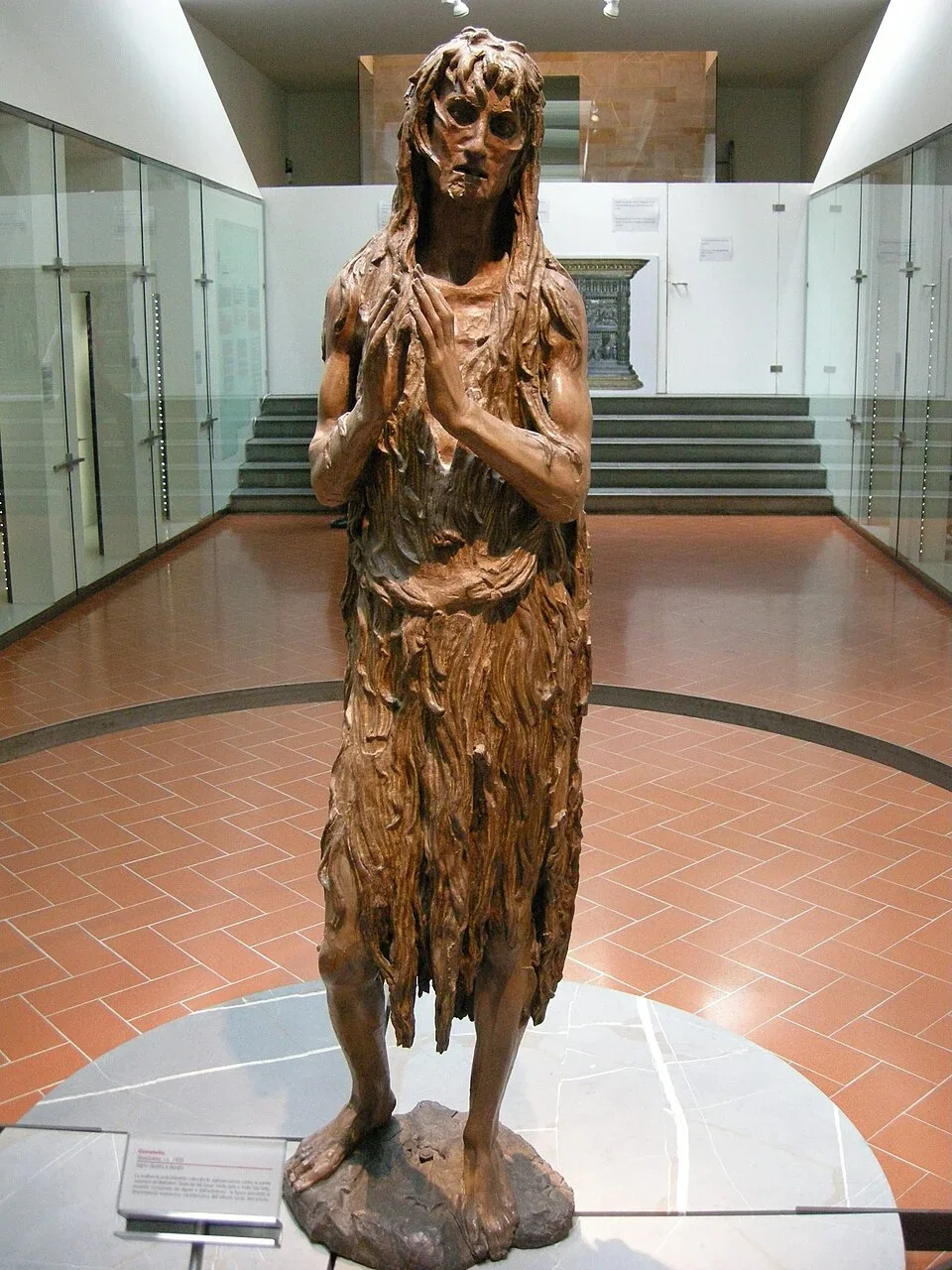
Penitent Magdalene
Her hands have almost met. They are about to close, but stop just short, as though she is only now beginning a humble prayer. The long years of fasting are behind her. Her hair has grown so long it winds around her hips like a garment. Her face is hollowed, her eyes sunk deep, her mouth a little open, and the muscles and tendons show just under her skin. She was once known for her beauty. Donatello did not carve the lovely young woman people expected. In the old Church stories, Mary Magdalene had been merged with Mary of Egypt. That was a woman who had been a prostitute, then spent thirty years repenting in the desert. He very probably based this figure on Eastern images of that saint, who appears there gaunt and wasted. He left out most of the usual signs, the skull, the cross, the little jar of ointment. Nor did he show the angels that Western stories said fed her in the desert. It was probably made for Florence's Baptistery, and when it first appeared, its stark realism astounded people. Her hair was threaded with gold, a faint reminder of the beauty that fasting and age had taken from her.
Listen in the appPhoto: Sailko · CC BY 2.5
03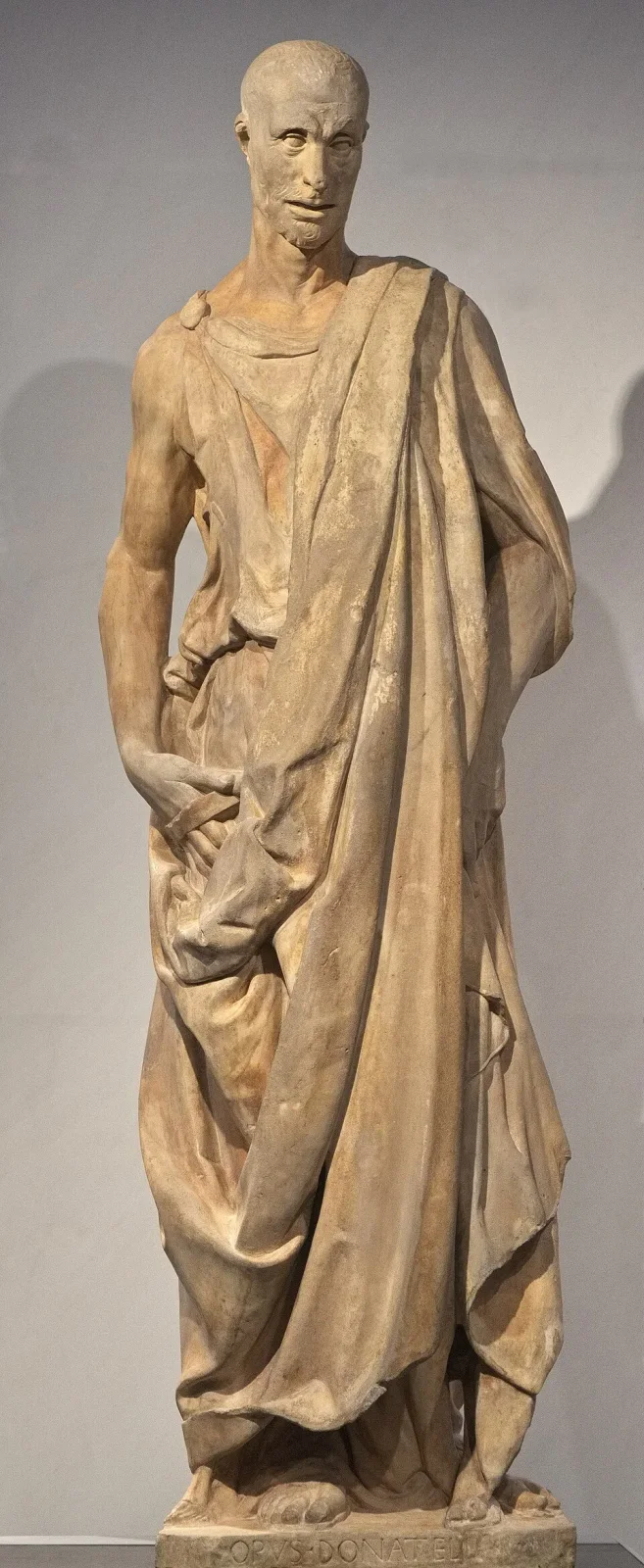
Zuccone
Nobody knows for certain whose face this is. The head is bald, the hair cut almost to nothing, the features uneven. The mouth is slightly open and the eyes sunk deep. Donatello left the skull rough on purpose, working toward a realism unlike most sculpture of his day. He is said to have sworn by this statue and to have called out to the marble, speak, damn you, speak. Many take it for the prophet Habakkuk. But it may be a real man, Giovanni Chiericini, an opponent of the Medici who died in Florence in 1416. For that bare skull the Florentines nicknamed it Zuccone, pumpkin head. It stood high on the bell tower of Florence Cathedral, its gaze directed downward toward the people below. The advance Donatello received for it, twenty two florins, went to pay his unpaid taxes.
Listen in the appPhoto: MenkinAlRire · CC BY-SA 4.0
04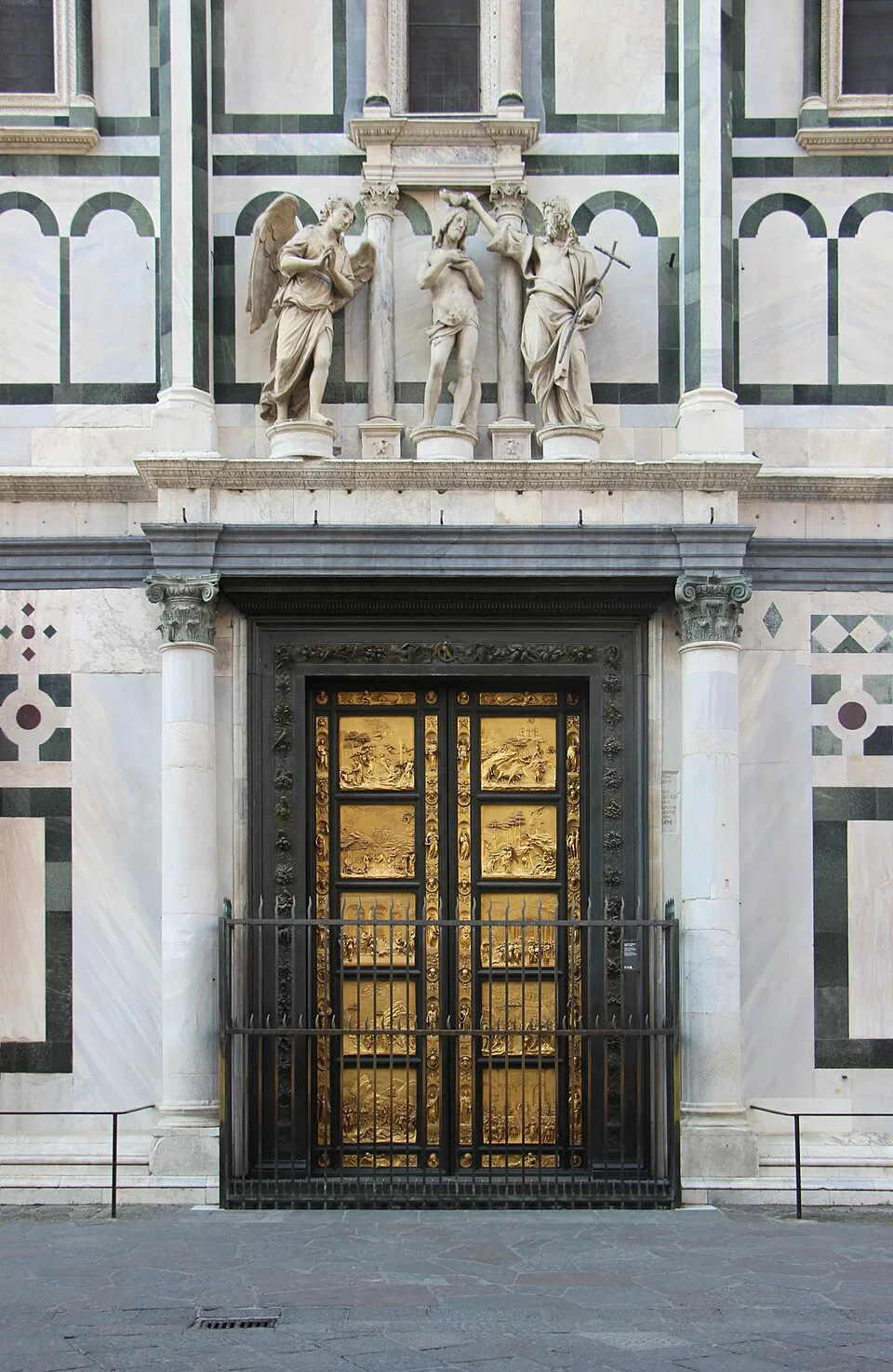
Gates of Paradise
At first this door was planned like the others. Twenty-eight small panels, with single prophets filling the bottom two rows. Partway through the work, the man making it changed the whole plan. He cut the panels to ten, made them square and far larger, so a whole scene could fill each panel. Lorenzo Ghiberti was free to make it as rich and ornate as he wished, with no limit on spending. The first plan never vanished. The back of the door still carries the twenty-eight squares, each with its central stud. The new scenes needed a fresh scheme of subjects. That probably fell to Ambrogio Traversari, head of the Camaldolese order. He could read Greek, when many of the texts behind these stories were still untranslated. The change was settled by 1435, the year Cosimo de' Medici came home from exile. The panel of Joseph's story seems to point to that return. The work ran on twenty-seven years, and he was seventy when the last panels went in. Then in 1966 a flood burst the door open and tore six of the ten panels from their frame. When they were cleaned, the gold that came back was the original from 1452, not the work of later restorers.
Listen in the appPhoto: Sailko · CC BY 3.0
05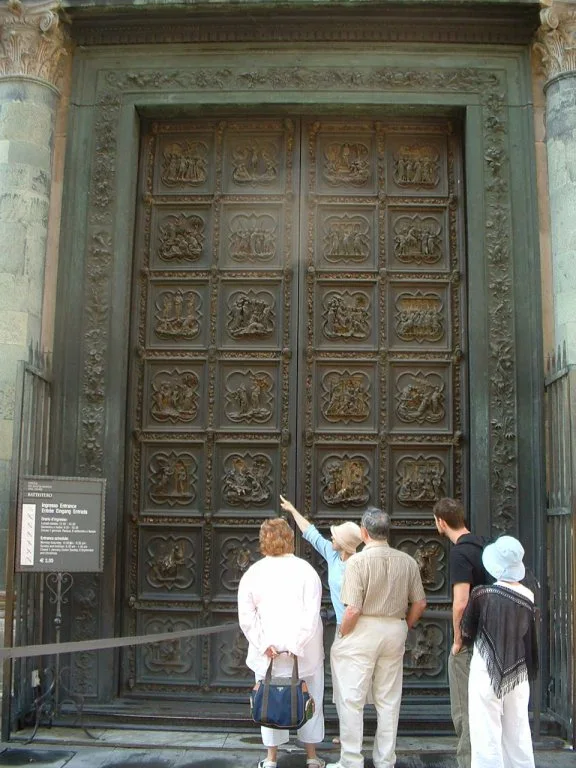
North Doors of the Florence Baptistery
Between the panels, a small creature is tucked into the ivy. The workshop probably cast these from the animals themselves, taking molds from their bodies, a way of working known nowhere else. These were the creatures that damaged crops. With Christ's help, the hope was to keep them out of the fields and avoid famine. Assistants added garlands of plants on the sides and across the top. Birds, reptiles and mammals peck at fruit or perch there, carrying the same protective wish. The panels tell Christ's story, from the Annunciation to Pentecost, with the Passion at the top. The Arte di Calimala, who looked after the Baptistery of Saint John, wanted new doors. In 1401 they held a competition on the Binding of Isaac. Filippo Brunelleschi and Jacopo della Quercia from Siena were among those who entered. The judging is unclear, but the job went to Lorenzo Ghiberti, who worked with his father, the goldsmith Bartoluccio. The casts came out rough, so smoothing them and working the details filled most of the time between 1403 and 1424. Gilding and assembly took a year. Among the helpers was Donatello, about twenty. There is a small head in the center of the left wing, fifth row from the top. It wears a turban and is his own face, probably the first realistic portrait of the Renaissance.
Listen in the appNecrothesp at English Wikipedia, Necrothesp · CC BY-SA 3.0
06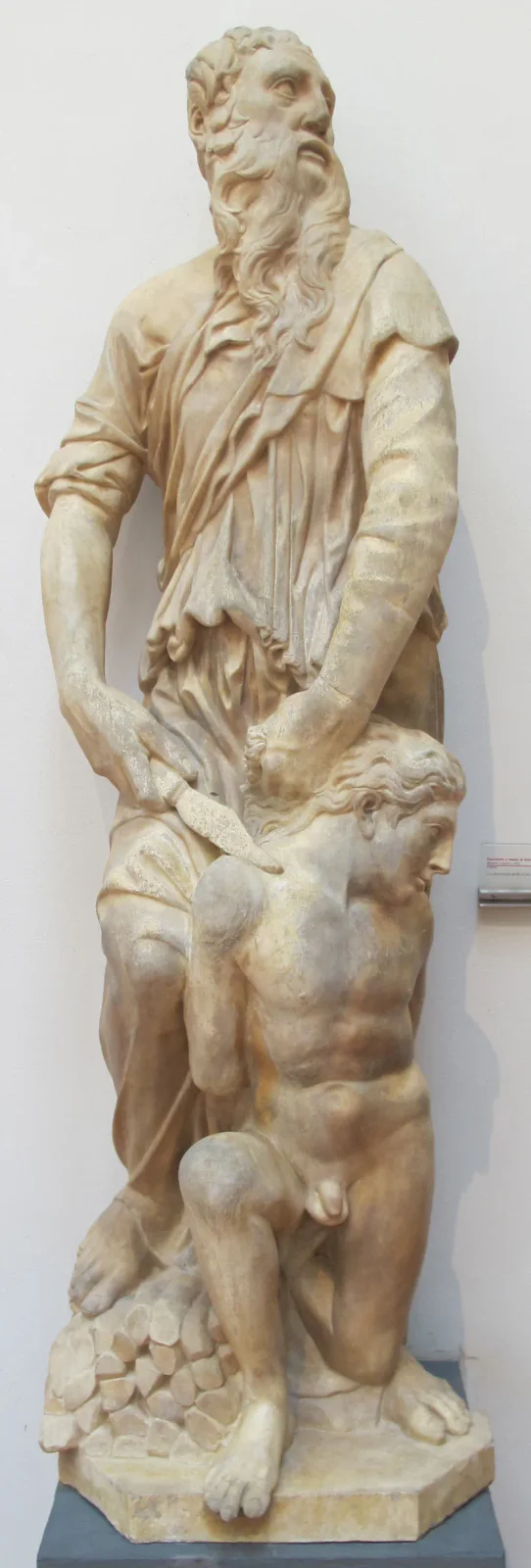
The Sacrifice of Isaac
A man grips his son by the hair, with a knife already near the boy's throat. One of his legs rests on a bundle of wood gathered for the sacrifice. The boy, naked and muscular, turns aside to the right. The man's eyes are turned upward, away from him. The upward glance gives the moment away. The angel's command to stop seems to have reached Abraham, and the knife has not yet cut. His hand still holds the boy by the hair, but his attention has left the sacrifice. The boy draws back, and the two figures turn with him, their movement coming from twisted bodies rather than clothes. This group was made for the third level of Giotto's bell tower, on the side facing the dome that had not yet been built. The other statues on that side were prophets. This is the only one whose story can be identified. The same subject had been at the center of the competition for the north doors of Florence's Baptistery in 1401. Two figures had to occupy the space of one prophet, so they were twisted together. On the outer side, a foot breaks past the edge of the niche and comes into your space. The figures were brought inside in 1937, with copies put outside, and cleaned in 2009. Donatello signed the commission with his assistant Nanni di Bartolo. The division of the carving between them is still not known.
Listen in the appPhoto: Sailko · CC BY-SA 3.0
07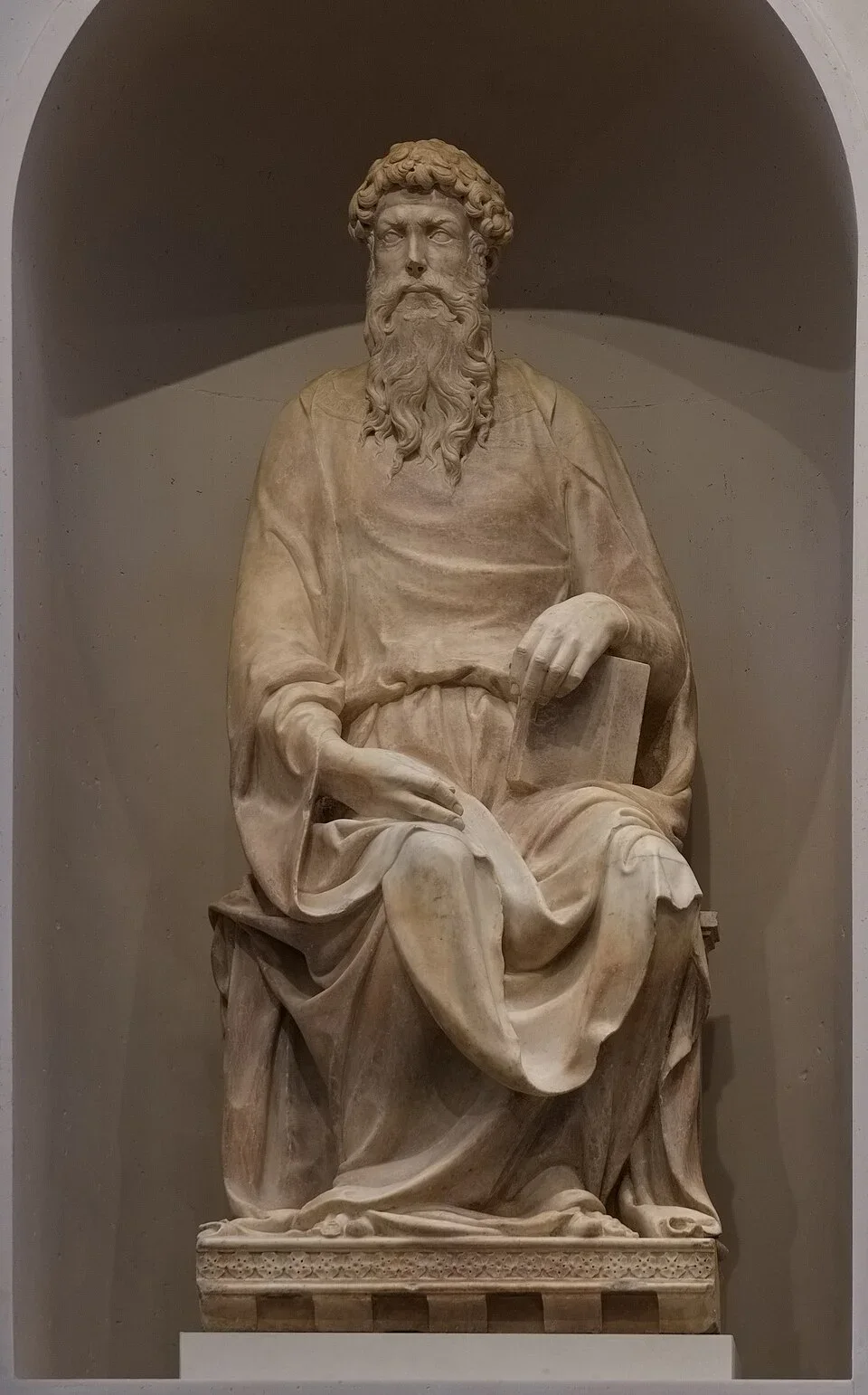
Saint John the Evangelist
The cathedral wanted a seated evangelist for its facade, one of four figures around the central doorway. The book he holds upright on his leg, steadied by his left hand, tells you who he is. Donatello was given a chapel in the cathedral to carve it. In July 1410 the room was boarded up, so no one would see the statue before it was finished. But other commissions kept pulling him away, and the years went by. In April 1415 a notice came to his house. He was to finish before the year was out, or pay a fine of twenty five florins. What came out of that closed room is the figure here. His shoulders curve, his arms hang limp, and his upper body is simplified into a half circle. The drapery falls in wide folds, deepest at the bottom, and you can feel the limbs beneath them. The hands are strong, carved from careful study of real ones. His bearded head, with its thick curly hair, turns sharply to the right, the eyes fixed and intense. Heavy brows draw slightly together above a deep line across the forehead and a tight mouth. The whole figure holds its energy in. He delivered it that October, and was paid a hundred and sixty florins.
Listen in the appPhoto: MenkinAlRire · CC BY-SA 4.0
08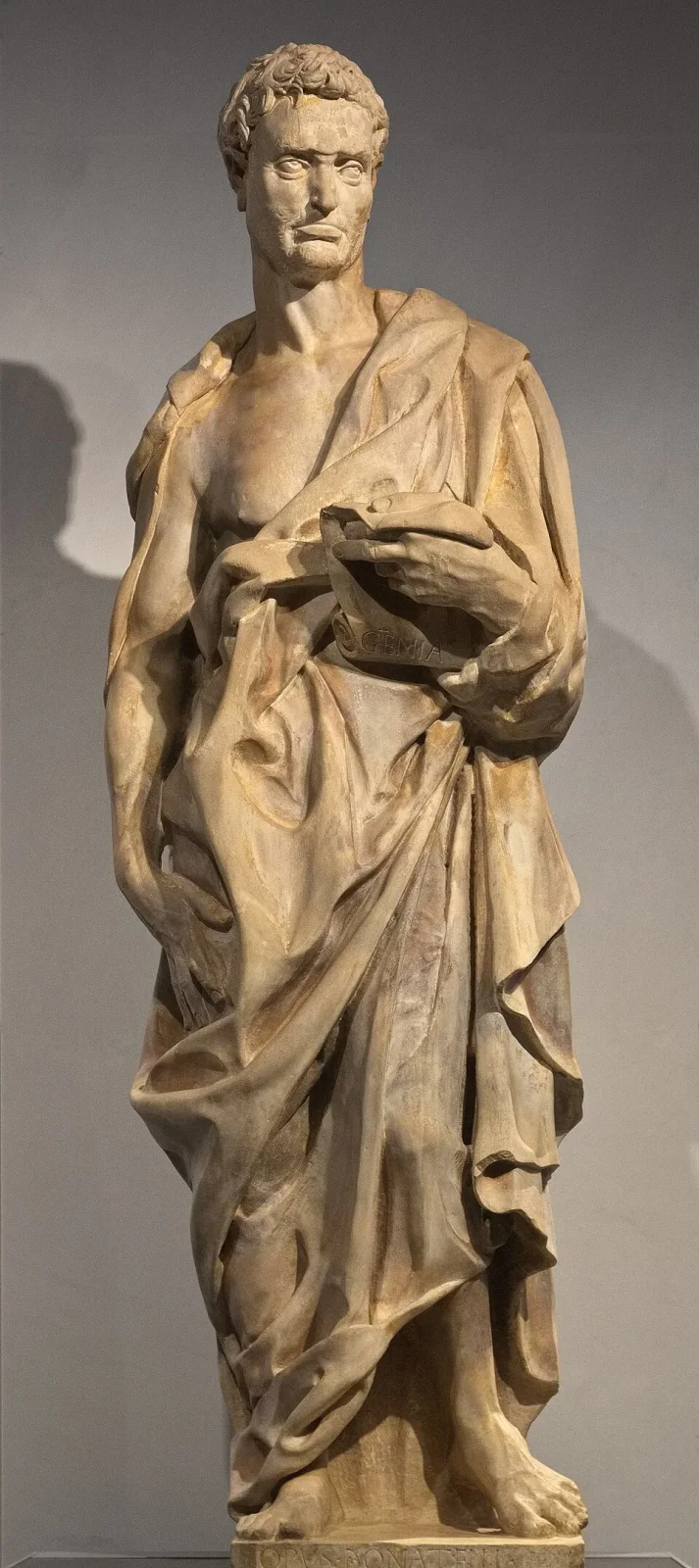
Jeremiah
This statue was carved for the least visible side of Giotto's bell tower. It was the north side, right against the cathedral wall. The statue was one of the last four made there. When the men who ran the cathedral saw the four finished, they liked them so much that they moved them to the west side. That side runs parallel to the cathedral's front, the most important place of all. Older figures, by Andrea Pisano and his workshop, were shifted aside to make room. The prophet is a man in middle age, with curly hair gathered into one thick mass, a short beard, and his right shoulder bare. His head tips to the left. The mouth has a bitter fold, the lip turned down, the brows drawn together, the muscles of his neck standing tight. His features are pinched and uneven. Still the figure keeps its calm and dignity. The gestures are quiet, and the folds of the clothing fall into deep light and shadow. Those folds turn lively at the bottom, following his left leg as it steps forward. His strong, wrinkled features gave him the nickname of the common man. Donatello probably used his friend Francesco Soderini as the model for that face.
Listen in the appPhoto: MenkinAlRire · CC BY-SA 4.0
09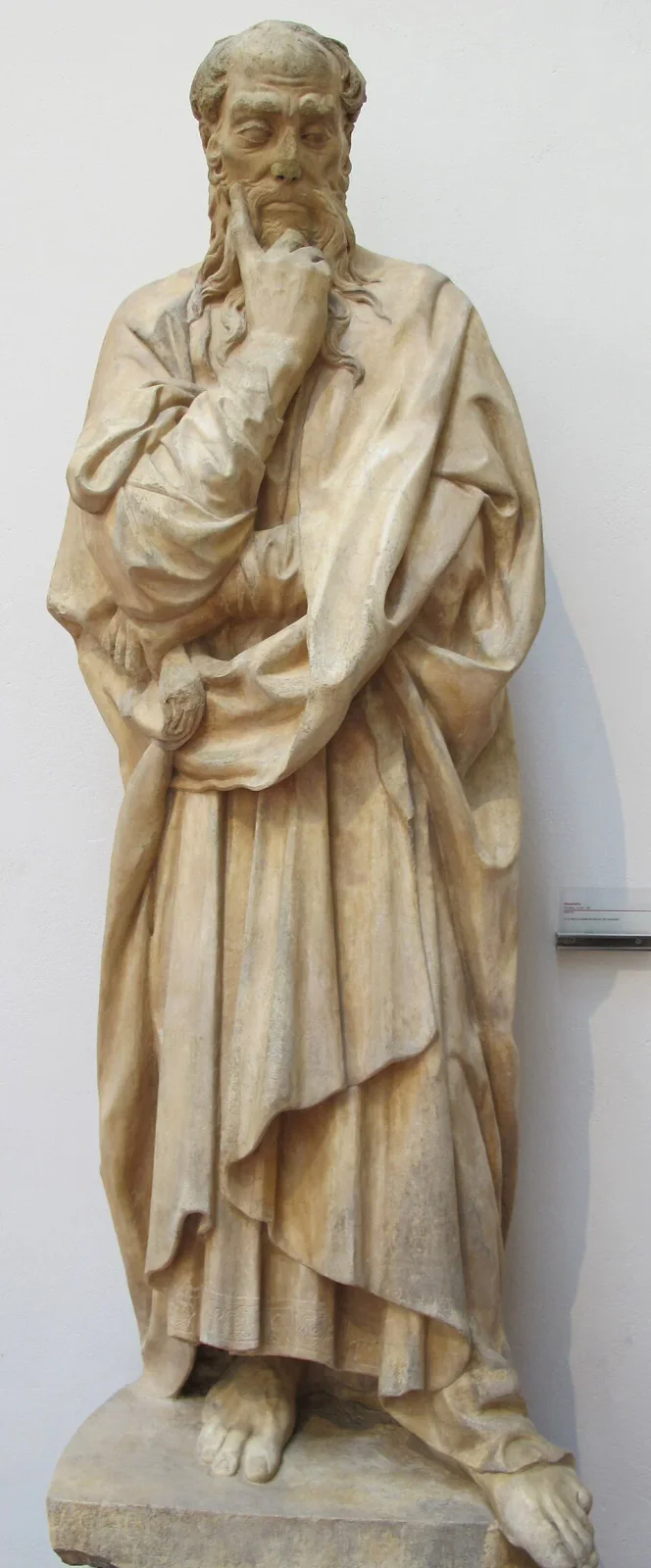
Pensive Prophet
He has just leaned a little forward, and one finger is at his cheek, holding his chin. In a moment his eyes will reach the people far below. That gaze was made for a place high above your head. Donatello carved him for a niche on Giotto's bell tower, on the side facing Brunelleschi's dome, which was not built yet. His face is unusually individual, with features drawn tight and uneven. Yet the calm of his gesture and the strong light and dark in the folds of his clothing give him dignity. That finger at his cheek, and his absorbed look, are why people call him the pensive one. A trace of colour still remains in one pupil. In 1937 the statues came down into this museum, and copies took their places outside. Weather had blackened them. Others are being cleaned and restored now. This one has not been restored. Which prophet he is, nobody knows.
Listen in the appPhoto: Sailko · CC BY-SA 3.0
10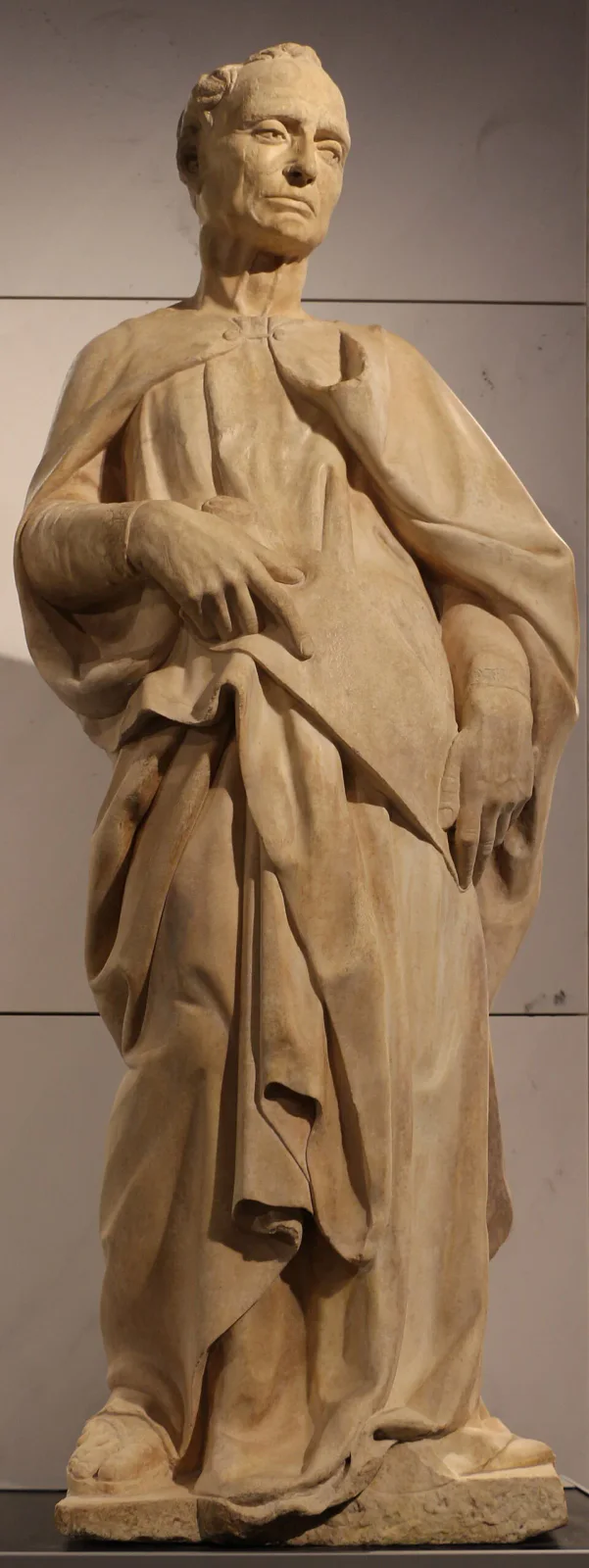
Beardless Prophet
You cannot tell who this man is. Nothing about him names him, no object, no sign, so he is called only the Beardless Prophet. And yet he holds out a scroll and points at it, as if what it said were the whole point. He is trying hard to reach whoever stands below. But the letters, probably painted on, are no longer visible. The face is too individual for someone with no name. It seems Donatello used his friend Brunelleschi as the model, a man about ten years older than him. The head tilts to the left, the hip shifts, and the features draw tight and do not quite agree. Still, the gesture stays calm, and the whole figure keeps its dignity. He looks down because he was made to stand many meters up, on the east side of Giotto's bell tower, first on the left. He faced the dome that in those years had not been built yet. In 1937 a copy took his place on the tower and he came inside. The statues had blackened outdoors, and he is the one who has not yet been restored.
Listen in the appDonatello · CC BY 3.0
- 11
Young Prophet
Donatello · 1406–1408
- 12
Creation of Eve
Donatello · 1405–1410
- 13
Madonna of the Nativity and Two Adoring Angels
Arnolfo di Cambio · 1300
- 14
South Doors of the Florence Baptistery
Andrea Pisano · 1330
- 15
Silver Altar of San Giovanni Battista
Andrea del Verrocchio, Antonio del Pollaiuolo, Bernardo Cennini, Antonio di Salvi, Betto di Geri, Leonardo di Ser Giovanni · 1400
- 16
Faith
Tino di Camaino · c. 1320
- 17
Sibyl
Tino di Camaino · c. 1320
- 18
Dante Alighieri with Florence and the Realms of the Divine Comedy (Hell, Purgatory, Paradise)
Domenico di Michelino · 1465
- 19
Silver Cross of the Baptistery of Saint John
Antonio del Pollaiuolo, Betto di Francesco Betti · 1457–1459
- 20
Madonna with Glass Eyes
Arnolfo di Cambio · early 14th century
- 21
statue of Bonifaz VIII
Arnolfo di Cambio · 1296–1310
- 22
The Baptism of Christ
Tino di Camaino · c. 1320
- 23
Hope
Tino di Camaino · c. 1320
- 24
Cantoria by Donatello
Donatello · 1433–1439
- 25
Cantoria by Luca della Robbia
Luca della Robbia · 1431–1438
- 26
Saint Luke
Nanni di Banco · 1408–1415
- 27
Head of Saint John the Baptist
Unknown Artist · c. 1300–1350
Museo dell'Opera del Duomo
Frequently asked questions
How much does the guide cost?
Free app download. Free until 1 January. Listed guide price: $1.99. Audio guide only. Venue admission is separate.
Can I listen without internet?
Yes. Download the guide’s audio, images, and maps in the app before your visit. Your downloaded content is then available offline.
Can I listen in my language?
In English for now. More languages soon.
Do I need to follow a schedule?
No. This is a self-guided experience. Choose your stops, pause whenever you like, and return to a story at your own pace.
Which artworks are in the Museo dell'Opera del Duomo audio guide?
27 artworks, including The Deposition (Michelangelo), Penitent Magdalene (Donatello), Zuccone (Donatello), Gates of Paradise (Lorenzo Ghiberti), North Doors of the Florence Baptistery (Lorenzo Ghiberti), The Sacrifice of Isaac (Donatello), Saint John the Evangelist (Donatello), and Jeremiah (Donatello). The full list is on this page.
Is this the museum’s official audio guide?
No. Stanza is an independent audio guide app and is not affiliated with Museo dell'Opera del Duomo. Museum admission is separate.
At your own pace
Explore Museo dell'Opera del Duomo.
Download Stanza, then search for “Museo dell'Opera del Duomo”.
Free app download · Guide price shown in the app
Keep exploring
Nearby audio guides
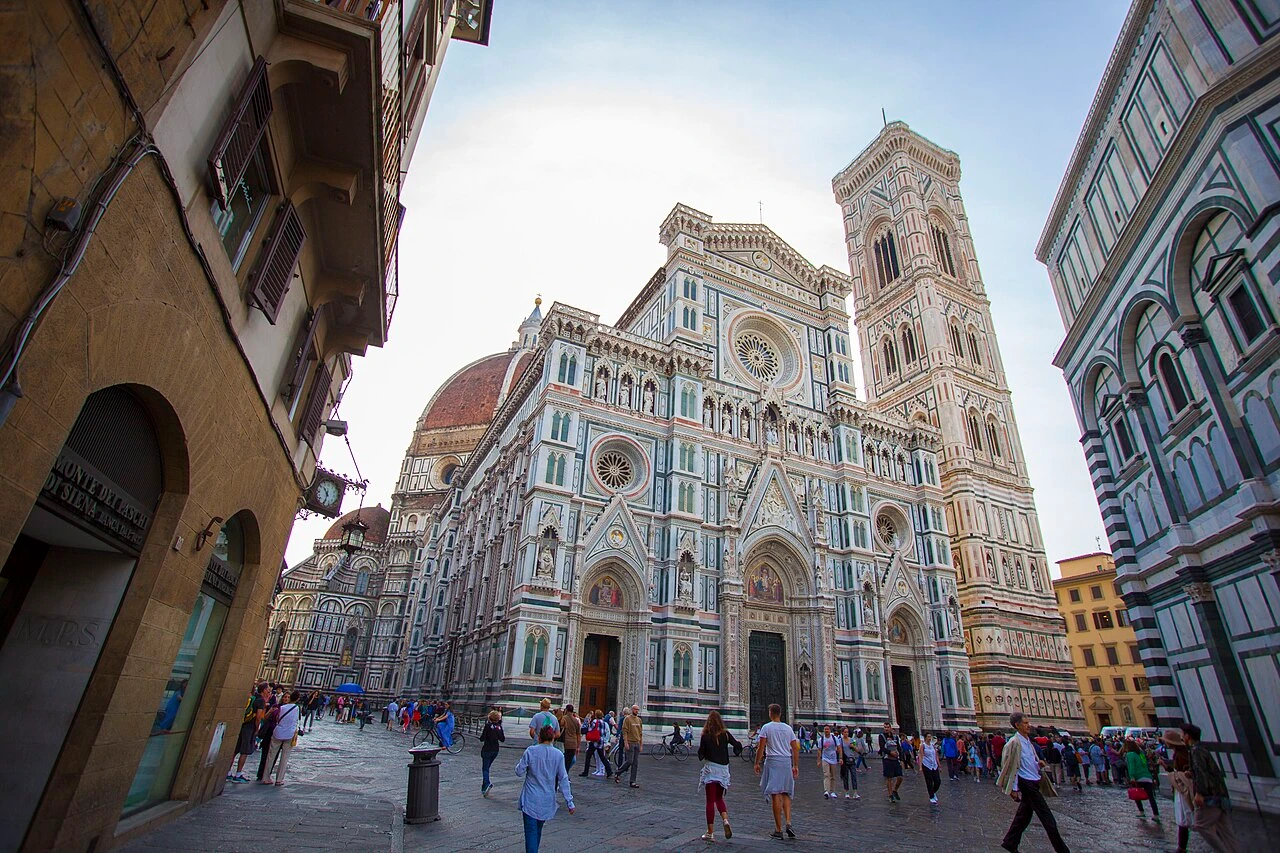
Florence · 1 km
Florence Cathedral
Content & sources
Photo: ScareCriterion12 · CC BY-SA 4.0
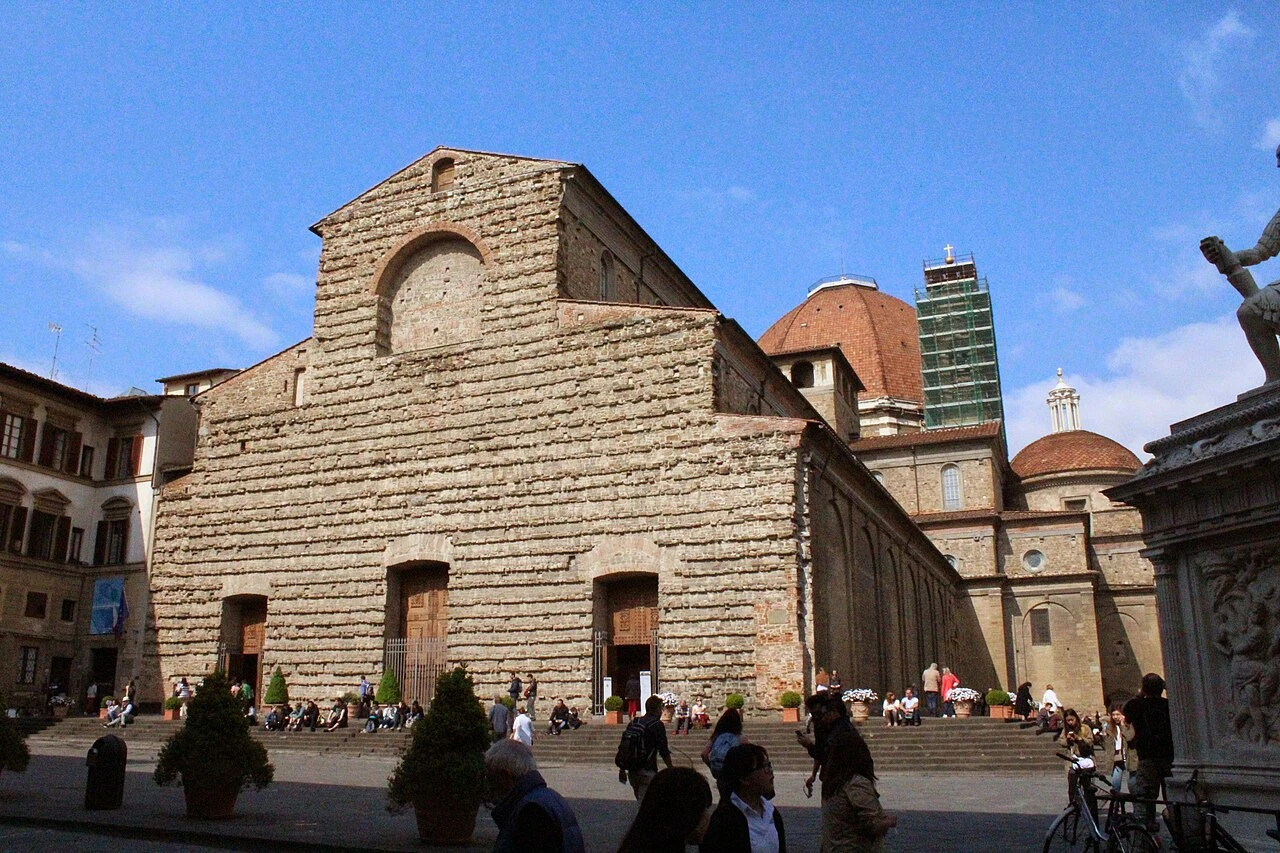
Florence · 1 km
Basilica of San Lorenzo
Content & sources
Nelson Pérez · CC BY-SA 3.0
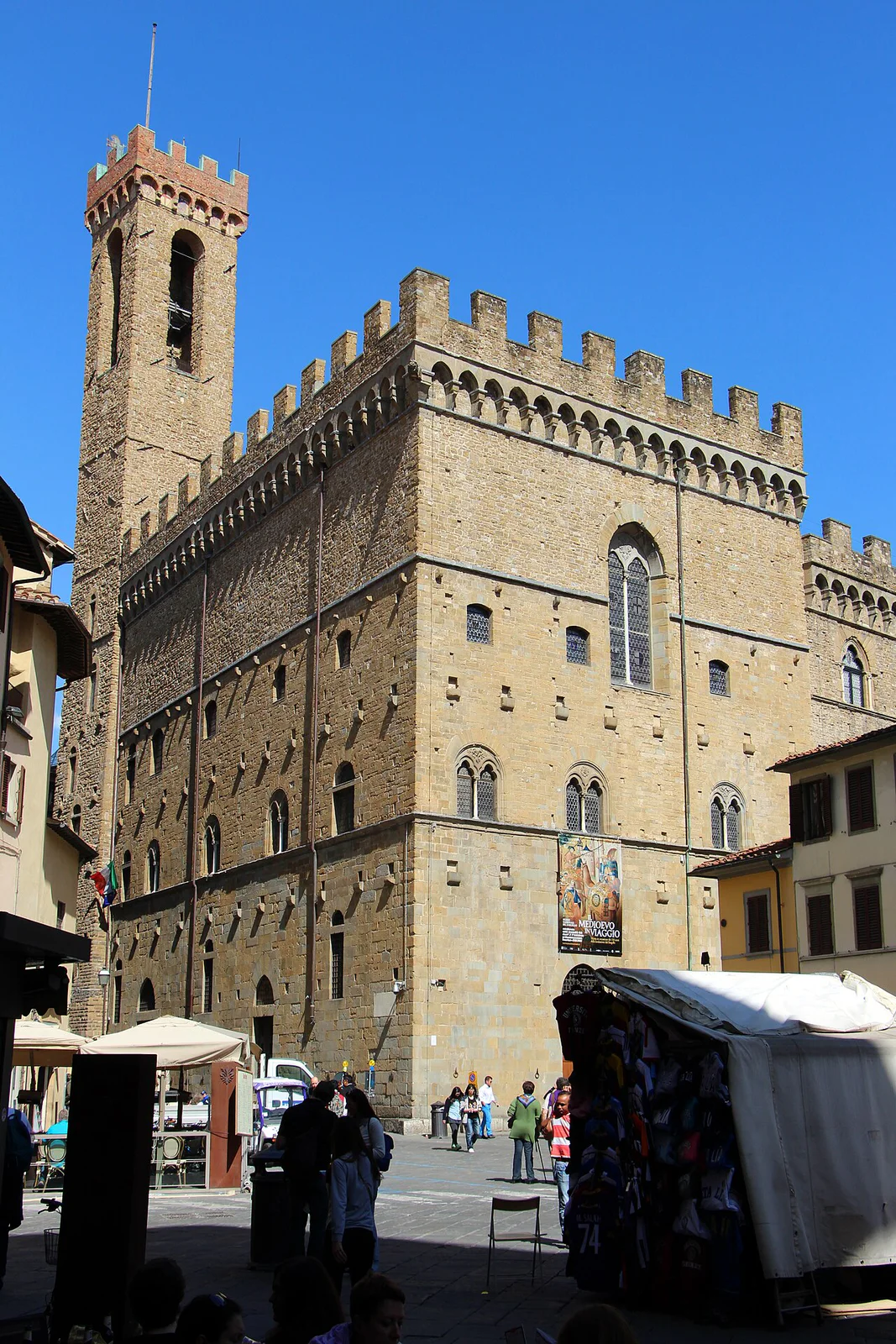
Florence · 1 km
Museo nazionale del Bargello
Content & sources
Photo: Sailko · CC BY 3.0
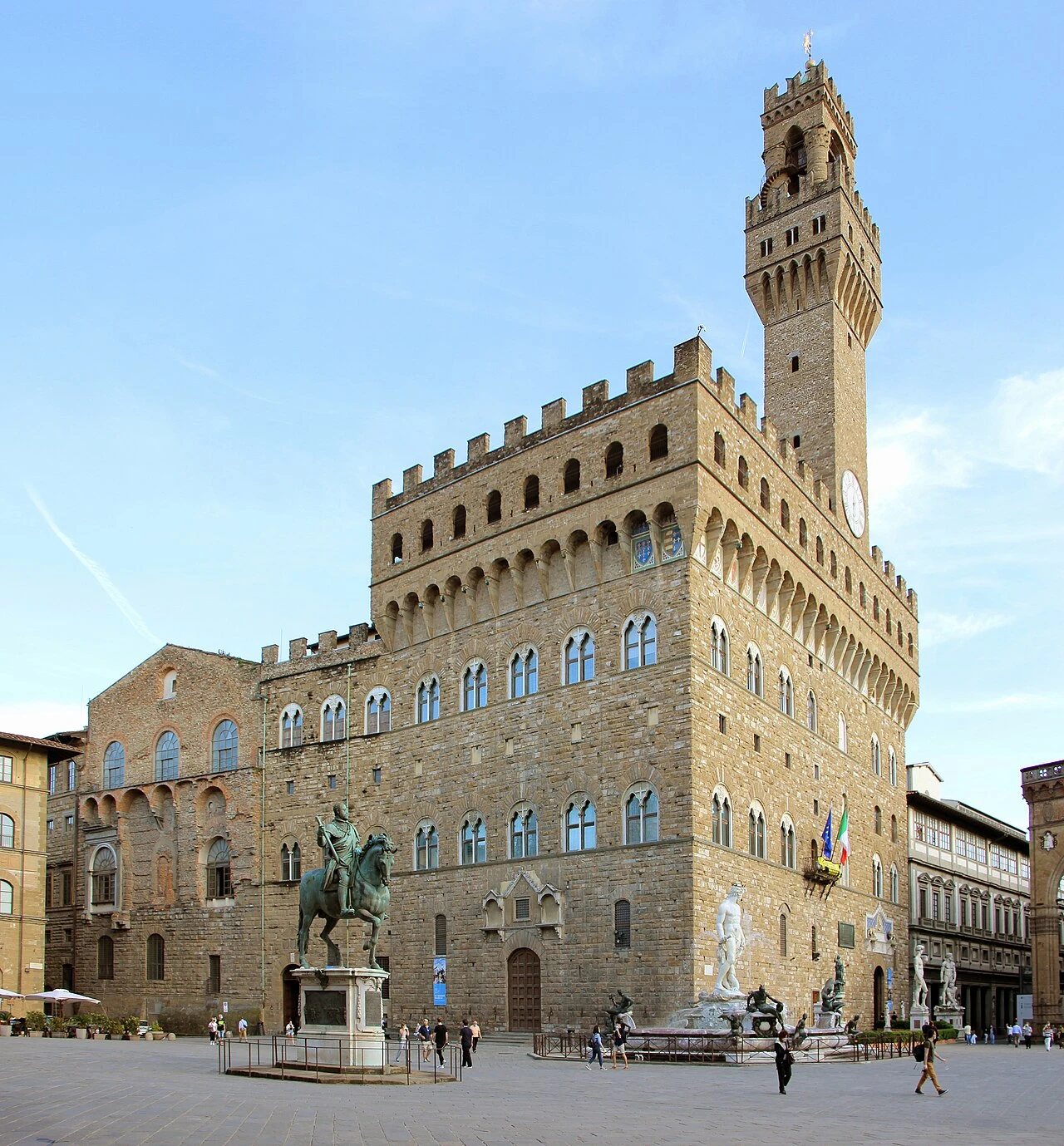
Florence · 1 km
Palazzo Vecchio
Content & sources
Francesco Bini · CC BY-SA 4.0
Art museums
More art museum audio guides
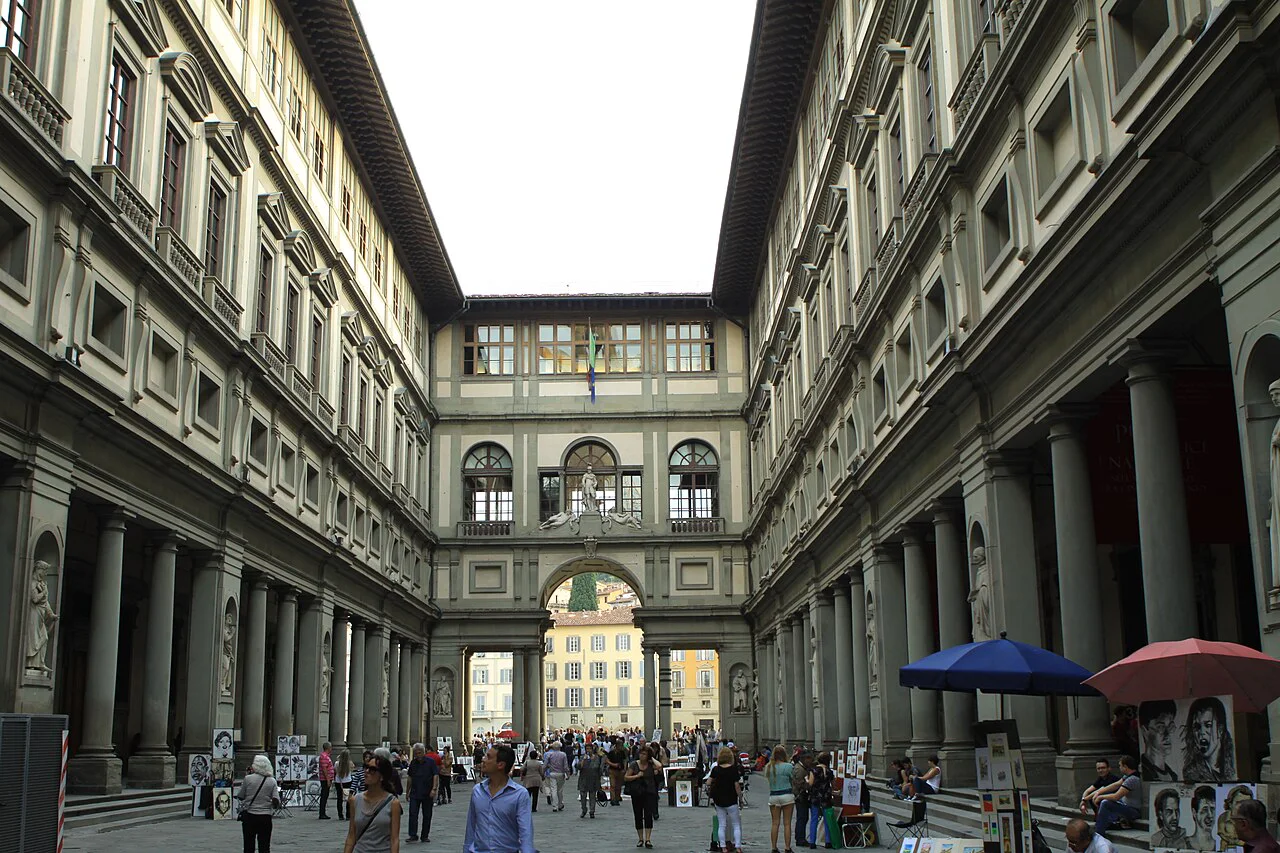
Florence · 37 artworks
Museo nazionale del Bargello
Content & sources
Photo: Sailko · CC BY 3.0
Florence · 70 artworks
Uffizi Gallery
Content & sources
Arek N. · CC BY-SA 3.0
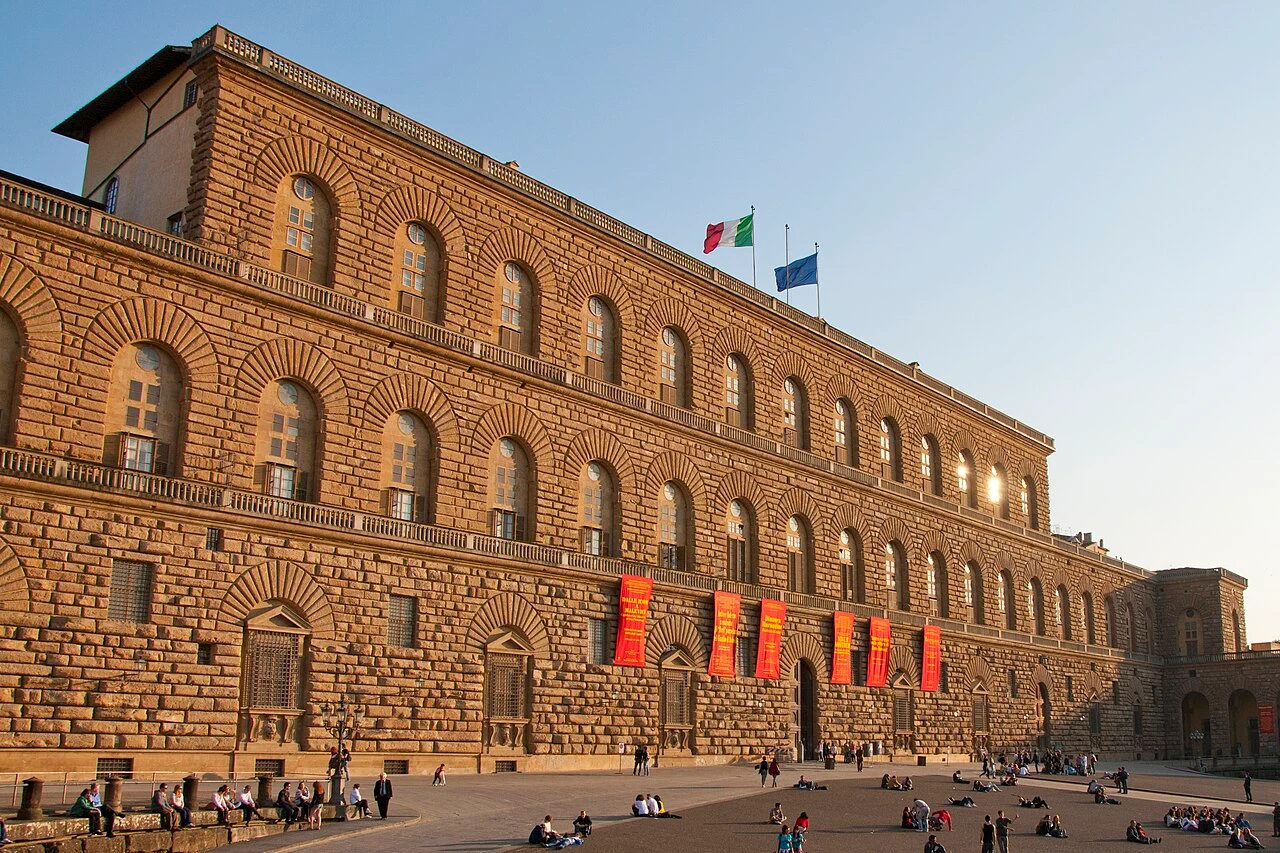
Florence · 167 artworks
Palazzo Pitti
Content & sources
Almaak · CC BY-SA 3.0
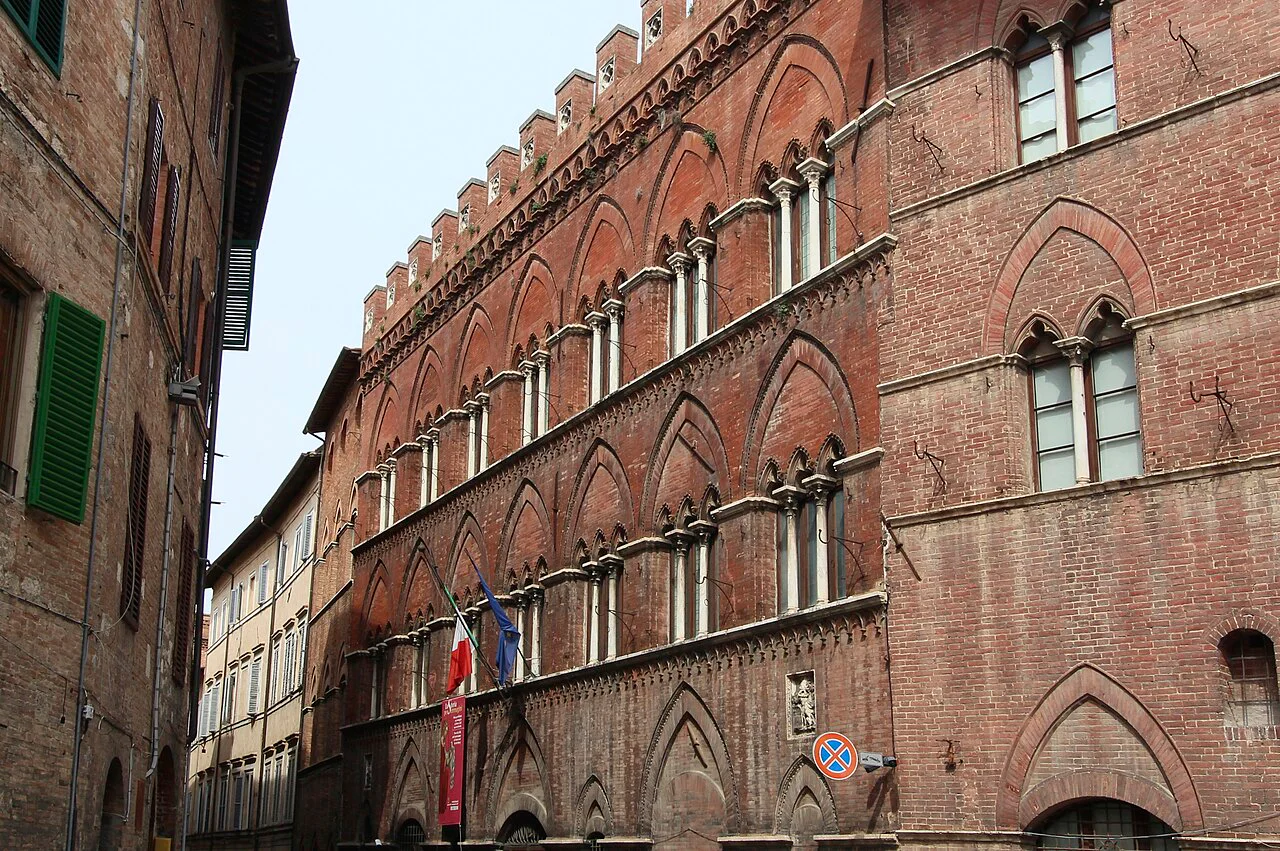
Siena · 37 artworks
Pinacoteca nazionale
Content & sources
Photo: LigaDue · CC BY-SA 4.0
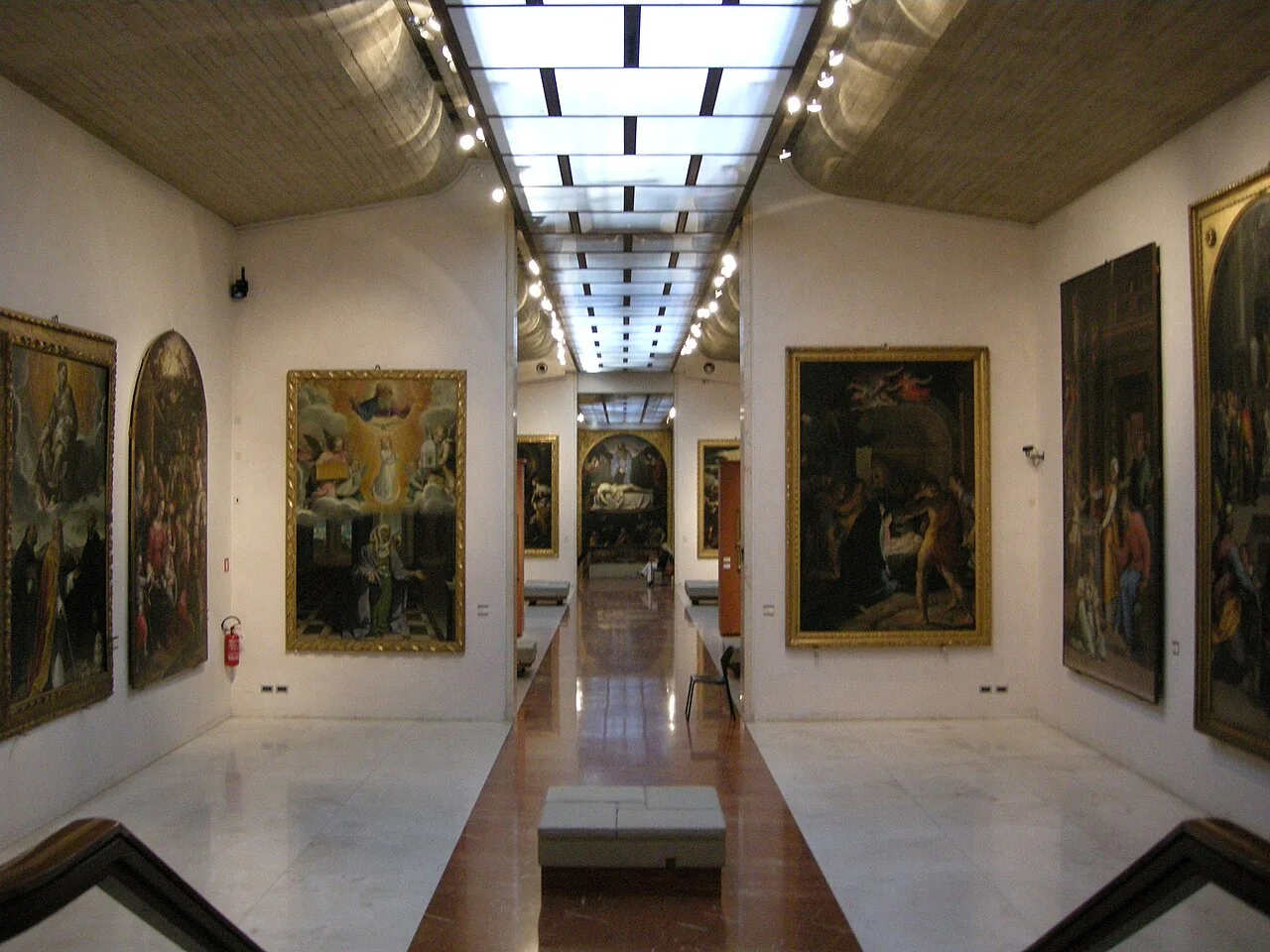
Bologna · 38 artworks
Pinacoteca nazionale di Bologna
Content & sources
Photo: Sailko · CC BY-SA 3.0
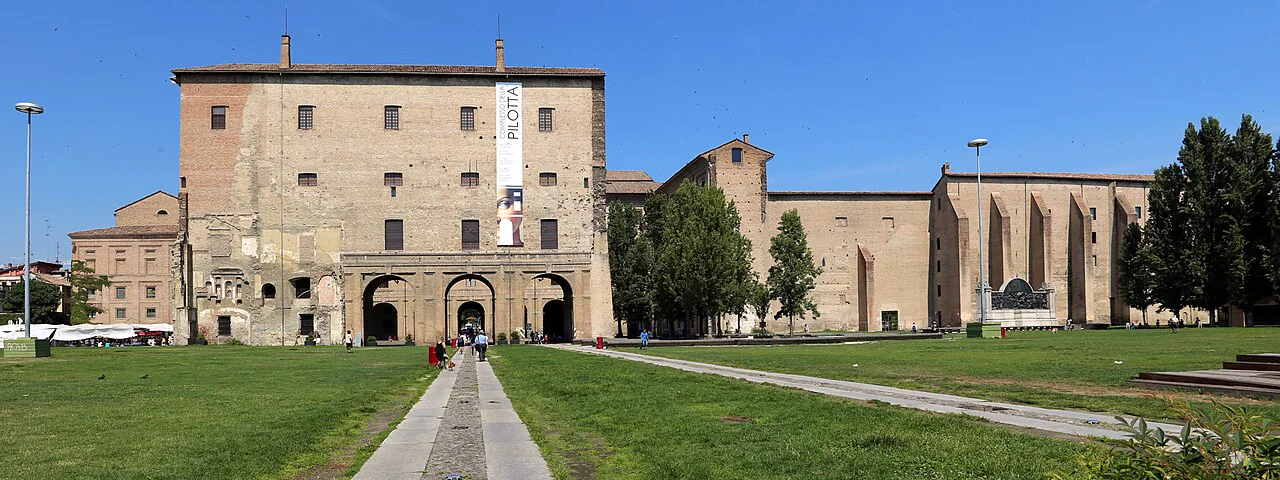
Parma · 62 artworks
Palazzo della Pilotta
Content & sources
Photo: Sailko · CC BY-SA 4.0