Stanza · Audio guide
Lady Lever Art Gallery Audio Guide
A place to remember. A story to take with you.
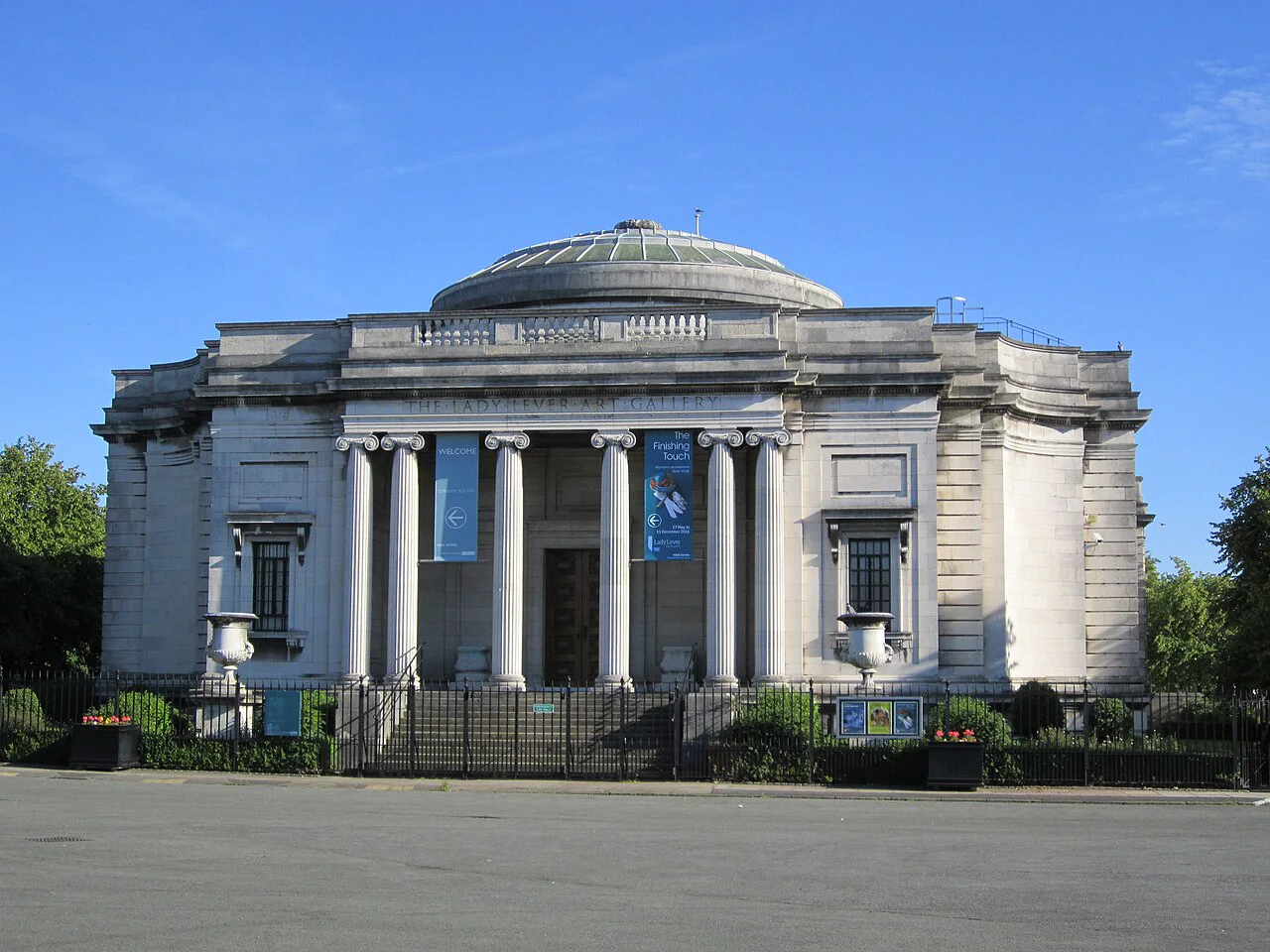
The Lady Lever Art Gallery is a museum founded by the industrialist William Lever that opened in 1922. It is located in the garden village of Port Sunlight and is one of the National Museums Liverpool.
Download Stanza, then search for “Lady Lever Art Gallery”.
About the tour
One guide. Your kind of visit.
The Lady Lever Art Gallery is a museum founded by the industrialist William Lever that opened in 1922. It is located in the garden village of Port Sunlight and is one of the National Museums Liverpool.
The Lady Lever Art Gallery guide tells the stories of 28 artworks, including The Black Brunswicker (John Everett Millais), The Scapegoat (William Holman Hunt), The Beguiling of Merlin (Edward Burne-Jones), The Triumph of Cleopatra (William Etty), Bubbles (John Everett Millais), A Dream of the Past: Sir Isumbras at the Ford (John Everett Millais), Cromwell on his Farm (Ford Madox Brown), and Salem (Sydney Curnow Vosper). Every artwork is free to hear in the Stanza app until 1 January.
Ready when you are.
- 01Get the free Stanza app.
iOS & Android
- 02Find your guide.
“Lady Lever Art Gallery”
- 03Download before you go.
Works offline
Audio guide / 28 artworks
Inside the guide
Get to know a few of the stories before you go. Open a stop to read more.
01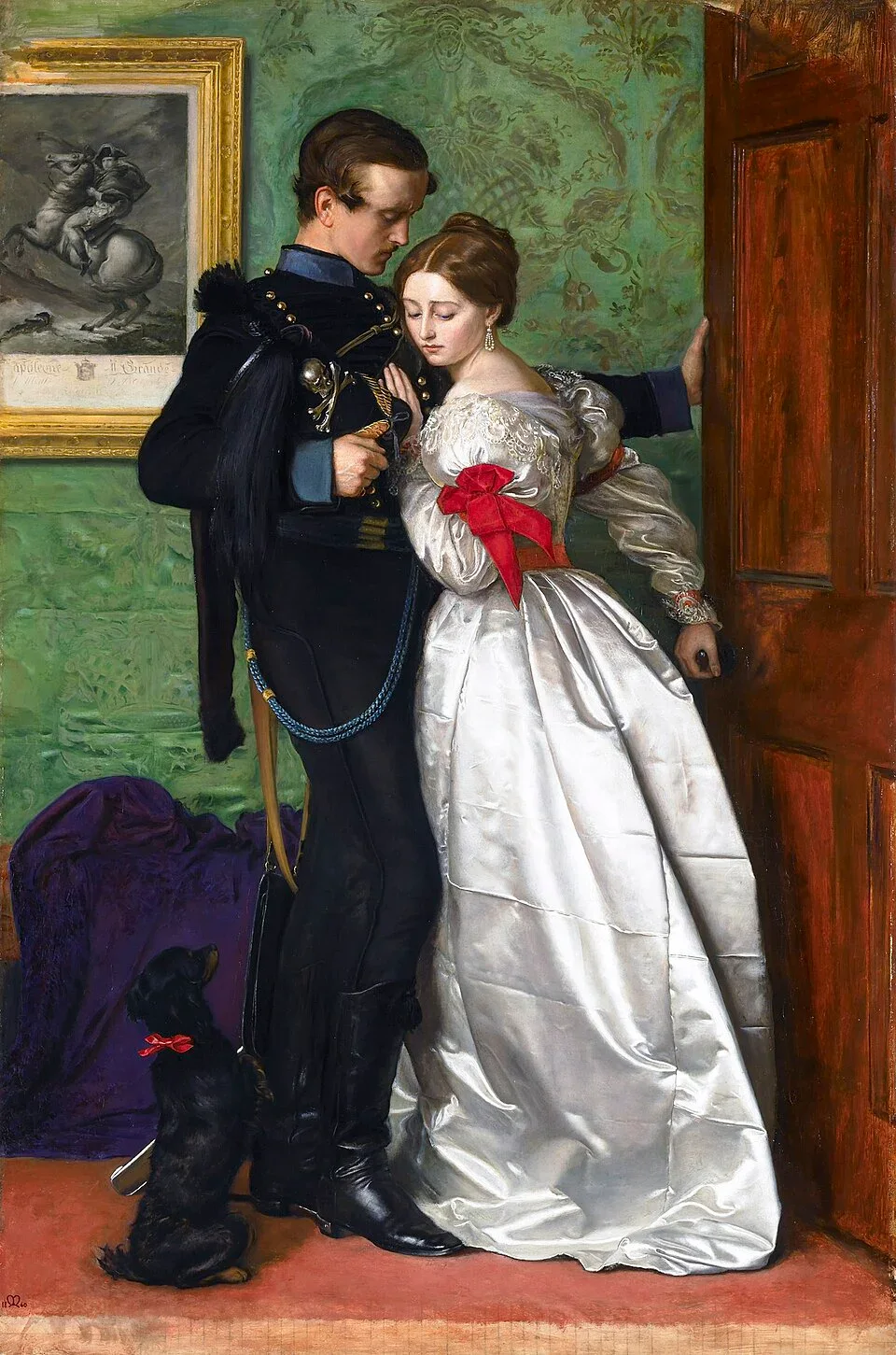
The Black Brunswicker
In the left foreground, a small dark dog stands on its hind legs, a red ribbon around its neck, looking up at the couple. The ribbon matches the red bows on the woman's arms. She looks down at the dog, and something in its pleading confirms her own wish to keep him here. She presses one hand to his chest and pushes at the door, which he has already started to pull open. He is a Brunswicker, one of the German volunteers who fought Napoleon, leaving for battle. She is in a ballgown. The scene appears to be the farewell after the Duchess of Richmond's ball, on the fifteenth of June 1815. Officers left from there for the fighting at Quatre Bras. The two people who posed for this never met. The woman was Kate, Charles Dickens' daughter. The soldier, whose name is not known, died of consumption soon after. Millais painted them in separate sittings, to respect Victorian ideas of propriety. Each had a wooden figure standing in for the other. He held his to his chest, and she leaned on hers.
Listen in the appJohn Everett Millais · Public domain
02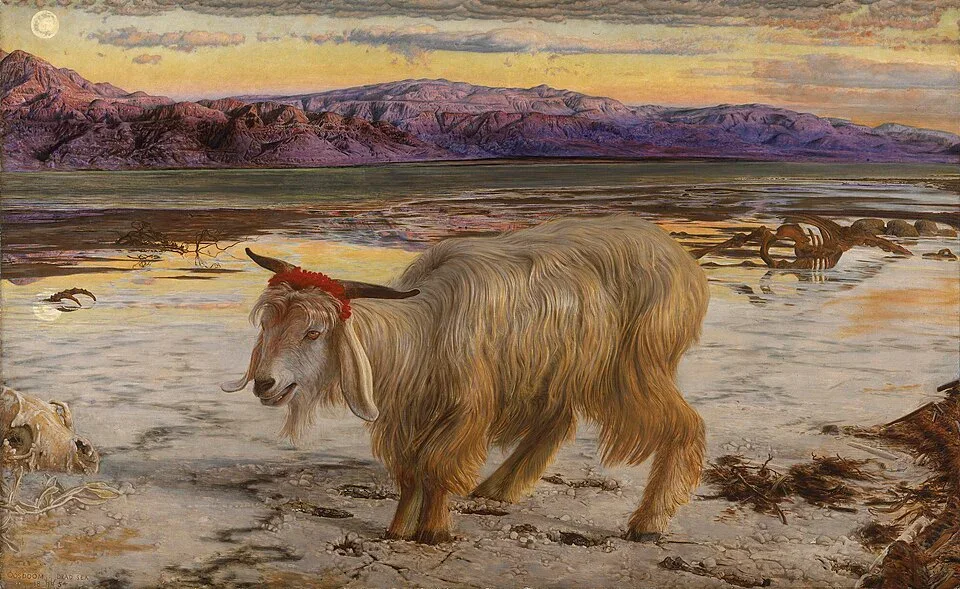
The Scapegoat
A white goat is alone in a place of salt and shallow water, with the mountains of Edom behind it. There is a trickle of blood on its horns. On the left are the horns of a second goat, the one that drowned in the sea. On the Day of Atonement, in Leviticus, a goat had its horns wrapped in red cloth. The cloth stood for the people's sins, and the goat was driven into the wilderness. A second goat was sacrificed. This white one is the exile, and the blood on its horns stands for the crown of thorns. The painter meant it as Christ, the suffering servant who bears the world's sins. Hunt went to the Dead Sea after a crisis of faith, hoping the real place would bring him closer to the truth. He also hoped the picture might lead Jewish viewers to see a suffering Messiah, not an earthly king. When it reached the Royal Academy in 1856, few people understood it. Two women who saw it in his studio decided it was an odd goat with drooping ears, and asked whether more of the flock were coming. The dealer later said he had wanted a pleasant religious picture and got a great goat. Whether the mountains really looked like this is still unknown, since he finished in London and may have worked from memory.
Listen in the appWilliam Holman Hunt · Public domain
03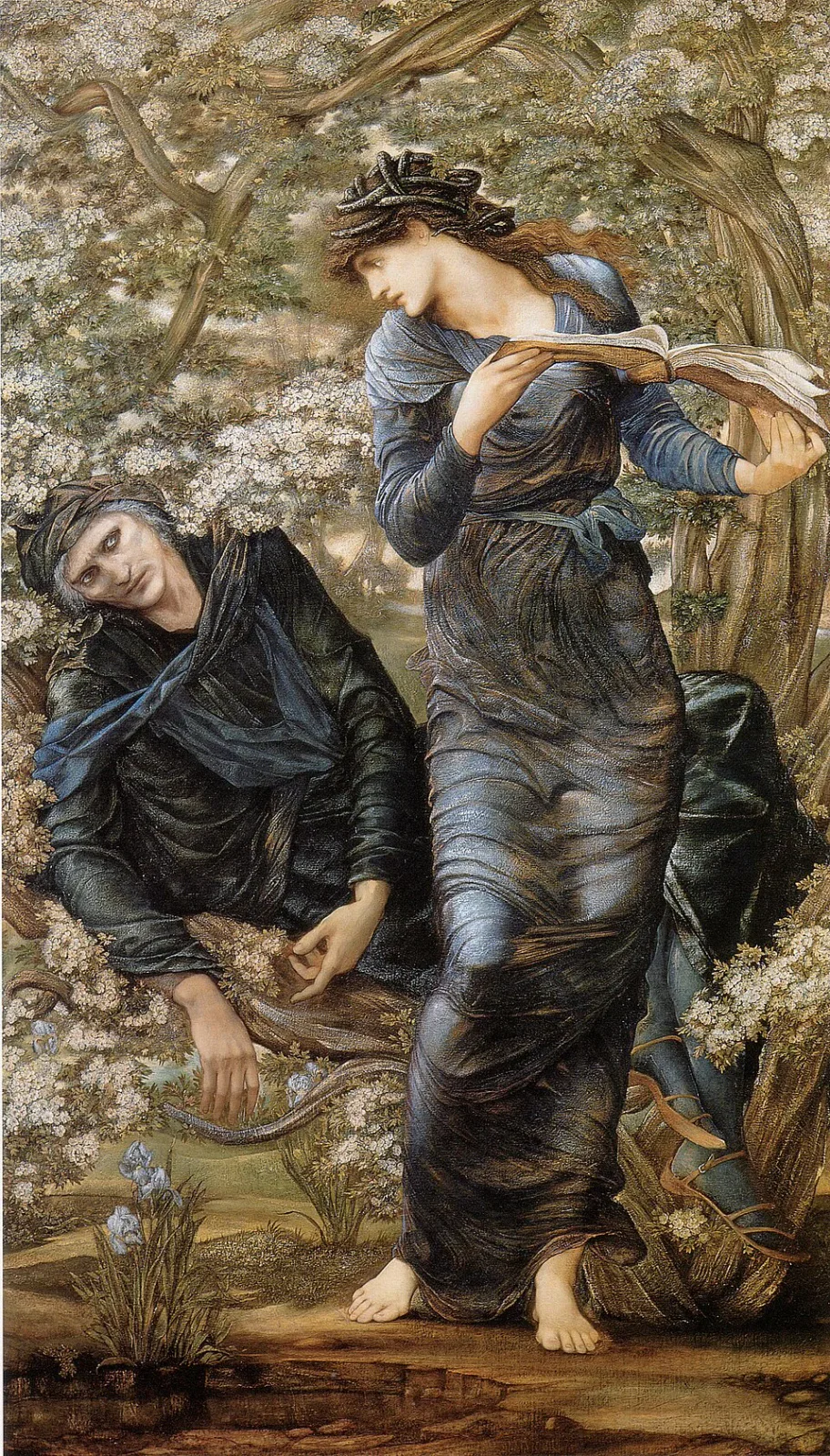
The Beguiling of Merlin
No one could tell from the picture whether the woman ever loved the painter back. He never knew either. She reads calmly from a book of spells. Beside her, the magician has collapsed into a hawthorn hedge, his long legs hanging without strength. A crown of snakes circles her head, like Medusa. She holds all the power. He holds none. The story is an old one. Merlin, the magician who protected King Arthur, fell in love with Nimue, the Lady of the Lake. She told him she would never love him unless he taught her all his magic. Overcome by desire, he agreed. The moment she had his book of spells, she turned them on him. She sent him into a trance of love, and tangled him in the hawthorn. The woman's face is Maria Zambaco, the painter's model. He loved her for years, never sure the feeling was returned. Later, in a letter, he wrote that Merlin's love for Nimue echoed his own. Frederick Leyland, a Liverpool shipowner, commissioned the painting. He chose the subject with Burne-Jones, because both men loved the legends of King Arthur.
Listen in the appEdward Burne-Jones · Public domain
04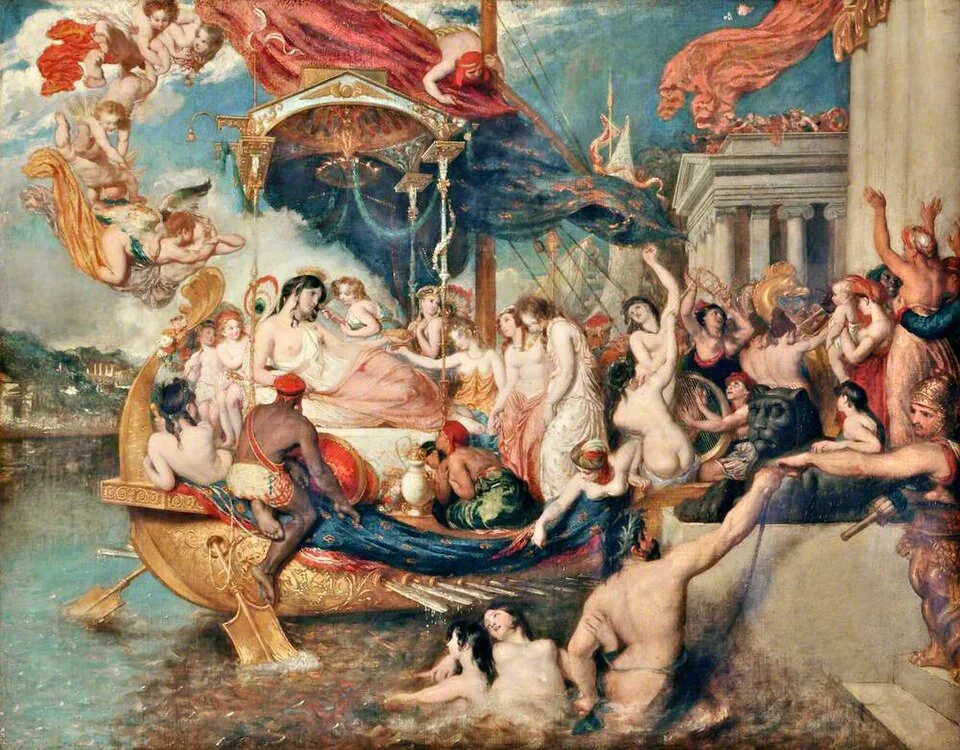
The Triumph of Cleopatra
The ship has just come in at Tarsus, and the bank is crowded with people who have gathered to watch her arrive. Another crowd is aboard with her. She has sailed here as Queen of Egypt to meet Mark Antony, the Roman general, and seal the alliance that still lies ahead. The figures are packed close, out of proportion to one another and to the ship, until they read as one confused mass. The crowding is deliberate. It began with a smaller picture. The year before, at the summer exhibition, William Etty showed nude figures in a golden boat. It sold at the show. Sir Francis Freeling saw it, and finding it gone, asked for another, bigger. Etty had long thought about Cleopatra, and here was his chance. For years he had shown there every summer, admired for his colour and his painting of skin, with little to show for it. Then, in 1821, this picture went on view, and he later said he woke up famous. And there, in the crowd, a mother holds up her baby to see the view. He sketched that pair while out and about in London.
Listen in the appWilliam Etty · Public domain
05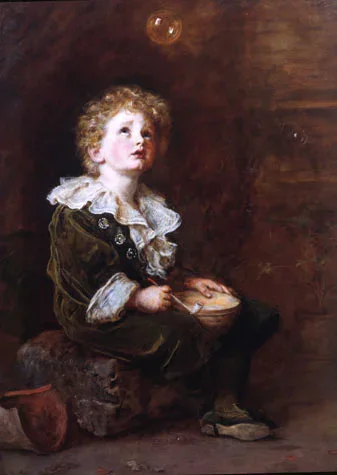
Bubbles
Millais painted his own grandson, a boy of about four or five, borrowing an idea from Dutch painters. They showed boys blowing bubbles beside skulls, a reminder that life is brief. The skulls are gone here, but the thought stays. The boy watches a bubble, a sign of beauty that soon breaks. A young plant grows in a pot on one side of him, a sign of life. On the other, a pot has fallen and broken, a sign of death. The picture took a second life. A newspaper owner bought it and printed it in colour, and Thomas Barratt of the Pears soap company saw it. He bought the original and asked Millais's permission to add a bar of Pears soap at the boy's feet. The point was to make it look as if the child had used the soap to make the bubbles. Millais was uneasy at first, thinking of his grandson used to sell soap, but the proofs changed his mind. The novelist Marie Corelli attacked him in print for using his talent to sell soap. He answered that he had sold the copyright, so the change was not his to stop. The boy grew up to be an admiral in the Royal Navy, yet he was called Bubbles for the rest of his life. What gave him the idea of the bubbles is not certain.
Listen in the appJohn Everett Millais · Public domain
06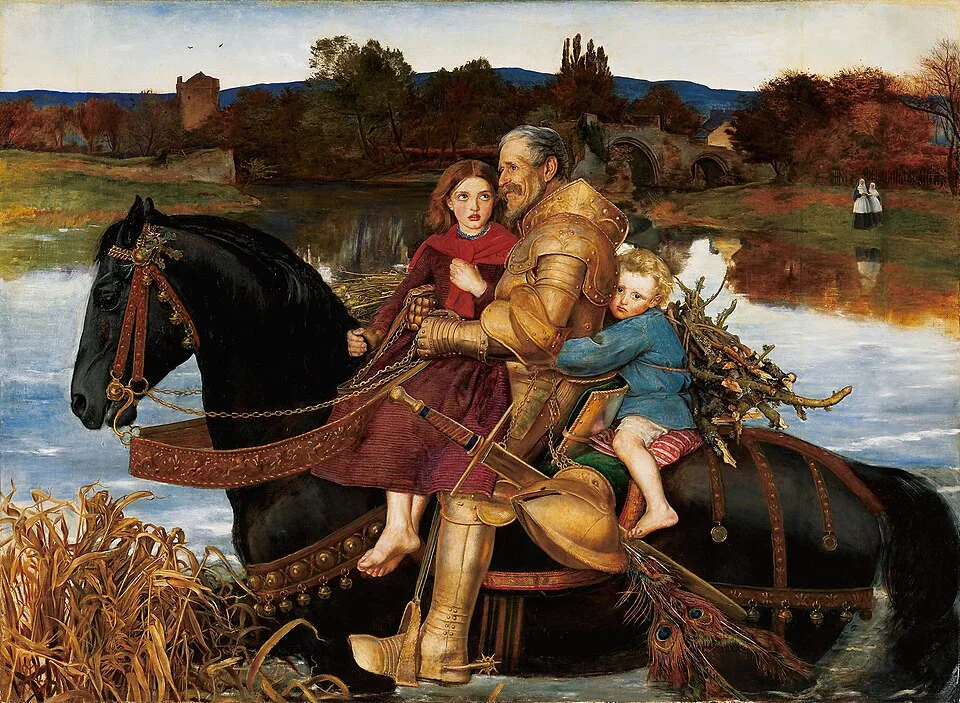
A Dream of the Past: Sir Isumbras at the Ford
What is a knight in golden armour doing in a flooded ford, lifting two children and their bundles of firewood onto a black horse? They are woodcutters' children. The knight, worn by war, has bent his pride to carry them over. Millais painted that horse day after day in a freezing stableyard. He perched on a ladder while the animal never kept still, and tied the canvas down so it would not fall. He had painted a fine horse. Then a dealer who offered eight hundred pounds said it was too small. Millais refused the offer, then decided the dealer was right. He took the horse out and painted it so large that critics could talk of nothing else. They called it ugly and forgot the beauty of the rest. He took the canvas back to Scotland and painted the horse again. One day a strong wind tipped the iron chair it was fixed to, and a corner went straight through the knight's head. A London firm repaired the tear so cleanly it could not be seen. John Ruskin, who had once championed Millais, had called the picture a catastrophe. He sent the repainted picture to Liverpool, where it drew considerable attention. Later, caricaturists put politicians in the saddle to mock unlikely alliances formed to carry a bill, and the tradition lasted well into the twentieth century.
Listen in the appJohn Everett Millais · Public domain
07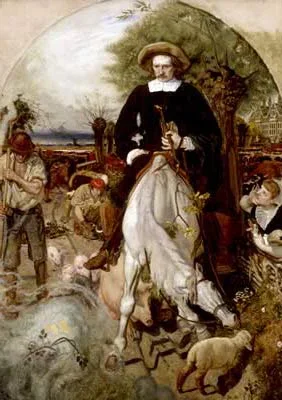
Cromwell on his Farm
Oliver Cromwell watches a bonfire on his farm in Cambridgeshire and asks God a question. How long will you hide yourself, Lord? Will your anger burn like fire? That question is written on the frame around the picture. He is a country squire here, long before the country knows his name. Yet a great part is waiting for him, and for now he is held fast in this small world. His horse turns aside to the fodder by the road, and a lamb from the farm eats beside it. A servant at the right demands an answer, and the duck she carries screeches it back. Cattle stream through the gate behind the workers, barely controlled by a young farmhand. They cut Cromwell off from his wife and child at the door of the house. Ford Madox Brown shows this man before any of the fighting began. He was influenced by Carlyle's book about Cromwell, which stressed how reluctant the future leader was to lead. And on Cromwell's collar is a spot of blood, taken from a description of him, and a sign of the bloodshed still to come.
Listen in the appFord Madox Brown · Public domain
08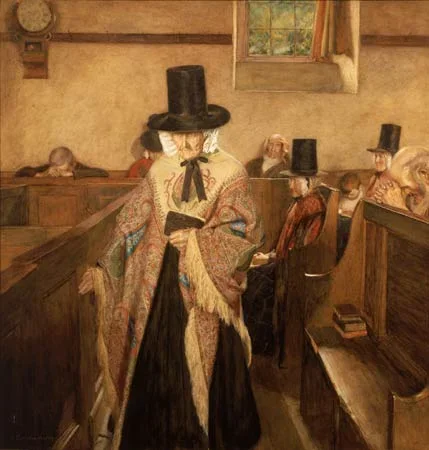
Salem
A woman in a tall Welsh hat and a patterned shawl is the center of this chapel service, with people at prayer around her. In the shawl over her left arm, people found a second face. The paisley makes a horn, the folds an eye and nose, the trim a beard. A belief grew that the painter had hidden the devil there, and that the whole scene was a lesson about vanity. The chapel clock reads a few minutes before ten. That fed the idea that she had come late, wanting to be noticed, in an uncommonly showy shawl. Vosper always denied putting a devil there. But he admitted to a ghostly face in the green of the window, and that half secret is probably where the tale began. The painting went on show at the Royal Academy in 1909, and William Hesketh Lever bought it. He used it to promote Sunlight soap. Seven pounds of soap bought enough tokens for a print, and the picture, with its tale of a hidden figure, reached homes across Britain. Why he chose Siân Owen for the center of the scene, when she was not even a chapel member, remains unknown.
Listen in the appSydney Curnow Vosper · Public domain
09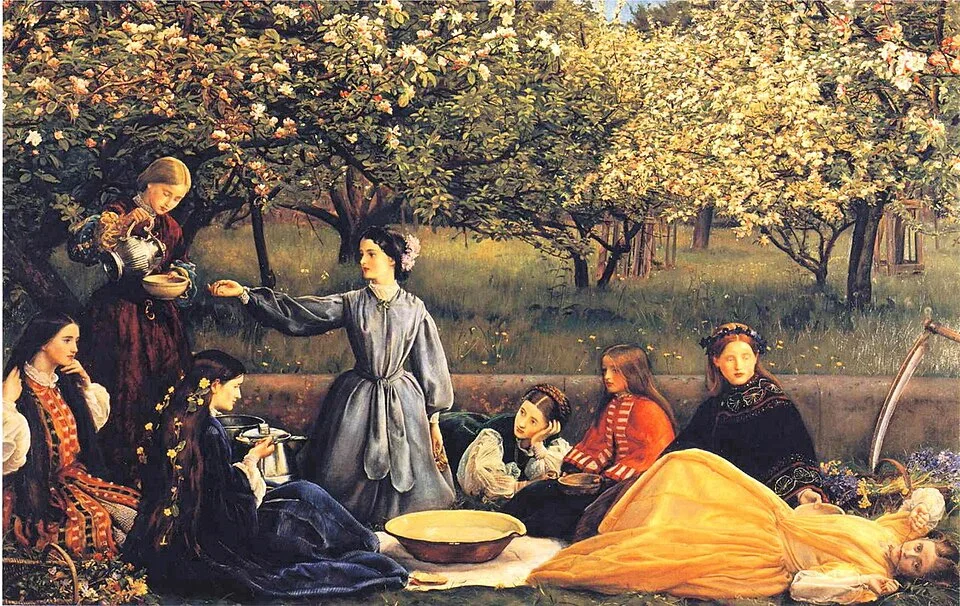
Spring (Apple Blossoms)
Eight girls have settled into the apple orchard, some standing, some kneeling, some sitting, one lying back with a grass stem in her mouth. The blossom is out behind them. The girl reclining in yellow at the right looks straight at you. They are enjoying milk and cream, all of them in the first bloom of youth. The blossom stands for the fragile beauty of being young, the brief richness of spring, the start of the new year. Millais meant this picture as a pair with another called The Vale of Rest, and both are about mortality. The girls are people close to him. His wife Effie noted who sat for them, and she marked one of them, Alice, twice. Yet this cannot last. At the right of the picture, a scythe and cut flowers wait. They tell you what becomes of the girls and the blossom.
Listen in the appJohn Everett Millais · Public domain
10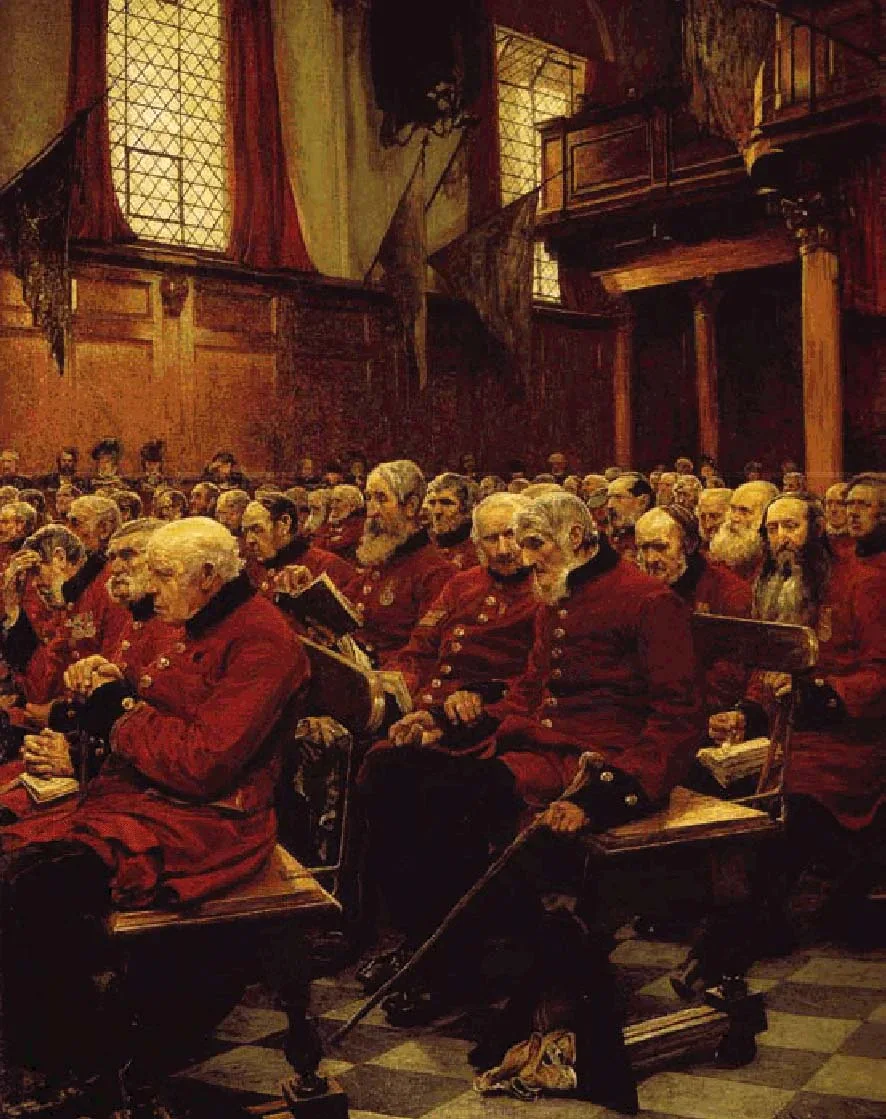
The Last Muster
This began as a picture in a newspaper. The Graphic printed it in February 1871, a wood engraving of a Sunday service at Chelsea Hospital. When Hubert von Herkomer turned it into a painting, he did not just copy his own drawing. He went to the Royal Hospital Chelsea and sketched the pensioners straight onto the canvas, working from the men themselves. Then he mixed in people he knew. The man with the white beard in the third row is his father. His wife Anna and his patron, the photographer Clarence Edmund Fry, appear in the background with members of Fry's family. The scene is a Sunday morning service in the hospital chapel. At the near end of the second row, one aged pensioner has died. The man beside him holds his wrist, feeling for a pulse that will not come. When the Royal Academy showed it in 1875, the crowds were so great a barrier had to go up to protect it. It made him famous far beyond Britain and won a gold medal in Paris in 1878. Vincent van Gogh, who had collected his prints in London, went on to draw Worn Out and paint At Eternity's Gate.
Listen in the appHubert von Herkomer · Public domain
- 11
Daphnephoria
Frederic Leighton · 1876
- 12
The Judgement of Paris
William Etty · 1826
- 13
Queen Victoria (1819–1901), in Robes of State
David Wilkie · 1840
- 14
Cymon and Iphigenia
John Everett Millais · 1847–1848
- 15
A Tale from the Decameron
John William Waterhouse · 1916
- 16
May Morning on Magdalen Tower
William Holman Hunt · 1890
- 17
Gilbert à Becket's Troth - The Saracen Maiden Entering London at Sundown
George John Pinwell · 1872
- 18
Lady Hamilton (1761–1815), as a Bacchante
Élisabeth Louise Vigée Le Brun · c. 1792
- 19
Alfred Tennyson (1809–1892), 1st Baron Tennyson, FRS
John Everett Millais · 1881
- 20
Psamathe
Frederic Leighton · 1880
- 21
An Idyll of 1745
John Everett Millais · 1884
- 22
The Tepidarium
Lawrence Alma-Tadema · 1881
- 23
The New Frock
William Powell Frith · 1889
- 24
Sibylla Palmifera
Dante Gabriel Rossetti · 1866–1870
- 25
The Blessed Damozel (Lady Lever Art Gallery)
Dante Gabriel Rossetti · 1879
- 26
Salammbô
Maurice Ferrary · 1899
- 27
The Enchanted Garden
John William Waterhouse · 1917
- 28
Cottage at East Bergholt
John Constable · 1833
Lady Lever Art Gallery
Frequently asked questions
How much does the guide cost?
Free app download. Free until 1 January. Listed guide price: $0.99. Audio guide only. Venue admission is separate.
Can I listen without internet?
Yes. Download the guide’s audio, images, and maps in the app before your visit. Your downloaded content is then available offline.
Can I listen in my language?
In English for now. More languages soon.
Do I need to follow a schedule?
No. This is a self-guided experience. Choose your stops, pause whenever you like, and return to a story at your own pace.
Which artworks are in the Lady Lever Art Gallery audio guide?
28 artworks, including The Black Brunswicker (John Everett Millais), The Scapegoat (William Holman Hunt), The Beguiling of Merlin (Edward Burne-Jones), The Triumph of Cleopatra (William Etty), Bubbles (John Everett Millais), A Dream of the Past: Sir Isumbras at the Ford (John Everett Millais), Cromwell on his Farm (Ford Madox Brown), and Salem (Sydney Curnow Vosper). The full list is on this page.
Is this the museum’s official audio guide?
No. Stanza is an independent audio guide app and is not affiliated with Lady Lever Art Gallery. Museum admission is separate.
At your own pace
Explore Lady Lever Art Gallery.
Download Stanza, then search for “Lady Lever Art Gallery”.
Free app download · Guide price shown in the app
Keep exploring
Nearby audio guides

Conwy · 56 km
Conwy Castle
Content & sources
Source: Llywelyn2000Derivative: User:MathKnight · CC BY-SA 4.0
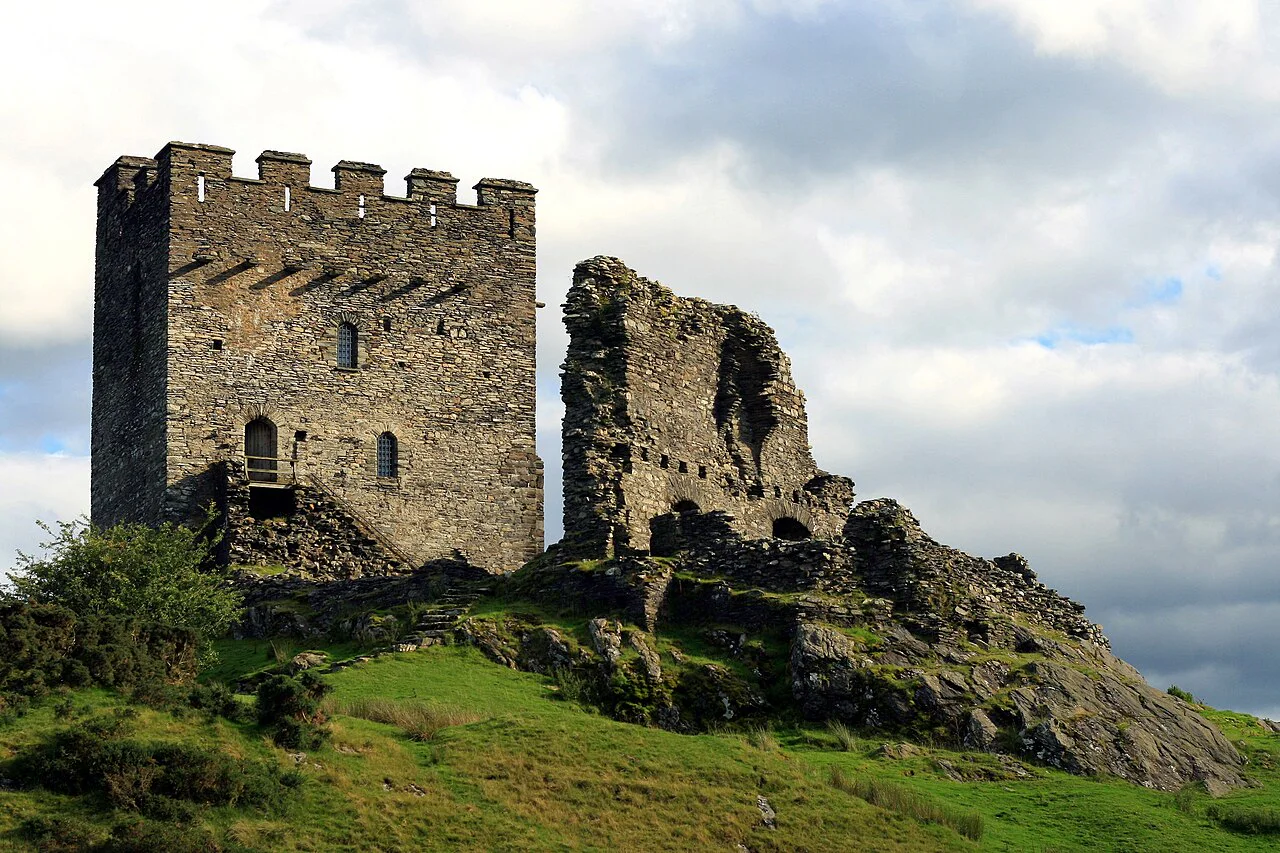
Dolwyddelan · 69 km
Dolwyddelan Castle
Content & sources
Jeff Buck · CC BY-SA 2.0

Beaumaris · 73 km
Beaumaris Castle
Content & sources
Photo: Llywelyn2000 · CC BY-SA 4.0

Caernarfon · 88 km
Caernarfon Castle
Content & sources
Photo: Llywelyn2000 · CC BY-SA 4.0
Art museums
More art museum audio guides
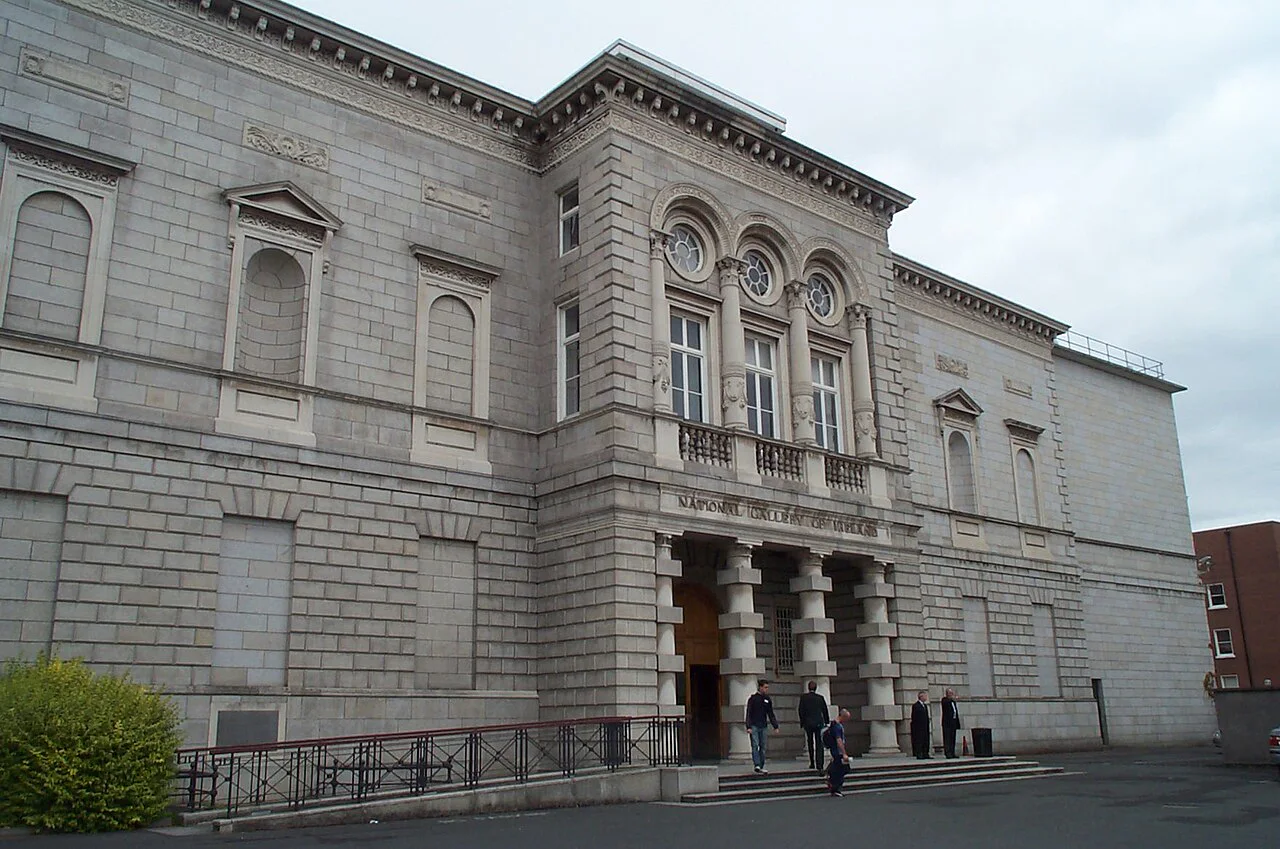
Dublin City · 55 artworks
National Gallery of Ireland
Content & sources
Copyright © 2006 Kaihsu Tai · CC BY-SA 3.0
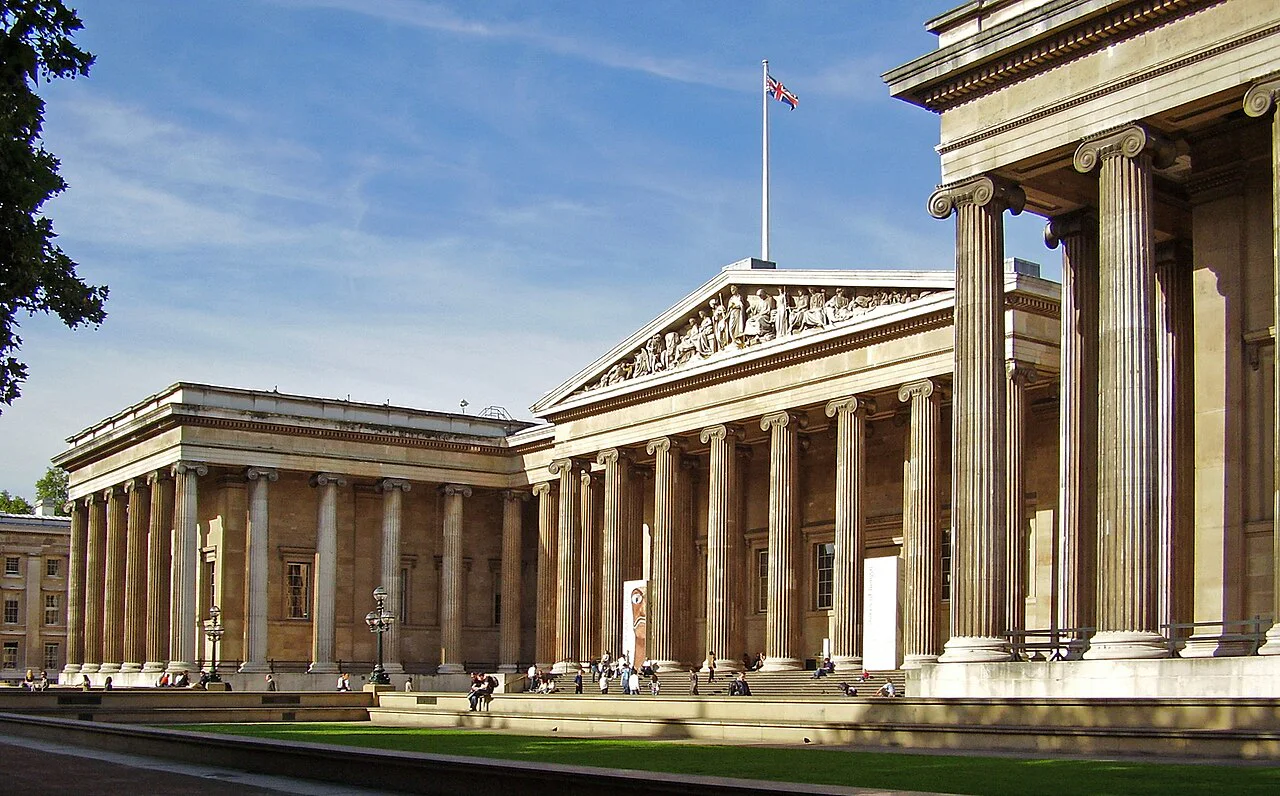
London · 68 artworks
British Museum
Content & sources
Ham · CC BY-SA 3.0
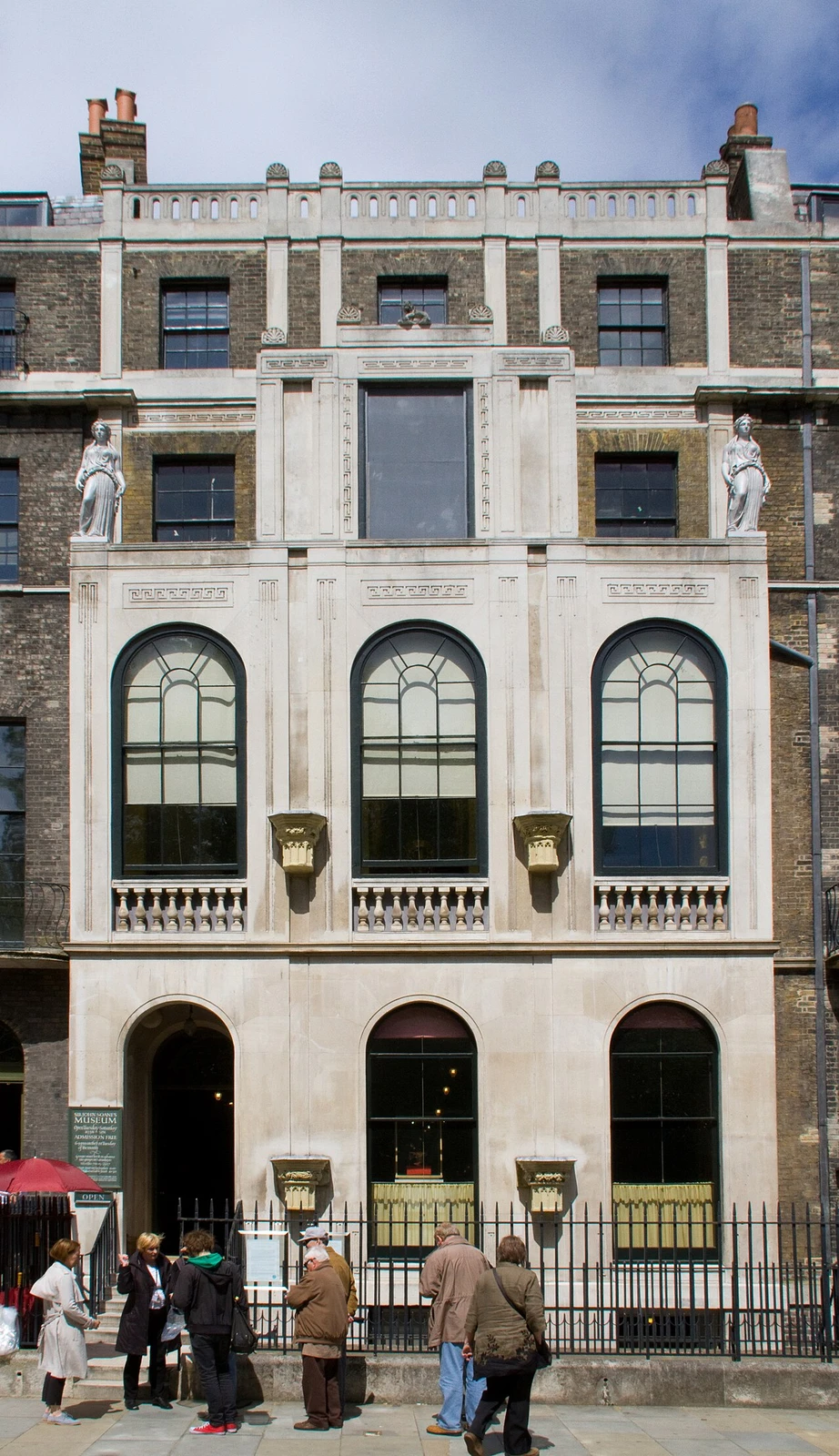
London · 8 artworks
Sir John Soane's Museum
Content & sources
Tony Hisgett from Birmingham, UK · CC BY 2.0
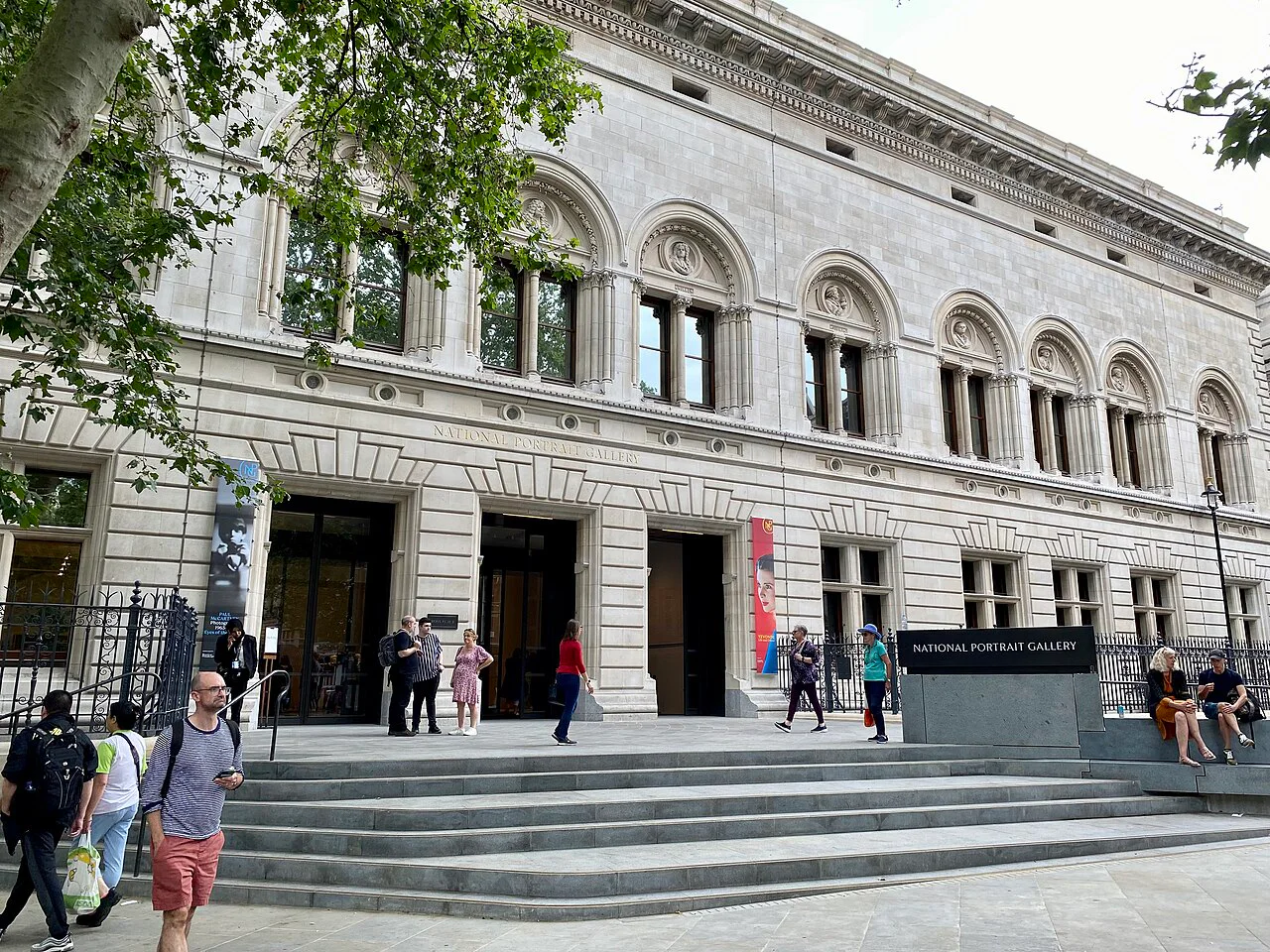
London · 164 artworks
National Portrait Gallery, London
Content & sources
Photo: No Swan So Fine · CC BY-SA 4.0
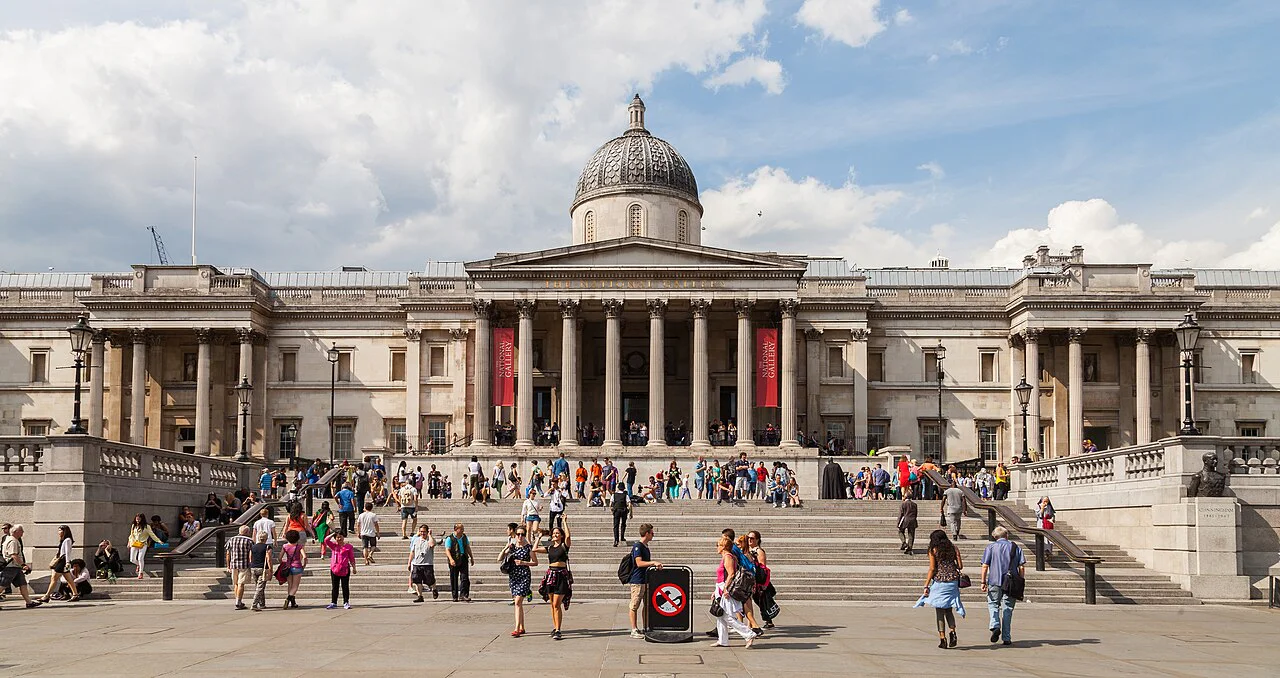
London · 171 artworks
National Gallery, London
Content & sources
Diego Delso · CC BY-SA 4.0
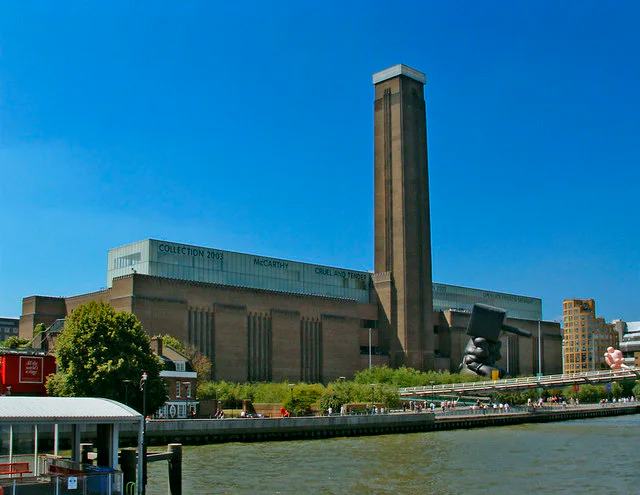
London Borough of Southwark · 15 artworks
Tate Modern
Content & sources
Christine Matthews · CC BY-SA 2.0