Stanza · Audio guide
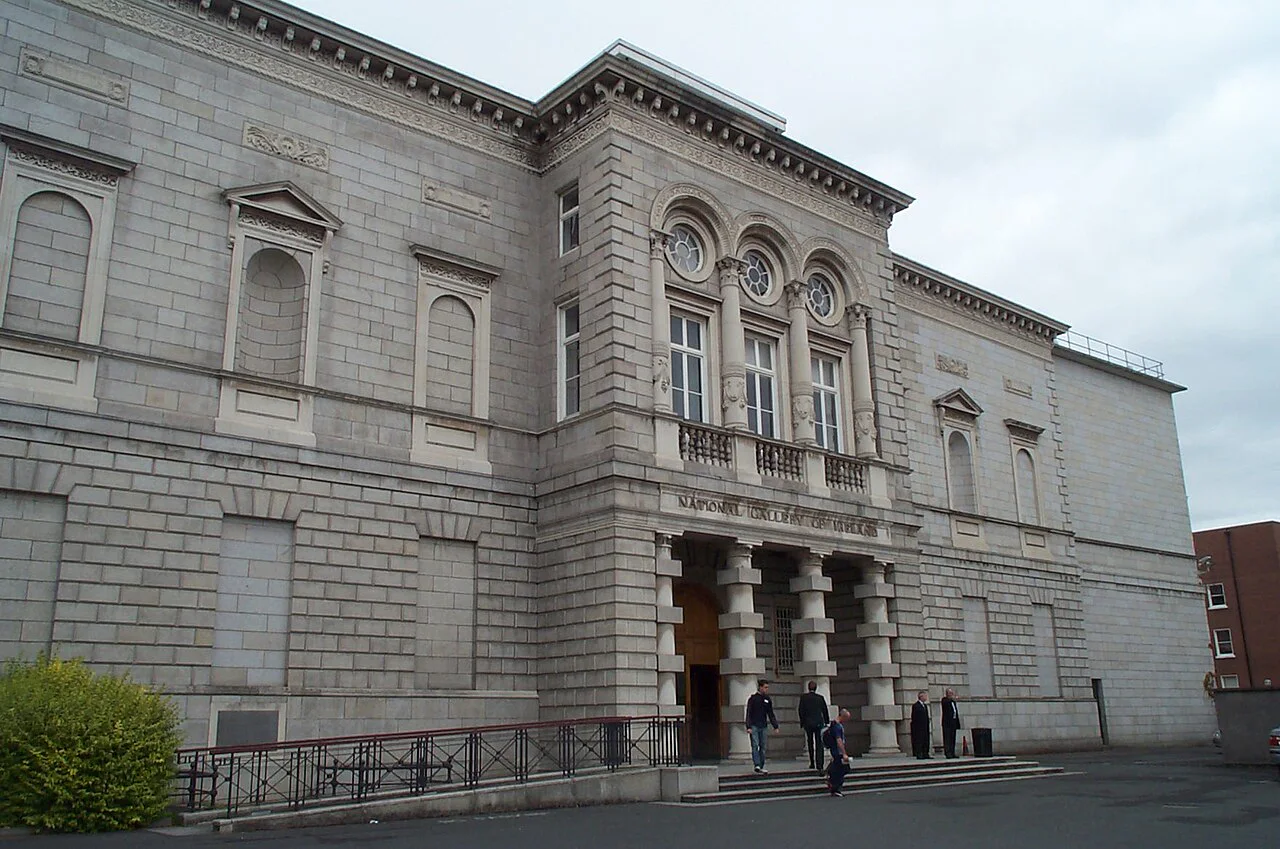
National Gallery of Ireland Audio Guide
A place to remember. A story to take with you.
The National Gallery of Ireland houses the national collection of Irish and European art. It is notable for its extensive collection of Irish paintings as well as Italian Baroque and Dutch masters.
Download Stanza, then search for “National Gallery of Ireland”.
About the tour
One guide. Your kind of visit.
The National Gallery of Ireland houses the national collection of Irish and European art. It is notable for its extensive collection of Irish paintings as well as Italian Baroque and Dutch masters.
The National Gallery of Ireland guide tells the stories of 55 artworks, including Man Writing a Letter (Gabriel Metsu), Portrait of Doña Antonia Zárate (Francisco Goya), Woman Reading a Letter (Gabriel Metsu), Kitchen Scene with the Supper in Emmaus (Diego Velázquez), The Funeral of Patroclus (Jacques-Louis David), Castle Bentheim (Jacob van Ruisdael), Jacob Blessing the Sons of Joseph (Guercino), and The Supper at Emmaus (Titian). Every artwork is free to hear in the Stanza app until 1 January.
Ready when you are.
- 01Get the free Stanza app.
iOS & Android
- 02Find your guide.
“National Gallery of Ireland”
- 03Download before you go.
Works offline
Audio guide / 55 artworks
Inside the guide
Get to know a few of the stories before you go. Open a stop to read more.
01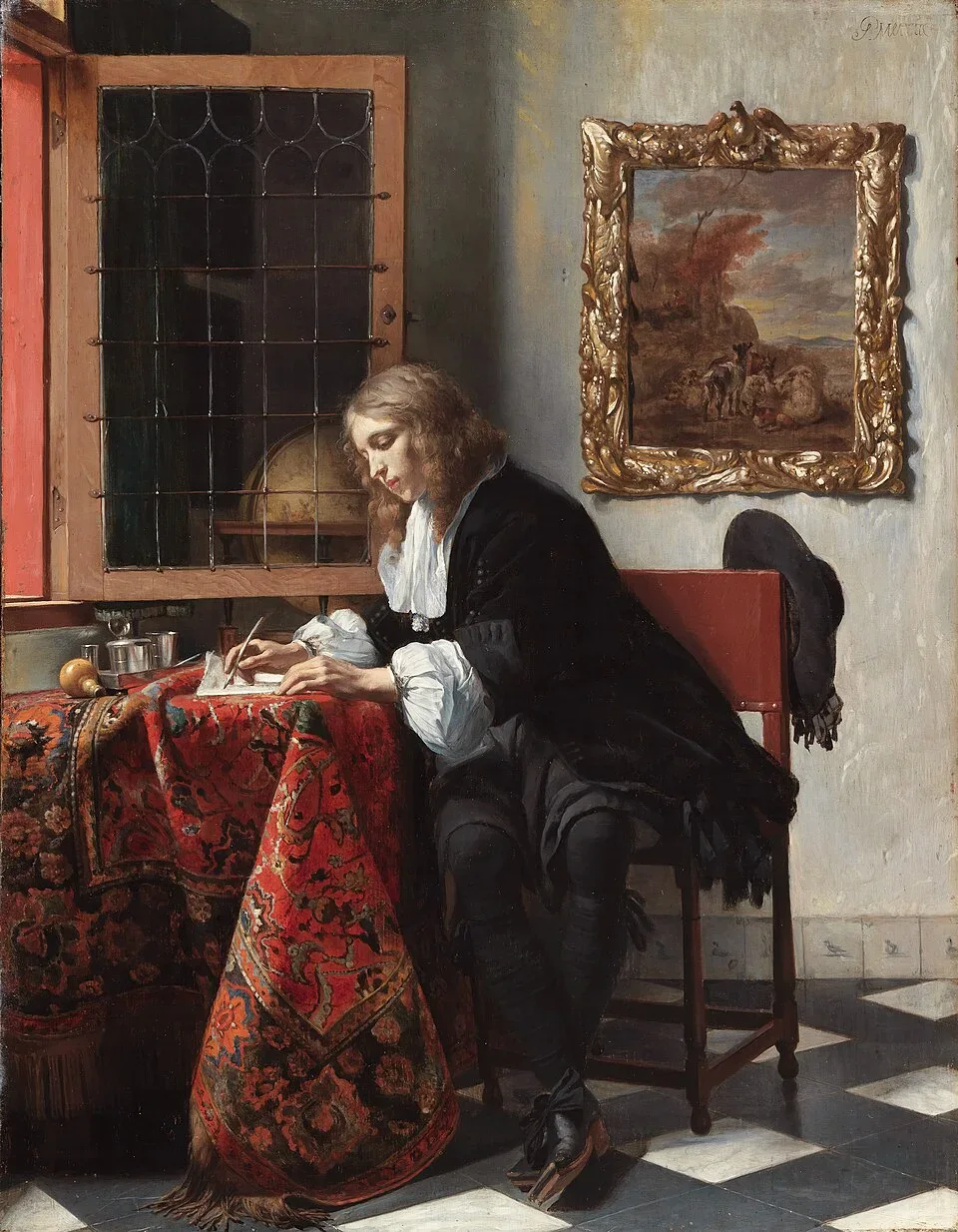
Man Writing a Letter
Who is this man writing to? He is young, in a black silk suit with a white linen shirt beneath it, sitting at an open window with a quill in hand. The Persian rug and silver writing set on the table tell you he is a man of means. A globe in the corner suggests he is a merchant or a scientist. In a second picture, Woman Reading a Letter, Metsu gave the answer. There a woman has received his letter and reads it closely. He writes in the warm afternoon light. She reads in the cooler morning of the next day. The two were always owned as a pair. The idea likely came from Gerard ter Borch, who painted an officer writing and a woman sealing a letter. On the wall hangs a pastoral landscape, and a dove is carved on top of its gilded frame. With the goat in that scene, it hints at an amorous streak in his character.
Listen in the appGabriel Metsu · Public domain
02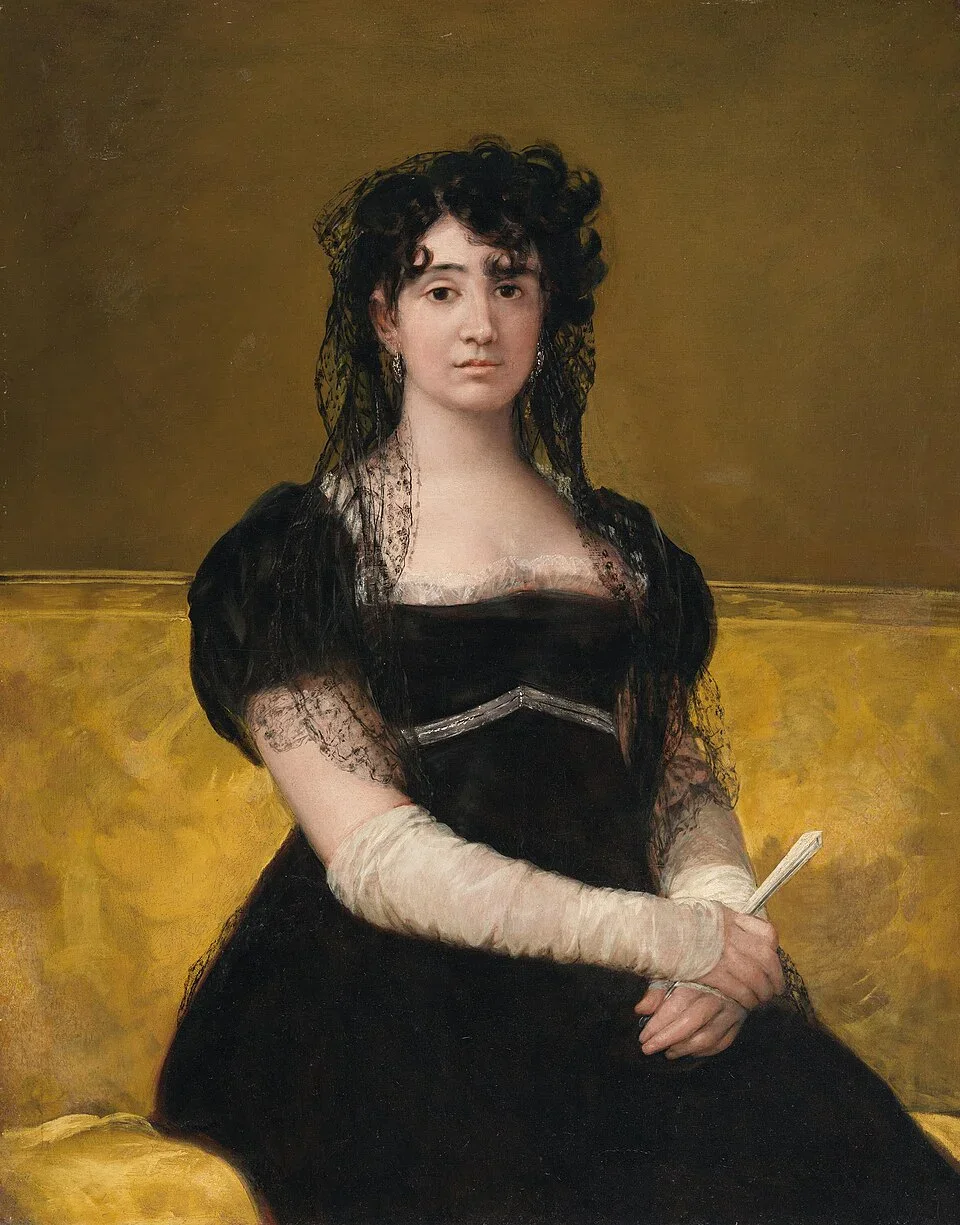
Portrait of Doña Antonia Zárate
Antonia Zárate came from a family of actors and became a leading actress in Madrid. Goya admired her, and he made this portrait as his tribute. The tribute is in the black silk against the gold sofa, the closed fan in her gloved hands. Her gaze is a little sad and her smile faintly ironic, and nothing in the picture tells you her name or her rank. The portrait stayed in her family until about 1900. It was bought in London and later hung at Russborough House, the home of Alfred Beit. In 1974 Rose Dugdale and three others took nineteen pictures, prying them from their frames with screwdrivers or cutting them out with knives. All were found a week later. In 1986 Martin Cahill and his accomplices took eighteen paintings from the same house, this one among them. By then Beit was negotiating to give his collection to the National Gallery of Ireland. The gift was finished in 1987, while the portrait was still missing. In 1993 it turned up in Antwerp, in the trunk of a car at the airport, rolled up inside a golf bag. Of everything stolen, it was the most damaged. Rolling made paint fall away in places, and the cuts from its removal showed on the surface. It was restored here, and it is here now.
Listen in the appFrancisco Goya · Public domain
03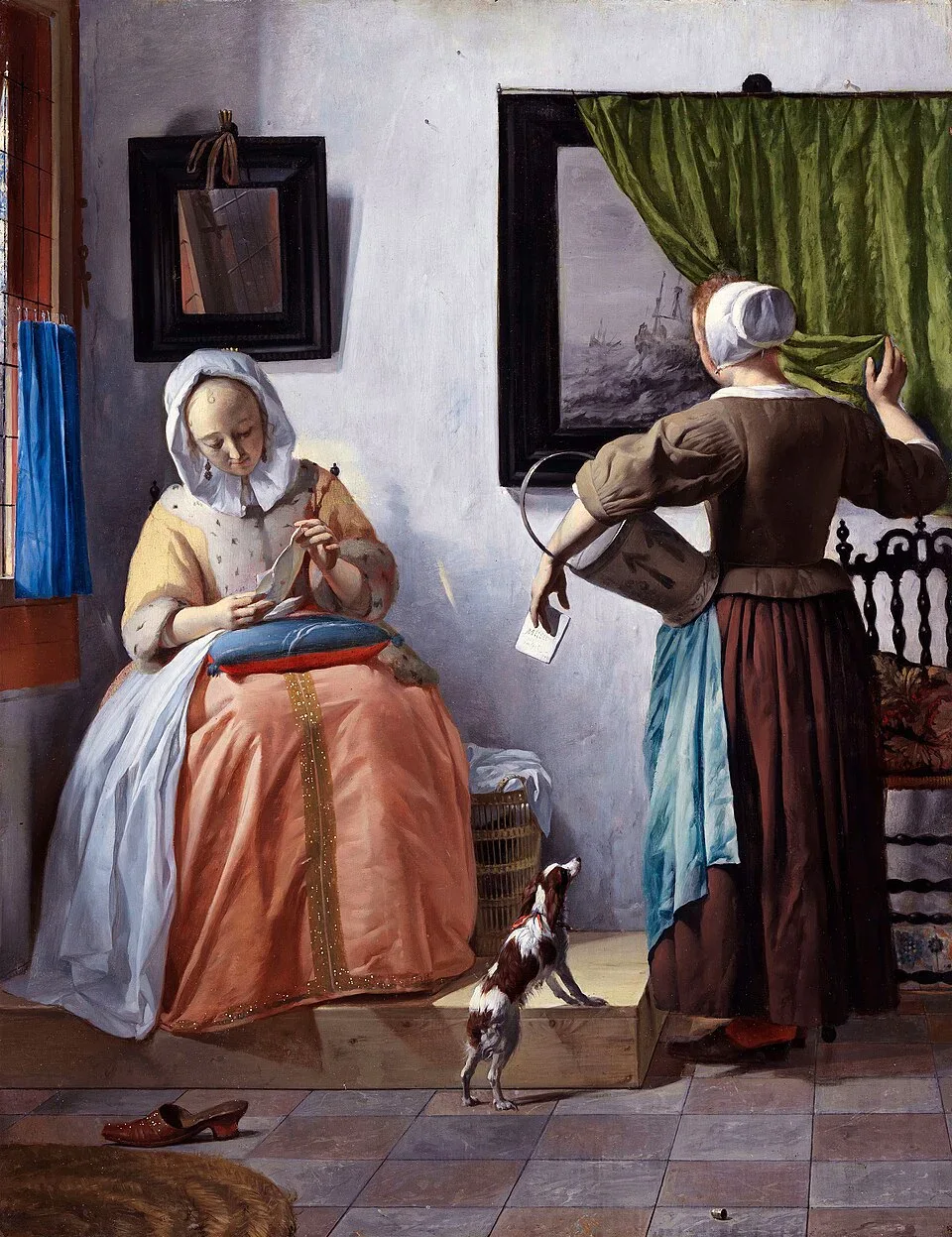
Woman Reading a Letter
A woman sits by a window with a blue curtain, reading a letter. She has kicked off one shoe, and her sewing basket rests beside her. A maid beside her draws aside the curtain in front of a painting of a stormy sea. For people of that time, the signs in the room made it clear. It was a love letter. A small spaniel stands for faithfulness. Cupid's arrows on the bucket and the maid's old shoes stand for love and the hope of a safe return. People then said love was like a stormy sea. The maid is showing her mistress the danger in front of her. In the maid's hand is a second letter. It is addressed to Metsu in Amsterdam, by post. It has nothing to do with the story in the painting. He used it to sign his work, as a small joke. He first painted the woman's jacket red. Then he changed it to yellow, trimmed with white fur.
Listen in the appGabriel Metsu · Public domain
04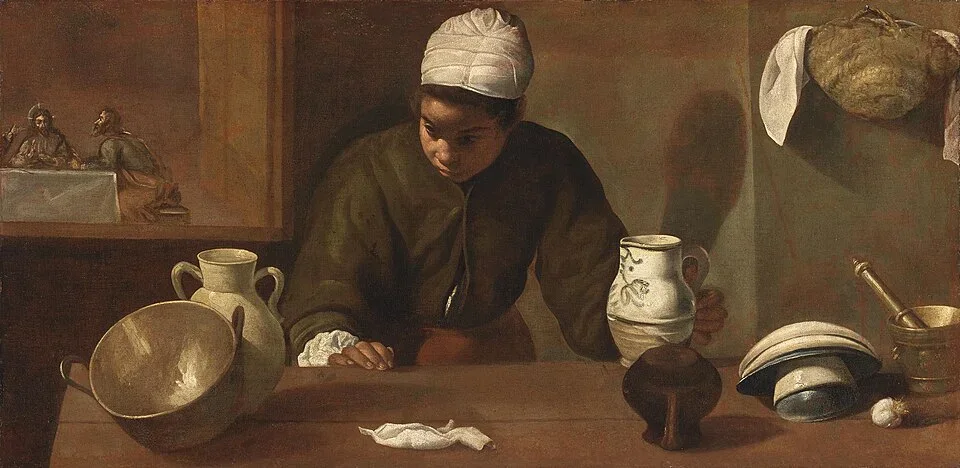
Kitchen Scene with the Supper in Emmaus
In 1933, someone cleaning this painting uncovered a window that had been painted over. Under a broad patch of repaint, there it was. Through it, Christ blesses bread, with a bearded man to his left. Of a second disciple only a hand remains, because the canvas was cut down there. In front of it is a kitchen. A young woman with dark skin and a white cap stands behind a table that hides half of her. In her left hand she holds a glazed jug resting on the table. Beside it are a mortar, a pestle and a clove of garlic. A wicker basket hangs on the back wall, a white cloth poking out. The scene in the window is the Supper at Emmaus, from Luke's gospel, where the risen Christ shares a meal with two disciples. An opening in the wall joins that room to this one. What seemed a plain kitchen now carries something sacred. That still life gives the servant girl a dignity the kitchen alone never would. Christ appearing to those disciples is a sign that he is with humble people. Saint Teresa of Ávila said that God walks among the cooking pots as well. What no one knows is whether Velázquez painted that window himself, or whether a later hand added it.
Listen in the appDiego Velázquez · Public domain
05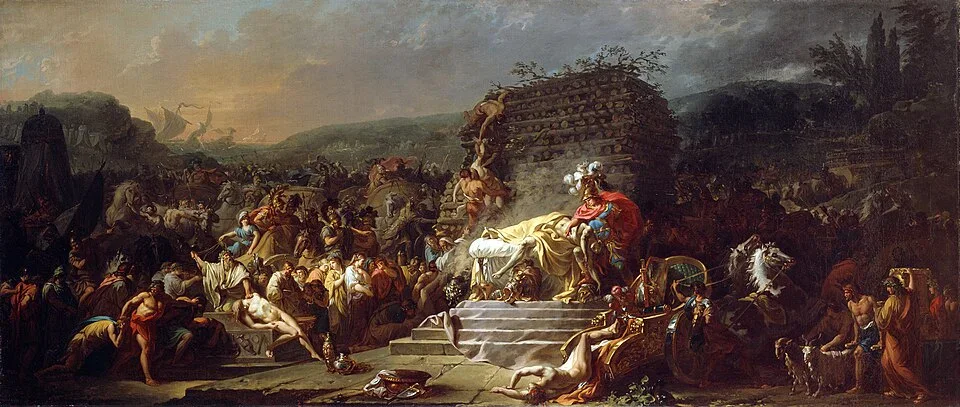
The Funeral of Patroclus
Patroclus is dead, killed by Hector, and Achilles has taken his revenge. Hector's body is still tied to the back of the chariot that brought it here. The funeral is under way, and there is killing still to be done. At the centre, Achilles, in a red cloak and blue armour, bends over the platform where his friend lies and holds him. On the left, a priest is about to kill a Trojan prisoner at an altar. The altar is already stained with blood, so another prisoner has died there. Behind Achilles, the bodies of the prisoners are being lifted onto the high stack of wood. Homer tells that twelve Trojan prisoners were killed at a funeral like this. David painted this while studying in Rome, eager to prove what he could do. When he showed it there in 1778, it was praised. Achilles had meant to feed Hector's body to wild dogs. But Aphrodite and Apollo protected it, and it was neither eaten nor dried in the sun.
Listen in the appJacques-Louis David · Public domain
06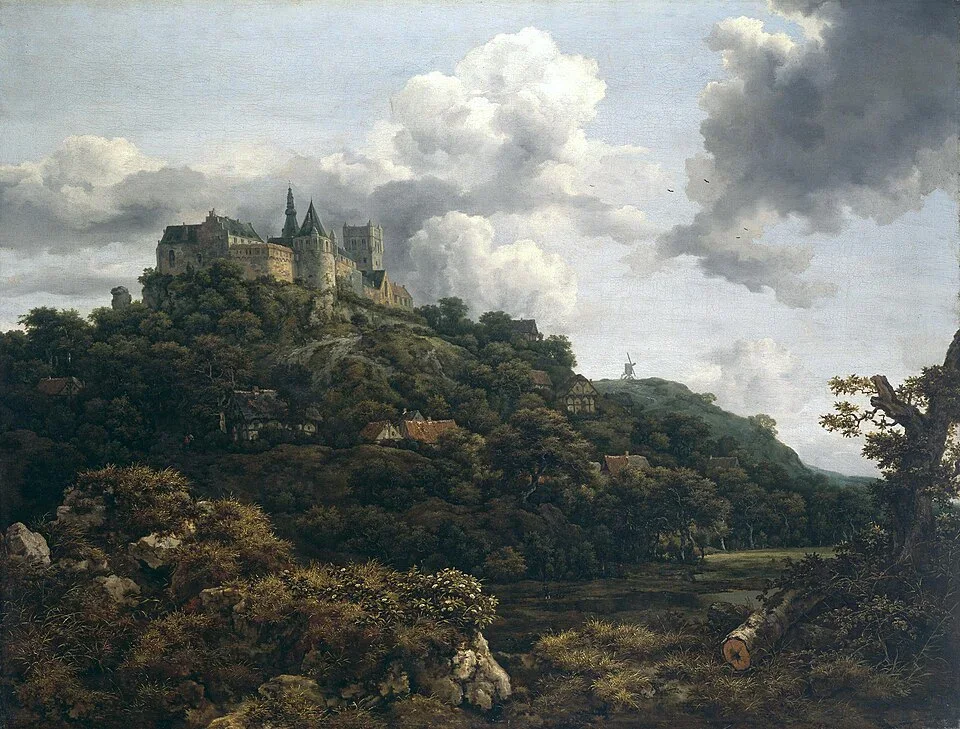
Castle Bentheim
How did this castle end up so high above the world? It crowns a wooded mountain that fills the picture. Houses scatter down the slope, and a river runs between the mountain and the near edge. From up there, it looks down on everything around it. But the castle at Bentheim stands on a low hill. That mountain is the painter's own making. Around 1650, Jacob van Ruisdael went with his friend Nicolaes Berchem to Bentheim, a small town just over the border in Germany. He painted the castle more than a dozen times, from different sides and heights, right into his last years. Made when he was in his mid twenties, this one goes furthest. He grew that low hill into a mountain, just to give the castle that commanding place. Rocks and felled trees sit at the left and right edges, like the side wings of a stage. That recalls the painters before him, but the clarity he opened up in the middle was new. An overcast sky hangs above it all, and it gives the scene a sense of movement.
Listen in the appJacob van Ruisdael · Public domain
07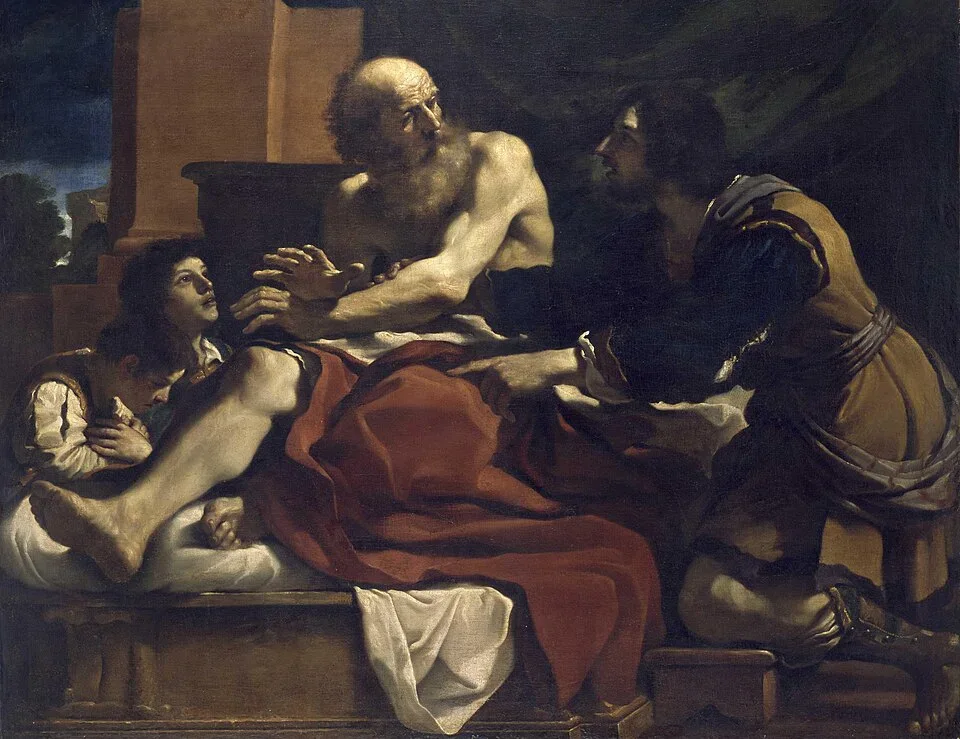
Jacob Blessing the Sons of Joseph
In the shadow, a boy's hands are joined on his chest and his head is bowed. You could easily miss him. This is Ephraim, the younger son. By custom, the blessing should go to Manasseh, the elder son. But the old man at the center has crossed his hands. His right hand, the one that gives the greater blessing, rests on Ephraim's head. Their father Joseph leans in and tugs at him, trying to stop it. But Jacob's open hand, turned downward, seems to hold him still. He is calm and resigned. Guercino chose that one fleeting moment. The last warm light of day slips in from behind a brick wall at the back. It catches Jacob's face, and Joseph's forehead and nose. It falls full on Manasseh, undone by disappointment. Ephraim stays in the shade, quiet and accepting. Jacob is covered by a sheet, like an ancient philosopher. What looked like a family quarrel becomes something larger. It speaks of time passing, ambition coming to nothing, and the hope of new life. For seventy years no one knew where it was. Then it turned up in Paris, was bought for one hundred and twenty pounds, and given to this gallery in 2008.
Listen in the appGuercino · Public domain
08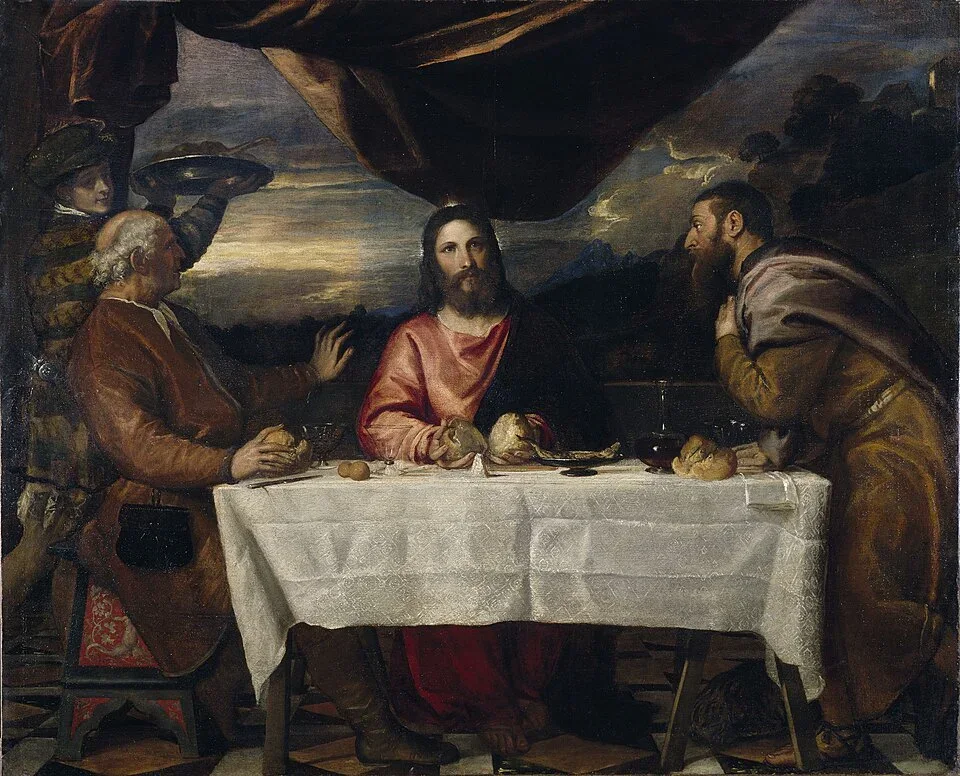
The Supper at Emmaus
A man breaks bread at a table, and in that instant the two beside him recognize him. They had walked with him on the road without knowing who he was. He was the risen Jesus, and they thought he was a pilgrim. At the inn in Emmaus, he took the bread, blessed it, broke it and gave it to them. Their eyes were opened, and he was gone. Titian and his workshop painted this about 1545. Abbate Celotti owned it in Venice until 1836, when the Russian collector Demidoff bought it and took it to his villa near Florence. In 1870 his collection was sold in Paris, and the National Gallery of Ireland bought it.
Listen in the appTitian · Public domain
09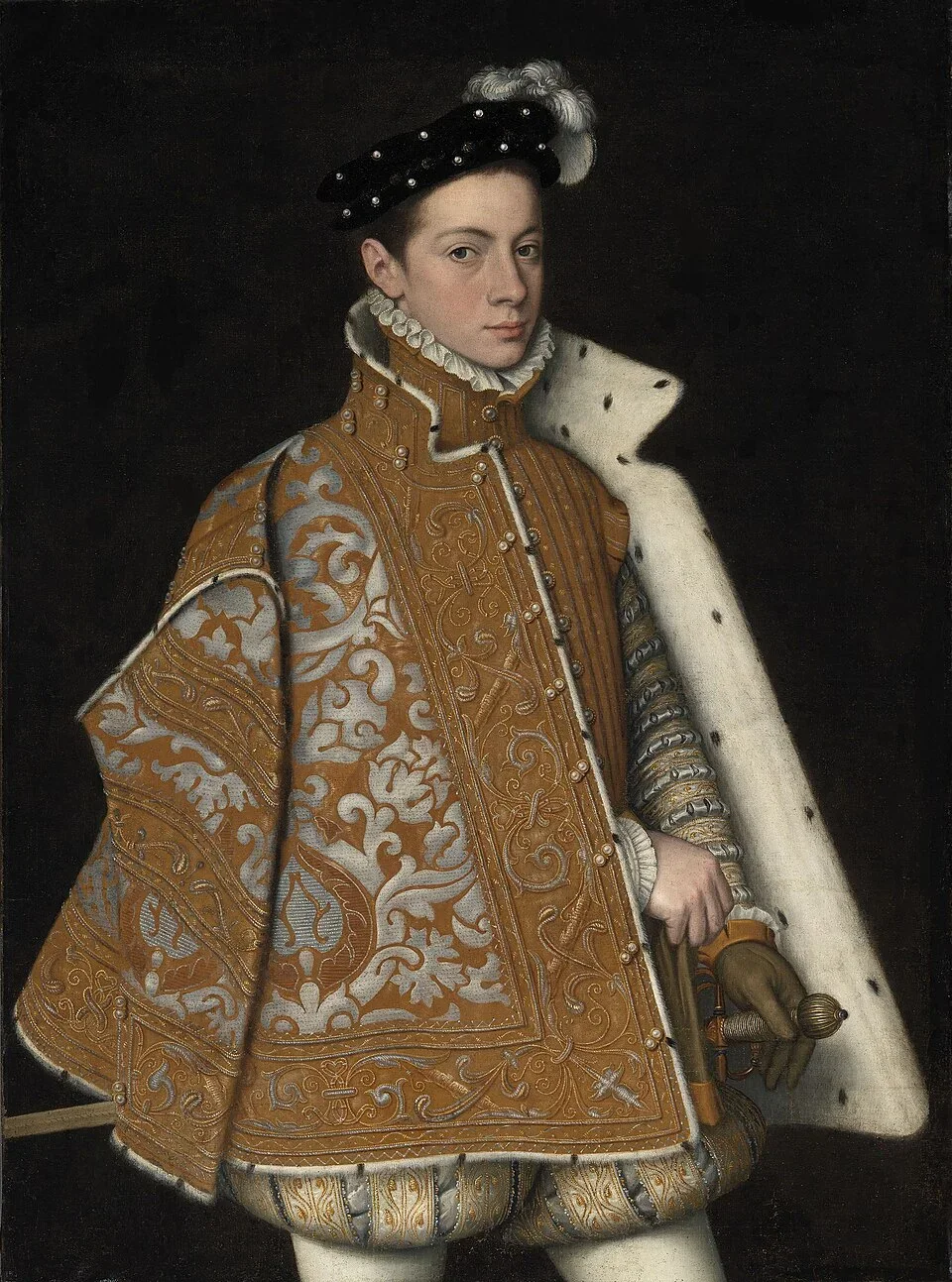
Portrait of Prince Alessandro Farnese
He is fifteen, and very aware of how he looks. With his right hand he gently settles the glove on his left, and that gloved hand holds the sword. He faces you, smiling, in gold and silver and white against a dark background. This is Alessandro Farnese, grandson of King Charles of Spain, then living at the Spanish court. Sofonisba Anguissola was in Madrid, teaching the queen to paint. The queens and princesses she painted there were rigid figures, shut into rich dresses covered in jewels. This boy is spontaneous by contrast. For a long time, no one thought she had painted him. When the picture was bought in Rome in 1864, it went under the name of Alonso Sánchez Coello. It was only in 1989 and 1992 that the picture was credited to her. That made it the first painting by a woman to enter the collection. Who asked her to paint this boy, and why, we do not know.
Listen in the appAttributed to Sofonisba Anguissola · Public domain
10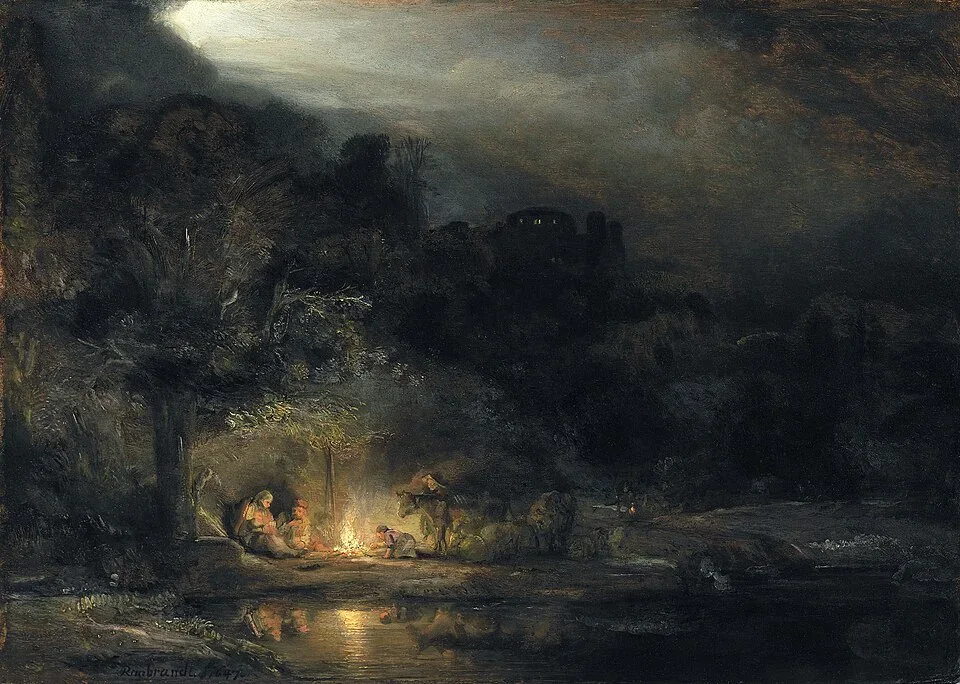
Nocturnal Landscape with the Holy Family resting on the flight into Egypt
The family has only just got away. An angel warned Joseph that Herod meant to kill the firstborn, so he took Mary and the child and fled toward Egypt. Here they rest by a fire under a tree, with shepherds nearby. And a figure comes closer out of the dark, carrying a lantern. For a long time nobody recognised them. People took this for a plain night landscape, once even for a gypsy camp. Turner named it the Flight into Egypt in 1811, and that reading took hold only in 1883. Easy to see why. Mary, Joseph and the child are small and pushed to one side. The donkey you would expect is missing. The landscape, not the family, is the subject. The fire is the brightest thing here. It lights the family and the tree and leaves nearly everything else in darkness. Farther back, a lantern makes a warm point against the cool moonlight. The moon lights a cloudy sky, where a domed building with lit windows may be the Temple of Jerusalem. Below, the figures show in the lake, painted a shade darker than the people themselves. Fire, then lantern, then moon, each fainter than the last. Rembrandt took the idea from an earlier painting by the German artist Adam Elsheimer, another night flight with fire and lantern and moonlight. He meant to better it.
Listen in the appRembrandt · Public domain
- 11
Hellelil and Hildebrand, the meeting on the turret stairs
Frederic William Burton · 1864
- 12
Portrait of Baldassare Castiglione
Titian · c. 1529
- 13
The Marriage of Strongbow and Aoife
Daniel Maclise · 1854
- 14
Le Corsage Noir
Berthe Morisot · 1876–1878
- 15
El Sueño
Francisco Goya · 1790
- 16
Fisher Boy with Basket
Frans Hals · 1630–1632
- 17
Judith with the Head of Holofernes
Andrea Mantegna · c. 1495
- 18
Cornelis de Graeff with his Wife and Sons
Jacob van Ruisdael · c. 1660
- 19
Portrait of Charles Coote, 1st Earl of Bellamont (1738-1800), in Robes of the Order of the Bath
Joshua Reynolds · 1773–1774
- 20
The Gleaners
Jules Breton · 1854
- 21
Dublin Streets: a Vendor of Books
Walter Osborne · 1889
- 22
Napoleon and Pope Pius VII at Fontainebleau in 1813
David Wilkie · 1836
- 23
Portrait of Lady Elizabeth Foster, later Duchess of Devonshire (1759-1824)
Thomas Lawrence · c. 1805
- 24
Portrait of Daniel O'Connell as Governor of the National Bank
David Wilkie · 1838
- 25
Portrait of a Lady in a Black Mantilla
Francisco Goya · 1824
- 26
Portrait of Woodrow Wilson (1856-1924), American President
John Singer Sargent · 1917
- 27
Portrait of Thomas Moore (1779-1852), Poet
Martin Archer Shee · c. 1817
- 28
The Taking of Christ
Caravaggio · c. 1602
- 29
Connemara Girl
Augustus Nicholas Burke · 1850
- 30
In a Dublin Park, Light and Shade
Walter Osborne · c. 1895
- 31
The Conjuror
Nathaniel Hone the Elder · 1775
- 32
The Dublin Volunteers on College Green, 4th November 1779
Francis Wheatley · 1779–1780
- 33
Bathers Surprised
William Mulready · 1853
- 34
Saints Cosmas and Damian and their Brothers Surviving the Stake
Fra Angelico · 1438–1443
- 35
The Immaculate Conception
Francisco de Zurbarán · c. 1658
- 36
An Interview between Charles I and Oliver Cromwell
Daniel Maclise · 1836
- 37
Merry Christmas in the Baron's Hall
Daniel Maclise · 1838
- 38
The Toy-seller
William Mulready · 1835
- 39
The Triumph of David
Guercino · 1637
- 40
Saint Joseph with the Christ Child
Guercino · c. 1637
- 41
Saint John the Baptist Visited in Prison by Salome
Guercino · 1622–1626
- 42
Bust of Cardinal Guido Bentivoglio
Unknown Artist
- 43
Banks of a Canal, near Naples
Gustave Caillebotte · c. 1872
- 44
Madonna and Child
Paolo Uccello · 1435–1445
- 45
Children on the Sand Dunes, Grandcamp
Eva Gonzalès · 1877–1878
- 46
Peasant Wedding Dance
Pieter Brueghel the Younger · 1620
- 47
San Isidro
Juan van der Hamen · c. 1620–1622
- 48
Julie Bonaparte as Queen of Spain with her Daughters, Zénaïde and Charlotte
François Gérard · 1808
- 49
Portrait of a Young Man
Alessandro Oliverio · 1515
- 50
The Wounded Poacher
Henry Jones Thaddeus · 1881
- 51
David and Goliath
Orazio Gentileschi · c. 1605–1607
- 52
The Village School
Jan Steen · 1663–1665
- 53
Visit of the Queen of Sheba
Lavinia Fontana · 1599
- 54
Virgin and Child
Elisabetta Sirani · 1660
- 55
Landscape with a Youth and his Tutor on Horseback
Aelbert Cuyp · 1650–1655
National Gallery of Ireland
Frequently asked questions
How much does the guide cost?
Free app download. Free until 1 January. Listed guide price: $1.99. Audio guide only. Venue admission is separate.
Can I listen without internet?
Yes. Download the guide’s audio, images, and maps in the app before your visit. Your downloaded content is then available offline.
Can I listen in my language?
In English for now. More languages soon.
Do I need to follow a schedule?
No. This is a self-guided experience. Choose your stops, pause whenever you like, and return to a story at your own pace.
Which artworks are in the National Gallery of Ireland audio guide?
55 artworks, including Man Writing a Letter (Gabriel Metsu), Portrait of Doña Antonia Zárate (Francisco Goya), Woman Reading a Letter (Gabriel Metsu), Kitchen Scene with the Supper in Emmaus (Diego Velázquez), The Funeral of Patroclus (Jacques-Louis David), Castle Bentheim (Jacob van Ruisdael), Jacob Blessing the Sons of Joseph (Guercino), and The Supper at Emmaus (Titian). The full list is on this page.
Is this the museum’s official audio guide?
No. Stanza is an independent audio guide app and is not affiliated with National Gallery of Ireland. Museum admission is separate.
At your own pace
Explore National Gallery of Ireland.
Download Stanza, then search for “National Gallery of Ireland”.
Free app download · Guide price shown in the app
Keep exploring
Nearby audio guides
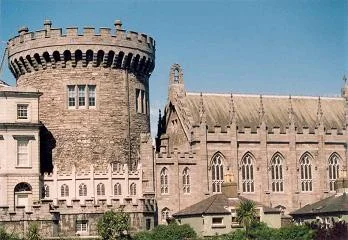
Dublin · 1 km
Dublin Castle
Content & sources
Photo: FoekeNoppert · Public domain
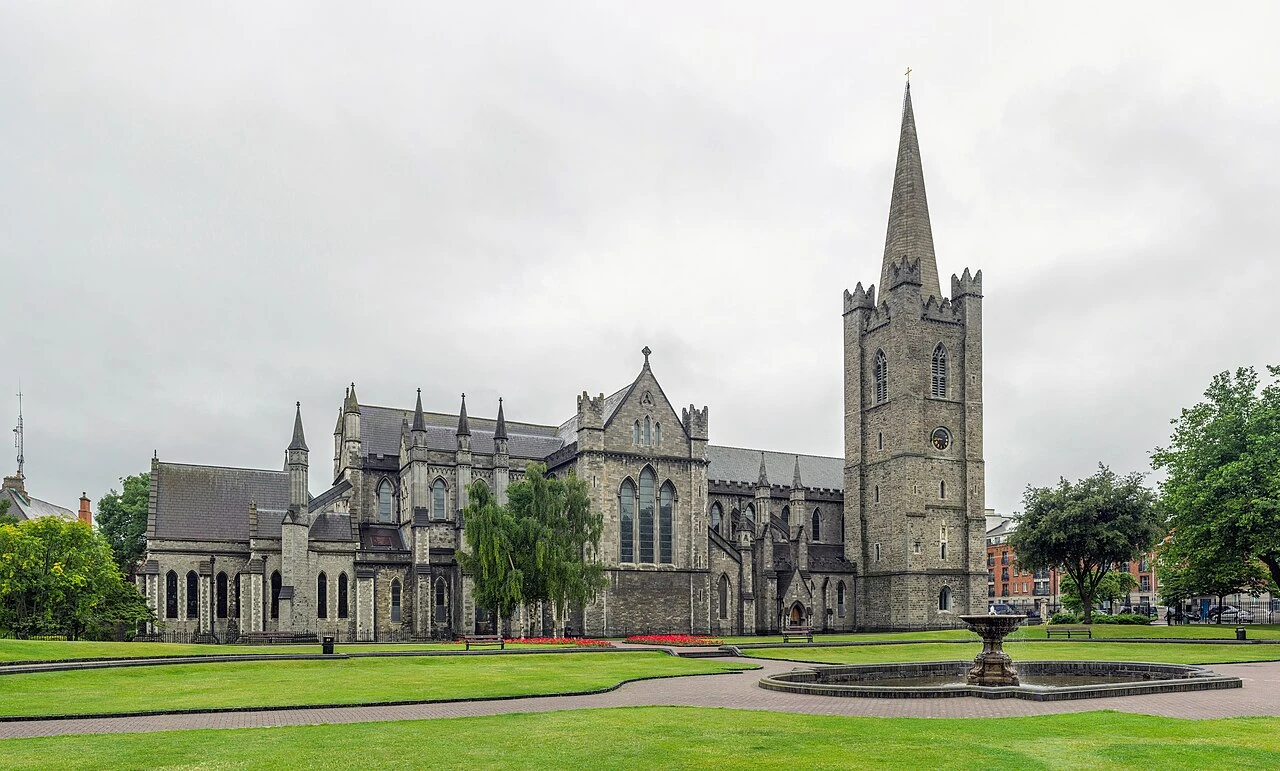
Dublin · 1 km
St. Patrick's Cathedral
Content & sources
Photo: Diliff · CC BY-SA 3.0
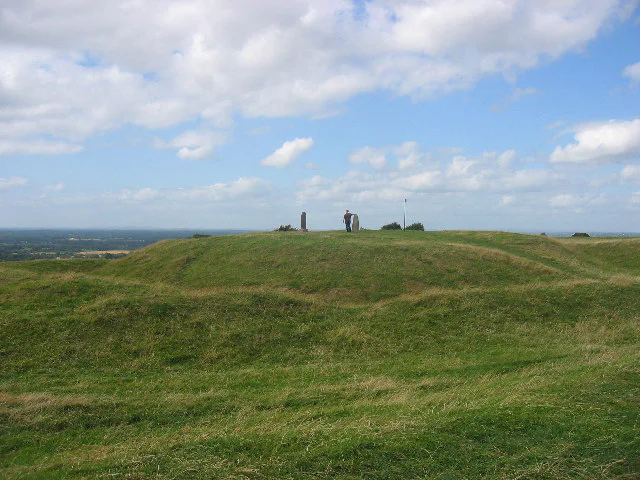
The Municipal District of Ashbourne · 35 km
Hill of Tara
Content & sources
Patrick Brown · CC BY-SA 2.0
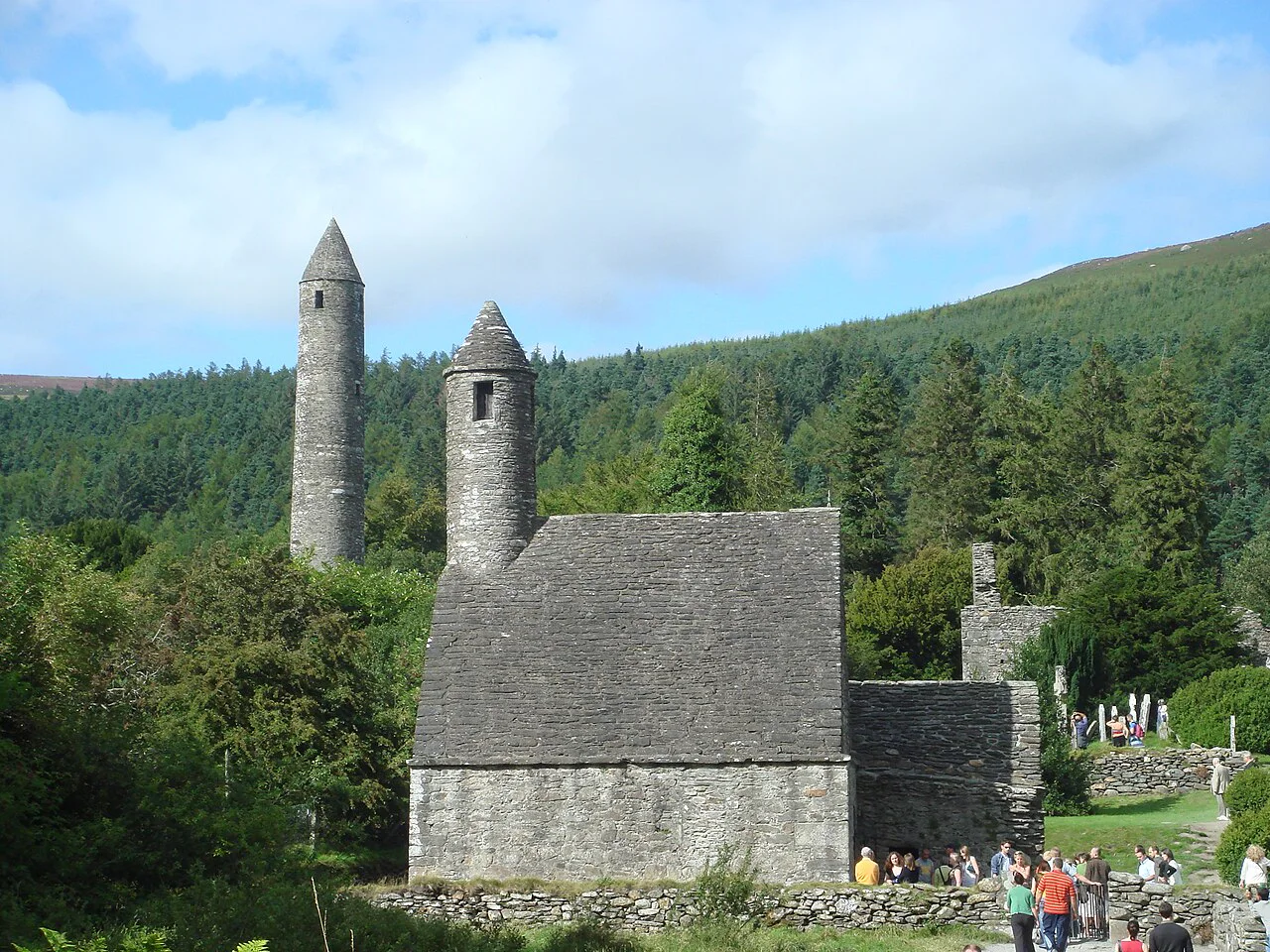
County Wicklow · 37 km
Glendalough
Content & sources
Schcambo at English Wikipedia · CC BY 3.0
Art museums
More art museum audio guides
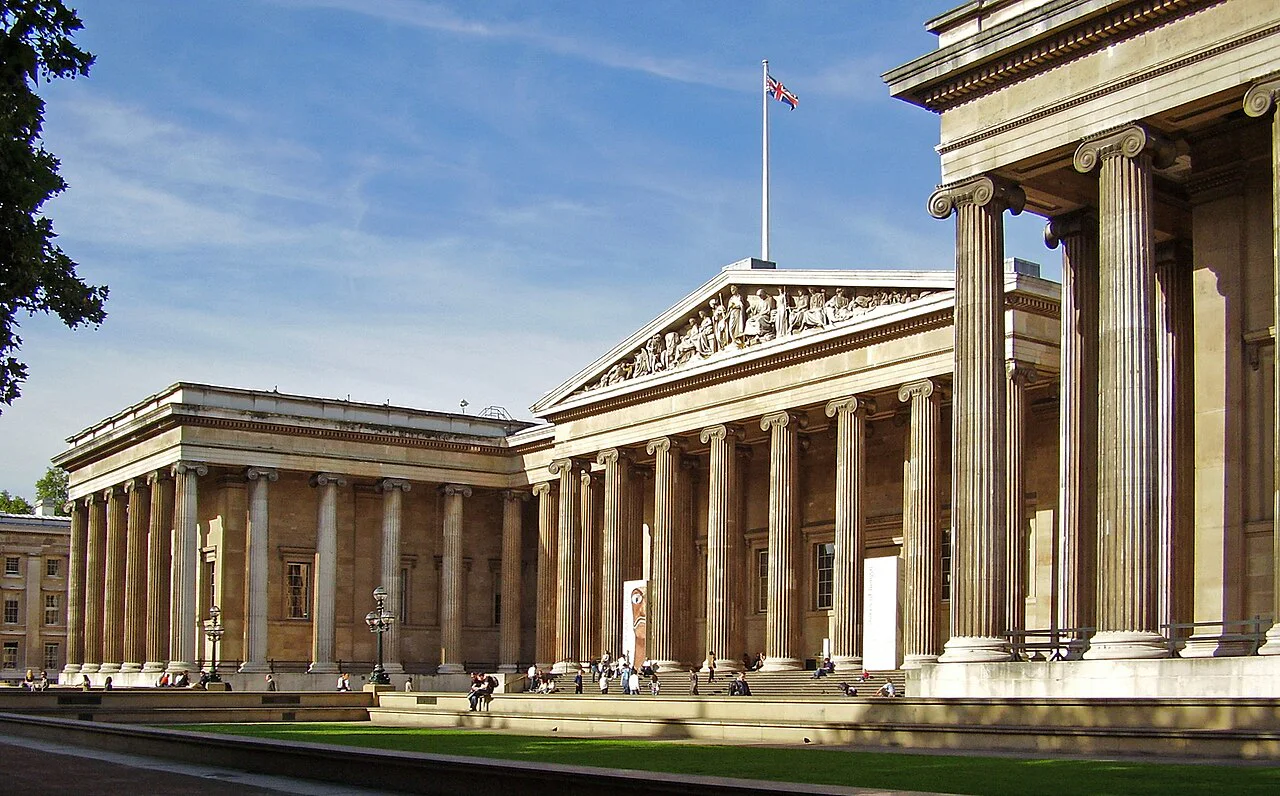
London · 68 artworks
British Museum
Content & sources
Ham · CC BY-SA 3.0
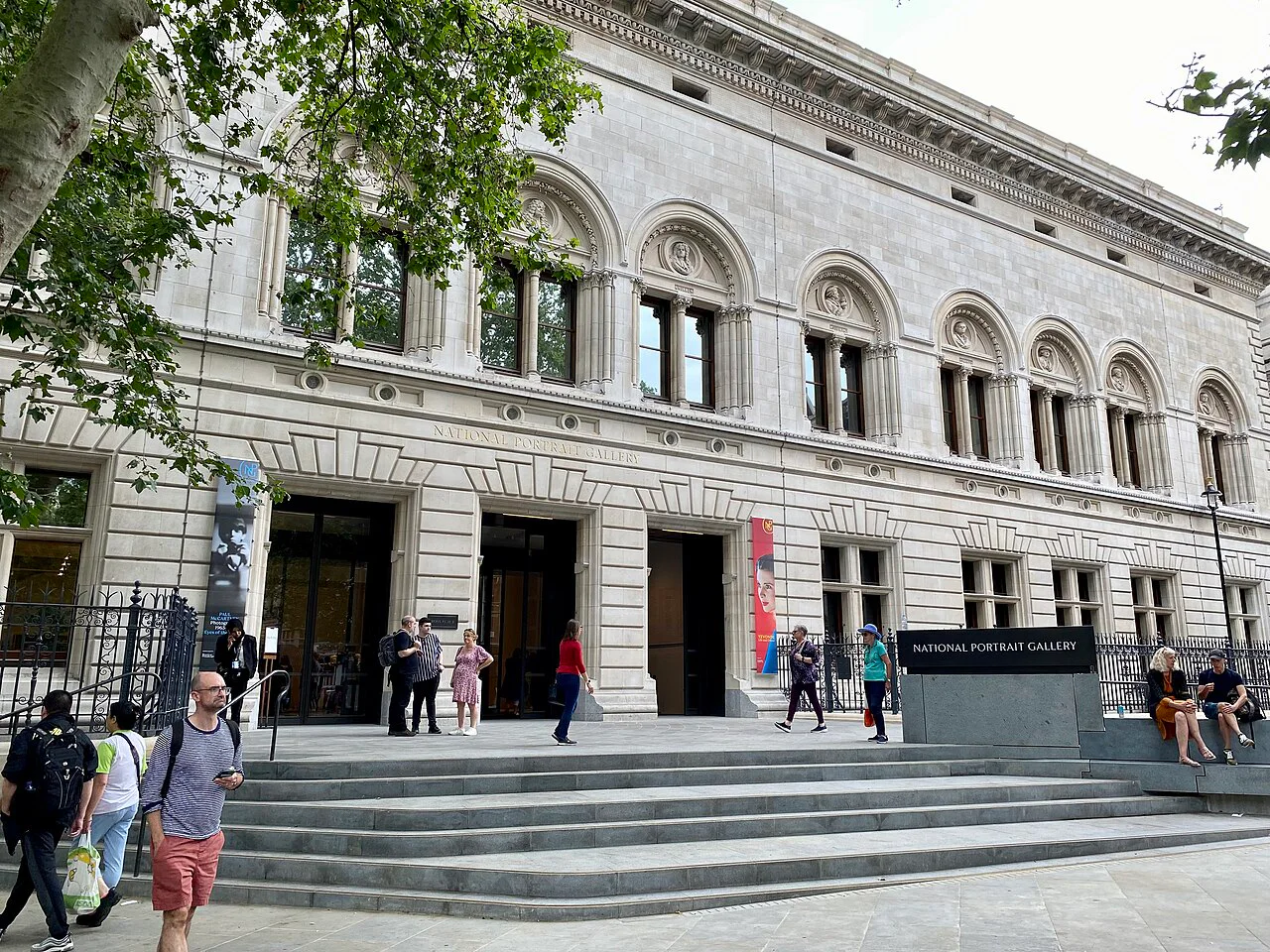
London · 164 artworks
National Portrait Gallery, London
Content & sources
Photo: No Swan So Fine · CC BY-SA 4.0
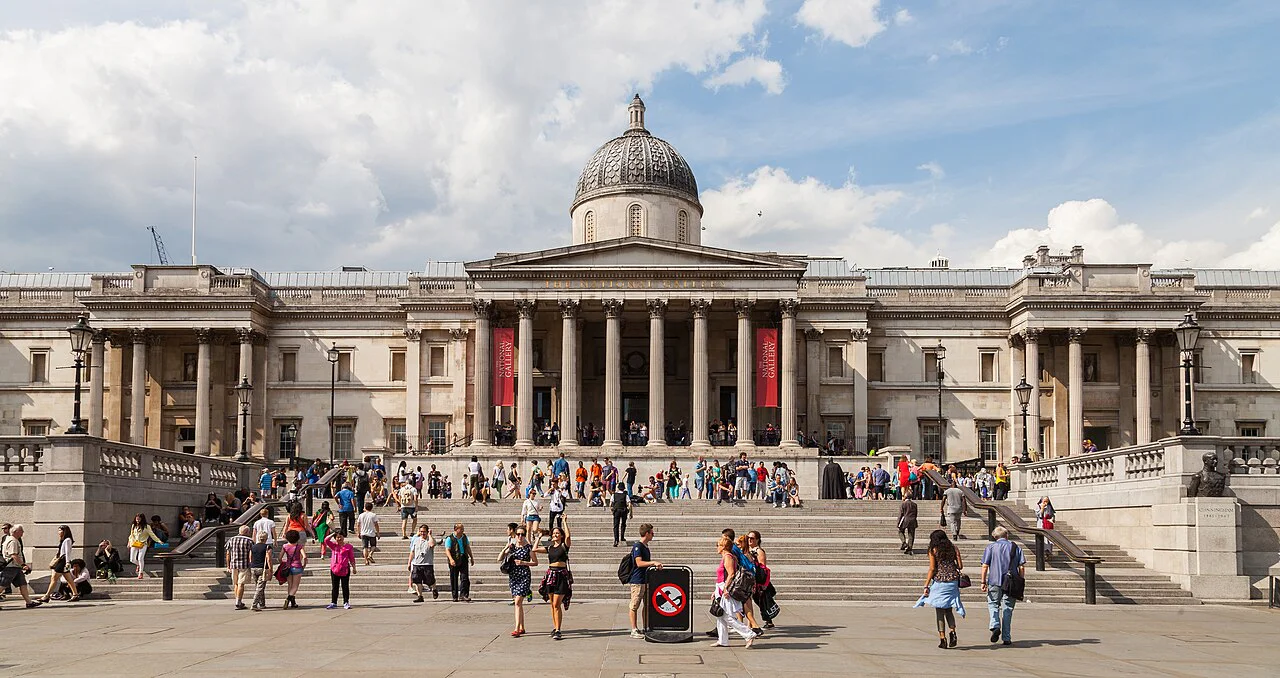
London · 171 artworks
National Gallery, London
Content & sources
Diego Delso · CC BY-SA 4.0
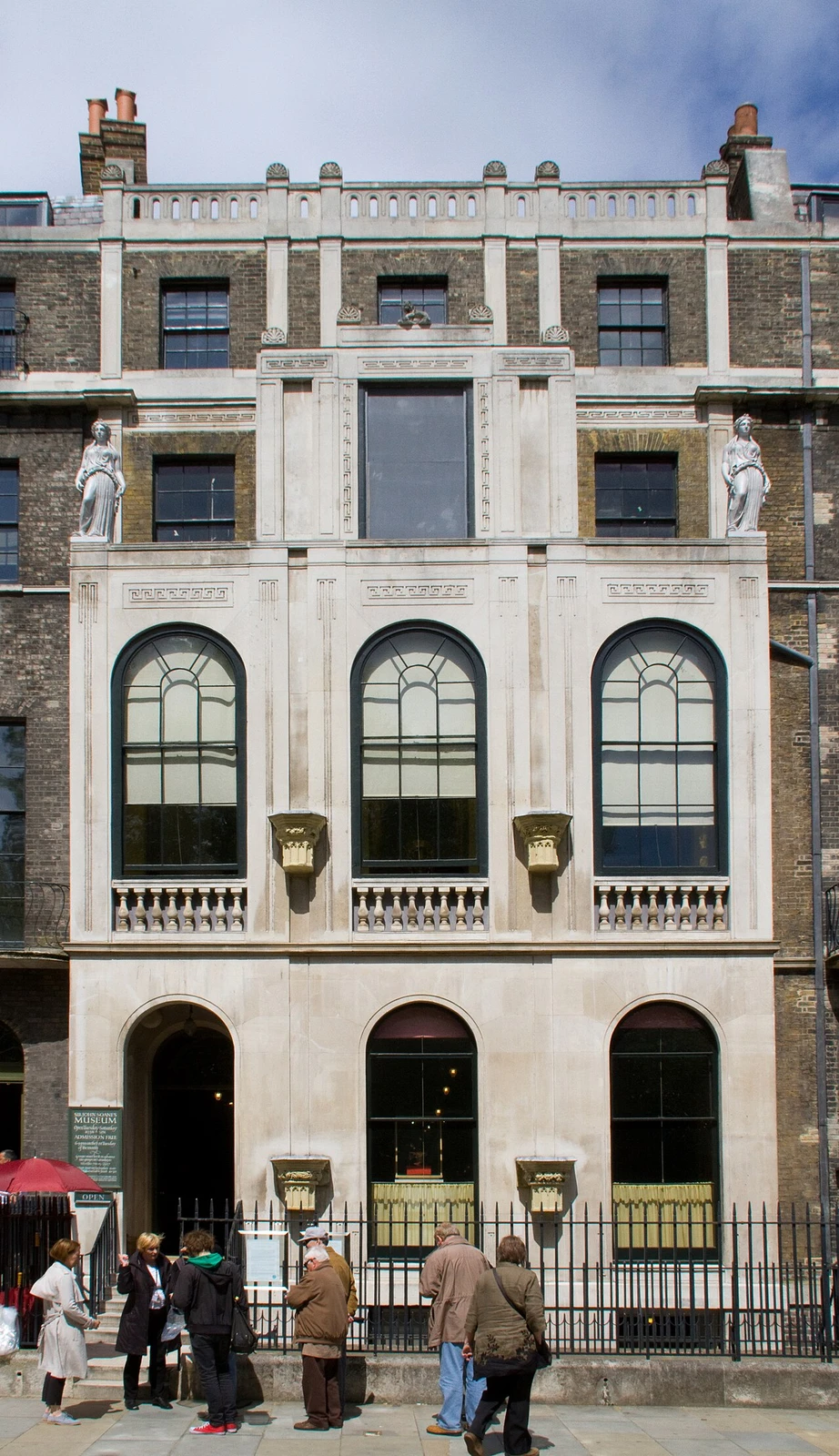
London · 8 artworks
Sir John Soane's Museum
Content & sources
Tony Hisgett from Birmingham, UK · CC BY 2.0
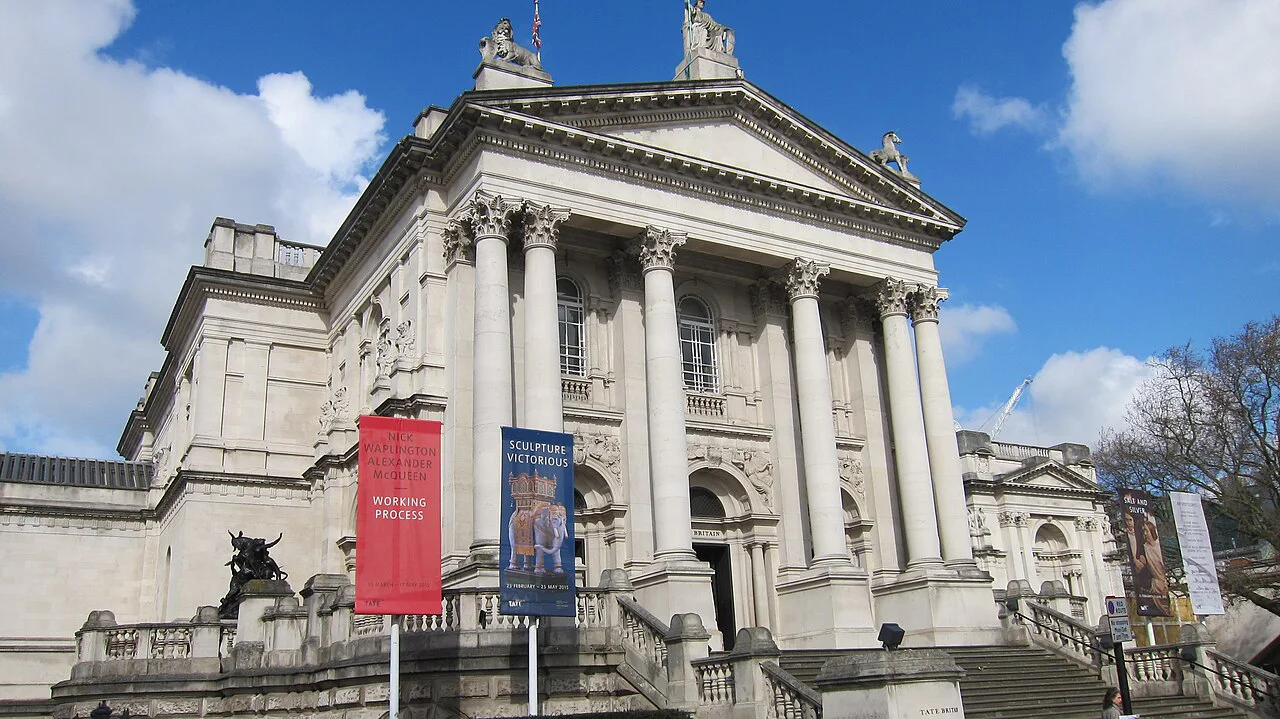
London · 69 artworks
Tate Britain
Content & sources
Carlos Cunha · CC BY-SA 3.0
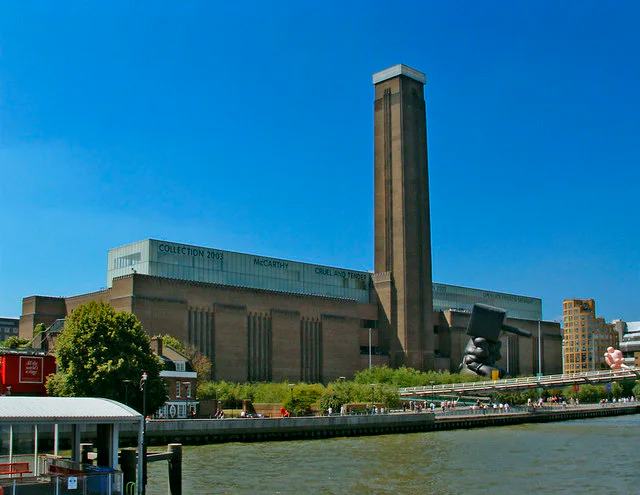
London Borough of Southwark · 15 artworks
Tate Modern
Content & sources
Christine Matthews · CC BY-SA 2.0