Stanza · Audio guide
Alte Pinakothek Audio Guide
A place to remember. A story to take with you.
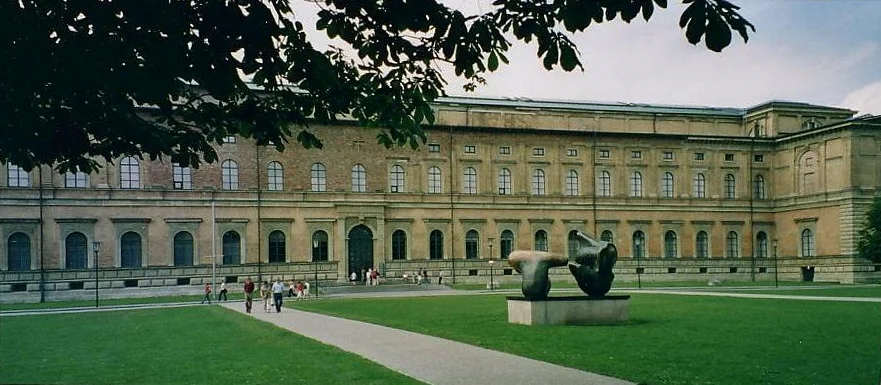
The Alte Pinakothek is an art museum located in the Kunstareal area in Munich, Germany. It is one of the oldest galleries in the world and houses a significant collection of Old Master paintings.
Download Stanza, then search for “Alte Pinakothek”.
About the tour
One guide. Your kind of visit.
The Alte Pinakothek is an art museum located in the Kunstareal area in Munich, Germany. It is one of the oldest galleries in the world and houses a significant collection of Old Master paintings.
The Alte Pinakothek guide tells the stories of 169 artworks, including Self-Portrait with Fur-Trimmed Robe (Albrecht Durer), Madonna of the Carnation (Leonardo da Vinci), The Rape of the Daughters of Leucippus (Peter Paul Rubens, Jan Wildens), The Battle of Alexander at Issus (Albrecht Altdorfer), The Four Apostles (Albrecht Durer), Rubens and Isabella Brant in the honeysuckle bower (Peter Paul Rubens), The Hippopotamus and Crocodile Hunt (Peter Paul Rubens), and Seven Sorrows Polyptych (Albrecht Durer). Every artwork is free to hear in the Stanza app until 1 January.
Ready when you are.
- 01Get the free Stanza app.
iOS & Android
- 02Find your guide.
“Alte Pinakothek”
- 03Download before you go.
Works offline
Audio guide / 169 artworks
Inside the guide
Get to know a few of the stories before you go. Open a stop to read more.
01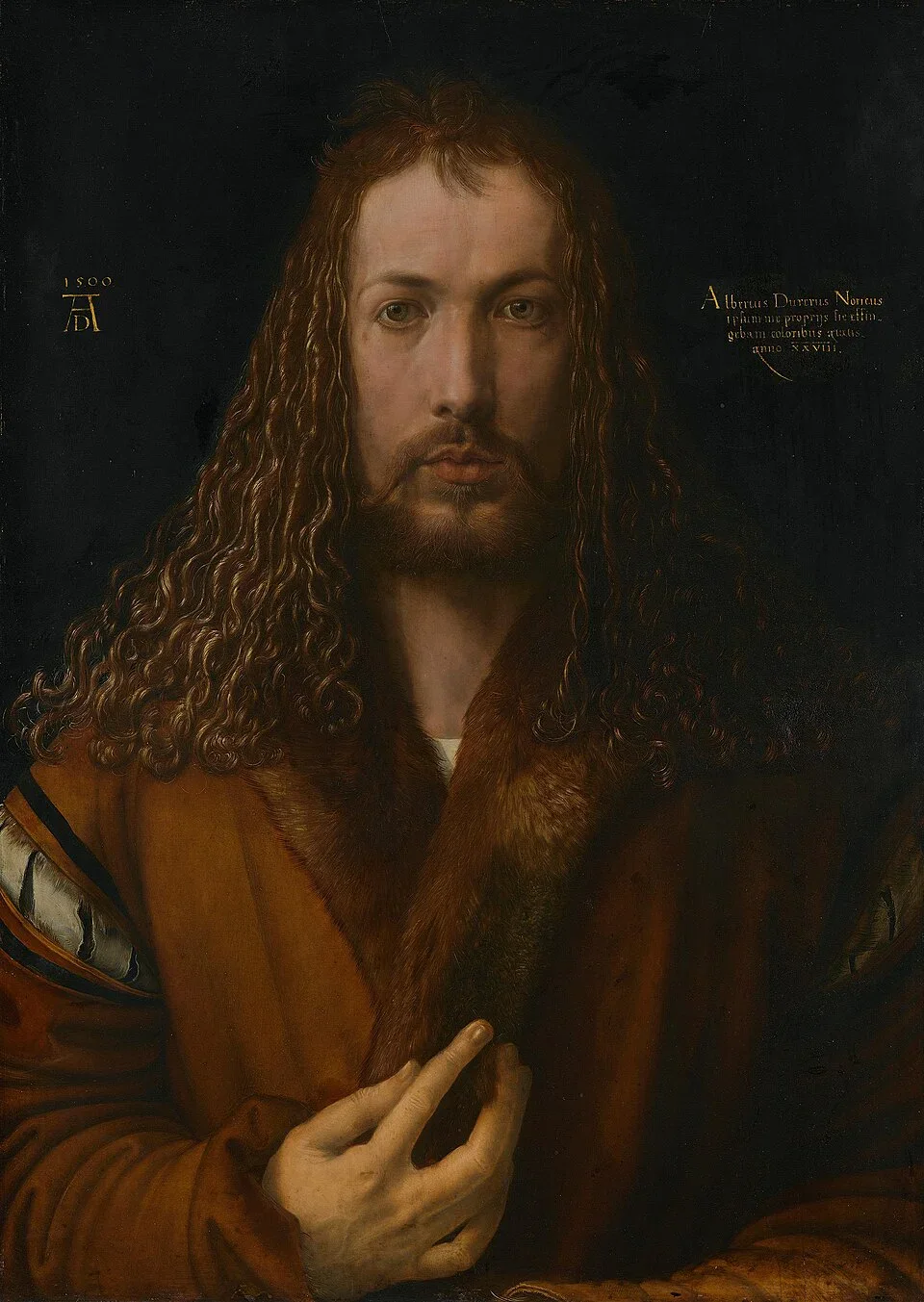
Self-Portrait with Fur-Trimmed Robe
A man faces you straight on, brown hair parted near the middle, a short beard and moustache, one hand raised to his chest. The background is plain and dark. Late medieval painters showed Christ straight on and symmetrical. Albrecht Dürer chose to paint himself in just that manner. Beneath the paint, a drawing shows his nose was once irregular, and he smoothed it. He gave himself brown hair, though his other portraits of himself show it was reddish blond. That raised hand is almost a blessing. This was no gesture of pride. It was an act of faith. Dürer believed his skill came from God, and he wanted the picture to say so. He was twenty-eight, the age when, in the thinking of the time, youth gave way to maturity. He set the year 1500 above his initials, and those same letters also stand for Anno Domini. Yet he held something back. His head sits a little off centre, and the parting in his hair is not quite in the middle. His eyes glance slightly left. His mantle is trimmed with fur, the style of his own time. What is still not known is whether he made the painting for a celebration of the new century among a circle of humanists.
Listen in the appAlbrecht Dürer · Public domain
02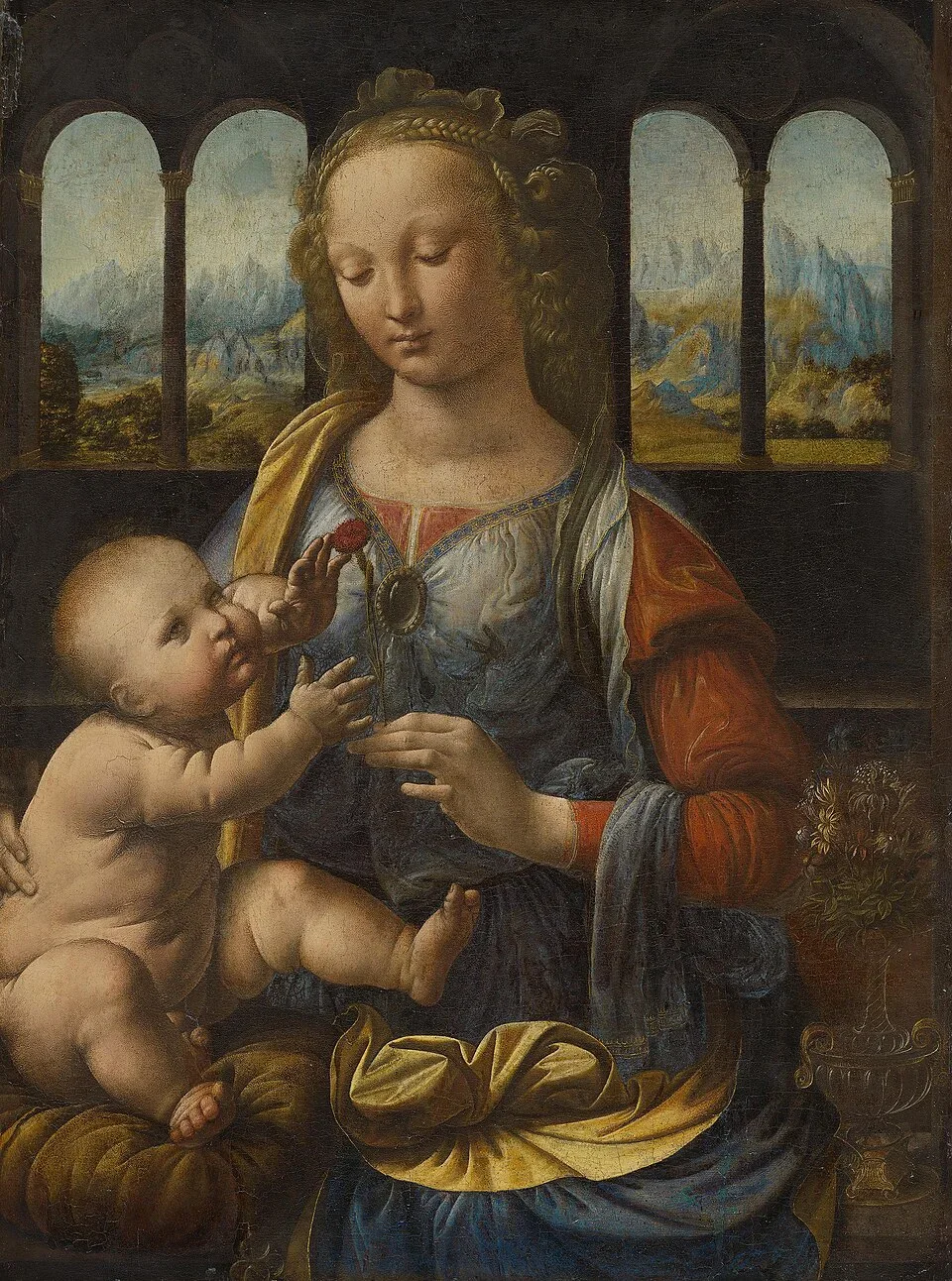
Madonna of the Carnation
Oil paint was still new when this was made, and the young Leonardo was finding out how it behaved. The paint has wrinkled, a trace of that learning. He was just past twenty, still working in the studio of his teacher, Andrea del Verrocchio. That is why, for a long time, the picture passed as a work from that studio. It turned up with a pharmacist in Günzburg, on the Danube. After he and his wife died, it went to his unmarried sister. In 1886 it was auctioned with everything in her apartment. A doctor bought it for less than fifty marks, after bidding opened at five. In 1889 he sold it to the gallery in Munich for eight hundred marks, though its estimated worth was ten thousand. As compensation for that small price, he was given a knight's order at the end of the year. The picture arrived in Munich still assigned to Verrocchio's workshop. Before the year was out, it was credited to him instead. What changed minds were the rich folds of drapery, the mountains fading into the sky, and the softness of the child's flesh. All of it spoke of the student's hand, not the teacher's. It is his only painting in a German museum.
Listen in the appLeonardo da Vinci · Public domain
03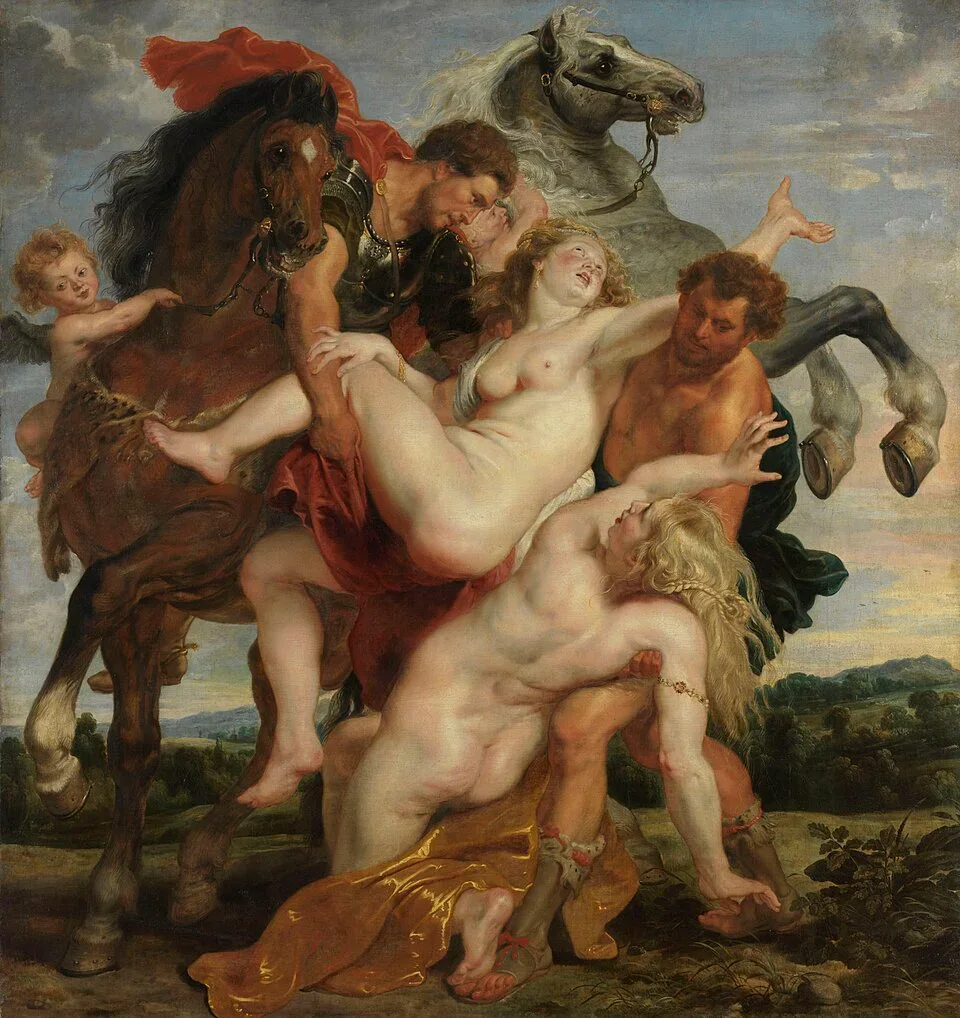
The Rape of the Daughters of Leucippus
Nothing in this picture tells you which of the two women is Phoebe and which is Hilaeira. Rubens gave them no mark to set them apart. They were daughters of King Leucippus, engaged to another pair of twins, cousins of Castor and Pollux. But Castor and Pollux carried them off, and each fathered a son on one of them. The two women are placed quite differently. One is lower down, her back to you. The other is higher, facing you. The men are marked too. Armour identifies Castor, the horse tamer. Pollux, the boxer, has no armour, and his upper body is bare. Castor's gaze rests on the daughter his brother is lifting. Phoebe's son was fathered by Pollux, Hilaeira's by Castor. Match the sons to the men's gazes, and it seems the woman turned away is Phoebe, the one facing you Hilaeira. A small figure helps one of the horses, and its wing is black. That black wing points to the fate awaiting the twins.
Listen in the appPeter Paul Rubens / Jan Wildens · Public domain
04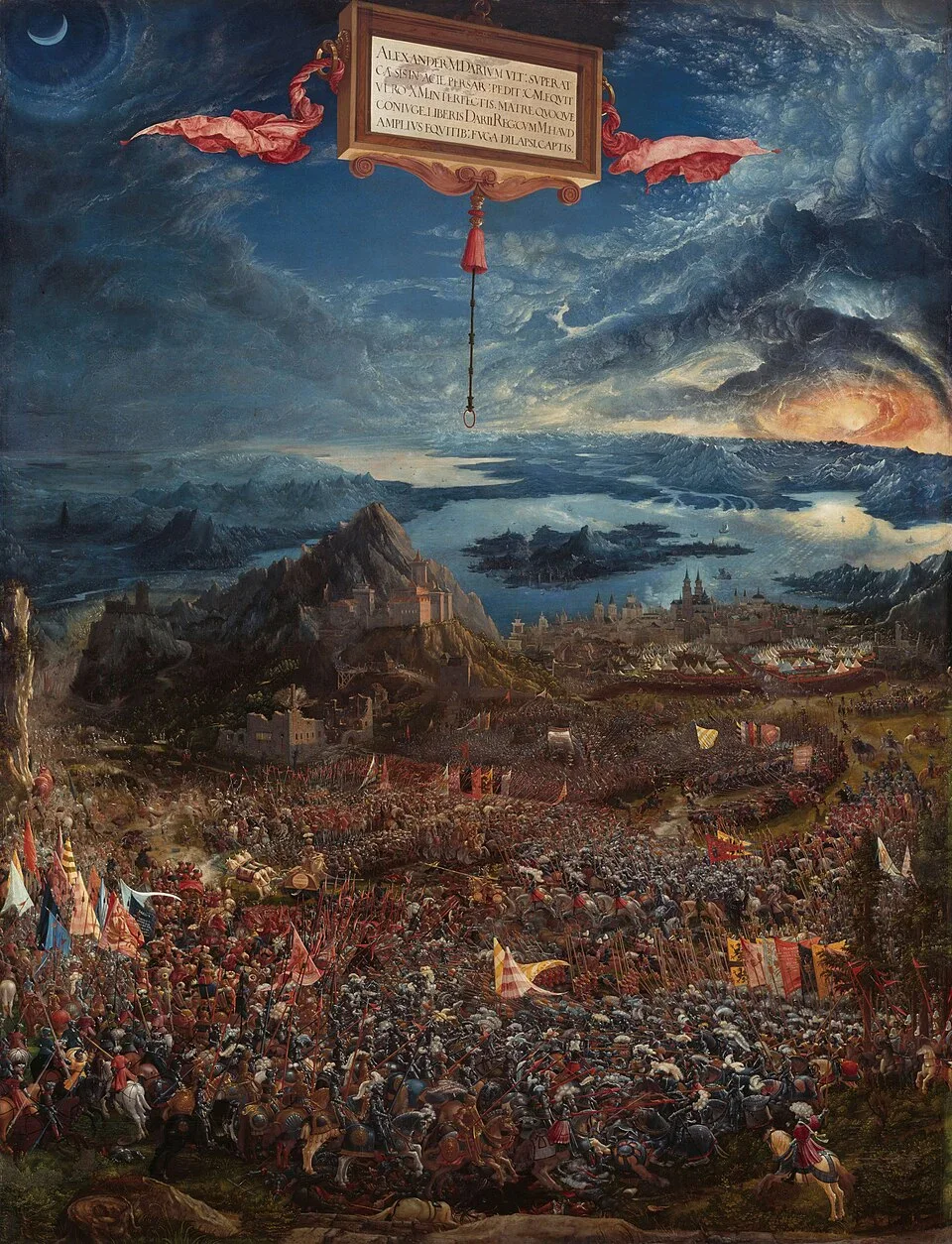
The Battle of Alexander at Issus
High in the sky above the armies, there is a thin crescent moon. It is the same crescent that flew on the Turkish flag. In 1529, the year this was painted, a Turkish army stood before Vienna. The Duke of Bavaria had asked for a scene from ancient history, one of a set of battle pictures for his residence in Munich. An old victory was being called up at a moment when people feared a new one might go the other way. Altdorfer dressed Alexander's Macedonians like the German soldiers of his own day, in white and blue uniforms with their banners. Some of the Persians wear turbans. A battle fought in Turkey in 333 BC turns up here among Alpine rock and German towns. The sun is going down, the last light of evening. Set against that Turkish crescent, it is the West winning over the East. To finish this painting, he turned down the office of mayor of Regensburg.
Listen in the appAlbrecht Altdorfer · Public domain
05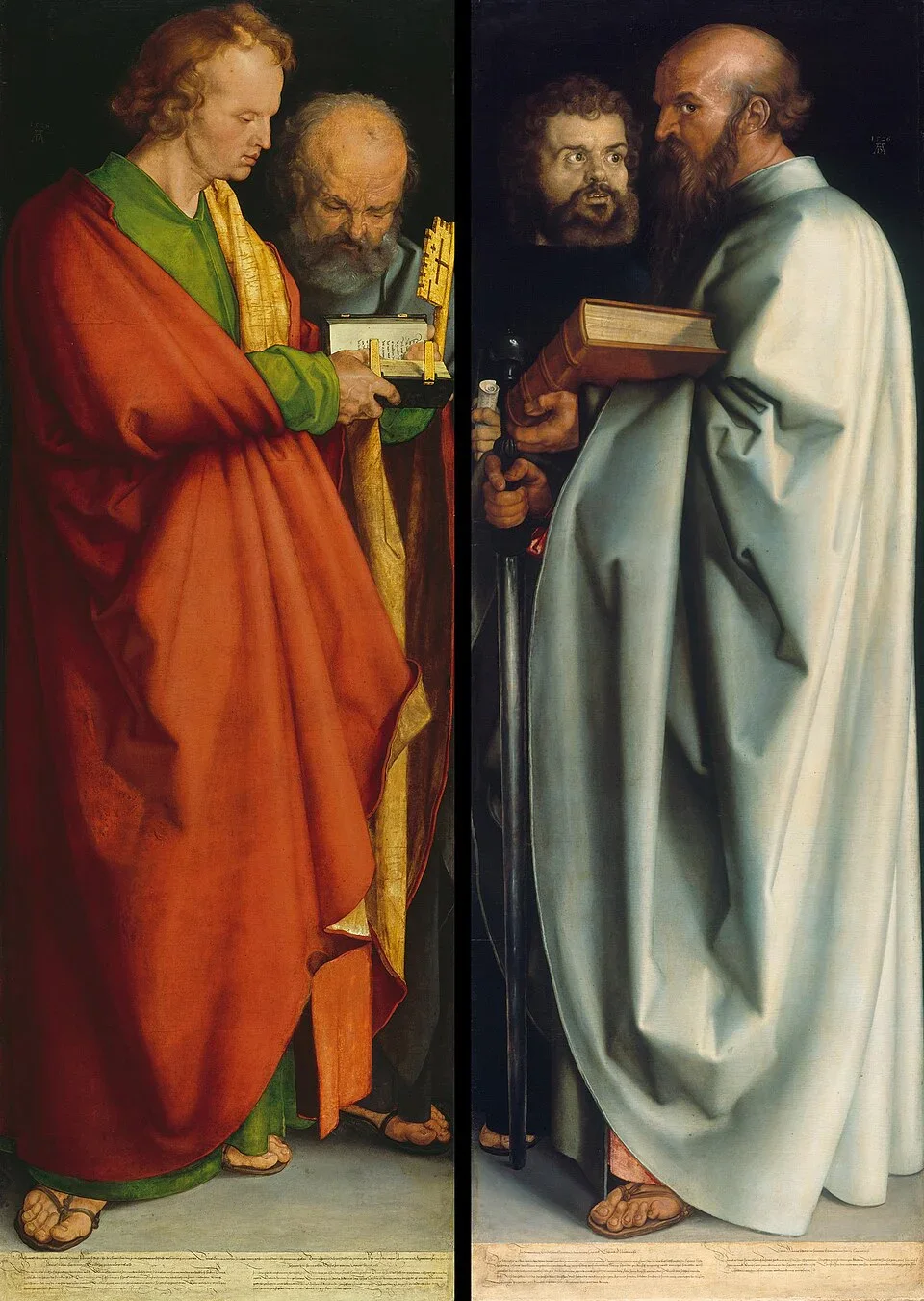
The Four Apostles
Nobody asked Dürer to make these two panels. He had left the Catholic church, and he wanted them to say where he thought authority in faith really lay. He put that belief into the positions of the four men. Peter, often taken as the symbol of the papacy, stands behind John, and the two read from the opening page of John's own Gospel. Peter holds the key to the kingdom of Heaven, which before the Reformation you could reach only through the pope. John's open book says the word of God is there for everyone. Paul, the one who seems to notice you, carries a sword and a closed book. Along the bottom, Dürer wrote a warning to rulers. Do not take human teaching for the word of God. Nothing may be added to it or taken away. He gave the panels to the council of Nuremberg. In 1627 Maximilian, who ruled Bavaria, pressed the council to hand them over. Nuremberg warned that the quotations from Luther's Bible would offend Catholic Munich, so Maximilian had the writing sawn off and sent back to Nuremberg. The panels reached Munich without it, and the words were joined to them again only in 1922.
Listen in the appAlbrecht Dürer · Public domain
06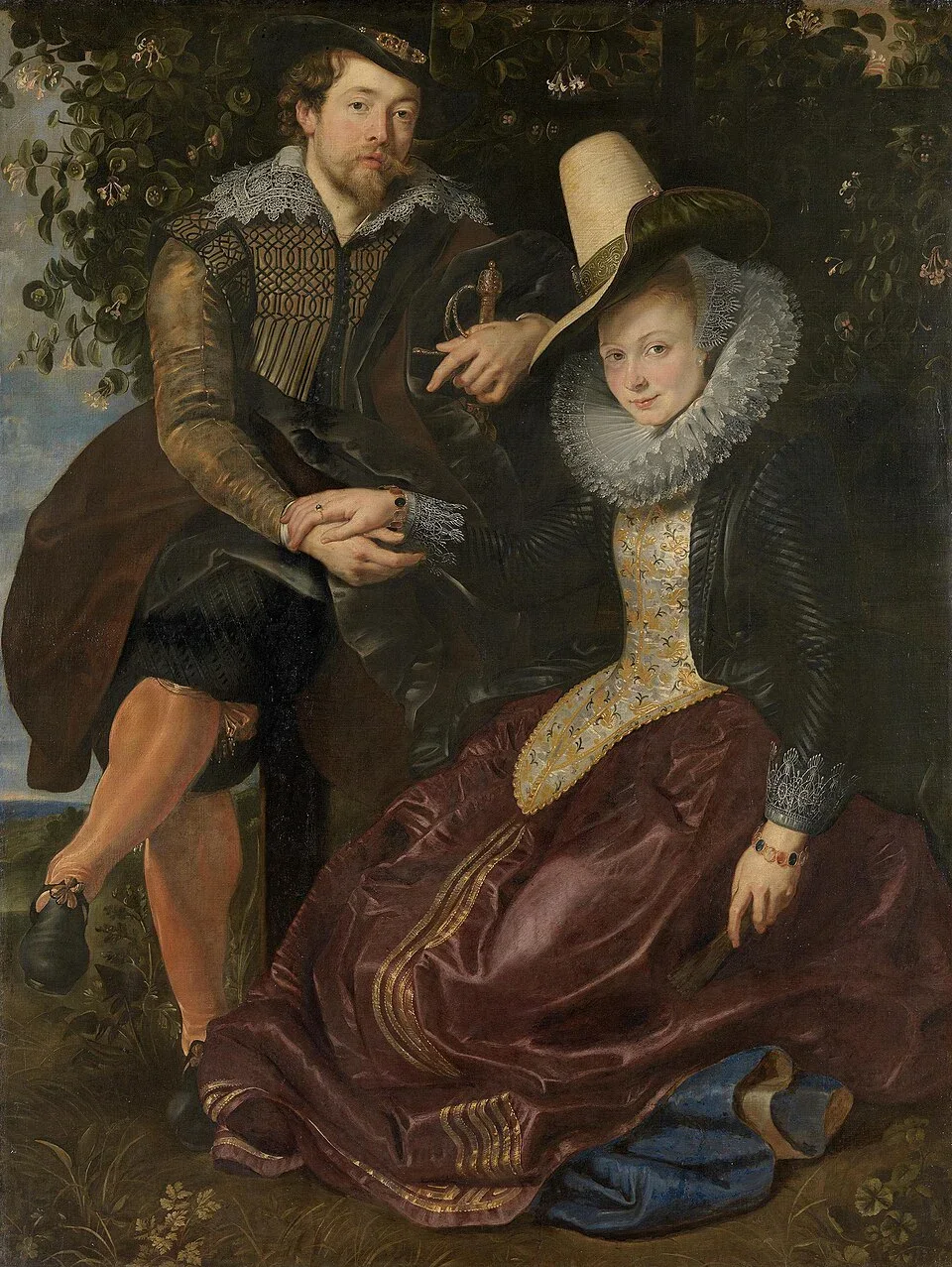
Rubens and Isabella Brant in the honeysuckle bower
Two people sit close together under a bower of honeysuckle. She holds a fan, and both meet your gaze calmly. His legs are crossed, and she sits on the grassy bank a little below him. Their clothes are those of the nobility, yet they sit easily. It was made around their marriage in 1609. He was thirty-two, newly home after eight years in Italy, and she was eighteen, daughter of a humanist lawyer. Rubens shaped the pose and the fine clothes on purpose. He wanted to be seen as a gentleman of standing, not as a painter. Their right hands are joined. That was the ancient Roman sign of marriage, most likely standing for the harmony between them. His left hand lies on the hilt of a sword. Only the elite could carry one, and he had that right as court painter to the governors of the Netherlands. His collar is left open, a sign of a marriage formed through an intellectual match. The honeysuckle overhead had long stood for fidelity and lasting pleasure. How much of the painting came from his own hand is still not known.
Listen in the appPeter Paul Rubens · Public domain
07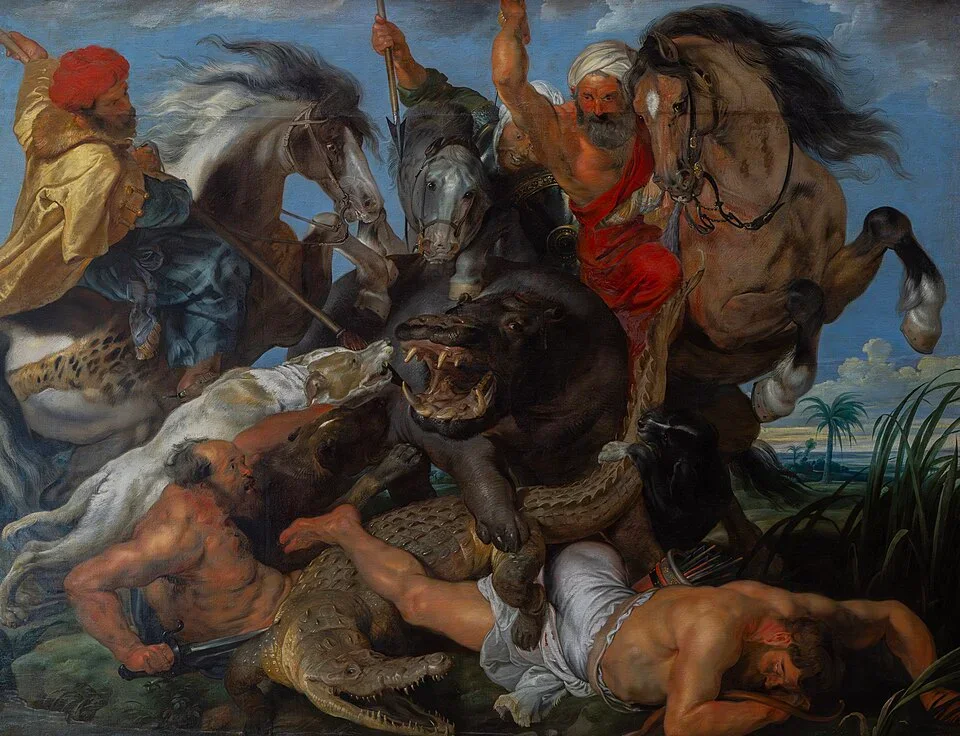
The Hippopotamus and Crocodile Hunt
Four large hunting scenes were painted to hang together, and this is the only one that ever came home. The Elector of Bavaria ordered the set in 1615 to decorate Schleissheim, the summer residence of the Wittelsbach princes. All four were painted in Antwerp. During the Napoleonic Wars they were looted from the palace. In 1800 they were sent to Paris, taken for copies and briefly displayed. Then the four were scattered to different museums. What survived shows a hippopotamus trampling a crocodile, and hunters and dogs attack them both. Three men in eastern costume ride Arabian horses, armed with lance and sword. Two servants wear rough jackets, and one of them has been killed by one of the beasts. A palm tree in the background sets the scene on the banks of the Nile. Hippopotami and crocodiles were seen as dangerous pests, and killing them was a nobleman's duty. Rubens may have gone to Rome before painting it, to see a dead hippopotamus that was displayed there, preserved in brine.
Listen in the appPhoto: GoldenArtists · CC BY 4.0
08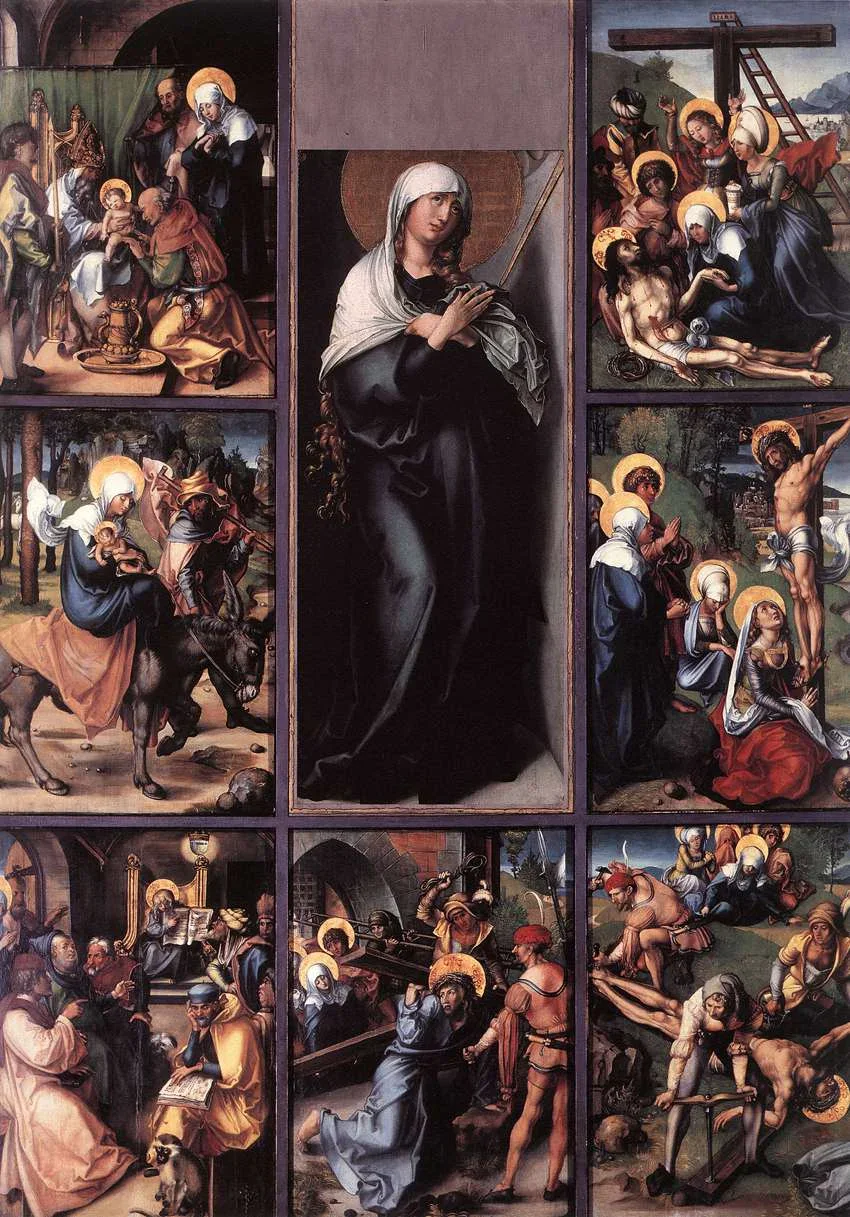
Seven Sorrows Polyptych
A sword goes into Mary's breast. That is the sign that tells you who she is, the Mother of the Seven Sorrows. Her halo is here, and a niche shaped like a shell. This figure was once the center of a far larger altarpiece, with seven scenes of Mary's sorrows set around her. Frederick the Third, Elector of Saxony, ordered it not long after he met Dürer in Nuremberg in April 1496. It was probably meant for the church in his palace at Wittenberg. That altarpiece has been broken apart. Only the center is firmly his. The seven around it were probably painted by pupils from his drawings. They are in Dresden now. This panel came to Munich from the convent at Benediktbeuren early in the nineteenth century. In the 1930s the later paint was taken off. The sword, the halo and the niche all came back, and at last the subject was clear.
Listen in the appAlbrecht Dürer · Public domain
09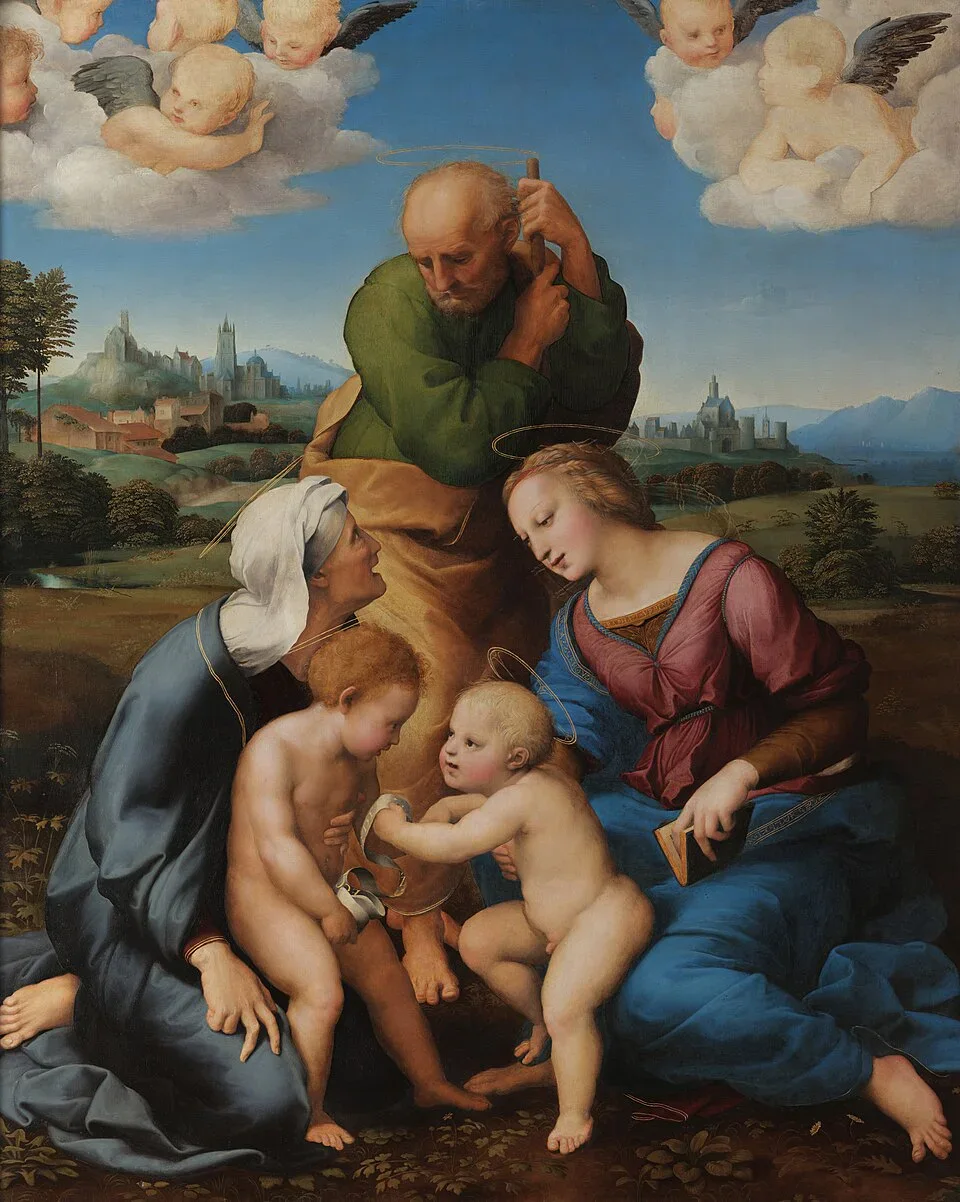
Canigiani Holy Family
For a long time, no one could see what was painted in the two top corners of this picture. Mary and Elizabeth sit on the grass with their children, and Joseph stands over them. His place above the group shows the importance of Jesus' adoptive father, and the growing worship of Joseph after 1500. Glances and small gestures pass between the figures, tying them together. The baby John the Baptist holds a strip of writing that says Behold the Lamb of God. Above them, the sky is soft blue and white. The Canigiani family of Florence bought this for their home altar. They were bankers, and their patron Domenico had a strong interest in art. Later the picture passed to the Medici and then to Munich. In the eighteenth century, blue paint was laid over the sky in those two upper corners. In 1982 a conservator named Hubert von Sonnenburg removed the blue paint. The next year, two groups of putti came back into view in the upper left and right. They are small child figures, and they close the composition the way Raphael had planned it.
Listen in the appRaphael · Public domain
10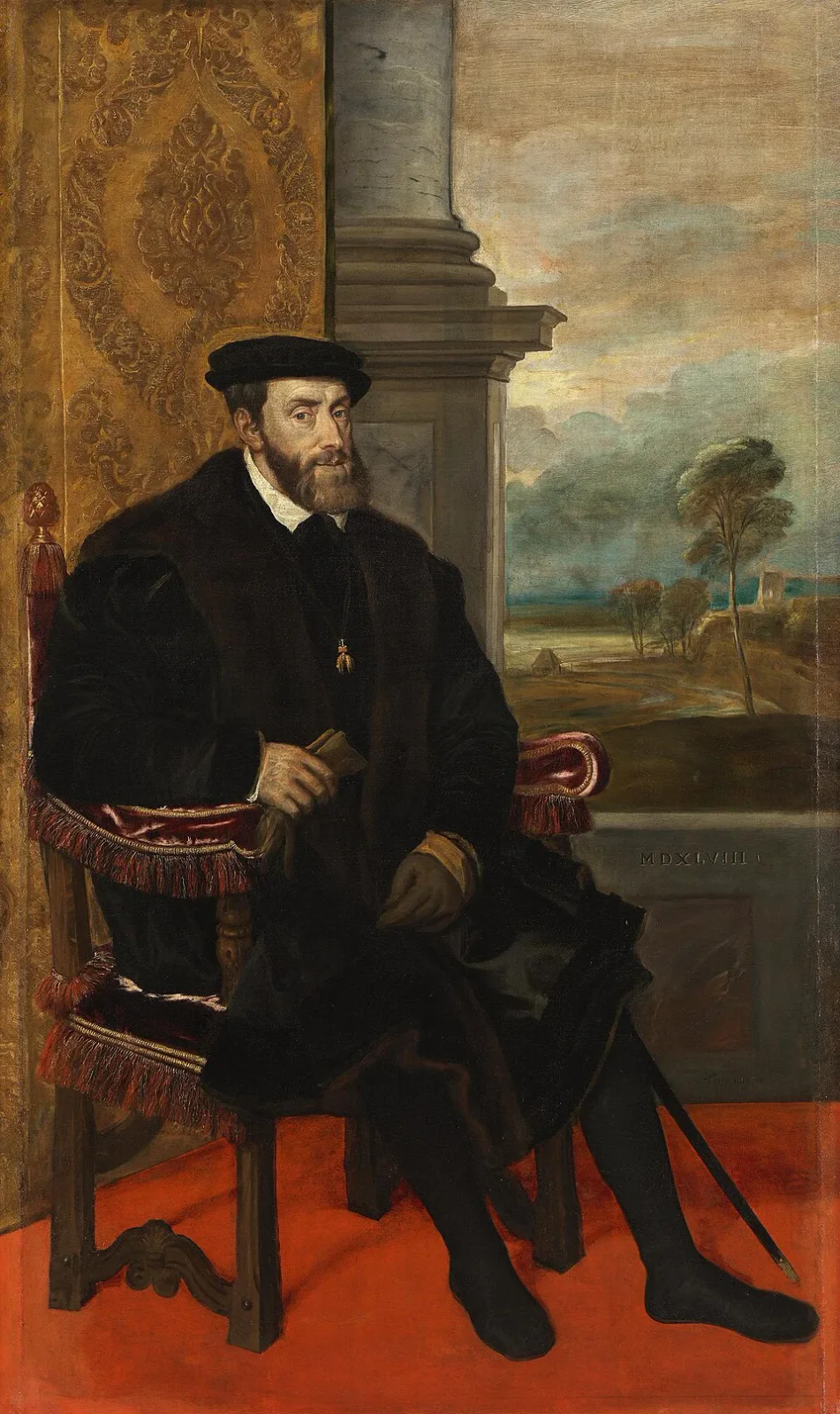
Portrait of Charles V
Until then, a portrait like this, full length in an armchair, had been reserved for popes. Charles the Fifth sits in one here, facing you in black, dressed almost like a wealthy merchant. Only the Golden Fleece on his chest, a high honour, and the sword point to his noble birth. Titian was in Augsburg in 1548, painting Charles and his court. This picture is credited to him, though he may not have worked alone. The red carpet behind Charles is an unusual contrast in his work. The emperor had just defeated the Protestant League at Mühlberg. The other portrait from that stay shows him on horseback at Mühlberg, made to mark the victory. That rider is the public emperor. This man in the chair is the private one. The portrait was sent as a gift to his relative, the Elector of Bavaria, in Munich, where it has stayed. The painter concealed the deformity of Charles's lower jaw. The eyes are set deep beneath slightly raised brows, still questioning. His pale face bears the mark of gout and the weight of high rank, though he was already thinking of abdication. At the corners of his mouth there is a trace of a smile, and the face keeps its tension of will.
Listen in the appAttributed to Titian · Public domain
- 11
Vanity
Titian · c. 1515
- 12
Tempi Madonna
Raphael · 1508
- 13
The Fall of the Damned
Peter Paul Rubens · c. 1620
- 14
The Crowning with Thorns
Titian · 1570–1576
- 15
Columba Triptych
Rogier van der Weyden · c. 1450–1455
- 16
The Battle of the Amazons
Peter Paul Rubens · 1615–1619
- 17
The Flight into Egypt
Adam Elsheimer · c. 1609
- 18
The Suicide of Lucretia
Albrecht Durer · 1518
- 19
The Great Last Judgement
Peter Paul Rubens · 1614–1617
- 20
The Land of Cockaigne
Pieter Bruegel the Elder · 1567
- 21
Paumgartner altarpiece
Albrecht Durer · 1497–1503
- 22
Raising of the Cross
Rembrandt · 1633
- 23
Grape and Melon Eaters
Bartolomé Esteban Murillo · 1645–1650
- 24
Lamentation over the Dead Christ
Sandro Botticelli · 1490–1495
- 25
Jabach Altarpiece
Albrecht Durer · c. 1503–1504
- 26
Venus and Mars Surprised by Vulcan
Jacopo Tintoretto · 1555
- 27
Advent and Triumph of Christ
Hans Memling · c. 1480
- 28
Willem van Heythuysen posing with a sword
Frans Hals · 1625–1630
- 29
Lamentation of Christ
Albrecht Durer · 1500–1503
- 30
The Descent from the Cross
Rembrandt · 1633
- 31
Madonna della tenda
Raphael · c. 1513–1514
- 32
The Lion Hunt
Peter Paul Rubens · 1621
- 33
Hélène Fourment with her Son Frans
Peter Paul Rubens · c. 1635
- 34
Two Satyrs
Peter Paul Rubens · 1617–1619
- 35
Countryside of Wood With Saint George Fighting the Dragon
Albrecht Altdorfer · c. 1510
- 36
The Vision of Saint Bernard
Pietro Perugino · 1490–1494
- 37
Virgin and Child with Saints Anthony Abbot, Jerome and Francis
Titian, Francesco Vecellio · c. 1519
- 38
La Gimblette
Jean-Honoré Fragonard · c. 1770
- 39
Susanna and the Elders
Albrecht Altdorfer · 1526
- 40
Still-Life with Partridge and Iron Gloves
Jacopo de' Barbari · 1504
- 41
Meeting of St Erasm and St Maurice
Matthias Grünewald · 1517–1524
- 42
Nativity of the Virgin
Albrecht Altdorfer · 1520–1525
- 43
The Last Judgment
Hieronymus Bosch · 1530
- 44
The Mystical Marriage of Saint Catherine
Lorenzo Lotto · c. 1506–1508
- 45
Rest on the Flight to Egypt
Anthony van Dyck · 1630
- 46
Apparition of Christ to the Virgin
Filippino Lippi · c. 1493
- 47
Saint Francis in Ecstasy
Francisco de Zurbarán · 1658–1660
- 48
The Mocking of Christ
Matthias Grünewald · 1503–1505
- 49
The Pie Eaters
Bartolomé Esteban Murillo · 1670
- 50
Portrait of Oswolt Krel
Albrecht Durer · 1499
- 51
The Little Fruit Seller
Bartolomé Esteban Murillo · c. 1670–1675
- 52
Madonna and Child
Luca Signorelli · 1492–1498
- 53
Judith
Simon Vouet · 1620–1625
- 54
Christ and the Repentant Sinners
Peter Paul Rubens · 1617
- 55
The Defeat of Sennacherib
Peter Paul Rubens · c. 1612–1614
- 56
The Rainbow Landscape (1640)
Peter Paul Rubens · 1636–1640
- 57
The Small Last Judgement
Peter Paul Rubens · 1619–1621
- 58
Sacrifice of Abraham
Rembrandt · 1636
- 59
Portrait of Madame de Pompadour
François Boucher · 1756
- 60
Midas and Bacchus
Nicolas Poussin · c. 1624–1629
- 61
The Prodigal Son
Gerard van Honthorst · 1622
- 62
The Madonna of the Carnation
Albrecht Durer · 1516
- 63
The Entombment
Rembrandt · 1639
- 64
Adoration of the Shepherds
Rembrandt · 1646
- 65
Madonna and Child with St. John and a praying Donor
Titian · c. 1513–1514
- 66
The Fruit Garland
Peter Paul Rubens, Frans Snyders, Jan Wildens · 1616–1617
- 67
Head of Peasant
Pieter Bruegel the Elder · 1564–1568
- 68
Portrait of a Young Man
Albrecht Durer · 1500
- 69
Young Spanish Nobleman
Diego Velázquez · 1623–1631
- 70
Holy Family
Domenico Beccafumi · c. 1521–1522
- 71
Portrait of a Gentleman
Titian · c. 1520
- 72
The Dying Seneca
Peter Paul Rubens · 1614
- 73
Helena Fourment in Her Wedding Dress
Peter Paul Rubens · c. 1630–1631
- 74
Madonna and Child in an Evening Landscape
Titian · 1560
- 75
The Myth of Prometheus
Piero di Cosimo · 1515
- 76
Danae
Jan Gossaert · 1527
- 77
The Crucifixion
Lucas Cranach the Elder · 1503
- 78
Thomas of Villanova heals the sick
Bartolomé Esteban Murillo · c. 1675
- 79
Susanna and the Elders
Anthony van Dyck · 1621–1623
- 80
Plucked turkey
Francisco Goya · 1808–1812
- 81
The Disrobing of Christ
El Greco · 1580–1595
- 82
Bembo diptych
Hans Memling · 1480–1483
- 83
Madonna with child, Saint Jeremiah, and Mary Magdalene
Giovanni Battista Cima da Conegliano · 1492–1495
- 84
Cardinal Albrecht of Brandenburg in front of the Crucified Christ
Lucas Cranach the Elder · 1520–1530
- 85
Fire in the Oil Depot at San Marcuola
Francesco Guardi · c. 1790
- 86
The Drunken Silenus
Peter Paul Rubens · 1616–1625
- 87
Entombment of Christ
Fra Angelico · 1438–1443
- 88
Virgin Annunciate
Antonello da Messina · 1473
- 89
Portrait of Oswolt Krel: Oswolt Krel
Albrecht Durer · 1499
- 90
Crucifixion of Saints Cosmas and Damian
Fra Angelico · 1438–1443
- 91
The Saints Cosmas and Damian with their Brothers before the Proconsul Lysias
Fra Angelico · 1438–1443
- 92
Saint Cosmas and Saint Damian Salvaged
Fra Angelico · 1438–1443
- 93
Altarpiece of the Church Fathers
Michael Pacher · 1483
- 94
Satyr and the Peasant
Jacob Jordaens · 1620–1621
- 95
King Ludwig I of Bavaria in Coronation Regalia
Joseph Karl Stieler · 1826
- 96
Portrait of an Ecclesiastic
Moretto da Brescia · c. 1545
- 97
Adoration of the Child Jesus
Stefan Lochner · 1445
- 98
Sarah presenting Hagar to Abraham
Adriaen van der Werff · 1699
- 99
Christ with Mary and Martha
Jacopo Tintoretto · 1580
- 100
The battle of Taro
Jacopo Tintoretto · 1578–1579
- 101
Adoration of the Magi
Rogier van der Weyden · c. 1455
- 102
The Loving
Jean-Marc Nattier · 1744
- 103
Passion (4 paintings to Descent from the Cross)
Rembrandt · 1632–1634
- 104
The Saints Jerome, Mary Magdalene, Anthony, and Francis
Carlo Saraceni · 1600–1615
- 105
The Little Fruit Seller
After Bartolomé Esteban Murillo · 1670–1675
- 106
Madonna and child
Filippo Lippi · 1460–1469
- 107
Madonna dell'Umiltà
Masolino da Panicale · c. 1435
- 108
Large Fish Market
Jan Brueghel the Elder · 1603
- 109
Self-portrait
Anthony van Dyck · 1620–1621
- 110
Adoration of the Magi
Gerard David · c. 1495–1505
- 111
St. Veronica with the Holy Kerchief
Master of Saint Veronica · c. 1420
- 112
Diptych of Munich
Hans Memling · 1480
- 113
Lamentation over the Body of Christ
Nicolas Poussin · c. 1628
- 114
Adoration of the Kings
Giovanni Battista Tiepolo · c. 1753
- 115
The Holy Family
Martin Schongauer · 1475–1480
- 116
Portrait of a woman playing the viola-da-gamba, formerly identified as Margaret Lemon
Anthony van Dyck · c. 1635–1640
- 117
The Descent into Limbo
Giotto · 1320
- 118
Self-portrait
Carel Fabritius · c. 1645
- 119
Merry Company
Gerard van Honthorst · 1625
- 120
Angelica and Medoro
Bartholomeus Spranger · c. 1580–1600
- 121
The Madonna and Child in a landscape (Dudley Madonna
Giovanni Bellini · c. 1508
- 122
Reni - Apollo flaying Marsyas, c. 1633
Guido Reni · c. 1633
- 123
Venetian Gala Concert
Francesco Guardi · 1782
- 124
Reading Woman
Pieter Janssens Elinga · c. 1665–1670
- 125
The Four Apostles: Saints John and Peter
Albrecht Durer · 1526
- 126
The Four Apostles: Saints Mark and Paul
Albrecht Durer · 1526
- 127
Seven Sorrows Polyptych:Sorrowing mother
Albrecht Durer · c. 1496
- 128
Double portrait of Alethea Talbot (1585-1654), Countess of Arundel and Sir Dudley Carleton (1573-1632), with two servants
Peter Paul Rubens · 1620
- 129
Madonna in floral wreath.
Peter Paul Rubens, Jan Brueghel the Elder · c. 1620
- 130
John de Baptist (recto); a skull (verso)
Hans Memling · c. 1483
- 131
Deposition by Vrancke van der Stockt in the Alte Pinakothek
Vrancke van der Stockt · c. 1460
- 132
Paumgartner altarpiece: Adoration of the Child
Albrecht Durer · c. 1503
- 133
Paumgartner altarpiece: Saint George
Albrecht Durer · c. 1503
- 134
Paumgartner altarpiece: Saint Eustace
Albrecht Durer · c. 1503
- 135
Woman with Cat
Hans Baldung Grien · 1529
- 136
Christ on the Cross
Giotto · 1320–1325
- 137
The Banishment of Hagar
Claude Lorrain · 1668
- 138
Pope St Clement Adoring the Trinity
Giovanni Battista Tiepolo · 1737–1738
- 139
Landscape of Danube near Regensburg
Albrecht Altdorfer · 1520–1525
- 140
Woman with Mirror, Serpent, Stag and Hind
Hans Baldung Grien · 1529
- 141
Woman peeling turnips
Jean-Baptiste-Siméon Chardin · c. 1740
- 142
Bouquet of Flowers
Jan Brueghel the Elder · 1603
- 143
Flower still-life with a skull and crucifix
Jan Davidsz. de Heem, Nicolaes van Verendael · 1630s
- 144
Porträt des Erbprinzen Heinrich XIII
Anton Graff · 1775
- 145
Nativity
Hans Baldung Grien · 1520
- 146
John the Evangelist on Patmos
Hans Burgkmair the Elder · 1518
- 147
Meeting of Mary and Elisabeth
Marx Reichlich · 1511
- 148
Sts Anthony the Hermit, Cornelius and Mary Magdalen with a Donor
Stefan Lochner · c. 1445
- 149
Portrait of Charles II of Bourbon
Jean Hey · c. 1485
- 150
The crowning wit thorns
Valentin de Boulogne · 17th century
- 151
Portrait of a Princess of Jülich, Cleve and Berg
Master of Ac Monogram · 1577
- 152
Love Sickness
Jan Steen · c. 1660
- 153
Annunciation
Fra Carnevale · 1445–1450
- 154
Big banquet
Georg Flegel · 1620
- 155
Meal with a Mouse and a Parrot
Georg Flegel · 17th century
- 156
Governors of the Wine Merchant's Guild of Amsterdam
Ferdinand Bol · 1659
- 157
The Death of Cleopatra
Johann Liss · 1622–1624
- 158
Landscape with view of Ootmarsum
Jacob van Ruisdael · 1665–1670
- 159
A Boy Picking Fleas off a Dog
Gerard ter Borch · c. 1665
- 160
Madonna in Glory with Saints
Domenico Ghirlandaio · 1490–1496
- 161
Brawling card players
Adriaen Brouwer · 1631–1635
- 162
Portrait of a Man
Giorgione, Palma Vecchio, Sebastiano del Piombo · 1512
- 163
Portrait of a Venetian Woman
Paolo Veronese · c. 1570
- 164
Young Boys Playing Dice
Bartolomé Esteban Murillo · c. 1675
- 165
Crucifixion of the Hof Altarpiece
Hans Pleydenwurff · 1465
- 166
Fire in the oil warehouses at San Marcuola
Francesco Guardi · 1789
- 167
The Capture of Parma by Federico II
Jacopo Tintoretto · c. 1580
- 168
The Toilette
Bartolomé Esteban Murillo · 1670–1675
- 169
Market Scene (Fragment of An Ecce-homo)
Pieter Aertsen · c. 1550
Alte Pinakothek
Frequently asked questions
How much does the guide cost?
Free app download. Free until 1 January. Listed guide price: $1.99. Audio guide only. Venue admission is separate.
Can I listen without internet?
Yes. Download the guide’s audio, images, and maps in the app before your visit. Your downloaded content is then available offline.
Can I listen in my language?
In English for now. More languages soon.
Do I need to follow a schedule?
No. This is a self-guided experience. Choose your stops, pause whenever you like, and return to a story at your own pace.
Which artworks are in the Alte Pinakothek audio guide?
169 artworks, including Self-Portrait with Fur-Trimmed Robe (Albrecht Durer), Madonna of the Carnation (Leonardo da Vinci), The Rape of the Daughters of Leucippus (Peter Paul Rubens, Jan Wildens), The Battle of Alexander at Issus (Albrecht Altdorfer), The Four Apostles (Albrecht Durer), Rubens and Isabella Brant in the honeysuckle bower (Peter Paul Rubens), The Hippopotamus and Crocodile Hunt (Peter Paul Rubens), and Seven Sorrows Polyptych (Albrecht Durer). The full list is on this page.
Is this the museum’s official audio guide?
No. Stanza is an independent audio guide app and is not affiliated with Alte Pinakothek. Museum admission is separate.
At your own pace
Explore Alte Pinakothek.
Download Stanza, then search for “Alte Pinakothek”.
Free app download · Guide price shown in the app
Keep exploring
Nearby audio guides
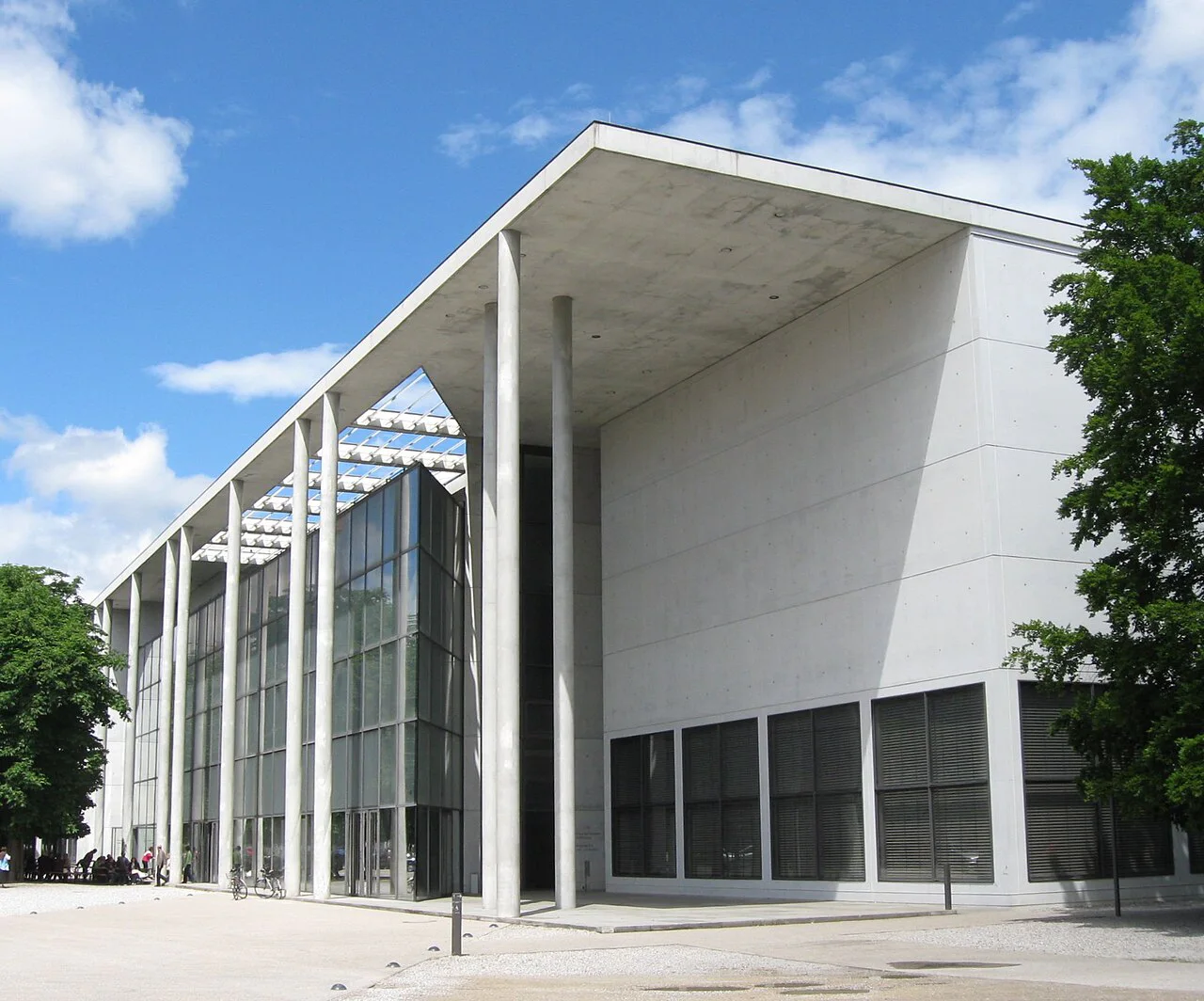
Munich · 1 km
Pinakothek der Moderne
Content & sources
Photo: Rufus46 · CC BY-SA 3.0
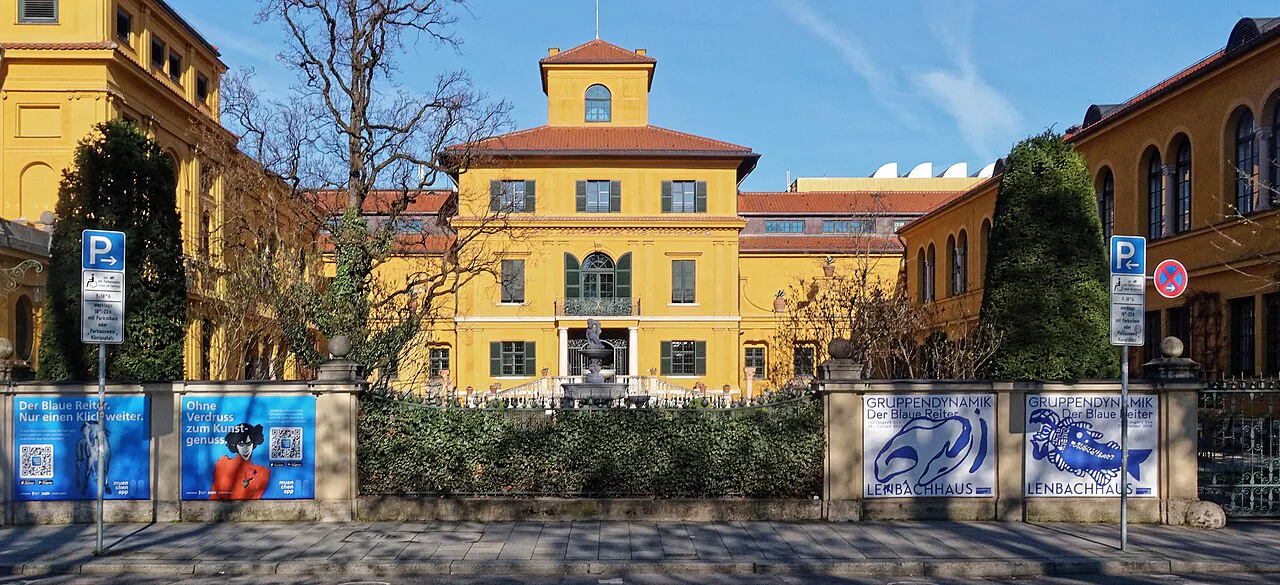
Munich · 1 km
Städtische Galerie im Lenbachhaus
Content & sources
Burkhard Mücke · CC BY-SA 4.0
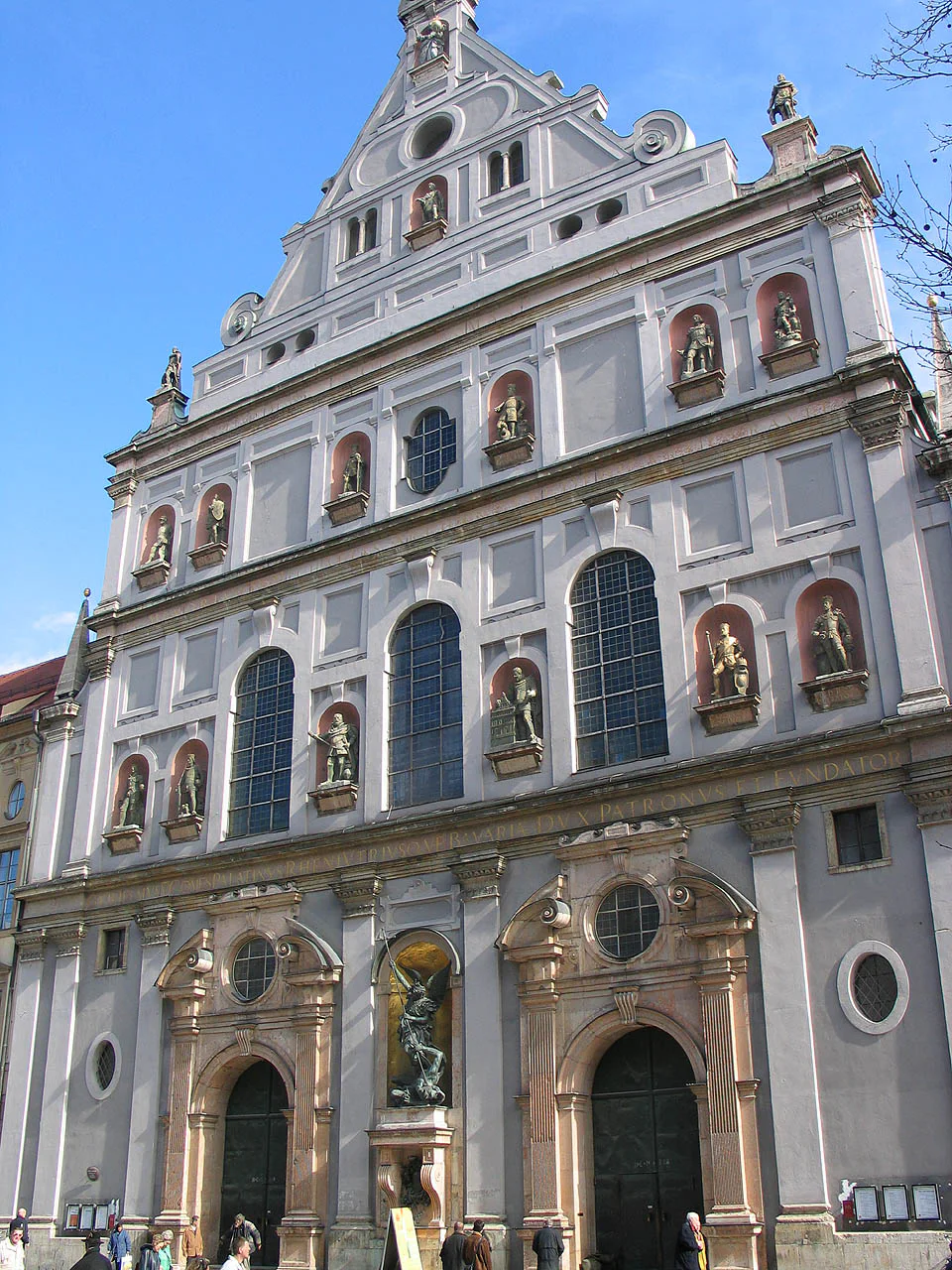
Munich · 1 km
St. Michael
Content & sources
Photo: Luidger · CC BY-SA 3.0
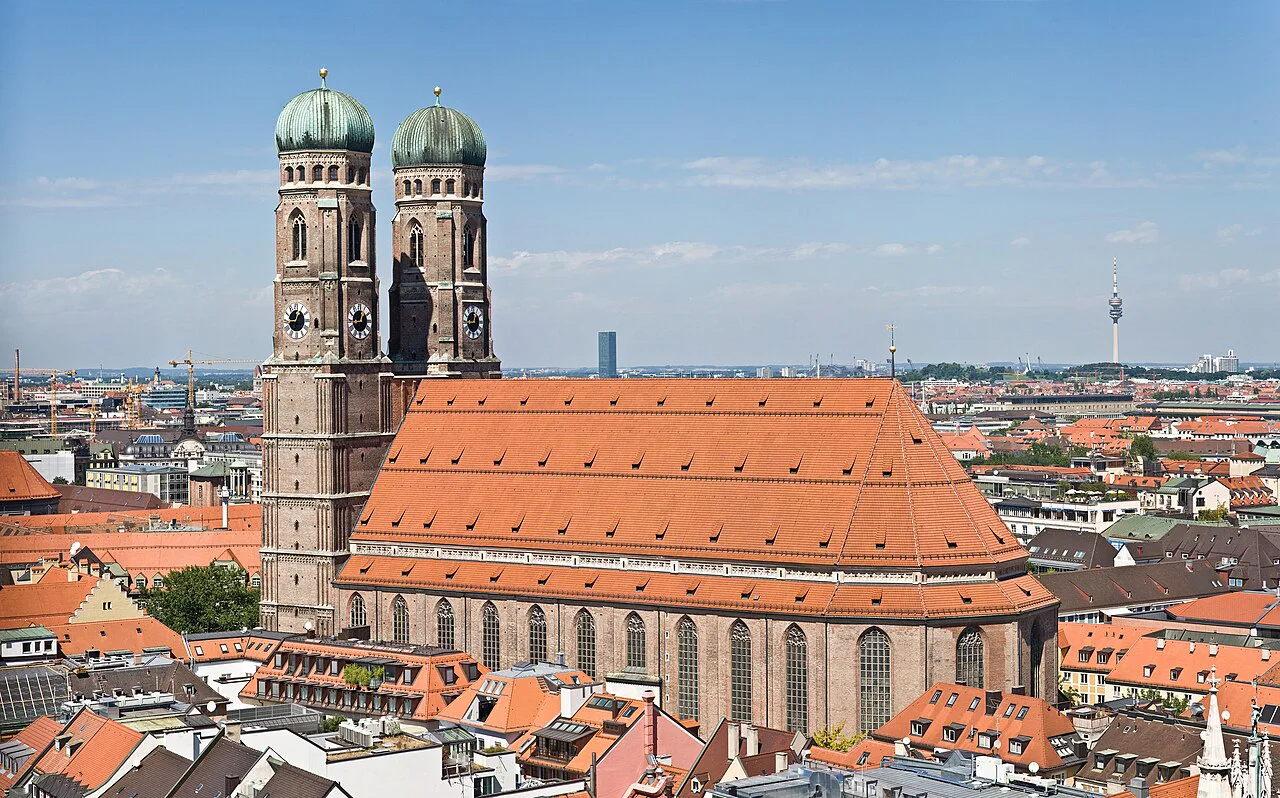
Munich · 1 km
Frauenkirche
Content & sources
Photo: Diliff · CC BY 2.5
Art museums
More art museum audio guides
Munich · 6 artworks
Pinakothek der Moderne
Content & sources
Photo: Rufus46 · CC BY-SA 3.0
Munich · 33 artworks
Städtische Galerie im Lenbachhaus
Content & sources
Burkhard Mücke · CC BY-SA 4.0
Nuremberg · 54 artworks
Germanisches Nationalmuseum
Content & sources
The original uploader was Keichwa at German Wikipedia. · CC BY-SA 3.0
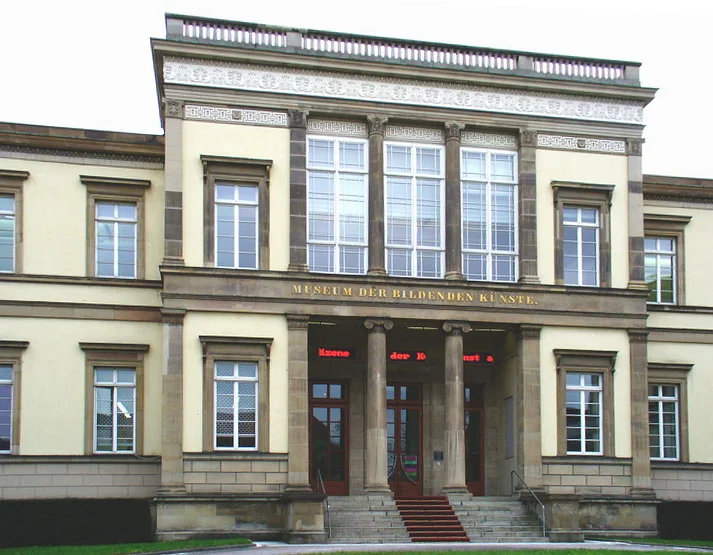
Stuttgart · 43 artworks
Staatsgalerie Stuttgart
Content & sources
Selbst fotografiert von user:Enslin · CC BY 2.5
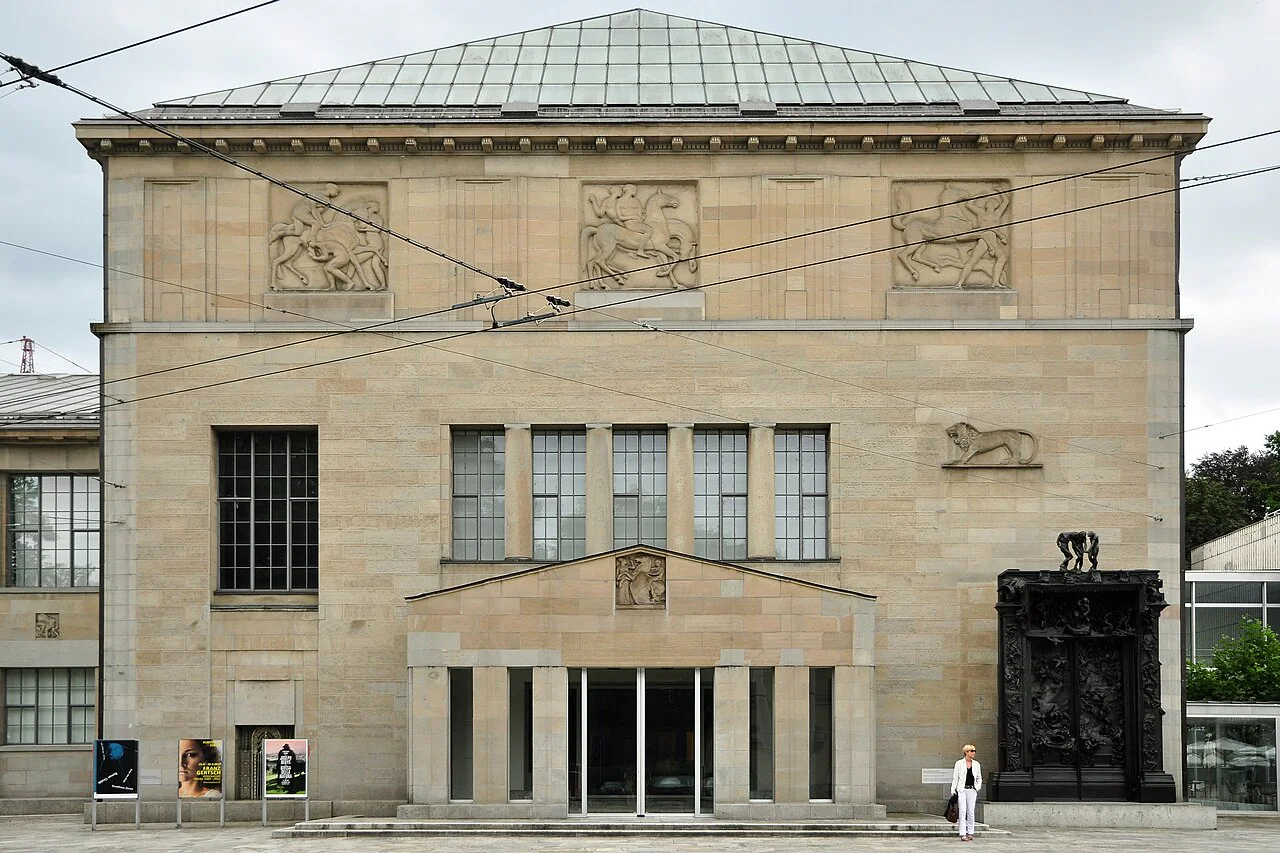
Zurich · 44 artworks
Kunsthaus Zürich
Content & sources
Photo: Roland zh · CC BY-SA 3.0
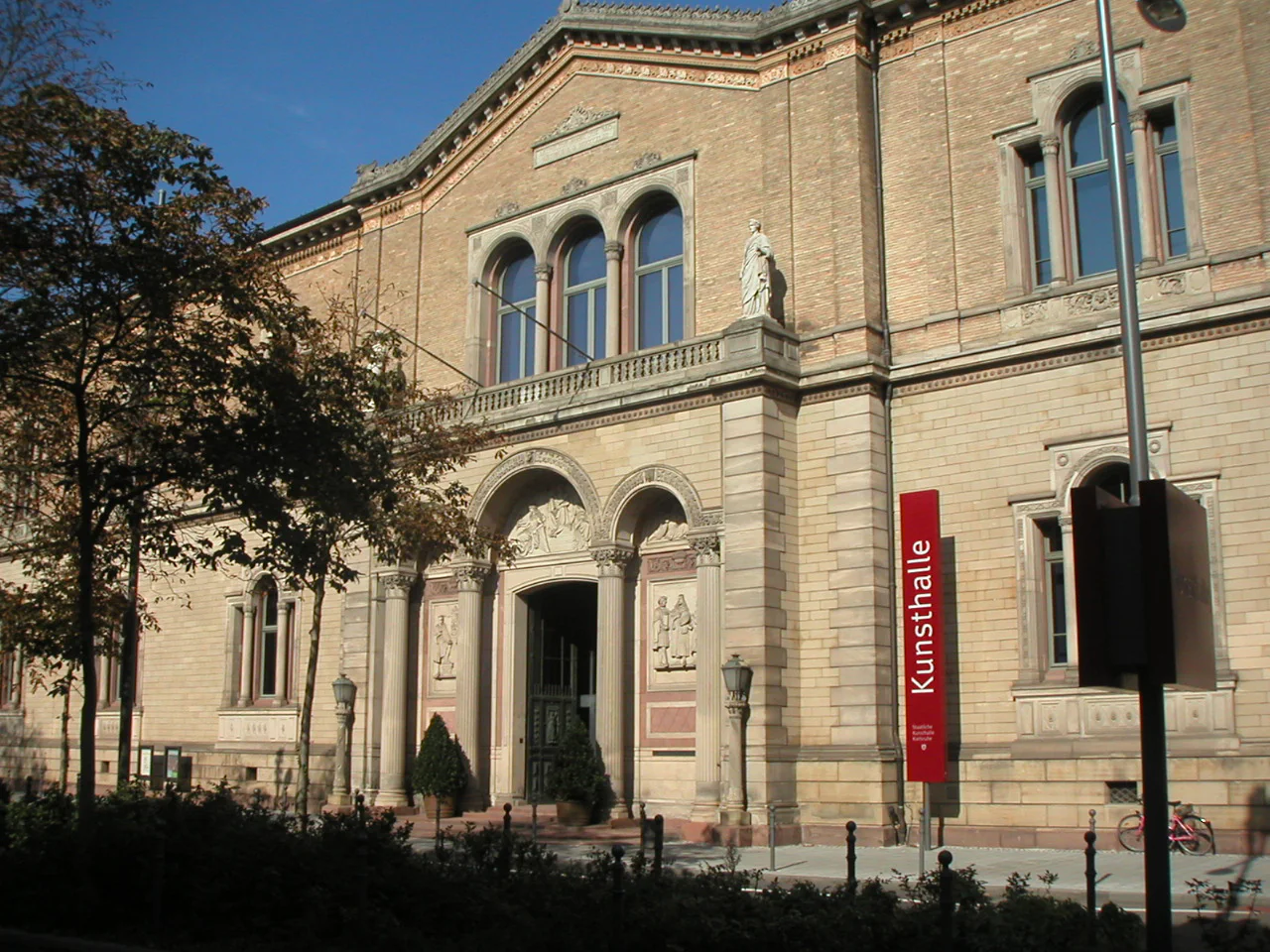
Karlsruhe · 71 artworks
Staatliche Kunsthalle Karlsruhe
Content & sources
Armerdietrich · Public domain