Stanza · Audio guide
Museo archeologico nazionale di Napoli Audio Guide
A place to remember. A story to take with you.
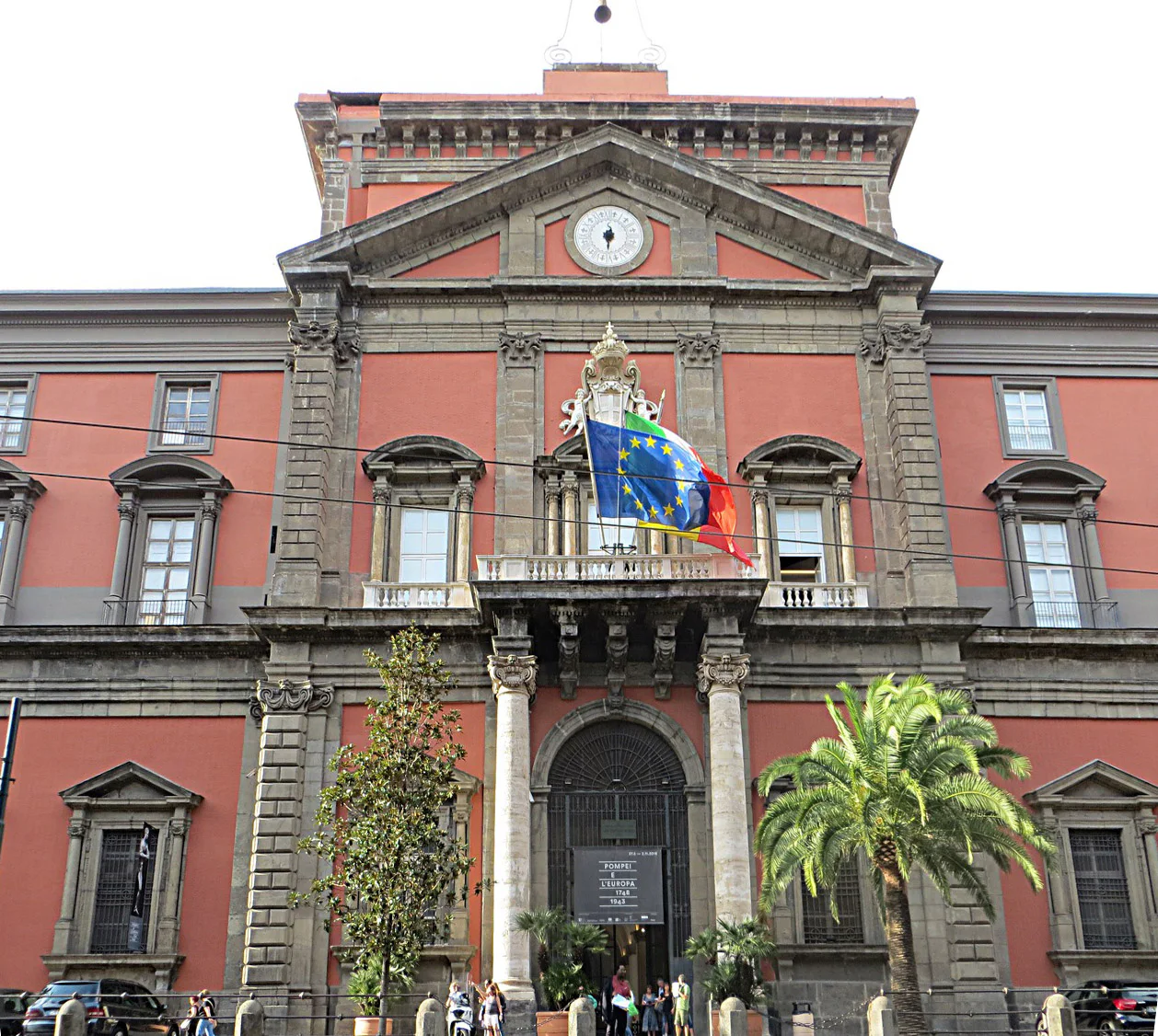
The National Archaeological Museum of Naples is an Italian archaeological museum with a collection that includes works from Greek, Roman and Renaissance times, especially Roman artifacts from the nearby…
Download Stanza, then search for “Museo archeologico nazionale di Napoli”.
About the tour
One guide. Your kind of visit.
The National Archaeological Museum of Naples is an Italian archaeological museum with a collection that includes works from Greek, Roman and Renaissance times, especially Roman artifacts from the nearby Pompeii, Stabiae and Herculaneum sites. From 1816 to 1861, it was known as the Royal Bourbon Museum.
The Museo archeologico nazionale di Napoli guide tells the stories of 126 artworks, including Farnese Hercules (Glycon of Athens, Lysippos), Farnese Bull (Apollonius of Tralles, Tauriskos of Tralles), Alexander Mosaic (Philoxenus of Eretria), Venus Callipyge (Unknown Artist), Farnese Atlas (Unknown Artist), Farnese Cup (Unknown Artist), Pompeii Lakshmi (Unknown Artist), and Antinous Farnese (Unknown Artist). Every artwork is free to hear in the Stanza app until 1 January.
Ready when you are.
- 01Get the free Stanza app.
iOS & Android
- 02Find your guide.
“Museo archeologico nazionale di Napoli”
- 03Download before you go.
Works offline
Audio guide / 126 artworks
Inside the guide
Get to know a few of the stories before you go. Open a stop to read more.
01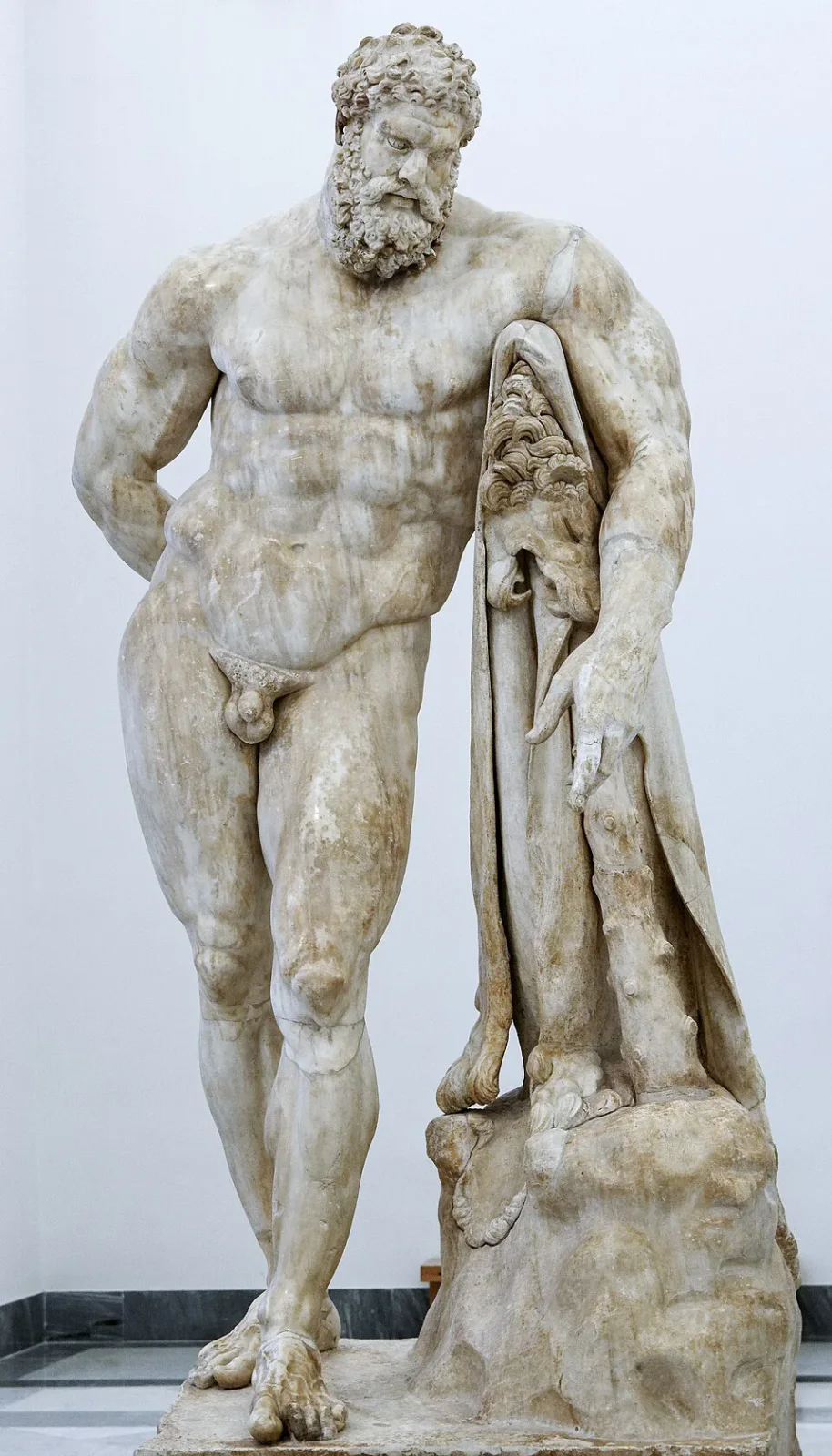
Farnese Hercules
For over two hundred years, the legs holding up the strongest hero in myth were not ancient. They were carved in the sixteenth century. The skin of the Nemean lion lies over his club, a reminder of his first task. Behind his back, in his right hand, he holds the golden apples from one of his last labours. When the statue was found at the Baths of Caracalla in 1546, both lower legs were missing. The head had been lost too, and was found separately in a well in Trastevere. Guglielmo della Porta, a pupil of Michelangelo, carved new legs to complete the figure. Then the original legs were found at the baths where the statue had stood. Michelangelo advised keeping della Porta's instead. Letting his pupil's work stand would show that sculptors of their own day could match the ancients. So the replacement legs stayed for generations. Goethe saw the statue with both sets of legs and thought the ancient ones far better. In 1787 the originals went back on. On the rock beneath the club is the signature of the man who carved this copy. He was Glykon of Athens, who worked from a much older original, and nothing else is known of him.
Listen in the appGlycon of Athens (copy), Lysippos (original type) · CC BY 2.5
02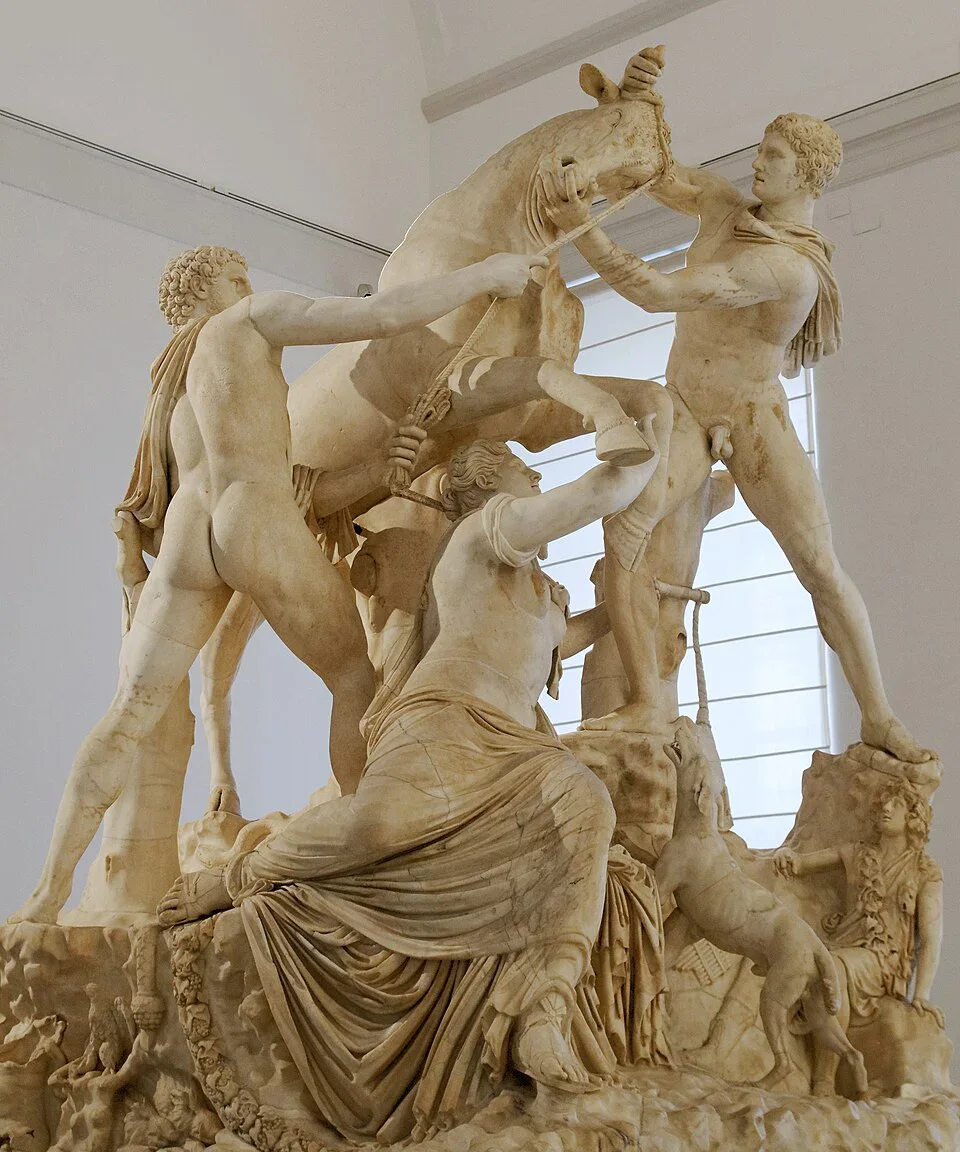
Farnese Bull
The original group was cut from one single block of marble, and much of it has been restored since. This is the largest single sculpture ever recovered from the ancient world. There are small tufts of hair on the bull, and the folds of the clothing are sharp. It shows a moment of revenge. Dirce, first wife of the king of Thebes, has been tied to a wild bull by Amphion and Zethus, the sons of Antiope. They are punishing her for the way she treated their mother. The child and dog around the base were added later, in the sixteenth or eighteenth century. The group lay buried until 1546, when workers digging at the Baths of Caracalla in Rome uncovered it. Pope Paul the Third had ordered the dig, hoping for ancient sculpture to fill his family's palace. Michelangelo later planned to set it in a fountain at the centre of the garden between that palace and the Villa Farnesina. The Roman writer Pliny described a group like this, made by two brothers and brought to Rome from Rhodes in a politician's collection. Whether this is that group, or a later copy made for the Baths, is still not known.
Listen in the appPhoto: Jastrow · CC BY 2.5
03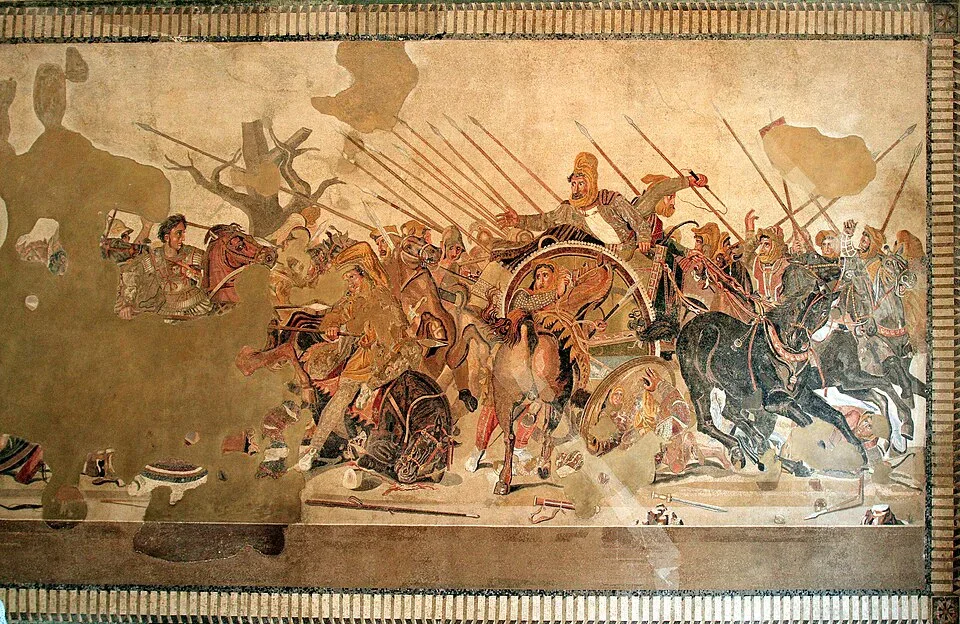
Alexander Mosaic
In the foreground, a Persian soldier looks into a shield. What he sees is his own face, in the moment of dying. The horses are bearing down on him, yet that small reflection holds the instant still. The whole scene works this way, caught at one moment and held there. On the left, Alexander charges with his lance, bareheaded, his eyes on the Persian king. Medusa's head looks out from his breastplate, Athena's emblem. An enemy grips his lance below the point as his own horse tumbles down. On the right, Darius is in a chariot already wheeling away, his driver lashing the horses to flee. Still he reaches toward a dying soldier, and Persian spears point at the Macedonians. He is giving an order even as the chariot turns. His brother steps in front of it and lets the Macedonian lance take him, so the king can escape. This was made to lie flat on a floor, in a Roman house, in the room where the owner received guests. It was the first thing a visitor saw on entering. For ordinary Romans, Alexander was more than a hero. They wanted the power he stood for. The owner probably had this made because his own ancestors had once had ties to the Macedonian king. The scene was probably copied from a Greek painting that is now lost.
Listen in the appMagrippa at English Wikipedia · CC BY-SA 3.0
04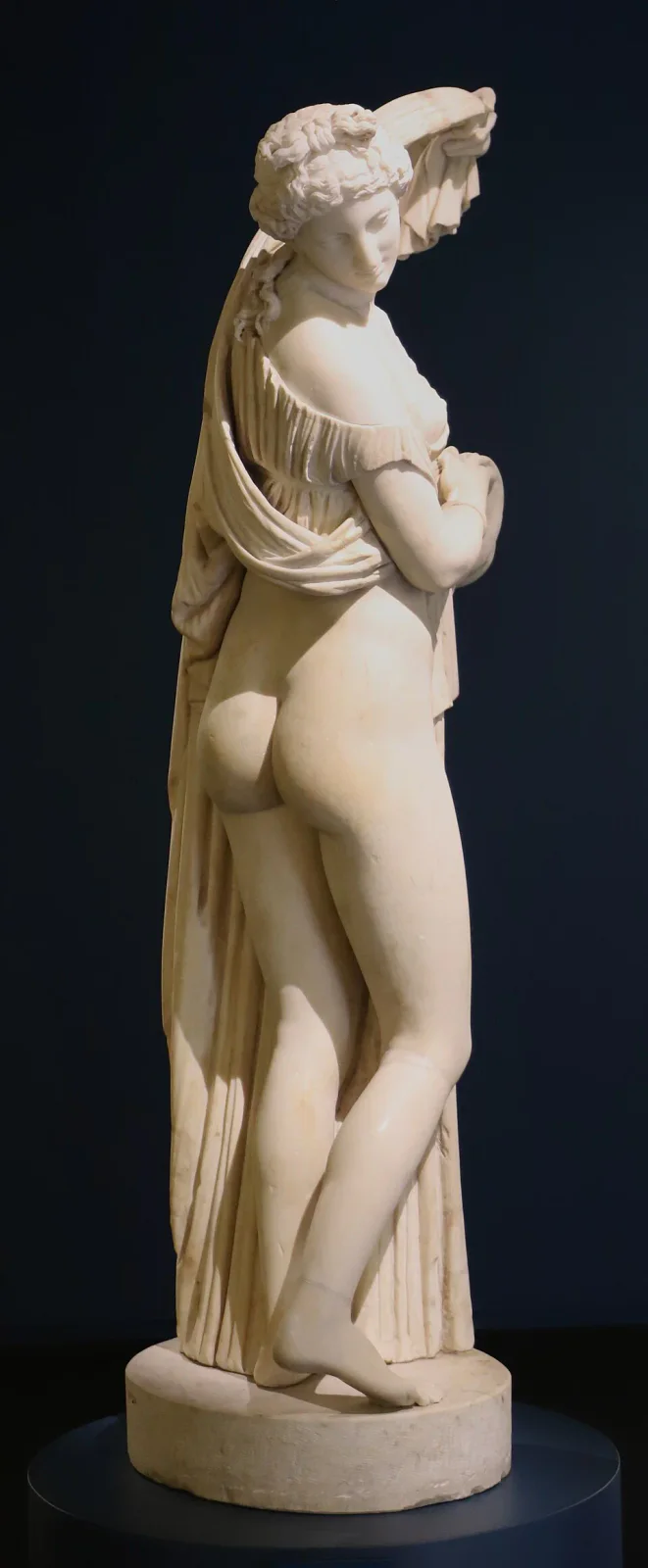
Venus Callipyge
She lifts her light dress away from her hips. She twists her head back over one shoulder, looking down at her bare buttocks, perhaps to judge them. That glance helped make this figure famous, and it was not ancient. When she was found in Rome, the head was missing. This marble is probably a copy of a lost Greek original, and no one knows who carved it. A restorer in the sixteenth century gave her a head and turned it back over her shoulder. That one choice made the pose and drew attention to her buttocks. It also brought an old story to mind. Two sisters from a farm near Syracuse argued over which had the finer buttocks and stopped a young traveler to judge. He chose the elder and fell ill with love for her. His brother went to see the girls and fell for the younger. Their father married the sisters to the two men. The townspeople named the sisters for their buttocks, and a temple was then dedicated to Aphrodite under that name. In the seventeenth and eighteenth centuries, many people took this figure for the goddess of that temple. When the collection moved to Naples, Carlo Albacini replaced the head, the arms and one leg, but kept her looking back over her shoulder.
Listen in the appPhoto: Sailko · CC BY 3.0
05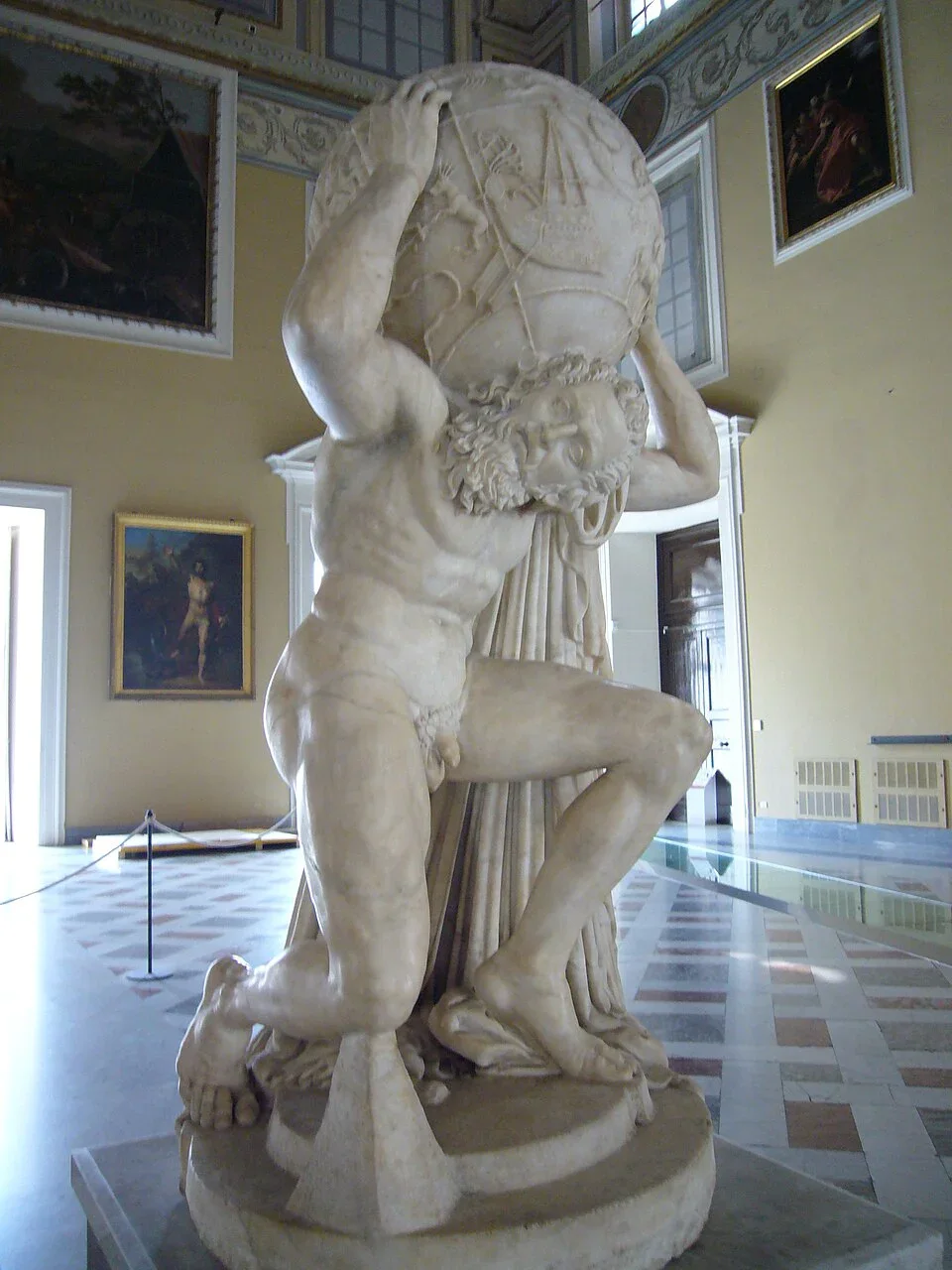
Farnese Atlas
A man holds a great globe on his shoulders, laboring under its weight. He is Atlas, sentenced by Zeus to carry the sky. But the sphere he carries is a map, the oldest picture we have of the Greek constellations. Low reliefs across it show the animals and heroes of the Greek sky, among them Aries the ram and Hercules. Circles mark the equator and the tropics. The whole thing is drawn from outside the celestial sphere, so the figures run the reverse of the way we find them from Earth. And they seem to sit where they were in the sky around 129 BCE, in the lifetime of the astronomer Hipparchus. That points to a catalog of stars he wrote, a book now lost. No one knows who made this, and it is probably a copy of an older Greek work. The globe holds no actual stars, and the circles are cut loosely, so the source is still in doubt. Found in Rome's baths of Caracalla around 1546, it came to Naples in 1787, after two centuries with the Farnese family.
Listen in the appPhoto: Lalupa · CC BY-SA 4.0
06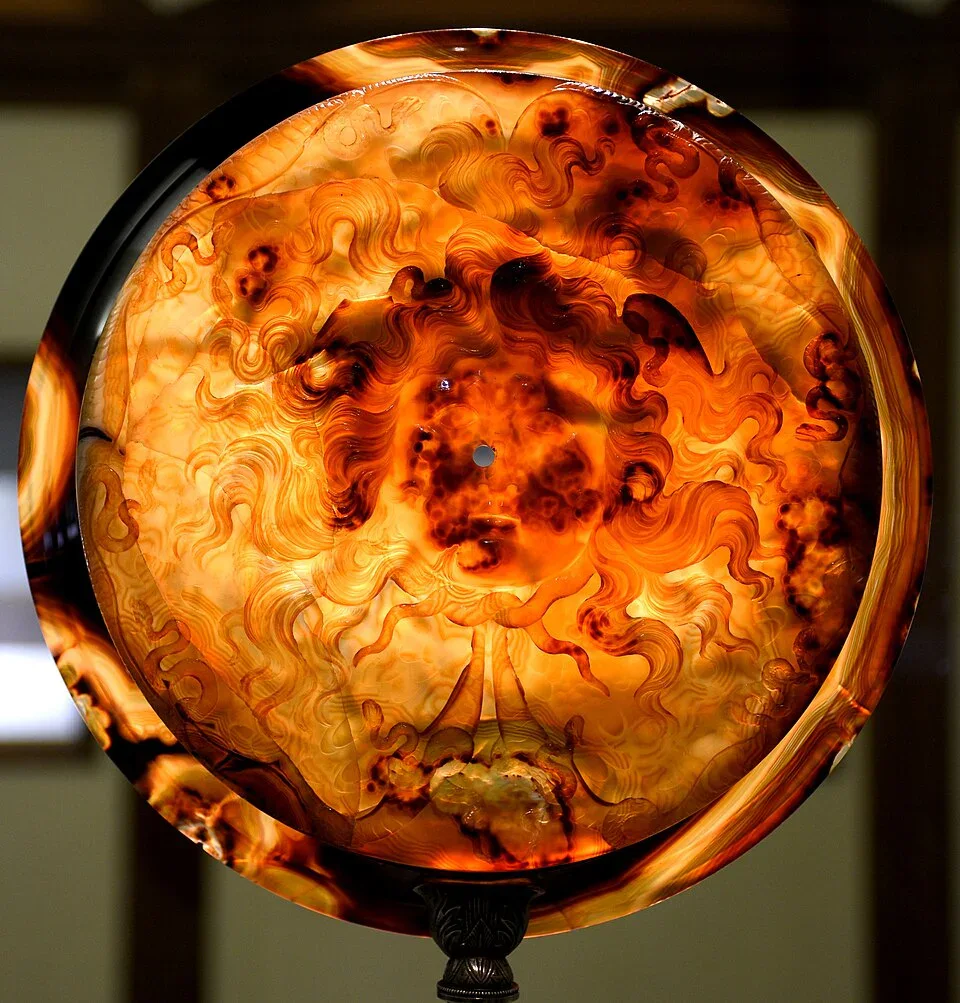
Farnese Cup
In 1925 a guard named Salvatore Guaita struck this cup with an umbrella handle. He had been punished, and he thought it was unfair. The cup fell and broke into many pieces. It was carefully put back together, and the cracks are still visible. No one knows who made it, and the scene inside appears on no other known object. It seems to be about the Nile's flood and the good it brought. A large bearded man on a tree holds a horn of plenty. He may be the river Nile itself. Beside him a young man grips a plough, with a sack of seeds over his shoulder. A woman sits on a sphinx, holding ears of wheat. On the underside is a large Gorgon's head, probably meant to keep harm away. In the Gorgon's nose is a small hole, already there when the Farnese family owned the cup. A support was probably fitted there so the cup could be displayed.
Listen in the appPhoto: Peppe Guida · CC BY-SA 4.0
07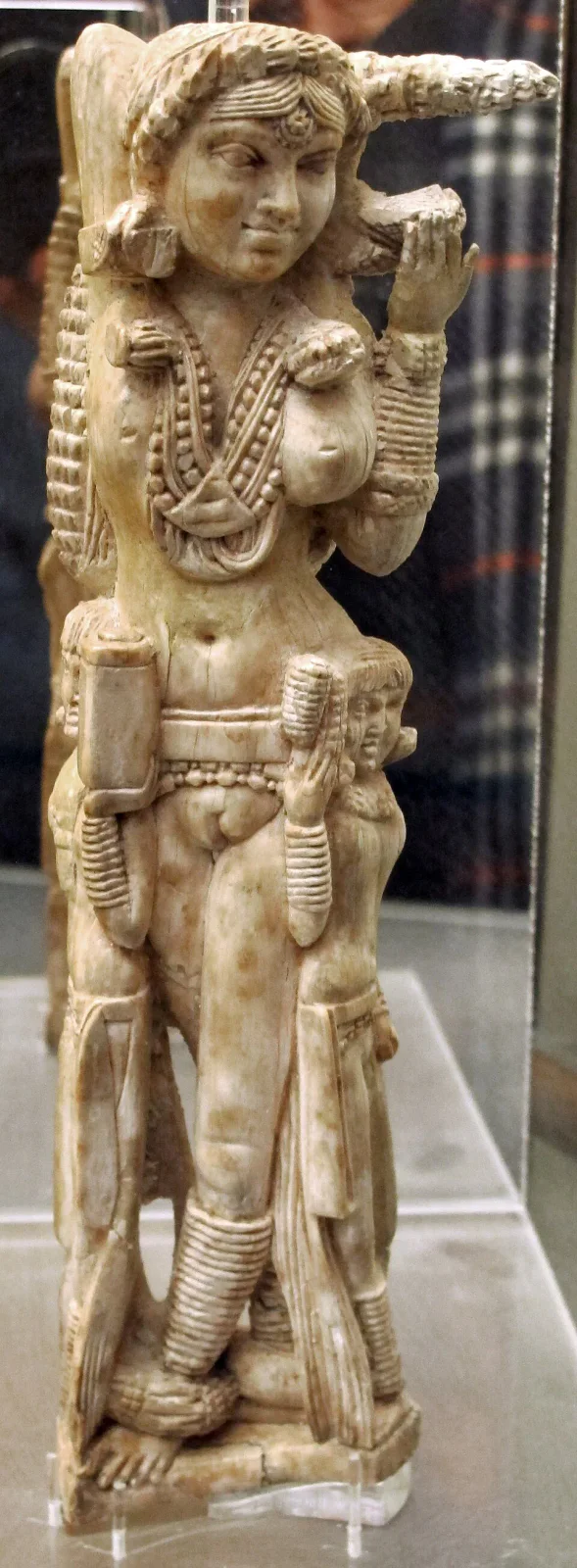
Pompeii Lakshmi
She stands almost naked, with only a narrow girdle, lavish jewels and an elaborate hairstyle. Her left arm bends as though to hold earrings. Her right arm reaches over her head to touch her left shoulder blade. On either side, an attendant faces outward, holding what may be a container of cosmetics. A hole runs down through the top of her head. It was once taken for the handle of a mirror. It is now thought more likely to be the leg of a piece of furniture. She is carved from ivory, and she has come a very long way. In 1938 Amedeo Maiuri, who directed the excavations at Pompeii, unearthed her in the garden of a house just off the Via dell'Abbondanza. The house probably belonged to a successful merchant. Pompeii was buried in 79 CE when Vesuvius erupted, so she was already there by that time. She was made in India, probably in the first century CE. Her presence here is evidence of trade between India and Rome. Most of what crossed that distance, wood, cloth and spices, has long since rotted away. Ivory lasted. She was named Lakshmi, the Hindu goddess of wealth and fortune. What she actually is, we still do not know.
Listen in the appPhoto: Sailko · CC BY-SA 3.0
08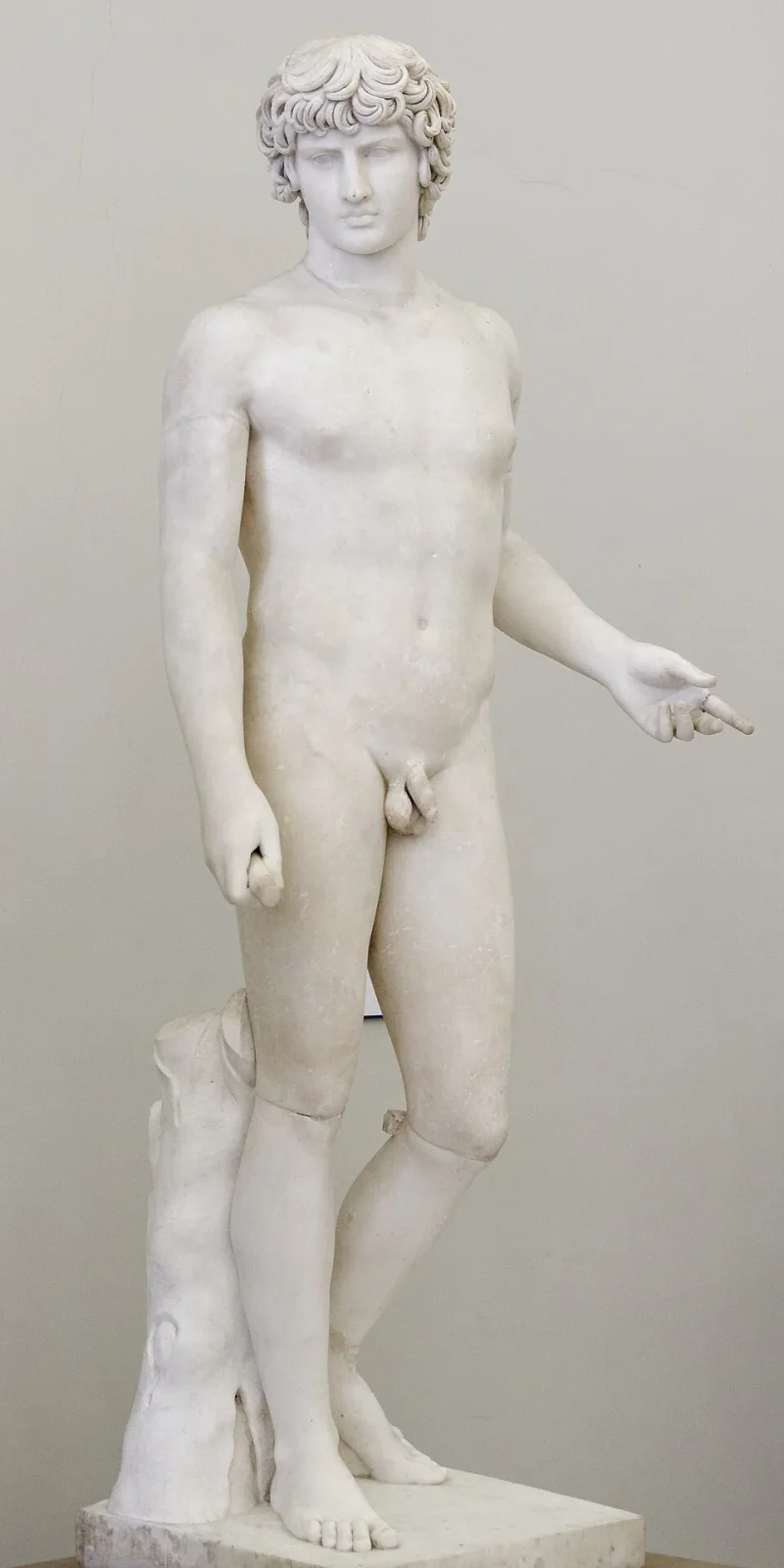
Antinous Farnese
Nobody knows who carved this marble, and nobody knows what Antinous really looked like. Statues of him survive in huge numbers, yet he is so idealized in all of them that we cannot tell. The face is round, with full cheeks, large eyes and lips just slightly pouted. Thick locks lie in layers across the forehead. None of this is trying to catch one particular person. The same face, down to where every curl falls, turns up on statue after statue, even on coins. That is why the hair looks almost like a wig. It was a standard, a way to recognize Antinous wherever he appeared. Antinous was the Greek lover of the emperor Hadrian. He is thought to have drowned in the Nile in 130, before his twentieth birthday. Hadrian had him made a god, and had statues of him produced in great numbers for worship. A god was not to be carved as an ordinary young man. Sculptors gave him an ideal athlete's body and face, following a Greek statue of a spear bearer. The pupils are cut into the eyes, a fashion Hadrian himself began. His likeness is the third most common portrait type to survive from classical antiquity, after those of Augustus and Hadrian.
Listen in the appMarie-Lan Nguyen · CC BY 2.5
09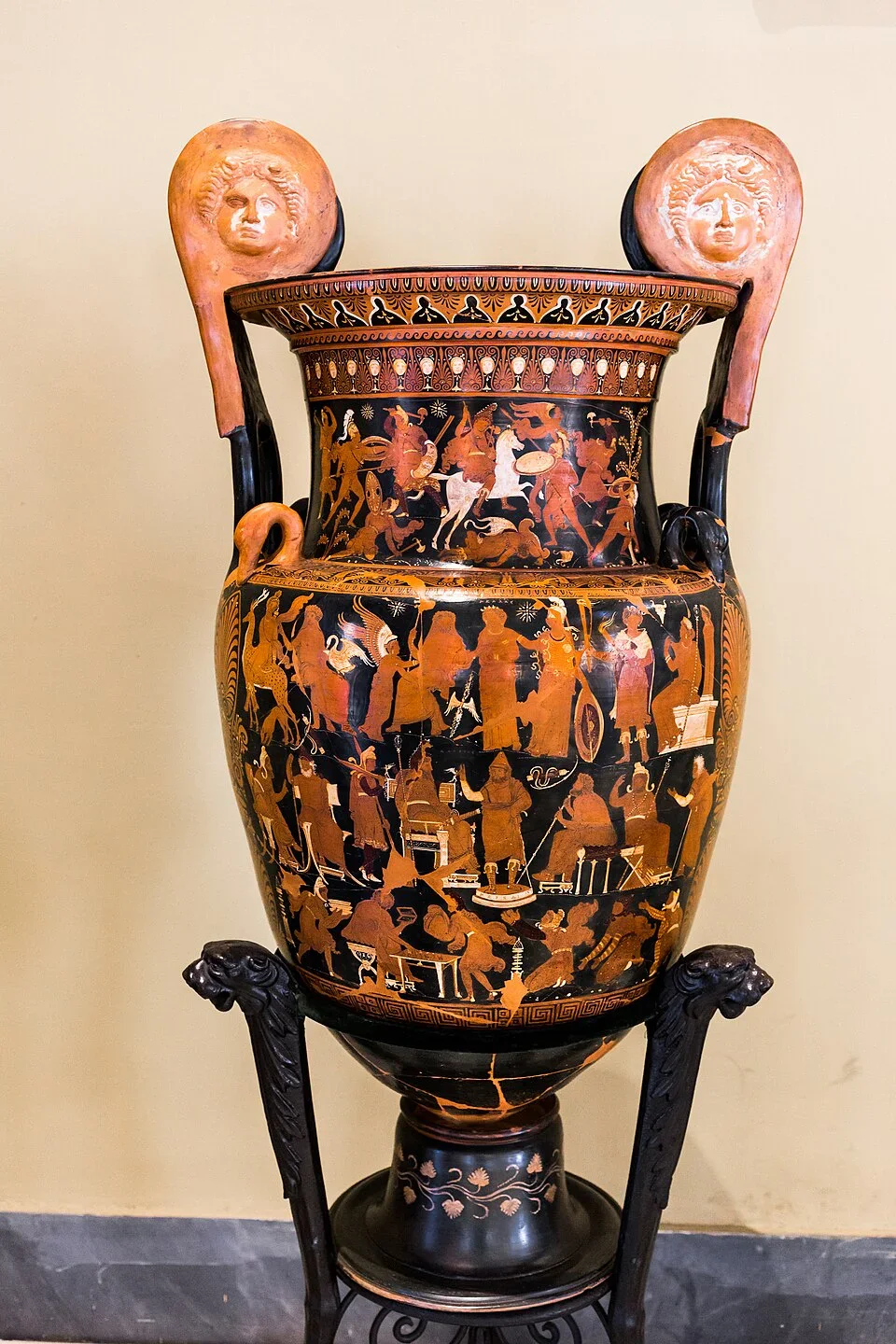
Darius Vase
Figures fill two or three rows all the way around this enormous vase, with almost no bare surface left. The painter may have been the first to use the space of a vase this big so fully. Small inscriptions pick out some of the people, and a whole crowd is simply called Persians. Faces often turn three quarters toward us. In the middle row Darius sits in a high Persian hat, a guard behind him. He seems to be hearing an allegory of the Persian people, urging him not to attack the Greeks. Below him a tax collector receives payments from representatives of conquered peoples. They crouch before him. On the counting board are pebbles in front of Greek number letters. He probably worked in a large workshop in the Taranto area. He left no name, and this vase is why we call him the Darius Painter.
Listen in the appPhoto: ArchaiOptix · CC BY-SA 4.0
10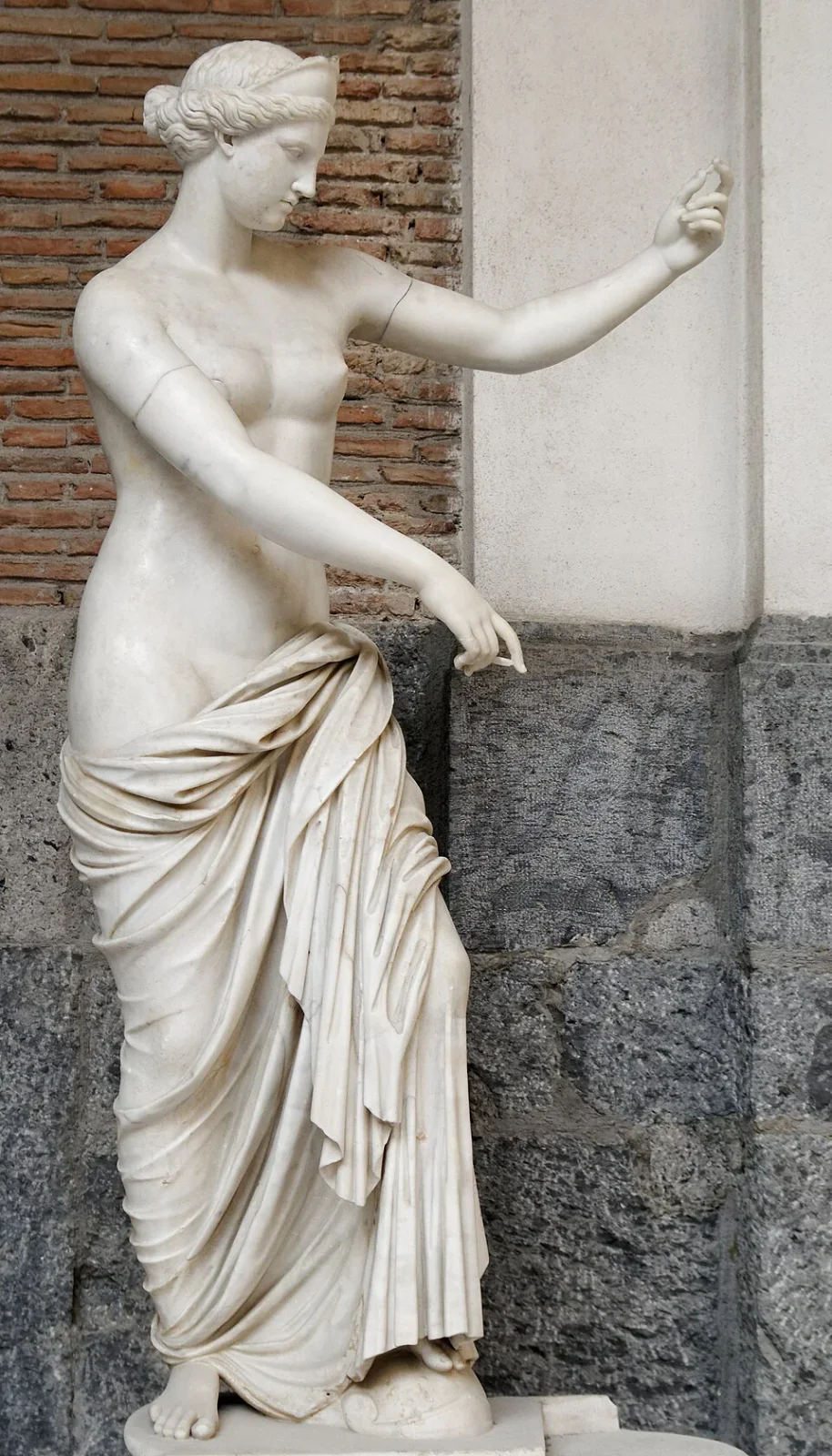
Capuan Venus
Why does the goddess of love have a soldier's helmet beneath her foot? Her weight is on her right leg, her left foot resting on Mars's helmet. Both arms rise to hold what is almost certainly his shield, and she looks at herself in it as if it were a mirror. Her mantle is held by the bent left knee, and her upper body turns a little. It seems to be love winning out over war. That meant something in Capua, where she was worshipped as Venus the Victorious. Julius Caesar turned the city into a colony for his veterans and chose her as its protector. We do not know who made it. It is a Roman copy of a Greek bronze from the end of the fourth century BC.
Listen in the appPhoto: Jastrow · CC BY 2.5
- 11
Artemis of Ephesus (Naples)
Haute-Marne · 2nd century AD
- 12
Portrait of Terentius Neo
Unknown Artist · 79
- 13
Secret Museum
Unknown Artist · 1st century AD
- 14
The Cupids seller
Unknown Artist · 50
- 15
Seated Hermes
Unknown Artist
- 16
Hera Farnese
Unknown Artist · 1st century AD
- 17
Plato's Academy mosaic (from Pompeii)
Unknown Artist · 50
- 18
Woman with wax tablets and stylus (so-called "Sappho")
anonymous master · 1
- 19
Achilles and Briseis
Unknown Artist · 50
- 20
Tables of Heraclea
Unknown Artist
- 21
Testament of Vibius Adiranus
Raffaele Garrucci
- 22
Protome Carafa
Donatello · 1456–1458
- 23
Garigliano Bowl
Unknown Artist
- 24
Mosaic of the musicians by Dioskourides of Samos
Dioscorides of Samos
- 25
Aphrodite Sasandra
Unknown Artist · -460
- 26
Dionysus, called Narcissus, from Pompeii
Unknown Artist
- 27
Charta Borgiana
Unknown Artist
- 28
Blue cameo vase from Pompeii
anonymous · 1st century AD
- 29
Puteoli Nabataean inscriptions
Unknown Artist · early 1st century AD
- 30
Sigillum Neronis
anonymous
- 31
Amazonomachy Vase
Darius Painter · c. 330 BC
- 32
Two women making a call on a witch
Dioscorides of Samos · -112
- 33
Venus of Sinuessa
Praxiteles · -350
- 34
Sacrifice of Iphigeneia
Unknown Artist · 50
- 35
Lare Farnese
Farnese Lar · 2nd century AD
- 36
still life with fruits and wine
Bottega dei pittori di via di Castricio · 100
- 37
Astragalus Players
Alexander
- 38
Wall painting - still lifes and landscapes and satyr with maenad - Pompeii (II 4 2-12) - Naples MAN 8598
Bottega dei pittori di via di Castricio · 100
- 39
Spring
Unknown Artist · 1
- 40
Diana
Unknown Artist · 1st century
- 41
Leda and the Swan
Unknown Artist · 1
- 42
Medea
Unknown Artist · 1
- 43
Achilles and Troilus Farnese (Naples)
Unknown Artist · 100
- 44
Europe on the bull
Unknown Artist · 50
- 45
Zeus bust from Cuma
Unknown Artist · 1st century AD
- 46
Roughhouse at the Amphitheatre, fresco
see filename or category
- 47
Hydria Vivenzio
Kleophrades Painter · 5th century BC
- 48
Mosaic floors of the National Archaeological Museum of Naples WLM24 (01)
Unknown Artist
- 49
Three vignettes of fruit.
Unknown Artist · 50
- 50
Flora Farnese
Unknown Artist · 200
- 51
Memento mori
Unknown Artist · 1st century BC
- 52
Sleeping Satyr from the Villa of the Papyri (Herculaneum)
Unknown Artist · 1st century BC
- 53
Jason and Pelias
Unknown Artist · 100
- 54
Hierogamy - Fresco of the divine wedding of Hera and Zeus
Unknown Artist
- 55
Bronze runners from the Villa of the Papyri (Herculaneum)
Unknown Artist
- 56
Departure of Chryseis
Unknown Artist
- 57
Irelli-Aoyagi-De Caro-Pappalardo 507
Unknown Artist
- 58
Wall painting - Odysseus and Phoinix on Skyros - Pompeii (IX 5 18-21) - Naples MAN 111471
Unknown Artist
- 59
Wall with idyllic-sacral landscape 002
Unknown Artist
- 60
Wall painting - idyllic rural landscape - Boscotrecase (villa of Agrippa Postumus) - Naples MAN 147503
Unknown Artist
- 61
Achilles
Unknown Artist
- 62
Pompeii family feast
Unknown Artist · 1st century
- 63
Fresco showing a piece of bread and two figs, from Pompeii, Naples National Archaeological Museum (14843173354)
Unknown Artist · 100
- 64
Fresco of Lesbia
TyB
- 65
Theseus honoured by the Athenians after he killed the Minotaur
Unknown Artist
- 66
Irelli-Aoyagi-De Caro-Pappalardo 185
Unknown Artist
- 67
Irelli-Aoyagi-De Caro-Pappalardo 244c
Unknown Artist
- 68
Irelli-Aoyagi-De Caro-Pappalardo 261
Unknown Artist
- 69
Hercules and Nessus, from Pompeii IX.5.18 (House of Jason), cubiculum g. Naples, Archaeological Museum 111474 - 01
Unknown Artist
- 70
Pan playing the flute with a nymph on the lyre and two spectators, from the House of Jason, c. 20-25 AD. 111473
Unknown Artist
- 71
Wall painting - Odysseus discovering Achilles on Skyros - Pompeii (VI 9 6) - Naples MAN 9110
Unknown Artist
- 72
Fresco showing a woman looking in a mirror as she dresses (or undresses) her hair, from the Villa of Arianna at Stabiae (Castellammare di Stabia), Naples National Archaeological Museum (17392924485)
Unknown Artist
- 73
Roman fresco depicting the arrival of the Trojan horse before the gates of Troy found in the House of Cipius Pamphilus Felix (Pompeii VII 6,38)
Unknown Artist
- 74
Naples - National Archaeological Museum 3879
Unknown Artist
- 75
Tomb of the Dancers WLM24 (02)
Unknown Artist · c. 4th century BC
- 76
Irelli-Aoyagi-De Caro-Pappalardo 244b
Unknown Artist
- 77
Irelli-Aoyagi-De Caro-Pappalardo 509
Unknown Artist · c. 60 BC
- 78
Corte ellenistica
Unknown Artist · c. 60 BC
- 79
Wall painting - satyr and maenad flying in the sky - Pompeii - Naples MAN 9135
Unknown Artist
- 80
Pan and Daphnis
Unknown Artist · 1st century AD
- 81
Seated Old Man
Unknown Artist
- 82
Ariadne discovered by Bacchus, from Pompeii VII.4.51 room i. Naples, Archaeological Museum 9278 - 01
Unknown Artist
- 83
Perseus and Andromeda with the head of the Gorgon Medusa, from the House of the Colored Capitals in Pompeii, 8996
Unknown Artist
- 84
Wall painting - Theseus abandoning Ariadne on Naxos - Pompeii (VII 4 31-51) - Naples MAN 9052
Unknown Artist
- 85
Mars and Aphrodite (Venus) fresco from the Casa di Meleagro, Pompeii perspective adjusted and cropped
Unknown Artist · 70
- 86
Mars and Venus, from Pompeii VII.2.23 Casa di Amore Punito, tablinum. Naples, Archaeological Museum 9249 - 01
Unknown Artist
- 87
Category:Eros punito (fresco from Pompeii)
Unknown Artist
- 88
Admetus and Alcestis MAN Naples Inv9026
Unknown Artist
- 89
Wall painting - Cybele in her sanctuary - Pompeii (VII 6 28) - Naples MAN 8845
Unknown Artist
- 90
Naples Museum 113 (15208812507)
Unknown Artist
- 91
Pompeian fresco depicting a hunting scene with pygmies
Unknown Artist
- 92
Fresco depicting Thetis in the workshop of Hephaestus, ordering armor for Achilles
Unknown Artist
- 93
Naples - National Archaeological Museum 3889
Unknown Artist
- 94
Naples - National Archaeological Museum 3901
Unknown Artist
- 95
Naples - National Archaeological Museum 3892
Unknown Artist
- 96
Naples - National Archaeological Museum 3890
Unknown Artist
- 97
Naples - National Archaeological Museum 3885
Unknown Artist
- 98
Naples - National Archaeological Museum 3882
Unknown Artist
- 99
Naples - National Archaeological Museum 3896
Unknown Artist
- 100
Naples - National Archaeological Museum 3899
Unknown Artist
- 101
Dionysiac symbols, from Pompeii II.4.10 (Praedia of Julia Felix). Naples, Archaeological Museum 8795
Unknown Artist
- 102
Satyr & Nymph
Unknown Artist · 124–100 BC
- 103
Fish and Ducks
Unknown Artist · 1st century BC
- 104
Satyr and maenad in flight, from the House of the Dioscuri, 9134
Unknown Artist
- 105
Wall painting - Venus with Amor and Psyche - Boscoreale (Villa of P Fannius Synistor oecus H) - Naples MAN
Unknown Artist · c. 60 BC
- 106
Dionysus and Satyr
Unknown Artist
- 107
Jupiter (or Zeus)
Unknown Artist
- 108
Woman offering a drink to a traveler, from the House of the Dioscuri, 9106
Unknown Artist
- 109
Actors in masks, perhaps the myth of Auge and Telephus, from the House of the Dioscuri, 9039
Unknown Artist
- 110
Hymenaeus, from Pompeii VI.9.2 (House of Meleager), peristyle. Naples, Archaeological Museum 9320
Unknown Artist
- 111
Apollo and Daphne, from Pompeii VI.9.2 (House of Meleager), peristyle. Naples, Archaeological Museum 9534 - 01
Unknown Artist
- 112
Youth and girl at dinner, from Pompeii VI.9.2 (House of Meleager), cubiculum 12, south of atrium. Naples, Archaeological Museum 9254
Unknown Artist
- 113
Model of Pompeii 1
Unknown Artist · 1861–1908
- 114
Ariadne's revenge MAN Naples Inv9051
Unknown Artist
- 115
Seated hero
Unknown Artist · 20–10 BC
- 116
Naples, Archaeological Museum (18364613538)
Unknown Artist
- 117
Seated Youth
Unknown Artist
- 118
Wrestling of Pan and Amor, from Pompeii VI.9.2 (House of Meleager), cubiculum 12, south of atrium. Naples, Archaeological Museum 9124
Unknown Artist
- 119
02 10 2024 Photo Paolo Villa-Naples-mann-Archaeological Museum-FO232572bis-Roman Art-Situla-fresco-Villa Fannius Boscoreale
Unknown Artist · c. 60 BC
- 120
Fresco of the Quadriga (Nat. Mus. Naples) - Temporary exhibition (Colosseum)
Unknown Artist
- 121
Dioscurus (9455) 002
Unknown Artist
- 122
Saturn, National Archaeological Museum of Naples
Unknown Artist
- 123
Thetis with the armour of Achilles, from Pompeii VI.9.2 (House of Meleager), peristyle. Naples, Archaeological Museum 8873
Unknown Artist
- 124
Wounded Adonis with Venus, from Pompeii VI.9.2 (House of Meleager), peristyle. Naples, Archaeological Museum 9255
Unknown Artist
- 125
Ganymede, from Pompeii VI.9.2 (House of Meleager), cubiculum 12, south of atrium. Naples, Archaeological Museum 9547
Unknown Artist
- 126
Hermaphroditus and Pan, from Pompeii VI.9.2 (House of Meleager), cubiculum 13, south of atrium. Naples, Archaeological Museum 9264
Unknown Artist
Museo archeologico nazionale di Napoli
Frequently asked questions
How much does the guide cost?
Free app download. Free until 1 January. Listed guide price: $1.99. Audio guide only. Venue admission is separate.
Can I listen without internet?
Yes. Download the guide’s audio, images, and maps in the app before your visit. Your downloaded content is then available offline.
Can I listen in my language?
In English for now. More languages soon.
Do I need to follow a schedule?
No. This is a self-guided experience. Choose your stops, pause whenever you like, and return to a story at your own pace.
Which artworks are in the Museo archeologico nazionale di Napoli audio guide?
126 artworks, including Farnese Hercules (Glycon of Athens, Lysippos), Farnese Bull (Apollonius of Tralles, Tauriskos of Tralles), Alexander Mosaic (Philoxenus of Eretria), Venus Callipyge (Unknown Artist), Farnese Atlas (Unknown Artist), Farnese Cup (Unknown Artist), Pompeii Lakshmi (Unknown Artist), and Antinous Farnese (Unknown Artist). The full list is on this page.
Is this the museum’s official audio guide?
No. Stanza is an independent audio guide app and is not affiliated with Museo archeologico nazionale di Napoli. Museum admission is separate.
At your own pace
Explore Museo archeologico nazionale di Napoli.
Download Stanza, then search for “Museo archeologico nazionale di Napoli”.
Free app download · Guide price shown in the app
Keep exploring
Nearby audio guides
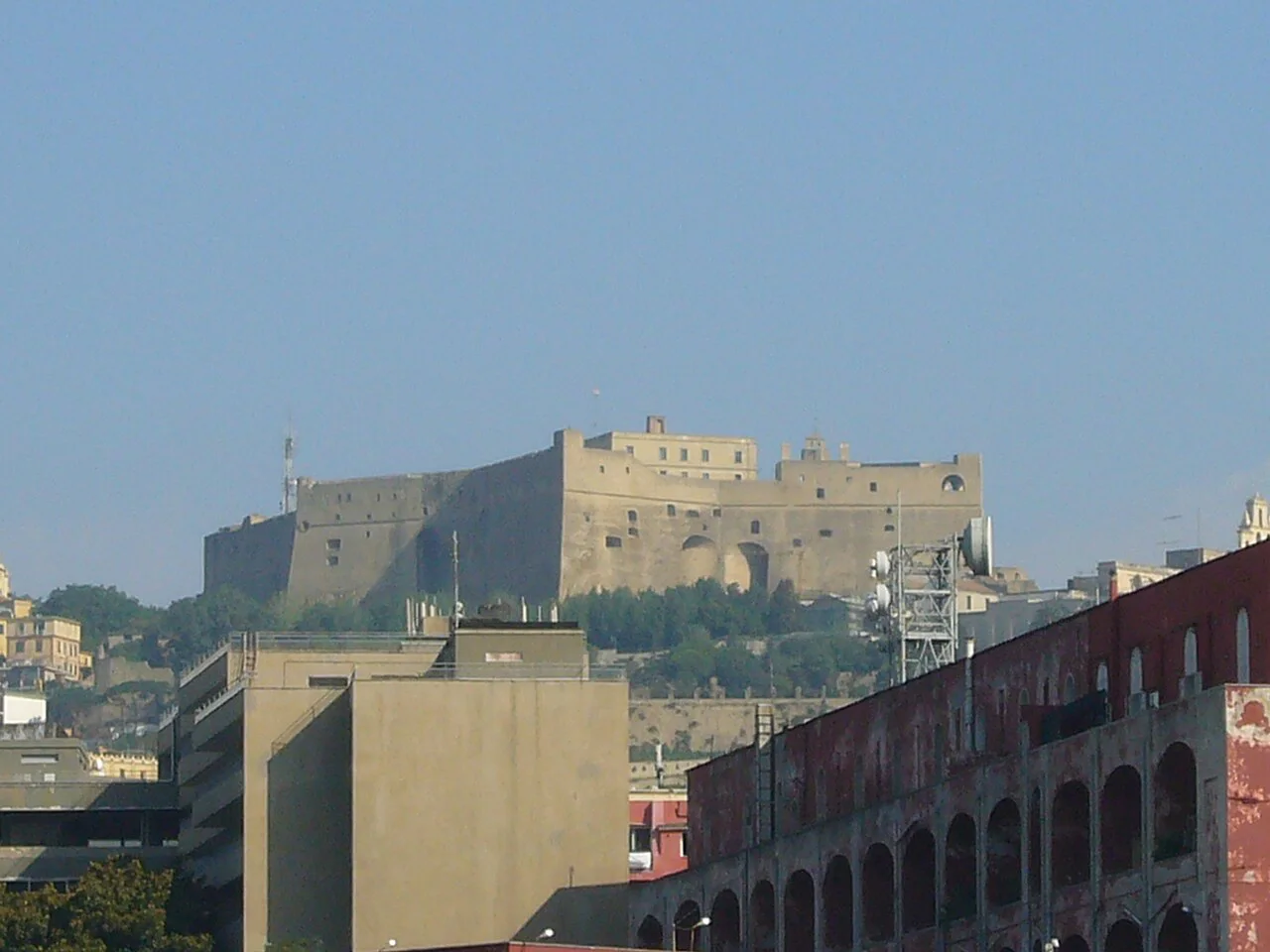
Naples · 1 km
Castel Sant'Elmo
Content & sources
Photo: Lalupa · CC BY 3.0
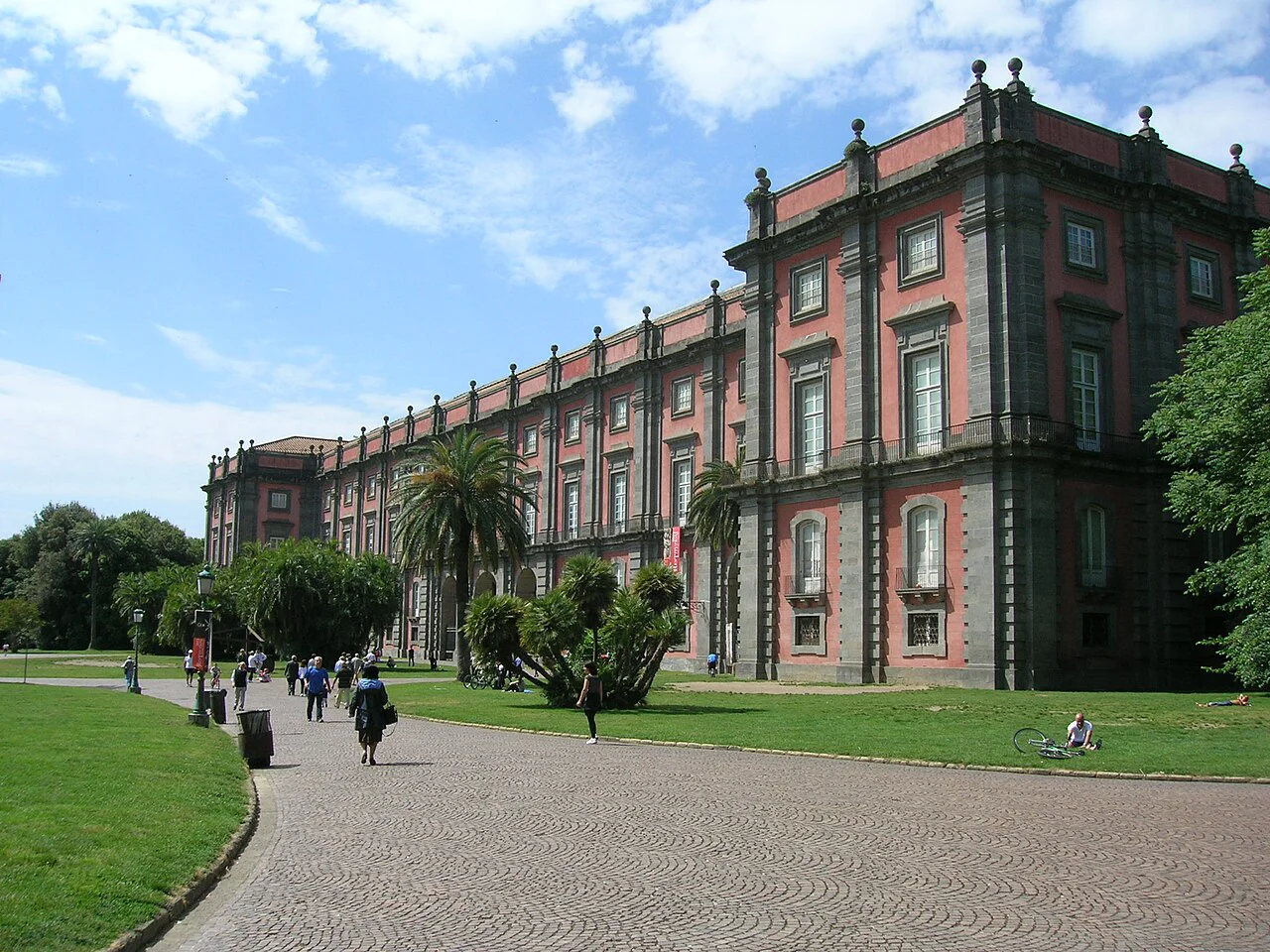
Naples · 1 km
Museo nazionale di Capodimonte
Content & sources
Mentnafunangann · CC BY-SA 4.0
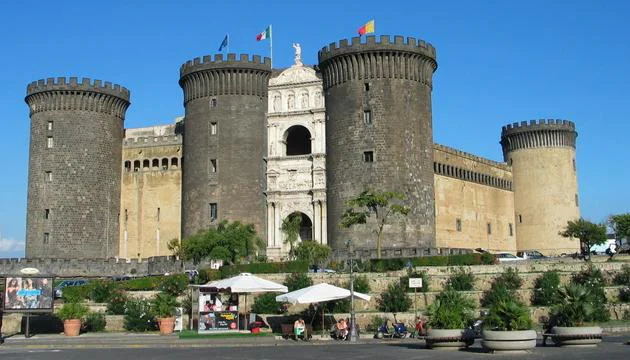
Naples · 2 km
Maschio Angioino
Content & sources
Photo: IgnisFatuus · CC BY-SA 2.5
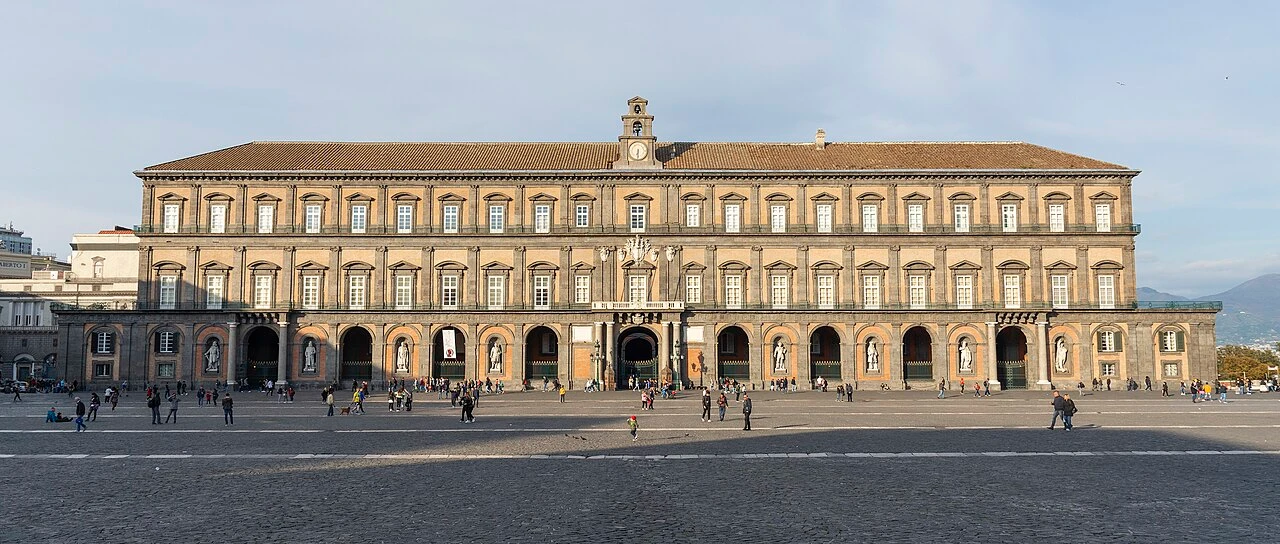
Naples · 2 km
Royal Palace of Naples
Content & sources
Photo: Sordelli · CC BY-SA 3.0
Art museums
More art museum audio guides
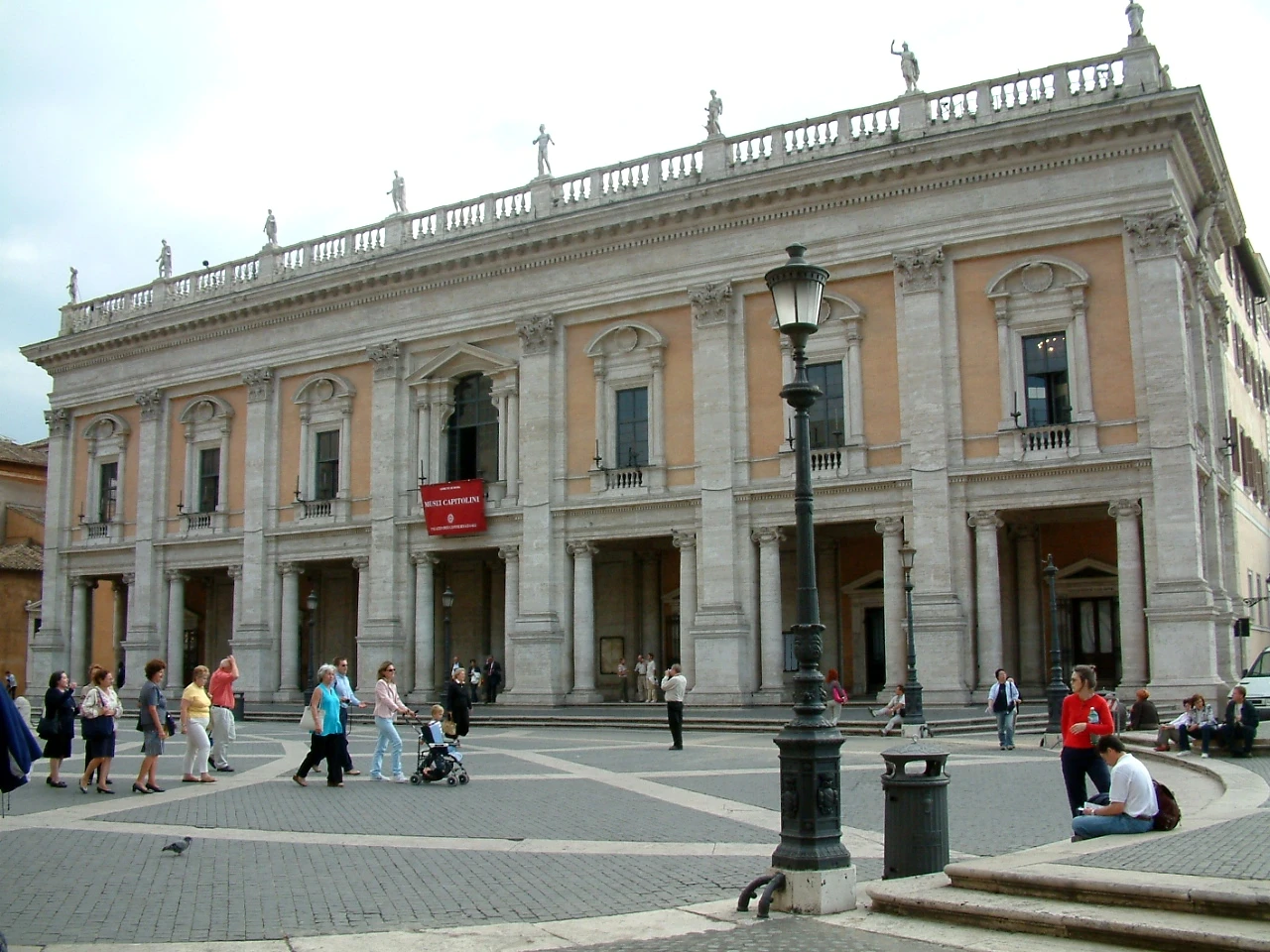
Naples · 136 artworks
Museo nazionale di Capodimonte
Content & sources
Mentnafunangann · CC BY-SA 4.0
Rome · 55 artworks
Capitoline Museums
Content & sources
Photo: Radomil · CC BY-SA 3.0
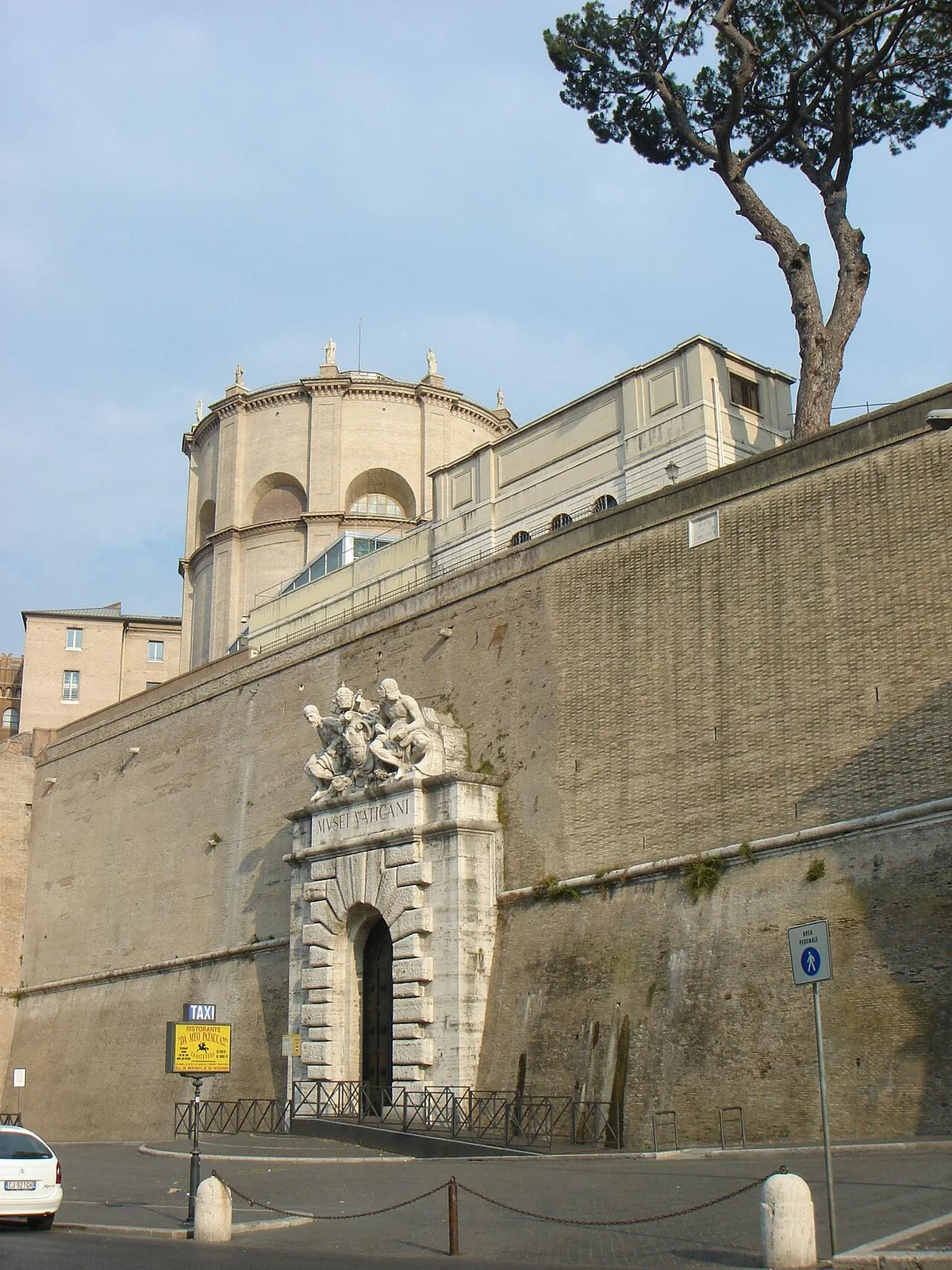
187 artworks
Vatican Museums
Content & sources
user:Lalupa · CC BY-SA 3.0
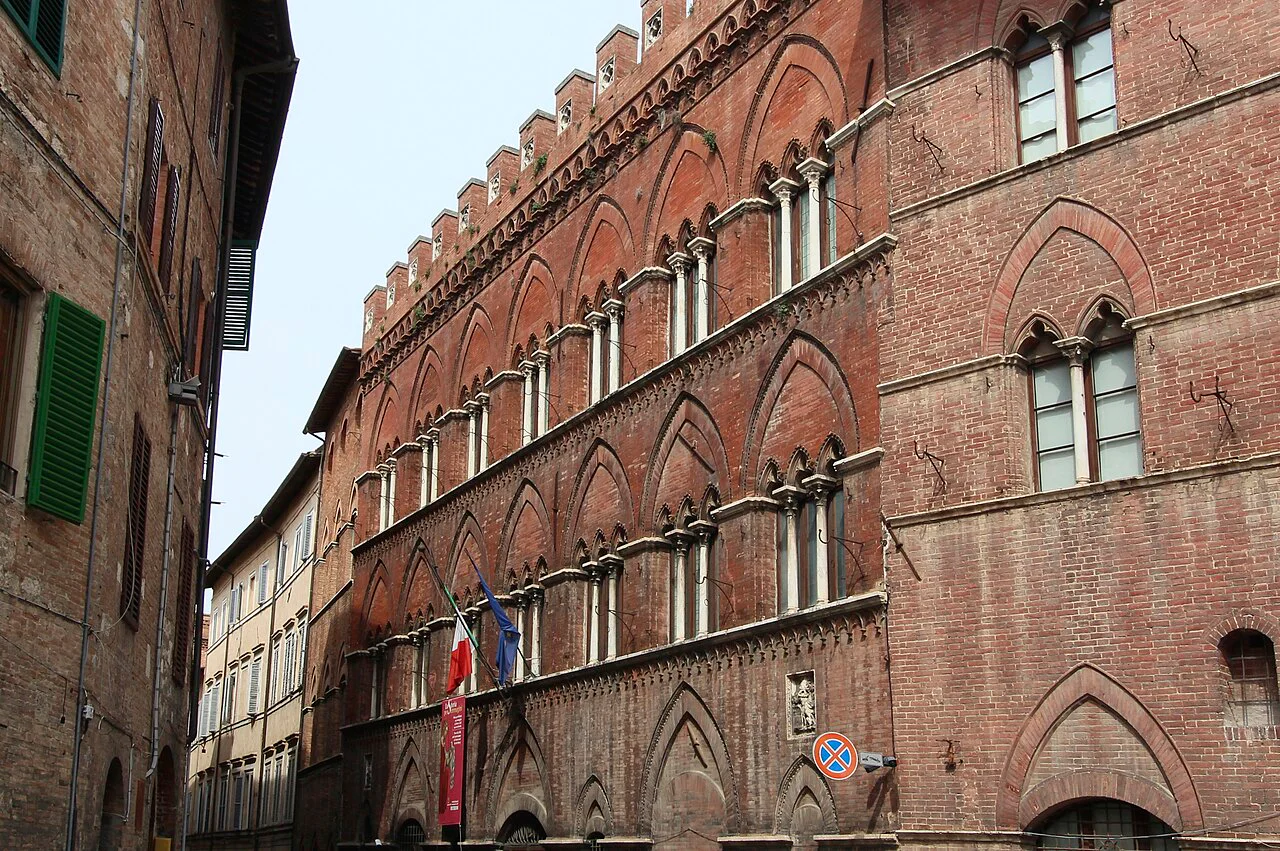
Siena · 37 artworks
Pinacoteca nazionale
Content & sources
Photo: LigaDue · CC BY-SA 4.0
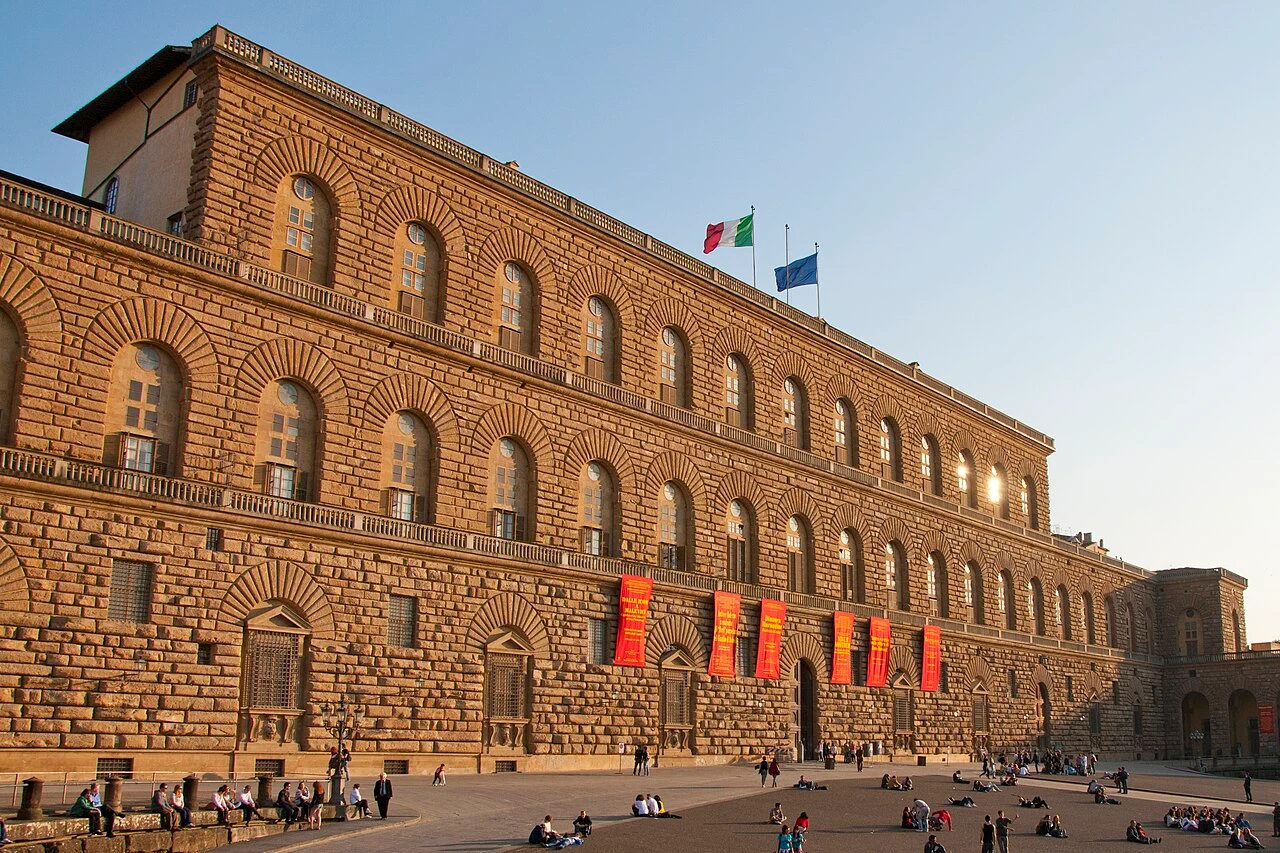
Florence · 167 artworks
Palazzo Pitti
Content & sources
Almaak · CC BY-SA 3.0
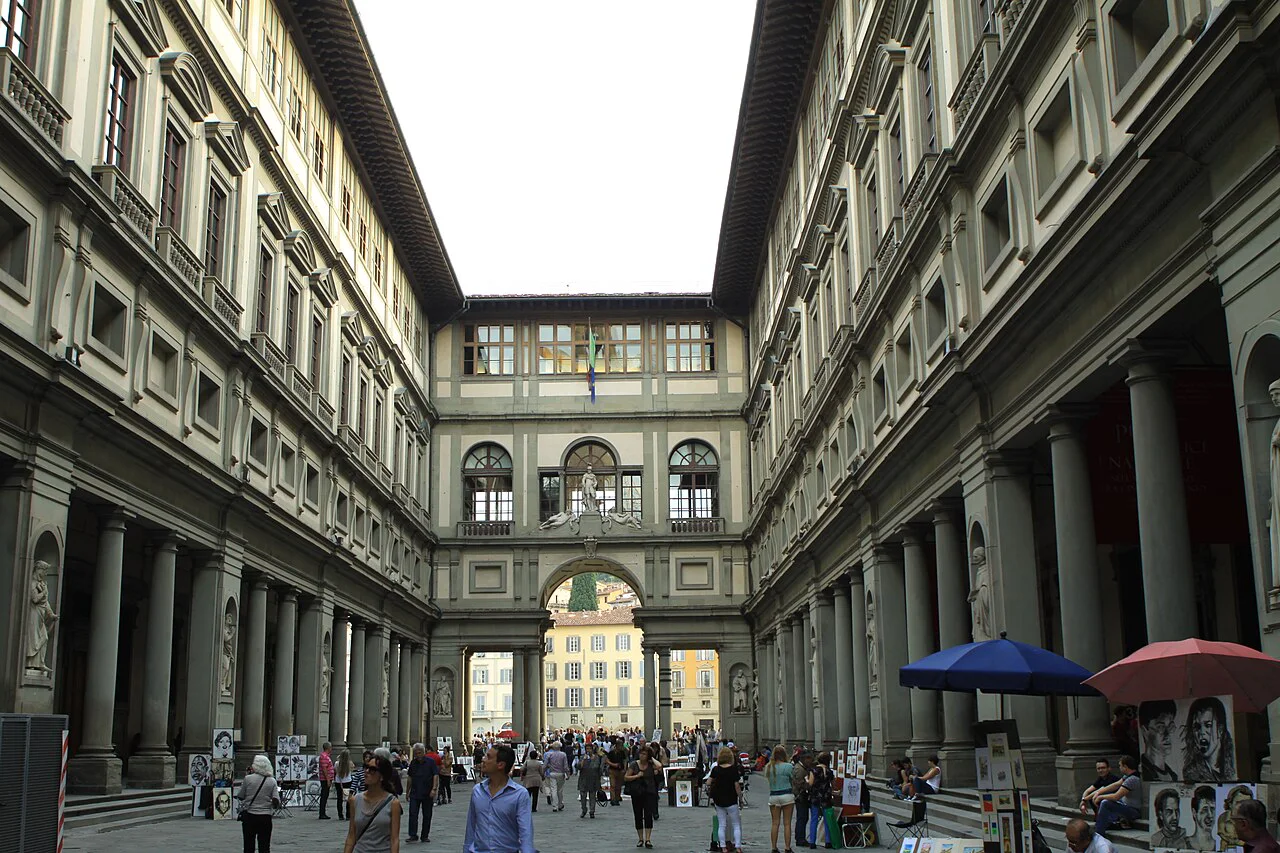
Florence · 70 artworks
Uffizi Gallery
Content & sources
Arek N. · CC BY-SA 3.0