Stanza · Audio guide
Museo nazionale di Capodimonte Audio Guide
A place to remember. A story to take with you.
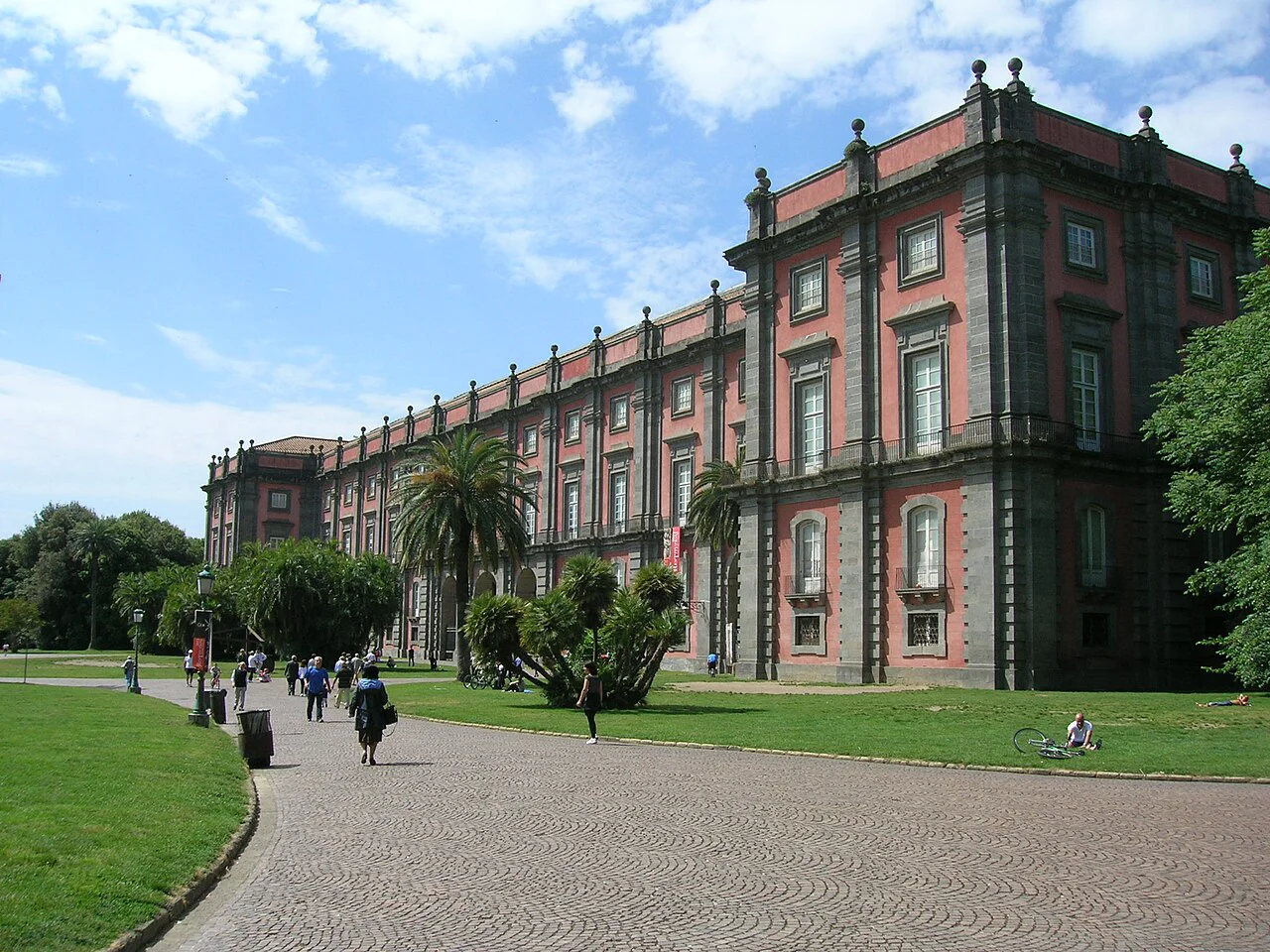
The Museo di Capodimonte is an art museum occupying the Palace of Capodimonte, an 18th-century Bourbon palazzo in Naples, Italy. It is the prime repository of Neapolitan painting and decorative art, with…
Download Stanza, then search for “Museo nazionale di Capodimonte”.
About the tour
One guide. Your kind of visit.
The Museo di Capodimonte is an art museum occupying the Palace of Capodimonte, an 18th-century Bourbon palazzo in Naples, Italy. It is the prime repository of Neapolitan painting and decorative art, with works from other Italian schools of painting and ancient Roman sculptures, and in its current form was inaugurated in 1957.
The Museo nazionale di Capodimonte guide tells the stories of 136 artworks, including The Blind Leading the Blind (Pieter Bruegel the Elder), Pope Paul III and His Grandsons (Titian), Judith Slaying Holofernes (Artemisia Gentileschi), Portrait of Pope Paul III (Titian), The Flagellation of Christ (Caravaggio), Portrait of Giulio Clovio (El Greco), Portrait of Cardinal Alessandro Farnese (Raphael), and Madonna and Child and Two Angels (Sandro Botticelli). Every artwork is free to hear in the Stanza app until 1 January.
Ready when you are.
- 01Get the free Stanza app.
iOS & Android
- 02Find your guide.
“Museo nazionale di Capodimonte”
- 03Download before you go.
Works offline
Audio guide / 136 artworks
Inside the guide
Get to know a few of the stories before you go. Open a stop to read more.
01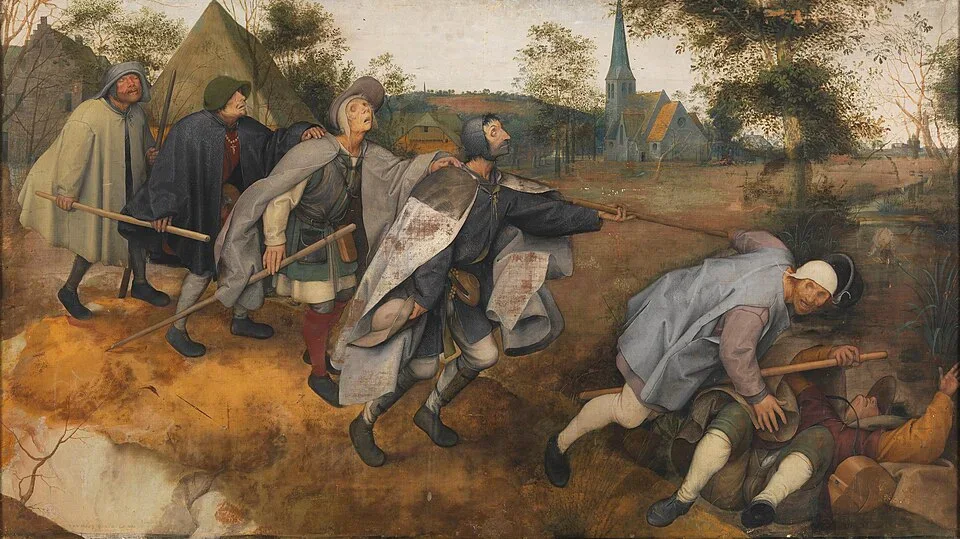
The Blind Leading the Blind
Behind these six men stands a church, strong and solid, while the men in front of it tip and stagger. Bruegel took Christ's story about the blind leading the blind, told to the Pharisees, and turned its two men into six. In that story, blindness means being blind to true religion, and both men end up in a ditch. The first has already fallen on his back. Their staffs link them, so he seems to be pulling the others down with him. The second twists his head as he falls. Each man has a different eye affliction, and all of them lift their faces, relying on smell and hearing rather than sight. Bruegel painted it the year before he died. Its bitter mood may have something to do with the Council of Troubles. Set up in 1567, it enforced Spanish rule and suppressed Protestantism through mass arrests and executions. The painting left the Masi family after Ranuccio the First seized their goods, and passed to the Farnese. In 1734 Charles of Bourbon became king of Naples, brought the Farnese collection with him, and gave the paintings a home at Capodimonte.
Listen in the appPieter Bruegel the Elder · Public domain
02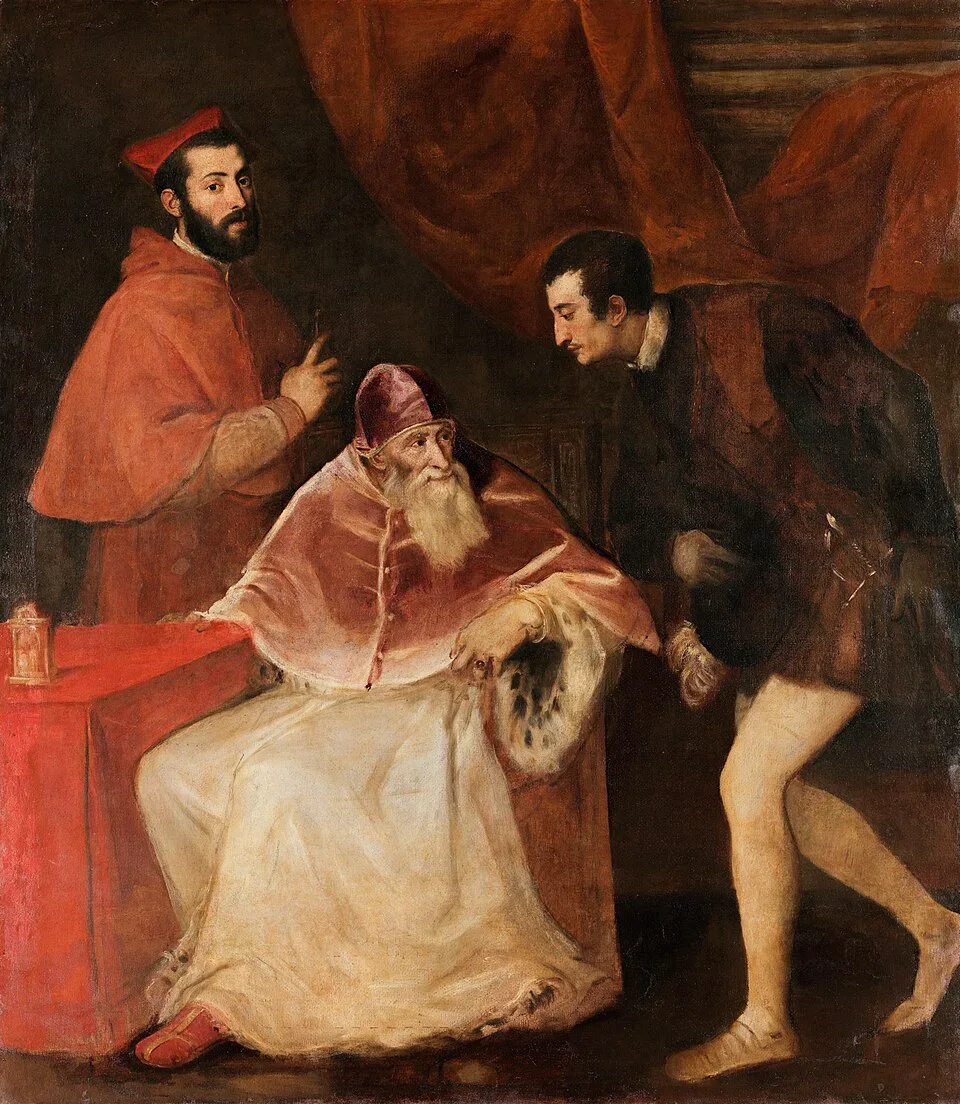
Pope Paul III and His Grandsons
None of the three people holds the still pose a formal portrait expected. That freedom of movement was rare in portraits of the time. The pope sits stooped, gripping the armrest with his bony left hand, as if he will not let go of power. His face wears a sly look, far from the usual state portrait. One grandson bends before him, waiting for a command. The other stands behind in a cardinal's robes, one hand on the papal chair. His eyes turn towards us, as though this exchange has nothing to do with him. Paul was in his late seventies and the times were unsettled. The emperor Charles the Fifth was gaining ground. The pope had used his office to advance his family, and thoughts of who would follow him seem to lie behind this commission. A clock on the table beside him stands for time running out. The Farnese called Titian to Rome to paint their portraits. But he wanted an abbey for his son, on land next to his own. He said he would paint them only if he got it. Once the grant came through, he seems to have lost his reason to stay. He left the picture unfinished and unframed, and for a hundred years it sat in a Farnese cellar. Exactly when the family ordered it, and when it was painted, is still not known.
Listen in the appTitian · Public domain
03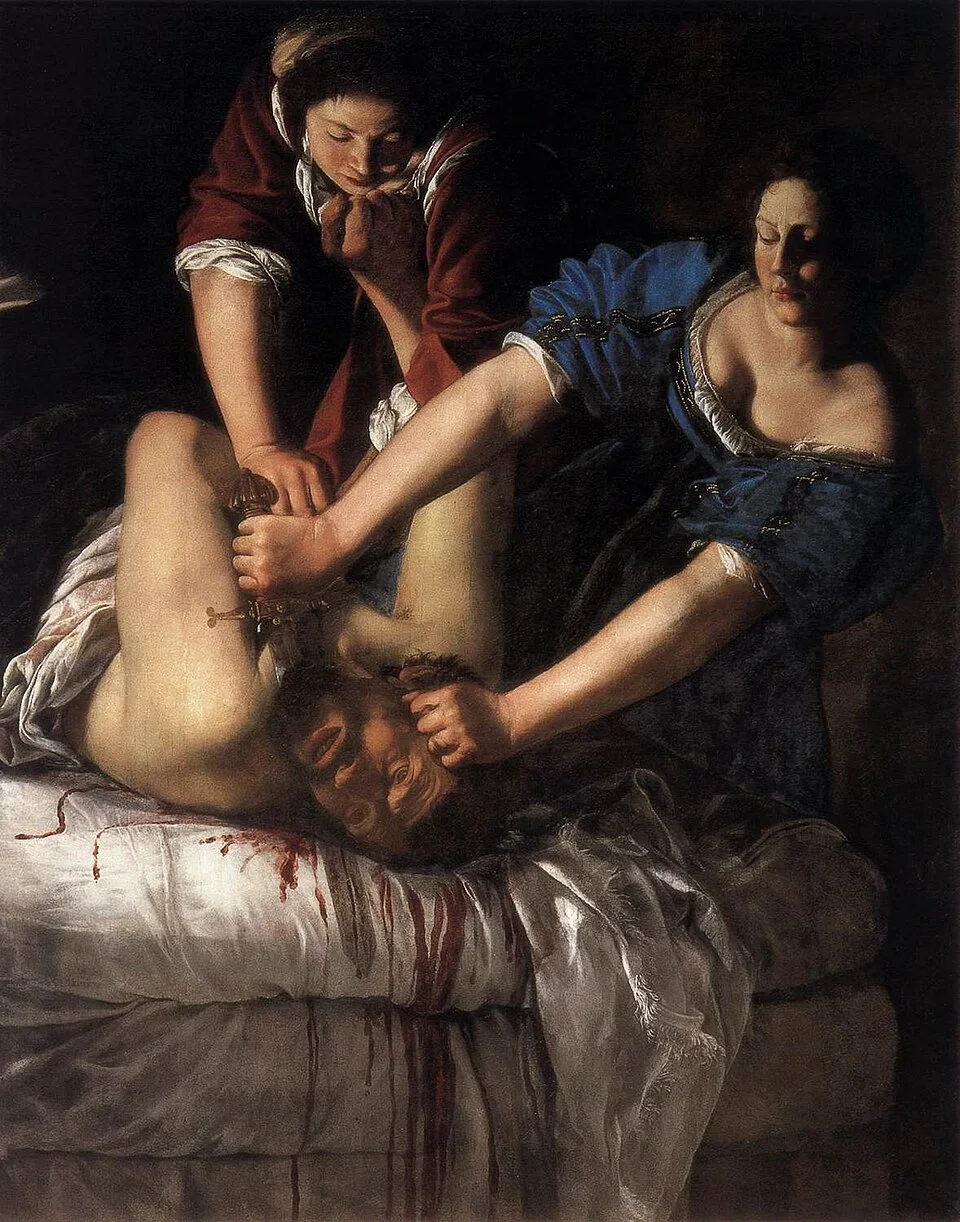
Judith Slaying Holofernes
Both women have their sleeves rolled up. It tells you she is not posed after the deed. This is the cutting itself, right now, by two women's hands. Judith stands on the right, holding Holofernes down, her arms stiff and stretched out parallel. Behind her the young maid Abra keeps him still while he fights back. Blood spurts from his neck and runs down the white sheets. Light falls on the three of them. Everything else is dark. There is no decoration anywhere in it. Artemisia Gentileschi was about twenty when she painted this, just after the trial that followed the rape she had suffered. Other painters showed Judith calmly holding a severed head. She chose the killing instead. Those stiff parallel arms come from Caravaggio's Judith, which she knew, painted about ten years before. Under X rays the canvas gives away her changes. She moved both of Judith's arms and reworked the drapery before she was done.
Listen in the appArtemisia Gentileschi · Public domain
04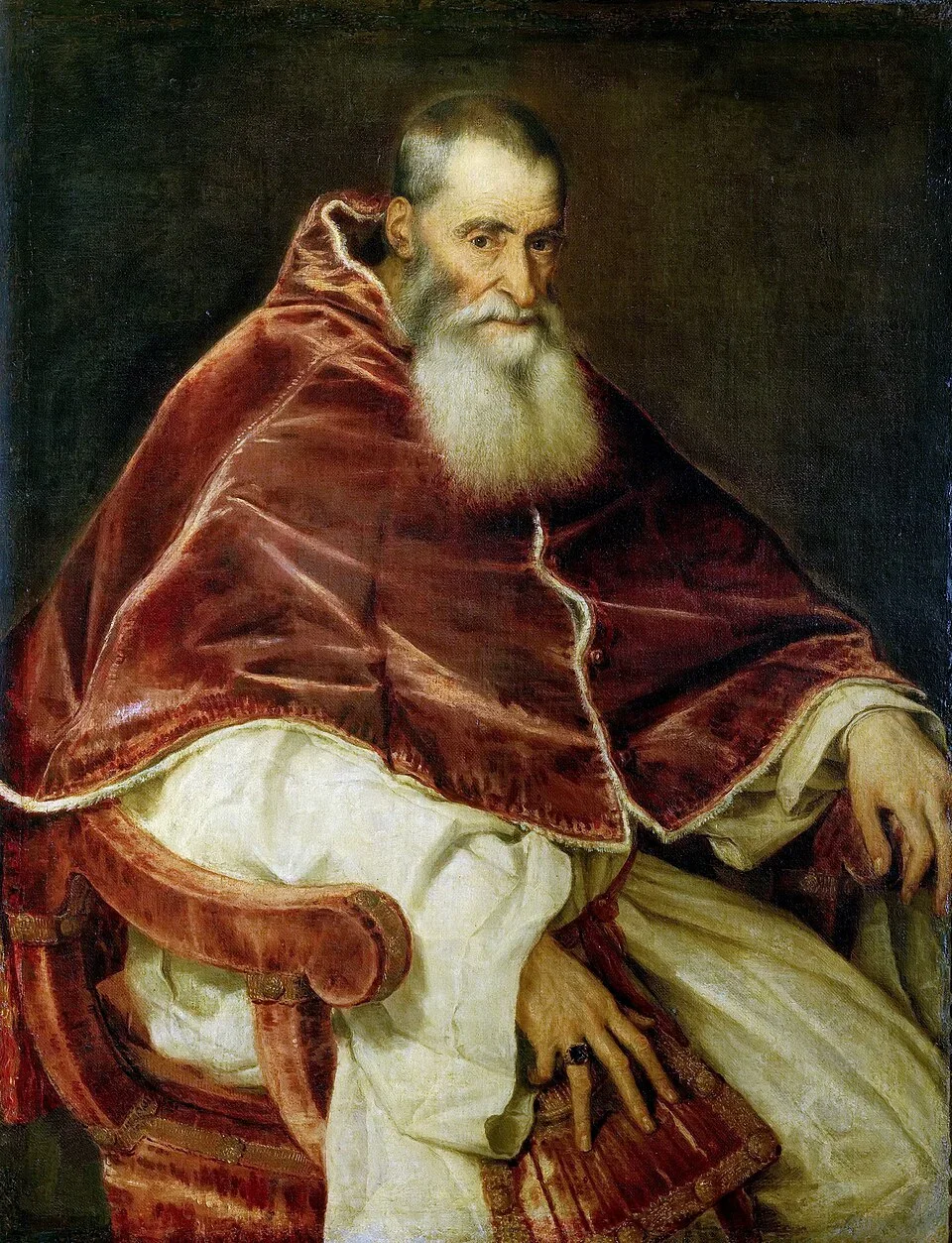
Portrait of Pope Paul III
The pope's grandson, Cardinal Alessandro Farnese, wanted Titian as the family's painter. He called him to Ferrara and asked him to paint the pope. Titian arrived on the twenty-second of April. Exactly one month later, on the twenty-second of May, the portrait was sent off to the man who had ordered it. Titian had not flattered his subject. Paul the Third was seventy-five, with hollowed cheeks, a thick white beard and bony hands. The right hand rests on a purse, a sign of attention to earthly goods, and a papal ring shows on a finger. The eyes are clear and sharp, more a politician's than a churchman's. The pope was delighted. He offered Titian a place in Rome, sealing papal bulls, a job then held by Sebastiano del Piombo. Titian refused and stayed in Venice. When revolution came, Ferdinand the Fourth took the portrait to Palermo as he fled Naples, keeping it away from the new rulers.
Listen in the appTitian · Public domain
05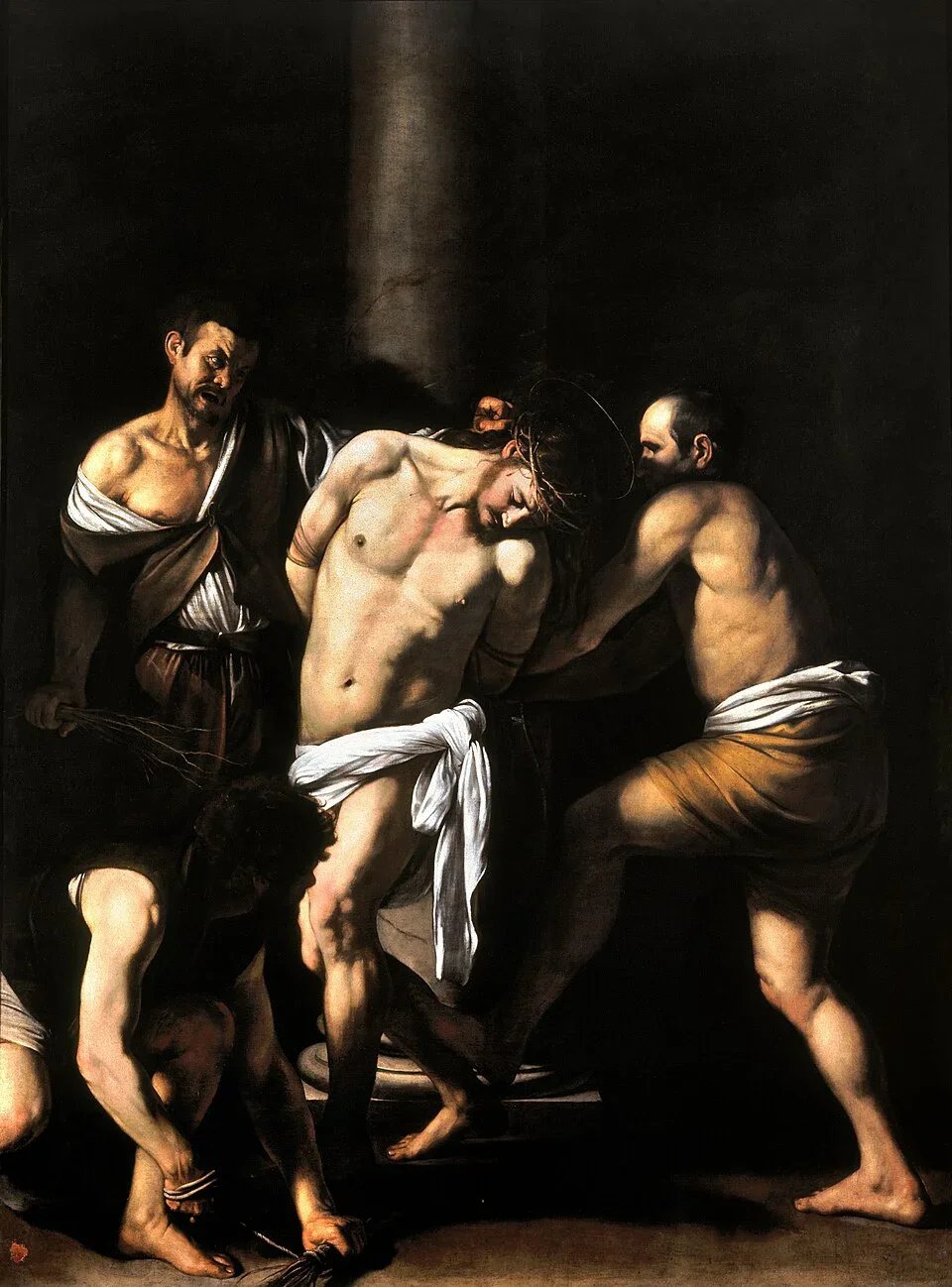
The Flagellation of Christ
Christ is tied to a column, almost naked, crowned with thorns, three drops of blood coming from his head. Two men work on him, one on either side, and a third stoops in the foreground. The air around them is so dense that the column itself is hard to make out. The figures are spaced across the canvas with the rhythm of a dance. But the drooping body is not his own doing. The man on the right kicks the back of his knee. The man on the left has his hair closed tight in his fist. They twist him into that shape and hold him there. The third has not struck yet. He is still preparing his scourge. Caravaggio borrowed this from a fresco by Sebastiano del Piombo in a church in Rome. He kept its dancing rhythm but cut the space down hard, so the figures are set on a shallow stage. At the time, the church encouraged the faithful to whip themselves, to enter into Christ's suffering. The painting was made for Tommaso de' Franchis, for the chapel his family had in the church of San Domenico in Naples.
Listen in the appCaravaggio · Public domain
06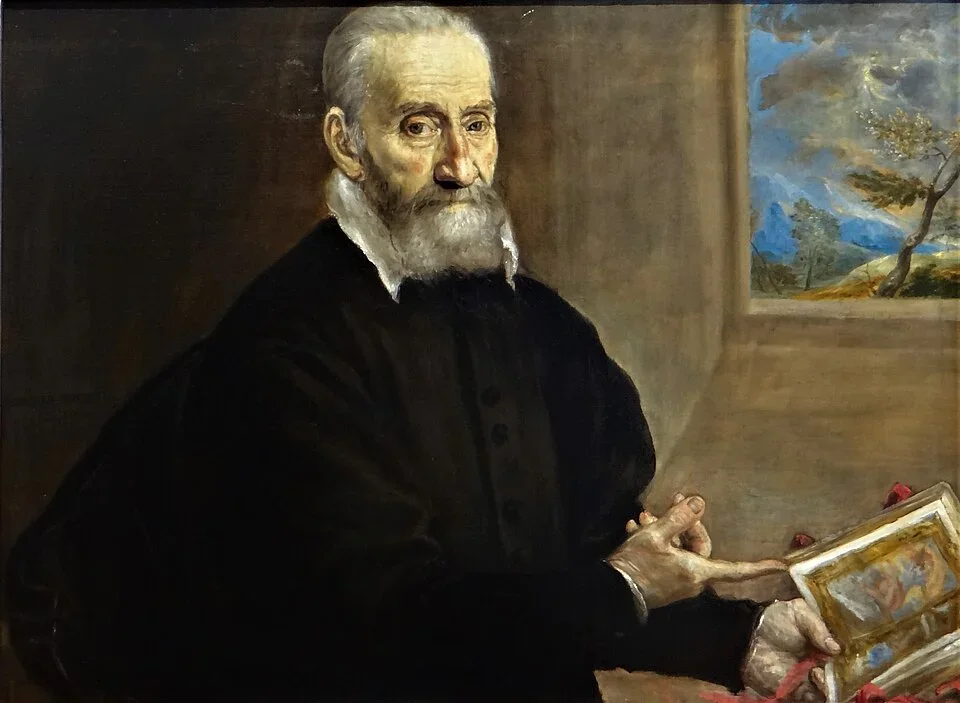
Portrait of Giulio Clovio
A man holds a book open in his left hand and points at a page with his right index finger. The book is the Farnese Hours, the work he is best known for. It is an illuminated manuscript, a book with pictures painted by hand, and he made it for Cardinal Farnese. The open pages show God the Father creating the Sun and Moon, and the Holy Family. He was Giulio Clovio, a miniaturist from Croatia. Vasari called him the Michelangelo of miniature painting. Clovio had helped the newcomer when he first came to Rome. In 1570 he wrote to Cardinal Farnese, asking for a room in the Farnese Palace for the young Cretan, a pupil of Titian. El Greco painted this soon afterward, almost certainly for his friend. On the left, he signed in Greek capital letters, and one of the words means Cretan.
Listen in the appPhoto: MOSSOT · Public domain
07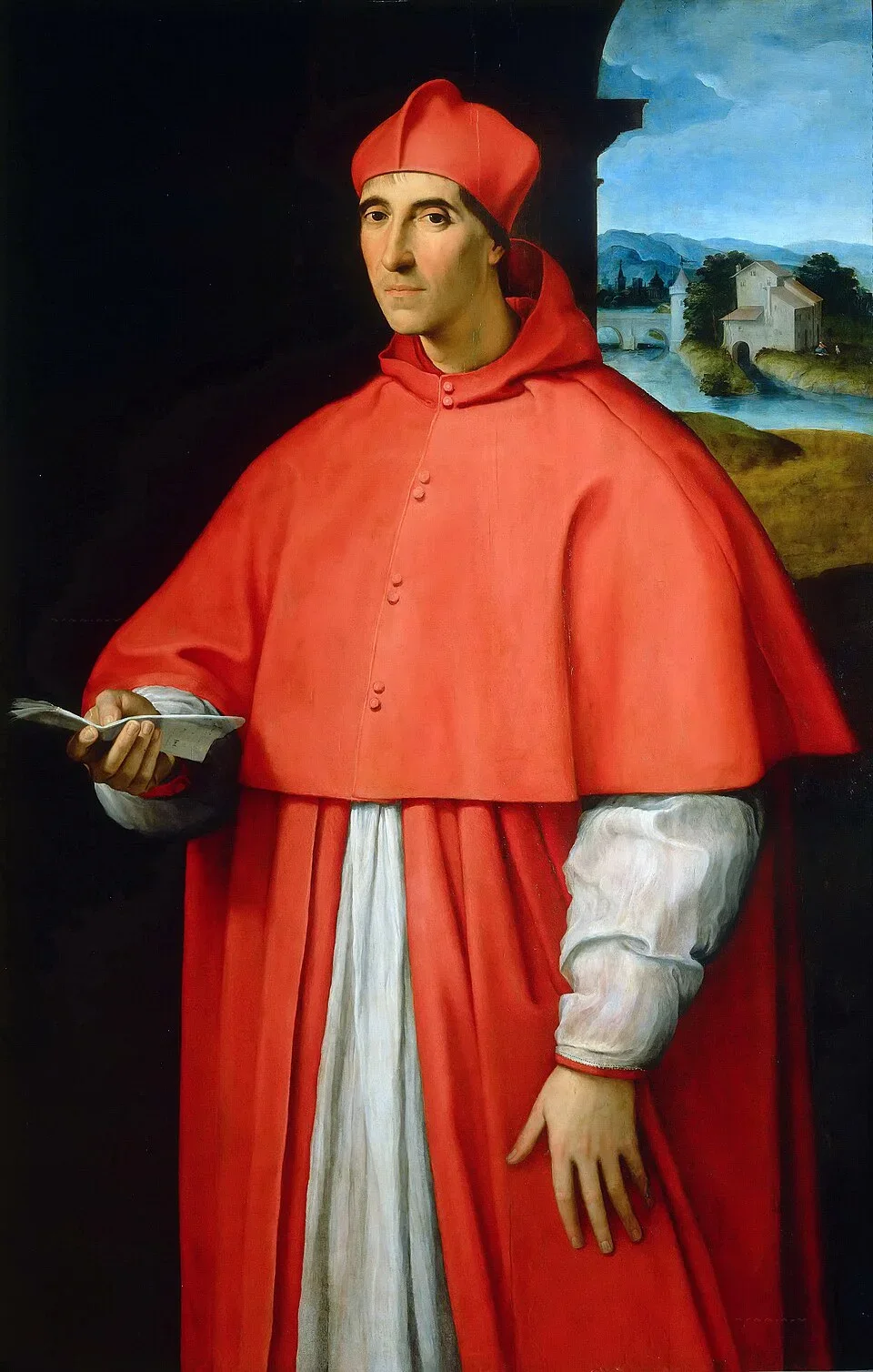
Portrait of Cardinal Alessandro Farnese
Who is this man? He looks straight at you, a letter in his right hand. Behind him a window opens onto a river landscape that fades into the distance. For a long time no one could say for certain who he was. Raphael painted him between 1509 and 1511, when Alessandro Farnese was a little over forty and had just become bishop of Parma. One day he would be Pope Paul the Third. But his name slipped away from the picture. After it reached Naples it was called Cardinal Pamphilj, then Silvio Passerini, and later still Cardinal Antonio Maria Ciocchi del Monte. The damaged surface even raised questions about who had painted it. The answer was on the back of the panel. A number in red wax, one hundred and thirty four, led to an old Farnese inventory. There a portrait was listed of Paul the Third as a cardinal, with a paper in his right hand and a landscape far off. The painter named was Raphael of Urbino. Restoration in the early nineteen nineties revealed the painting's high quality and put that question to rest. That paper in the inventory is the letter in his hand.
Listen in the appRaphael · Public domain
08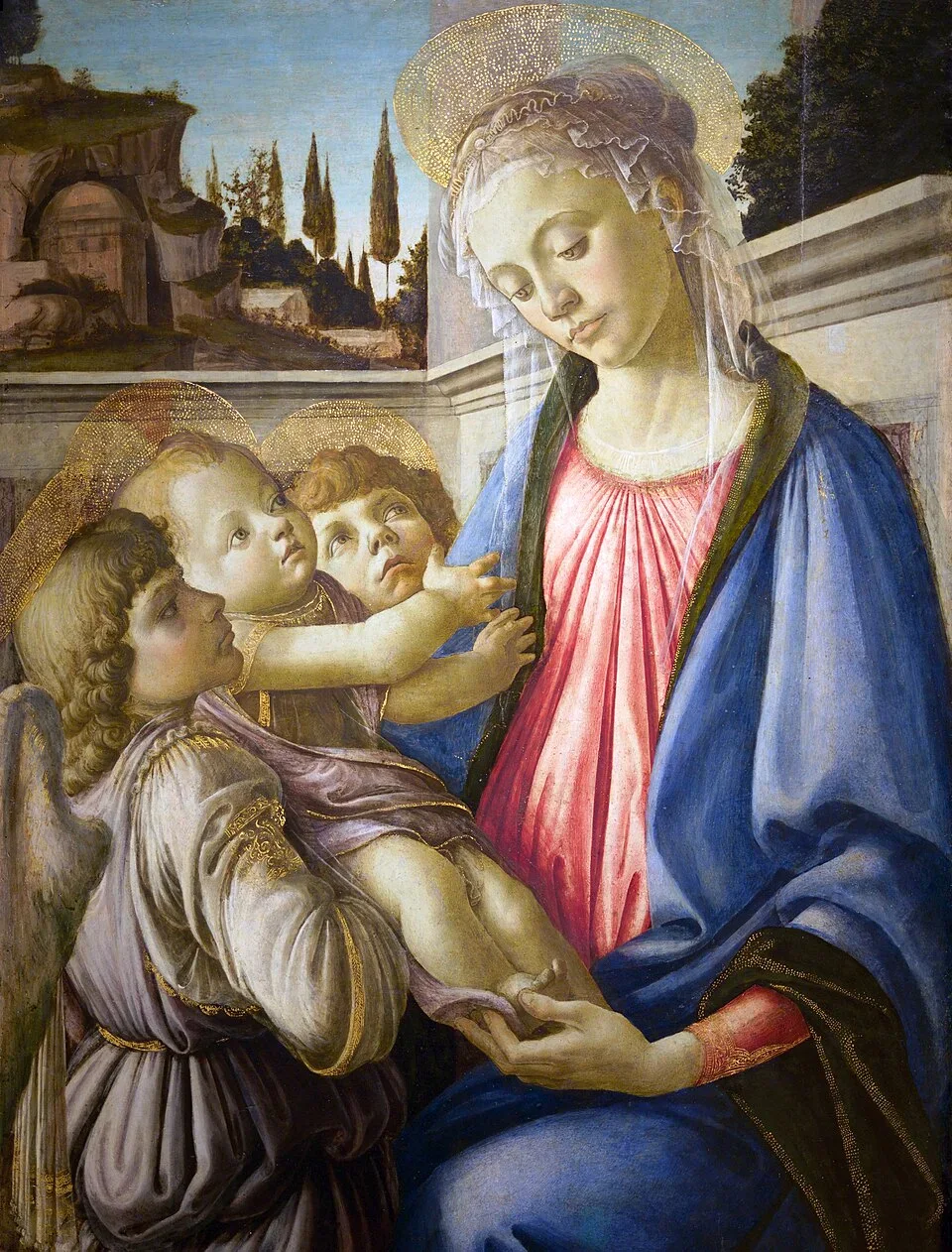
Madonna and Child and Two Angels
No one knows who asked for this picture, or how it came into the Farnese family's hands. Two angels lift the child up toward his mother. He reaches his arms out to her, and looks at her as grave and as intent as the angels. She holds his feet gently, almost without seeming to, and she is deep in her own thoughts. The whole scene is quiet and thoughtful, with a trace of melancholy running through it. Behind the group, a corner of marble wall shuts the space in. It means the enclosed garden, a sign of Mary's virginity. It first turns up in records of the Farnese palace in Rome, listed under the name of Lippi. The arrangement does go back to Filippo Lippi, Botticelli's master and Filippino's father, and to a Madonna of Verrocchio's from a few years before. But the child's face is Botticelli's own, no longer following Verrocchio's way of doing it. Closer study gave the picture back to Botticelli, who painted it between 1468 and 1470, around the time of his Fortitude. The whole surface was painted over, and only in 1957 was that paint removed, showing the picture as it had first been painted.
Listen in the appSandro Botticelli · Public domain
09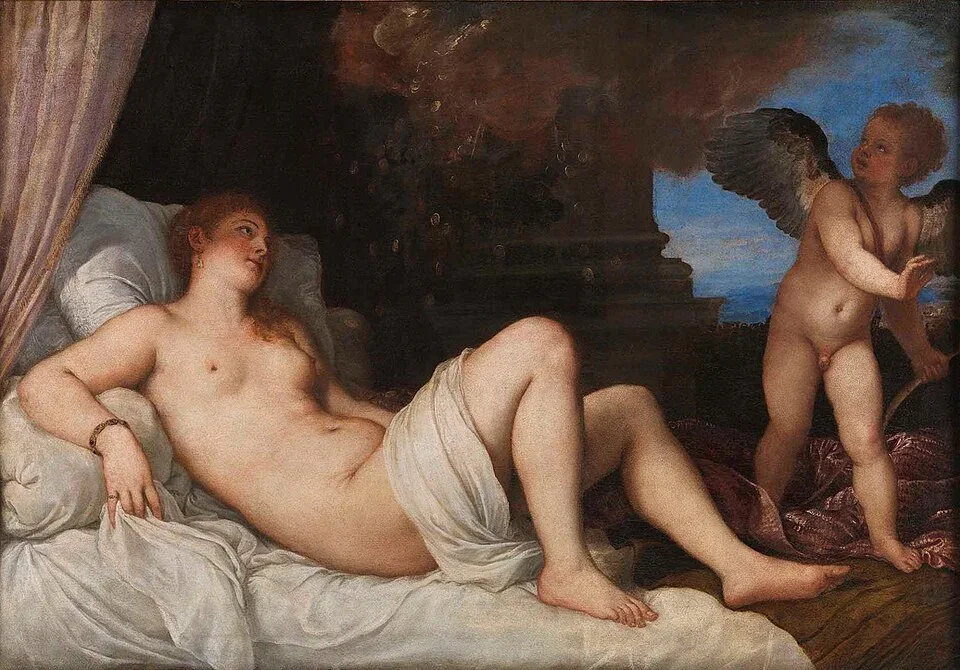
Danaë
This woman was a real person before she was anything else. Cardinal Alessandro Farnese sent Titian a small likeness of his mistress, probably a courtesan named Angela. The painter set her head on the body of a woman lying naked on a couch. That was the daring part. The pope's representative in Venice saw it in 1544 and wrote to the cardinal about a nude that would stir even a churchman. Beside it, he wrote, Titian's earlier Venus of Urbino looked like a nun. Then, in December 1545, the Council of Trent opened. The cardinal began to fear the open display of his affair, even in his private rooms. So her face was softened, made less like one particular woman. The nude became Danaë, the princess seduced by Jupiter in a shower of gold. At her feet stands Cupid, and none of the later versions has him. They put an old woman there instead, holding out a cloth for the gold. The gold bursts from between dark clouds, with rain falling alongside it, and Danaë's heavy gaze rests on the light. And X rays found another composition beneath the paint, close to the Venus of Urbino.
Listen in the appTitian · Public domain
10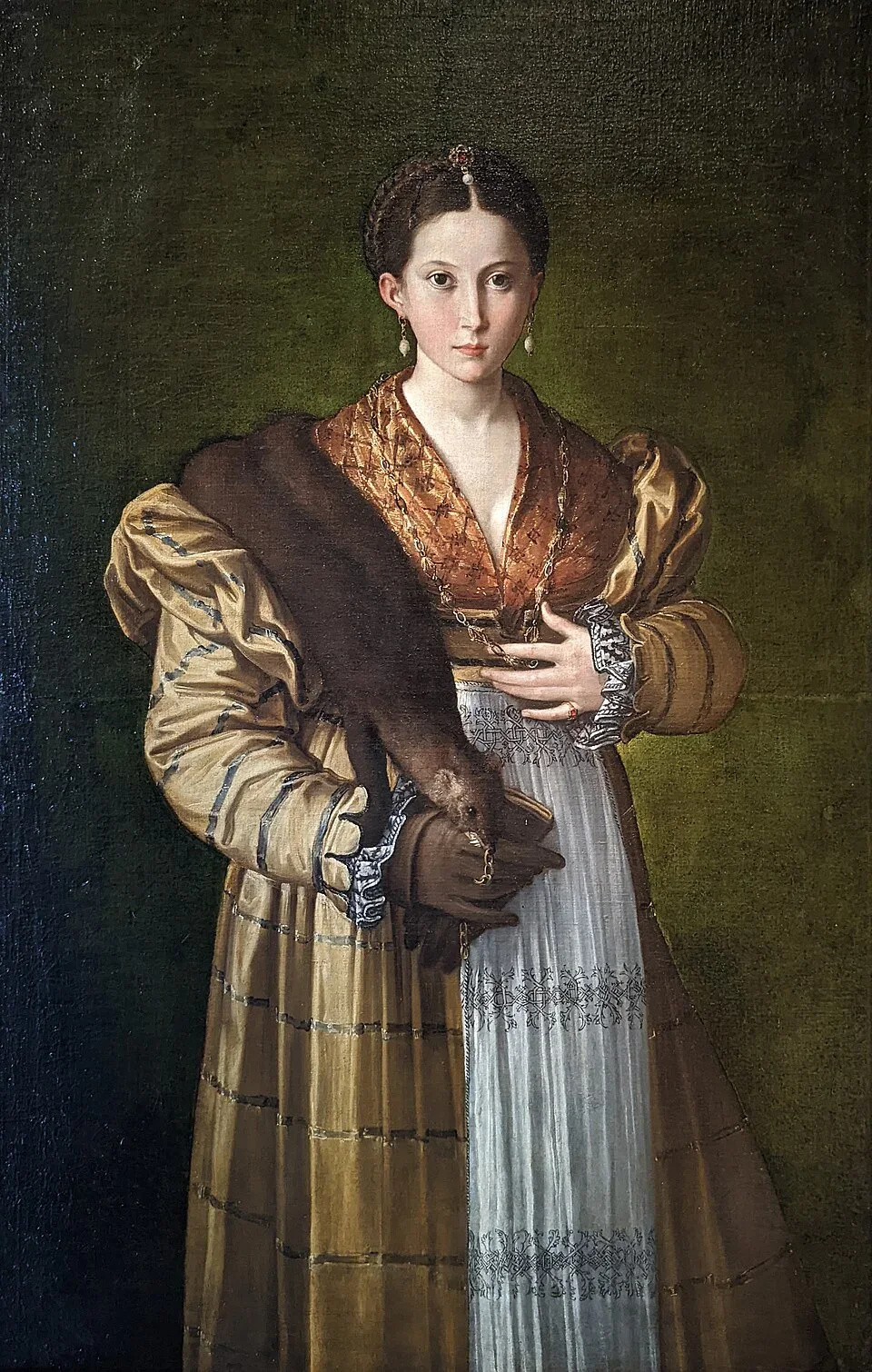
Antea
Who is this woman? She looks straight at you, and the question has stayed open for centuries. In 1671 a writer named Giacomo Barri saw this portrait in Parma. He named the woman Antea, a famous courtesan of Rome, the painter's mistress. The name took hold, because Parmigianino himself had worked in Rome. But her clothes argue against it. Across her stomach lies a light white apron, the zinale. In northern Italy a young bride wore one on her wedding day, as a sign of virginity. Perhaps she is a bride, then, not the courtesan Barri imagined. Her dress is woven with gold, the fashion of northern courts, and no name proposed for her has ever been proved. The date stays open as well, since it depends on who she is. Her right arm and shoulder are enlarged, and the fur resting on them is far too heavy for them. So though she seems a real woman, she is an unsettling apparition.
Listen in the appPhoto: Shonagon · Public domain
- 11
El Soplón
El Greco · 1570–1572
- 12
The Misanthrope
Pieter Bruegel the Elder · 1568
- 13
The Choice of Hercules
Annibale Carracci · 1595–1596
- 14
Madonna of Divine Love
Raphael · 1516–1518
- 15
Portrait of Philip II
Titian · 1550–1554
- 16
Transfiguration of Christ
Giovanni Bellini · 1478–1487
- 17
Crucifixion
Masaccio · c. 1426
- 18
Pisa Polyptych
Masaccio · 1426
- 19
Portrait of Gian Galeazzo Sanvitale
Parmigianino · 1524
- 20
Portrait of Lavinia Vecellio
Titian · 1545–1546
- 21
Portrait of Cardinal Alessandro Farnese
Titian · c. 1545–1546
- 22
Portrait of Maria Luisa di Parma
Francisco Goya · 1799–1800
- 23
Portrait of Luca Pacioli
Jacopo de' Barbari · 1495–1500
- 24
Pietà
Annibale Carracci · 1598–1600
- 25
Portrait of Pope Paul III with Camauro
Titian · 1545–1546
- 26
Portrait of Charles V
Titian · 1549
- 27
Portrait of Bishop Bernardo de' Rossi
Lorenzo Lotto · 1505
- 28
The Holy Family with St. John
Parmigianino · c. 1528
- 29
Penitent Magdalene
Titian · c. 1550
- 30
Madonna and Child with the Young St John the Baptist and St Peter Martyr
Lorenzo Lotto · 1503
- 31
Annunciation with Saints John the Baptist and Andrew
Filippino Lippi · 1485
- 32
Lucretia
Parmigianino · 1540
- 33
Saint Sebastian
Mattia Preti · c. 1657
- 34
Madonna and Child, "Zingarella"
Antonio da Correggio · c. 1516–1517
- 35
The Martyrdom of St Januarius in the Amphitheatre at Pozzuoli
Artemisia Gentileschi · 1635–1637
- 36
Saint Jerome in His Study
Niccolò Antonio Colantonio · c. 1445–1446
- 37
Annunciation
Artemisia Gentileschi · 1630
- 38
The Mystical Marriage of St. Catherine
Antonio da Correggio · 1517–1520
- 39
Portrait of Pier Luigi Farnese
Titian · 1546
- 40
Carlo III di Borbone visiting the Pope Benedetto XIV in the coffee-house of the Quirinale, Rome
Giovanni Paolo Panini · 1746
- 41
Ulysses at the court of Alcinous
Francesco Hayez · 1814–1816
- 42
Charles of Bourbon Visiting St Peter's Basilica
Giovanni Paolo Panini · 1746
- 43
Saint Louis of Toulouse crowns Robert of Anjou
Simone Martini · c. 1317
- 44
The Death of Julius Caesar
Vincenzo Camuccini · c. 1806
- 45
Self-portrait at the Spinnet
Sofonisba Anguissola · 1555–1559
- 46
Hairy Harry, Mad Peter and Tiny Amon by Agostino Carracci
Agostino Carracci · 1598–1600
- 47
Portrait of Princess Maria Christina
Élisabeth Louise Vigée Le Brun · c. 1790
- 48
Portrait of Francesco Gonzaga
Andrea Mantegna · 1460–1462
- 49
Saint Euphemia
Andrea Mantegna · 1454
- 50
Allegory of justice and truth
Giorgio Vasari · 1543
- 51
Saint Anthony Abbot
Antonio da Correggio · c. 1517–1518
- 52
Judith and Maidservant with Head of Holofernes
Artemisia Gentileschi · 1645–1650
- 53
Portrait of Charles IV, King of Spain
Francisco Goya · 1790s
- 54
Portrait of Cardinal Pietro Bembo
Titian · c. 1545–1546
- 55
Annunciation
Titian · c. 1557
- 56
Drunken Silenus
Jusepe de Ribera · 1626
- 57
St. Jerome and the Angel of Judgment
Jusepe de Ribera · 1626
- 58
Rinaldo and Armida
Annibale Carracci · 1601–1602
- 59
Portrait of a Young Man Seated on a Carpet
Rosso Fiorentino · c. 1525–1527
- 60
Saint Januarius intercedes with the Virgin, Christ, and Eternal Father for the plague
Luca Giordano · c. 1656
- 61
Patron Saints of Naples adoring the Crucifix
Luca Giordano · 1660–1661
- 62
The Universal Judgment
Marcello Venusti · 1549
- 63
The Foundation of Santa Maria Maggiore
Masolino da Panicale · 1423–1429
- 64
Apollo flaying Marsyas
Jusepe de Ribera · 1637
- 65
Apollo Flaying Marsyas
Luca Giordano · 1659–1660
- 66
Child Bitten by a Lobster
Sofonisba Anguissola · c. 1554
- 67
God the Father and the Virgin Mary
Raphael · 1500–1501
- 68
Delivery of the Franciscan Rule
Niccolò Antonio Colantonio · 1444–1446
- 69
Ferdinand IV and His Family
Angelica Kauffmann · 1782–1783
- 70
Portrait of Ferdinand IV
Anton Raphael Mengs · 1759
- 71
Madonna of the cat
Giulio Romano · 1521–1524
- 72
Saint Nicholas of Bari
Mattia Preti · c. 1653
- 73
St Francis Receiving the Stigmata
El Greco · c. 1560
- 74
Charles III hunting on Lake Licola
Joseph Vernet · 1746
- 75
Francis I and His Family
Giuseppe Cammarano · 1820
- 76
The Vision of Saint Eustace
Annibale Carracci · 1585–1586
- 77
Assumption of the Virgin with St. John the Baptist and St. Catherine of Alexandria
Fra Bartolomeo · c. 1516
- 78
Judith and Holofernes
Mattia Preti · c. 1653–1656
- 79
Saint John the Baptist
Mattia Preti · c. 1653–1656
- 80
Lucretia and Tarquin
Luca Giordano · 1663
- 81
Belshazzar's Feast
Mattia Preti · 1653
- 82
The Adoration of the Magi
Cesare da Sesto · 1516
- 83
Equestrian Portrait of Charles of Bourbon
Francesco Liani · 1760
- 84
Equestrian Portrait of Maria Amalia of Saxony
Francesco Liani · mid-18th century
- 85
Trinitas terrestris con santi e l'Eterno Padre
Jusepe de Ribera · 1626–1635
- 86
Saint Jerome
Jusepe de Ribera · 1651
- 87
Venus, Cupid and Mars
Luca Giordano · 1663
- 88
Temples of Paestum
Antonie Sminck Pitloo · 1824
- 89
Portrait of Charles of Bourbon in Hunting Dress
Antonio Sebastiani de Caprarola · 1800
- 90
Portrait of Joachim Murat
François Gérard · 1808
- 91
Adoration of the shepherds
Fabrizio Santafede · 1612–1614
- 92
Massacre of the Innocents (Matteo di Giovanni)
Matteo di Giovanni · 1488
- 93
Christ Going to Calvary
Polidoro da Caravaggio · 1534
- 94
Madonna and Child with Donors
Palma Vecchio · c. 1525
- 95
The Prophecy of Basilides
Pietro Testa · 1645–1646
- 96
The Mystic Marriage of St Catherine
Annibale Carracci · 1585–1587
- 97
Charles III's Departure for Spain, Seen from the Sea
Antonio Joli · 1759
- 98
Saint Joseph and a follower
Antonio da Correggio · 1529
- 99
Scene of sacrifice
Pontormo · c. 1520
- 100
Portrait of Pope Clement VII
Sebastiano del Piombo · c. 1526
- 101
Portrait of Leo X with Cardinals Giulio de' Medici and Luigi de' Rossi
Andrea del Sarto · c. 1525
- 102
Portrait of a man, said to be a self portrait
Francesco Salviati · 1540–1545
- 103
Corot - The Bay of Naples with the Castel dell'Ovo, 1828
Jean-Baptiste Camille Corot · 1828
- 104
Tolomeo Filadelfo nella biblioteca di Alessandria
Vincenzo Camuccini · 1813
- 105
Battle of Pavia tapestries
Bernard van Orley, Dermoyen tapestry manufactory · 1528–1531
- 106
Madonna of the Baldacchino
Luca Giordano · 1685–1686
- 107
Carditello Harvest
Jacob Philipp Hackert · 1791
- 108
Madonna of the Purification of the Soul with Saints Francis and Clare
Battistello Caracciolo · 1622–1625
- 109
The Madonna of Constantinople
Mattia Preti · c. 1656
- 110
Adoration of the Magi (Triptych)
Joos van Cleve · c. 1525
- 111
The Holy Infants Embracing
Joos van Cleve · 1530
- 112
Trasporto di Cristo nel sepolcro
Polidoro da Caravaggio · 1524–1527
- 113
Coronation of the Virgin
Cristoforo Scacco di Verona · 1495–1500
- 114
Farnese Casket
Perino del Vaga, Giovanni Bernardi, Manno Sbarri · 1548–1561
- 115
Capodimonte National Museum. (9177)
Domenichino · 1615
- 116
Ferdinand IV Riding a Horse with the Court
Antonio Joli · 1760
- 117
Napoleon I, Emperor
François Gérard · 1807
- 118
Ferdinand IV. hunting coots at lake Fusaro
Jacob Philipp Hackert · 1783
- 119
Butcher Shop
Joachim Beuckelaer · 1568
- 120
Fishmonger's stall
Joachim Beuckelaer · 1570
- 121
San Vincenzo Ferrer polyptych
Niccolò Antonio Colantonio · 1456–1458
- 122
The Wedding at Cana
Luca Giordano · 1663
- 123
Christ Served by Angels
Giovanni Lanfranco · 1616
- 124
The Circumcision
Simon Vouet · 1620–1622
- 125
La schiava
Giacomo Ginotti · 1877
- 126
Saint Agatha
Francesco Guarini · c. 1637–1640
- 127
Quisisana seen from a Terrace with the Royal Household
Johan Christian Dahl · 1820
- 128
Portrait of a lady
Bronzino
- 129
Christ at the Column
Battistello Caracciolo · c. 1618–1620
- 130
The Crucifixion
Battistello Caracciolo · c. 1610
- 131
Adoration of the Christchild
Luca Signorelli · 1493–1496
- 132
The Ecstasy of St Cecilia
Bernardo Cavallino · 1645
- 133
Timoclea Kills the Captain of Alexander the Great
Elisabetta Sirani · 1659
- 134
Madonna and Child
Bernardino Luini · 1510–1520
- 135
Bust of Pope Paul III with decorated cope
Guglielmo della Porta · c. 1547
- 136
The Charity
Bartolomeo Schedoni · 1611
Museo nazionale di Capodimonte
Frequently asked questions
How much does the guide cost?
Free app download. Free until 1 January. Listed guide price: $1.99. Audio guide only. Venue admission is separate.
Can I listen without internet?
Yes. Download the guide’s audio, images, and maps in the app before your visit. Your downloaded content is then available offline.
Can I listen in my language?
In English for now. More languages soon.
Do I need to follow a schedule?
No. This is a self-guided experience. Choose your stops, pause whenever you like, and return to a story at your own pace.
Which artworks are in the Museo nazionale di Capodimonte audio guide?
136 artworks, including The Blind Leading the Blind (Pieter Bruegel the Elder), Pope Paul III and His Grandsons (Titian), Judith Slaying Holofernes (Artemisia Gentileschi), Portrait of Pope Paul III (Titian), The Flagellation of Christ (Caravaggio), Portrait of Giulio Clovio (El Greco), Portrait of Cardinal Alessandro Farnese (Raphael), and Madonna and Child and Two Angels (Sandro Botticelli). The full list is on this page.
Is this the museum’s official audio guide?
No. Stanza is an independent audio guide app and is not affiliated with Museo nazionale di Capodimonte. Museum admission is separate.
At your own pace
Explore Museo nazionale di Capodimonte.
Download Stanza, then search for “Museo nazionale di Capodimonte”.
Free app download · Guide price shown in the app
Keep exploring
Nearby audio guides
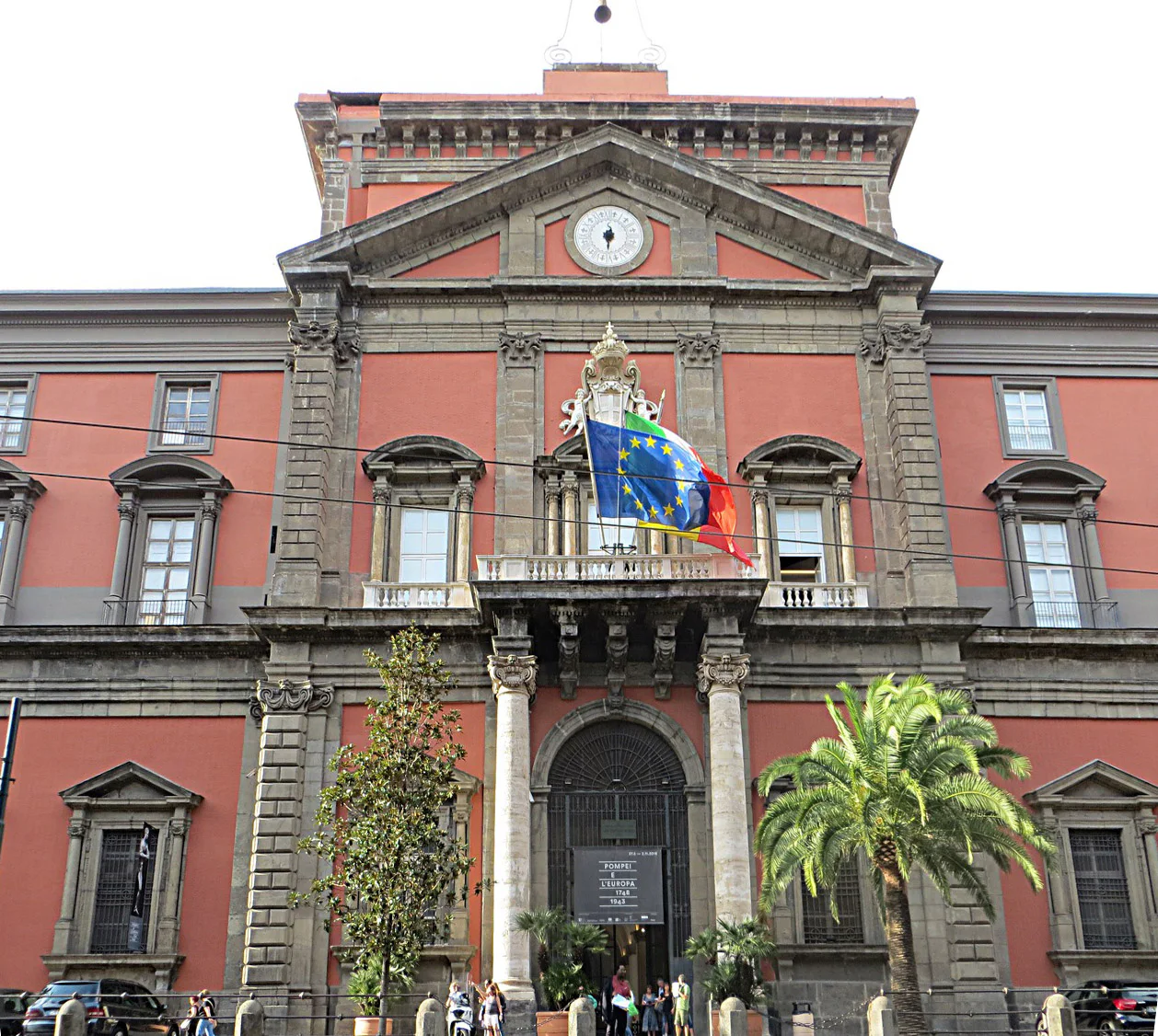
Naples · 1 km
Museo archeologico nazionale di Napoli
Content & sources
Mister No · CC BY 3.0
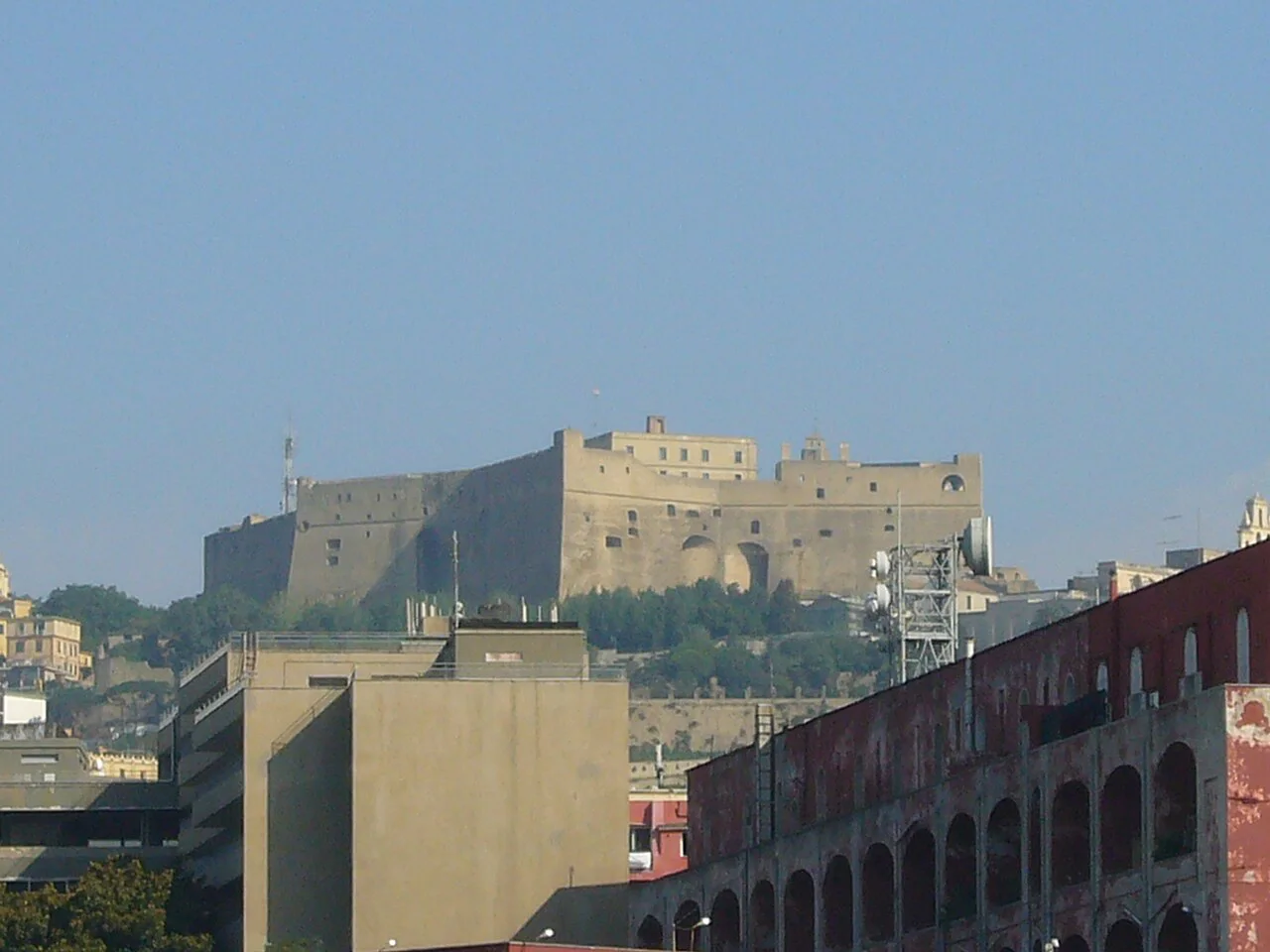
Naples · 3 km
Castel Sant'Elmo
Content & sources
Photo: Lalupa · CC BY 3.0
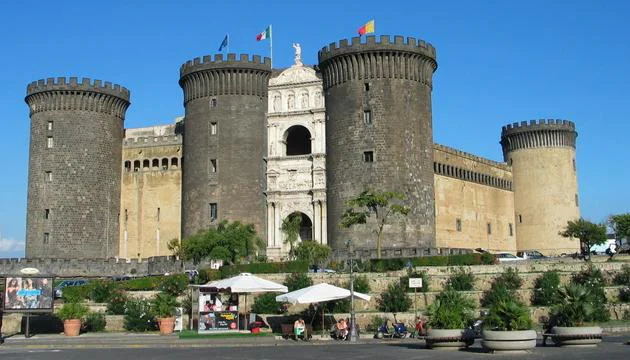
Naples · 3 km
Maschio Angioino
Content & sources
Photo: IgnisFatuus · CC BY-SA 2.5
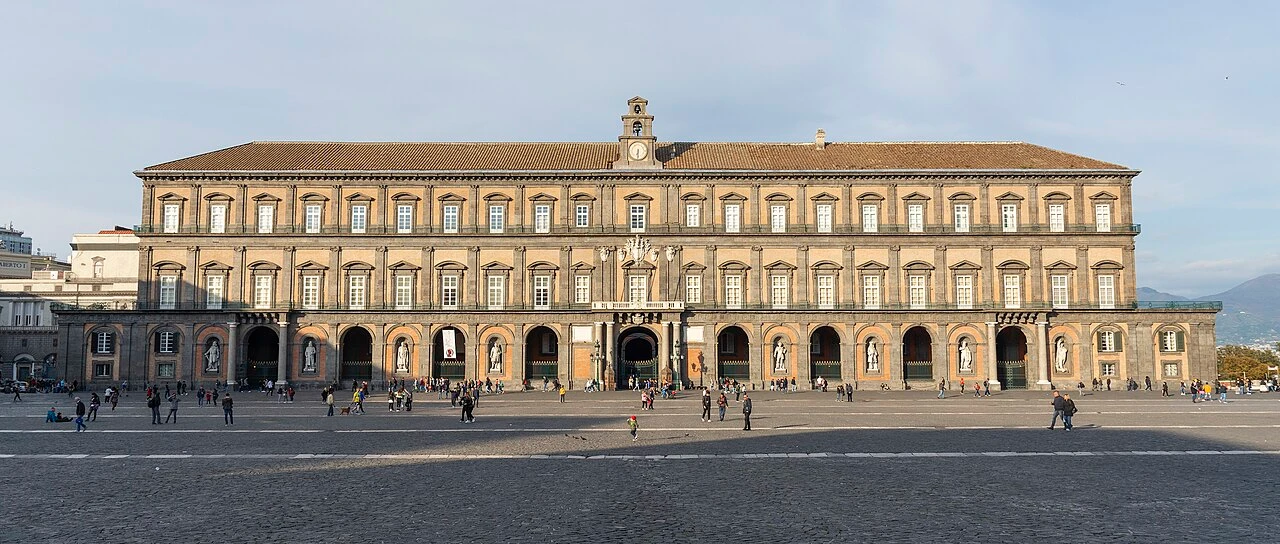
Naples · 3 km
Royal Palace of Naples
Content & sources
Photo: Sordelli · CC BY-SA 3.0
Art museums
More art museum audio guides
Naples · 126 artworks
Museo archeologico nazionale di Napoli
Content & sources
Mister No · CC BY 3.0
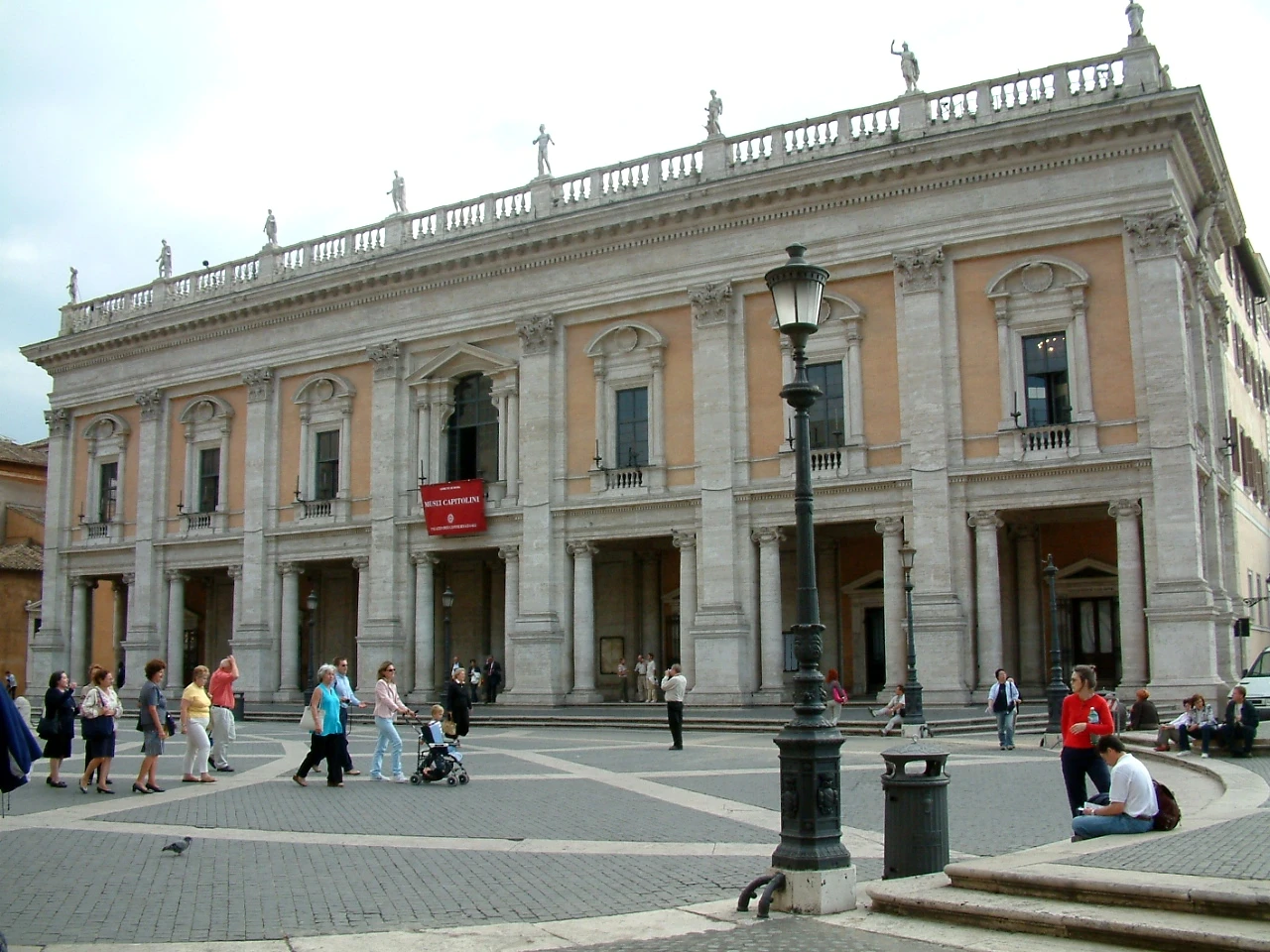
Rome · 55 artworks
Capitoline Museums
Content & sources
Photo: Radomil · CC BY-SA 3.0
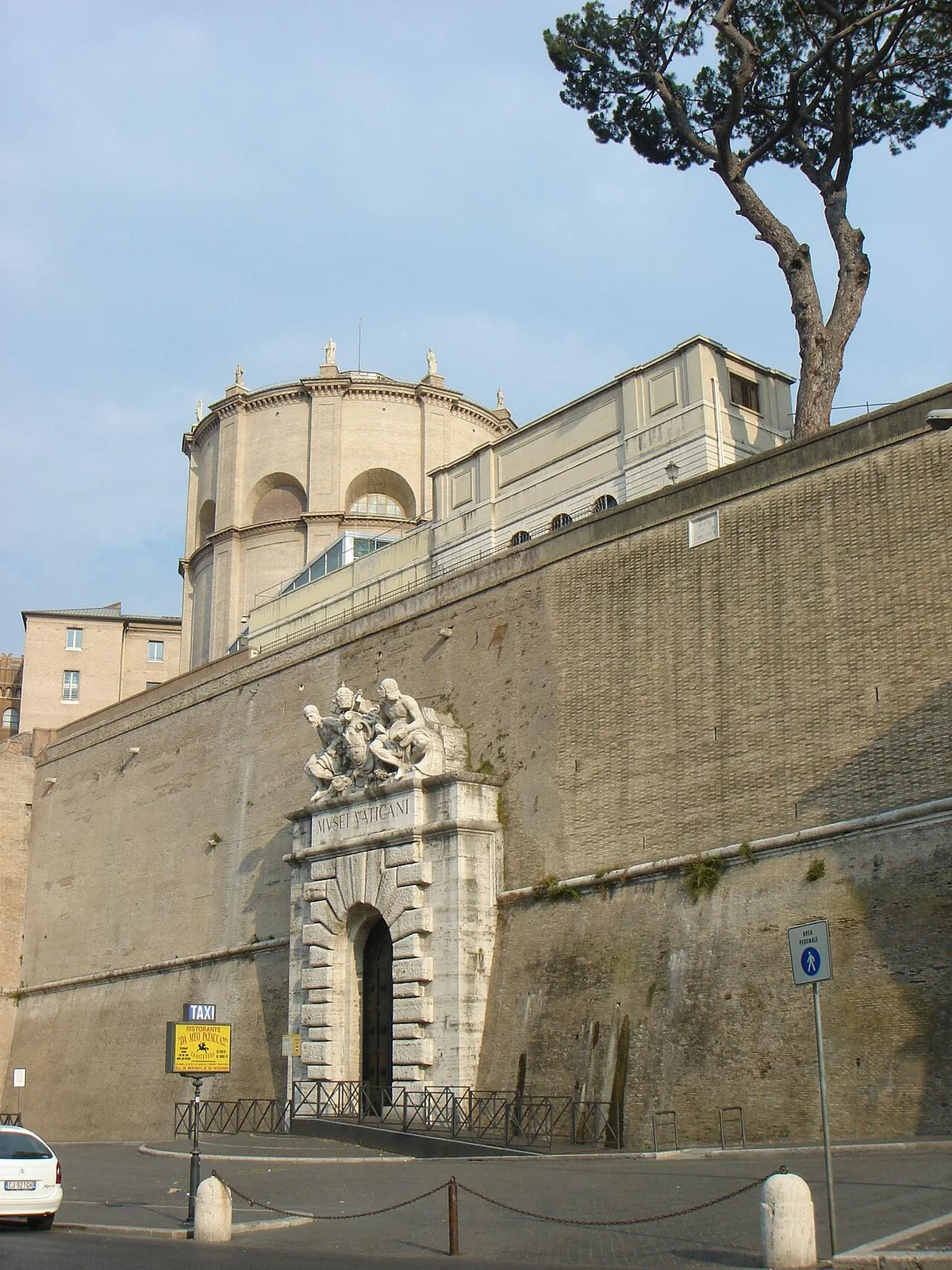
187 artworks
Vatican Museums
Content & sources
user:Lalupa · CC BY-SA 3.0
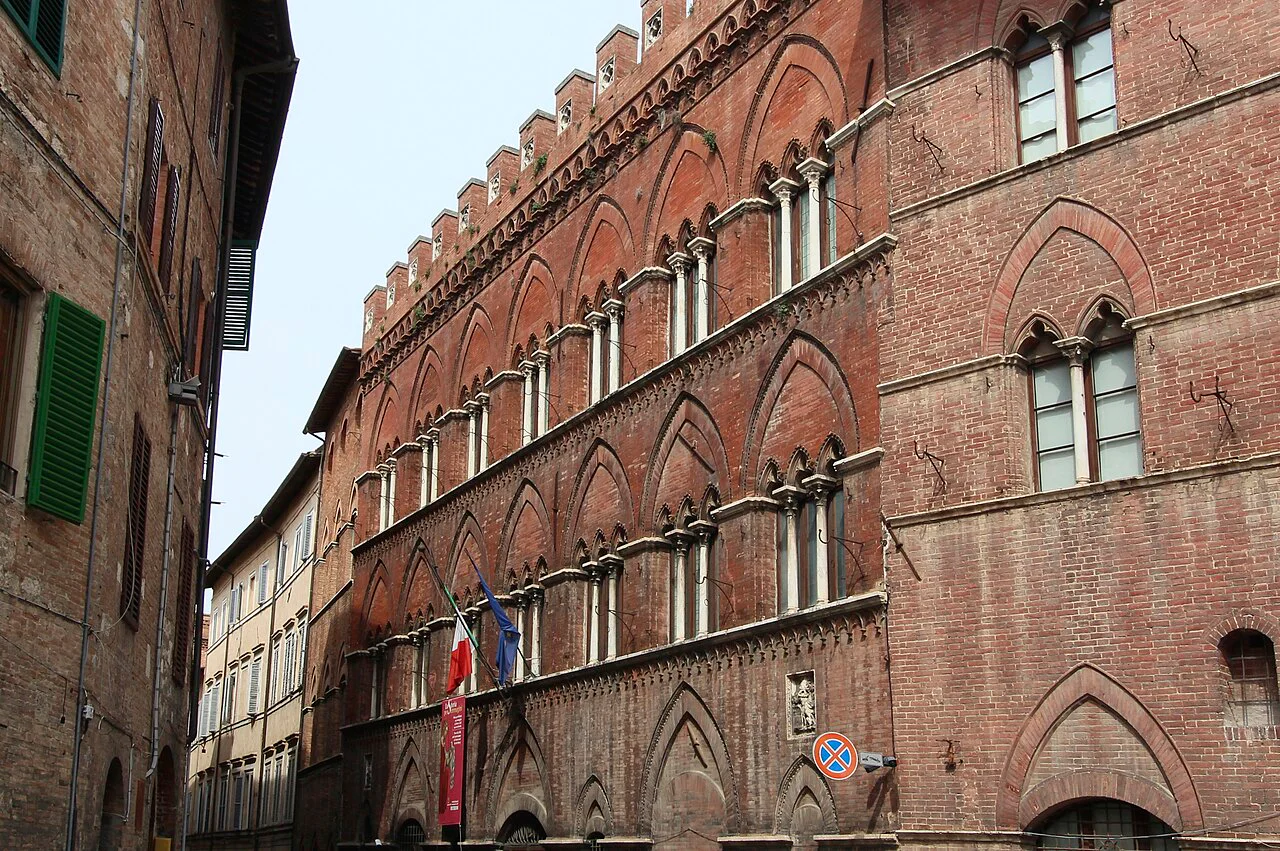
Siena · 37 artworks
Pinacoteca nazionale
Content & sources
Photo: LigaDue · CC BY-SA 4.0
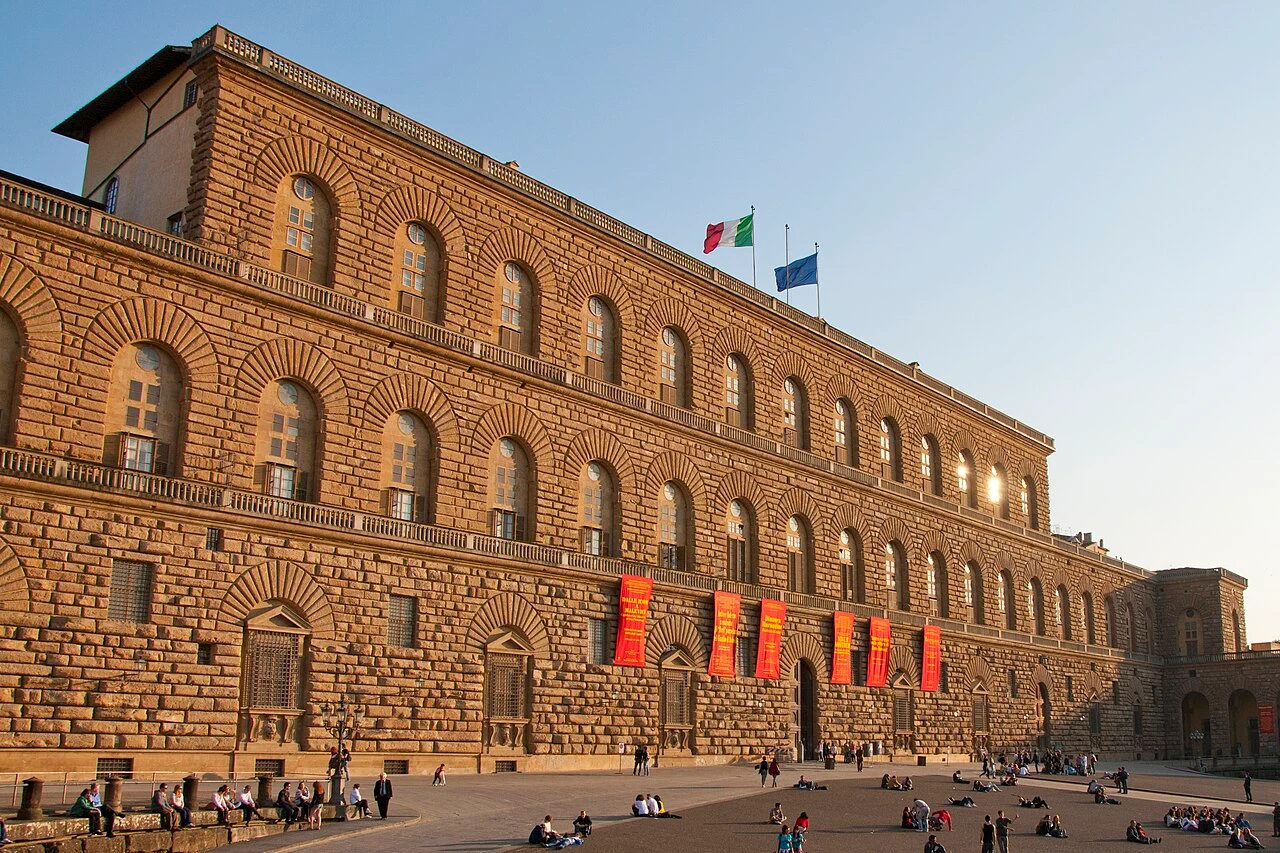
Florence · 167 artworks
Palazzo Pitti
Content & sources
Almaak · CC BY-SA 3.0
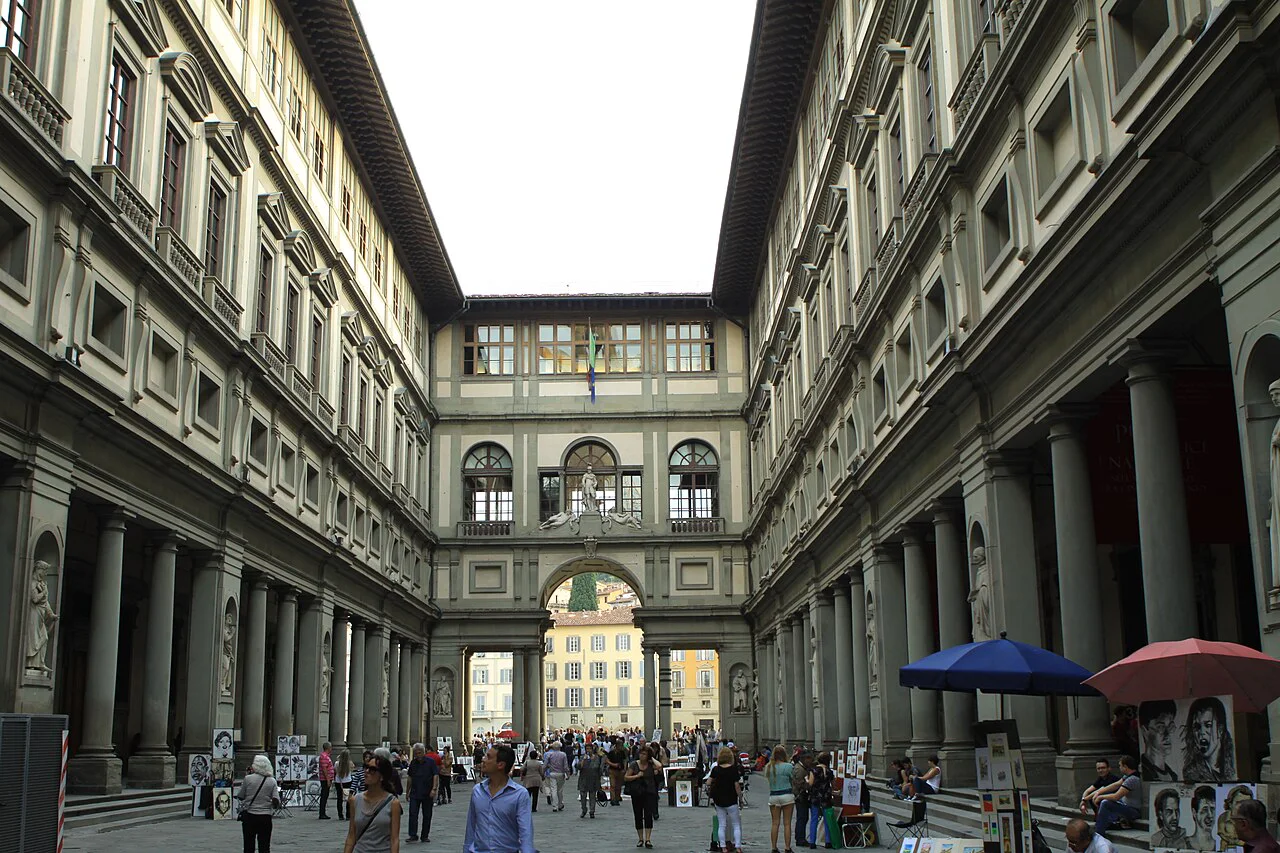
Florence · 497 artworks
Uffizi Gallery
Content & sources
Arek N. · CC BY-SA 3.0