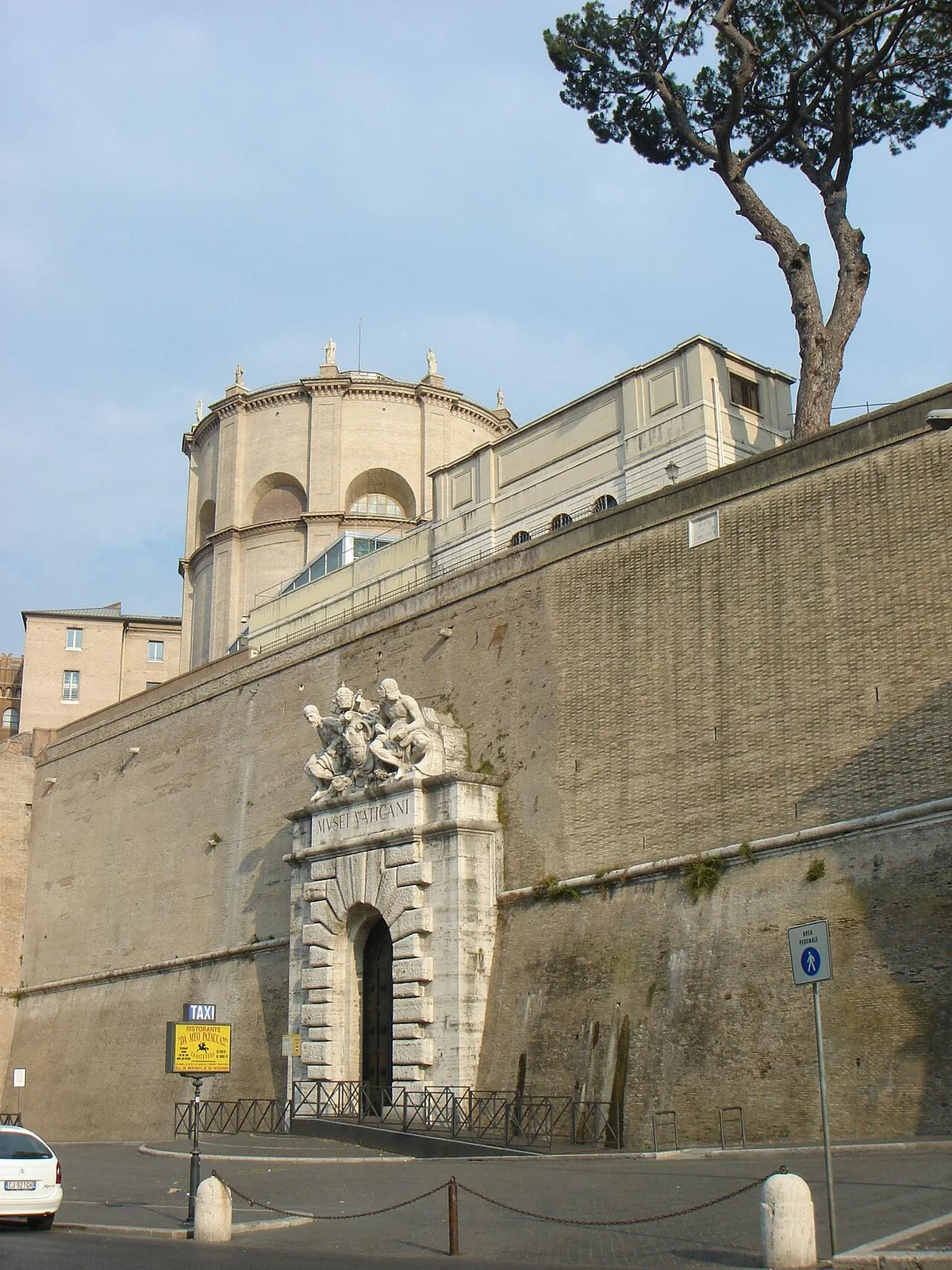
Stanza · Audio guide
Vatican Museums Audio Guide
A place to remember. A story to take with you.
The Vatican Museums are the public museums of the Vatican City. They display works from the immense collection amassed by the Catholic Church and the papacy, including several of the best-known Roman…
Download Stanza, then search for “Vatican Museums”.
About the tour
One guide. Your kind of visit.
The Vatican Museums are the public museums of the Vatican City. They display works from the immense collection amassed by the Catholic Church and the papacy, including several of the best-known Roman sculptures and masterpieces of Renaissance art.
The Vatican Museums guide tells the stories of 187 artworks, including The School of Athens (Raphael), The Creation of Adam (Michelangelo), Transfiguration (Raphael), Saint Jerome in the Wilderness (Leonardo da Vinci), The Entombment of Christ (Caravaggio), Laocoön and His Sons (Polydoros, Agesander of Rhodes, Athanadoros), The Last Judgment (Michelangelo), and Apollo Belvedere (Leochares). Every artwork is free to hear in the Stanza app until 1 January.
Ready when you are.
- 01Get the free Stanza app.
iOS & Android
- 02Find your guide.
“Vatican Museums”
- 03Download before you go.
Works offline
Audio guide / 187 artworks
Inside the guide
Get to know a few of the stories before you go. Open a stop to read more.
01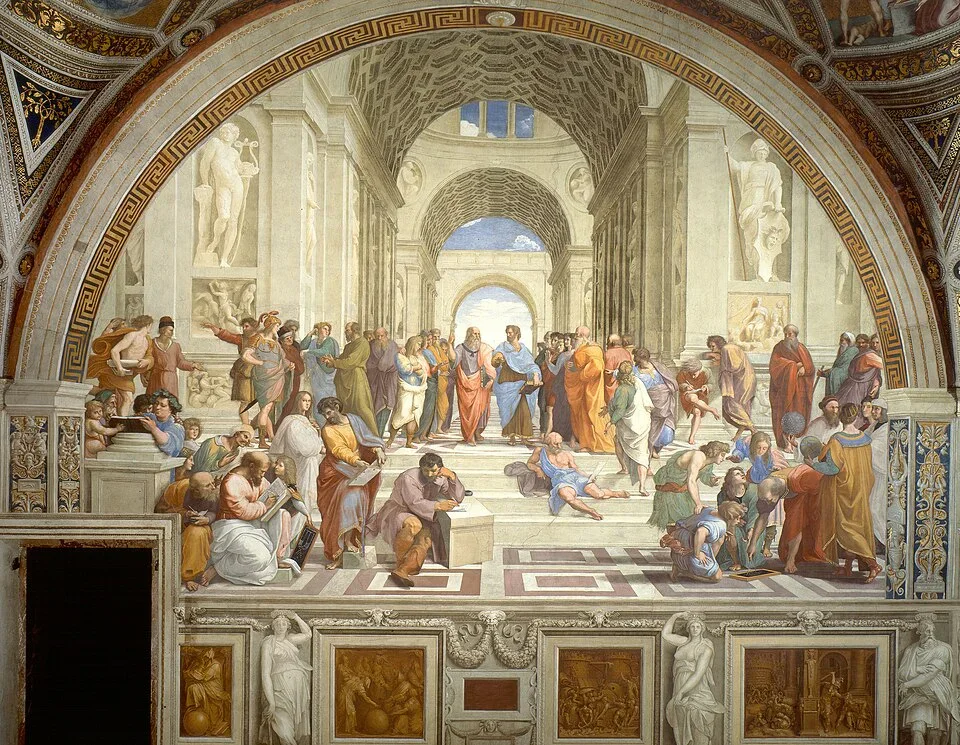
The School of Athens
Here a man lies carefree across the steps. That is Diogenes, who despised wealth and comfort. Now the two men at the center. Plato points upward, toward the heavens. Aristotle stretches his hand straight out, level with the ground. One thought reaching to heaven, the other to the visible world. Pope Julius the Second gave Raphael, a young painter from Urbino, the job of decorating this room. And then there is Heraclitus, who is believed to be a portrait of Michelangelo. The plaster shows he was painted after all the others. Raphael perhaps added him in 1511, after the Sistine ceiling was partly uncovered. A nod from one painter to another. Beside Ptolemy, Raphael painted himself, joining the company of the greatest minds there ever were.
Listen in the appRaphael · Public domain
02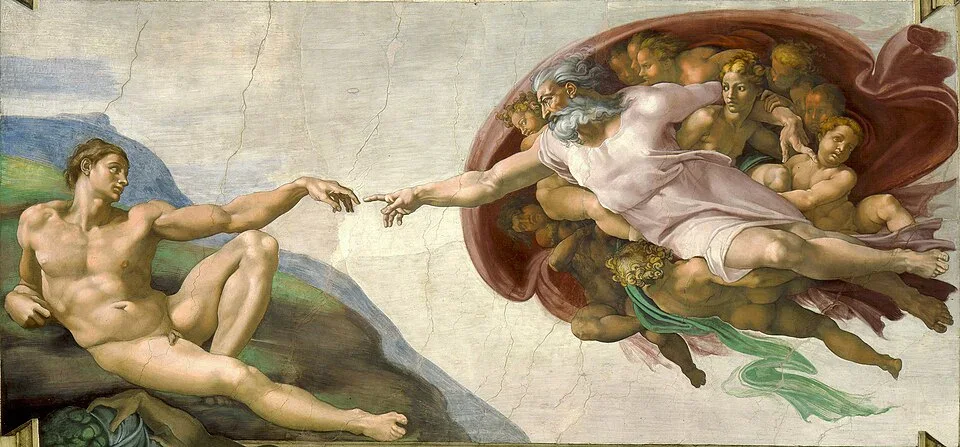
The Creation of Adam
Adam is already made, but he is not alive yet. He lies on a grassy slope at the lower left, his body finished, his arm reaching out. God sweeps toward him through the air, wrapped in a cloak that swells around him, carried by a whole crowd of figures straining to hold him up. God stretches out his right hand, and his index finger comes within a small gap of Adam's. That gap is the painting. The spark of life has not crossed it yet. Michelangelo was a sculptor, and he did not think of himself as a painter at all. Pope Julius the Second gave him this ceiling to paint, and he spent four years up there. Adam's reaching arm mirrors God's own, a reminder that God made humankind in his image. But the two fingers do not touch, and the life is still on its way to Adam.
Listen in the appMichelangelo · Public domain
03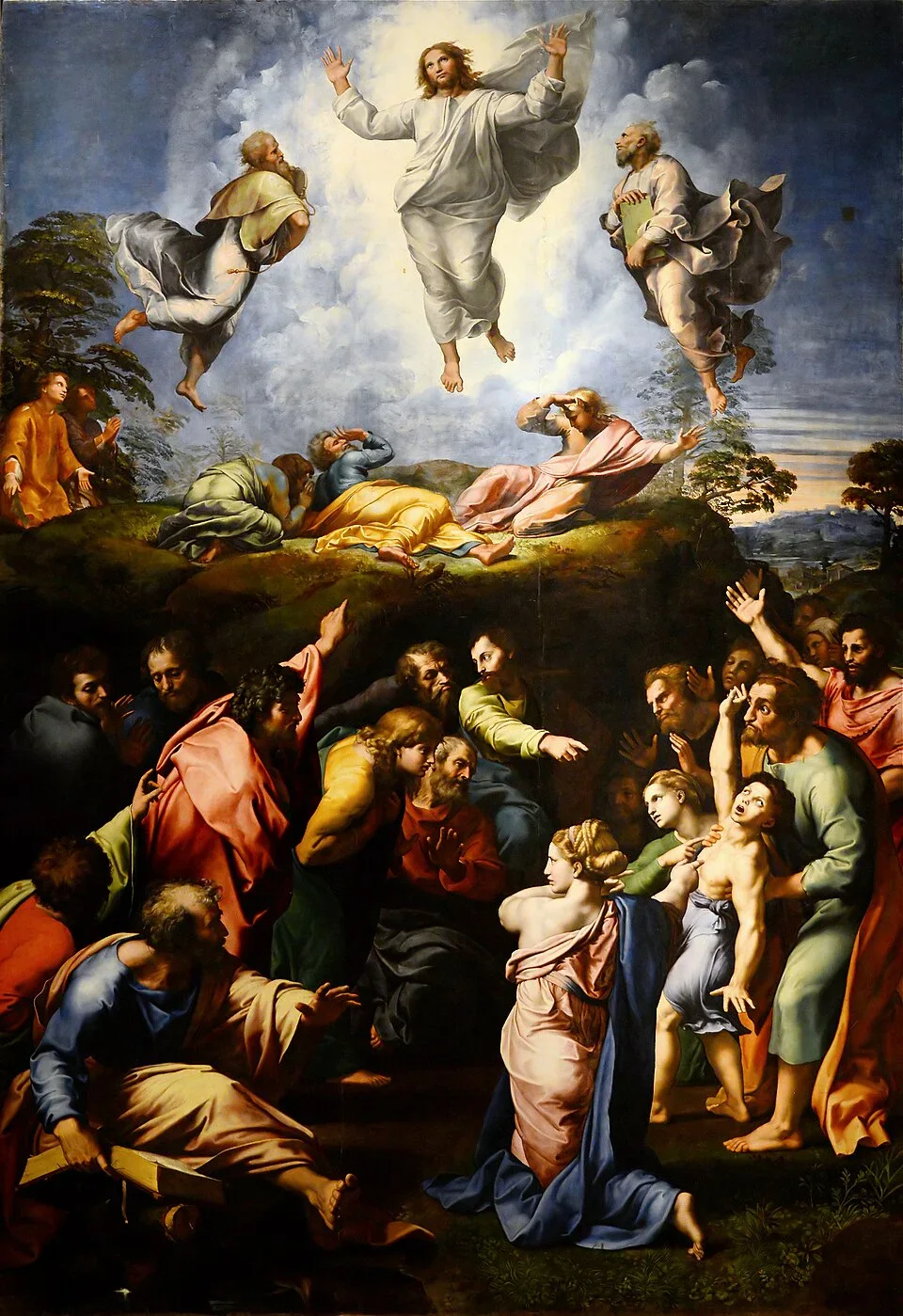
Transfiguration
Two paintings, it seems, stacked in one frame. Up top, Christ floats in light with his arms lifted, and Moses and Elijah beside him. Below, a crowd churns in harsh light and deep shadow around a boy whose eyes twist sideways. It looks like two different pictures. It is one story. Both scenes come from the same chapter of Matthew, the moment Christ comes down from the mountain and heals a possessed boy. Raphael had not planned it that way. Cardinal Giulio de' Medici ordered this altarpiece for the cathedral of Narbonne in France, and at the same time gave a rival, Sebastiano del Piombo, a Raising of Lazarus with drawings by Michelangelo. Once Raphael had seen the rival canvas, he went back to his own panel and added the second scene and nineteen figures, working flat out to beat it. He lost the race to death. He died in April 1520 with the painting still unfinished, and for a couple of days it stood at the head of his bier. Some see the boy below as already healed.
Listen in the appRaphael · CC BY-SA 4.0
04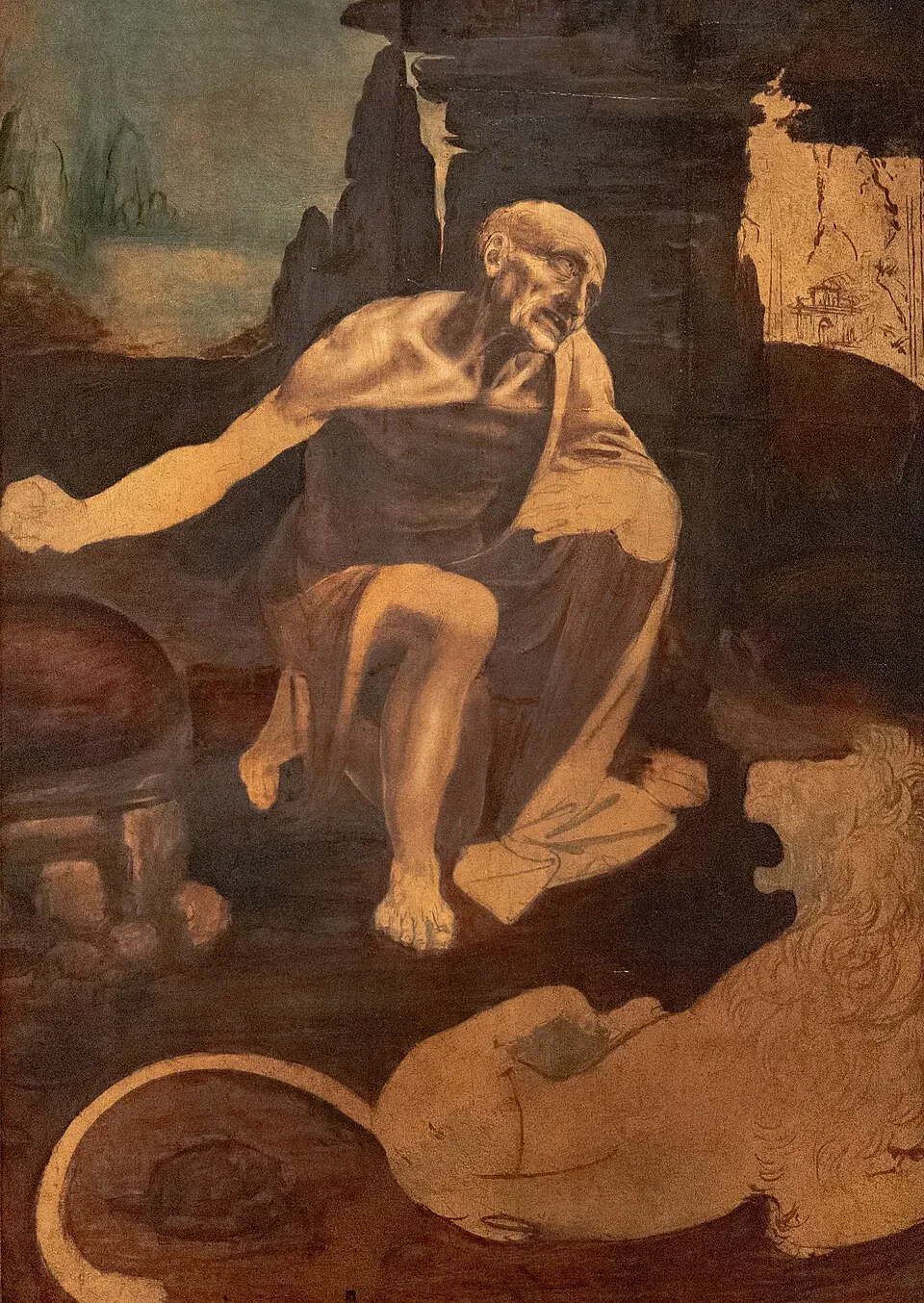
Saint Jerome in the Wilderness
Leonardo never finished this painting, and that is not even the worst thing that happened to it. At some point a Roman art dealer took a saw to the panel. He cut it into five pieces, because he believed the head, the most finished part, would sell for more on its own. Cardinal Fesch, the uncle of Napoleon, bought the head. Later, in a shop in Rome, he came across a panel in the same style with a hole where the head should have been. He rushed home, fetched the head, and the two fitted exactly. Notice what came back together. Jerome kneels on bare rocks, a stone in his right hand to strike his chest. He had withdrawn to the Syrian desert as a hermit, punishing his body in prayer. At his feet lies the lion, his loyal companion since he pulled a thorn from its paw, its body curling across the whole bottom of the panel. Faintly sketched at the far right, a crucifix. The paint stops long before the picture was done. His fingerprints remain in it.
Listen in the appGleb Simonov · CC0
05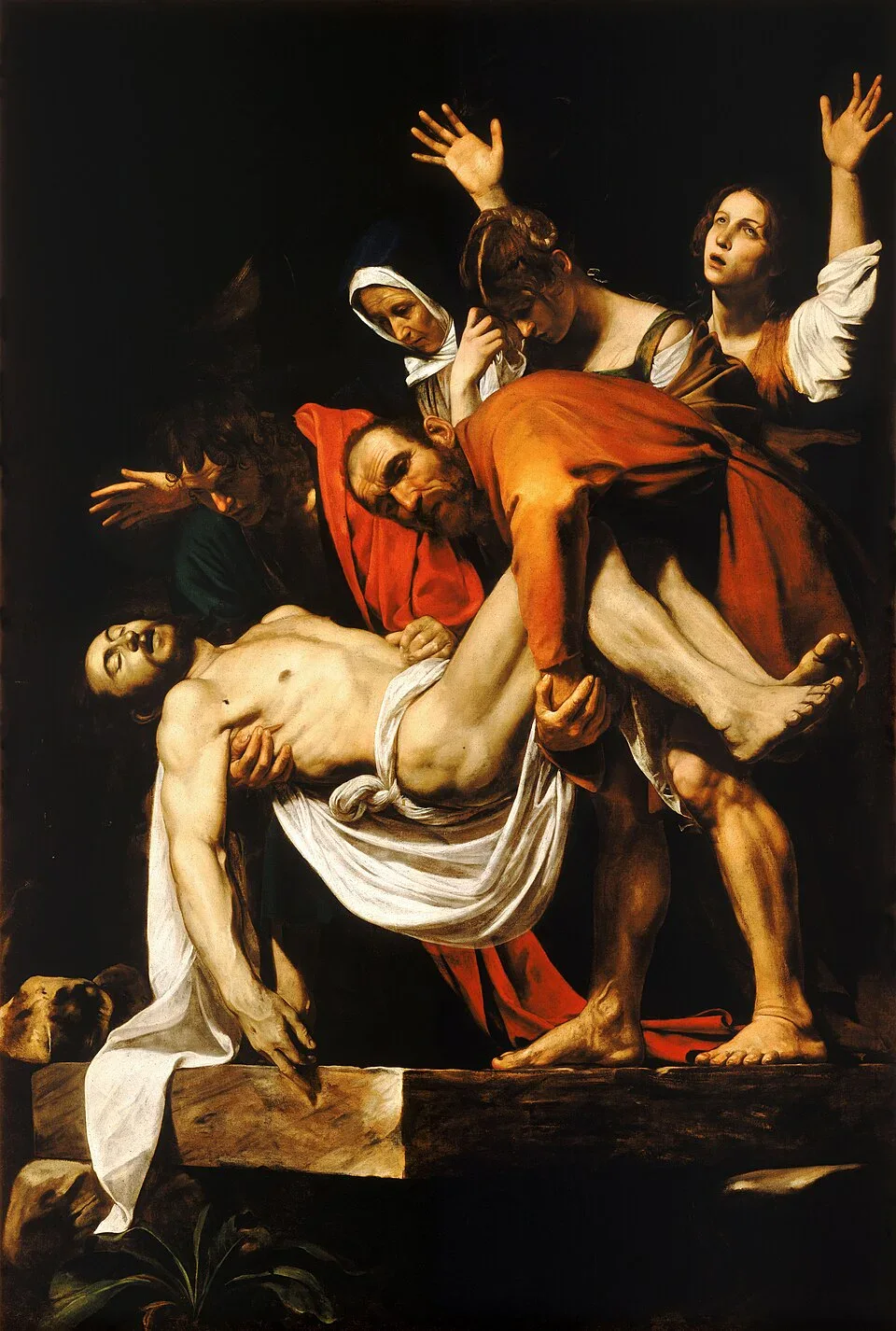
The Entombment of Christ
Two men are carrying a dead body toward a flat stone slab. One of them is young, in a red cloak, taking the shoulders. As he lowers his arm, his hand slips into the wound in the dead man's side. The other man grips the knees, his feet planted at the edge of the stone. And that second man has the face of Michelangelo. Caravaggio took it from Michelangelo's own self portrait, and moved it into this picture. Behind the two men stand three women. One throws her arms up toward heaven. One dries her tears with a handkerchief. And the Virgin, whom tradition always kept young, is painted as an old woman, her hand hovering above her son's head as if about to touch him. This looks like a burial. But nobody is lowering anything into a tomb. The flat stone may be the Stone of Unction, the slab in Jerusalem where Christ's body was anointed for burial. The painting hung over an altar in Rome's Chiesa Nuova, so at every Mass the priest raised the consecrated host above this dead body. In 1797 the French carried it off to Paris, the only Caravaggio seized from the churches of Rome, and it came home to the Vatican in 1816.
Listen in the appCaravaggio · Public domain
06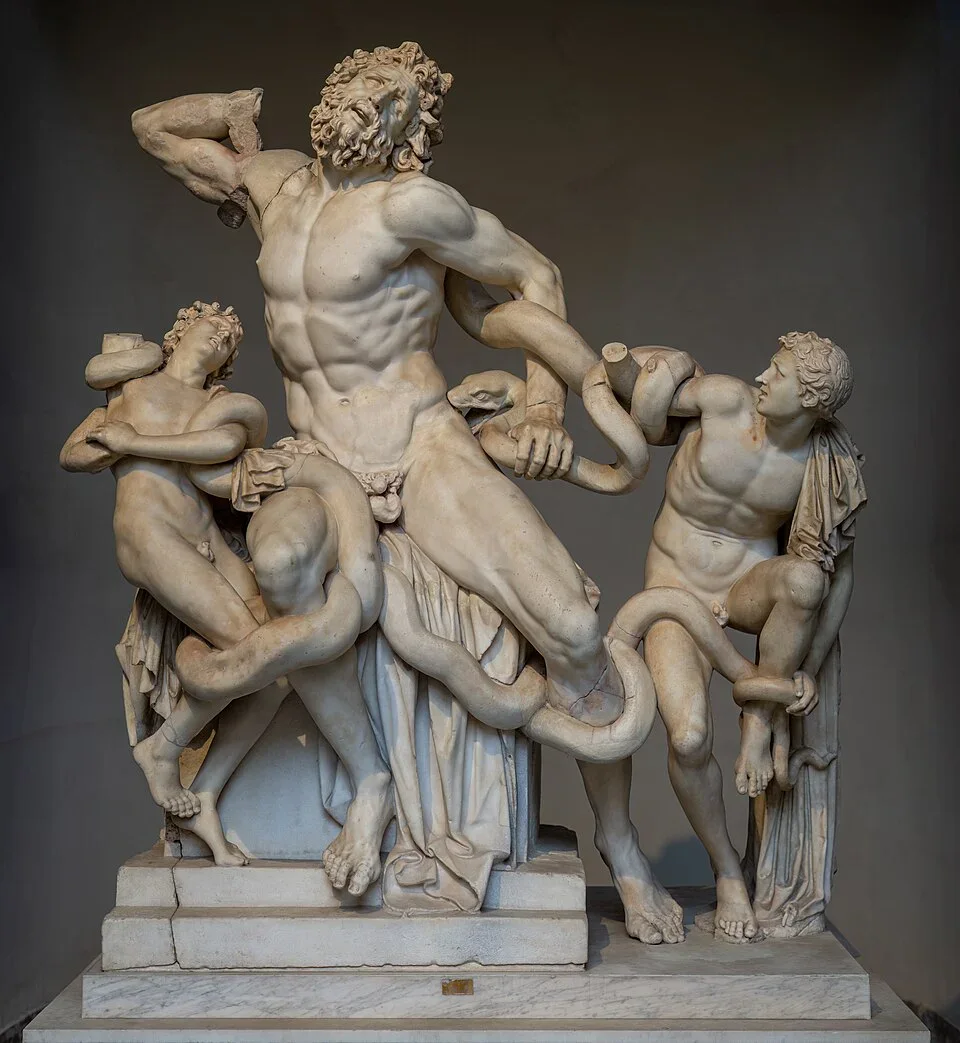
Laocoön and His Sons
No one can say for certain whether this is an original or a marble copy of an older bronze. Its date is argued over too, across two whole centuries. What is certain is the fight in front of you. A Trojan priest and his two sons, caught in the coils of sea serpents, every part of the father's body straining. This group came out of the ground in Rome in 1506, dug up in a vineyard. Michelangelo went to see it lifted from the earth. It was famous already, because the Roman writer Pliny had praised a statue like this one in the palace of Emperor Titus. But when it was found, the father and the younger son had both lost their right arms. For years people argued about the missing one. Clues pointed to an arm bent back behind the shoulder. The restorers chose the opposite, an arm flung wide in a heroic gesture, and rebuilt it that way. Even much later, when the truth was known, the scholar Winckelmann still wanted the outstretched arm kept. So the pose you see may not be the one the old sculptors carved. Pliny named three sculptors, all from Rhodes, as its makers. And in one Greek telling of the story, the older son escapes. The way the figures are arranged seems to leave that possibility open.
Listen in the appPhoto: Wilfredor · CC0
07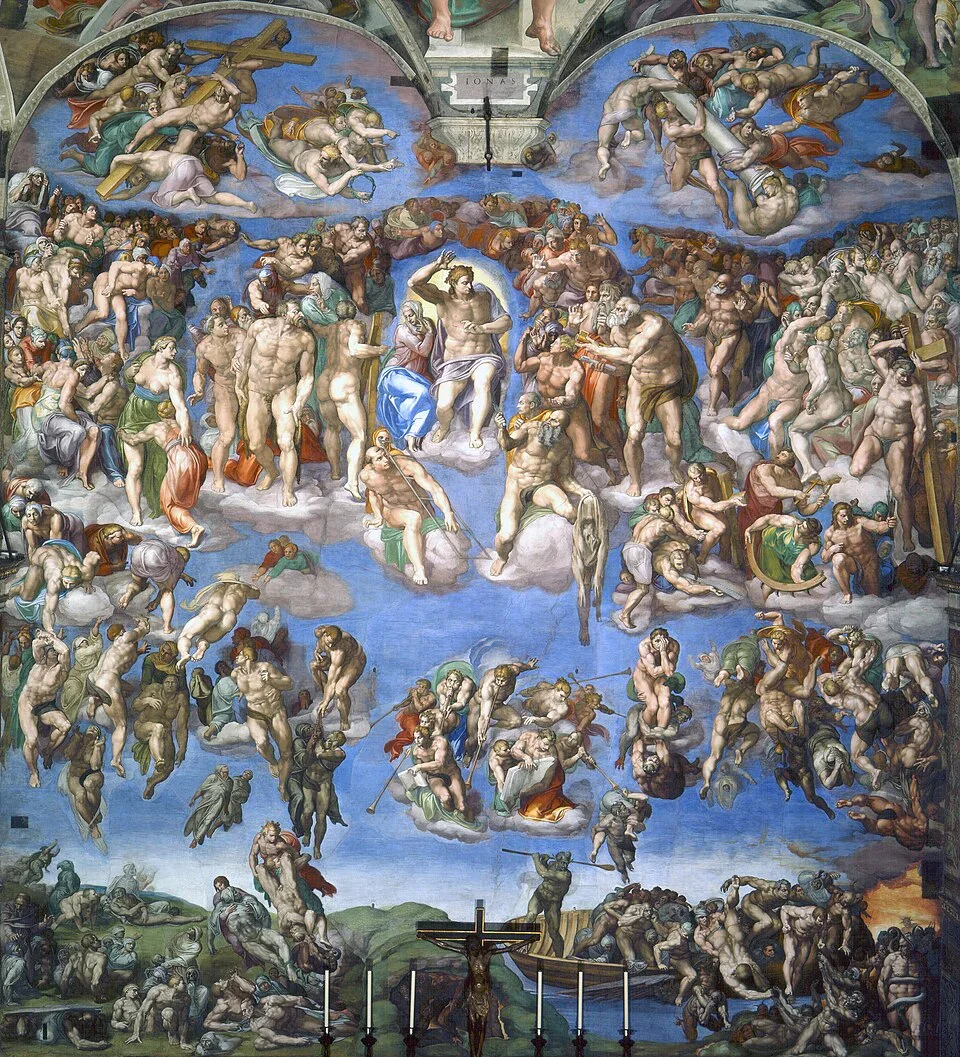
The Last Judgment
Over three hundred bodies fill this wall, and nearly every man among them is naked. That was the scandal. A papal court official named Biagio da Cesena kept complaining to the pope that flesh like this had no place in a chapel. Michelangelo's answer is painted into the wall. Minos, the judge who admits the damned into Hell, carries Biagio's face. Christ is at the centre, right hand raised, and the whole wall turns around him. The damned sink toward the boat of Charon, the ferryman of Hell. On the other side, the saved climb out of their graves and upward. Saints press close to Christ, holding out the tools of their deaths. Saint Lawrence carries his gridiron, Saint Sebastian his arrows. Saint Bartholomew holds his own flayed skin, and the face on it is usually taken to be Michelangelo himself. He was nearly sixty-seven when he finished, a quarter of a century after painting the ceiling above you. Whether the saints offering their wounds are calling for punishment or pleading for mercy, nobody can say.
Listen in the appMichelangelo · Public domain
08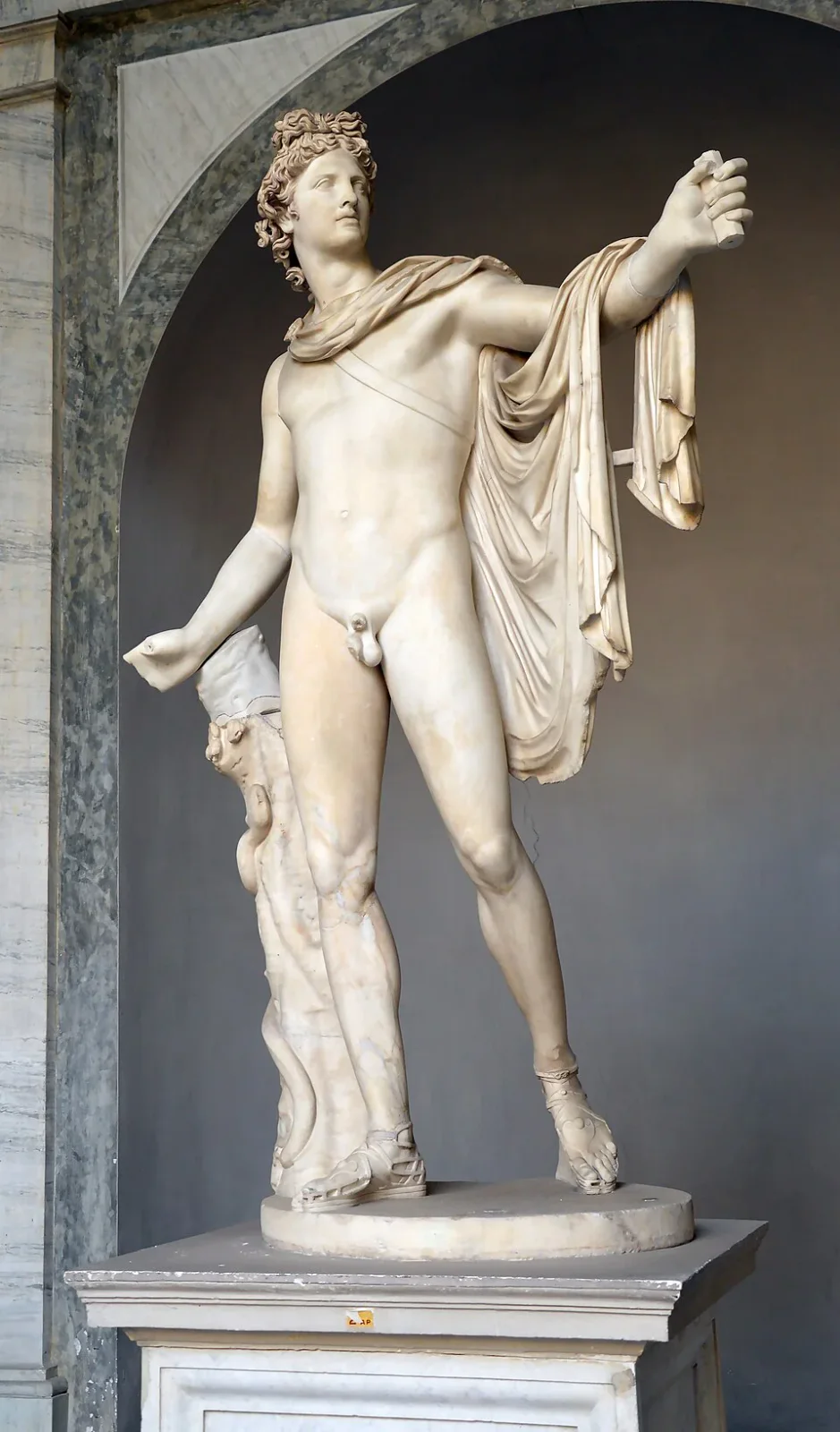
Apollo Belvedere
The left hand of this god is not the hand the Greeks made. When the statue was dug up in Italy at the end of the fifteenth century, that hand was missing, along with the lower part of the right arm. A sculptor named Giovanni Angelo Montorsoli, a pupil of Michelangelo, built replacements in the early 1530s, and they stayed in place for nearly five hundred years. But the original left hand survived, in plaster. The Romans cast it long ago, and fragments of that cast turned up in the 1950s among the ruins of an imperial palace at Baia. In 2024, after a five year restoration, Montorsoli's hand came off, and a new one, copied from those fragments, went on. The god himself is thought to be a Roman marble copy of a bronze by the Greek Leochares, made between 330 and 320 BC. He has just loosed an arrow, perhaps at the serpent Python, his muscles still tight from the shot. Nearly five hundred years undone.
Listen in the appPhoto: Livioandronico2013 · CC BY-SA 4.0
09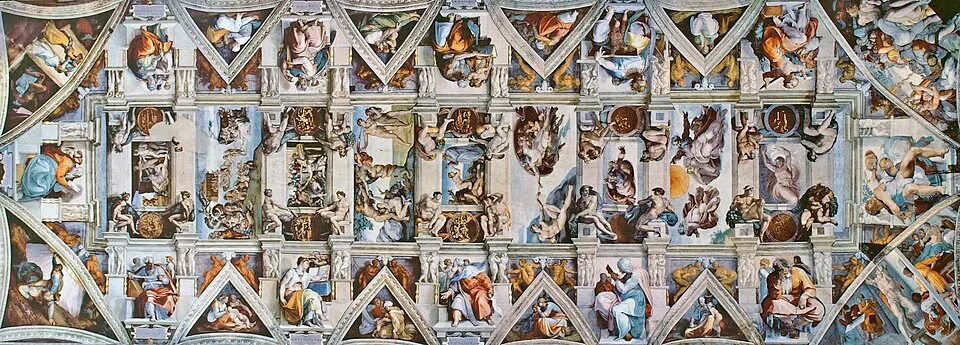
Sistine Chapel ceiling
This whole ceiling was painted by a man who insisted he was not a painter. Michelangelo thought of himself as a sculptor, and when Pope Julius the Second ordered him to paint this vault, he suggested handing the job to a rival instead. The pope would not hear of it. In the end they signed a contract in 1508, and Michelangelo, working high up on a scaffold, spent four years up there. The pope's first idea was modest, twelve figures of the Apostles. Michelangelo bargained for something far bigger, until the pope let him, in his own words, do as he liked. While he painted, he read and reread the Old Testament, and took his scenes straight from scripture rather than from tradition. That is why the nine panels above you follow Genesis, from the Creation down to Noah. He looked for assistants who knew fresco, but he could not find suitable ones, so he did the whole thing himself, over three hundred figures, painted alone. When it was shown to the public on All Saints Day in 1512, he was thirty seven, and people called him the divine. He began at the far west end, with Noah, and worked backwards through the story.
Listen in the appMichelangelo · CC BY-SA 3.0
10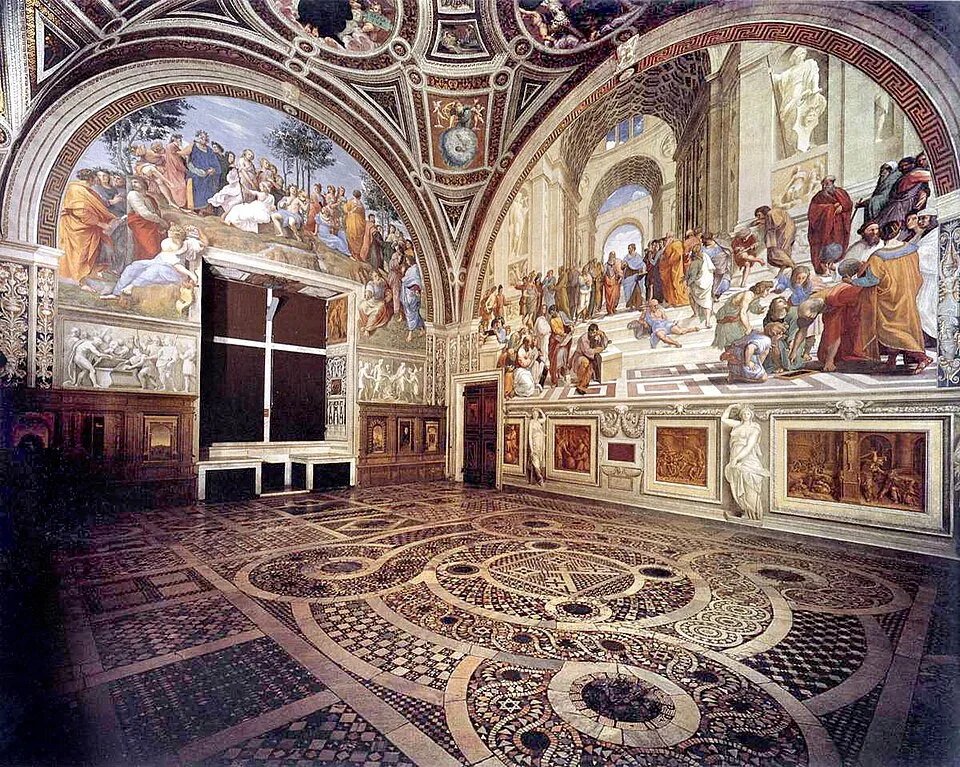
Raphael Rooms
A pope is climbing past rooms he refuses to live in. Pope Julius the Second would not use the apartment of his predecessor, Alexander the Sixth. He explained why. He did not want to see the image of Alexander at every hour of the day. So Julius took rooms one floor above, looking over the Belvedere Courtyard, and set about making them entirely his own. The walls up here already carried frescoes by good painters, Piero della Francesca among them. Julius had nearly all of it destroyed. Around 1508 he brought in a young artist from Urbino, Raphael, and gave him the whole job. Raphael worked through the rooms until he died in 1520, and his assistants finished the last one for him. When the French later took Rome, they planned to peel the frescoes off the walls and ship them to Paris. The attempts failed. They are still on the walls around you.
Listen in the appLure · Public domain
- 11
Oddi Altarpiece
Raphael · 1502–1504
- 12
Disputation of the Holy Sacrament
Raphael · 1509–1511
- 13
Madonna of Foligno
Raphael · 1511–1512
- 14
Column of Antoninus Pius
Unknown Artist · 161–162
- 15
The Crucifixion of Saint Peter
Michelangelo · 1545–1550
- 16
Augustus of Prima Porta
Unknown Artist · -19
- 17
The Fire in the Borgo
Raphael · 1514–1517
- 18
Belvedere Torso
Apollonius of Athens
- 19
Cardinal and Theological Virtues
Raphael · 1511
- 20
The Meeting of Leo the Great and Attila
Raphael · 1513–1514
- 21
The Parnassus
Raphael · 1509–1511
- 22
The Expulsion of Heliodorus from the Temple
Raphael · 1511–1512
- 23
The Mass at Bolsena
Raphael · 1512–1514
- 24
The Crossing of the Red Sea
Cosimo Rosselli, Biagio d'Antonio, Domenico Ghirlandaio · 1481–1482
- 25
The Battle of the Milvian Bridge
Giulio Romano · 1520–1524
- 26
Liberation of Saint Peter
Raphael · c. 1513–1514
- 27
Aldobrandini Wedding
Unknown Artist · -50
- 28
Sarcophagus of Junius Bassus
Unknown Artist · 350
- 29
The Baptism of Constantine
Raphael, Gianfrancesco Penni, Giulio Romano · 1517–1524
- 30
Hermes Belvedere
Unknown Artist · early 2nd century AD
- 31
The Battle of Ostia
Raphael · 1514
- 32
Stefaneschi Triptych
Giotto · c. 1320
- 33
Dogmatic Sarcophagus
Unknown Artist · 320
- 34
Mars of Todi
Unknown Artist · -500
- 35
The Martyrdom of Saint Erasmus
Nicolas Poussin · 1628–1629
- 36
Last Supper
Cosimo Rosselli, Biagio d'Antonio · 1481–1482
- 37
Meleager of Skopas
Copy after Skopas (?) · 2nd century
- 38
Communion of Saint Jerome
Domenichino · 1614
- 39
San Francesco al Prato Resurrection
Pietro Perugino · 1499–1501
- 40
Prophet Jeremiah
Michelangelo · 1510–1512
- 41
Barberini Hera
Unknown Artist
- 42
The Coronation of Charlemagne
Raphael · 1516–1517
- 43
The Vision of the Cross
Raphael · 1520–1524
- 44
Prophet Jonah
Michelangelo · 1508–1512
- 45
Prophet Isaiah
Michelangelo · c. 1508–1511
- 46
Charity with Four Children
Gian Lorenzo Bernini · 1627
- 47
Gradiva
Powell, Benjamin
- 48
Athena and Marsyas
Myron · c. 450 BC
- 49
The Oath of Leo III
Raphael · 1516–1517
- 50
Inscription of Abercius
Unknown Artist · 2nd century
- 51
The Donation of Constantine
Gianfrancesco Penni · 1520–1524
- 52
Decemviri Altarpiece
Pietro Perugino · 1495–1496
- 53
Prophet Daniel
Michelangelo · 1511–1512
- 54
Prophet Joel
Michelangelo · 1508
- 55
Saint Matthew and the Angel
Guido Reni · 1635–1640
- 56
The Creation of Eve
Michelangelo · 1509–1512
- 57
The Fall and Expulsion from Paradise
Michelangelo · c. 1510
- 58
Separation of Light from Darkness
Michelangelo · 1512
- 59
Altarpiece of San Nicolò della Lattuga
Titian · 1522–1526
- 60
Sleeping Ariadne
Unknown Artist · 2nd century BC
- 61
Colonna Venus
Unknown Artist
- 62
Venus Felix
Unknown Artist · 2nd century AD
- 63
Zeus of Otricoli
Unknown Artist · -100
- 64
Acts of the Apostles tapestries
Raphael, Pieter van Aelst · 1515–1519
- 65
Delphic Sibyl
Michelangelo · 1508
- 66
Pinacoteca Vaticana
Unknown Artist · 1932
- 67
Sixtus IV Appointing Platina as Prefect of the Vatican Library
Melozzo da Forlì · 1477
- 68
Rest on the Flight into Egypt
Federico Barocci · 1570
- 69
Marsuppini Coronation
Filippo Lippi · c. 1441–1460
- 70
Pala di San Pietro di Muralto
Carlo Crivelli · 1488–1489
- 71
Stanza di Eliodoro
Raphael · 1511–1514
- 72
Athena Giustiniani
Unknown Artist
- 73
Achim and Eliud
Michelangelo · 1508–1512
- 74
Aminadab
Michelangelo · 1511–1512
- 75
Azor and Zadok
Michelangelo · 1508–1512
- 76
David and Goliath
Michelangelo · 1508–1509
- 77
Eleazar and Matthan
Michelangelo · 1508–1512
- 78
Jacob and Joseph
Michelangelo · 1508–1512
- 79
Josiah, Jeconiah and Shealtiel
Michelangelo · 1508–1512
- 80
Judith and Holofernes
Michelangelo · c. 1508
- 81
Jesse, David and Solomon
Michelangelo · 1511–1512
- 82
Nahshon
Michelangelo · 1511–1512
- 83
Uzziah, Jotham and Ahaz
Michelangelo · 1508–1512
- 84
Sistine Chapel lunettes - Rehoboam, Abijah
Michelangelo · 1511–1512
- 85
Salmon, Boaz, Obed
Michelangelo · 1511–1512
- 86
Cumaean Sibyl
Michelangelo · 1508–1511
- 87
Libyan Sibyl
Michelangelo · 1511–1512
- 88
Sistine Chapel ceiling - Persian Sibyl
Michelangelo · 1511–1512
- 89
Prophet Zechariah
Michelangelo · 1508–1509
- 90
Sarcophagus of Lucius Cornelius Scipio Barbatus
Unknown Artist · 3rd century BC
- 91
Asa, Jehoshaphat and Joram
Michelangelo · 1511–1512
- 92
Hezekiah, Manasseh and Amon
Michelangelo · 1508–1512
- 93
Erythraean Sibyl
Michelangelo · c. 1508–1510
- 94
Griffoni Altar, Predella Panel, Scene: The Miracles of Saint Vincent Ferrer
Ercole de' Roberti · 1473
- 95
Martyrdom of St Processus and St Martinian
Valentin de Boulogne · 1629–1630
- 96
Adam and Eve in the Garden of Eden
Johann Wenzel Peter · 1814
- 97
Antínoo Braschi
Unknown Artist · 101
- 98
Statuette of the Good Shepherd
Unknown Artist
- 99
Justice
Raphael · 1508–1511
- 100
Hope
Raphael · 1507
- 101
Portrait of Caracalla
Unknown Artist · 212
- 102
Adam and Eve
Raphael · 1508–1511
- 103
Apollo and Marsyas
Raphael · 1508–1511
- 104
Philosophy
Raphael · 1508–1511
- 105
Ancestors of Christ
Michelangelo · 1508–1512
- 106
Poetry
Raphael · 1508–1511
- 107
Predella with scenes from Saint Francis
Fra Angelico · 1429
- 108
Astronomy
Raphael · 1508–1511
- 109
Sacrifice of Isaac
Raphael · 1511
- 110
Sala di Constantino
Raphael · 1520–1524
- 111
Theology
Raphael · 1508–1511
- 112
Angels making music
Melozzo da Forlì · 1472–1480
- 113
Santa Grata regge il capo di sant'Alessandro martirizzato
Ponziano Loverini · 1886–1888
- 114
Saint Mary Magdalene and Two Angels
Guercino · c. 1622
- 115
Guercino, Village Fair, circa 1620
Guercino · c. 1615–1618
- 116
Charity
Raphael · 1507
- 117
Faith
Raphael · 1507
- 118
Crucifixion of Saint Peter
Guido Reni · c. 1604–1605
- 119
Apparition of God to Noah
Raphael · 1511
- 120
Judgement of Solomon
Raphael · 1508
- 121
Burning bush
Raphael · 1511
- 122
Jacob's dream of the ladder to heaven
Raphael · 1511
- 123
Conversion of Saint Paul
Raphael, workshop of Pieter van Aelst · 1515–1519
- 124
Stoning of Saint Stephen
Raphael, workshop of Pieter van Aelst · 1515–1519
- 125
Madonna with Child
Carlo Crivelli · 1482
- 126
Saint Paul in Prison
Raphael, workshop of Pieter van Aelst · 1515–1519
- 127
Saint Francis and four posthumous miracles
Giunta Pisano · 1260
- 128
Astronomical Observations
Donato Creti · 1711
- 129
Pietà of Pala di San Pietro di Muralto
Carlo Crivelli · c. 1488–1489
- 130
Portrait of Clement IX (Rospigliosi, 1667-1669)
Carlo Maratta · 1669
- 131
The Vision of St. Helena
Paolo Veronese · c. 1580
- 132
Perseus
Antonio Canova · 1790–1801
- 133
Apoxyomenos Pio-Clementino
Copy after Lysippos · 1st century AD
- 134
bust of Philip the Arab
Unknown Artist · 3rd century AD
- 135
St. Francis Receiving the Stigmata
Federico Barocci · c. 1594–1595
- 136
Madonna with child and four saints
Vittore Crivelli · 1481–1482
- 137
Amazon Mattei
Phidias · -500
- 138
Apollo Citharoedus
Unknown Artist · 2nd century AD
- 139
Interment of Saint Francis
Pseudo Jacopino di Francesco · 1350
- 140
Annunciation
Gentile da Fabriano · c. 1423–1425
- 141
Zerubbabel, Abiud and Eliakim
Michelangelo · 1508–1512
- 142
Ganymede and the eagle
Copy of Leochares · 2nd century AD
- 143
Medallions of the Sistine Chapel
Michelangelo · 1508–1512
- 144
Sistine Chapel ceiling - Bronze nudes
Michelangelo · 1508–1512
- 145
Bust of Philip the Arab
Unknown Artist · 245–249
- 146
Sarcophagus of Constantina
Unknown Artist · 337–354
- 147
Sarcophagus of Helena
Unknown Artist · c. 320
- 148
Unswept Floor
Heracleitus · 120
- 149
Statue of Sophocles (Lateran type)
Unknown Artist · 1st century AD
- 150
Colossal Statue of Claudius
Unknown Artist · 47
- 151
Jan Sobieski at Vienna
Jan Matejko · 1882–1883
- 152
Roman sarcophagus of a reader identified as Plotinus and disciples
Unknown Artist · 260–280
- 153
Hercules of the Theatre of Pompey
Unknown Artist
- 154
Gregorian Museum 030
Unknown Artist
- 155
18th Dynasty, Tuya, mother of Ramesses II from the statue of Tiye, wife of Amenhotep III, circa 1391-1224 BC
Unknown Artist · 1250
- 156
Personification of three Etruscan peoples
Unknown Artist · 80
- 157
Pomerium cippus
Unknown Artist · 49
- 158
Nile
Unknown Artist · 80
- 159
Juno Sospita
Unknown Artist · 200
- 160
Astarita Krater
Unknown Artist · c. 560 BC
- 161
Athletes mosaics from the Baths of Caracalla
Unknown Artist · 210
- 162
Triptych
Antonio da Correggio · 1523–1525
- 163
Sarcophagus of the "Two Brothers"
Unknown Artist · c. 325–350
- 164
Medieval Armenian Khachkar in the Vatican Museum
Unknown Artist · 1246
- 165
Category:Relief, Vatican Museums 9510
Unknown Artist · 2nd century AD
- 166
The Annunciation
Federico Barocci · 1582–1584
- 167
Christ in the Garden of Gethsemane
Giacinto Brandi · c. 1650
- 168
Saint Francis receiving the Stigmata
Fra Angelico · c. 1429
- 169
Saint Benedict
Pietro Perugino · 1495–1498
- 170
Navicella
Francesco Berretta · 1628
- 171
Story of saint Nicholas
Fra Angelico · 1447–1448
- 172
Monteluce Madonna
Raphael, Gianfrancesco Penni, Giulio Romano · 1505–1525
- 173
Lamentation over the Dead Christ
Giovanni Bellini · 1471–1474
- 174
Nativity
Domenico Ghirlandaio · c. 1492
- 175
Annunciation
Mariotto di Nardo · 1395
- 176
The Annunciation
Raphael · 1502–1503
- 177
The Stefaneschi Triptych: Christ Enthroned
Giotto · c. 1330
- 178
Saint Placidus
Pietro Perugino · 1495–1498
- 179
Madonna and Child Enthroned with Nine Angels and Saints Dominic and Catherine of Alexandria
Fra Angelico · c. 1435
- 180
Nativity and The Adoration of the Shepherds
Bartolo di Fredi · c. 1383
- 181
The Annunciation to Joachim
Bartolo di Fredi · c. 1383
- 182
Madonna and Child with Sts Severino and Dominic
Bernardino di Mariotto · 1512
- 183
The Baptism of Christ
Unknown Artist · early 16th century
- 184
The Resurrection of Christ
Unknown Artist · 1675–1700
- 185
Synaxis of All Saints
Unknown Artist · early 17th century
- 186
Angelic Choir of the Nativity
Unknown Artist · mid-16th century
- 187
The Dormition of the Mother of God
Unknown Artist · 1590s
Vatican Museums
Frequently asked questions
How much does the guide cost?
Free app download. Free until 1 January. Listed guide price: $2.99. Audio guide only. Venue admission is separate.
Can I listen without internet?
Yes. Download the guide’s audio, images, and maps in the app before your visit. Your downloaded content is then available offline.
Can I listen in my language?
In English for now. More languages soon.
Do I need to follow a schedule?
No. This is a self-guided experience. Choose your stops, pause whenever you like, and return to a story at your own pace.
Which artworks are in the Vatican Museums audio guide?
187 artworks, including The School of Athens (Raphael), The Creation of Adam (Michelangelo), Transfiguration (Raphael), Saint Jerome in the Wilderness (Leonardo da Vinci), The Entombment of Christ (Caravaggio), Laocoön and His Sons (Polydoros, Agesander of Rhodes, Athanadoros), The Last Judgment (Michelangelo), and Apollo Belvedere (Leochares). The full list is on this page.
Is this the museum’s official audio guide?
No. Stanza is an independent audio guide app and is not affiliated with Vatican Museums. Museum admission is separate.
At your own pace
Explore Vatican Museums.
Download Stanza, then search for “Vatican Museums”.
Free app download · Guide price shown in the app
Keep exploring
Nearby audio guides
1 km
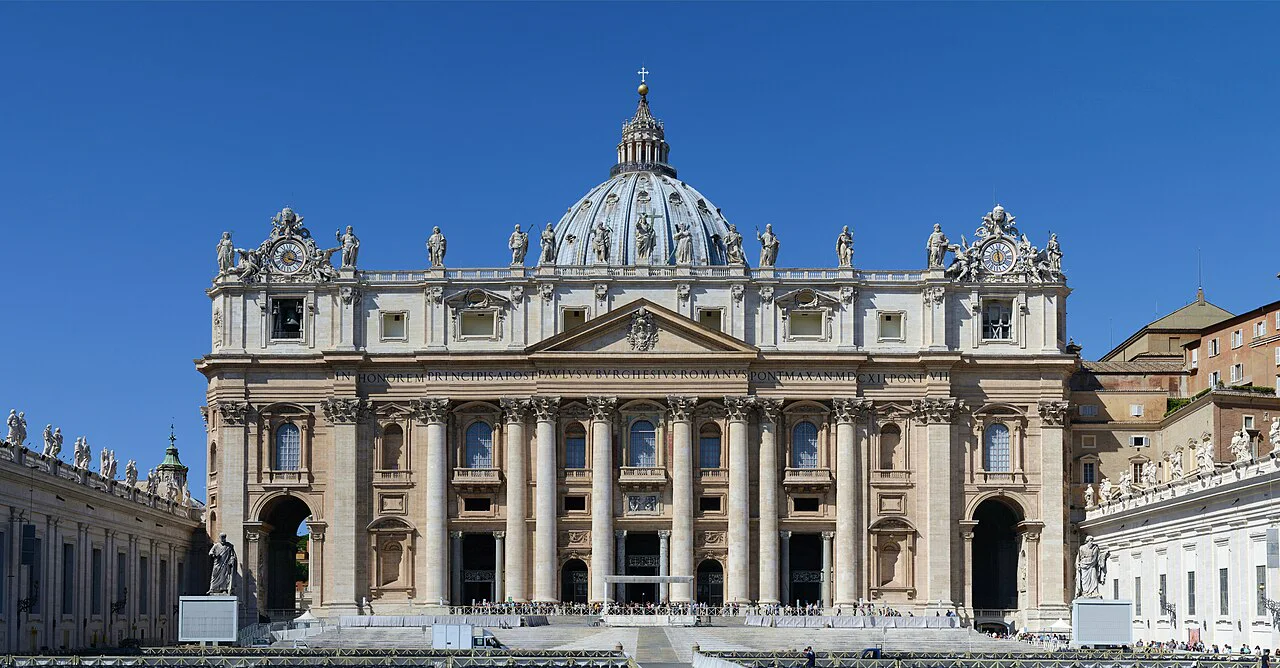
St. Peter's Basilica
Content & sources
Photo: Alvesgaspar · CC BY-SA 4.0
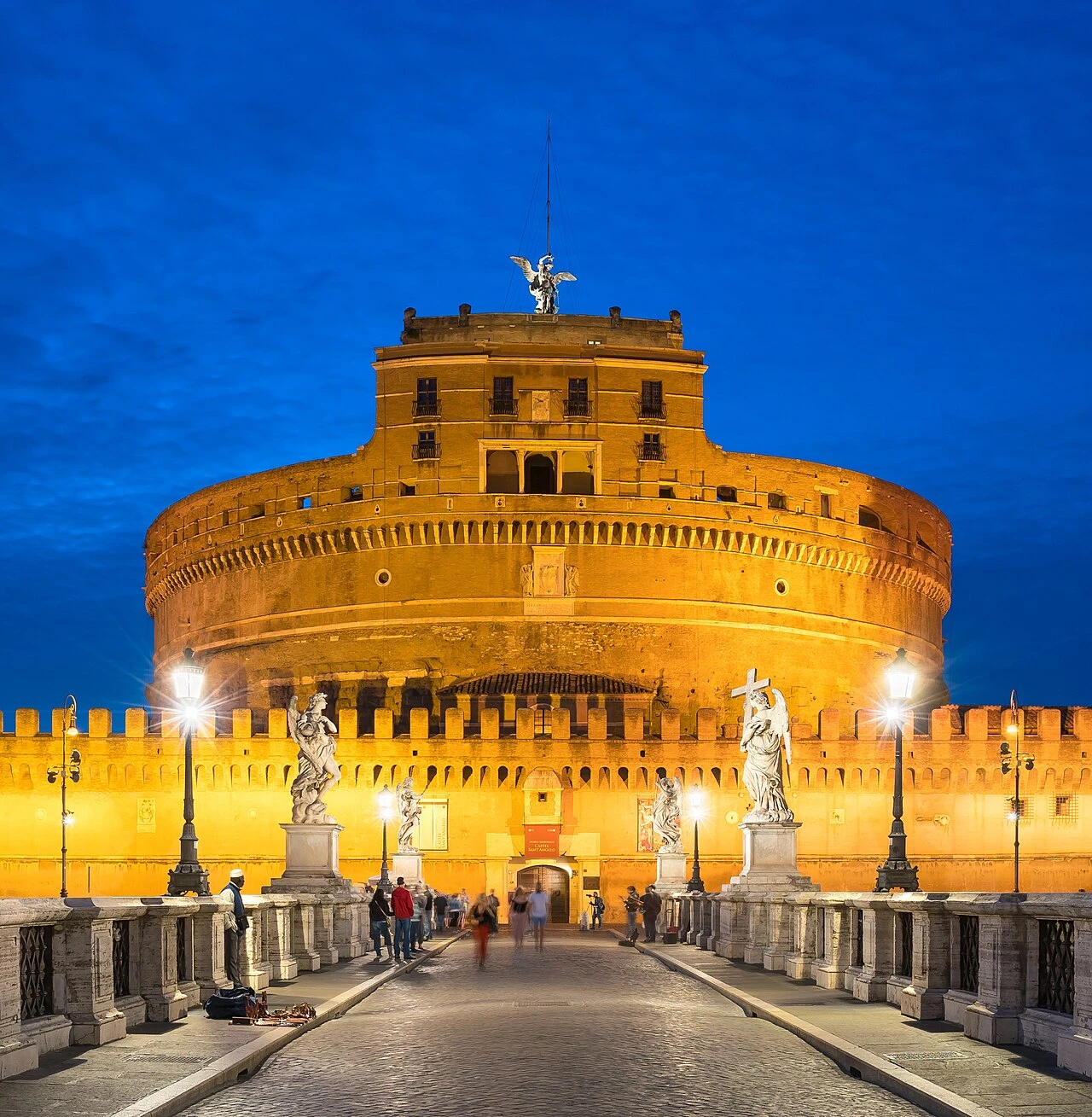
Rome · 1 km
Castel Sant'Angelo
Content & sources
Thomas Wolf, www.foto-tw.de · CC BY-SA 3.0 de
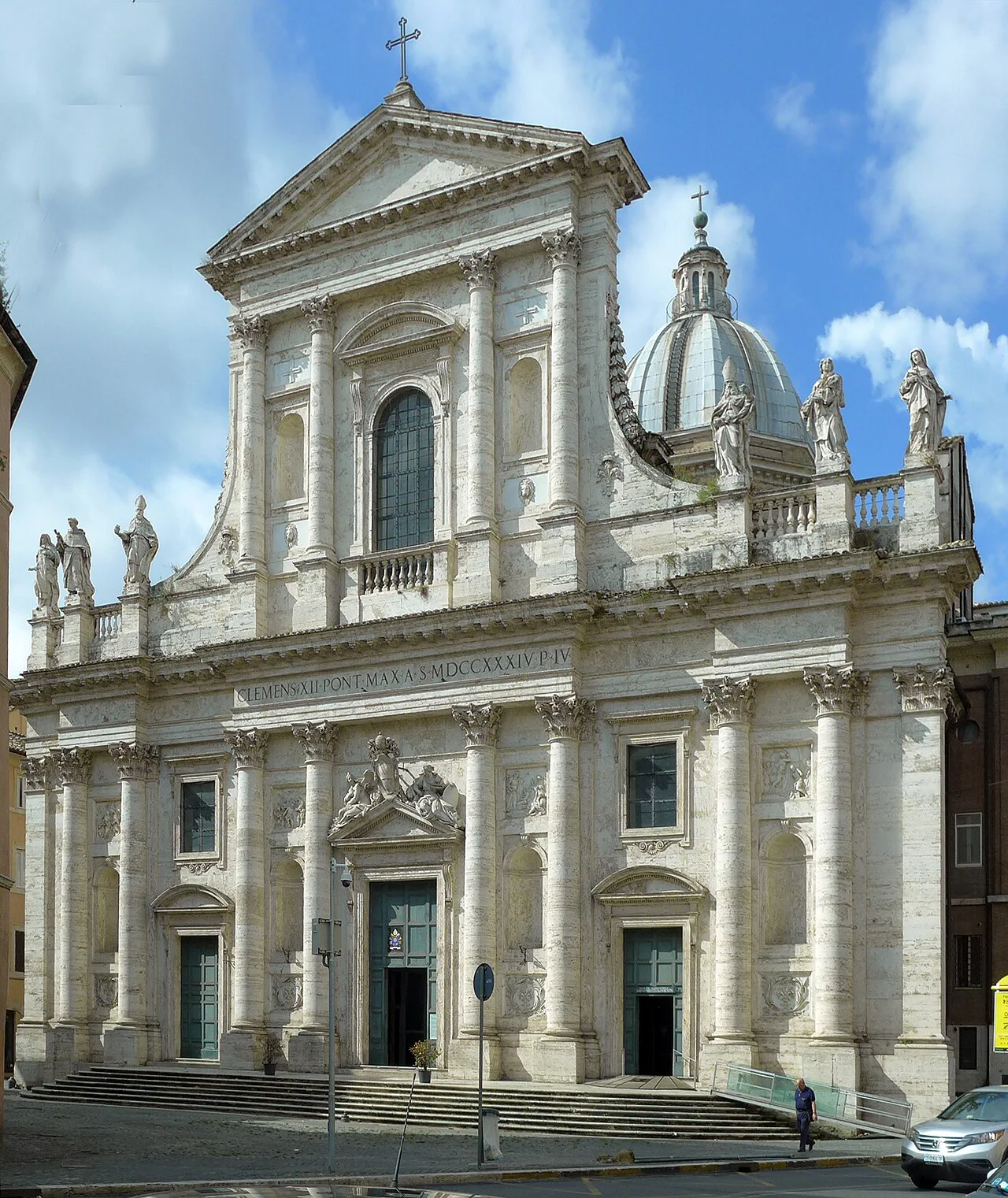
Rome · 1 km
Basilica di San Giovanni Battista dei Fiorentini
Content & sources
Photo: Peter1936F · CC BY-SA 4.0
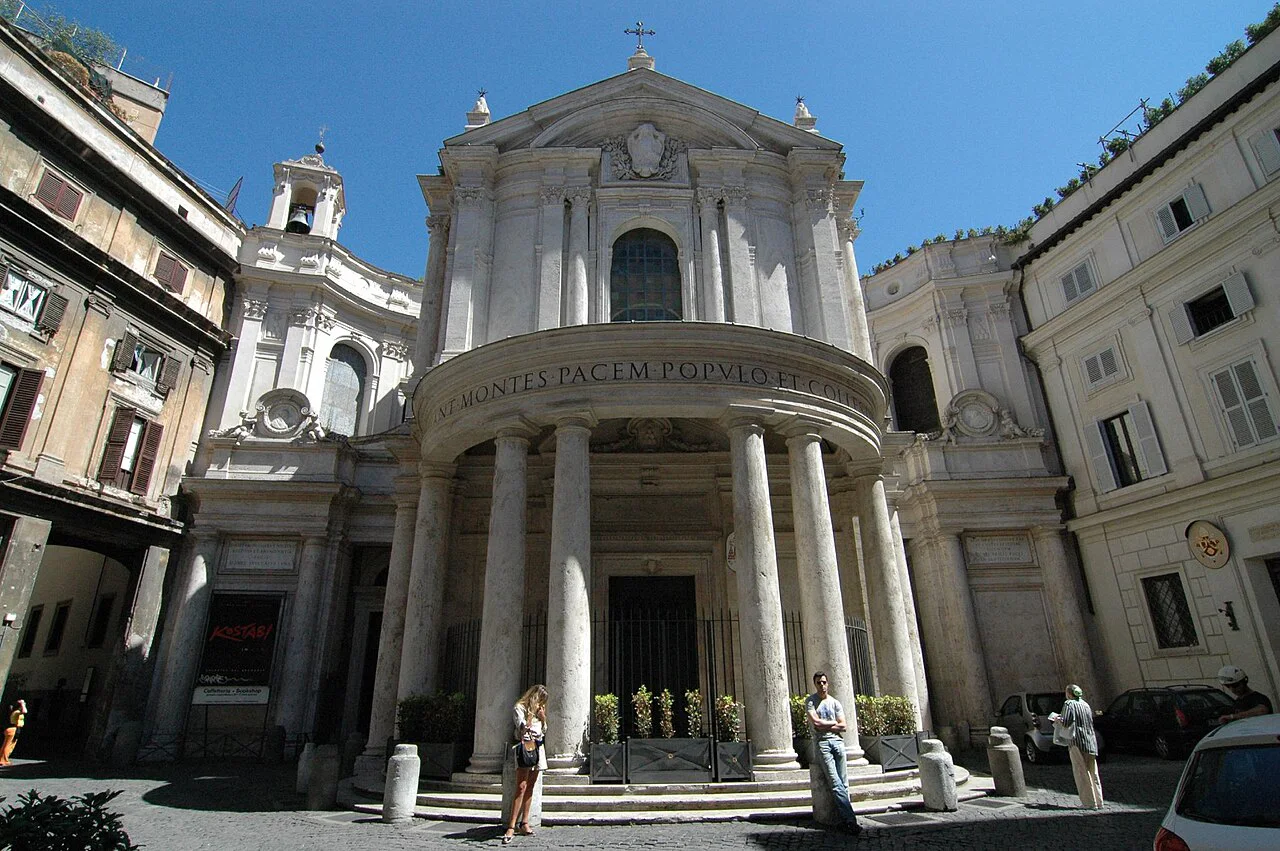
Rome · 2 km
Chiesa di Santa Maria della Pace
Content & sources
gaspa · CC BY 2.0
Art museums
More art museum audio guides
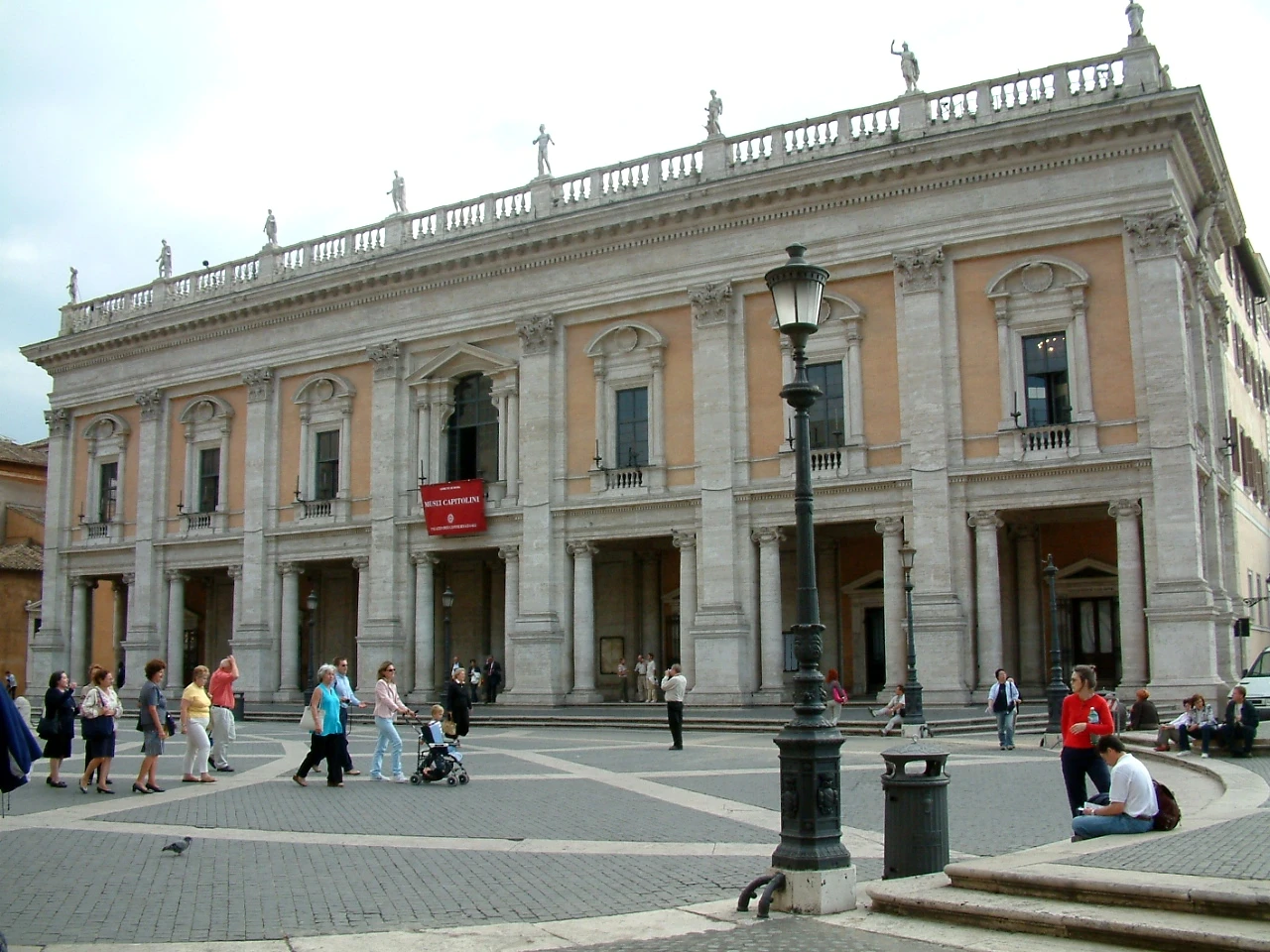
Rome · 55 artworks
Capitoline Museums
Content & sources
Photo: Radomil · CC BY-SA 3.0
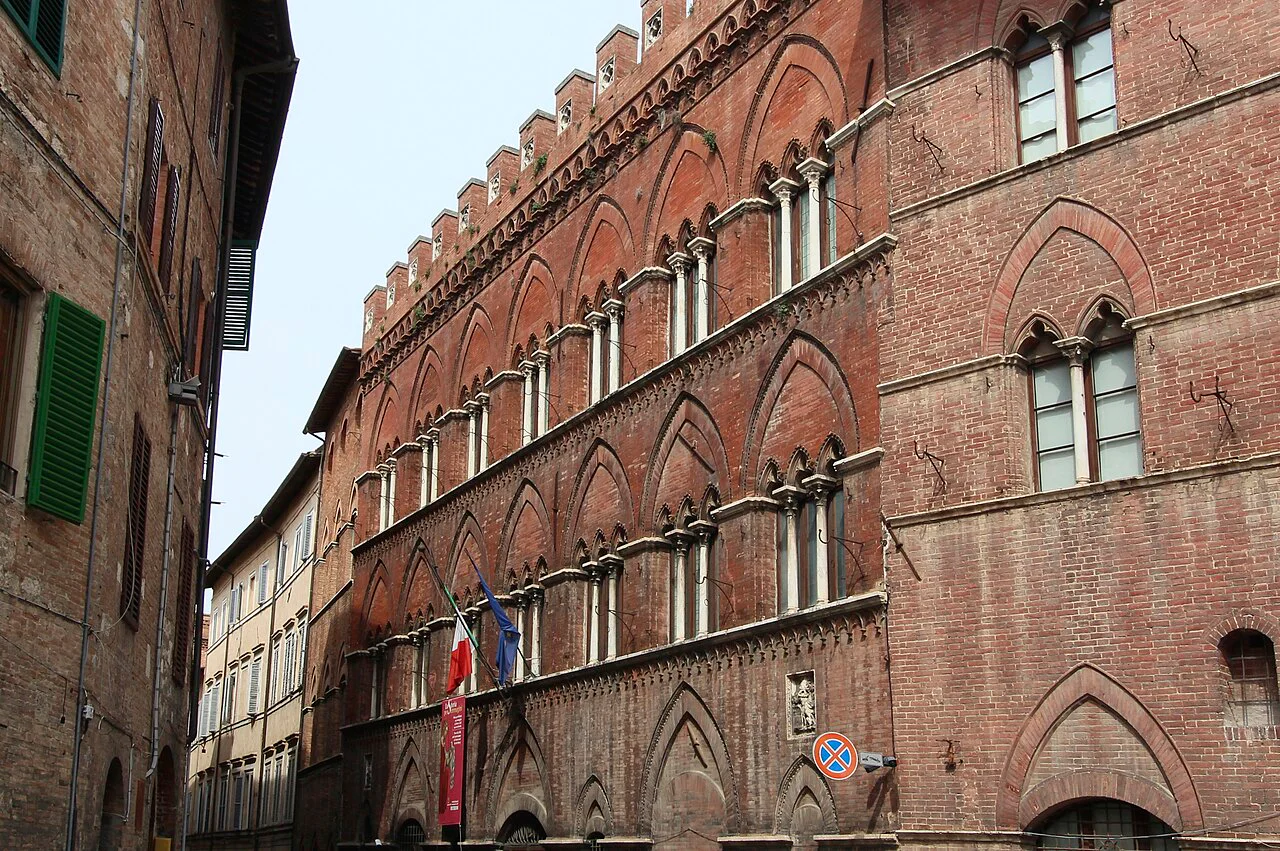
Siena · 37 artworks
Pinacoteca nazionale
Content & sources
Photo: LigaDue · CC BY-SA 4.0
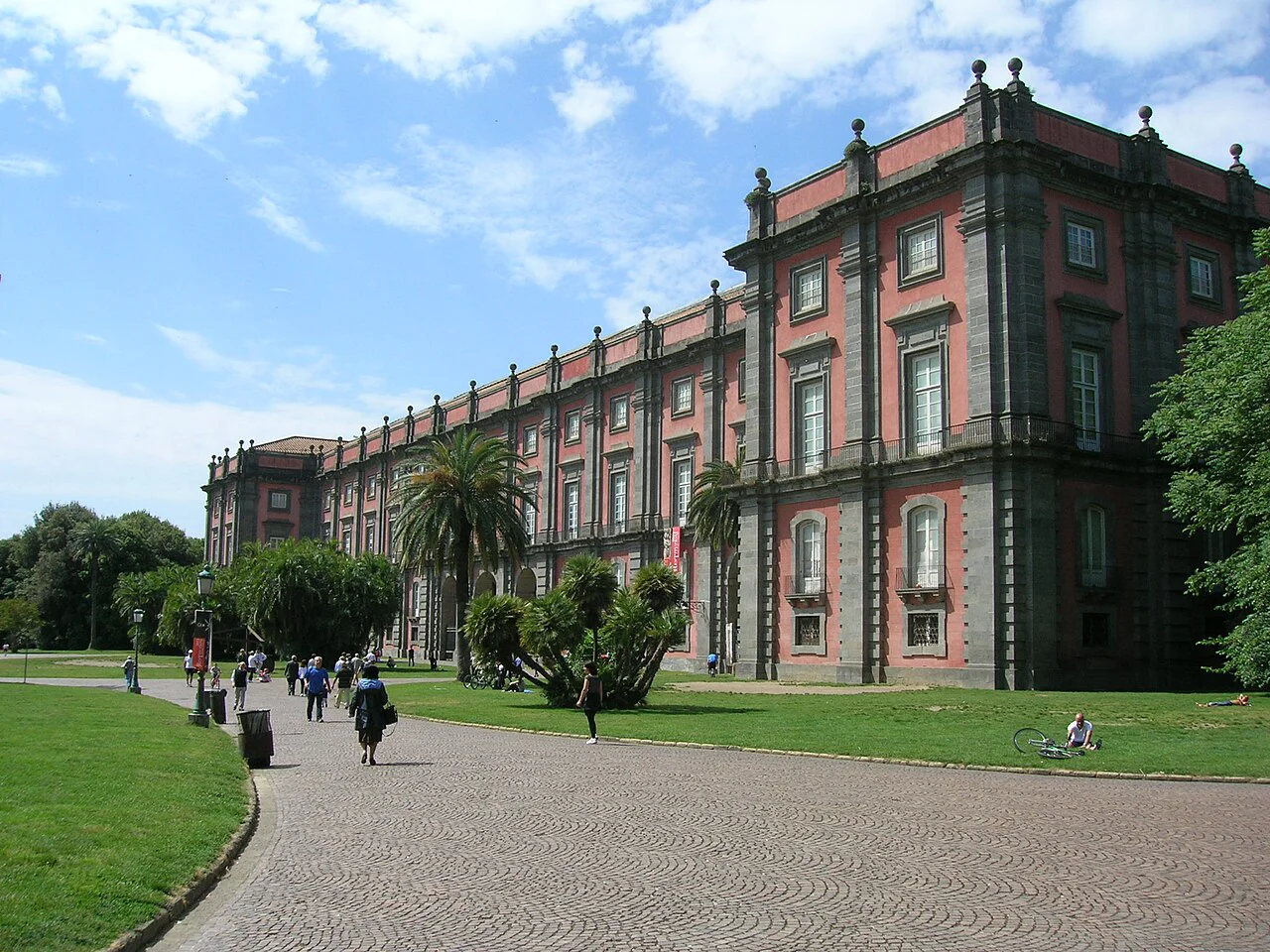
Naples · 136 artworks
Museo nazionale di Capodimonte
Content & sources
Mentnafunangann · CC BY-SA 4.0
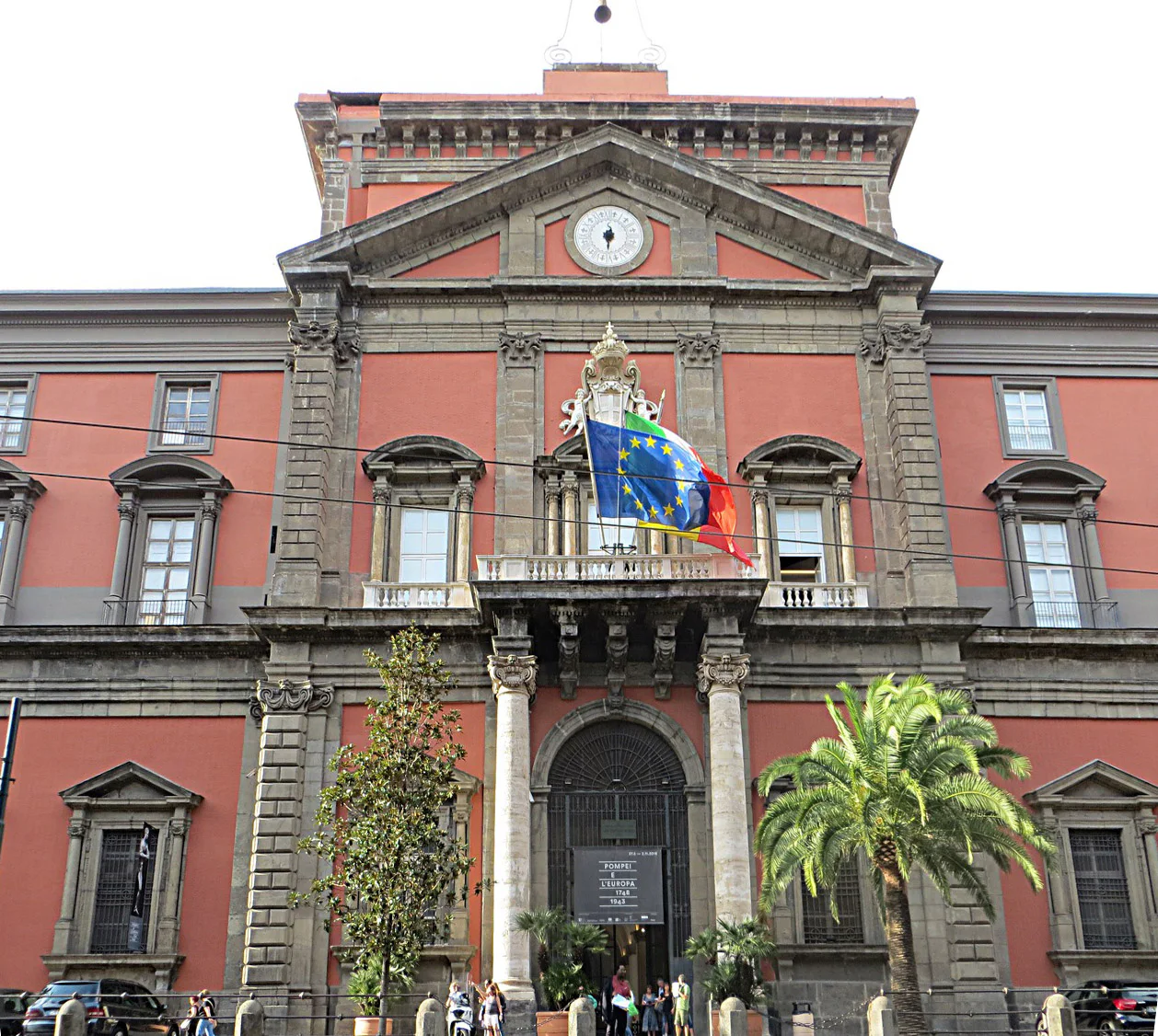
Naples · 126 artworks
Museo archeologico nazionale di Napoli
Content & sources
Mister No · CC BY 3.0
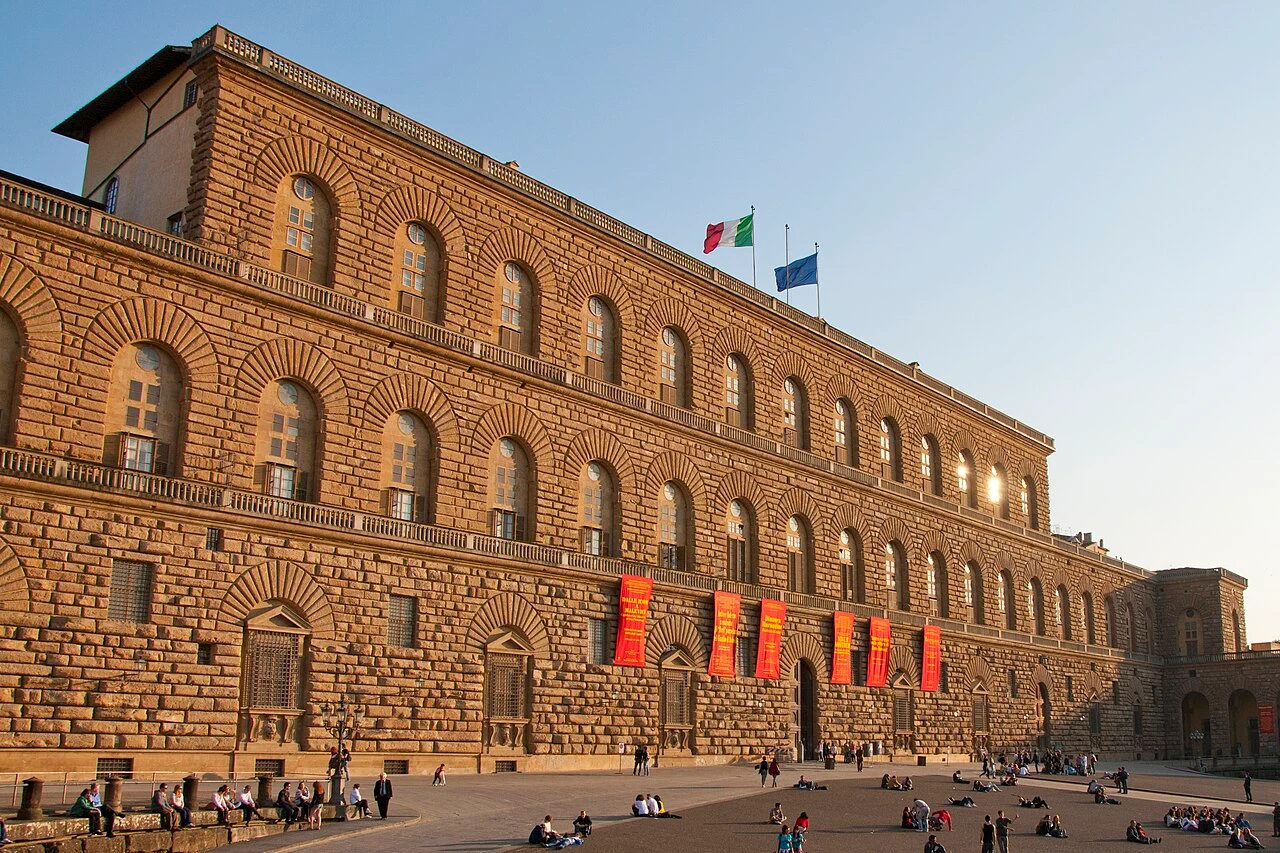
Florence · 167 artworks
Palazzo Pitti
Content & sources
Almaak · CC BY-SA 3.0
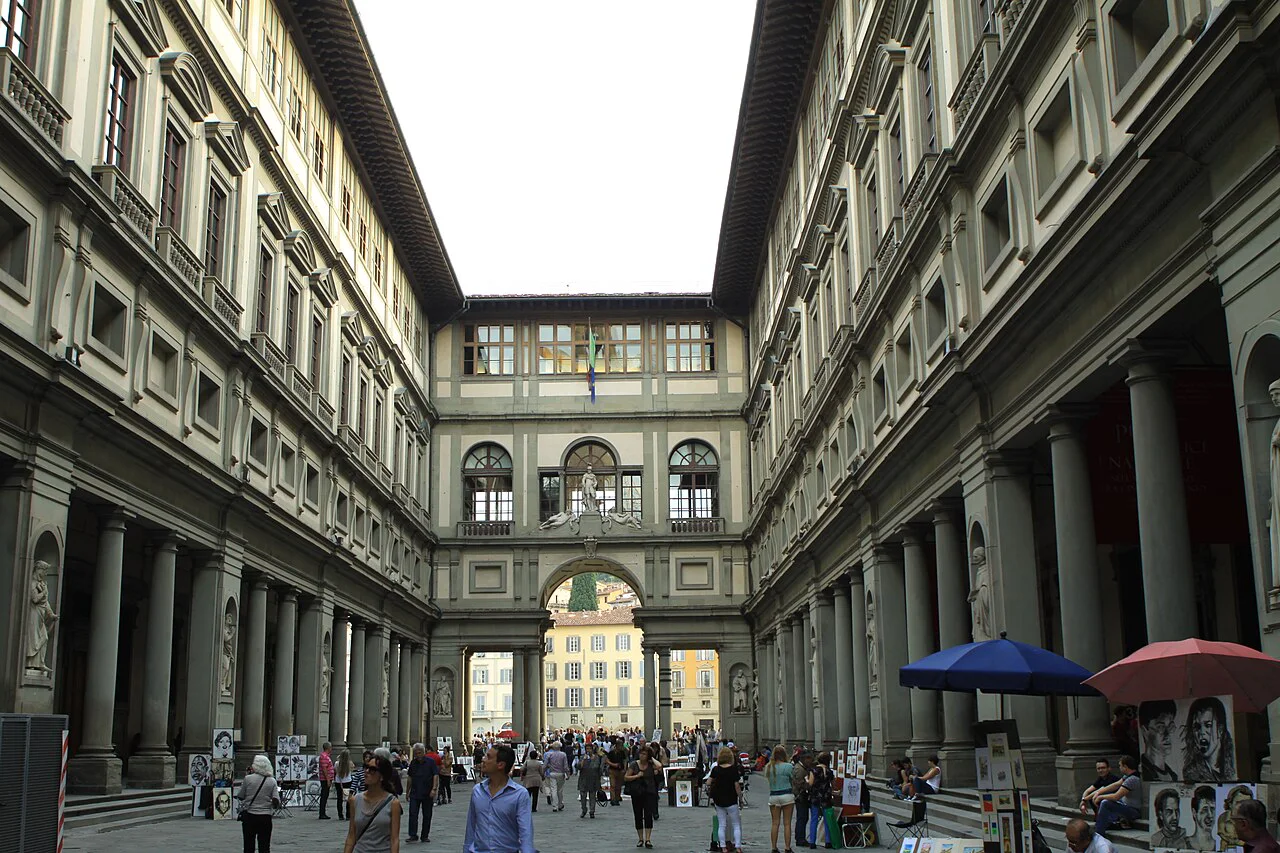
Florence · 70 artworks
Uffizi Gallery
Content & sources
Arek N. · CC BY-SA 3.0