Stanza · Audio guide
Capitoline Museums Audio Guide
A place to remember. A story to take with you.
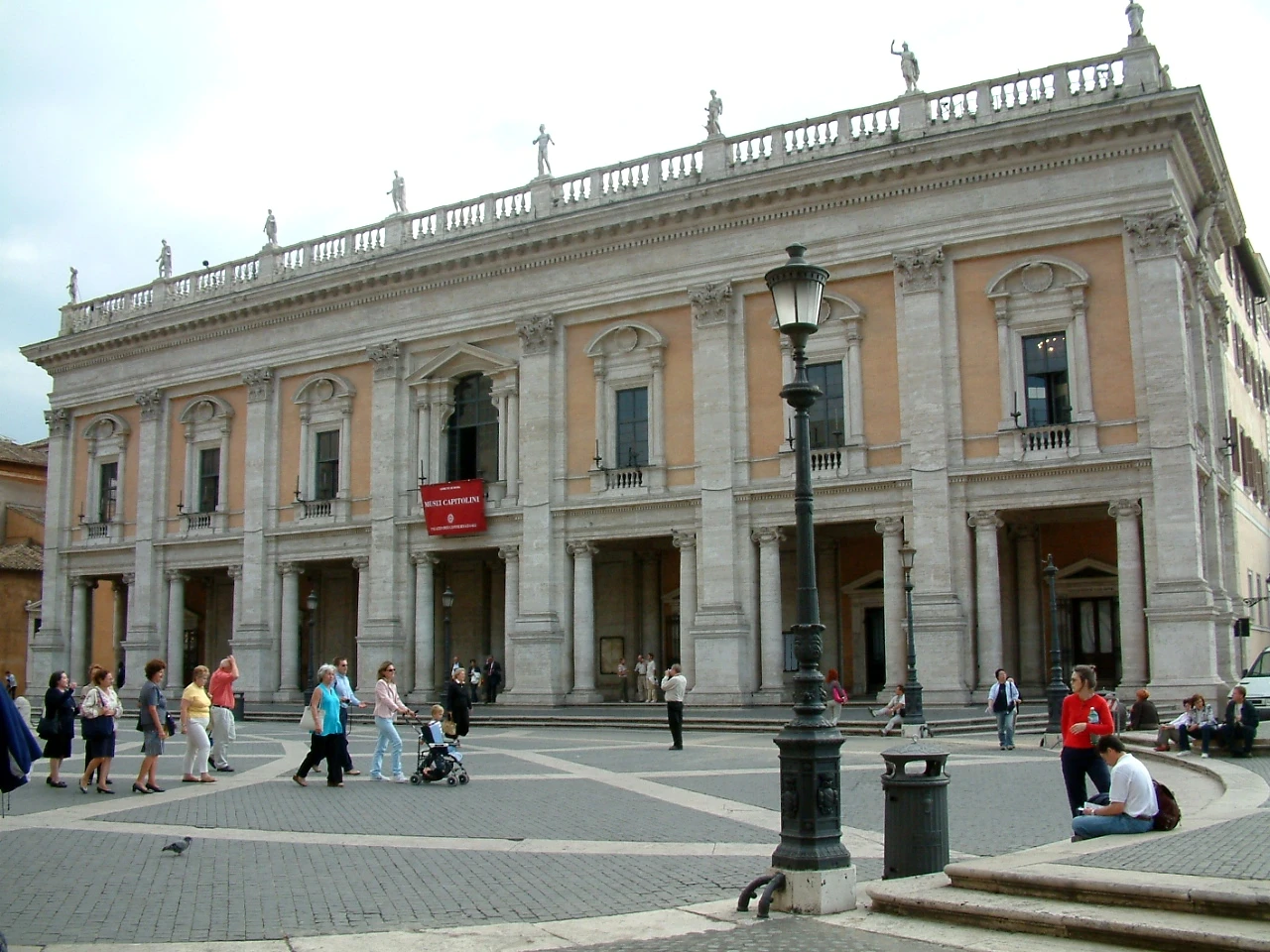
The Capitoline Museums are the municipal museums of Rome, Italy. They house significant collections of art and archaeological artifacts, making them one of the oldest public museums in the world.
Download Stanza, then search for “Capitoline Museums”.
About the tour
One guide. Your kind of visit.
The Capitoline Museums are the municipal museums of Rome, Italy. They house significant collections of art and archaeological artifacts, making them one of the oldest public museums in the world.
The Capitoline Museums guide tells the stories of 55 artworks, including Dying Gaul (Unknown Artist), Equestrian Statue of Marcus Aurelius (Unknown Artist), Capitoline Wolf (Unknown Artist), Capitoline Venus (Unknown Artist), Esquiline Venus (Unknown Artist), Boy with Thorn (Unknown Artist), Resting Satyr (Praxiteles), and Colossus of Constantine (Unknown Artist). Every artwork is free to hear in the Stanza app until 1 January.
Ready when you are.
- 01Get the free Stanza app.
iOS & Android
- 02Find your guide.
“Capitoline Museums”
- 03Download before you go.
Works offline
Audio guide / 55 artworks
Inside the guide
Get to know a few of the stories before you go. Open a stop to read more.
01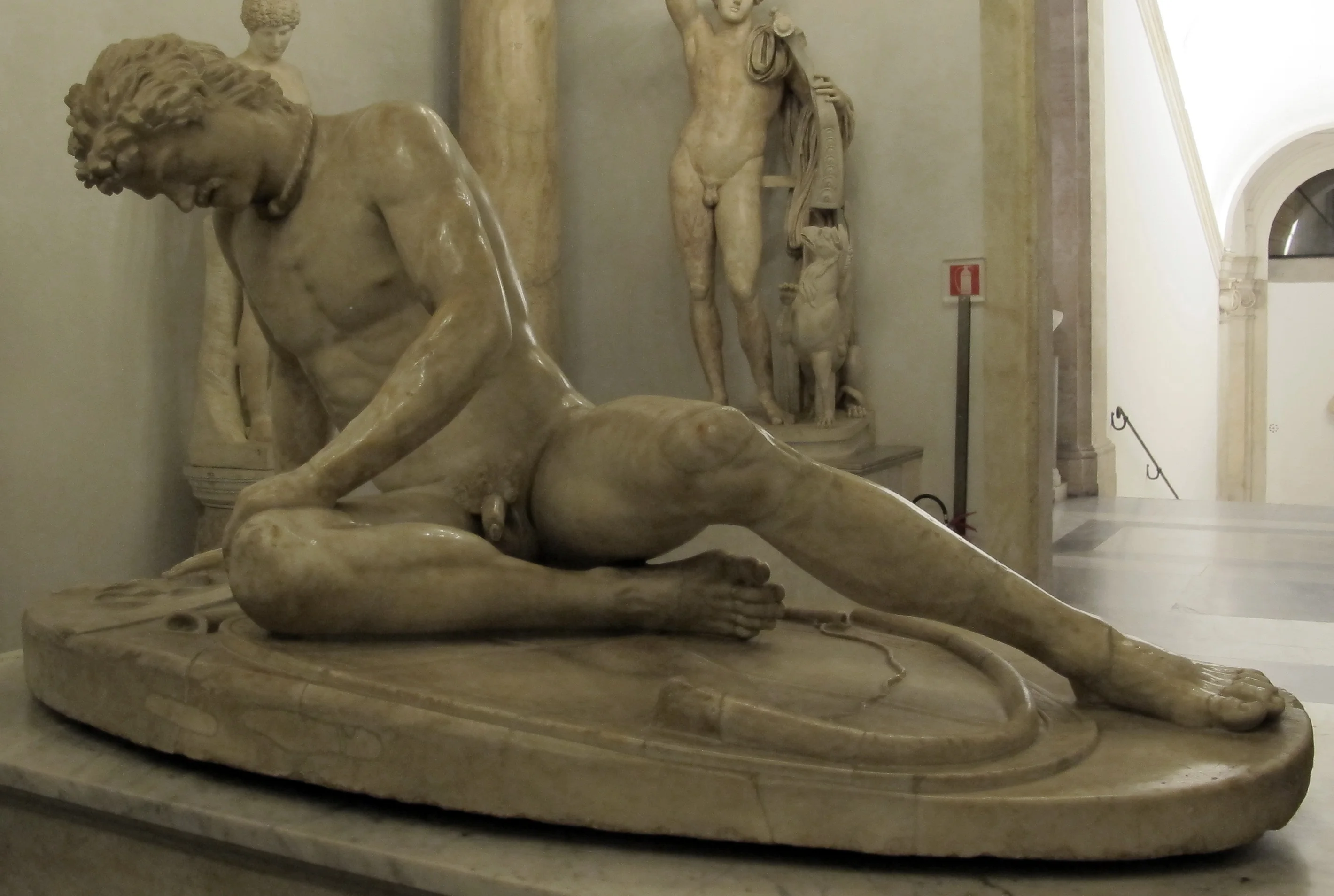
Dying Gaul
Look at the thick neck torc, the matted hair, the bushy moustache, and the wide nose. These details helped identify the figure as a barbarian. You are looking at the Dying Gaul, a Roman marble copy from the first or second century AD of a Greek original by Epigonus of Pergamon. Until the twentieth century, the statue was known as The Dying Gladiator, on the assumption that it showed a wounded gladiator in a Roman amphitheatre. Notice the right arm. The sculpture underwent a major restoration years after Ippolito Buzzi's early one, probably after the right arm broke. The arm was first set closer to the body and at a steeper angle, as if the man were falling to the ground. The entire right arm is shorter than the left arm. Follow the empty hole for a pin in the trunk, and trace the small variation in height between the arm and the original marble of the shoulder.
Listen in the appPhoto: Sailko · CC BY 3.0
02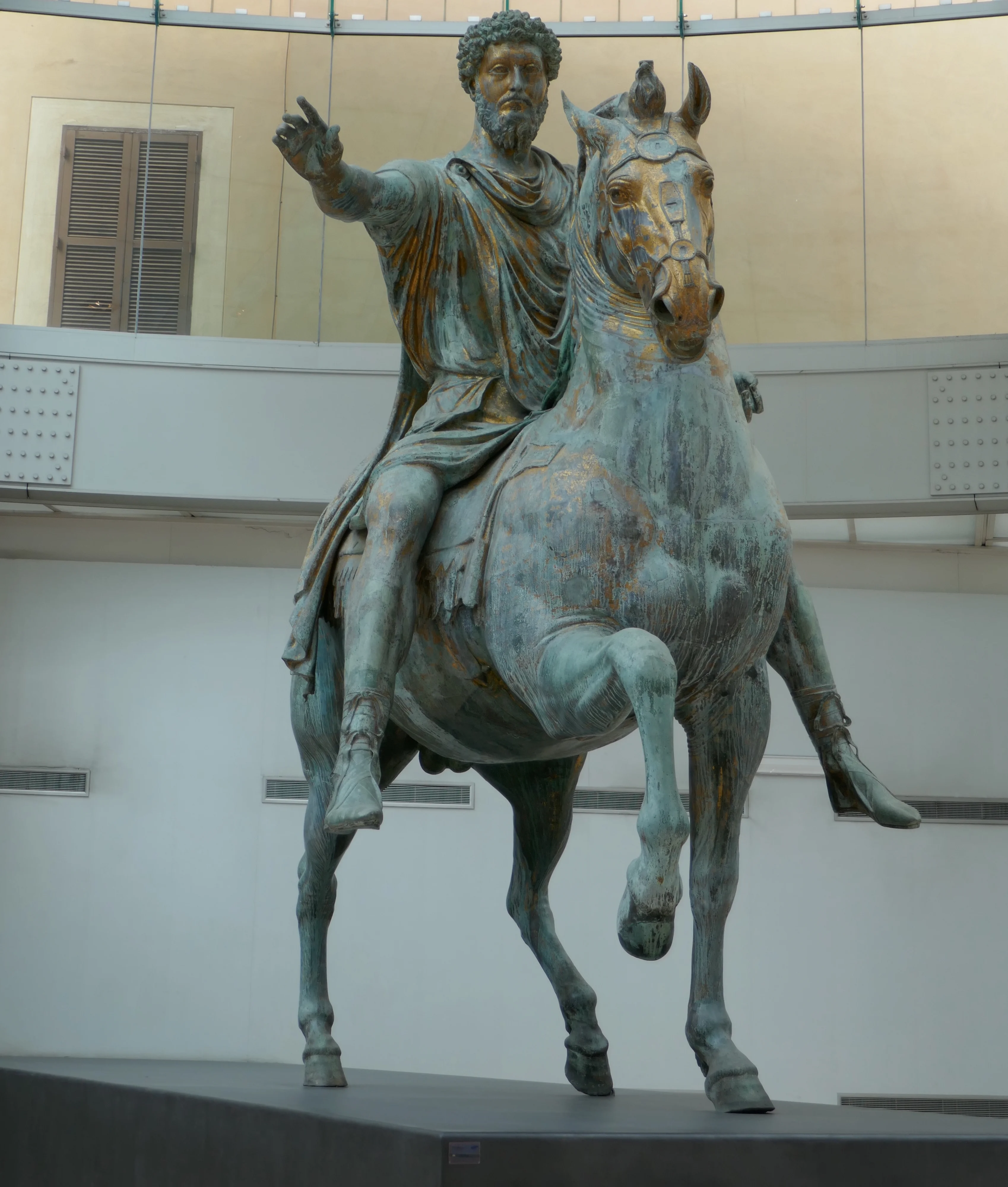
Equestrian Statue of Marcus Aurelius
The emperor is mounted and extends his hand in a gesture used when addressing troops. Notice the horse beneath him, featuring a saddle cloth of Sarmatian origin, which suggests the statue was created to honour the victory over the Sarmatians. Yet, shown without weapons or armour, Marcus Aurelius seems to be a bringer of peace rather than a military hero.
Listen in the appPhoto: Rudolfo Kithera · CC0
03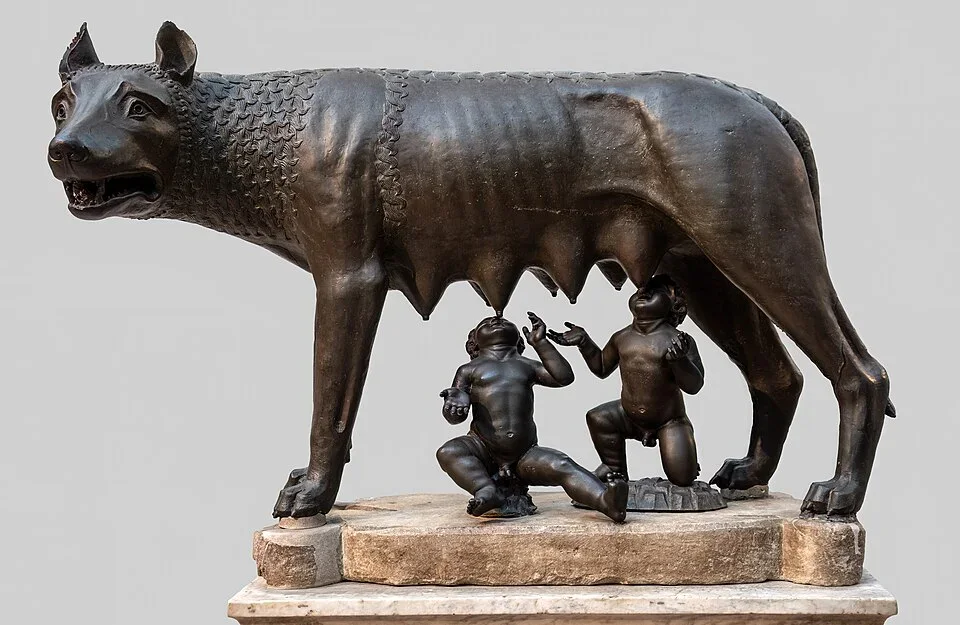
Capitoline Wolf
The sculpture is somewhat larger than life-size, standing 75 cm high and 114 cm long, showing a wolf in a tense, watchful pose with alert ears and glaring eyes. Look at the animal watching for danger. By contrast, the human twins, executed in a completely different style, are oblivious to their surroundings, absorbed by their suckling.
Listen in the appPhoto: Wilfredor · CC0
04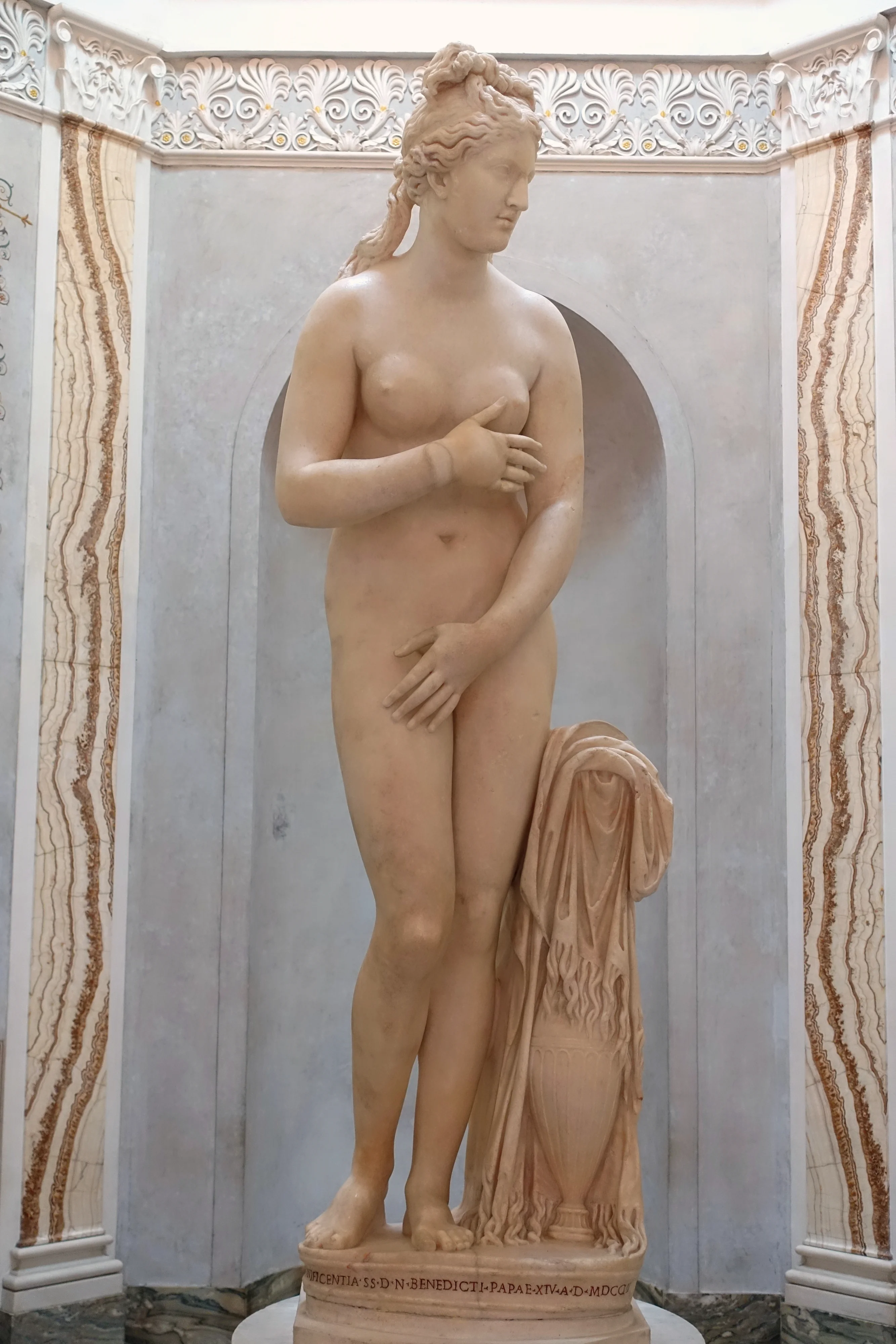
Capitoline Venus
Venus begins to cover her breasts with her right hand, and her groin with her left hand. Look closer at the Capitoline Venus, a slightly over lifesize marble statue. It is an Antonine copy of a late Hellenistic sculpture. This work modifies the tradition by a carnal and voluptuous treatment of the subject, and the goddess uses both hands for her modest gesture rather than only one over the groin.
Listen in the appPhoto: Daderot · Public domain
05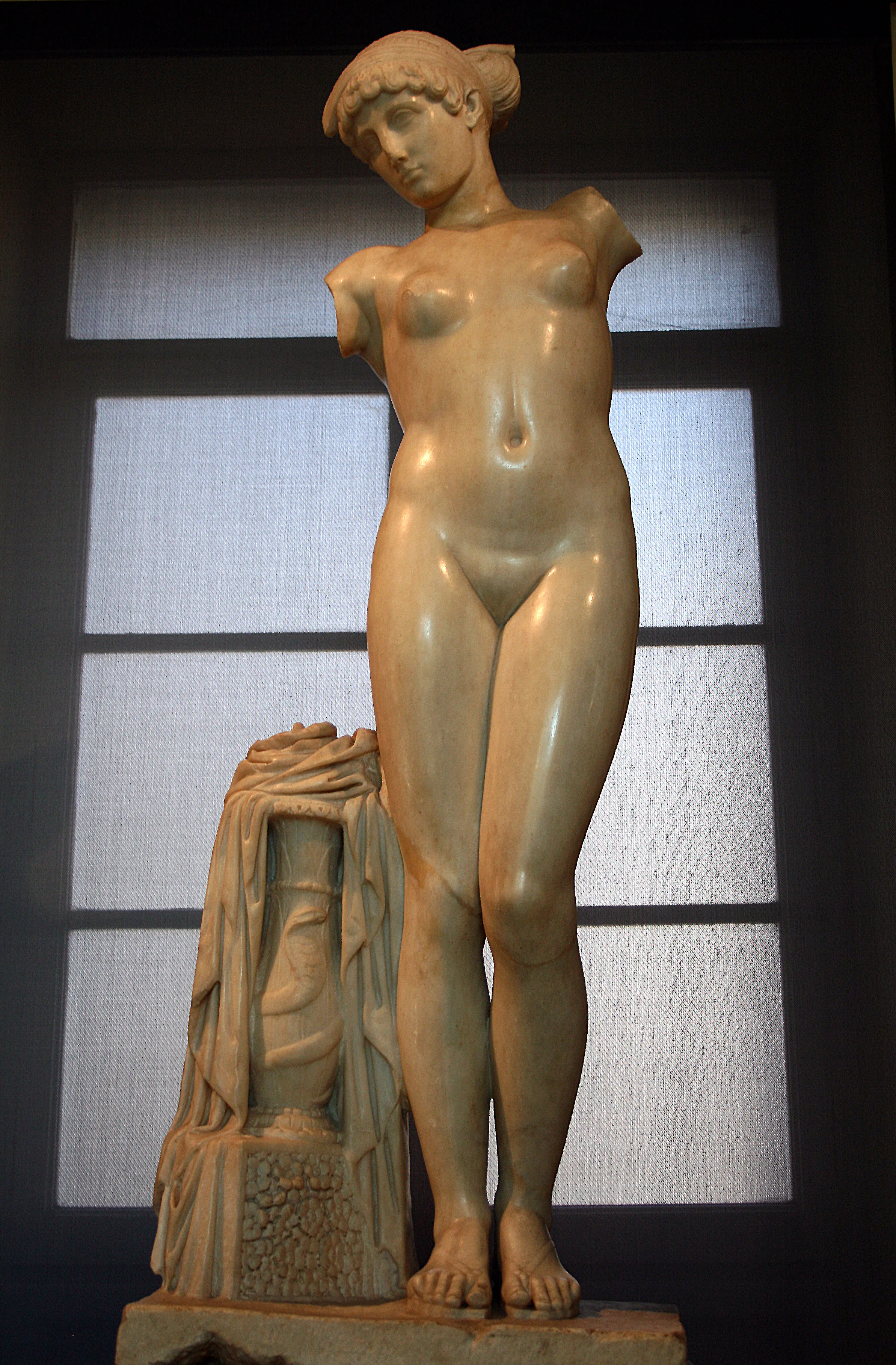
Esquiline Venus
An Egyptian-style robe falls downward over a vase placed right beside the figure. This smaller-than-life-size Roman nude marble sculpture of a female, known as the Esquiline Venus, features a vase that includes an asp or uraeus along with depictions of the Egyptian cobra, symbols which support the Cleopatra interpretation. Look closely at the back of the head, where the remains of the little finger of her left hand are visible.
Listen in the appPhoto: Jean-Pol GRANDMONT · CC BY 4.0
06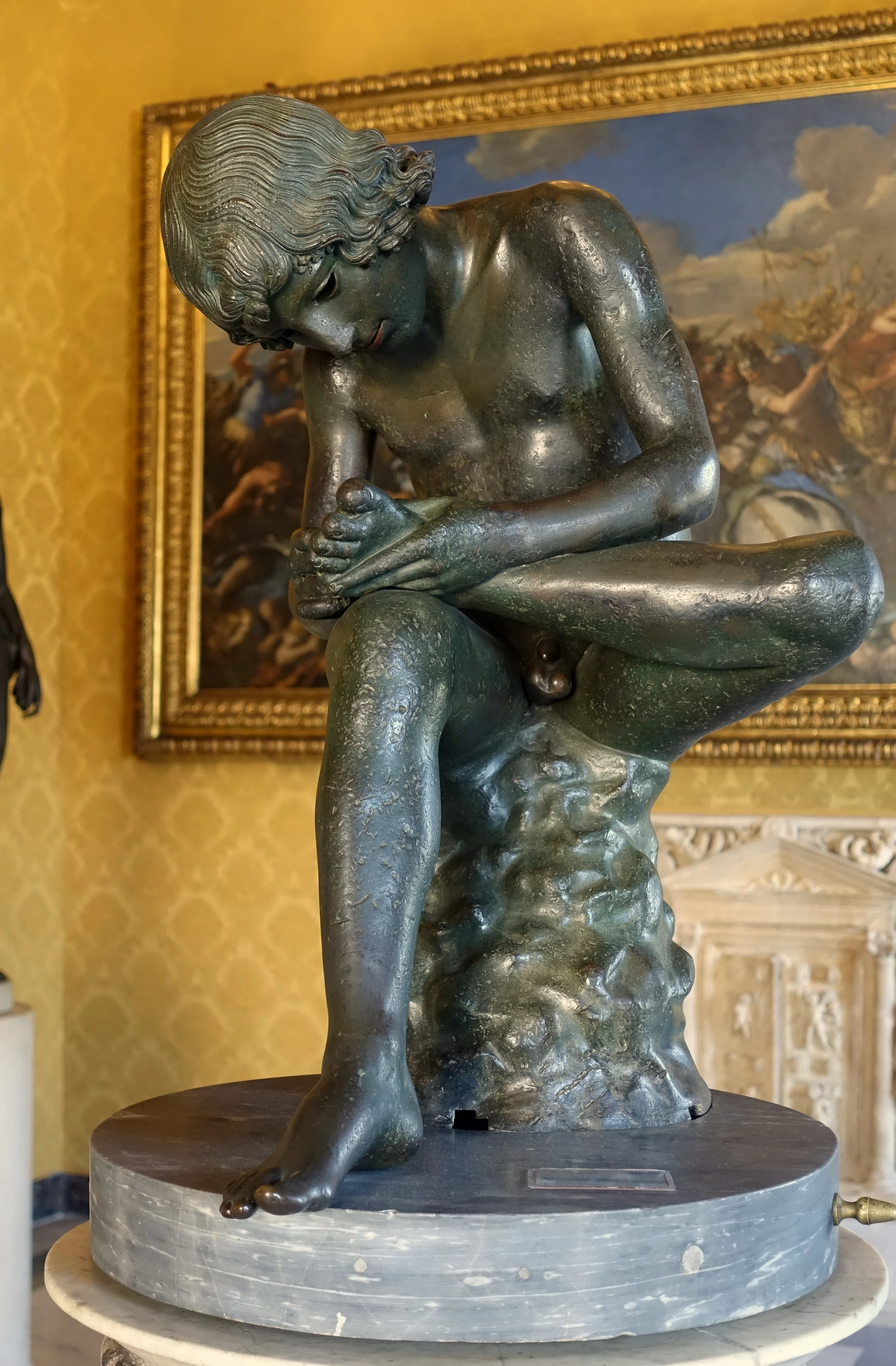
Boy with Thorn
A boy is depicted withdrawing a thorn from the sole of his foot. You are looking at Boy with Thorn, a Roman bronze made in the first century AD. People once called it Il Fedele. That name came from an invented story. The tale said a faithful shepherd boy carried his message to the Roman Senate first. Only then did he stop to pull out a painful thorn. People used that tale to turn an intimate and naturalistic study into a heroic civic monument. But Paolo Alessandro Maffei deflated the story in 1704. Notice how the boy removing the thorn from his foot is seen as an intimate and naturalistic study rather than a heroic messenger.
Listen in the appPhoto: Daderot · Public domain
07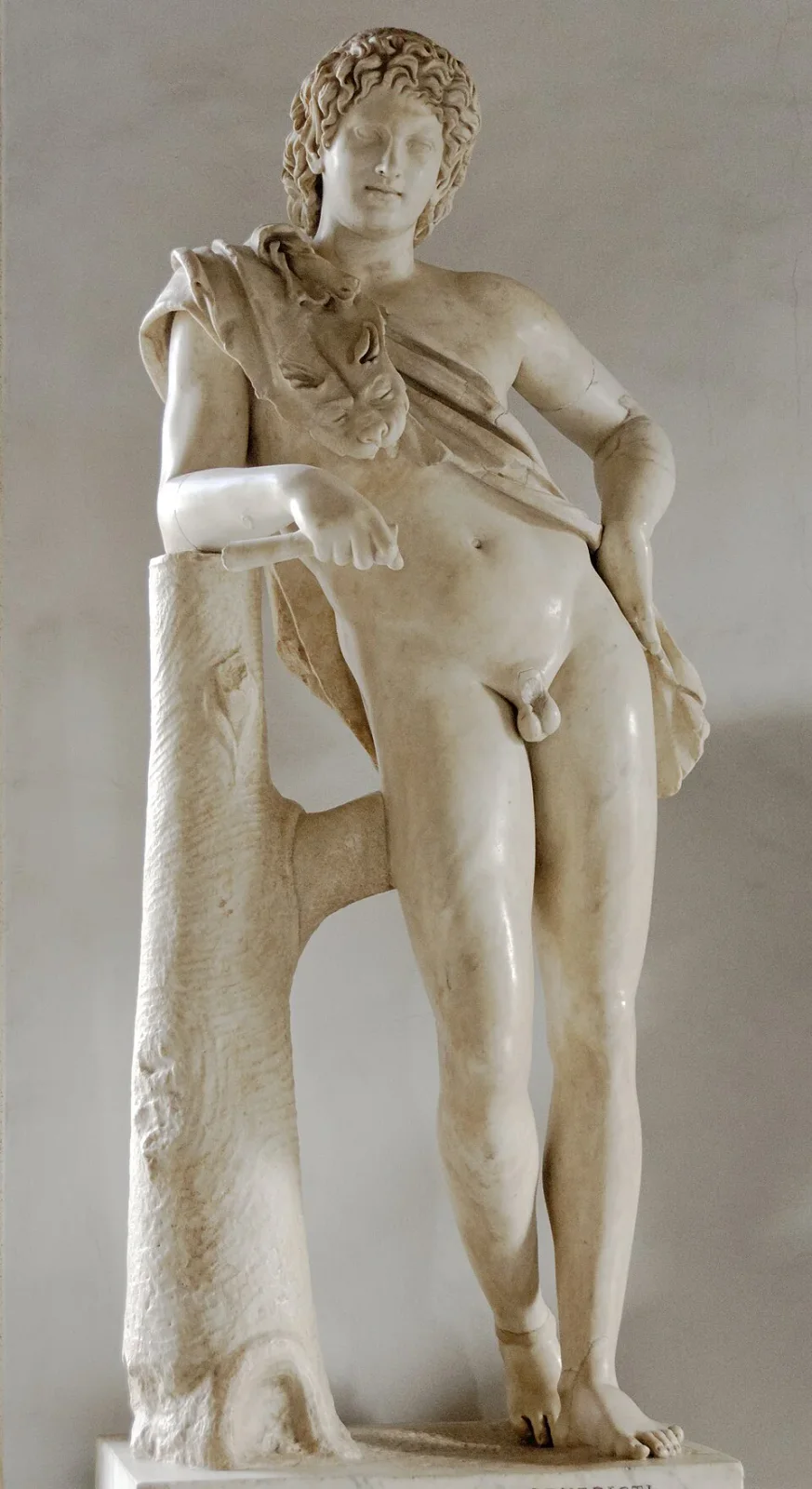
Resting Satyr
A youthful satyr is shown resting his right elbow on a tree trunk in a relaxed pose. You can tell who he is by his clearly pointed ears and the panther pelt worn across his torso. His body features a relaxed s-shaped slant supported only on the left leg. His right leg is bent, with his right foot just touching his left heel. This type of sculpture is generally attributed to the ancient Greek sculptor Praxiteles, who is credited with creating a softer and youthful satyr type. In ancient Greek mythology, satyrs are male companions to Dionysus, the god of grape harvest, ritual madness, theatre, and fertility. The panther pelt on the satyr signifies his connection to beastly animal nature.
Listen in the appMarie-Lan Nguyen · Public domain
08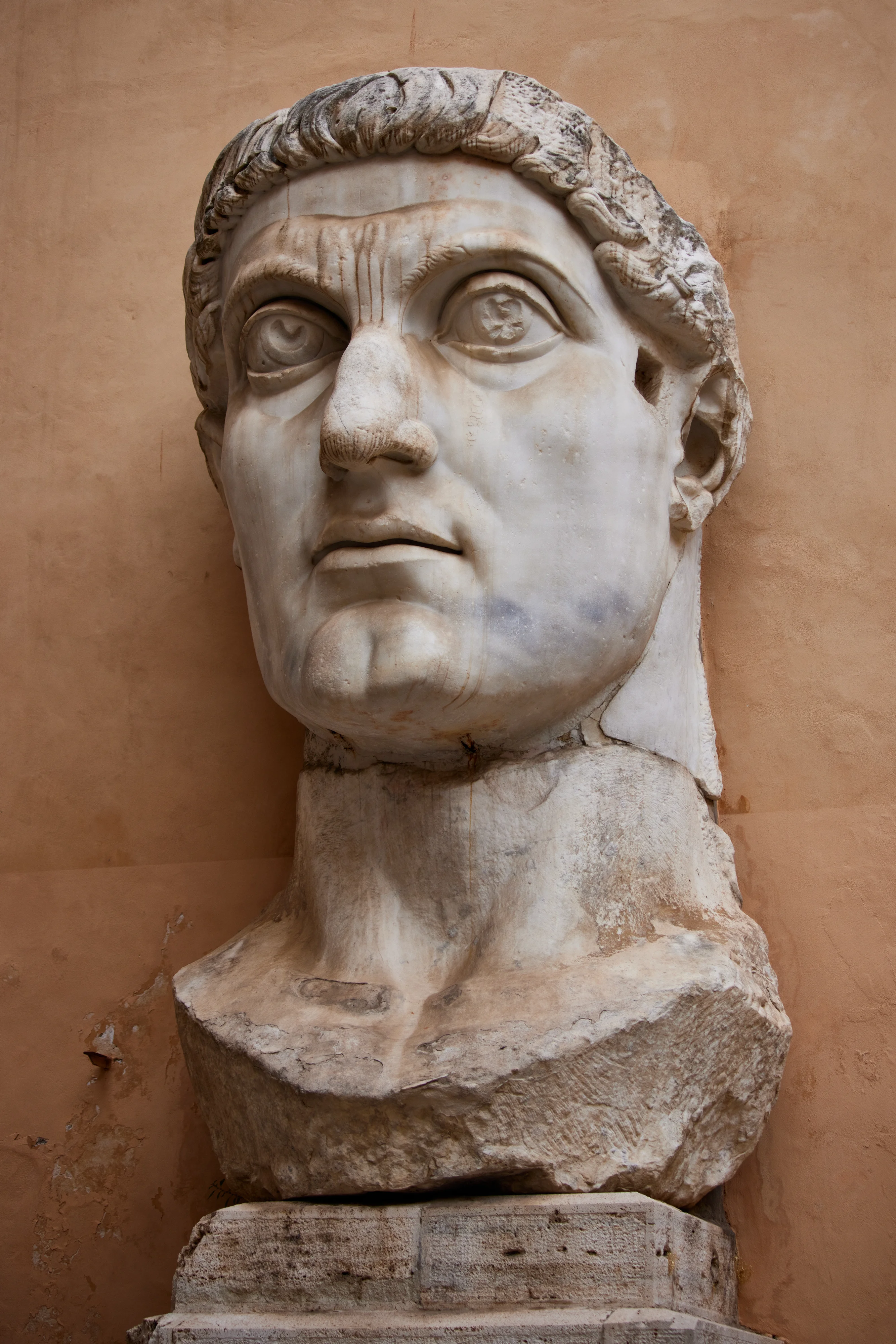
Colossus of Constantine
Notice the stark contrast between the great head and the rest of the surviving pieces, where the other body parts are naturalistic down to callused toes and bulging forearm veins. The Colossus of Constantine, created by an unknown artist about 315, presents a ruler whose larger-than-life-size eyes gaze toward eternity from a rigidly impersonal, frontal face. This expression perhaps conveys the transcendence of the other-worldly nature of the emperor over the human sphere. The facial features combine individualistic traits like an aquiline nose, deep jaw, and prominent chin with late Roman portraiture trends focusing on symbolism and abstraction rather than detail. The entire countenance is conceived as a holy mask and an overpowering cult object functioning as an idol animated with the divine presence, reflecting the Christian deity in unapproachable grandeur.
Listen in the appPhoto: D. Benjamin Miller · CC0
09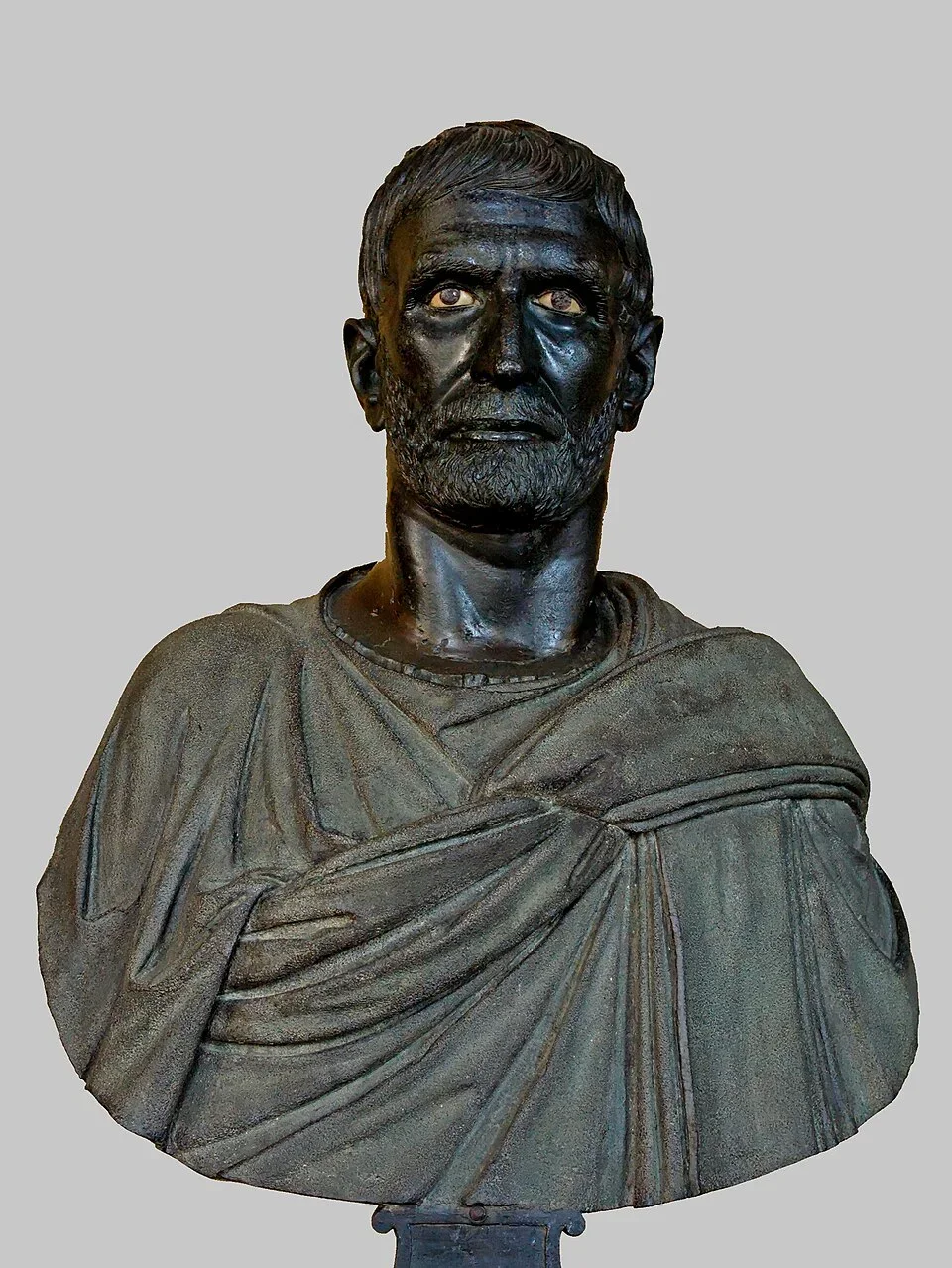
Capitoline Brutus
An ancient Roman bronze bust measuring 69 cm in height stands before you, known as Capitoline Brutus by an unknown artist, dating from about 274 BC. Look at how the head features details that suggest it may date as late as the early first century BC. This points to a time when a vogue existed for creating imaginary portraits of early Roman celebrities. The Roman head was given a toga-clad bronze bust during the Renaissance.
Listen in the appJastrow · Public domain
10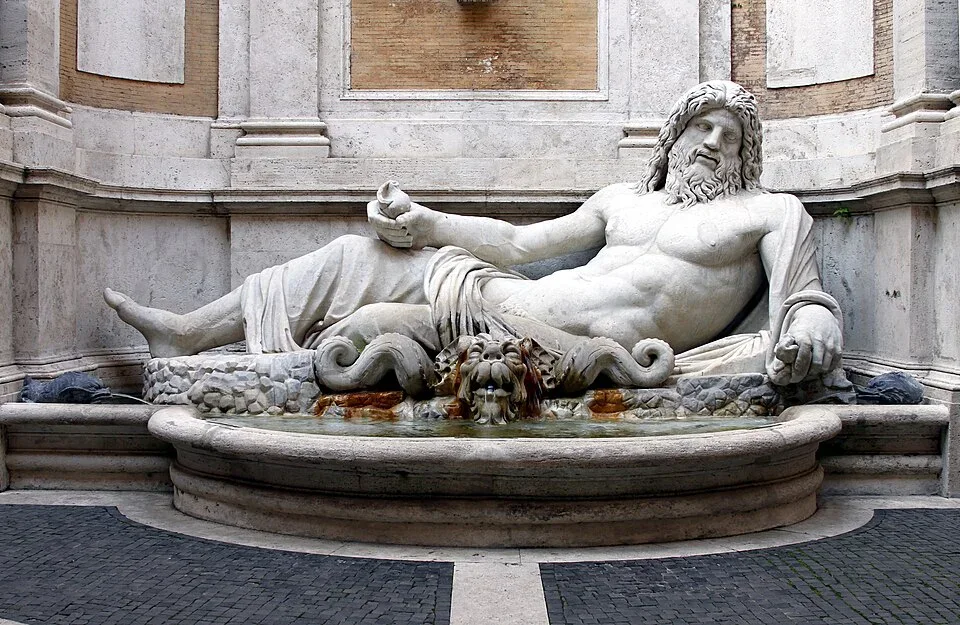
Marforio
You see a large marble sculpture of a reclining figure with a beard, identified in the past as Jupiter, Neptune, or the Tiber, and by Andrea Fulvio as a river god. This is Marforio, a large first century Roman marble work depicting a reclining bearded river god or Oceanus. People once called it a landmark of Rome. Over time, it grew a reputation as a talking statue that engaged in a friendly rivalry with Pasquin. Here, people posted irreverent satires that poked fun at public figures during the sixteenth and seventeenth centuries. Pope Sixtus V had it moved in 1588, and later to the piazza del Campidoglio in 1592. Part of the face, the right foot, and the left hand holding a shell were restored in 1594. Look at the left hand. It now holds a shell, which was added during that restoration.
Listen in the appJosé Luiz · CC BY-SA 4.0
- 11
Romulus and Remus
Peter Paul Rubens · 1615
- 12
Capitoline Antinous
Unknown Artist
- 13
Baptism of Christ
Titian · 1511
- 14
Medusa
Gian Lorenzo Bernini · 1700
- 15
Wounded Amazon, Signed by Sosikles
Sosicles · -500
- 16
Commodus as Hercules
Unknown Artist · 200
- 17
Bronze from Ascoli
Unknown Artist · -88
- 18
Hercules of the Forum Boarium
Unknown Artist · -200
- 19
Rape of the Sabine Women
Pietro da Cortona · 1627
- 20
Young Saint John the Baptist with a Ram
Caravaggio · 1602
- 21
Saint Sebastian
Guido Reni · 1615
- 22
Cupid and Psyche
Unknown Artist · 200
- 23
The Burial of Saint Petronilla
Guercino · 1623
- 24
Bronze colossus of Constantine
Unknown Artist · 400
- 25
The Persian Sibyl
Guercino · 1647
- 26
Cumaean Sibyl
Domenichino · 1610
- 27
Bust of Augustus with Gemmed Crown
Unknown Artist · -26
- 28
Polyphemus
Guido Reni · 1639
- 29
The Fortune Teller
Caravaggio · 1594
- 30
Aristonothos krater
Aristonothos · -700
- 31
Plato and Diogenes
Mattia Preti · 1690
- 32
Saint Matthew and the Angel
Guercino · 1622
- 33
Christ on the Cross
Gabriel Metsu · 1664
- 34
Saint John the Baptist
Guercino · 1645
- 35
Monument to Charles I of Anjou
Arnolfo di Cambio · 1277
- 36
Cleopatra and Octavian
Guercino · 1639
- 37
Portrait of Juan de Córdoba
Diego Velázquez · 1630
- 38
The Holy Family
Guercino · 1615
- 39
Lion attacking a horse
Unknown Artist · -350
- 40
Wounded Amazon
Polykleitos · -500
- 41
Augustus Statue
Unknown Artist · -34
- 42
Portrait of Probus
Unknown Artist · 276
- 43
The Witch
Salvator Rosa · 1646
- 44
Bust of Trajan Decius
Unknown Artist · 249
- 45
Portrait of Maximinus Thrax
Unknown Artist · 235
- 46
Eros bending his bow
Unknown Artist · 150
- 47
Sarcophagus with scenes from the life of Achilles
Unknown Artist
- 48
Judgment of Paris
Filippo Tagliolini · 1780
- 49
Child with dove
Unknown Artist
- 50
Mosaic of the Doves
Unknown Artist
- 51
Panel relief showing Marcus Aurelius performing a sacrifice
Unknown Artist
- 52
Portrait of a Man with a Dog
Bartolomeo Passarotti · 1586
- 53
Holy Family
Dosso Dossi · 1527
- 54
Competition on the Capitoline Hill
Agostino Tassi · 1630
- 55
Rape of the Sabines
Pietro da Cortona · 1627–1629
Capitoline Museums
Frequently asked questions
How much does the guide cost?
Free app download. Free until 1 January. Listed guide price: $1.99. Audio guide only. Venue admission is separate.
Can I listen without internet?
Yes. Download the guide’s audio, images, and maps in the app before your visit. Your downloaded content is then available offline.
Can I listen in my language?
In English for now. More languages soon.
Do I need to follow a schedule?
No. This is a self-guided experience. Choose your stops, pause whenever you like, and return to a story at your own pace.
Which artworks are in the Capitoline Museums audio guide?
55 artworks, including Dying Gaul (Unknown Artist), Equestrian Statue of Marcus Aurelius (Unknown Artist), Capitoline Wolf (Unknown Artist), Capitoline Venus (Unknown Artist), Esquiline Venus (Unknown Artist), Boy with Thorn (Unknown Artist), Resting Satyr (Praxiteles), and Colossus of Constantine (Unknown Artist). The full list is on this page.
Is this the museum’s official audio guide?
No. Stanza is an independent audio guide app and is not affiliated with Capitoline Museums. Museum admission is separate.
At your own pace
Explore Capitoline Museums.
Download Stanza, then search for “Capitoline Museums”.
Free app download · Guide price shown in the app
Keep exploring
Nearby audio guides
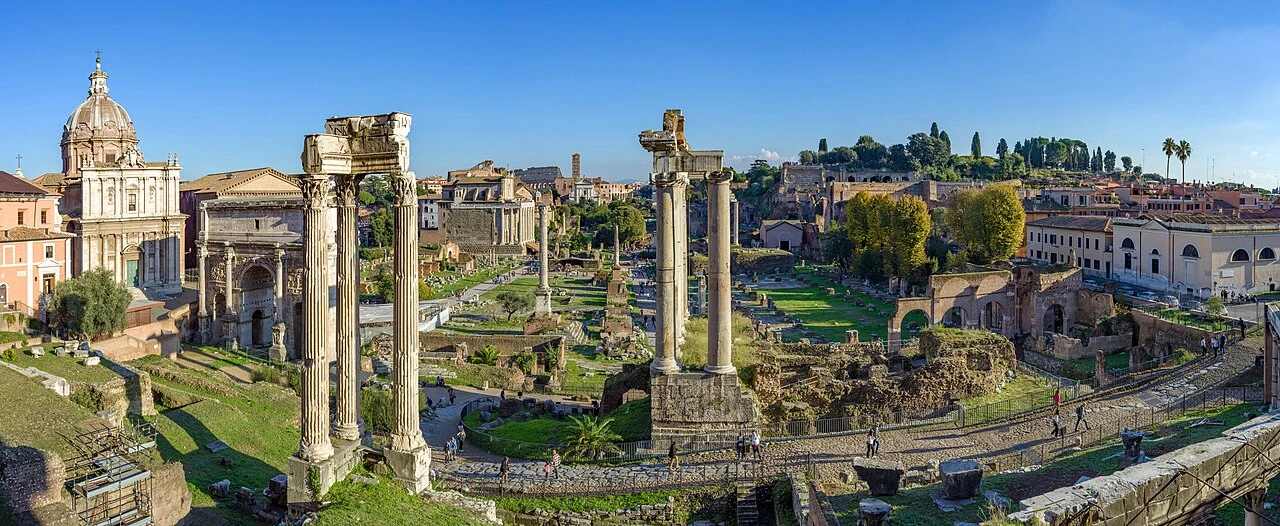
Rome · 1 km
Roman Forum
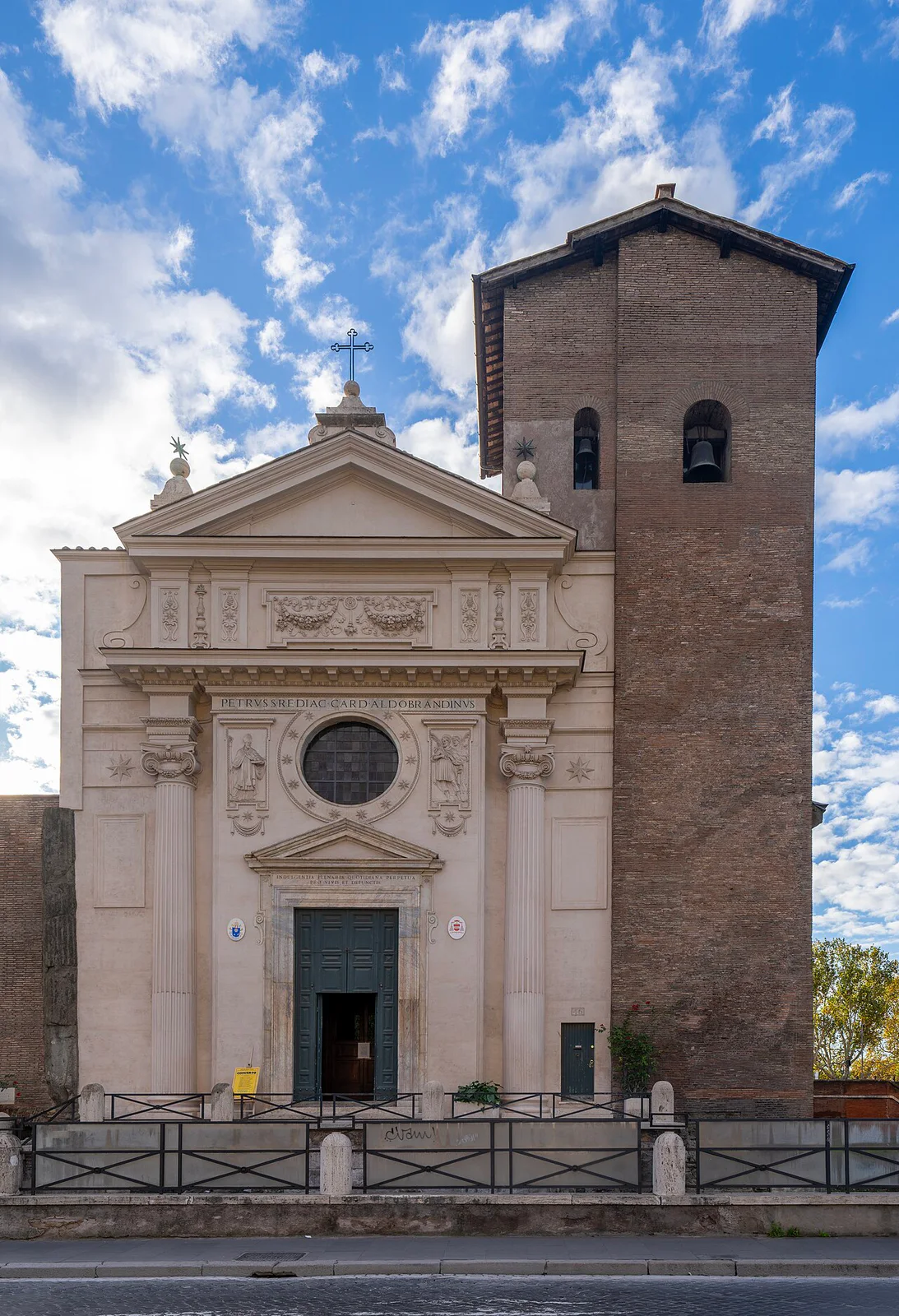
Rome · 1 km
Basilica di San Nicola in Carcere
Content & sources
Photo: Ninfamania · CC BY 4.0
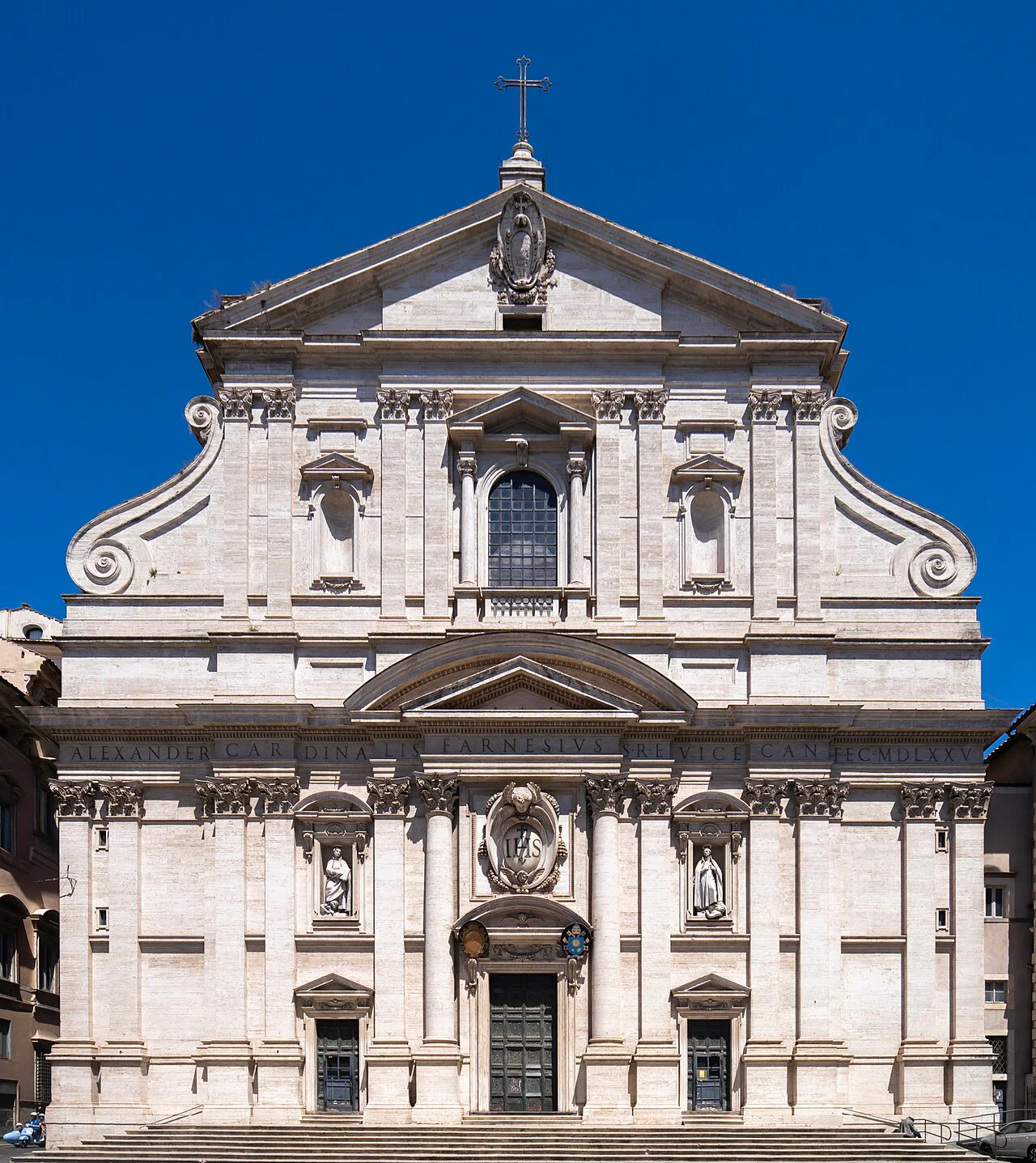
Rome · 1 km
Chiesa del Gesù
Content & sources
Photo: Rione Colonna · CC BY 4.0
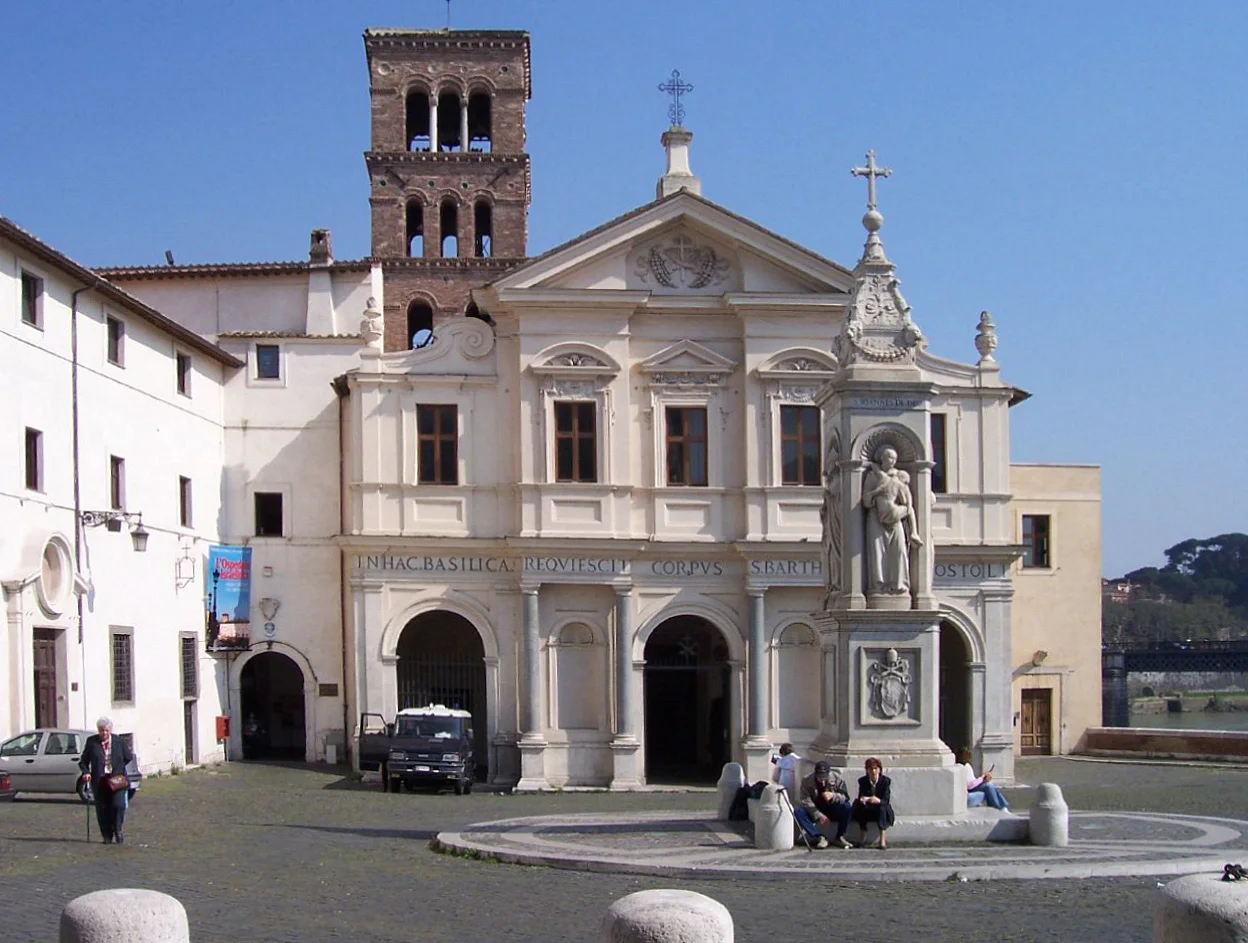
Rome · 1 km
Basilica di San Bartolomeo all'Isola
Content & sources
sonofgroucho · CC BY 2.0
Art museums
More art museum audio guides
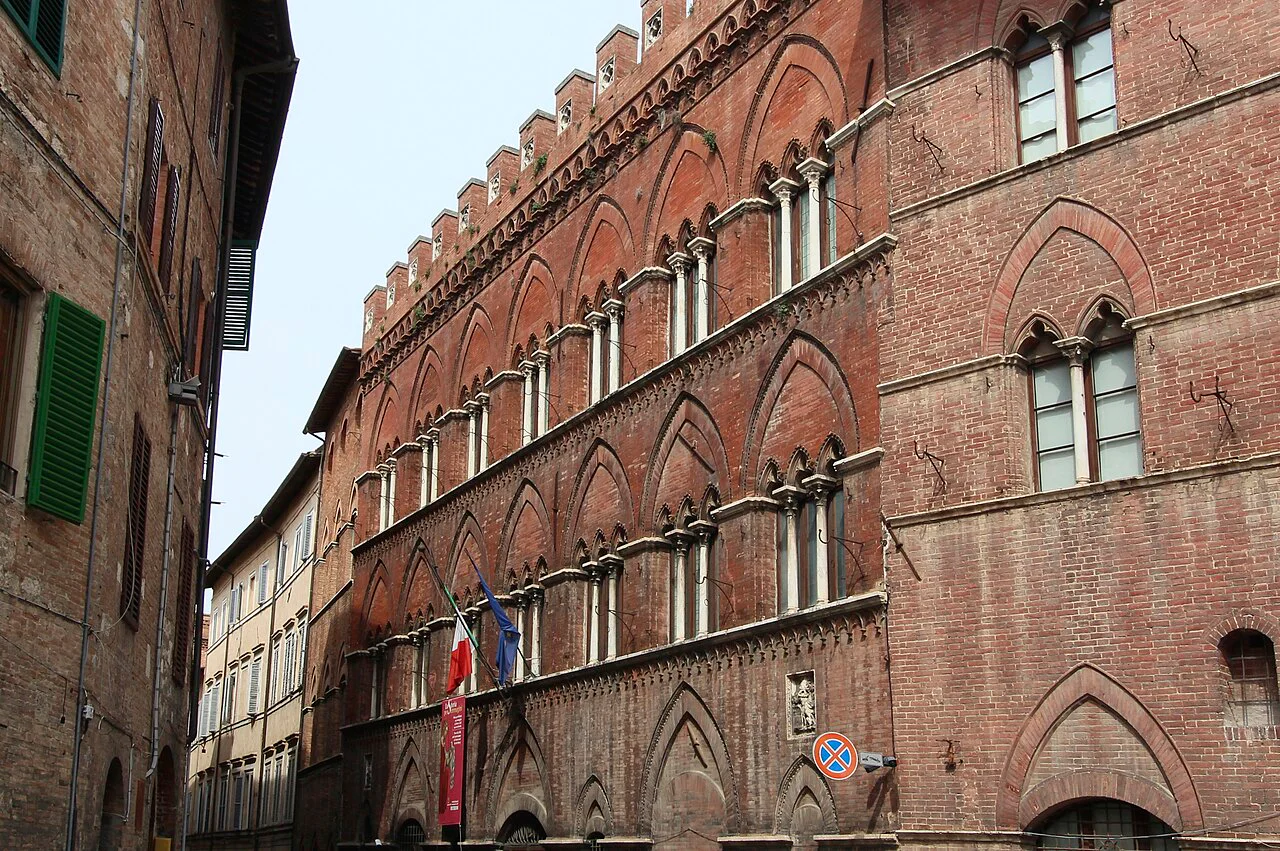
Siena · 37 artworks
Pinacoteca nazionale
Content & sources
Photo: LigaDue · CC BY-SA 4.0

Naples · 136 artworks
Museo nazionale di Capodimonte
Content & sources
Mentnafunangann · CC BY-SA 4.0
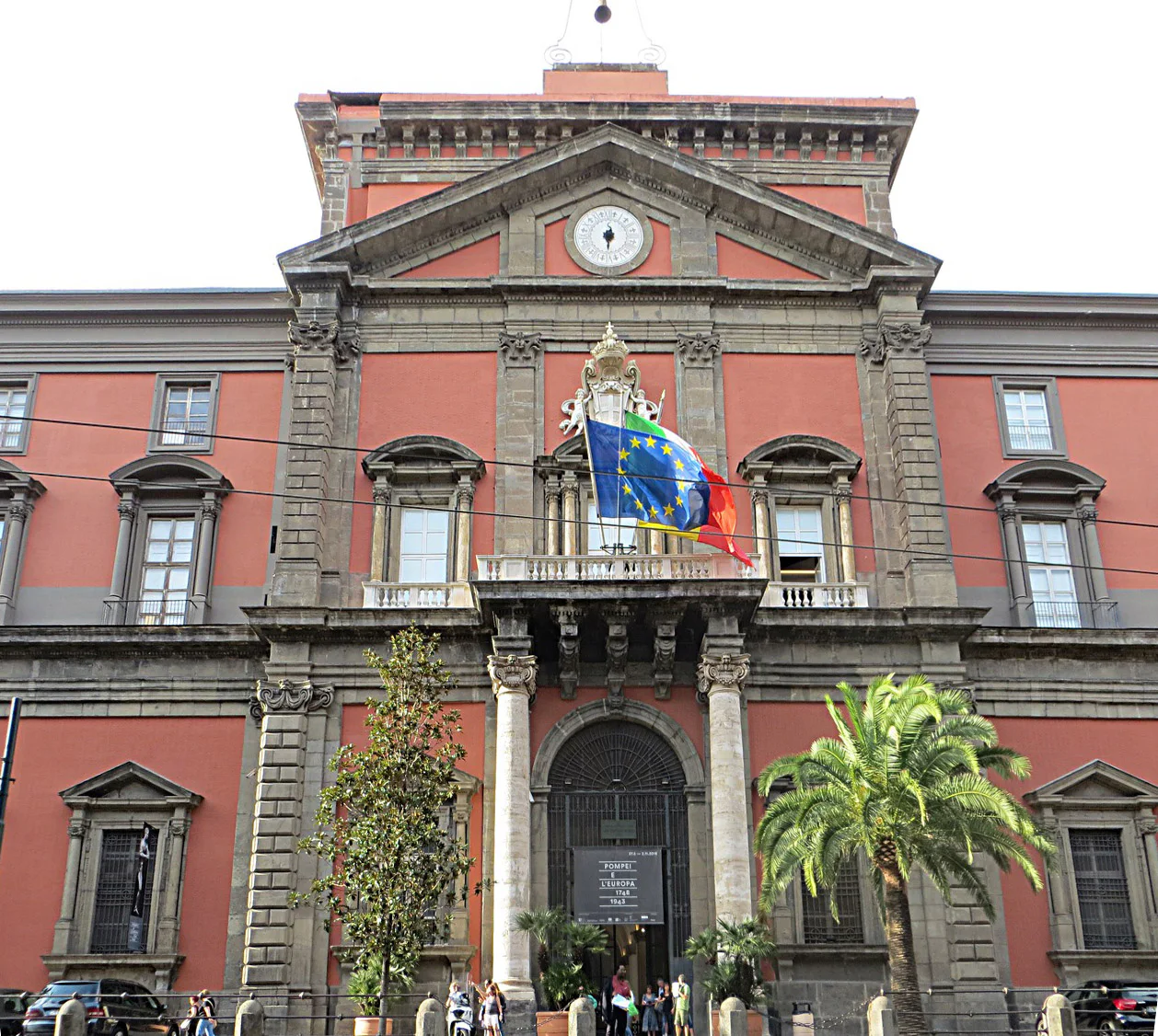
Naples · 126 artworks
Museo archeologico nazionale di Napoli
Content & sources
Mister No · CC BY 3.0
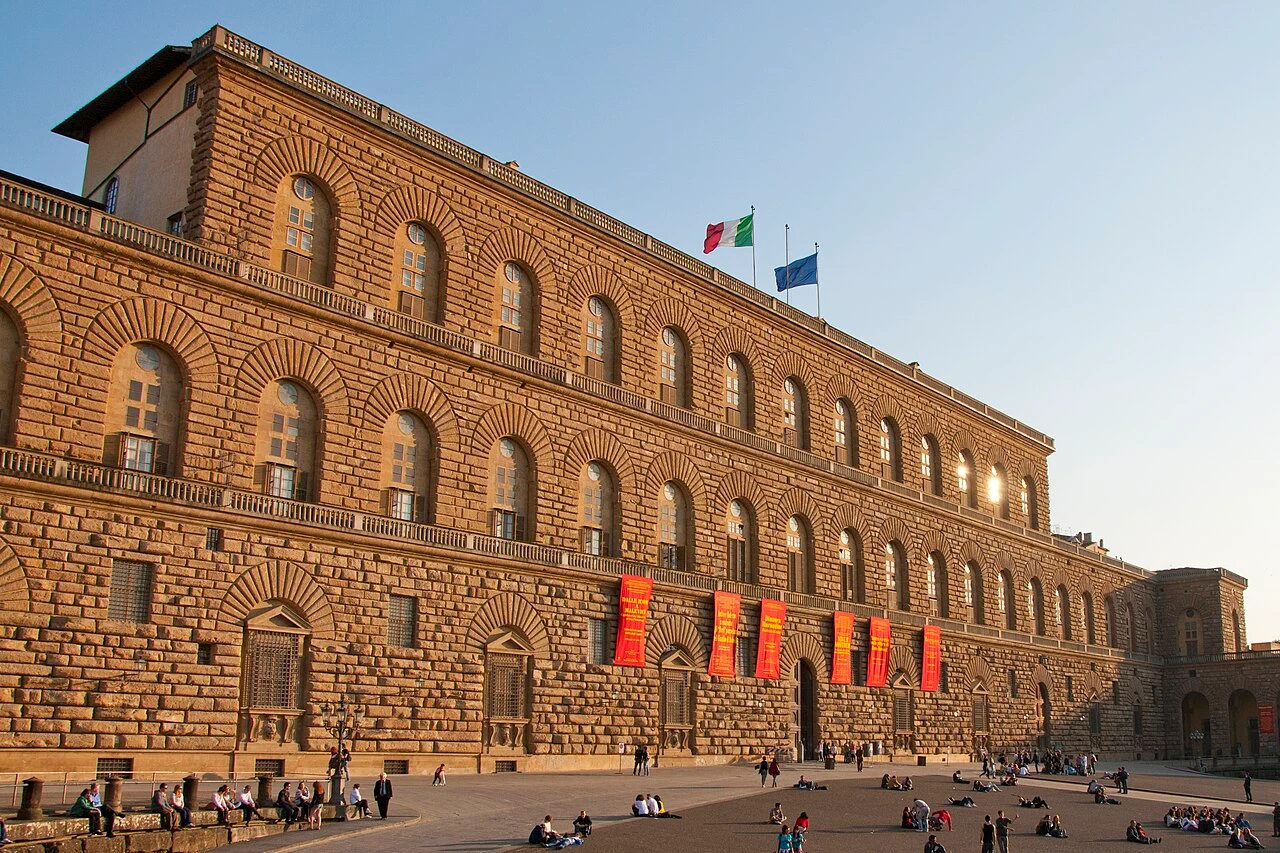
Florence · 167 artworks
Palazzo Pitti
Content & sources
Almaak · CC BY-SA 3.0
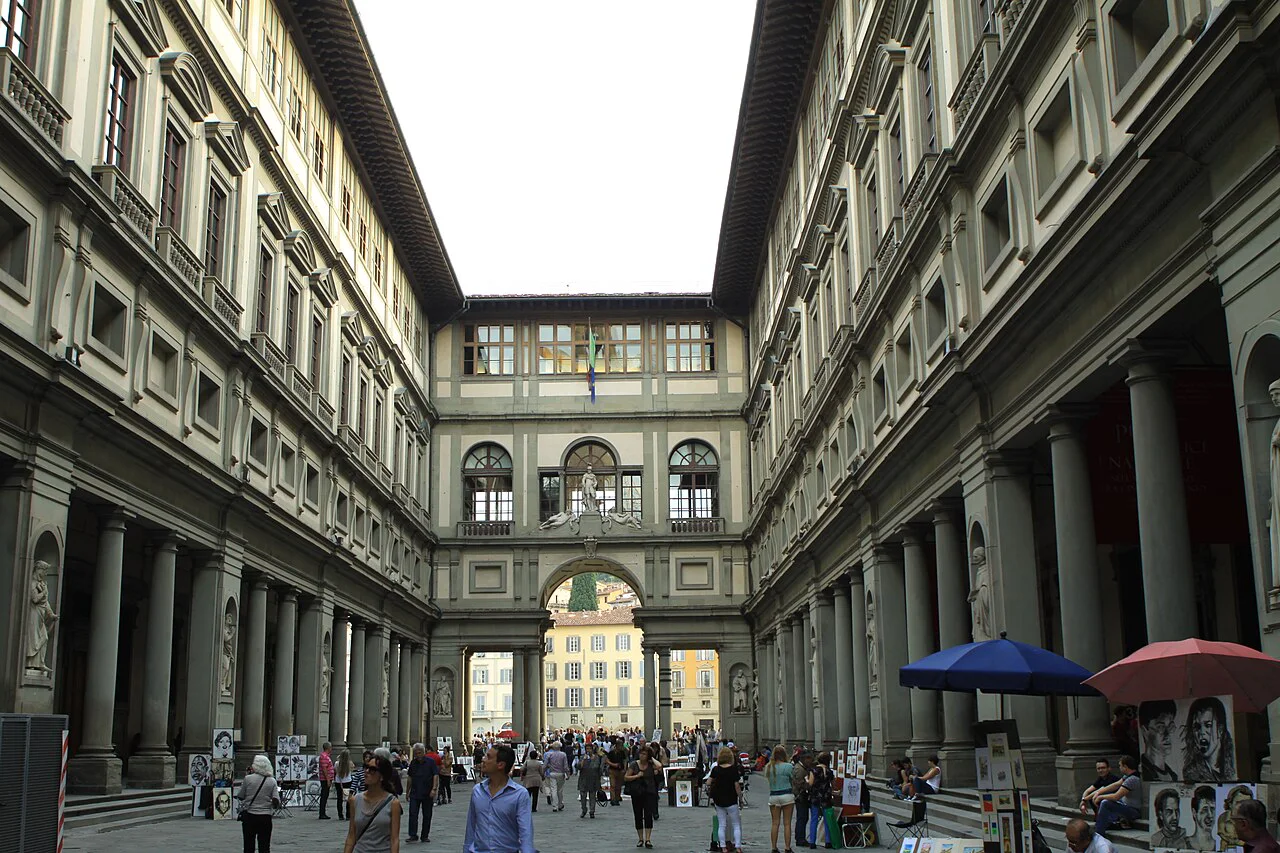
Florence · 70 artworks
Uffizi Gallery
Content & sources
Arek N. · CC BY-SA 3.0
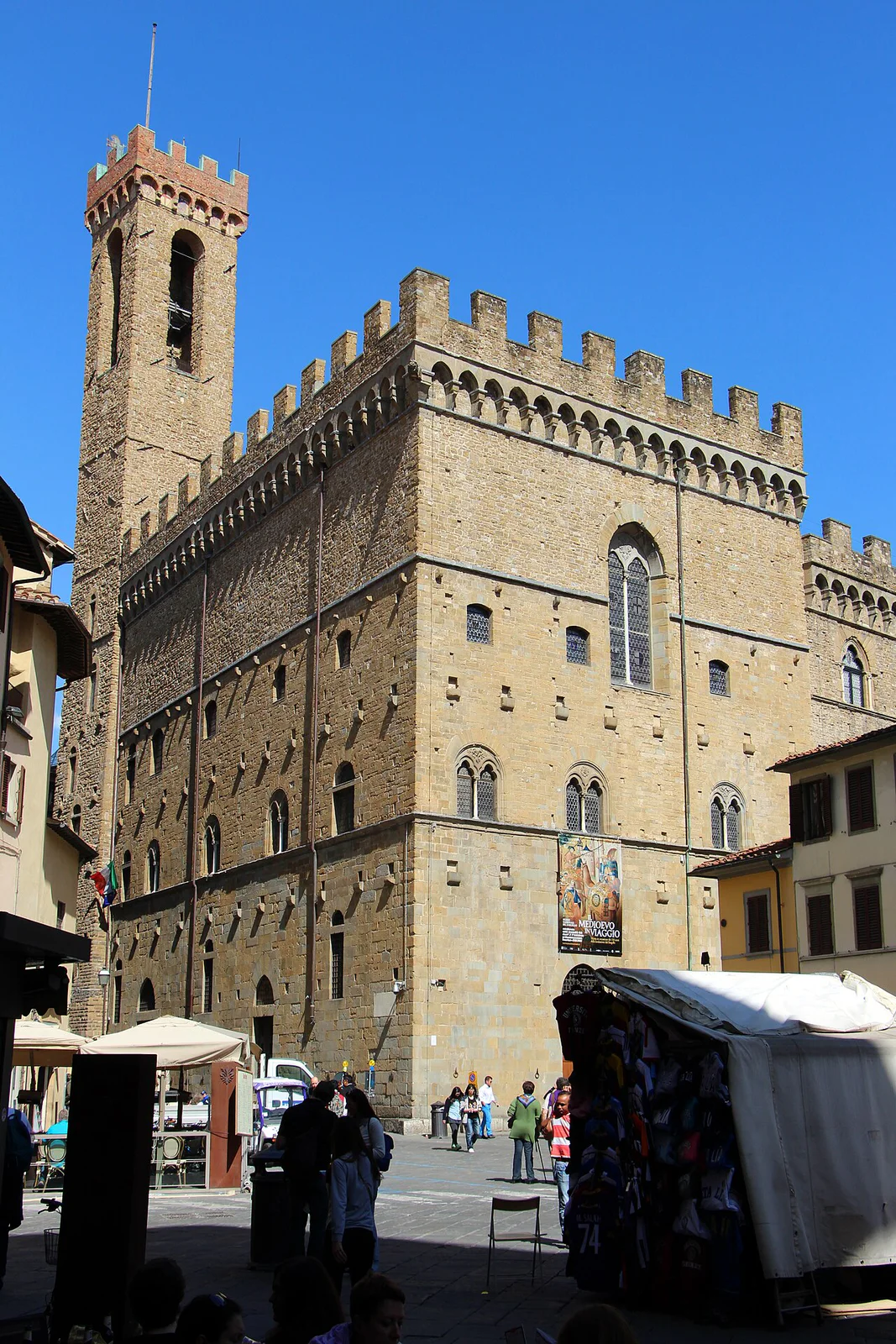
Florence · 37 artworks
Museo nazionale del Bargello
Content & sources
Photo: Sailko · CC BY 3.0