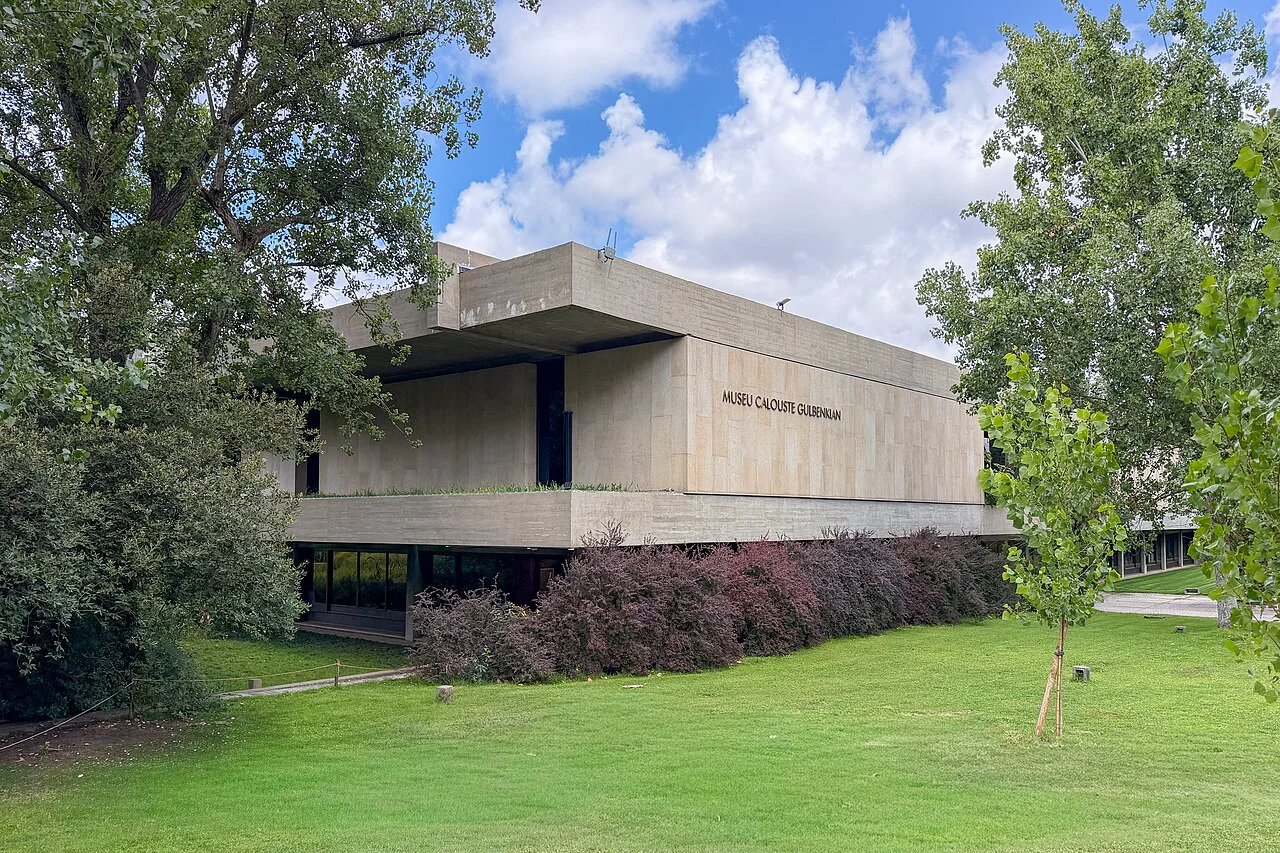
Stanza · Audio guide
Museu Calouste Gulbenkian Audio Guide
A place to remember. A story to take with you.
The Calouste Gulbenkian Museum in Lisbon is an art museum housing a private collection of works from Ancient Egypt to the early 20th century. The collection spans the arts of the Islamic World, China and…
Download Stanza, then search for “Museu Calouste Gulbenkian”.
About the tour
One guide. Your kind of visit.
The Calouste Gulbenkian Museum in Lisbon is an art museum housing a private collection of works from Ancient Egypt to the early 20th century. The collection spans the arts of the Islamic World, China and Japan and French decorative arts, and includes René Lalique jewellery and works by painters such as Rembrandt, Monet, Rubens, Manet, Renoir, Degas and Turner.
The Museu Calouste Gulbenkian guide tells the stories of 26 artworks, including Boy blowing bubbles (Édouard Manet), Pallas Athena (Rembrandt), The Wreck of a Transport Ship (J. M. W. Turner), Holy Family and Donors (Vittore Carpaccio), Quillebeuf, Mouth of the Seine (J. M. W. Turner), Virgin and Child with Saints (Master of the Drapery Studies), John Lewis Brown with Wife and Daughter (Giovanni Boldini), and Still Life with Melon (Claude Monet). Every artwork is free to hear in the Stanza app until 1 January.
Ready when you are.
- 01Get the free Stanza app.
iOS & Android
- 02Find your guide.
“Museu Calouste Gulbenkian”
- 03Download before you go.
Works offline
Audio guide / 26 artworks
Inside the guide
Get to know a few of the stories before you go. Open a stop to read more.
01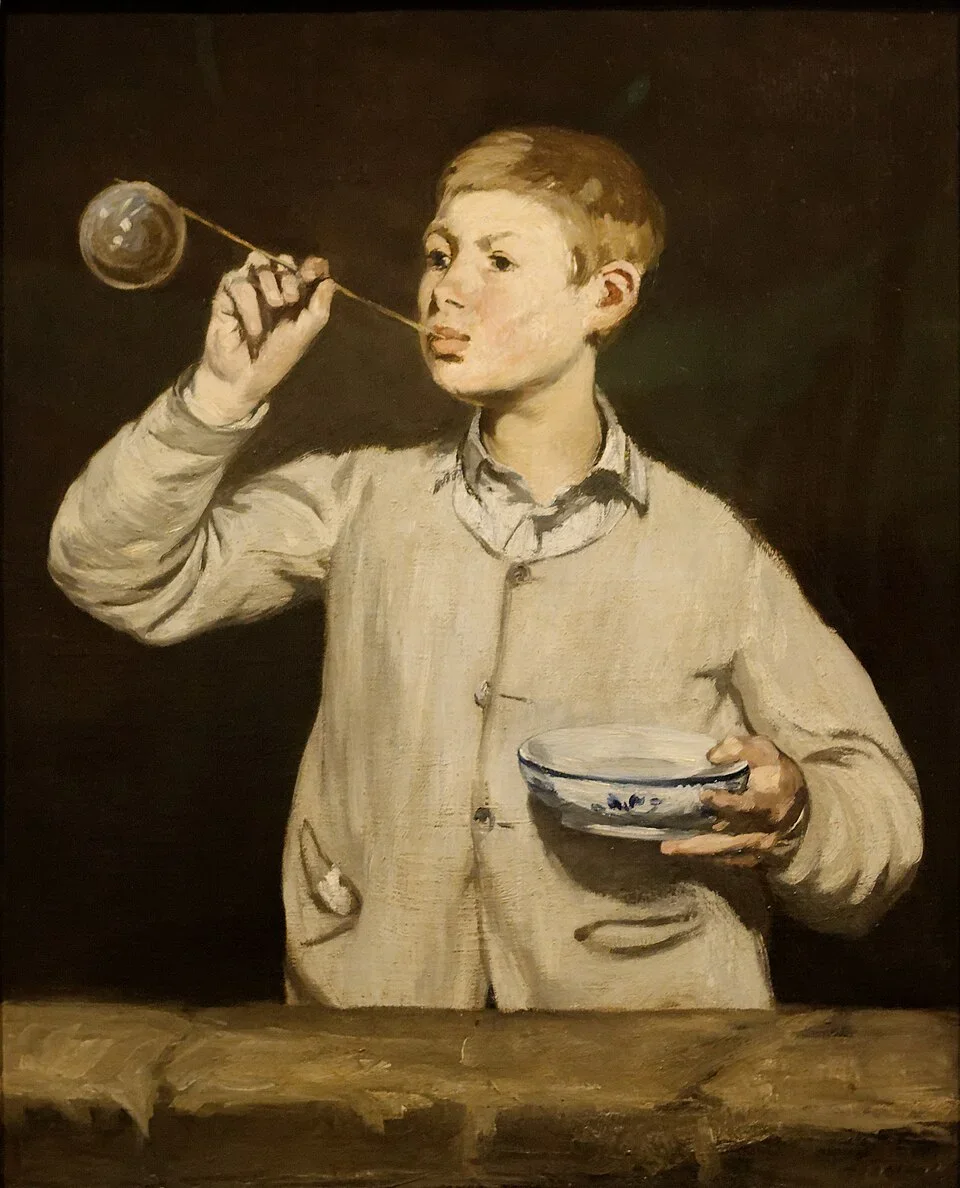
Boy blowing bubbles
There is a bowl of soapy water, and this is where the bubbles come from. Bubbles like these have long stood for how quickly a life passes, so at first this looks like a simple lesson about life. But the boy was a real person. He is Léon, fifteen, the son of Suzanne Leenhoff, whom Édouard Manet married in 1863. It is not certain whose son he was. It may have been Manet's, or Manet's own father's. The painter's own teacher painted that same subject and filled it with schoolbooks and a laurel wreath, details set there to be read. Here they are gone. The boy simply wears the clothes of his own time and blows. Manet painted Léon seventeen times, across the 1860s and 1870s.
Listen in the appÉdouard Manet · Public domain
02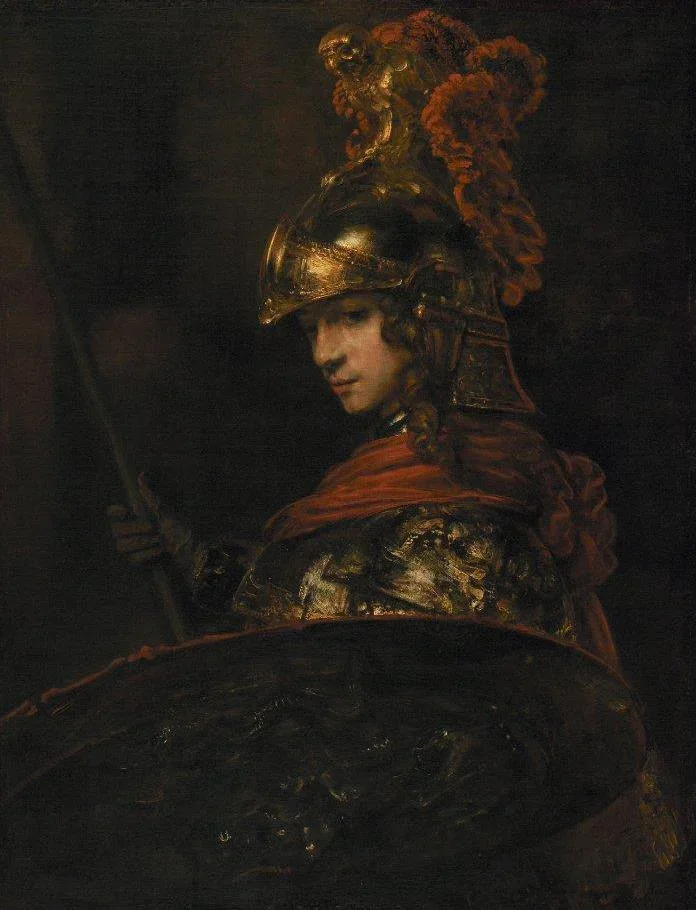
Pallas Athena
For years nobody could agree who this is. The armed figure, shown from the side, has been called Athena, Minerva, Mars, and Alexander the Great, and the argument was never settled. Ancient Greek coins carried Alexander on one side and Athena on the other, and over the centuries the two got confused. That is how a warrior came to be painted as a goddess. The long curls fall from the helmet onto the shoulders, and a red cloak is wrapped round the neck. The spear is held in a gloved right hand. None of that says which one this is. But a print from a wedding parade in 1659 shows a goddess in much the same pose and dress. In that parade the part was played by Titus, the painter's own son. That is where the idea began that Rembrandt borrowed his son's face for this figure, and Titus may even have sat for it. And high on the helmet is an owl, Athena's own symbol, the mark that points to the goddess.
Listen in the appAttributed to Rembrandt · Public domain
03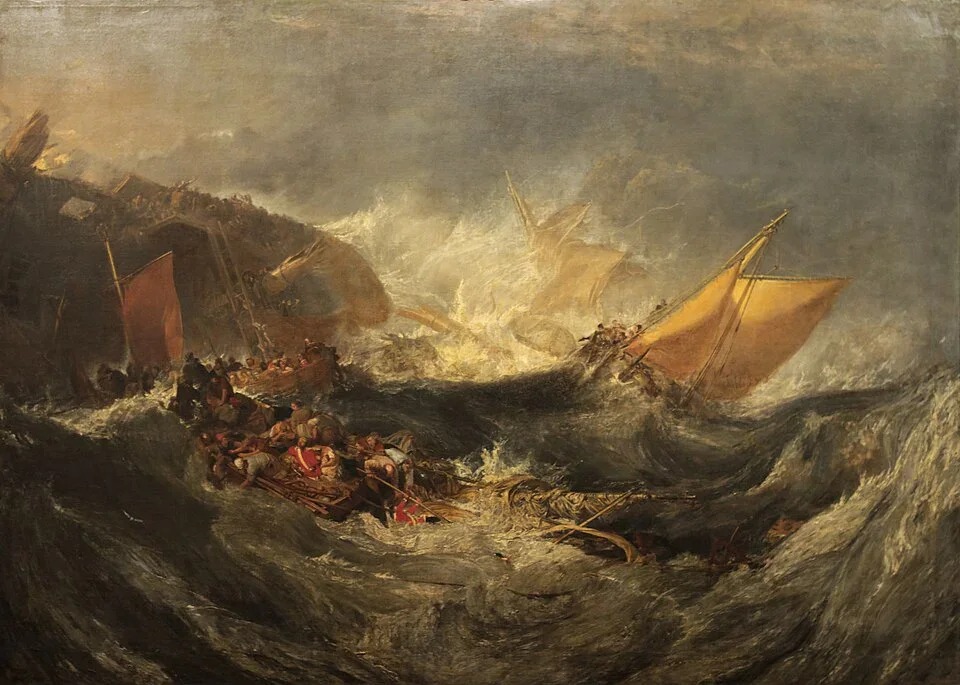
The Wreck of a Transport Ship
In an earlier shipwreck painting, you stayed outside, watching the rescue. This one puts you down in the water, your viewpoint low among the waves, so the sea seems to close right over you. The ship's deck fills the left side of the picture, rolling over as it sinks, its masts already gone. Sailors are getting into small boats, and in the foreground others try to reach the other boats across broken masts and sails. The whole scene is built on a deliberate lopsidedness, broken masts and oars set in diagonals against the curling whirlpools of water. Against all that, the figures look small and lost. Many took this for the wreck of the Minotaur. It was a Royal Navy ship, lost off the Dutch coast in 1810. Five hundred and seventy of the six hundred and eighty aboard died. It was even shown under that name. But it cannot be that ship. Turner had made sketches for the picture around 1805, before the Minotaur went down. And the man who bought it, Charles Pelham, had paid him in May 1810, before the disaster. Titles seem to have been changed often then. What is still not known is whether the painting shows any particular shipwreck at all.
Listen in the appPhoto: Yelkrokoyade · Public domain
04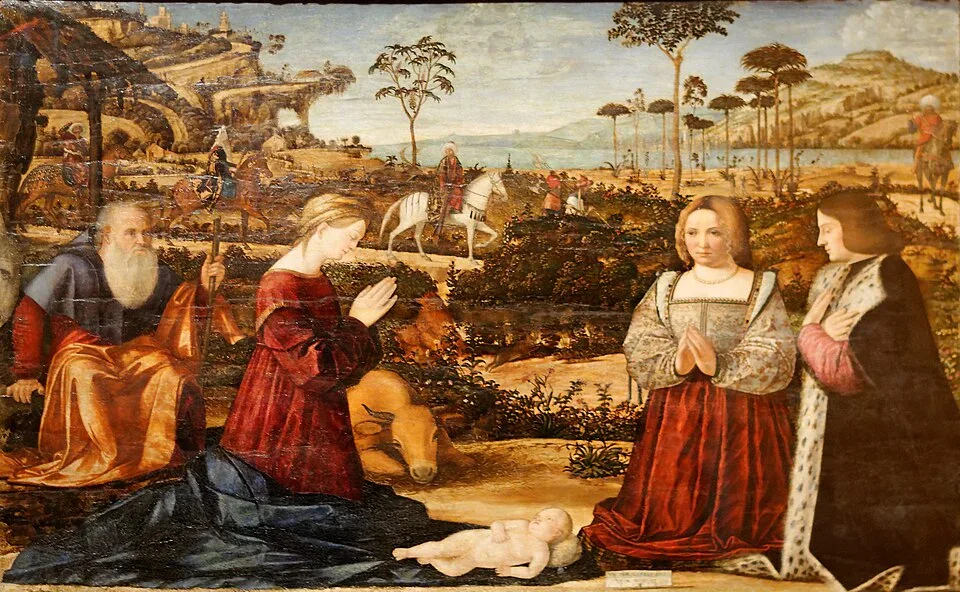
Holy Family and Donors
The baby has only just been born, and already his family is gathered around him. Farther back, riders are coming toward them on horseback, a line of them. They have not reached the group yet. At the centre is the child. Nothing about him marks him as divine. He is there as an ordinary baby. The donors are on the right, two richly dressed people adoring him too. Carpaccio painted them the same size as the holy figures, in the same plane, real people inside a sacred scene. They were people of high standing in the region of Venice where he worked. From the fifteenth century on, this was a common way to let secular people into a holy picture. It reflected humanist ideas spreading through art. Behind them all, the broad landscape was modelled on the art of Giorgione.
Listen in the appPhoto: Yelkrokoyade · CC BY-SA 4.0
05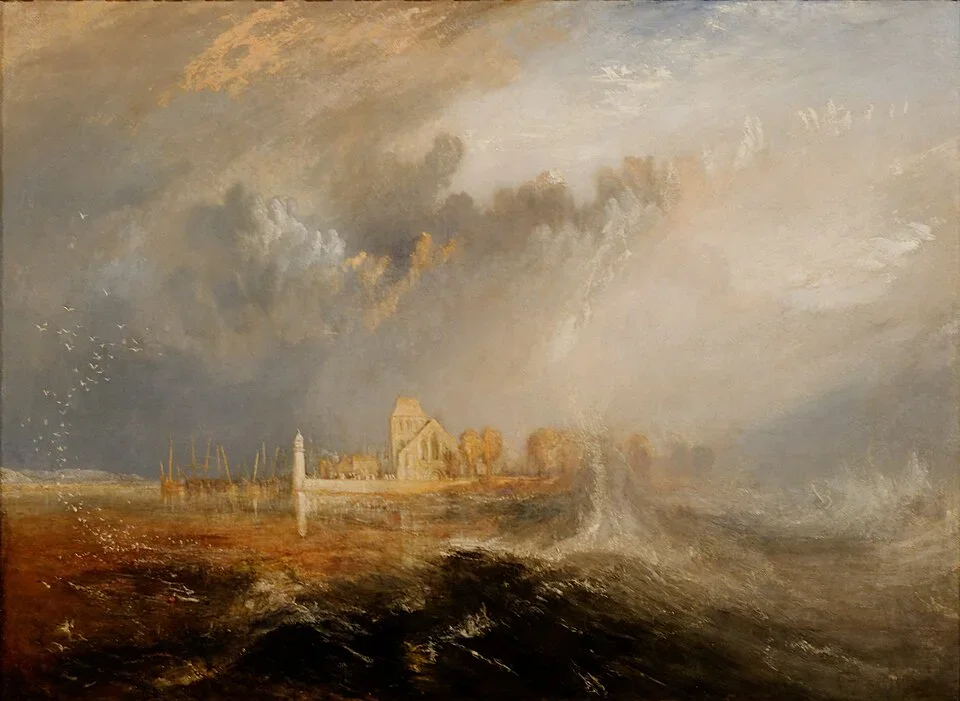
Quillebeuf, Mouth of the Seine
A church and a lighthouse stand at the waterfront of a village on the Seine, with waves breaking in the foreground. On the right, a lookout is going under the water. It stands for a ship sinking. The scene shows the tidal bore, the great wave that comes with a sudden rise of the tide. It arrives without warning and can sink a boat. Turner was drawn to the place and came back four times, making several watercolours of the view. When he showed this at the Royal Academy in 1833, a note warned of just this danger to boats. Here he groups the lighthouse, the church and the cemetery, and the three give the scene its tragic weight. Above, a flock of seagulls rises in a spiral. Their turning circles run right through the picture, echoing the breaking waves and holding the scene in balance.
Listen in the appPhoto: Yelkrokoyade · Public domain
06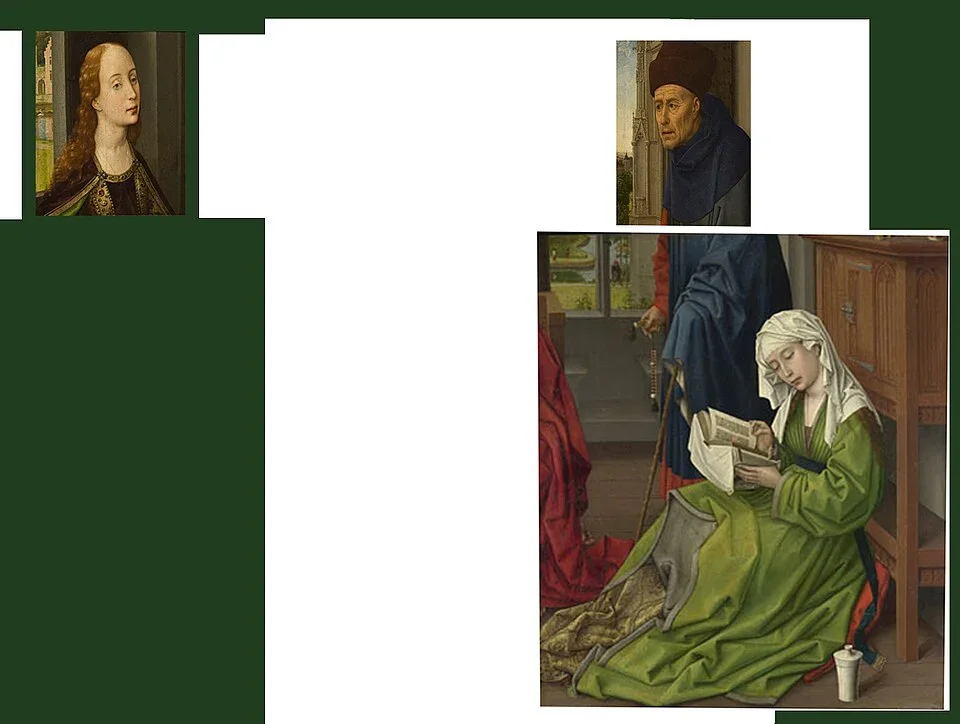
Virgin and Child with Saints
A child sits on a woman's lap and leans toward a book. A kneeling man holds it for him. The woman is the Virgin, the man Saint John the Evangelist, and the child Christ. This is a drawing in Stockholm, sometimes attributed to the Master of the Drapery Studies, after a lost painting by Rogier van der Weyden. Van der Weyden made the original early in his career, probably between 1435 and 1438. He had just become painter to the city of Brussels. Some time before 1811 the big altarpiece was cut into at least three pieces. One of them had its background covered in thick dark brown and black paint. This was probably done after painting like this went out of fashion, and it came to look like a small ordinary scene. Two of the other pieces surfaced in 1907 in a collection in Suresnes, France. Then in 1955 the dark paint was cleaned away. Only then could the head of Saint Joseph be matched to a figure standing behind Mary Magdalene in London. In 1971 the scattered pieces were fitted back into one composition, the Virgin and Child in the middle and six saints around them.
Listen in the appPhoto: Paul Hermans · CC BY-SA 3.0
07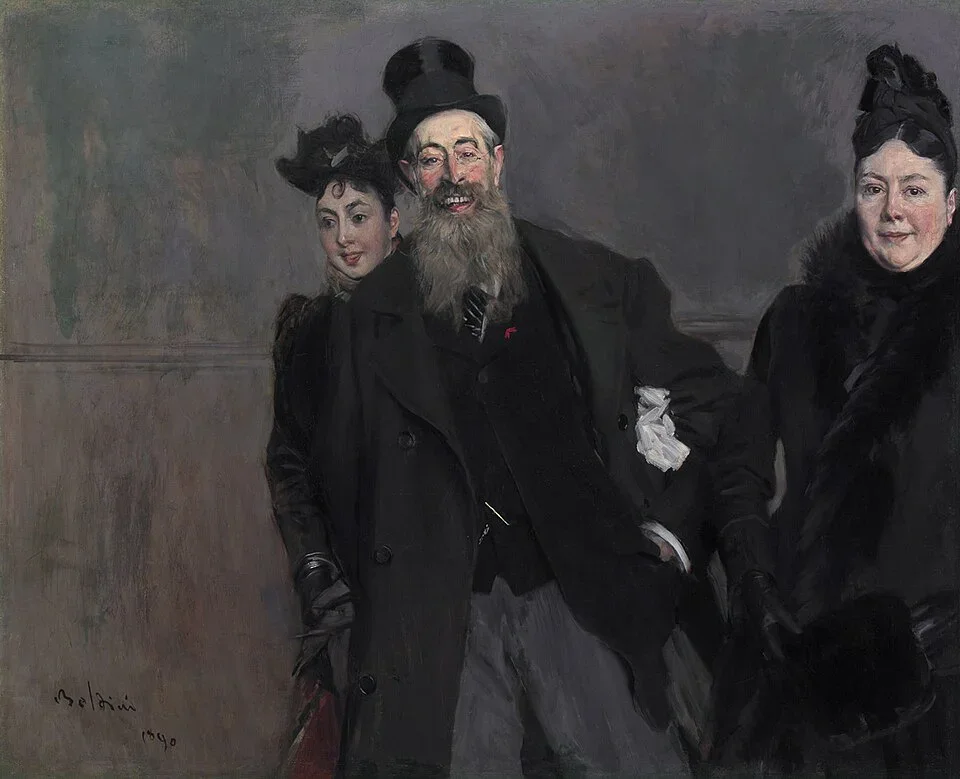
John Lewis Brown with Wife and Daughter
There is something white under the arm of the man in the middle that nobody can name for certain, perhaps a folded newspaper. The whole scene is hard to place as well. At first it looks like a walk that has just stopped. The faces are cheerful, the coats and hats caught in movement, pushed a little out of step. Brown, in the center, is smiling and calling out, looking toward the painter as if they had passed each other in the street. His wife, on his right, smiles straight at you. His daughter, on his left, smiles too, but does not quite look out the way her parents do. Then a molding along the left edge gives it away. This is no street. They are indoors, most likely in Boldini's studio, where he was painting them. The man known for battle scenes and dogs and horses is now the one being painted. The portrait went on show at the Salon of French Artists in 1890. The public and critics noticed it, only a few months before Brown died. And the whole thing was set down in a few quick zigzag strokes.
Listen in the appGiovanni Boldini · Public domain
08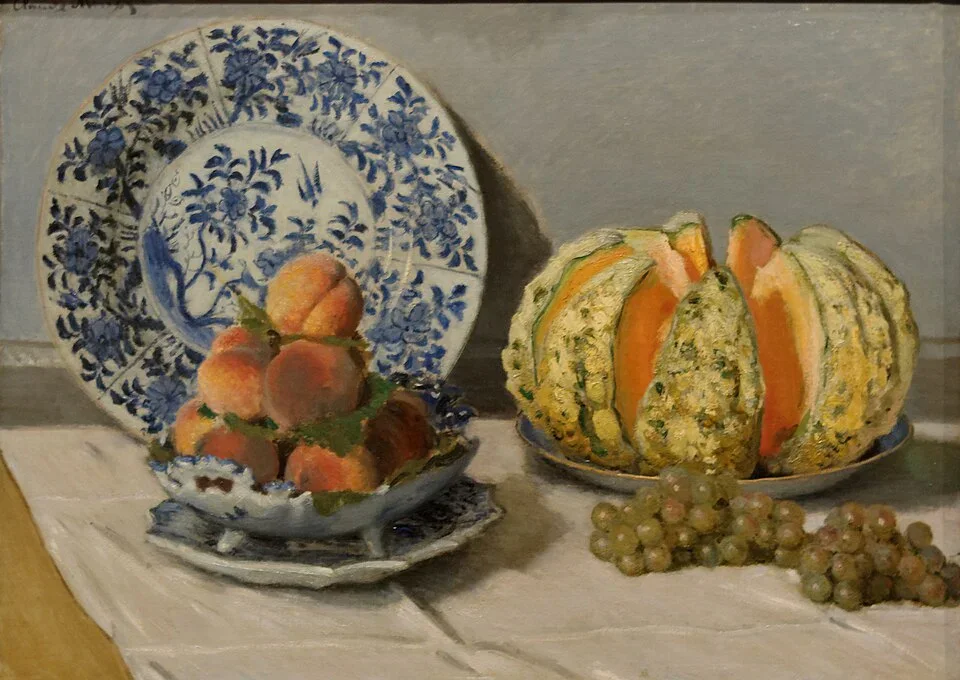
Still Life with Melon
Monet painted this fruit and porcelain in 1872, and he was after more than a tidy record of them. Fantin-Latour treated such subjects in the formal academic way. Manet was the painter he felt closer to, and he chose to put his own feeling into these inanimate things. That feeling is in the round forms that follow one another across the painting. The fruit and the Chinese porcelain on the white cloth share a quiet rhythm of shape and colour. The light that floods the canvas makes you think of dawn, the light of the open air he loved. Still lifes were rare for him. This one came early. He did not truly take to the form until the 1880s, about six months after his wife Camille died.
Listen in the appClaude Monet · Public domain
09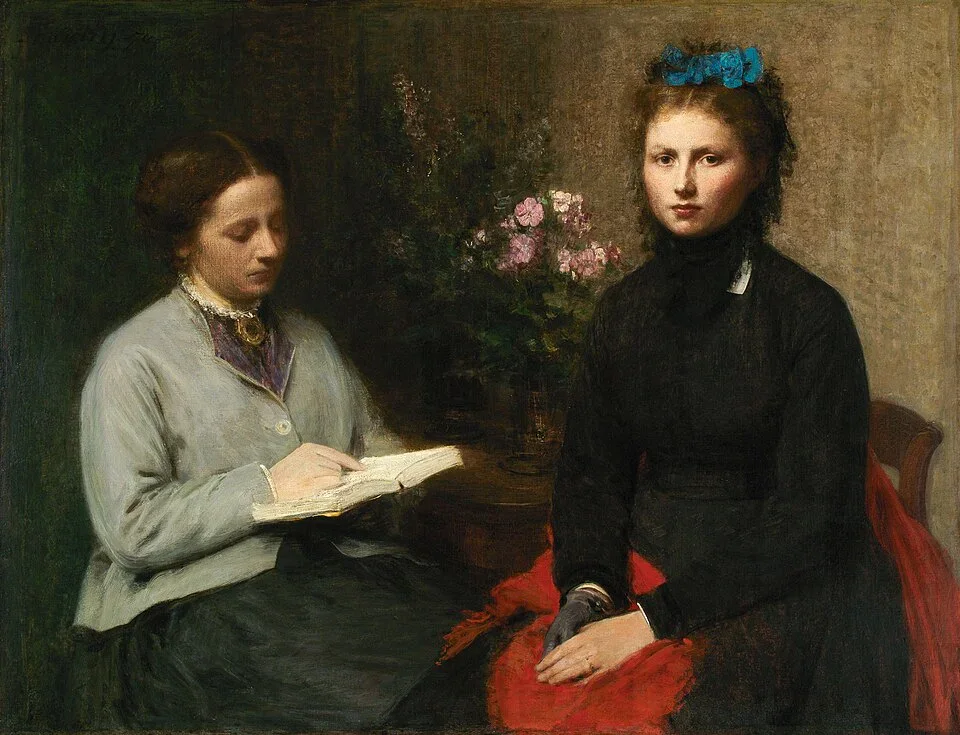
The Reading
A woman reads, her hand following the words. She is Victoria Dubourg, an artist who would become Fantin-Latour's wife, and reading was a subject he kept returning to. Here he has placed her beside her sister Charlotte, with a vase of flowers standing on a table between them. Charlotte, on the right, looks straight out at you. She appears in his paintings again and again, and perhaps there was a quiet understanding between her and the painter. The surface around them catches the light, while the women themselves are in the darkest part of the painting. That is what leaves them close and far apart at once.
Listen in the appHenri Fantin-Latour · Public domain
10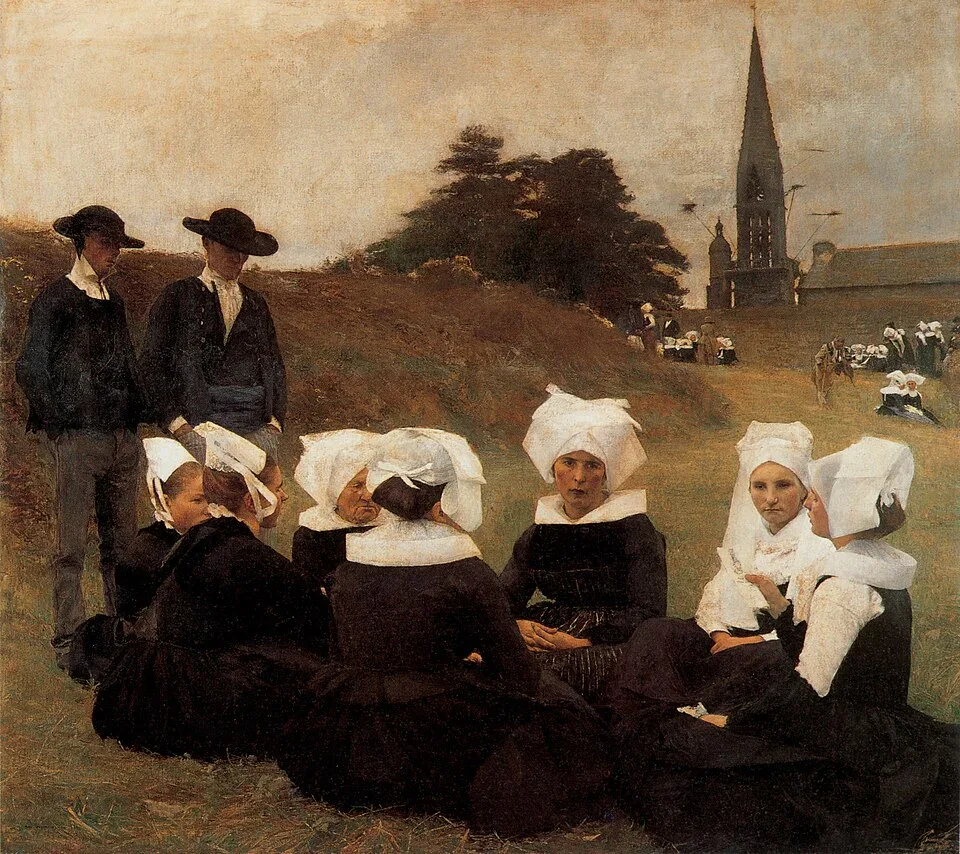
Les Bretonnes au Pardon
Was this moment caught as it happened, or carefully arranged? Seven women are huddled on the grass in a churchyard, waiting for a pardon ceremony to begin. The pardon is at Rumengol, in Finistère, Brittany. They wear the stiff white headdresses and collars they would keep for a day like this, over long, plain dark dresses. Two men in round black hats stand to their left, heads bowed, looking at the women. The women sit almost uncomfortably close, and the framing is tight, so the whole thing looks like a picture taken in passing. None of it was caught. Pascal Dagnan-Bouveret built it from photographs. He had a friend pose in a patch of grass. He photographed the church in the background, with festival flags sticking out of the lower spire. Drawings and oil sketches went into it as well. That is where the sharp, almost photographic look comes from. When it was shown at the Salon it was warmly received and took the grand prize. Gauguin and Bernard, who treated the same Breton ceremonies in a far more radical way, were disdained there. It was the high point of his Breton paintings, coming straight after his earlier Pardon in Brittany.
Listen in the appPascal Dagnan-Bouveret · Public domain
- 11
Rest on the Flight into Egypt
Giovanni Battista Cima da Conegliano · 1496–1498
- 12
Portrait of Camille Monet
Pierre-Auguste Renoir · 1874
- 13
Portrait of Helena Fourment
Peter Paul Rubens · 1630–1632
- 14
A Basket of Roses
Henri Fantin-Latour · 1885
- 15
Before the Race
Amadeo de Souza Cardoso · 1912
- 16
Portrait of a young woman
Domenico Ghirlandaio · c. 1490
- 17
Heures Lamoignon
Bedford Master · c. 1415
- 18
Marco Antonio Savelli
Giovanni Battista Moroni · 1543–1544
- 19
Statue of official Bes
Unknown Artist · -635
- 20
The Mirror of Venus.
Edward Burne-Jones · 1875–1877
- 21
Statue of Calouste Gulbenkian
Leopoldo de Almeida · 1965
- 22
Book of Hours of Margaret of Cleves
Unknown Artist · 1395–1400
- 23
Torso of Pedubast I
Unknown Artist · 9th century BC
- 24
Bust of Saint Joseph
Rogier van der Weyden · c. 1445
- 25
Bust of the Catherine (?)
Rogier van der Weyden · c. 1445
- 26
Portrait of Lady Elizabeth Conyngham
Thomas Lawrence · 1821–1824
Museu Calouste Gulbenkian
Frequently asked questions
How much does the guide cost?
Free app download. Free until 1 January. Listed guide price: $0.99. Audio guide only. Venue admission is separate.
Can I listen without internet?
Yes. Download the guide’s audio, images, and maps in the app before your visit. Your downloaded content is then available offline.
Can I listen in my language?
In English for now. More languages soon.
Do I need to follow a schedule?
No. This is a self-guided experience. Choose your stops, pause whenever you like, and return to a story at your own pace.
Which artworks are in the Museu Calouste Gulbenkian audio guide?
26 artworks, including Boy blowing bubbles (Édouard Manet), Pallas Athena (Rembrandt), The Wreck of a Transport Ship (J. M. W. Turner), Holy Family and Donors (Vittore Carpaccio), Quillebeuf, Mouth of the Seine (J. M. W. Turner), Virgin and Child with Saints (Master of the Drapery Studies), John Lewis Brown with Wife and Daughter (Giovanni Boldini), and Still Life with Melon (Claude Monet). The full list is on this page.
Is this the museum’s official audio guide?
No. Stanza is an independent audio guide app and is not affiliated with Museu Calouste Gulbenkian. Museum admission is separate.
At your own pace
Explore Museu Calouste Gulbenkian.
Download Stanza, then search for “Museu Calouste Gulbenkian”.
Free app download · Guide price shown in the app
Keep exploring
Nearby audio guides
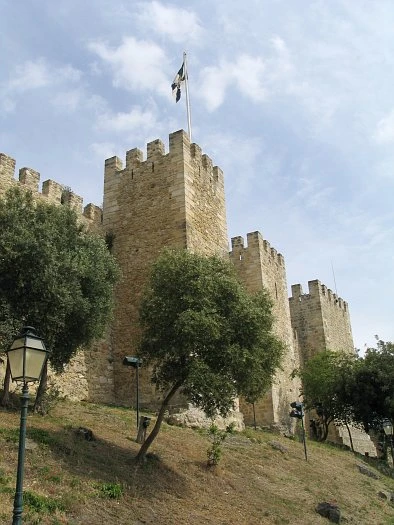
Lisbon · 3 km
São Jorge Castle
Content & sources
Photo: Rotatebot · CC BY-SA 2.0
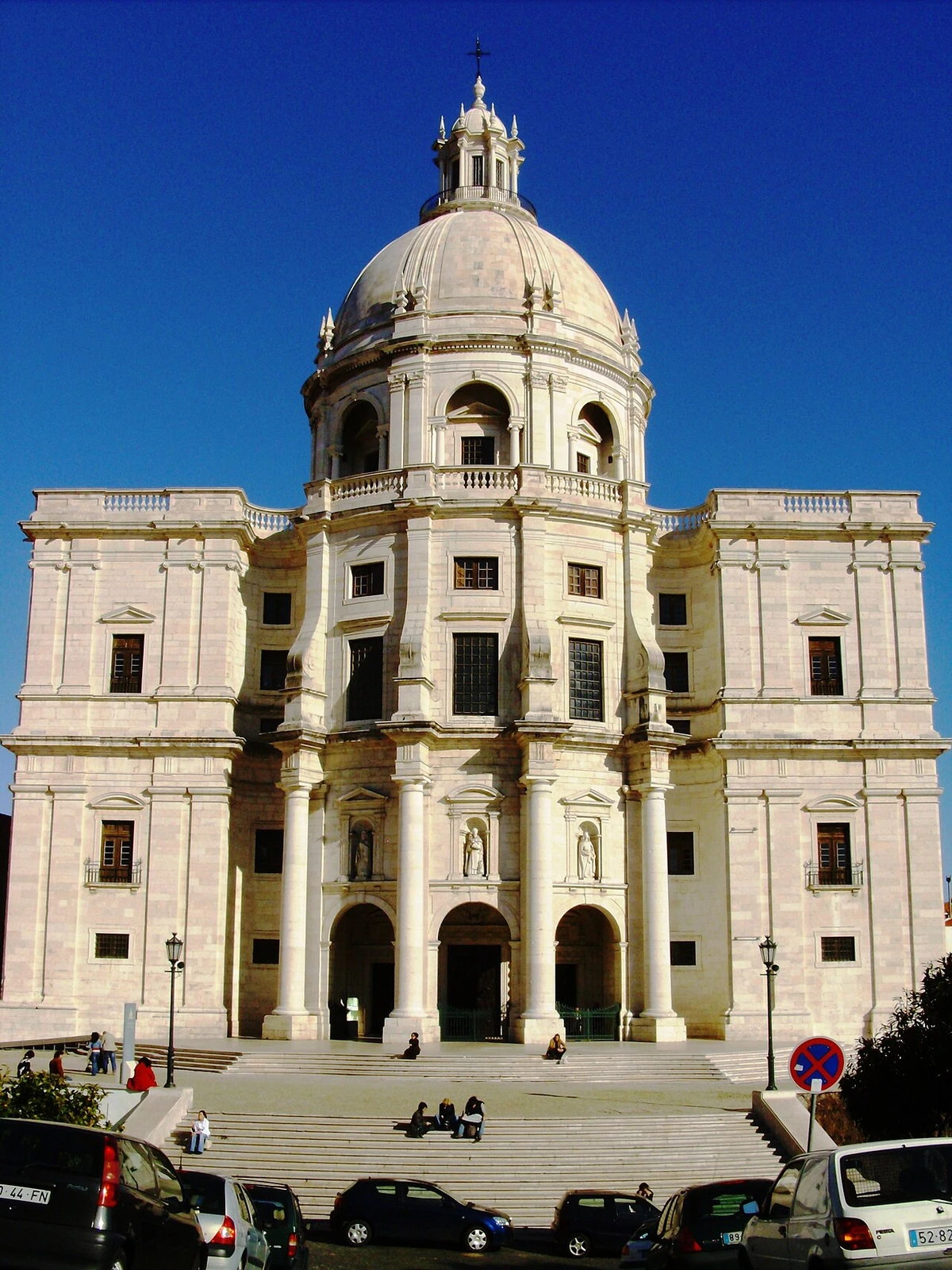
Lisbon · 3 km
Igreja de Santa Engrácia
Content & sources
Photo: Carlos Luis M C da Cruz · Public domain
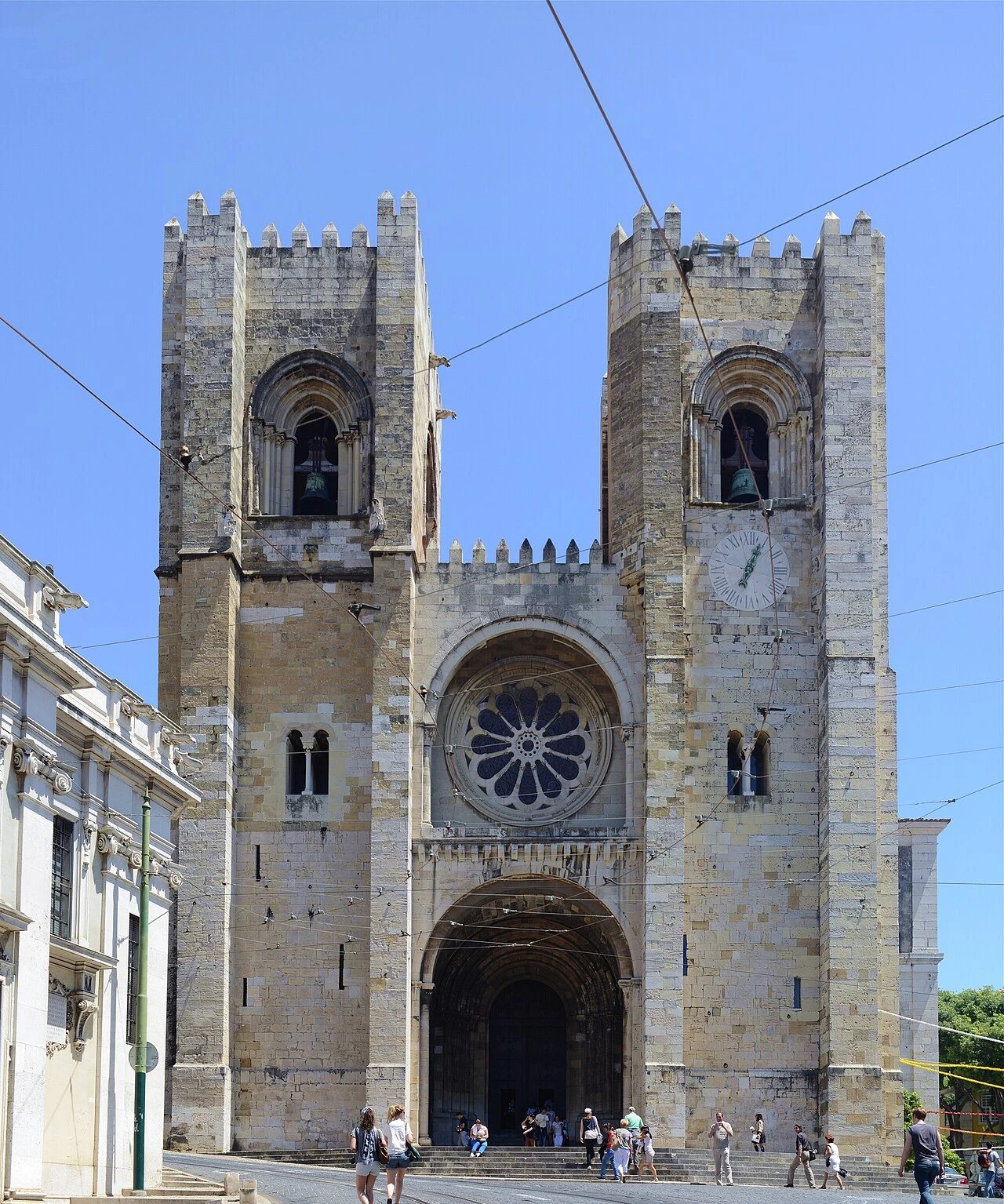
Lisbon · 4 km
Lisbon Cathedral
Content & sources
Photo: Alvesgaspar · CC BY-SA 3.0
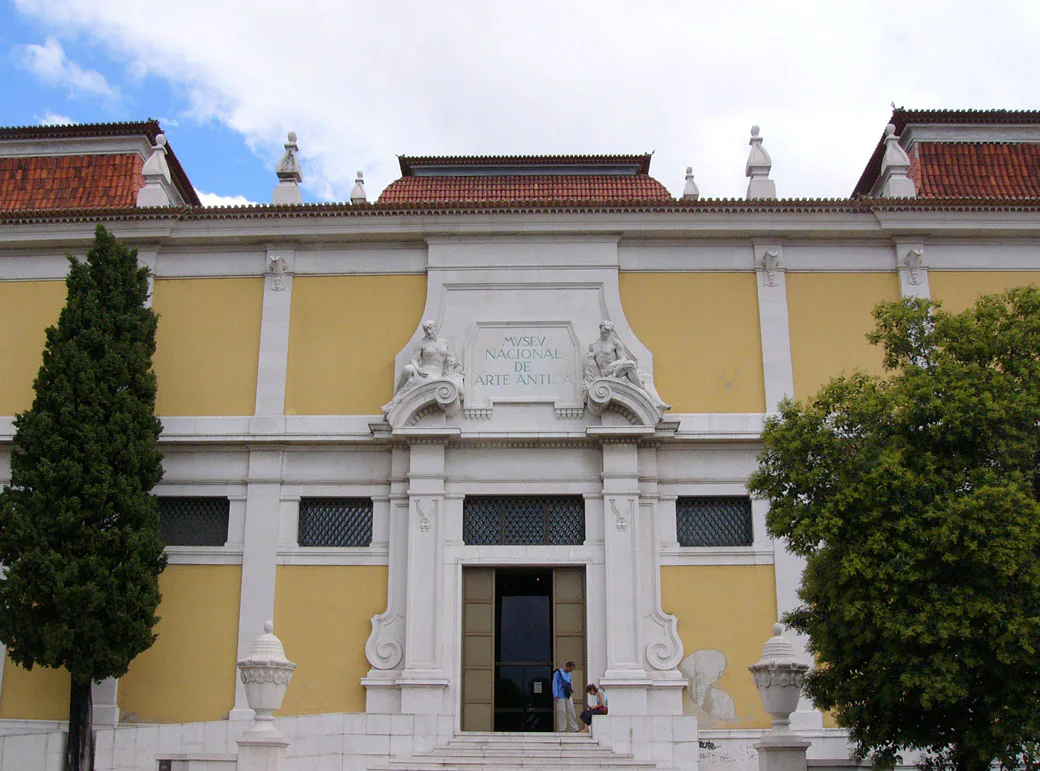
Lisbon · 4 km
Museu Nacional de Arte Antiga
Content & sources
Photo: Fulviusbsas · CC BY-SA 3.0
Art museums
More art museum audio guides
Lisbon · 81 artworks
Museu Nacional de Arte Antiga
Content & sources
Photo: Fulviusbsas · CC BY-SA 3.0
Seville · 24 artworks
Museo de Bellas Artes de Sevilla
Content & sources
Pepe Morón · CC BY 4.0
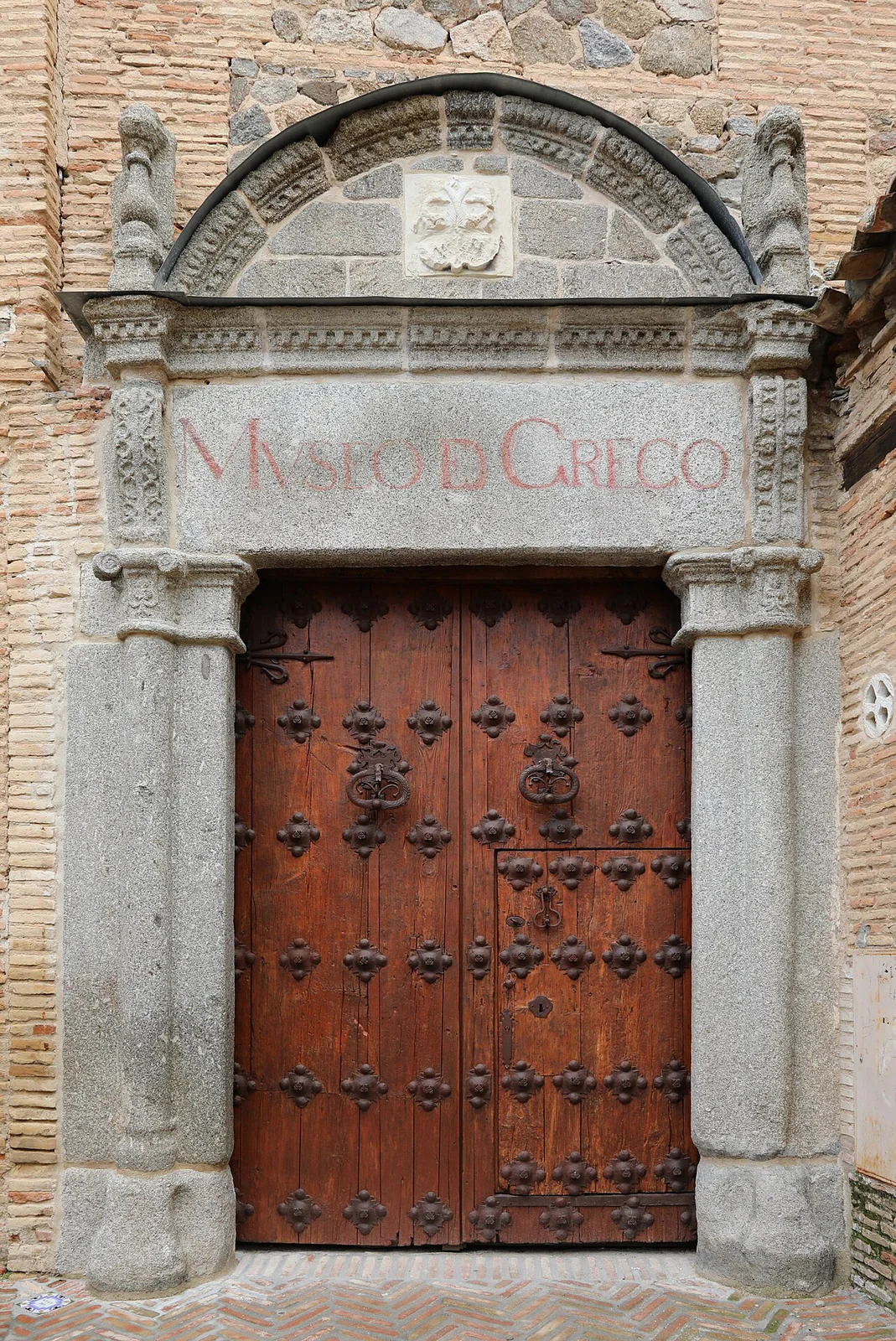
Toledo · 23 artworks
Museo del Greco
Content & sources
Francesco Bini · CC BY-SA 4.0
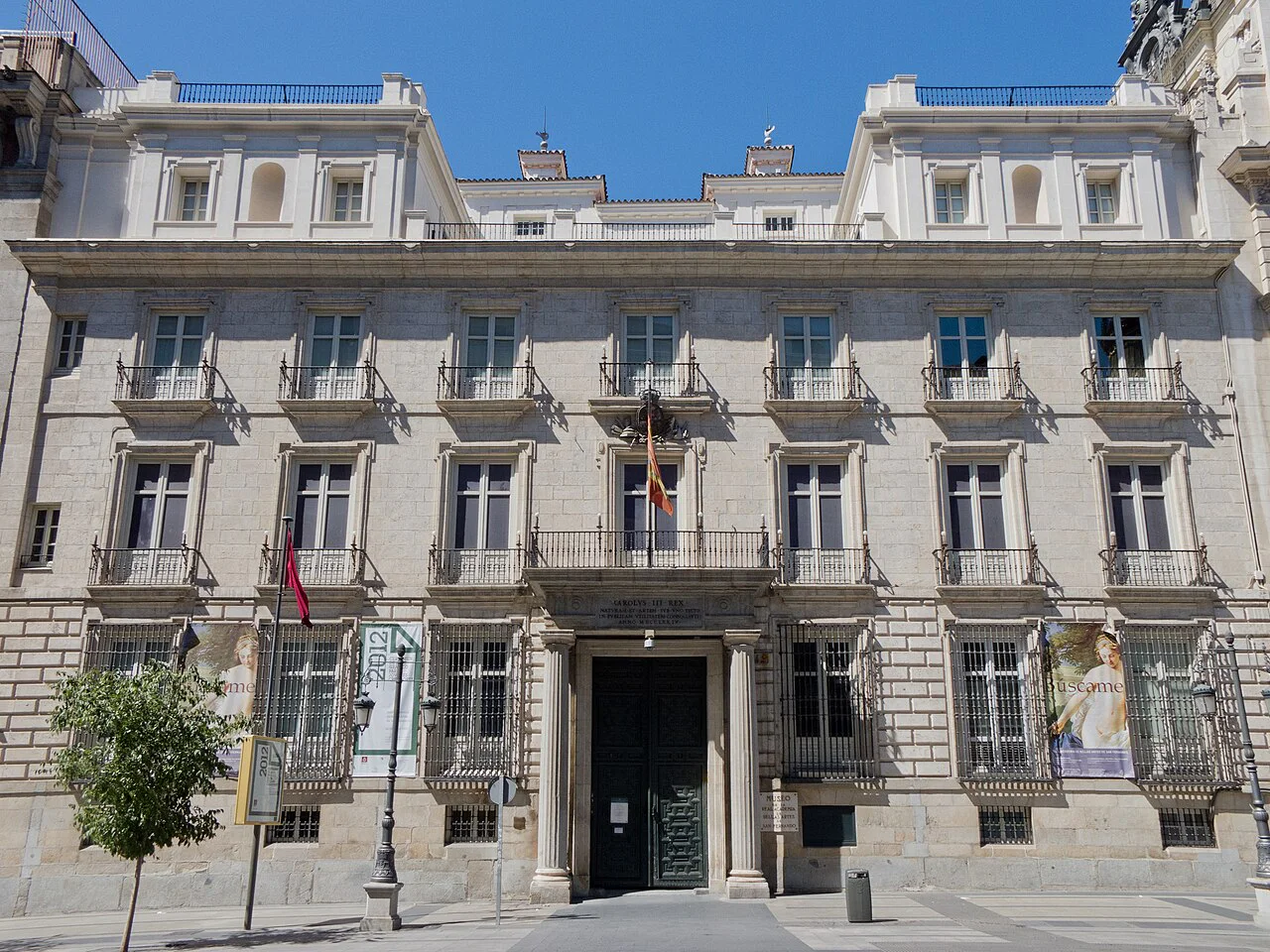
Madrid · 23 artworks
Real Academia de Bellas Artes de San Fernando
Content & sources
Carlos Delgado · CC BY-SA 3.0
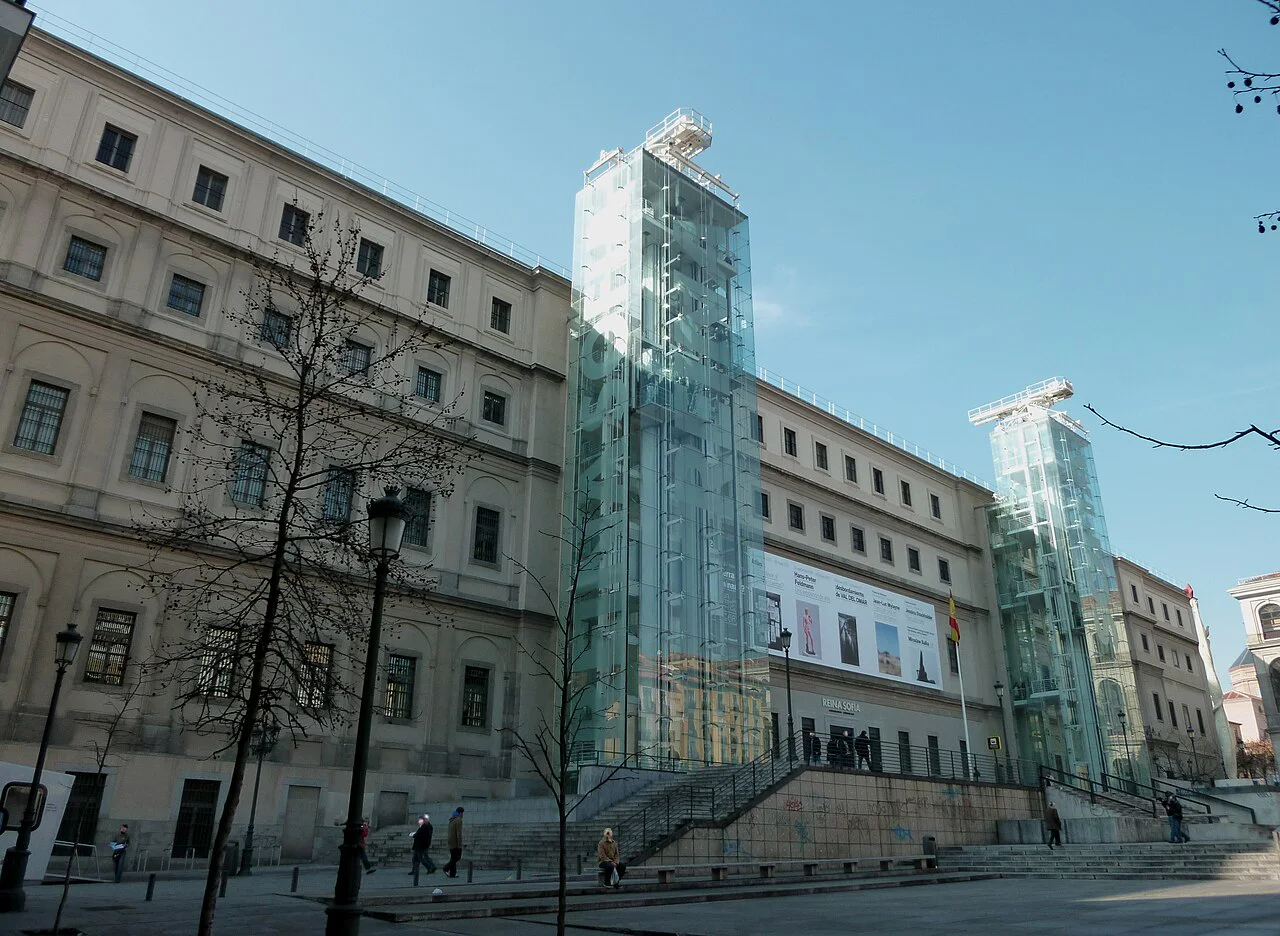
Madrid · 19 artworks
Museo Nacional Centro de Arte Reina Sofía
Content & sources
Luis García (Zaqarbal) · CC BY-SA 3.0
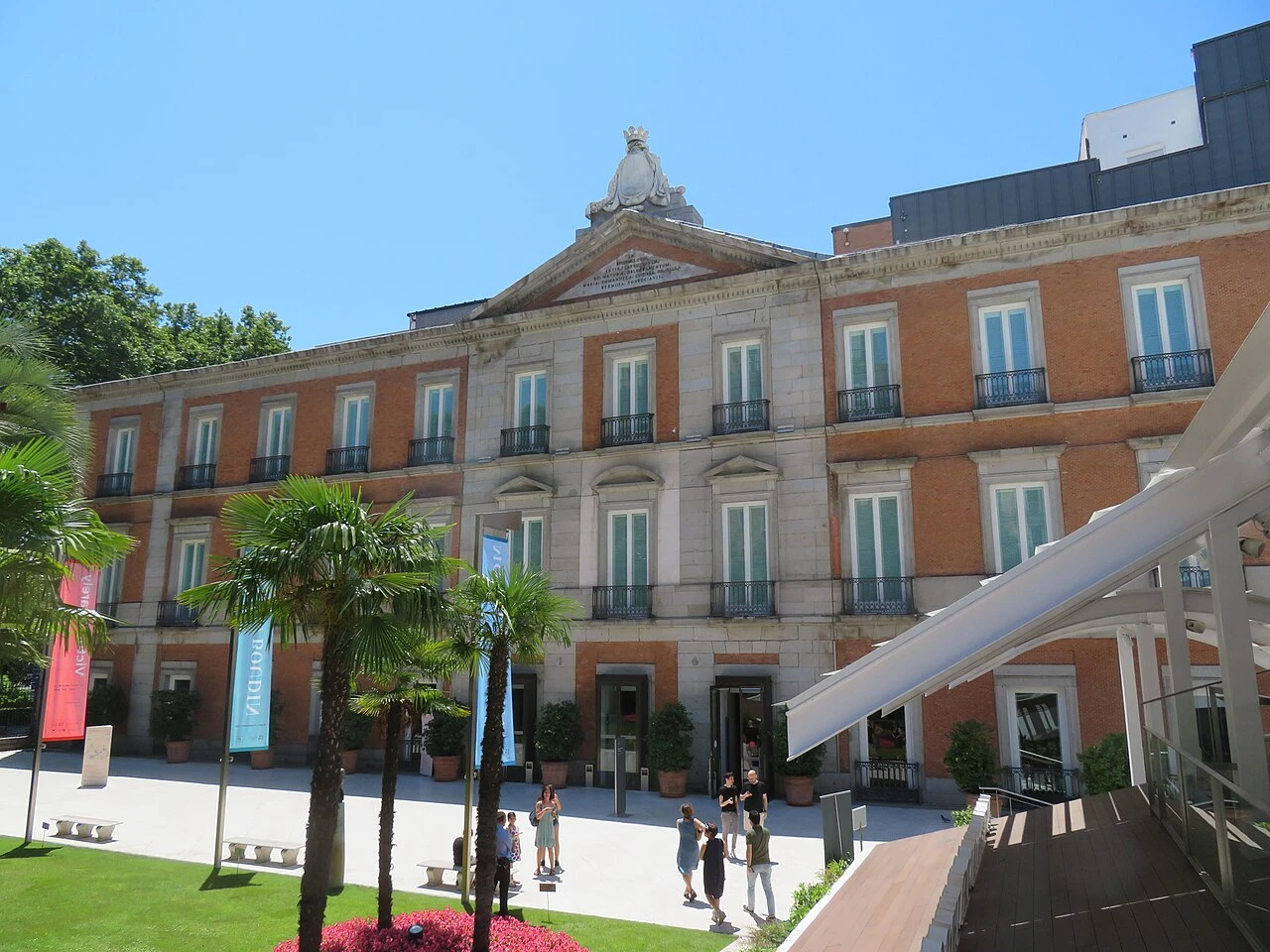
Madrid · 223 artworks
Thyssen-Bornemisza Museum
Content & sources
Kyle Magnuson from Los Angeles, United States · CC BY 2.0