Stanza · Audio guide
Museu Nacional de Arte Antiga Audio Guide
A place to remember. A story to take with you.
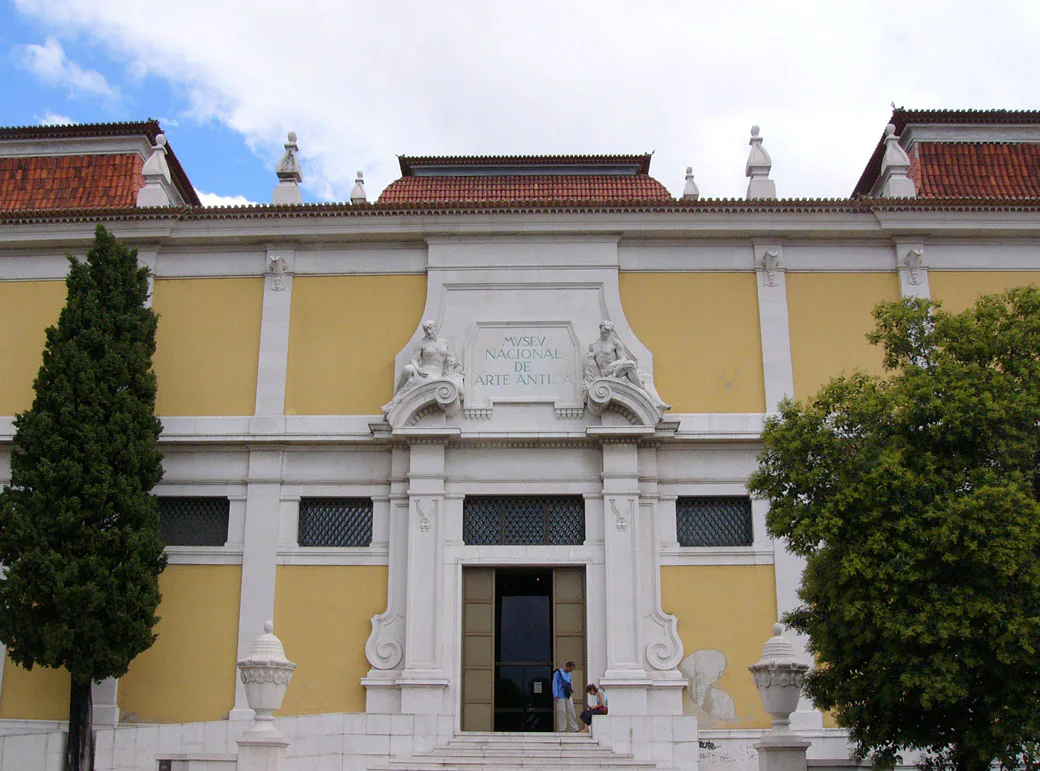
The Museu Nacional de Arte Antiga is a Portuguese national art museum located in Lisbon. It is one of the most visited museums in Portugal, housing over 40,000 items including painting, sculpture, goldware…
Download Stanza, then search for “Museu Nacional de Arte Antiga”.
About the tour
One guide. Your kind of visit.
The Museu Nacional de Arte Antiga is a Portuguese national art museum located in Lisbon. It is one of the most visited museums in Portugal, housing over 40,000 items including painting, sculpture, goldware, furniture, textiles, ceramics, and prints.
The Museu Nacional de Arte Antiga guide tells the stories of 81 artworks, including Temptation of Saint Anthony (Hieronymus Bosch), Saint Jerome in His Study (Albrecht Durer), Saint Vincent Panels (Nuno Gonçalves), Deposition (Giovanni Battista Tiepolo), The Adoration of the Magi (Domingos Sequeira), Rest on the Flight into Egypt (Gerard David), Custódia de Belém (Gil Vicente), and Portrait of Afonso de Albuquerque (Unknown Artist). Every artwork is free to hear in the Stanza app until 1 January.
Ready when you are.
- 01Get the free Stanza app.
iOS & Android
- 02Find your guide.
“Museu Nacional de Arte Antiga”
- 03Download before you go.
Works offline
Audio guide / 81 artworks
Inside the guide
Get to know a few of the stories before you go. Open a stop to read more.
01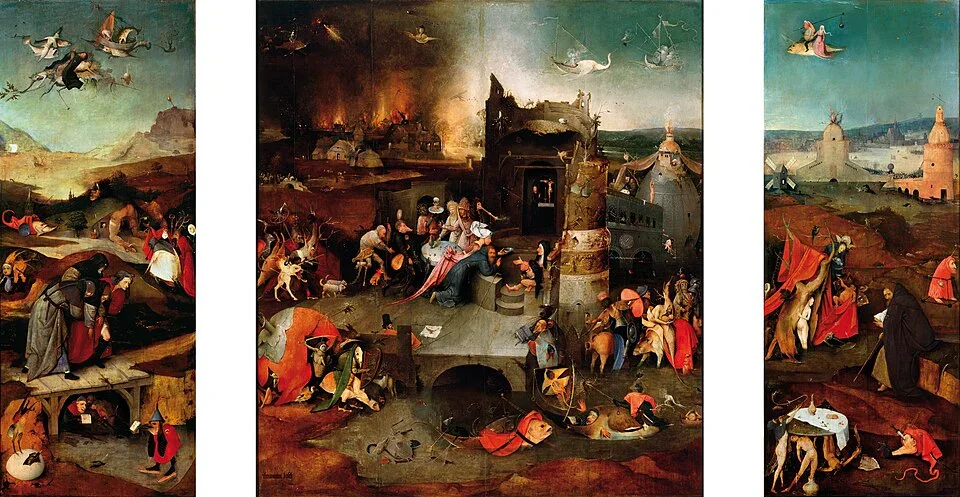
Temptation of Saint Anthony
A toad holds an egg in the centre panel, easy to miss. A dark-skinned priestess carries it in a vessel. The toad stands for witchcraft and luxury, and here it belongs to a false mass, celebrated by demons. A singer with a pig's face has a little owl above his head, a sign of heresy. A crippled man waits to receive communion. And at the centre, Anthony is calm, in contemplation. His blessing hand points to a ruined tower. Inside, a small Christ seems to point at the cross, the true sacrifice against that false mass. Anthony's gaze turns toward you. No one else in the scene looks at Christ. People then believed the Devil was loose in the world, hell's punishments were real, the Antichrist and the Last Judgment were near. Faced with that fear, the saint's stillness here stands as a sign of hope. On the left wing, demons bring Anthony down from the sky, and a monk and a layman steady him after the fall. That layman, in dark red, has long been taken for Bosch himself. King Carlos kept the triptych in a studio beside his bedroom, away from public eyes. When the monarchy ended, his son Manuel the Second, living in exile, claimed it from the state. The matter was only settled in 1937, when the work became part of this museum for good.
Listen in the appHieronymus Bosch · Public domain
02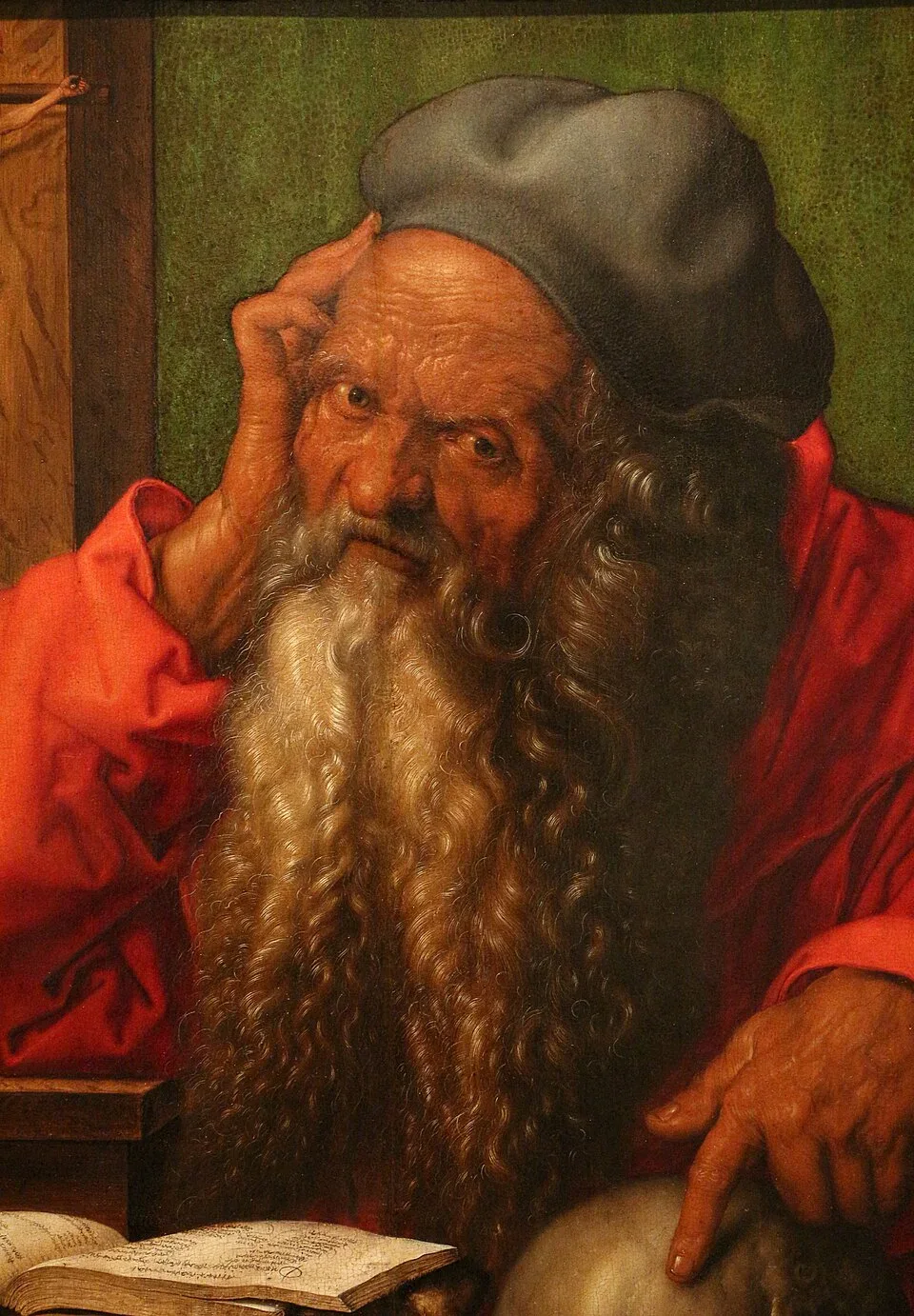
Saint Jerome in His Study
The old man looking back at you is never named. All we know is his age. On a drawing of him, Dürer noted that the man was ninety-three, and still healthy and strong in Antwerp. The wrinkles are all there, and the beard is a whitish yellow. The figure fills nearly the whole panel. He holds one hand against his head. The index finger of the other lies lightly on a skull. That skull is probably the little one Dürer bought months earlier in Cologne, for two pennies. It sits between an open Bible on a lectern and an inkwell. The Bible and the ink recall Jerome's work translating it. The skull is there to remind us how short life is. Dürer painted this in Antwerp in March 1521. In his diary he wrote that he had painted a Jerome carefully in oils, and given it to Rodrigo of Portugal.
Listen in the appPhoto: Sailko · CC BY 3.0
03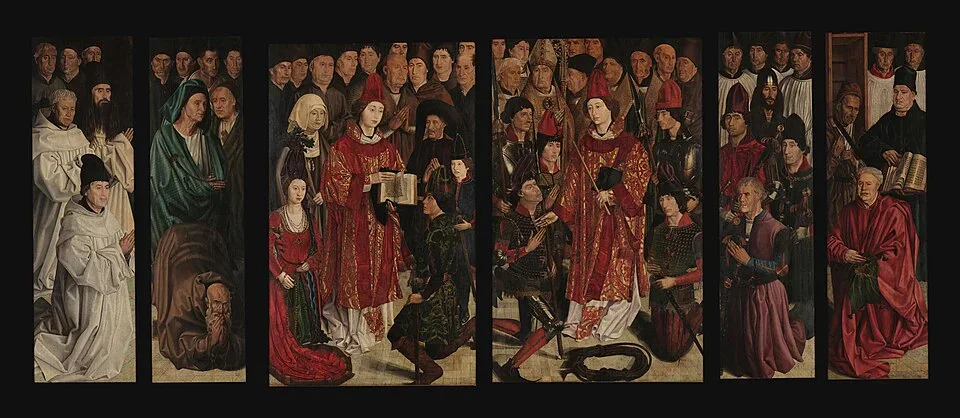
Saint Vincent Panels
Six panels hold a crowd. Monks in white robes stand at one side. The same figure in red is shown in both central panels, with men and women from the court standing and kneeling around him. In the second panel from the left, a man lies face down, three fishermen behind him. But these are portraits of real people, fifty eight of them, from the court and church down to sailors and fishermen. Their faces, clothes and ornaments are set out with care. The king's painter, Nuno Gonçalves, is thought to have brought them all together, something no one in Europe had done before. The man on the ground has inflamed eyelids, a complaint common among sailors, and a rosary strung from fish bones. The fishermen behind him are draped in a net with cork floats. They belonged to the company at Lagos that pushed Portugal's voyages out to sea. Near the saint stands a man in black, with a light moustache and a round black chaperon, a kind of hood. No one can say which member of the royal family he is.
Listen in the appGeorges Jansoone · Public domain
04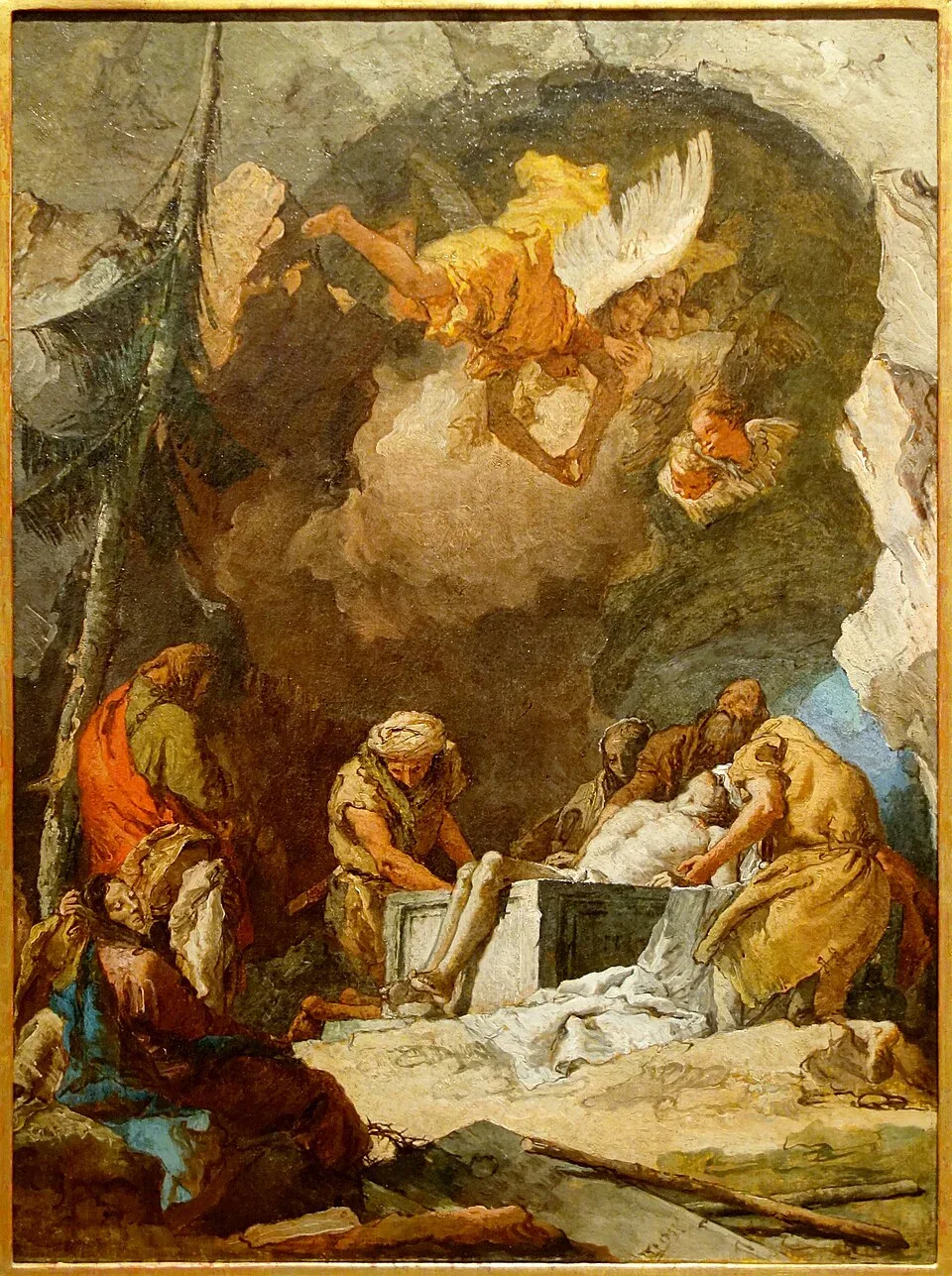
Deposition
Giovanni Battista Tiepolo was painting in Madrid at the very end of his life. This burial of Christ was among his last works, made about 1770, less than a year before he died. For a long time the painting stayed with a Portuguese family, the Pinto Bastos. Their collection had once held five Tiepolos, brought together in the early nineteenth century. In November 2007 this one went up for auction. The Portuguese state had the right to buy it first, and paid a million and a half euros for it. Early the next year it was declared an asset of national interest. It has hung here in Lisbon since May 2008. The Flight into Egypt, another painting from that same family, was given to the museum in 1946. So two paintings the Pinto Bastos once owned now hang together in this museum.
Listen in the appGiovanni Battista Tiepolo · Public domain
05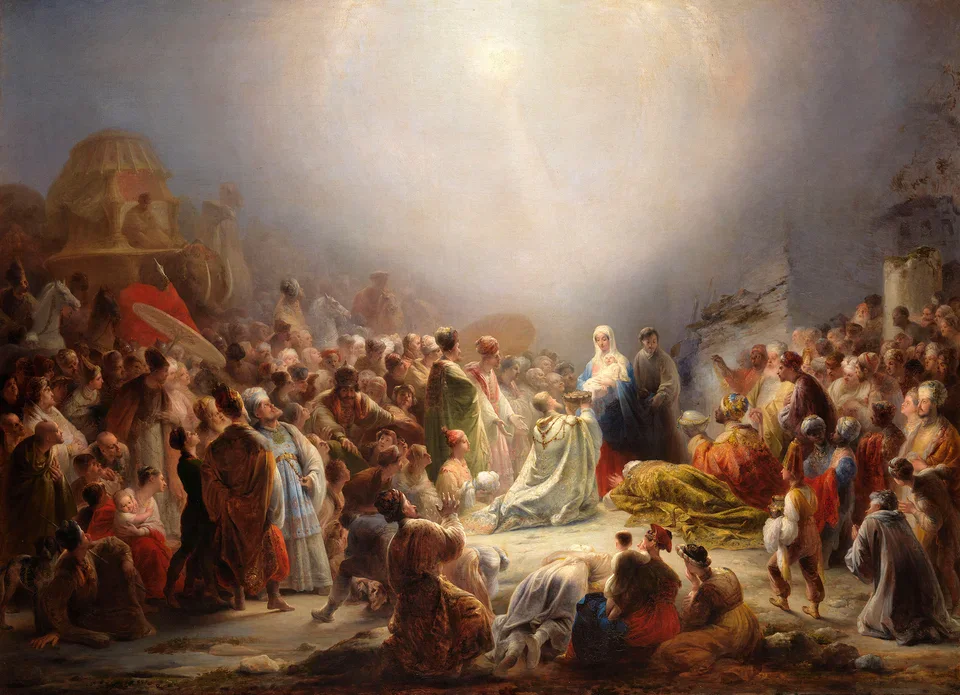
The Adoration of the Magi
The three kings have arrived with their gifts. Two kneel and hold up boxes of gold and myrrh. The third lies flat before the child. Above them the star hangs in the pale sky as a circle of white light. A faint glow from it spreads over the crowd, while one sharper ray falls directly onto Mary and Jesus at the centre. Around them press about one hundred and fifty people in elaborate robes, turbans and caps like fezzes. One of them is carried in a carriage on an elephant's back. And no one had asked for the painting. Sequeira made it in the summer of 1828 to show his old friends, the artists of Rome, how he believed painting should be done. He had been forced out of Portugal in 1823, after the Vintist movement he had supported fell. He was living near Rome in exile. Two years later, in 1830, the artists' society there held its first exhibition. He sent the painting, and it drew acclaim. In 2016 thousands of people gave small sums to buy it and bring it here, the first campaign of its kind in Portugal.
Listen in the appDomingos Sequeira · Public domain
06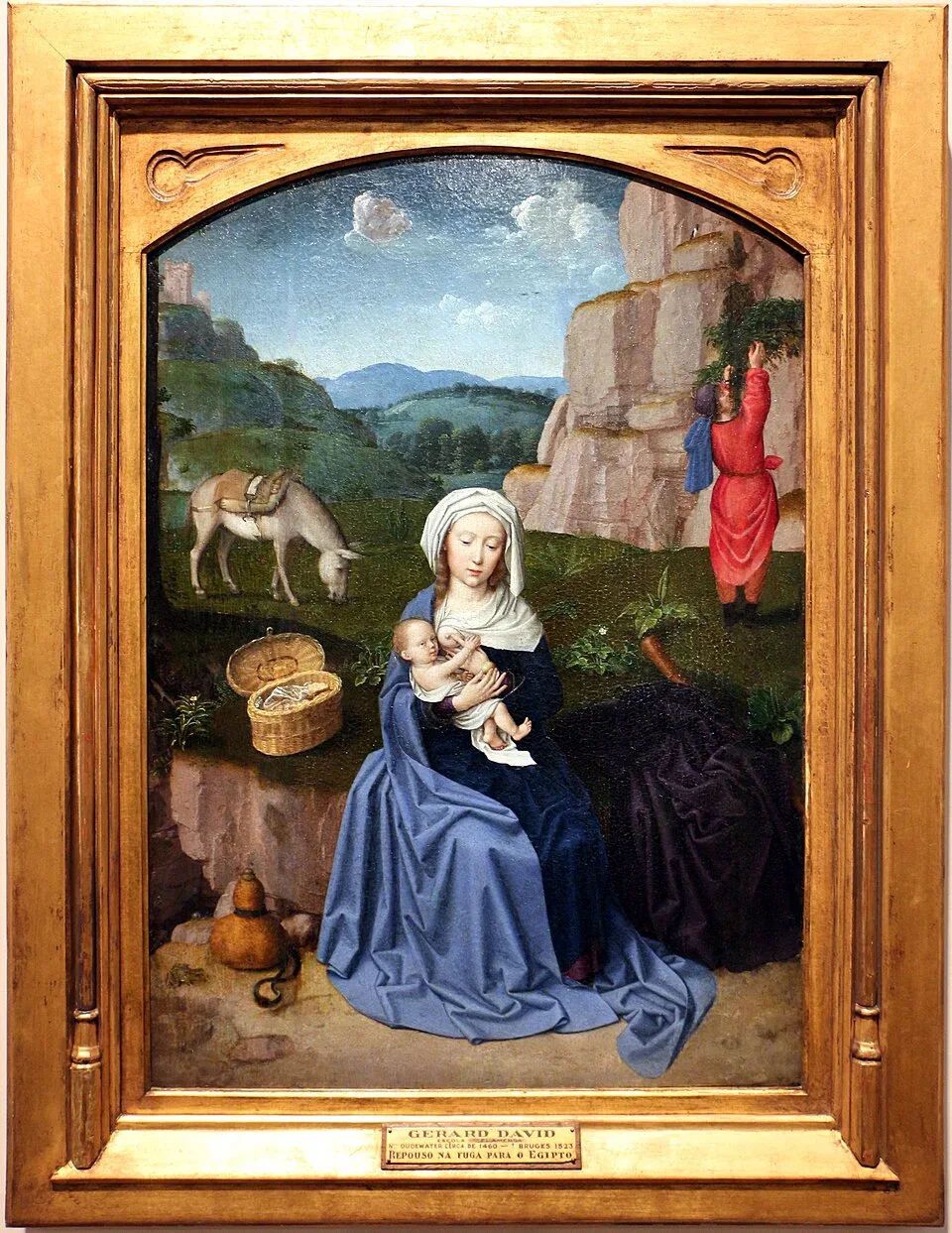
Rest on the Flight into Egypt
Mary sits on a rock and nurses the child. Behind her, Saint Joseph gathers wild berries from a bush. A donkey grazes in the green landscape. King Herod wanted the child dead, and an angel had warned Joseph in a dream to take Mary and Jesus to Egypt. This is a family in flight, resting for a moment. In the lower left corner, a toad and a snail stand for the devil. Beside Mary, a gourd holds water, and that water stands for life and purity. Gerard David built the whole scene around mother and child. The white of Mary's head and breast and the child's head draws the eye, and the lines of the painting meet there. Even in a landscape this wide, the two of them hold the center.
Listen in the appPhoto: Sailko · Public domain
07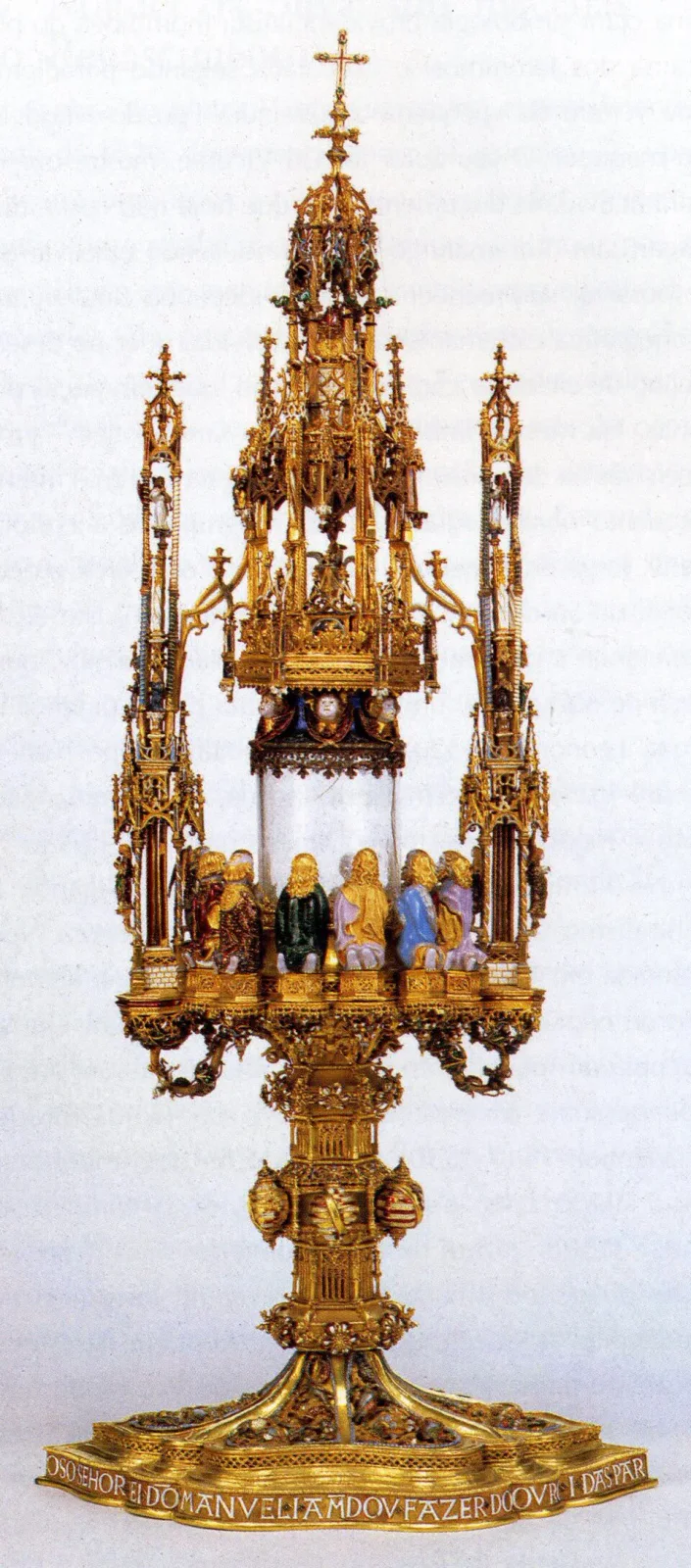
Custódia de Belém
The gold in this monstrance had already crossed an ocean before it became a church treasure. It came as tribute from the ruler of Kilwa, in what is now Tanzania, to the crown of Portugal. It was a sign that he accepted the king as his lord. Vasco da Gama brought it home from his second voyage to India in 1502, fifteen hundred mithqals of it. King Manuel the First had it made for his royal chapel. His emblem, the armillary sphere, repeats six times around the shaft. An inscription says the king ordered it from Kilwa's tribute gold, and that it was finished in 1506. His will left it to the Jerónimos Monastery at Belém, then outside Lisbon. That is how it got its name. Centuries later, French troops took it as loot during the Peninsular War and carried it to France. It came back, and was sent to the Mint, apparently to be melted down. It was saved by Fernando, the king consort, husband of Queen Maria the Second. Whether the playwright Gil Vicente, who wrote for Manuel's court, was also the goldsmith who made it is still not known.
Listen in the appPhoto: Victorcouto · Public domain
08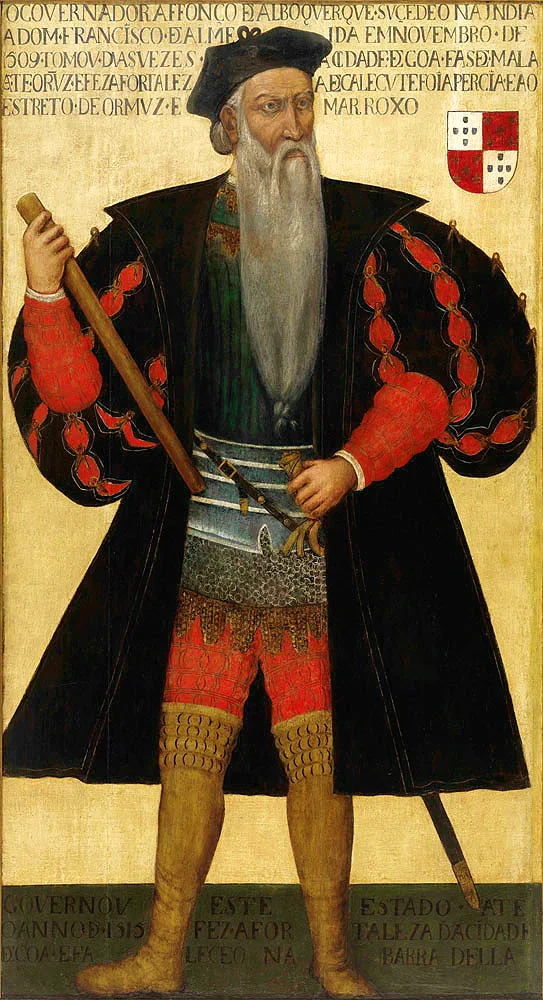
Portrait of Afonso de Albuquerque
A governor stands in front of you holding a baton of command. Two inscriptions frame him and set out his office and notable actions. They say he took Goa twice, took Malacca and Ormuz, built the fortress at Calicut, and went to Persia and the Red Sea. They say he governed until 1515 and died at Goa's sandbar. The long white beard and the coat of arms are the marks that name him Afonso de Albuquerque. Yet the beard was not always white. This panel came from a gallery of twelve viceroys in the Government Palace at Pangim, begun under João de Castro. No one knows who painted it. The portraits there were made mainly by local artists. When the overpaint came off between 1953 and 1956, a shorter dark beard showed beneath. The coat of arms underneath named Lopo Soares de Albergaria. He had succeeded Albuquerque as governor in 1515. Albuquerque's features had been painted over an earlier portrait of Lopo Soares. The white beard and Albuquerque's coat of arms were then put back. It seems that because Lopo Soares's figure was in better condition, the recognizable features of Albuquerque were transferred onto it. His own lost portrait survives only in remnants beneath a later painting of Nuno Álvares Botelho, itself changed in the nineteenth century.
Listen in the appUnknown author · Public domain
09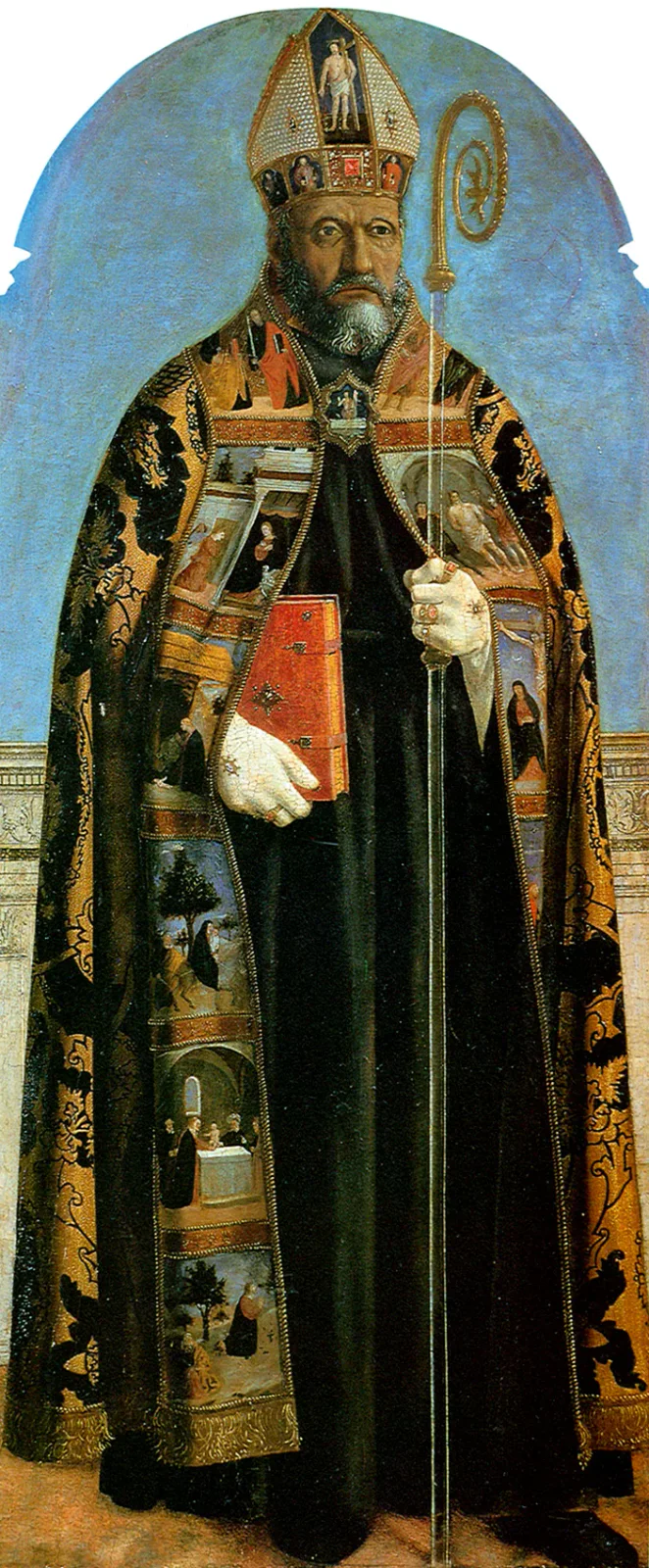
Saint Augustin
This bishop once stood beside three other saints, and the whole was pulled apart. The center, a Virgin and Child, is gone. One saint went to London, one to New York, one to Milan, and this one came here. Only in the twentieth century did scholars manage to reconstruct the altarpiece. Piero agreed to paint it in 1454. A man named Angelo paid for it to fulfill his late brother's wishes and to secure salvation for himself and his ancestors. It was meant to be finished in eight years. The last payment came in 1469. When the Augustinians left their original church, it was probably given a lesser place. By the end of the nineteenth century it was on the antiques market. A collector named Henry Burnay bought this panel in Paris, between 1880 and 1890. Here is the man, from that larger whole. His face is unusually individual, marked by age but firm, with an intense gaze, and his hair and beard have an almost silvery sheen. A band down his robe holds tiny scenes from Christ's life, from the Annunciation to the Crucifixion, with the risen Christ at the clasp. Each is painted like a little picture. Beneath all that finery he wears a plain black tunic. It marks him as an Augustinian, the very order whose church this altarpiece was made for.
Listen in the appPiero della Francesca · Public domain
10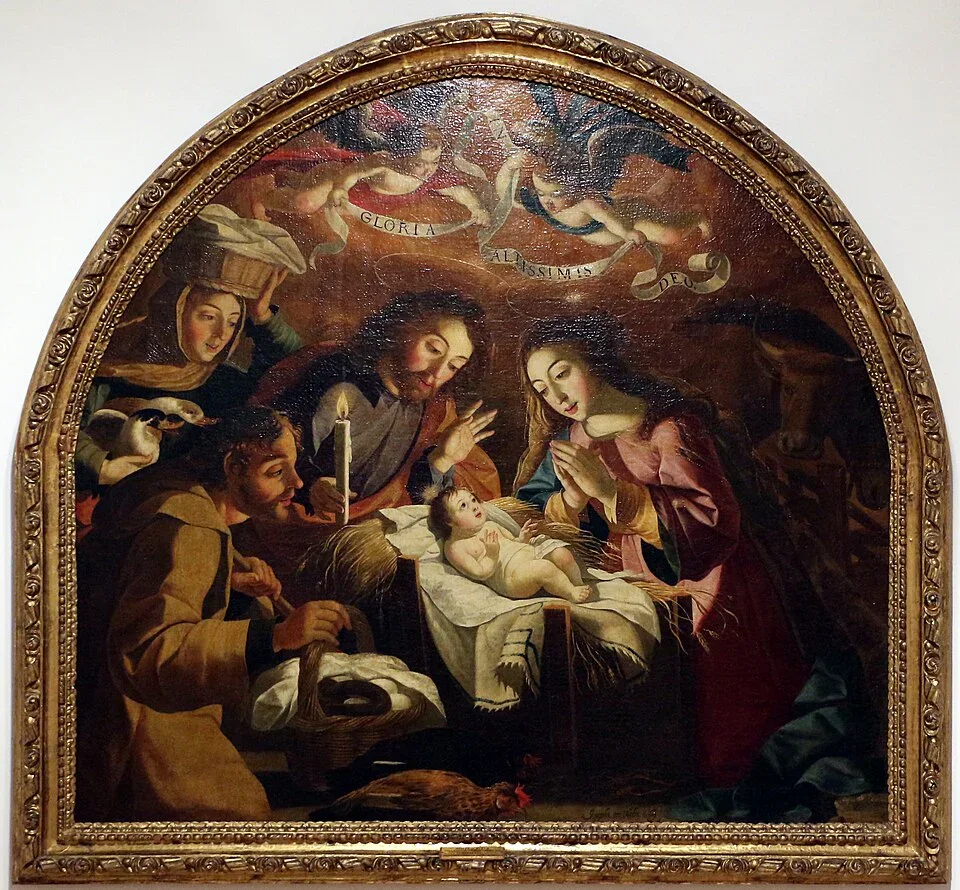
Adoration of the Shepherds
Two ducks, held by a woman with a basket on her head. A bearded man kneels with a basket of eggs, a chicken and a rooster. These are the offerings, and they tell you who has come. The visitors are shepherds, bringing simple things from the farm to the child in the manger. The child is in the manger at the center, and the light gathers there. Mary and Joseph are near. Above them, two angels hold out a written ribbon, with the words Glory to God in the highest. In the stable behind, a donkey and an ox. The painting comes from the Church of Santa Maria Madalena at Alcobaça. Josefa de Óbidos painted it in 1669.
Listen in the appPhoto: Sailko · CC BY 3.0
- 11
Saint Francis
Nuno Gonçalves · c. 1470–1480
- 12
The Twelve Apostles by Francisco de Zurbarán
Francisco de Zurbarán · 1633
- 13
Bomposta Monstrance
Unknown Artist · 1777
- 14
Soup Kitchen in Arroios
Domingos Sequeira · 1813
- 15
Flight in Egypt
Giovanni Battista Tiepolo · 1764–1770
- 16
The Annunciation
Alvaro Pirez d'Evora · c. 1430–1434
- 17
Saint Vincent Panels, third panel
Nuno Gonçalves · 1460s
- 18
Saint Vincent Panels, second panel
Nuno Gonçalves · 1460s
- 19
Altarpiece of Santos-o-Novo
Gregório Lopes · c. 1539–1541
- 20
Polyptych of the Paradise Convent
Gregório Lopes · 1527
- 21
St. Auta Altarpiece
Master of the Altarpiece of Santa Auta · c. 1520–1525
- 22
Portrait of King D. Sebastião
Cristóvão de Morais · c. 1571–1574
- 23
Leda and the Swan
Vieira Portuense · 1798
- 24
Polyptych of the Santa Cruz Monastery
Cristóvão de Figueiredo · 1521–1530
- 25
Hell
Anonymous master of Hell · 1505
- 26
Portrait of D. Lourenço José Brotas de Lencastre
Vieira Lusitano · c. 1745–1750
- 27
Relic Panel
Nuno Gonçalves · 1460s
- 28
Triptych of Our Lady of Mercy
Jan Provoost · 1511–1515
- 29
Apparition of Christ to Magdalen
Francisco Henriques · 1508–1518
- 30
Visitation
Gregório Lopes · 1520s
- 31
The Adoration of the Celestial Court
Amaro do Vale · 1612
- 32
Our Lady of the Snows
Francisco Henriques · c. 1509–1511
- 33
Portrait of Eleanor of Austria
Joos van Cleve · 1530
- 34
Polyptych of S. Francis Monastery
Francisco Henriques · 1508–1511
- 35
Germain Service
Unknown Artist · 18th century
- 36
Saint Vincent Panels, first panel
Nuno Gonçalves · 1450
- 37
Polyptych of the Master of the Arches
Mestre dos Arcos · 1530–1550
- 38
Triptych of the Princes
Master of Lourinhã · 1515–1518
- 39
Triptych of Ferdinand the Holy Prince
Portuguese School (poss. João Áfonso) · c. 1450–1460
- 40
Visitation - Saint Benedict altarpiece
Gregório Lopes, Jorge Leal · 1520–1525
- 41
Martyrdom of Saint Sebastian
Gregório Lopes · c. 1536–1538
- 42
Triptych of Calvary
Frei Carlos · c. 1520–1530
- 43
Fernão Gomes, Pentecost, c. 1590
Fernão Gomes · c. 1590
- 44
Martyrdom of Saint Catherine
Gaspar Dias · c. 1570–1590
- 45
Annunciation
Frei Carlos · c. 1523
- 46
Apparition of Christ to the Virgin Mary
Frei Carlos · 1529
- 47
Saint Anthony preaching to the fishes
Garcia Fernandes · c. 1535–1540
- 48
Saint Vincent Panels, fourth panel
Nuno Gonçalves · 1460s
- 49
Saint Vincent Panels, fifth panel
Nuno Gonçalves · 1460s
- 50
Retaule de Santa Anna i la Mare de Déu
Ramón Destorrents, Arnau Bassa · 1344
- 51
Saint Vincent, Patron Saint of Lisbon
Frei Carlos · c. 1520–1530
- 52
Appeal by Inês de Castro
Vieira Portuense · c. 1802
- 53
Altarpiece of the Monastery of the Trinity
Garcia Fernandes · 1530–1540
- 54
Portrait of the Family of the 1st Viscount of Santarém
Domingos Sequeira · 1816
- 55
Seven Sorrows of Mary (polyptych)
Quinten Metsys · 1504–1511
- 56
Polyptych of the Chapel of the Savior
Gregório Lopes, Jorge Leal · 1520–1525
- 57
Polyptych of the Convent of Santiago de Palmela
Master of Lourinhã · 1520–1530
- 58
Polyptych of the Mother of God Convent
Jorge Afonso · 1515
- 59
The Earthquake of 1755 by João Glama Ströberle
João Glama Ströberle · 1756–1792
- 60
Presentation of Jesus at the Temple
Garcia Fernandes · 1538
- 61
Adoration of the Magi
Vicente Gil · c. 1501–1525
- 62
Child Jesus Pilgrim
Josefa de Óbidos · 17th century
- 63
The Virgin, the Child and Angels
Gregório Lopes · c. 1536–1539
- 64
Triptych of the Virgin with the Child and Angels, St. John the Baptist and St. John the Evangelist
Master of the Morrison Triptych · c. 1500–1510
- 65
Ascensão de Cristo, Frei Carlos
Frei Carlos · c. 1520–1530
- 66
Preaching of Saint John the Baptist
Diogo de Contreiras · 1552–1554
- 67
Triptych of the Presentation of Jesus in the Temple
Goswin van der Weyden · 1501–1525
- 68
Jesus among the Doctors
Cristóvão de Figueiredo · c. 1520–1530
- 69
Transit of the Virgin
Cristóvão de Figueiredo · c. 1525–1540
- 70
Saint Bruno in prayer
Domingos Sequeira · 1799–1800
- 71
Portrait of Domingos and Mariana Benedita Vitória de Sequeira
Domingos Sequeira · 1815–1816
- 72
Christ's Supper at Emmaus
Unknown Artist · 1451
- 73
Salome with the head of Saint John the Baptist
Lucas Cranach the Elder · 1509–1515
- 74
Ecce Homo
Unknown Artist · 1600
- 75
Pentecost
Francisco Henriques · 1508–1512
- 76
Saint Joseph and the Child
Josefa de Óbidos · c. 1670
- 77
still life with boxes and crockery
Josefa de Óbidos · 1655–1665
- 78
Book of Hours of King Manuel
António de Holanda e outros
- 79
Death of St Francis
Bartolomeo Carducci · 1593
- 80
Still-Life with Fruit
Antonio de Pereda · 1650
- 81
Interior of the Oude Kerk, Delft, Seen through a Stone Archway
Louwijs Aernouts Elsevier · 1653
Museu Nacional de Arte Antiga
Frequently asked questions
How much does the guide cost?
Free app download. Free until 1 January. Listed guide price: $1.99. Audio guide only. Venue admission is separate.
Can I listen without internet?
Yes. Download the guide’s audio, images, and maps in the app before your visit. Your downloaded content is then available offline.
Can I listen in my language?
In English for now. More languages soon.
Do I need to follow a schedule?
No. This is a self-guided experience. Choose your stops, pause whenever you like, and return to a story at your own pace.
Which artworks are in the Museu Nacional de Arte Antiga audio guide?
81 artworks, including Temptation of Saint Anthony (Hieronymus Bosch), Saint Jerome in His Study (Albrecht Durer), Saint Vincent Panels (Nuno Gonçalves), Deposition (Giovanni Battista Tiepolo), The Adoration of the Magi (Domingos Sequeira), Rest on the Flight into Egypt (Gerard David), Custódia de Belém (Gil Vicente), and Portrait of Afonso de Albuquerque (Unknown Artist). The full list is on this page.
Is this the museum’s official audio guide?
No. Stanza is an independent audio guide app and is not affiliated with Museu Nacional de Arte Antiga. Museum admission is separate.
At your own pace
Explore Museu Nacional de Arte Antiga.
Download Stanza, then search for “Museu Nacional de Arte Antiga”.
Free app download · Guide price shown in the app
Keep exploring
Nearby audio guides
Lisbon · 2 km
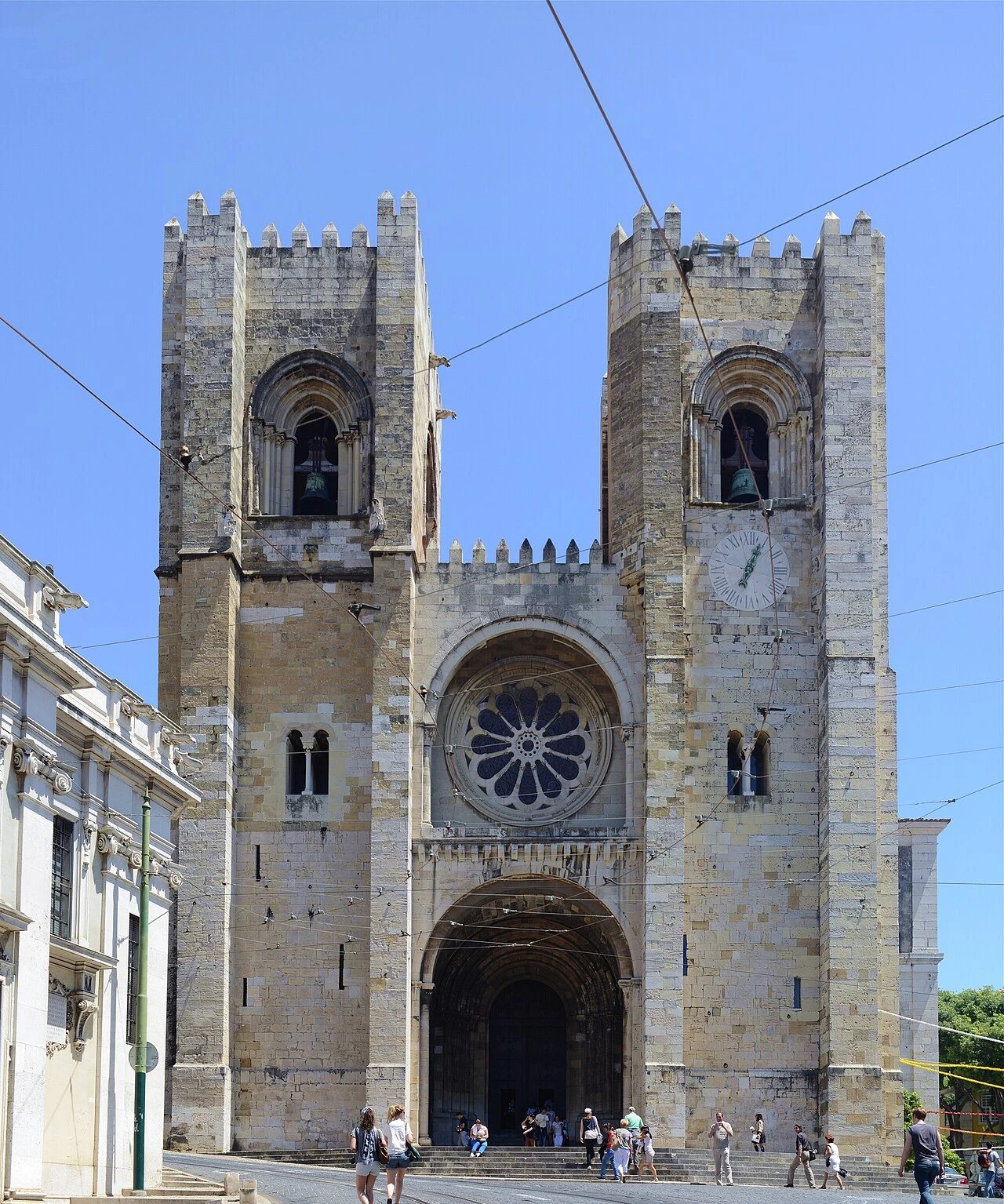
Lisbon Cathedral
Content & sources
Photo: Alvesgaspar · CC BY-SA 3.0
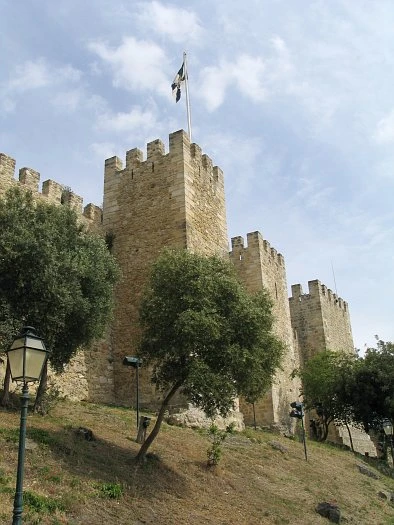
Lisbon · 3 km
São Jorge Castle
Content & sources
Photo: Rotatebot · CC BY-SA 2.0
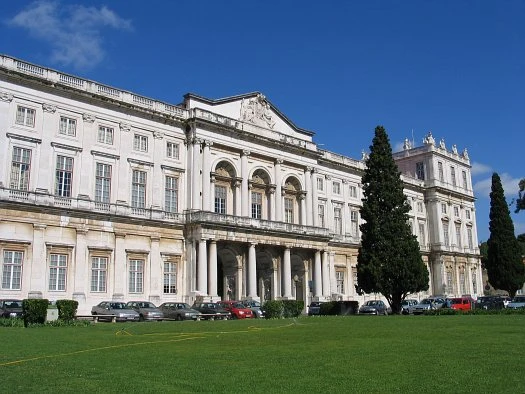
Lisbon · 3 km
Palácio Nacional da Ajuda
Content & sources
Photo: OsvaldoGago · CC BY-SA 2.0
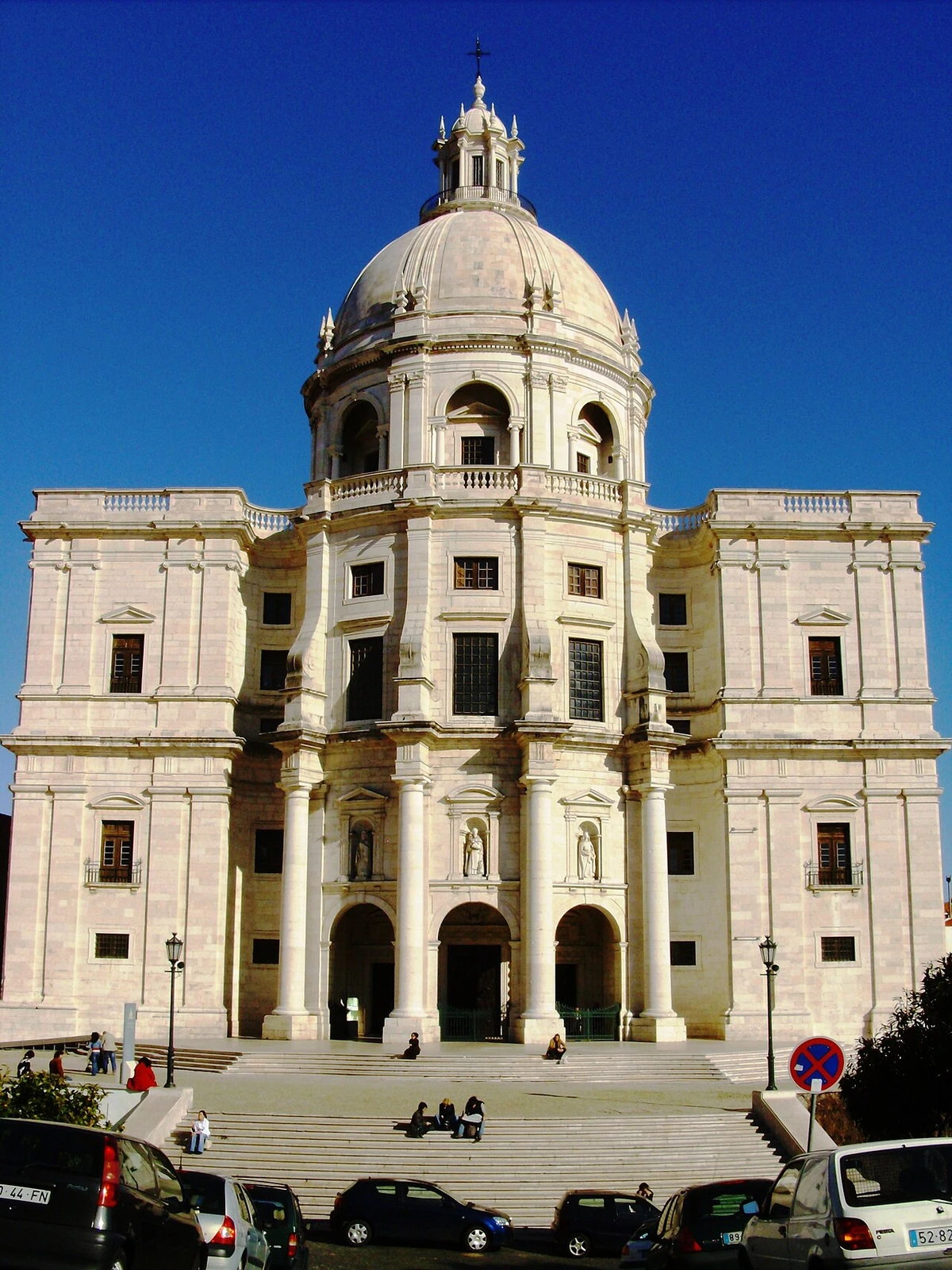
Lisbon · 3 km
Igreja de Santa Engrácia
Content & sources
Photo: Carlos Luis M C da Cruz · Public domain
Art museums
More art museum audio guides
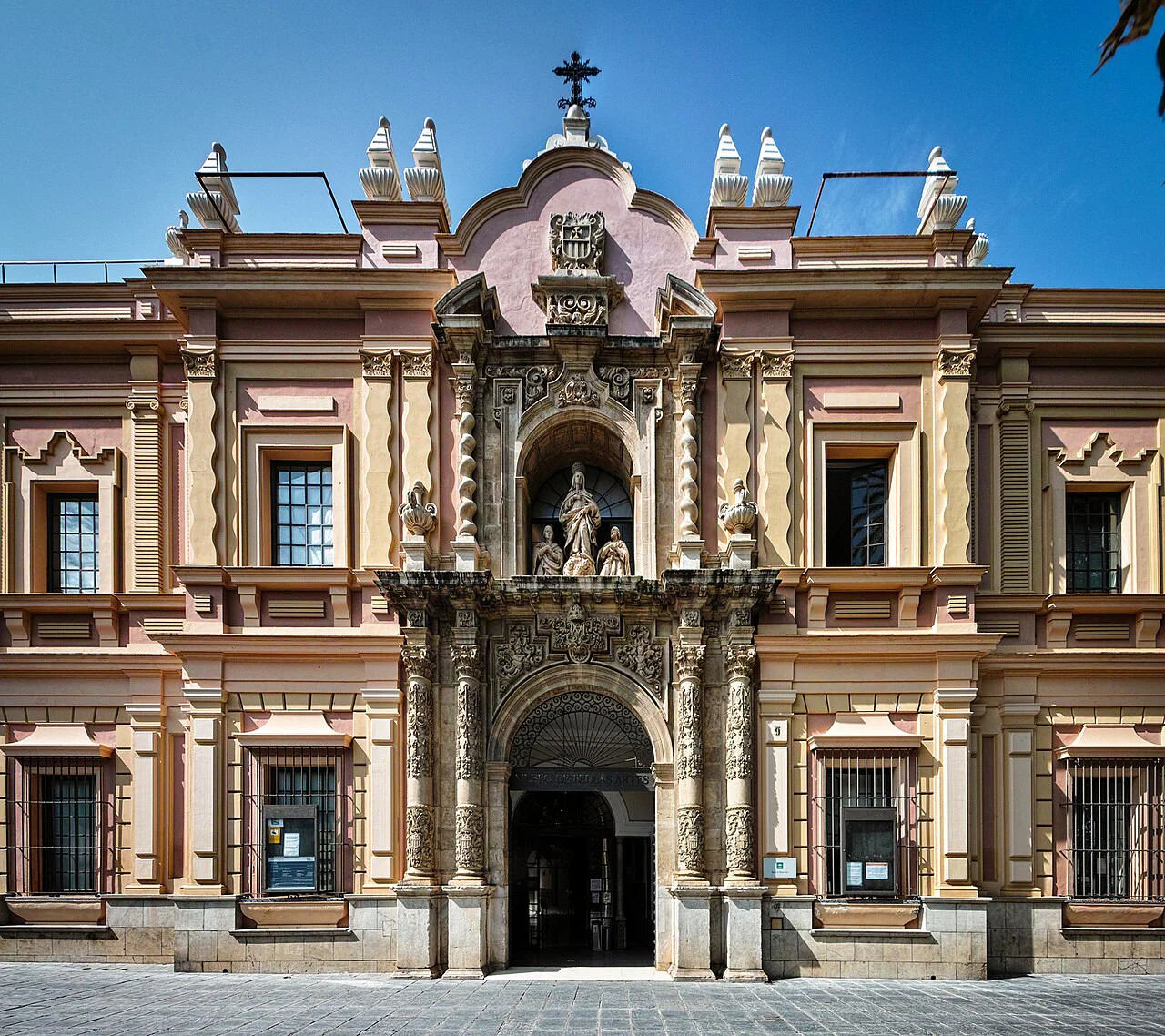
Seville · 24 artworks
Museo de Bellas Artes de Sevilla
Content & sources
Pepe Morón · CC BY 4.0
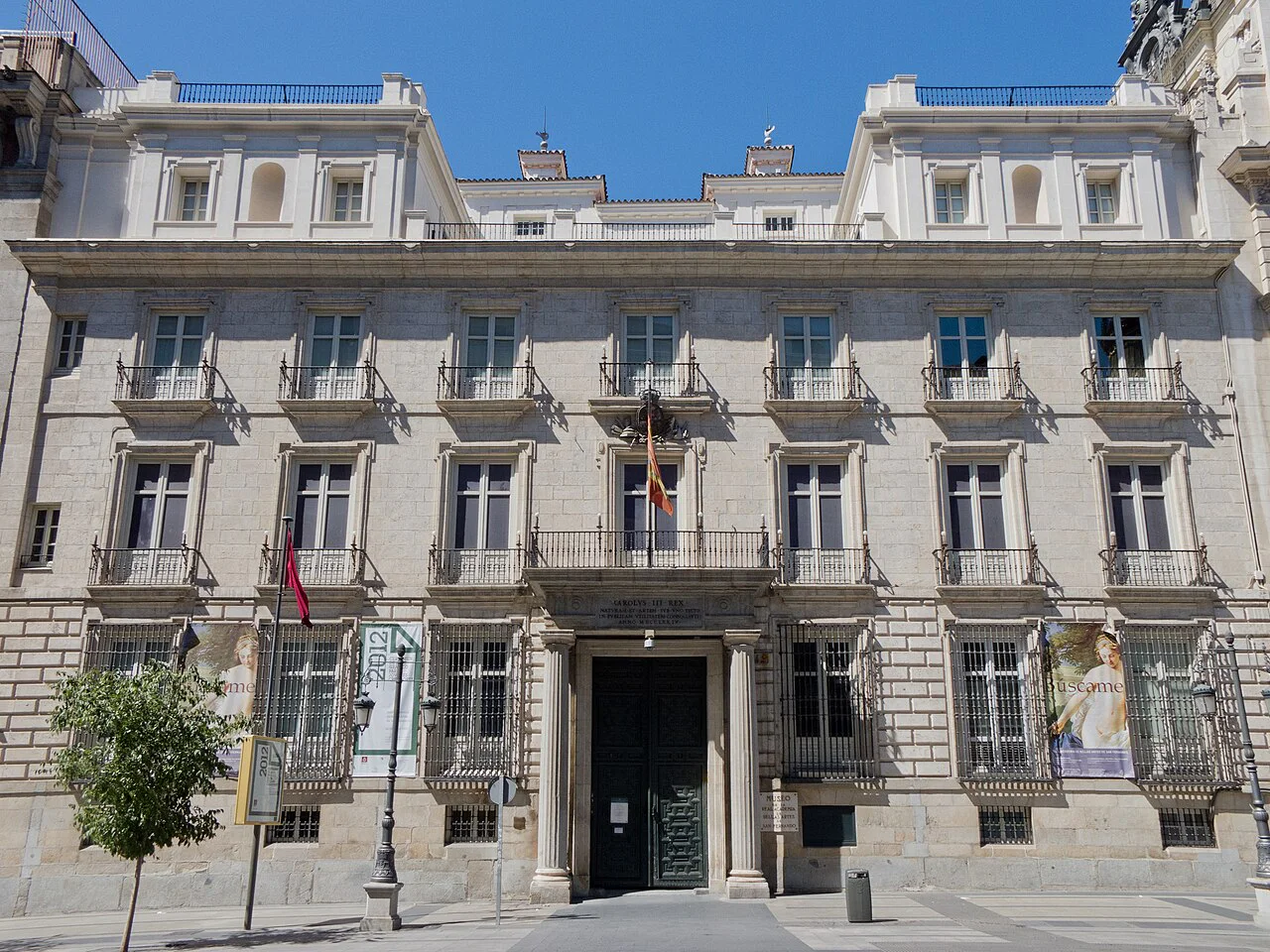
Madrid · 23 artworks
Real Academia de Bellas Artes de San Fernando
Content & sources
Carlos Delgado · CC BY-SA 3.0
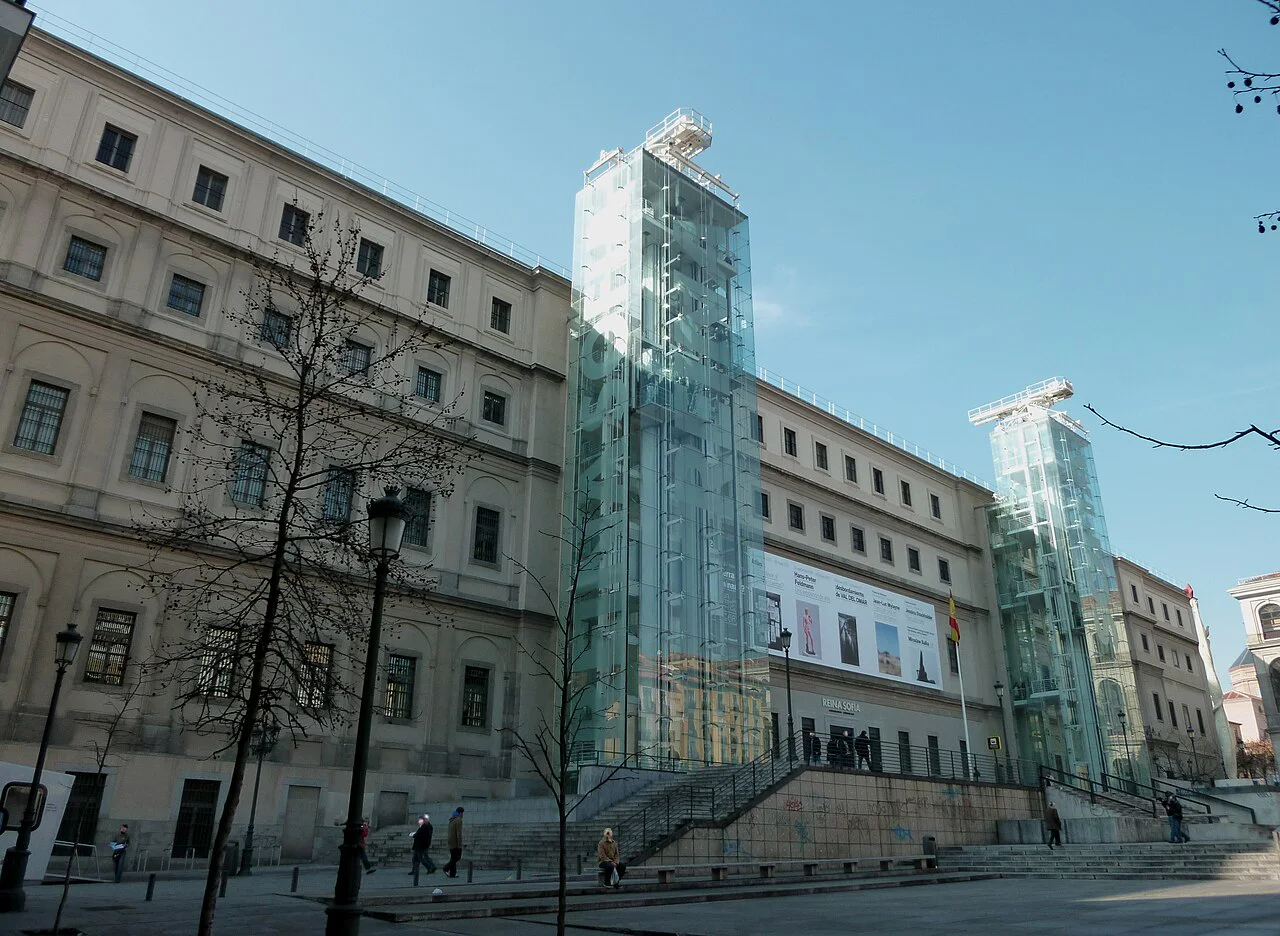
Madrid · 19 artworks
Museo Nacional Centro de Arte Reina Sofía
Content & sources
Luis García (Zaqarbal) · CC BY-SA 3.0
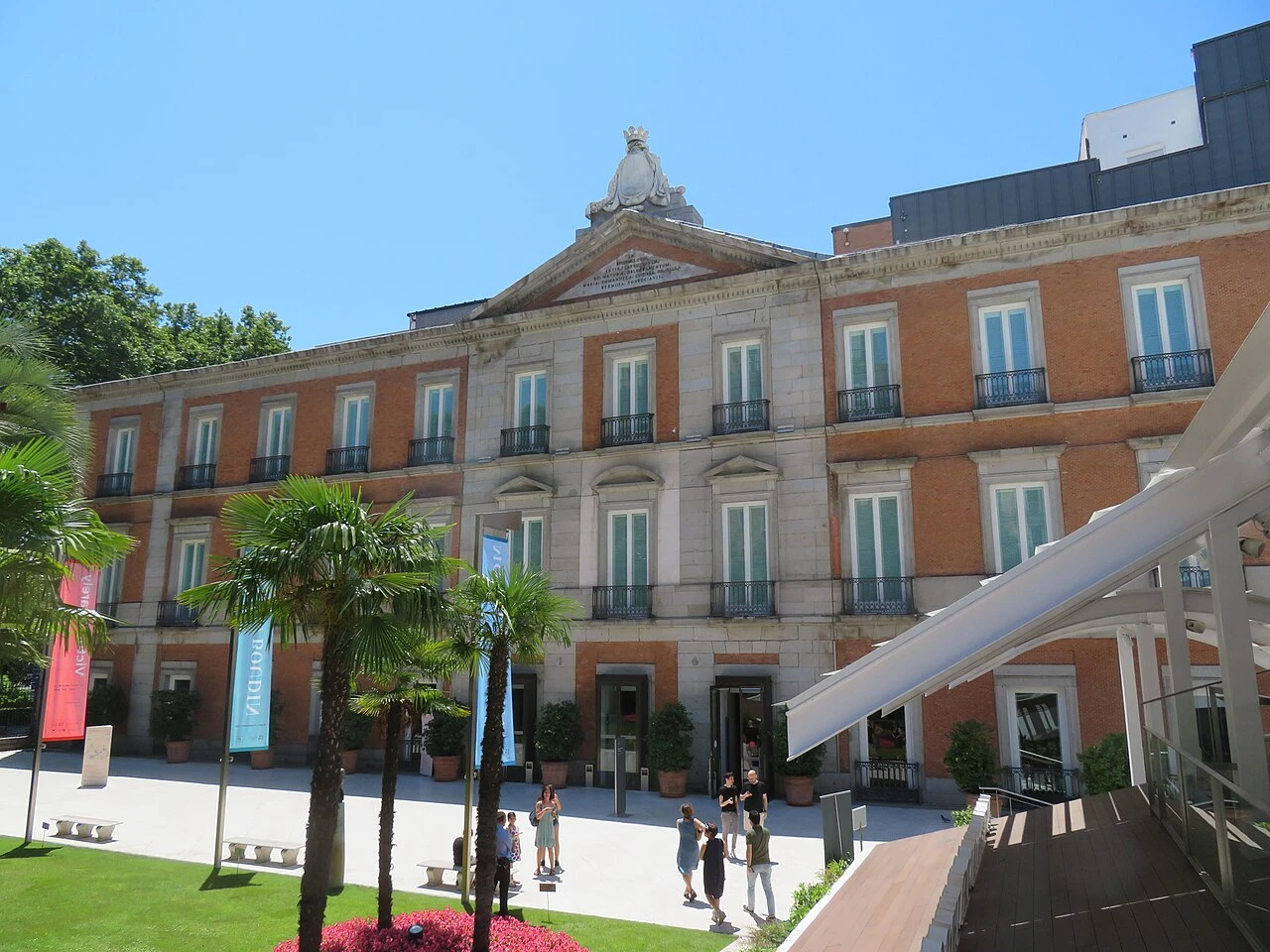
Madrid · 69 artworks
Thyssen-Bornemisza Museum
Content & sources
Kyle Magnuson from Los Angeles, United States · CC BY 2.0
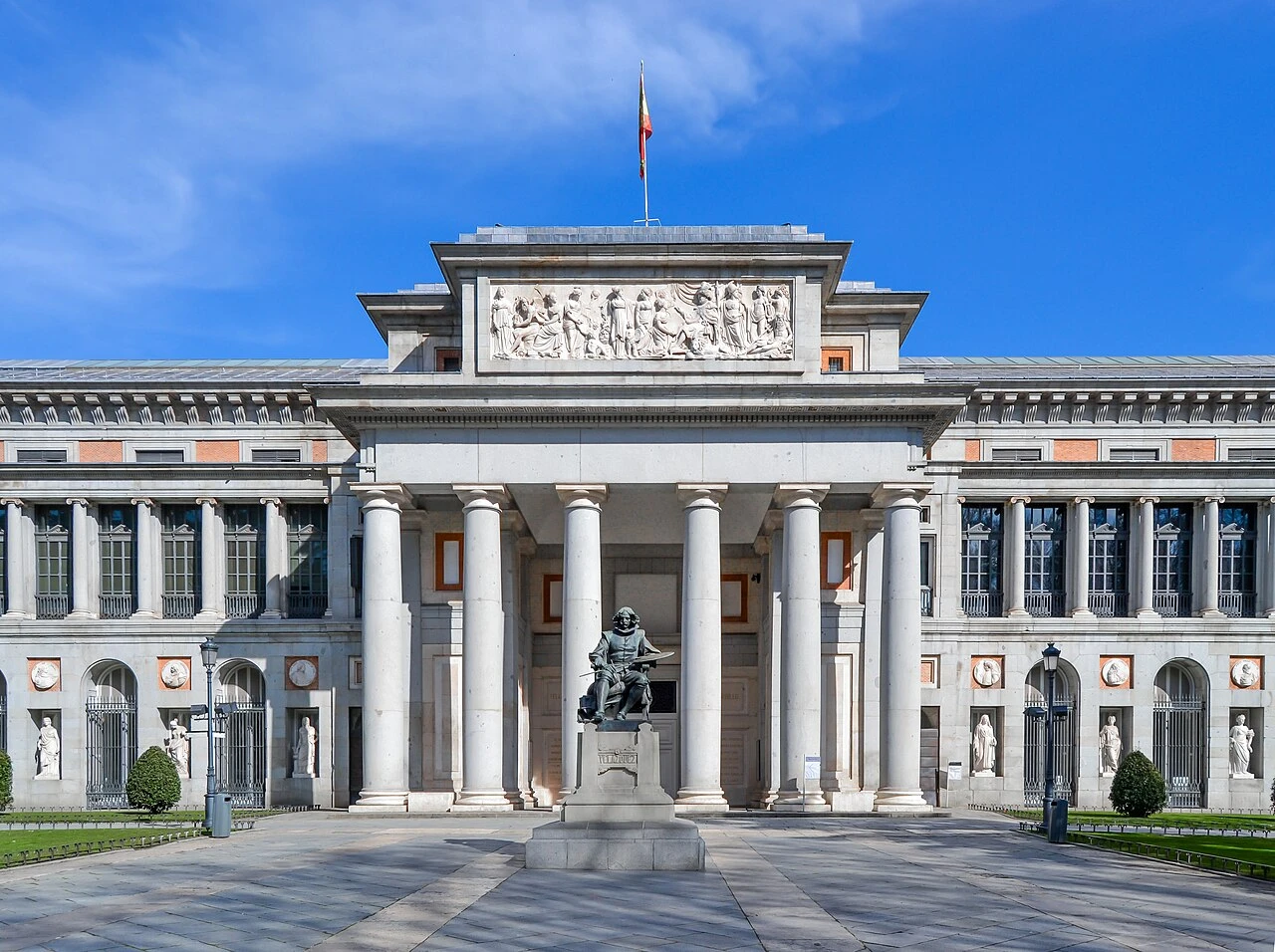
Madrid · 437 artworks
Prado Museum
Content & sources
Emilio J. Rodríguez Posada · CC BY-SA 2.0
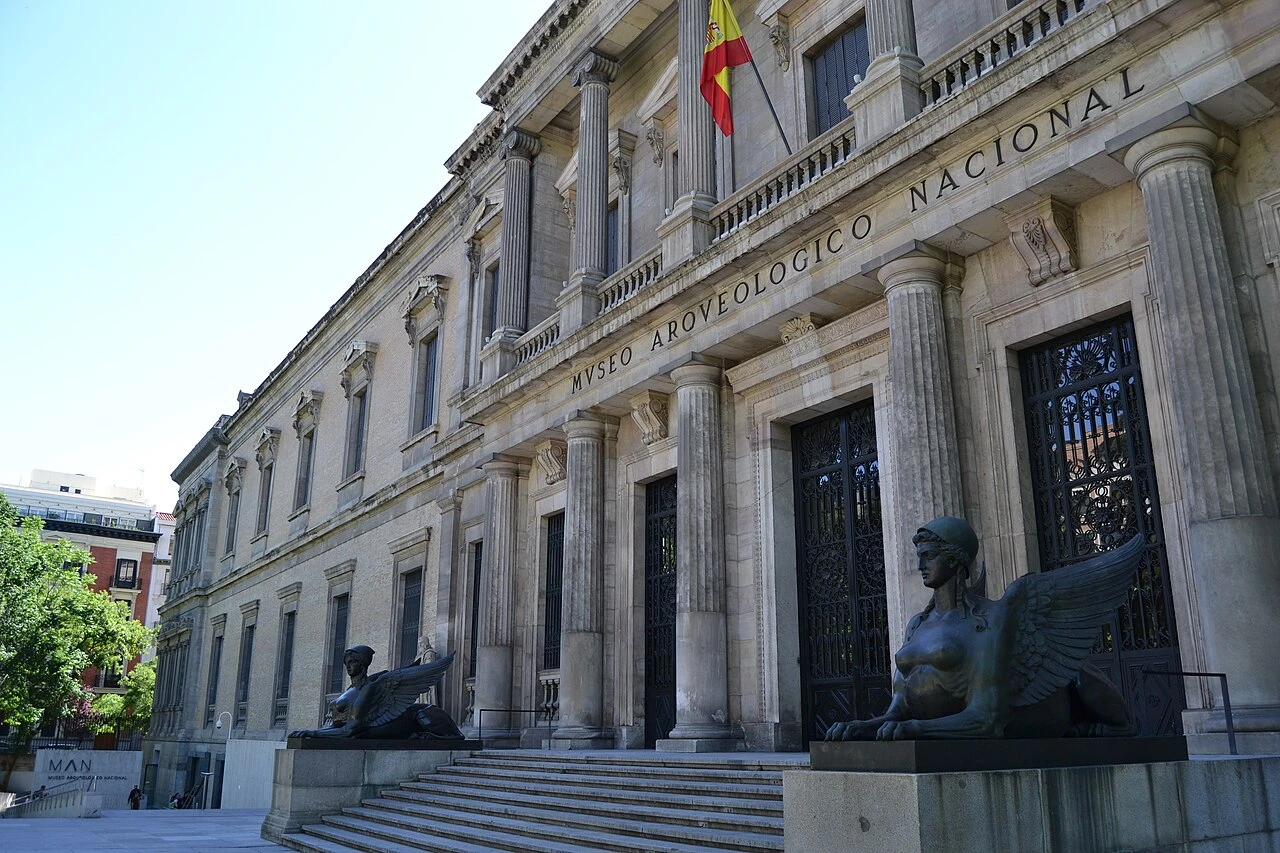
Madrid · 96 artworks
National Archaeological Museum of Spain
Content & sources
Emilio J. Rodríguez Posada · CC BY-SA 2.0