Stanza · Audio guide
Museo de Bellas Artes de Sevilla Audio Guide
A place to remember. A story to take with you.
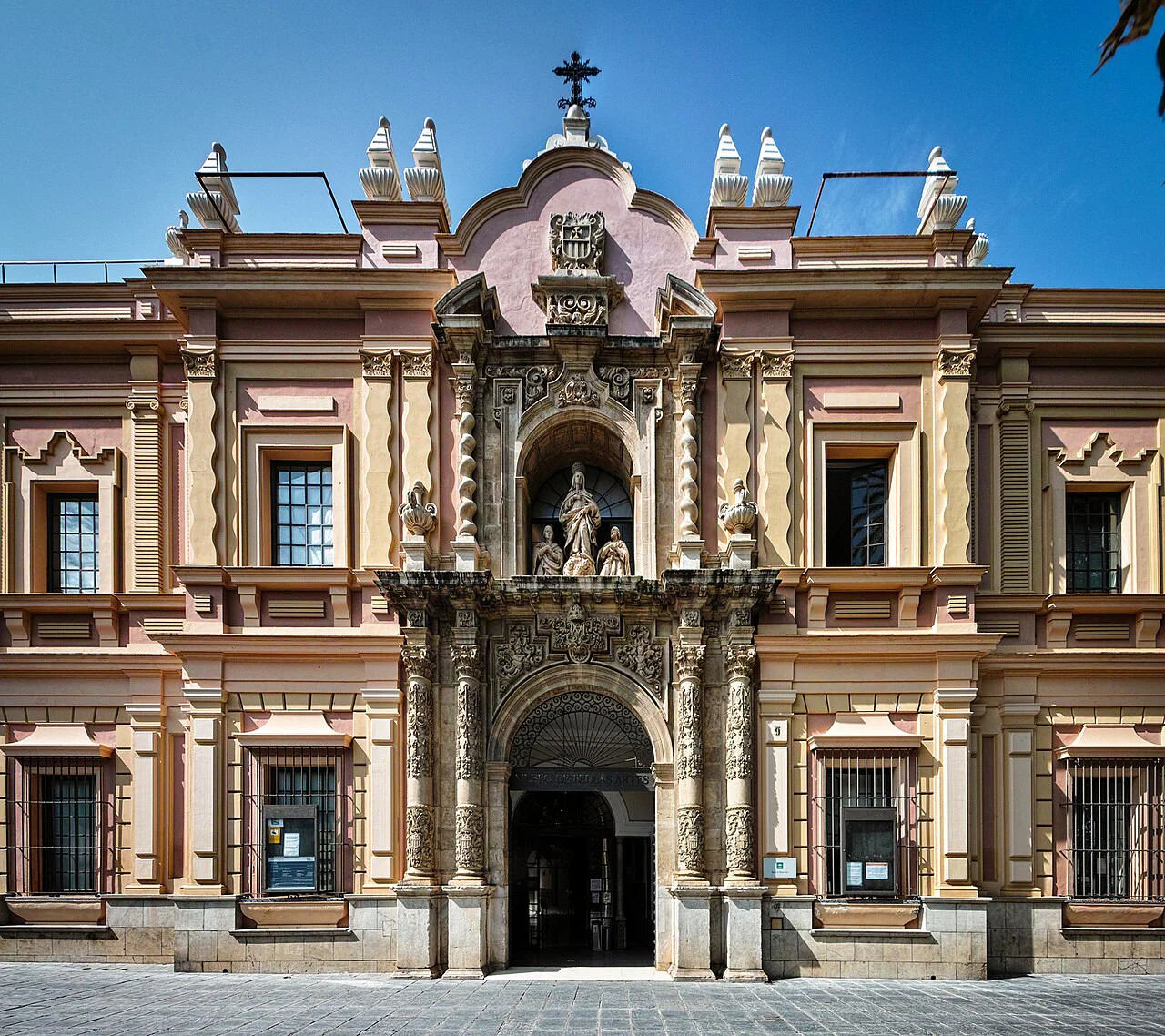
The Museum of Fine Arts of Seville is a major art gallery in Seville, Spain, housing a collection of Spanish visual arts from the medieval period to the early 20th century. It features a selection of works by…
Download Stanza, then search for “Museo de Bellas Artes de Sevilla”.
About the tour
One guide. Your kind of visit.
The Museum of Fine Arts of Seville is a major art gallery in Seville, Spain, housing a collection of Spanish visual arts from the medieval period to the early 20th century. It features a selection of works by artists from the Golden Age of Sevillian painting, including Bartolomé Esteban Murillo, Francisco de Zurbarán, and Valdés Leal.
The Museo de Bellas Artes de Sevilla guide tells the stories of 24 artworks, including Portrait of Jorge Manuel Theotocópuli (El Greco), Saint Hugh in the Carthusian Refectory (Francisco de Zurbarán), The Apotheosis of St. Thomas of Aquino (Francisco de Zurbarán), Saint Francis embracing Christ on the Cross (Bartolomé Esteban Murillo), Madonna of the Napkin (Bartolomé Esteban Murillo), St. Justa and St. Rufina (Bartolomé Esteban Murillo), Mater Dolorosa (Bartolomé Esteban Murillo), and Saint Anthony of Padua with the Child (Bartolomé Esteban Murillo). Every artwork is free to hear in the Stanza app until 1 January.
Ready when you are.
- 01Get the free Stanza app.
iOS & Android
- 02Find your guide.
“Museo de Bellas Artes de Sevilla”
- 03Download before you go.
Works offline
Audio guide / 24 artworks
Inside the guide
Get to know a few of the stories before you go. Open a stop to read more.
01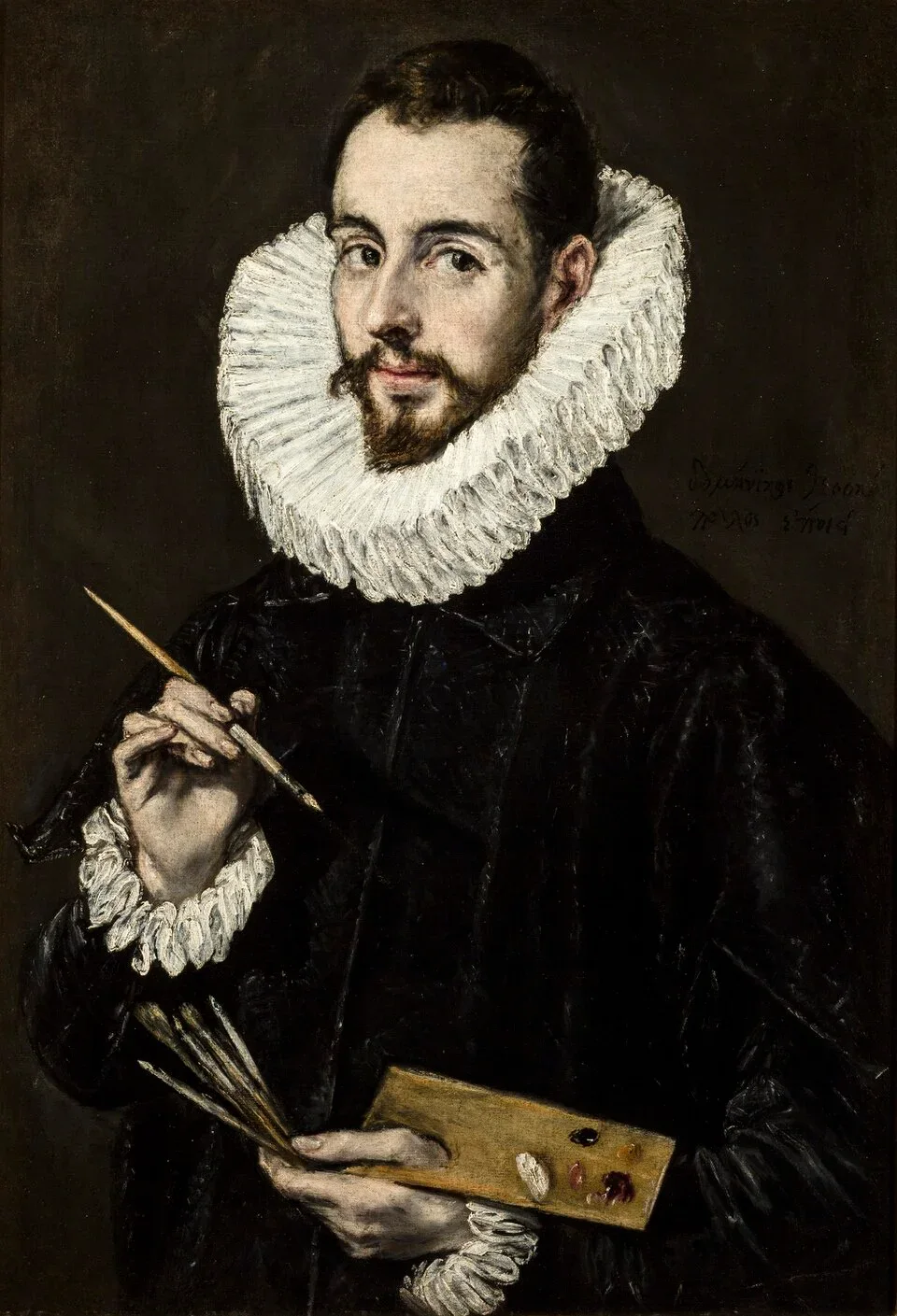
Portrait of Jorge Manuel Theotocópuli
The palette in his hand holds only a few colors. Those few colors make up nearly the whole picture, and that feels like a quiet boast. Through the nineteenth century, people took this face for the painter's own. It is not the painter. It is his son, Jorge Manuel. El Greco taught him his trade in the workshop, and later the two worked together. The face gives him away. The same young man appears at the right edge of The Virgin of Charity in Illescas. The administrators of that sanctuary complained that the painter's nephew was in it. Back then, nephew was a polite word for a son born outside marriage. In Greek letters, the father signed the picture with the name he was born with.
Listen in the appEl Greco · Public domain
02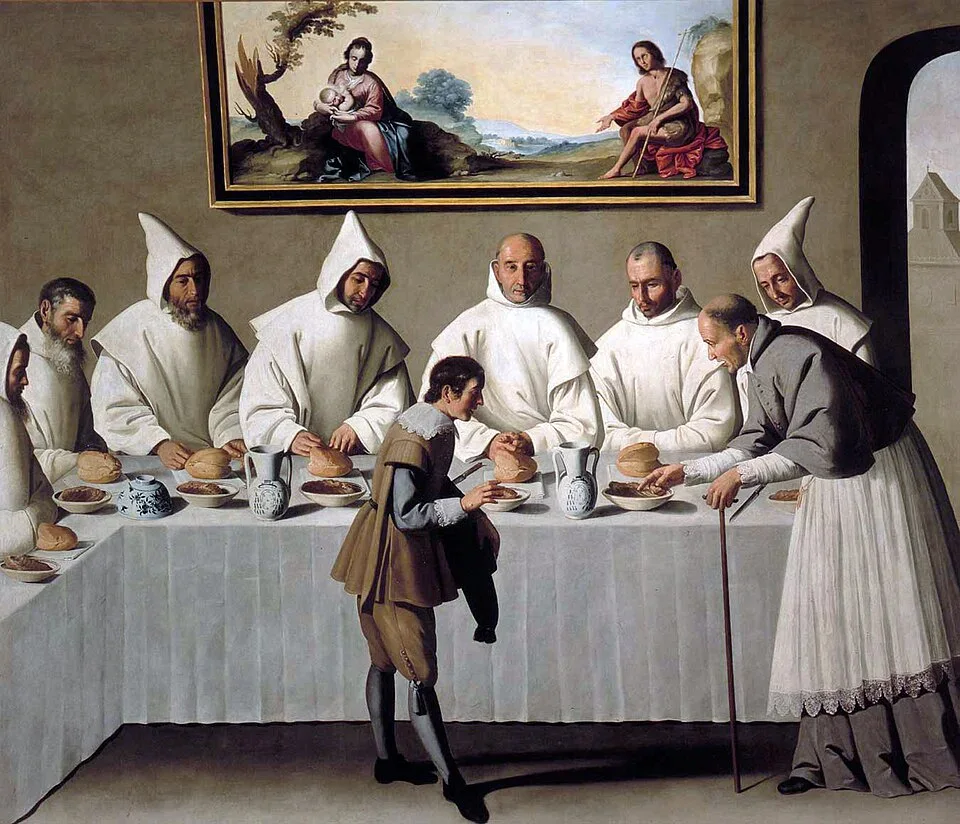
Saint Hugh in the Carthusian Refectory
The bishop leaning over this table had sent the monks a gift of meat. He had sent it to the first Carthusians, a small group of hermit monks. Their rule was hard and simple. No meat at all. But the ban was not yet official. So when the meat arrived, the monks argued about whether to accept it. While they argued, they fell into a long sleep. Forty-five days later he sent a messenger to say he was coming. The messenger came back. The monks were still at the table, meat before them, in the middle of Lent. Zurbarán chose to paint the moment the bishop arrived. The monks sit in white, eyes cast down, still half lost in that long sleep. Before each one is a bowl of bread and meat. As the bishop leans toward the plates, the meat turns to ash. Still caught in that same old argument, the monks decide there can be no exception to their rule. The year it was painted is still not known.
Listen in the appFrancisco de Zurbarán · Public domain
03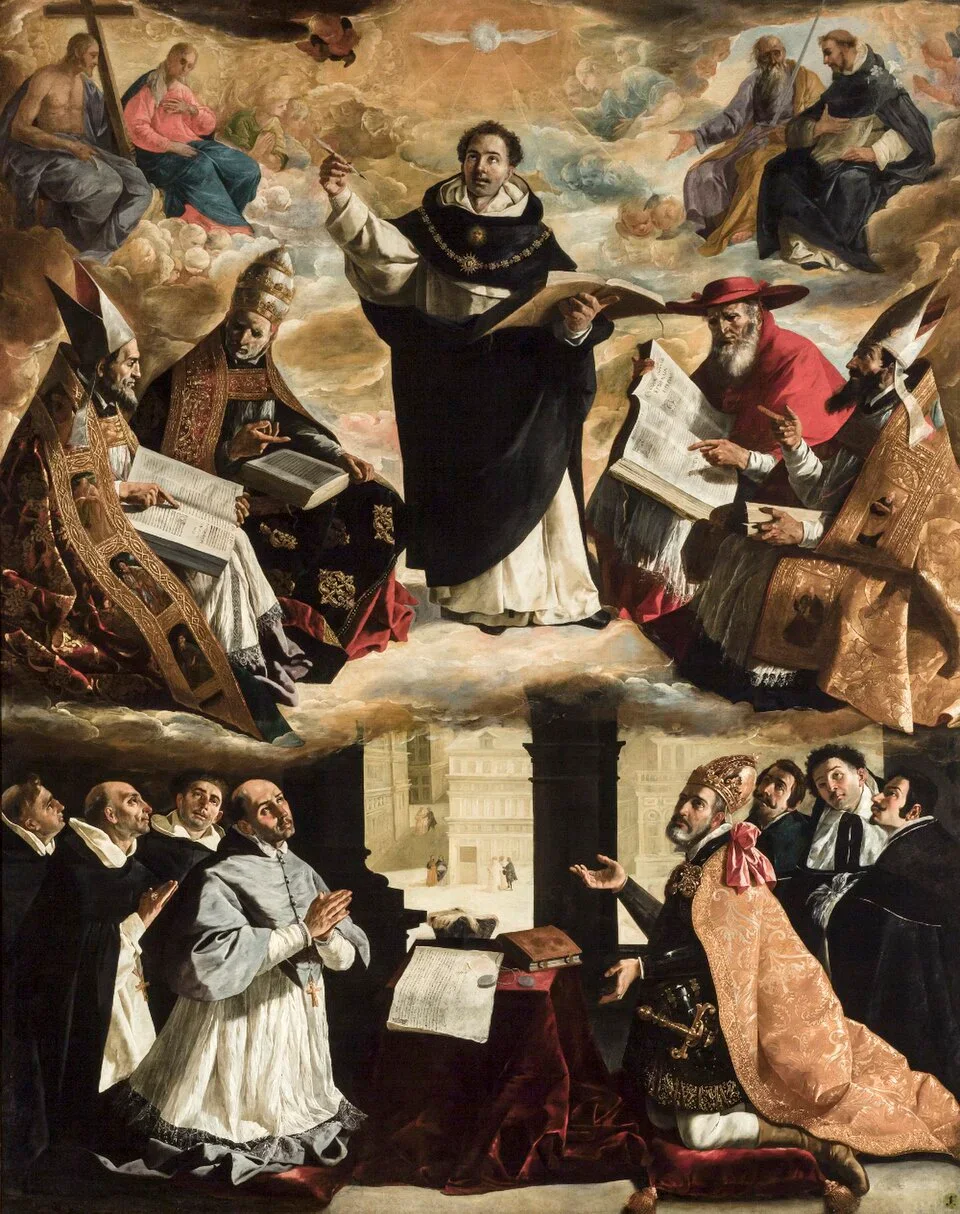
The Apotheosis of St. Thomas of Aquino
High in the middle, Thomas Aquinas holds his pen high and looks up at a dove, and rays fall from it onto him. Around him are the four great teachers of the Church. Above them sit Christ and Mary on one side, Paul and Dominic on the other. This is the saint taken up into heaven. But at the bottom of the picture, a table is covered in red velvet. On it lie the document that founded the College of Santo Tomás, the book of its rules, and a doctoral cap. Kneeling on the left is Diego de Deza, who founded the college, with three Dominicans. On the right is the Emperor Charles the Fifth, its protector. The saint is honored here, and the college's founding is remembered too. On the founding document itself, among the other signatures, Zurbarán wrote his own name. The painting was made for that college's high altar. The scheme for the whole thing was set down by the college's rector, Alonso Ortiz Zambrano, and the painter had promised to follow it exactly.
Listen in the appFrancisco de Zurbarán · Public domain
04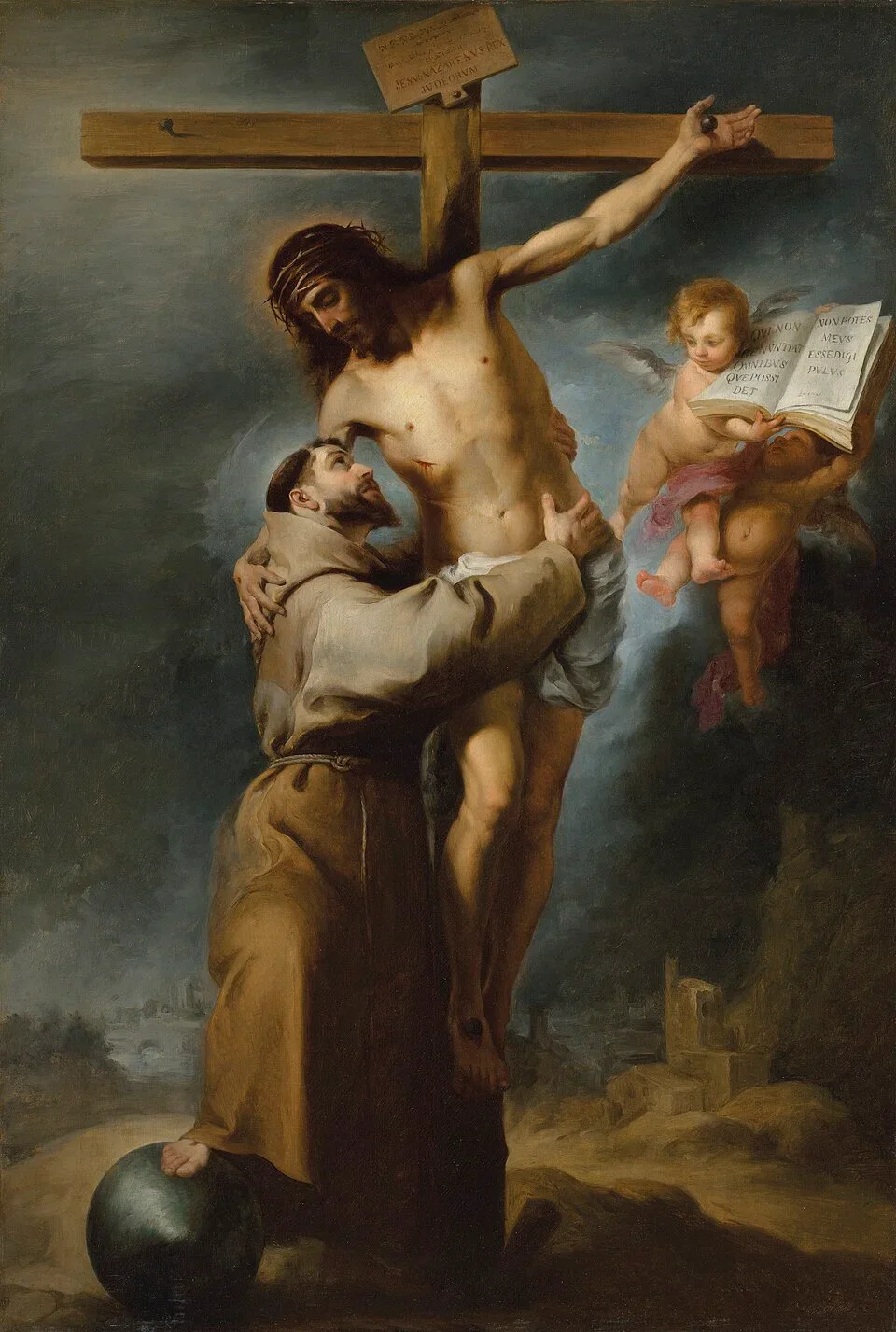
Saint Francis embracing Christ on the Cross
Christ has freed the arm that was nailed to the cross and laid his hand on Francis's back. Francis embraces him in return. And with his right foot he has just pushed a globe away. That globe is the world he is giving up to follow Christ. Beside the cross, two cherubs hold a book open. It shows the words from Luke, where Christ says that anyone who will not give up everything cannot be his disciple. Murillo painted this for the Capuchins, for their monastery church in Seville, as one of a series about what makes Franciscan life distinct. The Capuchins in Valencia had the same scene painted by Ribalta, around 1658. Their convent helped found the one in Seville, so they may be the ones who suggested the subject. Along the bottom, rough buildings are sketched into a landscape. The light shifts gently from one to the next, and that is how the scene gets its depth.
Listen in the appBartolomé Esteban Murillo · Public domain
05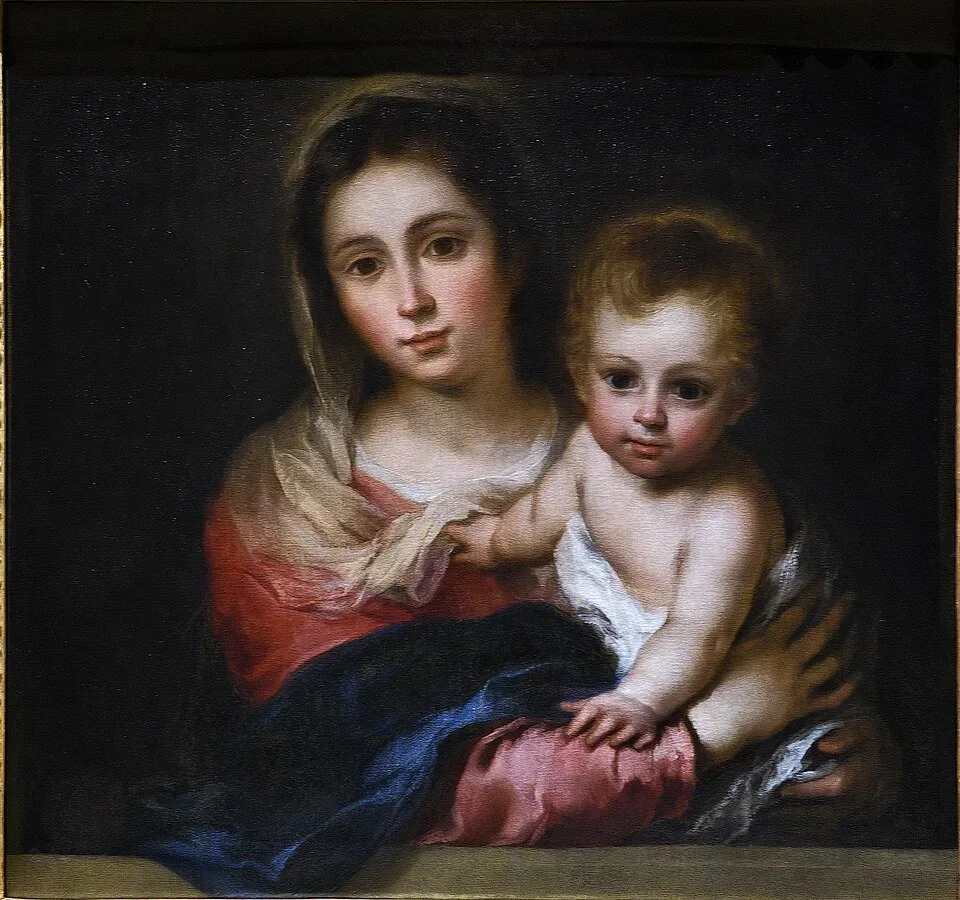
Madonna of the Napkin
The child looks as if he is about to climb out of the picture. Mary's eyes meet yours, tender and close. The scene feels made for one person, in private. The story goes that a Capuchin friar in Seville asked Murillo to paint him a picture of Mary and the child. He wanted it for his cell, so he could pray before it. But he had no money for a canvas. So the painter used a napkin instead. That is how the picture got its name. For more than a hundred and fifty years it hung in the Capuchin church in Seville. Then, during the war, a French general who greatly admired Murillo tried to take it. The friars knew what it was worth, and in 1810 they carried it, with other paintings, to Gibraltar. It stayed there until the fighting ended in 1814.
Listen in the appPhoto: Jl FilpoC · Public domain
06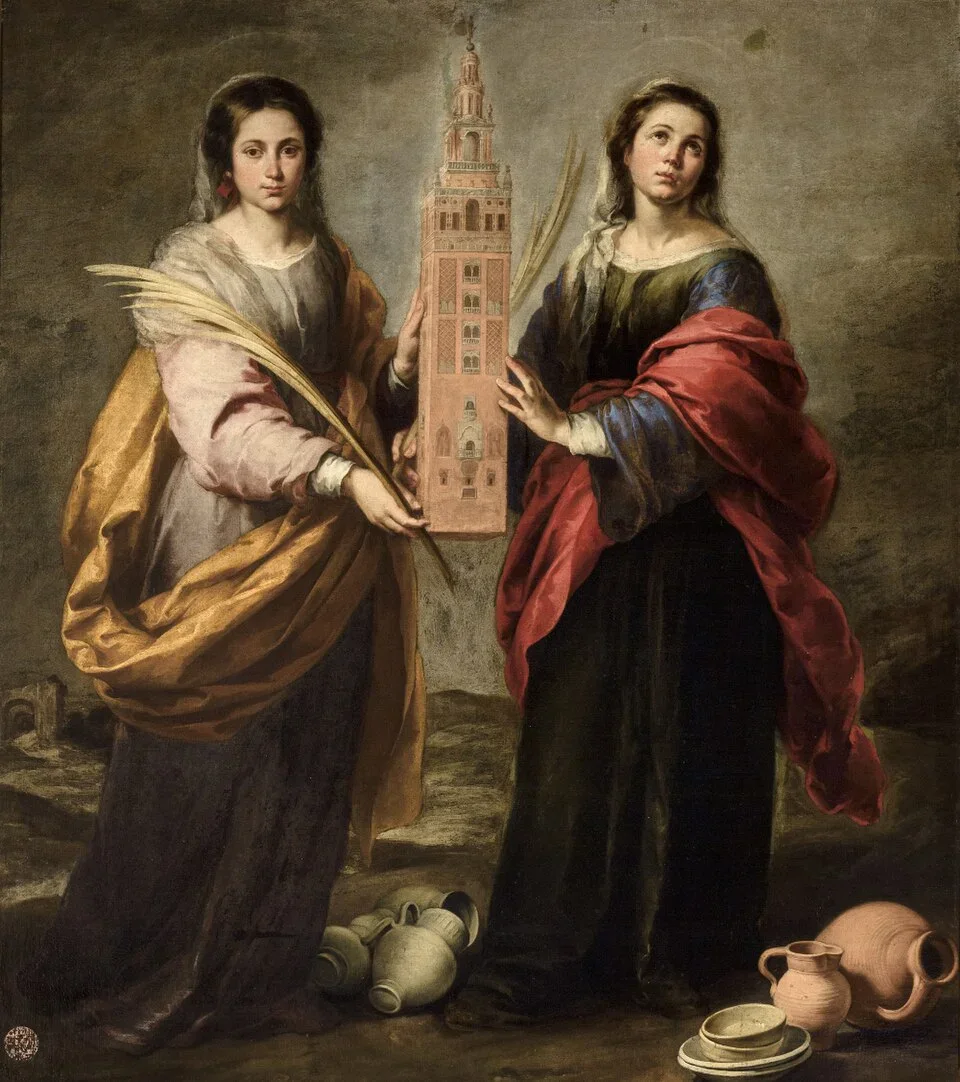
St. Justa and St. Rufina
Two women hold a small tower between them, as though it were a holy relic. The tower is the Giralda, the bell tower of Seville Cathedral, which began as a mosque's minaret. The women are Saint Justa and Saint Rufina, the cathedral's patron saints. One is dressed in yellow, the other in red, and they stand against a bleak landscape. The one on the left looks out toward you. The other lifts her eyes to heaven. Clay pots lie at their feet, a reminder that the sisters were potters, daughters of a potter. Murillo painted this for the church of the Capuchin convent in Seville. People believed the sisters' prayers had saved the Giralda from the earthquakes that damaged the cathedral over the centuries.
Listen in the appBartolomé Esteban Murillo · Public domain
07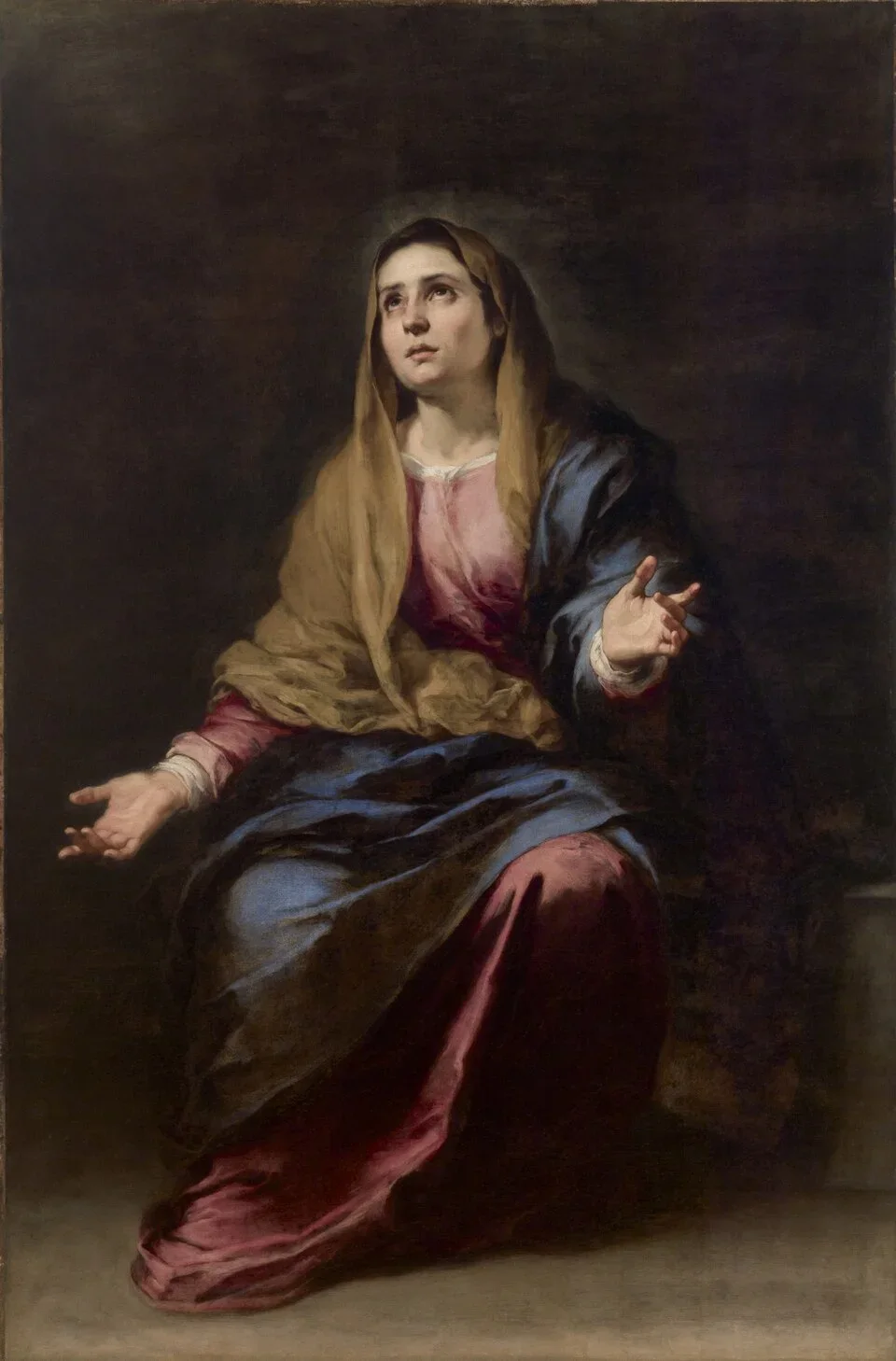
Mater Dolorosa
She has come to the tomb of her son and sits down beside it. She raises her eyes toward Heaven. She is Mary, and the man in that tomb is Jesus, her child. Murillo set her at this grave. The title calls her the Mater Dolorosa, the sorrowful mother. Behind her, everything is dark. Her face is turned partly to the side. And her hands are open, opened in prayer.
Listen in the appBartolomé Esteban Murillo · Public domain
08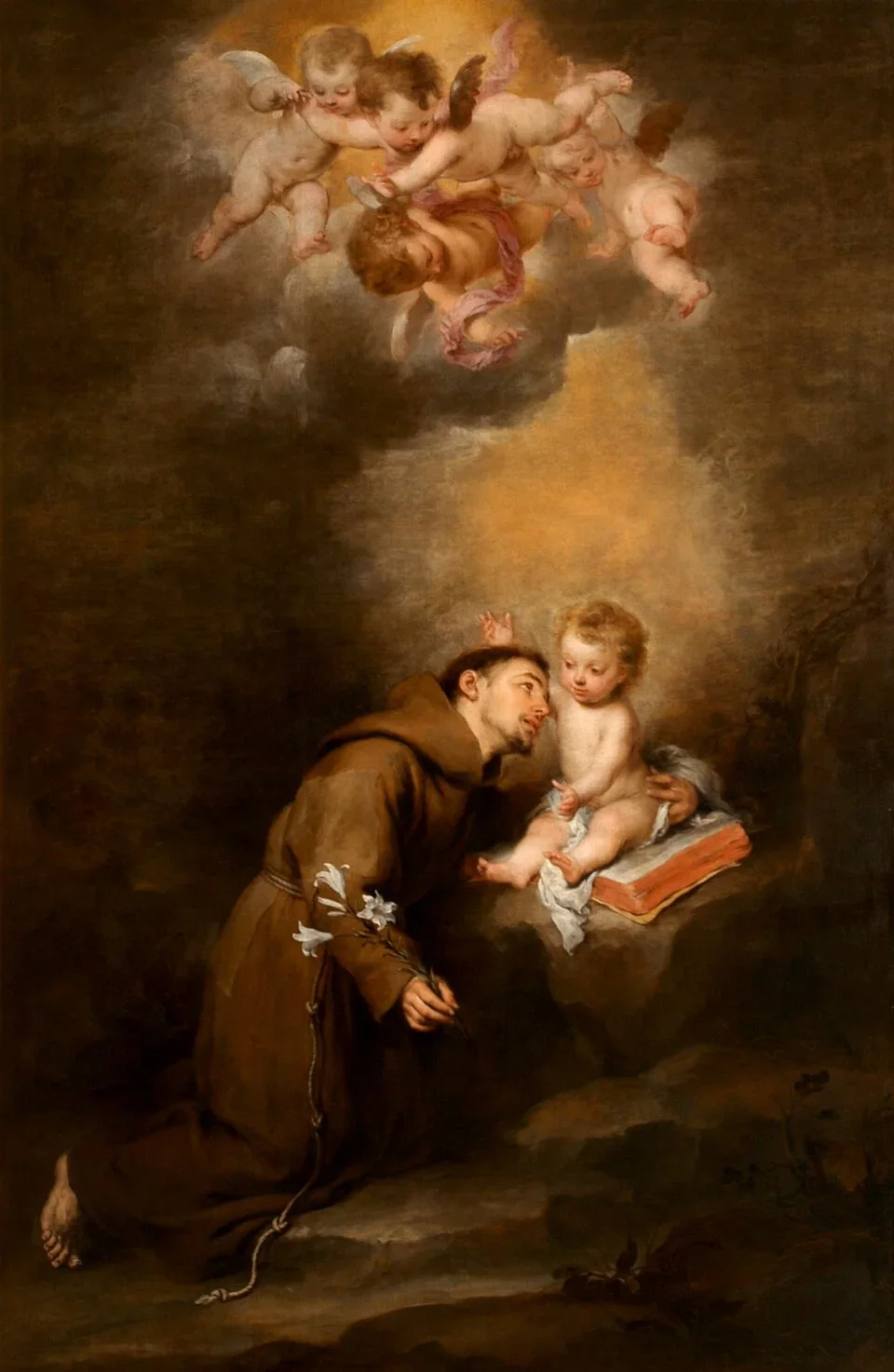
Saint Anthony of Padua with the Child
Why does a young monk kneel barefoot, holding a child? The child is Jesus, seated on the Gospel. The monk is Anthony of Padua, shown as a young man, adoring him. A lily is in his hand, the sign of purity. A white cord binds his hooded robe, and its three knots stand for poverty, obedience and chastity. But the robe is brown. Anthony is usually painted in gray. The Capuchin convent of Seville commissioned the picture, and the brown robe is how they claimed this Franciscan for themselves. The picture originally belonged to their monastery in Seville.
Listen in the appBartolomé Esteban Murillo · Public domain
09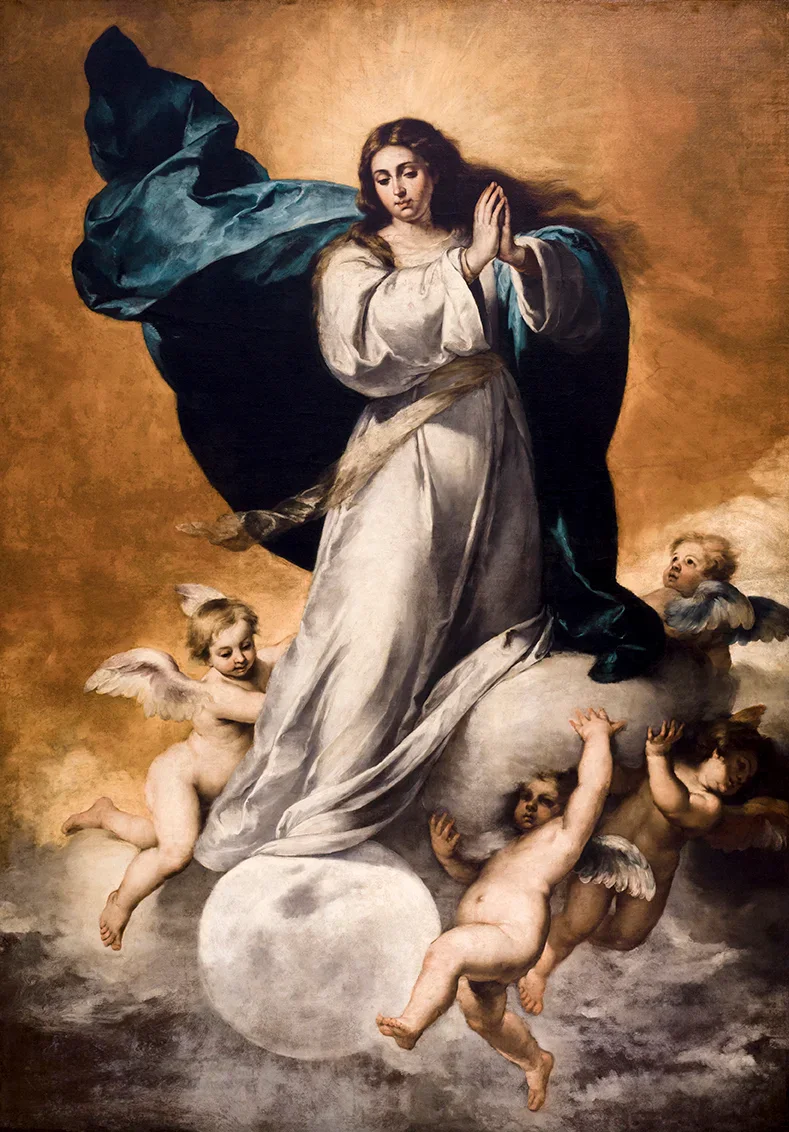
Immaculate Conception
A young woman in white and blue stands in Heaven with her hands joined in prayer, a golden glow behind her. One foot rests on the moon, the other on a cloud held up by four little angels. More angels float around her. She looks down. Murillo painted this for the chapel of the Franciscan monastery in Seville. There it hung high above the arch, well away from the people below. The Franciscans who asked for it were devoted to the Immaculate Conception, a devotion going back to the Middle Ages. So Mary looks down to meet them. The moon, the cloud and the angels form one slanting line. Her blue mantle follows another, and those two lines give the whole scene its depth. It is enormous on purpose, and that is why it is called La Colosal. Since 1840 it has hung here in the Museum of Fine Arts of Seville.
Listen in the appBartolomé Esteban Murillo · Public domain
10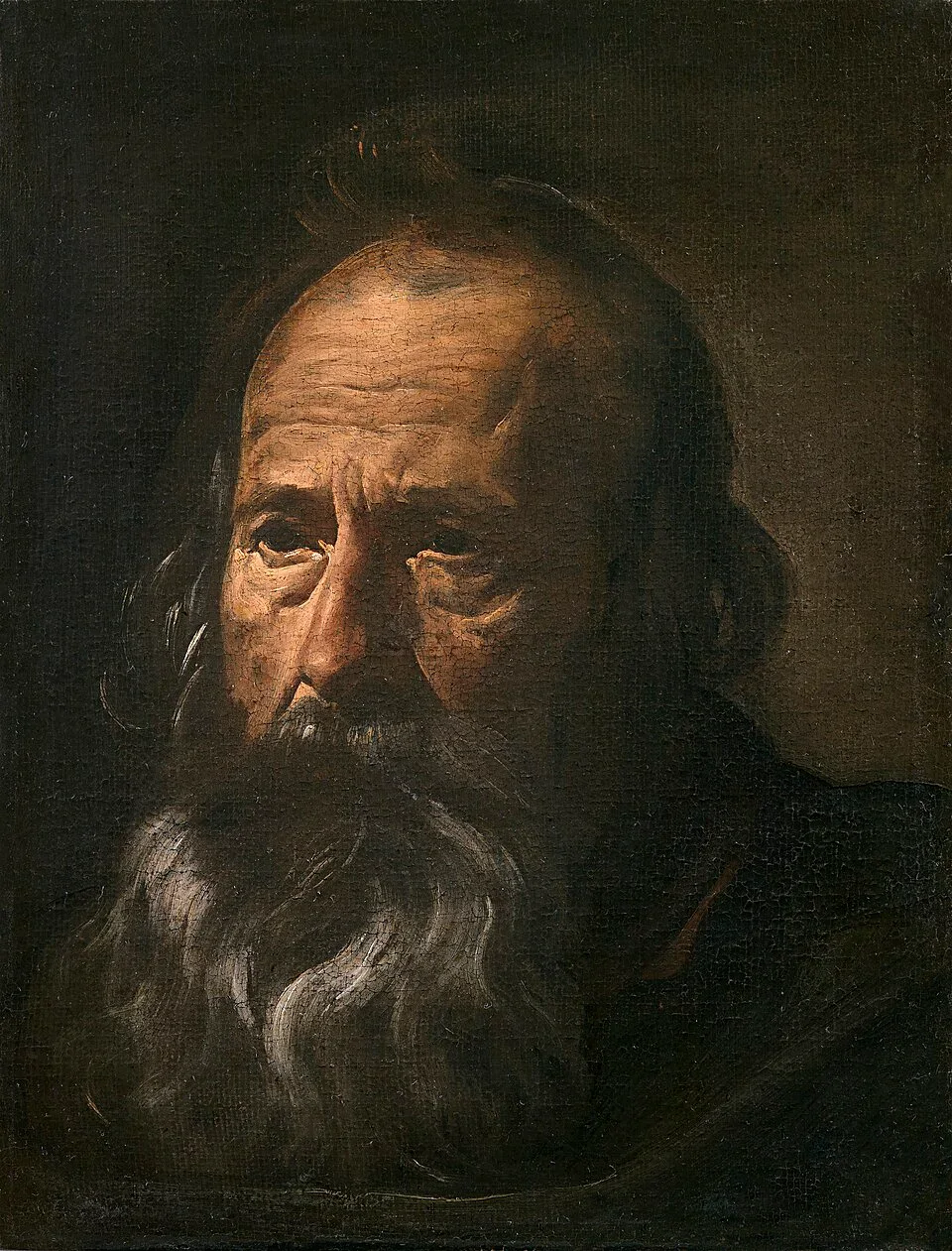
Head of an Apostle
The face is painted in dry strokes, with just a few touches of light on the skin. Only the white beard flows, painted in fluid strokes. That head seems to turn up again on a Saint Paul in Barcelona, the same face reversed. It may have belonged to a set of apostles the young Velázquez painted in Seville. A Saint Thomas in Orléans may be another from the same set. But this canvas was cut down on all four sides, at a date nobody knows. Which apostle it shows is not settled. It could be Saint Paul, but that is not certain. Nobody knew this head before 1914, when it surfaced with the Marquis of Casa Torres, already called a Velázquez. When it was cleaned before a sale in 2003, the paint proved sound apart from that cropping. It was offered for more than two million euros and found no buyer. In 2006 the Prado bought it and put it here in Seville. Under the paint lies a dark brown layer, the sort he laid down in those early years.
Listen in the appDiego Velázquez · Public domain
- 11
Don Cristóbal Suárez de Ribera
Diego Velázquez · 1620
- 12
Portrait of Jose Duaso y Latre
Francisco Goya · 1824
- 13
Virgen de las Cuevas
Francisco de Zurbarán · 1644–1655
- 14
Bruno di Segni with Urban II
Francisco de Zurbarán · c. 1655
- 15
Saint Thomas of Villanueva giving alms to the poor
Bartolomé Esteban Murillo · c. 1668
- 16
Crucified Christ
Francisco de Zurbarán · 1630–1640
- 17
Virgin Commendatory of Mercy (1)
José Montes de Oca, Jerónimo Hernández de Estrada
- 18
Zurbarán - The Child of the Thorn. Museum of Fine Arts of Seville
Francisco de Zurbarán · c. 1645–1650
- 19
Saint Francis of Assisi with a Crucifix
Francisco Pacheco · 1616
- 20
The cigar makers
Gonzalo Bilbao Martínez · 1915
- 21
Saint Francis Borgia
Alonso Cano · 1624
- 22
Saint Jerome in Penitence
Pietro Torrigiano · 1500
- 23
St. Hermenegild's apotheosis
Francisco Herrera the Elder · 1620–1638
- 24
Saint Catherine of Alexandria, by Bartolomé Esteban Murillo
Bartolomé Esteban Murillo · c. 1650
Museo de Bellas Artes de Sevilla
Frequently asked questions
How much does the guide cost?
Free app download. Free until 1 January. Listed guide price: $0.99. Audio guide only. Venue admission is separate.
Can I listen without internet?
Yes. Download the guide’s audio, images, and maps in the app before your visit. Your downloaded content is then available offline.
Can I listen in my language?
In English for now. More languages soon.
Do I need to follow a schedule?
No. This is a self-guided experience. Choose your stops, pause whenever you like, and return to a story at your own pace.
Which artworks are in the Museo de Bellas Artes de Sevilla audio guide?
24 artworks, including Portrait of Jorge Manuel Theotocópuli (El Greco), Saint Hugh in the Carthusian Refectory (Francisco de Zurbarán), The Apotheosis of St. Thomas of Aquino (Francisco de Zurbarán), Saint Francis embracing Christ on the Cross (Bartolomé Esteban Murillo), Madonna of the Napkin (Bartolomé Esteban Murillo), St. Justa and St. Rufina (Bartolomé Esteban Murillo), Mater Dolorosa (Bartolomé Esteban Murillo), and Saint Anthony of Padua with the Child (Bartolomé Esteban Murillo). The full list is on this page.
Is this the museum’s official audio guide?
No. Stanza is an independent audio guide app and is not affiliated with Museo de Bellas Artes de Sevilla. Museum admission is separate.
At your own pace
Explore Museo de Bellas Artes de Sevilla.
Download Stanza, then search for “Museo de Bellas Artes de Sevilla”.
Free app download · Guide price shown in the app
Keep exploring
Nearby audio guides
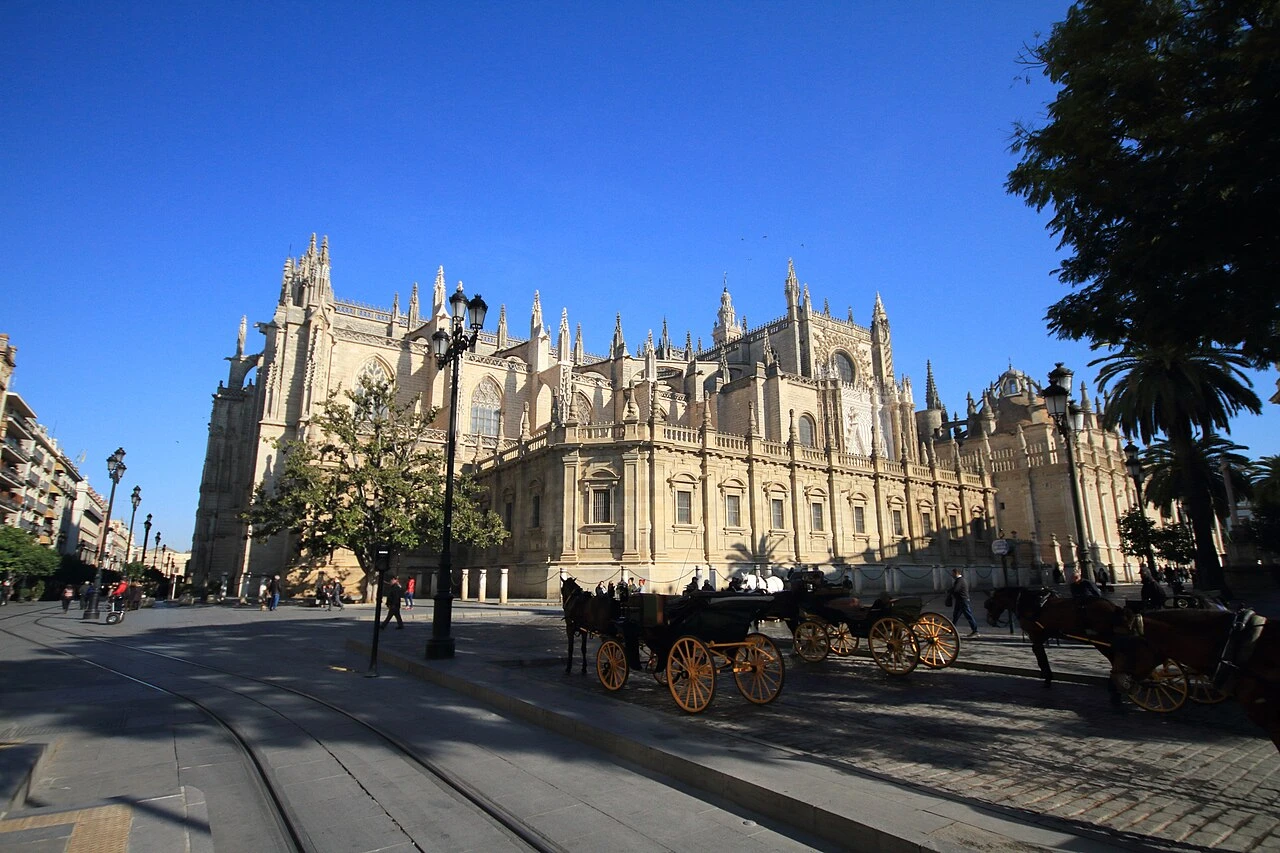
Seville · 1 km
Seville Cathedral
Content & sources
Photo: PEPE GADEIRAS · CC BY-SA 4.0
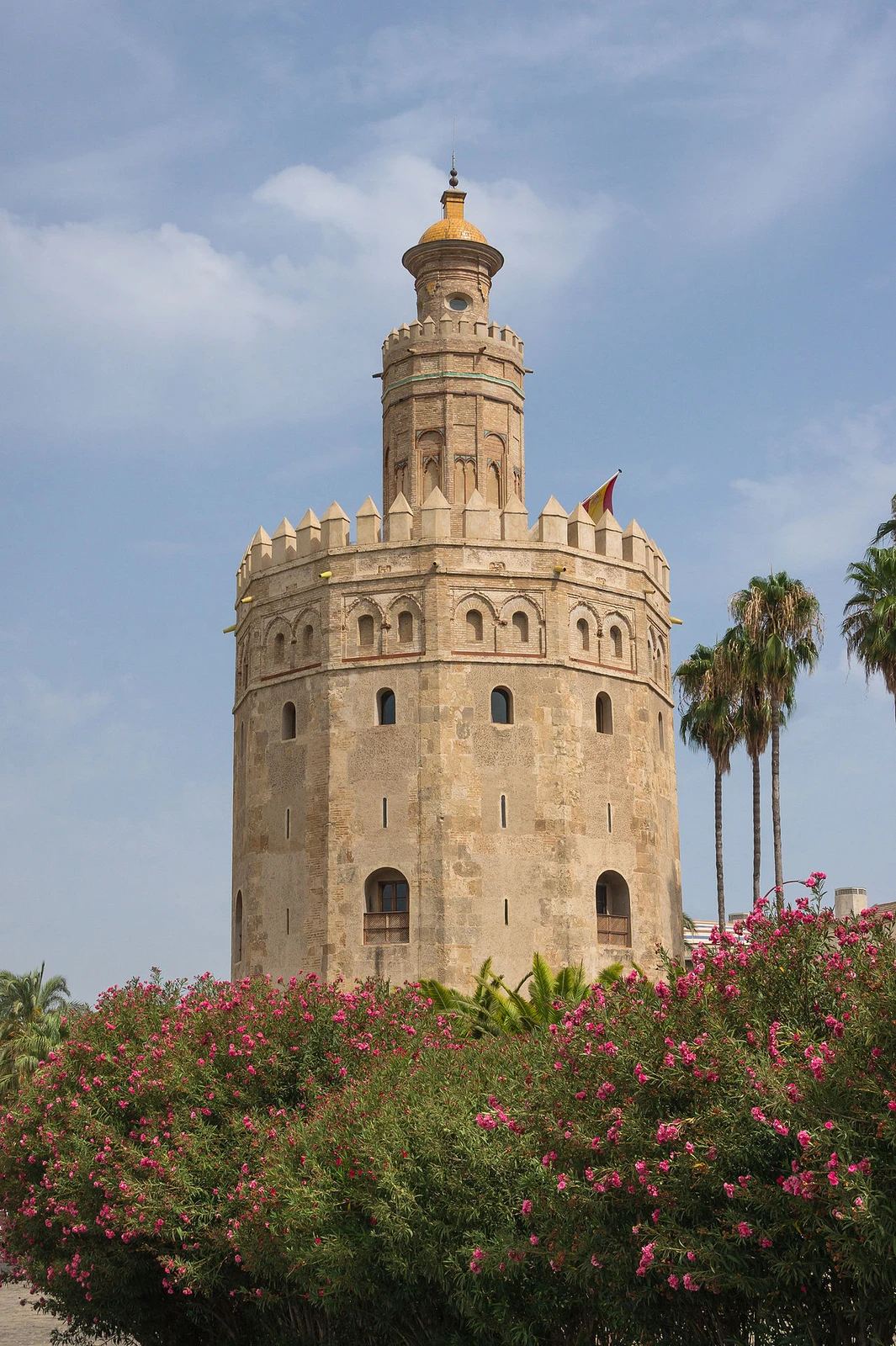
Seville · 1 km
Torre del Oro
Content & sources
Photo: Jebulon · CC0
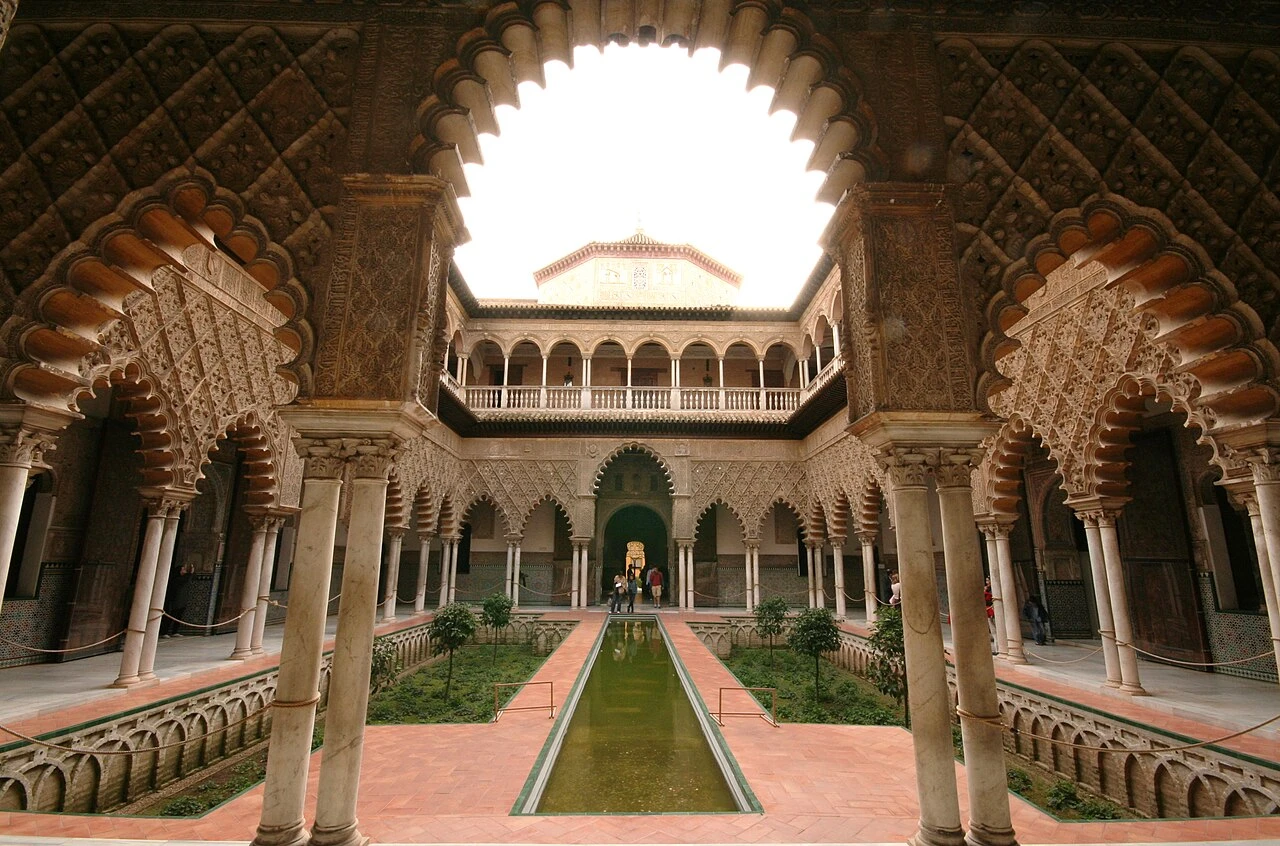
Seville · 1 km
Royal Alcázar of Seville
Content & sources
Cat from Sevilla, Spain · CC BY 2.0
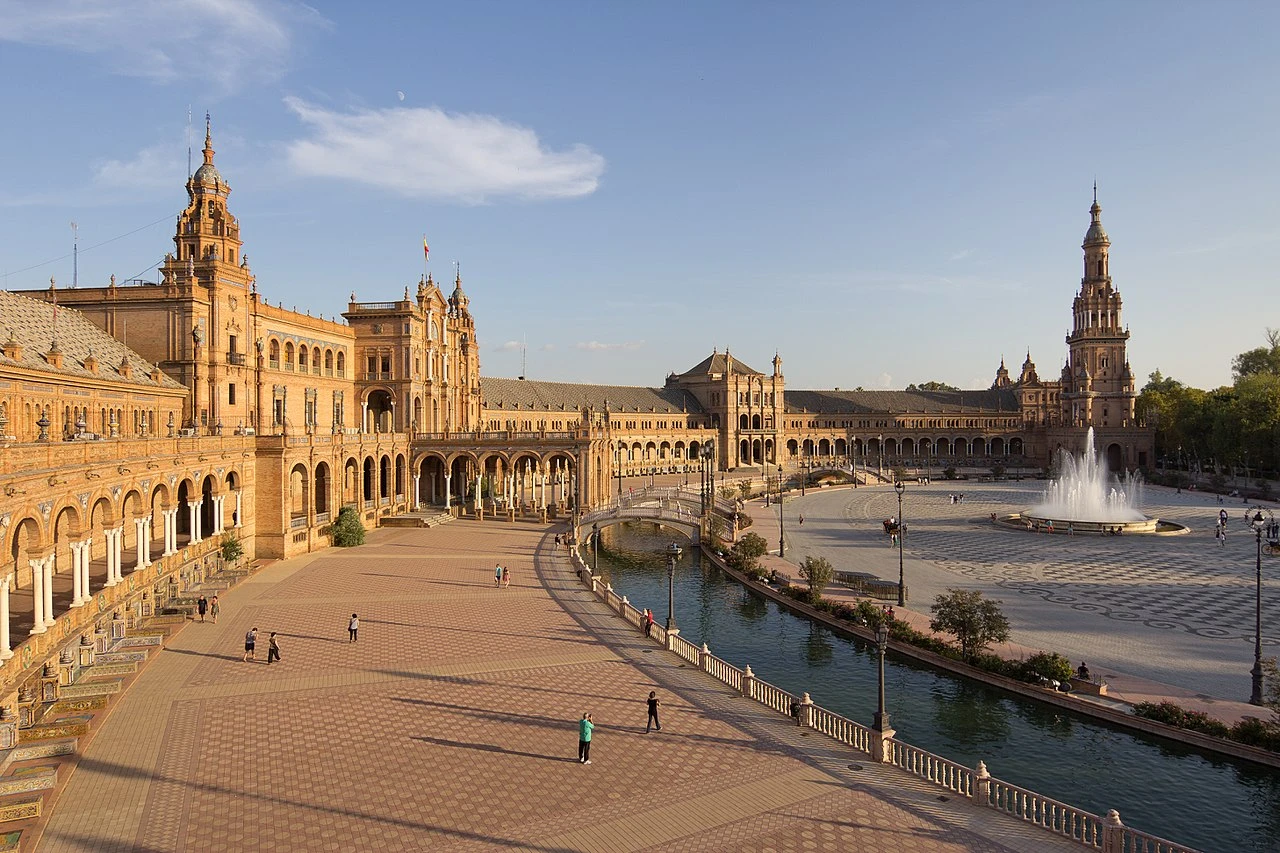
Seville · 2 km
Plaza de España
Content & sources
Carlos Delgado · CC BY-SA 4.0
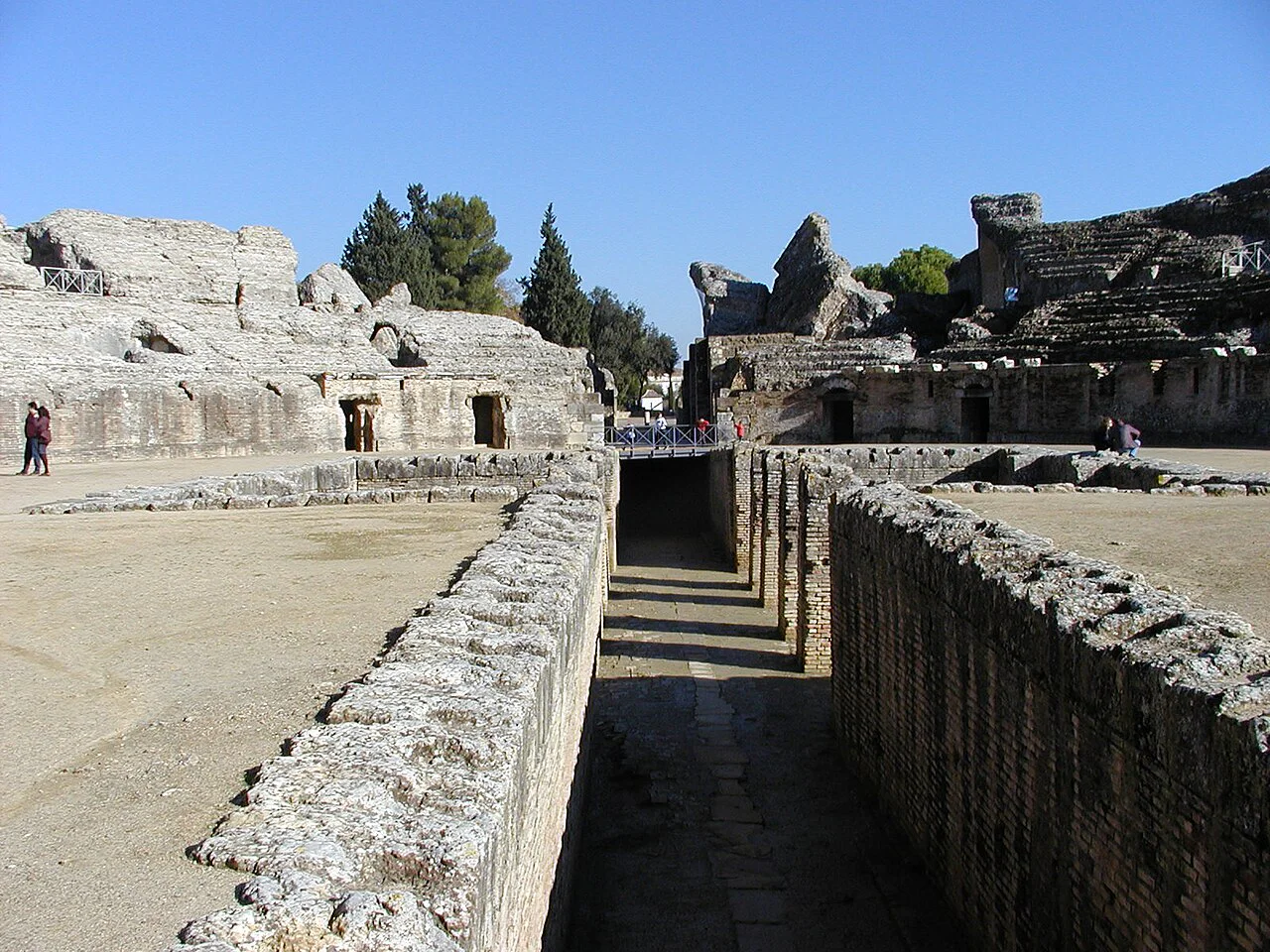
Santiponce · 7 km
Itálica
Content & sources
No machine-readable author provided. Joris assumed (based on copyright claims). · Public domain
Art museums
More art museum audio guides
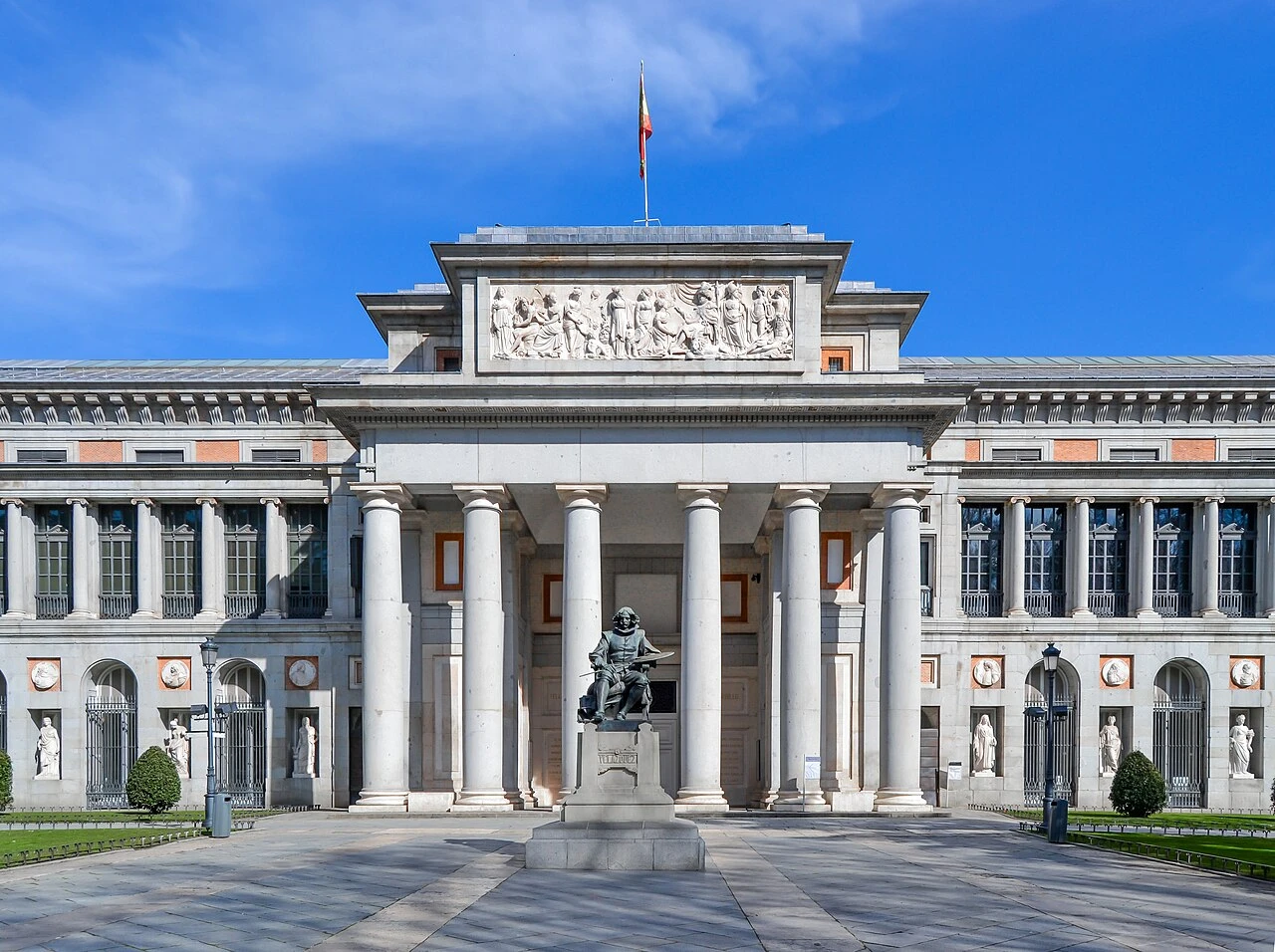
Madrid · 437 artworks
Prado Museum
Content & sources
Emilio J. Rodríguez Posada · CC BY-SA 2.0
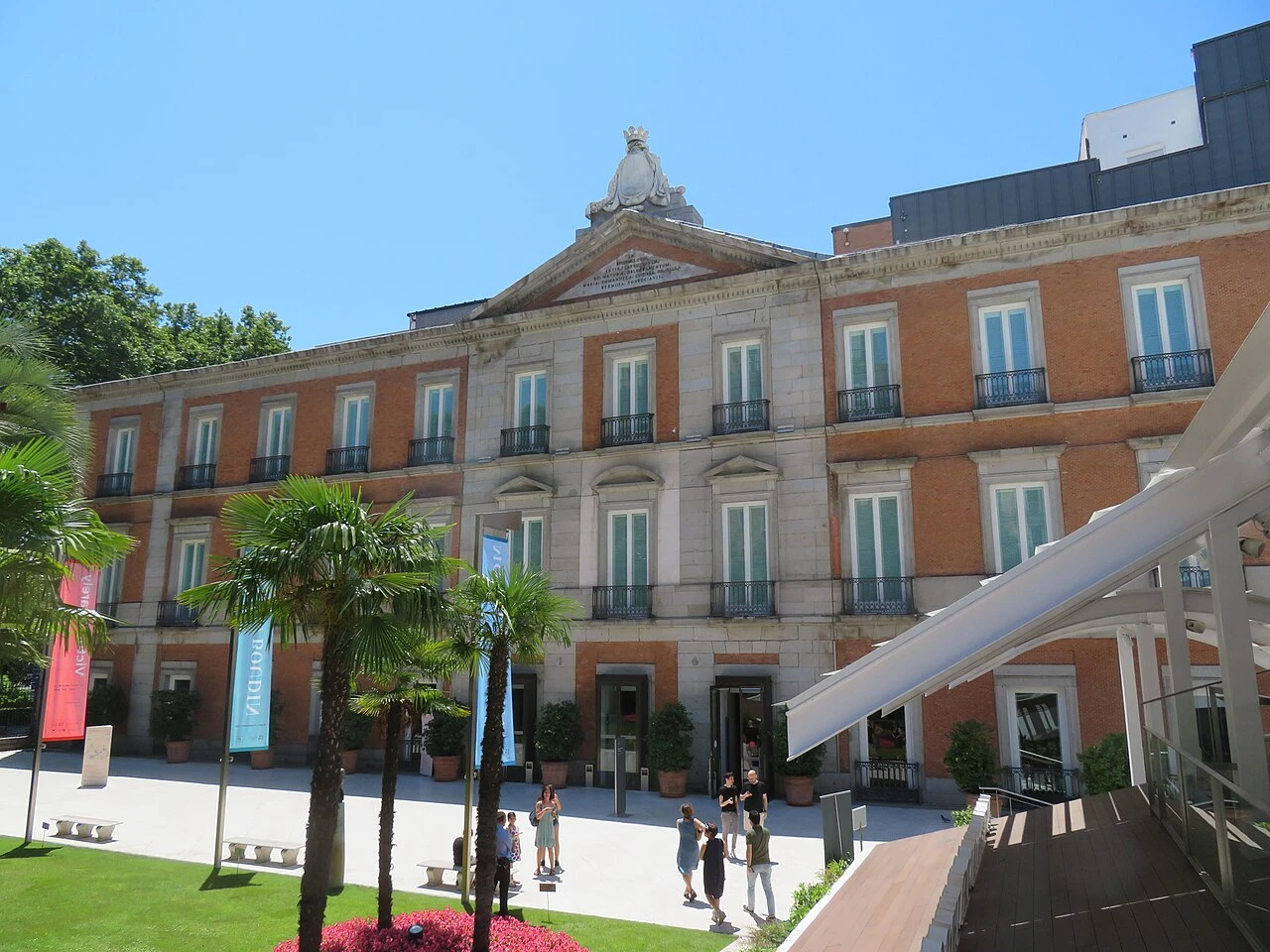
Madrid · 69 artworks
Thyssen-Bornemisza Museum
Content & sources
Kyle Magnuson from Los Angeles, United States · CC BY 2.0
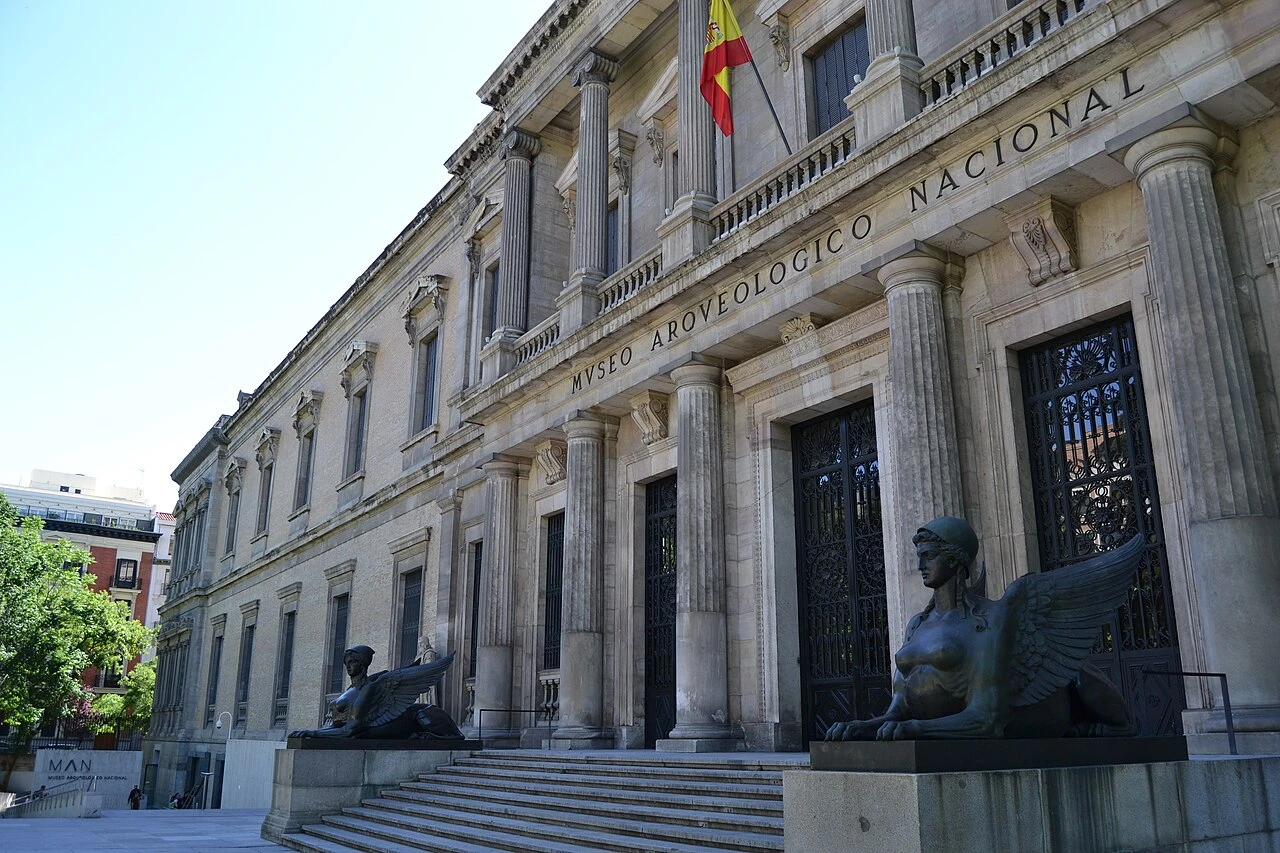
Madrid · 96 artworks
National Archaeological Museum of Spain
Content & sources
Emilio J. Rodríguez Posada · CC BY-SA 2.0
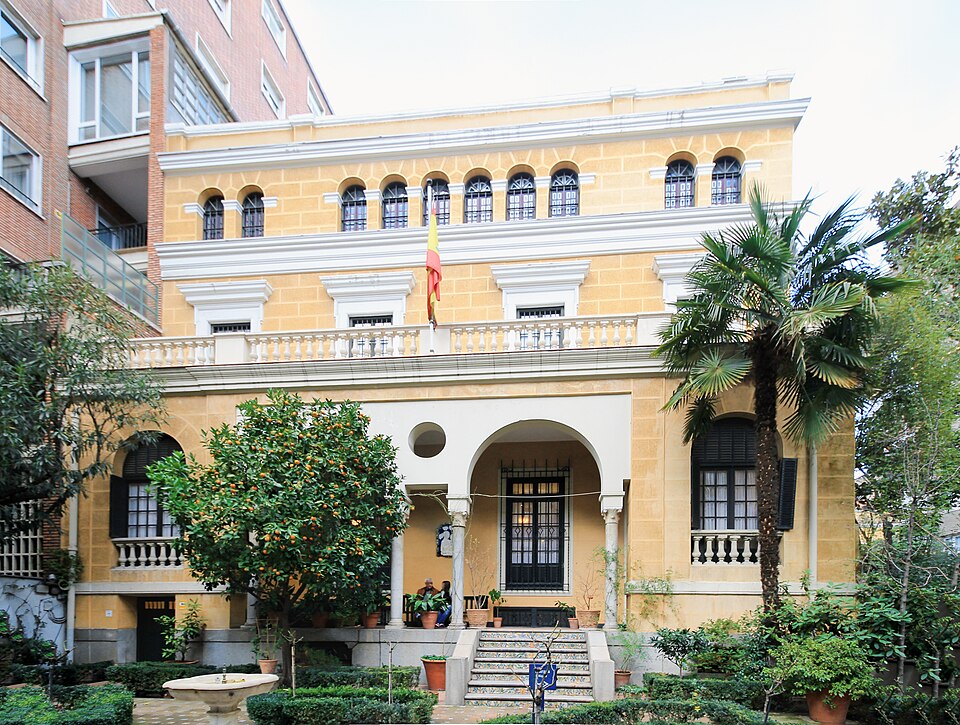
Madrid · 35 artworks
Sorolla Museum
Content & sources
Luis García (Zaqarbal) · CC BY-SA 3.0 es
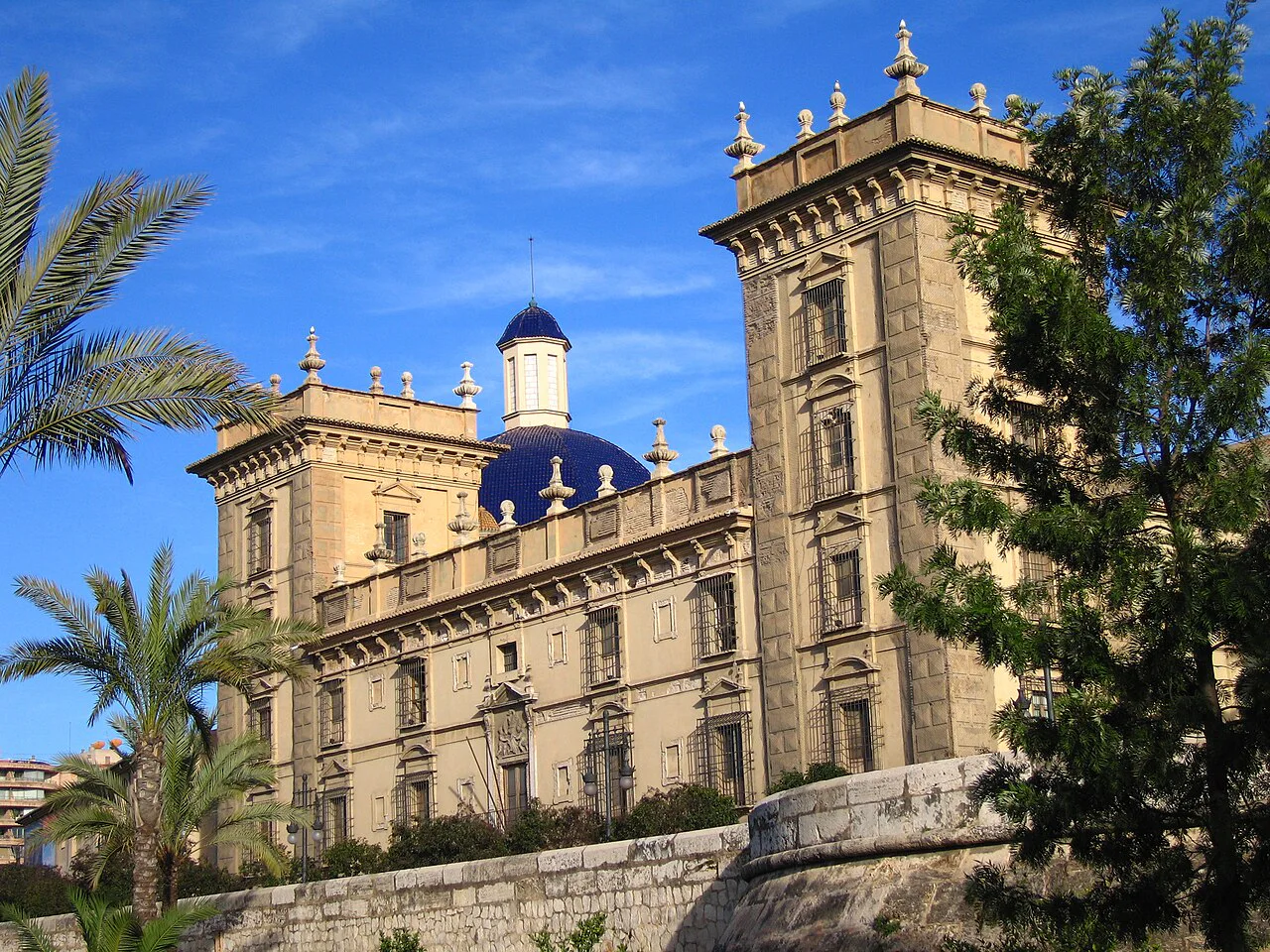
Valencia · 31 artworks
Museo de Bellas Artes de Valencia
Content & sources
Felivet · Public domain
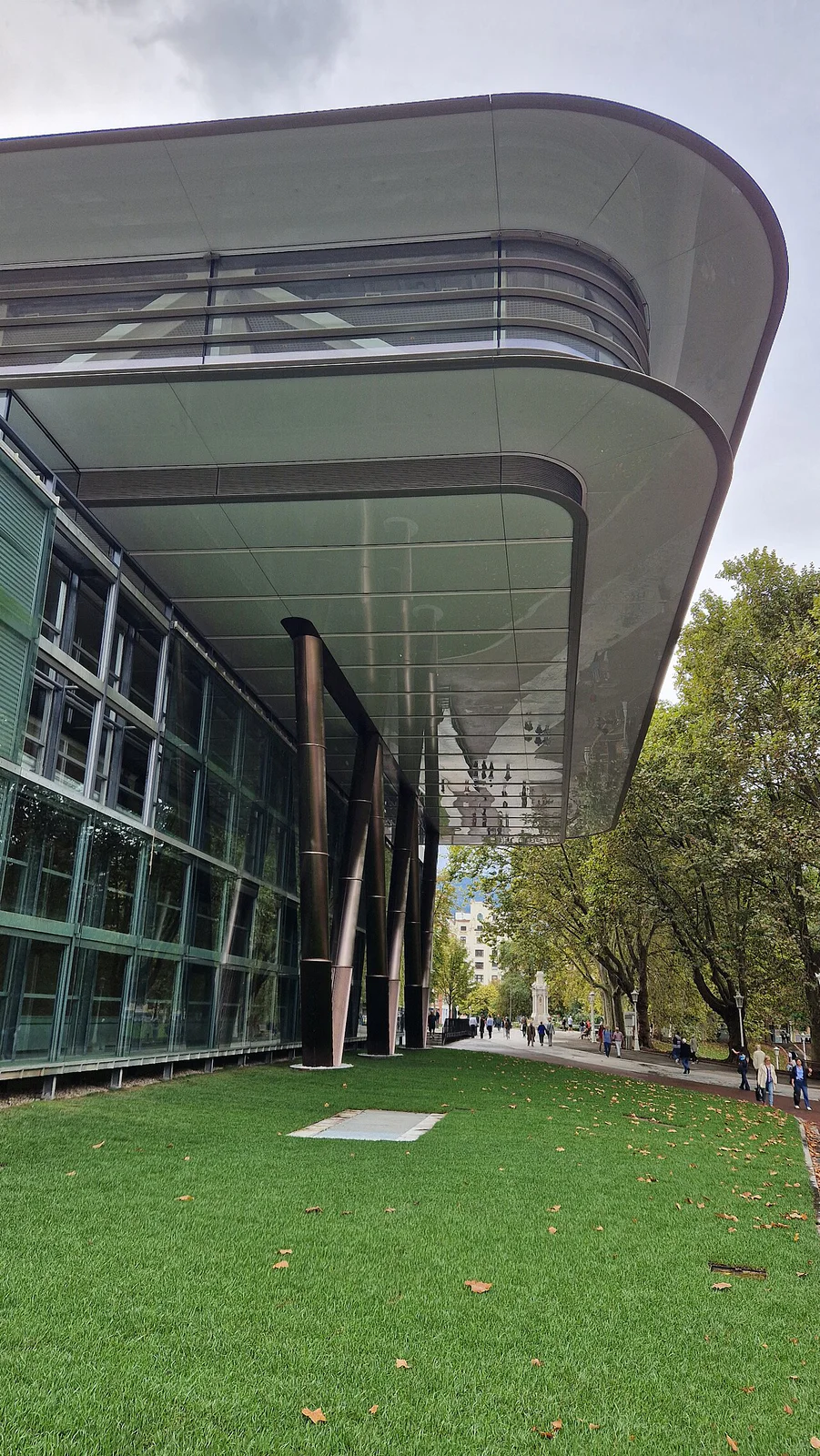
Bilbao · 43 artworks
Museo de Bellas Artes de Bilbao
Content & sources
Photo: Xabier · CC0