Stanza · Audio guide
Alanya Kalesi Audio Guide
A place to remember. A story to take with you.
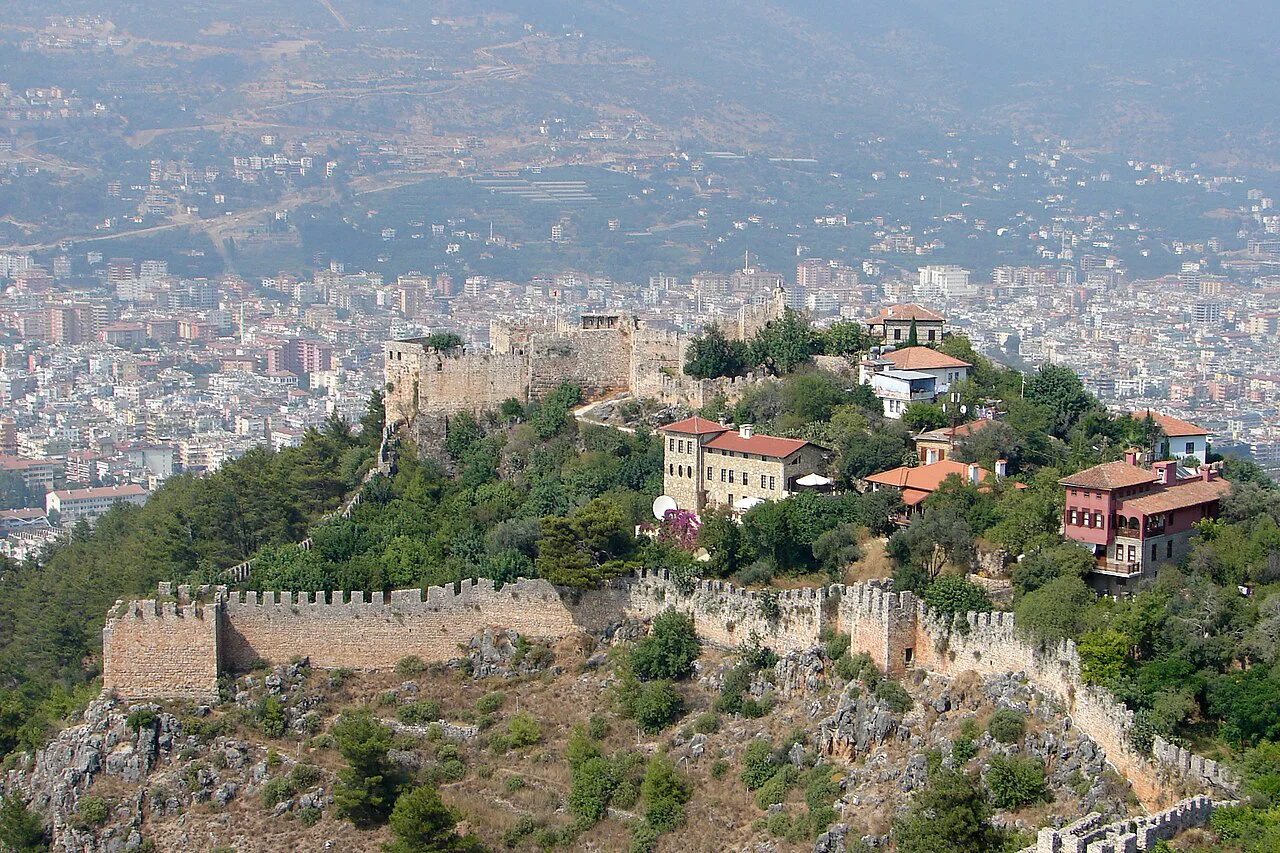
Alanya Castle is a medieval castle located in the southern Turkish city of Alanya. It serves as a significant historical site in the region.
Download Stanza, then search for “Alanya Kalesi”.
About the tour
One guide. Your kind of visit.
Alanya Castle is a medieval castle located in the southern Turkish city of Alanya. It serves as a significant historical site in the region.
Ready when you are.
- 01Get the free Stanza app.
iOS & Android
- 02Find your guide.
“Alanya Kalesi”
- 03Download before you go.
Works offline
Audio guide / 14 narrated stops
Inside the guide
Get to know a few of the stories before you go. Open a stop to read more.
01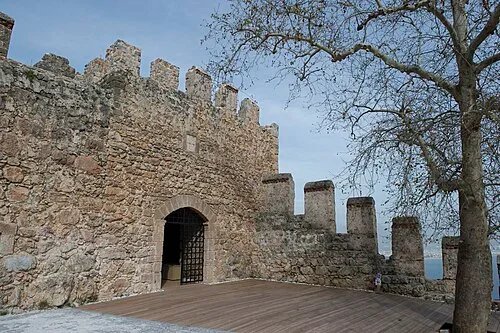 Ehmedek: The Landward Fortress
Ehmedek Gate Area
Alanya Castle stands on a rocky peninsula about two hundred and fifty metres above the Mediterranean. The sea protects it on three sides. The whole complex covers roughly ten hectares, and today it is an open-air museum. On the landward side, known as Ehmedek, an arched doorway with an iron gate sits low in a battlemented wall. In 2009, city officials filed to have the castle and the Tersane made UNESCO World Heritage Sites, and both were named to the tentative list that year.
Photo: Dosseman · CC BY-SA 4.0
02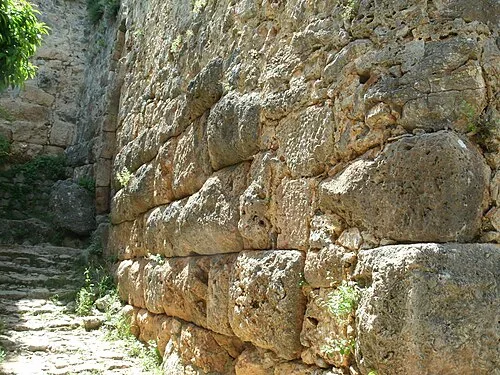 Ehmedek: The Landward Fortress
Ehmedek North Bastion Masonry
These big, roughly cut blocks are said to be remains of the Hellenistic fortress of Korakesion. Hellenistic is the name for the era of Greek culture around the eastern Mediterranean after Alexander the Great. The rows of stone climb beside a narrow, stepped path. The story starts with pirates. In the second century BC, the fighters of a pirate named Tryphon founded a settlement here and called it Korakesion. The Romans were disturbed by pirate activity in the eastern Mediterranean. They took the castle in 64 to 65 BC.
Gottfried Hoffmann -… · CC BY 3.0
03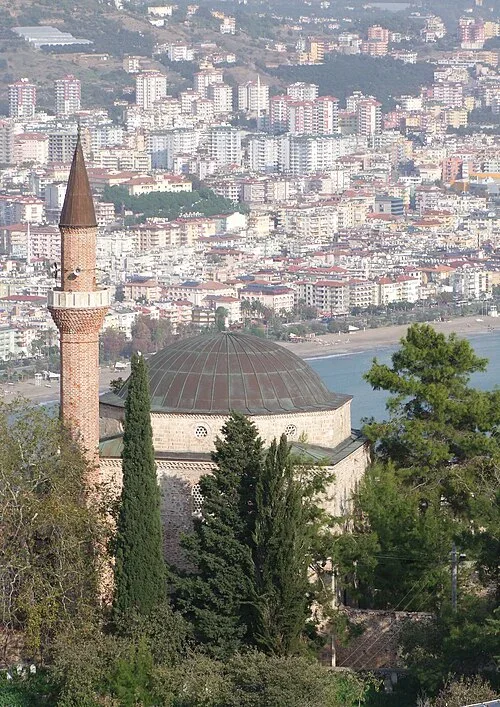 Upper Hisariçi Village & Medieval Marketplace
Süleyman Mosque across the Lower Town
The domed building in the foreground is a mosque, and its tall minaret rises beside the dome. Beyond it, the modern town covers the slopes, and the bay opens at the right. After the Seljuks, the castle and the settlement around it passed in turn to the Karamanids and then to the Mamluks. Finally, Süleyman the First conquered it.
Listen in the appPhoto: Pharaoh han · CC BY 3.0
04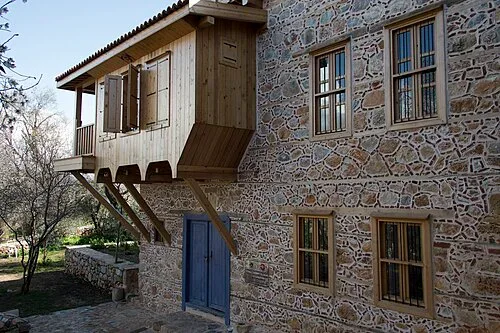 Upper Hisariçi Village & Medieval Marketplace
Sandık Emini Kayhanlar House
Once the Ottoman Empire had made the area peaceful, the castle was no longer purely defensive. Numerous villas were built inside its walls in the nineteenth century. This stone house, with a timber upper floor pushed out on brackets, is the kind of home that went up. Its upper windows have shutters and a wooden balcony. Grilles cover the windows, and a blue door sits at ground level.
Listen in the appPhoto: Dosseman · CC BY-SA 4.0
05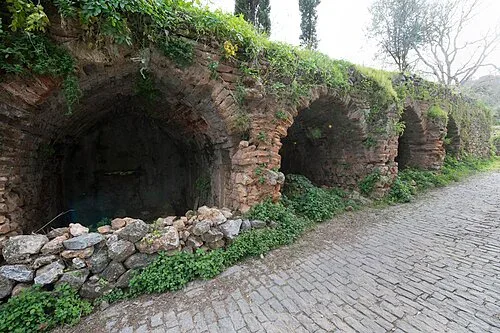 Upper Hisariçi Village & Medieval Marketplace
Arasta Vaults along the Cobbled Lane
A row of arched recesses lines a cobbled lane inside the walls. The stonework mixes brick and stone, with dark hollows behind each arch. The name given here is arasta, a word that in Ottoman towns usually means a covered row of shops. Nothing visible here shows what these vaults were used for. Ivy and other greenery now trail over the top of the arches.
Listen in the appPhoto: Dosseman · CC BY-SA 4.0
06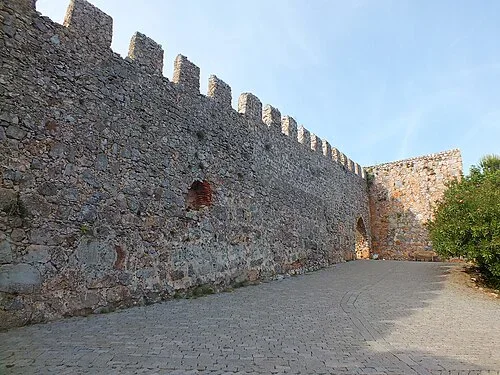 İçkale: The Summit Citadel & Palace
Castle Entrance Gate and Curtain Walls
The walls were laid out as one planned line. The line runs from Ehmedek past the citadel. It goes around Cape Cilvarda and ends at the Red Tower by the harbour. Battlements top the grey stone here, and a cobbled walkway runs alongside. Altogether the wall stretches six and a half kilometres. Counts of the towers differ. One count gives a hundred and forty towers. Another gives eighty-three towers and also counts a hundred and forty bastions. Most of the castle dates from the thirteenth century, under the Seljuks.
Listen in the appCobija · CC0
07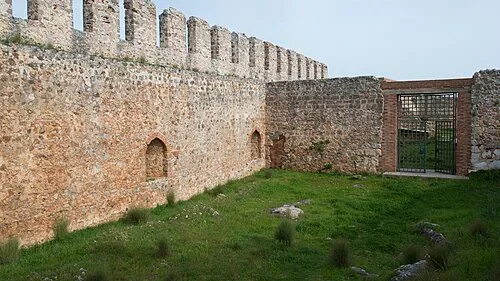 İçkale: The Summit Citadel & Palace
Citadel Palace Complex: Walled Court and Gate
The citadel at the top of the peninsula is where the Seljuk sultan Alaeddin Keykubad the First had his palace built. He took the city in the years 1220 to 1221, and the castle and its town then joined the Seljuk state. The castle was completed in 1226. It has also been called Alaiye Castle. Today a grassy court lies inside the walls, with tall stone faces and arched recesses set into them. An iron gate sits in a brick frame at one end of the court.
Listen in the appPhoto: Dosseman · CC BY-SA 4.0
08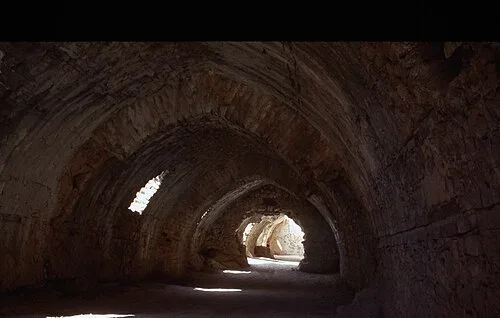 İçkale: The Summit Citadel & Palace
Citadel Vaulted Hall
The town inside these walls needed water, so in the Middle Ages cisterns were built within the walls to supply it. Counts of those cisterns differ. One count says four hundred. Another says about twelve hundred. Some of them are still in use. Long arched vaults also run through the citadel, lit by openings along one side.
Listen in the appPhoto: Dosseman · CC BY-SA 4.0
09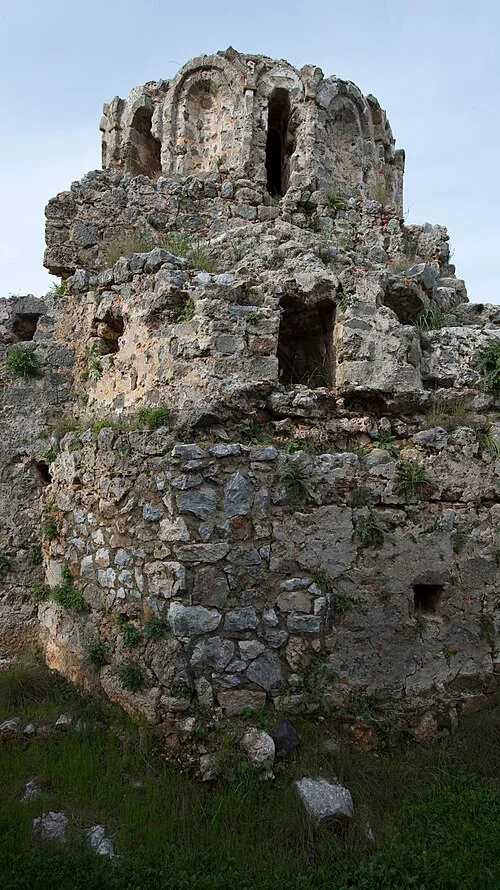 The Byzantine Church & Adam Atacağı Cliff
Byzantine Church Ruin in the Citadel
The Seljuk citadel was built on the remains of older Byzantine and Roman fortifications. This ruin is identified as a Byzantine church. Byzantine refers to the Greek-speaking Christian empire of the eastern Roman world. Stone and rubble walls rise around arched openings. At the top, a curved section may be what remains of a dome. Grass and loose stones now grow around its base.
Listen in the appPhoto: Dosseman · CC BY-SA 4.0
10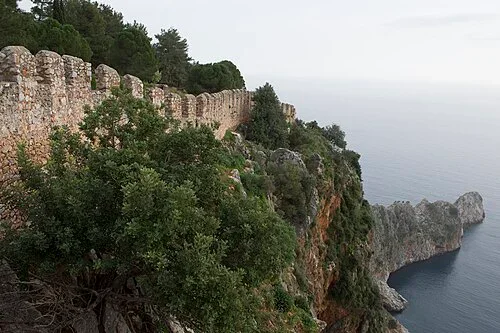 The Byzantine Church & Adam Atacağı Cliff
Cape Cilvarda Cliff Wall
The wall here reaches Cape Cilvarda, where it follows the very edge of a cliff. Battlements top the stonework, and scrub and pines grow thickly on the slope below. In the distance, rocky spurs run out into the sea. The steep rock drops straight down to the water.
Listen in the appPhoto: Dosseman · CC BY-SA 4.0
- 11
Kızıl Kule: The Red Tower, Exterior
The Red Tower, a brick-topped tower at the harbour where the wall's line was meant to end.
- 12
Kızıl Kule: Interior Court
A round open court ringed by stacked arches, with a purpose that remains uncertain.
- 13
Tersane Waterfront Arches
Arches of stone standing right at the water's edge, on the wall's route toward the Red Tower.
- 14
Tersane Vaulted Interior
A brick-vaulted interior with a pebbled floor, and the people who built and lived behind these walls.
Alanya Kalesi
Frequently asked questions
How much does the guide cost?
Free app download. Listed guide price: $0.99. Guide price shown in the app. Audio guide only. Venue admission is separate.
Can I listen without internet?
Yes. Download the guide’s audio, images, and maps in the app before your visit. Your downloaded content is then available offline.
Can I listen in my language?
This audio guide is available in 15 languages, including English.
Do I need to follow a schedule?
No. This is a self-guided experience. Choose your stops, pause whenever you like, and return to a story at your own pace.
At your own pace
Explore Alanya Kalesi.
Download Stanza, then search for “Alanya Kalesi”.
Free app download · Guide price shown in the app
Keep exploring
Nearby audio guides
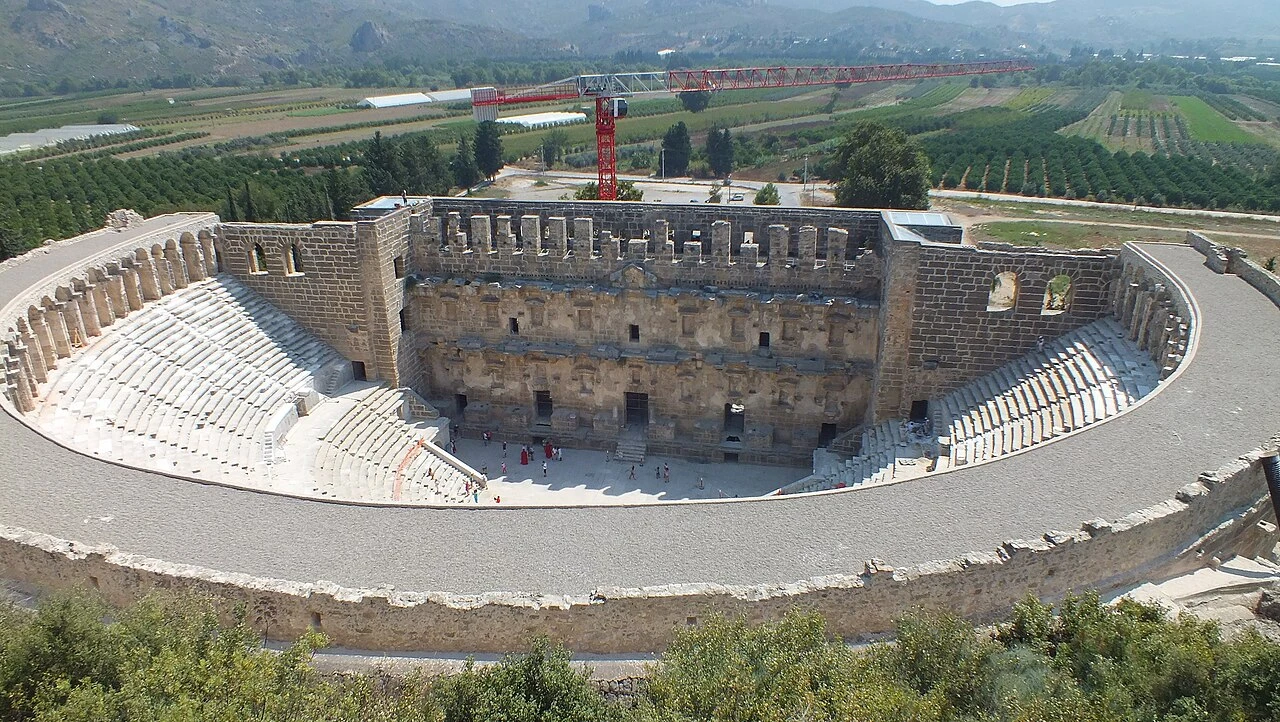
Serik · 86 km
Aspendos Theatre
Content & sources
Nicola Feola · CC BY 3.0
Aksu · 112 km
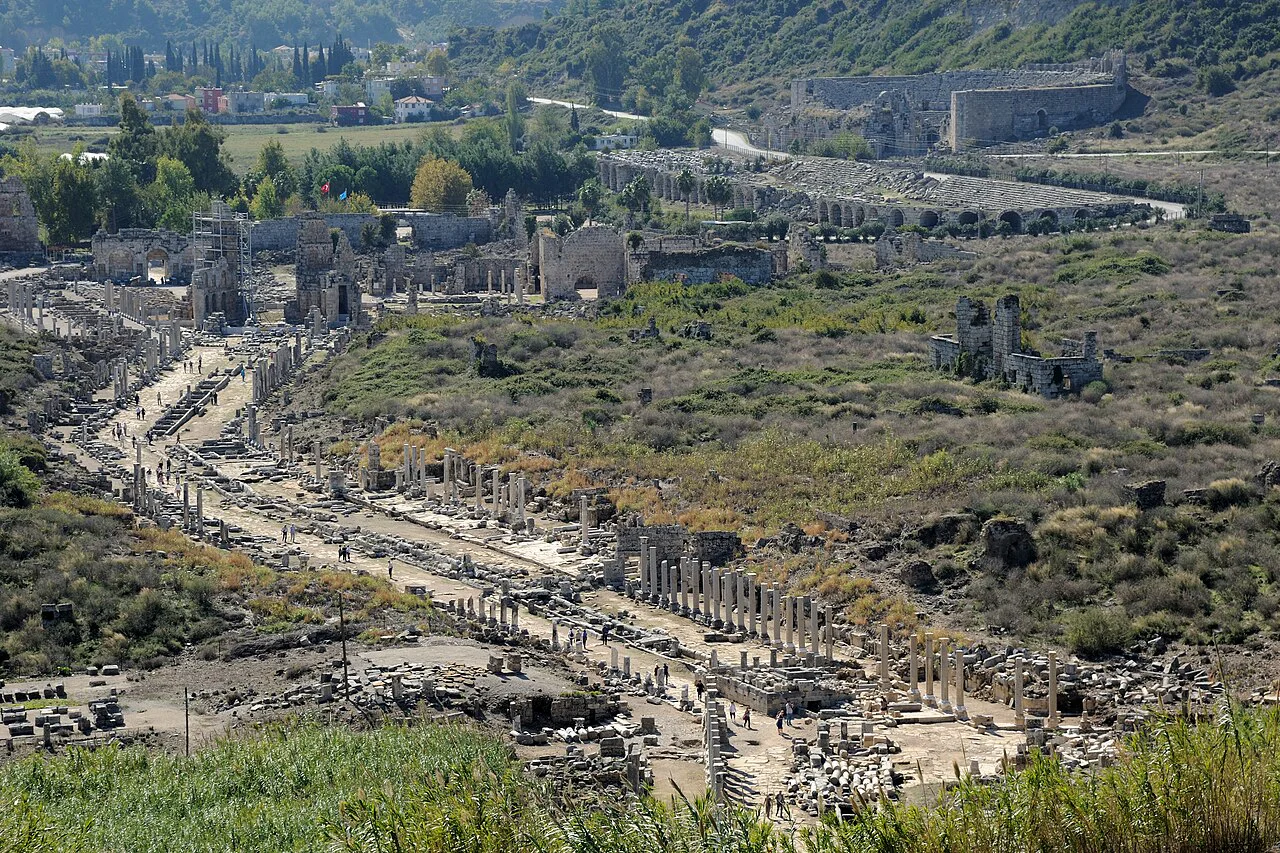
Perge
Content & sources
Photo: Saffron Blaze · CC BY-SA 3.0
Kemer · 129 km
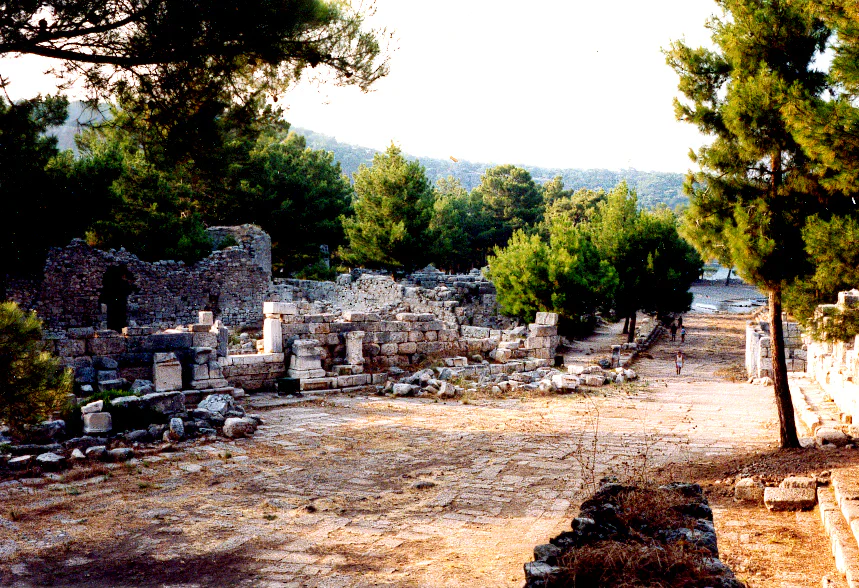
Faselis
Content & sources
Alexander Buschorn at de.wikipedia · CC BY-SA 3.0
Kumluca · 137 km
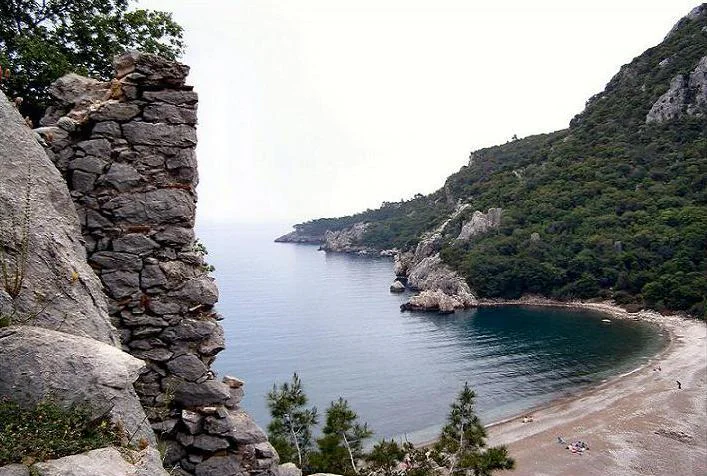
Olimpos, Kumluca
Content & sources
Hilmi Ayhan · CC BY 2.5