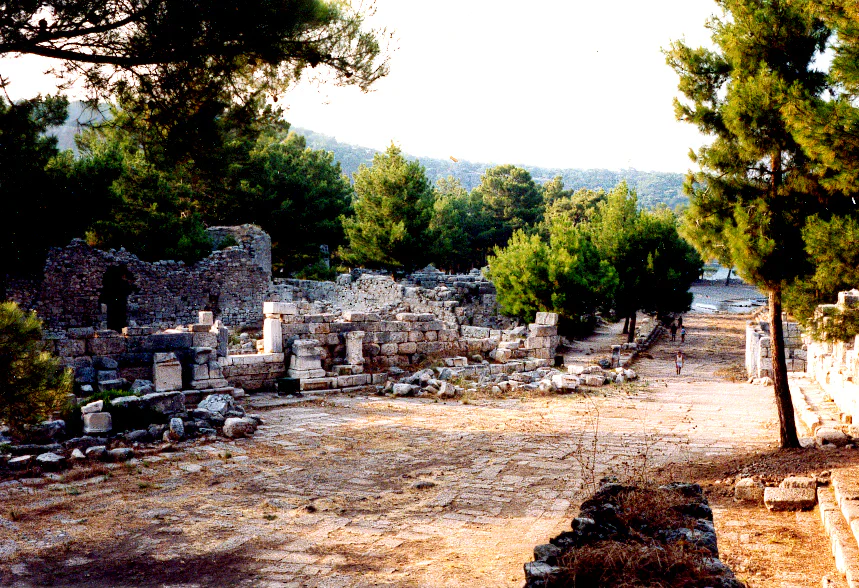
Stanza · Audio guide
Faselis Audio Guide
A place to remember. A story to take with you.
Phaselis was a Greek and Roman city located on the coast of ancient Lycia. Its ruins are situated between the Bey Mountains and the forests of Olympos National Park in Turkey.
Download Stanza, then search for “Faselis”.
About the tour
One guide. Your kind of visit.
Phaselis was a Greek and Roman city located on the coast of ancient Lycia. Its ruins are situated between the Bey Mountains and the forests of Olympos National Park in Turkey.
Ready when you are.
- 01Get the free Stanza app.
iOS & Android
- 02Find your guide.
“Faselis”
- 03Download before you go.
Works offline
Audio guide / 14 narrated stops
Inside the guide
Get to know a few of the stories before you go. Open a stop to read more.
01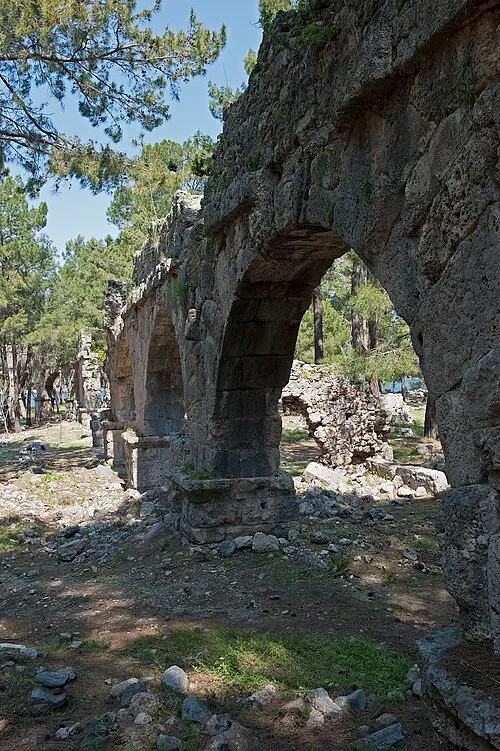 Monumental Roman Aqueduct
Aqueduct Arches at the Northern Entrance
Stone arches rise out of the pine forest here, the first sign of the city hidden among the trees. Welcome to Phaselis, an ancient port on the coast of Lycia in southern Turkey. Around 690 BC, colonists sailed here from Rhodes and founded a fortified trading settlement. Their leader was called Lakios, and an old chronicle from Lindos records his name. The site had everything a sea merchant could want. It sat on an isthmus between Lycia and Pamphylia, with natural harbours on either side. From that beginning, Phaselis grew into a working port city that lasted some eighteen centuries. The ruins spread through this forest for a good distance.
Photo: Dosseman · CC BY-SA 4.0
02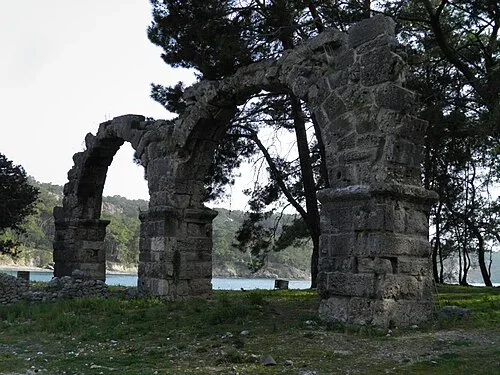 Monumental Roman Aqueduct
The Roman Aqueduct and the Water of the Northern Hills
Of everything left standing at Phaselis, these arches are the most monumental. They belong to the aqueduct, which carried fresh water from a spring in the northern hills. The channel ran down across the low peninsula and into the city centre, keeping fountains, baths and households supplied. Water channels also linked the town to the older settlement up on the plateau, roughly seventy metres above the shore. Through the arches, the blue of the sea shows between the piers. The whole site lies inside Olympos Beydağları National Park, wedged between the Bey Mountains and the coast. Pine and cedar forest closes in on the ruins from every side. A city built of stone and sea, and the woods have taken back almost everything except these arches.
Carole Raddato from FRANKFURT, Germany · CC BY-SA 2.0
03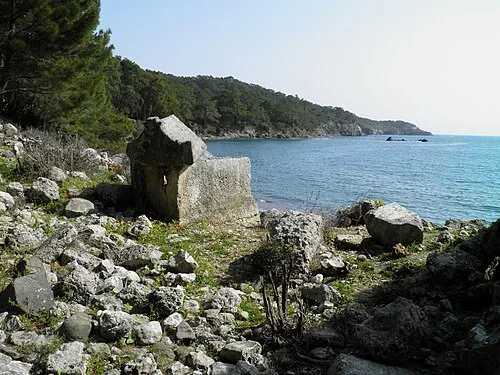 Northern Harbour and Necropolis
The Northern Harbour and the Waterside Necropolis
Phaselis sits on a slender isthmus with not one harbour but three. The Northern Harbour lies here, and beyond it the Battle or Protected Harbour, and the Southern Sun Harbour. Whatever the wind was doing, a captain could always find calm water somewhere along this shore. That is what made Phaselis the leading harbour city of eastern Lycia. The tombs came down to the water too. Stone sarcophagi stand right at the edge of the bay, shaded by pines, part of a necropolis that runs along the harbour. Many more sarcophagi have been recorded across the site.
Listen in the appCarole Raddato from FRANKFURT, Germany · CC BY-SA 2.0
04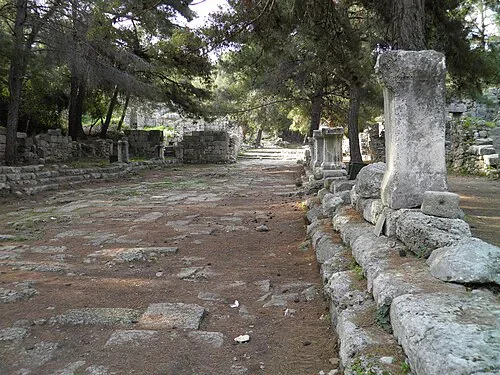 Colonnaded Main Avenue
The Colonnaded Main Avenue
A single paved avenue runs through the middle of Phaselis, about twenty to twenty-four metres wide. It cuts straight across the peninsula, from one harbour to the other. Raised walkways and colonnades lined both sides, with shops and stores set behind them, and drainage canals running below. This was the city's civic spine, the road every arrival and every piece of cargo travelled. Along it stood the city's public buildings: the baths, the agoras and the theatre. Walking through Roman Phaselis meant walking this one broad stone street, between colonnades, past shop fronts, with the sea waiting at either end.
Listen in the appCarole Raddato from FRANKFURT, Germany · CC BY-SA 2.0
05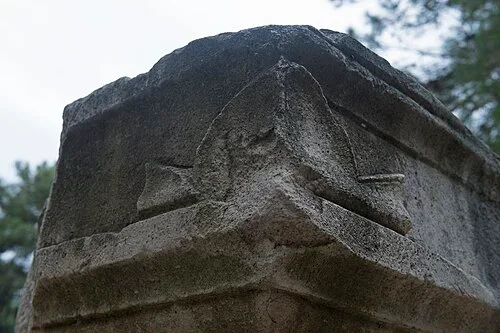 Colonnaded Main Avenue
Pedestal Relief on the Main Street
Along the avenue stands a carved stone pedestal, its relief worn nearly smooth by time. Whatever figure it once showed has weathered away, but the stone still marks the wealth that once passed this street. Phaselis was a commercial junction between Greece, Asia, Egypt and Phoenicia, and goods from all four changed hands in its harbour. The city stamped its own coins with images of ships, a fair emblem for a place that lived by cargo. It had one product of its own that travellers sought out: roses. Phaselis was renowned for them, and essence extracted from the petals went out from this port as perfume. A fragrant export, from a city of sailors.
Listen in the appPhoto: Dosseman · CC BY-SA 4.0
06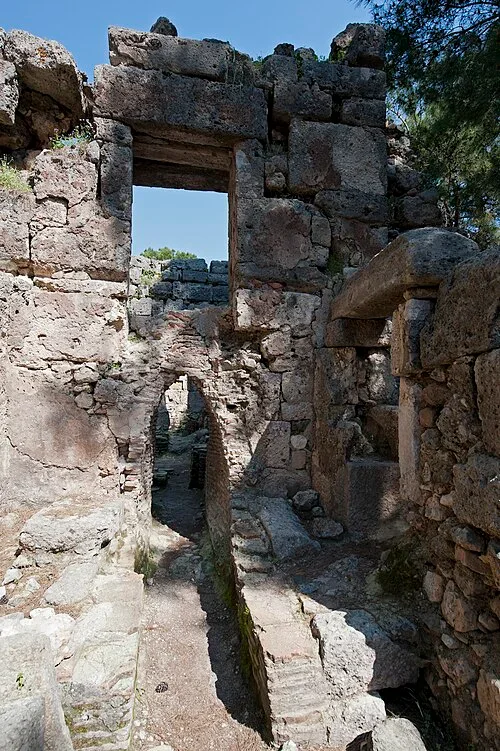 Small and Great Roman Baths
The Great Roman Bath
Just off the main avenue stood two large bathhouses, the Great Bath and the Small Bath. The Great Bath is the one with these massive walls and tall arched doorways. In a Roman city, the baths were public buildings at the very heart of daily routine. Locals and visitors came here to wash, to exercise, and above all to socialise. Business was discussed, news was exchanged, and hours could pass in the warm rooms. The masonry here is enormous, rough stone blocks stacked in courses that have held their shape for centuries.
Listen in the appPhoto: Dosseman · CC BY-SA 4.0
07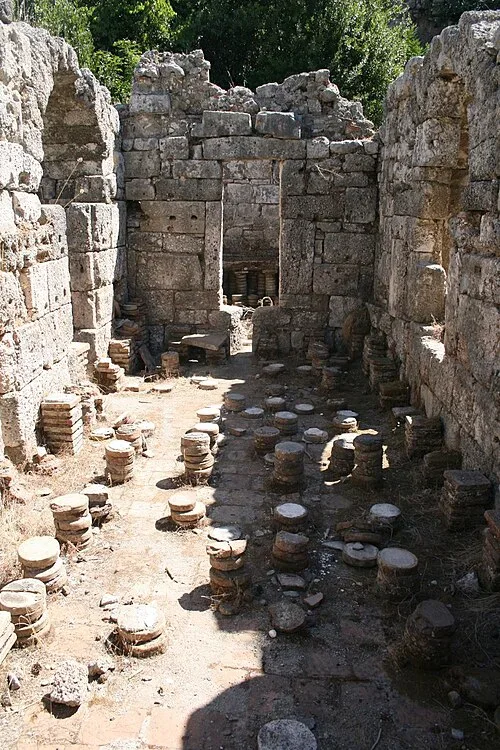 Small and Great Roman Baths
The Hypocaust of the Small Bath
Across this floor run rows of short cylindrical pillars, each one stacked from flat tiles. They are the remains of a hypocaust, the heating system of a Roman bath. The floor of the bath room was raised up on these little columns, leaving an open space beneath. A furnace burned at one side, and the hot air flowed through that gap, warming the floor above and the room with it. Bathers walked on hot tiles without ever seeing the fire. The Small Bath at Phaselis still shows the system clearly, pillar after pillar standing in the ruined room. Roman engineering, reduced to its bare brick bones.
Listen in the appChris Walsh · CC BY 2.0
08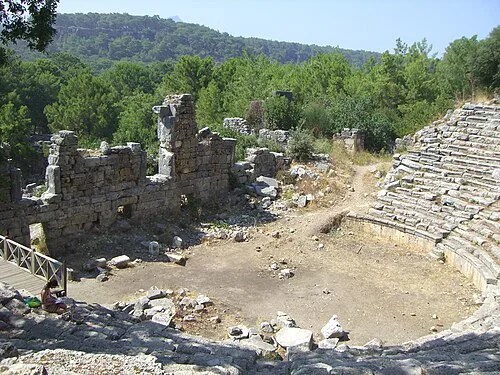 Ancient Hillside Theatre and Acropolis
The Roman Theatre on the Acropolis Slope
Built into the slope of the acropolis hill, this theatre was where the city gathered for entertainment. The most colourful page of the city's history was a gathering of another kind. In 333 BC, during his winter campaign, Alexander the Great came to Phaselis. The citizens welcomed him with a golden crown, and he spent restful weeks here, using the sheltered harbours as a base. During the celebratory feasts, he garlanded the statue of Theodectes, a tragic poet and orator born in this city. A conqueror honouring a local writer, at a feast in a town he had just claimed.
Listen in the appDave Lonsdale · CC BY 2.0
09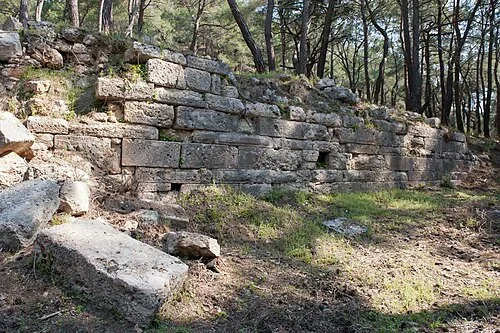 Ancient Hillside Theatre and Acropolis
Temple Platform on the Acropolis
Phaselis worshipped Athena, goddess of war and wisdom, as its chief deity. Her temple has never been found, but it is thought to lie under the forest on the acropolis hill, and this dressed stone platform may be a hint of it. The temple held one of the famous relics of the classical world: the lance of Achilles. The cult here ran deep, back to the city's first years. The chronicle from Lindos records dedications the Phaselitai sent to Athena of Lindos, helmets and sickle-swords, offered under their founder Lakios. So the goddess the settlers brought with them from Rhodes stayed at the head of the city for as long as it stood.
Listen in the appPhoto: Dosseman · CC BY-SA 4.0
10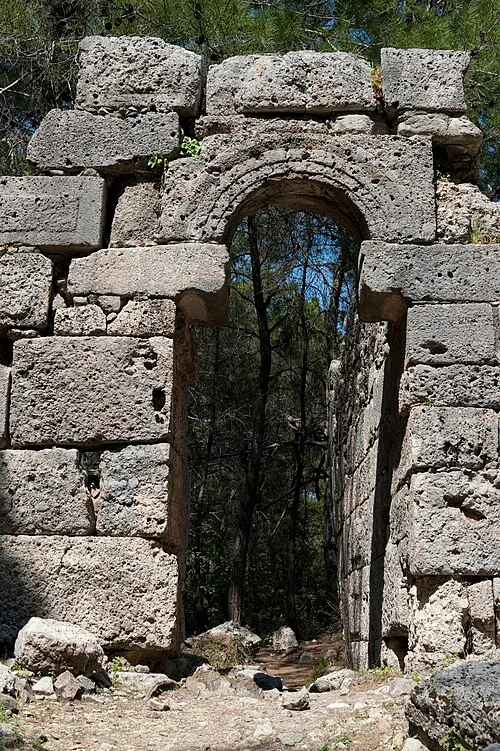 Agoras and Byzantine Basilica
Entrance to the Domitian Agora
Three agoras served the city along its central avenue, one opposite the theatre and two toward the southern harbour. This arched gateway opens onto one of them, the Domitian Agora. These were paved market squares, the floors where harbour trade was actually transacted, money changing hands under colonnades. Within the agora opposite the theatre lie the ruins of a small Byzantine basilica. The basilica marks the city's Christian era, when Phaselis became a bishopric. Its bishop Fronto took part in the Council of Chalcedon in 451, one of the great assemblies of the early church. A marketplace that later held a church tells the story of the whole city in one place.
Listen in the appPhoto: Dosseman · CC BY-SA 4.0
- 11
The Tetragonal Agora
The pirate warlord Zekenites held the city until a Roman general drove him out; Roman rule then brought three centuries of peace and rebuilding.
- 12
Hadrian's Gate
Scattered blocks at the southern end of the avenue, all that remains of the gate built for Emperor Hadrian's visit.
- 13
The Southern Harbour Shore
The broad southern harbour, its ancient walls still in the shallows, and its second life as a swimming beach.
- 14
Faselis and the Sea: The City's Farewell
Across the calm water to Mount Tahtalı, and the story of how a port of eighteen centuries fell silent.
Faselis
Frequently asked questions
How much does the guide cost?
Free app download. Listed guide price: $0.99. Guide price shown in the app. Audio guide only. Venue admission is separate.
Can I listen without internet?
Yes. Download the guide’s audio, images, and maps in the app before your visit. Your downloaded content is then available offline.
Can I listen in my language?
This audio guide is available in 15 languages, including English.
Do I need to follow a schedule?
No. This is a self-guided experience. Choose your stops, pause whenever you like, and return to a story at your own pace.
At your own pace
Explore Faselis.
Download Stanza, then search for “Faselis”.
Free app download · Guide price shown in the app
Keep exploring
Nearby audio guides
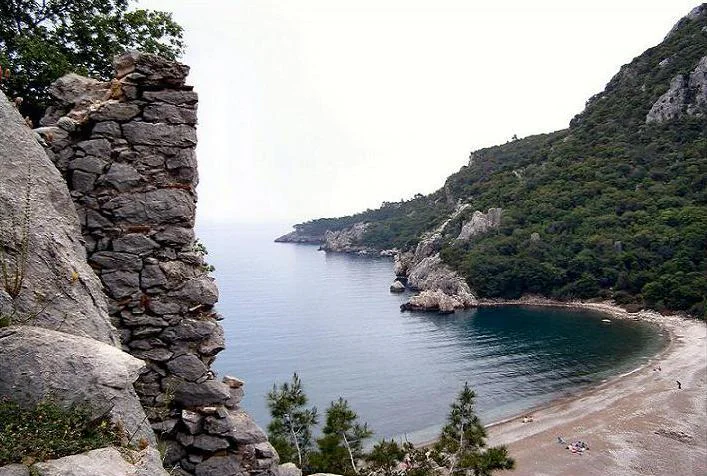
Kumluca · 16 km
Olimpos, Kumluca
Content & sources
Hilmi Ayhan · CC BY 2.5
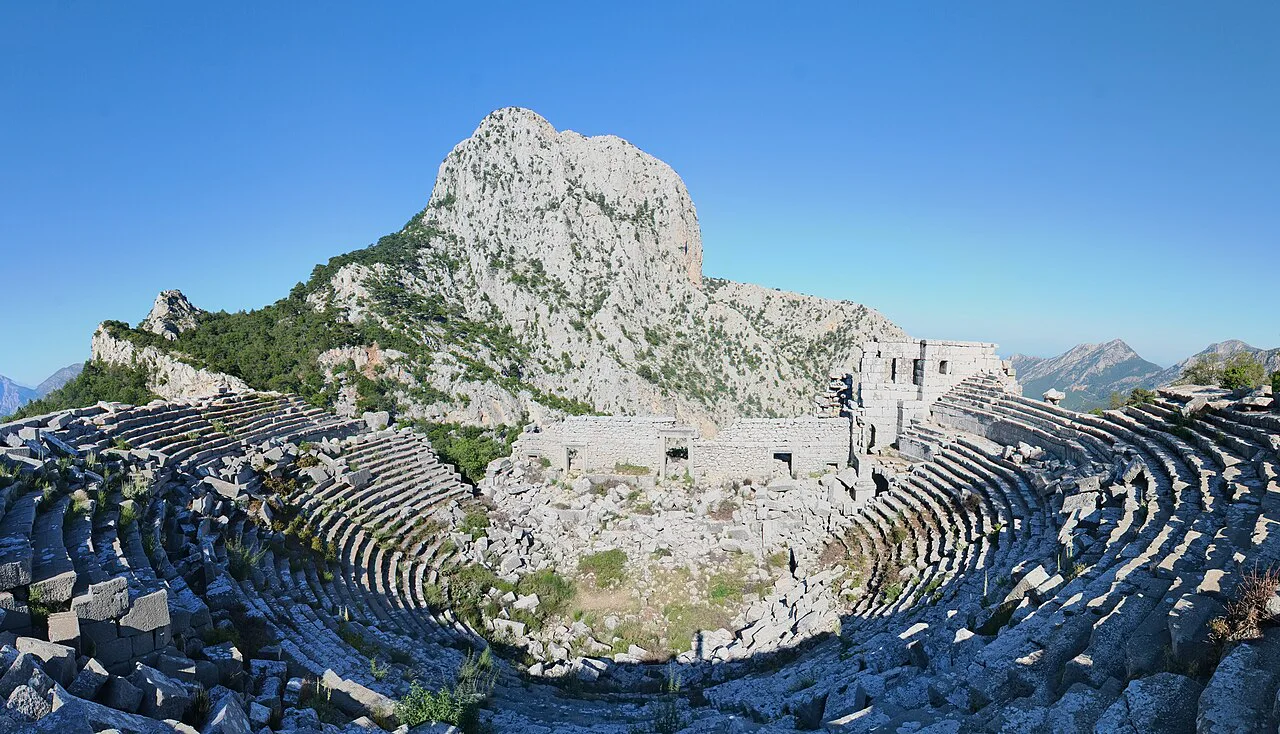
Döşemealtı · 52 km
Termessos
Content & sources
Ingo Mehling · CC BY-SA 3.0
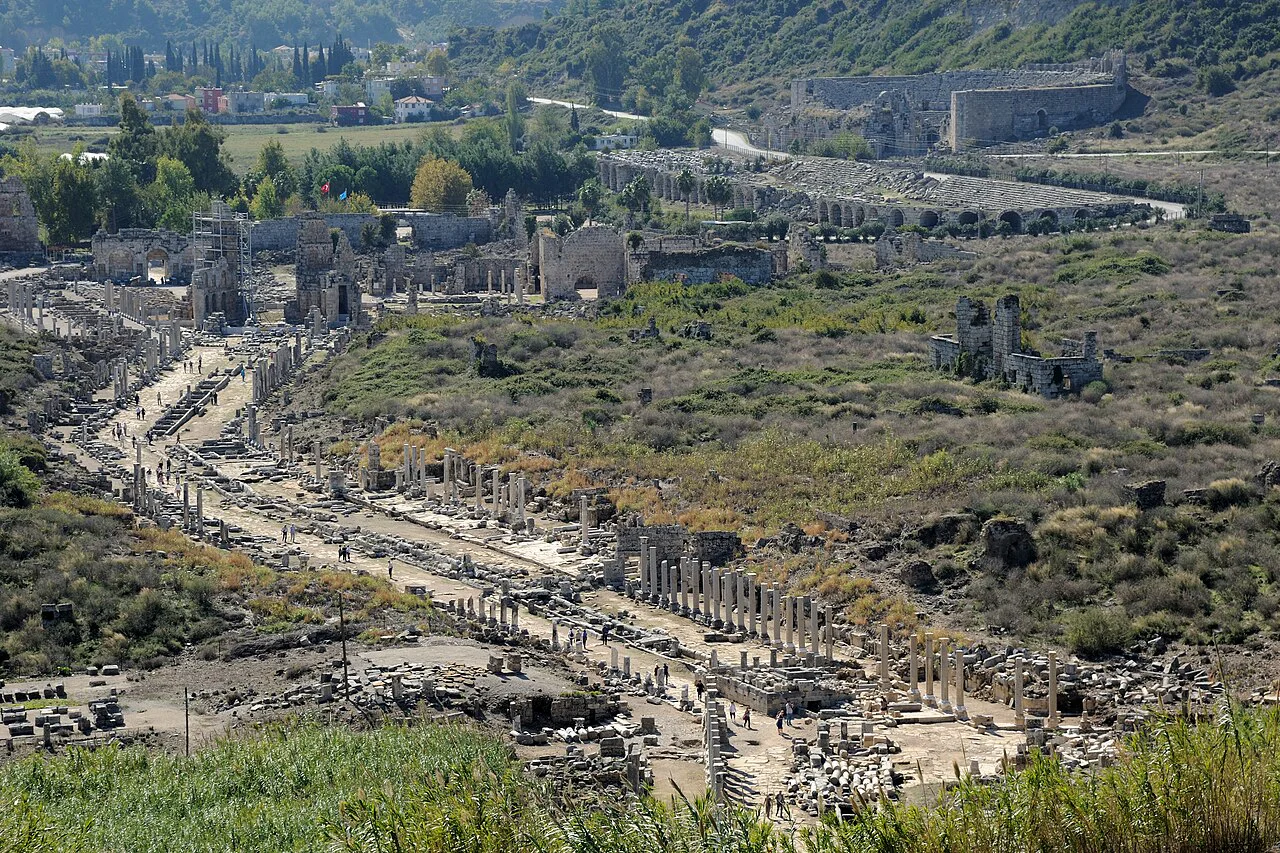
Aksu · 55 km
Perge
Content & sources
Photo: Saffron Blaze · CC BY-SA 3.0
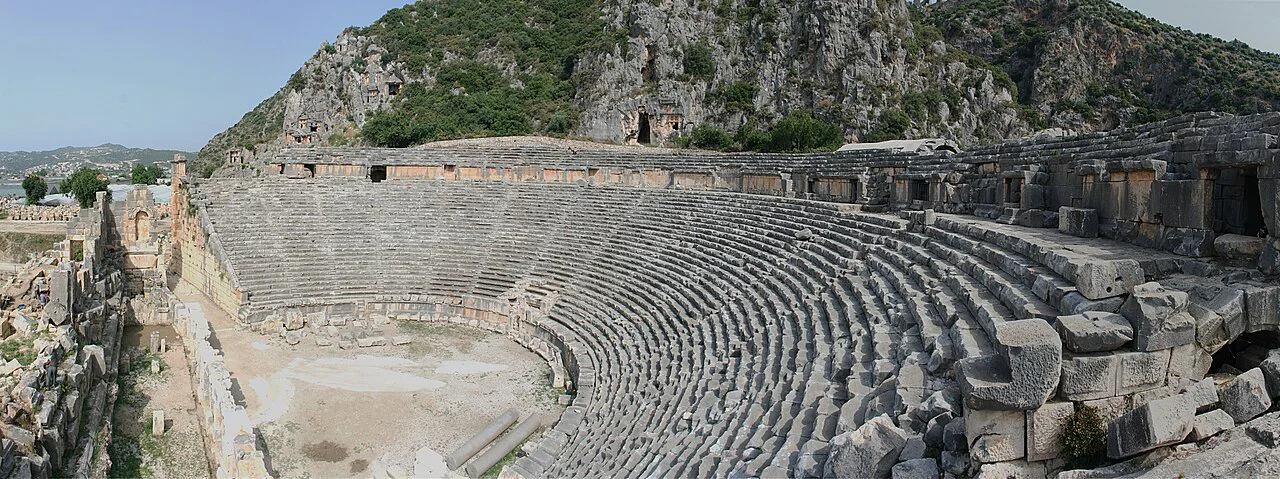
Demre · 59 km
Mira
Content & sources
Ingo Mehling · CC BY-SA 3.0