Stanza · Audio guide
Mira Audio Guide
A place to remember. A story to take with you.
Myra was an ancient city in Lycia located on the river Myros in modern-day Turkey. The city was founded by Lycians and later underwent Hellenization by the 3rd century BC.
Download Stanza, then search for “Mira”.
About the tour
One guide. Your kind of visit.
Myra was an ancient city in Lycia located on the river Myros in modern-day Turkey. The city was founded by Lycians and later underwent Hellenization by the 3rd century BC.
Ready when you are.
- 01Get the free Stanza app.
iOS & Android
- 02Find your guide.
“Mira”
- 03Download before you go.
Works offline
Audio guide / 14 narrated stops
Inside the guide
Get to know a few of the stories before you go. Open a stop to read more.
01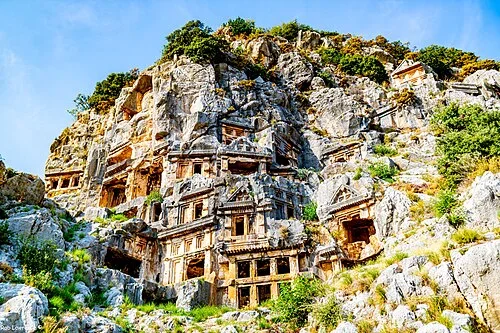 Site Entrance and Acropolis Cliffside Threshold
Arrival at Myra: City of Cliffs and Tombs
Welcome to Myra, a Lycian city set on the river Myros, in the fertile plain of Demre between the mountains and the sea. Above the greenery, the whole cliff face has been carved into tombs — a city of the dead looking down on a city of the living. Myra belonged to the Lycian League, the alliance of cities that governed this coast, from 168 BC. The Greek geographer Strabo counted it among the largest towns of that alliance. In the early Roman Empire perhaps some five thousand people lived here, and it was still considered a metropolis. Below the cliffs lay theatres, baths and a harbour; above them rise two great necropoleis. One is the river necropolis, upstream along the Myros. The other, the ocean necropolis, stands just northwest of the theatre. Both were cut as temple fronts and house fronts into the vertical rock.
Rab Lawrence · CC BY 2.0
02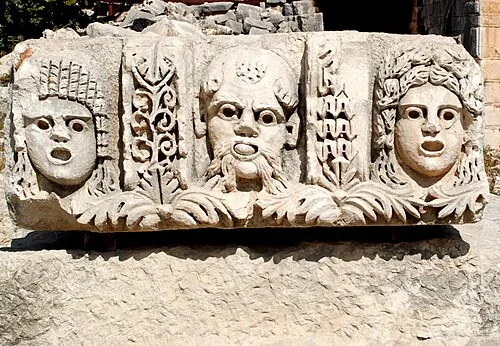 Theatrical Mask and Architectural Sculpture Display
The Masks of the Stage Wall
These carved faces once crowned the wall behind the theatre's stage. They come from the scaenae frons, the tall decorated facade that formed the backdrop for every performance. The block shows theatrical masks alternating with scrolling foliage and architectural ornament. Some faces gape wide open, others keep calm, closed expressions — the visual language of comedy and of drama. Set on a stage wall, the masks announced the building's purpose to everyone who entered. Each one was carved deep, so that shadow gave it expression even from far away. The blocks now lie fallen and separated, but the chisel work is still sharp. It is sharp enough to show every wrinkle and fold the stonecutters gave these faces.
Photo: Elelicht · CC BY 3.0
03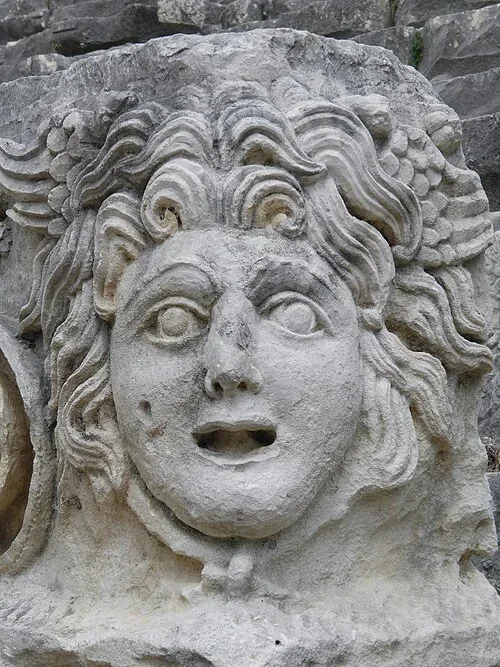 Theatrical Mask and Architectural Sculpture Display
The Medusa's Gaze
Beside the masks, a very different face keeps watch over the theatre. This Medusa is carved in deep relief, with snakes twisting through her hair and wings spreading at her temples. In Greco-Roman decoration, a Medusa head was an apotropaic device — a face meant to turn away harm. The wide eyes and open mouth were there to frighten off evil, not the audience. The stonecutters gave her curling locks and a fierce, unblinking stare, and the work has survived remarkably well. Somewhere in the theatre's architecture, she stood guard over everyone gathered here. Her exact original position in the architecture remains uncertain.
Listen in the appCarole Raddato from FRANKFURT, Germany · CC BY-SA 2.0
04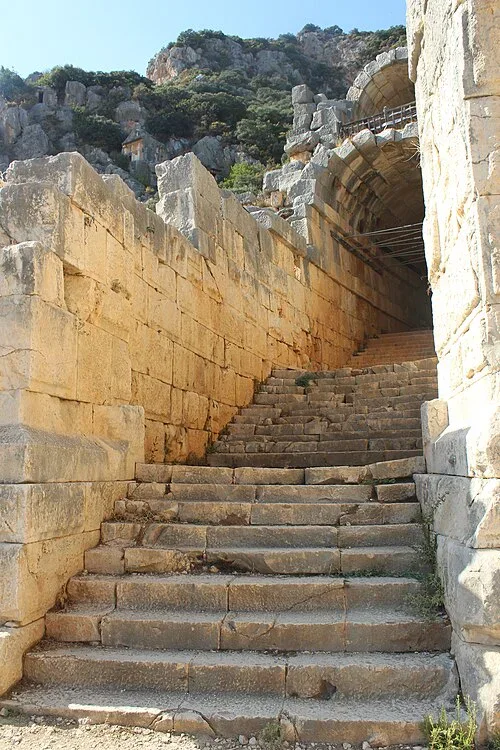 The Great Roman Theatre: Vomitoria and Orchestra
Under the Seating: Vaulted Passages
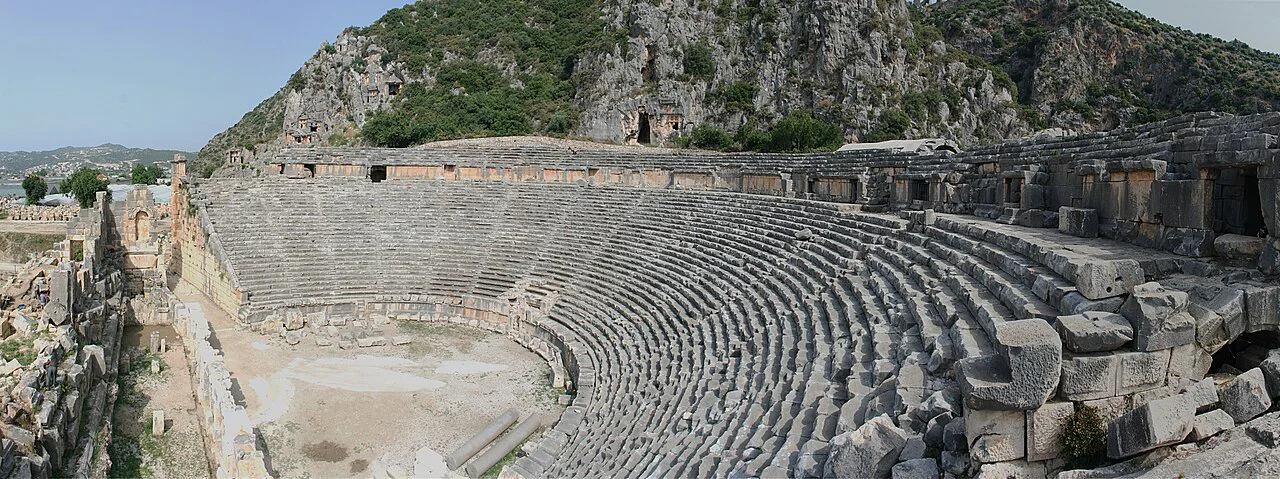
These stairways and massive walls are the machinery beneath the seats. Roman builders gave the theatre vaulted substructures: barrel-vaulted corridors and stairways called vomitoria, which channeled spectators up into the rows. People entered at ground level, split into passages, and climbed directly to their places, so large crowds reached their seats without crossing each other's paths. The original theatre here was Hellenistic, built against the hillside in the Greek manner. The Roman rebuilding replaced that arrangement with this engineered understructure of stone vaults. The great ashlar blocks are fitted close together, and the passages stay cool even in the summer heat. Out of these dim corridors, the audience stepped straight into full daylight and the view of the stage.
Listen in the appPhoto: Interfase · CC BY-SA 4.0
05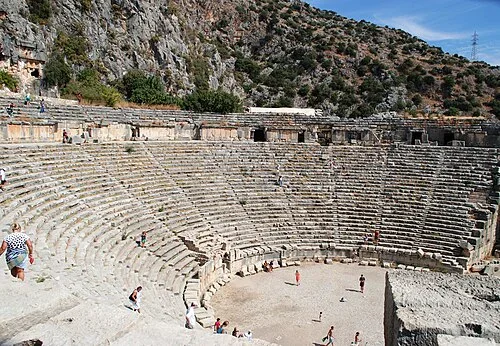 The Great Roman Theatre: Vomitoria and Orchestra
The Great Theatre of Myra
The great semicircle of seats sits against the cliff, with the rocky precipice rising right behind it. This theatre was destroyed by an earthquake in the year 141, and rebuilt afterward on a grand Roman scale. That rebuilding was a major civic project of its age, and it made the theatre the centerpiece of the lower city. Above the highest rows, the cliff still carries the Lycian rock tombs — the dead of Myra kept their place over the stage. Near the theatre stand remains of Roman baths and later buildings, partly cleared from the ground. Much of the ancient city still lies buried under alluvial silt washed down from the mountains. The acropolis on the mountain above the theatre is largely destroyed. What was raised after the earthquake is what survives on the site.
Listen in the appPhoto: Elelicht · CC BY 3.0
06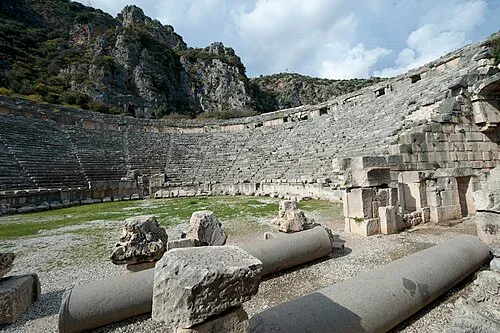 The Great Roman Theatre: Vomitoria and Orchestra
On the Orchestra: Performance and Excavation
Fallen blocks and column drums lie scattered at the foot of the seats. The flat semicircle beyond them is the orchestra, where chorus, musicians and actors performed in front of the stage building. The tall scaenae frons served as their backdrop, and this whole building was designed for spectacles. Digging here is recent work: systematic excavations at Myra and its harbour began in 2009, led by the archaeologist Nevzat Çevik. In February 2021 his team from Akdeniz University announced a striking find. Dozens of terracotta figurines came to light, about 2,200 years old, with their paint partly preserved. They show men, women, cavalry, animals and Greek deities, and some carry the names of artists. With them came other finds from the Hellenistic theatre, made of ceramic, bronze, lead and silver. These finds belong to the theatre's earliest phase, before the Roman rebuilding. Whether the figurines were deposited ritually or simply thrown away, the excavators cannot yet say.
Listen in the appPhoto: Dosseman · CC BY-SA 4.0
07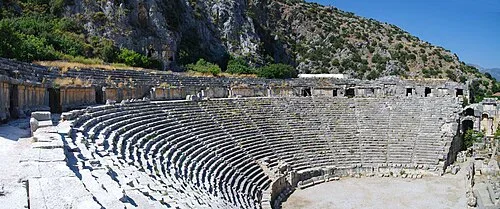 Upper Cavea Vista and Acropolis Outlook
From the Upper Rows: the Silted Plain and the Sea Road
The high tiers of the theatre look out over the silted plain toward the sea. Myra's harbour lay at Andriake, down the river — not a separate city, but Myra's port and outer quarter. To guard against pirate raids, the citizens stretched a chain across the river mouth. In 42 BC a commander named Lentulus Spinther, sent by Brutus to squeeze money out of Myra, broke that chain and entered the harbour. Around the year 60, another ship put in here with a famous passenger. Paul the Apostle, traveling as a prisoner under a Roman centurion, changed ships at Myra on his way from Caesarea to Rome for trial. He arrived on a coastal trading vessel and continued on a ship secured for the crossing. Later, the emperor Hadrian built a granary at Andriake with seven great halls. It runs fifty-six meters long, and it still stands as the harbour's monument. Over the centuries the river kept carrying silt down from the mountains, until the harbour choked and the sea retreated. It is what makes the plain so flat and green now.
Listen in the appJean-Marc Astesana from Voisins le Bretonneux, France · CC BY-SA 2.0
08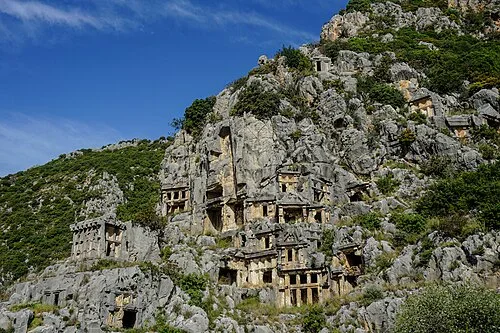 The Ocean Necropolis: Lycian Rock-Cut Cliff Tombs
The Ocean Necropolis
High on the cliff northwest of the theatre, the leading families of Myra were laid to rest in the best view in town. The Lycians carved their elite tombs into the vertical rock, high above the settlement, where every facade stays in sight. The tombs imitate houses and temples — dwellings for the dead, cut into living rock. The story goes that winged beings carried the souls of the dead up to the afterlife, an old Lycian account of why the tombs stand so high. Whatever the precise reason, the effect is unmistakable: a cemetery turned into a monument, visible from the fields, the river and the sea. From below, the carved fronts read like a hillside of houses with their doors shut fast.
Listen in the appPhoto: Aerdemsenturk · CC BY-SA 4.0
09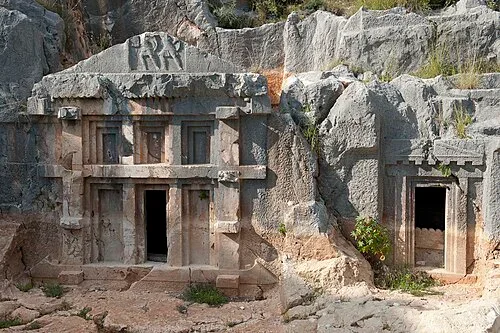 The Ocean Necropolis: Lycian Rock-Cut Cliff Tombs
A House Carved in Stone
Up close, one tomb shows exactly how the masons worked. This facade copies a house front: a triangular pediment on top, and below it the ends of roof beams and a framed doorway, all cut from the living rock. Lycian houses were built of timber, and the stone reproduces that construction piece by piece — beam ends, lintels, framing. Above the door runs an inscription in the Lycian language, carved for whoever owned the tomb. Such texts mark the tombs as property of named people. The full reading of this inscription, and the name of its owner, remain uncertain. What is certain is the craft: a wooden building translated permanently into rock.
Listen in the appPhoto: Dosseman · CC BY-SA 4.0
10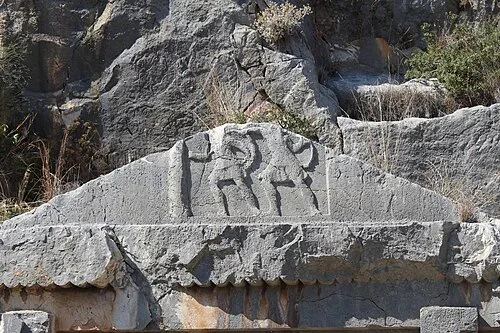 The Ocean Necropolis: Lycian Rock-Cut Cliff Tombs
Figures in the Pediment
Some of the tombs carry figures as well as architecture. In the pediment of this one, human figures stand inside a framed panel, carved in relief. Figural tomb reliefs at Myra are attested from the fourth century BC. Scenes like this generally evoke the person the tomb honored and the world they lived in. What exactly these figures are doing — daily life, a ritual, a farewell — no one can say for certain. The carving is worn, but the outlines of bodies and gestures still read clearly. The dead of this cliff were remembered with images, not only with words.
Listen in the appPhoto: Interfase · CC BY-SA 4.0
- 11
The Lion's Tomb and the Lost Colors
The tomb Charles Fellows saw in 1840, still painted red, yellow and blue.
- 12
The Basilica of Saint Nicholas
The pilgrimage basilica of Saint Nicholas, heart of the church in Lycia.
- 13
The Broken Sarcophagus
The desecrated sarcophagus, and the spring day in 1087 when Bari took the bones.
- 14
The Bishop of Myra: Closing
The man in the fresco: Nicholas, bishop of Myra, and how his stories became Santa Claus.
Mira
Frequently asked questions
How much does the guide cost?
Free app download. Listed guide price: $1.99. Guide price shown in the app. Audio guide only. Venue admission is separate.
Can I listen without internet?
Yes. Download the guide’s audio, images, and maps in the app before your visit. Your downloaded content is then available offline.
Can I listen in my language?
This audio guide is available in 15 languages, including English.
Do I need to follow a schedule?
No. This is a self-guided experience. Choose your stops, pause whenever you like, and return to a story at your own pace.
At your own pace
Explore Mira.
Download Stanza, then search for “Mira”.
Free app download · Guide price shown in the app
Keep exploring
Nearby audio guides
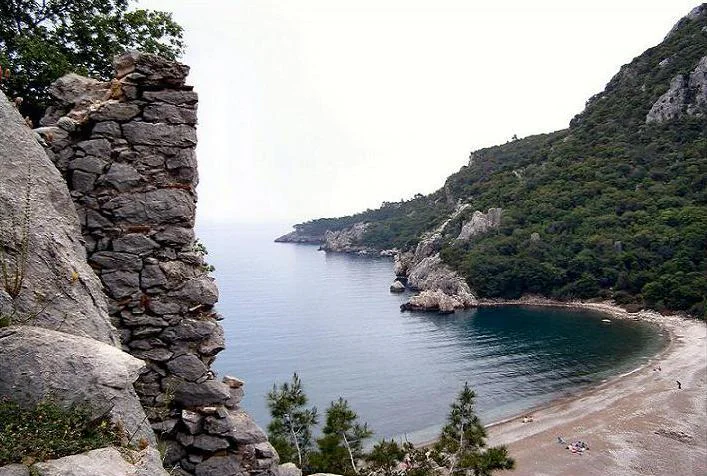
Kumluca · 46 km
Olimpos, Kumluca
Content & sources
Hilmi Ayhan · CC BY 2.5
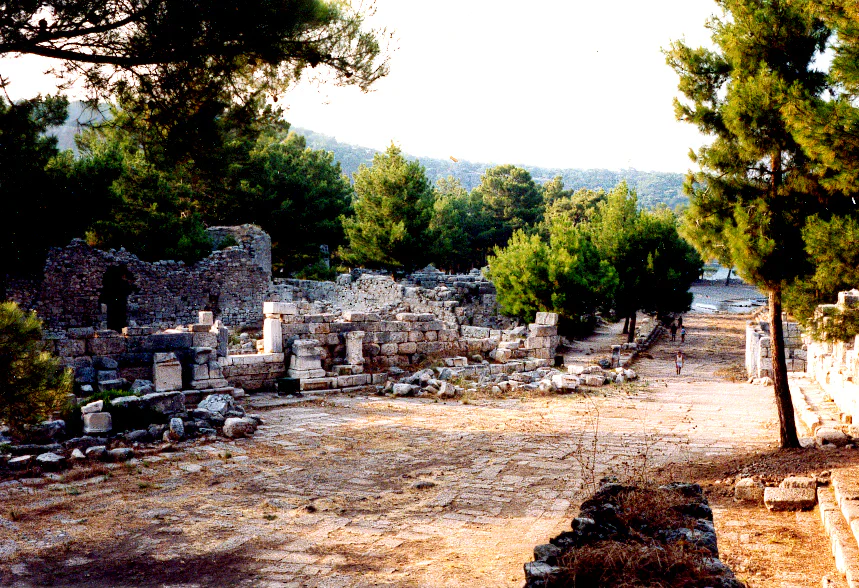
Kemer · 59 km
Faselis
Content & sources
Alexander Buschorn at de.wikipedia · CC BY-SA 3.0
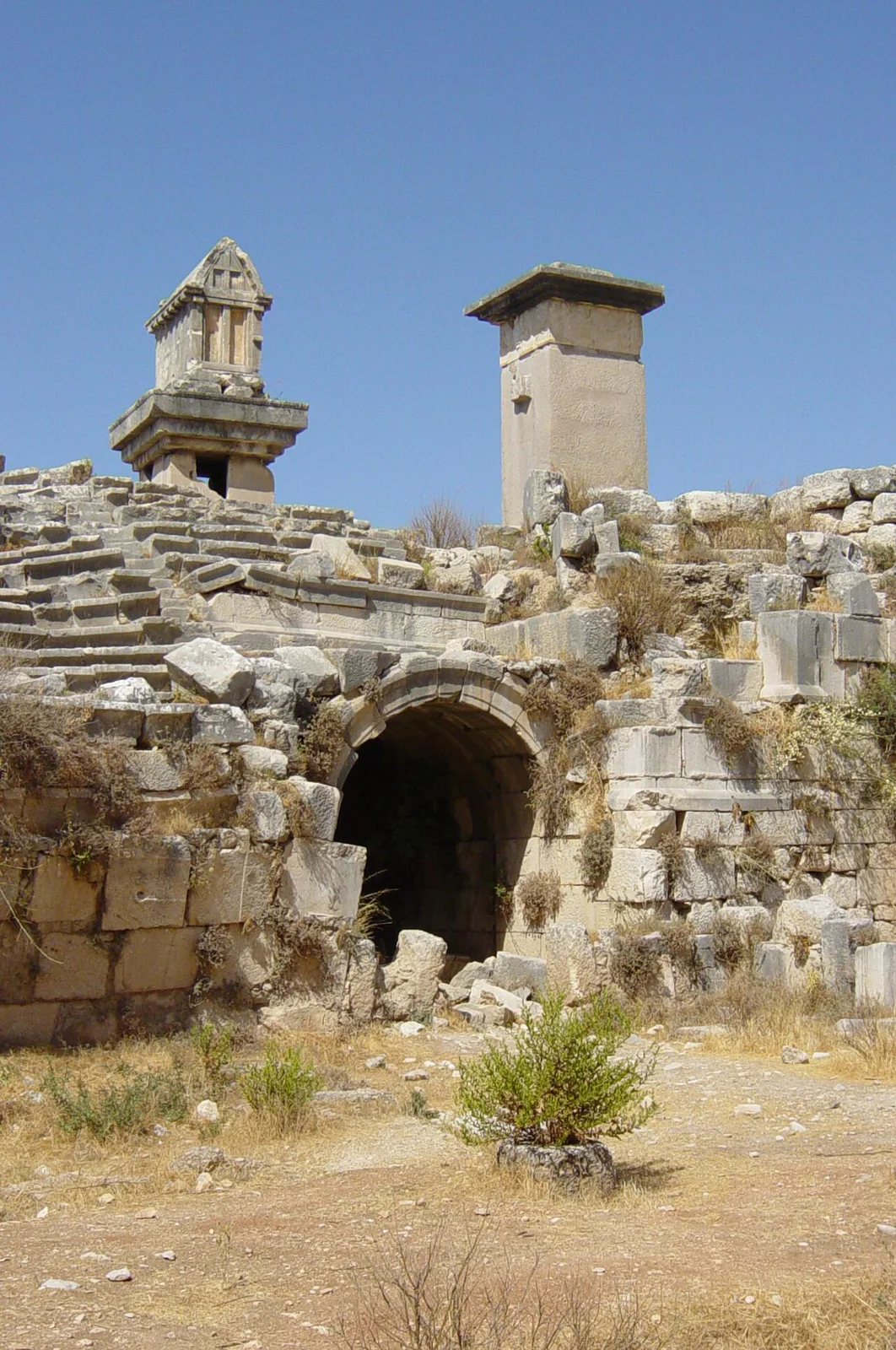
Kınık · 61 km
Ksanthos
Content & sources
Pot Noodle · CC BY 2.0
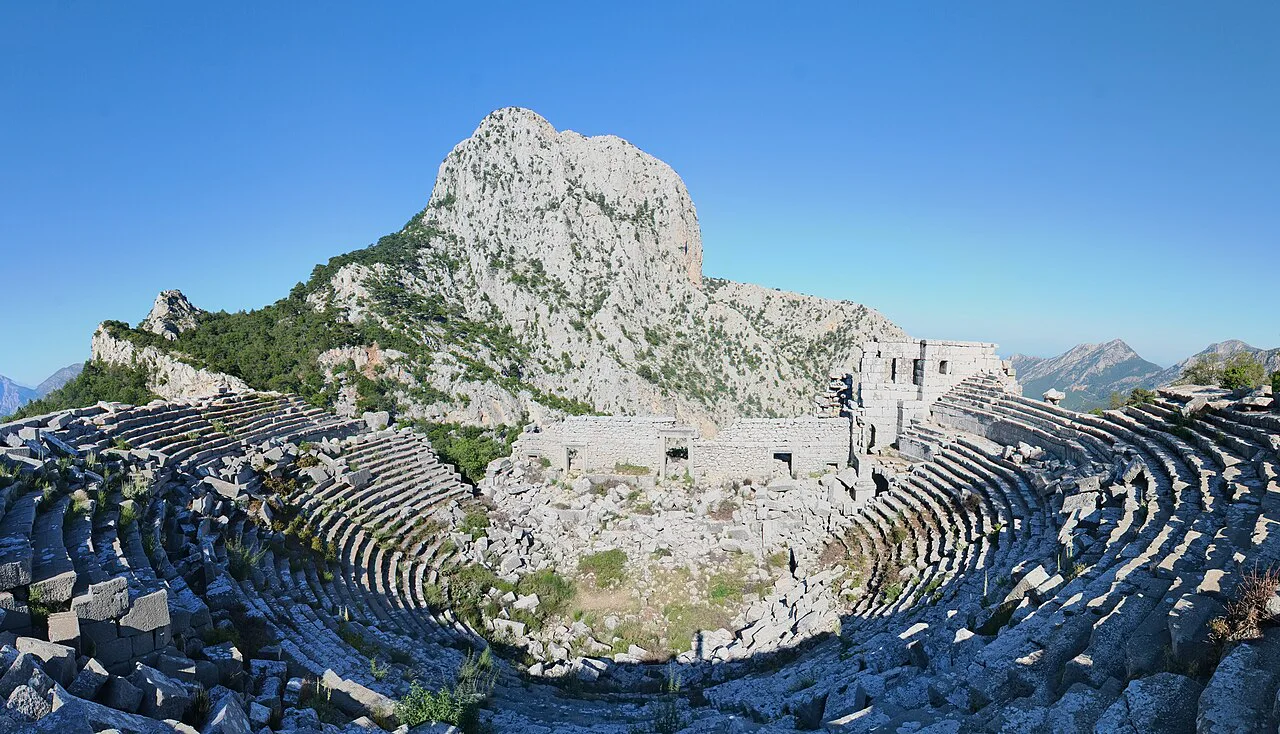
Döşemealtı · 91 km
Termessos
Content & sources
Ingo Mehling · CC BY-SA 3.0