Stanza · Audio guide
Ksanthos Audio Guide
A place to remember. A story to take with you.
Xanthos was an ancient city located near the present-day village of Kınık in Turkey. The site is a UNESCO World Heritage Site known for the number and quality of its surviving tombs.
Download Stanza, then search for “Ksanthos”.
About the tour
One guide. Your kind of visit.
Xanthos was an ancient city located near the present-day village of Kınık in Turkey. The site is a UNESCO World Heritage Site known for the number and quality of its surviving tombs.
Ready when you are.
- 01Get the free Stanza app.
iOS & Android
- 02Find your guide.
“Ksanthos”
- 03Download before you go.
Works offline
Audio guide / 27 narrated stops
Inside the guide
Get to know a few of the stories before you go. Open a stop to read more.
01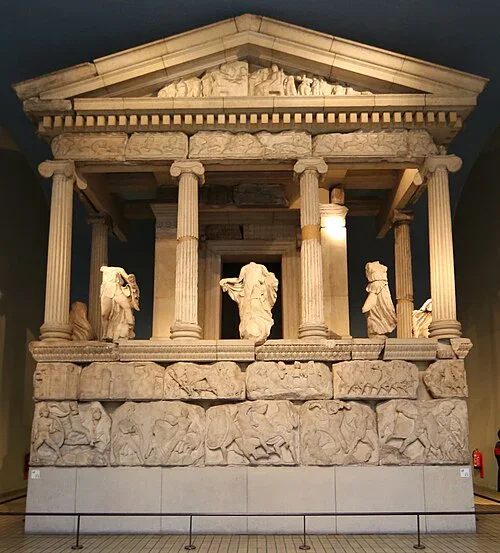 Nereid Monument
The carved figures drifting between these columns are the Nereids, sea nymphs, and they once hovered around a tomb. The monument was built in the early fourth century BCE for Arbinas, a ruler of Xanthos. Its design says a great deal about the city. A Lycian ruler buried himself in the shape of a Greek Ionic temple, raised on a high podium covered with sculpture. It fused the tall Lycian tomb tradition with Greek temple architecture, and the experiment worked. The Nereid Monument directly inspired the Mausoleum at Halicarnassus, one of the wonders of the ancient world. Xanthos earned that influence. It was one of the great cities of Lycia, settled from at least the eighth century BCE, and later the capital of the Lycian League. Together with the nearby sanctuary of Letoon, it is now a UNESCO World Heritage Site, listed in 1988. The city's finest monuments did not stay here. The British archaeologist Charles Fellows shipped the Nereid Monument to London after his expeditions of 1838 to 1840, along with many other sculptures. The whole structure was reassembled in the British Museum, where the sea nymphs parade again. The empty plinth remains at Xanthos.
Photo: Geni · CC BY-SA 4.0
02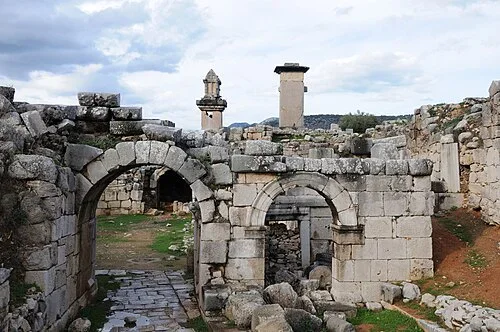 Lower Agora
 Gateways
Arched gateways of grey stone rise out of the ruins here, in the city's lower market quarter. Traders and travelers coming up from the Xanthos river valley would have passed through this area on their way into the city. The valley was the natural approach, since the city sits on a hill above the left bank of the river. Behind the arches, two tall pillar tombs still stand. That is a distinctly Lycian sight. In this region tombs were not pushed out to a distant burial ground. They stood close to the streets and squares of the living, so the dead kept their place in the daily life of the city.
Josep M. Gracia · CC BY-SA 4.0
03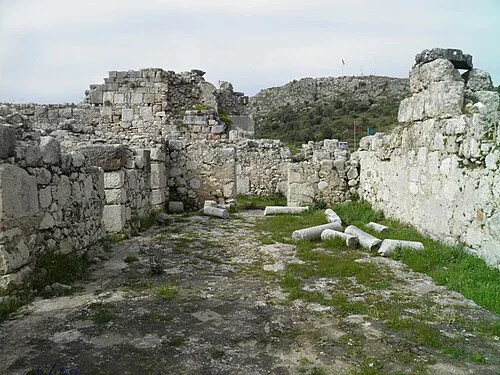 Lycian Acropolis
The Persian siege of this city became one of the harshest stories in Greek history. The historians Herodotus and Appian both describe it. Around 540 BC, the general Harpagus conquered this coast for the Persian Empire. He defeated a small Lycian army in the plain north of the city, then besieged Xanthos itself. The defenders saw no way out. They destroyed their own acropolis, killed their wives, children and slaves, and charged the enemy in a final attack, dying rather than surrender. Excavations on this hilltop add a later echo. Wooden structures here burned around 470 BC, probably during a campaign by the Athenian general Kimon. After that destruction the city rebuilt itself in stone, and its walls rose again on this hill.
Listen in the appCarole Raddato from FRANKFURT, Germany · CC BY-SA 2.0
04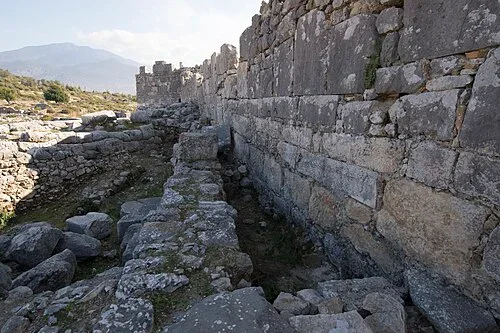 Lycian Acropolis
 Fortifications
A long wall of heavy grey blocks runs along the acropolis, and a siege story belongs to it. In 42 BC, Brutus came to Lycia. He needed money for his army before the battle of Philippi, and when the Lycian League refused to contribute, he besieged Xanthos. Plutarch describes what followed. The citizens set fire to their own city, a mass suicide that deliberately repeated what their ancestors had done against the Persians generations before. Brutus and his Romans launched rescue operations, pulling people from the flames for the sake of bounties. In Plutarch's bitter phrasing, some of them did not escape having their lives saved. Only about a hundred and fifty Xanthian men survived the carnage. The city did not die there. Mark Antony later had Xanthos rebuilt.
Listen in the appPhoto: Dosseman · CC BY-SA 4.0
05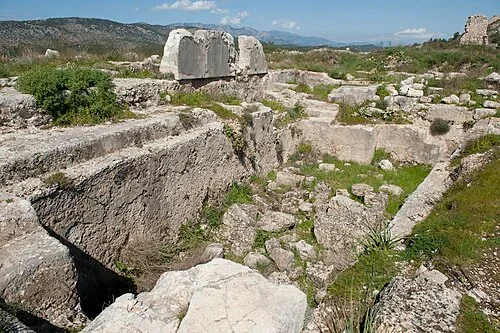 Byzantine Villa
Roman-Era Mansion on the Lycian Acropolis
After its repeated destructions, the acropolis changed character. In the later Roman period Xanthos prospered, and luxury houses were built on the Lycian acropolis, so the old fortress hill became fashionable housing. This residential complex rose over earlier Lycian structures in late antiquity, probably in the fifth or sixth century. The excavated terraces show the scale of it, with stone foundations and fallen column pieces spread across the slope. A hilltop that had seen two sieges now carried the comfortable domestic life of a wealthy Roman city.
Listen in the appPhoto: Dosseman · CC BY-SA 4.0
06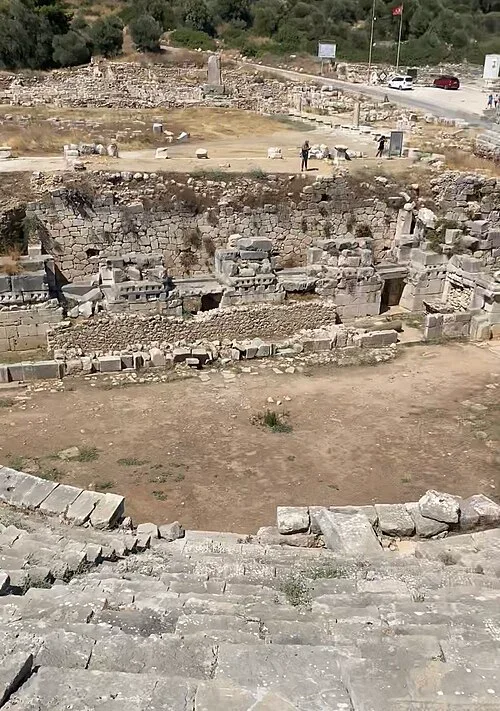 Xanthos Theater
Stone seating rows climb the slope of the old acropolis hill. The theater was built into that northern slope, so the hillside itself holds the audience. It belongs to the Roman era of the city, when spectacles were part of civic life. Over the centuries it was repaired many times, and those repairs show in the patchwork of masonry across the seating and the stage area. Beyond the ruins, the modern village and its road run past the site. The ancient city and the present-day village of Kınık have lived side by side for a long time.
Listen in the appPhoto: Schopar39 · CC BY-SA 4.0
07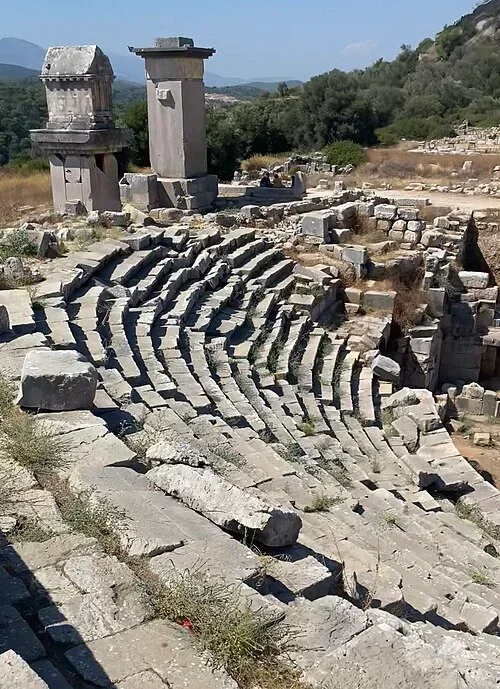 Xanthos Theater
Theater and the Pillar Tombs Beside It
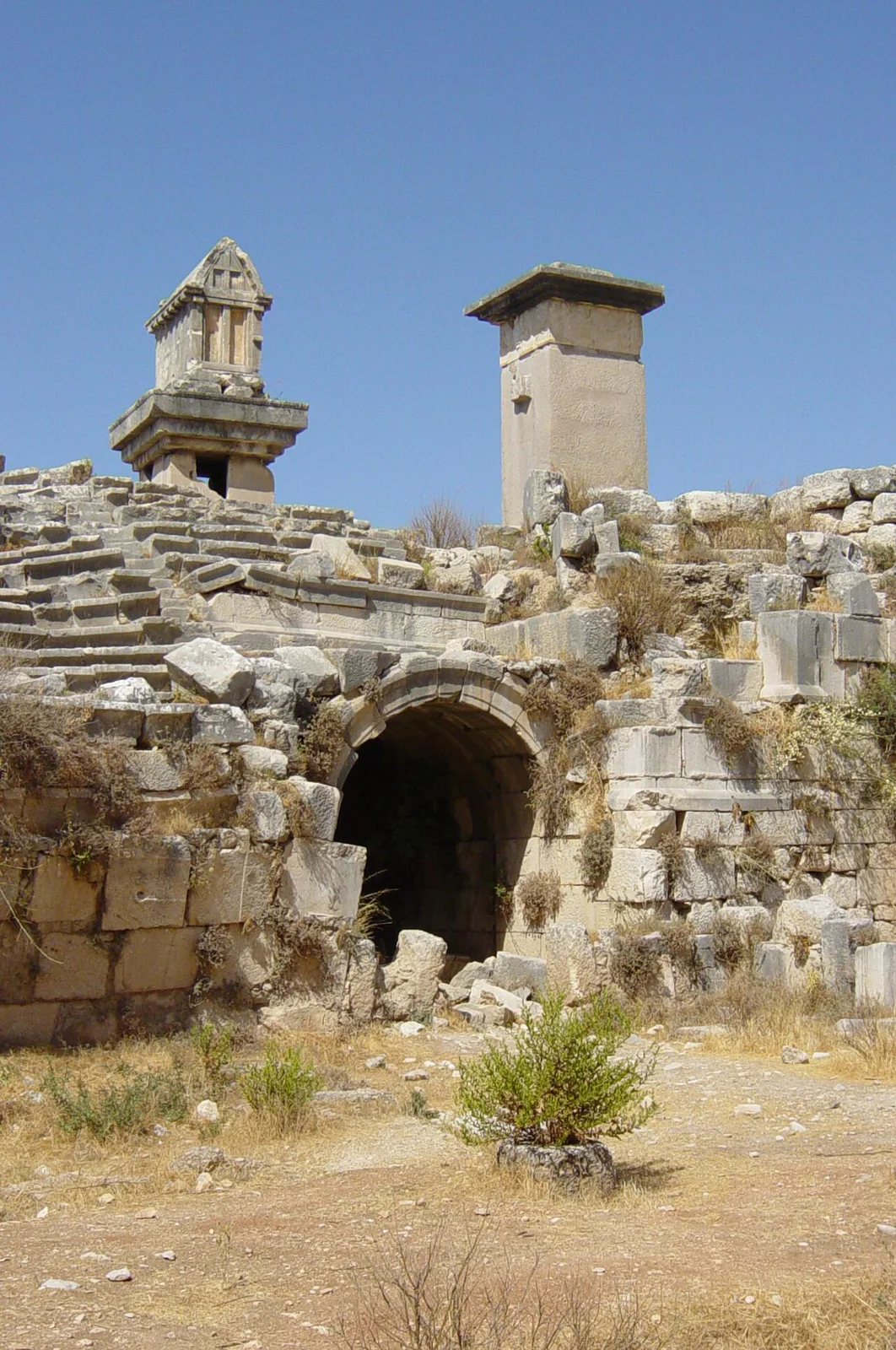
The upper rows of the theater look out on something unusual. Lycian pillar tombs stand directly beside the seating. Funerary monuments gathered around the theater, so people watched comedies and spectacles within sight of tombs. It is a striking pairing of entertainment and mourning.
Listen in the appPhoto: Schopar39 · CC BY-SA 4.0
08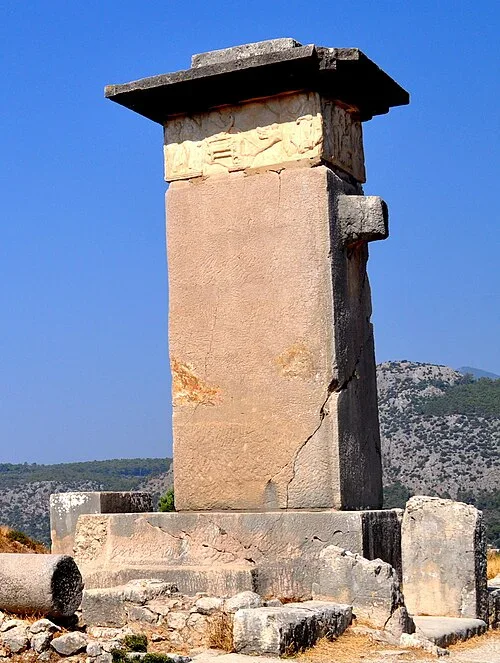 Harpy Tomb
A single block of stone, carved into a tall pillar, carries a burial chamber about five meters above the ground. The Harpy Tomb was raised in the late fifth century BCE, and it still stands in its original spot. Lycians lifted their dead like this. A chamber set high on a solid pillar was hard for grave robbers to reach, and the height itself expressed belief: winged spirits were thought to carry the souls of the dead to the afterlife. The carved band around the top shows those figures at work. The pillar stayed. The carvings did not. The original reliefs were taken to the British Museum, and the copies now set into the stone stand in for them.
Listen in the appPanegyrics of Granovetter · CC BY 2.0
09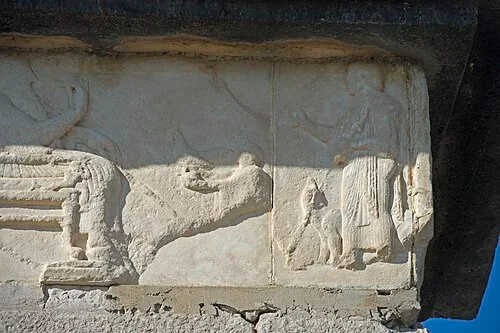 Harpy Tomb
 Reliefs (Replicas)
On the carved band at the top of the pillar, winged female figures move among small human forms. One panel shows a figure standing before what appears to be an altar, with a seated family group beside it. Who these winged women are has been argued over for a long time. They have been read as harpies or as sirens carrying off the souls of the dead, which would match the Lycian belief in winged escorts to the afterlife. Others see scenes of mourning or farewell in the panels. The meaning is still debated, and the stone does not settle it.
Listen in the appPhoto: Dosseman · CC BY-SA 4.0
10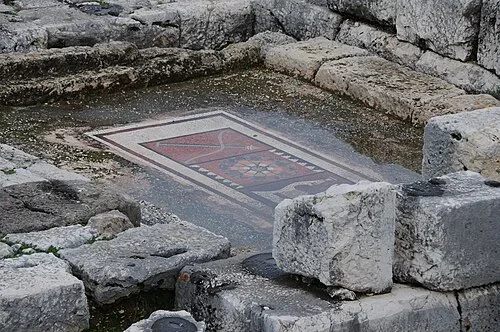 West Agora Basilica
 Mosaic
A sunken rectangle of mosaic lies among the stones here, its pattern of red and white geometry set below the level of the surrounding ground. It belonged to an early Christian basilica built beside the Harpy Tomb, at the western edge of the agora. A church rose next to a pagan tomb that was already centuries old. The mosaic floor is one of the quiet witnesses of the city's turn to Christianity, preserved in the very place where it was laid.
Listen in the appJosep M. Gracia · CC BY-SA 4.0
- 11
Roman Agora
The piazza where Xanthos, capital of the Lycian League and its largest city, ran the business of a federation.
- 12
Agora Portico Remains
Standing columns and tumbled drums in the agora, traces of the porticoes where civic display once lived.
- 13
Xanthian Obelisk (Inscribed Pillar)
The inscribed pillar that helps modern scholars read the extinct Lycian language.
- 14
Obelisk Inscribed Faces
The weathered inscribed faces of the obelisk, a text that has survived more than two thousand years in the open air.
- 15
Roman Baths
A grand bathhouse on the slope, where the wealth of Roman Xanthos meets a wide view over the valley.
- 16
Upper Agora Shops
A row of small shop rooms along the city's upper market square, where commerce climbed the hill.
- 17
Cardo Maximus (Colonnaded Street)
The main street of Roman and Byzantine Xanthos: a paved, colonnaded avenue lined with shops.
- 18
Carved Fragment by the Colonnaded Street
A carved block with classical moulding, built into the street's wall from some older, forgotten monument.
- 19
East Basilica (Grande Basilica)
The great three-naved basilica of late antique Xanthos, a church some seventy-four meters long.
- 20
Baptistery
A baptismal hall beside the great basilica, with a central font and patterned mosaic floors.
- 21
Lycian Pillar Tomb
How Lycia raised its dead: a whole burial chamber lifted on a pillar carved from a single block of stone.
- 22
Tomb of Payava
The tomb of Payava, a Lycian aristocrat buried under a barrel-vaulted monument now rebuilt in the British Museum.
- 23
Payava Tomb Vault Reliefs
Around the curved roof of Payava's tomb, riders and a chariot hunt in stone: the pastimes of the Lycian elite.
- 24
Acropolis Basilica
A great church on the acropolis summit, and the last chapter of the city of Xanthos.
- 25
Basilica Mosaic Pavements
Floor-level geometry from the acropolis church: meanders, diamonds and circles in terracotta and grey.
- 26
The Cathedral Setting
Why a great church stood on the highest ground, with the valley and coast spread out beyond its walls.
- 27
Sarcophagus of Merehi
The sarcophagus of Merehi, still standing on the acropolis, and the oldest instinct of Xanthos enduring at the tour's end.
Ksanthos
Frequently asked questions
How much does the guide cost?
Free app download. Listed guide price: $3.99. Guide price shown in the app. Audio guide only. Venue admission is separate.
Can I listen without internet?
Yes. Download the guide’s audio, images, and maps in the app before your visit. Your downloaded content is then available offline.
Can I listen in my language?
This audio guide is available in 15 languages, including English.
Do I need to follow a schedule?
No. This is a self-guided experience. Choose your stops, pause whenever you like, and return to a story at your own pace.
At your own pace
Explore Ksanthos.
Download Stanza, then search for “Ksanthos”.
Free app download · Guide price shown in the app
Keep exploring
Nearby audio guides
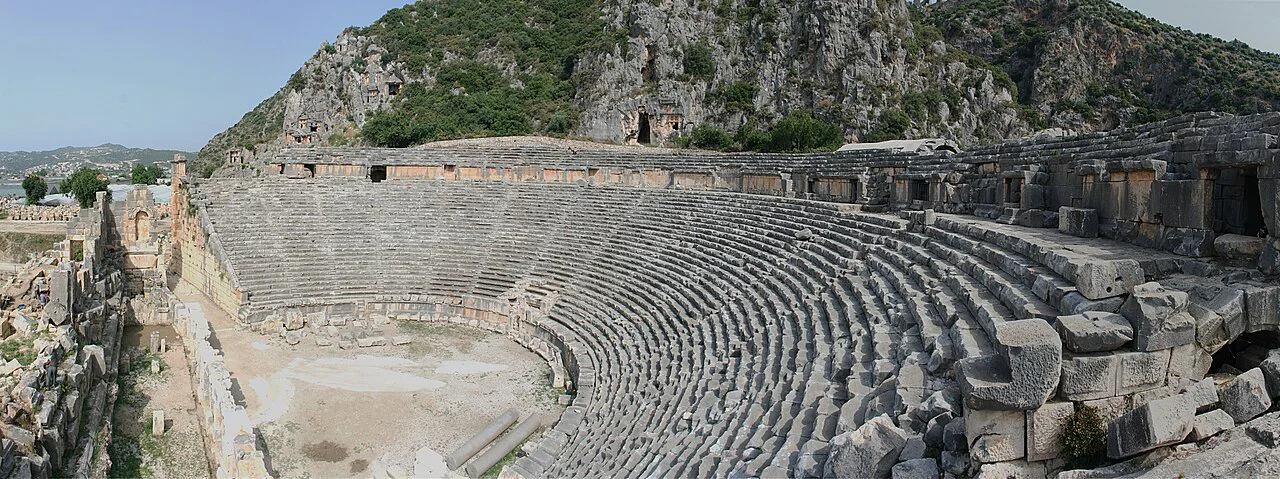
Demre · 61 km
Mira
Content & sources
Ingo Mehling · CC BY-SA 3.0
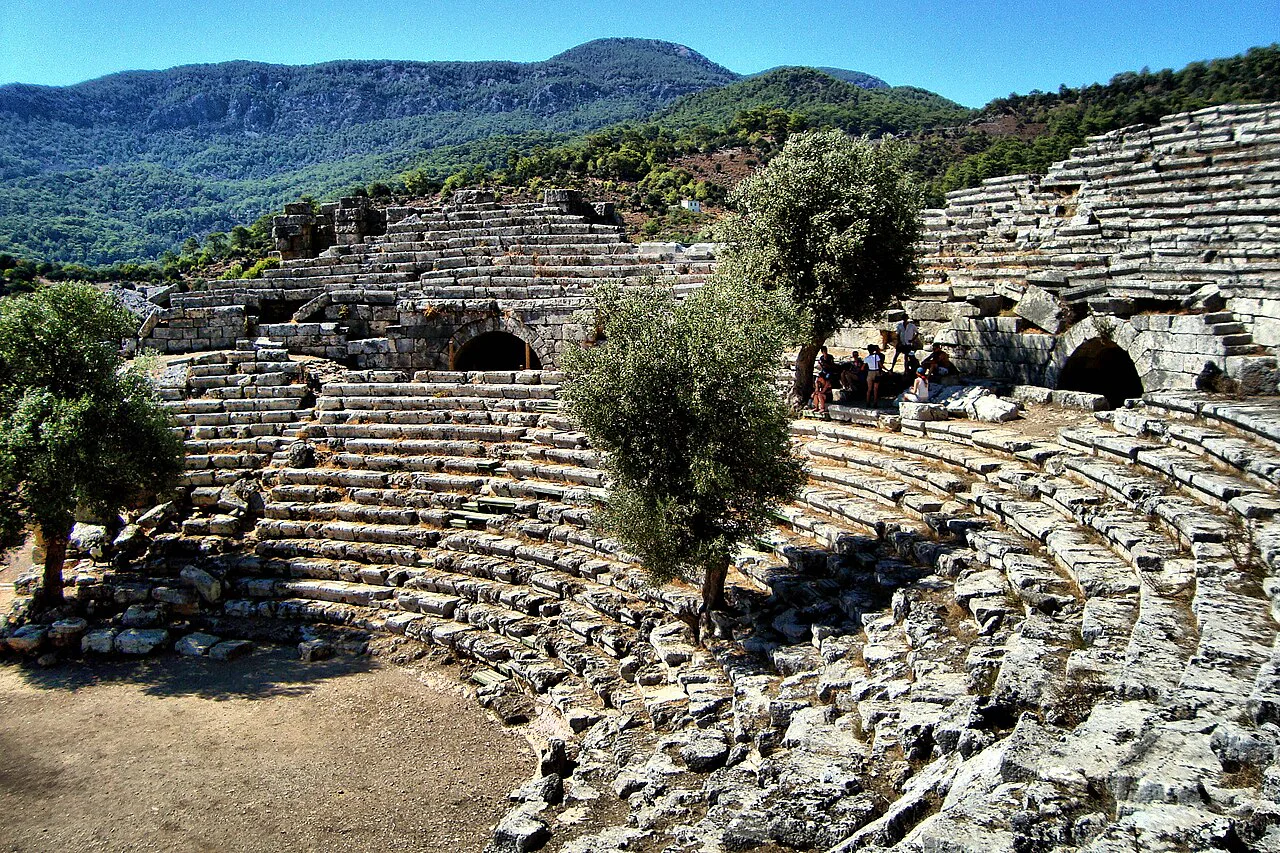
Dalyan · 81 km
Kaunos
Content & sources
HALUK COMERTEL · CC BY 3.0
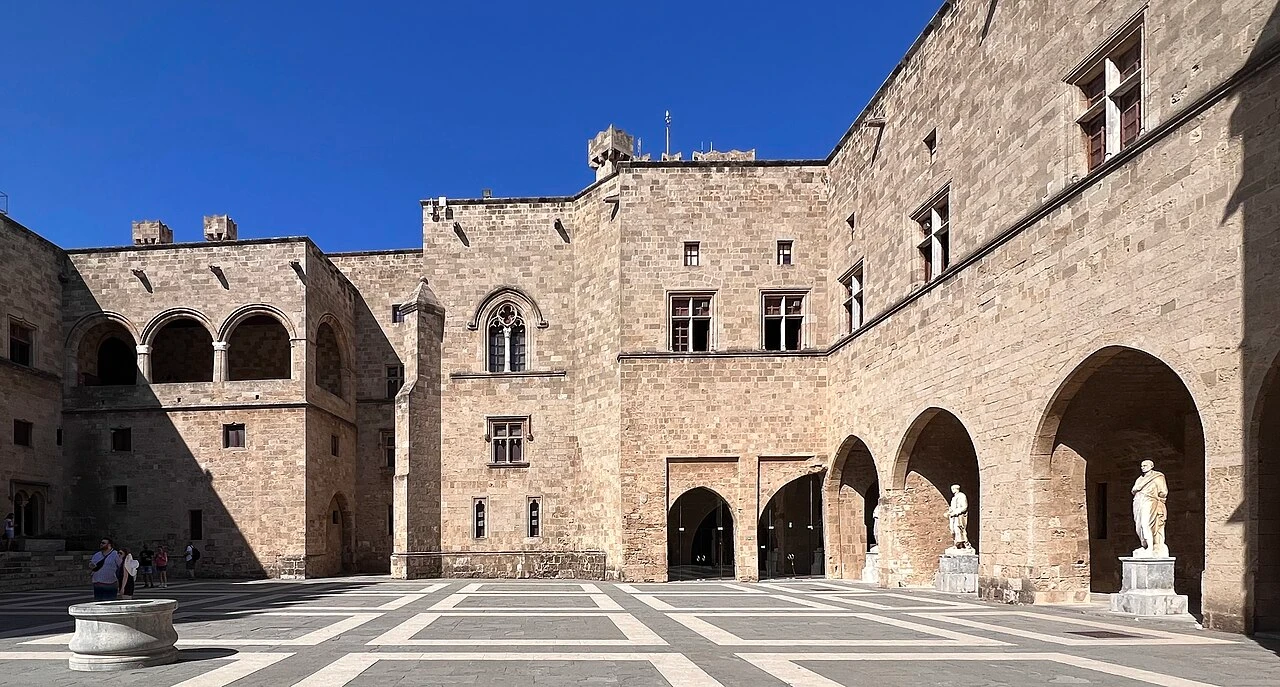
Rhodes · 99 km
Palace of the Grand Master of the Knights of Rhodes
Content & sources
Burkhard Mücke · CC BY-SA 4.0
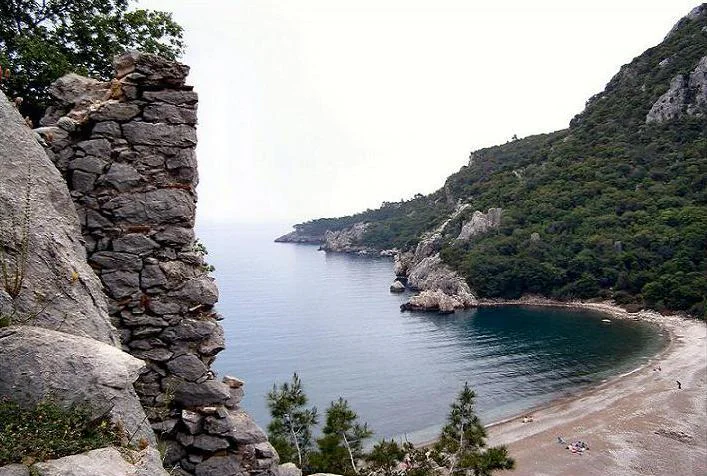
Kumluca · 103 km
Olimpos, Kumluca
Content & sources
Hilmi Ayhan · CC BY 2.5