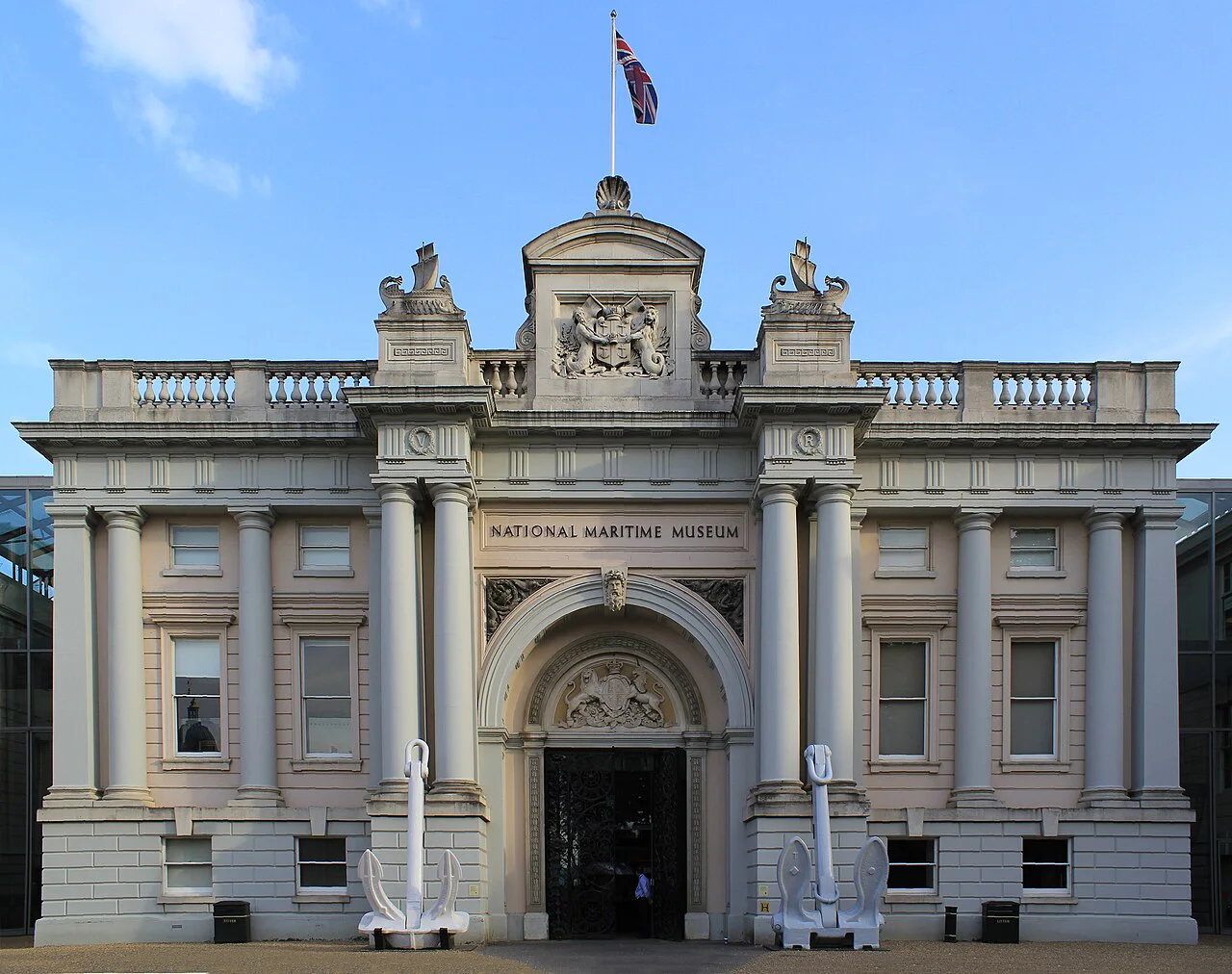
 Stanza / Audio guide
Content & sources
Stanza · Audio guide
National Maritime Museum Audio Guide
A place to remember. A story to take with you.
The National Maritime Museum is a maritime museum located in Greenwich, London. It is part of Royal Museums Greenwich, a network of museums situated in the Maritime Greenwich World Heritage Site.
Download Stanza, then search for “National Maritime Museum”.
About the tour
One guide. Your kind of visit.
The National Maritime Museum is a maritime museum located in Greenwich, London. It is part of Royal Museums Greenwich, a network of museums situated in the Maritime Greenwich World Heritage Site.
The National Maritime Museum guide tells the stories of 61 artworks, including The Battle of Trafalgar (J. M. W. Turner), The Death of Captain James Cook (Johann Zoffany), Lord Howe's action, or the Glorious First of June (Philip James de Loutherbourg), The Death of Nelson, 21 October 1805 (Arthur William Devis), Captain Lord George Graham in his Cabin (William Hogarth), Nelson's Ship in a Bottle (Yinka Shonibare), Smugglers Alarmed by an Unexpected Change from Hazy Weathers, while Landing their Cargo (Augustus Wall Callcott), and Portrait of a Large Dog (George Stubbs). Every artwork is free to hear in the Stanza app until 1 January.
Ready when you are.
- 01Get the free Stanza app.
iOS & Android
- 02Find your guide.
“National Maritime Museum”
- 03Download before you go.
Works offline
Audio guide / 61 artworks
Inside the guide
Get to know a few of the stories before you go. Open a stop to read more.
01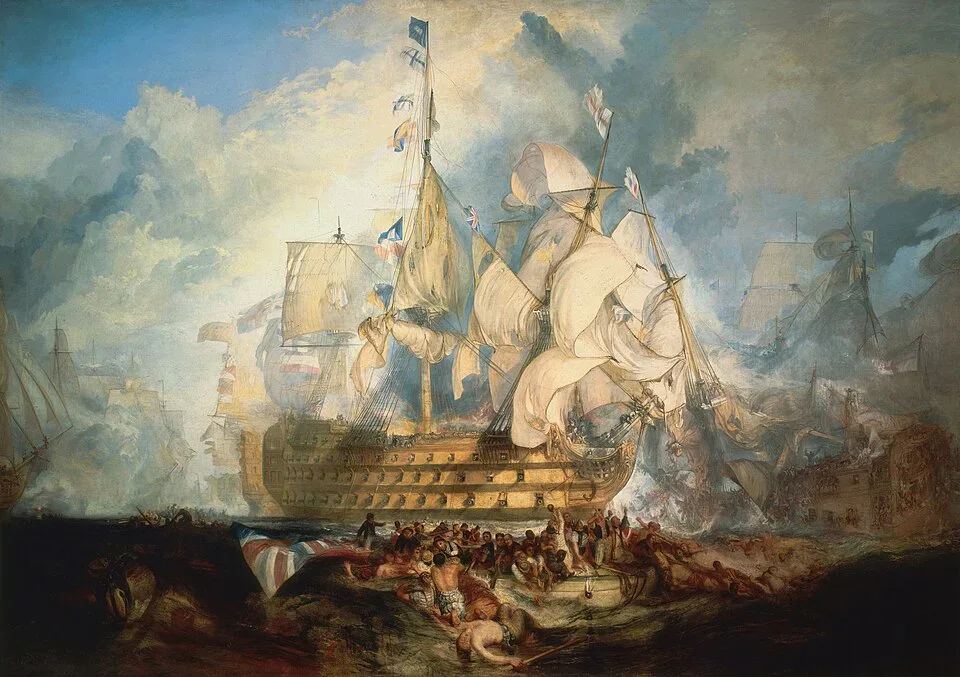
The Battle of Trafalgar
The British sailors in the foreground are cheering. They have no idea what has happened behind them, on the flagship Victory. Nelson has been mortally wounded by French gunfire. Victory dominates the scene, drawn larger than life, a symbol of British naval power. At the right edge is the Redoutable, the French ship whose fire struck Nelson. It is going down, though in reality it sank later, in a storm after the battle. Flags on the masts carry part of Nelson's message, that England expected every man to do his duty. George the Fourth commissioned the work for Saint James's Palace, to link his dynasty with military success. It went to Greenwich Hospital soon after it was first hung, and now it is here in the National Maritime Museum. Turner took moments from several days of the battle and made them happen together. That is how the cheering and the tragedy behind them share one scene. He had made sketches right after the battle, studying the ships and their rigging and the uniforms.
Listen in the appJ. M. W. Turner · Public domain
02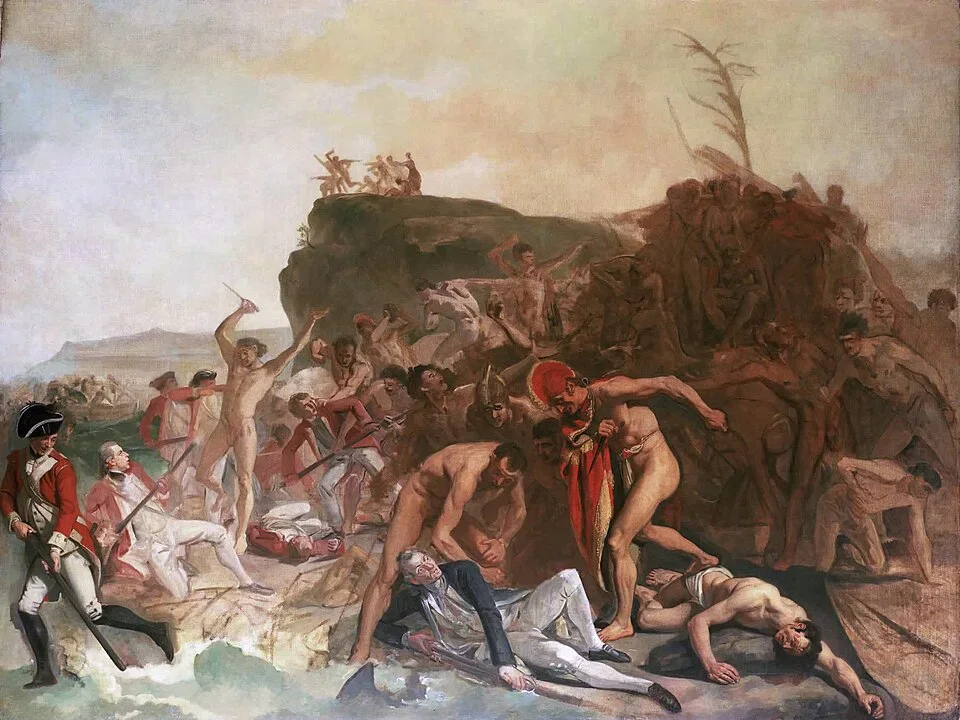
The Death of Captain James Cook
The painter saw none of this happen. Johann Zoffany never sailed with Cook, though he had hoped to. When that came to nothing, he went to India instead. He put the picture together years afterward, about 1795, from other pictures and borrowed objects. Cook's pose comes from a classical statue of a dying Gaul. A native figure is posed like an ancient statue of a discus thrower. The idea may have come from a play about Cook's death that he saw at Covent Garden. Cook was killed in Hawaii in 1779. A storm drove him back to Hawaii. He was trying to take the chief hostage to get a missing boat returned. In the confusion he shot a man, and he and four marines were speared to death. The death appears to have been unintended. The feathered helmet belonged to Cook himself. A Hawaiian chief gave it to Cook on his first visit to Hawaii. Zoffany borrowed it from a London museum to paint it. It is now in a museum in Vienna. Why Zoffany never finished the picture is not known.
Listen in the appJohann Zoffany · Public domain
03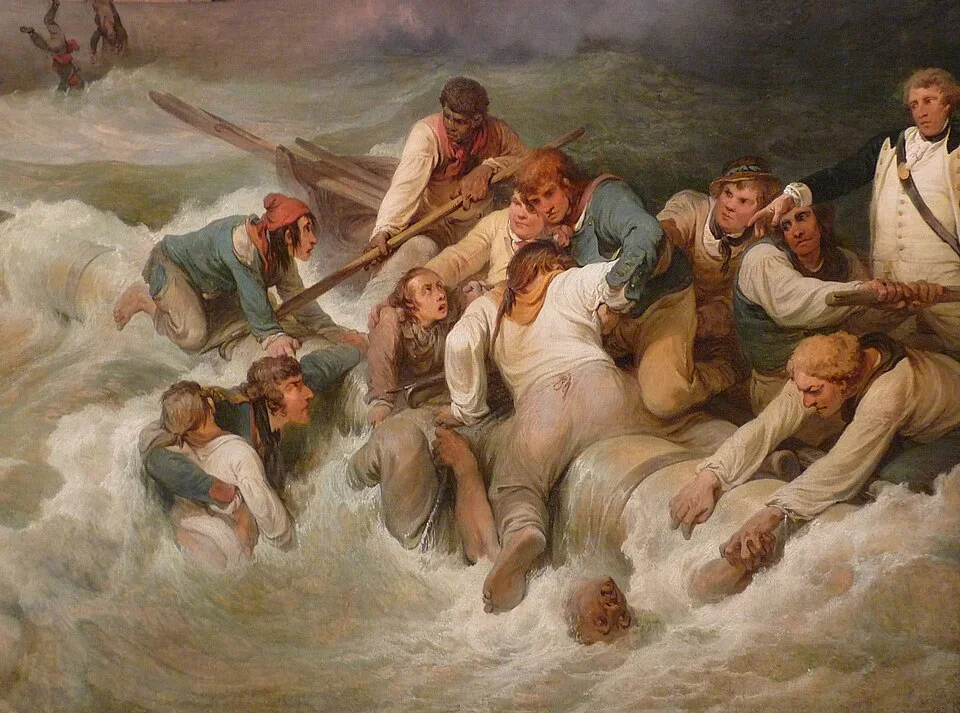
Lord Howe's action, or the Glorious First of June
Bodies are falling from the gunports of the French flagship on the right. Easy to miss in all that smoke. But they tell you the two ships are close, side by side. She is Montagne, trading broadsides with Queen Charlotte, the British flagship on the left. That is how Loutherbourg chose to show their duel. But they never fought like this. They did fight that day. Queen Charlotte lost her fore topmast when she was already well behind Montagne, not in a broadside like this. The picture makes it seem the lost mast held her back, and cost her the capture of Montagne. Lord Howe, whose victory this was, objected. So did James Bowen. In a real broadside fight like this, he said, Queen Charlotte would have taken Montagne. To him, the picture insulted Queen Charlotte's honour. And it was made to be seen by many. Engravers paid five hundred pounds for it, meaning to turn it into prints and show it in public. The French ships carry a white Bourbon flag with the tricolour added in one corner. The new tricolour was officially adopted in May 1794, but it had not reached the fleet when the ships sailed. This was the only major action the French fleet fought under that flag.
Listen in the appPhoto: Ji-Elle · CC BY-SA 3.0
04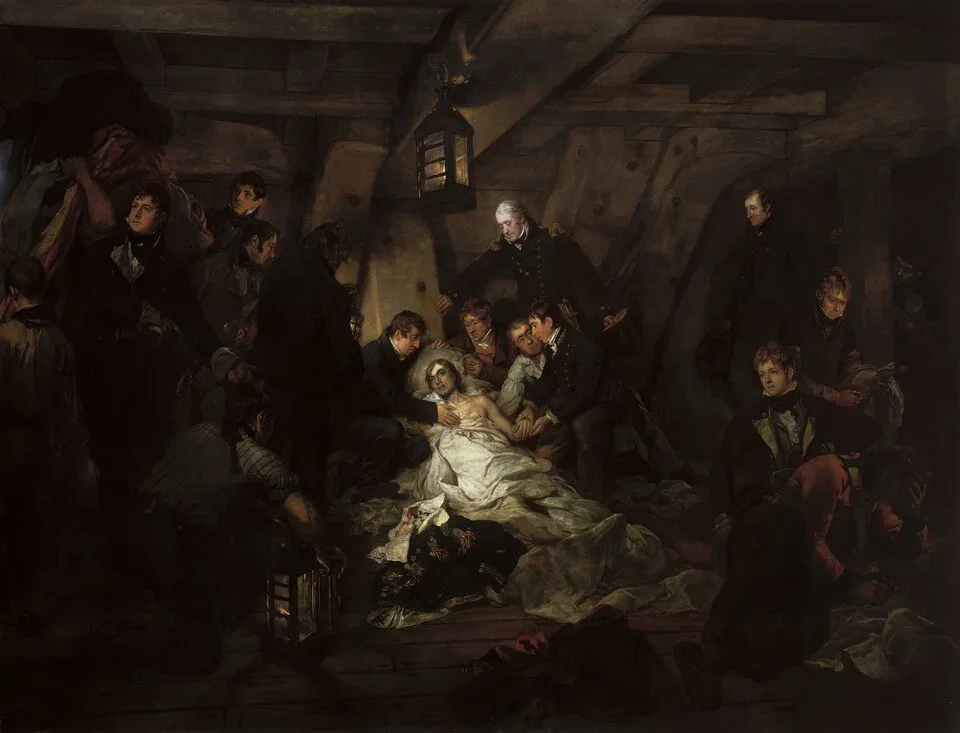
The Death of Nelson, 21 October 1805
Arthur William Devis was out of debtors' prison. A prize announced a month after the battle could pay what he owed. Five hundred guineas went to the best picture of Nelson's death, and a publisher would engrave it. He meant to win. He got a week aboard HMS Victory after she came home from Trafalgar. He sketched the spot where Nelson died, made a model of it, and studied the faces of the men around him. He even drew Nelson's body and the bullet that killed him, during the autopsy. In the painting, the surgeon William Beatty feels Nelson's pulse, about to say he is dead. The chaplain rubs his chest to ease the pain. The valet holds the glass Nelson took his last sips of water from. The deck where Nelson lay was far shorter than this, and Captain Hardy, standing behind him, was not there at the moment of death. Nelson is the bright figure in an otherwise dark painting, set against a large timber of the ship's hull. The whole group is arranged like the taking down of Christ from the cross.
Listen in the appArthur William Devis · Public domain
05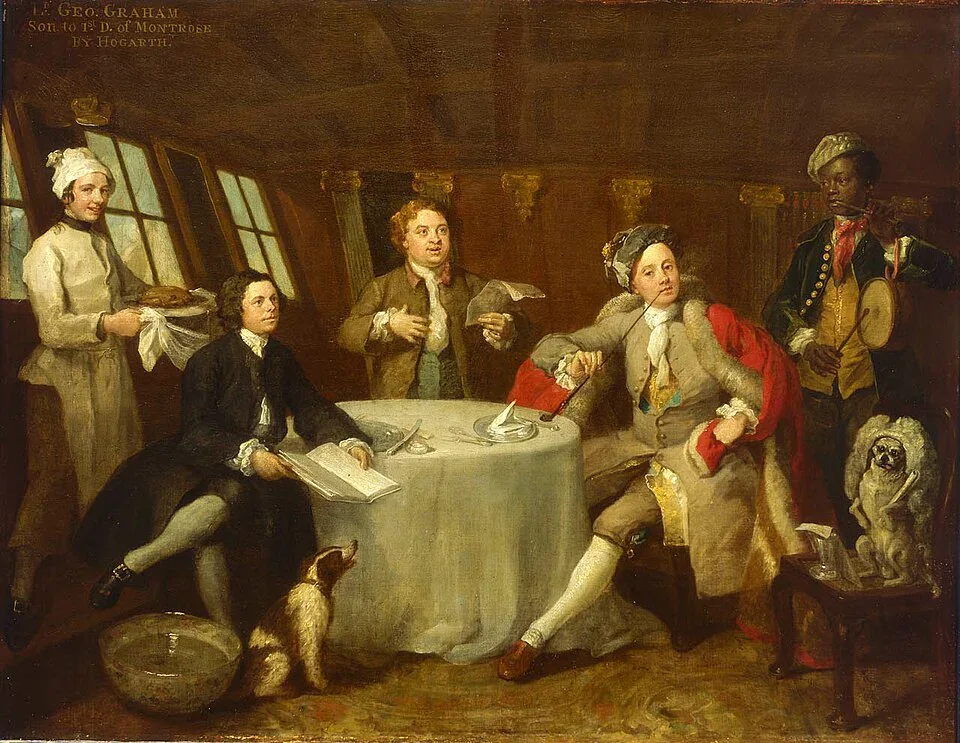
Captain Lord George Graham in his Cabin
A captain sits in the great cabin of his ship, smoking a long pipe, his green cap tipped to one side. Dinner is just about to be served. Around him two men sing, a black servant plays a pipe and a small drum, and a steward comes in carrying a roast duck. The painting was probably made to mark a naval battle. Not long before, Graham commanded the small Bridgewater, one of three British ships that attacked three powerful French privateers taking their prizes into Dunkirk. The British took every prize and all but one of the privateers. Graham was praised and given a larger ship, the Nottingham, and this is probably the great cabin of that new command. The quiet before dinner is set against the danger of that fight. The steward smiles straight out at you while gravy runs down the chaplain's back. On a chair sits a pug in Graham's wig, with a sheet of music in front of it. That pug was Hogarth's own, called Trump. He put himself into Graham's cabin as that dog, to make light of the formality of Graham's position.
Listen in the appWilliam Hogarth · Public domain
06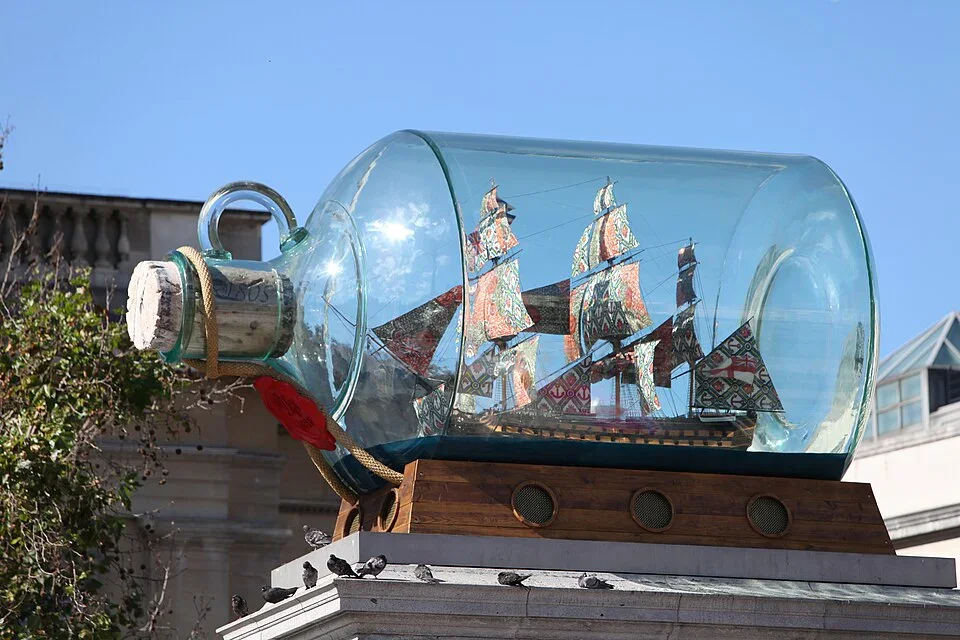
Nelson's Ship in a Bottle
A warship sits inside a bottle. That much is plain. It is HMS Victory, Nelson's ship at Trafalgar. But the thirty-seven sails are covered in African wax print cloth, the kind popular across Central and West Africa. Why put that fabric on it? The patterns began as Indonesian batik. The Dutch carried them to African markets in colonial times. Through that history of trade and borrowing, the cloth came to stand for African fashion and identity. Yinka Shonibare chose it on purpose. He wanted to honour the many cultures he saw breathing life into Britain, the ethnic wealth of London today. And the choice reaches back to the real ship. HMS Victory is thought to have had sailors from twenty-two nations aboard.
Listen in the appPhoto: QuentinUK · CC BY-SA 3.0
07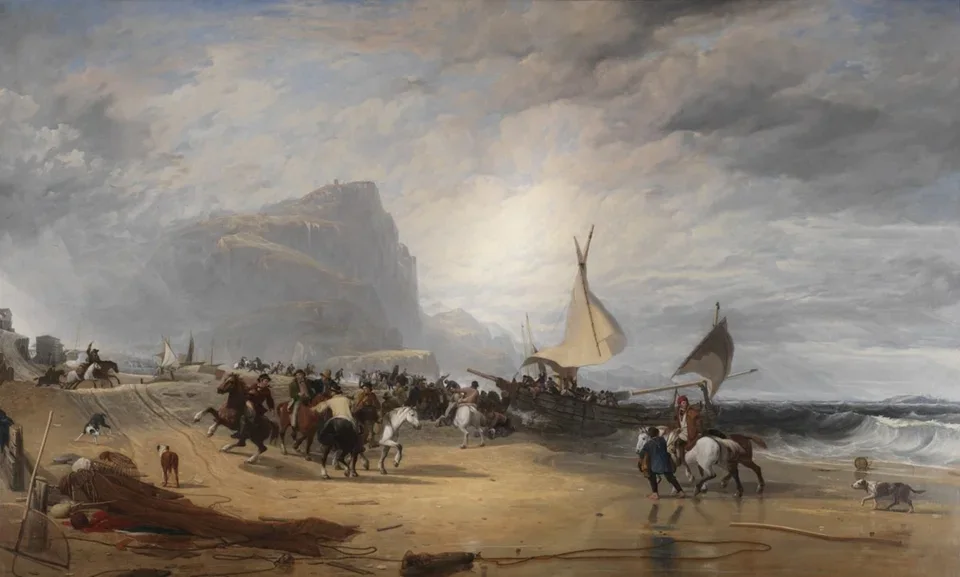
Smugglers Alarmed by an Unexpected Change from Hazy Weathers, while Landing their Cargo
The cargo is still coming ashore when the weather changes without warning. These are smugglers, landing contraband on a southern English coast in hazy weather, and the sudden change alarms them. That is the instant Augustus Wall Callcott chose to paint. He put a landscape and a scene of everyday life together in one picture. Sir Thomas Heathcote, the Member of Parliament for Hampshire, ordered the painting. It went on show at the Royal Academy Exhibition in 1822, at Somerset House. One magazine called it the best picture on show, second only to a painting of Chelsea pensioners reading dispatches from Waterloo. The coast is imaginary, though cliffs near Hastings may have inspired it.
Listen in the appLord Cornwallis · Public domain
08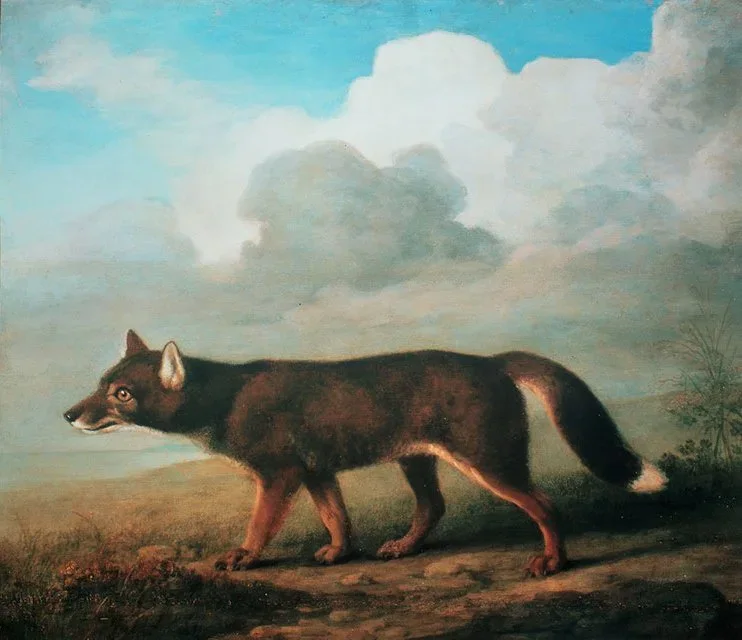
Portrait of a Large Dog
This dog very nearly ended up in Australia. In 2012 it and a painting of a kangaroo sold at auction for nine point three million Australian dollars, to a buyer never named. An application followed to take the two pictures overseas. It was refused, because they mattered too much to this country to lose. Sir David Attenborough led a campaign to keep them in Britain. In November 2013 a gift of one and a half million pounds from the Eyal Ofer Family Foundation let this museum buy them. The dog in front of you is a dingo. Joseph Banks asked George Stubbs to paint it after seeing the animals in Australia in 1770, on Cook's first voyage. These were the first Western paintings of Australian mammals. For most Europeans, this was the first time they saw anything like them. No dingo had been brought back to study, so the dog here is only a general likeness, painted without a live animal.
Listen in the appGeorge Stubbs · Public domain
09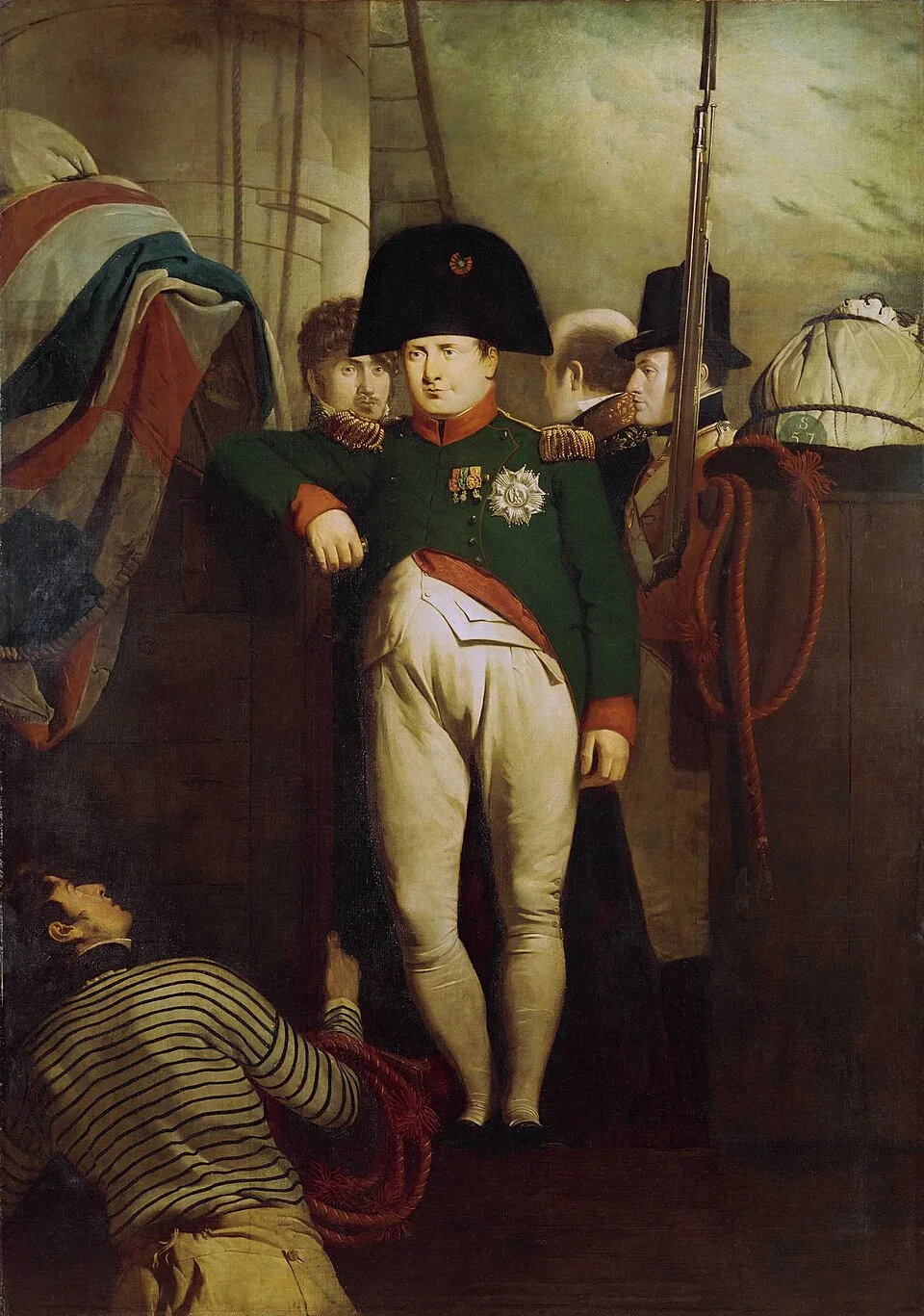
Napoleon Bonaparte on Board the 'Bellerophon' in Plymouth Sound
Right at the left edge, a Union Jack hangs draped over the rail, easy to pass by. It belongs to the British who defeated the man standing here, and it says he is a prisoner. He stands at the gangway in the uniform of a colonel of the chasseurs à cheval, and he looks almost heroic. His elbow rests on the rail beside the flag, and a Royal Marine stands guard on the right. This is Napoleon, just after Waterloo. He had abdicated and tried to get away to the United States. Instead he surrendered, and they brought him to Plymouth Sound, to wait aboard the Bellerophon while the Congress of Vienna decided his fate. People came out in boats and gathered on the shore to see him. He came on deck around six in the evening so the crowds could get a look. The painter, Charles Lock Eastlake, was a young man hardly known at the time. He hired a boat and rowed out toward the ship to study Napoleon up close. Those appearances on deck let him make the quick sketches he needed for the portrait.
Listen in the appCharles Lock Eastlake · Public domain
10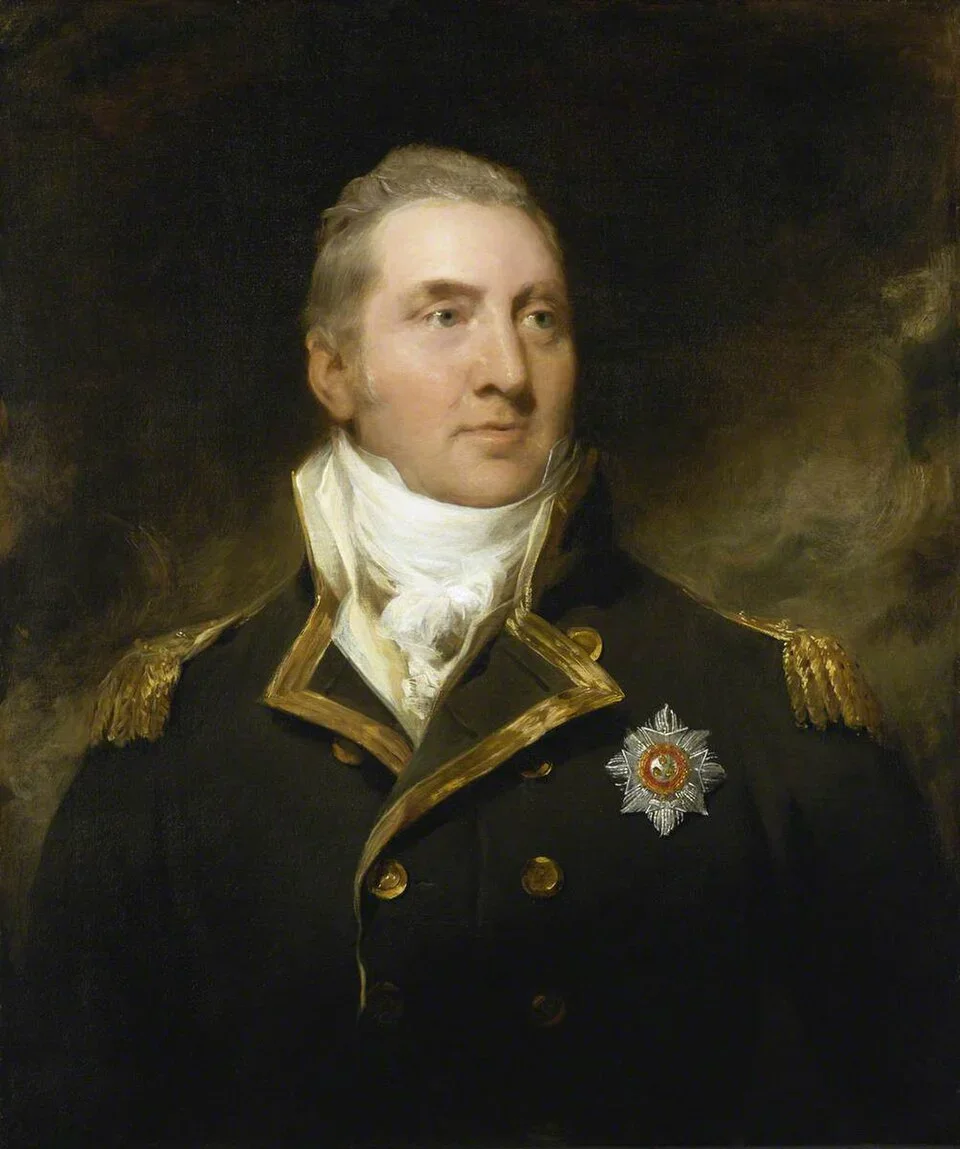
Captain Sir Edward Pellew, later 1st Viscount Exmouth
Edward Pellew went to sea as a boy in 1770. He fought in the American Revolutionary War and the French Revolutionary War. By around 1797 he was known for commanding the frigate HMS Indefatigable. Thomas Lawrence, a young portrait painter already established, painted him around that time. Pellew wears the full dress uniform of a captain. In 1797, Pellew fought a French ship called Droits de l'Homme, much larger than his own ship. The French ship was driven onto the coast of Brittany and wrecked. The portrait later became the basis of a print made by Charles Turner in 1815. It belonged to Edward Hawke Locker, Pellew's civil secretary. Whether it was made to mark that battle is still not known.
Listen in the appThomas Lawrence · Public domain
- 11
Rear-Admiral Sir Horatio Nelson, 1758-1805
Lemuel Francis Abbott · 1799
- 12
Visit of George III to Howe's Flagship, the 'Queen Charlotte', on 26 June 1794
Henry Perronet Briggs · 1828
- 13
Vice-Admiral John Byng, 1704-57
Thomas Hudson · 1749
- 14
Captain William Peel (1824-1858)
John Lucas · 1860
- 15
Lord Howe on the Deck of the 'Queen Charlotte', 1 June 1794
Mather Brown · c. 1794
- 16
French Firerafts Attacking the British Fleet off Quebec, 28 June 1759
Samuel Scott · 1767
- 17
The Captured Spanish Fleet at Havana, August-September 1762
Dominic Serres · 1768
- 18
'HM Turret Ship 'Devastation' at Spithead on the Occasion of the Naval Review in Honour of the Shah of Persia, 23rd June 1873'
Edward William Cooke · 1875
- 19
Sir Thomas Masterman Hardy, Bt, 1769-1839, Vice-Admiral of the Blue
Richard Evans · 1834
- 20
The Kongouro from New Holland
George Stubbs · 1773
- 21
Nelson and the Bear
Richard Westall · 1809
- 22
A View of Greenwich and the Queen's House from the South-East
Hendrick Danckerts · c. 1670
- 23
Baltic Exchange Memorial Glass
Heidi De Vries · 1922
- 24
Clarkson Stanfield, 1793-1867
John Simpson · 1829
- 25
Nelson Boarding the 'San Josef' at the Battle of Cape St Vincent, 14 February 1797
George Jones · 1829
- 26
Shakespeare Cliff, Dover, 1849
Clarkson Frederick Stanfield · 1862
- 27
Destruction of the American Fleet at Penobscot Bay, 14 August 1779
Dominic Serres · c. 1779
- 28
The Moonlight Battle: the Battle off Cape St Vincent, 16 January 1780
Dominic Serres · 1781
- 29
London: Greenwich Hospital from the North Bank of the Thames
Giovanni Antonio Canal · 1750–1753
- 30
Captain Alexander Hood, 1726-1814
Joshua Reynolds · 1763
- 31
John Montagu, 1718-92, 4th Earl of Sandwich, 1st Lord of the Admiralty
Thomas Gainsborough · 1783
- 32
Commodore the Honourable Augustus Keppel
Joshua Reynolds · 1749
- 33
James, Duke of York, 1633-1701
Henri Gascar · 1673
- 34
Defeat of the Spanish Armada
Philip James de Loutherbourg · 1796
- 35
Captain James Cook, 1728-79
Nathaniel Dance-Holland · c. 1775
- 36
England's Pride and Glory
Thomas Davidson · 1894
- 37
Captain Horatio Nelson, 1758-1805
John Francis Rigaud · 1781
- 38
Hay Barge off Greenwich
Edward William Cooke · 1835
- 39
Vice-Admiral Sir George Cockburn, 1772-1853
William Beechey · 1820
- 40
The Battle of Quiberon Bay, 20 November 1759
Dominic Serres · 1779
- 41
Rear-Admiral Sir George Cockburn, 1772-1853
John James Halls · 1817
- 42
A North Sea Breeze on the Dutch Coast
Edward William Cooke · 1855
- 43
Dutch Yachting on the Zuider Zee
Edward William Cooke · 1848
- 44
A Danish Timber Bark Getting Under Way
Samuel Scott · 1736
- 45
Princess Charlotte Arriving at Harwich, September 1761
Dominic Serres · 1763
- 46
The United Service
Andrew Morton · 1845
- 47
Nelson's Flagships at Anchor
Nicholas Pocock · 1807
- 48
The Capture of Puerto Bello, 21 November 1739
Samuel Scott · 1740
- 49
The Battle of Navarino, 20 October 1827
George Philip Reinagle · 1828
- 50
The Piazza at Havana
Dominic Serres · c. 1762
- 51
Wager's Action off Cartagena, 28 May 1708
Samuel Scott · 1743–1747
- 52
A fishing boat brought ashore near Conway Castle
Philip James de Loutherbourg · 1800
- 53
Greenwich Hospital from the west side
James Holland · 1850
- 54
The Parting Cheer
Henry Nelson O'Neil · 1861
- 55
Woodes Rogers and his Family
William Hogarth · 1729
- 56
Peter Pett and the Sovereign of the Seas
Peter Lely · 1645
- 57
The Return of George IV to Greenwich from Scotland
William Anderson · 19th century
- 58
The Battle of Lepanto, 7 October 1571
Unknown Artist · 1550
- 59
Poedooa, the Daughter of Oree
John Webber · 1777–1785
- 60
Vice-Admiral Lord Hugh Seymour, 1759-1801
John Hoppner · 1799
- 61
Battle of the Gabbard
Heerman Witmont · 1653
National Maritime Museum
Frequently asked questions
How much does the guide cost?
Free app download. Free until 1 January. Listed guide price: $2.99. Audio guide only. Venue admission is separate.
Can I listen without internet?
Yes. Download the guide’s audio, images, and maps in the app before your visit. Your downloaded content is then available offline.
Can I listen in my language?
In English for now. More languages soon.
Do I need to follow a schedule?
No. This is a self-guided experience. Choose your stops, pause whenever you like, and return to a story at your own pace.
Which artworks are in the National Maritime Museum audio guide?
61 artworks, including The Battle of Trafalgar (J. M. W. Turner), The Death of Captain James Cook (Johann Zoffany), Lord Howe's action, or the Glorious First of June (Philip James de Loutherbourg), The Death of Nelson, 21 October 1805 (Arthur William Devis), Captain Lord George Graham in his Cabin (William Hogarth), Nelson's Ship in a Bottle (Yinka Shonibare), Smugglers Alarmed by an Unexpected Change from Hazy Weathers, while Landing their Cargo (Augustus Wall Callcott), and Portrait of a Large Dog (George Stubbs). The full list is on this page.
Is this the museum’s official audio guide?
No. Stanza is an independent audio guide app and is not affiliated with National Maritime Museum. Museum admission is separate.
At your own pace
Explore National Maritime Museum.
Download Stanza, then search for “National Maritime Museum”.
Free app download · Guide price shown in the app
Keep exploring
Nearby audio guides
Greater London · 1 km
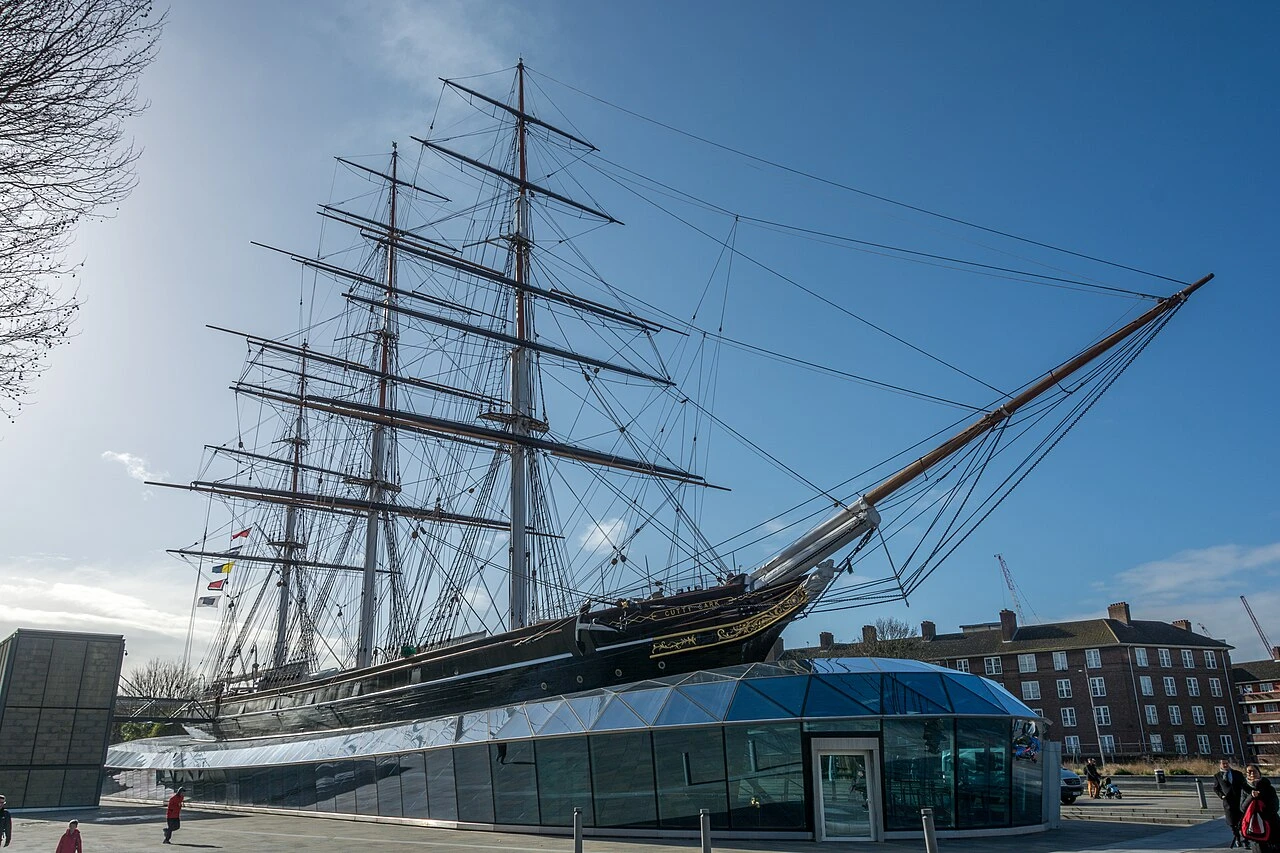
Cutty Sark
Content & sources
Krzysztof Belczyński from Warsaw, POLAND · CC BY-SA 2.0
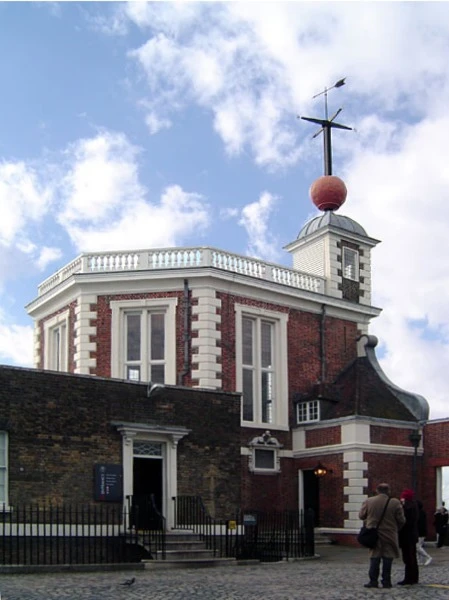
Greater London · 1 km
Royal Observatory, Greenwich
Content & sources
Photo: Shizhao · CC BY-SA 3.0
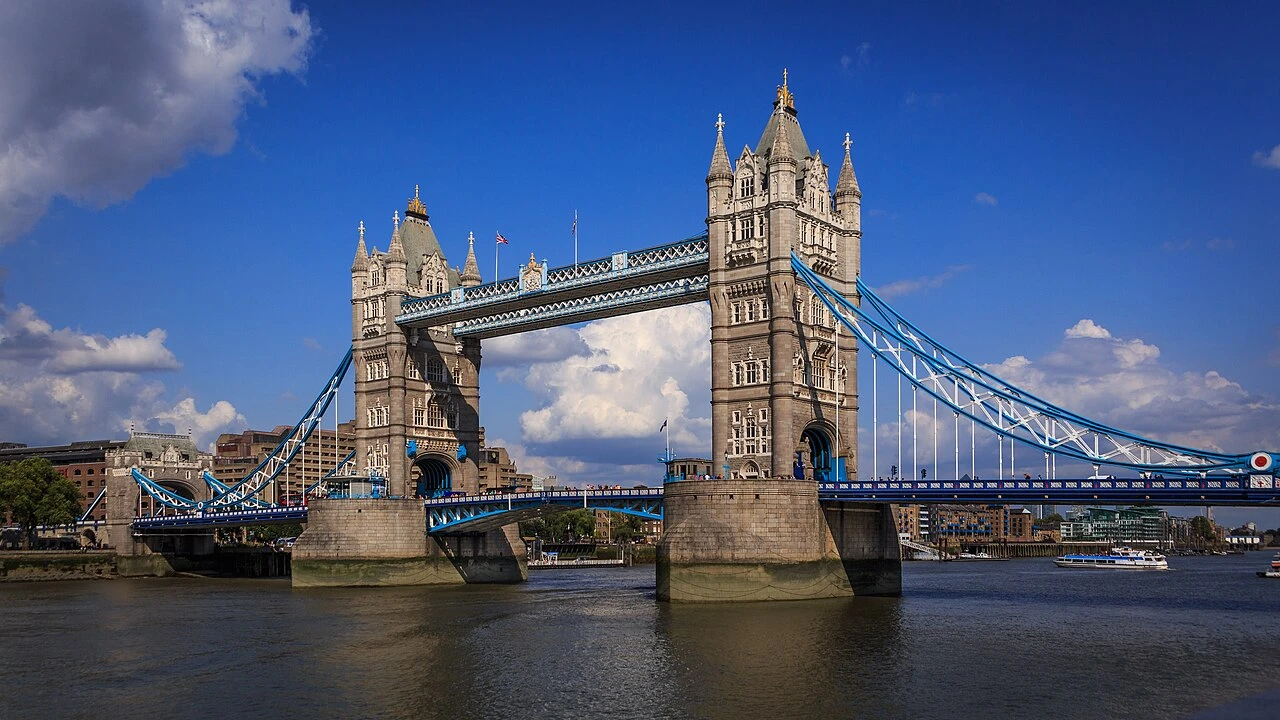
Greater London · 6 km
Tower Bridge
Content & sources
Photo: Barcex · CC BY-SA 3.0
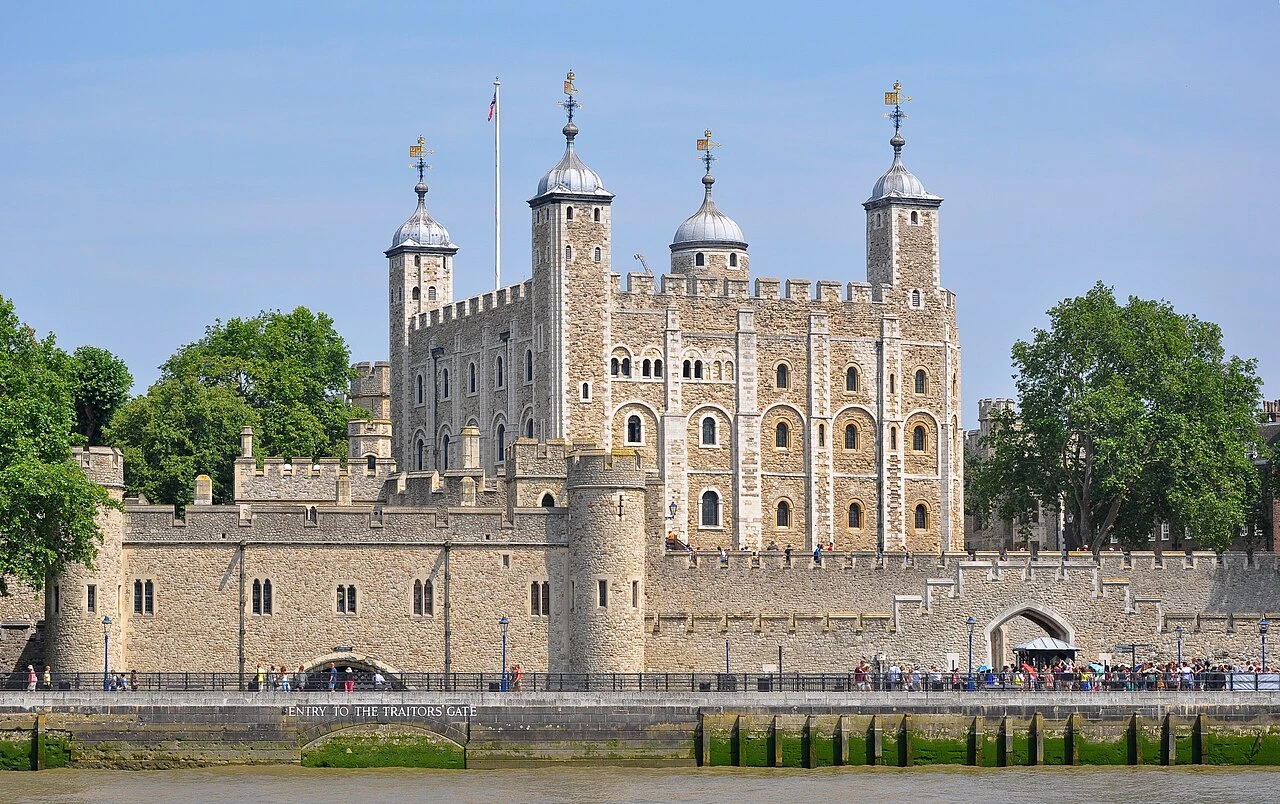
Greater London · 6 km
Tower of London
Content & sources
Bob Collowan · CC BY-SA 3.0
Art museums
More art museum audio guides
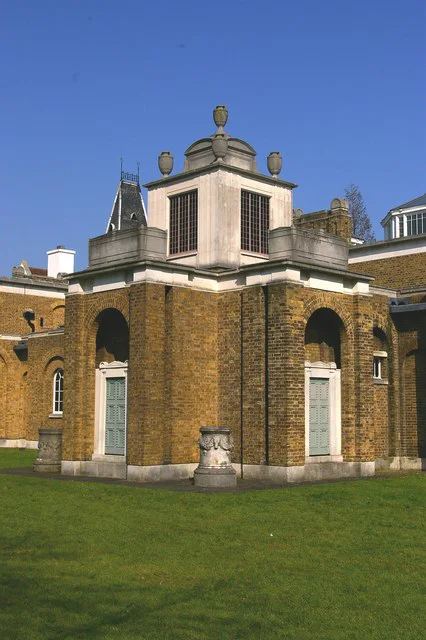
London · 24 artworks
Dulwich Picture Gallery
Content & sources
Julian Osley · CC BY-SA 2.0
London Borough of Southwark · 15 artworks
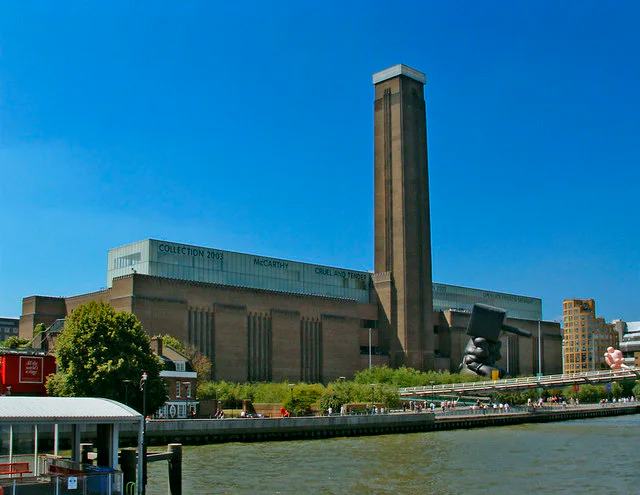
Tate Modern
Content & sources
Christine Matthews · CC BY-SA 2.0
London · 33 artworks
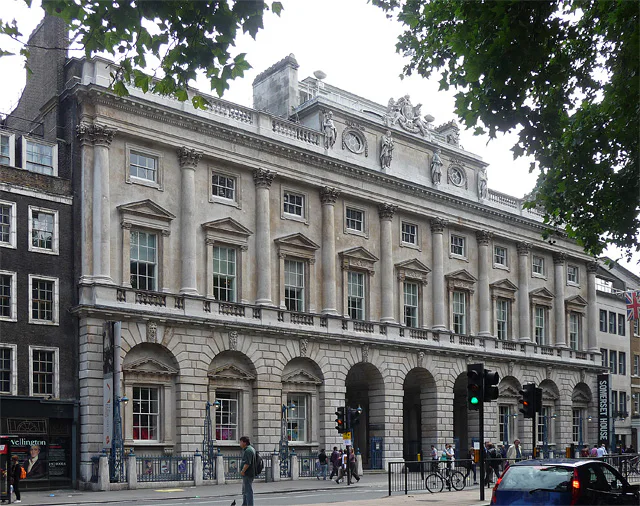
Courtauld Gallery
Content & sources
Stephen Richards · CC BY-SA 2.0
London · 69 artworks
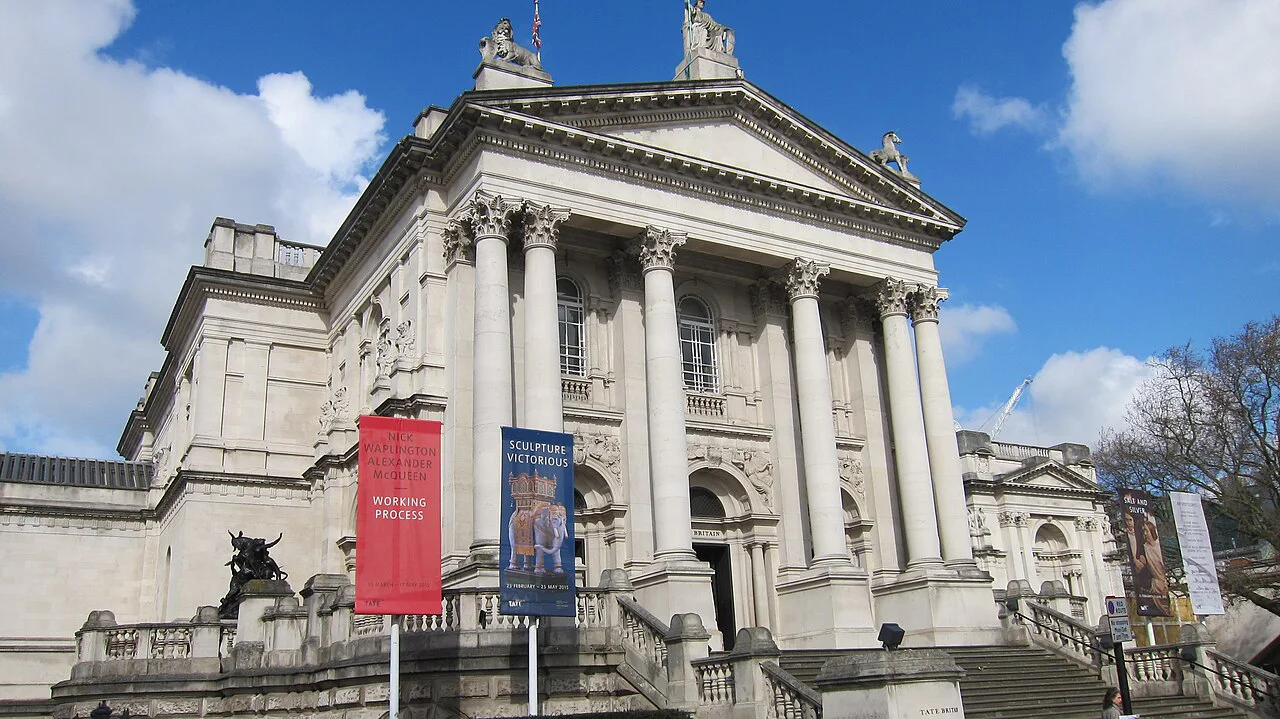
Tate Britain
Content & sources
Carlos Cunha · CC BY-SA 3.0
London · 8 artworks
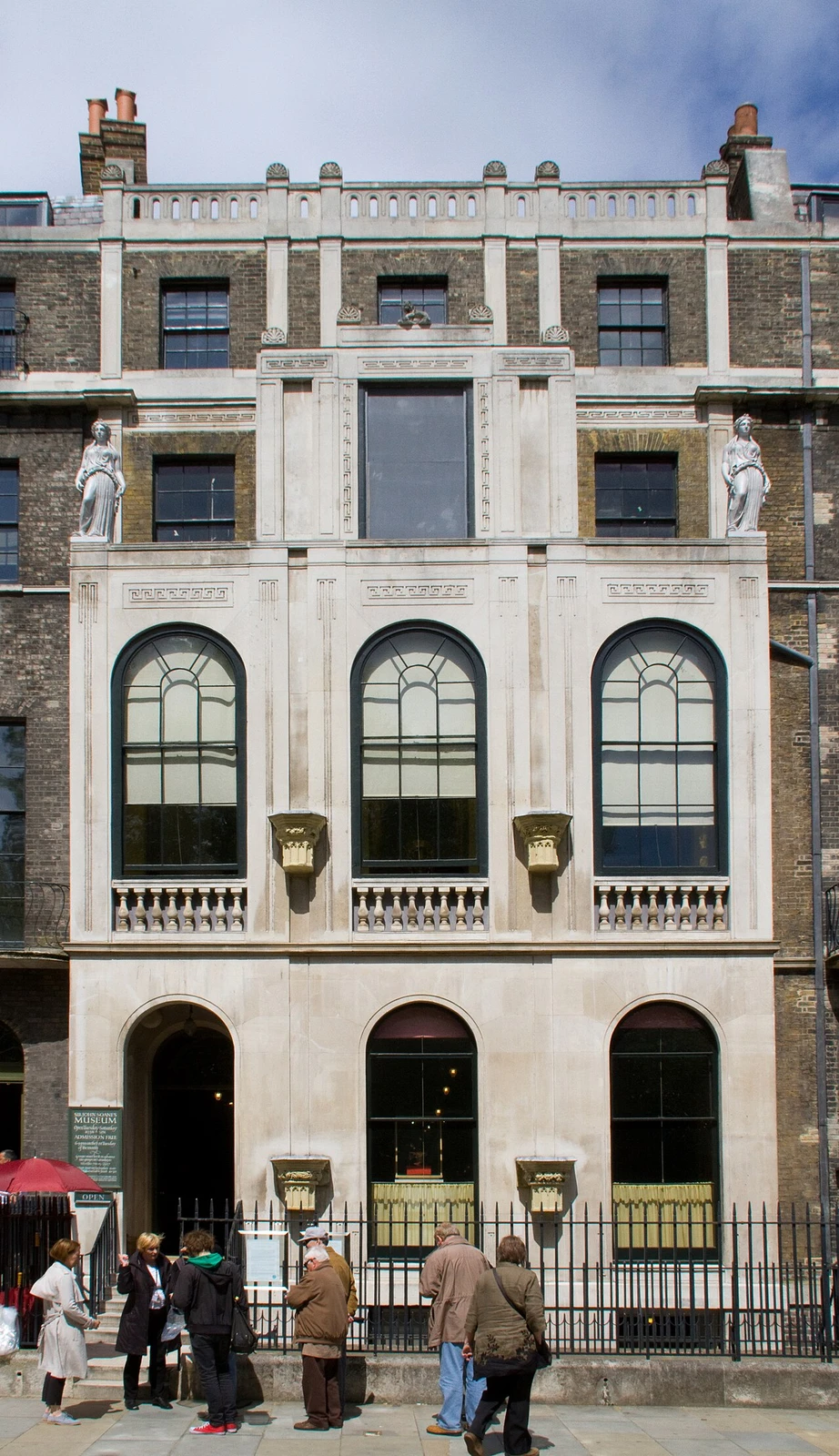
Sir John Soane's Museum
Content & sources
Tony Hisgett from Birmingham, UK · CC BY 2.0
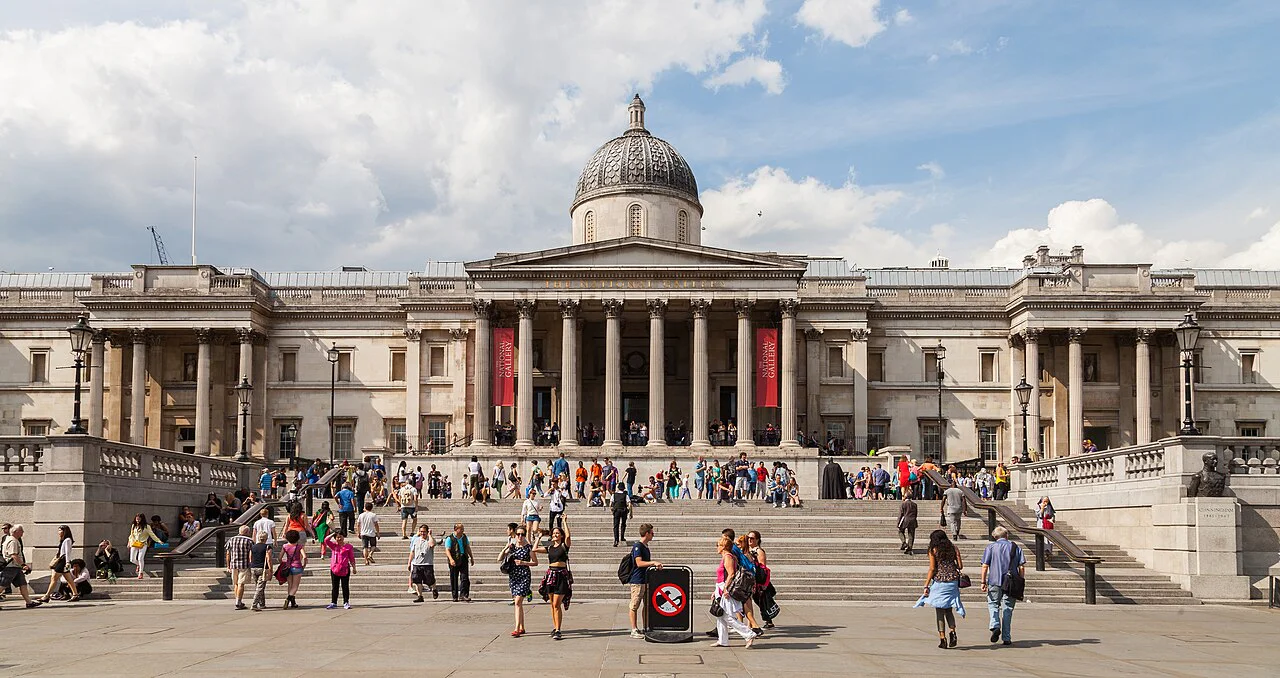
London · 171 artworks
National Gallery, London
Content & sources
Diego Delso · CC BY-SA 4.0