Languages
15Independence Hall Audio Guide
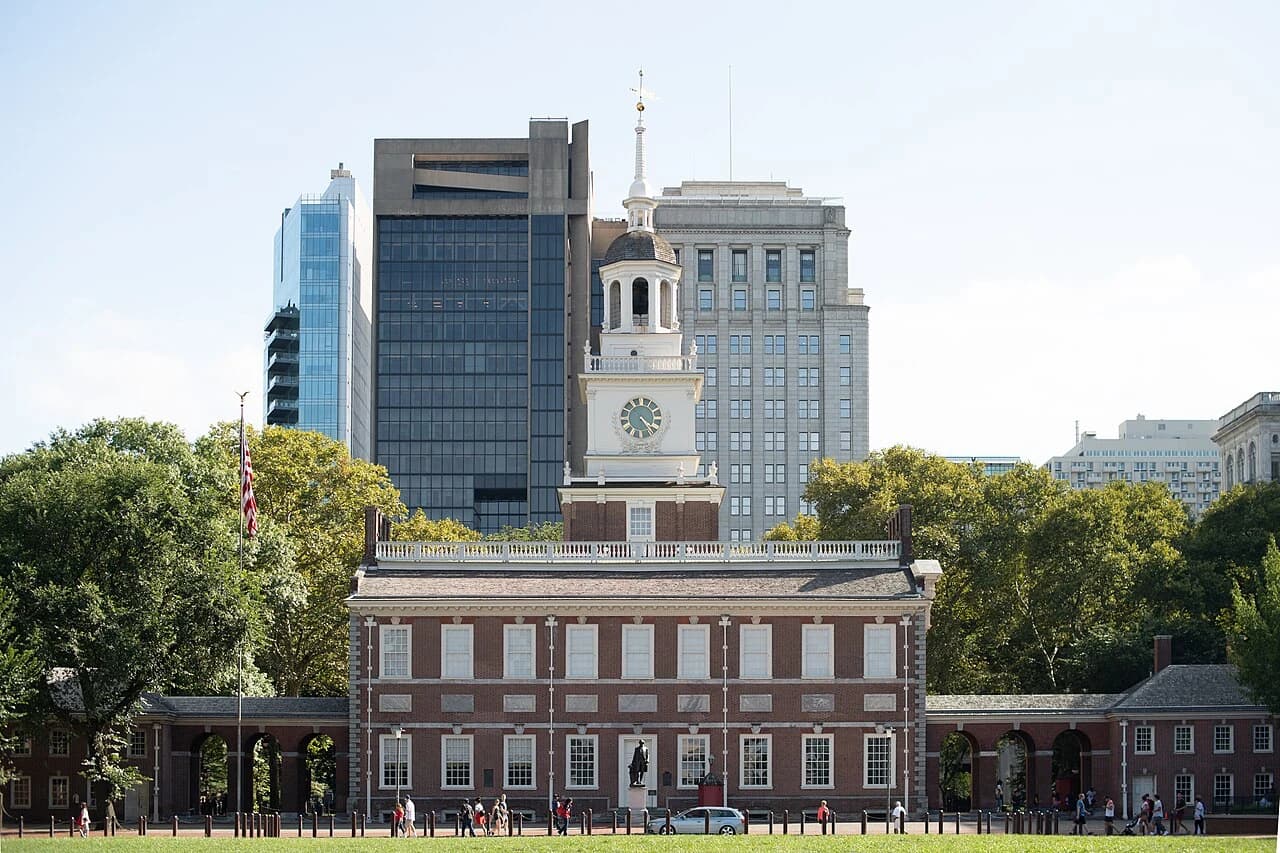
Independence Hall is a landmark in Philadelphia, United States. Explore it with Stanza's GPS-triggered offline audio guide — available in 15 languages.
Quick Facts
19
Stops
15
Languages
100%
Offline
📍 Philadelphia, United States · 39.9489°N, -75.1500°E
About Independence Hall
Independence Hall is a historic legislative building and heritage site located in Philadelphia, Pennsylvania. It is renowned as the place where both the Declaration of Independence and the United States Constitution were debated and adopted.
This self-guided audio tour features 19 narrated stops organized across 9 sections. As a government building, Independence Hall offers a unique cultural experience in the heart of Philadelphia, United States.
The Stanza audio guide is available in 15 languages and works entirely offline — download the complete tour including audio narration, maps, and images before your visit. As you walk through Independence Hall, GPS-triggered narration plays automatically at each point of interest.
Last updated:
What you will hear
The Hall of Entry
Transitioning from the exterior into the grand central hallway that divides the judicial and legislative powers of the colonial era.
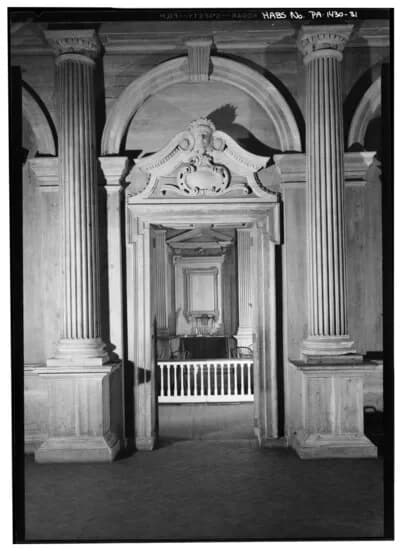
Assembly Room Entrance
Transitioning from the public hallway into the legislative space, you pass through an entrance that embodies the refined taste of the mid-18th century. The classical architectural details visible here were intended to give the provincial government a sense of ancient authority and permanence. Notice the fluted columns flanking the doorway and the ornate pediment resting above it. These elements are key features of the Georgian interior, where symmetry and classical Greek and Roman influences were paramount. In the 1700s, this doorway acted as a barrier between the busy, often noisy public areas of the State House and the serious deliberations occurring within the Assembly Room. The master builder, Edmund Woolley, ensured that even a simple entrance would reflect the status of the colony. The wood paneling and the precise molding around the frame create a sense of dignity, preparing visitors for the monumental decisions that were made just a few steps away. By looking closely at the craftsmanship of the door frame, you can appreciate how the colonists used European architectural language to build the stages for a new, distinctly American political experiment.
The Supreme Court Room
Covering the 'Must-See' judicial chamber. Images show the elevated bench and the prisoner's dock as described in the story essentials.
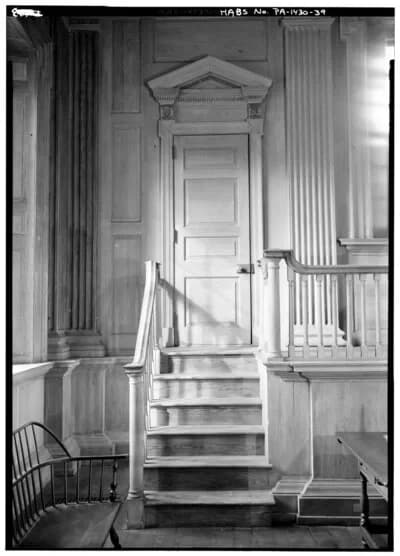
The Judicial Bench
The judicial bench is the most prominent physical structure of authority within the court room. Notice the short flight of stairs leading up to the seating area; this elevation was a deliberate architectural choice to ensure that the judges were the focal point of everyone in the room. Directly above the doorway behind the bench is a formal pediment, mimicking the classical styles found on the building's exterior. This arrangement was designed to inspire respect and perhaps a bit of trepidation in those appearing before the court. This specific space represents the third branch of government: the judiciary. While we often think of the three-branch system as a product of the 1787 Constitution, the physical existence of this courtroom shows that the concept was already well-established in the colonial mind. The judges who sat here dealt with everything from land disputes to capital crimes, operating under a system that would eventually evolve into the American legal framework. The permanence and weight of the furniture here remind us that the founders viewed the impartial administration of justice as a cornerstone of a free society, a belief they held long before they formally broke away from the British Crown.
The Assembly Room: Birthplace of a Nation
The most significant room in the building. Includes the wide view of the desks and the Speaker's station where the Declaration was signed.
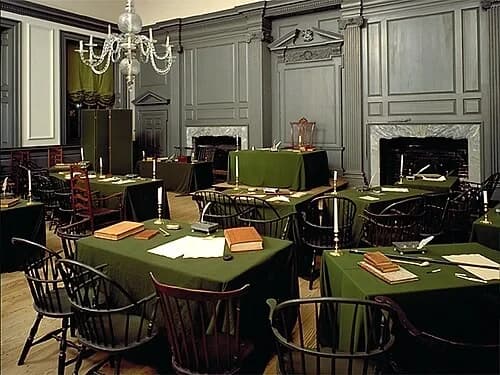
The Assembly Room
The Assembly Room is the most historic space in Independence Hall, often referred to as the 'Main Event' of the tour. It was here that the Second Continental Congress met to sign the Declaration of Independence in 1776, and where delegates returned in 1787 for the Constitutional Convention. This latter event is famously known as the 'Secret Summer.' To ensure that delegates could speak their minds freely without outside pressure, all proceedings were kept strictly confidential. Despite the sweltering Philadelphia humidity, the delegates insisted on keeping the windows shut and the doors guarded to maintain total secrecy. When you look around the room today, try to imagine the atmosphere of that intense summer. The space is filled with green-clothed tables, each topped with quills, inkstands, and candles. The lighting was dim, and the air was likely heavy and still. There was no air conditioning or electric fans�only the scratching of pens on parchment and the heated whispers of men debating the future of a nation. This quiet, preserved room stands in stark contrast to the revolutionary tension that once filled it, serving as a silent witness to the moments when the United States was debated into existence.
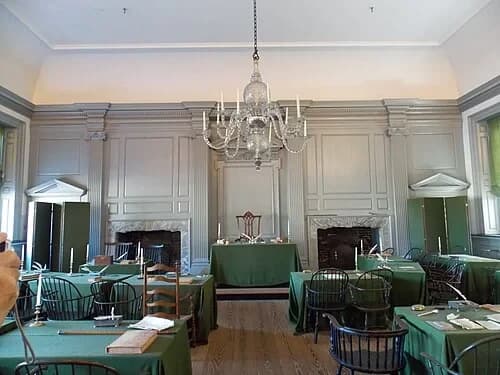
The Speaker's Station
At the front of the Assembly Room sits the presiding officer's desk, the seat of authority for some of the most famous moments in American history. During the Second Continental Congress, John Hancock sat here as the President of the Congress. It was from this station that he oversaw the debates regarding independence and became the first to sign the Declaration of Independence, famously writing his name in a large, bold hand so that, as legend says, King George could read it without his spectacles. The desk served as a physical anchor for the 56 delegates who eventually moved forward to sign the document in this very space. This was not a single event, but a dangerous act of treason against the British Crown that took place over several months. Each man who stepped up to this desk was essentially signing his own potential death warrant. The station remained a focal point during the 1787 Constitutional Convention when George Washington occupied the chair to preside over the creation of the Constitution. Its simple, functional design belies the immense historical weight of the signatures that were authorized from this very spot.
Founding Artifacts: The Rising Sun and Inkstand
Focusing on the specific objects identified in the story essentials: Washington's chair and the inkstand used by the 56 delegates.
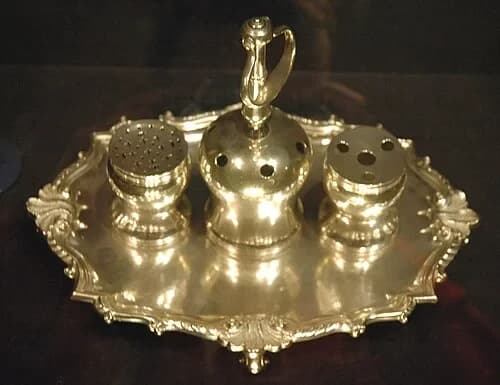
The Syng Inkstand
The Syng Inkstand is an extraordinary artifact that was present at the creation of the United States. Crafted in 1752 by Philip Syng Jr., a local silversmith and a friend of Benjamin Franklin, this silver inkstand was commissioned for the Pennsylvania Assembly. It eventually became the actual vessel used by the delegates to sign both the Declaration of Independence in 1776 and the United States Constitution in 1787. It is one of the few original items from the Assembly Room that survived the centuries. The inkstand is composed of three distinct functional components on a scalloped tray. There is the ink pot, which held the liquid ink; a lead-lined shaker for sand, which was sprinkled over wet ink to help it dry quickly without smudging; and a small bell used to summon messengers or attendants. While it may look like a simple desk accessory today, this object was the medium through which the ideas of the Revolution were permanently recorded. The pens dipped into this inkstand transformed abstract debates about liberty and governance into the legal foundations of a new nation.
Tower Stair Hall: The Liberty Bell's Home
Moving to the base of the tower. This area once housed the Liberty Bell and served as the grand connector between floors.
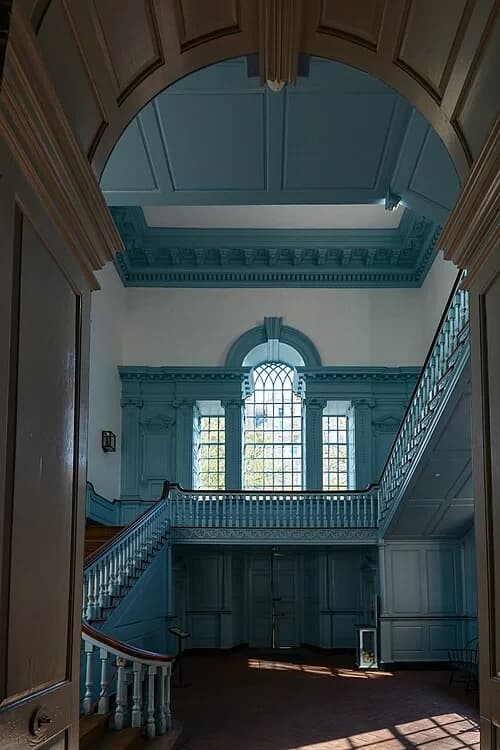
The Tower Stair Hall
The Tower Stair Hall is a grand transition space that connects the public areas of the ground floor with the administrative rooms above. The architectural highlight of this space is the massive Palladian window, which floods the entire hall with natural light. This style of window, characterized by a large arched central section flanked by two smaller rectangular ones, was a hallmark of high Georgian design and served as a status symbol in the 18th century. Beyond its beauty, this hall served a practical purpose in the growth of the colonial government. By providing a wide, formal staircase, the architects allowed for the vertical expansion of the building�s functions. While the ground floor housed the legislative and judicial branches, the second floor was home to executive chambers and public galleries. This physical separation of spaces reflected the early colonial understanding of the different roles of government. The hall is not just a thoroughfare; it is a designed experience, meant to impress those who moved through the building with the scale and dignity of the provincial administration. The white-painted woodwork and the rhythmic spacing of the stairs create a sense of orderly progression as you move between the levels.
The Grand Staircase
Ascending to the second floor. Highlights the walnut handrail used by Benjamin Franklin and the ornate architectural brackets.
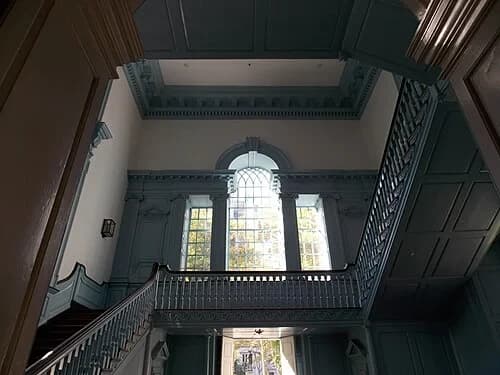
The Grand Staircase
The experience of ascending the Grand Staircase is one of the most direct physical connections you can have with the past at Independence Hall. The walnut handrails you see and touch are original to the building. Imagine the hands of figures like Benjamin Franklin, Thomas Jefferson, and Alexander Hamilton gripping these same rails as they hurried between sessions or met with colleagues in the hallways above. The dark wood of the railing provides a warm contrast to the light blue and white color palette of the walls, a decorative scheme that was highly popular and considered fashionable in the mid-1700s. The staircase is designed with wide, shallow steps, allowing for a dignified and comfortable ascent. The intricate woodwork of the balusters and the paneled walls on the side of the stairs demonstrate the high level of craftsmanship expected in a state building of this importance. As you climb, you can appreciate the architectural continuity between the levels. This staircase was more than just a functional necessity; it was a stage where the leaders of a new nation encountered one another, debated ideas in passing, and navigated the high-stakes politics of the American Revolution.
The Long Gallery
The expansive second-floor corridor used for public gatherings and receptions during the colonial and early national periods.
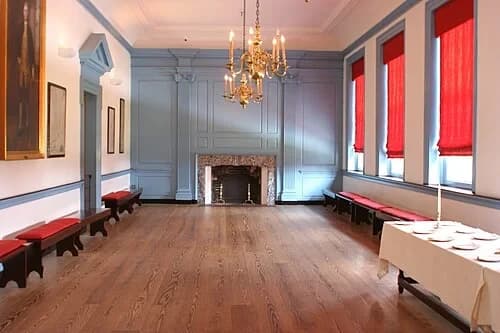
The Long Gallery
Occupying a significant portion of the second floor is the Long Gallery, a room that stretches an impressive 100 feet from end to end. When Independence Hall was first built, this was the largest public room in all the American colonies. It was designed to be a multi-purpose space, hosting official banquets, public receptions, and even serving as a storage area for arms and ammunition during times of crisis. Later, in the early 19th century, it became the home of Charles Willson Peale�s museum, one of the first museums in the United States. The room is characterized by its expansive wooden floor and a series of large windows that overlook the grounds. The vibrant red window treatments you see today are based on historical research into the styles used during the 18th century. The scale of the room was intended to impress visitors and provide a grand setting for the social and political life of the Pennsylvania elite. Standing at one end and looking down its length, you can feel the ambition behind the building's design. It was a space intended to host the collective life of the community, ranging from the celebration of royal birthdays in the colonial era to the heated public meetings of the revolutionary years.
The Strickland Steeple
Focusing on the iconic exterior silhouette. The steeple is an 1828 addition that defined the building's visual legacy.
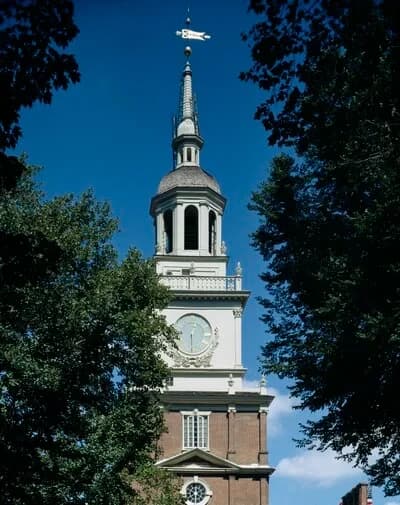
The Strickland Steeple
Gazing up at the sky, you see the most recognizable feature of the building�s profile: the white steeple. While it looks perfectly integrated with the brick structure below, this particular spire was not part of the original 1753 construction. By the early 19th century, the original wooden tower had suffered significantly from rot and was eventually removed for safety, leaving the building without its characteristic crown for several years. In 1828, the city commissioned architect William Strickland to design a replacement that would restore the building's historic dignity. Strickland�s design was a triumph of the Greek Revival influence on American architecture, blending classical proportions with the existing Georgian base. The precision of the construction is remarkable; from the base to the very tip of the weather vane, the spire reaches a height of exactly 168 feet and 7.25 inches above the ground. This steeple has become an enduring symbol of Philadelphia and the nation itself. It represents an important period of early preservation, where 19th-century Americans recognized the immense historical value of this site and chose to honor its past with a grand architectural statement. As you look at the tiers of the white structure ascending toward the spire, imagine the engineering challenges of the 1820s in raising such a massive feature to these heights.
The South Facade and Independence Square
Concluding the tour at the rear of the building. This is the classic view famously depicted on the US $100 bill.
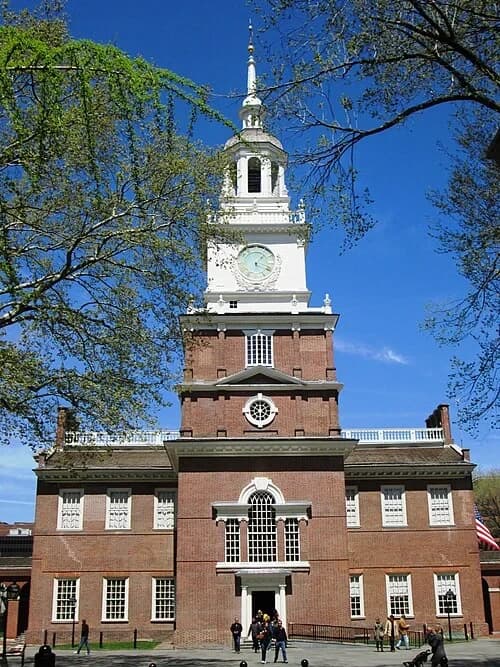
Independence Hall South Facade
Our journey concludes here at the south facade, overlooking the green expanse of Independence Square. This is the classic view of the building, instantly recognizable to millions as the image featured on the back of the United States hundred-dollar bill. From this vantage point, the symmetry and balance of the Georgian architecture are most apparent, with the central tower acting as an anchor for the two flanking wings. Beyond its architectural beauty, this site is recognized as a UNESCO World Heritage site�a designation reserved for places of 'outstanding universal value.' It holds this status not just because of the physical structure, but because of the revolutionary ideas that were debated and codified within these walls. The concepts of individual liberty, self-governance, and representative democracy that were forged here did more than just create a new nation; they sparked a global shift in political thought that continues to influence the world today. Standing here, you are looking at the literal birthplace of a movement that challenged the established order of kings and empires. Whether you are a local resident or a visitor from across the globe, the legacy of Independence Hall belongs to everyone who values the pursuit of freedom. As you depart, take a moment to reflect on how the words written inside�nearly 250 years ago�still resonate in our modern world.
Want to hear the rest?
Download the Stanza app to unlock all 19 stops and full GPS-guided navigation.
Frequently Asked Questions
How long does the Independence Hall audio tour take?
The Independence Hall audio guide includes 19 narrated stops. Most visitors spend 45 minutes to 1.5 hours exploring the complete tour, though you can listen at your own pace and skip or revisit any stop.
Is the Independence Hall audio guide available in my language?
Stanza supports 15 languages: English, Spanish, French, German, Italian, Portuguese, Russian, Japanese, Chinese, Korean, Arabic, Hindi, Polish, Dutch, Hebrew. Check the guide in the app to confirm the languages currently available for this tour.
Can I use the audio guide offline at Independence Hall?
Yes! Download the complete Independence Hall tour — including all audio, maps, and images — before your visit. The Stanza app works completely offline, so you don't need WiFi or mobile data at the venue.
How much does the Independence Hall audio guide cost?
The Stanza app is free to download. The current listed price for the Independence Hall audio guide is $2.99; app-store region and currency may affect the final price.
How do I use the Stanza audio guide at Independence Hall?
Download the free Stanza app, search for "Independence Hall", and download the tour. When you arrive at the venue, the app uses GPS to detect your location and automatically plays the relevant narration as you move between points of interest — completely hands-free.
What makes the Stanza audio guide different from other Independence Hall tours?
Stanza offers GPS-triggered narration that plays automatically as you walk through Independence Hall — no need to manually select stops. The tour is available in 15 languages, works fully offline, and includes 19 expertly narrated stops with images and historical context.
What other audio guides are available near Independence Hall?
Stanza offers multiple audio guides in Philadelphia, United States and nearby areas. After downloading the app, browse the map to discover all available tours near Independence Hall. Each guide can be downloaded for offline use.