Languages
15Statue of Liberty Audio Guide
Statue of Liberty is a landmark in an iconic location, United States. Explore it with Stanza's GPS-triggered offline audio guide — available in 15 languages.
Quick Facts
21
Stops
15
Languages
100%
Offline
About Statue of Liberty
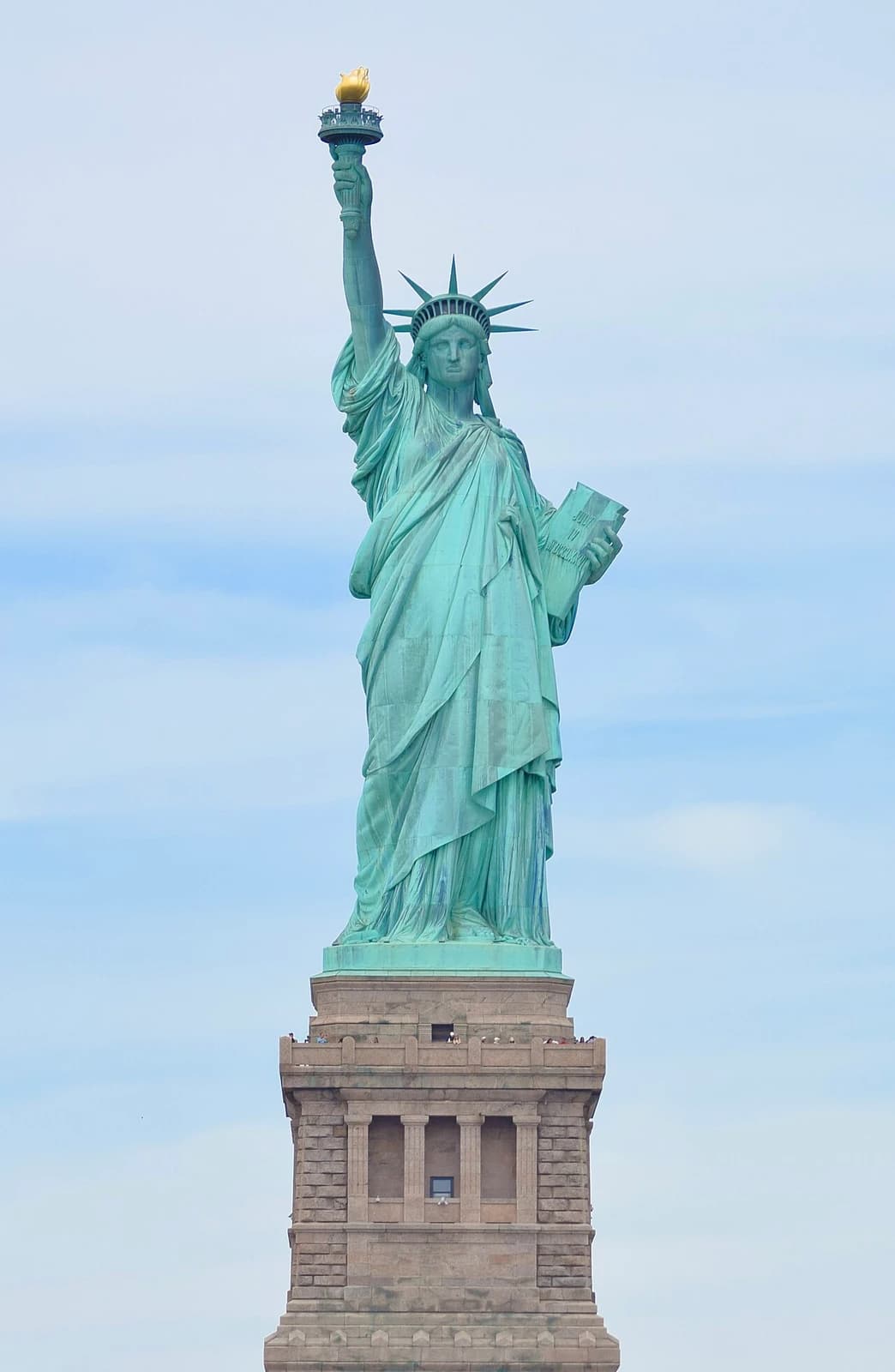
The Statue of Liberty is a colossal neoclassical sculpture on Liberty Island in New York Harbor, a gift from France to the United States.
Statue of Liberty is also known as Liberty Enlightening the World, La Liberté éclairant le monde, The Statue of Liberty Enlightening the World, La Liberte eclairant la monde.
This self-guided audio tour features 21 narrated stops organized across 7 sections. As a statue, Statue of Liberty offers a unique cultural experience, United States.
The Stanza audio guide is available in 15 languages and works entirely offline — download the complete tour including audio narration, maps, and images before your visit. As you walk through Statue of Liberty, GPS-triggered narration plays automatically at each point of interest.
Last updated:
What you will hear
Arrival at Liberty Island
Establishes the setting and provides the first grand view of the monument upon docking. Includes the POI image for the island.
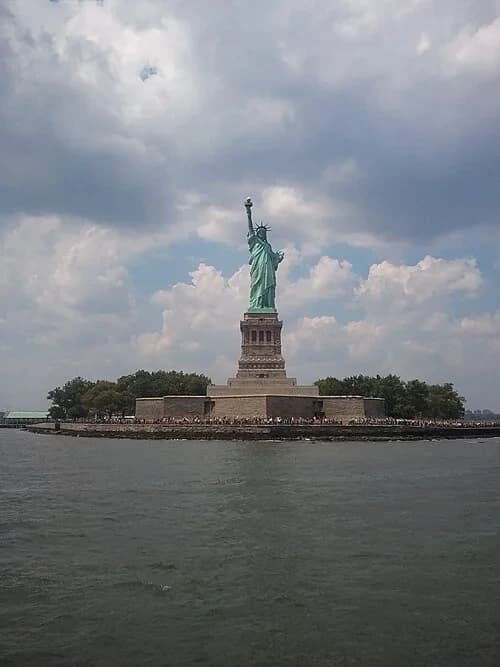
The Statue from the Water
Approaching by water, the figure of 'Liberty Enlightening the World' dominates the horizon, just as it has for generations of visitors and immigrants. The project was the brainchild of Édouard de Laboulaye, a French political thinker and abolitionist. Laboulaye�s vision for the monument was deeply rooted in the end of the American Civil War. He wished to celebrate two monumental achievements: the final abolition of slavery in the United States and the survival of the union between the two great republics. From this vantage point, you can appreciate how the statue was designed to interact with the landscape. It is not merely a statue on an island; it is a beacon positioned at the gateway to a continent. The grand arrival in the harbor sets a tone of anticipation and awe. Laboulaye hoped that by honoring American liberty, he would also inspire the people of France to pursue their own democratic ideals. The figure's forward-facing posture and raised torch were carefully planned to be visible from miles away, signaling a message of enlightenment and progress to all who entered these waters. As the ferry brings you closer, notice how the green patina of the copper contrasts with the blue of the water and the gray of the sky, creating a visual landmark that defines the entrance to New York City.
The Statue of Liberty Museum
Focuses on the modern museum which houses the original 1886 torch and full-scale replicas of the statue's features. Covers the 'Original Torch' Must-See.
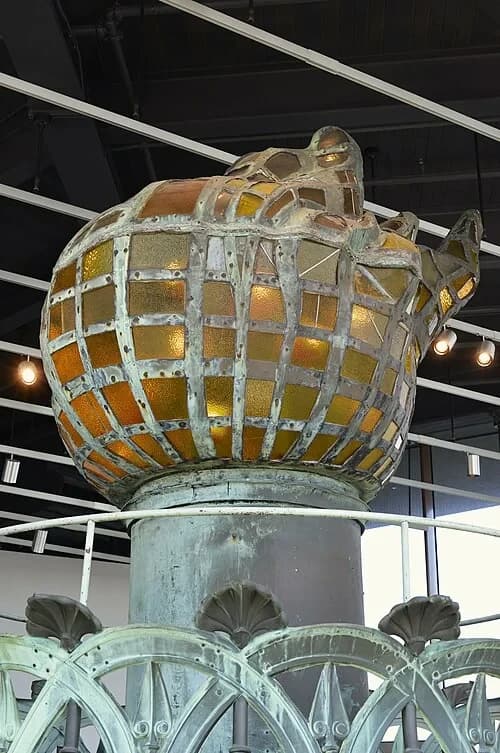
The Original 1886 Torch
Before you is a significant piece of history: the original torch that was held aloft from 1886 until its replacement in 1984. Looking closely at the design, you can see how it differs from the one currently on the statue. The original featured amber glass panes meant to be lit from within, though the lighting was never as bright as the sculptor, Frédéric Auguste Bartholdi, had originally intended. This artifact also bears the scars of a dramatic and dangerous event. In 1916, during World War I, German saboteurs targeted the nearby Black Tom railroad yard in New Jersey. The resulting explosion was one of the largest non-nuclear blasts in history. The shockwave was so powerful it blew out windows in Manhattan and sent shrapnel flying toward Liberty Island. The statue's arm and torch were severely damaged in the blast. For safety reasons, the interior of the torch was permanently closed to the public following the incident, a restriction that remains in place to this day. By the early 1980s, the torch had suffered significant corrosion from leaks around the glass panes. When the statue was restored for its centennial, this original piece was removed and moved here to the museum, allowing visitors to appreciate its details up close, while a new, gold-leafed version took its place high above the harbor.
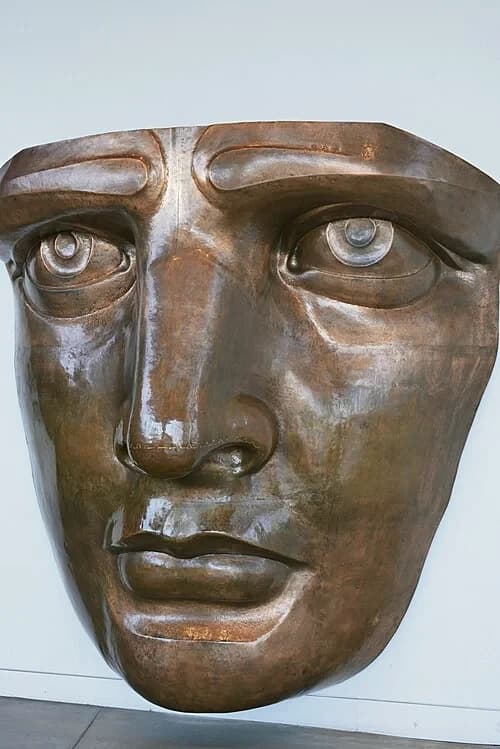
Replica of the Face
This full-scale replica of the statue's face allows you to appreciate the 'repoussé' technique used in its creation. Because the monument is so large, it could not be cast in one piece like a traditional bronze statue. Instead, workers in France used thin sheets of copper and hammered them into large wooden molds. This meticulous process allowed them to achieve the necessary detail and curves for the figure�s features while keeping the overall structure light enough to transport across the Atlantic. The scale is truly humbling when seen at eye level. Imagine the effort required to align thousands of these hand-hammered panels across a figure over 150 feet tall. In total, the statue contains approximately 60,000 pounds of copper. By using this technique, the artists were able to create a skin that was strong yet flexible. This flexibility was crucial for a structure destined to stand in a windy harbor. The replica also highlights the Classical style of the face, modeled after Roman goddesses to represent the universal concept of liberty rather than any specific individual. You can clearly see the subtle indentations and hammer marks that would be invisible from the ground, offering a rare glimpse into the 19th-century industrial artistry that brought the 'Mother of Exiles' to life.
The Pedestal Entrance
Transitions the visitor from the exterior grounds into the massive stone pedestal designed by Richard Morris Hunt.
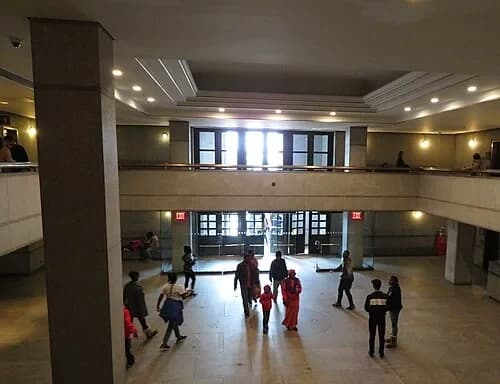
The Pedestal Lobby
Entering the lobby of the pedestal, you are immediately struck by the sheer mass of the structure surrounding you. While the exterior is finished in elegant granite, the interior is a masterclass in 19th-century concrete engineering. In fact, when it was constructed, this pedestal was the largest single concrete pour in the entire world. It was designed to provide a solid, unshakable foundation for the statue, capable of anchoring the massive weight and resisting the pressure of high harbor winds. The lobby serves as the gateway for your physical journey upward. The thick walls and high ceilings create a somber, impressive atmosphere, preparing you for the transition from the solid stone base to the hollow metal interior of the statue itself. As you move through this space, you can imagine the hundreds of workers who labored here in the 1880s to realize a vision that many thought was impossible. The scale of the concrete and stone work here was necessary to elevate the figure of Liberty high enough to be seen from the distant Atlantic. This space marks the boundary between the world of the pedestal and the world of the statue. It is the beginning of the climb that will take you into the very mind and crown of one of the world's greatest monuments.
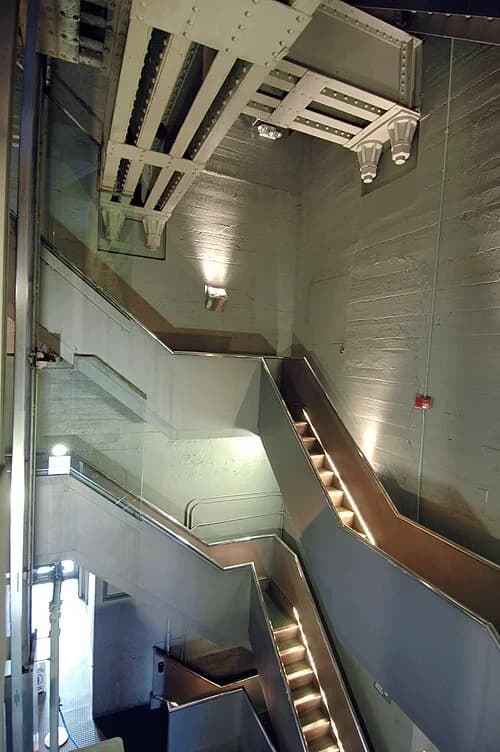
The Pedestal Stairwell
Looking up into the vertical void of the pedestal, you can see the beginning of the climb that has challenged millions of visitors. To reach the very top of the crown, one must eventually tackle a total of 354 steps. This stairwell is the main artery of the monument, moving visitors from the solid base into the hollow, intricate world of the copper figure. It�s a transition that builds anticipation for the engineering marvels you are about to encounter. As you ascend, the sounds of the lobby fade, and the rhythmic sound of footsteps on metal takes over. The staircase itself is a feat of design, winding its way through the massive concrete core. This climb offers a unique perspective on the monument's internal volume, which is often difficult to grasp from the outside. The journey upward is not just a physical challenge; it�s a way to experience the monument�s scale from the inside out. Each flight of stairs brings you closer to the skeletal framework designed by Gustave Eiffel, which we will examine soon. Take a moment to appreciate the verticality of the space and the sense of history that permeates every step. The climb is a shared experience for visitors from all over the world, all moving toward the same goal: the bird's-eye view from the crown windows.
The New Colossus Plaque
Highlights Emma Lazarus's poem, which redefined the statue's meaning. Covers the 'New Colossus Poem' Must-See.
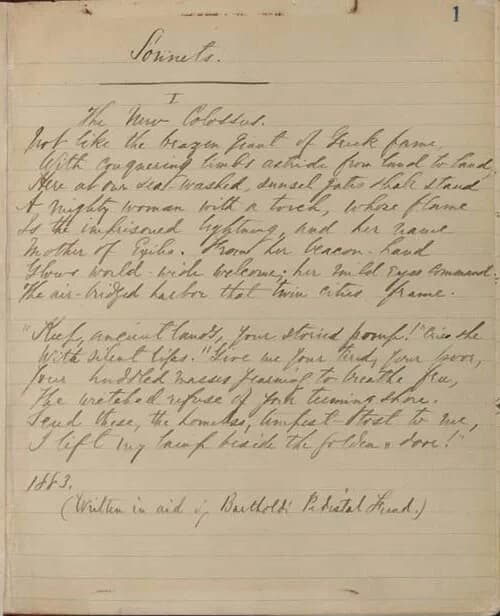
The New Colossus
This manuscript is the original sonnet 'The New Colossus,' handwritten by Emma Lazarus in 1883. At the time, she wrote the poem to help raise funds for the pedestal's construction, which was languishing due to a lack of money. Ironically, when the statue was dedicated in 1886, the poem was not mentioned and was largely forgotten by the general public. It took years for the power of her words to be fully recognized. It wasn't until 1903, long after Lazarus had passed away, that the poem was rediscovered and a bronze plaque was placed inside the pedestal to honor her contribution. The manuscript before you is a direct link to that moment of creation. It captures the initial spark of an idea that would eventually define how the world views this monument. Lazarus�s choice to contrast the 'brazen giant of Greek fame' with this new, welcoming figure was a radical reinterpretation of what a colossus could be. Instead of a symbol of conquest, she envisioned a symbol of refuge. This document is a testament to the power of literature to reshape the narrative of a physical landmark. As you look at the flowing script, consider how these 14 lines of verse successfully bridged the gap between a French political statement and the lived reality of millions of new Americans.
Eiffel's Engineering Marvel
Explores the internal framework designed by Gustave Eiffel. Covers the 'Eiffel's Iron Skeleton' Must-See and the 'Repouss? Technique' Enriching theme.
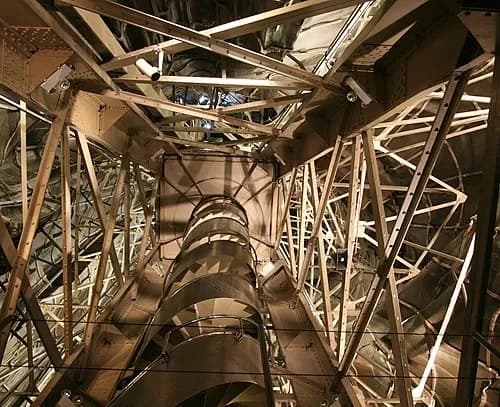
Eiffel's Iron Framework
Peering into the internal structure of the statue, you are looking at the work of Gustave Eiffel, the same engineer who would later build the famous tower in Paris. Long before his Parisian masterpiece, Eiffel designed this revolutionary internal pylon to support the Statue of Liberty. It acts as a flexible skeleton, a departure from the rigid internal supports common at the time. This central iron tower is connected to the copper skin by a series of smaller iron bars called 'armatures.' This design was essential because of the statue's exposed location in the harbor. High winds and temperature changes cause the copper skin to expand, contract, and shift. Eiffel�s flexible framework allows the statue to sway up to 3 inches in high winds, and the torch can move up to 5 inches, all without the thin copper skin cracking or buckling. This was a pioneering example of 'curtain wall' construction, where the exterior skin is not load-bearing but is instead hung from an internal frame. It is this hidden engineering that has kept Liberty standing for over 135 years against the elements. As you look at the complex web of beams and girders, you are seeing the precursor to the modern skyscraper. Eiffel�s genius was in creating a structure that could breathe and move with the environment, ensuring its survival for centuries to come.
The Crown Experience
The climax of the interior visit, involving the narrow 354-step climb to the crown windows.
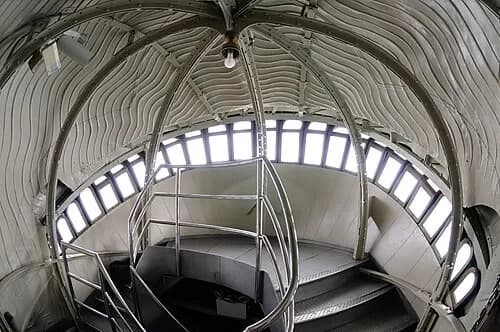
Inside the Crown
Reaching the interior of the crown is like stepping into the mind of the monument. This small, curved space is the highest point accessible to the public. Around you are 25 windows that offer a unique, bird's-eye perspective of the harbor below. Above your head, you can see the structural beginnings of the seven rays that adorn the exterior of the crown. These rays are deeply symbolic, representing the seven seas and the seven continents of the world. This was the artist's way of showing that the message of liberty is universal, extending to every corner of the globe. The atmosphere here is often quiet and contemplative, a stark contrast to the busy island below. You are standing inside a global icon, looking out through its very "eyes." The curved walls and exposed framework remind you that you are housed within a colossal work of art. It�s a moment to appreciate the vision of the creators who wanted to provide this literal and figurative high point for visitors, allowing them to see the world from the perspective of Liberty herself. From this vantage point, the magnitude of the project and the ideals it represents feel incredibly close.
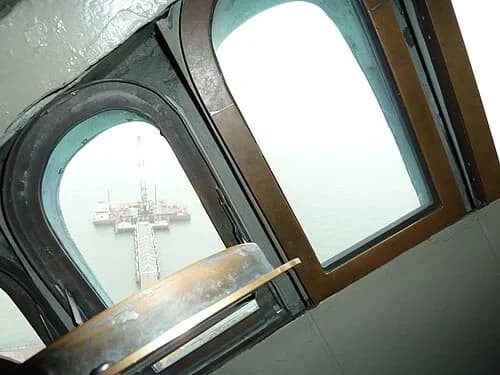
View through the Crown Windows
Looking out from the windows of the crown, the view is framed in a way you won't experience anywhere else. These small, arched openings provide a restricted but powerful perspective on New York Harbor. From this height�nearly 250 feet above the ground�the ships in the water look like toys and the people on the pedestal below are mere dots. Because the windows are set into the "forehead" of the statue, you get a profound sense of being inside the monument's mind. You aren't just looking at a view; you are sharing a vantage point with one of the most famous figures in history. The glass separates you from the wind of the harbor, creating a hushed, gallery-like feeling. It�s a place to pause and reflect on the journey you've taken from the base to this peak. Every window offers a slightly different angle of the surrounding waters and the distant horizon, emphasizing the statue�s role as a watchful guardian. This is the ultimate destination of the climb, a reward for the long ascent, and a chance to see the surrounding world through the lens of this historic symbol. The perspective here connects the industrial past of the harbor with the modern skyline of the city.
The Creators' Legacy
A final look at the men who built the monument and its enduring symbolism of freedom. Mention of the 'Broken Shackles' and 'Ratner Statues'.
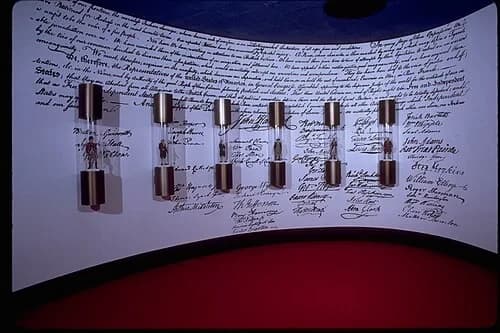
Exhibition of the Creators
As our journey concludes, we honor the five men who made this monument possible. There was Édouard de Laboulaye, who first conceived the idea as a gift of friendship. Frédéric Auguste Bartholdi, the sculptor, gave Liberty her iconic form. Gustave Eiffel designed the ingenious internal skeleton that keeps her standing, while Richard Morris Hunt designed the massive pedestal on which she rests. Finally, Joseph Pulitzer used the power of the press to ensure the American people could fund the final stages of the project. Together, their diverse talents in politics, art, engineering, architecture, and journalism converged to create a world-renowned landmark. But the story isn't just about the men; it's about the message. While often hard to see from the ground, at the statue's feet lie broken shackles and chains. These represent the final piece of the narrative: a celebration of the abolition of slavery and the triumph of freedom over oppression. It is a reminder that liberty is a hard-won prize, requiring the cooperation of many and the constant vigilance of all. As you leave, carry with you the story of these creators and the enduring promise of the monument they built, a testament to what is possible when nations and individuals work together.
Want to hear the rest?
Download the Stanza app to unlock all 21 stops and full GPS-guided navigation.
Frequently Asked Questions
How long does the Statue of Liberty audio tour take?
The Statue of Liberty audio guide includes 21 narrated stops. Most visitors spend 45 minutes to 1.5 hours exploring the complete tour, though you can listen at your own pace and skip or revisit any stop.
Is the Statue of Liberty audio guide available in my language?
Stanza supports 15 languages: English, Spanish, French, German, Italian, Portuguese, Russian, Japanese, Chinese, Korean, Arabic, Hindi, Polish, Dutch, Hebrew. Check the guide in the app to confirm the languages currently available for this tour.
Can I use the audio guide offline at Statue of Liberty?
Yes! Download the complete Statue of Liberty tour — including all audio, maps, and images — before your visit. The Stanza app works completely offline, so you don't need WiFi or mobile data at the venue.
How much does the Statue of Liberty audio guide cost?
The Stanza app is free to download. The current listed price for the Statue of Liberty audio guide is $2.99; app-store region and currency may affect the final price.
How do I use the Stanza audio guide at Statue of Liberty?
Download the free Stanza app, search for "Statue of Liberty", and download the tour. When you arrive at the venue, the app uses GPS to detect your location and automatically plays the relevant narration as you move between points of interest — completely hands-free.
What makes the Stanza audio guide different from other Statue of Liberty tours?
Stanza offers GPS-triggered narration that plays automatically as you walk through Statue of Liberty — no need to manually select stops. The tour is available in 15 languages, works fully offline, and includes 21 expertly narrated stops with images and historical context.