Stanza · Audio guide
Matenadaran Audio Guide
A place to remember. A story to take with you.
The Matenadaran, officially the Mesrop Mashtots Institute of Ancient Manuscripts, is the largest center for the storage, study and popularization of Armenian manuscripts, combining the functions of a museum…
Download Stanza, then search for “Matenadaran”.
About the tour
One guide. Your kind of visit.
The Matenadaran, officially the Mesrop Mashtots Institute of Ancient Manuscripts, is the largest center for the storage, study and popularization of Armenian manuscripts, combining the functions of a museum, archive and scientific institution. It holds the most extensive collection of Armenian manuscripts in existence.
The Matenadaran guide tells the stories of 20 artworks, including Echmiadzin Gospels (Bgheno-Noravank), Mat142vk (Unknown Artist), Vehapar Gospel (Medieval illuminator), Annunciation (Grigor Tsaghkogh) (Grigor Tsaghkogh), Mesrop Mashtots statue (Ghukas Chubaryan), Mugni Gospels (Unknown Artist), Definition of Philosophy (David Anhaght), and Miniature. Vaspurakan. 1391 (Tserun). Every artwork is free to hear in the Stanza app until 1 January.
Ready when you are.
- 01Get the free Stanza app.
iOS & Android
- 02Find your guide.
“Matenadaran”
- 03Download before you go.
Works offline
Audio guide / 20 artworks
Inside the guide
Get to know a few of the stories before you go. Open a stop to read more.
01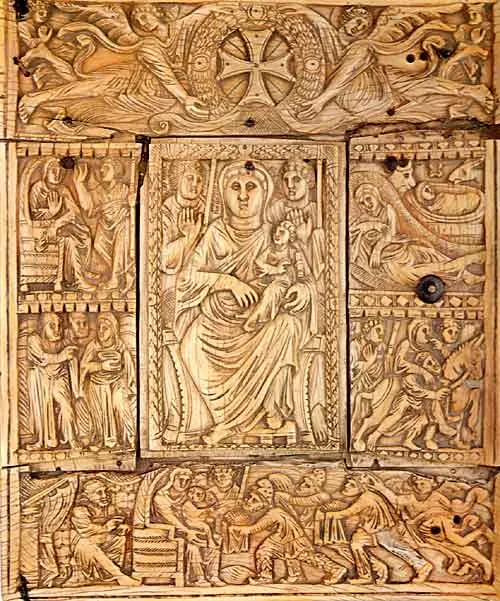
Echmiadzin Gospels
The book dates from 989, but two leaves at the back carry four paintings, one to a page, made centuries before. They are the oldest Armenian book paintings that survive. The covers are old as well. They are ivory, carved with scenes from the Gospels, and were probably made in Byzantium, hundreds of years before this book. One painting is the Adoration of the Magi. The Virgin appears in a style Eastern Christians favored in the sixth century. She holds a shield with Christ's picture on it, not the child himself. Another is the Annunciation to Zachariah, a rare scene in a Gospel book. Zachariah wears a rich tunic with bells, the robe of a high priest. Hovhanes was the scribe who copied it at the monastery of Bgheno Noravank for Bishop Stepanos. In a note at the end, he wrote down how the book was made and who helped.
Listen in the appPhoto: Eupator · Public domain
02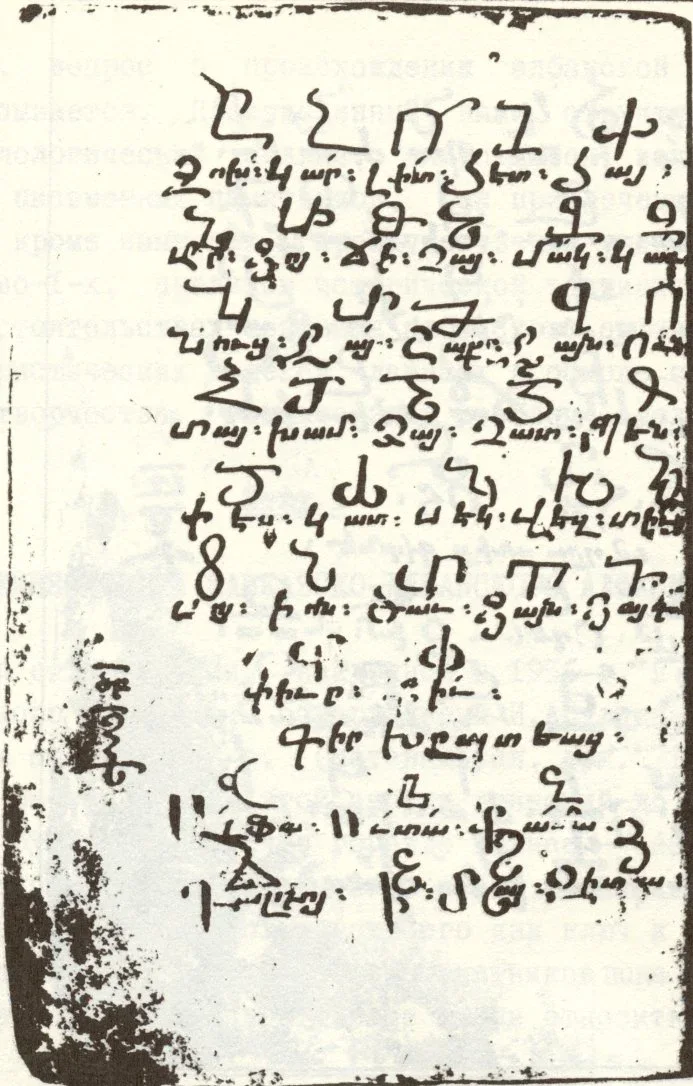
Mat142vk
The letters look Armenian, until you notice the extra marks added to them. Whoever wrote them had no Armenian letter for certain sounds, so he added marks to make the letters say something new. There are fifty two in all, forty two consonants and ten vowels. An Armenian line introduces the list and says these are the letters of the Caucasian Albanians. The list was written around 1442, at the monastery of Metsopavank, northwest of the city of Arjesh. It was copied from a model that the catholicos Kirakos of Virap brought from Crimea, at the request of Thomas of Metsoph. Centuries later, in 1937, the Georgian Ilia Abuladze came across this alphabet while working through manuscripts from the fifteenth century. Another Georgian, Akaki Shanidze, studied this alphabet. He found that its sounds closely match those of the Udi language.
Listen in the appUnknown author · Public domain
03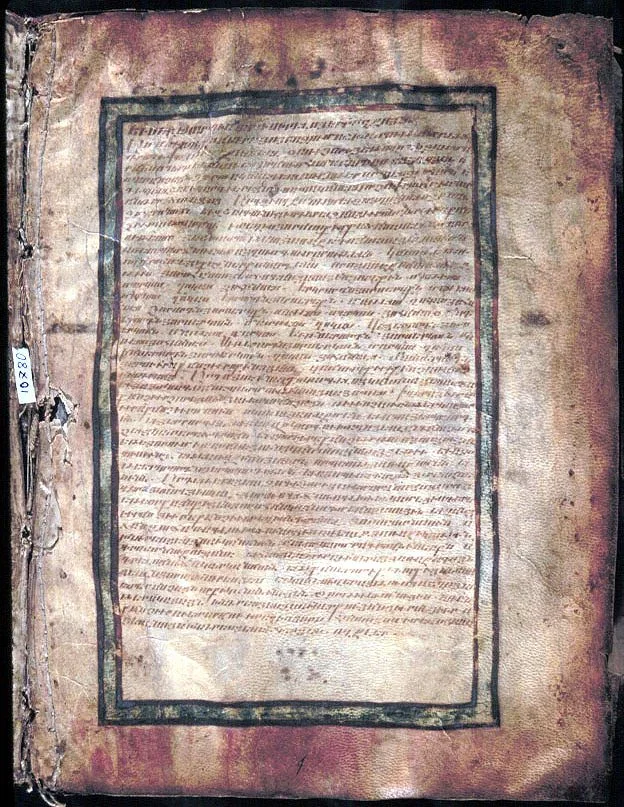
Vehapar Gospel
Words are written into the pictures of this book. Often the line someone speaks runs out of their mouth and ends at the other person's ear. What is written there is a quotation from the Gospels, with an explanation added. Greek writing is set into the Annunciation and the portraits of the evangelists. This comes from an old Near Eastern custom. The words add feeling to the scene and show how holy the written word was held. The pictures sit with their bases turned toward the inner margin. That points back to a model made as a scroll, from the world of Syria and Palestine. The book is so old in its ways that it does not gather its pictures around the great feasts of the church year. That way of arranging a Gospel took shape in Byzantium only in the ninth century. No record from the scribe or the painter has survived. After 1780 its trail disappears for about two centuries. It came back in 1978. Its owners showed it to Vazgen the First, the Catholicos of all Armenians. He bought it and gave it to the Matenadaran. None of his other gifts had been named for him, so this one was called the Vehapar Gospel, after his own title.
Listen in the appMedieval illuminator · Public domain
04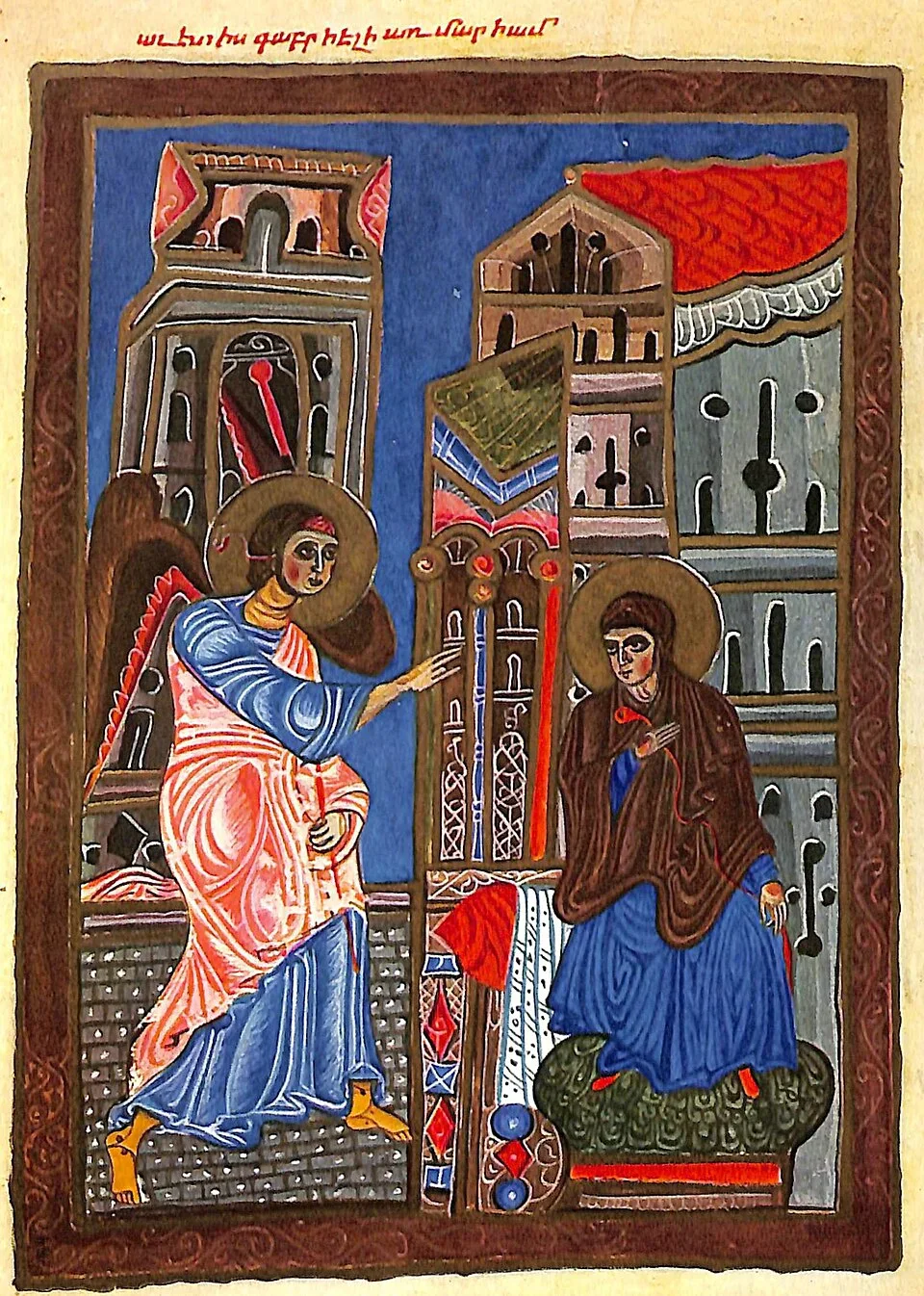
Annunciation (Grigor Tsaghkogh)
An angel comes with wonderful news. So why does the woman in front of him look troubled? He is on the left, tall and winged, with the body of a young man and the face of an old one. His right hand is held out, the sign of speech and blessing, and he carries a red staff in his left. He takes up so much of the picture that Mary, on the right, looks smaller beside him. She has leaned forward in her chair, head a little lowered, one hand at her heart giving away an inner trembling. A red thread runs down her body. She presses the spindle to her breast, while the hand resting on her knee holds the end of the thread. Against her dark cloak that red shows sharply. Nowhere else on her clothes is there a bright spot. His cloak, full of moving folds and little waves of white, is the opposite. Her dark dress makes her seem earthly. His pale one marks him as heavenly. She listens, but doubt sits in her face, as though she wonders whether this visitor has come to tempt her. Grigor Tsaghkogh painted this Gospel's pictures as a plea before Christ, and in his own note he asks God to have mercy on him.
Listen in the appGrigor Tsaghkogh · Public domain
05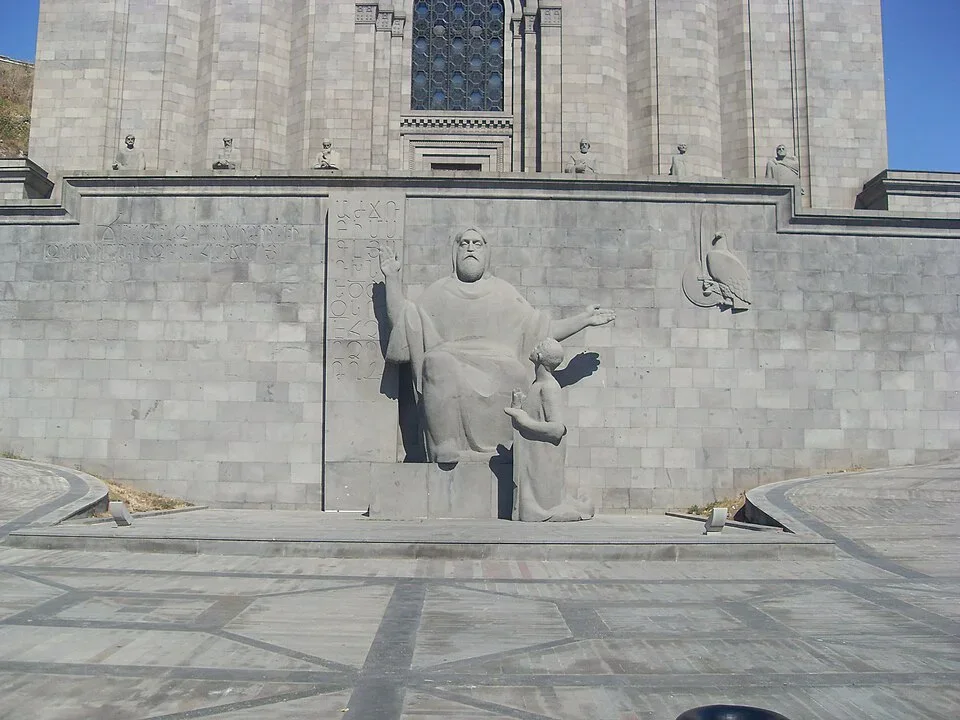
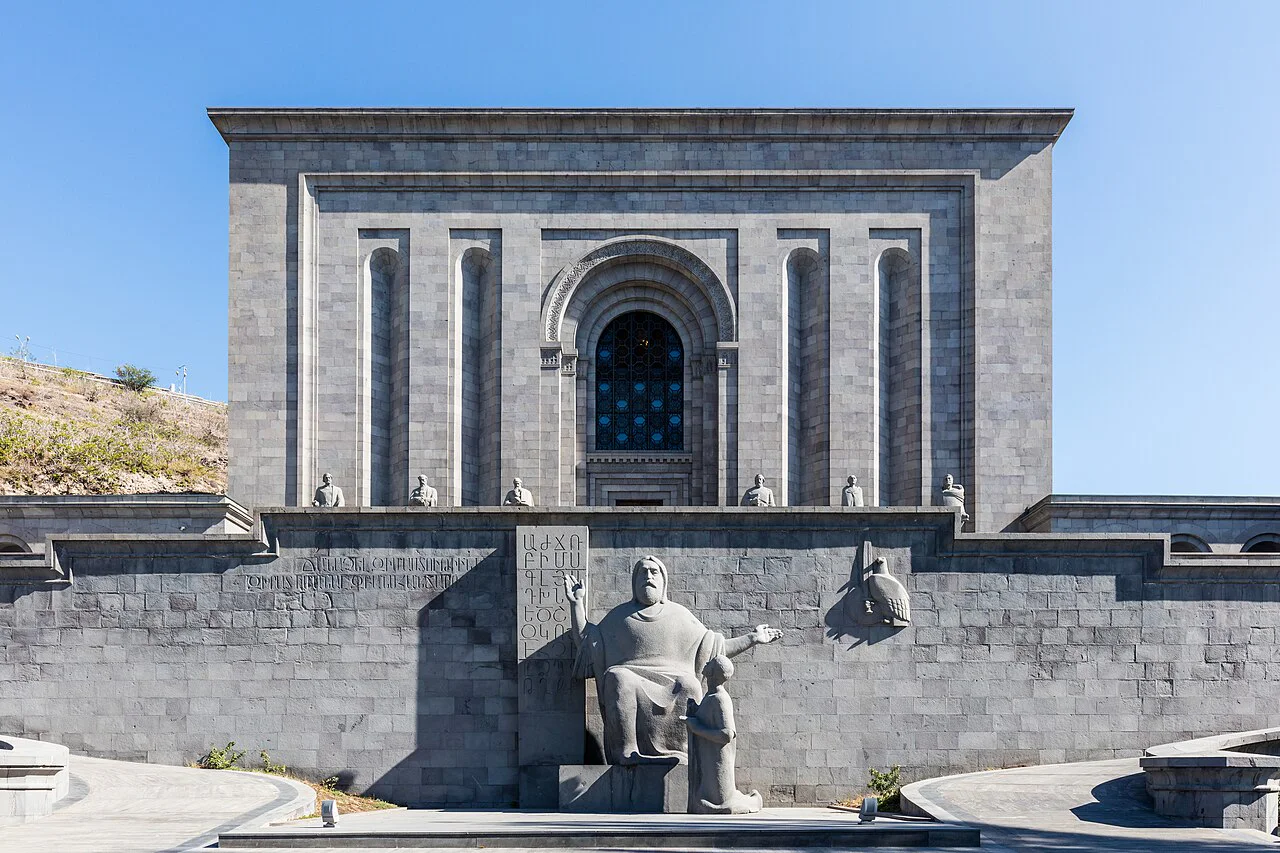
Mesrop Mashtots statue
Mesrop Mashtots wanted his people to be able to write their language down. So he made them an alphabet. The letters he made sit just behind his right hand. At his left foot, a student kneels. That is Koryun. He took the new letters and wrote the earliest original work in Armenian that we know of. It was the life of the very man standing over him. The sculptor Ghukas Chubaryan put Koryun there. The monument was unveiled in 1962, during the celebrations for the sixteen hundredth anniversary of Mashtots's birth. On the wall to the left of those letters is the first sentence ever written in the Armenian alphabet.
Listen in the appPhoto: 23artashes · CC BY-SA 3.0
06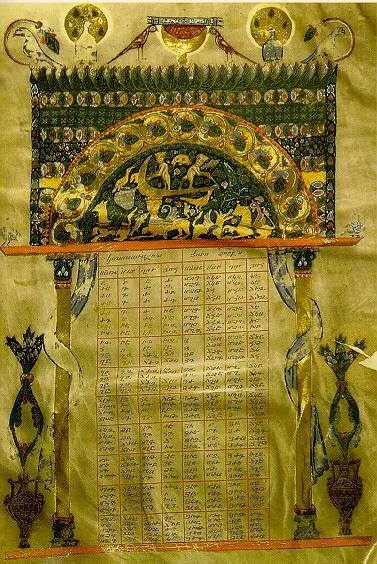
Mugni Gospels
The child has only just been born, and he is already lying on a table raised up in the middle of a cave. A hard shaft of light drops straight down onto him. There is no manger. His mother is close by, but she does not kneel over him or take him in her arms. She lies on a bed beside him and looks away. It is an unusually stern birth, almost without mercy. The figures are flat shapes of red against a solid blue ground. Dark folds in their clothes give them a little weight, and dark green fills the foreground. An ox and a donkey belong to the scene, though the Gospels never mention them. Their place here comes from a prophecy of Isaiah. Early Christians kept them in the scene to show that Jesus welcomes even the lowest of his creatures.
Listen in the appSource: https://www.ann.am/art/jpg/vv15.jpg · CC BY-SA 3.0
07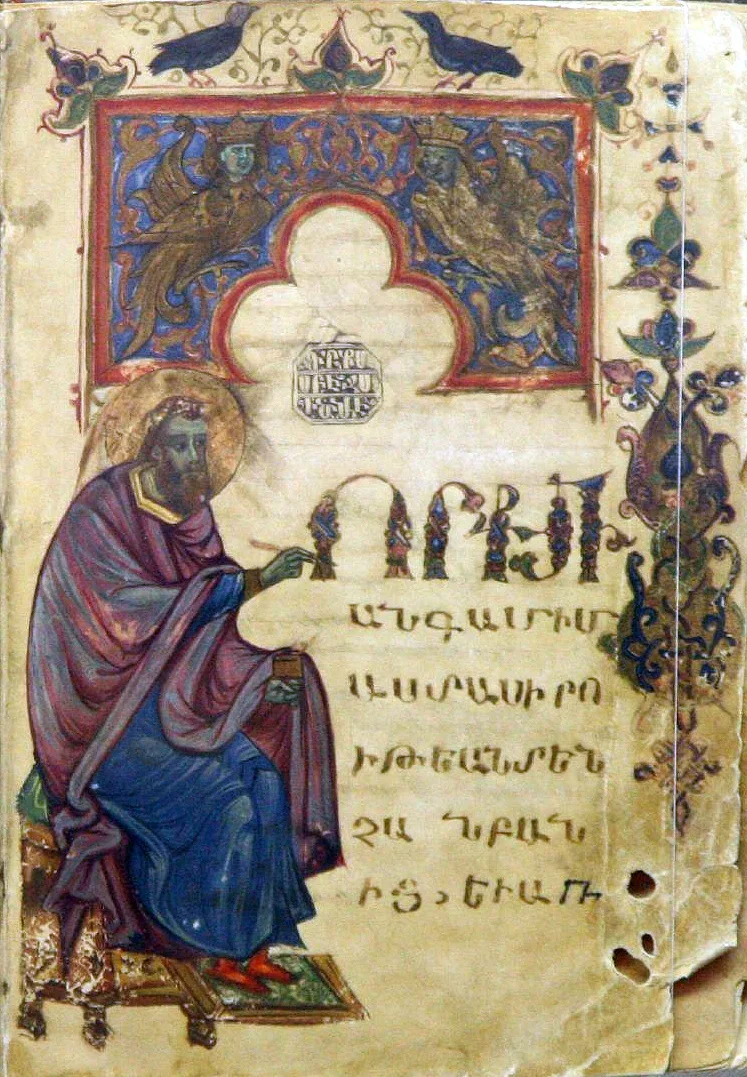
Definition of Philosophy
This book opens with the Definition of Philosophy by David, a philosopher of the sixth century. He came to be called the Invincible, but that name first belonged to a theologian also named David. The two men were confused, and in the Middle Ages the name passed to the philosopher. Inside there is a picture of David, with small decorated pictures in the margins. The book was copied by a scribe named Mkhitar, in the thirteenth century, probably in 1280. It gathers philosophy and grammar, and David's definition stands first among them. The man it was copied for was Paron Hovhannes.
Listen in the appAnonymousUnknown author · Public domain
08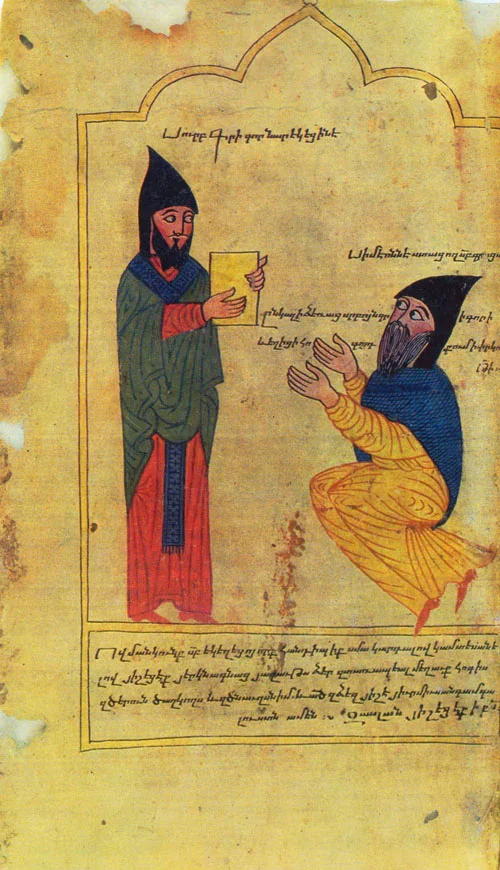
Miniature. Vaspurakan. 1391
This book was made in two pieces of time. A scribe named Aristakes wrote it in Van in 1359, and for more than thirty years it held no pictures. Then it came to a priest named Simeon, and he paid to have it illustrated in 1391. The painter was Tserun. He filled the opening pages with scenes from Christ's life. He painted a portrait of himself too, and portraits of Simeon, who paid for the work, and Simeon's son Astvatsatur. The pictures have not kept their first order. The series opens with the Destruction of Hell and the Dormition of the Mother of God, scenes that normally come last. Most likely a later repair took the book apart and put the pictures back in the wrong order.
Listen in the appTserun · Public domain
09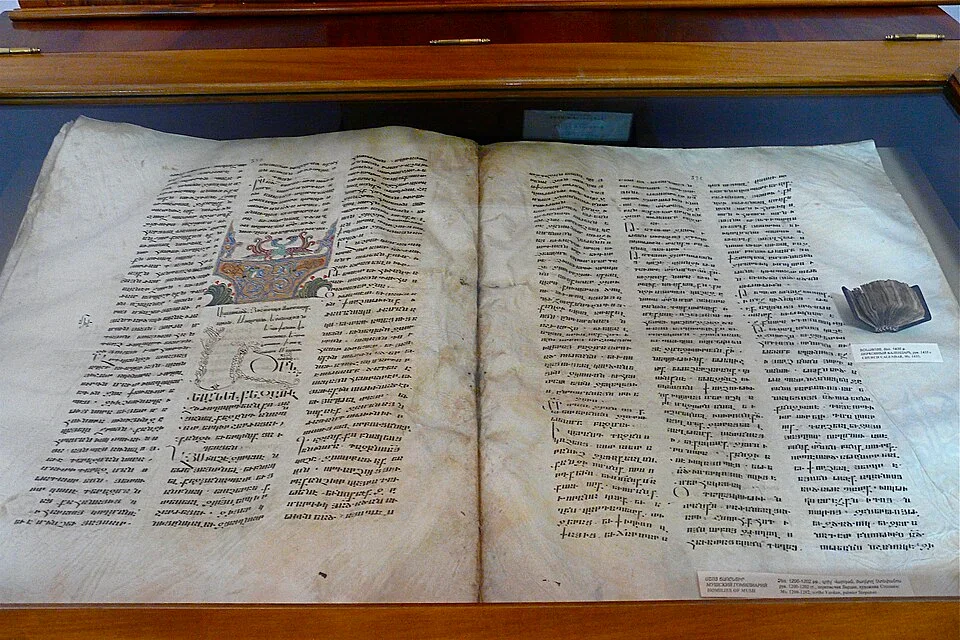
Homiliary of Mush
Two volumes lie here, and together they weigh twenty seven and a half kilograms. Their pages hold sermons, letters, rules and lists of Armenian saints. The book was whole when it was made. Astvatsatur, ruler of Baberd, ordered it near the end of the twelfth century. Vartan Karnetsi wrote it at the Avag monastery near Erzincan, and Stephanos illustrated it. It was almost finished in 1202, the year the Turks attacked and defeated Baberd. Astvatsatur died, his goods were plundered, and the Turkish judge in Hlat seized the book. In 1204 Christians of the Monastery of the Holy Apostles, southeast of Mush, bought it back. They kept it there for centuries, editing it and adding diary notes. During the Armenian genocide of 1915, two Armenian women took it from the abandoned monastery. They divided it because of its weight. One half those refugees carried on their backs, with great difficulty, to Tbilisi. A Russian officer, Nicholas de Goberti, found the other. In time both halves reached the archive at Etjmiadzin. Of the original six hundred and sixty pages, six hundred and one are here now. One is in Vienna, seventeen in Venice, and two came from Moscow's Lenin Library to Yerevan in 1977. Where the other missing pages are is not known.
Listen in the appRita Willaert · CC BY 2.0
10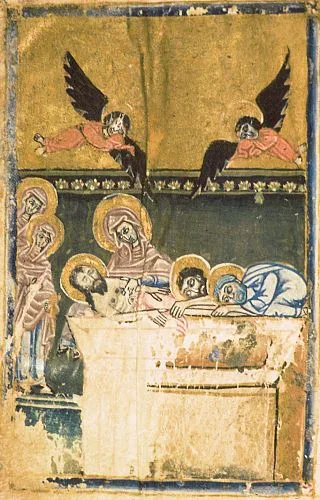
Matenadaran, MS 6792
Most of the leaves in this book are parchment. Some are paper. Those paper leaves are there because the book was once damaged and had to be repaired. That repair took place in 1406, at a monastery in Vaspurakan called Holy Nshan. The man who mended it was Grigor Khlatetsi. This monastery had a second name. People also called it the monastery of War. And that second name is where the book's name comes from. Grigor wrote the name down himself. In a note he added in 1411, he called it the holy Gospel of War. That was the first time anyone named the book that way. The book itself goes back to 1302. It was made at Noravank for Stepanos Orbelian, the metropolitan of Syunik. Hovhannes Orbelian copied the text, and Momik painted the pictures. This is a book of the Gospels. Nothing in it is about war. Later the book was kept at Metsoph. At the end of the seventeenth century it was stolen. A man named Sargis Abegha paid to get it back, and the Gospel of War returned to the monastery.
Listen in the appAra Güler · Public domain
- 11
Philosophical Collection, Maghakia the Scribe, 1371, 20
Ancient Armenian manuscripts · 1371
- 12
Mashtots
аноним · 1680
- 13
Homiliary (Simeon the Priest), 1278, 196
Ancient Armenian manuscripts · 1278
- 14
Collection, Bonaventure, 1700, 100
Ancient Armenian manuscripts · 1700
- 15
Religious Collection, Priest Grigoris, 1386, 78
Ancient Armenian manuscripts · 1386
- 16
Religious Collection, Fra Andreas, 1350, 11
Ancient Armenian manuscripts · 1350
- 17
Manuscript Kilikia 13th Century
Unknown Artist · 1286
- 18
Armenian map of Jerusalem, 1589
Unknown Artist · 1589
- 19
Gospel 1260
Unknown Artist · 1260–1270
- 20
Gospel of Shukhonts
Unknown Artist · 1669
Matenadaran
Frequently asked questions
How much does the guide cost?
Free app download. Free until 1 January. Listed guide price: $1.99. Audio guide only. Venue admission is separate.
Can I listen without internet?
Yes. Download the guide’s audio, images, and maps in the app before your visit. Your downloaded content is then available offline.
Can I listen in my language?
In English for now. More languages soon.
Do I need to follow a schedule?
No. This is a self-guided experience. Choose your stops, pause whenever you like, and return to a story at your own pace.
Which artworks are in the Matenadaran audio guide?
20 artworks, including Echmiadzin Gospels (Bgheno-Noravank), Mat142vk (Unknown Artist), Vehapar Gospel (Medieval illuminator), Annunciation (Grigor Tsaghkogh) (Grigor Tsaghkogh), Mesrop Mashtots statue (Ghukas Chubaryan), Mugni Gospels (Unknown Artist), Definition of Philosophy (David Anhaght), and Miniature. Vaspurakan. 1391 (Tserun). The full list is on this page.
Is this the museum’s official audio guide?
No. Stanza is an independent audio guide app and is not affiliated with Matenadaran. Museum admission is separate.
At your own pace
Explore Matenadaran.
Download Stanza, then search for “Matenadaran”.
Free app download · Guide price shown in the app
Keep exploring
Nearby audio guides
Yerevan · 2 km
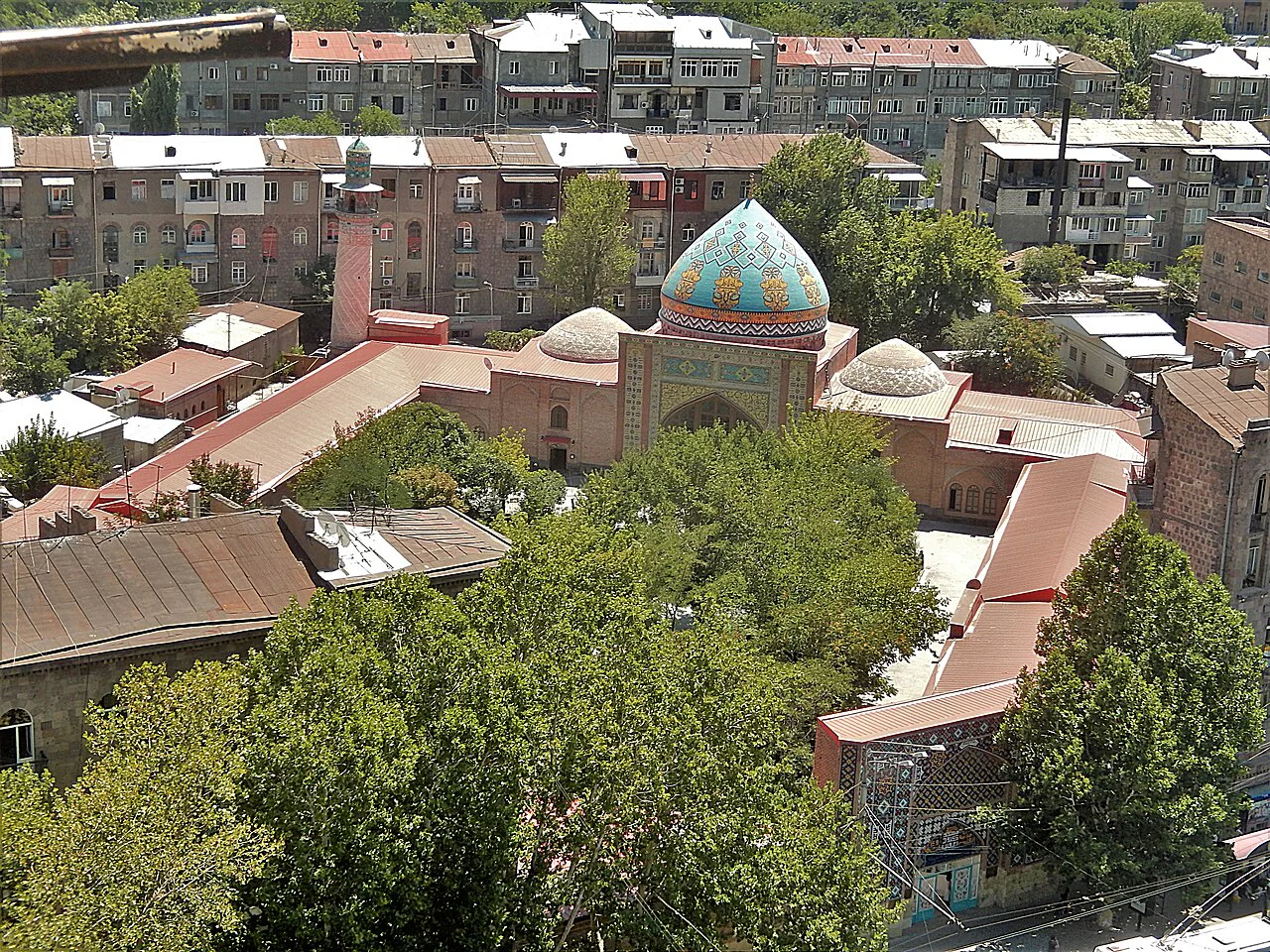
Blue Mosque, Yerevan
Content & sources
Armineaghayan · CC BY-SA 4.0
Yerevan · 6 km
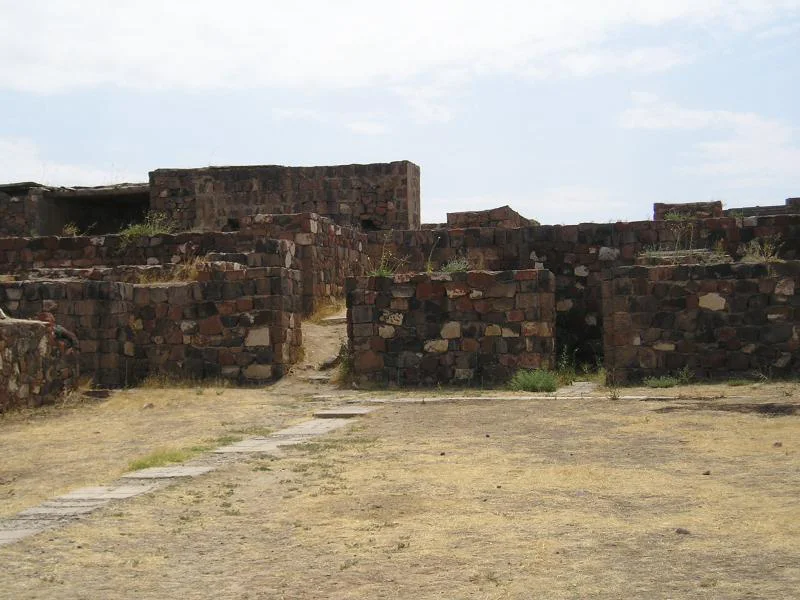
Erebuni Fortress
Content & sources
Photo: Numerius Negidius · Public domain
Vagharshapat · 16 km
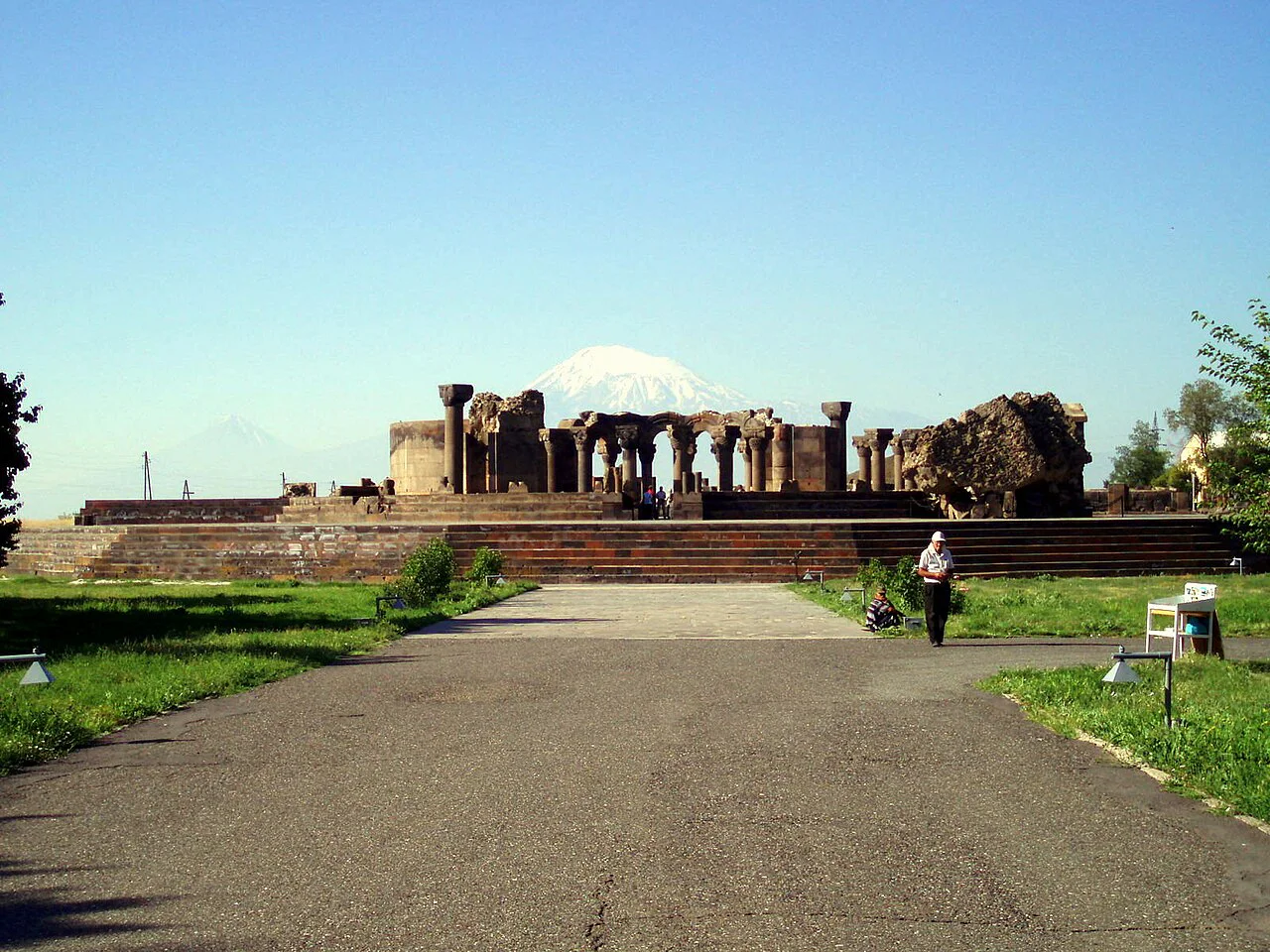
Zvartnots Cathedral
Content & sources
DAVID HOLT · CC BY-SA 2.0
Garni · 20 km
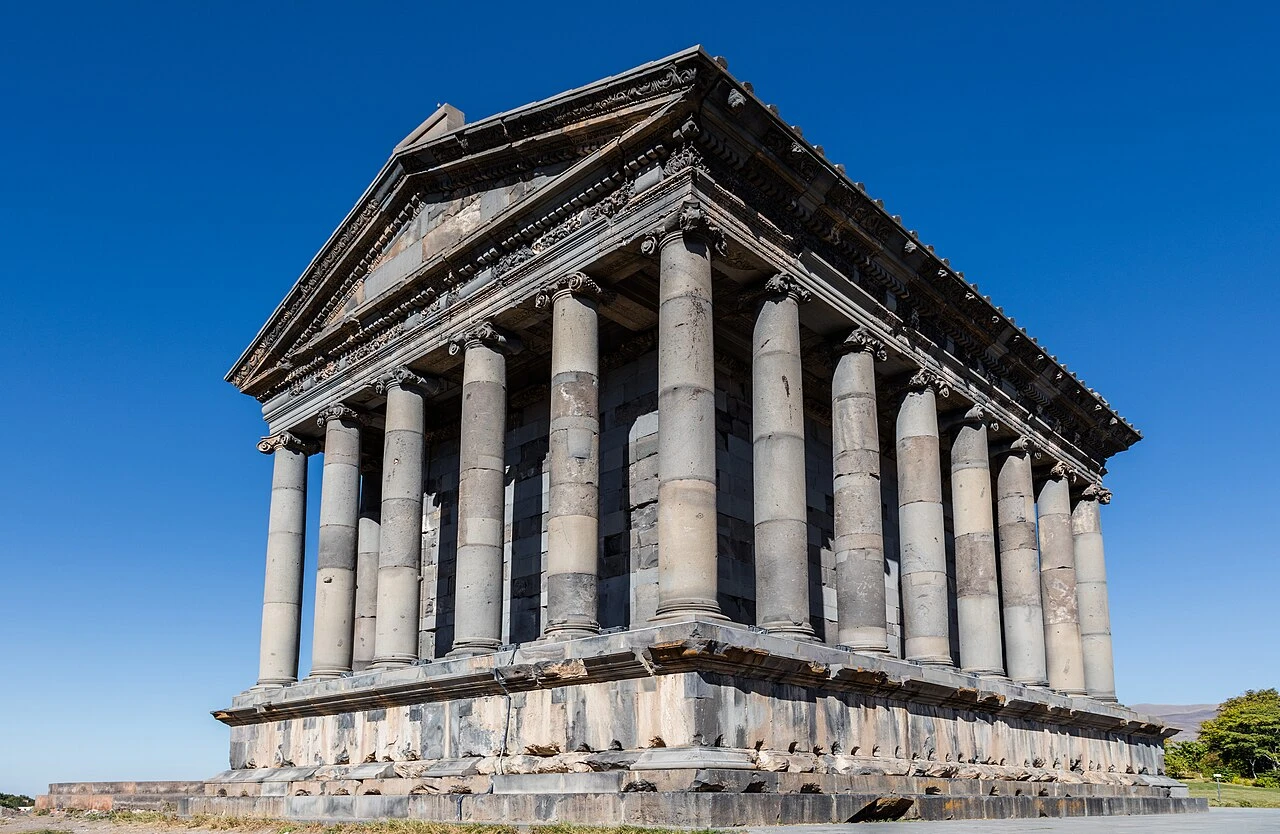
Garni Temple
Content & sources
Diego Delso · CC BY-SA 4.0
Art museums
More art museum audio guides
Jerusalem · 93 artworks
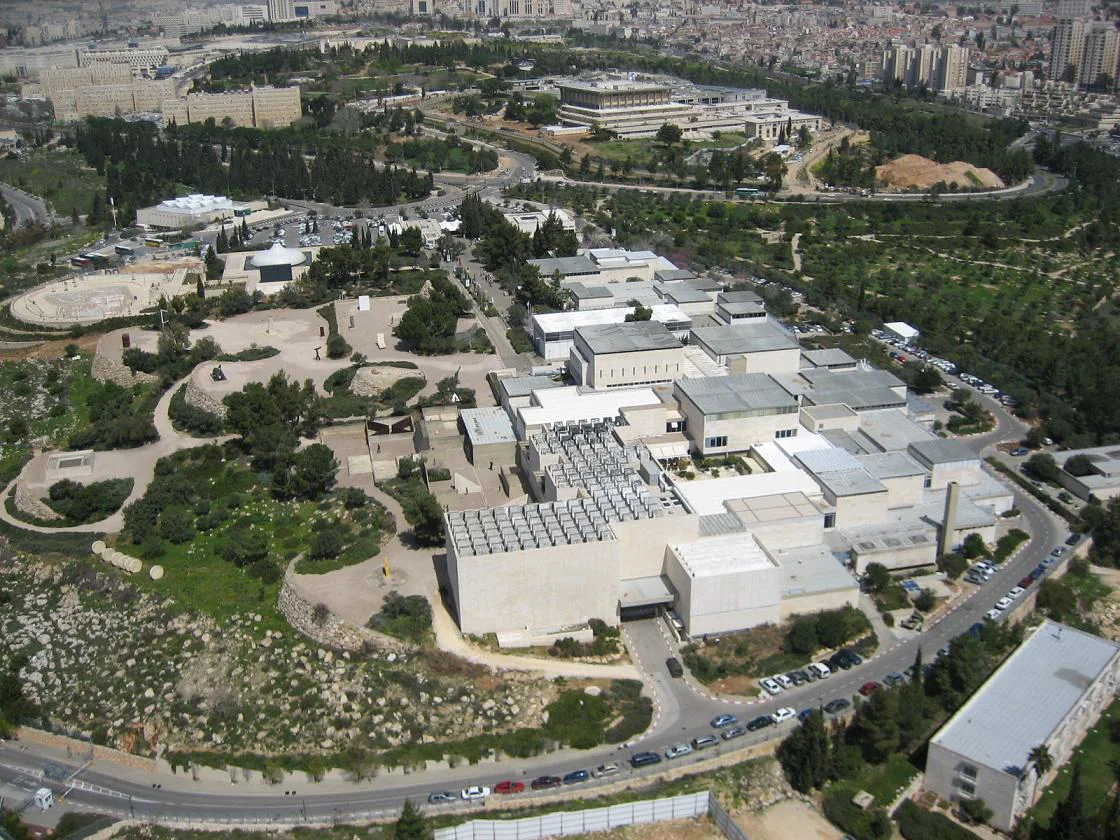
Israel Museum
Content & sources
Original uploader was אסף.צ at he.wikipedia · CC BY-SA 3.0
Bucharest · 28 artworks
National Museum of Art of Romania
Content & sources
Jorge Láscar from Australia · CC BY 2.0
Athens · 25 artworks
Εθνική Πινακοθήκη-Μουσείο Αλεξάνδρου Σούτζου
Content & sources
Photo: Leeturtle · CC BY-SA 4.0
Athens · 19 artworks
Βυζαντινό και Χριστιανικό Μουσείο
Content & sources
Photo: Marsyas · CC BY-SA 3.0
Athens · 17 artworks
Μουσείο Μπενάκη
Content & sources
Photo: Dimboukas · CC BY-SA 3.0
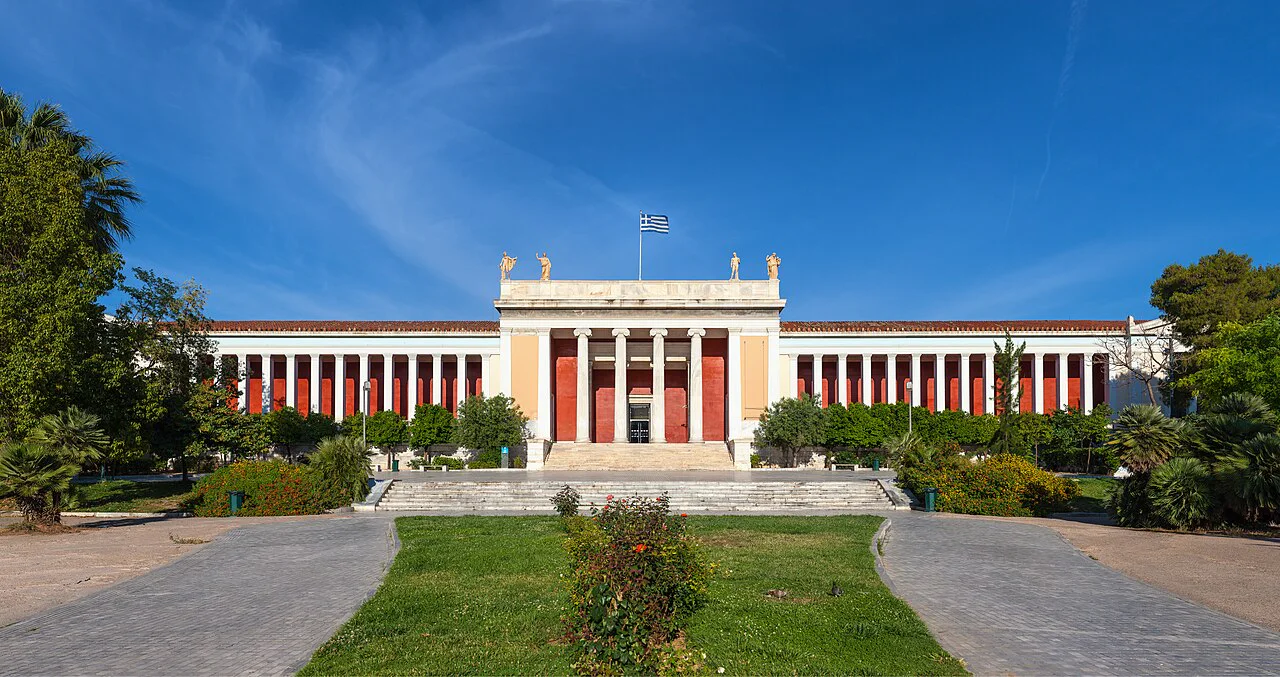
Athens · 91 artworks
Εθνικό Αρχαιολογικό Μουσείο
Content & sources
Thomas Wolf, www.foto-tw.de · CC BY-SA 3.0 de