Stanza · Audio guide
Egyptian Museum Audio Guide
A place to remember. A story to take with you.
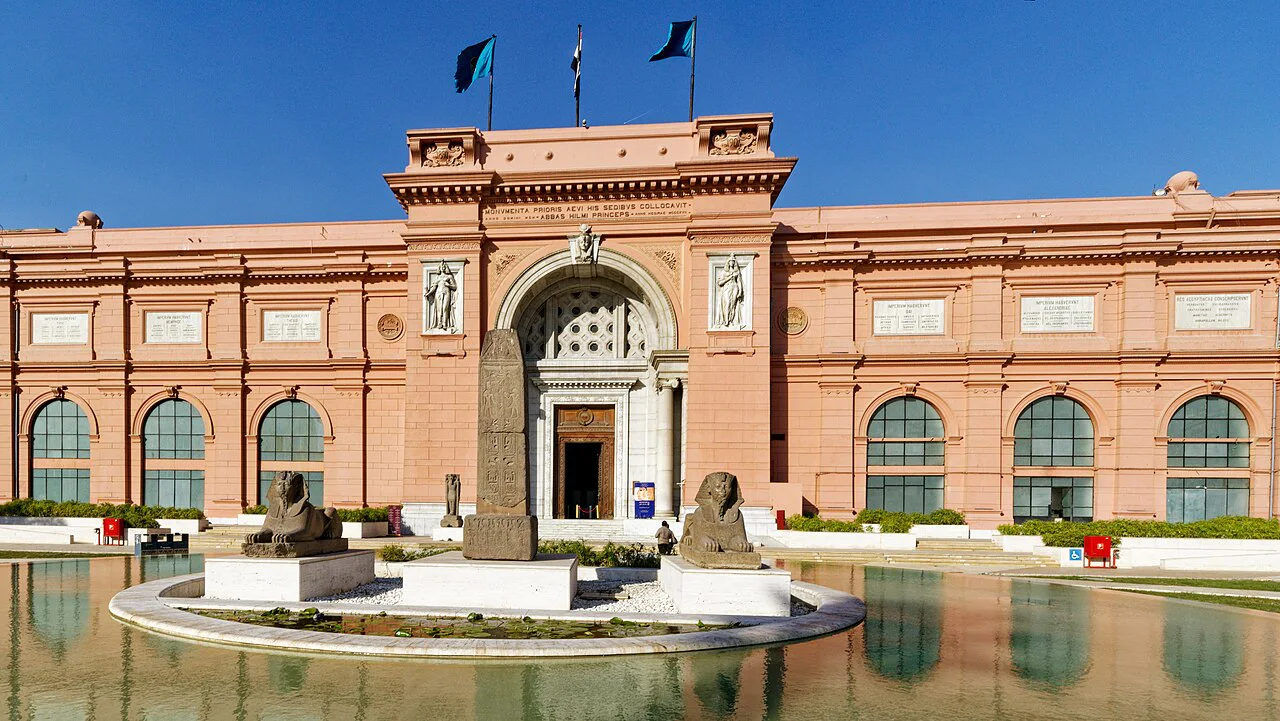
The Egyptian Museum is a national history museum in Cairo, Egypt. It is commonly known as the Museum of Egyptian Antiquities and also called the Cairo Museum or the Egyptian Museum in Cairo (EMC).
Download Stanza, then search for “Egyptian Museum”.
About the tour
One guide. Your kind of visit.
The Egyptian Museum is a national history museum in Cairo, Egypt. It is commonly known as the Museum of Egyptian Antiquities and also called the Cairo Museum or the Egyptian Museum in Cairo (EMC).
The Egyptian Museum guide tells the stories of 36 artworks, including Narmer Palette (Unknown Artist), Merneptah Stele (Unknown Artist), Oxyrhynchus Papyri (Unknown Artist), Saqqara Tablet (Unknown Artist), Saqqara Bird (Unknown Artist), Stele of Ankh-ef-en-Khonsu (Ankh-af-na-Konshu), Disk of de miki (Unknown Artist), and Colossal statue of Amenhotep III and Tiye (Unknown Artist). Every artwork is free to hear in the Stanza app until 1 January.
Ready when you are.
- 01Get the free Stanza app.
iOS & Android
- 02Find your guide.
“Egyptian Museum”
- 03Download before you go.
Works offline
Audio guide / 36 artworks
Inside the guide
Get to know a few of the stories before you go. Open a stop to read more.
01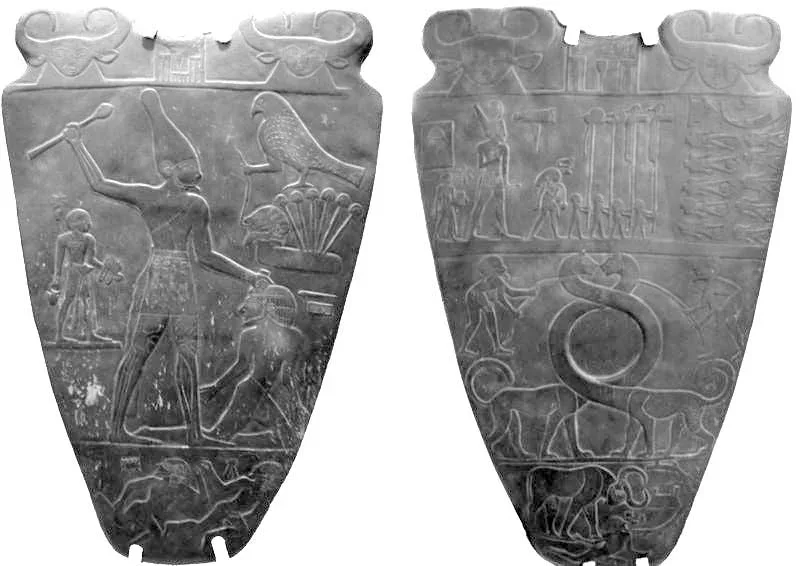
Narmer Palette
A king raises a mace in his right hand and, with his left, pulls a kneeling captive up by the hair. He wears the White Crown of Upper Egypt, the south. On the other side of the same stone, he wears the flat Red Crown of Lower Egypt, the north, and walks in a procession with a mace and a flail. It is the earliest known picture of a king wearing both crowns. Together they may tell of Narmer bringing the two lands under one ruler. Above the captive, the falcon Horus grips a rope that reaches the nose of a head rising from papyrus, the northern land. At the far right of the procession, ten victims lie beheaded, their heads between their legs. The king is much larger than everyone else, so his power fills the scene. Lower down, two serpopards, part serpent and part leopard, face one another and wind their long necks into a circle. That circle is where cosmetics would have been ground, and their joined necks may stand for the two lands made one. Who carved it, we do not know. It was too large and heavy to be anyone's own palette. It was probably made as an offering to a temple. It lay in the temple of Horus at Nekhen for five thousand years, and was dug up in 1897 and 1898, still almost perfect.
Listen in the appNo machine-readable author provided. Captmondo assumed (based on copyright claims). · Public domain
02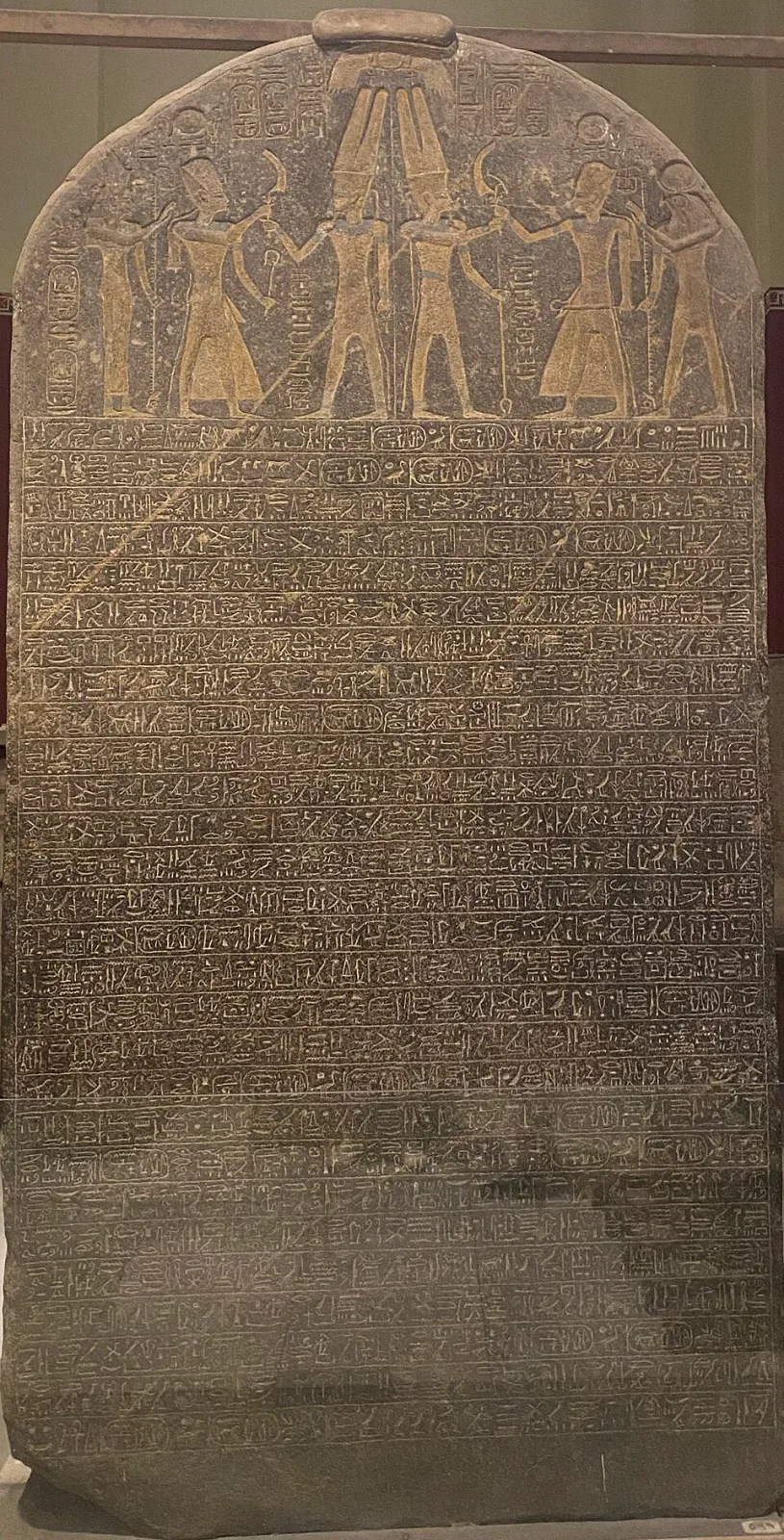
Merneptah Stele
This stone once made headlines in England. Flinders Petrie had found it at Thebes in 1896. He handed it to Wilhelm Spiegelberg, his team's philologist, to translate. Spiegelberg worked down the lines and stopped at a sign near the end. It named a people the pharaoh said he had destroyed, and Spiegelberg could not make it out. Petrie looked and said the word was Israel. Spiegelberg agreed. Petrie said the clergymen would be pleased. Over dinner, he said it would be known more widely than anything else he had found. The slab carries twenty eight lines, and no one knows who carved them. Most praise Merneptah's victory over the Libyans and their allies from the sea. In the final lines he turns east, to Canaan, and names the towns he says he destroyed. Ashkelon, Gezer and Yanoam each carry the sign for a city, a throw stick beside three mountains. The name Petrie read as Israel has no mountains. It has a throw stick, a sitting man and a woman, and three strokes to make it plural. The cities are places. This one points to people. Merneptah says he destroyed their grain, so famine would follow the next year and they could no longer threaten Egypt. What sort of people they were, the stone never says.
Listen in the app𐰇𐱅𐰚𐰤 · CC BY-SA 4.0
03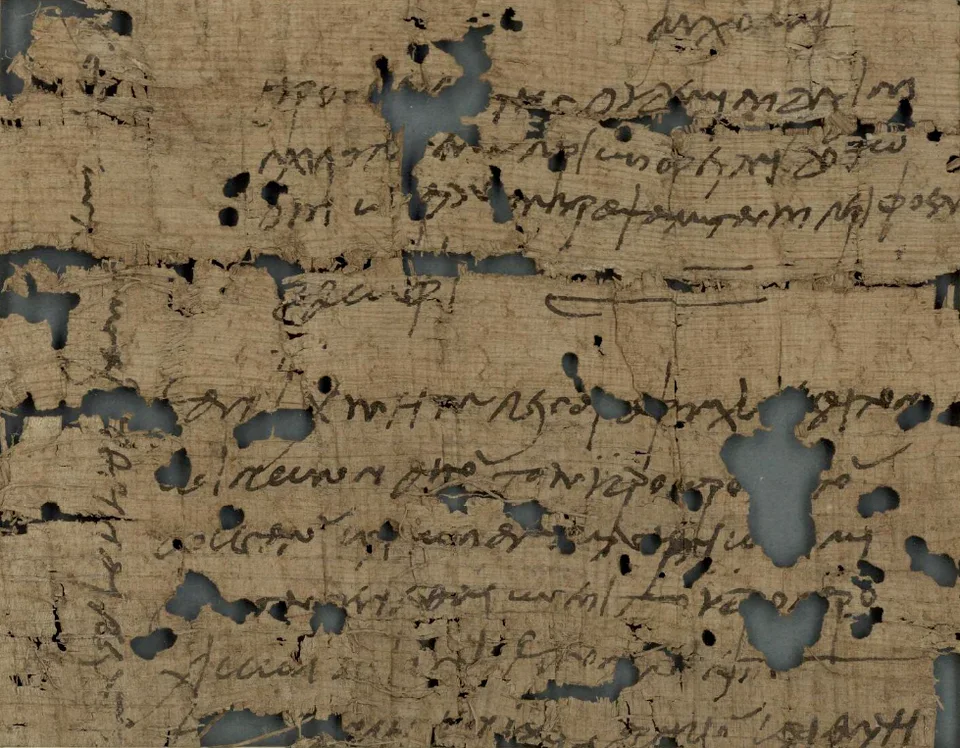
Oxyrhynchus Papyri
Nobody knows how this story ends. What is left are scraps about the size of large cornflakes, dug from an ancient rubbish dump near Oxyrhynchus. Most of it is everyday paperwork. Among it is a married couple, Tryphon and Saraeus. They were often before the local strategus. When they married in 37 CE, the contract dealt almost entirely with Saraeus's dowry, as such contracts did, in case of divorce. Tryphon had been married before, to Demetrous. After the divorce he said she had stolen from him, but the papyrus is too damaged to tell what. That same year, he complained that Demetrous and her mother had attacked Saraeus. We never hear the reply. Later, Saraeus was summoned over a foundling she had been hired to nurse. The foundling died, and her employer accused her of kidnapping a child and passing it off as her own. The strategus ruled the living child was hers, and that she repay her wages. Tryphon then wrote to the prefect that the employer would not cooperate, and was hindering his trade. In 51 CE, he reported that women had attacked them in the street. Saraeus's hearing shows how these courts kept time. The year is named for the emperor's reign. The month is still the Egyptian one, Pharmouthi.
Listen in the appUnknown author · CC0
04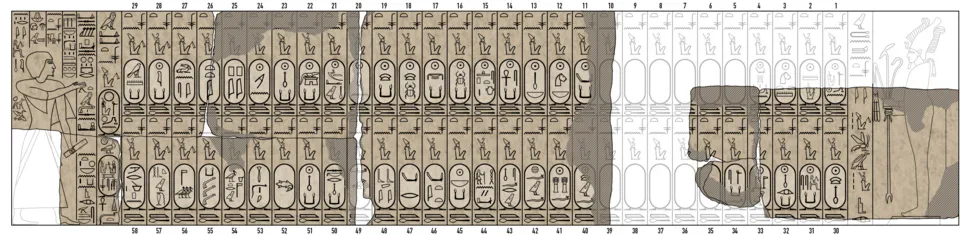
Saqqara Tablet
Every name here was carved to be read backwards. The list runs in two rows, from the upper right down to the bottom left, stepping back in time from Ramesses the Second. Each name sits inside a border called a cartouche. Each ends with the same word, the justified, an honor for kings who had died. The list once named fifty-eight kings, reaching back to the First Dynasty. Yet whole groups of them were left out. The Hyksos are gone, and the rulers of the Second Intermediate Period. So are the kings between Pepi the Second and Mentuhotep the Second. And Akhenaten is gone too, the pharaoh who broke with the worship of Amun, along with the rulers close to him. Only forty-seven names survive, and they are badly damaged. It was found in 1861, in the tomb of Tjuneroy, an official of Ramesses the Second who oversaw work on the royal monuments. Who carved it, we do not know. Four years after it was found, a photograph of the list was published.
Listen in the appPLstrom · CC BY-SA 3.0
05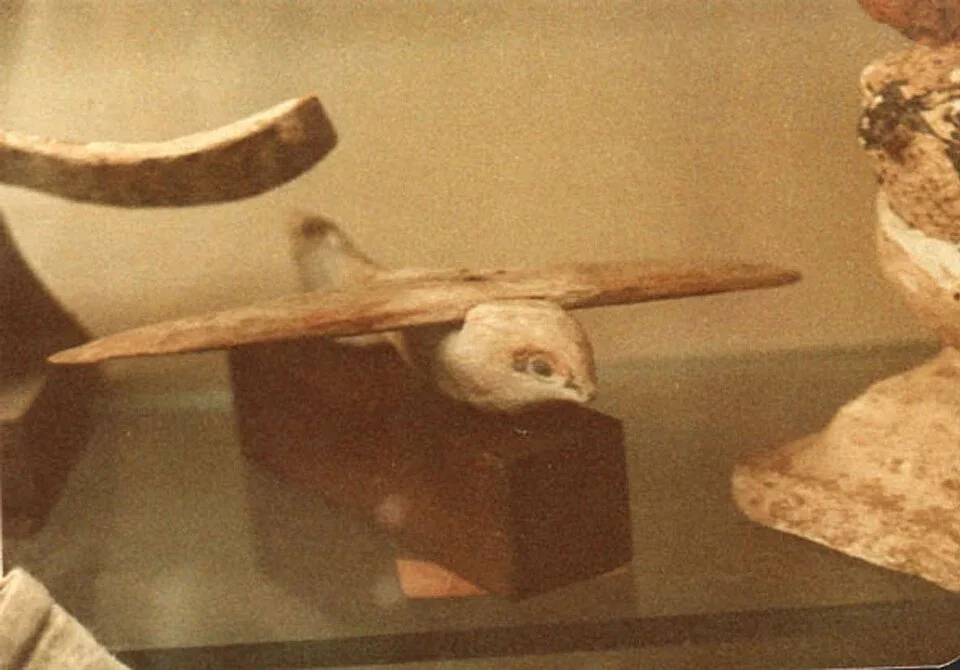
Saqqara Bird
Its tail stands straight up, not flat the way a bird's tail usually does. That one odd detail gave this little bird a second name, the Saqqara glider. It also set off the idea that ancient Egyptians knew how to build an airplane. No one knows who made it. It came from the tomb of Pa di Imen at Saqqara, and it was made about 200 BC. In 1983 an Egyptian doctor named Khalil Messiha saw an aircraft in it. He pointed to that tail, the angle of the wings and the missing legs. He built a much larger copy and added a tail fin the original does not have. He said that only then did it glide. The bird itself cannot fly. In 2023 a computer simulation of a three dimensional scan found it would tip and roll out of control. The flying machine idea is now rejected. Its purpose is still unknown. One idea puts it on the mast of a sacred boat during the Opet Festival. Reliefs at the Temple of Khonsu in Karnak show bird vanes on boats used in that festival. It may once have been painted like a falcon, and only a trace of that paint remains on one side of the tail.
Listen in the appDawoud Khalil Messiha · Public domain
06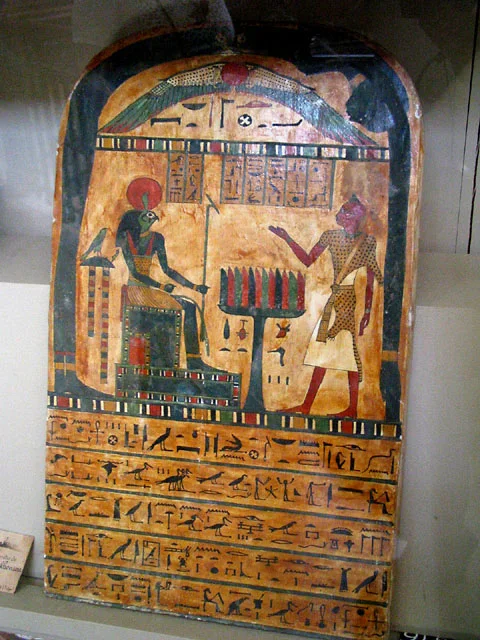
Stele of Ankh-ef-en-Khonsu
Ankh-ef-en-Khonsu wanted a safe way through death. He served Montu as a priest at Thebes. When he died, a painted wooden stele was laid beside his coffins, and no one knows who made it. On it he offers bread and beer, cattle and fowl to the falcon-headed god Re-Harakhty on his throne. Behind the god is the sign of the west, where the dead go. In the text on the back, he begs his heart not to stand against him as a witness before the great god of the west. Then in 1904 the stele took on a second life. Aleister Crowley, an English occultist, was building a religion called Thelema. His wife Rose had told him of a message from the Egyptian god Horus. At the newly opened museum in Cairo, she picked Horus out from all its images. It carried the catalogue number 666, a number with meaning in Thelema. He took that god for Ra-Hoor-Khuit, one of Thelema's three chief gods. He named it the Stele of Revealing, and soon wrote the Book of the Law, Thelema's central text. Above the god, the sky goddess Nut stretches from one horizon to the other, with the winged sun disk just below her. Crowley read those two as Nuit and Hadit, Thelema's other chief gods.
Listen in the appAnkh-af-na-Konshu · Public domain
07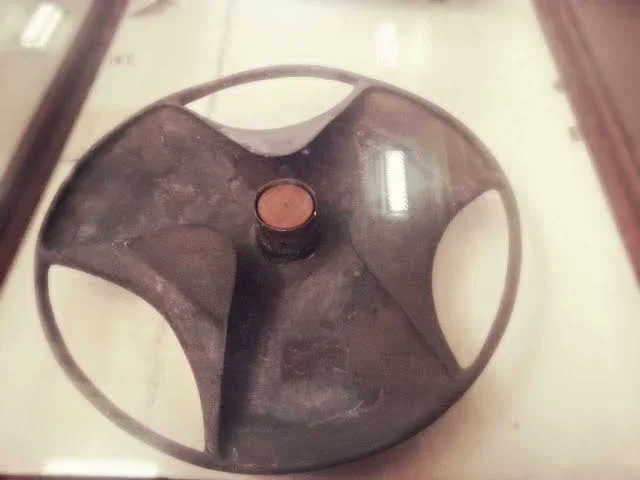
Disk of de miki
It was found in pieces at the center of the burial chamber, right beside the skeleton of the man buried there. He was an official named Sabu. The fragments were gathered and put back together, and that is the bowl in front of you. From above, three wings fold inward from the rim toward a hole at the center. Together they look like a steering wheel with three very wide spokes. What it was for, no one can say. The archaeologist who found it, Walter Emery, thought it might have sat on a stand. No stand was found, and the tomb had been robbed centuries before. The rock splits easily, and the same shape would be simple to make in metal. So perhaps the stone copies a metal original. Engineers at Airbus made copies with a three-dimensional printer and tested the shape. The copies flew like discs when thrown. But the three wings repeat evenly around the center, and that means it could never have turned as a propeller or a turbine. The tests did show it could have served as an oil lamp.
Listen in the appPhoto: أحمد بن طارق · CC BY-SA 4.0
08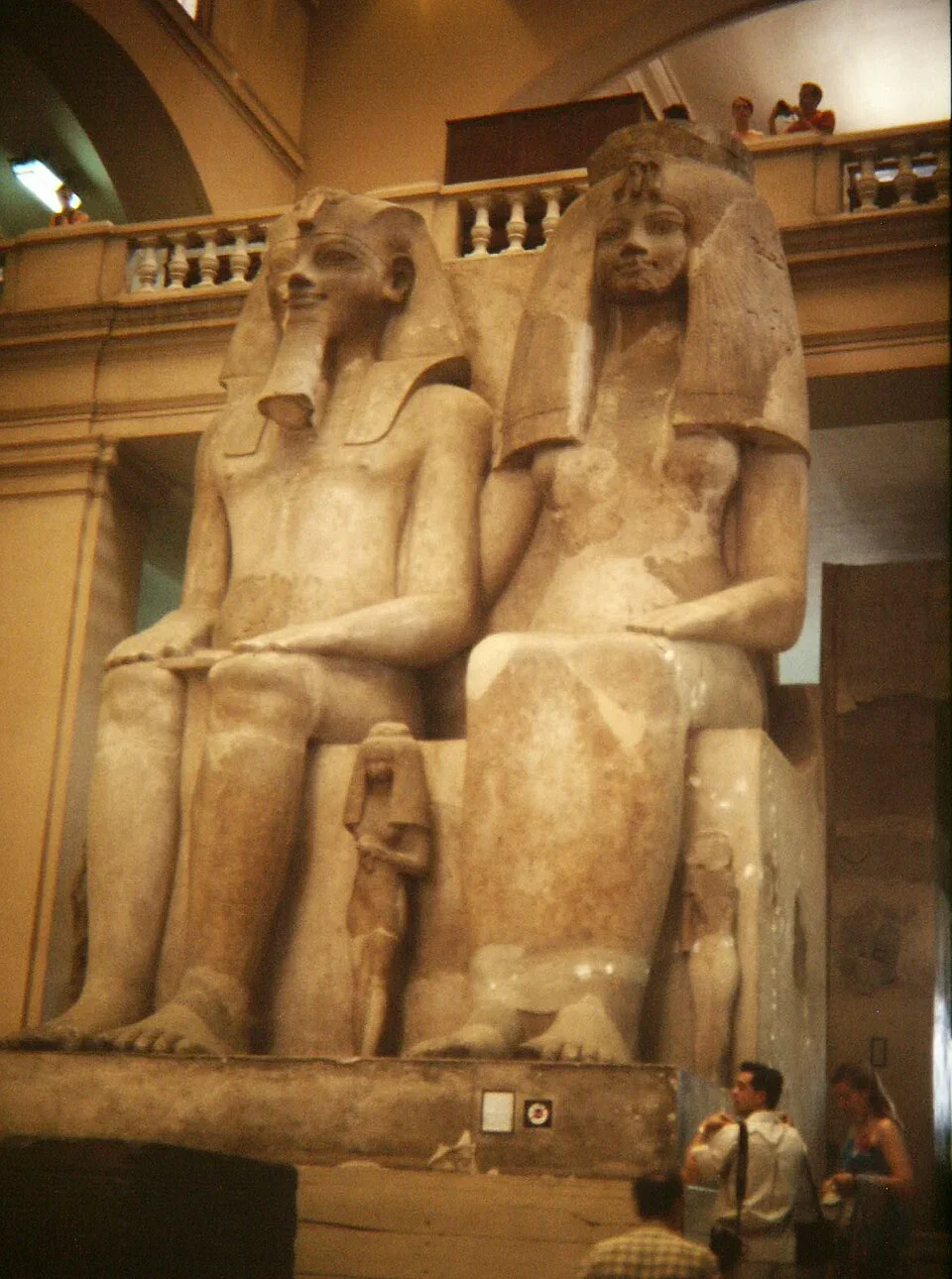
Colossal statue of Amenhotep III and Tiye
Tiye's right arm is around the waist of Amenhotep the Third, and she sits at his left, as tall as he is. He rests his hands on his knees. That equal height shows her high rank. Between them stands their daughter Henuttaneb, a grown woman. Her headdress matches her mother's except for the cobras. Yet here she is given a queen's title, companion of Horus, who is in his heart. No other princess was given it. It may mean she was raised to queen like her sisters. The group belonged to his mortuary temple in western Thebes. The temple fell into ruin within two hundred years, and later pharaohs reused its stones. The colossus was found in fragments in the late nineteenth century. It was reassembled for the museum's opening in 1902. Beside Amenhotep stands a younger daughter, Nebetah. Her head was taken off long ago, probably in the medieval period, and was found before the other fragments were moved in 1897. It later belonged to a French private collection and was sold in 2008. The head now on the statue is an exact copy. In 2011, fragments were found before a sewage system was installed on the west bank of Luxor. They filled six missing parts, and the colossus is now seventy percent complete. Beside Tiye stands another daughter, even more damaged. Her name is still not known.
Listen in the appGary Todd from Xinzheng, China · CC0
09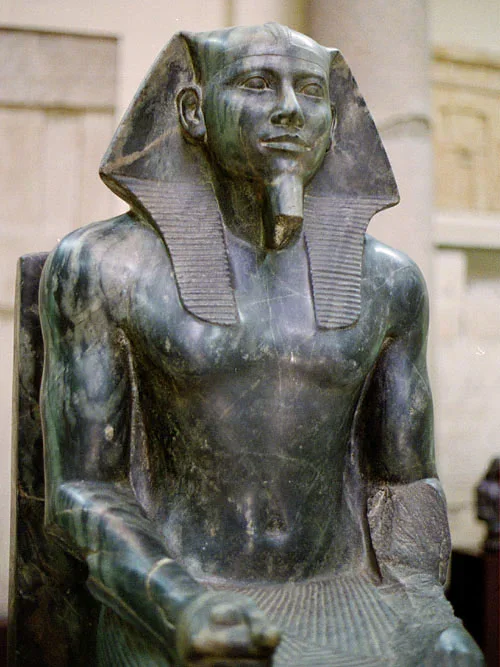
Khafre Enthroned
They made this king by taking stone away. The carver began with one block of dark, very hard stone, brought a long way down the Nile. We do not know his name. On the block's four sides he drew the pharaoh from the front, from behind, and from both sides. Then he chipped away everything outside those lines, until the drawings met at right angles. Only at the end did he carve the face and the finer details. His arms are joined to his body, and his false beard is attached to his chin by a thin strip of stone. King and throne are a single solid piece. The Egyptians believed a life force called the ka lived on after death. If the king's mummy were damaged, this statue would give his ka somewhere to stay. So he sits perfectly still and symmetric, with all movement and time taken out of him. Behind his head, a falcon spreads its wings to protect him. It is the god Horus. From the front, it disappears. For reasons we do not know, it was buried in a shaft inside the valley temple, beside other broken statues of the king. When it was dug up again in the nineteenth century, it was the only one found whole.
Listen in the appJon Bodsworth · Copyrighted free use
10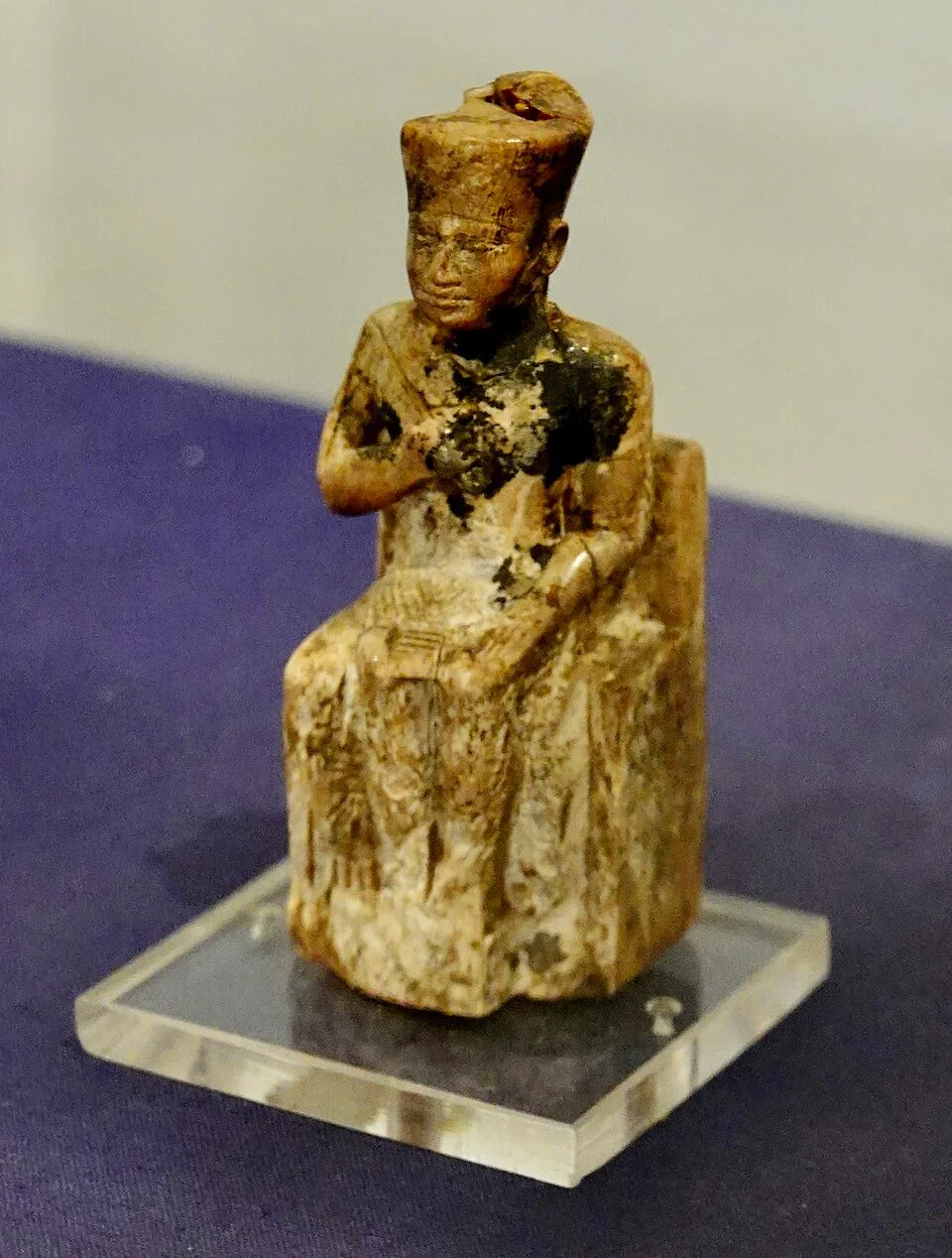
Khufu Statuette
There is a small name beside the king's knee. It reads Medjedu, one of Khufu's names. That name is how we know who this is, because when the figure was found, it had no head. It was 1903, among the ruins of a temple at Abydos, in a place called Kom el Sultan. Nothing from Khufu's own time turned up there, so perhaps the figure was carved much later, in the Twenty Sixth Dynasty. The man who dug it up was Flinders Petrie. He assumed the head was lost in an accident during the excavation. Then he read the name at the knee and knew he had Khufu, the king who built the Great Pyramid. This is the only known statue of Khufu to survive largely intact, and no one knows who carved it. Petrie stopped all work and offered a reward for the head. After three weeks of sifting the debris, the head was found.
Listen in the appOlaf Tausch · CC BY 3.0
- 11
pyramidion of Amenemhat III
Unknown Artist · c. 1850 BC
- 12
Statuette of Neferefre
Jon Bodsworth · 2459 BC
- 13
Lotus chalice
Unknown Artist
- 14
Ka statue of king Hor
Jon Bodsworth
- 15
Throne of Princess Sitamun
Unknown Artist
- 16
Year 400 Stela
E. A. Wallis Budge (1857-1934)
- 17
Stela of Akhenaten and his family
Unknown Artist
- 18
Stela of Queen Tetisheri
Unknown Artist
- 19
Juridical Stela
Unknown Artist · c. 1650 BC
- 20
Treasure of El Lahun
Guy Brunton
- 21
Sayala Mace
Cecil Mallaby Firth (1878-1931) · c. 3200 BC
- 22
Satrap Stela of Ptolemy I
Ahmed Bey Kamal, · 311–310 BC
- 23
Meidum Geese
Unknown Artist · -2550
- 24
Egyptian Museum Cairo 2016-03-29 Mentuhotep 02
Unknown Artist · 21st century BC
- 25
Statue of Amenirdis
Unknown Artist · -707
- 26
Userkaf
Jon Bodsworth · 2494–2487 BC
- 27
Copper Statue of Pepi I - Cropped
Jon Bodsworth
- 28
artificial toe of Tabaketenmut
Jon Bodsworth
- 29
Sphinx of Hetepheres II - Fourth Dynasty of Egypt
Jon Bodsworth
- 30
Golden Mask of Psusennes I
Unknown Artist
- 31
Statue of Khasekhemwy - Egyptian Museum of Cairo JE 32161
Unknown Artist · -2710
- 32
Mummy mask of Tjuyu
Unknown Artist
- 33
Statue of Djoser in the Cairo Egyptian Museum
Unknown Artist · -2600
- 34
Meritamon
Unknown Artist · 13th century BC
- 35
Fighting boat crews
Unknown Artist
- 36
Statue of Iset, mother of Thutmose III
Unknown Artist · 15th century BC
Egyptian Museum
Frequently asked questions
How much does the guide cost?
Free app download. Free until 1 January. Listed guide price: $1.99. Audio guide only. Venue admission is separate.
Can I listen without internet?
Yes. Download the guide’s audio, images, and maps in the app before your visit. Your downloaded content is then available offline.
Can I listen in my language?
In English for now. More languages soon.
Do I need to follow a schedule?
No. This is a self-guided experience. Choose your stops, pause whenever you like, and return to a story at your own pace.
Which artworks are in the Egyptian Museum audio guide?
36 artworks, including Narmer Palette (Unknown Artist), Merneptah Stele (Unknown Artist), Oxyrhynchus Papyri (Unknown Artist), Saqqara Tablet (Unknown Artist), Saqqara Bird (Unknown Artist), Stele of Ankh-ef-en-Khonsu (Ankh-af-na-Konshu), Disk of de miki (Unknown Artist), and Colossal statue of Amenhotep III and Tiye (Unknown Artist). The full list is on this page.
Is this the museum’s official audio guide?
No. Stanza is an independent audio guide app and is not affiliated with Egyptian Museum. Museum admission is separate.
At your own pace
Explore Egyptian Museum.
Download Stanza, then search for “Egyptian Museum”.
Free app download · Guide price shown in the app
Keep exploring
Nearby audio guides
Cairo · 2 km
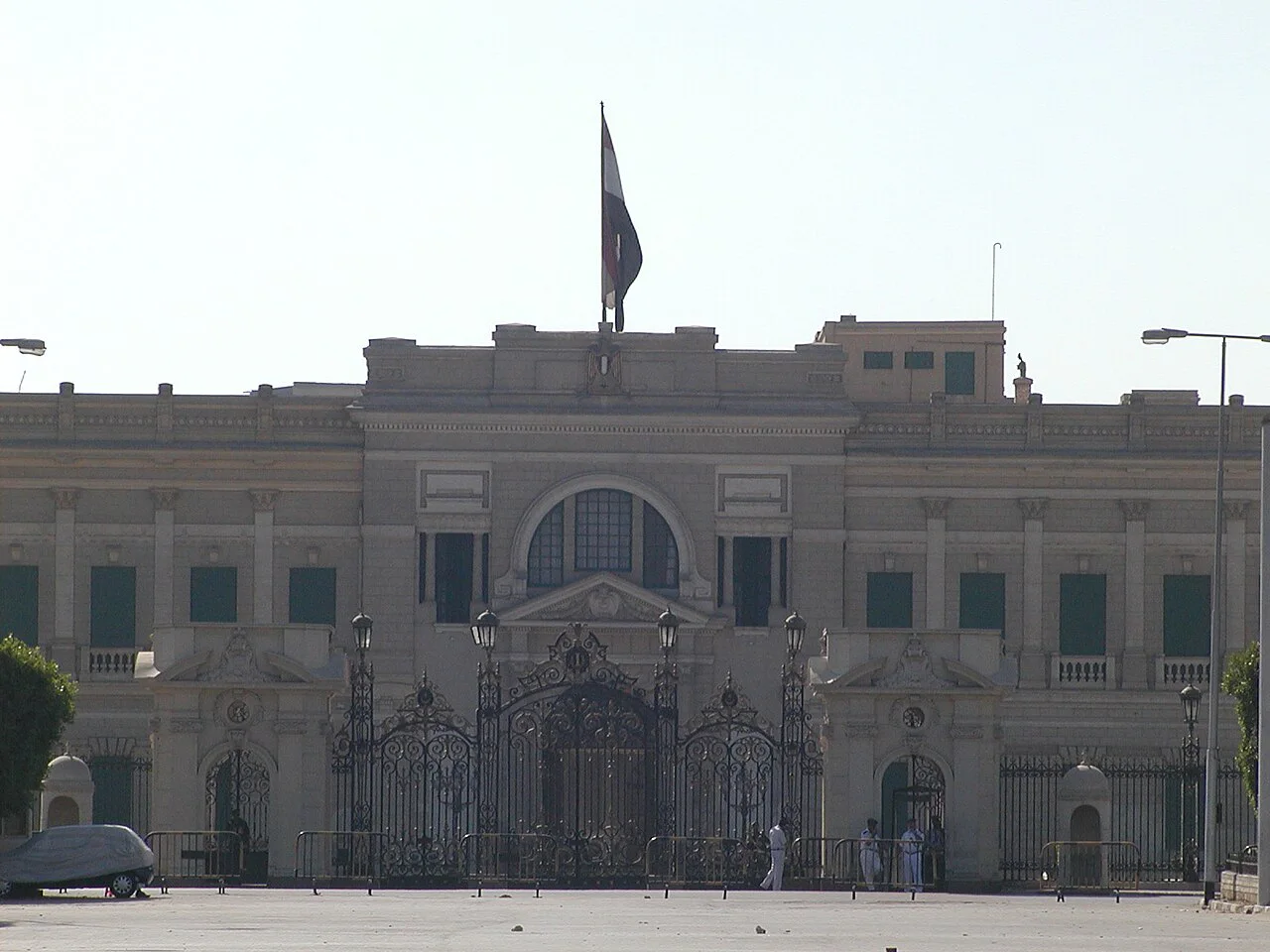
Abdeen Palace
Content & sources
Gérard Ducher (user:Néfermaât) · CC BY-SA 2.5
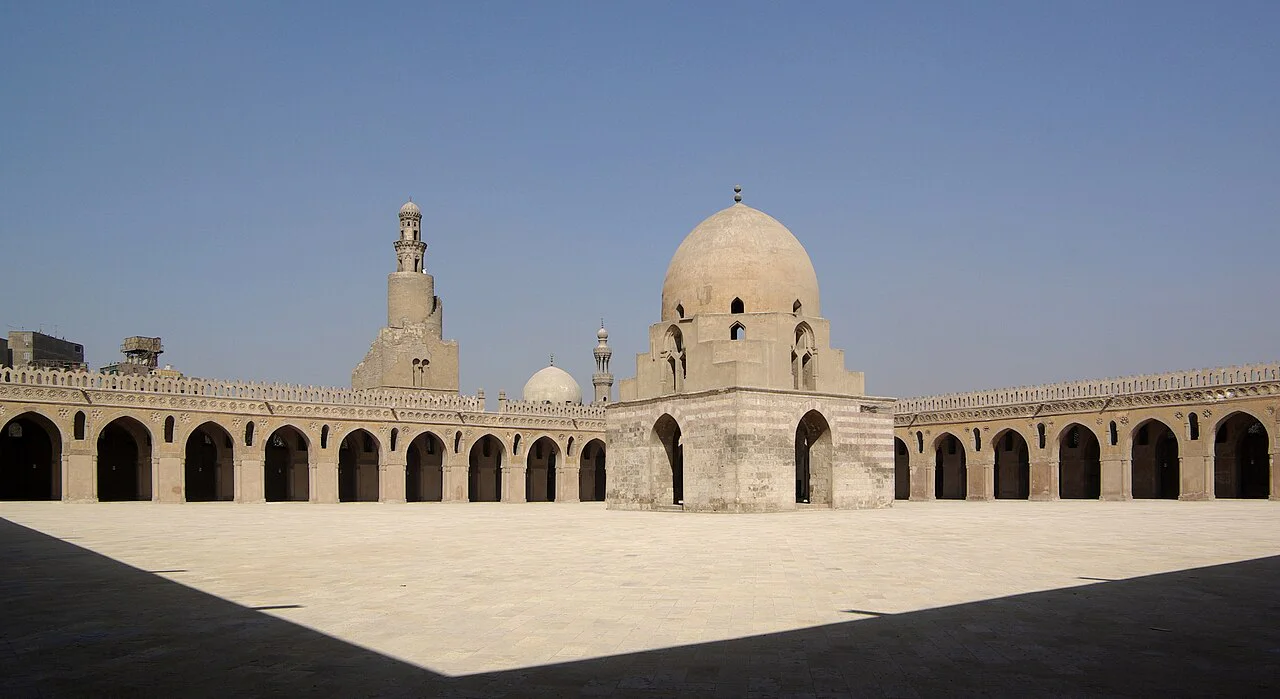
Cairo · 3 km
Mosque of Ibn Tulun
Content & sources
User:Berthold Werner · CC BY 3.0
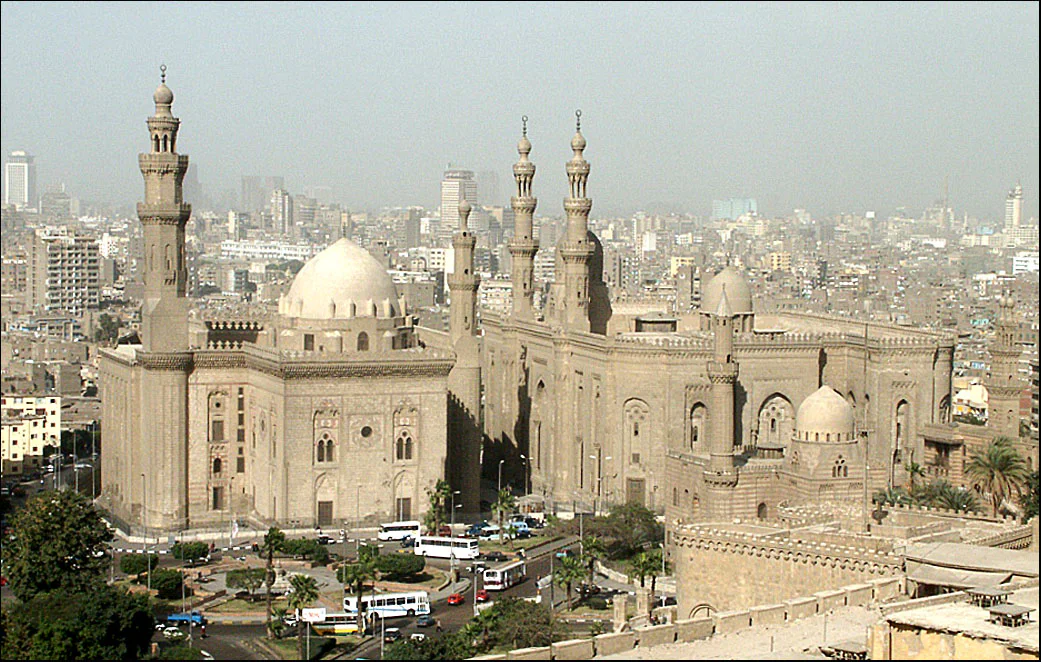
Cairo · 3 km
Al-Rifa'i Mosque
Content & sources
Original uploader was Chris Karman at nl.wikipedia · CC BY-SA 3.0
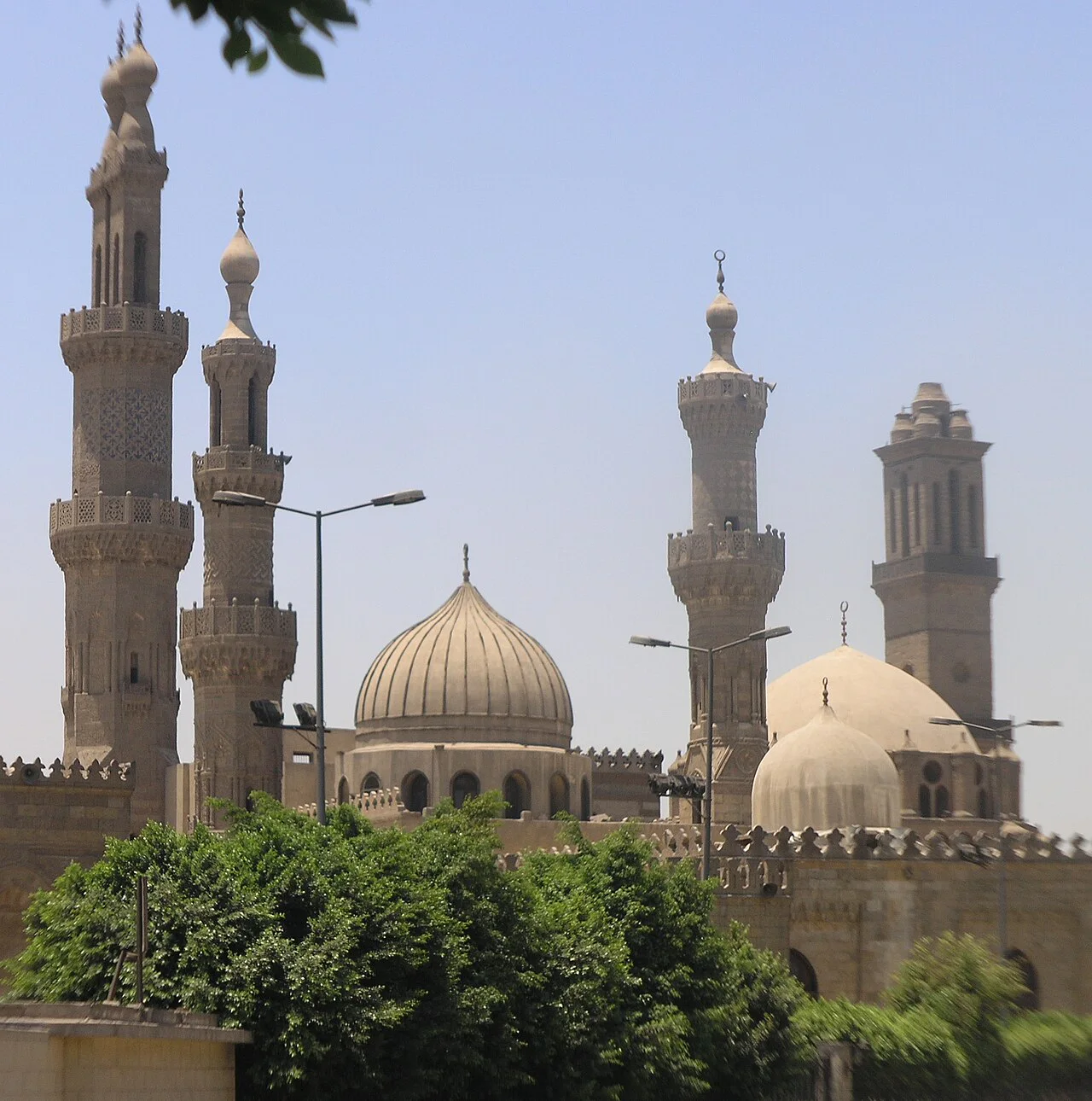
Cairo · 3 km
Al-Azhar Mosque
Content & sources
Daniel Mayer · CC BY-SA 4.0
Art museums
More art museum audio guides
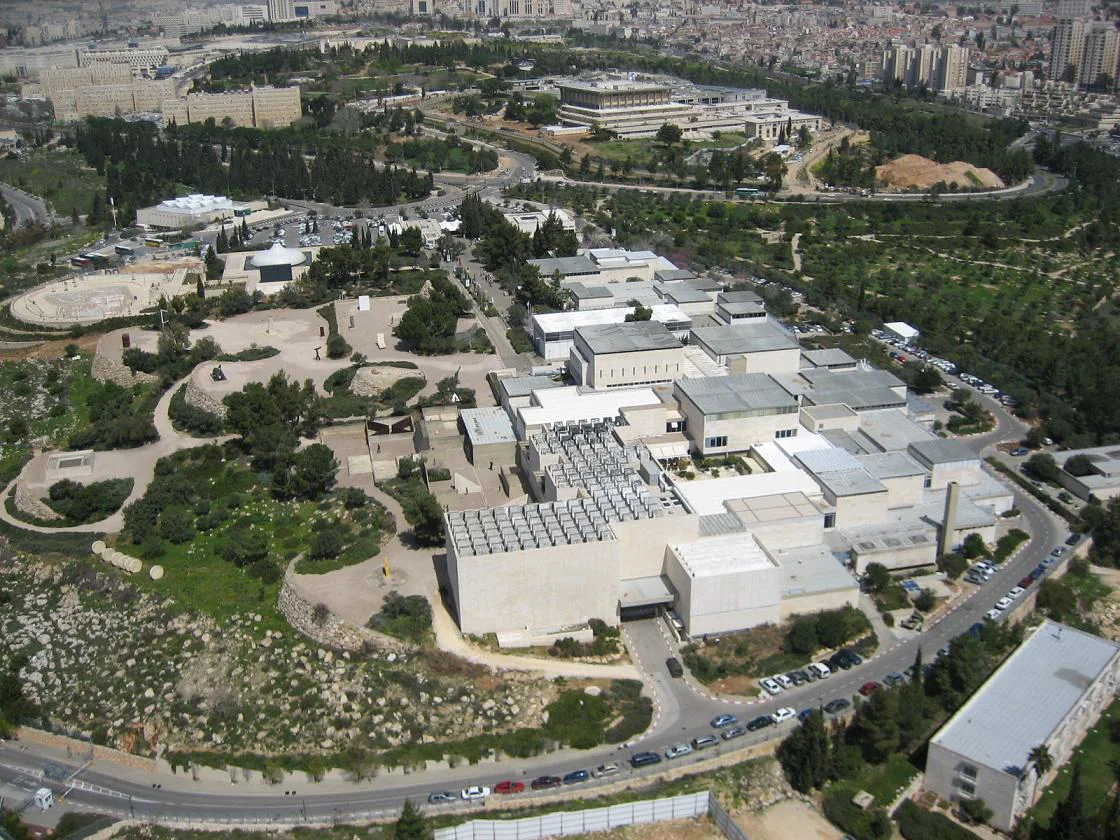
Jerusalem · 93 artworks
Israel Museum
Content & sources
Original uploader was אסף.צ at he.wikipedia · CC BY-SA 3.0
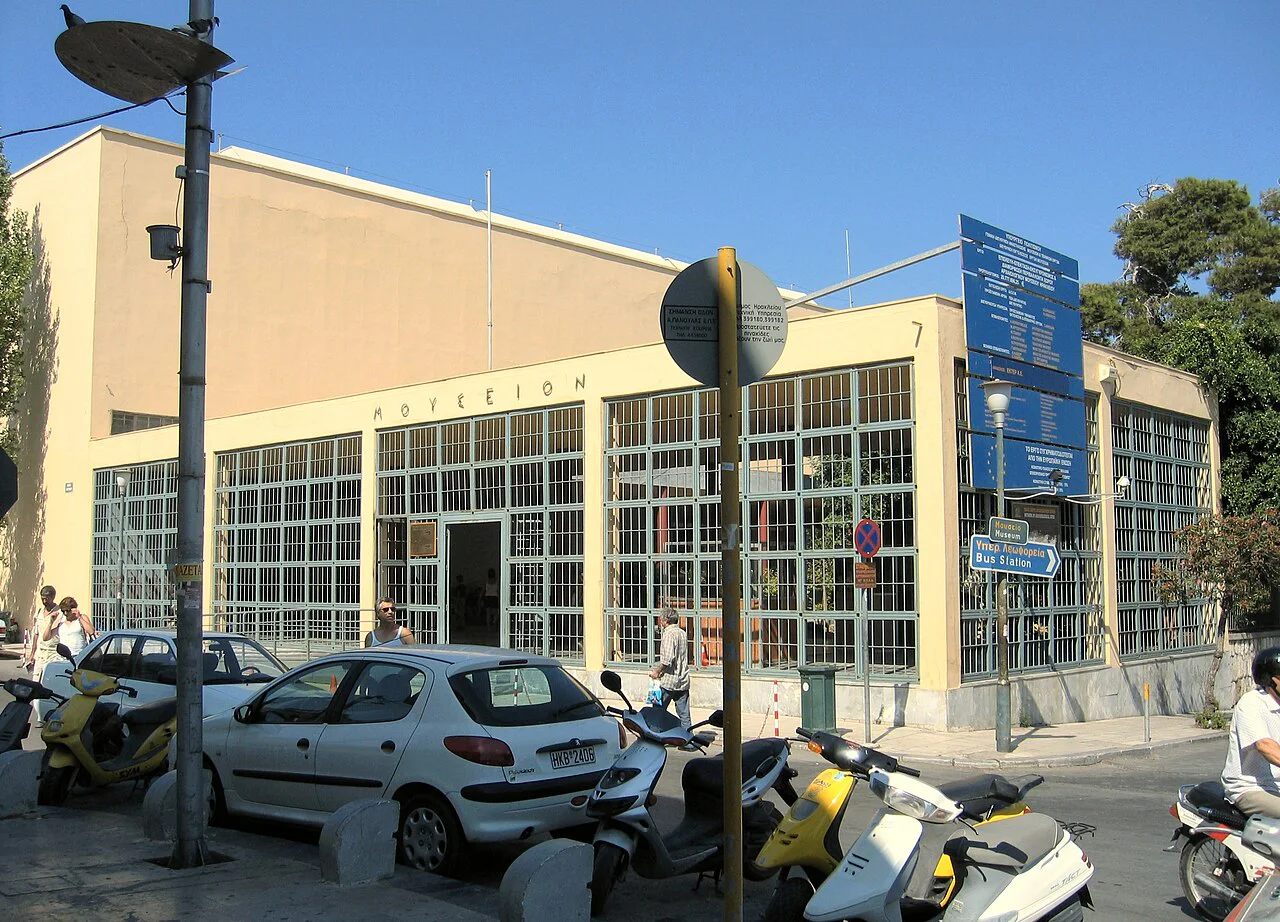
Heraklion · 13 artworks
Αρχαιολογικό Μουσείο Ηρακλείου
Content & sources
Photo: Zde · CC BY-SA 4.0

Athens · 25 artworks
Εθνική Πινακοθήκη-Μουσείο Αλεξάνδρου Σούτζου
Content & sources
Photo: Leeturtle · CC BY-SA 4.0
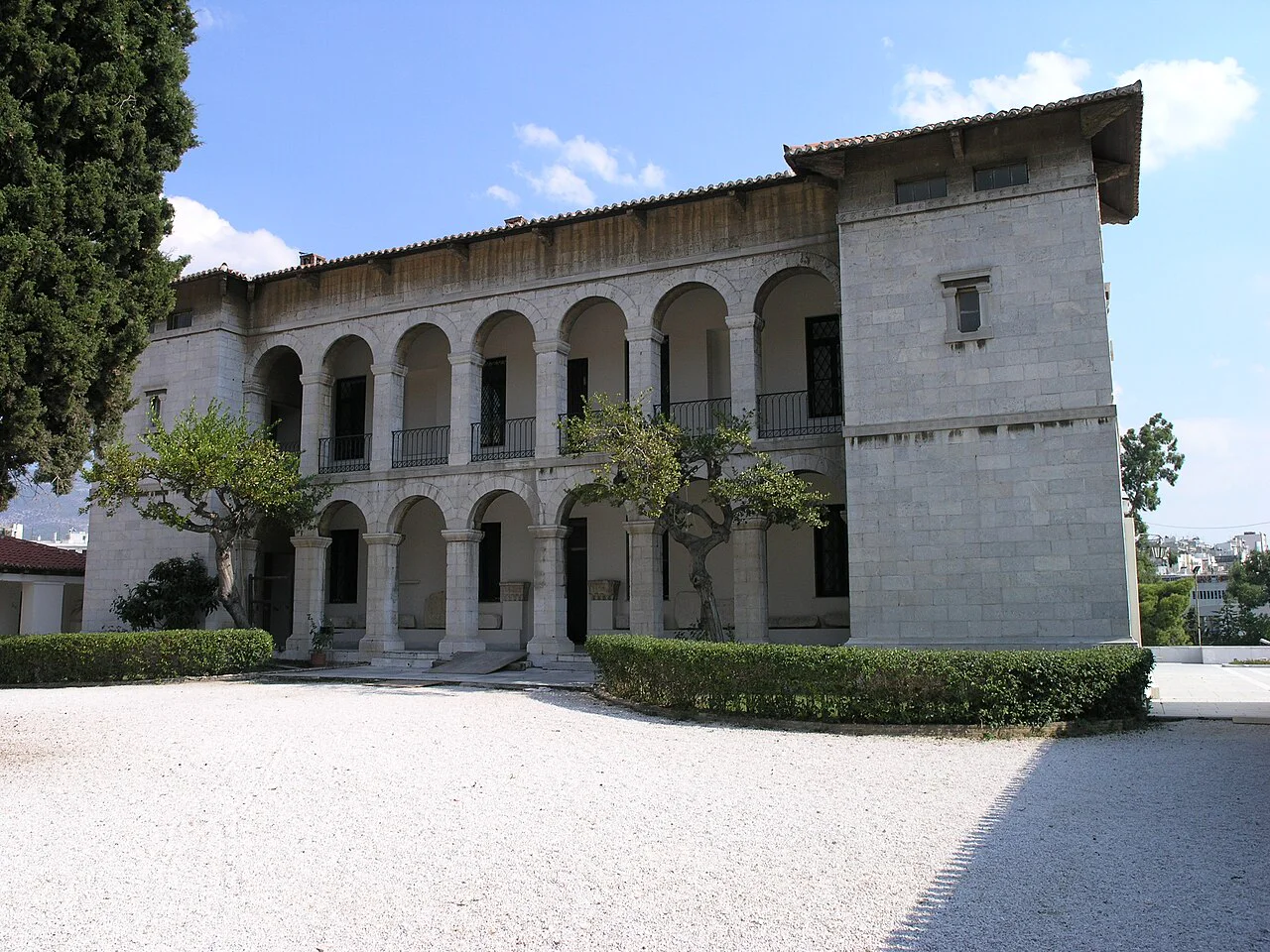
Athens · 19 artworks
Βυζαντινό και Χριστιανικό Μουσείο
Content & sources
Photo: Marsyas · CC BY-SA 3.0
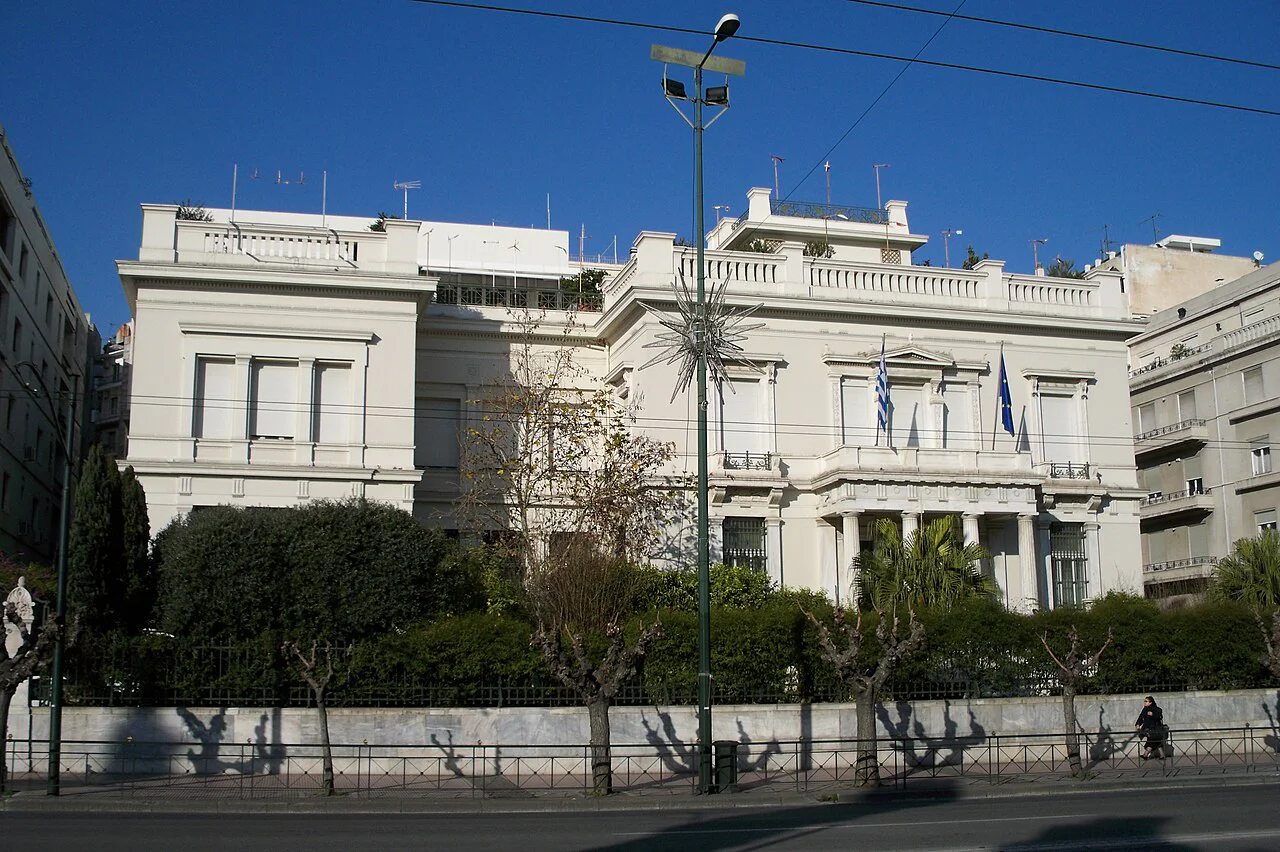
Athens · 17 artworks
Μουσείο Μπενάκη
Content & sources
Photo: Dimboukas · CC BY-SA 3.0
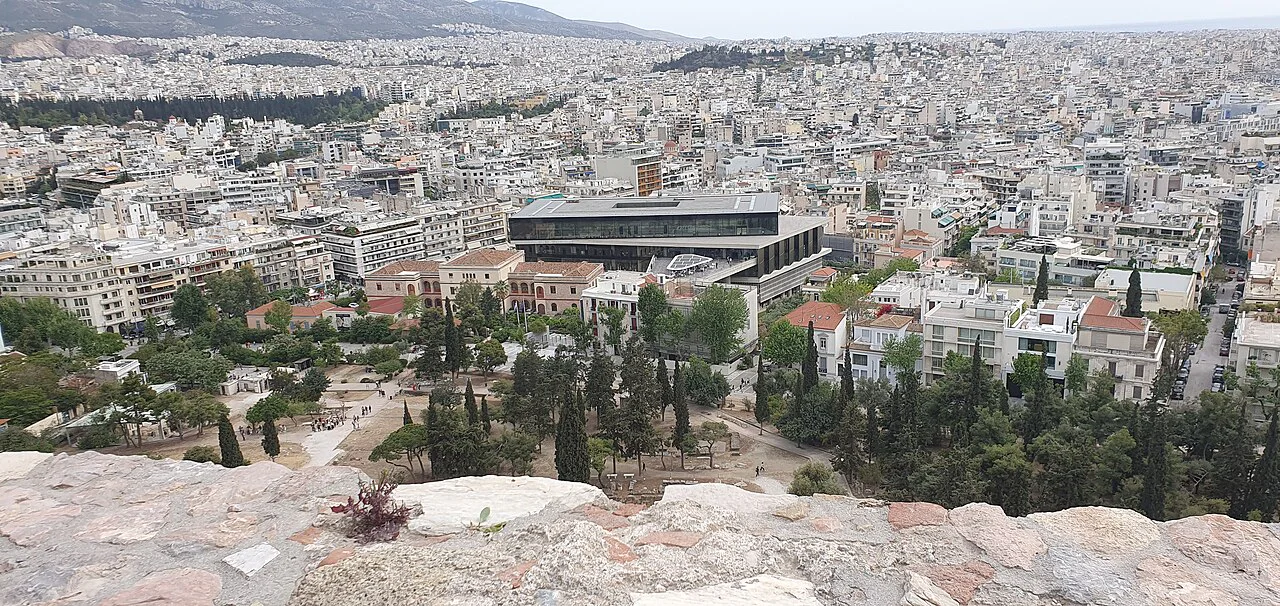
Athens · 35 artworks
Μουσείο Ακρόπολης
Content & sources
Photo: Yair-haklai · CC BY-SA 4.0