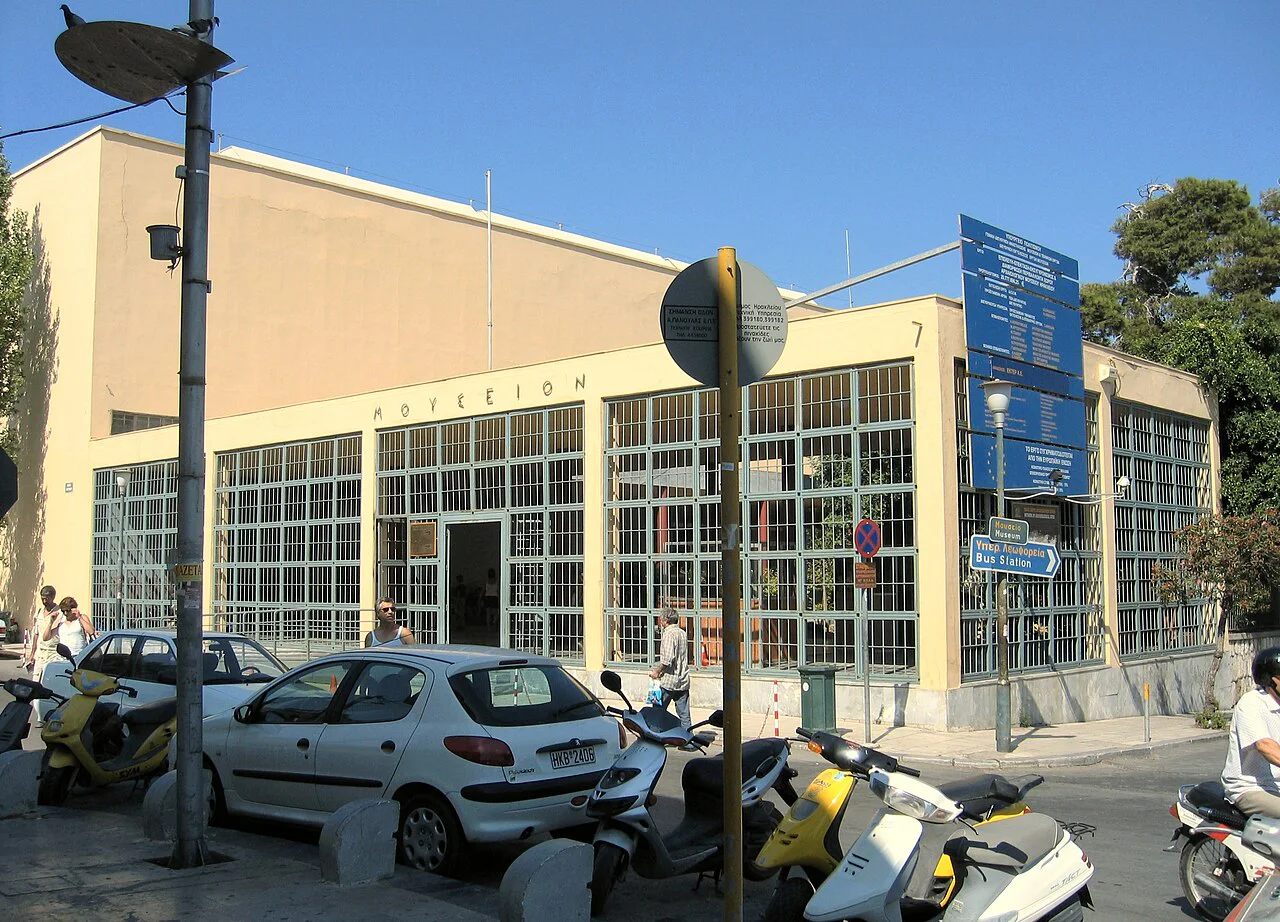
Stanza · Audio guide
Αρχαιολογικό Μουσείο Ηρακλείου Audio Guide
A place to remember. A story to take with you.
The Heraklion Archaeological Museum is a museum located in Heraklion on Crete. It is one of the largest museums in Greece and the best in the world for Minoan art, as it contains the most important and…
Download Stanza, then search for “Αρχαιολογικό Μουσείο Ηρακλείου”.
About the tour
One guide. Your kind of visit.
The Heraklion Archaeological Museum is a museum located in Heraklion on Crete. It is one of the largest museums in Greece and the best in the world for Minoan art, as it contains the most important and complete collection of artefacts of the Minoan civilization of Crete.
The Αρχαιολογικό Μουσείο Ηρακλείου guide tells the stories of 13 artworks, including Phaistos disc (Unknown Artist), Bull-Leaping Fresco (Unknown Artist), Hagia Triada sarcophagus (Unknown Artist), Prince of the Lilies (Unknown Artist), The bee pendant (Unknown Artist), La Parisienne (Unknown Artist), Harvester vase (Unknown Artist), and Gaming board from Knossos (Unknown Artist). Every artwork is free to hear in the Stanza app until 1 January.
Ready when you are.
- 01Get the free Stanza app.
iOS & Android
- 02Find your guide.
“Αρχαιολογικό Μουσείο Ηρακλείου”
- 03Download before you go.
Works offline
Audio guide / 13 artworks
Inside the guide
Get to know a few of the stories before you go. Open a stop to read more.
01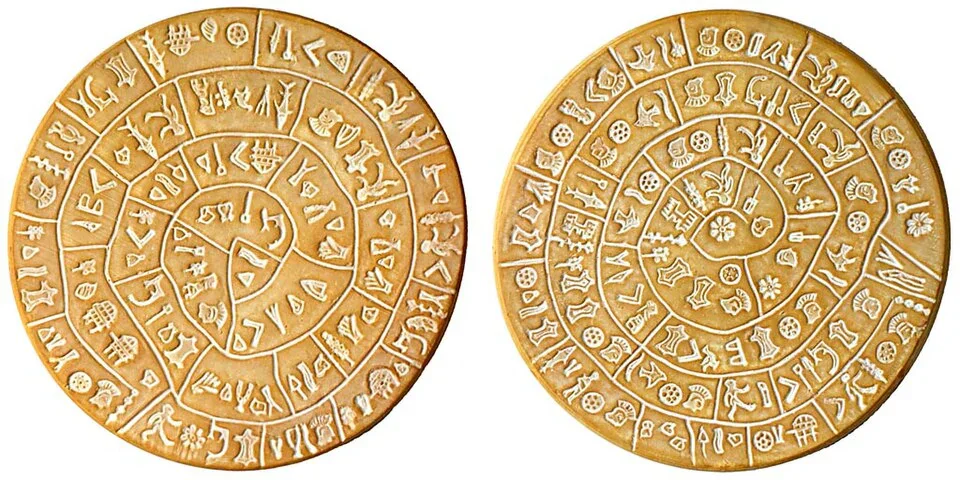
Phaistos disc
Every sign on this disc was pressed into the clay, not drawn or written. Someone pressed a small stamp into the soft clay, lifted it, and pressed it down again, before the disc was fired. Each kind of sign had its own stamp, so the same mark could be made over and over. That makes this a printed text, made with stamps you could reuse, long before printing became common. There are only forty five different signs, but they appear about two hundred and forty times across the two sides. Some of the signs are small pictures, a person, a bird, a boat. The signs run in a spiral from the outer edge in toward the middle, with short lines dividing them into small groups. Near the edge, a short stroke with five dots punched along it marks where the text appears to begin. Nothing else like this disc has ever been found. What the signs say is still not known.
Listen in the appPhoto: Helix84 · CC BY-SA 3.0
02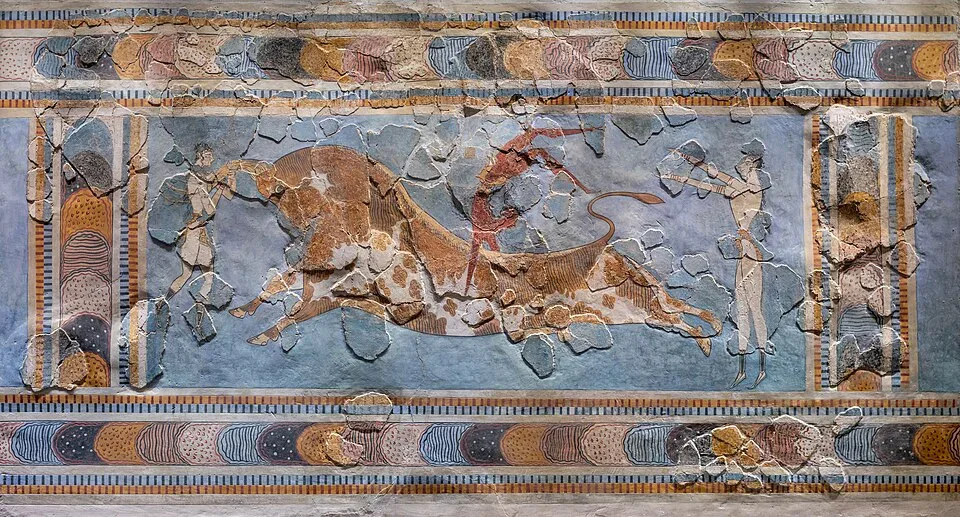
Bull-Leaping Fresco
At the front of the scene, a woman has her hands on the bull's horns. She seems to be slowing the bull, so the young man above will not be gored as he comes over. Over the bull's back, that young man seems caught in the middle of a flip. Behind the bull, a second woman holds out her arms to receive him. Taken together, they may show one leap, from the grip on the horns to the landing in her arms. It was painted high on a wall of the palace at Knossos, and we do not know who painted it. Scenes like this were painted more than once, a kind of set piece rather than one real event. Men and women both took part, and they wear the same clothes, probably so nothing would snag in the horns. And the bull hangs in the air, its legs stretched out, to carry the force of its charge.
Listen in the appGleb Simonov · Public domain
03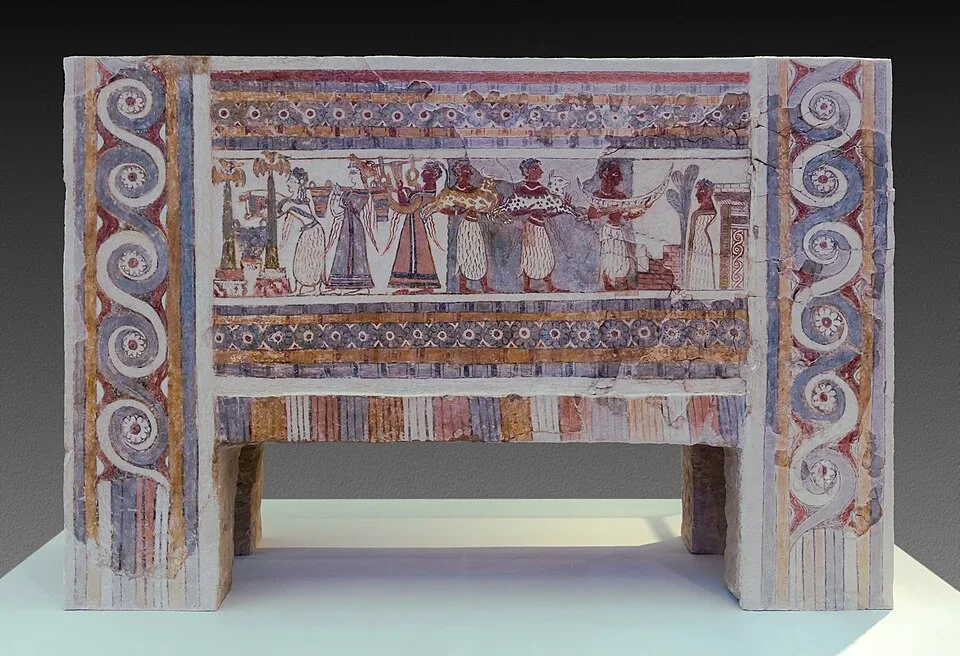
Hagia Triada sarcophagus
A man stands outside his own tomb, beside a tree and three steps. He has no arms and no feet, and he wears a hide cloak edged with gold. He seems to be the dead man, waiting for gifts and for a boat to carry him into the next world. Three men in hide aprons come toward him, carrying models of animals and a boat. Every scene on this coffin was painted for his burial. The Minoans painted into wet plaster, but only on the walls of palaces and houses, for the living. Here it covers a coffin, on every side. This is the only limestone coffin of its time ever found, and the only one whose painting tells a story. It was probably the coffin of a prince. The opposite long side shows the ceremony at his burial. A bull lies tethered on an altar shaped like a table. A man plays a double flute, and blood runs down from the altar into a bucket. Back on the dead man's side, a woman empties a decorated vase into a metal cauldron. It may be that same blood, poured to call on the dead man's soul. Inside the coffin, two skeletons lay at the bottom. The tomb was used for a short time, perhaps one generation, and no trace of worship was found there afterwards.
Listen in the appPhoto: Jebulon · CC0
04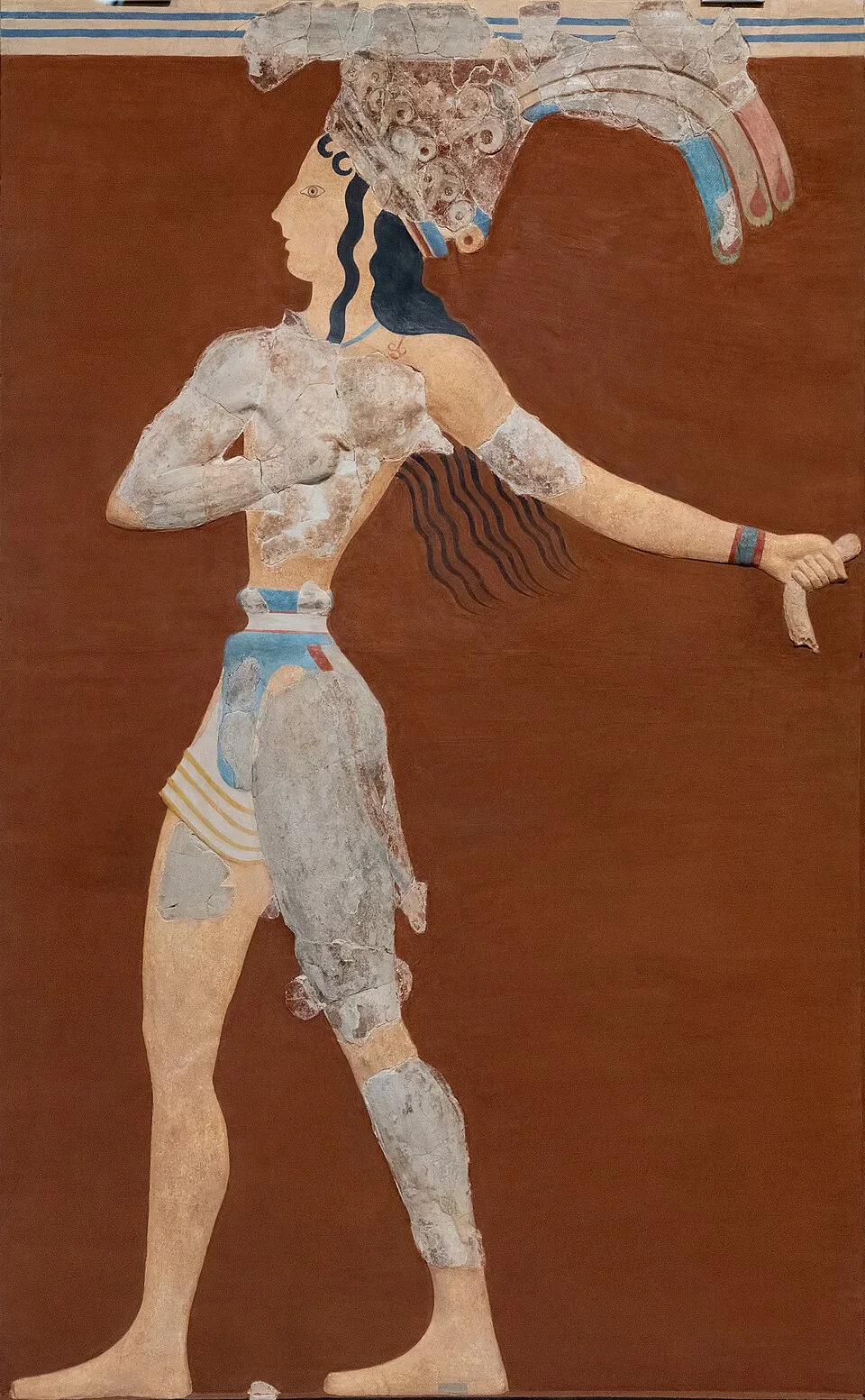
Prince of the Lilies
A plumed crown, a closed fist, lilies across the chest, the head turned to your left. This grand figure is mostly a reconstruction. Only a few pieces are ancient, and nobody knows who made them. Everything else was filled in. The pieces came out of the palace at Knossos in 1901. The torso, with its tight muscles and a raised chest muscle, pointed to a boxer. The lily crown may have belonged to another person altogether, perhaps a priestess or a goddess. In Minoan art a plumed crown seems to have been worn only by deities, griffins and the queen. Arthur Evans directed the excavation, and in time joined the pieces into one priest king. He put the image on every cover of his report on Knossos, and paid to have the crown stamped in gold. He even gave the missing arm a rope, which he thought led to a sphinx or a griffin. Nothing shows the arm held a rope at all. The reconstruction also added lilies and butterflies to the background, which the original never had. The original pieces are not flat. Each was built up in plaster into a low relief, and painted only after that.
Listen in the appPhoto: Gsimonov · CC0
05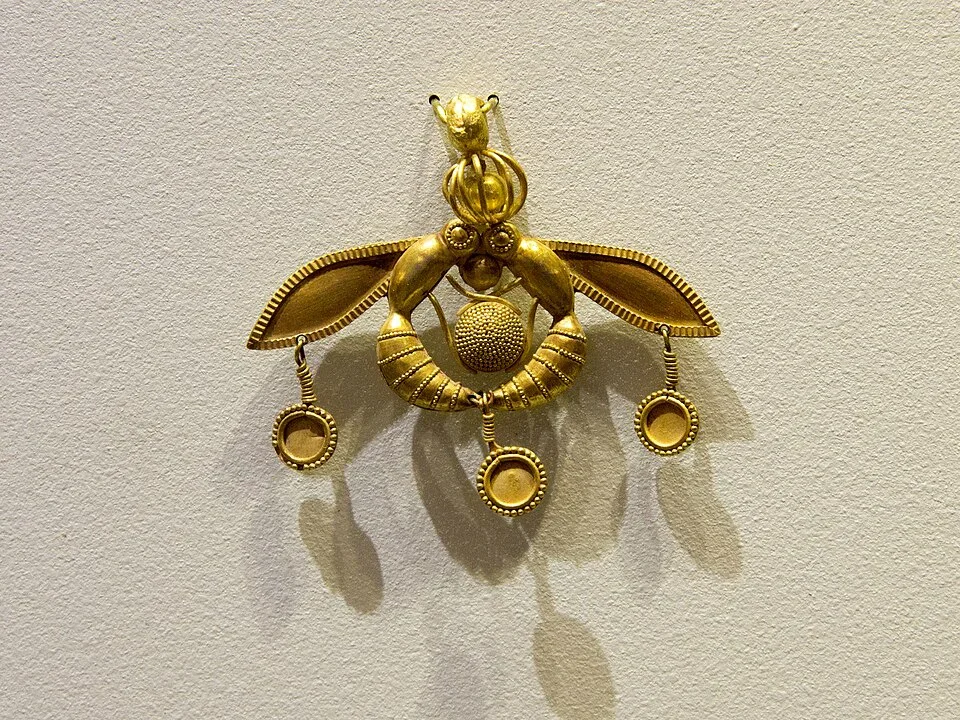
The bee pendant
For thousands of years this lay in a tomb on Crete. French archaeologists found it in 1930, in the burial ground at Chrysolakkos near Malia. Two insects face each other, exactly alike, heads together, wings spread back, the tips of their bodies almost touching. With their legs they grasp a round disc in the middle. Just above, between their heads, sits a smaller smooth ball, as if they were eating it. Three more discs hang from the wings and near the ends of their bodies. It is known as the bee pendant, but the insects may be wasps. We do not know who made it. Whoever it was may have used a large wasp as the model, and the three hanging ones may be fruits of a plant. Minoan artists often stretched a shape for effect. The name still makes sense, because honey mattered to the Minoans. It was their main sugar, an offering to a goddess, and part of their picture of life after death. Insects stood for renewal, because they change form as they grow. Other objects buried in Minoan tombs carry images of honeycomb.
Listen in the appPhoto: Zde · CC BY-SA 4.0
06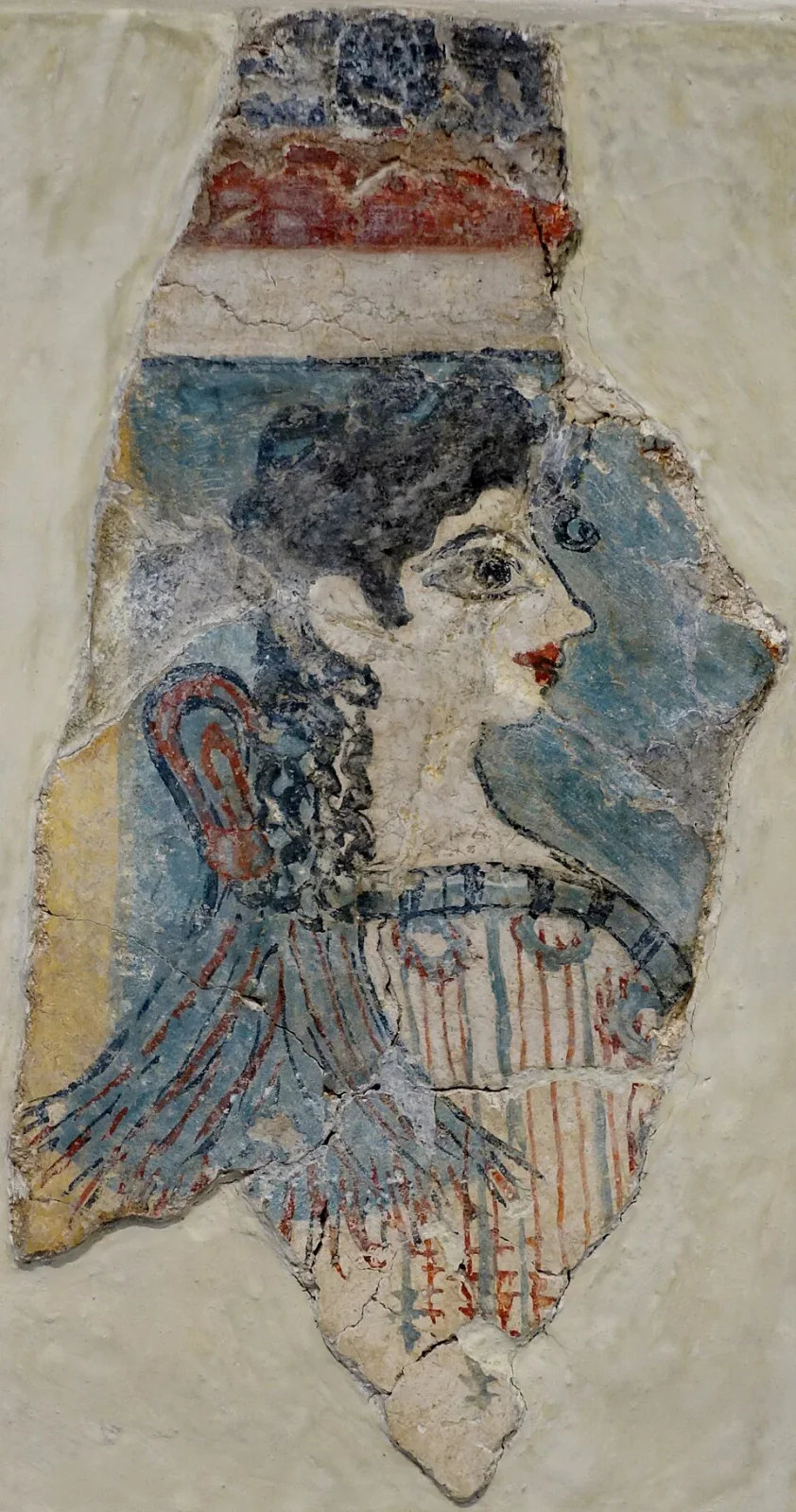
La Parisienne
She sits on a folding stool, and a sacred cup is held out to her. Others are gathered for the banquet, and drink offerings are being made. She is in profile, with one enormous eye outlined in black and lips painted red. A curl falls over her forehead, and ribbons are tossed back over her shoulder. At the back of her neck is a sacred knot, which suggests she is someone of importance, perhaps a priestess or even a goddess. That face is how she got her name. She looked so much like a woman of Paris when she was found that she came to be called La Parisienne. Her hair and the black around her eye and the red of her lips made her look so modern. That makeup was taken for something added later, because Minoan women were believed never to have worn it. But beauty objects found in Minoan palaces told a different story. Women there did paint their lips red and whiten their faces. She came out of the palace at Knossos in 1901. Arthur Evans had Emile Gillieron restore her, and he filled in so much that parts of the woman before you may be his invention.
Listen in the appOlaf Tausch · CC BY 3.0
07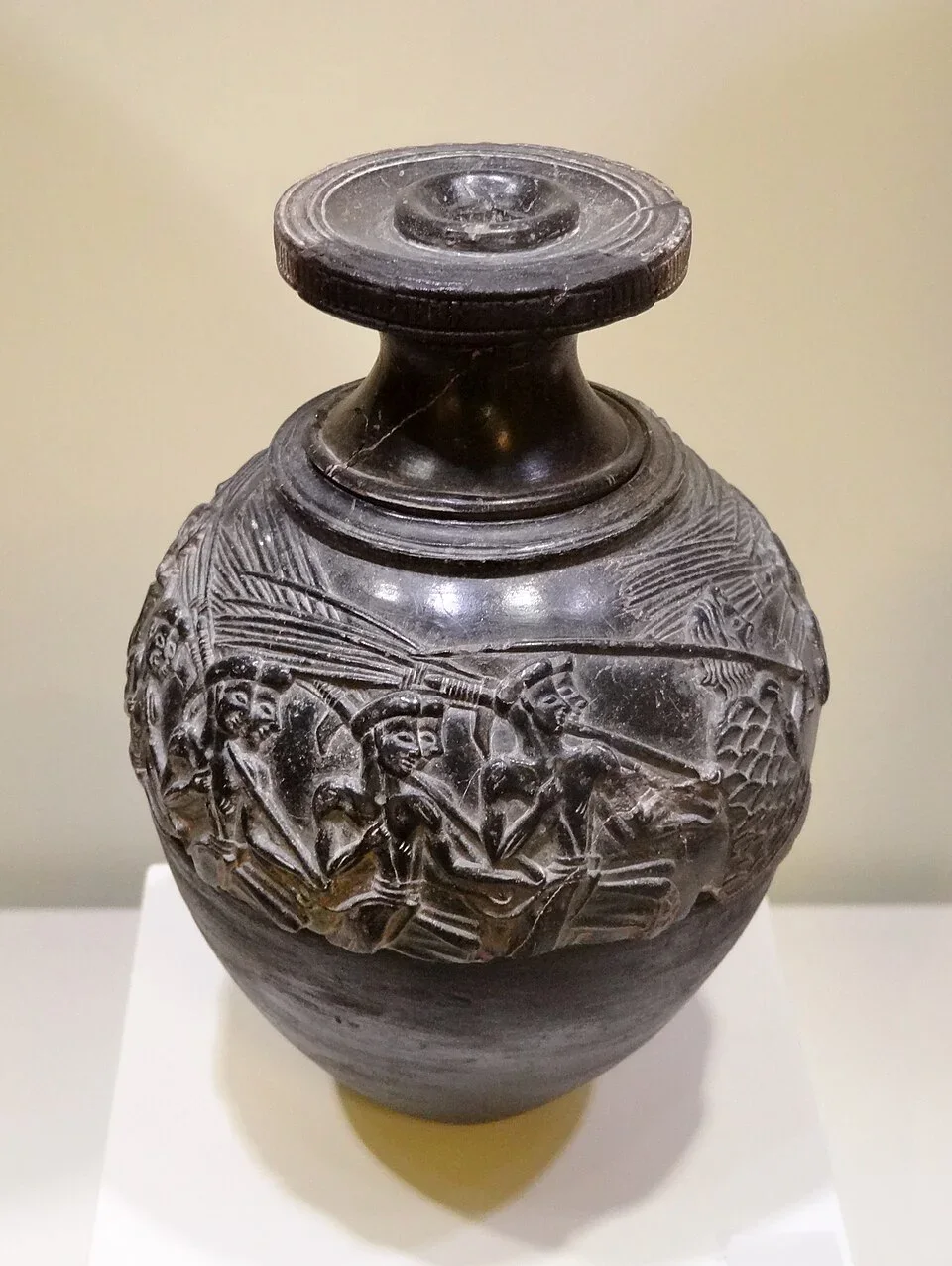
Harvester vase
Are these men coming home from the harvest, or back from a battle? No one has ever settled it, and no one knows who made this vase either. Around the widest part of the vase march twenty seven men, their legs cut off by the edge of what has survived. Most are young, in short kilts and flat caps. Most of them carry a pole with three prongs over the shoulder, with something like a bag at the knee. The poles look like tools for sowing or threshing grain. But three prongs might not do that work. They may be stabbing weapons instead, for fighting hand to hand between boats. One man is set apart from the others. He is older, with long hair and a cloak patterned like scales, and he carries a staff that curves at the bottom. He seems to lead the group. Another holds a rattle called a sistrum, his mouth wide open as if singing. It is the only sistrum we know of in Minoan art. Near the end, one figure seems to have lost his step. A man turns his head back toward him while the others keep marching. This is a vessel for pouring offerings. Underneath it would have had a second opening, stopped with a finger until the liquid was meant to run.
Listen in the appOlaf Tausch · CC BY 3.0
08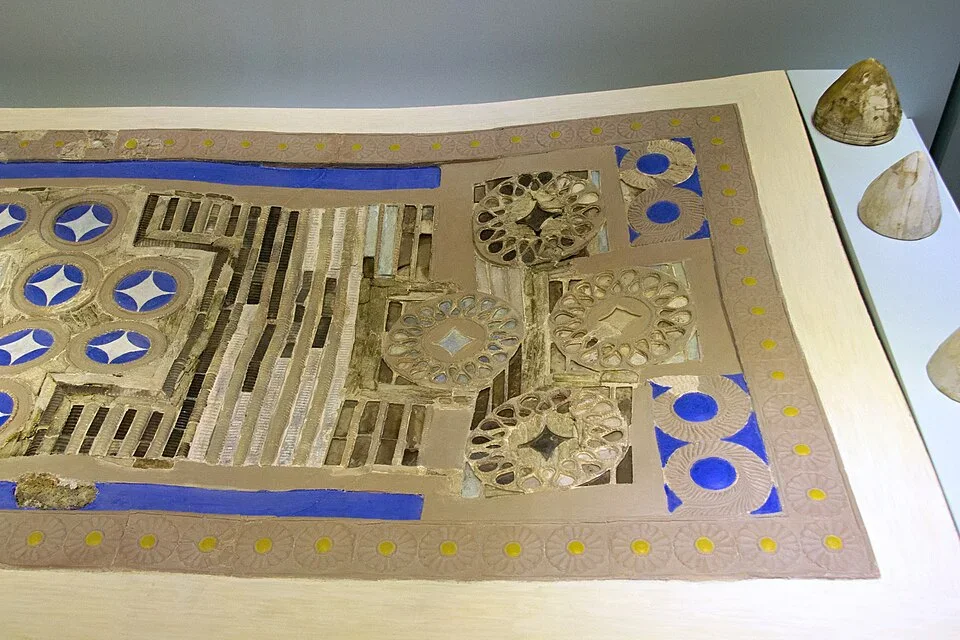
Gaming board from Knossos
It is made of thin sheets of gold and silver. Rock crystal and blue glass are set into ivory, all fixed to a wooden base. It probably belonged to a very wealthy lord. When it was found at Knossos it had come apart, and conservators fitted the fragments back together. Its border is a frame of seventy-two daisy flowers. At one end are four large medallions. They are edged with ivory and inlaid with crystal and glass. Each holds a pair of spirals that turn against each other. On the other side are ten white diamonds, each inside a blue disc. Four cone-shaped pieces of ivory were found beside it. They are just the width of those ten discs. That fits what the man who found it, Arthur Evans, called it, a royal gaming board. He tried to work out how two players might capture the four medallions, perhaps with dice. But no one can say for sure whether a game was ever played on it.
Listen in the appPhoto: Zde · CC BY-SA 4.0
09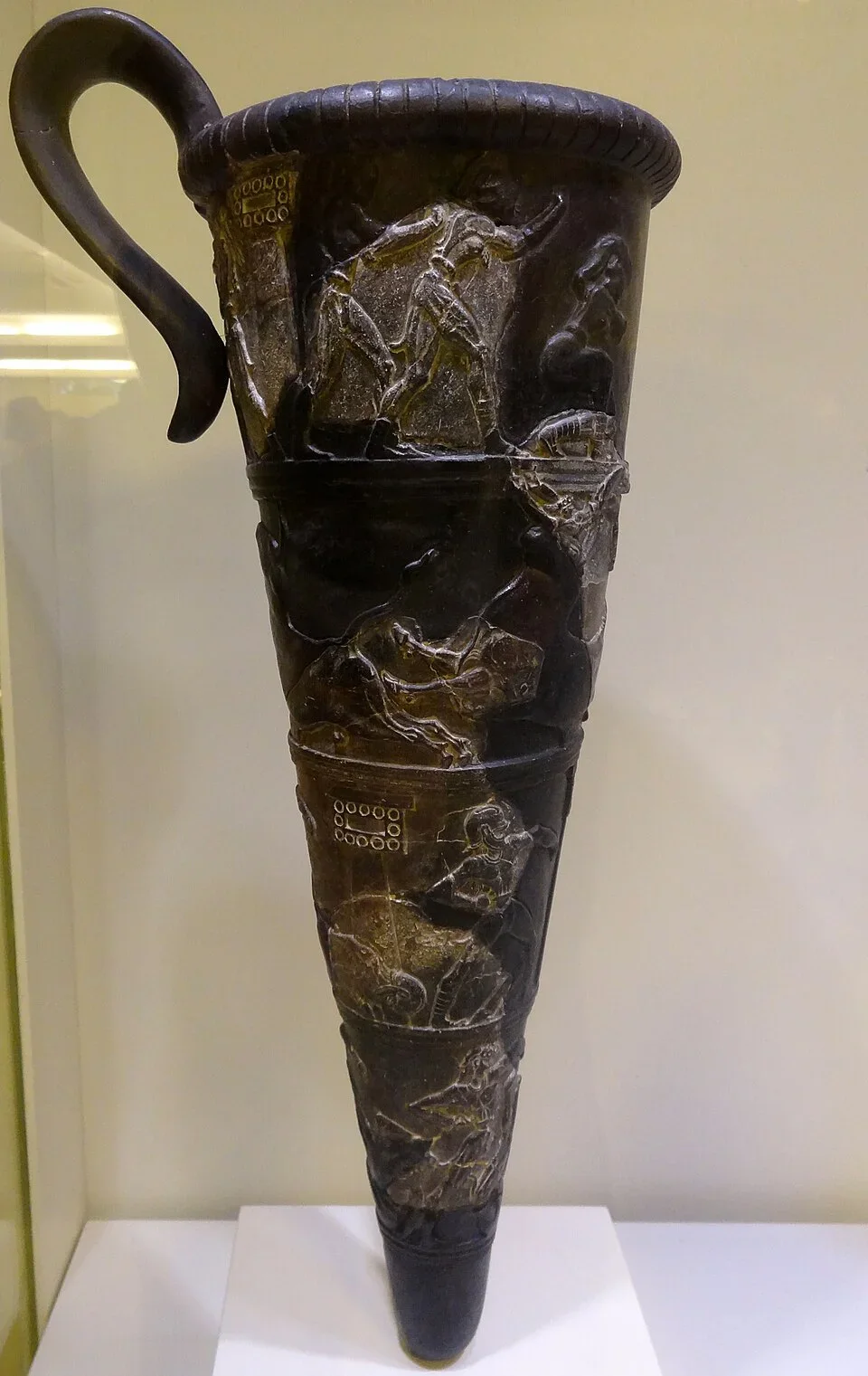
Boxer Rhyton
There is a face here that has just taken a blow. The expression is worked out with medical precision, and so are the tensed muscles. The same care runs through all twelve fighters, spread across three of the vessel's four bands. One leans slightly forward, and he is the winner. The man facing him tries to escape the punches, and he has lost. They wear helmets covering the whole face, leather gloves and gaiters, with combed hair, necklaces and bracelets. Because the anatomy is so exact, these figures tell us how Minoan athletes fought. We do not know who made them. This was a rhyton, a vessel used in religious ceremonies. Columns in the background mark the space where the games were held, perhaps a sanctuary. It came from a small palace at Ayia Triada. It was found broken into ten pieces and pieced back together, with parts still missing.
Listen in the appOlaf Tausch · CC BY 3.0
10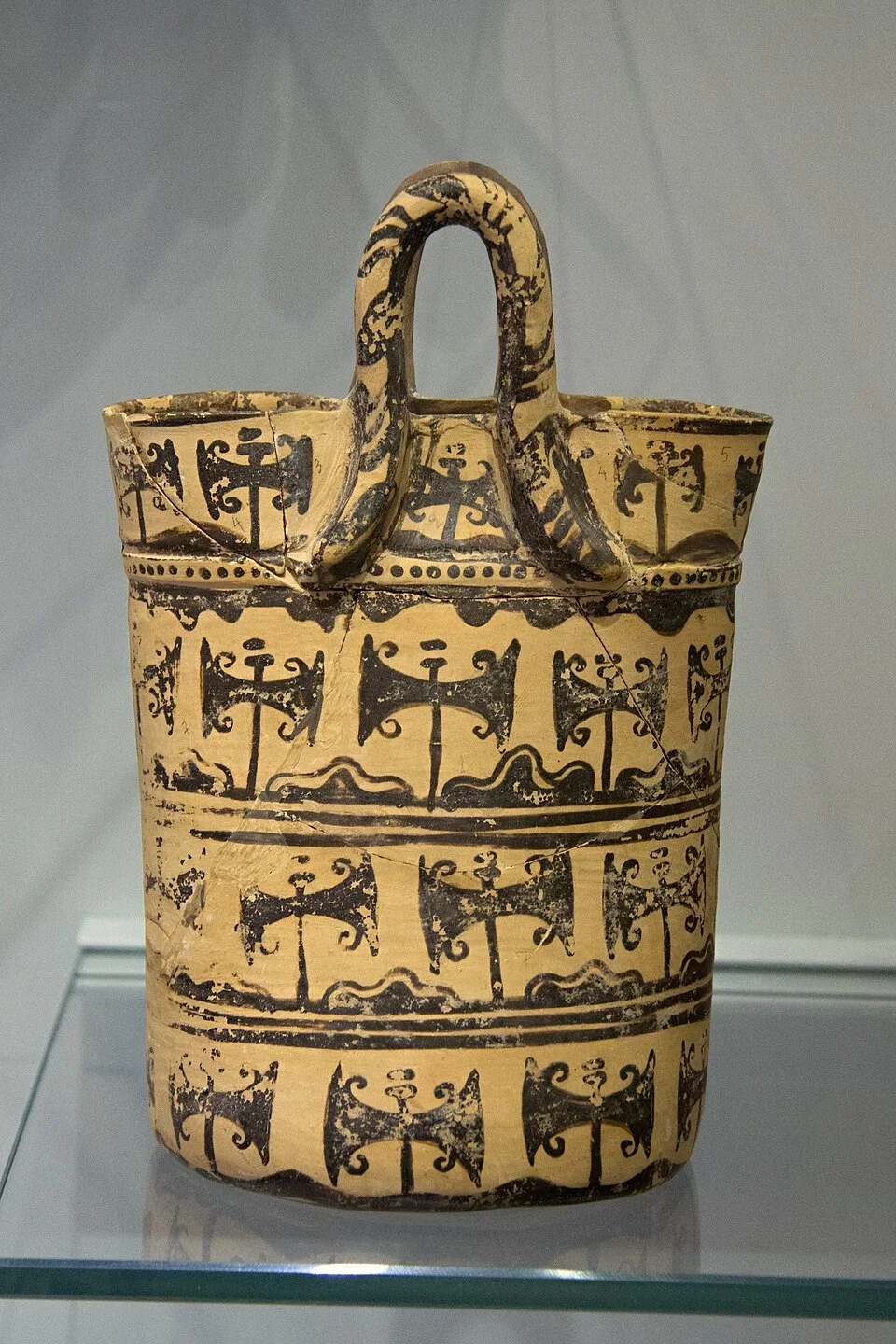
basket-shaped vessel with double-axe decoration
It came out of the ground in pieces. In 1906, on the island of Pseira, this vessel was found broken and was put back together. It is clay, shaped like a basket, with double axes painted in four bands that run right around it. Two other vessels of the same date lay beside it when it was found. Vessels like this are never found on their own. They always turn up with others, so this one may have been a priest's vessel. It was probably used in religious ceremonies and kept in his own house. Its shape and the axes painted on it do not match the local vessels of the Ierapetra isthmus. They resemble a find from Gournia. Its mouth is squeezed in, and that leaves the two handles facing each other.
Listen in the appPhoto: Zde · CC BY-SA 4.0
- 11
Ladies in Blue
Unknown Artist · c. 1450 BC
- 12
Isopata signet ring
Unknown Artist · -1500
- 13
Archaeological Museum of Heraklion - Clay flask with Marine Style decoration
Unknown Artist · c. 16th century BC
Αρχαιολογικό Μουσείο Ηρακλείου
Frequently asked questions
How much does the guide cost?
Free app download. Free until 1 January. Listed guide price: $0.99. Audio guide only. Venue admission is separate.
Can I listen without internet?
Yes. Download the guide’s audio, images, and maps in the app before your visit. Your downloaded content is then available offline.
Can I listen in my language?
In English for now. More languages soon.
Do I need to follow a schedule?
No. This is a self-guided experience. Choose your stops, pause whenever you like, and return to a story at your own pace.
Which artworks are in the Αρχαιολογικό Μουσείο Ηρακλείου audio guide?
13 artworks, including Phaistos disc (Unknown Artist), Bull-Leaping Fresco (Unknown Artist), Hagia Triada sarcophagus (Unknown Artist), Prince of the Lilies (Unknown Artist), The bee pendant (Unknown Artist), La Parisienne (Unknown Artist), Harvester vase (Unknown Artist), and Gaming board from Knossos (Unknown Artist). The full list is on this page.
Is this the museum’s official audio guide?
No. Stanza is an independent audio guide app and is not affiliated with Αρχαιολογικό Μουσείο Ηρακλείου. Museum admission is separate.
At your own pace
Explore Αρχαιολογικό Μουσείο Ηρακλείου.
Download Stanza, then search for “Αρχαιολογικό Μουσείο Ηρακλείου”.
Free app download · Guide price shown in the app
Keep exploring
Nearby audio guides
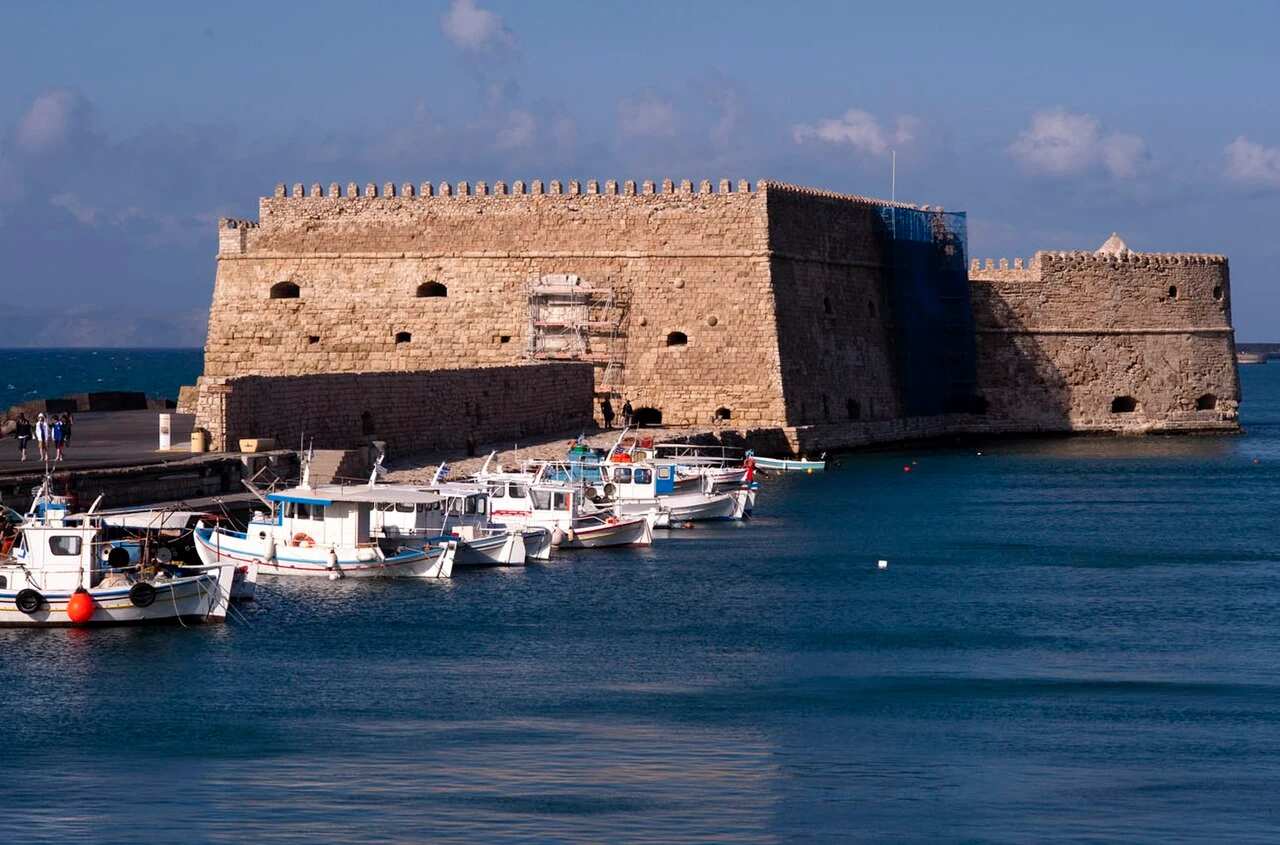
Heraklion · 1 km
Rocca a Mare
Content & sources
Γεώργιος Γιαννόπουλος · CC BY-SA 3.0
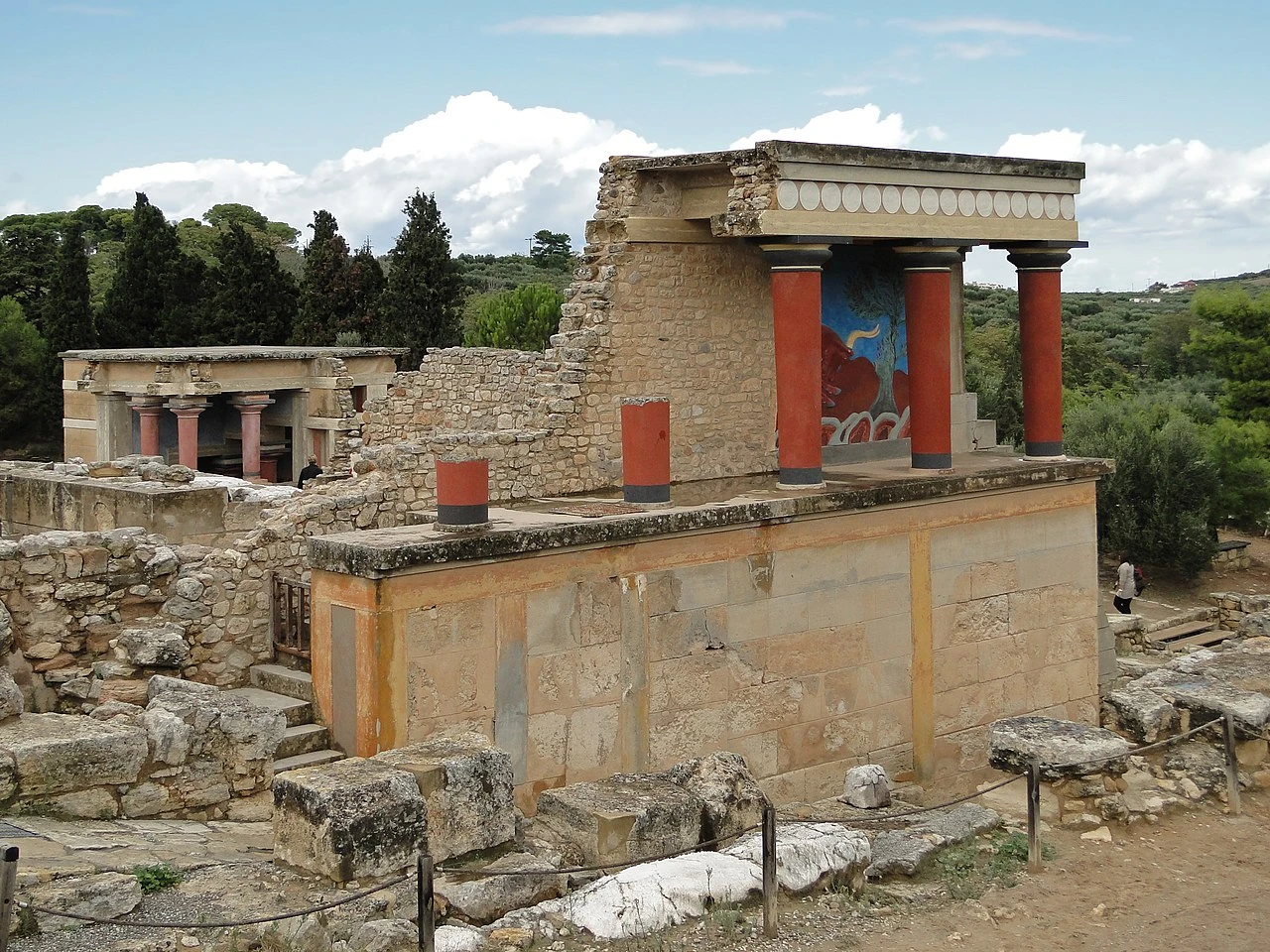
Heraklion · 5 km
Knossos
Content & sources
Bernard Gagnon · CC BY-SA 3.0
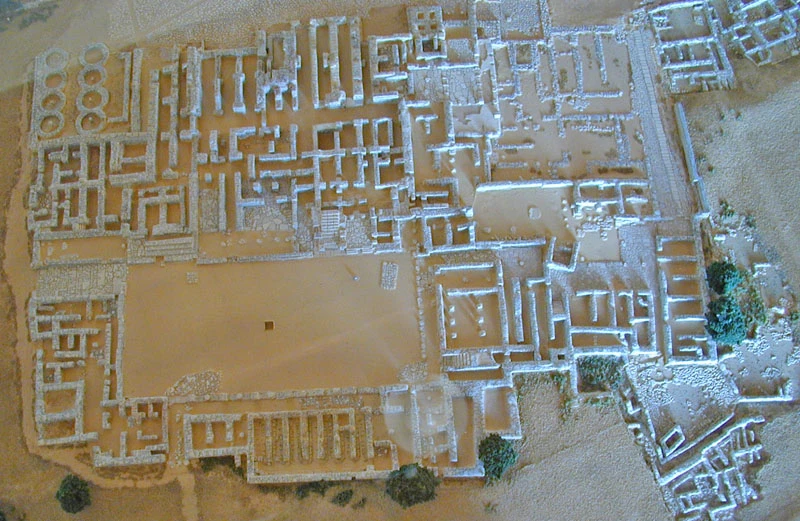
Malia · 33 km
Palace of Malia
Content & sources
No machine-readable author provided. Marsyas assumed (based on copyright claims). · CC BY 2.5
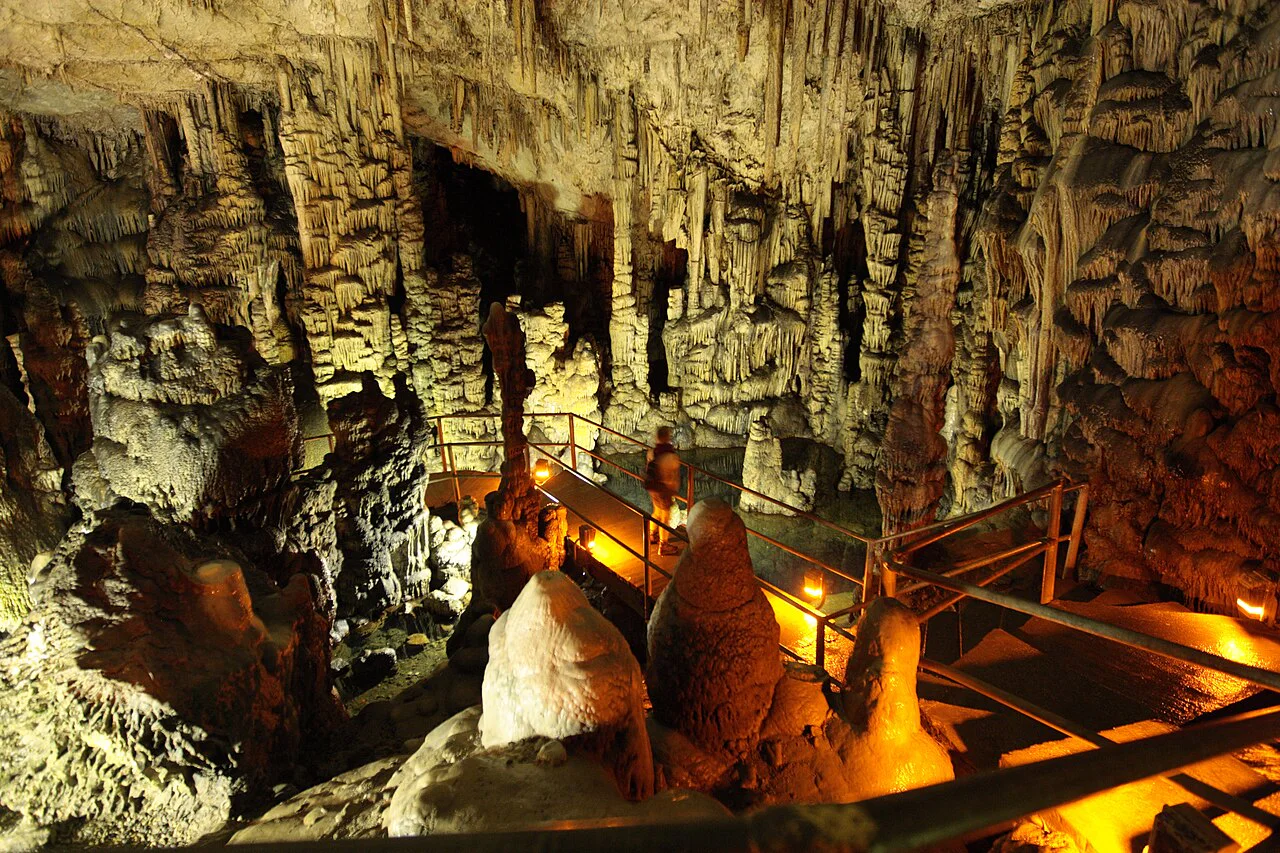
Psichro · 34 km
Δικταίο Άντρο
Content & sources
Jerzy Strzelecki · CC BY-SA 3.0
Art museums
More art museum audio guides
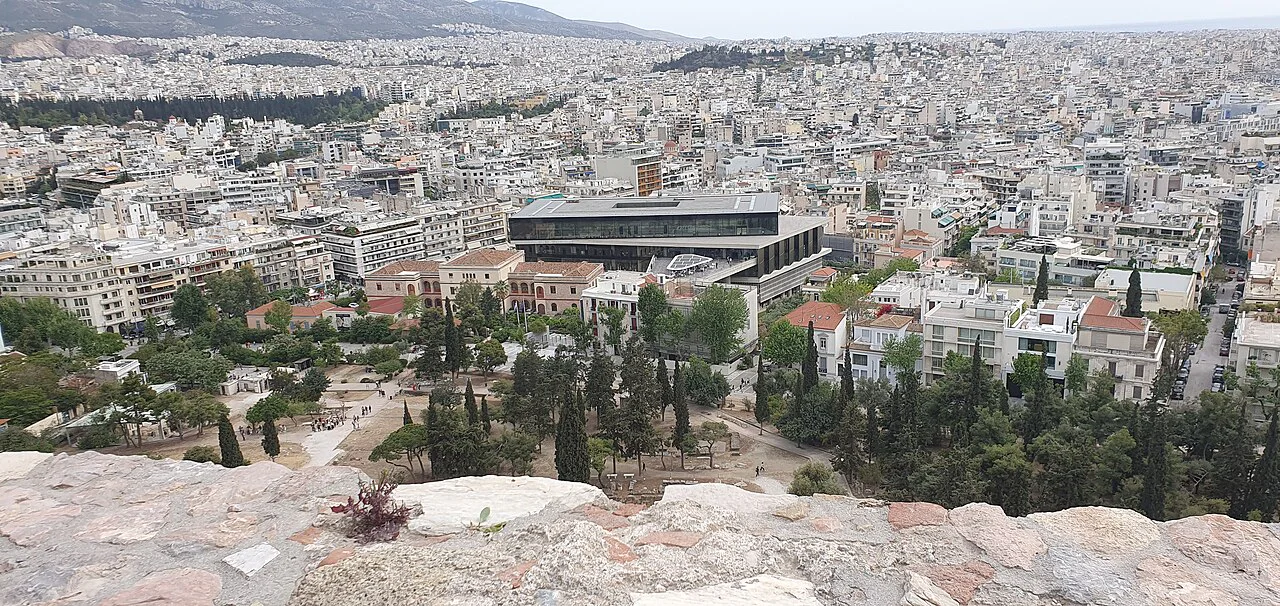
Athens · 35 artworks
Μουσείο Ακρόπολης
Content & sources
Photo: Yair-haklai · CC BY-SA 4.0
Athens · 19 artworks
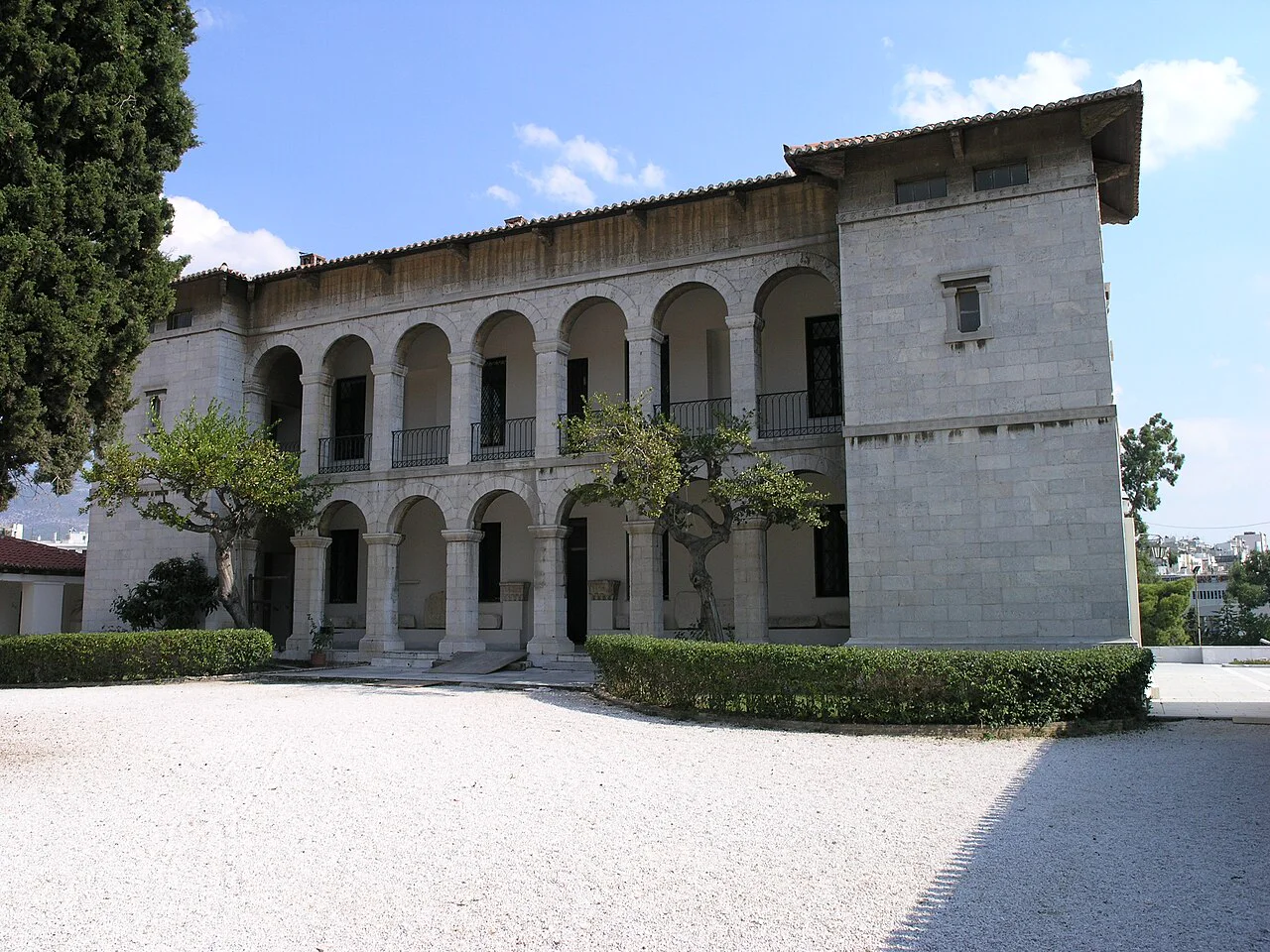
Βυζαντινό και Χριστιανικό Μουσείο
Content & sources
Photo: Marsyas · CC BY-SA 3.0

Athens · 25 artworks
Εθνική Πινακοθήκη-Μουσείο Αλεξάνδρου Σούτζου
Content & sources
Photo: Leeturtle · CC BY-SA 4.0
Athens · 17 artworks
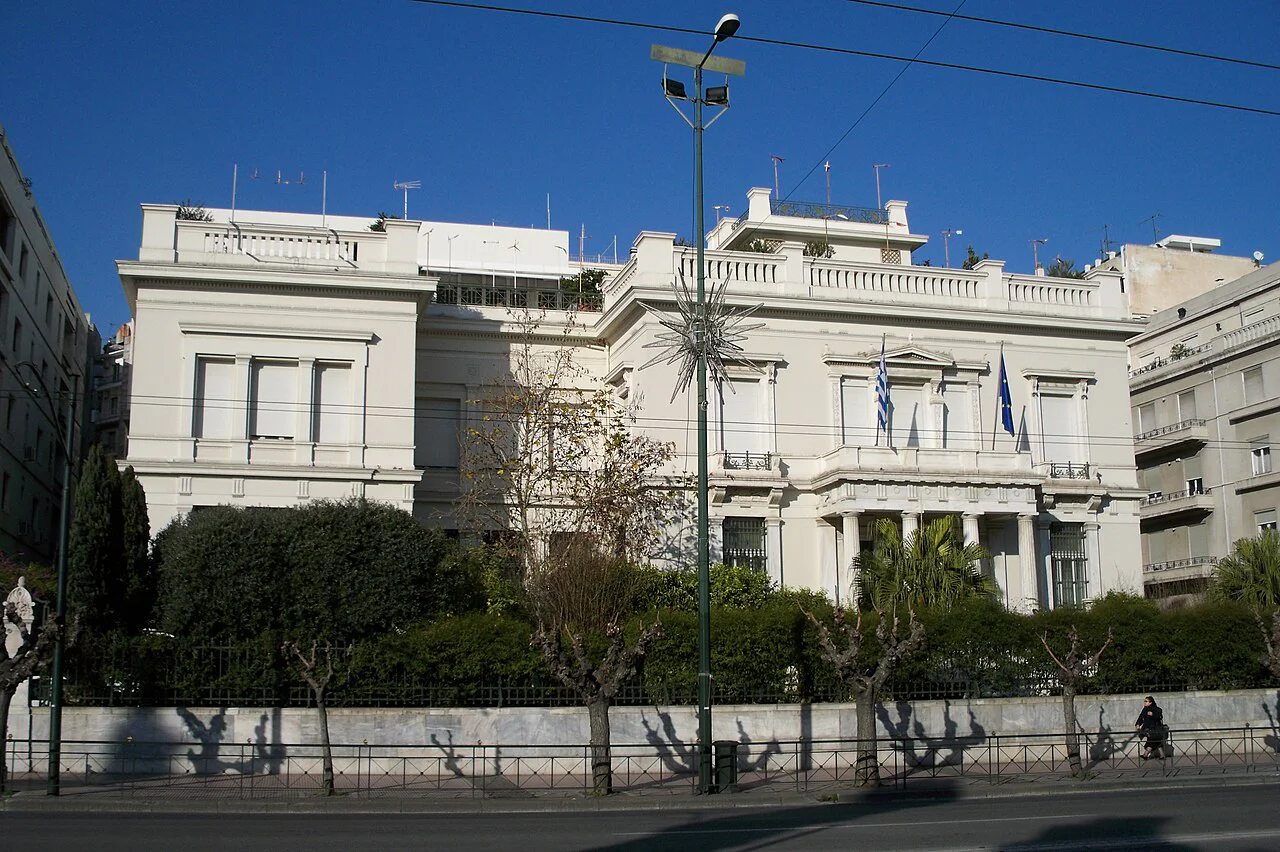
Μουσείο Μπενάκη
Content & sources
Photo: Dimboukas · CC BY-SA 3.0
Athens · 91 artworks
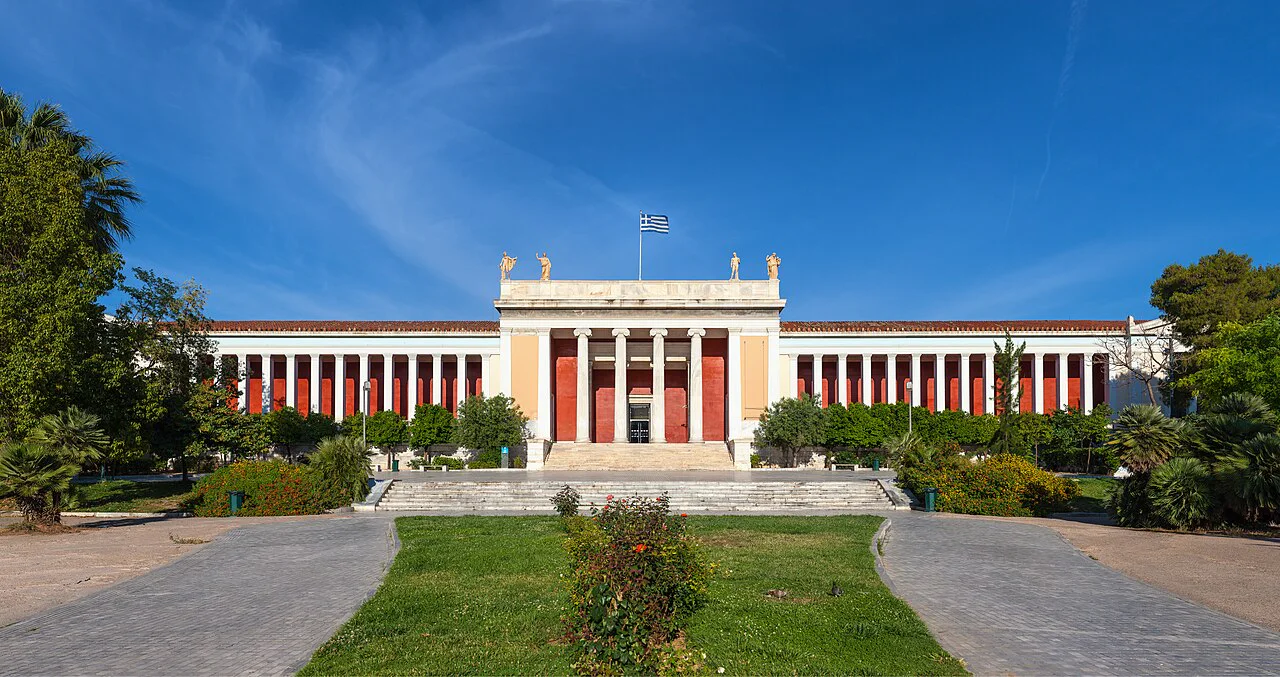
Εθνικό Αρχαιολογικό Μουσείο
Content & sources
Thomas Wolf, www.foto-tw.de · CC BY-SA 3.0 de
Istanbul · 16 artworks
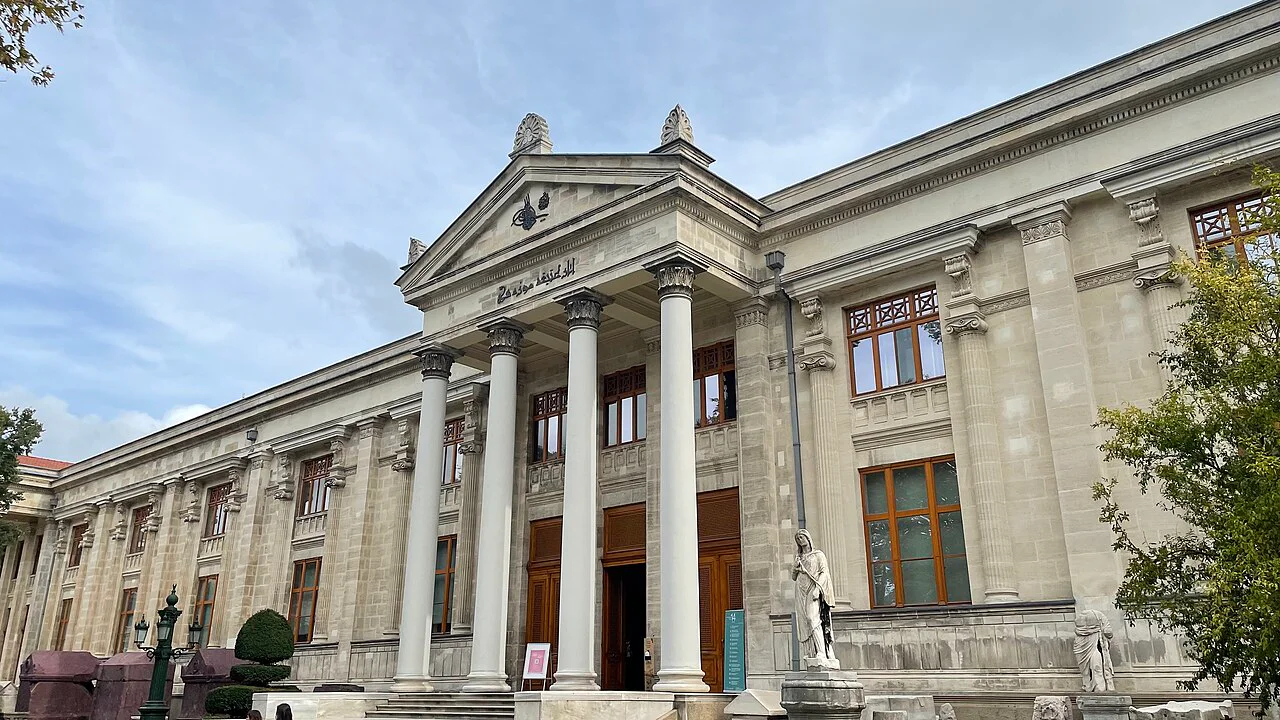
İstanbul Arkeoloji Müzeleri
Content & sources
Photo: Metuboy · CC BY-SA 4.0