Stanza · Audio guide
Musée Condé Audio Guide
A place to remember. A story to take with you.
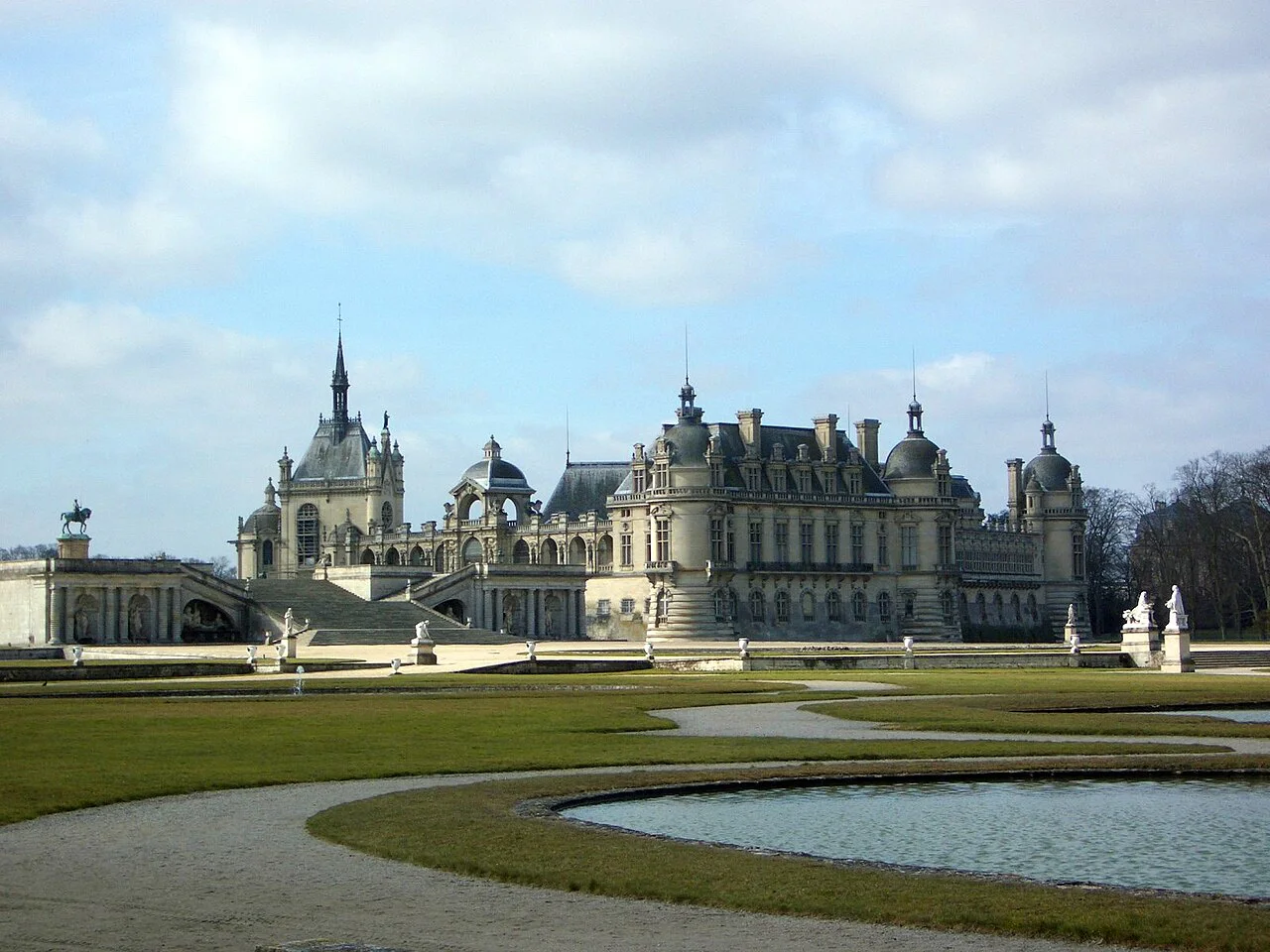
The Musée Condé is a French museum located inside the Château de Chantilly. It houses collections bequeathed to the Institut de France by the Duke of Aumale, featuring rooms remodeled as museum spaces…
Download Stanza, then search for “Musée Condé”.
About the tour
One guide. Your kind of visit.
The Musée Condé is a French museum located inside the Château de Chantilly. It houses collections bequeathed to the Institut de France by the Duke of Aumale, featuring rooms remodeled as museum spaces alongside 18th and 19th-century residential quarters.
The Musée Condé guide tells the stories of 60 artworks, including Three Graces (Raphael), Madonna of Loreto (Raphael), Melencolia I (Albrecht Durer), Antiochus and Stratonice (Jean-Auguste-Dominique Ingres), Venus Anadyomene (Jean-Auguste-Dominique Ingres), Madonna d'Orleans (Raphael), Portrait of Simonetta Vespucci (Piero di Cosimo), and The Duel After the Masquerade (Jean-Léon Gérôme). Every artwork is free to hear in the Stanza app until 1 January.
Ready when you are.
- 01Get the free Stanza app.
iOS & Android
- 02Find your guide.
“Musée Condé”
- 03Download before you go.
Works offline
Audio guide / 60 artworks
Inside the guide
Get to know a few of the stories before you go. Open a stop to read more.
01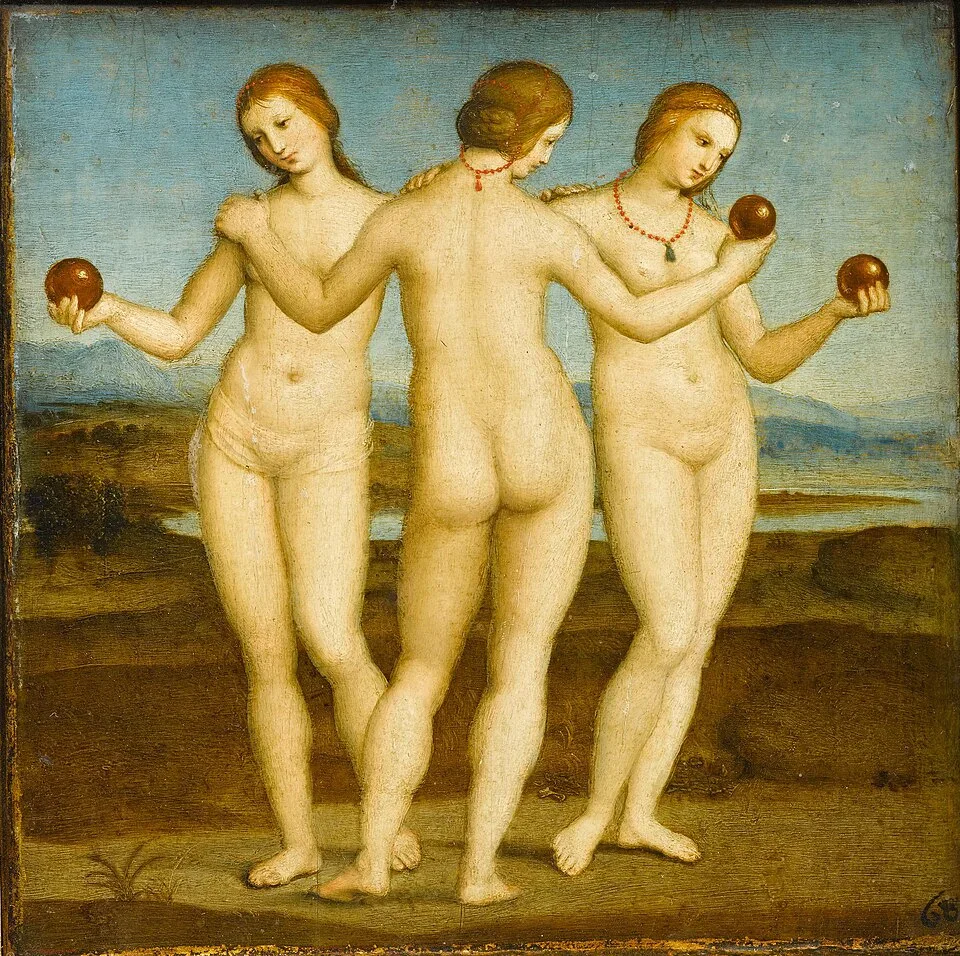
Three Graces
Two of the three women face you, the one between them has turned away, and golden apples are in their hands, ready to be given. In 1986, the drawing beneath the paint came to light. It seems to show Minerva, Juno and Venus, and the apple of discord from the Judgment of Paris. Only the woman on the left held an apple, and the one on the right made a modest gesture. Raphael then changed the scene. The three goddesses seem to have become the Graces, the attendants of Venus, and the apple of discord became golden apples, held out now as a reward. Not everyone accepts that reading of the drawing. He probably took the pose not from living models but from an ancient sculpture of the Graces he knew in Siena.
Listen in the appRaphael · Public domain
02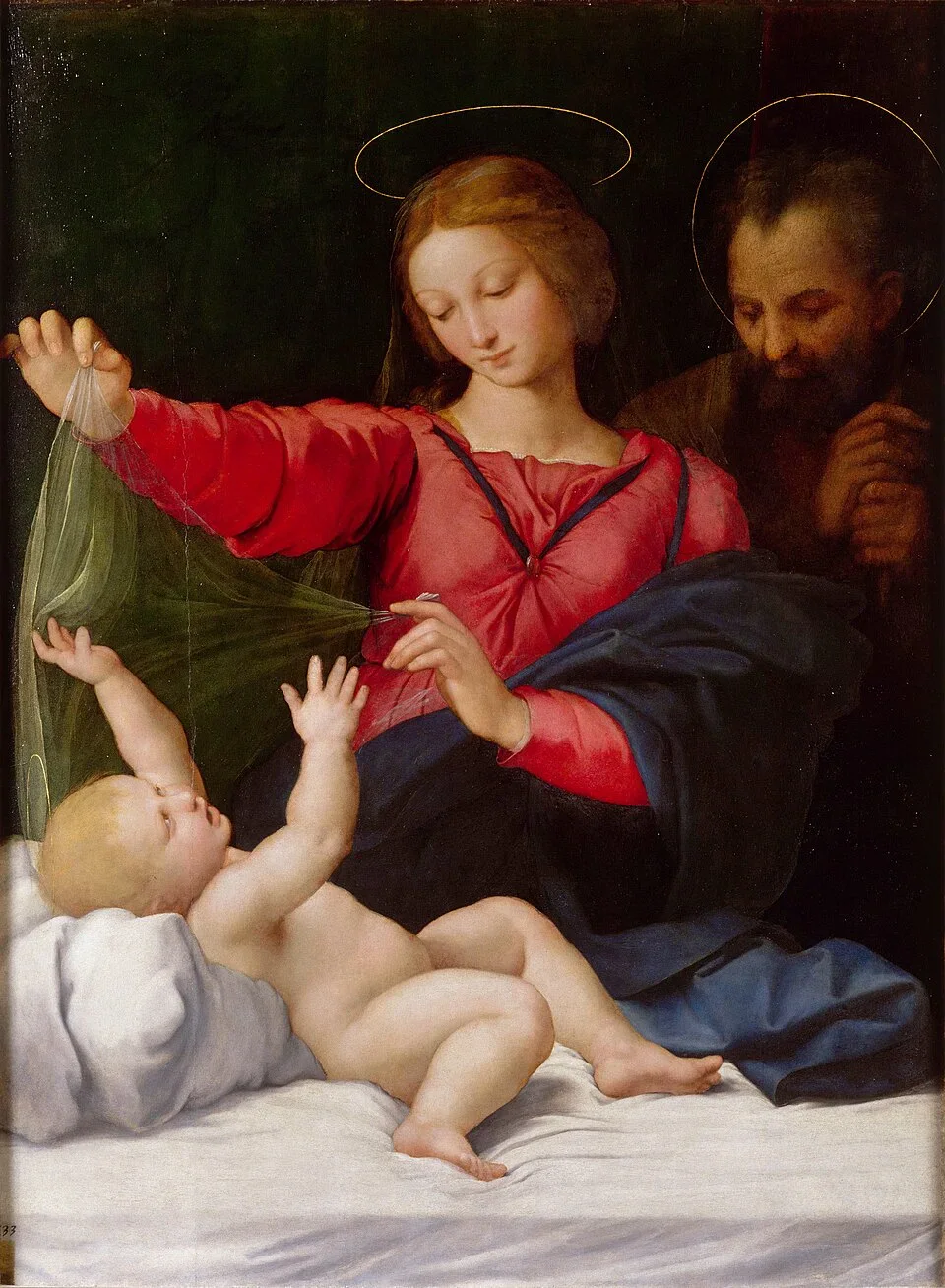
Madonna of Loreto
Raphael painted the mother and child first, then added Saint Joseph over a window that had been above her shoulder. Joseph is the man at the right, set back in shadow while the other two are in full light. His hands are together, and he watches with a sadness that may point to what lies ahead for the child. Between mother and child a small game is going on. The baby, just awake, lies on a bed at the lower left and lifts both hands toward the veil his mother raises from his head. That veil carried two meanings. It was the cloth she wrapped him in at his birth, and the cloth that would wrap him again at his death. For a long time this painting was given to another painter, Penni. Its name came from a different picture, a copy at Loreto that people took for the original. The real one was never there. Then the painting was cleaned. Under X-rays, Joseph turned out to have been painted after the others were finished, and the baby's right foot had been moved. Those changes followed drawings only its maker could have made, and that ruled out a copy. In 1979 it was shown as the original.
Listen in the appRaphael · Public domain
03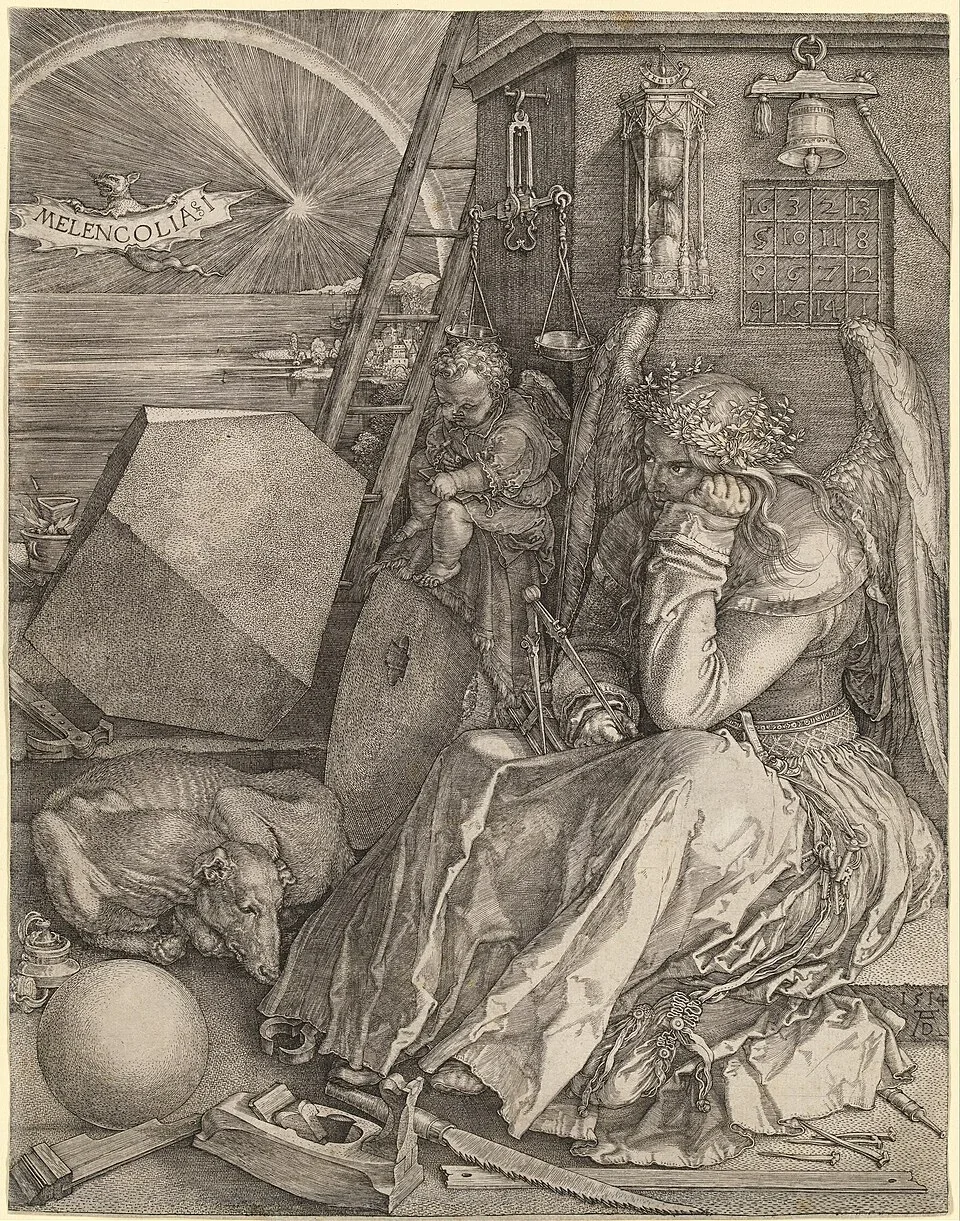
Melencolia I
A woman with wings sits with her head in her closed fist. She holds a compass loosely and gazes past everything around her. She may be a Muse, waiting for inspiration she fears will not come back. A closed book rests on her lap. Around her lie the tools of measuring and building, a saw, a plane, a hammer and nails, all of them unused. The image seems to be about how melancholy and the creative mind sit close together. It can drain the will to make things, and yet it often turns up in the very people who make them. Around her are all the instruments an artist and a builder could want, and she cannot bring herself to use a single one. Dürer made the print in 1514, after several friends died, and then his mother. In an unfinished book for young artists, he warned that too much hard work could leave them in melancholy's power. Behind her, on the wall, is a square of sixteen numbers, arranged so that every row, column and diagonal adds to thirty four. It was the first such square printed in Europe. The year 1514 sits in the bottom row. No one now knows what the whole image was meant to say.
Listen in the appAlbrecht Dürer · Public domain
04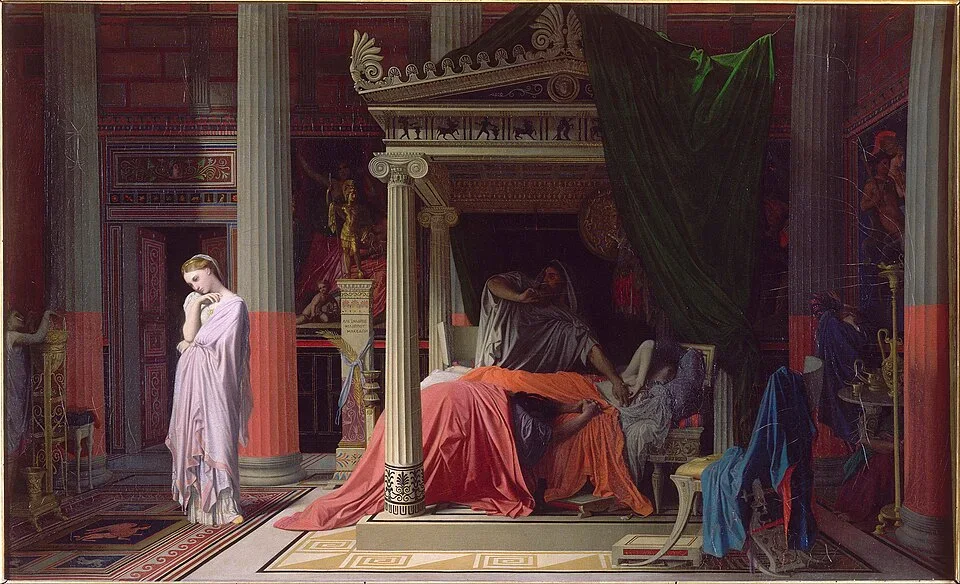
Antiochus and Stratonice
A young man lies ill in bed. A doctor is with him, and a woman has just come into the room. At the foot of the bed, a man has collapsed. The four of them are shown at the instant a secret is uncovered. Antiochus is dying of love for Stratonice, the woman who has just walked in. She is his own father's new wife, and he kept the feeling to himself as the sickness took hold. The doctor, Erasistratus, found the cause by watching. When Stratonice entered, the prince grew restless and his heart beat faster. The man collapsed at the foot of the bed is Seleucus, the father. He has just learned what is killing his son. The Duke of Orléans ordered the painting in 1834, to hang beside a picture of the murder of the Duke of Guise. It was finished in Rome in 1840. A lyre sits in the foreground. Ingres played the violin in the orchestra that performed Méhul's opera Stratonice, and this is the moment of the heroine's solo.
Listen in the appJean-Auguste-Dominique Ingres · Public domain
05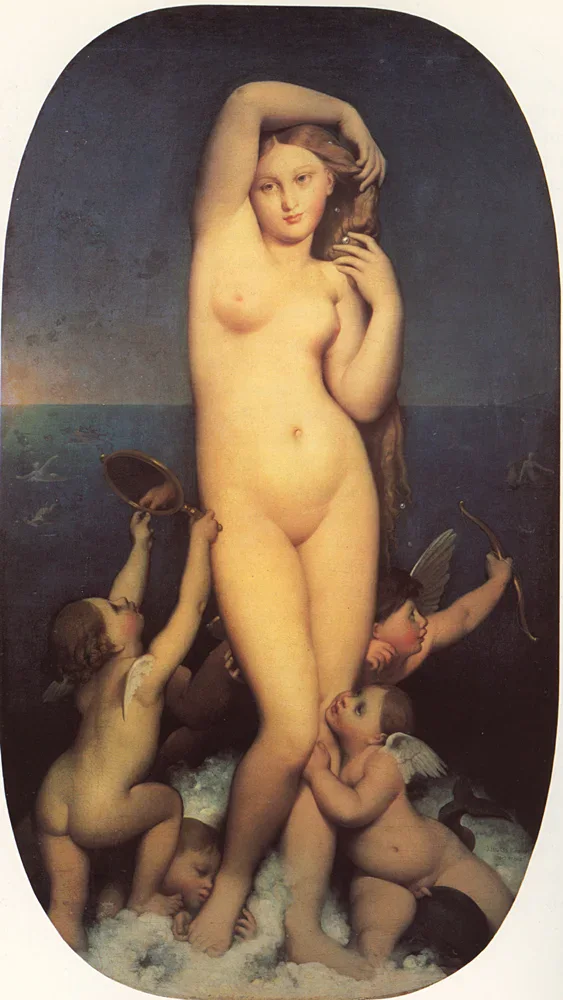
Venus Anadyomene
The man who ordered this Venus would not take her. She rises from the sea with her arms lifted, her hair in her hands, just as a drawing of 1806 already showed her. Ingres began the painting in Rome in 1808, at the French Academy, then left it for forty years. In 1848, in Paris, the banker Benjamin Delessert asked him to finish it, and Ingres changed the colours he had first planned. Delessert would not have it. The painting went that year to Frédéric Reiset, who looked after drawings at the Louvre. It was shown in Paris in 1855. The reason Delessert turned it down was one knee, which he thought drawn awkwardly.
Listen in the appJean-Auguste-Dominique Ingres · Public domain
06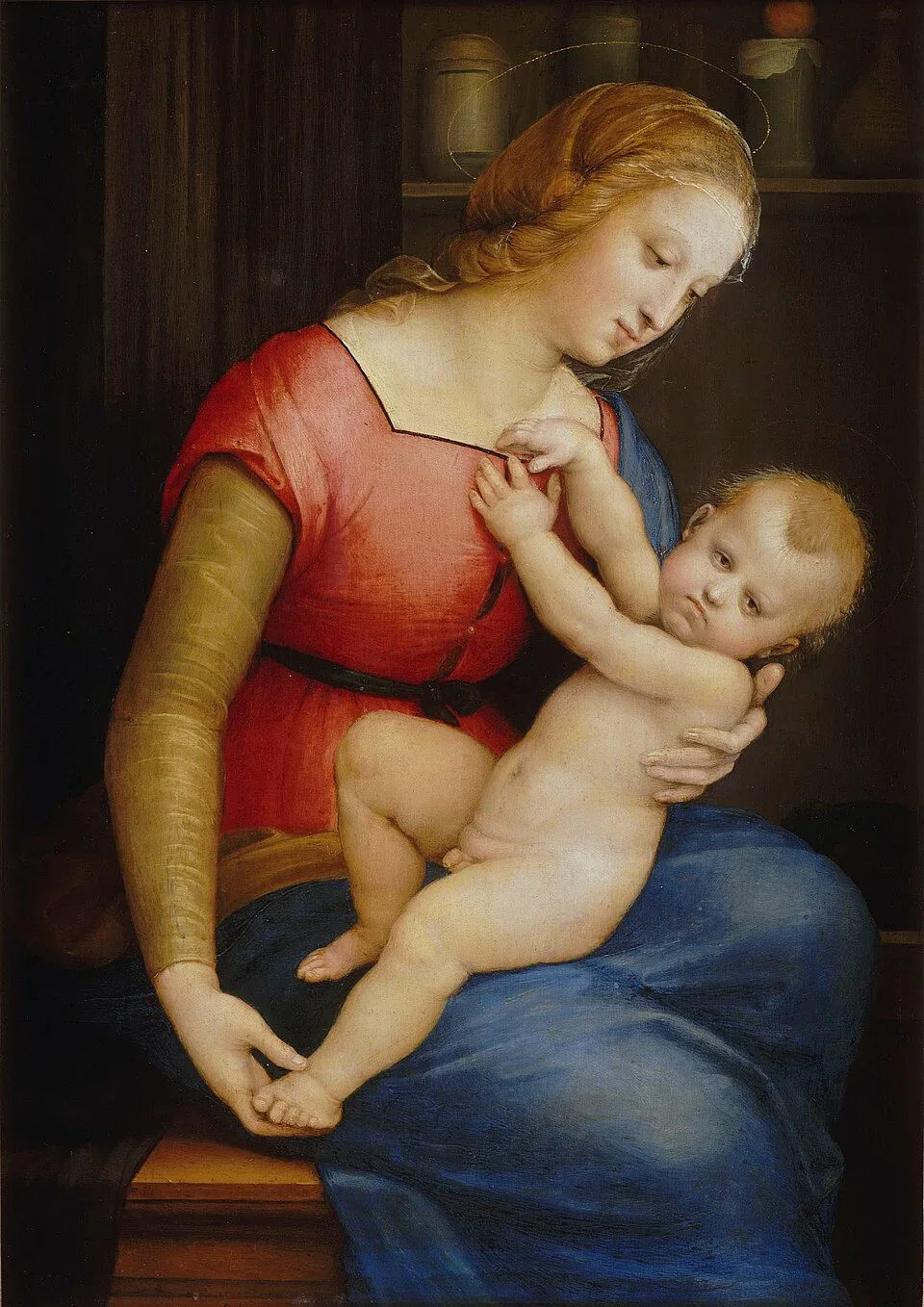
Madonna d'Orleans
In 1791 the Duke of Orléans sold his entire collection of Italian paintings to his banker to cover enormous debts. One of them was the picture in front of you. It went to London, where a group of lords bought the whole collection and then sold this one at once. Over the following decades it passed from collector to collector, in London, Brussels and Paris, until the Duke of Aumale hung it at Chantilly. The painting shows the Virgin and child. Raphael painted it in Florence around 1506, and her face is close to a Madonna dated that same year. Notice the shelf at the back. For a long time the pots and the apple on it raised questions. At the time there was a painting by Jan van Eyck of Saint Jerome studying, and it showed the same pot and apple on a shelf. On van Eyck's pot was the word tyriana, the name of a remedy for snake bites, and the snake stood for evil. Apple and cure together meant sin undone by Christ, with Mary as the one who pleads with him and serves the true remedy. The other pots make her an apothecary. Where the painting went between 1647 and 1729 is still not known.
Listen in the appRaphael · Public domain
07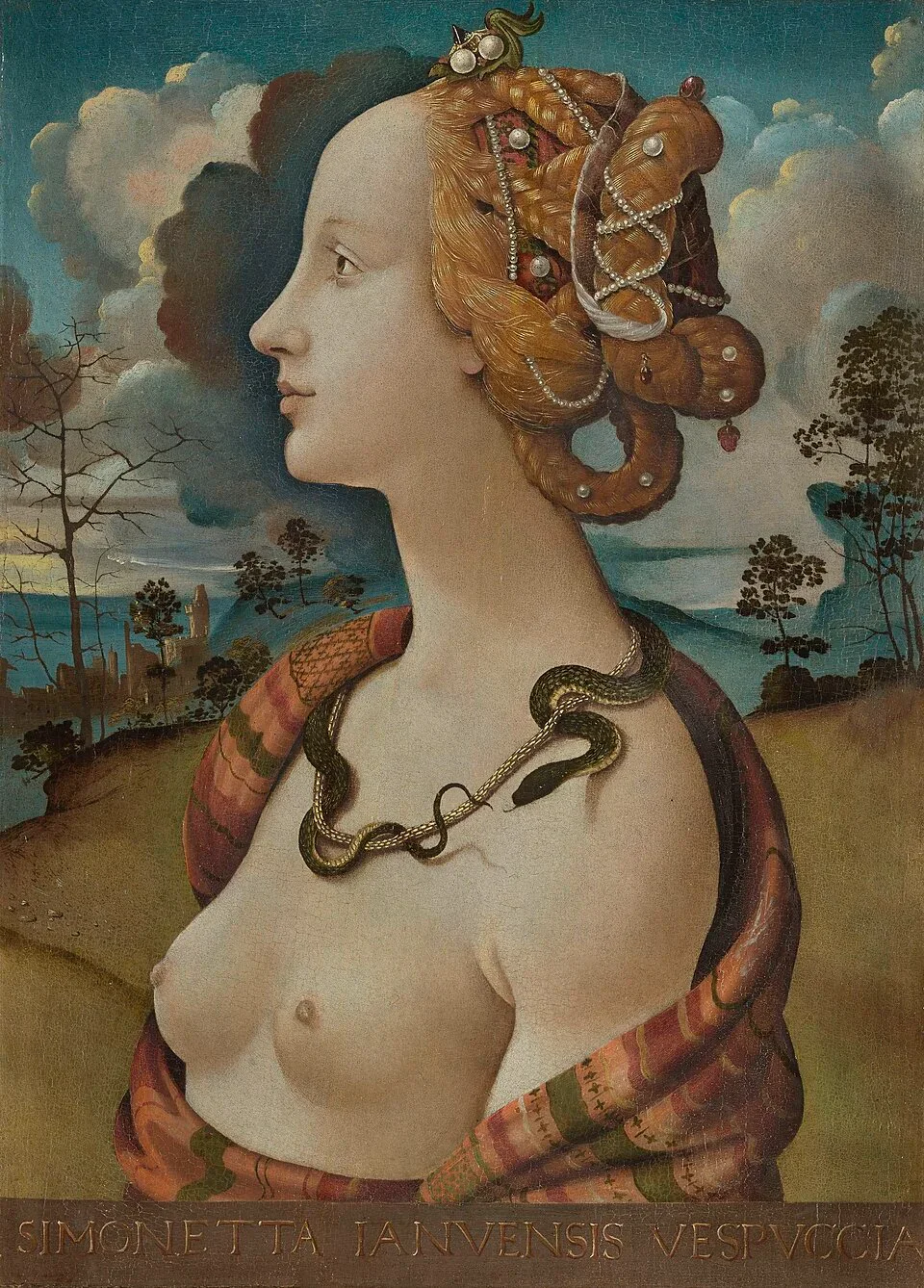
Portrait of Simonetta Vespucci
A small snake winds around the gold chain at her throat, and her breasts are bare. Behind her face hangs a dark cloud, with a dead tree standing in the landscape. At first this looks like Cleopatra and the asp that killed her. But the drawing is precise enough to show a green and yellow snake, harmless. In classical art, such a snake stood for the cycle of time and renewal. It was linked to Janus, god of the new year. The name along the bottom plays on that same word. She is probably Simonetta Vespucci, a Genoese noblewoman who married into a Florentine family. She was called the greatest beauty of her age, and she died at twenty three. Piero di Cosimo was only fourteen then. The portrait seems to have been made years after her death, so even the likeness is uncertain. It is now titled a portrait of a woman said to be Simonetta Vespucci. The name at the bottom may have been added later.
Listen in the appPiero di Cosimo · Public domain
08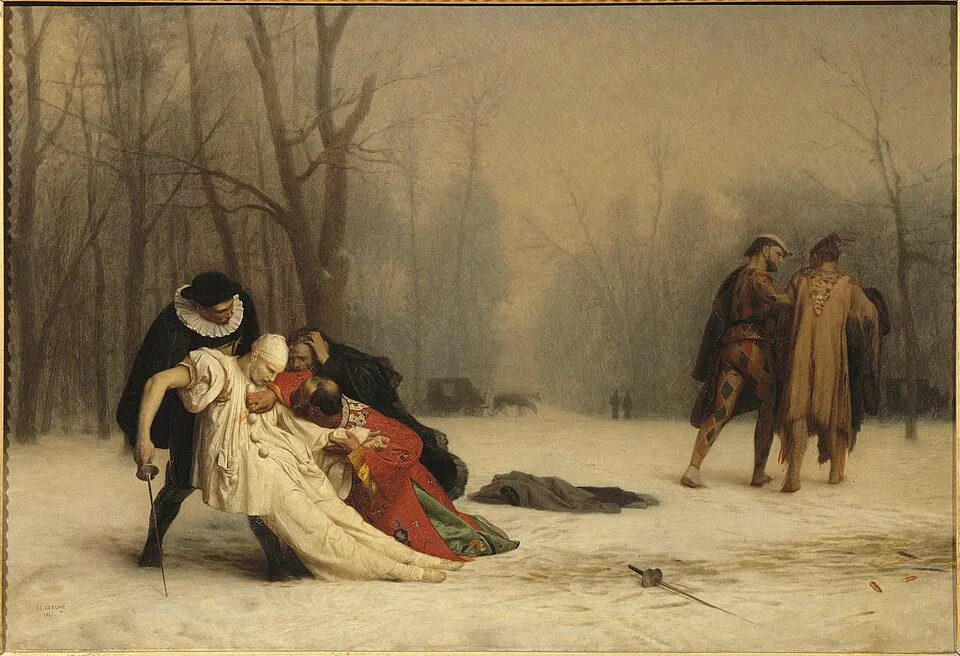
The Duel After the Masquerade
A few feathers are left behind. They fell from the headdress of a man who is walking away. He has just survived a duel, and he leaves his weapon behind too. His carriage waits in the distance. The man he fought has fallen. He is dressed as Pierrot, mortally wounded, and has collapsed into the arms of another figure dressed as the Duc de Guise. A surgeon, dressed as a doge of Venice, tries to stop the blood. Bright as these masquerade costumes are, there is blood on Pierrot. The painter chose the moment after the fight, not the fight itself. Painted in 1857, the picture became famous almost overnight at the Paris Salon. Gambart, an English dealer, took it to London and had it engraved. In 1858 the Duke of Aumale bought it while living in exile in England, and kept it at Twickenham. In 1867 Gérôme borrowed it back through a friend to show at the Universal Exhibition, and won the grand prize for painting. When the duke's exile ended in 1871, he brought the painting home to Chantilly.
Listen in the appJean-Léon Gérôme · Public domain
09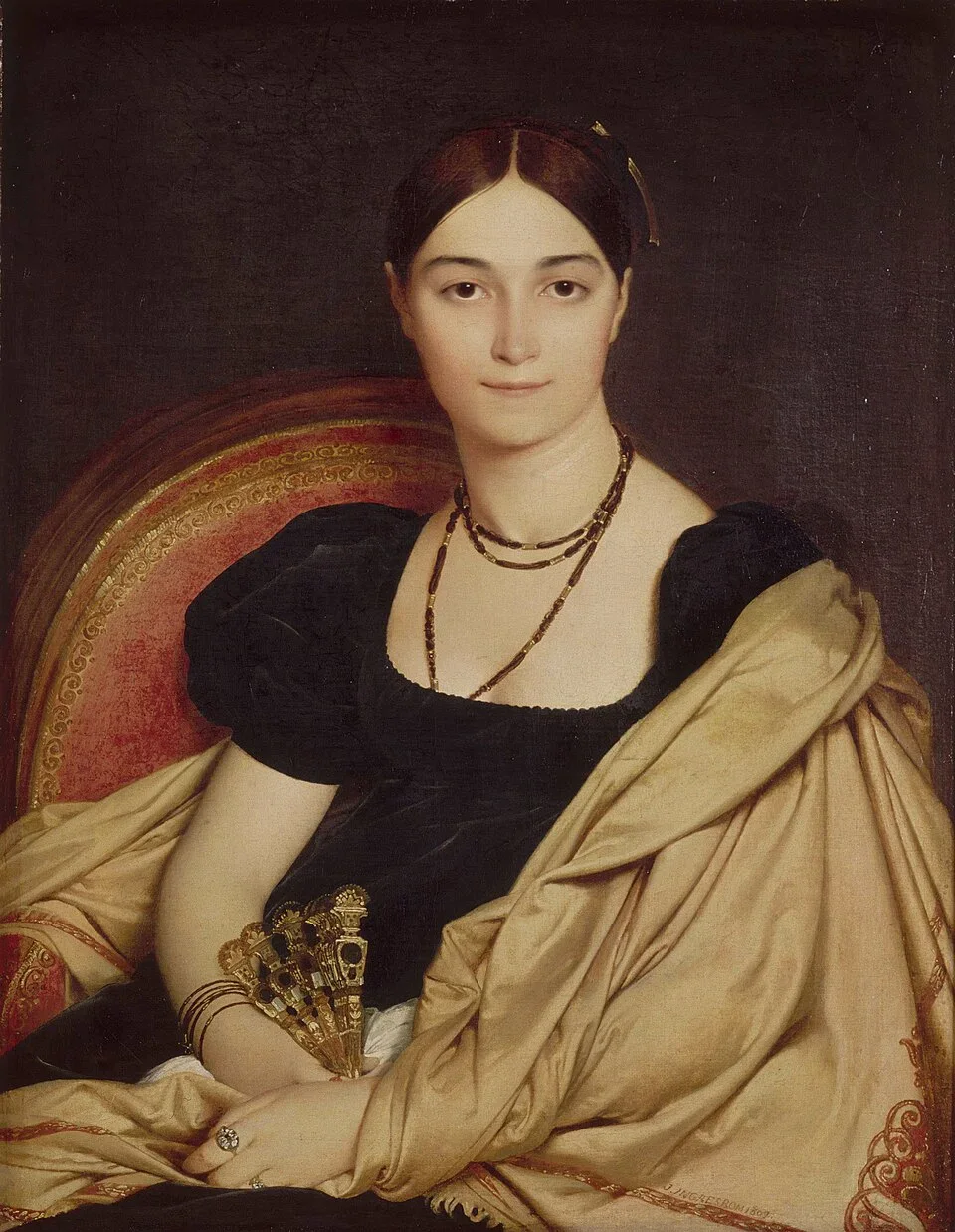
Portrait of Madame Devaucay
She looks straight back at you, with a slight, sly smile and a mysterious air. In 1807, in Rome, Ingres painted her, his first portrait of a woman there. She was Antonia, companion of the French ambassador to the Holy See, one of the best known women in Rome. It is not a portrait that pleases so much as one that sets you dreaming. The grey behind her is flat, and a faded rose and gold chair curves in around her. She holds an expensive fan and wears three rings, a thin necklace and bracelets. The odd part is in the lines. Her left arm, on your right, is far longer than the other. Her neck is drawn too long, as though it could barely carry her head. Almost no shading, only clean outlines. She begins to look less like a woman than the ancient Chimera in Empire dress. At the Salon of 1833 this was the most praised portrait there. Years later, short of money, Antonia came to Ingres in Paris to sell it, and he found a buyer in Frédéric Reiset. For more than a century she was called by the wrong name, Madame Devauçay, after a character in a story by Stendhal. Only in 1968 was part of her real identity recovered. Ingres never learned the name of the woman who sat for him.
Listen in the appJean-Auguste-Dominique Ingres · Public domain
10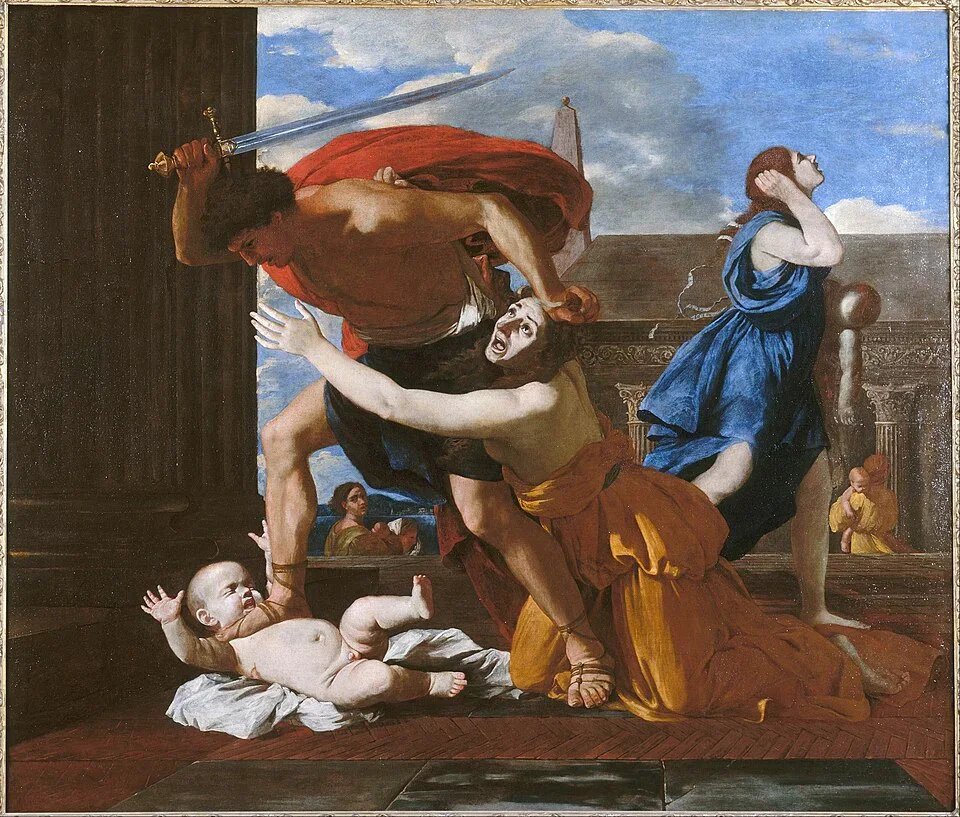
Massacre of the Innocents
A soldier kills one baby. A mother screams and tries to stop him. The whole picture is built around that single child and that single cry. The scene comes from the Bible, where Herod the Great orders every boy two years old and under in Bethlehem put to death. But this painting was probably made for Vincenzo Giustiniani, a Roman collector, to remember children of his own family. The Giustiniani had long lived on the Aegean island of Chios and controlled its trade. In 1566, Ottoman forces took the island. About twenty young people were taken hostage and sent to Constantinople, several of them Giustiniani children. Their captors tried to force a conversion to Islam. Most refused, and were tortured and killed. That cry let the family remember children it had actually lost, through a Bible story. To shape that cry, Poussin drew on paintings by Raphael, Guido Reni and Caravaggio, and on details from ancient art.
Listen in the appNicolas Poussin · Public domain
- 11
The Chord
Jean-Antoine Watteau · c. 1714–1717
- 12
Self-Portrait Aged 24
Jean-Auguste-Dominique Ingres · 1804
- 13
Hours of Étienne Chevalier
Jean Fouquet · c. 1452–1460
- 14
Trier copy of the Registrum Gregorii
Master of the Registrum Gregorii · 985
- 15
Hunts of Maximilian
Bernard van Orley
- 16
Landscape with two nymphs
Nicolas Poussin · c. 1659
- 17
Berger des Pyrénées
Rosa Bonheur · 1864
- 18
Chantilly Codex
Baude Cordier · c. 1350–1400
- 19
Nude Mona Lisa
School of Leonardo da Vinci · 1513–1516
- 20
The Worried Lover
Jean-Antoine Watteau · 1715–1720
- 21
The Two Foscari
Eugène Delacroix · 1855
- 22
The Lunch of Oysters
Jean-François de Troy · 1735
- 23
Mystic Marriage of Saint Francis
Sassetta · 1437–1444
- 24
Cupid Disarmed
Jean-Antoine Watteau · c. 1715
- 25
Portrait of Gaston de France
Anthony van Dyck · 1632–1634
- 26
Theseus Finds His Father's Sword
Nicolas Poussin · c. 1638
- 27
Ingeborg Psalter
Unknown Artist · 1210
- 28
The Ham Dinner
Nicolas Lancret · 1735
- 29
The Assassination of the Duke of Guise
Paul Delaroche · 1834
- 30
The Virgin of Mercy of the Cadard Family
Enguerrand Quarton, Pierre Villate · 1452
- 31
Pastoral Pleasure
Jean-Antoine Watteau · c. 1714–1716
- 32
Portrait of a Woman
Dosso Dossi · c. 1530–1535
- 33
1805, Cuirassiers Before the Charge
Jean-Louis-Ernest Meissonier · 1878
- 34
Le corps de garde à Meknès
Eugène Delacroix · 1847
- 35
Sleeping Venus
Annibale Carracci · c. 1602–1603
- 36
Ahasuerus Chooses Esther
Sandro Botticelli, Filippino Lippi · c. 1480
- 37
Portrait of Talleyrand (Scheffer)
Ary Scheffer · 1828
- 38
Torriani Hours
Giovanni Ambrogio de Predis · 1490
- 39
February
Limbourg brothers · 1408–1416
- 40
Bréviaire de Jeanne d'Evreux - Musée Condé Ms51
Jean Pucelle · 14th century
- 41
Pietà
Guercino · 1637–1640
- 42
Commentaires de la guerre gallique
François Clouet, Godefroy le Batave · c. 1519–1520
- 43
Dante Inferno - Chantilly Musée Condé Ms597
Artiste toscan anonyme · 1329
- 44
Condé Diamond
Unknown Artist
- 45
Heures du connétable Anne de Montmorency
Noel Bellemare · 1549
- 46
Book of Hours of the Duke of Guise
Master of Egerton, Master of Boucicaut, Master of Guy de Laval · c. 1410
- 47
Christ Taking Leave of His Mother
Federico Barocci · 1612
- 48
Aachen City Hall 1520
Albrecht Durer · 1520
- 49
Annunciation
Albrecht Durer · c. 1526
- 50
Raphael - Two naked children riding a boar and playing with a lance in the presence of six other children, 19-523575
Raphael · c. 1502–1504
- 51
Portrait of Bonifacio Agliardi
Giovanni Battista Moroni · 1564–1566
- 52
Portrait of Angelica Agliardi de Nicolinis
Giovanni Battista Moroni · c. 1565
- 53
La Vierge, l'Enfant Jésus, Saint Pierre, Saint Jérôme et un donateur - Musée Condé
Palma Vecchio · 1508–1510
- 54
Portrait of a Woman, by Sofonisba Anguissola
Sofonisba Anguissola · c. 1560
- 55
Saint Benedict at Subiaco, extract from a panel representing scenes of the Thebaid
Fra Angelico · c. 1430
- 56
Histoire d'amour sans paroles - Musée Condé Ms.388
Unknown Artist · 1600
- 57
November
Jean Colombe · 1412–1416
- 58
Henrietta Maria of France, Queen of England
Peter Lely · 1660
- 59
Portrait of Gabrielle de Rochechouart
Corneille de Lyon · c. 1574
- 60
January
Limbourg brothers · 1412–1416
Musée Condé
Frequently asked questions
How much does the guide cost?
Free app download. Free until 1 January. Listed guide price: $1.99. Audio guide only. Venue admission is separate.
Can I listen without internet?
Yes. Download the guide’s audio, images, and maps in the app before your visit. Your downloaded content is then available offline.
Can I listen in my language?
In English for now. More languages soon.
Do I need to follow a schedule?
No. This is a self-guided experience. Choose your stops, pause whenever you like, and return to a story at your own pace.
Which artworks are in the Musée Condé audio guide?
60 artworks, including Three Graces (Raphael), Madonna of Loreto (Raphael), Melencolia I (Albrecht Durer), Antiochus and Stratonice (Jean-Auguste-Dominique Ingres), Venus Anadyomene (Jean-Auguste-Dominique Ingres), Madonna d'Orleans (Raphael), Portrait of Simonetta Vespucci (Piero di Cosimo), and The Duel After the Masquerade (Jean-Léon Gérôme). The full list is on this page.
Is this the museum’s official audio guide?
No. Stanza is an independent audio guide app and is not affiliated with Musée Condé. Museum admission is separate.
At your own pace
Explore Musée Condé.
Download Stanza, then search for “Musée Condé”.
Free app download · Guide price shown in the app
Keep exploring
Nearby audio guides
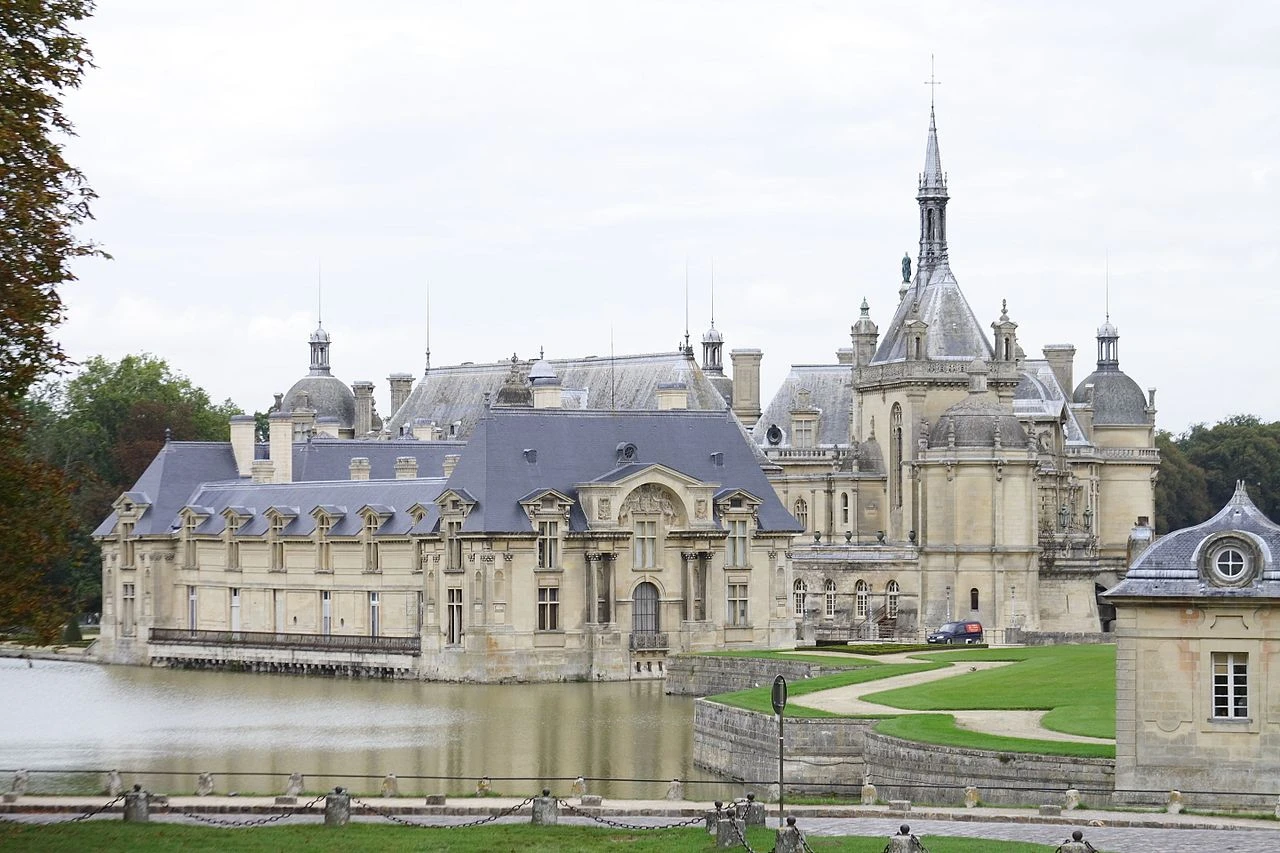
Chantilly · 1 km
Château de Chantilly
Content & sources
Photo: Ignis · CC BY-SA 3.0
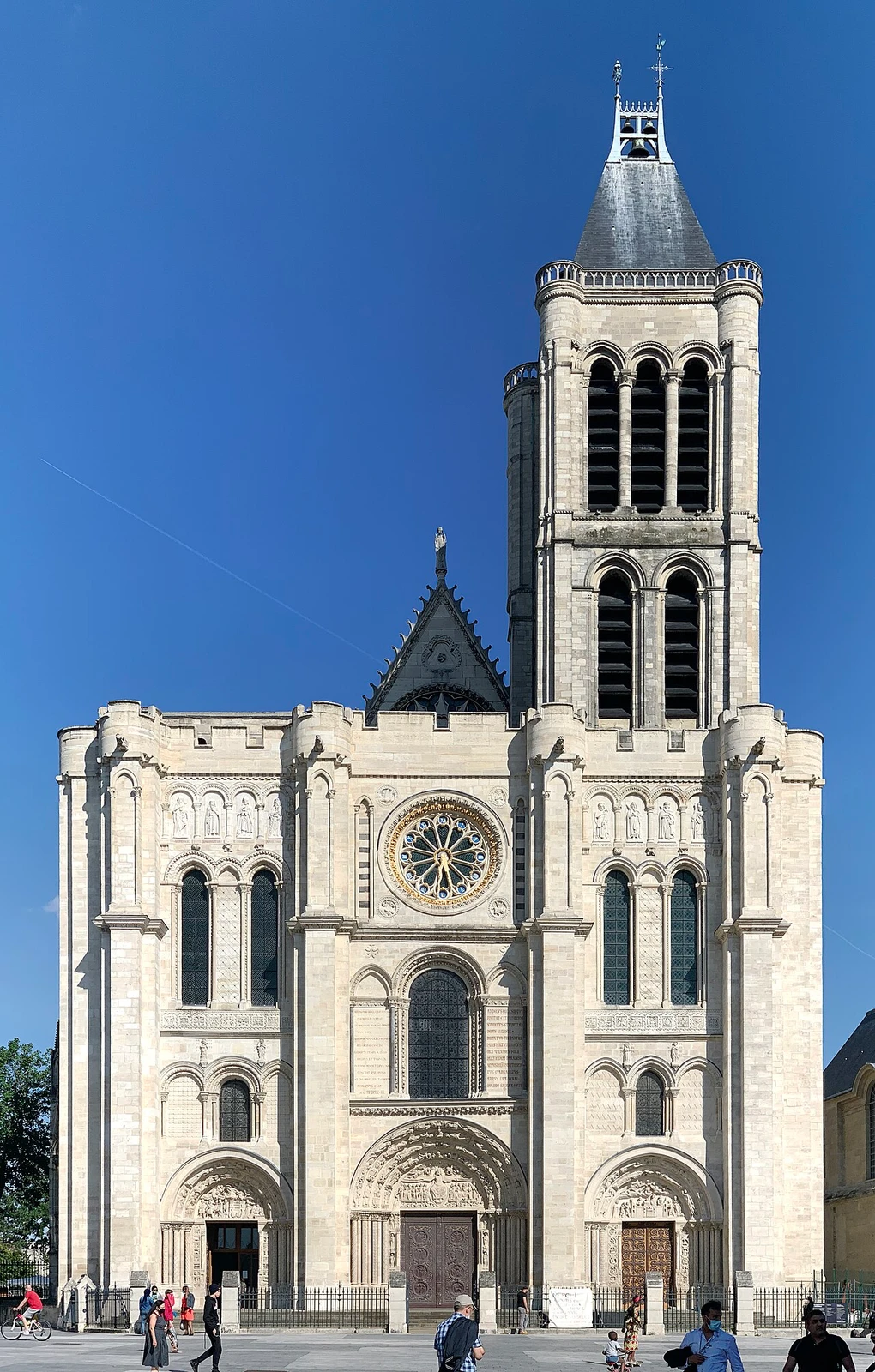
Saint-Denis · 30 km
Basilica of Saint-Denis
Content & sources
Photo: Chabe01 · CC BY-SA 4.0
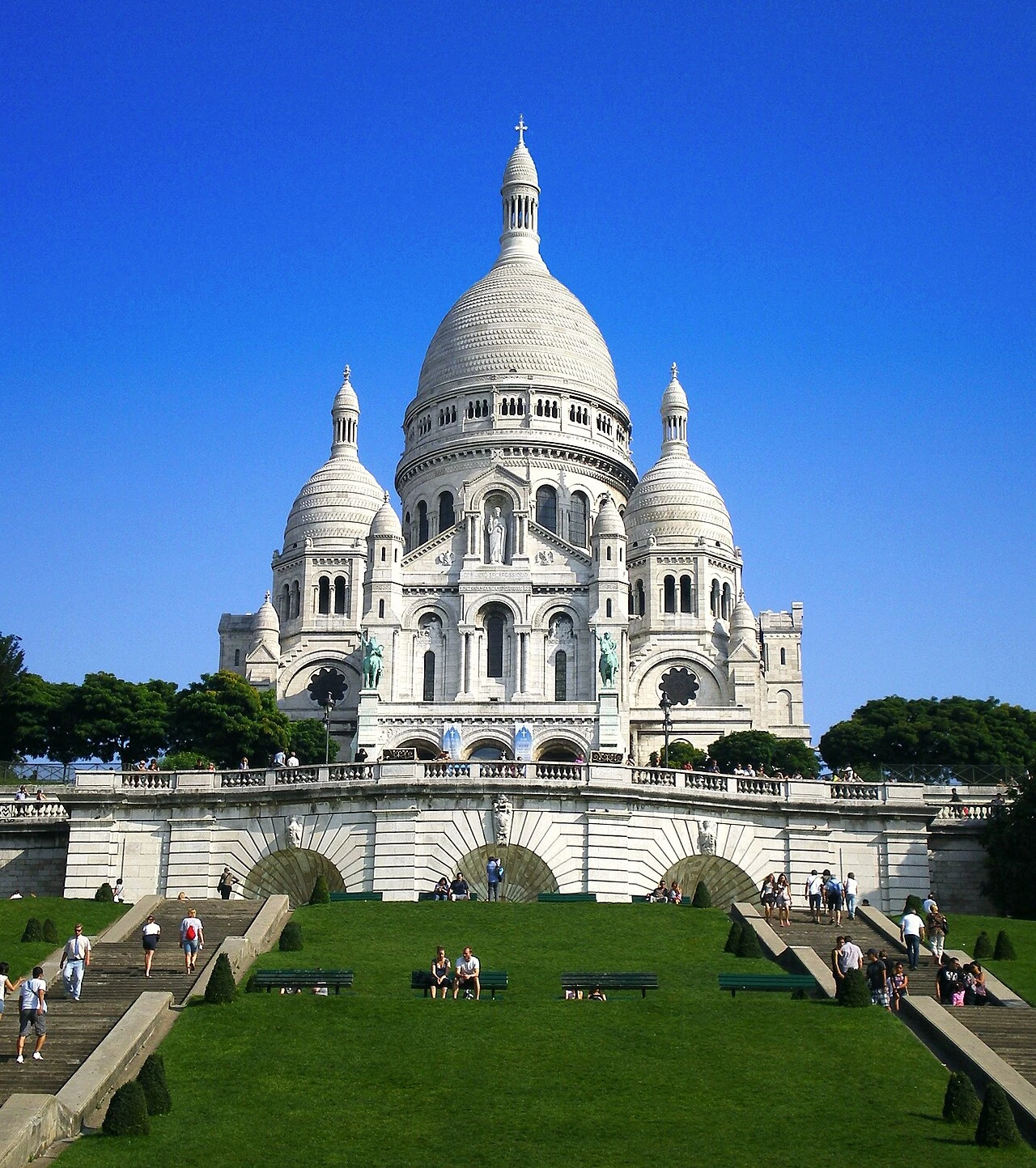
Paris · 36 km
Sacré-Cœur Basilica
Content & sources
Tonchino · CC BY-SA 3.0
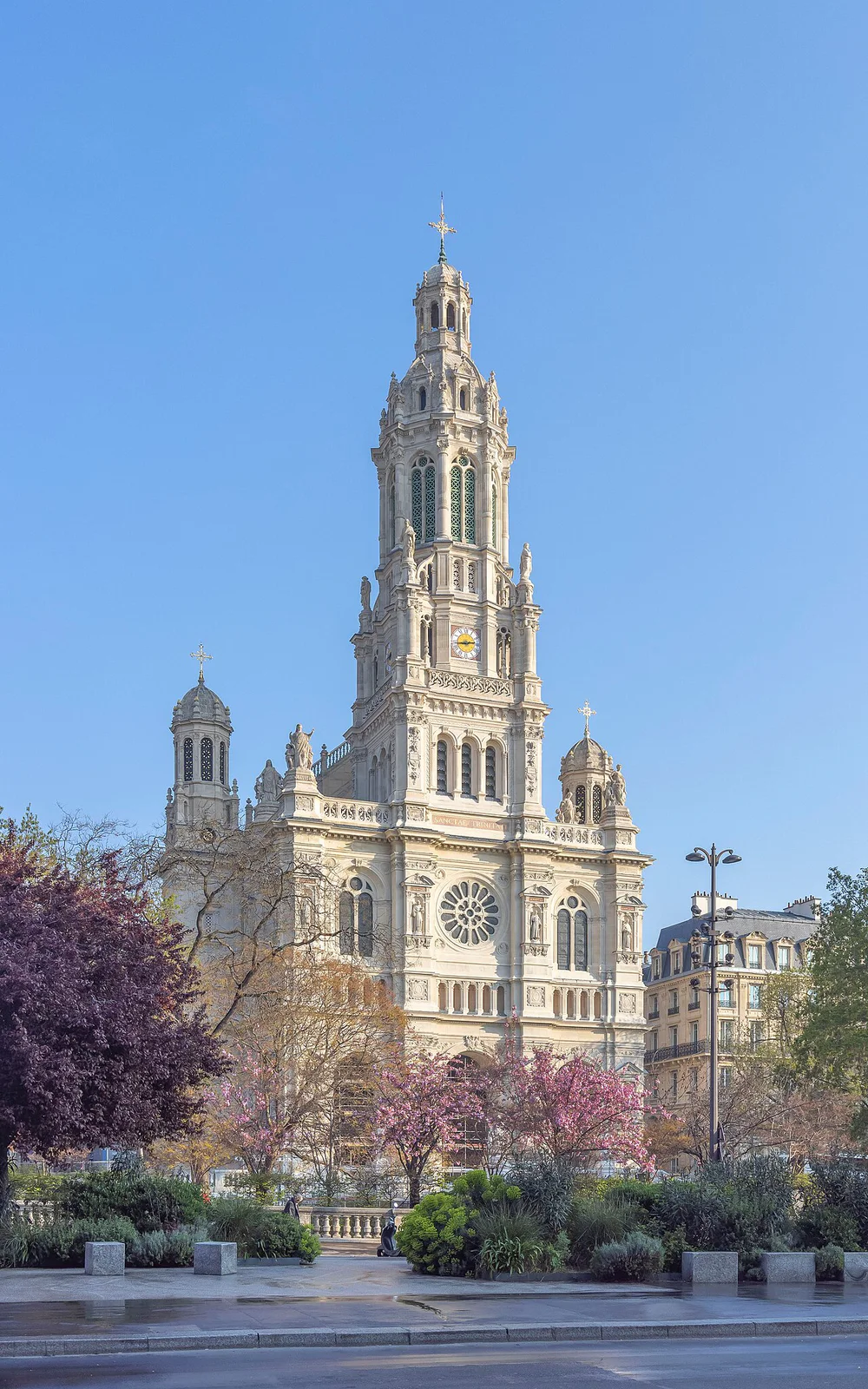
Paris · 37 km
Église de la Sainte-Trinité de Paris
Content & sources
Photo: ZeusUpsistos · CC BY-SA 4.0
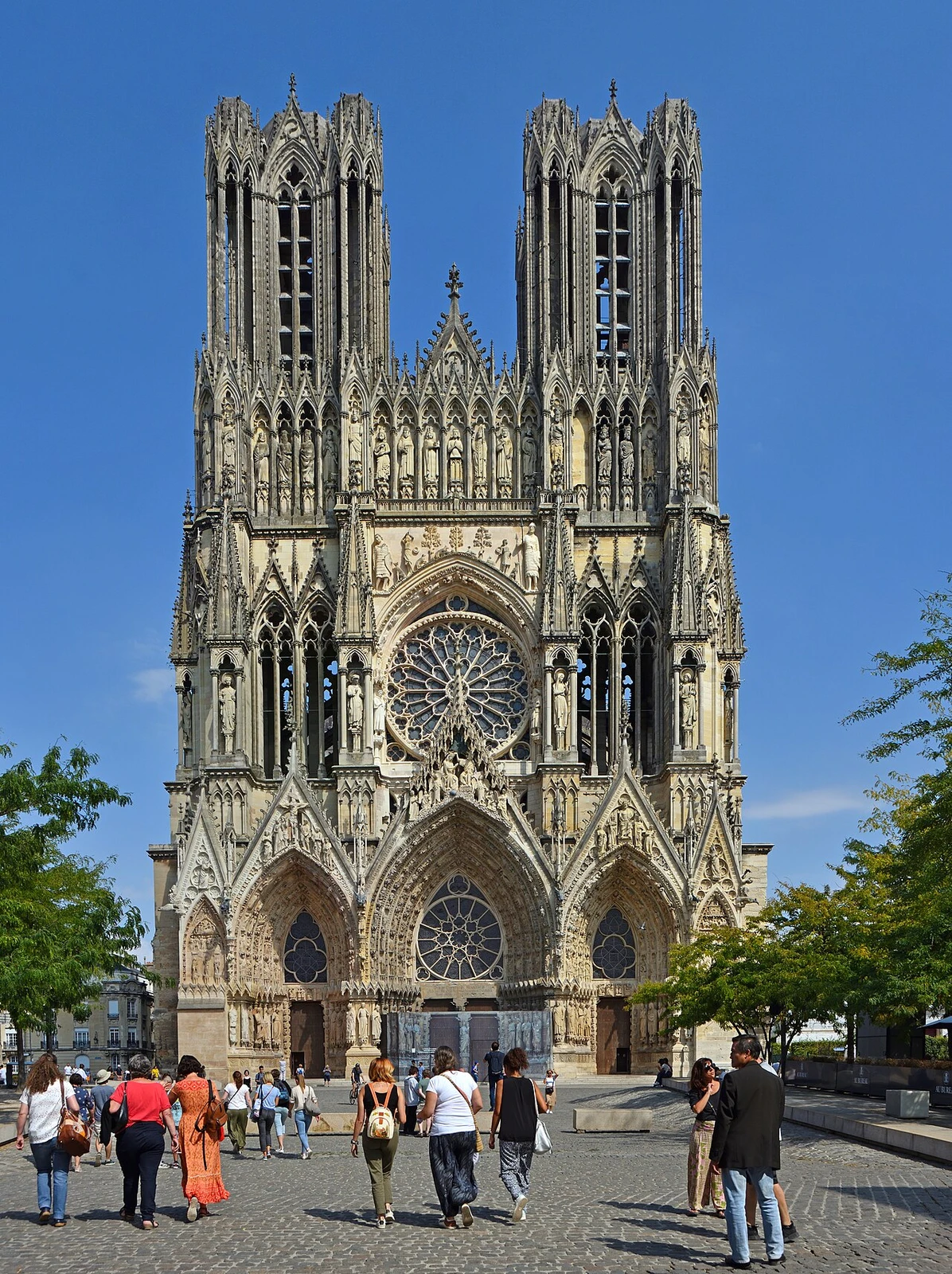
Reims · 113 km
Reims Cathedral
Content & sources
Photo: Ludvig14 · CC BY-SA 4.0
Art museums
More art museum audio guides
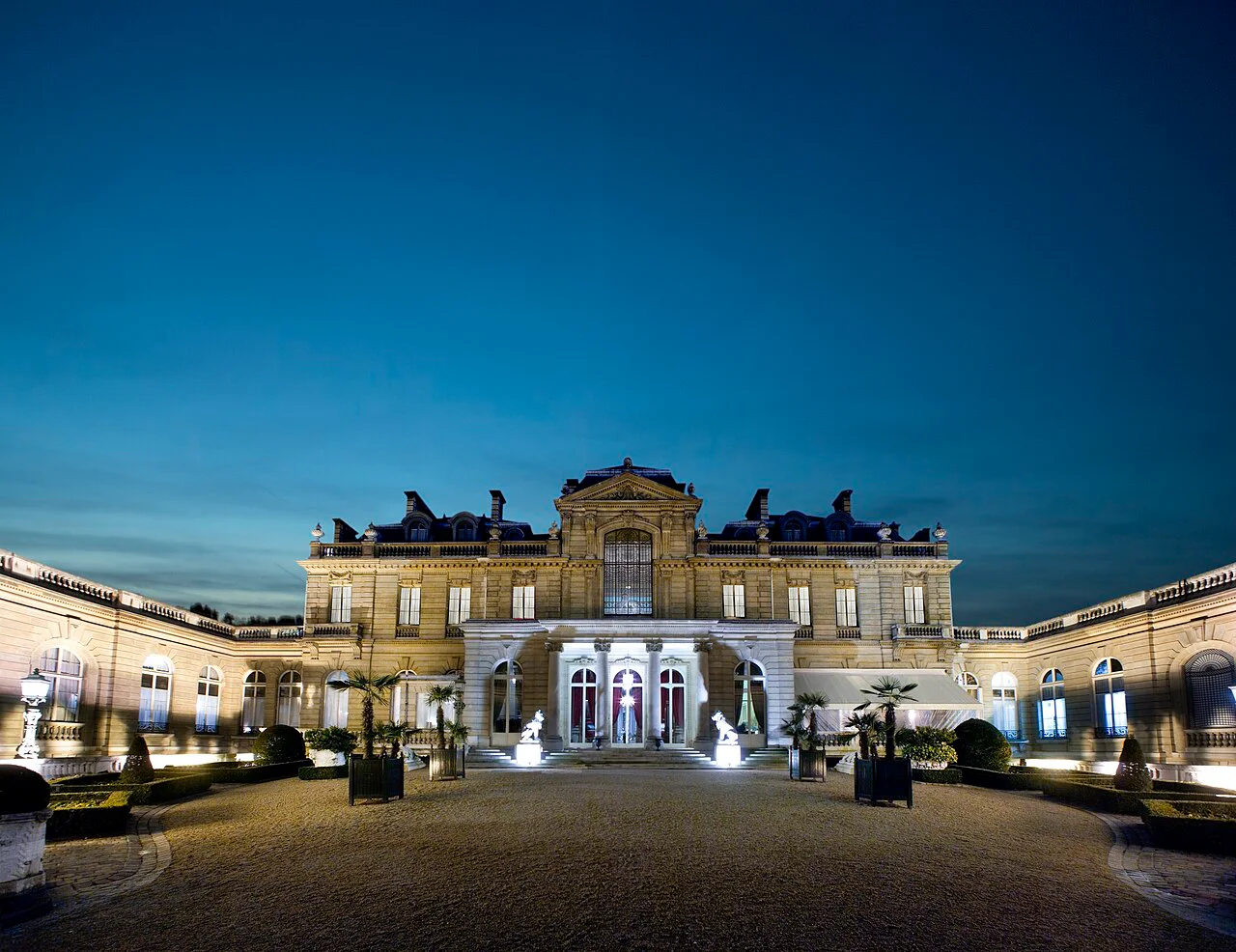
Paris · 24 artworks
Musée Jacquemart-André
Content & sources
Christophe Recoura · CC BY-SA 3.0
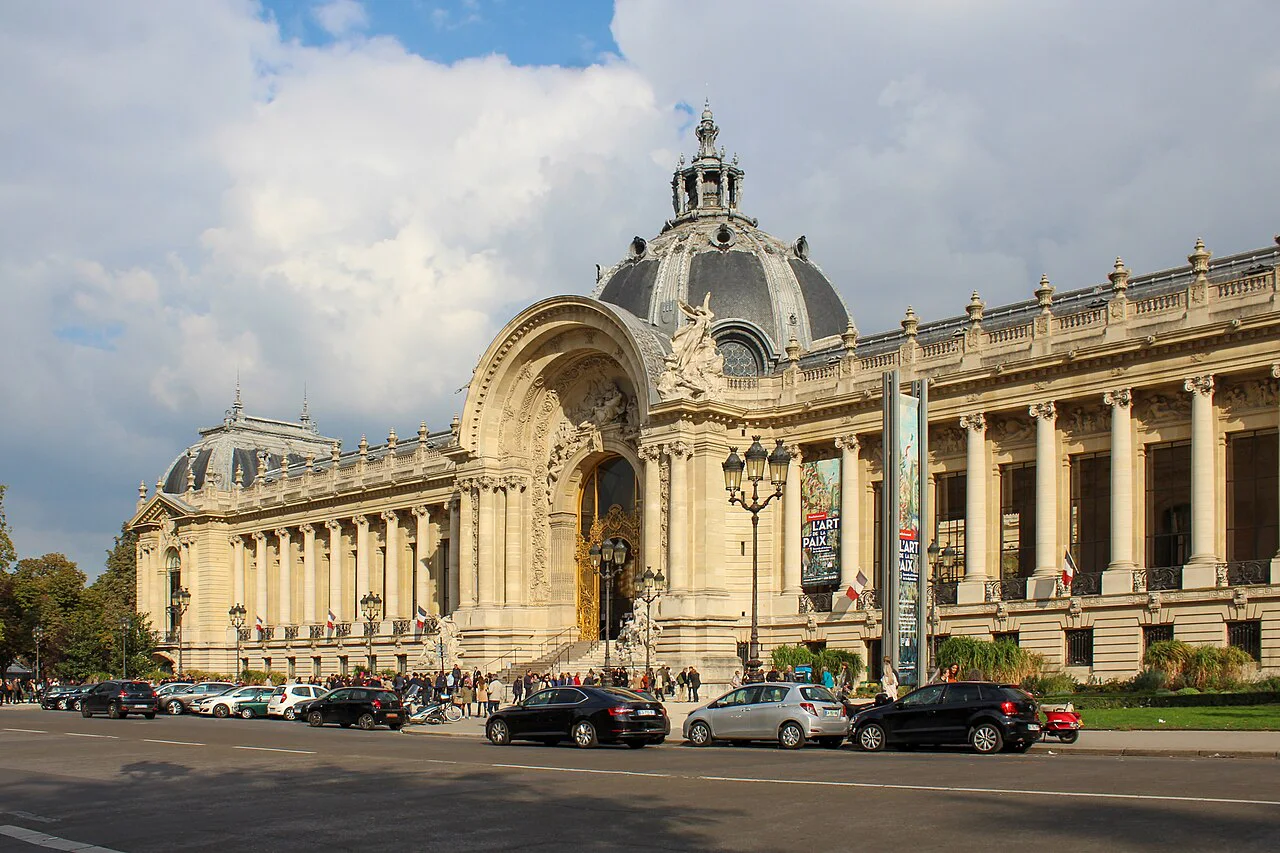
Paris · 77 artworks
Petit Palais
Content & sources
Chabe01 · CC BY-SA 4.0
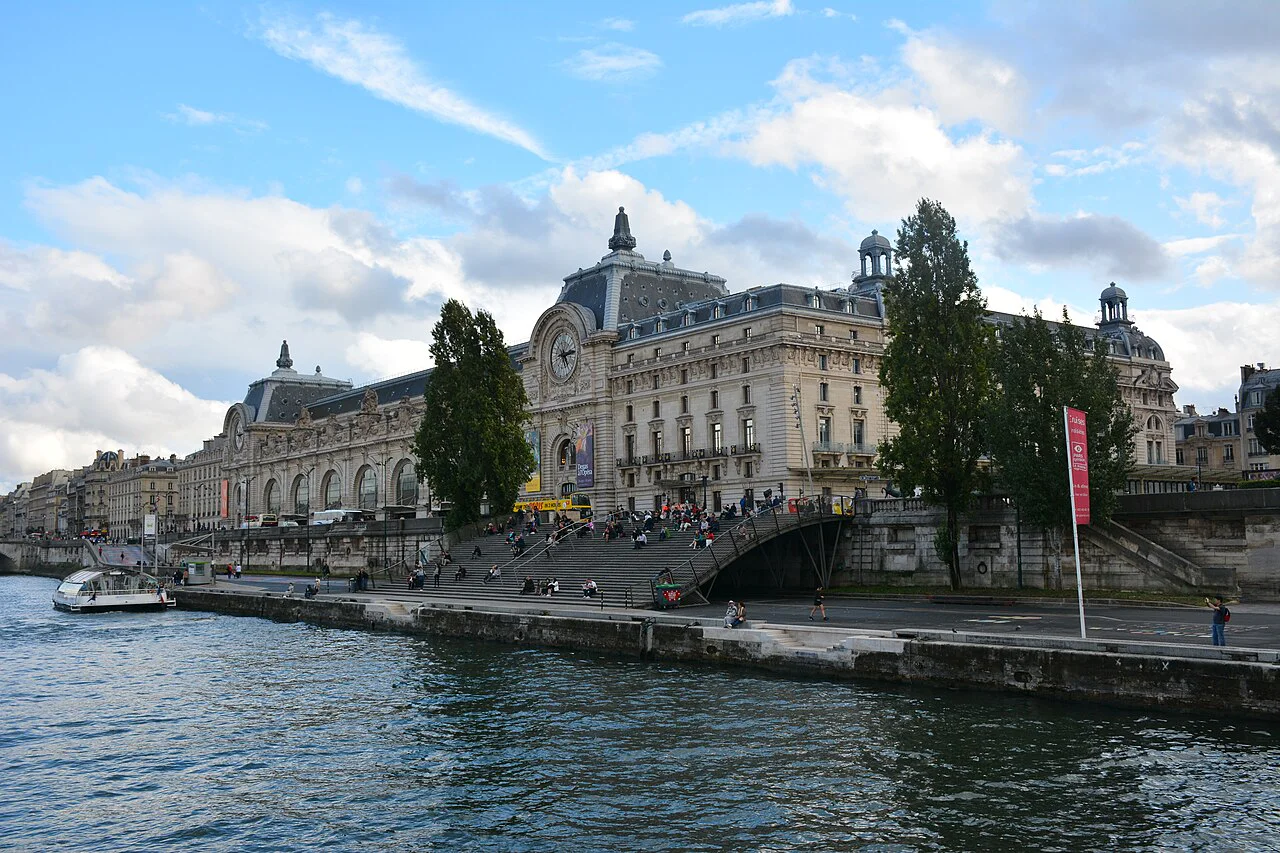
Paris · 205 artworks
Musée d'Orsay
Content & sources
Cheng-en Cheng from Taichung City, Taiwan · CC BY-SA 2.0
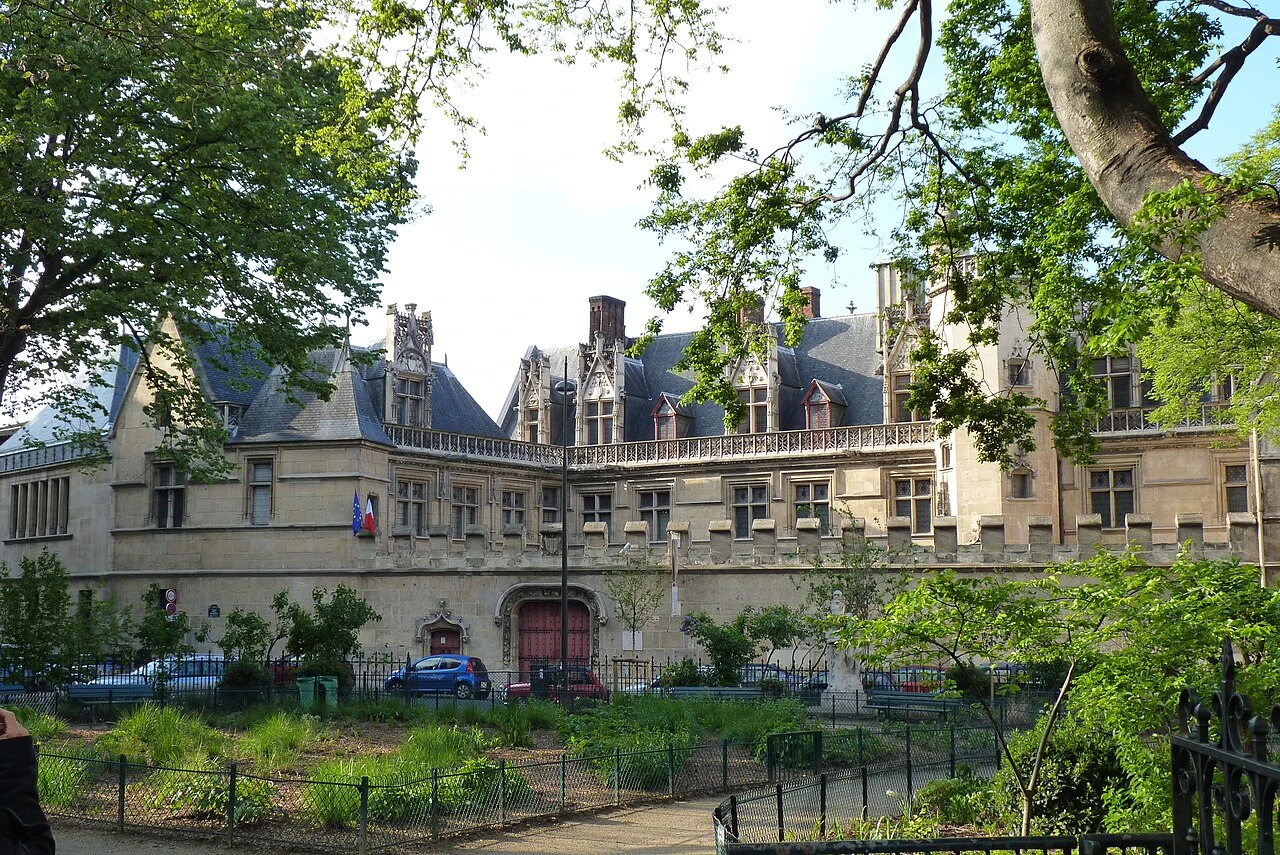
Paris · 29 artworks
Cluny Museum
Content & sources
ctj71081 · CC BY-SA 2.0
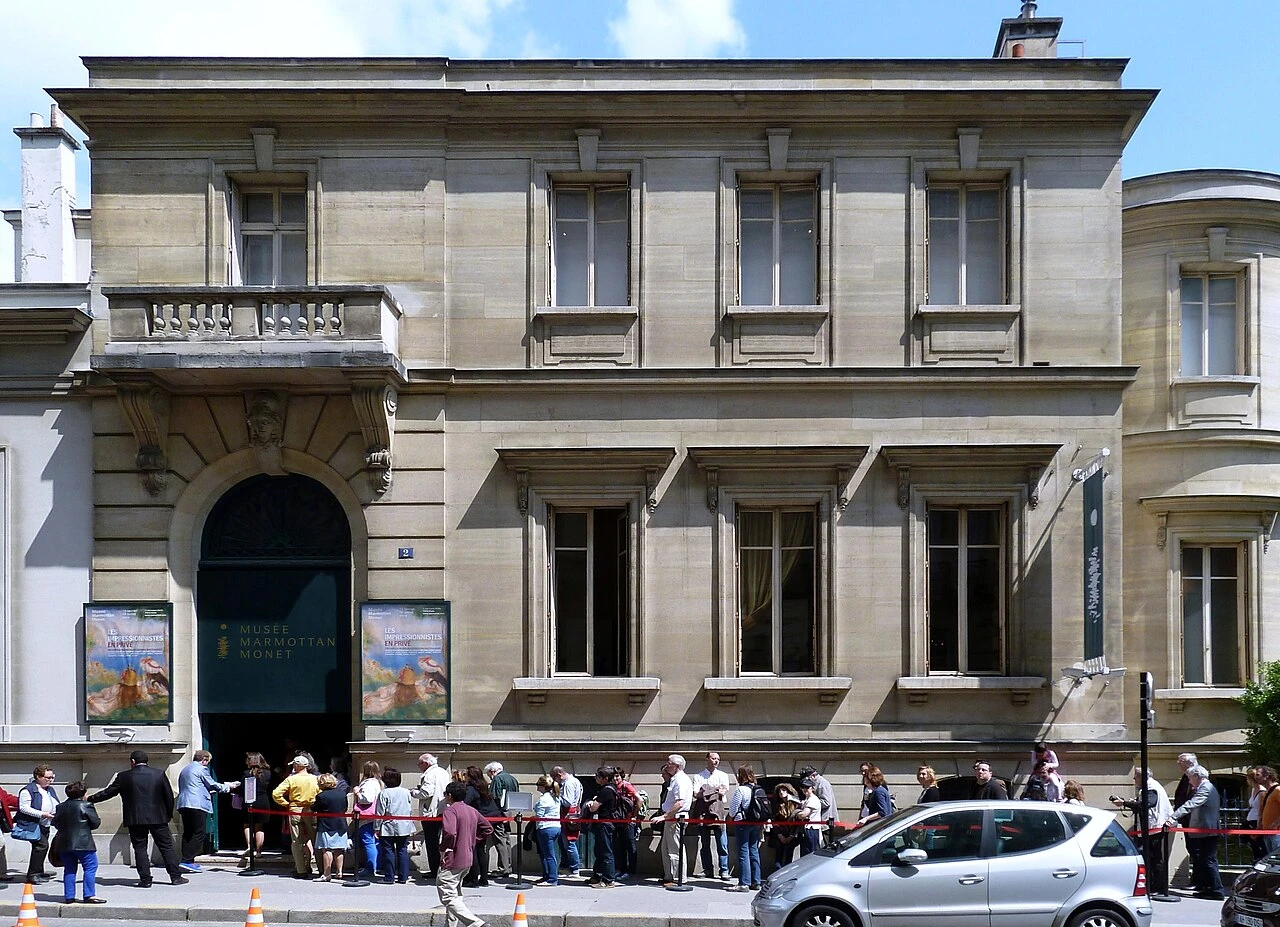
Paris · 25 artworks
Musée Marmottan Monet
Content & sources
PIERRE ANDRE LECLERCQ · CC BY-SA 4.0
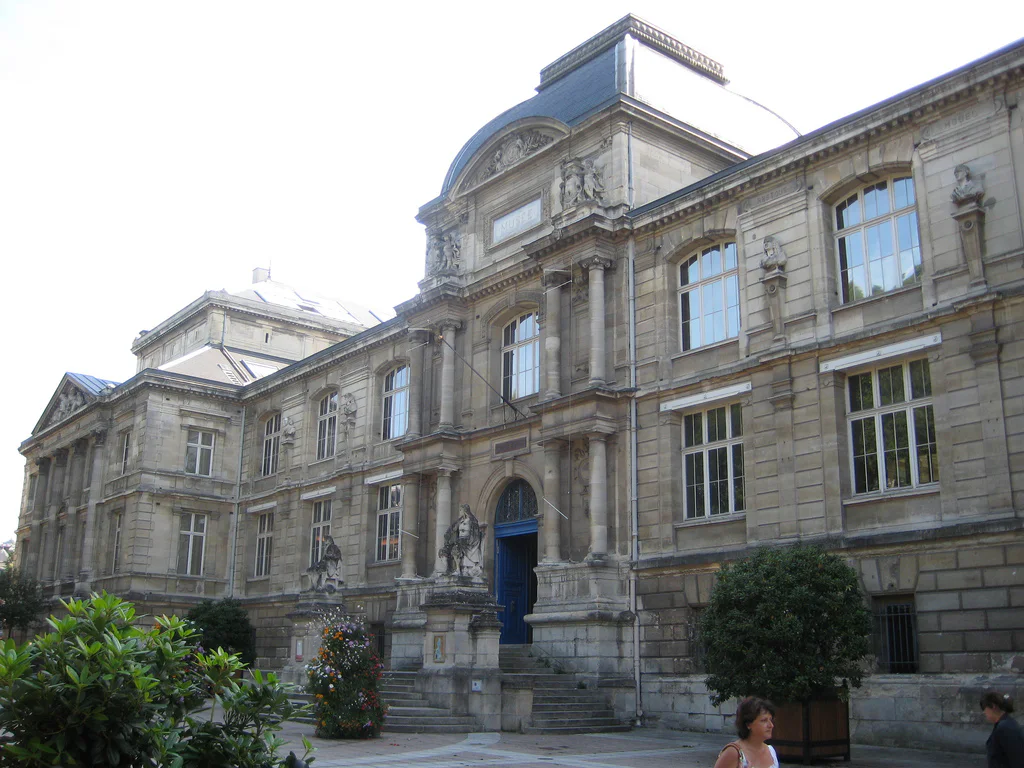
Rouen · 45 artworks
Musée des Beaux-Arts de Rouen
Content & sources
Allie_Caulfield · CC BY 2.0