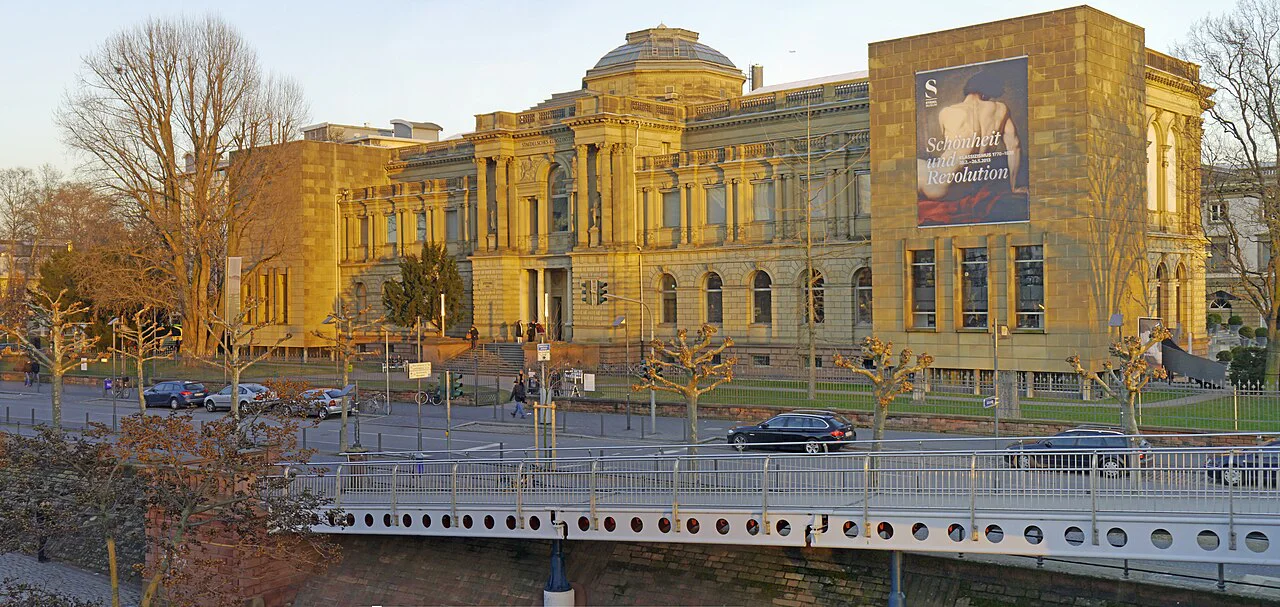
Stanza · Audio guide
Städelsches Kunstinstitut Audio Guide
A place to remember. A story to take with you.
The Städel is an art museum located in Frankfurt. It houses one of the most important art collections in Germany.
Download Stanza, then search for “Städelsches Kunstinstitut”.
About the tour
One guide. Your kind of visit.
The Städel is an art museum located in Frankfurt. It houses one of the most important art collections in Germany.
The Städelsches Kunstinstitut guide tells the stories of 103 artworks, including The Geographer (Johannes Vermeer), The Rhinoceros (Albrecht Durer), Melencolia I (Albrecht Durer), Heller Altarpiece (Albrecht Durer, Matthias Grünewald, Jobst Harrich), Idealized Portrait of a Lady (Portrait of Simonetta Vespucci as Nymph) (Sandro Botticelli), The Blinding of Samson (Rembrandt), Knight, Death, and the Devil (Albrecht Durer), and St. Jerome in His Study (Albrecht Durer). Every artwork is free to hear in the Stanza app until 1 January.
Ready when you are.
- 01Get the free Stanza app.
iOS & Android
- 02Find your guide.
“Städelsches Kunstinstitut”
- 03Download before you go.
Works offline
Audio guide / 103 artworks
Inside the guide
Get to know a few of the stories before you go. Open a stop to read more.
01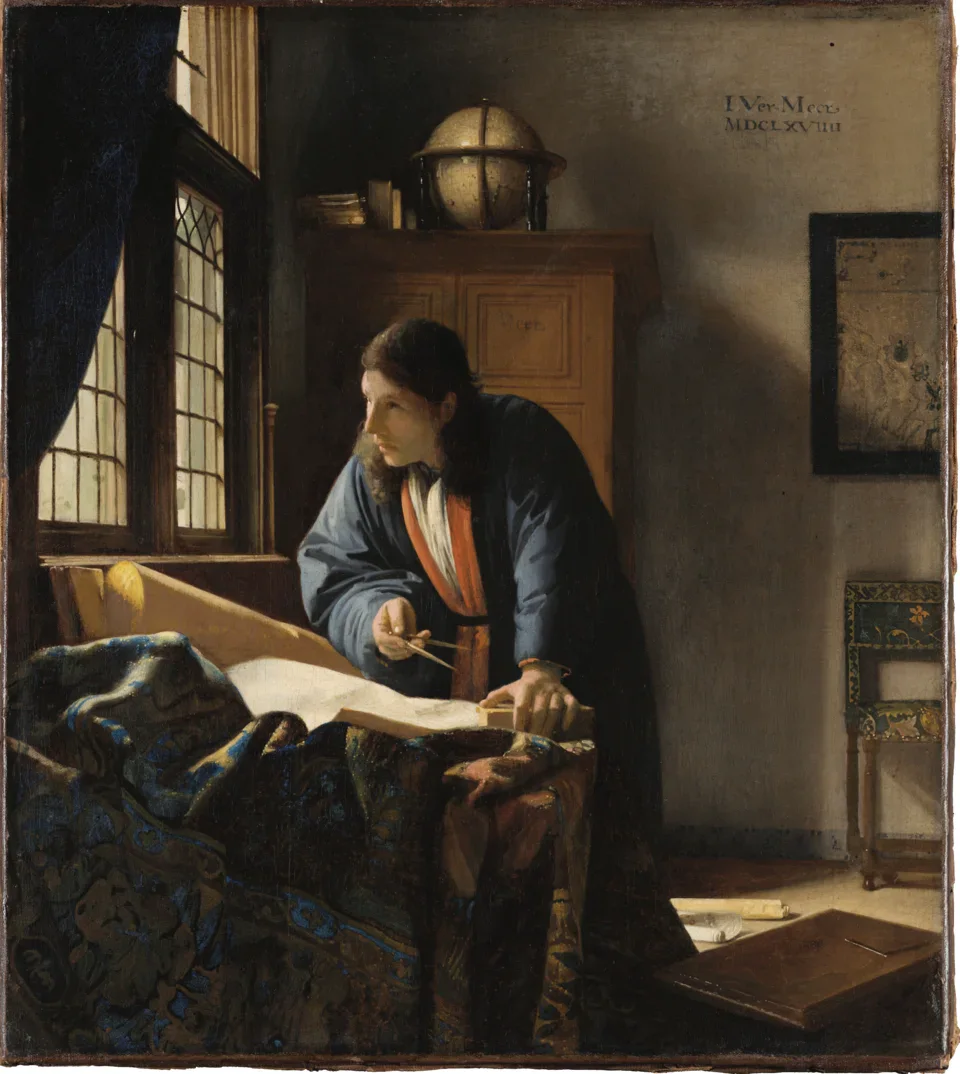
The Geographer
His dividers are lifted just clear of the map. He has stopped measuring. Vermeer first painted him looking down at the map, with the dividers on it. Then he changed his mind. He raised the dividers and turned the man's face toward the window. So he turned a man at work into a man caught by an idea. The face is a little blurred, as if he had just moved, and his eyes are narrowed. The curtain on the left is drawn back, and the heavy carpet has been pushed aside to make room for the chart. In this painting both of those stand for revelation. He grips a book as though he might snatch it up to check his idea. And on the cupboard behind him, a globe is turned toward the Indian Ocean, where the Dutch East India Company was then active. Printed on that globe is a plea for news to use in a future edition.
Listen in the appJohannes Vermeer · Public domain
02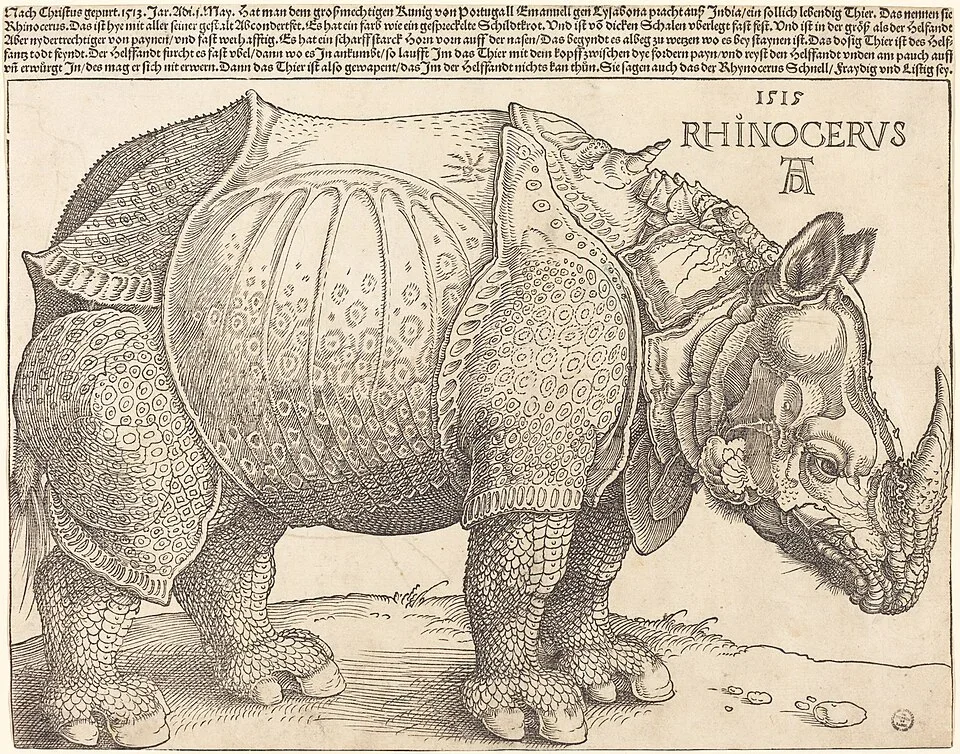
The Rhinoceros
This rhinoceros was made from a letter and a small sketch. Dürer, working in Nuremberg, had never seen the animal. What he had was a report sent from Lisbon, describing a beast newly arrived from India, and a rough drawing that came with it. From those two things he worked. The animal is covered in hard plates, like sheets of armor, with rivets running along the seams. There is a plate at the throat and another across the chest, a small twisted horn on its back, and scaly legs. None of those details is on a real rhinoceros. The animal in that letter had reached Lisbon in 1515, the first of its kind alive in Europe in twelve centuries. King Manuel of Portugal meant to send it as a gift to Pope Leo the Tenth. He hoped to keep the Pope's favor over the new lands his ships had reached in the East. It never got there. The ship was wrecked in a sudden storm off the Italian coast, and the rhinoceros, chained to the deck, drowned. The picture went on without it. Copied again and again for three centuries, it was taken for a true likeness well into the late eighteenth century. We still do not know who drew the small sketch he worked from.
Listen in the appAlbrecht Dürer · CC0
03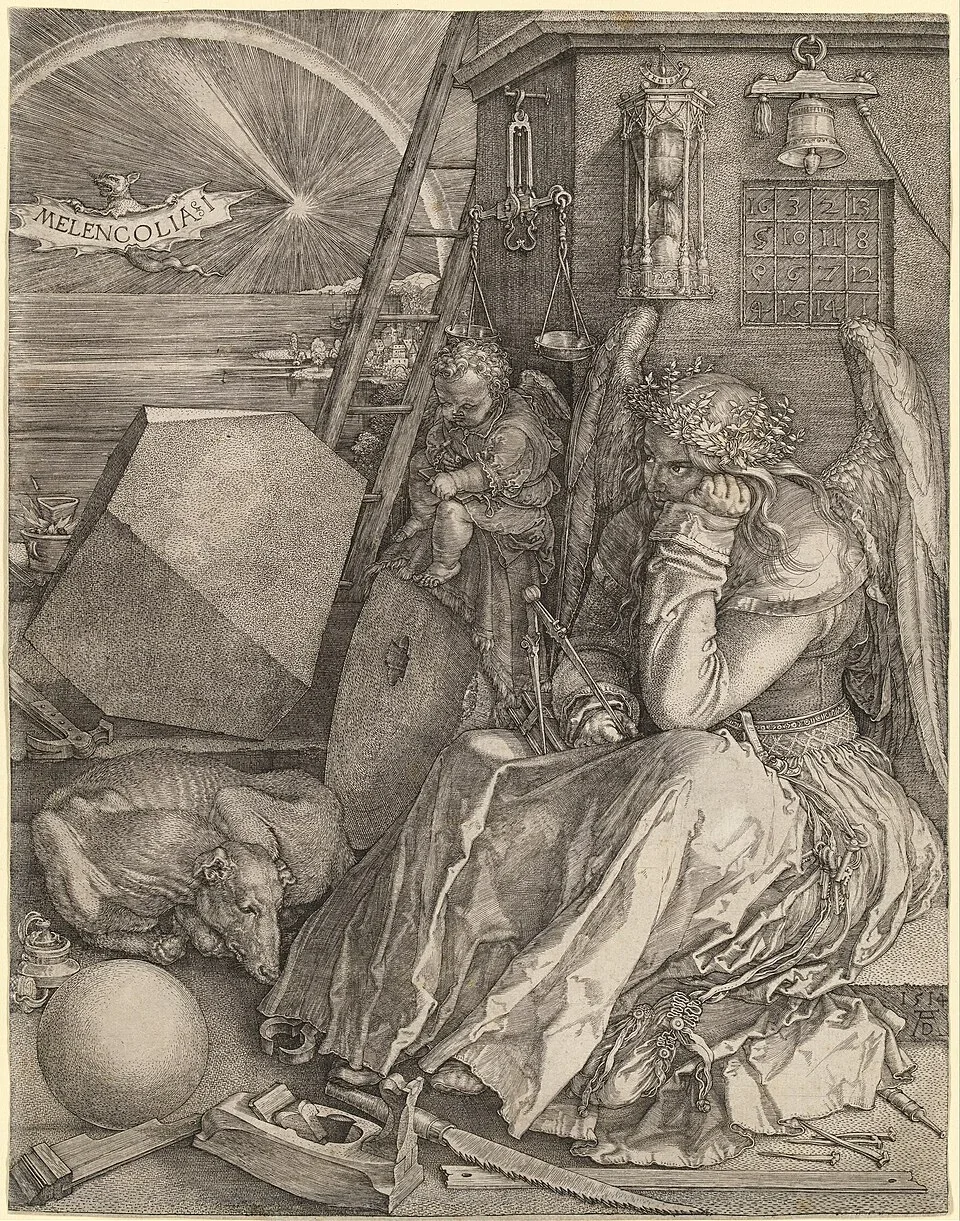
Melencolia I
A winged woman sits with her head on her fist, a compass loose in her hand and a closed book on her lap. She wants to make something. A hammer and nails, a saw, a plane and a sphere lie scattered around her, but she sits still and cannot touch a single one. Dürer gave this feeling a body and wings. It is melancholy. In his day, melancholy was linked with inventive minds. It could drain the will to work and was the mark of the creative. He knew that feeling himself, the will to create with no power to act. In an unfinished book for young artists, he warned that too much effort could leave a person in melancholy's power. In 1513 and 1514, friend after friend died, and then his mother, whose portrait he drew then. That grief may sit in this image. Beside her, a small winged child is the only busy figure. He scribbles on a tablet, or holds a burin, the tool an engraver cuts with. Melancholy was thought to hold two powers, a dark one and a creative one, and the child keeps making. Behind her, a square of sixteen numbers is set in the wall, every row and column and diagonal adding to thirty-four. The middle figures of its bottom row are fifteen and fourteen, the year 1514. All that exact order sits fixed in the wall, while her compass lies idle.
Listen in the appAlbrecht Dürer · Public domain
04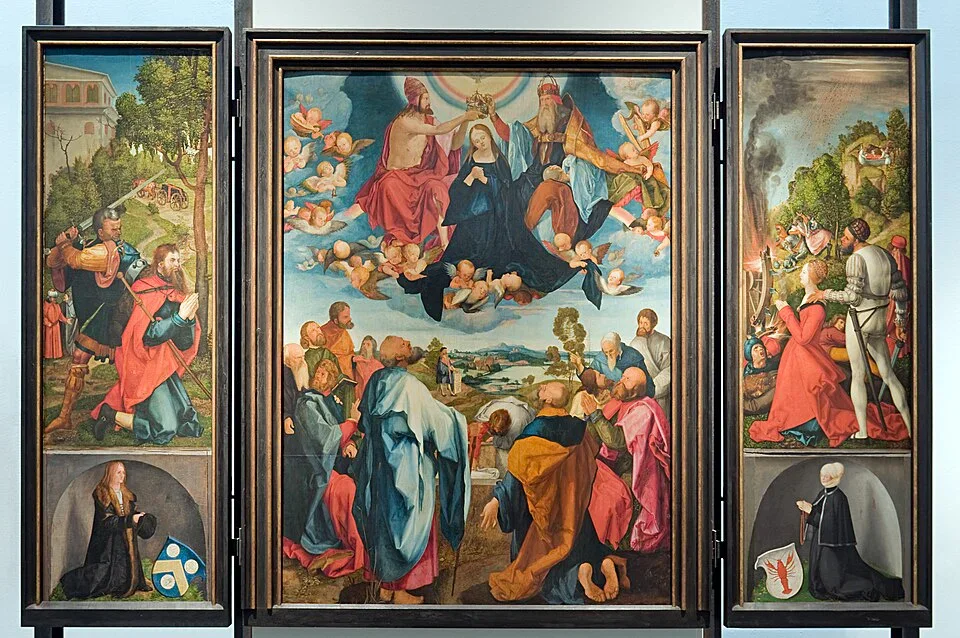
Heller Altarpiece
A fire destroyed the original of this panel. The one in front of you was made to take its place. Dürer painted the center of the altarpiece for a Frankfurt merchant, Jakob Heller, who wanted it for the Dominican church. It was the only part Dürer painted himself. Then the Duke of Bavaria bought it for his collection. To keep the church's altar whole, a painter named Jobst Harrich made this copy. The original burned in Munich, between 1724 and 1729. This one stayed. The copy keeps the whole scene. Mary is crowned by the Holy Trinity, with the dove of the Holy Spirit above her. The apostles stand around the empty tomb. Toward the back, beside a table with his signature and the year, Dürer painted himself into the scene. And at the right edge, an apostle in a red robe holds his hands in prayer. The famous drawing of two praying hands in Vienna was a study for that apostle. Nothing else of Dürer's central panel survived the fire.
Listen in the appMatthias Grünewald / Jobst Harrich / Albrecht Dürer / After Albrecht Dürer / After Albrecht Dürer · Public domain
05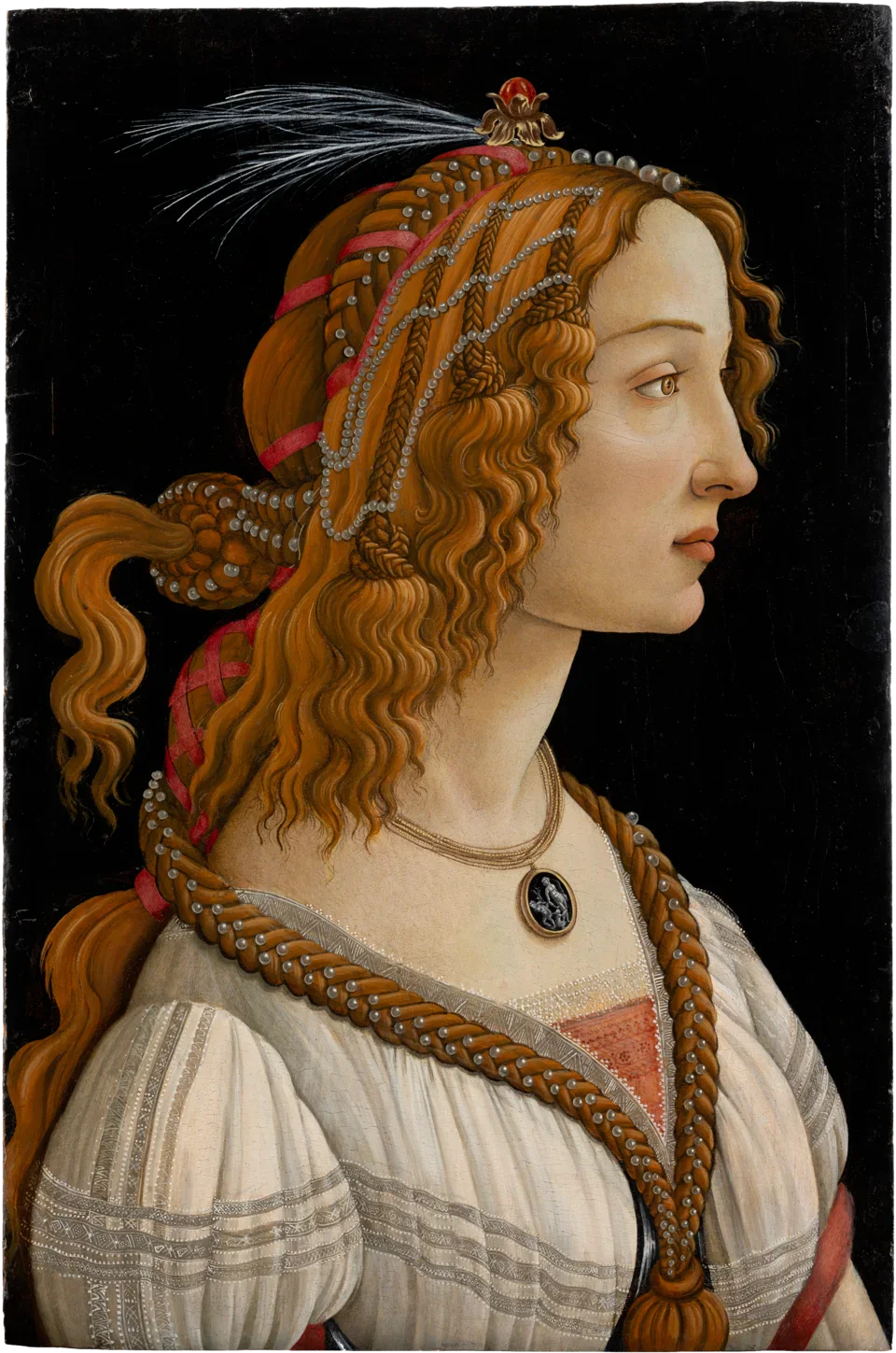
Idealized Portrait of a Lady (Portrait of Simonetta Vespucci as Nymph)
Is she Simonetta Vespucci? Nobody can be sure. She was a noblewoman celebrated for her beauty, and this painting never lets the question rest. There is a cameo medallion at her neck. She has turned her upper body just enough to show it. It copies an ancient gem carved with Apollo and Marsyas that belonged to Lorenzo de' Medici. So the woman moved in his circle. Few women could have worn that seal, and Simonetta could have been one of them. Her hair pulls the other way. Beads are threaded through the braids, the mark of a nymph. Botticelli may have used her as the model for Venus in his Birth of Venus, and he asked to be buried at her feet. That is why people want this to be her. Three locks of hair at the center may be flames pointing down. Hair was thought to inflame desire, so these locks may stand for the love a viewer is meant to feel.
Listen in the appSandro Botticelli · Public domain
06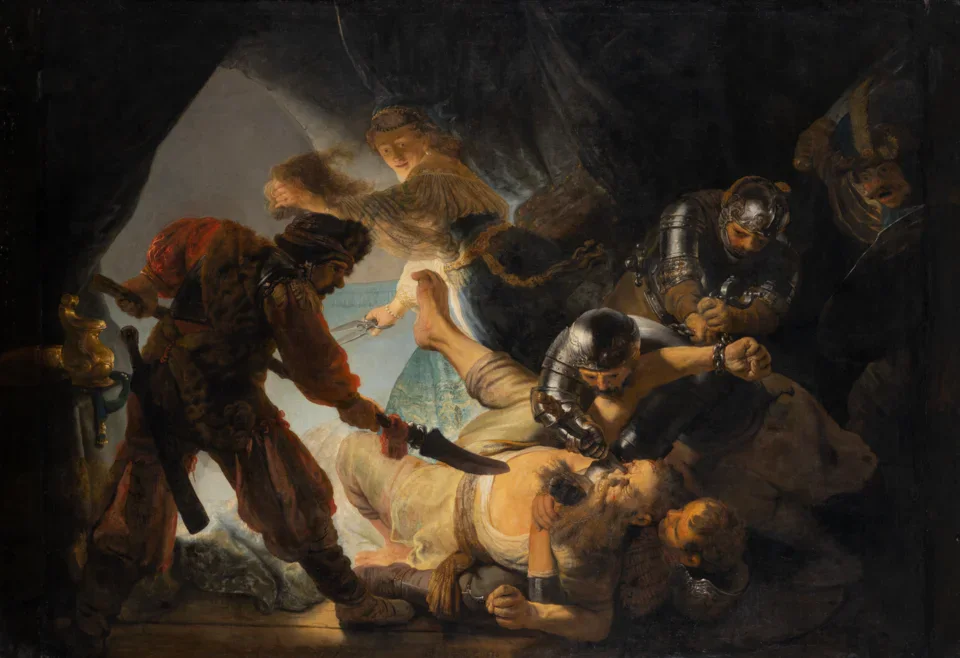
The Blinding of Samson
The knife is going into Samson's eyes, and the blood is already spurting. He has been wrestled to the ground. One man holds him down and another ties him up. A third comes in fearfully. A fourth drives the blade, which looks like an Indonesian kris. Behind them Delilah is fleeing with a shock of his hair and the scissors in her hand. She has just cut his hair and given him away to the Philistines. Samson's strength came from being a Nazarite, and it held only while his hair and beard stayed uncut. With the hair gone, the men can finish what they came to do. No artist of the time had taken this exact moment. Rembrandt made the picture as a gift for the House of Orange. He sent it through their secretary Constantijn Huygens to excuse his delay with a set of Passion paintings.
Listen in the appRembrandt · Public domain
07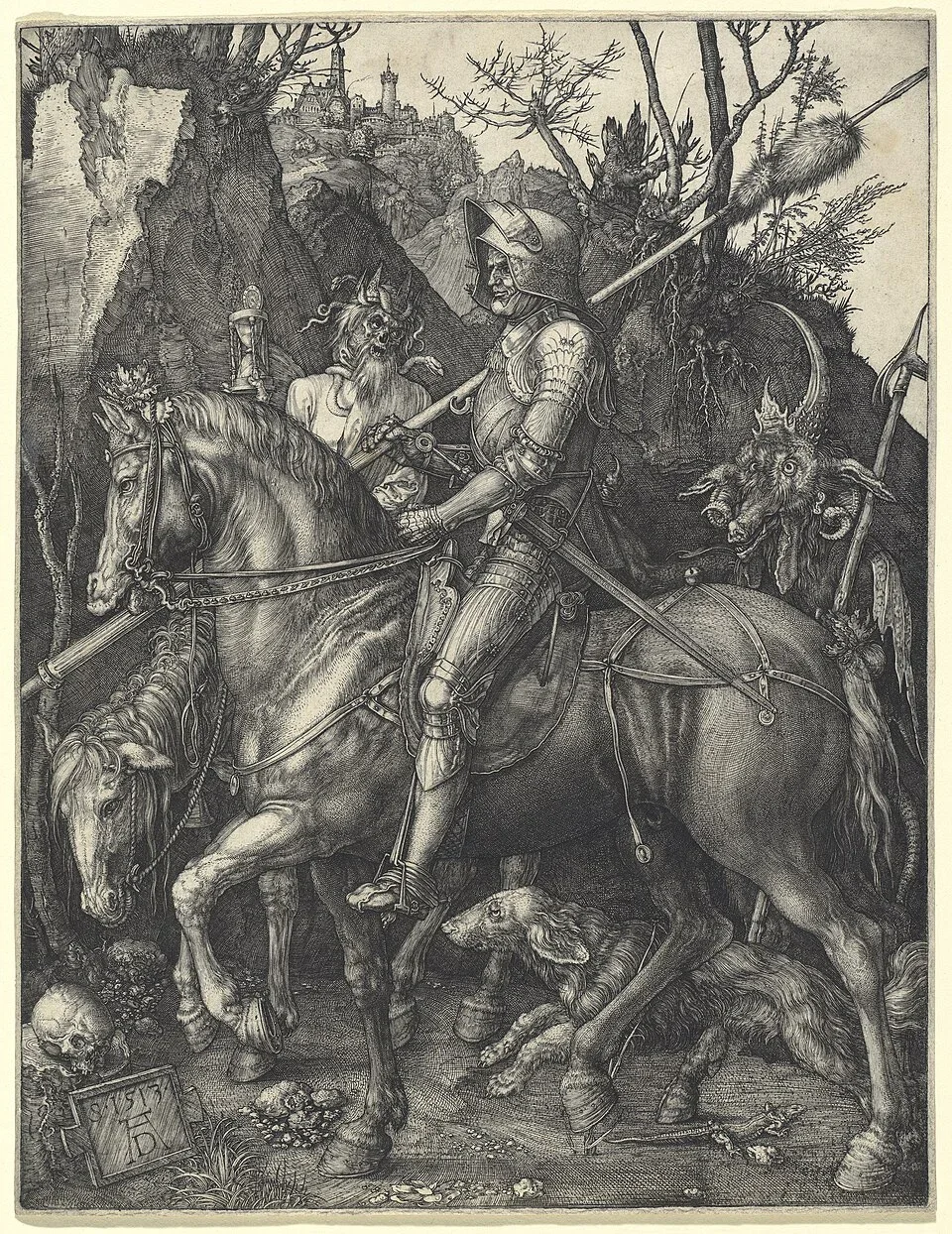
Knight, Death, and the Devil
Why does this rider press straight on through a narrow gorge, with Death and the Devil close beside him? He does not turn toward either one. His eyes stay fixed down the road ahead, and the creatures near him never break that forward look. He is keeping to the steady route of the faithful, riding through life's injustice toward God. The print draws on the psalm about walking through a dark valley and not being afraid. Dürer gave the rider a horse that towers over the beasts around it, and that size stands for the resilience of faith. A dog runs between the two horses, and it means faithfulness to God. Up on the hill is the city he is heading for. It is the kingdom of heaven, and the only way there seems to be over dangerous peaks. Death holds an hourglass with its sand exactly half full, which may mark a turning point in the rider's life. There in the lower foreground, lying directly in the horse's path, is a skull. It shows what becomes of those who do not stay resolute.
Listen in the appAlbrecht Dürer · CC0
08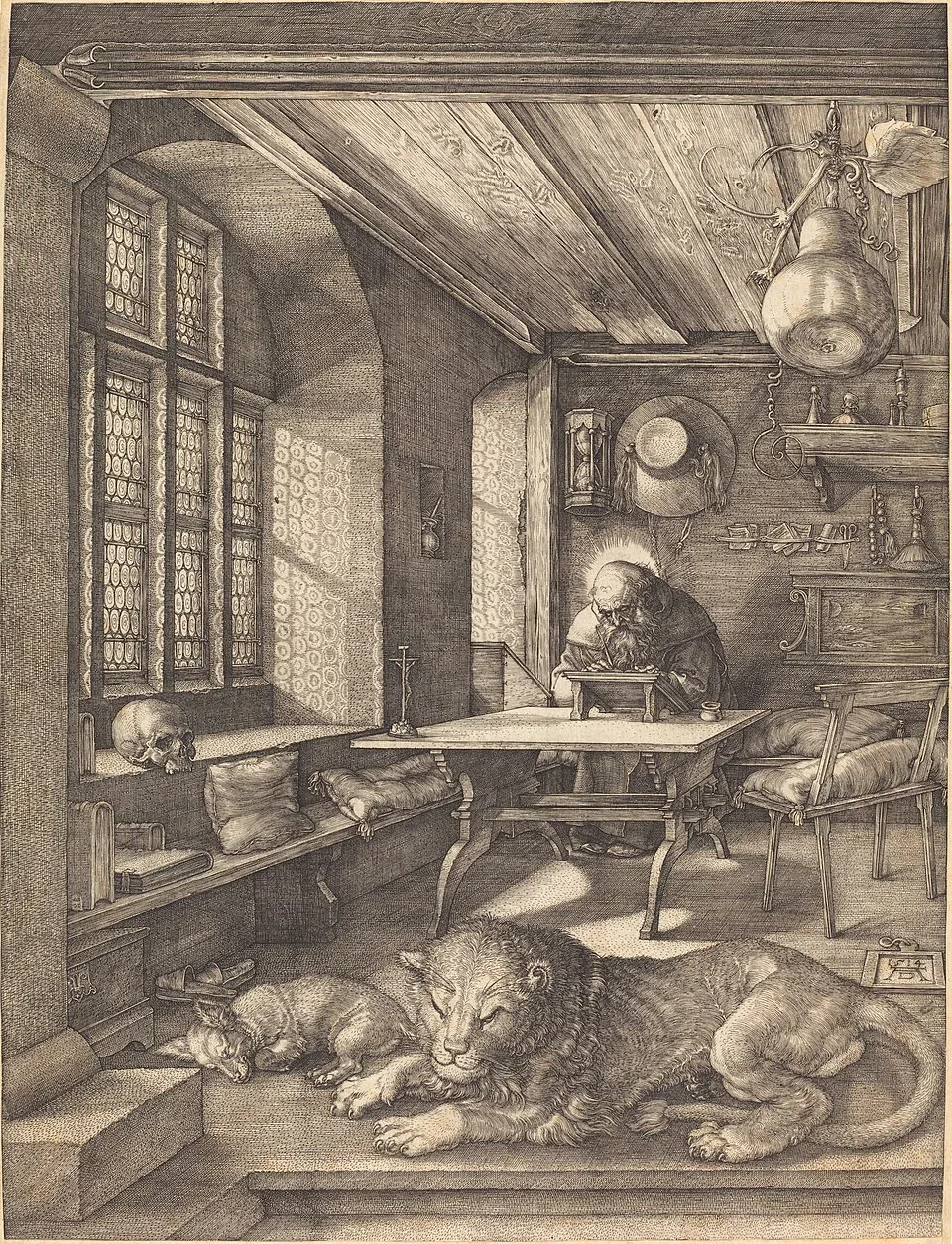
St. Jerome in His Study
The room is built from a plan, line by line. Dürer engraved it on copper, and the whole space follows an exact scheme of perspective. Beside his early woodcut of the same subject, it shows how far his printmaking had come in the different feel of things. But the lines do not meet in the middle. Their meeting point sits close to one edge, so the lines draw together in the space to the right of Jerome, and that is where the distortion comes from. The room feels close, as though you had just come in. But you are not part of that closeness. It is Jerome's, deep in his work at the desk. Whether it was meant as one of a set of four on the human temperaments is still not known.
Listen in the appAlbrecht Dürer · CC0
09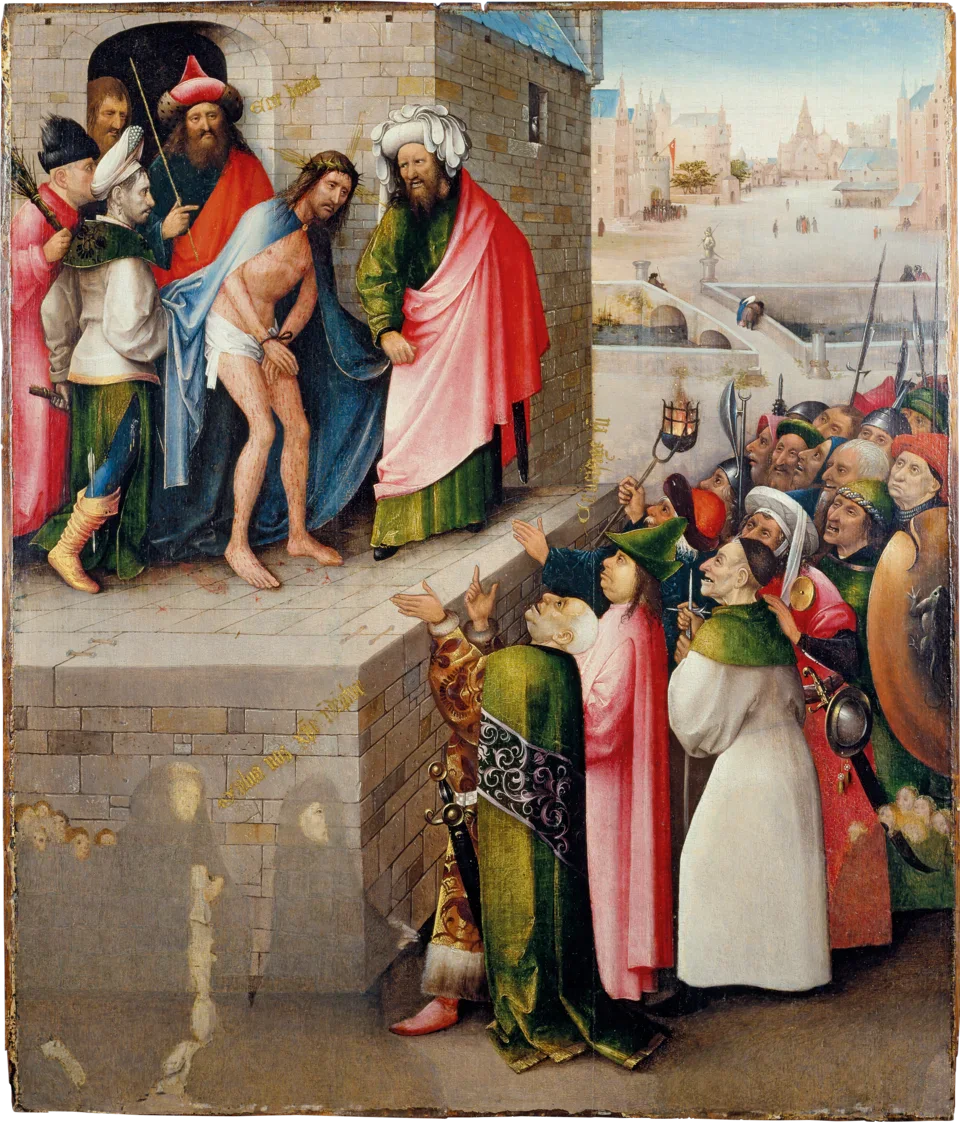
Ecce Homo
In the lower left corner, Gothic lettering says Save us, Christ Redeemer. The words came from the mouths of two donors, the people who paid for the picture. Like the speech bubbles in a comic, the inscriptions sit beside the mouths of whoever is speaking. There are three in all. Near Pilate, one reads Behold the Man, and the crowd answers Crucify Him. The third is the plea in the corner. The scene shows a man stripped and brought before the people by members of the Roman council, who are flanked by soldiers. He wears a crown of thorns, and his hands are bound. The raw red flesh on his legs, hands and chest shows he has been beaten. Bosch shows him bent low and humiliated, fully human. A jeering crowd presses close, while the town behind stands strangely empty. The two donors were painted over. Their plea to be saved is all that remains of them.
Listen in the appHieronymus Bosch · PDM-owner
10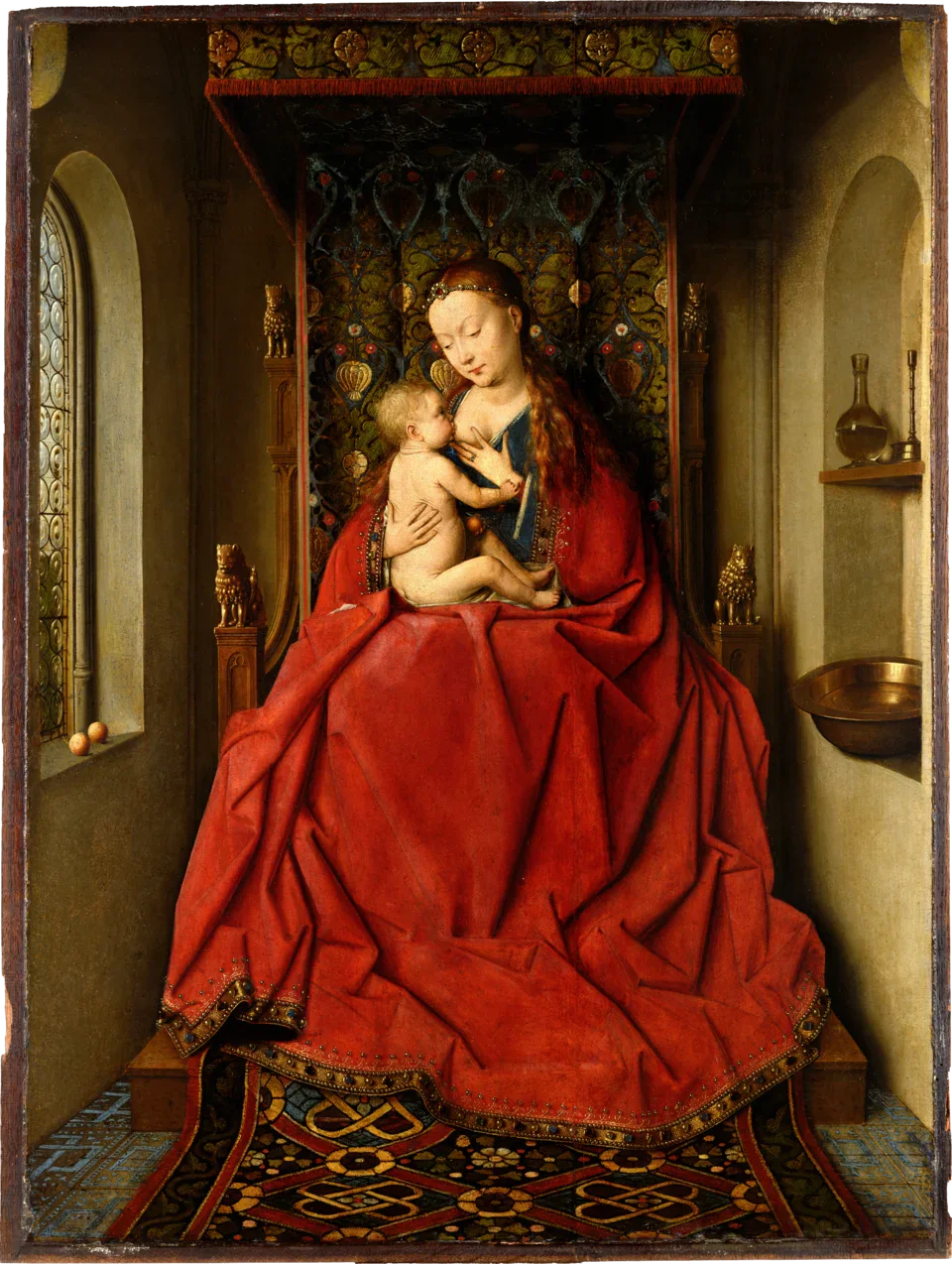
Lucca Madonna
Jan van Eyck set out to make this small painting both a mother feeding her child and an altar. Mary sits on a wooden throne beneath a canopy. Small lion figures crown the arms and back of the throne, painted so they look like cast bronze. They point to the throne of Solomon, which had twelve lions along its sides and steps. Her child sits on her lap, larger and flatter than a baby, on a white cloth over her coloured dress. Mary's lap holds him the way an altar holds the bread of the Mass. On the right wall is a niche like the basin where a priest washes his hands. On its shelf stand an empty candlestick and a half-filled glass carafe, with a large bowl of water on the ledge below. The room is very narrow for so large a chair, like a small chapel. Who asked for this painting is not known.
Listen in the appJan van Eyck · PDM-owner
- 11
Medici Madonna
Rogier van der Weyden · 1460
- 12
Jabach Altarpiece
Albrecht Durer · c. 1503–1504
- 13
The Croquet Game
Édouard Manet · 1873
- 14
Adam and Eve
Albrecht Durer · 1504
- 15
The Four Witches
Albrecht Durer · 1497
- 16
The Holy Family with the Butterfly
Albrecht Durer · c. 1495
- 17
Goethe in the Roman Campagna
Johann Heinrich Wilhelm Tischbein · 1786–1788
- 18
Paradiesgärtlein
Upper Rhenish Master · c. 1410–1420
- 19
Madonna with child and Saint John the Baptist
Pietro Perugino · 1495–1497
- 20
Saint Mark
Andrea Mantegna · 1447–1448
- 21
Orchestra Musicians
Edgar Degas · 1872–1876
- 22
Altarpiece of San Domenico di Camerino
Carlo Crivelli · 1482
- 23
Erasmus of Rotterdam
Albrecht Durer · 1526
- 24
Saint Michael Fighting the Dragon
Albrecht Durer · 1496
- 25
Free Period in the Amsterdam Orphanage
Max Liebermann · 1881–1882
- 26
Carmencita
Lovis Corinth · 1924
- 27
Saint with two angels
Parmigianino · 1523–1524
- 28
Portrait of a Young Fürleger with Loose Hair
Albrecht Durer · 1497
- 29
David Playing the Harp in front of Saul
Rembrandt · 1630
- 30
The Altarpiece of the Holy Kinship or Torgau
Lucas Cranach the Elder · 1509
- 31
Madonna and Child with Four Doctors of the Church
Moretto da Brescia · 1540–1545
- 32
Saint Anthony Tormented by Demons
Martin Schongauer · 1470
- 33
Portrait of a Man in a Red Hat
Hans Memling · 1465–1470
- 34
The Luncheon
Claude Monet · 1868–1869
- 35
Germania
Philipp Veit · 1834–1836
- 36
Idealised Portrait of a Courtesan as Flora
Bartolomeo Veneto · 1520–1525
- 37
Portrait of a Young Man
Titian · c. 1516
- 38
Winter Landscape near Haarlem
Jacob van Ruisdael · c. 1670s
- 39
Tomb of Hetpet
Unknown Artist · -2499
- 40
Landscape during a Thunderstorm with Pyramus and Thisbe
Nicolas Poussin · 1651
- 41
Nemesis
Albrecht Durer · 1501–1503
- 42
Saint Eustace
Albrecht Durer · c. 1501
- 43
The Virgin and Child with a Monkey
Albrecht Durer · c. 1498
- 44
After the Luncheon
Pierre-Auguste Renoir · 1879
- 45
The Bad Thief to the Left of Christ
Robert Campin, Master of Flémalle · 1430
- 46
The Bitter Draught
Adriaen Brouwer · 1635–1638
- 47
The Four Horsemen, from The Apocalypse
Albrecht Durer · 1497–1498
- 48
The Patron Saints of the Crotta Family
Giovanni Battista Tiepolo · 1750
- 49
The Arts Being Introduced to Germany by Christianity
Philipp Veit · 1834–1836
- 50
Virgin and Child
Piermatteo Lauro de' Manfredi da Amelia · 1475–1480
- 51
Virgin and Child
Guercino · c. 1621–1622
- 52
Zicht op Antwerpen met de bevroren Schelde
Lucas van Valckenborch · 1589–1593
- 53
Jan Hus at Constance
Karl Friedrich Lessing · 1842
- 54
Young Couple Threatened by Death
Albrecht Durer · 1497–1498
- 55
The Dream of the Doctor
Albrecht Durer · c. 1498
- 56
The Trinity
Robert Campin · 1429
- 57
The Prodigal Son
Albrecht Durer · c. 1496
- 58
Hercules at the Crossroad
Albrecht Durer · 1498–1499
- 59
Ulrich Varnbuler
Albrecht Durer · 1523
- 60
Saint Jerome
Jean-Léon Gérôme · 1874
- 61
Dog Lying in the snow
Franz Marc · c. 1911
- 62
Little Walter’s Toys
August Macke · 1912
- 63
Adam and Eve
Otto Mueller · 1917
- 64
Madonna and Child Enthroned and Twelve Angels
Fra Angelico · c. 1430–1433
- 65
The Triumph of Religion in the Arts
Johann Friedrich Overbeck · 1829–1840
- 66
Altenberg Altarpiece
Meister des Altenberger Altars · c. 1320–1330
- 67
The Lady Riding and the Landsknecht
Albrecht Durer · c. 1497
- 68
Venus
Lucas Cranach the Elder · 1532
- 69
Paul and Barnabas are worshiped as gods in Lystra
Adriaen van Stalbemt · 17th century
- 70
Virgin and Child
Hugo van der Goes · 1475–1480
- 71
The Embarkation for Cythera
Jean-Antoine Watteau · c. 1709–1710
- 72
Girl with Blonde Hair
Helene Schjerfbeck · 1916
- 73
Adam and Eve
Franz von Stuck · c. 1920
- 74
The Virgin and Child on a Grassy Bench
Albrecht Durer · 1503
- 75
The Nativity
Albrecht Durer · 1504
- 76
The Virgin with a Starry Crown
Albrecht Durer · 1508
- 77
The Ravisher
Albrecht Durer · c. 1494
- 78
The Holy Family with St John, The Magdalen and Nicodemus
Albrecht Durer · c. 1512
- 79
Revelation of Saint John
Albrecht Durer · 1497–1498
- 80
The Martyrdom of St John
Albrecht Durer · 1496
- 81
Saint John's vision of the seven candlesticks
Albrecht Durer · 1497–1498
- 82
Saint John kneeling before Christ and the twenty-four elders
Albrecht Durer · 1497–1498
- 83
The Opening of the fifth and sixth seals
Albrecht Durer · 1497–1498
- 84
Four angels holding back the winds, and the marking of the elect
Albrecht Durer · 1497–1498
- 85
Revelation of St. John: The Adoration of the Lamb
Albrecht Durer · 1497–1498
- 86
The Opening of the seventh seal and the eagle crying 'Woe'
Albrecht Durer · 1497–1498
- 87
The four angels of Death
Albrecht Durer · 1497–1498
- 88
Saint John eating the book
Albrecht Durer · 1497–1498
- 89
The woman of the Apocalypse and the seven-headed dragon
Albrecht Durer · 1497–1498
- 90
The Whore of Babylon
Albrecht Durer · 1497–1498
- 91
The Beast with Seven Heads and the Beast with Lamb's Horns
Albrecht Durer · 1497–1498
- 92
The Angel with the Key to the Bottomless Pit
Albrecht Durer · 1497–1498
- 93
Saint Veronica
Master of Flémalle (Workshop of Robert Campin) · c. 1410
- 94
Madonna and child
Robert Campin · c. 1410
- 95
Landscape with Noli me tangere Scene
Claude Lorrain · 1681
- 96
Ecce Homo
Guido Reni · 1639–1640
- 97
The Back Operation
Adriaen Brouwer · 1635–1636
- 98
Portrait of a Lady in Red (Francesca Salviati?)
Bronzino · 1530s
- 99
Portrait of Simon George of Cornwall
Hans Holbein the Younger · 1536–1537
- 100
Christ Blessing the Children
Lucas Cranach the Elder · 1535–1540
- 101
View of the Haarlemmermeer
Jan van Goyen · 1656
- 102
Still Life with Bread and Sweetmeats
Georg Flegel · 1633
- 103
Self-Portrait as Zeuxis Portraying an Ugly Old Woman
Arent de Gelder · 1685
Städelsches Kunstinstitut
Frequently asked questions
How much does the guide cost?
Free app download. Free until 1 January. Listed guide price: $1.99. Audio guide only. Venue admission is separate.
Can I listen without internet?
Yes. Download the guide’s audio, images, and maps in the app before your visit. Your downloaded content is then available offline.
Can I listen in my language?
In English for now. More languages soon.
Do I need to follow a schedule?
No. This is a self-guided experience. Choose your stops, pause whenever you like, and return to a story at your own pace.
Which artworks are in the Städelsches Kunstinstitut audio guide?
103 artworks, including The Geographer (Johannes Vermeer), The Rhinoceros (Albrecht Durer), Melencolia I (Albrecht Durer), Heller Altarpiece (Albrecht Durer, Matthias Grünewald, Jobst Harrich), Idealized Portrait of a Lady (Portrait of Simonetta Vespucci as Nymph) (Sandro Botticelli), The Blinding of Samson (Rembrandt), Knight, Death, and the Devil (Albrecht Durer), and St. Jerome in His Study (Albrecht Durer). The full list is on this page.
Is this the museum’s official audio guide?
No. Stanza is an independent audio guide app and is not affiliated with Städelsches Kunstinstitut. Museum admission is separate.
At your own pace
Explore Städelsches Kunstinstitut.
Download Stanza, then search for “Städelsches Kunstinstitut”.
Free app download · Guide price shown in the app
Keep exploring
Nearby audio guides
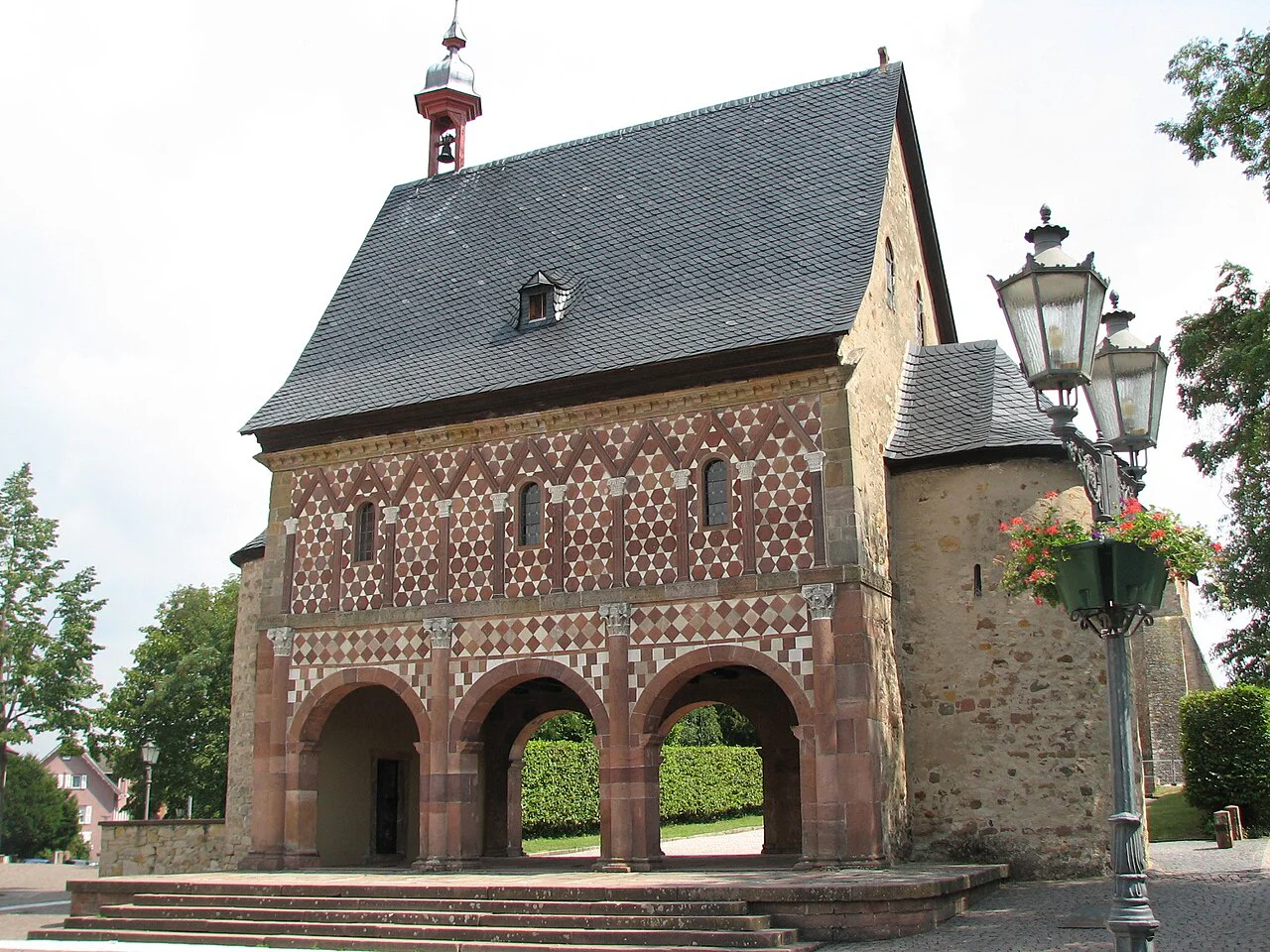
Lorsch · 51 km
Kloster Lorsch
Content & sources
Elswhs at Dutch Wikipedia (Original text: Els Slots) · CC BY-SA 3.0
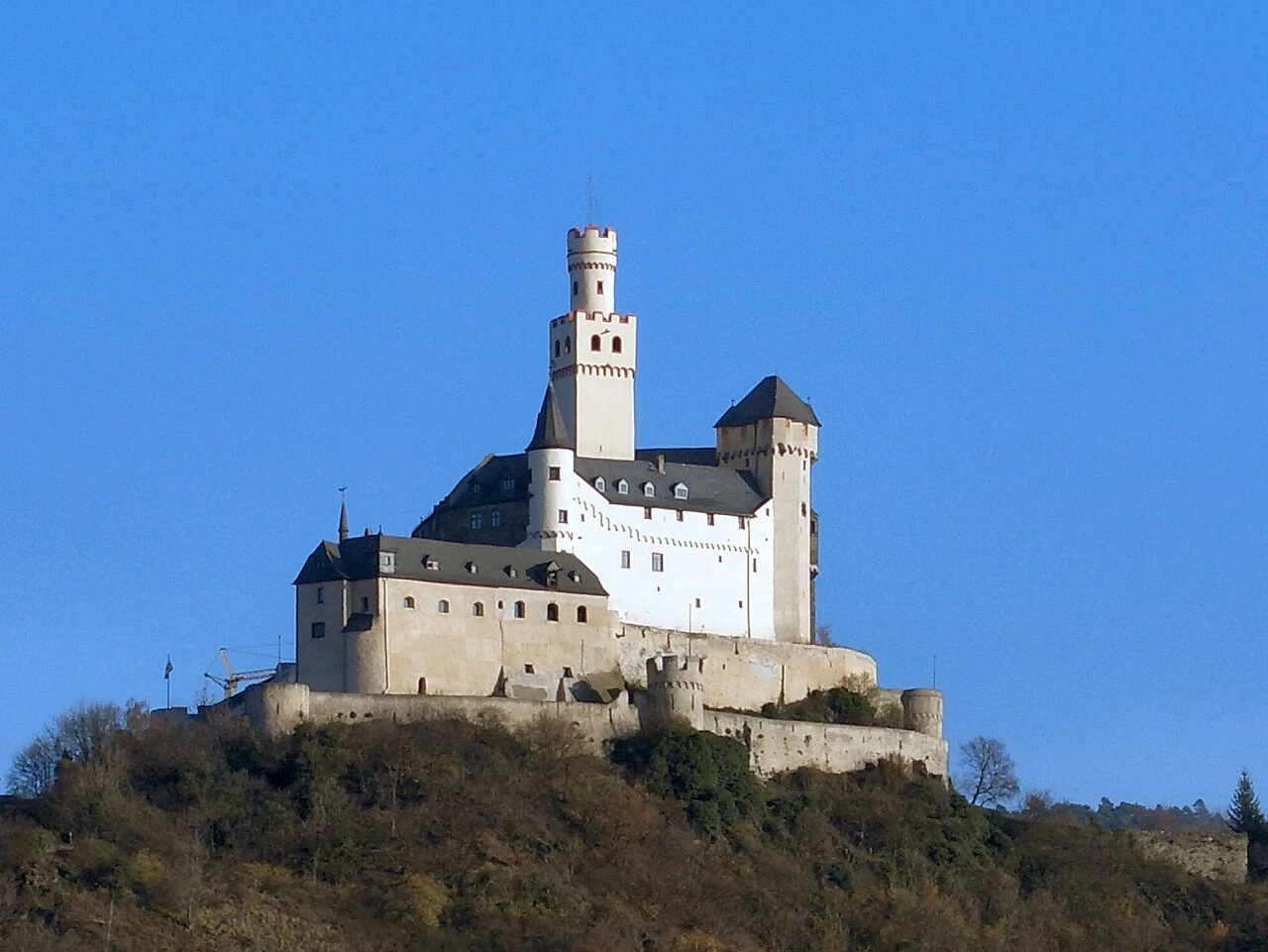
Braubach · 75 km
Marksburg
Content & sources
Holger Weinandt · CC BY-SA 3.0
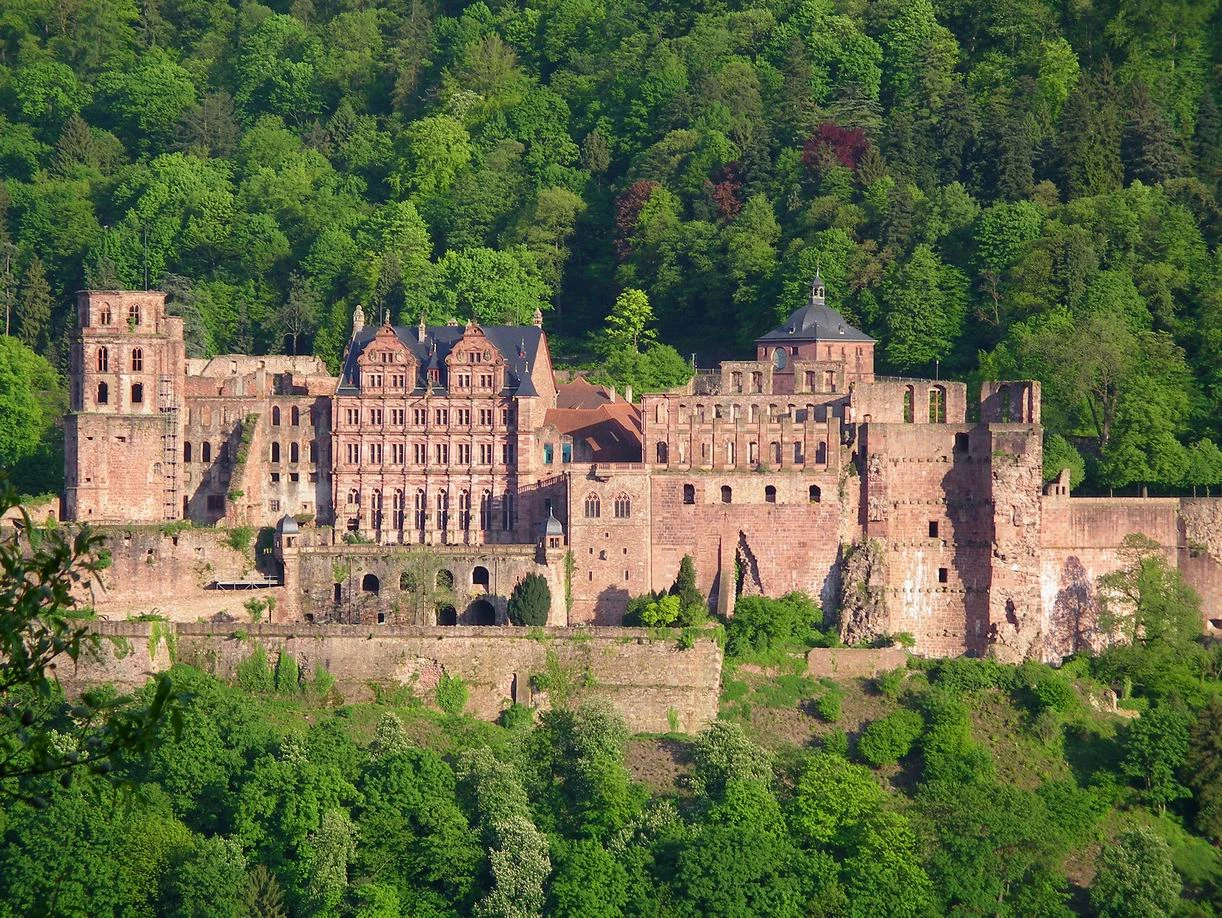
Heidelberg · 77 km
Heidelberg Castle
Content & sources
Pumuckel42 (Reinhard Wolf) at de:Wikipedia · CC BY-SA 3.0
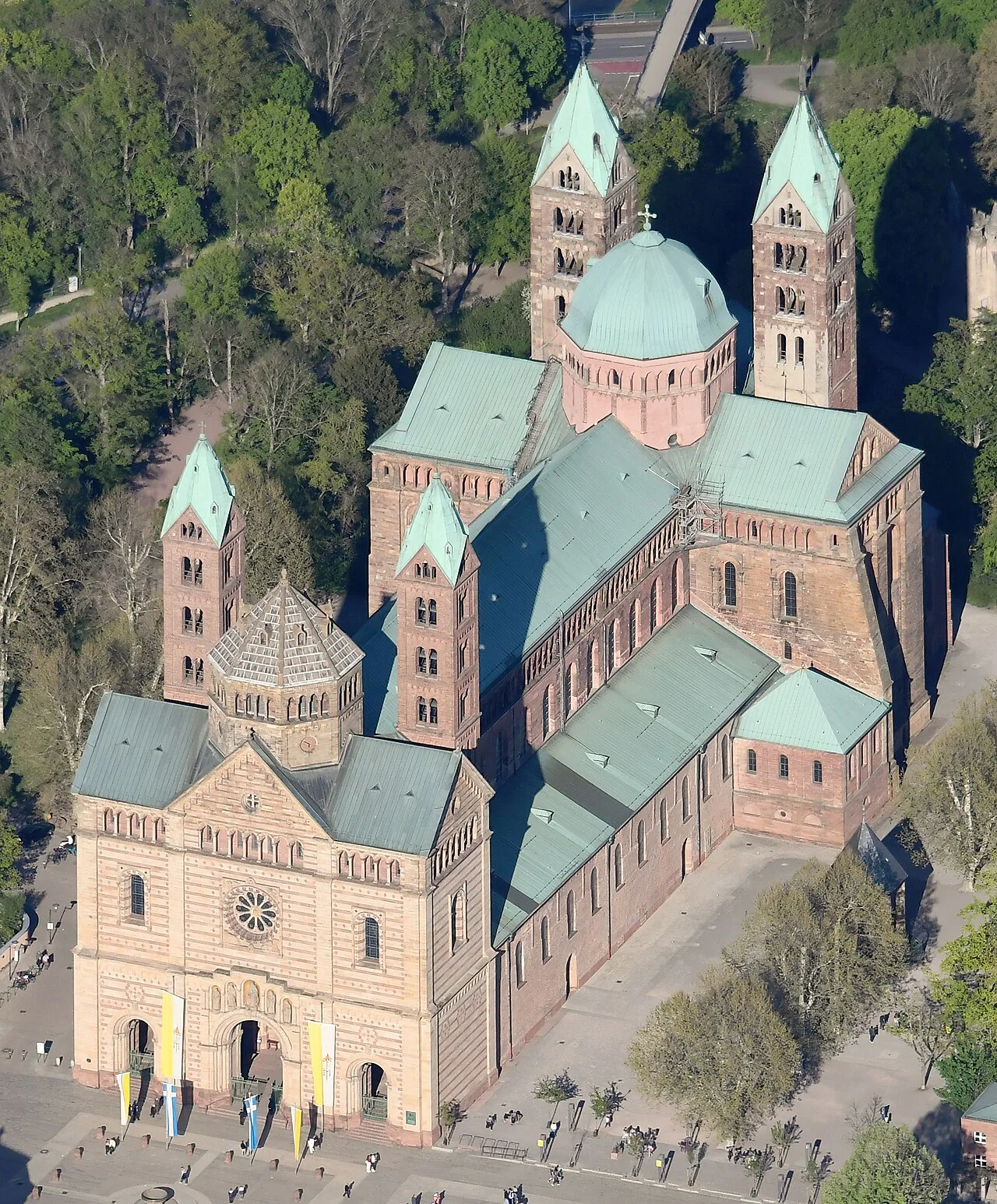
Speyer · 89 km
Speyerer Dom
Content & sources
Carsten Steger · CC BY-SA 4.0
Art museums
More art museum audio guides
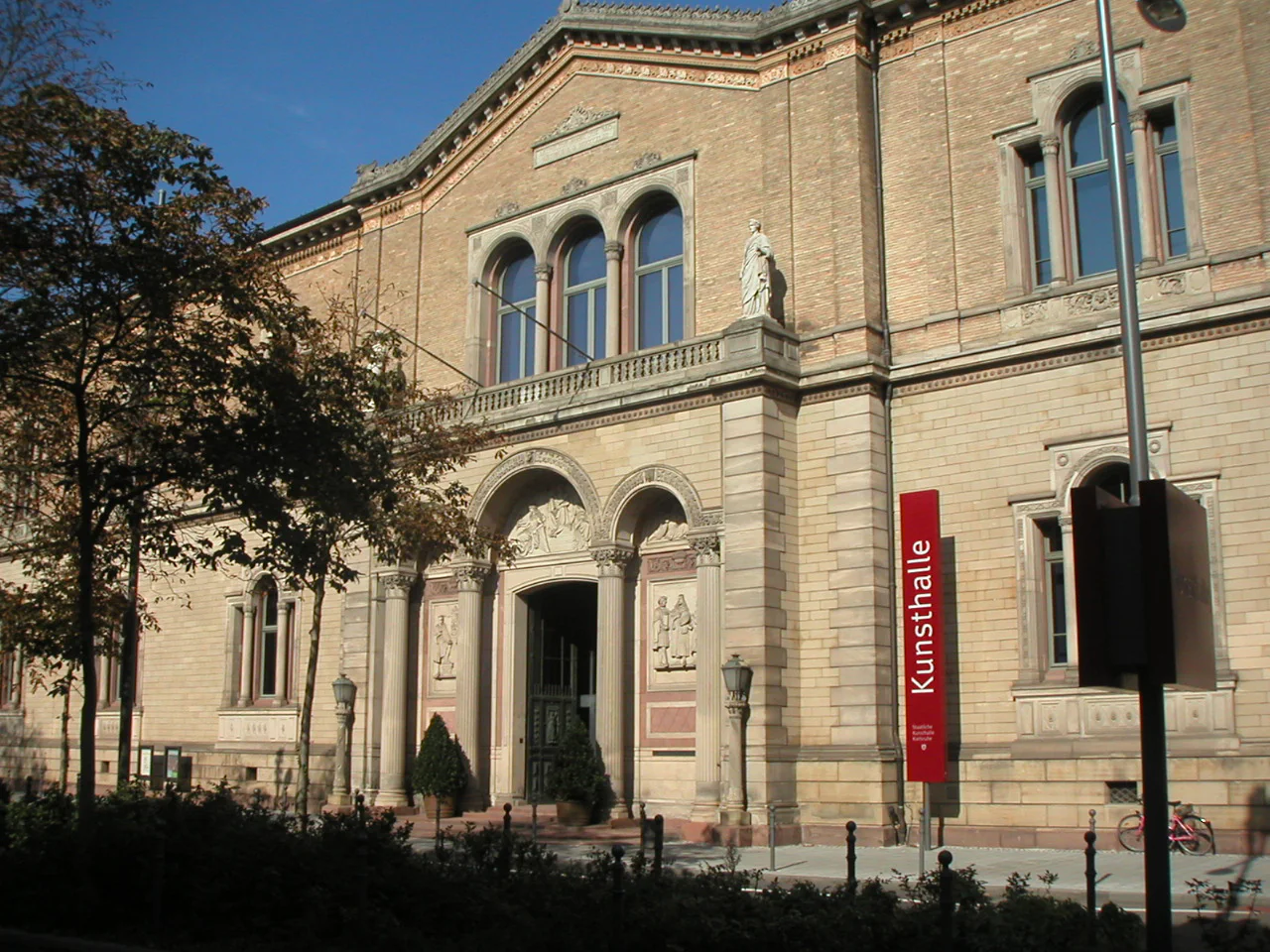
Karlsruhe · 71 artworks
Staatliche Kunsthalle Karlsruhe
Content & sources
Armerdietrich · Public domain
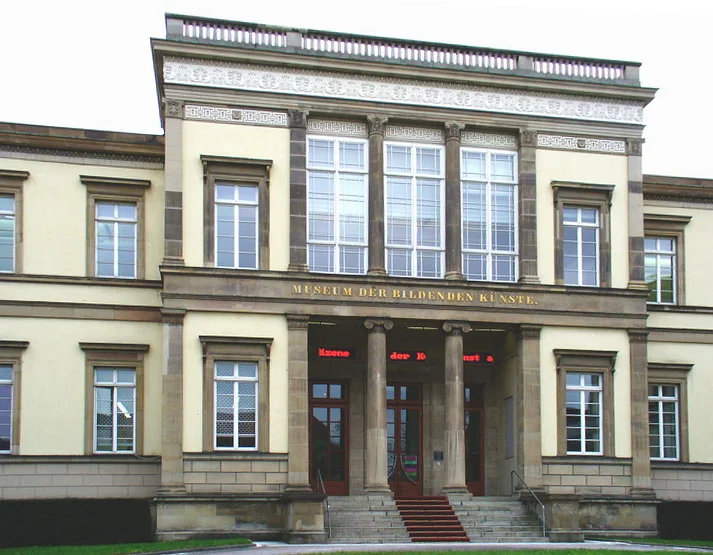
Stuttgart · 43 artworks
Staatsgalerie Stuttgart
Content & sources
Selbst fotografiert von user:Enslin · CC BY 2.5
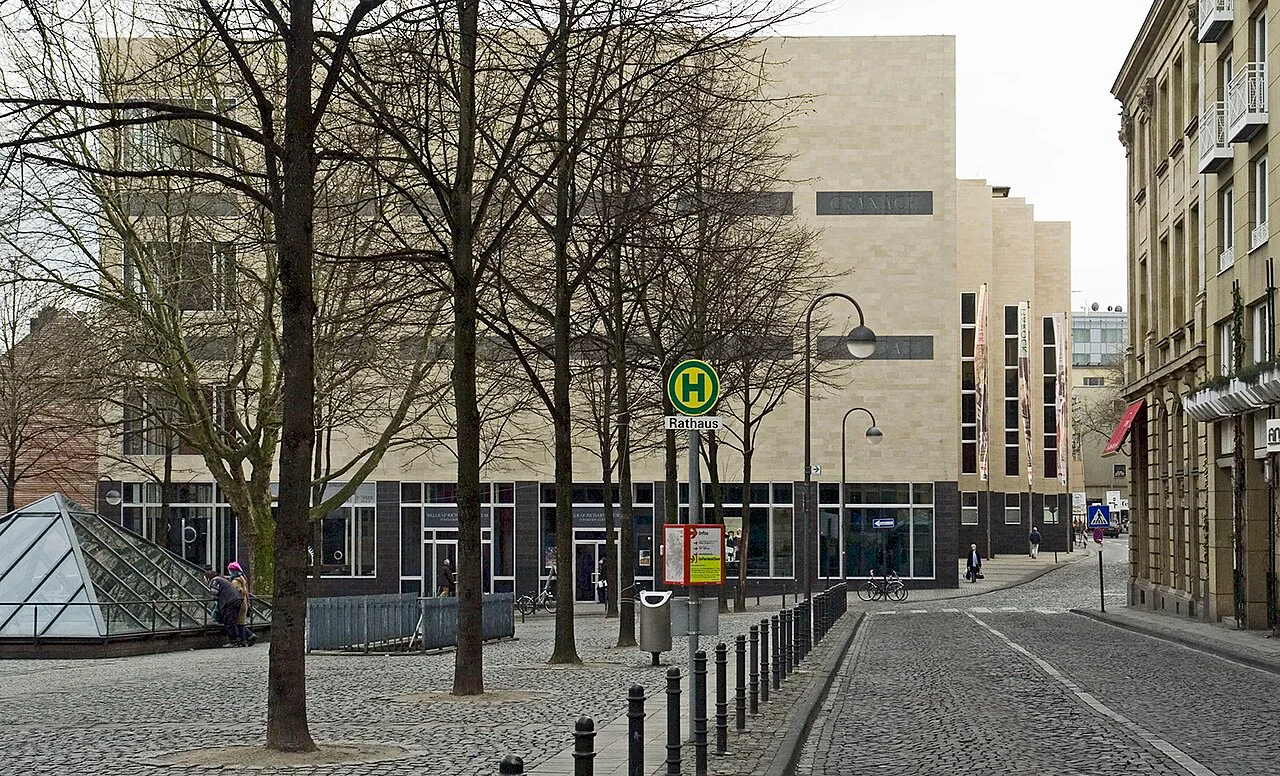
Cologne · 87 artworks
Wallraf-Richartz-Museum & Fondation Corboud
Content & sources
Hans Peter Schaefer - http://www.reserv-a-rt.de · CC BY-SA 3.0
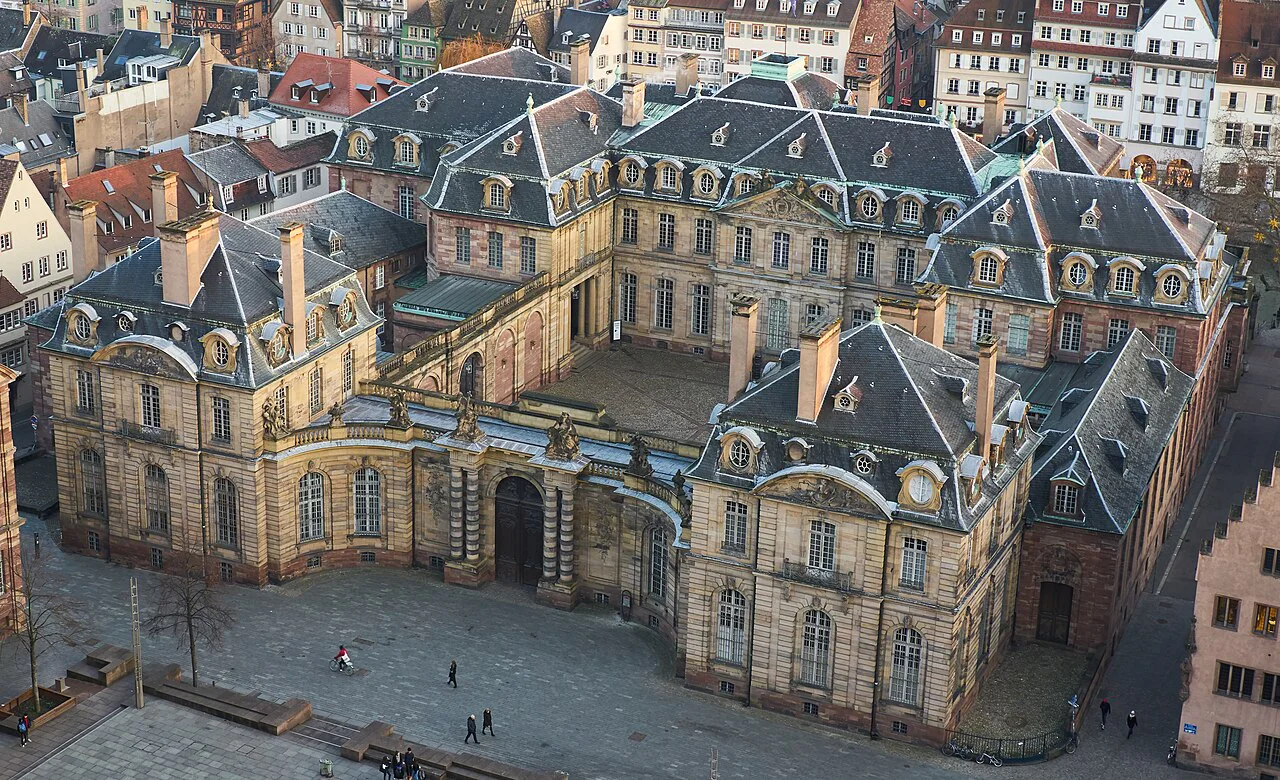
Strasbourg · 92 artworks
Musée des Beaux-Arts de Strasbourg
Content & sources
Radek Kucharski · CC BY 2.0
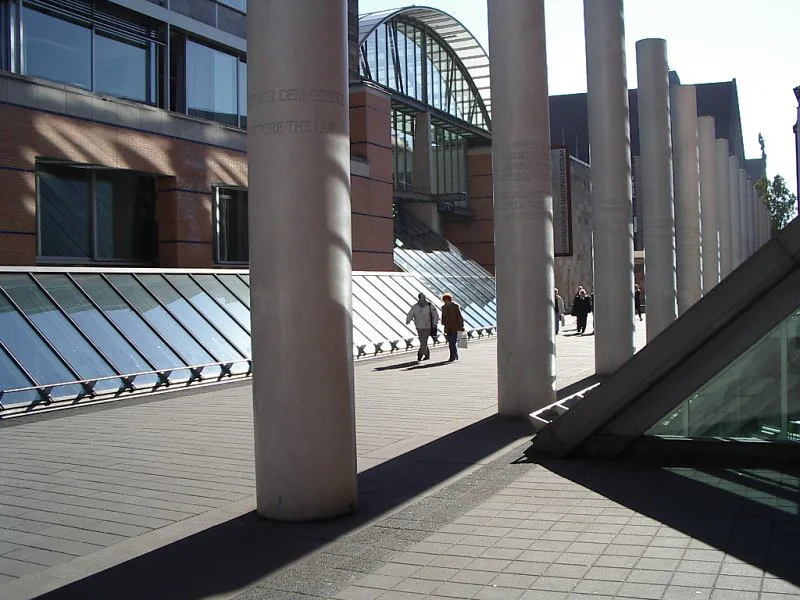
Nuremberg · 54 artworks
Germanisches Nationalmuseum
Content & sources
The original uploader was Keichwa at German Wikipedia. · CC BY-SA 3.0
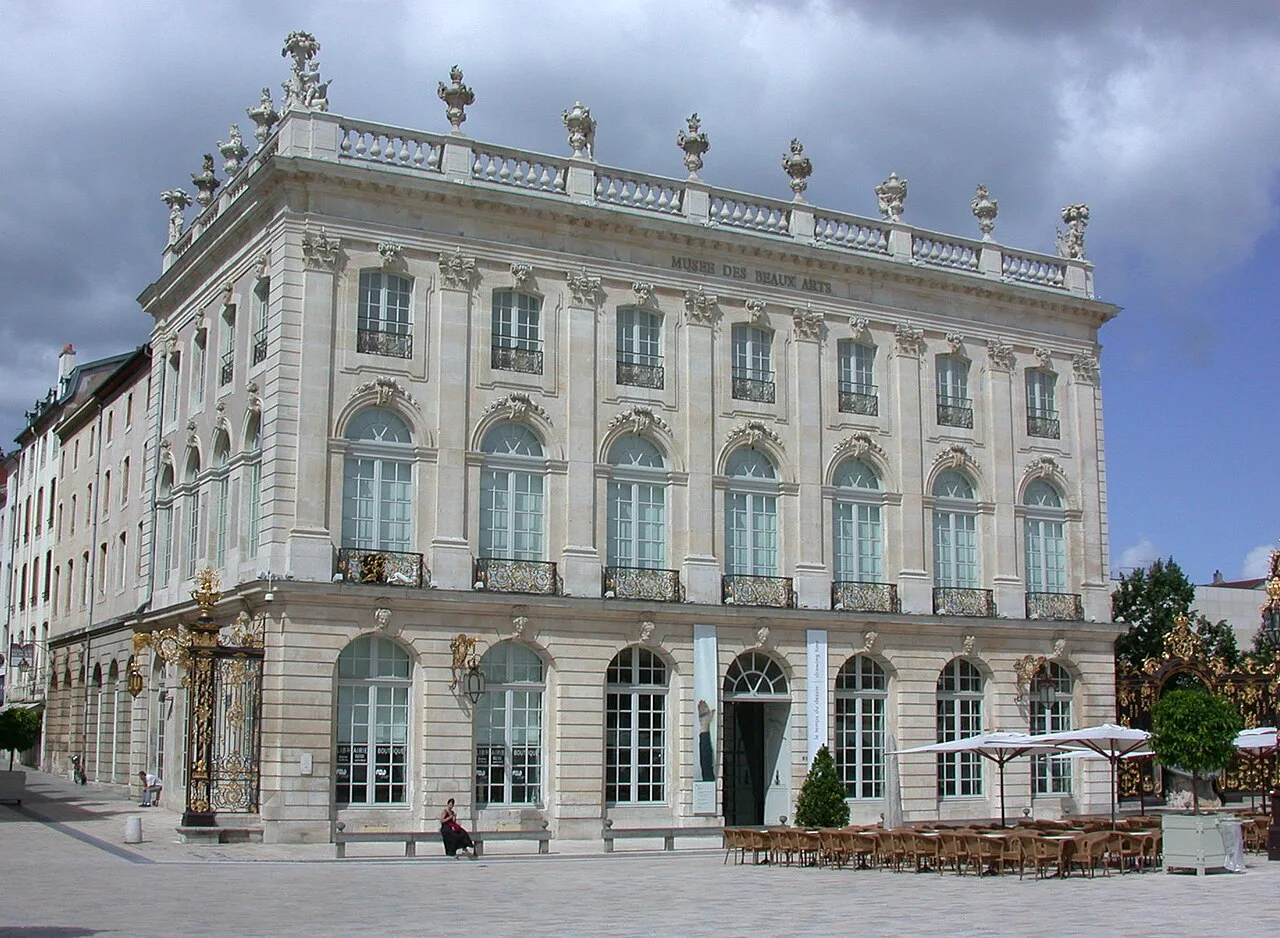
Nancy · 46 artworks
Musée des Beaux-Arts de Nancy
Content & sources
photo uploaded by User:RicciSpeziari. Photographer: Riccardo Speziari · CC BY-SA 3.0