Languages
15불국사 Audio Guide
불국사 is a landmark in Gyeongju-si, South Korea. Explore it with Stanza's GPS-triggered offline audio guide — available in 15 languages.
Quick Facts
13
Stops
15
Languages
100%
Offline
📍 Gyeongju-si, South Korea · 35.7900°N, 129.3322°E
About 불국사
Bulguksa is a head temple of the Jogye Order of Korean Buddhism and contains seven national treasures of South Korea. It is considered a masterpiece of the golden age of Buddhist art in the Silla kingdom.
불국사 is also known as Bulguksa Temple.
This self-guided audio tour features 13 narrated stops organized across 6 sections, including Seokgatap Pagoda, Dabotap Pagoda, Daeungjeon Hall, Museoljeon Hall, Geuknakjeon Hall, Birojeon Hall and the Sarira Stupa. As a temple, 불국사 offers a unique cultural experience in the heart of Gyeongju-si, South Korea.
The Stanza audio guide is available in 15 languages and works entirely offline — download the complete tour including audio narration, maps, and images before your visit. As you walk through 불국사, GPS-triggered narration plays automatically at each point of interest.
Last updated:
What you will hear
Seokgatap Pagoda
Introduce the dual pagoda tradition in the main courtyard, starting with the minimalist Seokgatap. The supporting image illustrates the rare Silla-era reliquary artifacts discovered inside it.
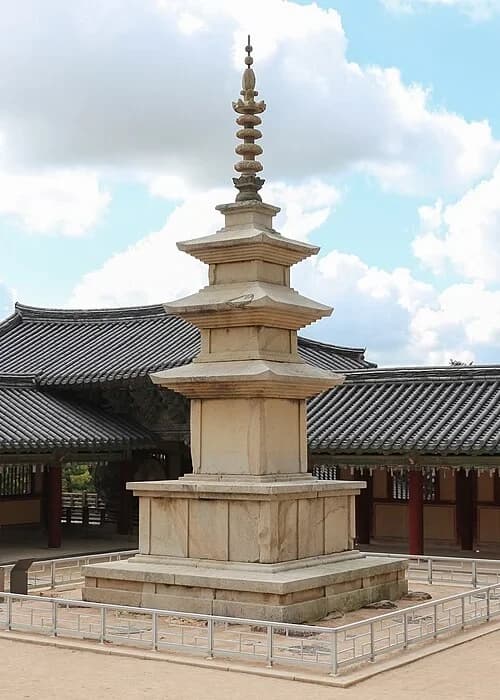
Seokgatap Pagoda
Rising 8.2 meters above the stone courtyard, Seokgatap represents the pinnacle of classic Silla stone architecture. Its clean, minimalist, and geometric lines present a sharp contrast to the highly ornate, decorative style of its neighbor, Dabotap. Notice the strict mathematical symmetry of the three stone tiers. The dimensions of each level decrease in a perfect ratio as the pagoda ascends, creating a powerful sense of stability and proportion. This structured design is connected to a sorrowful local legend, earning Seokgatap the name of the Shadowless Pagoda. According to tradition, Asanyeo, the wife of the master stonemason Asadal, traveled to the temple to see her husband. Forbidden from entering the construction site, she was told she could see the pagoda's shadow in a nearby pond once it was finished. When the completed pagoda failed to cast a shadow on the water, she fell into despair and drowned herself in the pond.
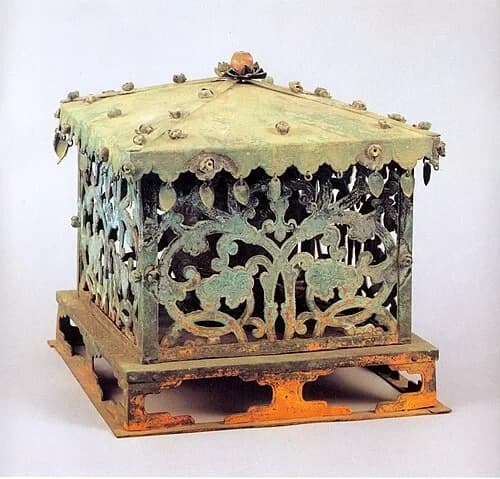
Reliquary of Seokgatap Pagoda
In 1966, a historic discovery occurred during a restoration project on the Seokgatap pagoda. Inside a small chamber hidden within the second story of the stone monument, researchers found a treasure trove of sacred artifacts, including this bronze reliquary box. Inside the container lay a remarkably preserved scroll containing the Great Dharani Sutra. Scientific analysis indicates that this text was printed sometime between the years 704 and 751, making it one of the oldest surviving woodblock prints found anywhere in the world. Observe the metal craftsmanship of the reliquary container itself. The outer surfaces feature highly sophisticated openwork carving techniques. These intricate, scroll-like patterns were designed to provide ventilation and light to the sacred contents within, while simultaneously showcasing the advanced metallurgy of the eighth-century Silla kingdom. The survival of both the metal reliquary and the delicate paper scroll inside the stone pagoda for over a thousand years remains an exceptional event in archaeological history.
Dabotap Pagoda
Focus on the highly complex and ornate counterpart to Seokgatap. The primary image displays its full structure, while the supporting image highlights the lone surviving stone lion guarding its base.
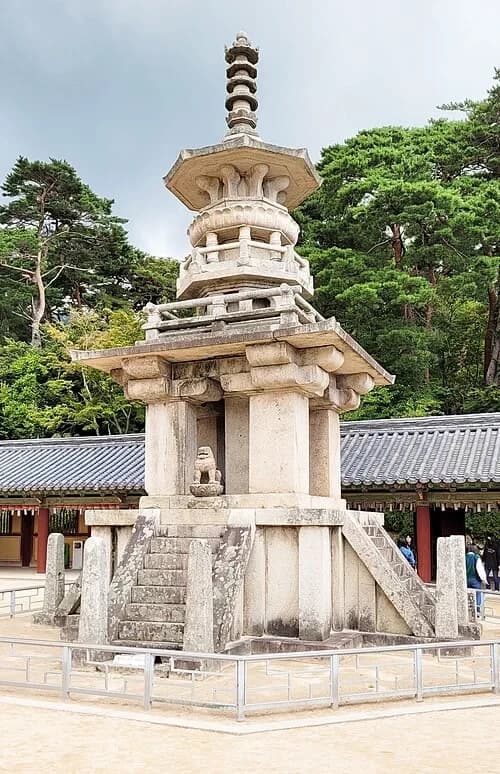
Dabotap Pagoda
Standing 10.4 meters tall, Dabotap Pagoda is celebrated for its highly ornate and complex stone design. In the courtyard, it sits opposite Seokgatap to form a deliberate dual-pagoda layout based on the Lotus Sutra. While Seokgatap represents Sakyamuni, the silent historical Buddha, Dabotap represents Prabhutaratna, the many-treasures Buddha who appeared in a vision to testify to the truth of the teachings. Observe how the structure transitions through different geometric forms as it rises. The base begins as a simple square, complete with four staircases. Moving upward, the stone sections transition into an octagonal middle section adorned with delicate railings and columns. Finally, the top portion finishes with circular motifs. This intentional progression from square to octagon and then to circle represents the spiritual journey from the physical earth to the formless, infinite heavens of Buddhist enlightenment. The complex stonework required to carve these precise geometric shapes from solid granite remains a triumph of ancient Korean craftsmanship.
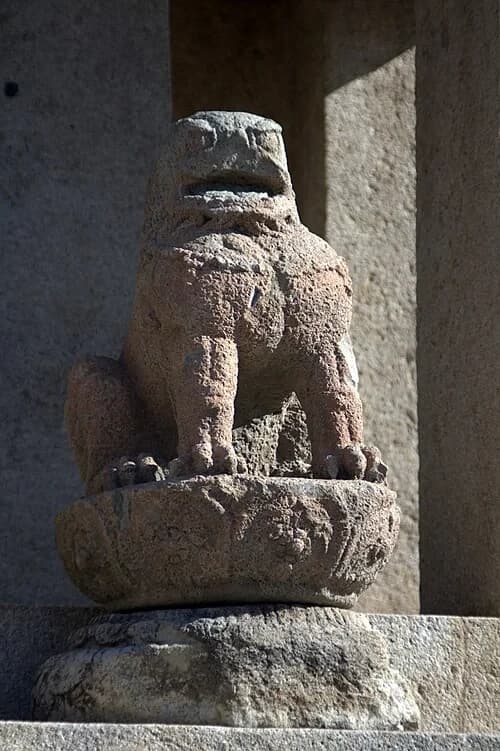
Stone Guardian Lion
Look closely at the pedestal of Dabotap Pagoda to find a single stone guardian lion sitting watch. Today, this figure sits alone, but it once had companions. When the temple was built in the eighth century, four identical guardian lions sat at each of the four corners of the pagoda's staircase base, looking outward to ward off evil spirits from all directions. However, during the Japanese colonial period in the early twentieth century, three of the four lions were removed from the site. Their exact current location remains unknown, leaving this single figure to guard the monument. You can see the significant weathering on the lion's facial features and body, caused by hundreds of years of exposure to the elements on the mountain slopes. Despite the loss of its companions and the wearing away of its fine details, this stone guardian remains in place on its original pedestal.
Daeungjeon Hall
Feature the spiritual heart of the temple complex. The primary image establishes the architectural grandeur of the main hall where the Shakyamuni Buddha is enshrined.
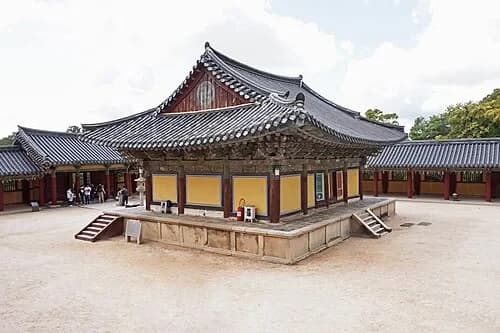
Daeungjeon Hall
Daeungjeon, the Hall of Great Enlightenment, serves as the main worship hall of the temple complex. The building you see today has been rebuilt and repaired many times. During the late sixteenth-century Imjin War, invading forces burned down the original timber structures of the temple. To restore the sacred site, the temple underwent approximately forty major renovations between 1604 and 1805. Look up toward the roofline to examine the intricate, multi-tiered bracket system beneath the eaves. These wooden brackets serve both a structural and decorative purpose, distributing the immense weight of the tiled roof down into the main columns without the need for metal nails. Additionally, look down at the ground of the courtyard. The floor is covered in a layer of fine white sand. This choice of ground cover was highly functional; the bright sand acts as a natural reflector, bouncing sunlight up into the dimly lit interior of the hall to illuminate the statues inside.
Museoljeon Hall
Explore the oldest hall in the complex, dedicated to the teaching of Buddhist truth that transcends spoken language. This exterior shot conveys its quiet, contemplative setting.
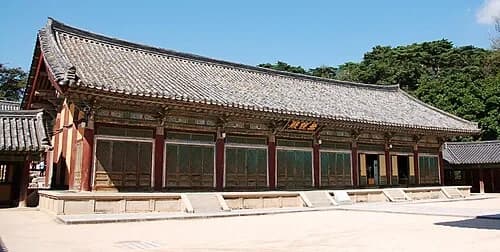
Museoljeon Hall
Located behind the main hall is Museoljeon, which translates to the 'Hall of No Words.' This name reflects a core Zen Buddhist philosophy: the belief that the deepest spiritual truths cannot be fully expressed, captured, or taught using human language. Instead, true enlightenment must be experienced directly through quiet meditation. This building sits on one of the oldest foundational sites within the temple complex, first established by the prominent seventh-century Silla monk Uisang as a lecture hall. Notice the simple, understated horizontal profile of the building. Unlike some of the highly painted and decorated structures nearby, Museoljeon features natural, unpainted wood textures on its sliding doors and columns. This rustic simplicity is intentional, fostering a quiet environment that encourages visitors to look inward rather than focusing on outward displays. The unadorned surfaces highlight the raw grain of the timber, aligning the building's physical appearance with its philosophical emphasis on silent contemplation.
Geuknakjeon Hall
Move west to the Paradise Courtyard. The primary image shows the exterior of Geuknakjeon along with its famous golden pig statue, while the supporting image reveals the magnificent Gilt-bronze Amitabha Buddha inside.
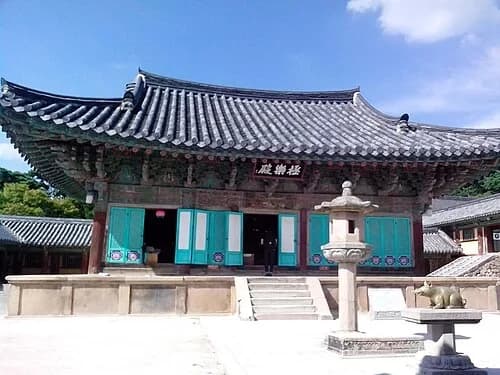
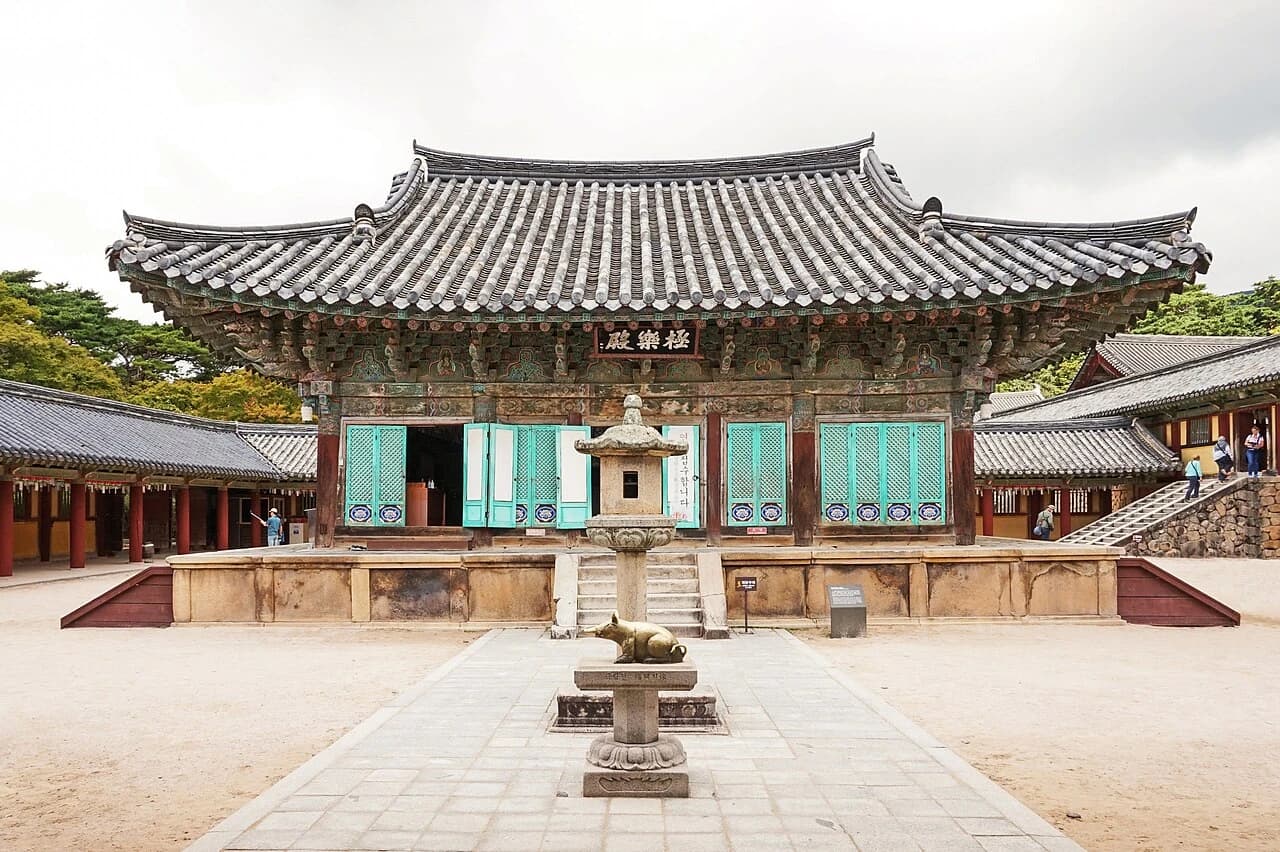
Geukrakjeon Hall
This hall is Geukrakjeon, the Hall of Supreme Bliss, where worshippers pay respects to the Buddha of the Western Paradise. In front of the stone lantern standing before the hall, look for the small bronze pig sculpture resting on a stone pedestal. This modern addition has an interesting backstory. In 2007, eagle-eyed visitors looking at the wooden architecture of the hall noticed a small, hand-carved wooden pig hidden directly behind the building's main calligraphic signboard under the eaves. This carving had gone unnoticed for decades. To celebrate the discovery, temple authorities installed this touchable bronze replica in the courtyard so that visitors could interact with it. In Korean culture, the pig is a traditional symbol of wealth, abundance, and good fortune. Today, visitors frequently touch the smooth back of the bronze figure, wishing for prosperity as they enter the courtyard.
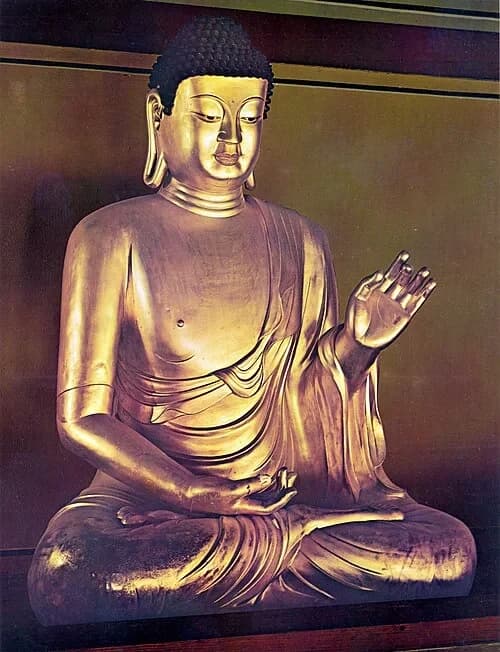
Gilt-Bronze Seated Amitabha Buddha
Inside Geukrakjeon sits the Gilt-bronze Seated Amitabha Buddha, an exceptional sculpture standing 1.66 meters tall. Officially designated as National Treasure No. 27, this figure dates back to the eighth century during the golden age of the Silla Kingdom. Notice the characteristic physical features of the sculpture, such as the broad, strong shoulders, the calm, serene facial expression, and the highly stylized, flowing folds of the drapery in the robes. These details are classic hallmarks of Silla metal sculpture from this period, showcasing a high level of technical mastery in casting and gilding. Pay attention to the specific mudra, or ritual hand gesture, formed by the fingers. The right hand is raised with the thumb and middle finger touching, while the left hand rests in the lap in a similar position. This particular mudra represents the welcoming of the souls of believers into the Amitabha Buddha’s Western Paradise, offering comfort and peace to worshippers.
Birojeon Hall and the Sarira Stupa
Conclude the tour in the northernmost courtyard. The primary image features the unique lantern-shaped Sarira Stupa, while the supporting image showcases the Gilt-bronze Vairocana Buddha inside the adjacent Birojeon.
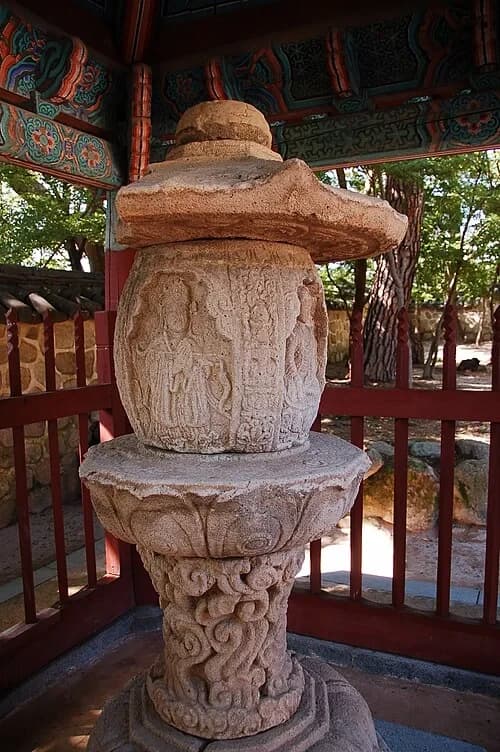
Sarira Stupa
This rare lantern-shaped stone monument is a Sarira Stupa, designed to house the sacred remains of prominent monks. It has a turbulent modern history. In 1906, Japanese collectors looted the stupa from the temple grounds, transporting it to Japan. Following a prolonged international campaign and legal return efforts by Korean activists, the stupa was finally repatriated to Korea in 1933, where it was reassembled in its rightful place. Look closely at the central cylinder of the structure. You can see the delicate relief carvings of four Buddhas, each carefully housed in its own arched niche facing one of the cardinal directions. Flanking these figures, the base of the stupa is adorned with elegant, deeply carved lotus leaf patterns. The combination of the unique, lantern-like shape and the intricate stone carvings makes this one of the most distinctive funerary monuments in the country, demonstrating the creative architectural designs of the late Silla period.
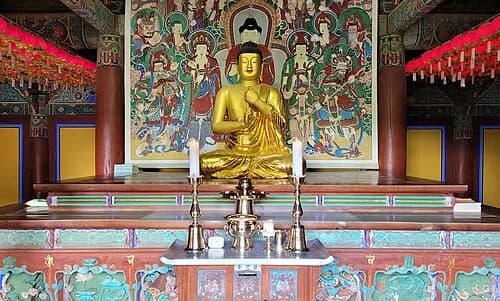
Gilt-Bronze Seated Vairocana Buddha
This final stop of the tour brings us inside Birojeon to view the Gilt-bronze Seated Vairocana Buddha. Standing 1.77 meters tall, this sculpture represents the Cosmic Buddha, the source of all light and truth in the universe. Look closely at the distinct hand gesture, or mudra, known as the 'fist of wisdom.' The right hand clasps the raised index finger of the left hand. This symbolic gesture represents the unity of the spiritual and material worlds, as well as the triumph of wisdom over ignorance. Above the statue, look up at the ceiling rafters. You will see rows of colorful paper lanterns hanging in neat grids across the wooden beams. These lanterns, often containing written wishes from pilgrims, cast a soft glow across the ancient gilded surfaces of the statue, concluding our tour of the temple grounds with a scene of quiet beauty.
Want to hear the rest?
Download the Stanza app to unlock all 13 stops and full GPS-guided navigation.
Frequently Asked Questions
How long does the 불국사 audio tour take?
The 불국사 audio guide includes 13 narrated stops. Most visitors spend 45 minutes to 1.5 hours exploring the complete tour, though you can listen at your own pace and skip or revisit any stop.
Is the 불국사 audio guide available in my language?
Stanza supports 15 languages: English, Spanish, French, German, Italian, Portuguese, Russian, Japanese, Chinese, Korean, Arabic, Hindi, Polish, Dutch, Hebrew. Check the guide in the app to confirm the languages currently available for this tour.
Can I use the audio guide offline at 불국사?
Yes! Download the complete 불국사 tour — including all audio, maps, and images — before your visit. The Stanza app works completely offline, so you don't need WiFi or mobile data at the venue.
How much does the 불국사 audio guide cost?
The Stanza app is free to download. Free and paid audio guides are available; current prices are shown in the app.
How do I use the Stanza audio guide at 불국사?
Download the free Stanza app, search for "불국사", and download the tour. When you arrive at the venue, the app uses GPS to detect your location and automatically plays the relevant narration as you move between points of interest — completely hands-free.
What makes the Stanza audio guide different from other 불국사 tours?
Stanza offers GPS-triggered narration that plays automatically as you walk through 불국사 — no need to manually select stops. The tour is available in 15 languages, works fully offline, and includes 13 expertly narrated stops with images and historical context.
What other audio guides are available near 불국사?
Stanza offers multiple audio guides in Gyeongju-si, South Korea and nearby areas. After downloading the app, browse the map to discover all available tours near 불국사. Each guide can be downloaded for offline use.