Languages
15Mount Rushmore Audio Guide
Mount Rushmore is a landmark in Keystone, United States. Explore it with Stanza's GPS-triggered offline audio guide — available in 15 languages.
Quick Facts
20
Stops
15
Languages
100%
Offline
📍 Keystone, United States · 43.8789°N, -103.4592°E
About Mount Rushmore
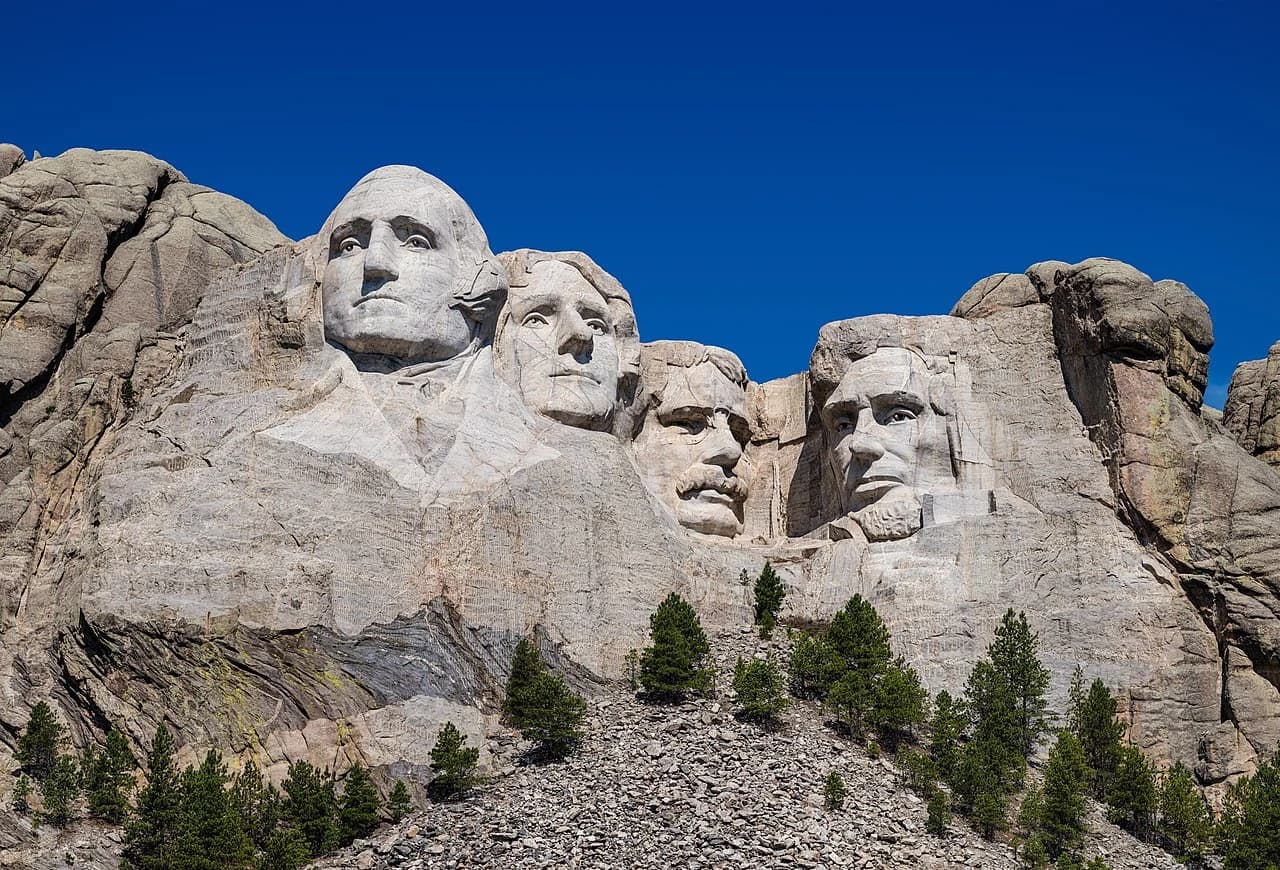
Mount Rushmore is a colossal sculpture carved into the granite face of a mountain in the Black Hills of South Dakota. It features the 60-foot heads of four United States presidents: George Washington, Thomas Jefferson, Theodore Roosevelt, and Abraham Lincoln.
Mount Rushmore is also known as Mt. Rushmore.
This self-guided audio tour features 20 narrated stops organized across 9 sections. As a memorial, Mount Rushmore offers a unique cultural experience in the heart of Keystone, United States.
The Stanza audio guide is available in 15 languages and works entirely offline — download the complete tour including audio narration, maps, and images before your visit. As you walk through Mount Rushmore, GPS-triggered narration plays automatically at each point of interest.
Last updated:
What you will hear
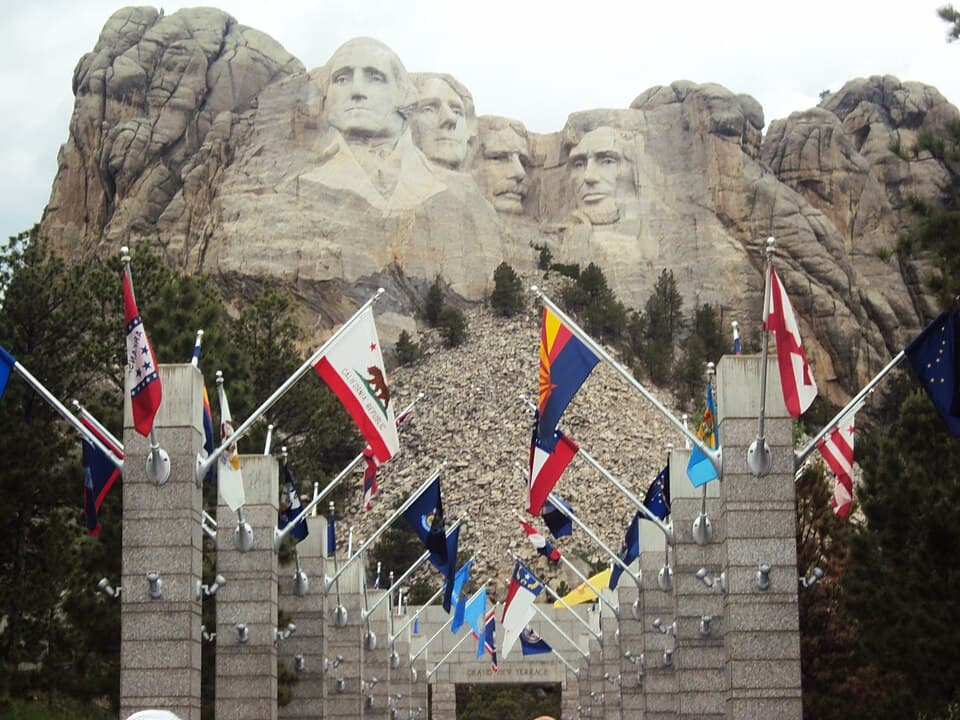
Avenue of Flags
Focusing on the patriotic walkway that frames the mountain. Need images showing the flags of the 50 states and territories.
View Toward the Spires
Standing here, the true physical magnitude of Mount Rushmore begins to set in. To understand the ambition of this project, consider the numbers. Each of the four presidential heads is approximately 60 feet tall. To put that in perspective, if these presidents were carved as full-length statues, they would stand nearly 465 feet tall. Each face is roughly the height of a six-story building, with noses about 20 feet long and mouths spanning 18 feet. The mountain itself, which the sculptor Gutzon Borglum chose for its durable granite and favorable southeast exposure, reaches a summit elevation of 5,725 feet above sea level. Achieving this level of detail on such a massive scale required the removal of an astonishing amount of stone. Over the fourteen years of construction, workers moved roughly 450,000 tons of granite off the mountain face. Most of that rock still sits at the base of the mountain today in what is known as the talus slope. The spires of the Black Hills provide a dramatic, jagged backdrop to the smooth, refined features of the presidents, highlighting the contrast between the raw nature of South Dakota and the human hand that shaped it.
Grand View Terrace
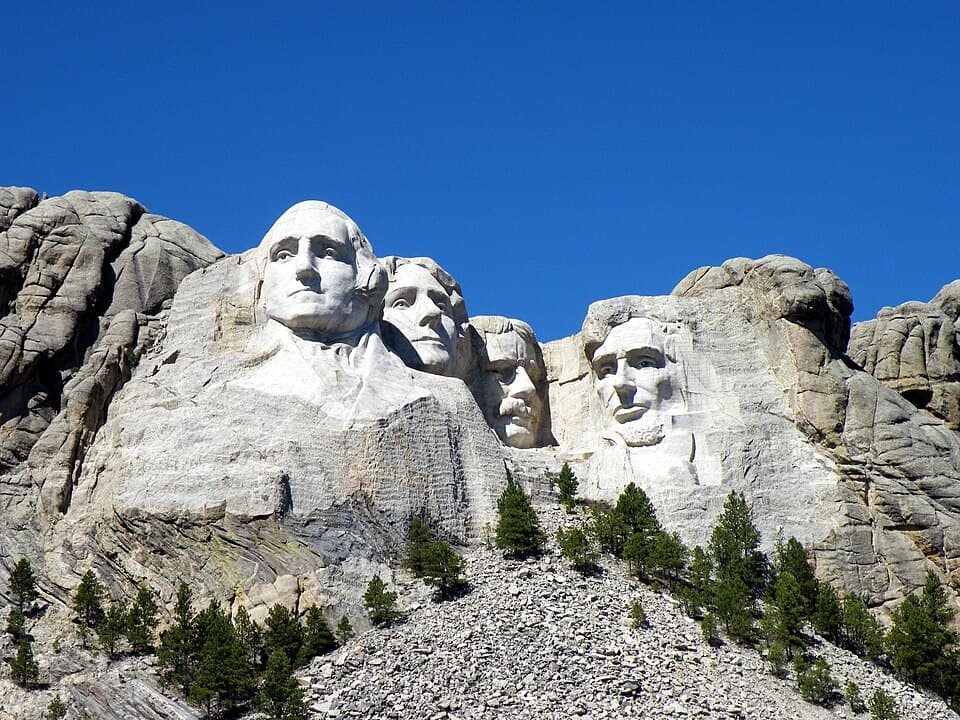
The primary observation point for the memorial. Integrating the verified POI for the National Memorial here with an aerial perspective.
Grand View Terrace
You are now standing on the Grand View Terrace, the primary observation point for the memorial. This is the spot where the full vision of the project comes into focus. The creation of this monument was the life's work of sculptor Gutzon Borglum. He was a man of immense ambition who began the project on October 4, 1927. When Gutzon passed away in early 1941, his son, Lincoln Borglum, took over the supervision of the final months of work. The construction lasted precisely fourteen years, with the project officially ending on October 31, 1941. While the faces look finished today, the original plan was much more extensive, but funding and the onset of World War II brought the work to a close. From this terrace, you can appreciate the subtle differences in how each president is positioned. Borglum used the natural highlights and shadows of the mountain to give the faces depth. As you stand here, imagine the sounds of air compressors and dynamite blasts that would have echoed across this valley for over a decade as the mountain was slowly transformed into the icon you see before you.
Theodore Roosevelt: The Development
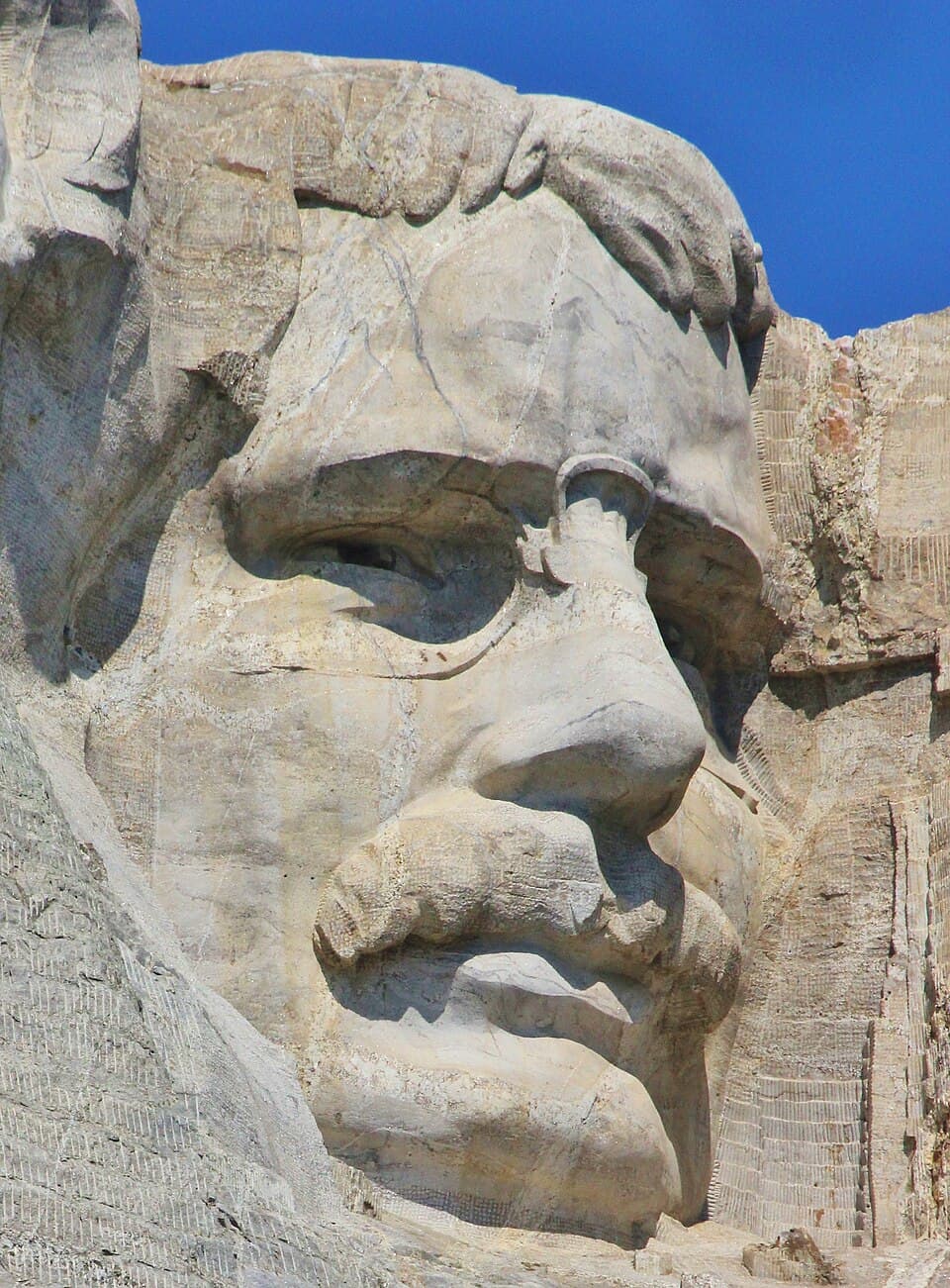
Focusing on Roosevelt, representing the industrial development and conservation of the nation. Need a detail shot showing the depth of his carving.
Theodore Roosevelt
Theodore Roosevelt was chosen to represent the development of the United States, particularly the country's emergence as a world power and his pioneering efforts in land conservation. His likeness is tucked slightly back into the mountain between Jefferson and Lincoln. This position presented a unique technical challenge for the carvers. To make Roosevelt's features appear as prominent as the others from a distance, the sculptor had to use deeper indentations and more pronounced shadows. One of the most impressive technical feats on the entire mountain is the carving of Roosevelt’s spectacles. Because it is impossible to carve transparent glass out of solid gray granite, the carvers created the illusion of eyewear by carving deep, dark lines and leaving a thin ridge of stone to represent the bridge and frames. From the viewing platforms below, this trick of perspective works perfectly, making it appear as though the president is wearing his signature glasses. Roosevelt was a personal friend of the sculptor, and his inclusion was meant to symbolize the energy and progress of the early 20th century.
Abraham Lincoln: The Preservation
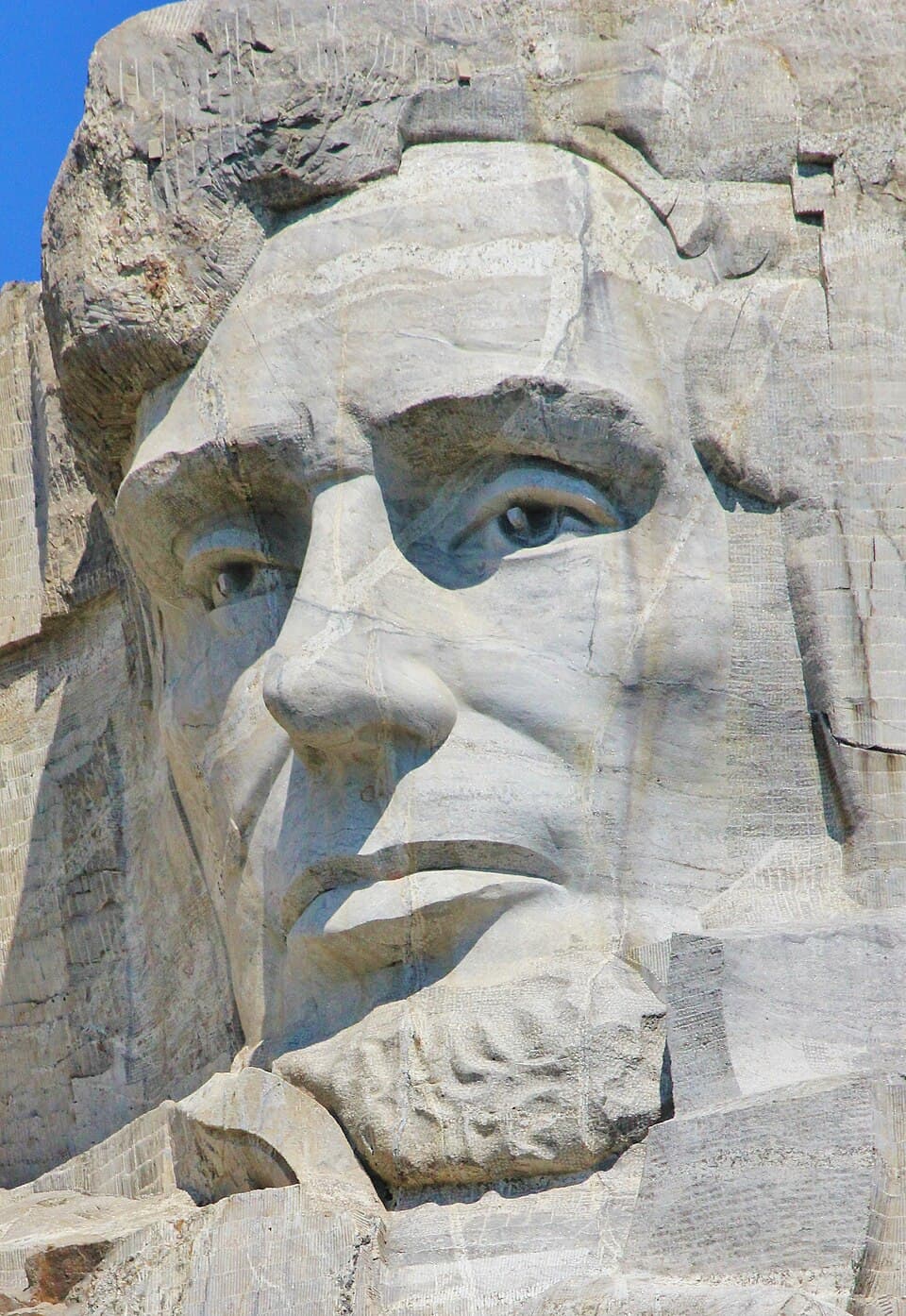
Focusing on Lincoln, representing the preservation of the Union. This stop also allows for mentioning the secret Hall of Records located behind his head.
Abraham Lincoln
Abraham Lincoln, situated on the far right of the group, represents the preservation of the United States during its most difficult hour, the Civil War. His face is known for its deep-set eyes and resolute expression, reflecting the weight of the era he led. Behind Lincoln’s massive head lies one of the monument's least-known features: the Hall of Records. This is a 70-foot-long tunnel carved directly into the granite canyon behind the presidents. Sculptor Gutzon Borglum originally envisioned this hall as a grand chamber that would house the nation’s most sacred documents, like the Constitution and the Bill of Rights. He wanted a place where the story of America could be preserved long after the faces on the mountain might have eroded. Although the hall was never completed to Borglum's grand original vision, a titanium vault containing porcelain tablets detailing the history of the United States was installed there in 1998. For safety and security reasons, the Hall of Records remains completely off-limits to the public, existing as a silent time capsule hidden deep within the heart of the mountain.
The Workers' Dangerous Feat
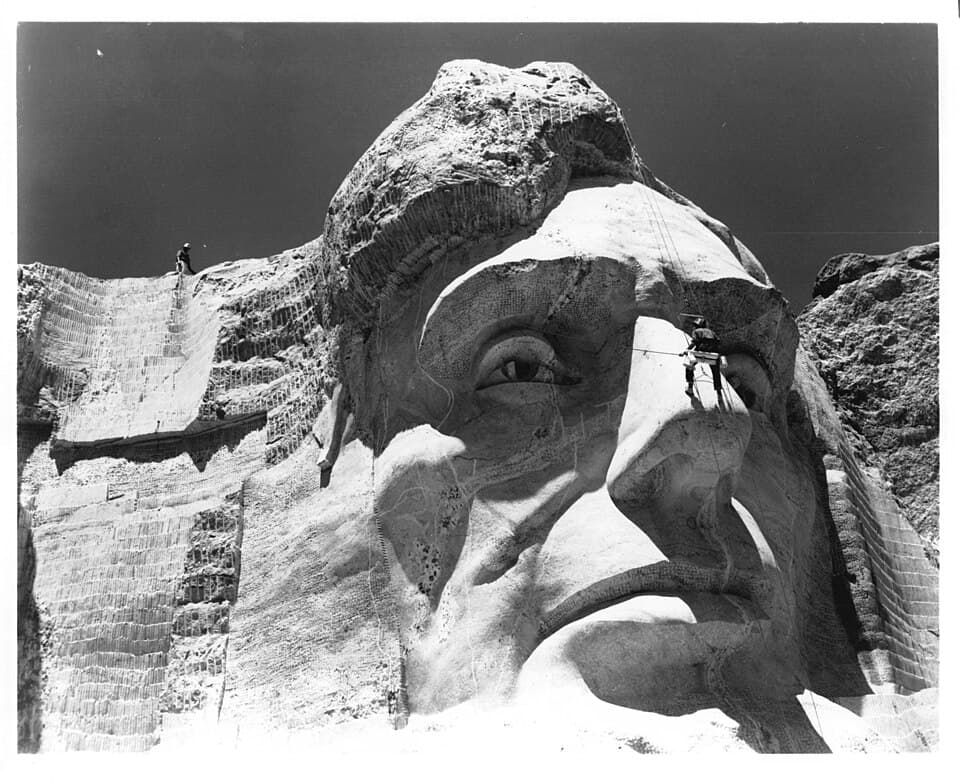
Highlighting the 400 laborers and chief carver Luigi Del Bianco. Need historical images of the dangerous construction process.
The Danger Zone
The creation of Mount Rushmore was not just an artistic achievement; it was an incredibly dangerous industrial project. Over 400 workers participated in the carving over the course of fourteen years. Most were not artists, but local miners and laborers who were accustomed to working with explosives and rock. These men worked in what were called 'bosun chairs'—simple wooden seats suspended by steel cables from the top of the mountain. They would swing out over the 500-foot drop, using jackhammers and drills to shape the granite. Workers were lowered down the mountain face every morning, carrying their heavy tools and lunch pails. Despite the extreme heights, the constant use of dynamite, and the unforgiving weather of the Black Hills, the safety record of the project is nothing short of miraculous. During the entire fourteen years of construction, not a single worker died. The men would use precisely placed charges to blast away 90 percent of the rock, leaving only a few inches for the final carving. It was a job that required both physical bravery and technical precision, performed by men who worked for about eight dollars a day during the height of the Great Depression.
The Presidential Trail
The boardwalk trail that leads to the base of the mountain. Need views looking directly up to show the perspective from below.
The Talus Slope
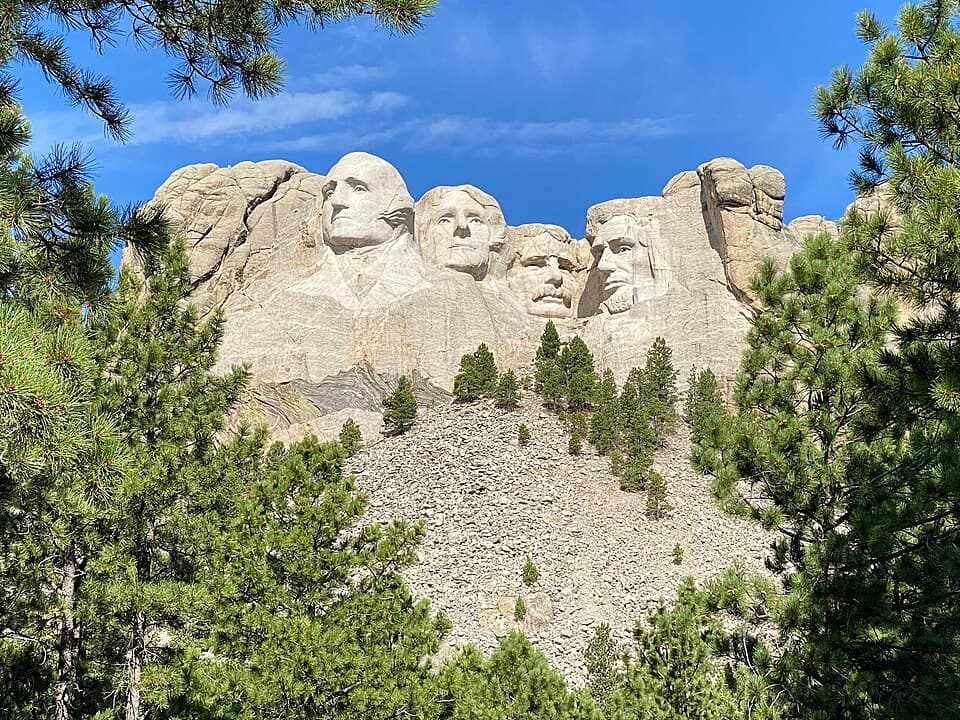
As you hike the Presidential Trail, you will pass by the 'Talus Slope'—the massive pile of broken granite at the foot of the mountain. This is the 450,000 tons of rock that was blasted off the face during the fourteen years of construction. While some people suggested moving the debris to make the site look 'cleaner,' Gutzon Borglum insisted that it remain exactly where it fell. He wanted the broken rock to serve as a permanent record of the work and the human effort required to shape the mountain. The trail features 422 stairs as it winds through the talus and the surrounding forest. As you walk, take a moment to engage your other senses. You may notice the fresh, resinous scent of the Ponderosa pine forest, which blankets the Black Hills in deep green. The rustle of the wind through the needles and the occasional chatter of a red squirrel provide a natural soundtrack to your visit. The contrast between the shattered, chaotic pile of the talus slope and the perfectly ordered, serene faces above serves as a powerful reminder of the transition from raw nature to a finished work of art. This slope is not just a pile of rocks; it is the physical evidence of the 400 workers who spent their days swinging from cables to create the monument you see today.
The Presidential Trail
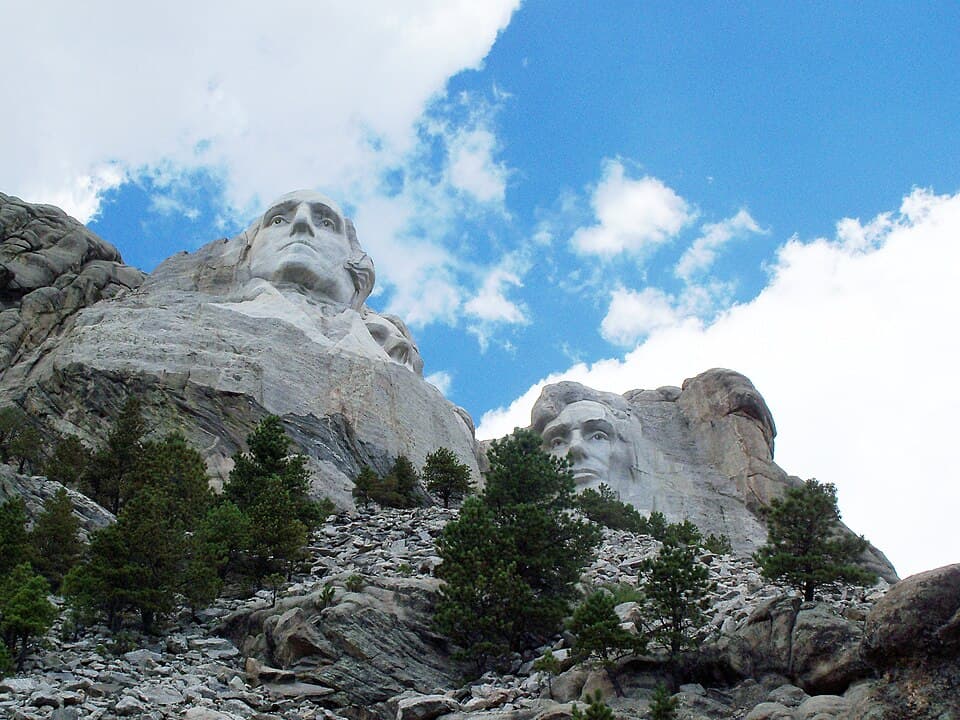
If you are feeling adventurous, follow the Presidential Trail, a boardwalk that loops closer to the base of the mountain. Walking this path changes your perspective entirely. Instead of seeing the presidents as a distant, flattened group, you begin to see them as three-dimensional figures emerging from the rock. From directly below, the scale is truly overwhelming. You can clearly see the 'honeycomb' marks left by the jackhammers and the drill holes where dynamite was once placed. It is fascinating to realize that approximately 90 percent of the rock removed from the mountain was not carved with a chisel, but blasted away using precisely timed dynamite charges. Expert powdermen could blast to within inches of the finished 'skin' of the sculpture. Once the dynamite had done the heavy lifting, carvers used a process called 'honeycombing.' They would drill holes very close together to a specific depth, then break off the remaining rock with a hammer and chisel. This left a rough surface that was eventually smoothed down with a tool called a bumper, which worked like a pneumatic sander. Walking this trail allows you to see the textures of the mountain up close, from the polished faces to the raw, uncarved granite that surrounds them.
The Unfinished Vision
Explaining that the presidents were intended to be carved down to their waists. Need a shot showing the rough rock below the chins.
The Unfinished Vision
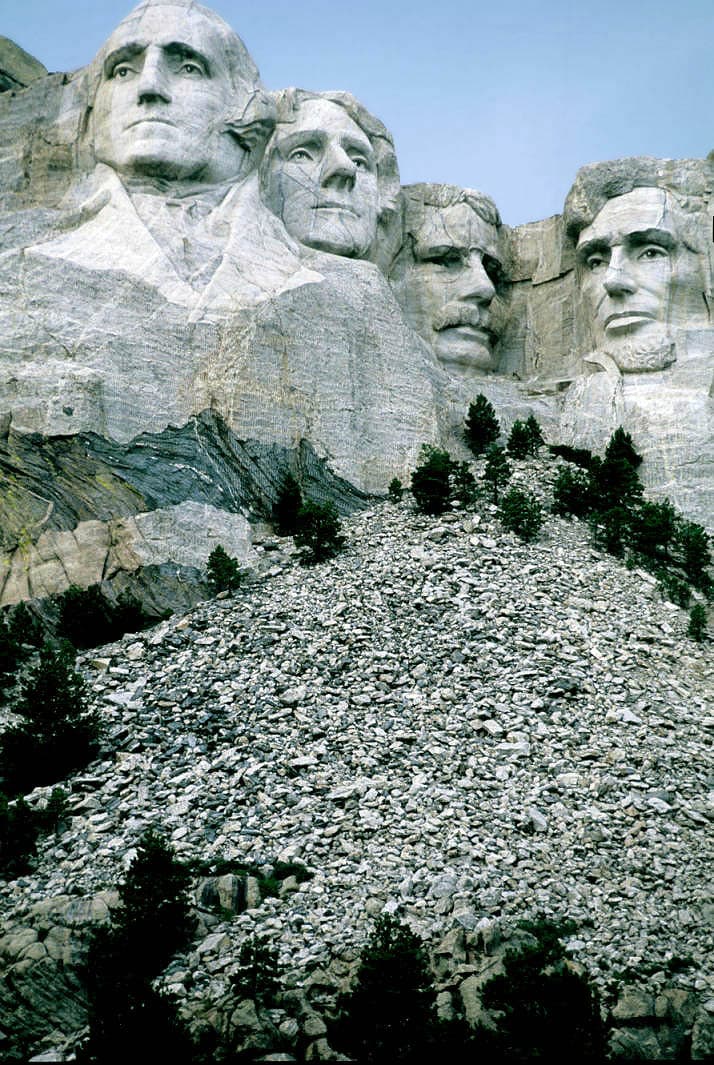
Look closely at the area just below George Washington’s lapels and the lower portions of the other presidents. You’ll notice the texture changes from the smooth, refined stone of the faces to a jagged, unpolished gray. This isn't an artistic choice; it is the physical evidence of a project that was never truly finished. Gutzon Borglum’s original vision for Mount Rushmore was far more ambitious than what we see today. He intended for the presidents to be carved down to their waists, dressed in period clothing that would have provided a more complete and traditional portrait. However, fate intervened in 1941. In March of that year, Borglum passed away following surgery, leaving his son, Lincoln, to oversee the final months of work. Funding was already scarce, and with the United States on the brink of entering World War II, the government’s priorities shifted elsewhere. On October 31, 1941, just weeks before the attack on Pearl Harbor, construction was declared complete and all work ceased. These rough-hewn edges serve as a permanent record on the mountain. Instead of the grand, waist-up figures, we are left with these four heads emerging from the raw stone of the Black Hills. This unfinished state has, in its own way, become part of the monument's identity—a blend of human artistic will and the untamed nature of the granite itself.
The Six Grandfathers: Lakota Heritage
Providing the essential context of the Black Hills as sacred land. Need the historical image of the mountain before carving.
The Six Grandfathers
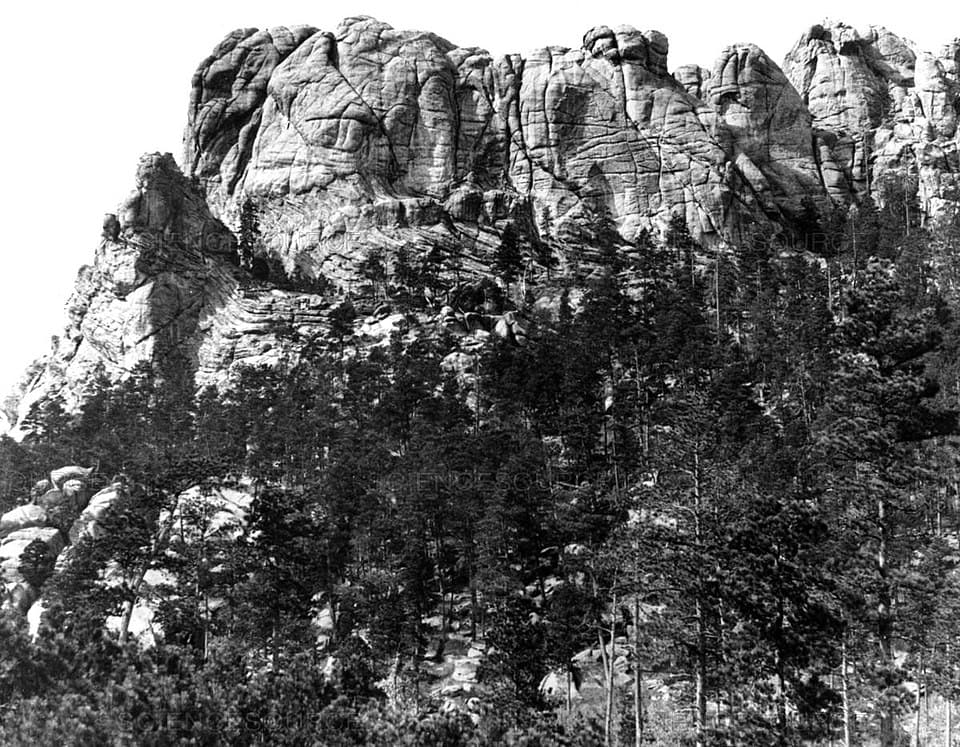
While the monument we see today is a feat of modern engineering, it is essential to recognize that this mountain has a history stretching back long before the first stick of dynamite was ever lit. To the Lakota Sioux, this peak is known as Tȟuŋkášila Šákpe, or the Six Grandfathers. It is a sacred site within the Black Hills, a region they consider the spiritual heart of their world. For centuries, the mountain was a place of prayer and ceremony, tied to the Lakota's ancestral connection to the land and the cosmos. The transformation of this sacred peak into a monument for the United States government remains a point of deep pain and ongoing controversy. The Black Hills were originally recognized as Sioux territory in the 1868 Treaty of Fort Laramie, but that treaty was later ignored after gold was discovered in the region. Today, many Indigenous people see the presidential faces not just as art, but as a symbol of the loss of their sacred lands. As you look up at the granite faces, consider the layers of history beneath the surface. Mount Rushmore is a place of immense national pride for many, but it is also a site of complex national dialogue regarding sovereignty, broken promises, and the enduring spiritual heritage of the people who first called these hills home.
Conclusion: Shrine of Democracy at Night
A reflective end to the tour. Need an illuminated night view to provide closure.
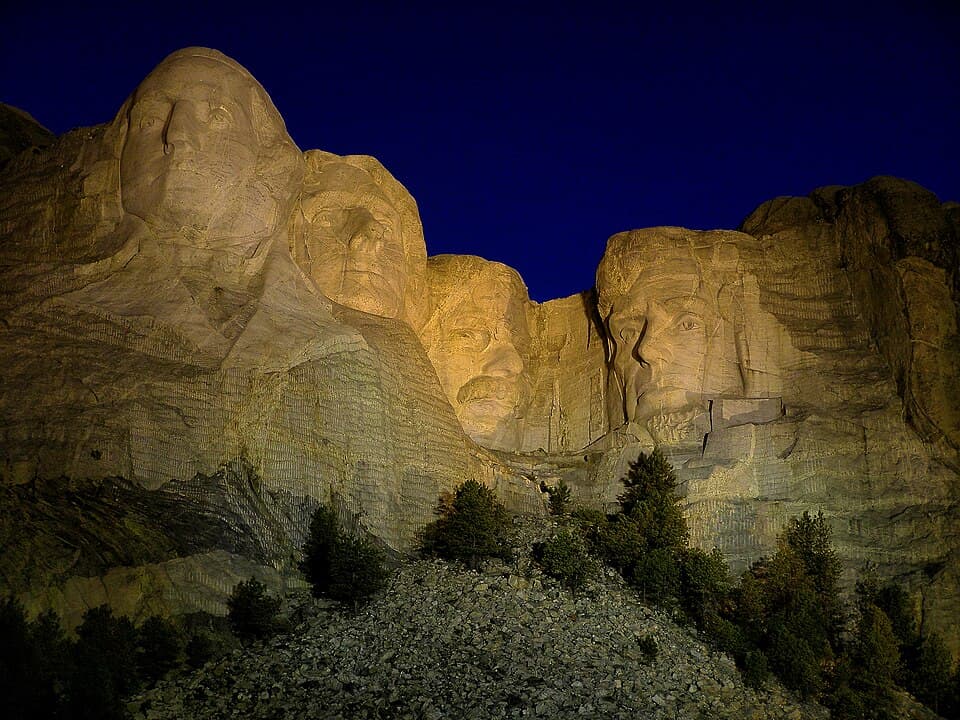
Reflections at Twilight
As your visit draws to a close, consider staying for the nightly lighting ceremony. In a dramatic display of light and shadow, the four presidential faces are bathed in a brilliant glow, standing out starkly against the deep blue of the evening sky. This ceremony is a time-honored tradition that offers a final, somber opportunity to reflect on the fourteen-year journey it took to bring this granite reality to life. Think back to the four hundred men who labored here, the hundreds of thousands of tons of rock they moved, and the vision of a sculptor who dared to imagine such a feat on a mountain top. The scale of Mount Rushmore is difficult to grasp until you see it illuminated in the stillness of the night, far from the bustle of the daytime crowds. It is a moment to appreciate the sheer human effort—the grit, the danger, and the precision—required to shape the very earth into these recognizable forms. Take a moment of silence to look up at the granite giants. Consider the stories of foundation, expansion, development, and preservation they represent. As you leave the park, carry with you the memory of the wind in the Ponderosa pines and the silent, stone gaze of the presidents, standing watch over the Black Hills as they have for decades and will for centuries to come.
Want to hear the rest?
Download the Stanza app to unlock all 20 stops and full GPS-guided navigation.
Frequently Asked Questions
How long does the Mount Rushmore audio tour take?
The Mount Rushmore audio guide includes 20 narrated stops. Most visitors spend 45 minutes to 1.5 hours exploring the complete tour, though you can listen at your own pace and skip or revisit any stop.
Is the Mount Rushmore audio guide available in my language?
Stanza supports 15 languages: English, Spanish, French, German, Italian, Portuguese, Russian, Japanese, Chinese, Korean, Arabic, Hindi, Polish, Dutch, Hebrew. Check the guide in the app to confirm the languages currently available for this tour.
Can I use the audio guide offline at Mount Rushmore?
Yes! Download the complete Mount Rushmore tour — including all audio, maps, and images — before your visit. The Stanza app works completely offline, so you don't need WiFi or mobile data at the venue.
How much does the Mount Rushmore audio guide cost?
The Stanza app is free to download. The current listed price for the Mount Rushmore audio guide is $2.99; app-store region and currency may affect the final price.
How do I use the Stanza audio guide at Mount Rushmore?
Download the free Stanza app, search for "Mount Rushmore", and download the tour. When you arrive at the venue, the app uses GPS to detect your location and automatically plays the relevant narration as you move between points of interest — completely hands-free.
What makes the Stanza audio guide different from other Mount Rushmore tours?
Stanza offers GPS-triggered narration that plays automatically as you walk through Mount Rushmore — no need to manually select stops. The tour is available in 15 languages, works fully offline, and includes 20 expertly narrated stops with images and historical context.
What other audio guides are available near Mount Rushmore?
Stanza offers multiple audio guides in Keystone, United States and nearby areas. After downloading the app, browse the map to discover all available tours near Mount Rushmore. Each guide can be downloaded for offline use.