Stanza · Audio guide
Scottish National Gallery Audio Guide
A place to remember. A story to take with you.
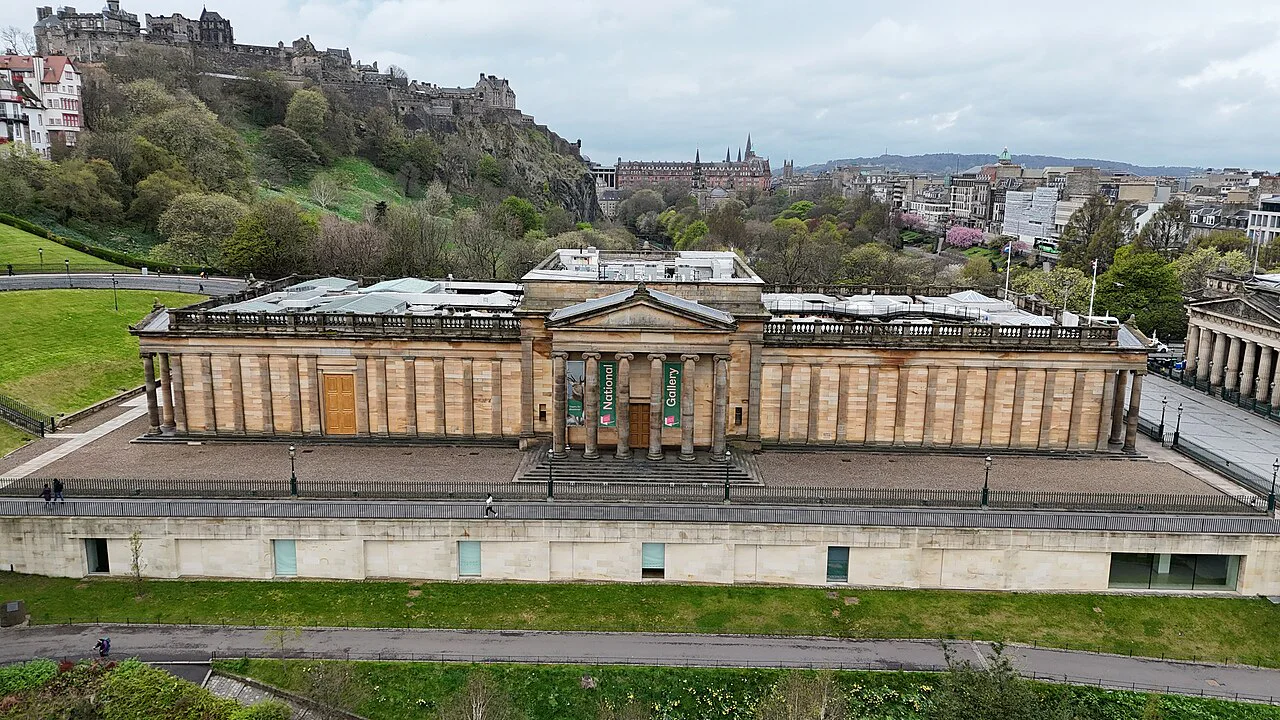
The National is the national art gallery of Scotland, located on The Mound in central Edinburgh, close to Princes Street. The building was designed in a neoclassical style by William Henry Playfair and first…
Download Stanza, then search for “Scottish National Gallery”.
About the tour
One guide. Your kind of visit.
The National is the national art gallery of Scotland, located on The Mound in central Edinburgh, close to Princes Street. The building was designed in a neoclassical style by William Henry Playfair and first opened to the public in 1859.
The Scottish National Gallery guide tells the stories of 86 artworks, including Diana and Actaeon (Titian), Old Woman Cooking Eggs (Diego Velázquez), Christ in the House of Martha and Mary (Johannes Vermeer), Vision After the Sermon (Paul Gauguin), Diana and Callisto (Titian), The Three Ages of Man (Titian), Venus Anadyomene (Titian), and The Skating Minister (Henry Raeburn). Every artwork is free to hear in the Stanza app until 1 January.
Ready when you are.
- 01Get the free Stanza app.
iOS & Android
- 02Find your guide.
“Scottish National Gallery”
- 03Download before you go.
Works offline
Audio guide / 86 artworks
Inside the guide
Get to know a few of the stories before you go. Open a stop to read more.
01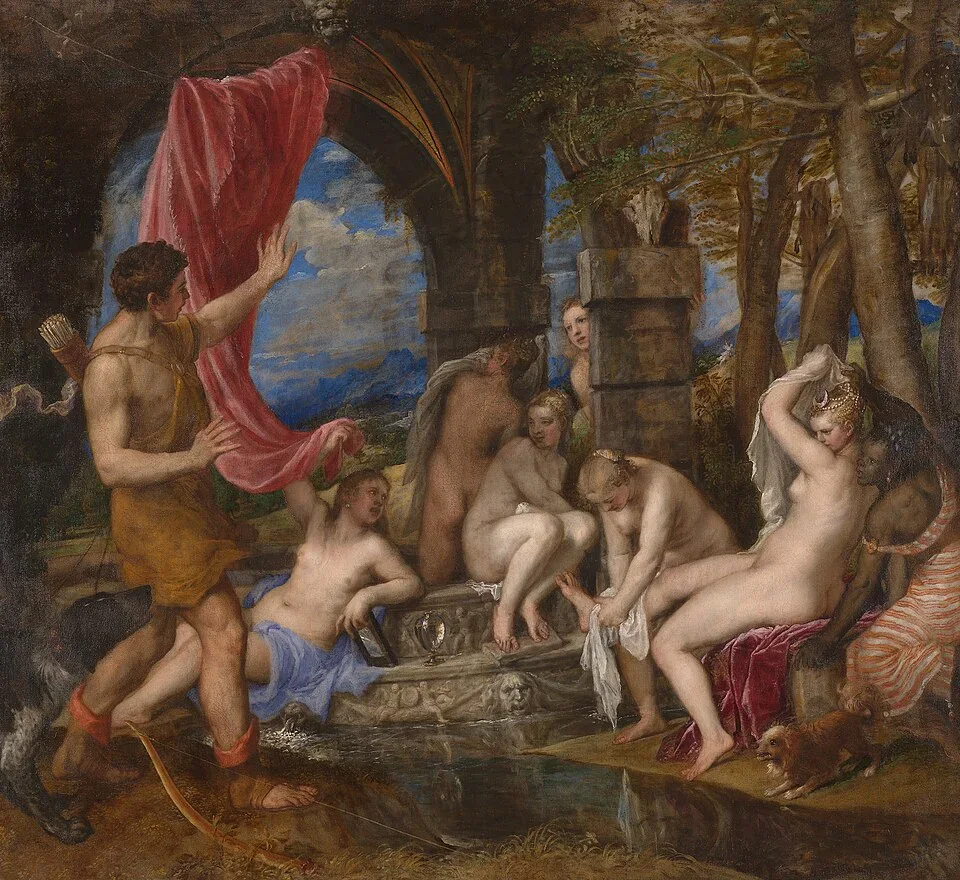
Diana and Actaeon
A hunter comes in from the left and startles women bathing at a fountain. They hurry to cover themselves and look to Diana. She sits at the far right, turned away, with a crescent moon in her crown, and a maid with dark skin covers her. The hunter is Actaeon, and this is the moment before Diana punishes him. Furious that a man has seen her naked, she will splash him with water and turn him into a stag. His own hounds, crowding around his feet at the bottom left, will chase him down and tear him apart. A small brown dog barks at him from Diana's feet. And right where Actaeon is looking, on top of a column, sits the skull of a stag. Deer pelts hang from the branches beside it. Titian chose this story himself, for his patron King Philip the Second of Spain. It was one of a series of mythological paintings. He picked it partly for the chance to paint so much nudity. He wanted you at the fountain beside Actaeon, sharing his view without the terrible ending.
Listen in the appTitian · Public domain
02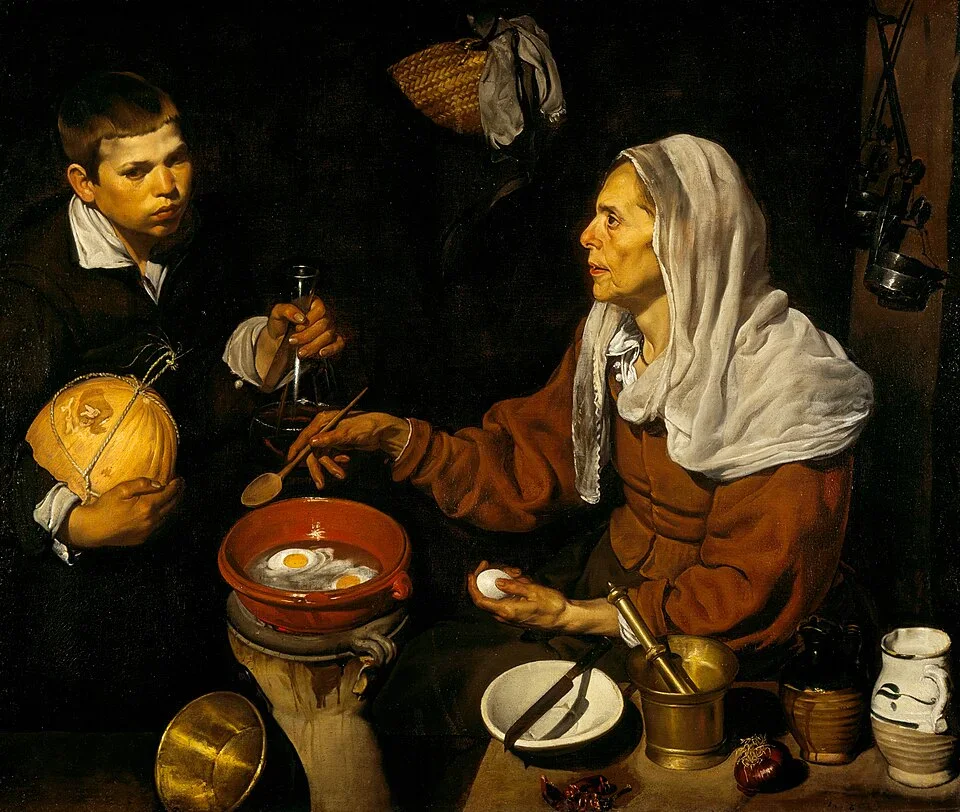
Old Woman Cooking Eggs
The date was hiding in the corner. Edinburgh's National Gallery bought this picture in 1955 and cleaned it. Two years later a date appeared in the lower right. It read 1618, the same date on another painting, Christ in the House of Martha and Mary. Both works use the same old woman as a model. And there she is again, seated before a clay pot, warming eggs over a thin line of glowing coals. An egg is in her hand, ready to crack on the rim. Her face is worn and fine beneath the veil. Velázquez painted her in Seville, before he moved to Madrid. A hard light comes in from the left, onto the woman and the pot, and throws the boy into shadow. He stands to her right with a melon under his arm and a carafe in his hand. He looks out at us, as grave as she is. What is still not settled is whether she is frying those eggs or poaching them.
Listen in the appDiego Velázquez · Public domain
03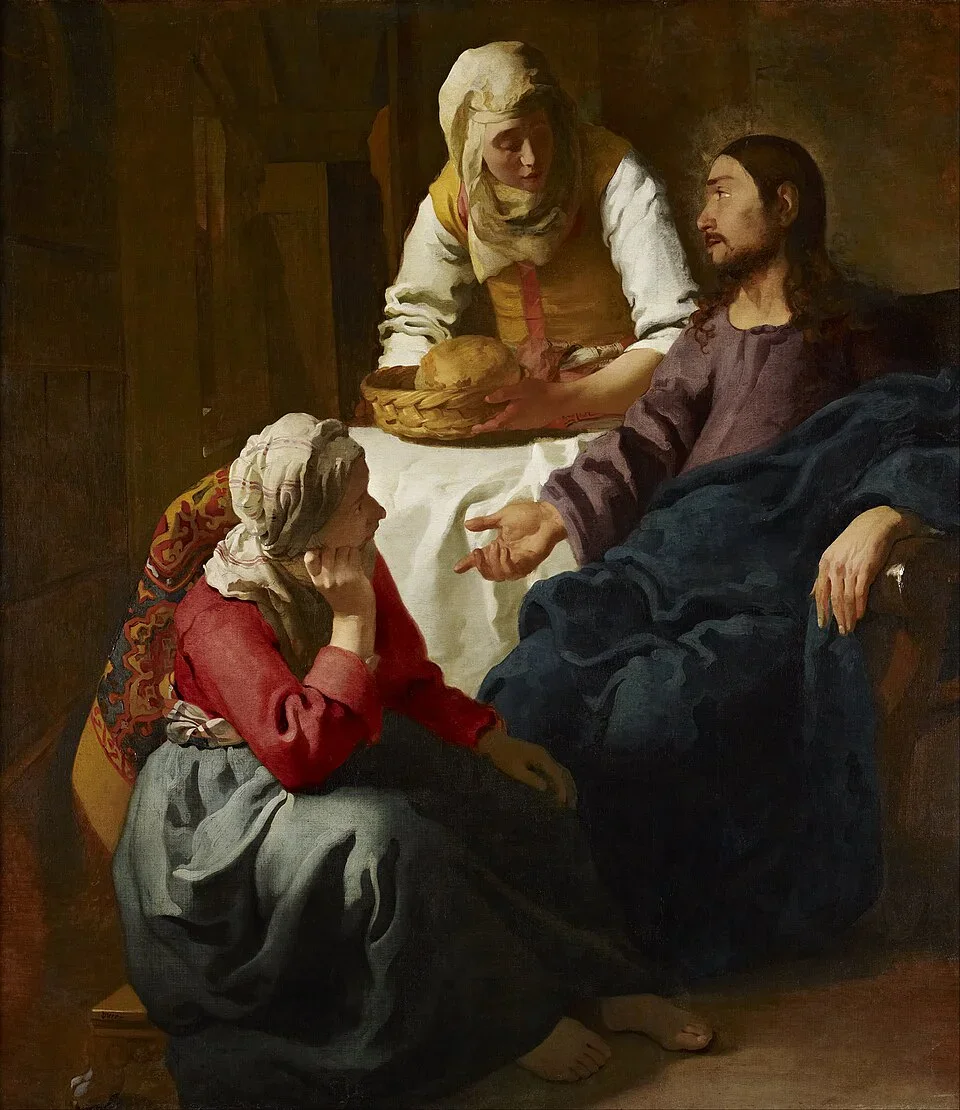
Christ in the House of Martha and Mary
No one can say for certain who painted this. It appeared from nowhere around 1900, when an antique dealer bought it from a family in Bristol for eight pounds. By 1901 it was on show in London, and that is when a signature came to light, low down on a small bench. It was enough to call the painting an early Vermeer. But the writing is quite unlike his real signatures. Christ's robe is not the blue he usually chose, ultramarine. Instead it is a blend of smalt, indigo and lead white. The figure of Christ and the gesture of his right arm recall Italian paintings, and the whole scene follows a Flemish picture of the same subject. That makes a patchwork of borrowed pieces more likely than an early work by a great painter. In 1935, during restoration, X rays showed that the painter had changed almost nothing. Only Christ's left hand and his profile were worked over again.
Listen in the appJohannes Vermeer · Public domain
04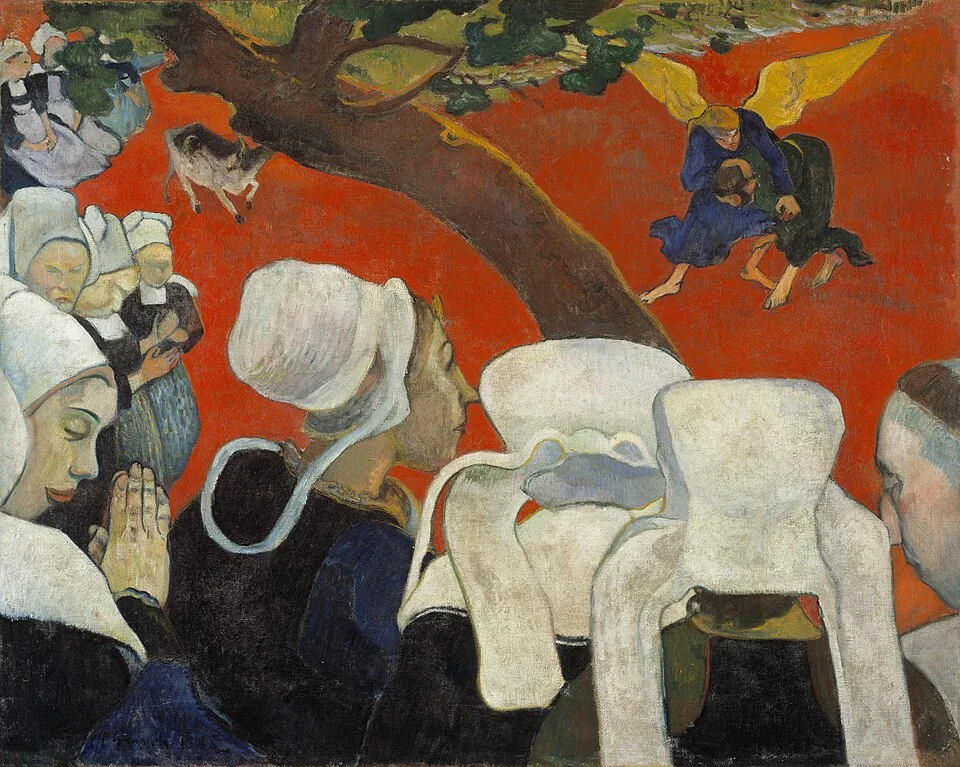
Vision After the Sermon
Breton women in white hats are gathered close together, one with her hands clasped in prayer. Beyond them, two figures struggle on red ground. This is a vision the women see after a sermon in church. They are watching Jacob wrestle an angel. A tree trunk runs diagonally through the middle, holding the women apart from what they see. The angel and Jacob fill the other side, with branches reaching toward the upper right corner to frame them. Beneath the struggle, the red is not earth or grass. It is simply red, and it gives the struggle its power. Gauguin owned Japanese woodblock prints, and they pushed him toward flat colour and a landscape that is not true to nature. At Pont-Aven in Brittany, Gauguin met the young painter Emile Bernard, whose simpler style came from Japanese prints. He took that example further, and here the Bible story became something deeply personal to him. He made the painting hoping the local church would take it. They refused, so he sent it to Theo van Gogh in Paris to sell.
Listen in the appPaul Gauguin · Public domain
05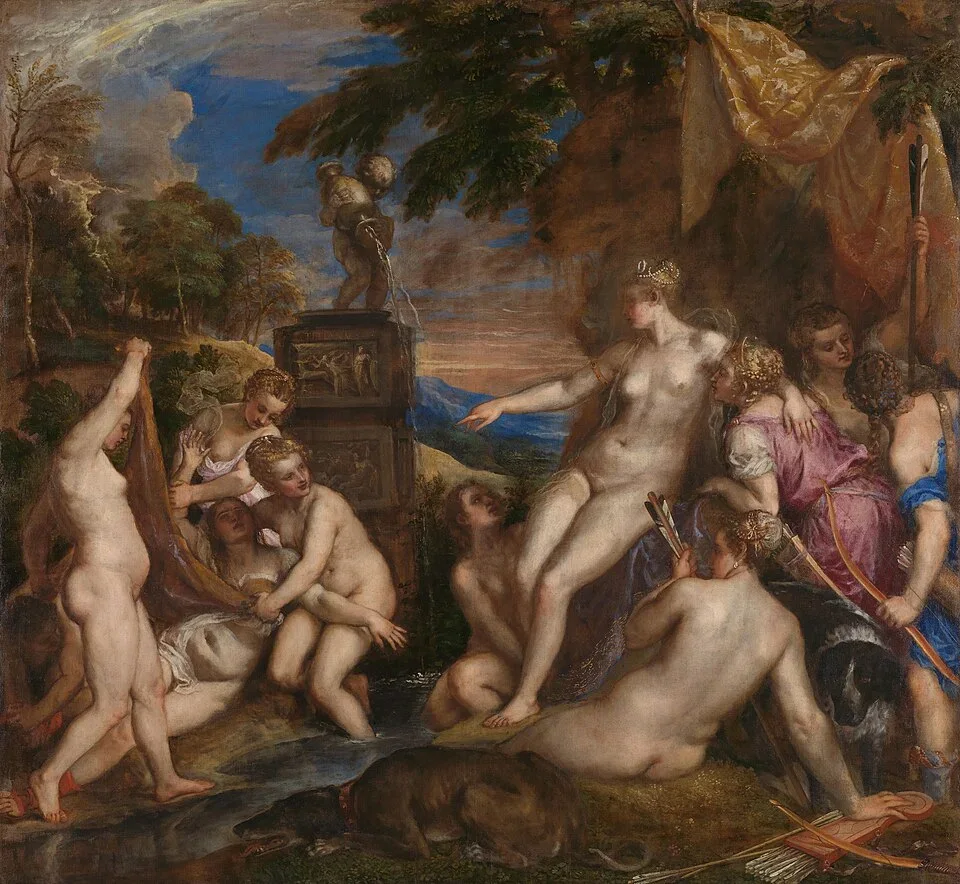
Diana and Callisto
Callisto struggles, but her companions have caught her by both arms and pulled her robe open. Her belly is bare, and no one can mistake the pregnancy. Diana, in her grotto, has given the order, and Callisto is about to be banished. The other nymphs react in different ways. Some are as angry as Diana, some pity Callisto, and some seem amused. Around them the trees sway, golden clouds swirl in the far sky, and even a stone column tilts. Jupiter had found her resting alone in the forest and taken Diana's shape to get near her. Callisto had been Diana's favorite. The nymphs were expected to stay as chaste as their goddess, so Diana wanted the robe pulled back. Titian picked this moment for King Philip the Second of Spain, one of a series of myths drawn from Ovid. Jupiter's wife Juno then turned the banished Callisto into a bear. Jupiter later lifted Callisto and their son into the sky as the Great Bear and the Little Bear.
Listen in the appTitian · Public domain
06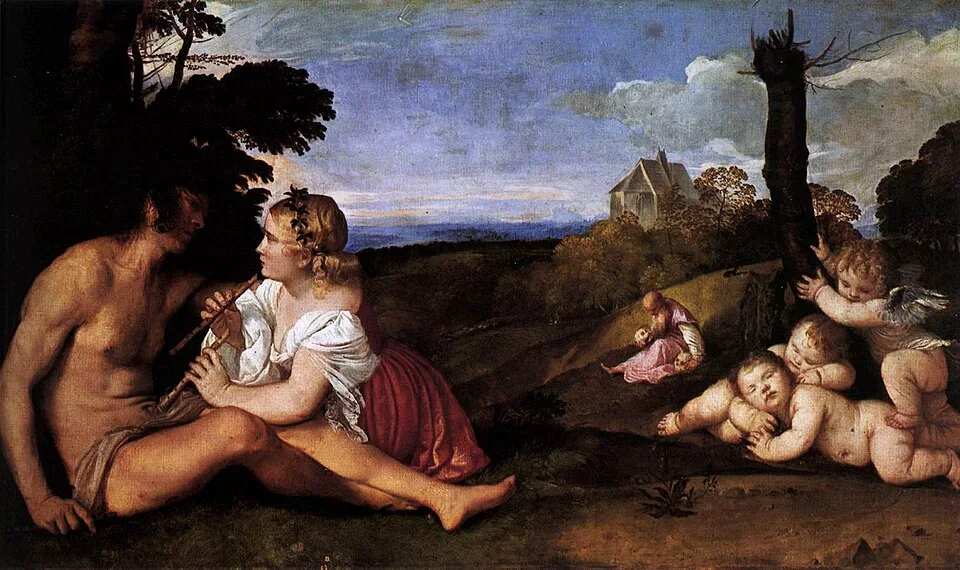
The Three Ages of Man
The woman's face is turned nearly away from you, toward the young man she is about to embrace. That is not how Titian first painted her. X rays show that at first her head turned a little toward you. He painted it again in profile, so nothing would pull her from her lover. The lovers sit at the far left of the painting, on grass that looks healthier and more alive than anywhere else in the landscape. This is life at its best, and he has placed them right at the front. Across the picture, two babies sleep, and Cupid clambers over them playfully, one hand on a dead tree stump. Cupid guards them from the stump, and later feeds their desire as they grow into adults. But he cannot hold back old age and death. In the middle sits an old man who looks much like the penitent Saint Jerome. He gazes at two skulls. The skulls seem to be those of earlier lovers. And far back behind them stands a church. It may hold out the Christian promise of a life that does not end.
Listen in the appTitian · Public domain
07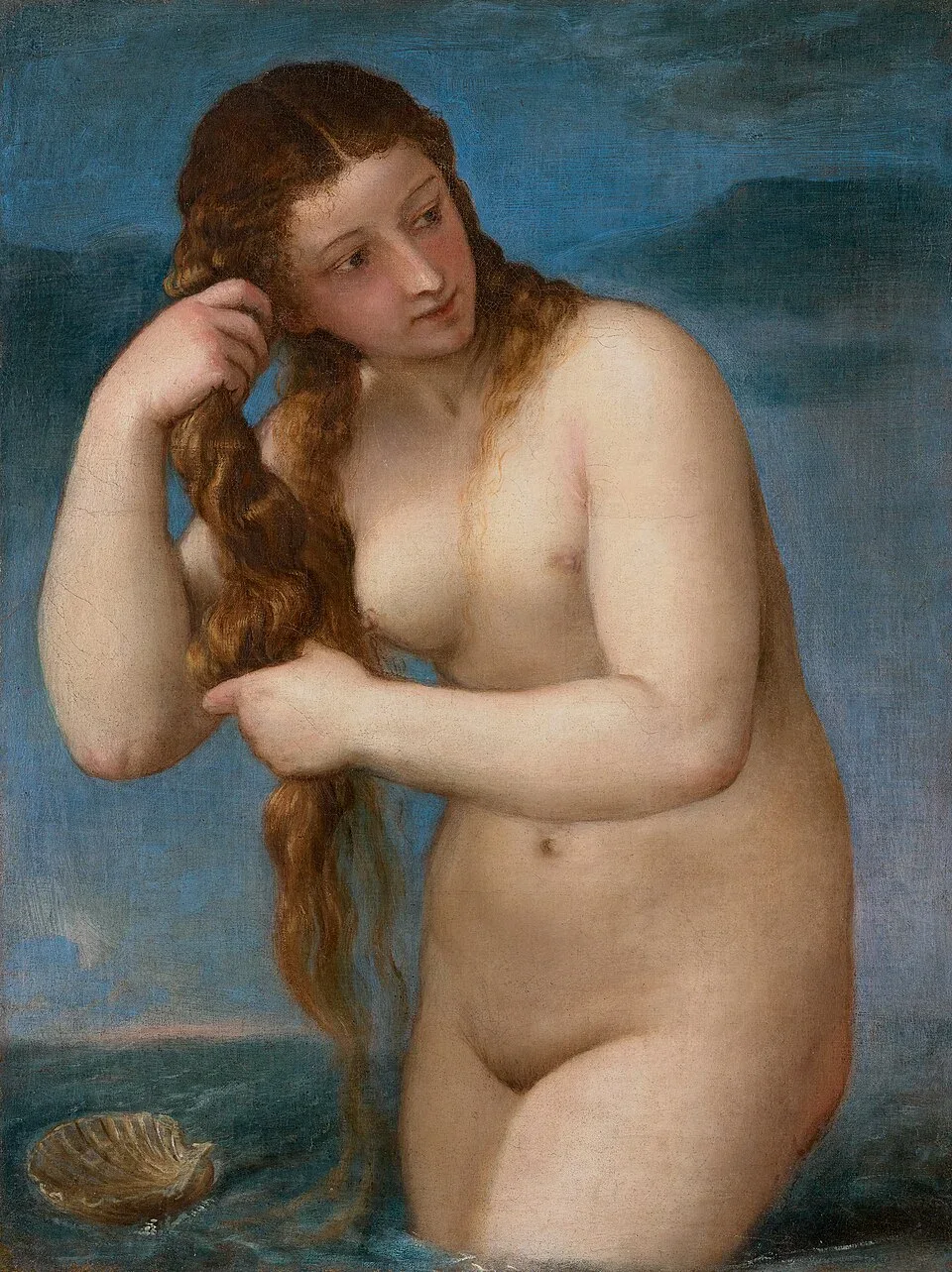
Venus Anadyomene
Titian wanted to prove he could match the painters of ancient Greece, and he chose a single gesture to carry the claim. She rises out of the sea, wringing seawater from her hair. Apelles, a Greek painter, had once shown Venus making just that movement, in a picture now lost. Pliny described that picture in his Natural History. Working from those words, Titian gave his Venus the very movement Apelles had painted. Her sideways glance and full figure owe much to two kinds of ancient statue, the Crouching Venus and the Cnidian Venus. A small shell at the lower left points to the story of her birth. It is much smaller than Botticelli's, there only to name her, not to carry her like a boat. We still do not know who asked Titian to paint it.
Listen in the appTitian · Public domain
08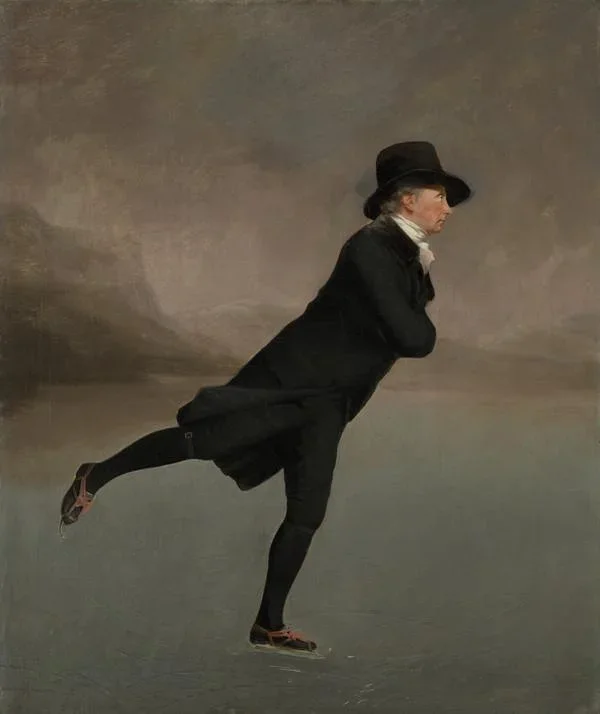
The Skating Minister
A Church of Scotland minister out on a frozen loch, both arms folded across his chest, balanced on one leg. That was the difficult way to skate. Around 1795, Henry Raeburn painted his friend Robert Walker on Duddingston Loch, and nothing else he made looked like this. Whether the picture is truly his has since been questioned. The figure is drawn so tightly that he reads almost as a dark shape. The pinkish grey crags and sky behind him were painted with a free hand. Notice the buckle at his right knee, with its fine filigree, and the pink ribbons binding the skates to his shoes. Raeburn had been apprenticed to a jeweller and goldsmith, and those small details recall that training. Walker belonged to Edinburgh's skating club, the first figure skating club anywhere in the world. When he died in 1808, the portrait passed down through his family, and outside it almost no one knew the picture existed. In 1914 it failed at auction, having hoped for a thousand guineas. It sold privately in 1926 for seven hundred pounds, and in 1949 it went to Christie's in London. Christie's photographed it for their sale catalogue, probably the first time it had been reproduced. Scotland's National Gallery bought it for five hundred and twenty five pounds.
Listen in the appPossibly Henry Raeburn / Possibly Henri-Pierre Danloux · Public domain
09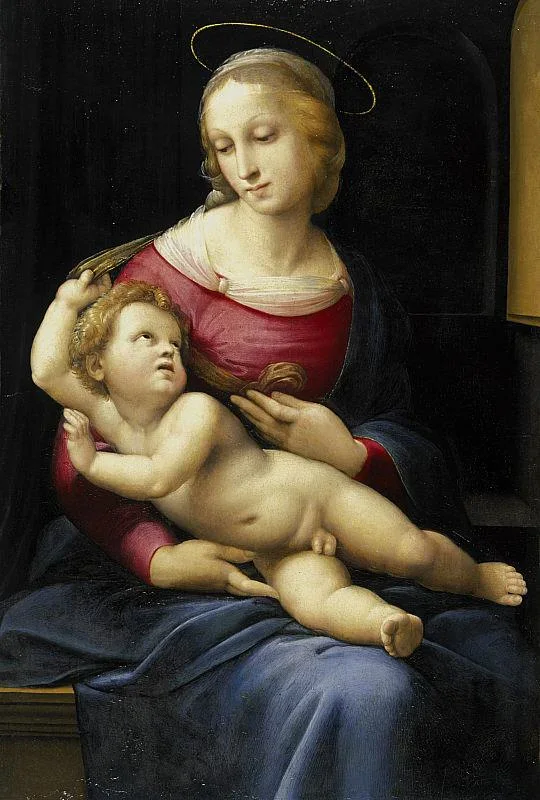
Bridgewater Madonna
Beneath the dark paint behind these two figures, there is a whole landscape. Raphael painted it in first. Then he painted straight over it, and now nothing of it shows. The background now is almost empty. You can just make out a niche with an open door, and a bench. The rest is shadow. Probably he painted the landscape away to bring the two figures forward, out of that darkness. It was probably a picture for a private room, for personal prayer. The child twists on his mother's lap. His body turns to the left, hers to the right. His arms hold her veil, and her hands touch his body. He is modelled so solidly that he seems carved. That solidity probably came from Michelangelo's Taddei tondo. Mother and child look straight at one another, and all the tenderness of the picture is in that look.
Listen in the appRaphael · Public domain
10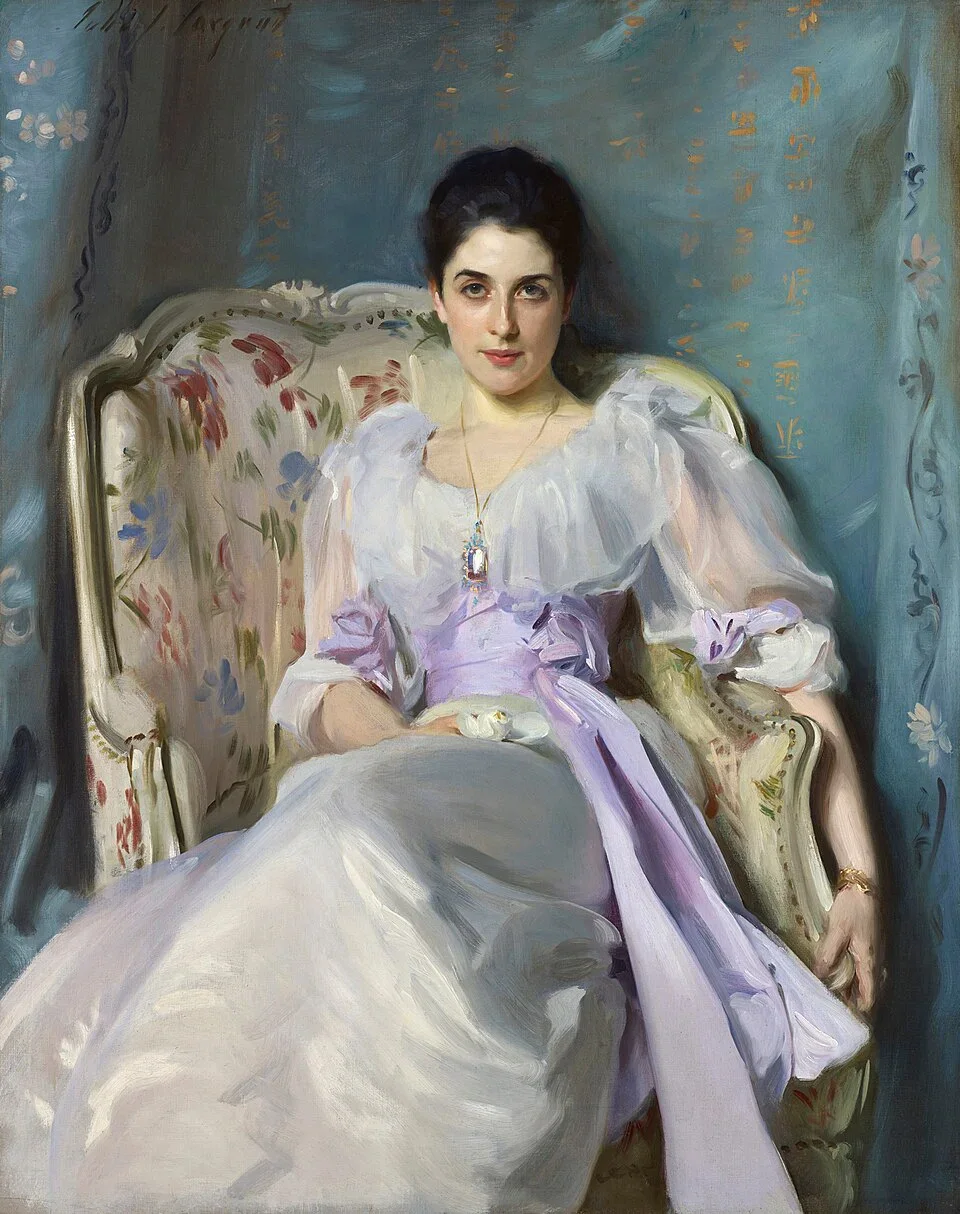
Lady Agnew of Lochnaw
She looks straight at you, and there is something held back in the small smile. A little challenging too, as if she is already in conversation with you. Some years earlier, a portrait of his had caused a scandal in Paris, and he had left for London. People there held back from asking him to paint them. In 1892 Andrew Agnew asked him to paint his wife Gertrude. She was still getting over a bad bout of flu, and perhaps that is why she looks so languid. The curved back of the French armchair seems to hold her, and blue Chinese silk hangs on the wall behind her. She wears a white gown with a mauve silk sash at her waist. It went on show in London in 1893 and people responded warmly. Commissions began to come in, and the following January he became an associate of the Academy. This picture may have had something to do with that. It still hangs in its original frame. He had once written to Andrew about an old one he thought might suit the picture, expensive at twenty pounds. No one knows whether this is the same frame.
Listen in the appJohn Singer Sargent · Public domain
- 11
Salisbury Cathedral from the Meadows
John Constable · 1831–1834
- 12
Niagara Falls, from the American Side
Frederic Edwin Church · 1866–1867
- 13
A Woman in Bed
Rembrandt · 1641–1647
- 14
The Ladies Waldegrave
Joshua Reynolds · 1780–1781
- 15
The Honourable Mrs Graham
Thomas Gainsborough · 1775–1777
- 16
Trinity Altarpiece
Hugo van der Goes · late 15th century
- 17
Adoration of the Shepherds
Domenichino · c. 1607–1610
- 18
The Virgin and Child with St John the Baptist and an Unidentified Saint
Titian · 1510–1520
- 19
Monarch of the Glen
Edwin Landseer · 1851
- 20
The Combat: Woman Pleading for the Vanquished
William Etty · 1825
- 21
Fêtes Vénitiennes
Jean-Antoine Watteau · 1718–1719
- 22
Madonna and Child with Saints
Lorenzo Lotto · c. 1505
- 23
Mars and Venus with Cupid and a Dog
Paolo Veronese · 1570–1580
- 24
Bust of Carlo Antonio del Pozzo
Gian Lorenzo Bernini · 1622
- 25
The Feast of Herod
Peter Paul Rubens · 1633–1638
- 26
The Holy Family With a Palm Tree
Raphael · c. 1506
- 27
Saint Jerome in Penitence
El Greco · 1595–1600
- 28
An Allegory of the Old and New Testaments
Hans Holbein the Younger · 1532–1536
- 29
The Quarrel of Oberon and Titania
Joseph Noel Paton · 1849
- 30
Portrait of Diego Martelli
Edgar Degas · c. 1875
- 31
Madonna del Passeggio
Raphael, Gianfrancesco Penni · c. 1516–1518
- 32
Christ Blessing, The Saviour of the World
El Greco · c. 1600
- 33
The Lomellini Family
Anthony van Dyck · 1625–1627
- 34
Martinique Landscape
Paul Gauguin · 1887
- 35
El Médico
Francisco Goya · 1780
- 36
Poplars on the Epte
Claude Monet · 1891
- 37
The Mystic Marriage of Saint Catherine
Nicolas Poussin · c. 1628–1629
- 38
Self-portrait
Rembrandt · 1655–1659
- 39
The Preaching of John Knox before the Lords of the Congregation 10th June 1559
David Wilkie · 1832
- 40
General Sir David Baird Discovering the Body of Sultan Tippoo Sahib after having Captured Seringapatam, on the 4th May, 1799
David Wilkie · 1839
- 41
The Porteous Mob
James Drummond · 1855
- 42
The Surrender of the Dutch Admiral de Winter to Admiral Duncan at the Battle of Camperdown (The Victory of Lord Duncan)
John Singleton Copley · 1799
- 43
Arabs playing chess
Eugène Delacroix · 1847–1848
- 44
Alexander III of Scotland Rescued from the Fury of a Stag by the Intrepidity of Colin Fitzgerald
Benjamin West · 1786
- 45
Saint Bride
John Duncan · 1913
- 46
Mary Nisbet, Countess of Elgin (1777 - 1855)
François Gérard · 1803
- 47
The Robber of the Sparrow's Nest
Jean-Antoine Watteau · 1709–1716
- 48
The Miracle of the Loaves and the Fishes
Bartolomé Esteban Murillo · c. 1667–1682
- 49
The Virgin Adoring the Sleeping Christ Child
Sandro Botticelli · c. 1485
- 50
Anne Emily Sophia Grant (known as 'Daisy' Grant), Mrs William Markham (1836 - 1880)
Francis Grant · 1857
- 51
The Immaculate Conception with Saint Joachim and Saint Anne
Francisco de Zurbarán · 1638–1640
- 52
The Murder of David Rizzio
William Allan · 1833
- 53
Sheepwashing
David Wilkie · 1817
- 54
The Letter of Introduction
David Wilkie · 1813
- 55
Josephine and the Fortune-teller
David Wilkie · 1837
- 56
The Confessional
David Wilkie · 1827
- 57
A Scene from Ramsay's 'The Gentle Shepherd'
David Wilkie · 1823
- 58
Somer Hill, Tonbridge
J. M. W. Turner · 1811
- 59
King Lear and the Fool in the Storm
William Dyce · 1851
- 60
Madame Mère (Maria Laetitia Ramolino Bonaparte, 1750 - 1836)
François Gérard · c. 1803
- 61
The Virgin Adoring the Christ Child
Andrea del Verrocchio, Domenico Ghirlandaio · c. 1470–1475
- 62
Portrait of Pieter Verdonck
Frans Hals · c. 1627
- 63
Saint Peter Penitent
Guercino · c. 1639
- 64
Portrait of Giovanni Bressani (1490 - 1560)
Giovanni Battista Moroni · 1562–1563
- 65
View of Sir David Wilkie's House in Vicarage Place, Kensington
William Wiehe Collins · 1842
- 66
Erminia Finding the Wounded Tancred
Guercino · c. 1650
- 67
Domenico di Jacopo di Matteo, called 'Becuccio Bicchieraio'
Andrea del Sarto · 1522–1523
- 68
Chimney Sweep
Annibale Carracci · 1585
- 69
Landscape with Huntsman and Dead Game
Jan Weenix · 1697
- 70
The Piazzetta, Venice
J. M. W. Turner · 1835
- 71
A Girl with a Dead Canary
Jean-Baptiste Greuze · 1765
- 72
The Sacrament of the Holy Eucharist
Nicolas Poussin · 1647
- 73
Pas Mèche (Nothing Doing)
Jules Bastien-Lepage · 1882
- 74
The Sacrament of Extreme Unction
Nicolas Poussin · 1644
- 75
The Finding of Moses
Giovanni Battista Tiepolo · 1730
- 76
Albrecht Dürer on the Balcony of his House
William Bell Scott · 1854
- 77
Saint Sebastian
Francesco Furini · c. 1633
- 78
The Apotheosis of Saint Jerome with Saint Peter of Alcántara and Antonino da Patti
Giambattista Pittoni · c. 1725
- 79
The Infant Saint John the Baptist in the Wilderness
Elisabetta Sirani · 1664
- 80
A Boy Blowing on a Firebrand to Light a Candle
Godfried Schalcken · 1692
- 81
An Allegory (Fàbula)
El Greco · 1589–1592
- 82
Portrait of a Man
François-Xavier Fabre · 1809
- 83
The Adoration of the Kings
Jacopo Bassano · 1542
- 84
Il Contento
Adam Elsheimer · c. 1607
- 85
Portrait of Giambologna in his Studio
Unknown Artist · 1570s
- 86
Virgin and Child
Unknown Artist · 1490s
Scottish National Gallery
Frequently asked questions
How much does the guide cost?
Free app download. Free until 1 January. Listed guide price: $1.99. Audio guide only. Venue admission is separate.
Can I listen without internet?
Yes. Download the guide’s audio, images, and maps in the app before your visit. Your downloaded content is then available offline.
Can I listen in my language?
In English for now. More languages soon.
Do I need to follow a schedule?
No. This is a self-guided experience. Choose your stops, pause whenever you like, and return to a story at your own pace.
Which artworks are in the Scottish National Gallery audio guide?
86 artworks, including Diana and Actaeon (Titian), Old Woman Cooking Eggs (Diego Velázquez), Christ in the House of Martha and Mary (Johannes Vermeer), Vision After the Sermon (Paul Gauguin), Diana and Callisto (Titian), The Three Ages of Man (Titian), Venus Anadyomene (Titian), and The Skating Minister (Henry Raeburn). The full list is on this page.
Is this the museum’s official audio guide?
No. Stanza is an independent audio guide app and is not affiliated with Scottish National Gallery. Museum admission is separate.
At your own pace
Explore Scottish National Gallery.
Download Stanza, then search for “Scottish National Gallery”.
Free app download · Guide price shown in the app
Keep exploring
Nearby audio guides
City of Edinburgh · 1 km
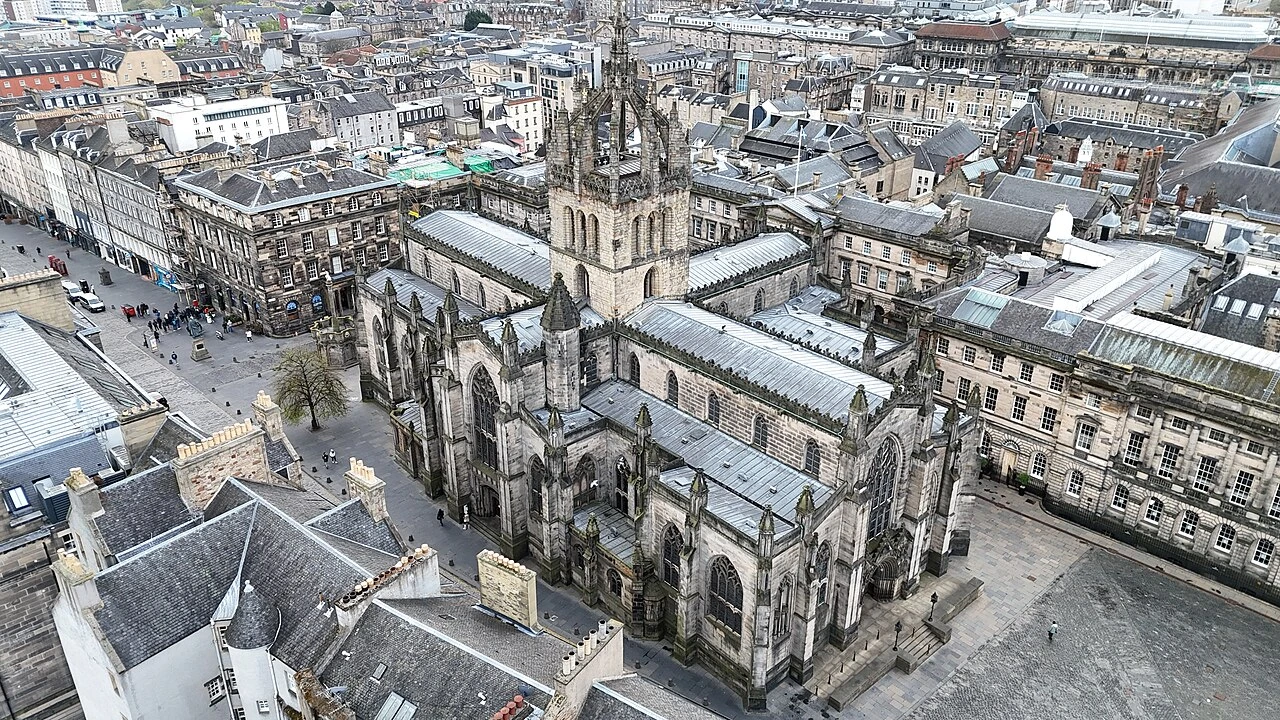
St Giles' Cathedral
Content & sources
Photo: 瑞丽江的河水 · CC BY-SA 4.0
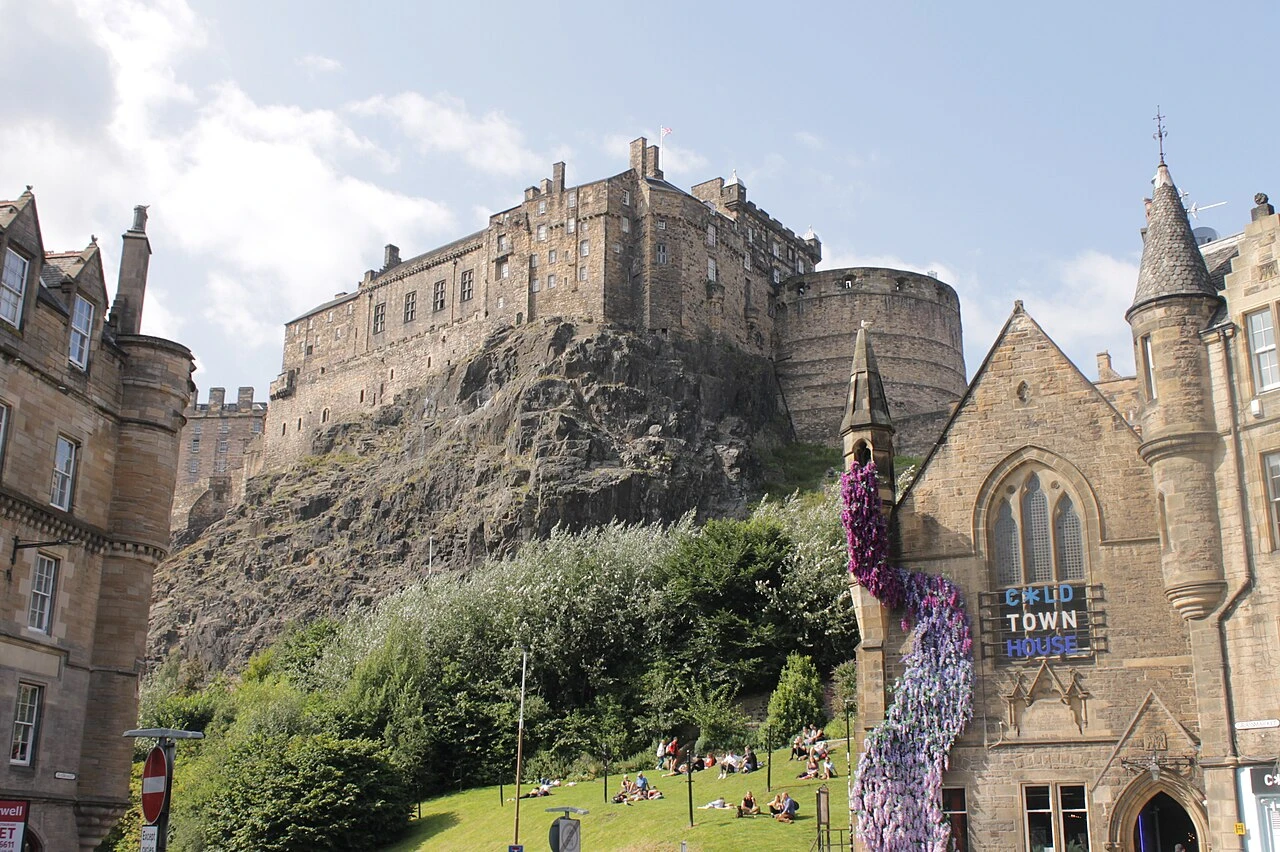
City of Edinburgh · 1 km
Edinburgh Castle
Content & sources
Photo: Stephencdickson · CC BY-SA 4.0
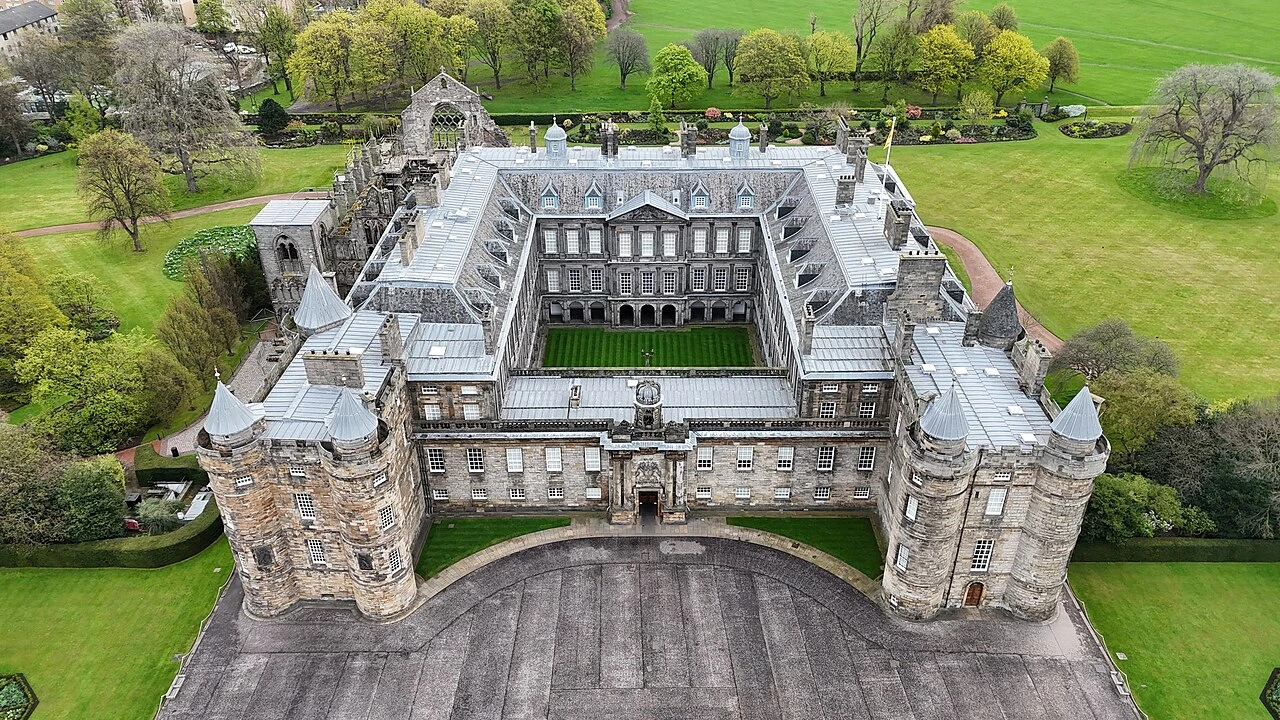
City of Edinburgh · 1 km
Holyrood Palace
Content & sources
Photo: 瑞丽江的河水 · CC BY-SA 4.0
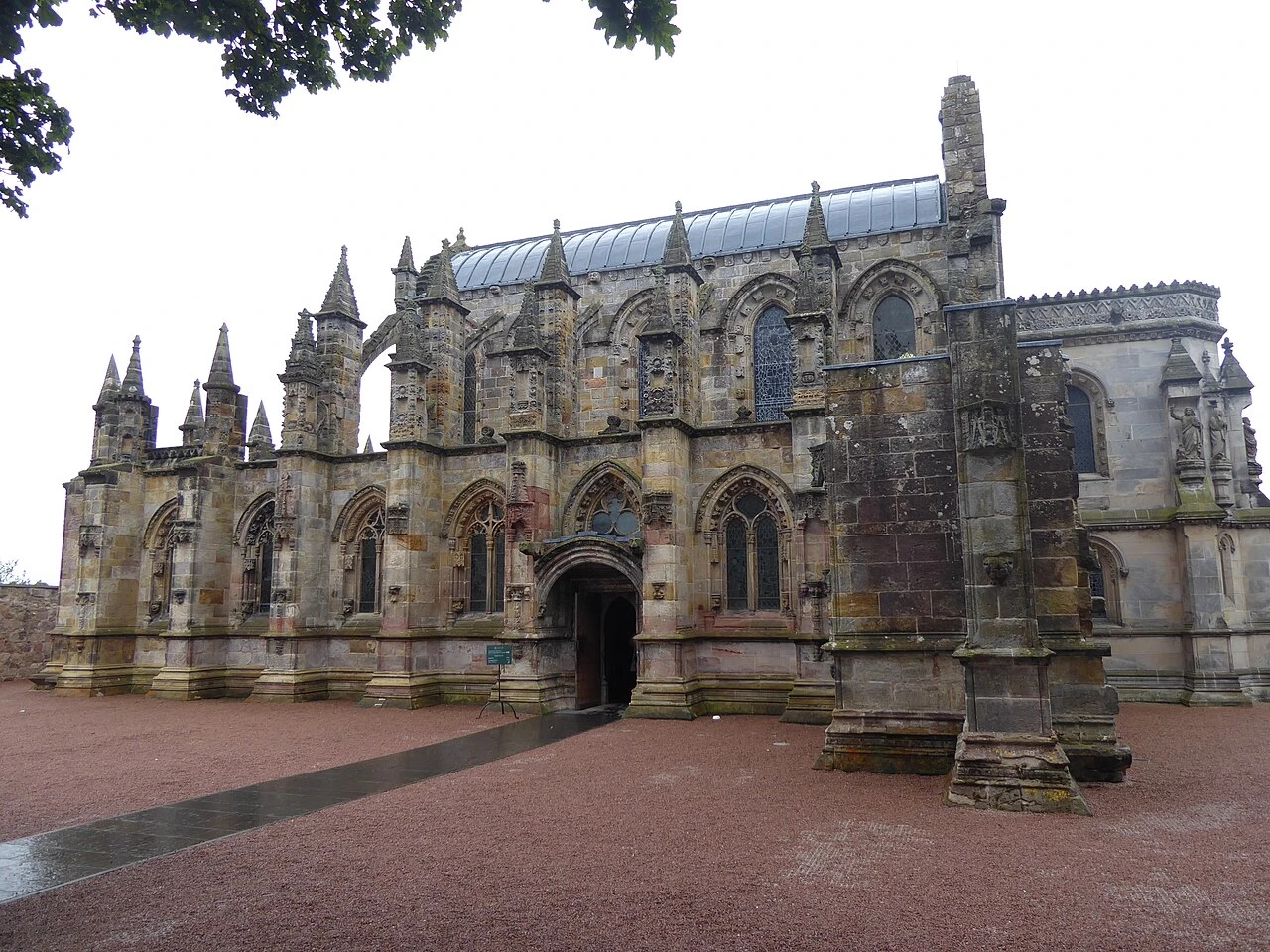
Roslin · 11 km
Rosslyn Chapel
Content & sources
Photo: Syrio · CC BY-SA 4.0
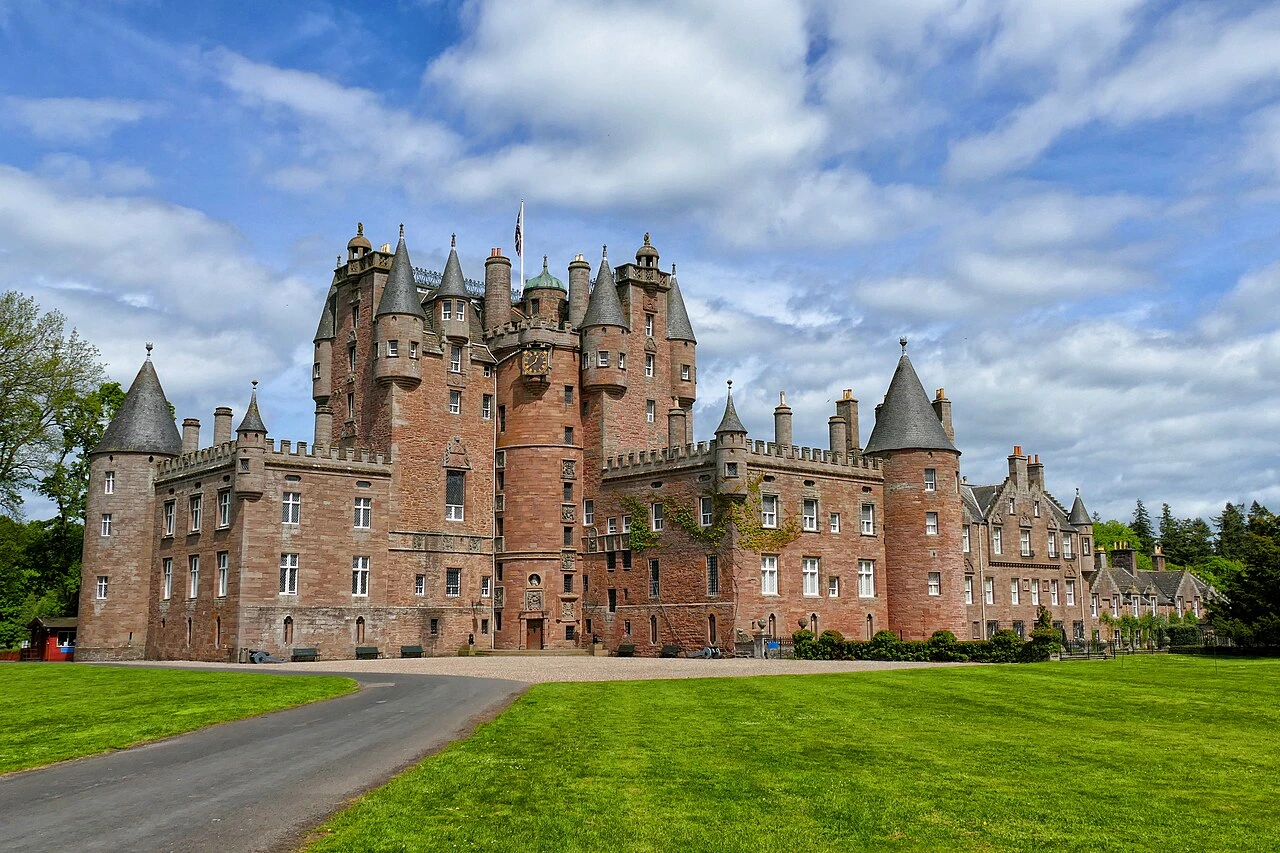
Forfar · 75 km
Glamis Castle
Content & sources
Photo: Worldfootage · CC BY-SA 4.0
Art museums
More art museum audio guides
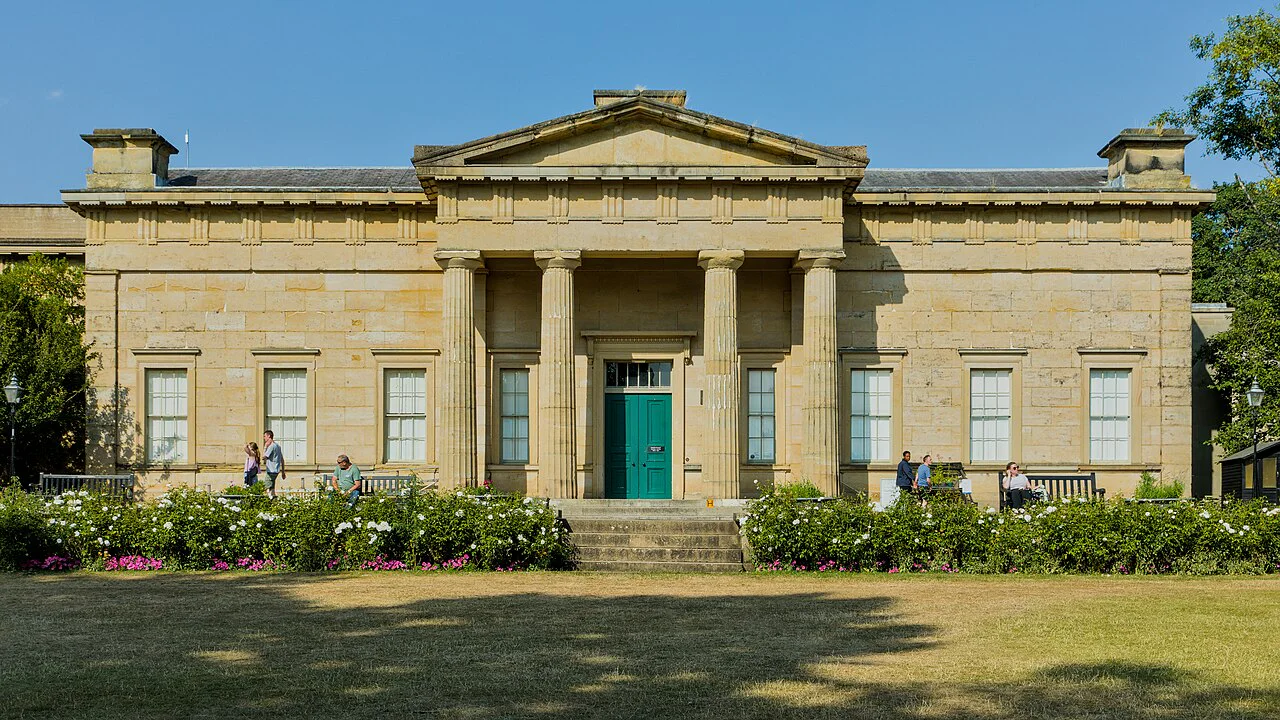
York · 27 artworks
Yorkshire Museum
Content & sources
Benjamin Smith · CC BY-SA 4.0
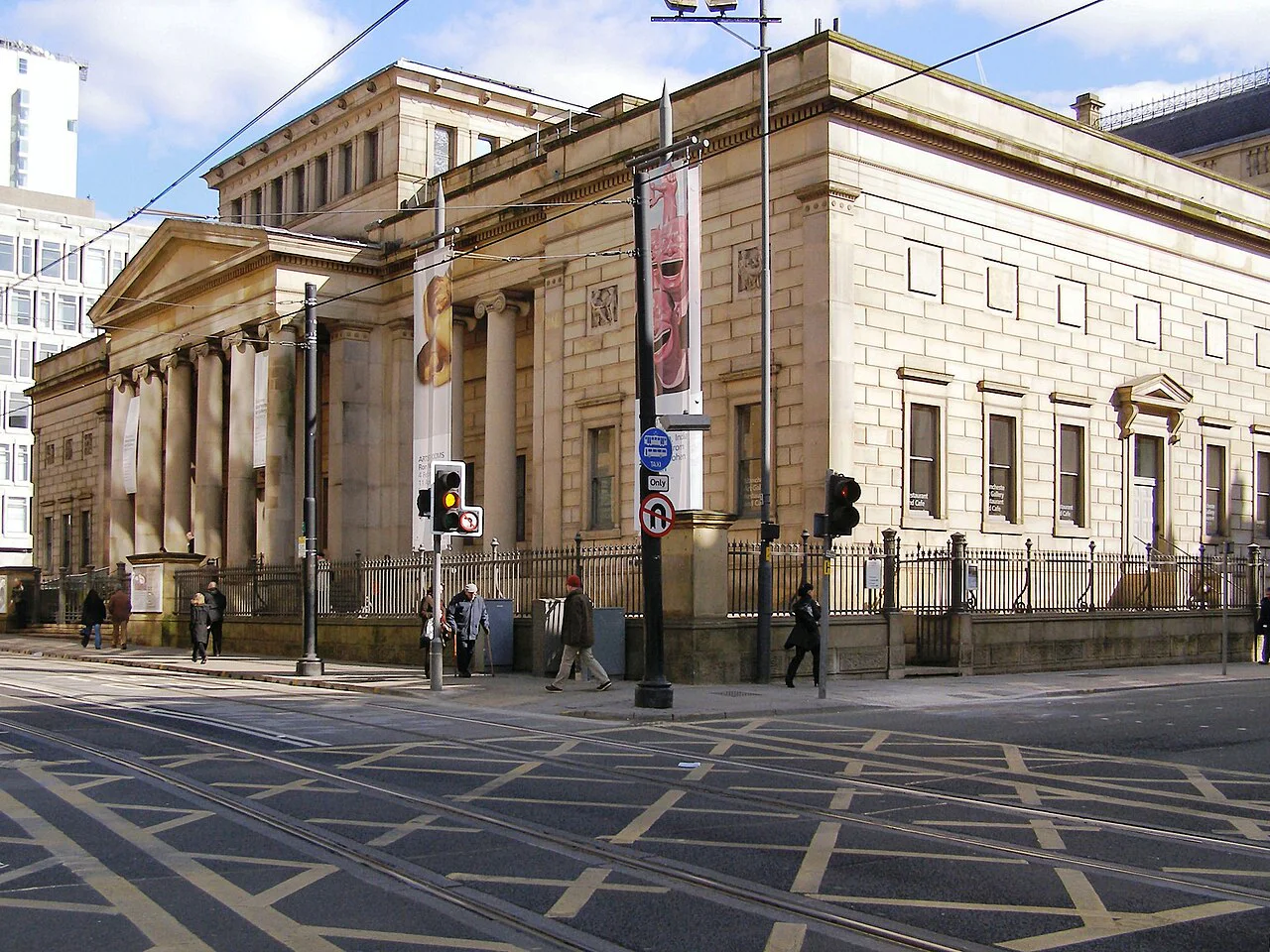
Manchester · 65 artworks
Manchester Art Gallery
Content & sources
David Dixon · CC BY-SA 2.0
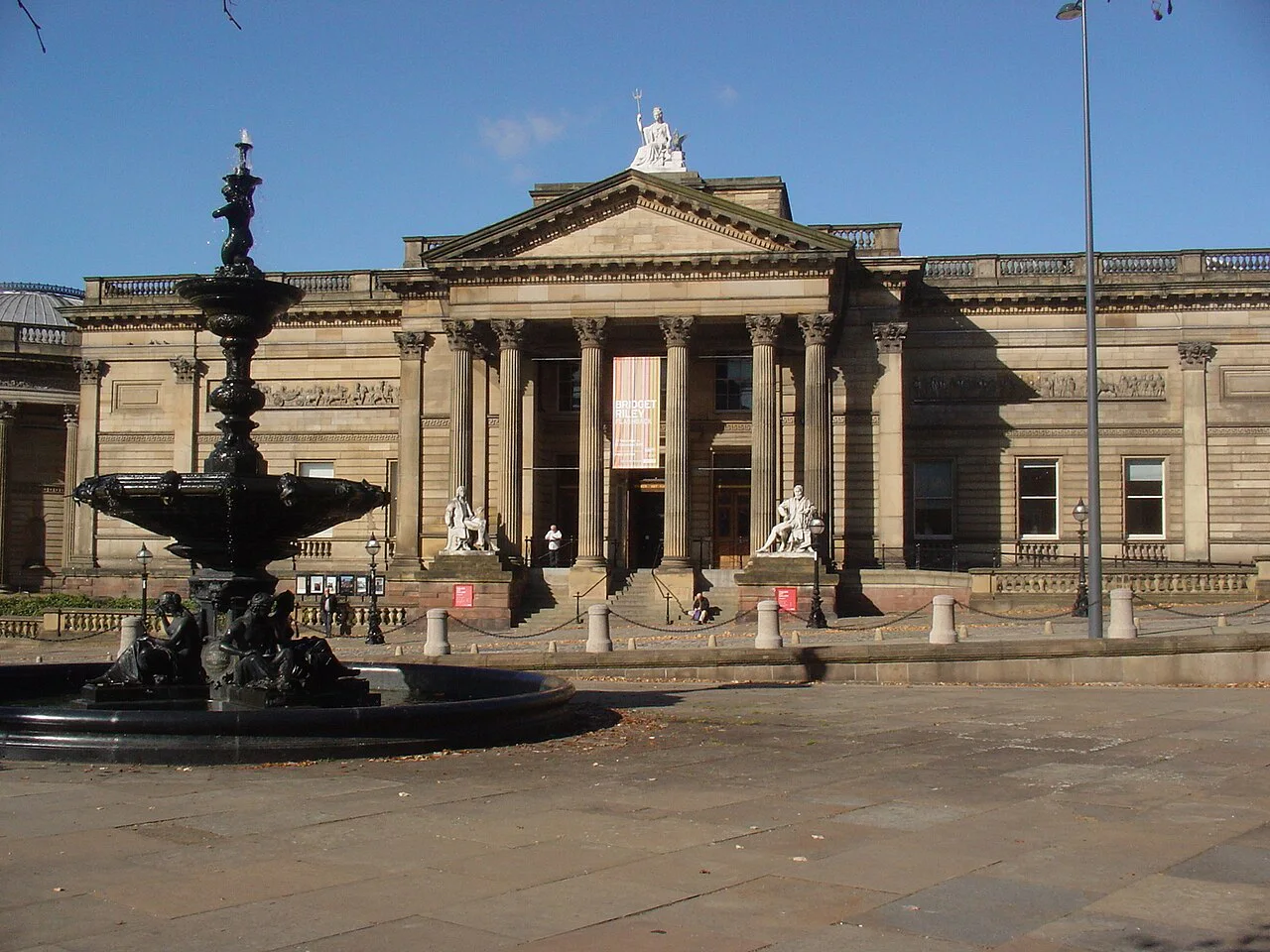
Liverpool · 54 artworks
Walker Art Gallery
Content & sources
Rept0n1x · CC BY-SA 3.0
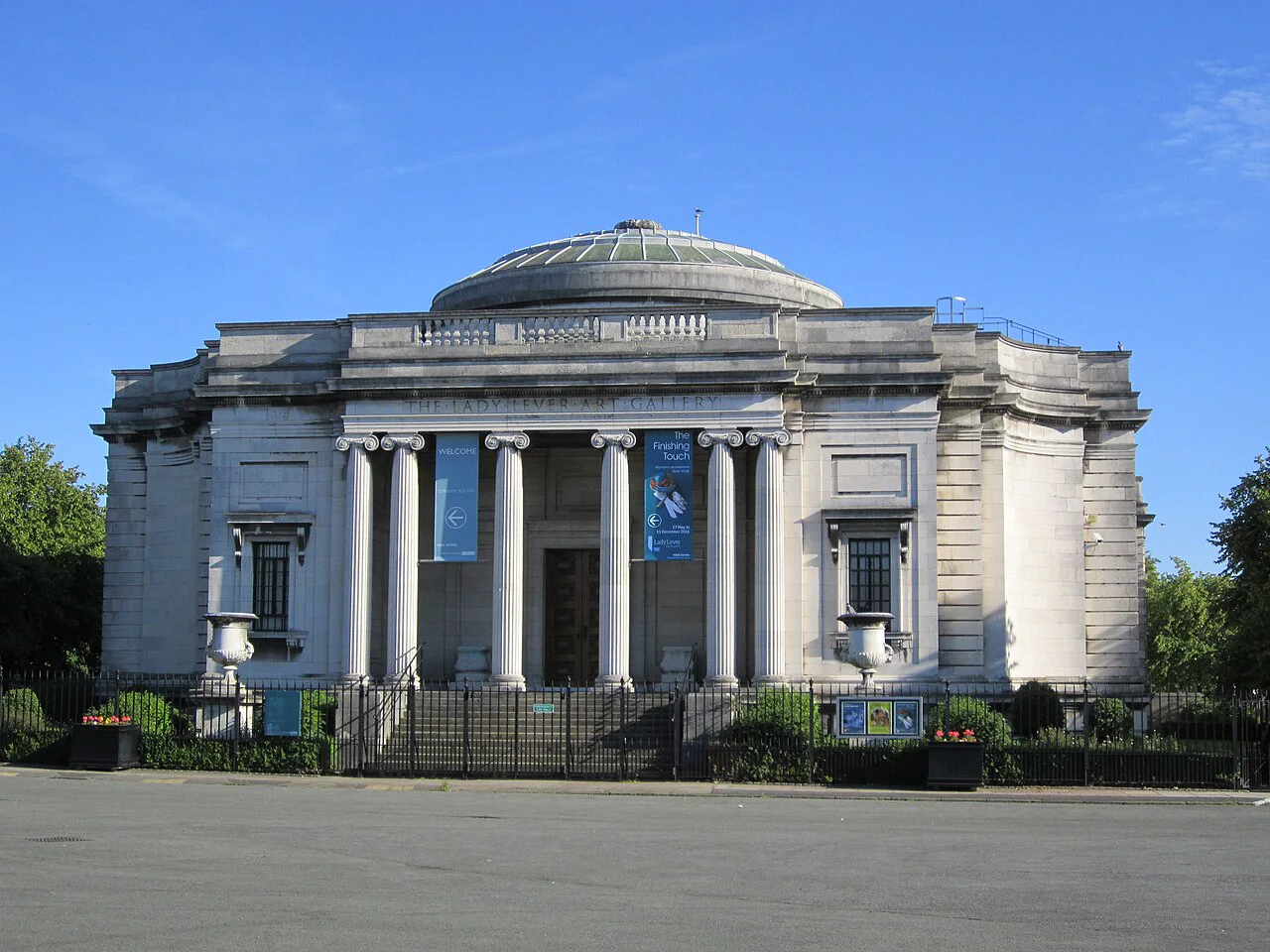
Port Sunlight · 28 artworks
Lady Lever Art Gallery
Content & sources
Rept0n1x · CC BY-SA 3.0
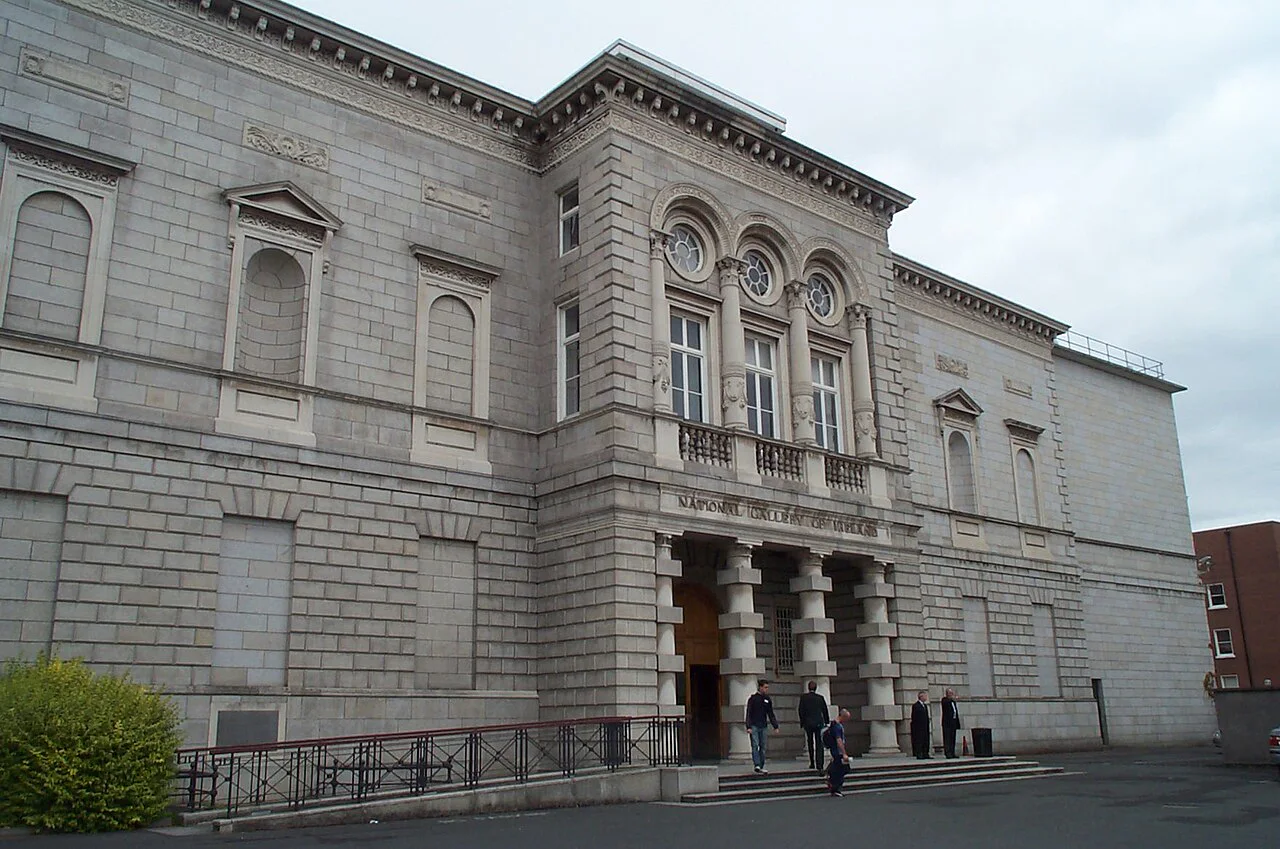
Dublin City · 55 artworks
National Gallery of Ireland
Content & sources
Copyright © 2006 Kaihsu Tai · CC BY-SA 3.0
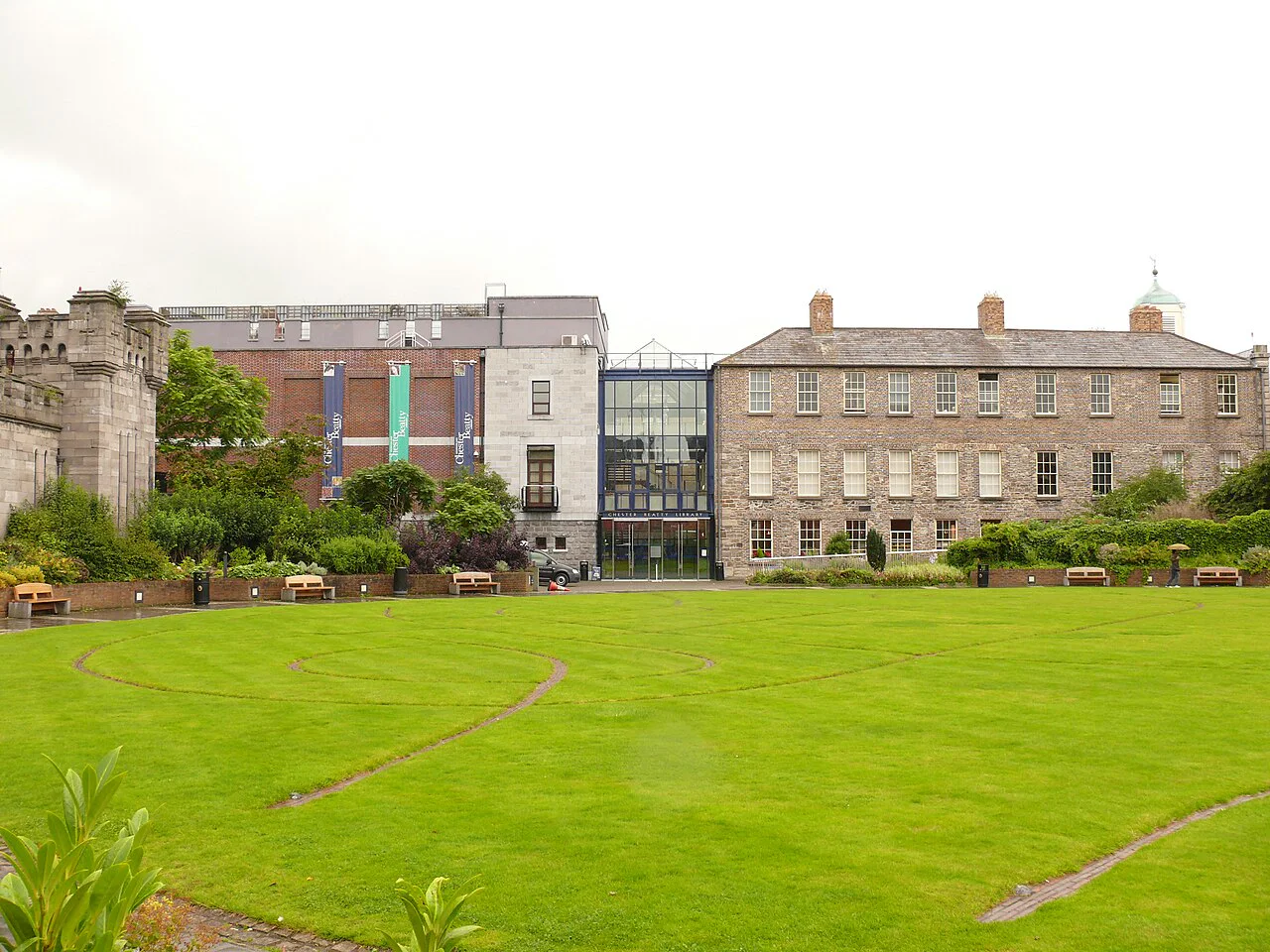
Dublin · 72 artworks
Chester Beatty Library
Content & sources
Photo: Aligatorek · CC BY-SA 3.0