Stanza · Audio guide
Yorkshire Museum Audio Guide
A place to remember. A story to take with you.
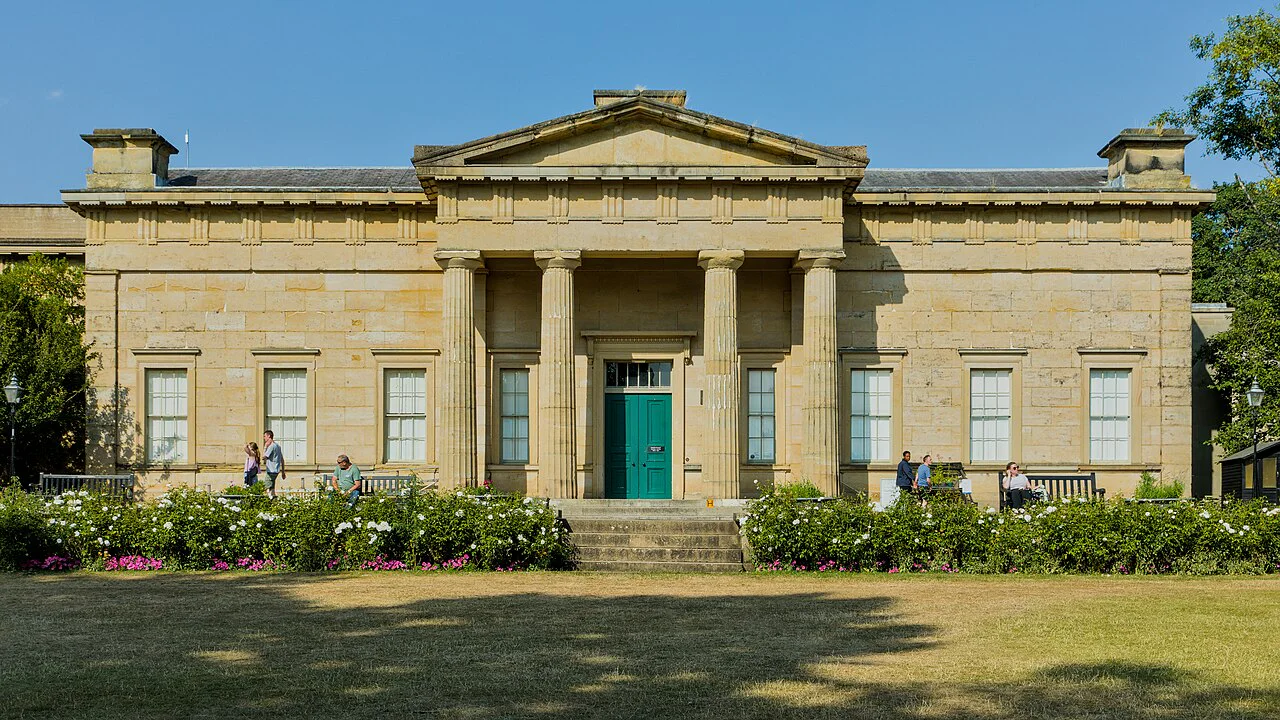
The Yorkshire Museum is a museum in York, England, that opened in 1830. It has five permanent collections covering biology, geology, archaeology, numismatics and astronomy.
Download Stanza, then search for “Yorkshire Museum”.
About the tour
One guide. Your kind of visit.
The Yorkshire Museum is a museum in York, England, that opened in 1830. It has five permanent collections covering biology, geology, archaeology, numismatics and astronomy.
The Yorkshire Museum guide tells the stories of 27 artworks, including Melsonby Hoard (Rebecca Griffiths), Vale of York Hoard (Unknown Artist), Coppergate Helmet (Unknown Artist), Cawood sword (Unknown Artist), Alan the Dinosaur (Staff of York Museums Trust), Bedale Hoard (Unknown Artist), Wold Newton hoard (Portable Antiquities Scheme), and Overton Hoard (The British Museum, Richard Abdy, 2016-12-09 16:18:22). Every artwork is free to hear in the Stanza app until 1 January.
Ready when you are.
- 01Get the free Stanza app.
iOS & Android
- 02Find your guide.
“Yorkshire Museum”
- 03Download before you go.
Works offline
Audio guide / 27 artworks
Inside the guide
Get to know a few of the stories before you go. Open a stop to read more.
01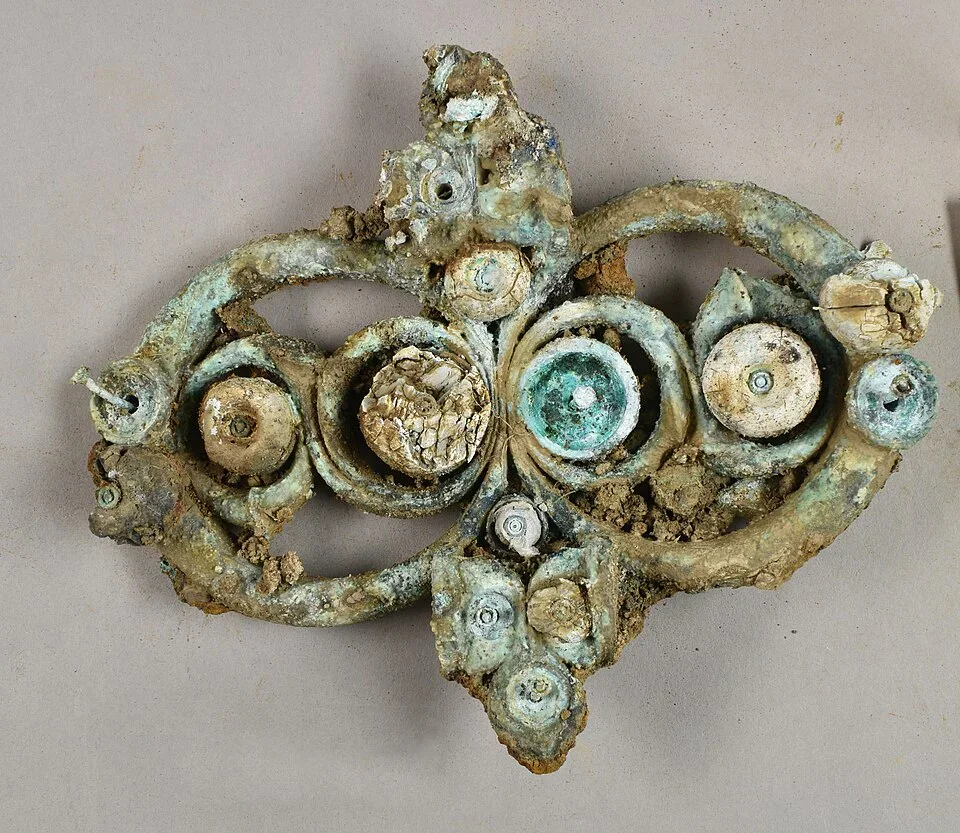
Melsonby Hoard
They are breaking the precious things now. An iron mirror, fourteen pony harnesses, the iron tyres from wagons and chariots. The damage is deliberate, probably over a fire. Next comes the ground. But there are no bodies here. It was done to show how important the owner was. One cauldron may be a lidded bowl for mixing wine, its style part Iron Age, part Mediterranean. Other objects are bright with glass and enamel, and the materials include coral from the Mediterranean. The owners had connections across Britain, across Europe and into the Roman world. They buried it all around the time the Romans conquered southern Britain, in the first century AD, near a Celtic hillfort. The find questioned the old idea that the elites of the south were more powerful than those in the north. Then in December 2021, a man with a metal detector named Peter Heads found it in a field near Melsonby. Digging followed, and more than nine hundred objects came out of the ground. Eighty-eight objects remain fused into a single mass, still to be separated and examined.
Listen in the appRebecca Griffiths · CC BY 2.0
02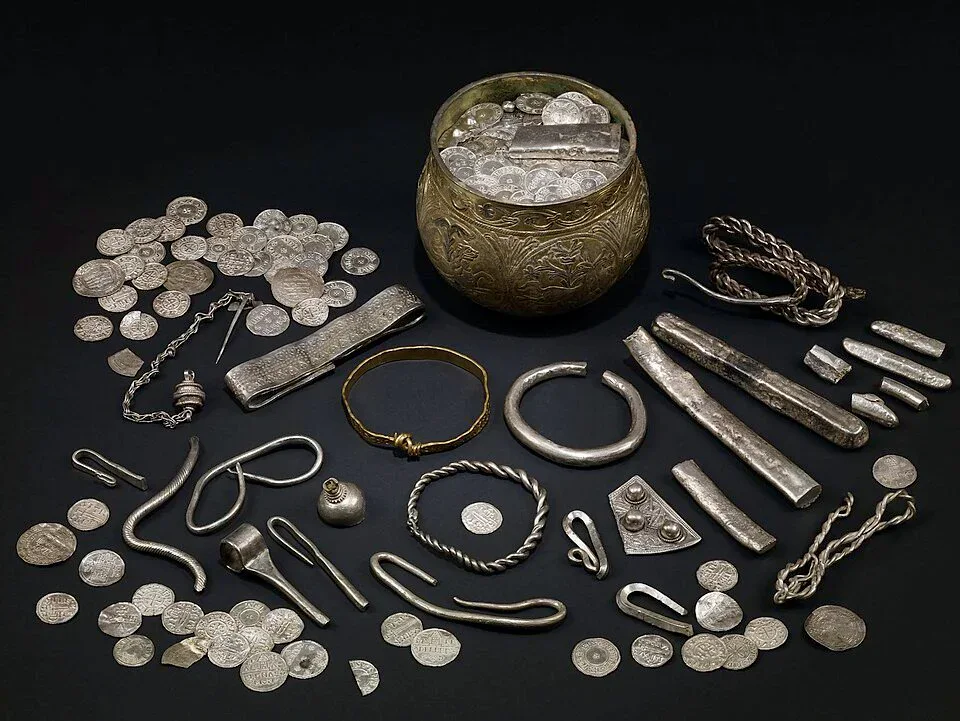
Vale of York Hoard
No one knows who buried this, or why. Whoever did took great care, and no one came back. The coins are the first clue. More than six hundred, all silver. Some carry Islamic symbols, some Christian, some old Norse pagan ones. A few mix the Christian and the pagan on one coin. They shed light on the beliefs of Vikings newly Christian. The objects came from far beyond York. Samarkand, North Africa, Afghanistan, Russia, Ireland, Scandinavia. A map of Viking travel and trade. A father and son found it in January 2007, detecting metal in an unploughed field near Harrogate. About thirty centimetres down, parts of a lead chest came out and coins and scraps of silver showed. They left it untouched and made a note of the exact spot. When archaeologists returned four days later, rain had washed the evidence away. The coins date from the late ninth and early tenth centuries. The first idea is that a wealthy Viking leader hid it in the unrest after Athelstan took Northumbria in 927. Viking rule returned briefly after Athelstan's death in 939, ending when Eric Bloodaxe was driven out and killed in 954. The vessel that held it all is gilt silver lined with gold. Vines, leaves and six running animals decorate it, two lions and four beasts of prey. It may once have been a church vessel from northern France, plundered or given as tribute.
Listen in the appPortable Antiquities Scheme · CC BY 2.0
03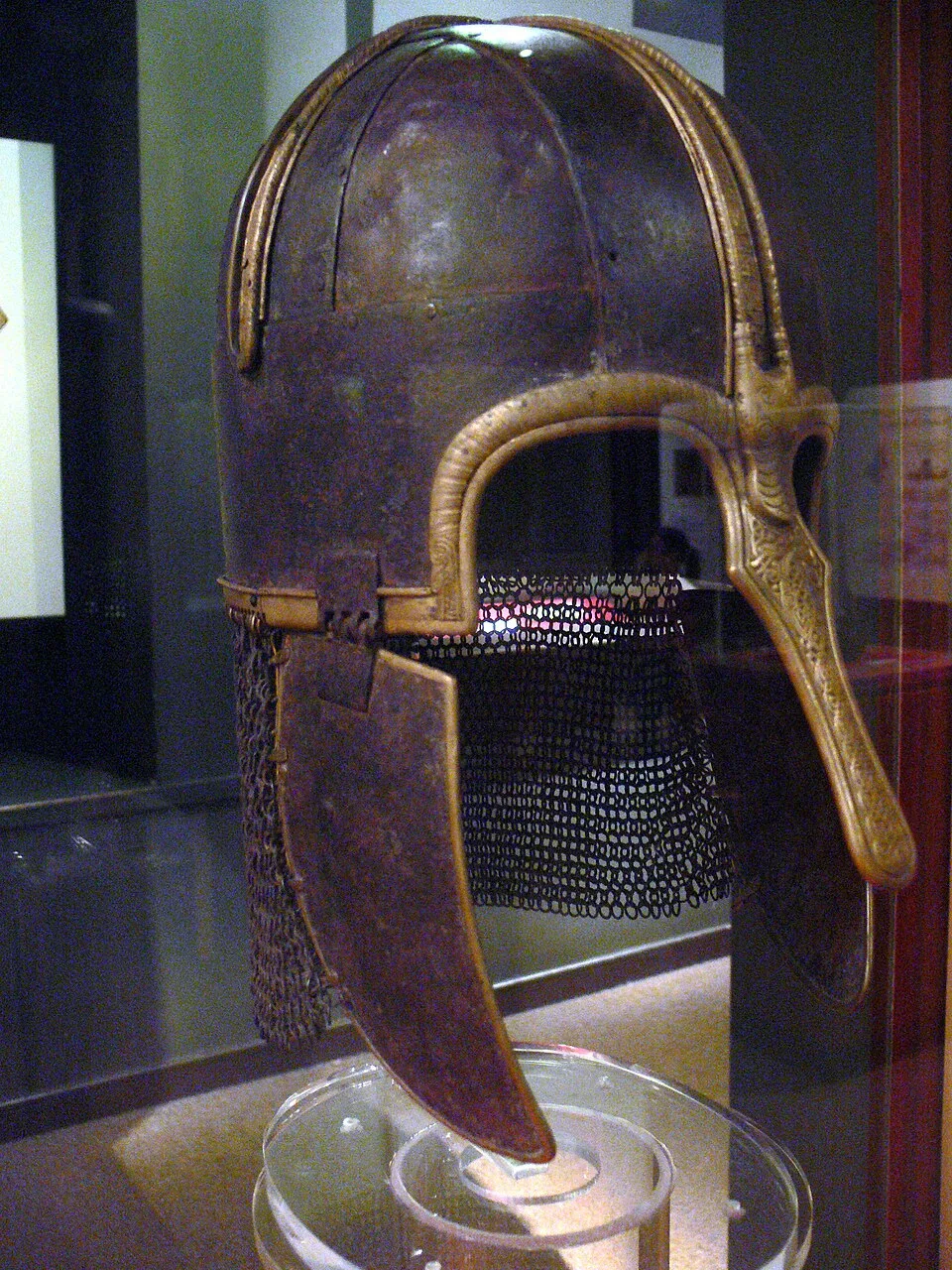
Coppergate Helmet
The cap of this helmet was built from eight pieces of iron, riveted together. Brass was folded over the edges in four different forms. Two low brass ridges cross at the top, one front to back and one side to side, so from above they make a cross. The front ridge ends in an animal's head where it meets the nose guard, and the eyebrow pieces end in animal heads too. Down the nose guard, two beasts twist together into ornament. Latin words run along the brass, and among them is the name of a man, Oshere. The maker is not known. Behind the cheek guards hangs a curtain of mail. Its links were forged and welded shut, not riveted the usual way. The helmet is one of seven Anglo-Saxon helmets to survive, and by far the best preserved. It lay at the bottom of a pit that may once have been a well. In May 1982, digging was under way for the Jorvik Viking Centre. A machine, scraping the clay a few centimetres at a time, struck something. The foreman stopped, thinking it was a stone. He wiped the dust away with his fingers, and a golden band showed at the top. He called the archaeologists over.
Listen in the appFingalo Christian Bickel · CC BY-SA 2.0 de
04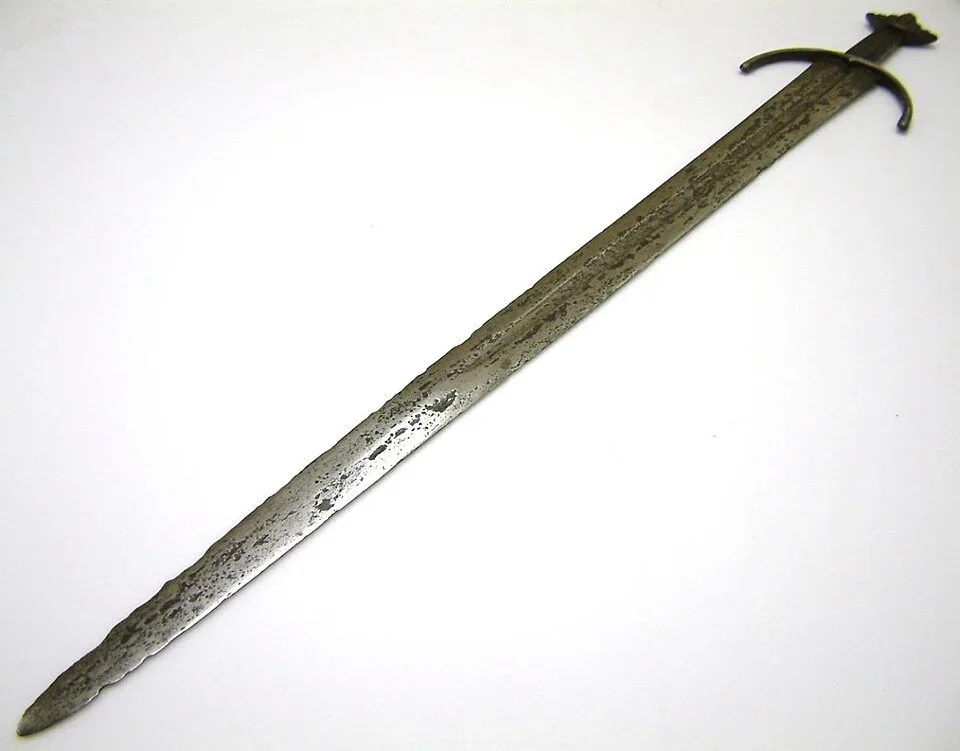
Cawood sword
How old is this sword? Both sides of the blade carry inscriptions, garbled groups of letters that do not spell a word you can read. The pommel, the weight at the end of the grip, is apparently a British development of the old Viking style. For a long time the sword was placed in the late eleventh or early twelfth century. In 1964 that changed. The lettering was the trouble, and so was the pommel, now seen as a late British version rather than a true Viking one. On that reading, the sword could not be older than the middle of the thirteenth century. Then in 1991 the runic inscription on a very similar sword, found in Norway in 1888, was read again. The date came back to between 1100 and 1150. Together the two swords changed the dating of others. Eight blades, some once placed around 1300, were moved to between 1000 and 1120. No one knows who made this one. It and the Norwegian sword were likely made in the same workshop.
Listen in the appPhotographed by: York Museums Trust Staff · CC BY-SA 4.0
05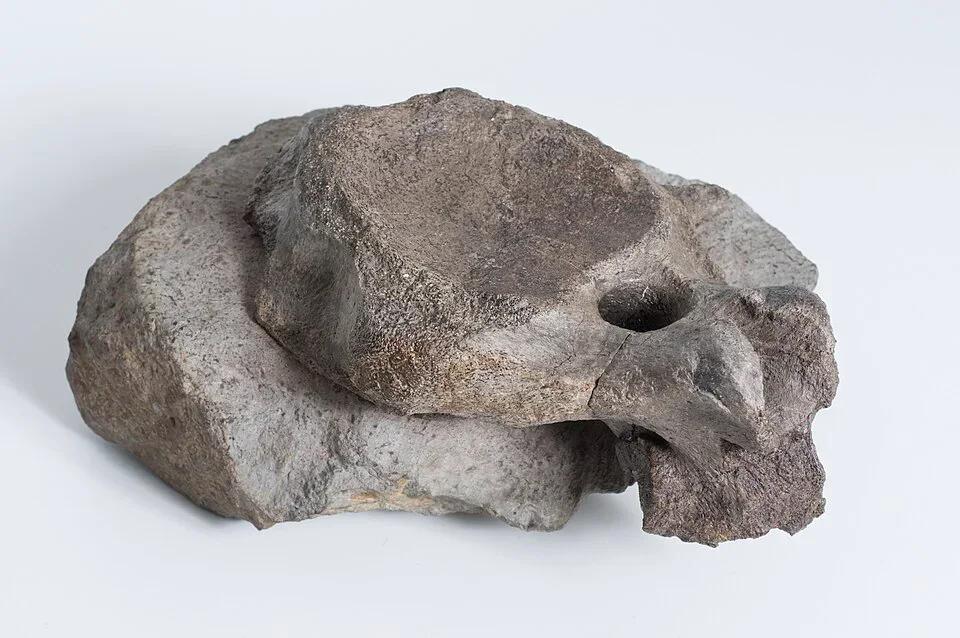
Alan the Dinosaur
One small bone, set in a piece of sandstone, is all that is left of this animal. It is a vertebra from the tail of a sauropod, about a hundred and forty five millimeters long. Yet this fragment is the oldest sauropod fossil known from Britain. It comes from Middle Jurassic rock at Whitby, between one hundred and seventy-six and one hundred and seventy-two million years old. In 1995, Alan Gurr was on a field trip with the geologist Phil Manning. A piece of sandstone broke away from the cliff face. Gurr looked at the fallen stone and saw a fragment of vertebra in it. The fossil carries the finder's name. It is called Alan, after the man who found it. In 2015 it was found most similar to Cetiosaurus, another sauropod. Which species it belongs to is still not known.
Listen in the appStaff of York Museums Trust · CC BY-SA 4.0
06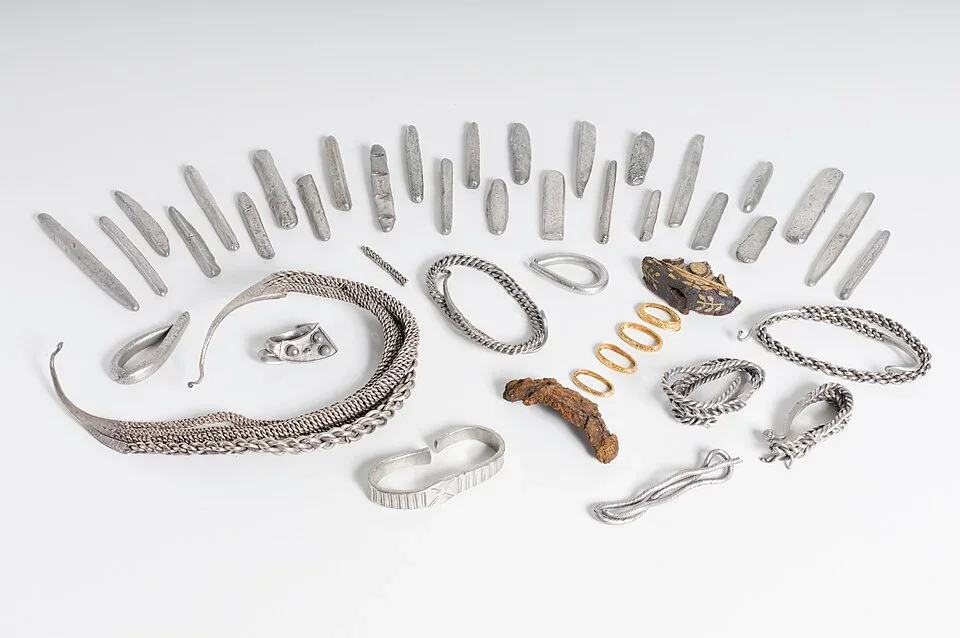
Bedale Hoard
Many of the silver ingots here are nicked, each nick left by testing the metal. Three have crosses cut into them. Not one coin lies among these ingots. In the late ninth century, payment was made with silver weighed, not counted. The silver had several sources. Some silver came from Britain, some from France, and some was refined using British lead and silver from the Islamic Middle East. A ring fragment here is of a type brought in from Russia. Irish and Russian influences mix here with Anglo Saxon and Anglo Scandinavian work. No one knows who put this hoard together. It was all found in one field near Bedale. One neck ring was cut in half. Its two pieces were hacksilver, silver valued by weight rather than by shape.
Listen in the appPhotographed by: York Museums Trust Staff · CC BY-SA 4.0
07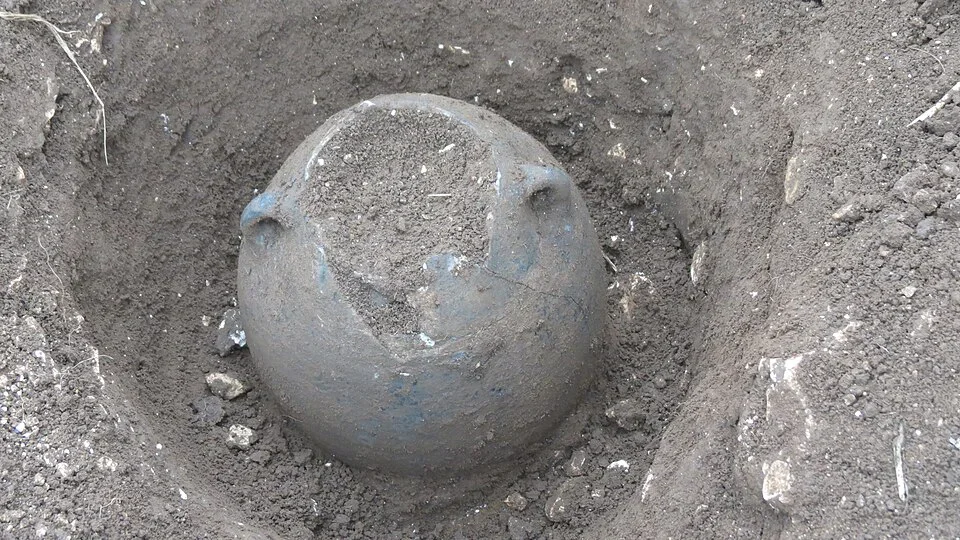
Wold Newton hoard
Packed into this grey pottery jar are one thousand eight hundred and fifty-seven copper coins. Almost all are Roman coins called nummi, made between 294 and 307. Just one is a radiate, a different kind of coin, made between 268 and 270, decades older than the rest. The jar was found with a broken dish and bits of other pottery, and one of those bits may have been its lid. A metal detectorist named David Blakely found the hoard in a field near Wold Newton on the twenty-first of September 2014. It was the largest Roman hoard of its kind ever found in the north of England. Once declared treasure, it was valued at just over forty-four thousand two hundred pounds. The Yorkshire Museum launched a campaign in 2016 to raise that money. Hundreds of people around the world donated. On the first of June 2017 the hoard went on display here, as part of the York Roman Festival.
Listen in the appPortable Antiquities Scheme · CC BY 2.5
08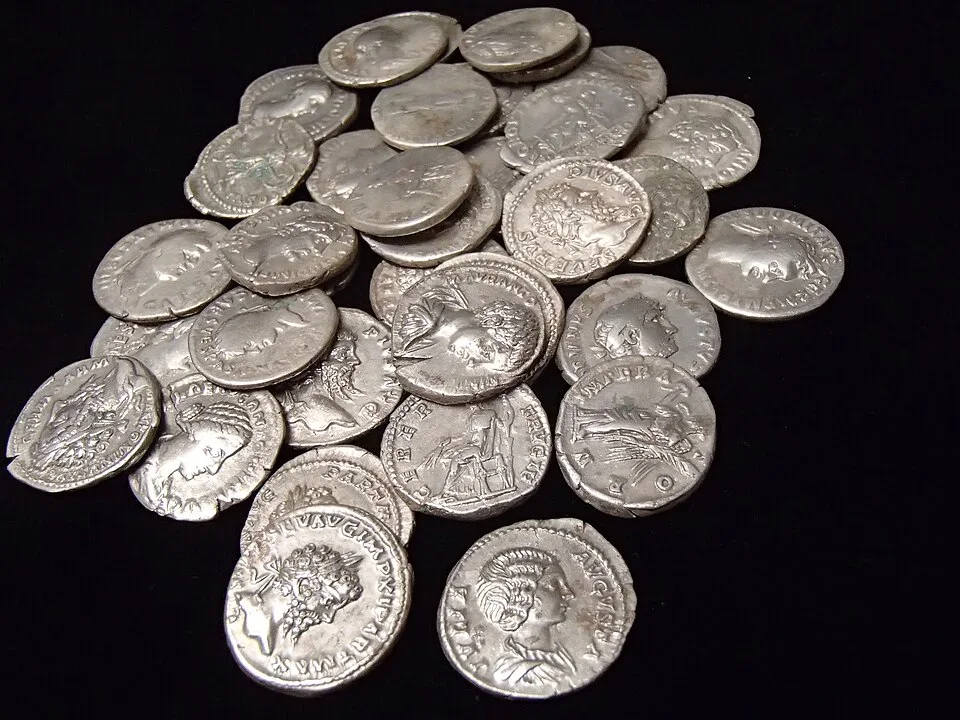
Overton Hoard
Until September 2016, this lay in a field near Overton in North Yorkshire. Then someone with a metal detector found it. What came out of the ground was thirty-seven silver coins, all of them denarii. There were also fragments of a pottery vessel they were probably kept in. The newest was made in AD 205, under Septimius Severus. The oldest goes back to Domitian, when he was junior emperor to his father Vespasian, between AD 69 and 79. So one hoard holds coins more than a hundred years apart. Yet all of them could still have been circulating together in the early third century. The find was declared treasure, and the Yorkshire Museum acquired it in early 2018. That October, it went on public display.
Listen in the appThe British Museum, Richard Abdy, 2016-12-09 16:18:22 · CC BY 2.0
09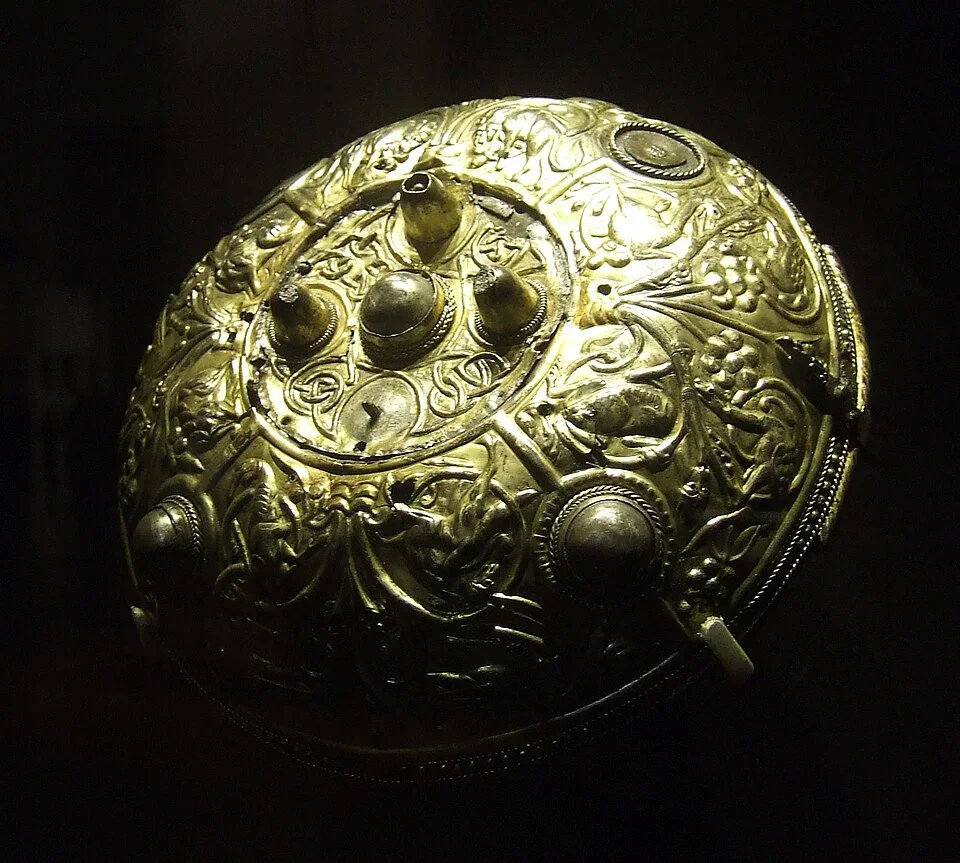
Ormside bowl
Creatures twist across the outside of this bowl, tangled in vines and bunches of grapes, with animals and birds among the leaves. A few of them gaze straight out at you. It is two bowls, really, one inside the other, held together with rivets. The inner one is bronze covered in gold and set with studs of blue glass. The outer one is silver, also gilded, and it carries that crowd of beasts and plants. Some time later it was even turned into a drinking cup. A blue glass stud matching these was found in York, which is why the inner bowl could have been made there. Yet the bowl was found in 1823 in what is now the churchyard of Saint James at Great Ormside in Cumbria, far from York. It was given to the Yorkshire Philosophical Society. Then, in 1898, a Viking warrior's grave, with a sword, was uncovered in the very same churchyard. The bowl may have been taken from York by that warrior and buried with him. But exactly how it came to lie in that churchyard is still not known.
Listen in the appPhoto: JMiall · CC BY-SA 3.0
10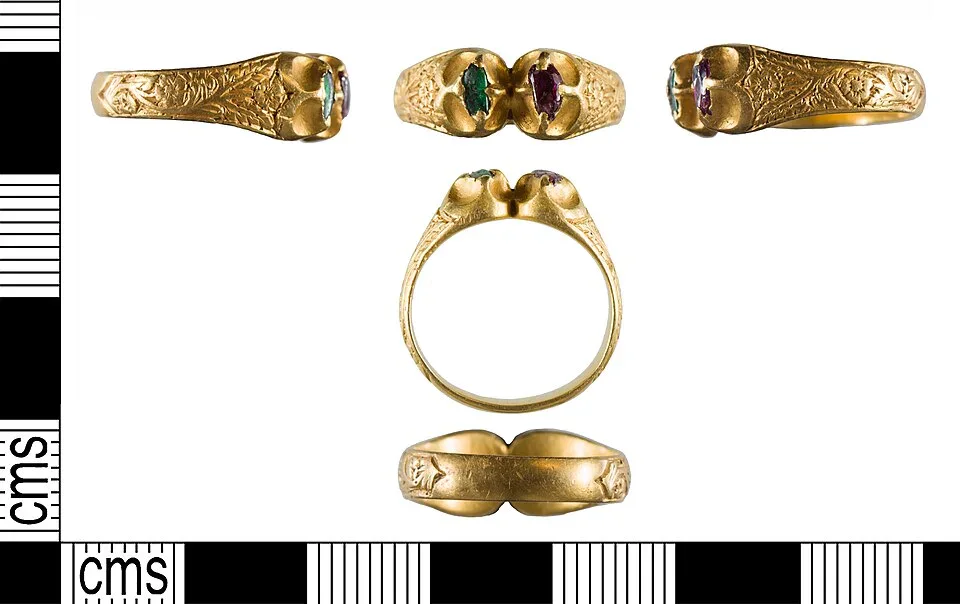
Fulford ring
Two stones set into a gold ring. What were they for? An emerald and a ruby. This ring dates from the fifteenth century. People then believed an emerald stood for chastity. A ruby stood for love, and could keep anger away. So this was probably a love token, a ring given to promise marriage, and those qualities may have mattered in a medieval relationship. A metal detectorist called Paul Ibbotson found it in December 2016. York Museums Trust bought it in 2019, helped by grants and by money given by the public. It went on public display here in September 2019. And on each side of the band, carved into the gold, is a floral pattern. It was once filled with niello. That filling is gone now.
Listen in the appYork Museums Trust, Duncan Marks, 2017-07-11 12:50:49 · CC BY 2.0
- 11
St. Mary's Abbey Figurine
Chris Streek · 13th century
- 12
Star Carr Frontlets
Unknown Artist
- 13
Gilling sword
Unknown Artist · 900
- 14
Ryedale Roman Bronzes
The Portable Antiquities Scheme, Amy Downes, 2020-11-01 16:08:38
- 15
Lingwell Gate coin moulds
Unknown Artist
- 16
Ryther Hoard
Unknown Artist · late 15th century AD
- 17
Escrick ring
Unknown Artist
- 18
Knaresborough hoard
Unknown Artist
- 19
Bossall-Flaxton hoard
Unknown Artist · early 10th century AD
- 20
Heslington Hoard
Staff of York Museums Trust · mid-4th century AD
- 21
Head of Constantine the Great, York
Unknown Artist
- 22
Star Carr Pendant
Unknown Artist
- 23
Statue of Mars, York
Unknown Artist · 225
- 24
Binnington Carr Hoard
Unknown Artist · late 1st century AD
- 25
Towton torcs
Unknown Artist · -99
- 26
Bootham Hoard
Unknown Artist
- 27
Boston Spa hoard
Unknown Artist
Yorkshire Museum
Frequently asked questions
How much does the guide cost?
Free app download. Free until 1 January. Listed guide price: $0.99. Audio guide only. Venue admission is separate.
Can I listen without internet?
Yes. Download the guide’s audio, images, and maps in the app before your visit. Your downloaded content is then available offline.
Can I listen in my language?
In English for now. More languages soon.
Do I need to follow a schedule?
No. This is a self-guided experience. Choose your stops, pause whenever you like, and return to a story at your own pace.
Which artworks are in the Yorkshire Museum audio guide?
27 artworks, including Melsonby Hoard (Rebecca Griffiths), Vale of York Hoard (Unknown Artist), Coppergate Helmet (Unknown Artist), Cawood sword (Unknown Artist), Alan the Dinosaur (Staff of York Museums Trust), Bedale Hoard (Unknown Artist), Wold Newton hoard (Portable Antiquities Scheme), and Overton Hoard (The British Museum, Richard Abdy, 2016-12-09 16:18:22). The full list is on this page.
Is this the museum’s official audio guide?
No. Stanza is an independent audio guide app and is not affiliated with Yorkshire Museum. Museum admission is separate.
At your own pace
Explore Yorkshire Museum.
Download Stanza, then search for “Yorkshire Museum”.
Free app download · Guide price shown in the app
Keep exploring
Nearby audio guides
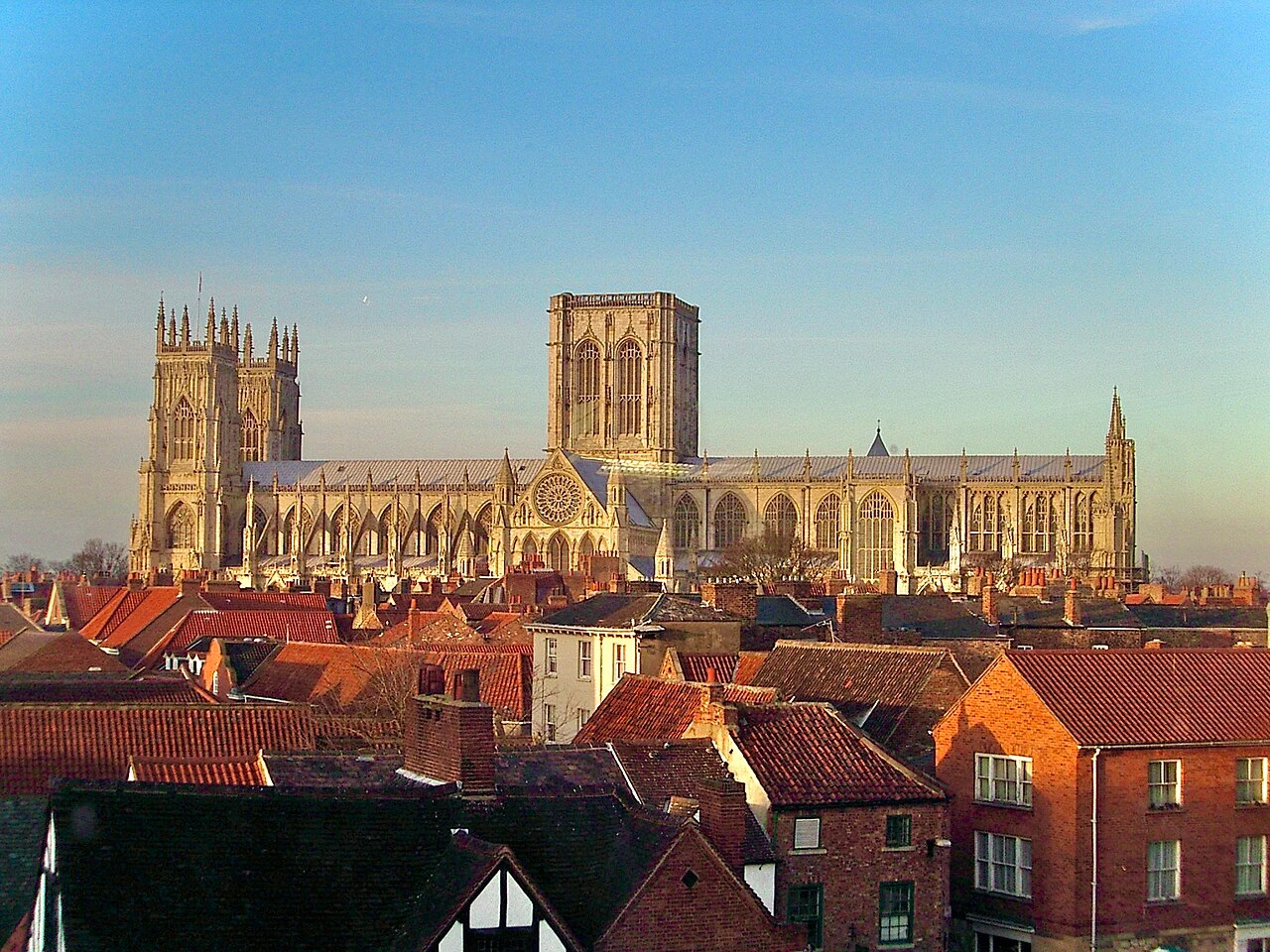
York · 1 km
York Minster
Content & sources
MatzeTrier · CC BY-SA 3.0

Ripon · 36 km
Fountains Abbey
Content & sources
User:Klaus with K · CC BY-SA 3.0

Whitby · 66 km
Whitby Abbey
Content & sources
Photo: Aude · CC BY-SA 3.0
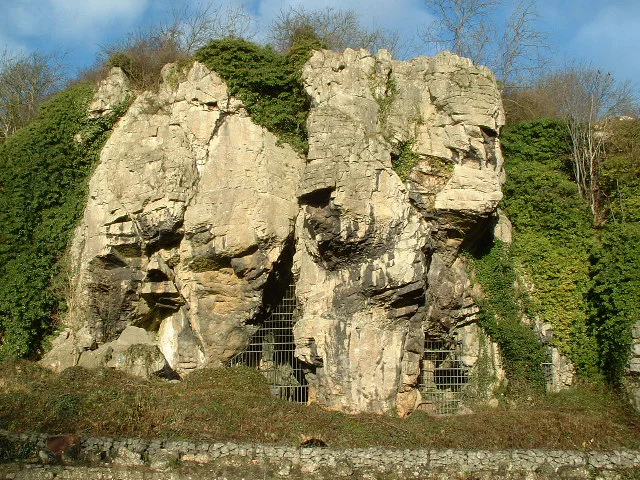
Elmton with Creswell · 78 km
Creswell Crags
Content & sources
Nigel Homer · CC BY-SA 2.0
Art museums
More art museum audio guides
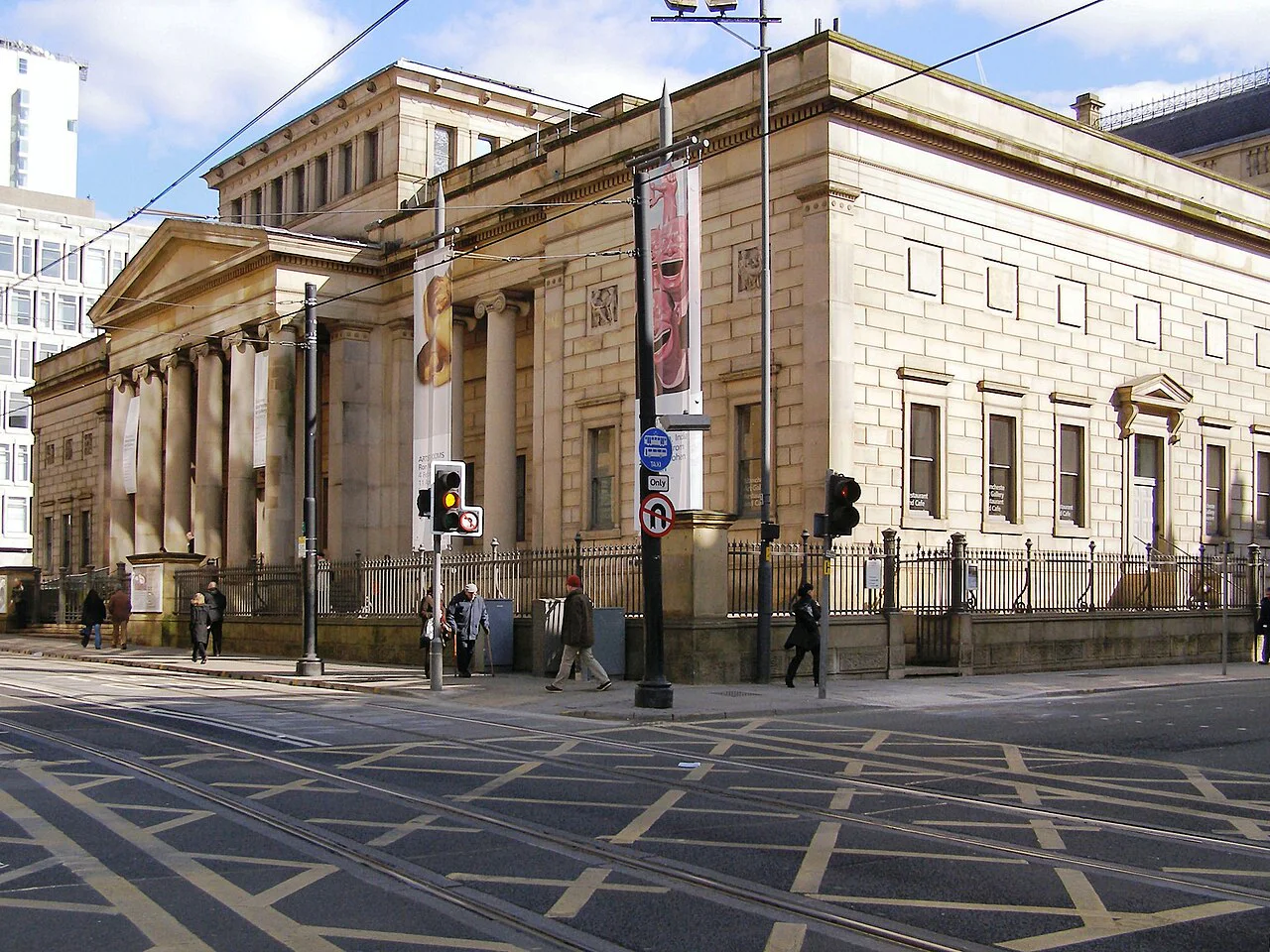
Manchester · 65 artworks
Manchester Art Gallery
Content & sources
David Dixon · CC BY-SA 2.0
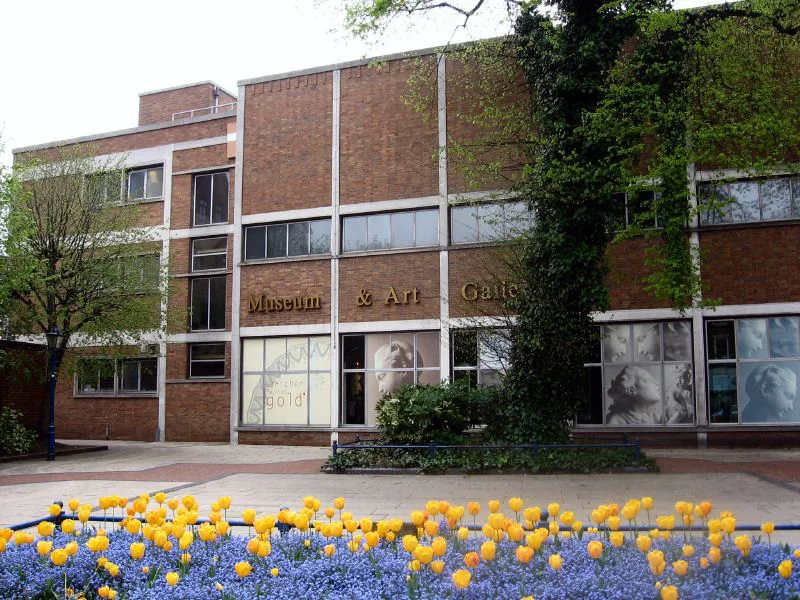
Derby · 18 artworks
Derby Museum and Art Gallery
Content & sources
Janet Roberts from UK · CC BY-SA 2.0
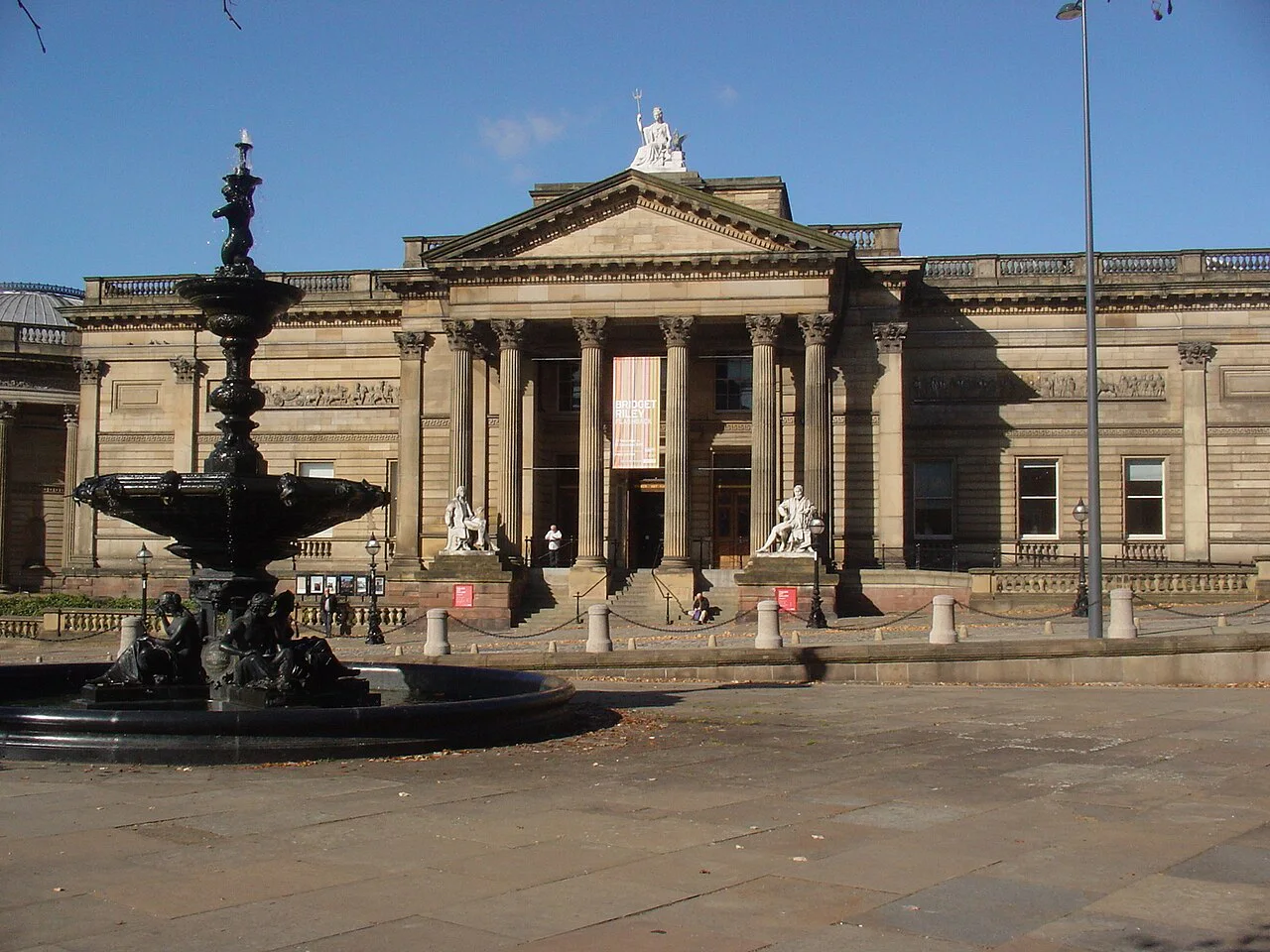
Liverpool · 54 artworks
Walker Art Gallery
Content & sources
Rept0n1x · CC BY-SA 3.0
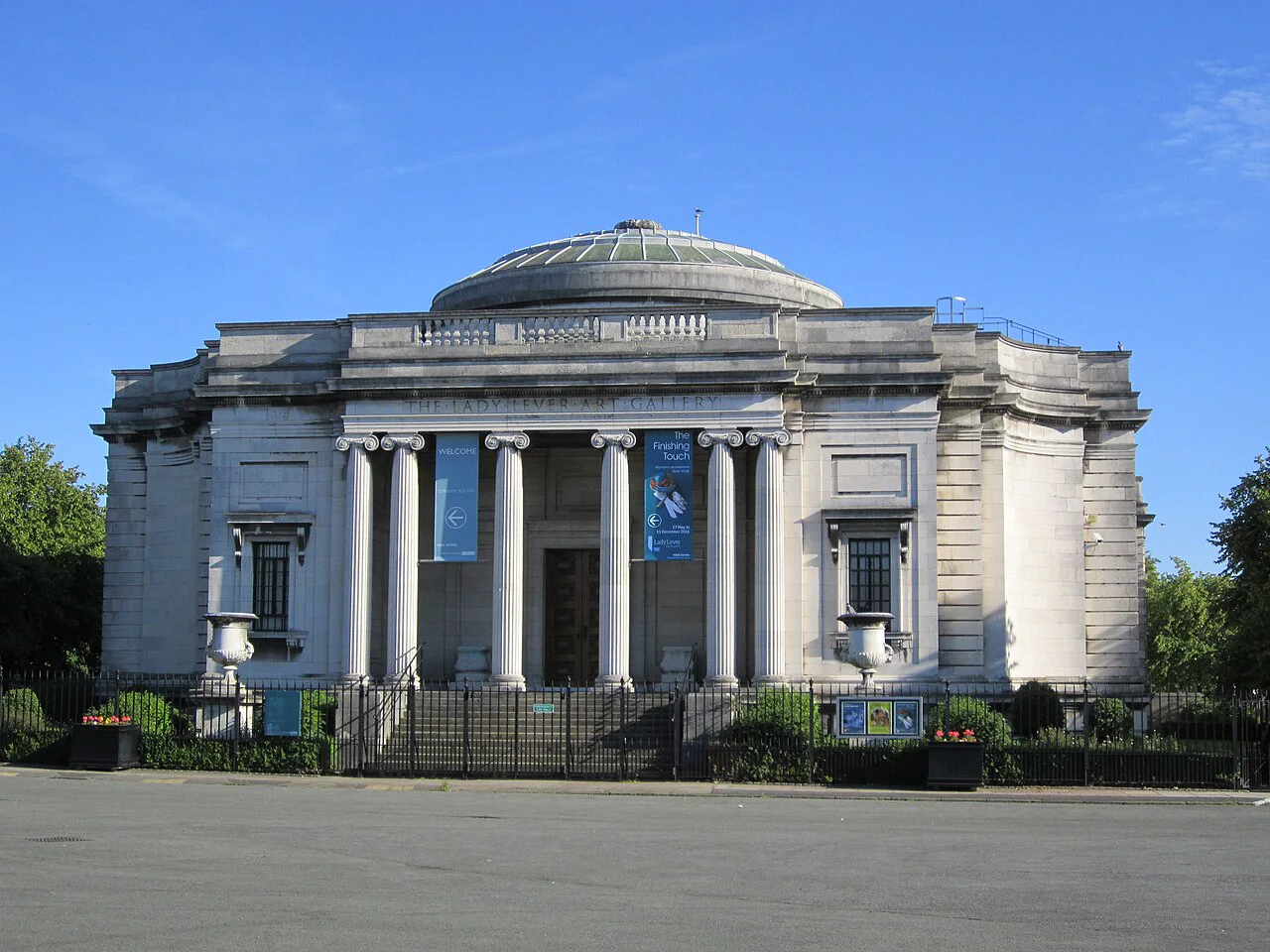
Port Sunlight · 28 artworks
Lady Lever Art Gallery
Content & sources
Rept0n1x · CC BY-SA 3.0
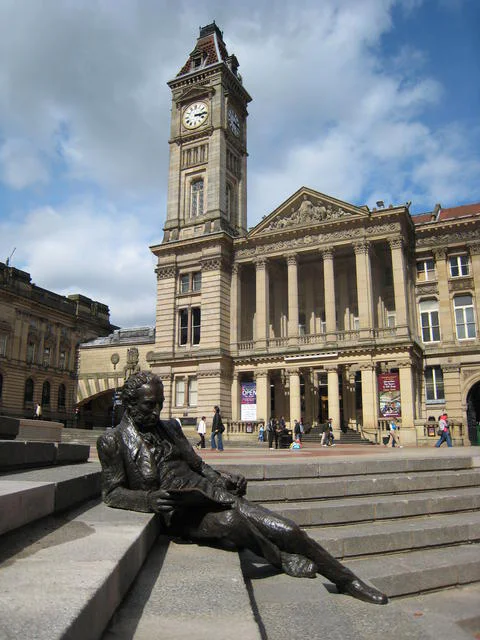
Birmingham · 42 artworks
Birmingham Museum and Art Gallery
Content & sources
David Stowell · CC BY-SA 2.0
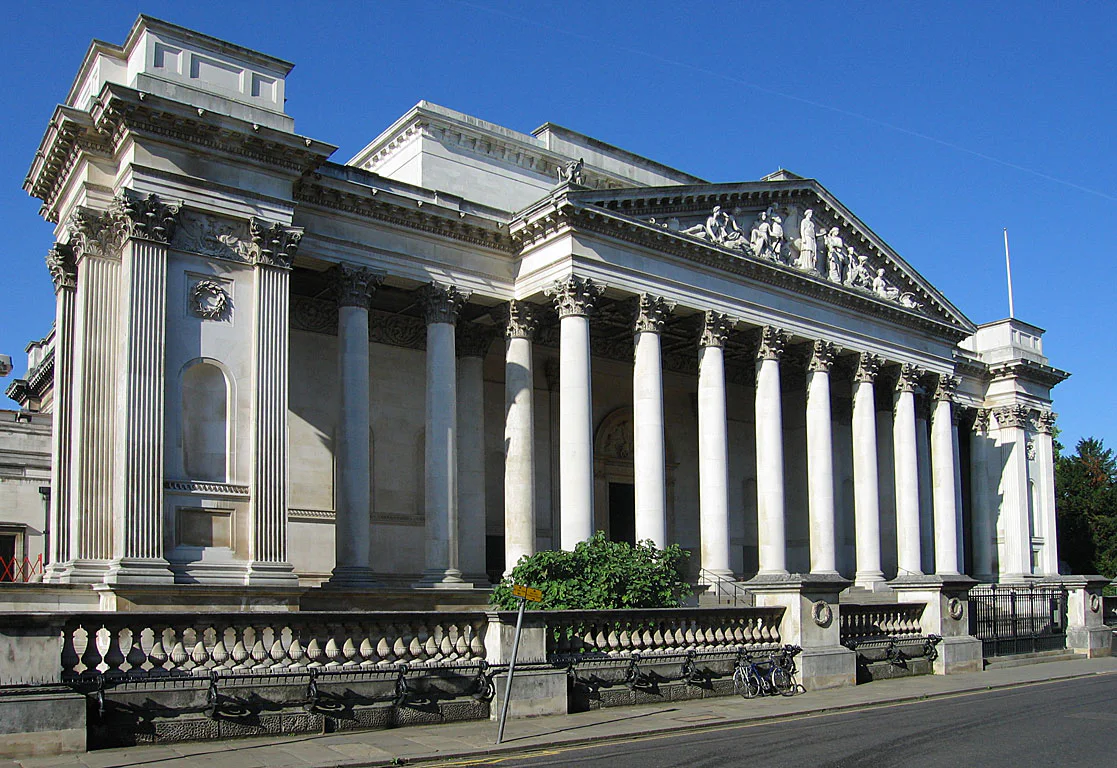
Cambridge · 51 artworks
Fitzwilliam Museum
Content & sources
Photo: Solipsist~commonswiki · CC BY-SA 2.0