Stanza · Audio guide
Kaymaklı Yeraltı Şehri Audio Guide
A place to remember. A story to take with you.
Kaymakli underground city is located within the citadel of Kaymakli in the Nevşehir Province of Turkey. It was first opened to tourists in 1964 and is situated approximately 19 km from Nevşehir.
Download Stanza, then search for “Kaymaklı Yeraltı Şehri”.
About the tour
One guide. Your kind of visit.
Kaymakli underground city is located within the citadel of Kaymakli in the Nevşehir Province of Turkey. It was first opened to tourists in 1964 and is situated approximately 19 km from Nevşehir.
Ready when you are.
- 01Get the free Stanza app.
iOS & Android
- 02Find your guide.
“Kaymaklı Yeraltı Şehri”
- 03Download before you go.
Works offline
Audio guide / 12 narrated stops
Inside the guide
Get to know a few of the stories before you go. Open a stop to read more.
01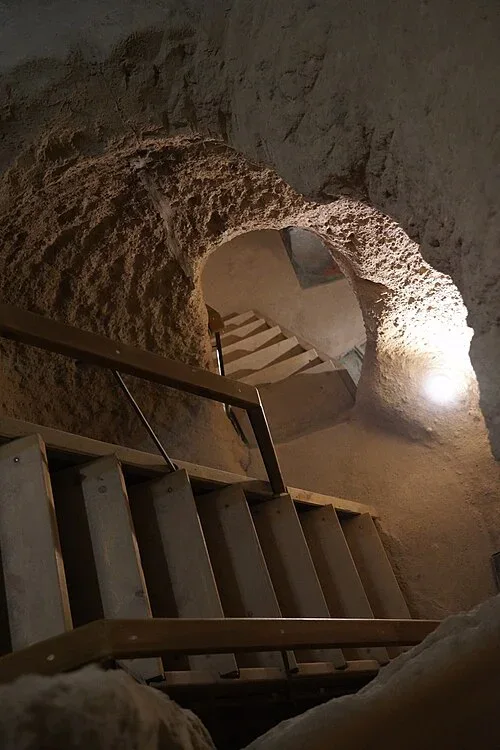 Subterranean Threshold and Level One Stables
Descent into the Tuff: The Entrance Stairway
Welcome to Kaymaklı, one of the largest underground cities in Cappadocia. Beneath the hillside town lies a settlement of eight levels, carved by hand into soft volcanic rock called tuff. Four of those levels have been cleared and lit, and they opened to visitors in 1964. The idea behind the place is simple to say and strange to take in: whole communities sheltered here, with their animals and their food. This was no fortress for soldiers. It was a temporary home for ordinary families, hidden beneath their own village.
Robert Helvie · CC BY-SA 3.0
02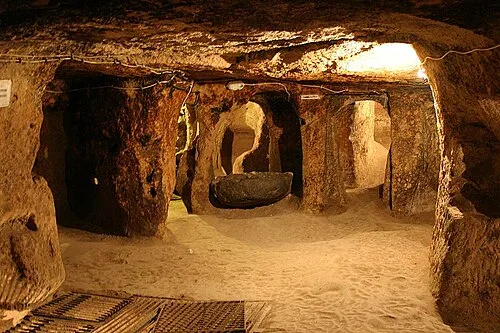 Subterranean Threshold and Level One Stables
First-Floor Stables
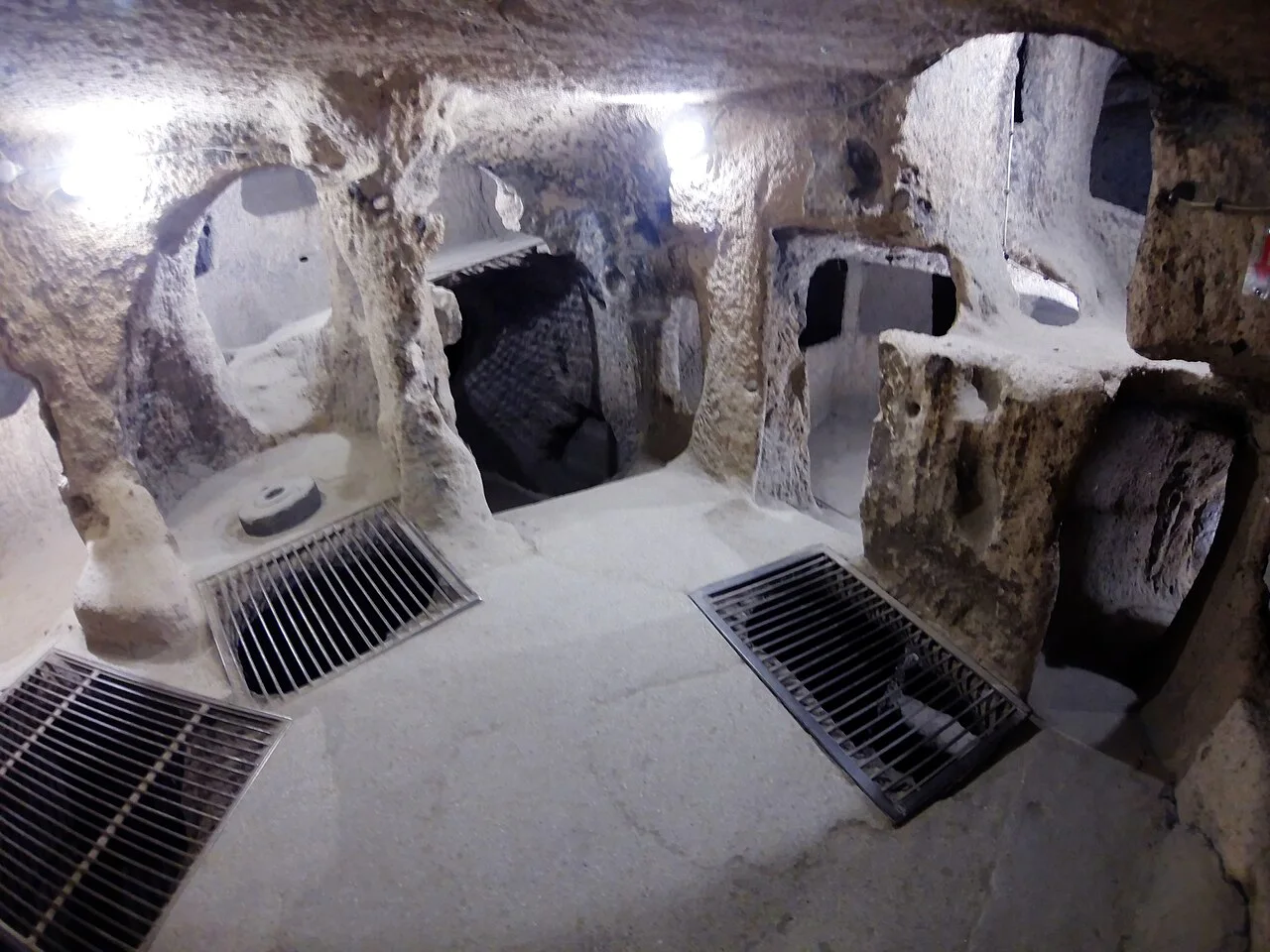
The first level underground belonged to the animals. Cattle and other livestock could never have been led down the steep, narrow stairways to the deeper floors, so the stables sit directly beneath the surface. A farming household brought its whole livelihood underground, not just its family. Chambers like this one, with carved troughs along the walls, kept the animals fed and sheltered while danger lasted. The stable on this floor is small, which suggests other stables still wait in the sections that were never opened.
Robert Helvie · CC BY-SA 3.0
03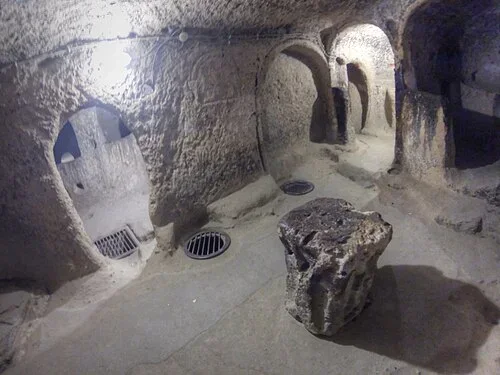 Level Two: The Rock-Cut Byzantine Church
The Rock-Cut Byzantine Church
One level down, the community carved itself a complete church out of the rock. It has a nave and two apses, the half-domed recesses at the east end where the liturgy was celebrated. A baptismal font stands in front of the apses, and seating platforms run along the walls. This was a full place of worship, hollowed from living stone so that services could continue in hiding. Graves were cut beside the church as well. The names found in them match names recorded next to the church itself, which supports the idea that clergy were buried there.
Listen in the appNevit Dilmen (talk) · CC BY-SA 3.0
04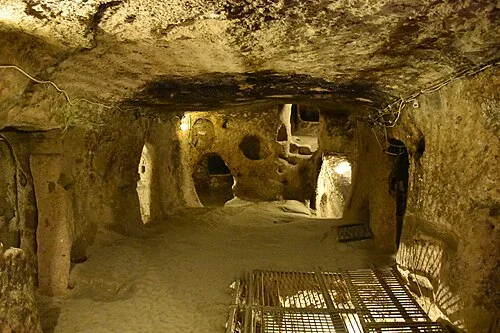 Level Two: The Rock-Cut Byzantine Church
Living Spaces of the Hidden Community
Daily life carried on beside worship, because the church floor also held living spaces. A hall like this one, with its carved columns and niches, gave families somewhere to eat, sleep and wait out a threat. The shelters were first dug, in the eighth century, by Christians defending themselves against invaders and bandits. Then came four centuries of Arab raids on the Byzantine frontier, and families hid here again and again. Under the Seljuk Turks the tunnels served as refuges, kataphygia in the Greek of their users. And in the fourteenth century, people sheltered here from the incursions of Timur.
Listen in the appPhoto: MusikAnimal · CC BY-SA 4.0
05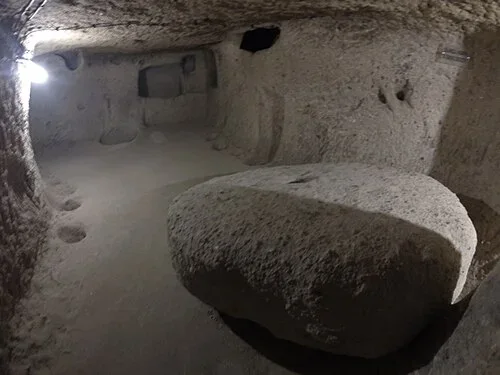 Defensive Chokepoints and the Rolling Millstone Door
The Rolling Millstone Door
Six massive round stones guard this city. Each one was cut and shaped where it stands, from the rock around it, while the tunnels were being dug. To seal a passage, defenders rolled the disc across it from the inside; opening one from the outside is nearly impossible. A hole in the centre of each door let them check whoever arrived at the entrance, or push a spear through it. Only six of these rolling-stone doors are known in Kaymaklı, and each one still sits ready in its groove.
Listen in the appNevit Dilmen (talk) · CC BY-SA 3.0
06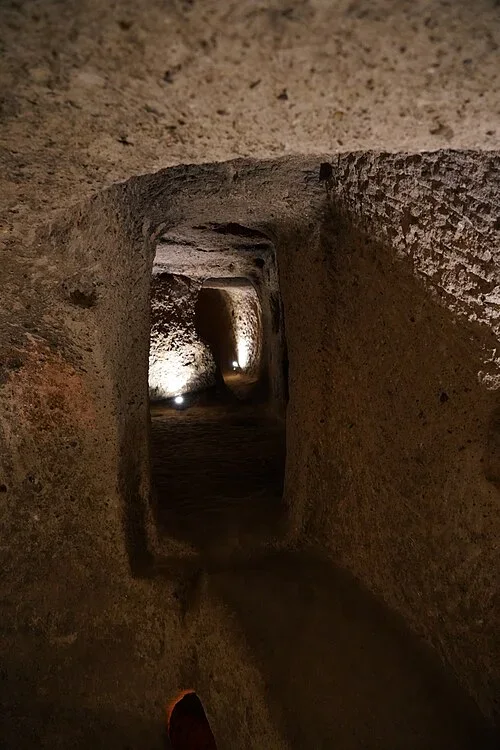 Defensive Chokepoints and the Rolling Millstone Door
Narrow Corridors and the Road to Derinkuyu
The passage narrows until an adult has to walk bent over. Kaymaklı's tunnels are lower, narrower and more steeply inclined than Derinkuyu's, a difference in layout between the two cities. The two cities were linked by some eight or nine kilometres of tunnels, so that if one entrance was breached, people could slip out by the other. That passage is not open to visitors.
Listen in the appRay Swi-hymn from Sijhih-Taipei, Taiwan · CC BY-SA 2.0
07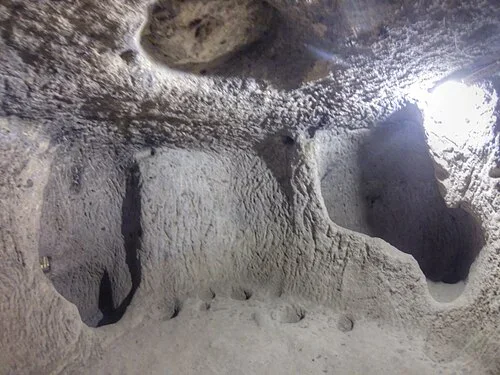 Level Three: The Cold-Hammering Copper Workshop
The Cold-Hammering Copper Workshop
Refugees here did not only wait; they worked. On this floor stands a block of andesite, a volcanic stone, hewn from a layer of the same rock exposed while the complex was being dug. Fifty-seven holes were carved into its surface. Each hole is about ten centimetres across, sized for a piece of copper set in place and hammered into shape. Working the metal cold, without firing, was the technique. The copper itself probably came from mines between Aksaray and Nevşehir, the same source an older settlement in the region had drawn on.
Listen in the appNevit Dilmen (talk) · CC BY-SA 3.0
08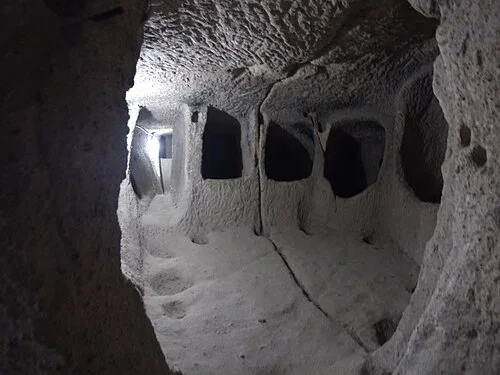 Level Three: Communal Kitchens and Winery
Communal Kitchens
Feeding a hidden community meant cooking underground, and this level held the kitchens. Provisions stores sat alongside them, so food could be prepared and kept in the same rooms. The carved pits and niches in chambers like this one belong to that daily work. Kaymaklı follows a strict planning rule: every room and open space on the open floors is arranged around the availability of ventilation. Where the air could reach decided where people could live, cook and work.
Listen in the appNevit Dilmen (talk) · CC BY-SA 3.0
09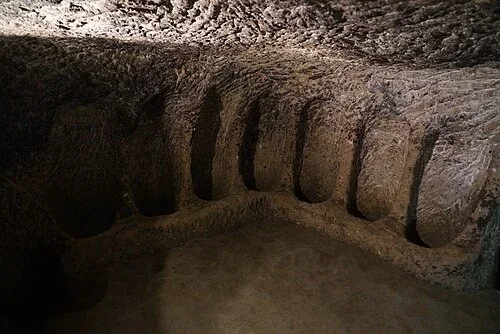 Level Three: Communal Kitchens and Winery
Şırahaneler: Wine and Oil Presses
The third floor held what are counted as the most important areas of the whole compound: storage places, wine and oil presses, and kitchens. The row of carved slots along the wall belongs to the şırahaneler, the wine depots of the underground city. Pressing grapes and olives down here shows how much of ordinary farm life the underground city was built to hold.
Listen in the appRay Swi-hymn from Sijhih-Taipei, Taiwan · CC BY-SA 2.0
10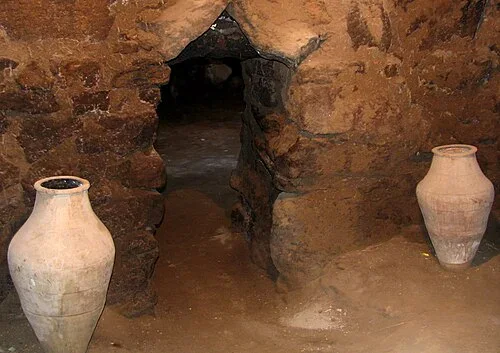 Level Four: Deep Food Storage and Ceramic Cellars
Deep Storage Cellars and the Great Jars
The lowest of the open levels also holds kitchens and wine depots alongside its storage rooms. Great earthenware jars like the pair flanking this doorway held grain, oil and other provisions in the dark and the dry. The high number of storage rooms and jar spaces on the fourth floor points to real economic stability. And the sheer area reserved for storage, in so limited a space, suggests the city was built to support a large population underground.
Listen in the appWinstonza · CC BY-SA 3.0
- 11
The Ventilation Shaft
The shaft that carried air down eight levels, and wells no enemy could poison.
- 12
The Ascent: Last Refuge and Afterlife
The 1909 refuge, the 1923 expulsion, and the end of a hidden city's working life.
Kaymaklı Yeraltı Şehri
Frequently asked questions
How much does the guide cost?
Free app download. Listed guide price: $0.99. Guide price shown in the app. Audio guide only. Venue admission is separate.
Can I listen without internet?
Yes. Download the guide’s audio, images, and maps in the app before your visit. Your downloaded content is then available offline.
Can I listen in my language?
This audio guide is available in 15 languages, including English.
Do I need to follow a schedule?
No. This is a self-guided experience. Choose your stops, pause whenever you like, and return to a story at your own pace.
At your own pace
Explore Kaymaklı Yeraltı Şehri.
Download Stanza, then search for “Kaymaklı Yeraltı Şehri”.
Free app download · Guide price shown in the app
Keep exploring
Audio guides — Turkey
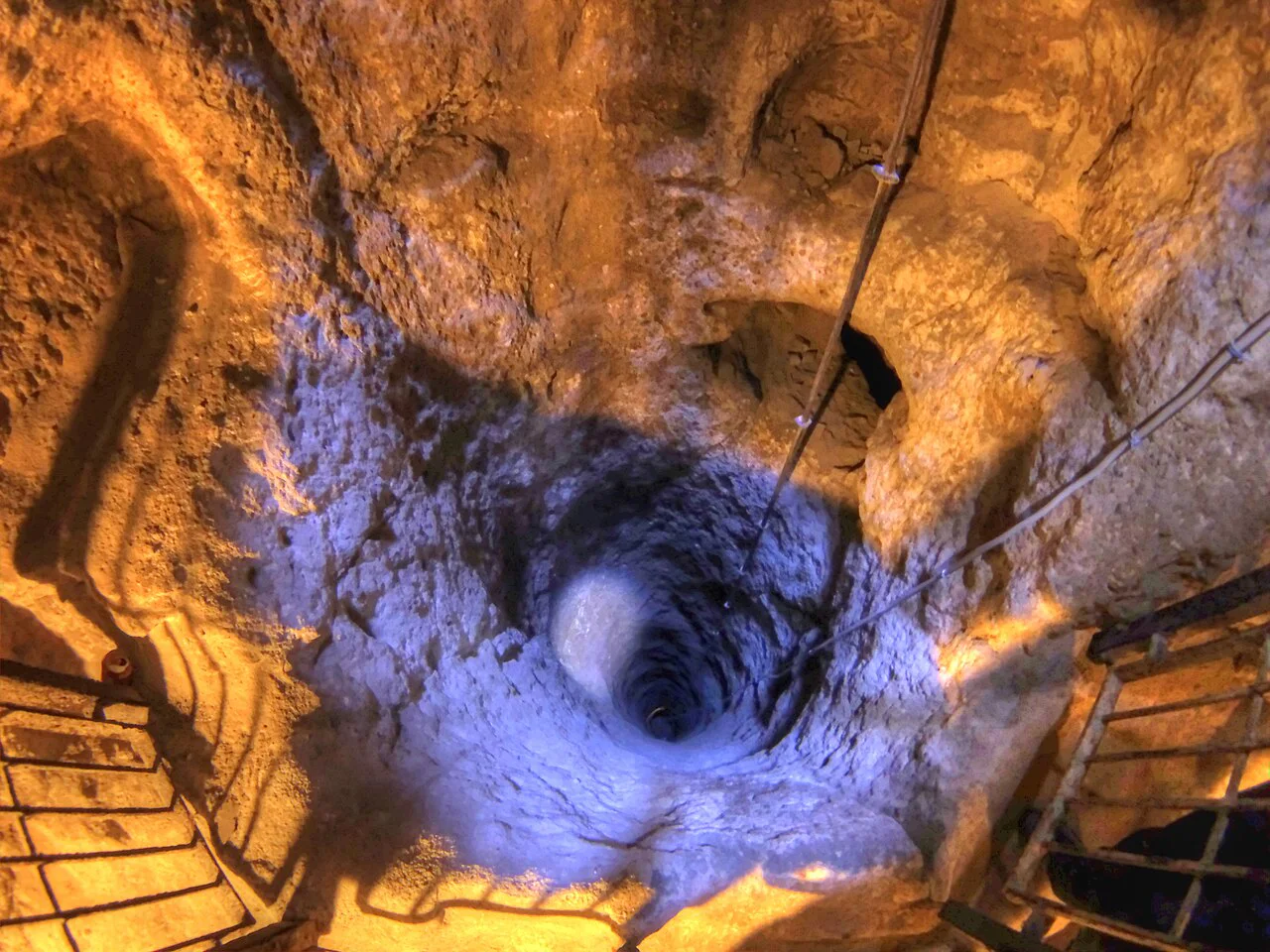
Derinkuyu · 10 km
Derinkuyu Yeraltı Şehri
Content & sources
Nevit Dilmen (talk) · CC BY-SA 3.0
Alaca
Alacahöyük
Content & sources
Bernard Gagnon · CC BY-SA 3.0
Konya
Alâeddin Camii
Content & sources
Photo: Christian Mathis · CC BY-SA 3.0
Erdemli
Korikos
Content & sources
The original uploader was Artaxiad at English Wikipedia. · CC BY-SA 3.0