Stanza · Audio guide
Alacahöyük Audio Guide
A place to remember. A story to take with you.
Alaca Höyük is a Neolithic and Hittite settlement located in northern Turkey. It is an important archaeological site situated near the ancient Hittite capital of Hattusa.
Download Stanza, then search for “Alacahöyük”.
About the tour
One guide. Your kind of visit.
Alaca Höyük is a Neolithic and Hittite settlement located in northern Turkey. It is an important archaeological site situated near the ancient Hittite capital of Hattusa.
Ready when you are.
- 01Get the free Stanza app.
iOS & Android
- 02Find your guide.
“Alacahöyük”
- 03Download before you go.
Works offline
Audio guide / 14 narrated stops
Inside the guide
Get to know a few of the stories before you go. Open a stop to read more.
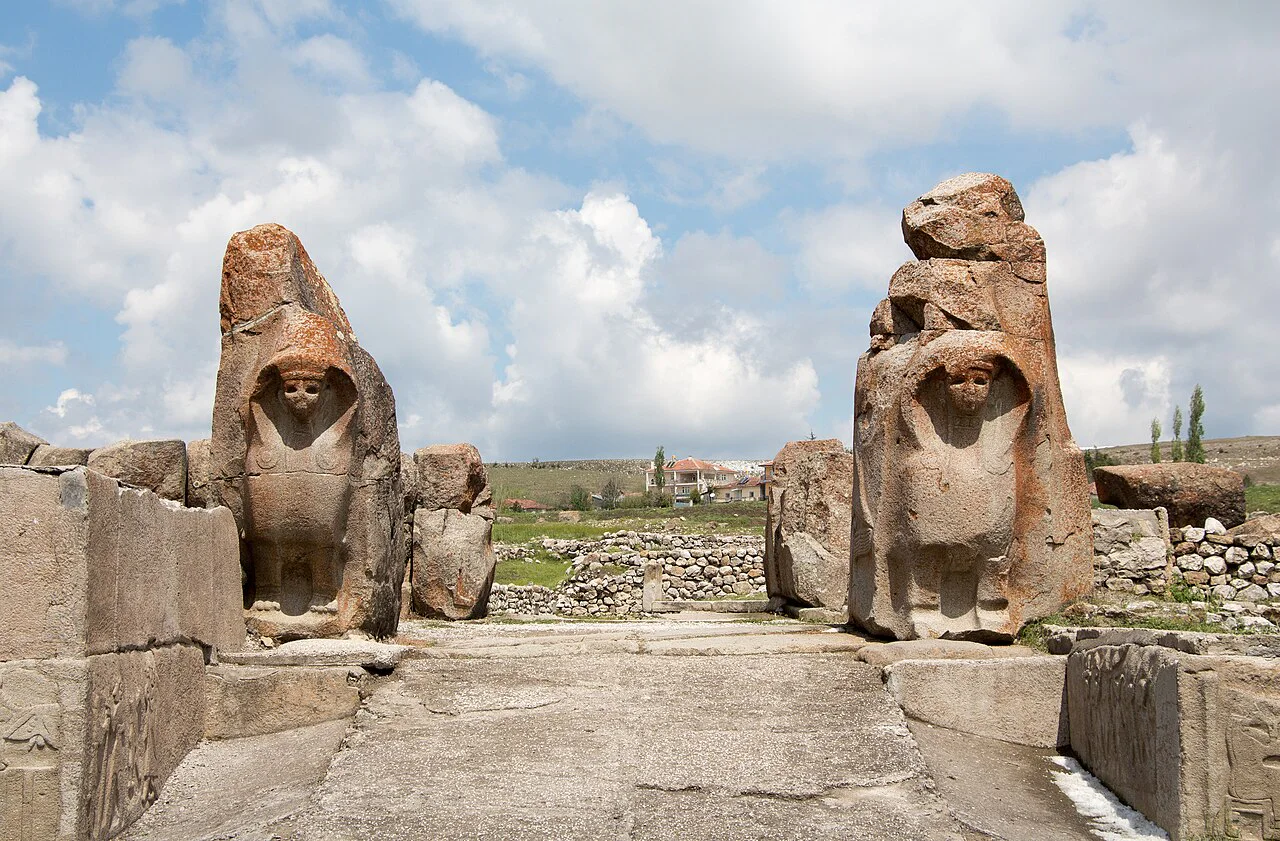
01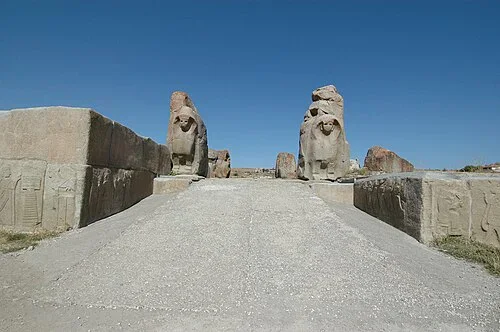 Visitor Center and Approach to the Mound
Approach to the Mound
Welcome to Alacahöyük, in the wheat country of Çorum Province. The hill in front of you is not a hill at all. It is a mound, built up layer by layer by the people who lived here across thousands of years. From the base it stretches about three hundred and ten metres across its longest side. It rises roughly fourteen metres above the plain. Settlement began here around 5000 BC, in the age when people first worked copper alongside stone. They stayed, generation after generation, into Ottoman times. Long before and during the Hittite Empire, this was a major sacred and royal centre. Its ancient name has been lost. Scholars have proposed Arinna, Tawiniya and Zippalanda, but none of these has been confirmed. The path climbs toward a stone gateway, the ceremonial entrance to the Hittite city on the summit.
Photo: Dosseman · CC BY-SA 4.0
02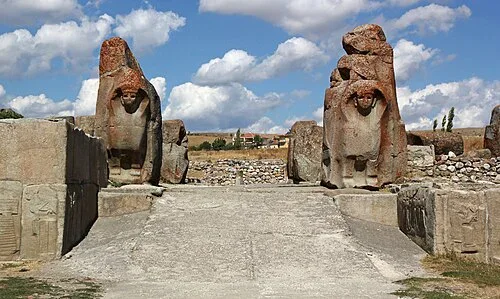 The Sphinx Gate and Ritual Reliefs
The Sphinx Gate
The gateway was built in the fourteenth century BC, when the Hittite Empire was at its height. Two great sphinxes guard it, carved from single blocks of stone, with human heads and winged bodies. Their exact original placement is uncertain, and parts of the gate have been restored in modern times. Behind them rose a town that needed guarding. The Hittites ringed this city with walls and towers, because raiders called the Kaska came down from the mountains to the north. The Kaska raids were frequent enough that the defences here were built heavy. This gateway was the ceremonial face of that fortress, the way in for processions and for the city's grandest occasions. The stone blocks lining the passage carry carvings of their own, beginning with a double-headed eagle.
Ingeborg Simon · CC BY-SA 3.0
03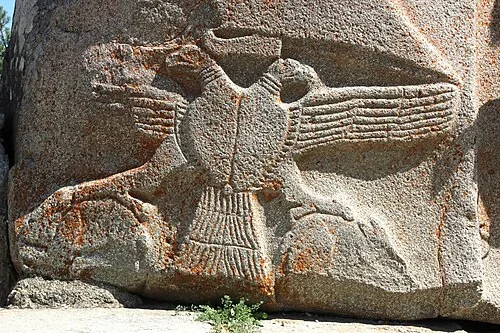 The Sphinx Gate and Ritual Reliefs
The Double-Headed Eagle Relief
On the inner side of a sphinx's base, a carved block shows a double-headed eagle, wings spread wide, talons closing on smaller creatures. It is a guardian image, set to watch over the entrance the way the sphinxes do. Two heads mean the watcher faces both ways at once, and nothing slips past. What the eagle meant in Hittite religion is not settled. Nor is it certain whether the smaller figures in its grip are prey or symbolic animals. The carving is worn and weathered now, but the wings and both heads are still clear. Further along the same wall, other blocks show human figures at their own business.
Listen in the appIngeborg Simon · CC BY-SA 3.0
04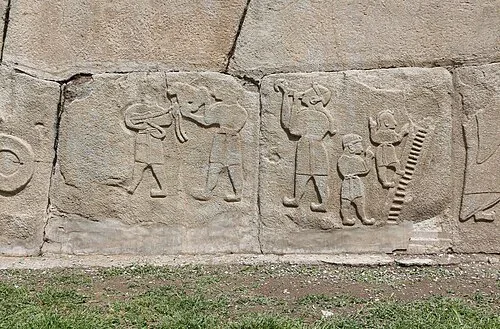 The Sphinx Gate and Ritual Reliefs
Reliefs of Musicians and Acrobats
The blocks along the gate include people, not only guardians. Musicians play stringed lutes and horn instruments, and these carvings count among the oldest detailed depictions of musical instruments anywhere in Anatolia. Beside them stand the acrobats. On this block, figures climb a ladder one above another, with standing figures waiting below. Carvings like these are a rare visual window into ceremony and entertainment in the Hittite world. What exact occasion they show is uncertain. The figures might be priests, musicians or acrobats, and scholars read them differently. What is sure is the detail: the shape of the instruments, the posture of the performers, the ladder itself. Whoever carved these blocks in the fourteenth century BC took care to show how the performance actually worked.
Listen in the appBernard Gagnon · CC BY-SA 3.0
05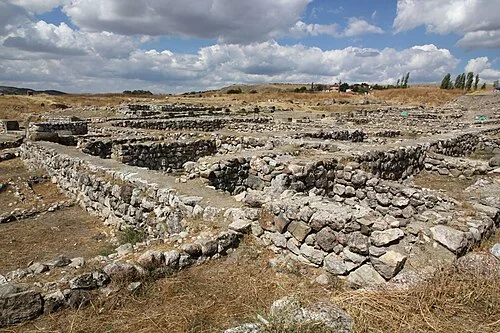 The Hittite Temple-Palace Complex
The Hittite City Interior
Behind the gate, the Hittite city spread across the summit of the mound. The low walls visible here are the stone foundations of large buildings, from the imperial city of the fourteenth and thirteenth centuries BC. Walls of mud brick rose above them, long since gone, but the stone grid shows the scale of what stood here. These were substantial structures, laid out in ordered rows, the administrative and religious heart of the city the gate served. The foundations sit within a much deeper stack of earlier settlement, cut through by later excavation trenches. The city that stood on these footings was the last great phase of a place already ancient when it was built.
Listen in the appIngeborg Simon · CC BY-SA 3.0
06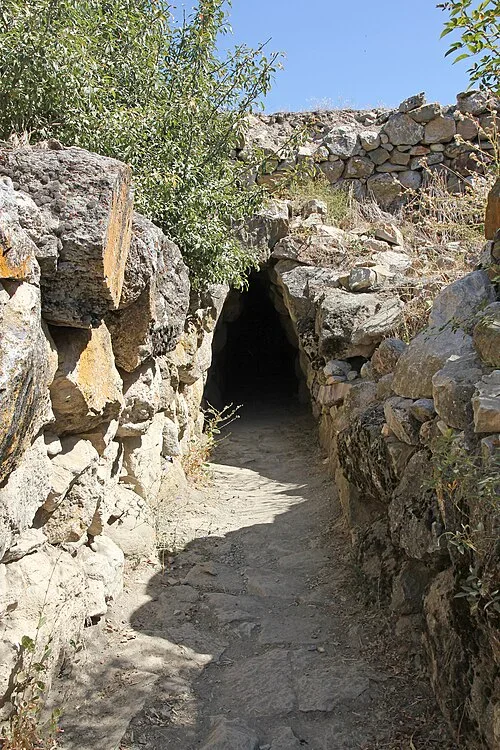 The Western Postern Gate and Defensive Tunnel
The Postern Tunnel
A tunnel runs beneath the defences here, built of stone with courses that lean inward as they rise until they meet overhead. The technique is called corbelling, and it let the Hittites roof a passage without timber or arch. Tunnels of this kind are known from Hittite city fortifications of this era generally. They allowed defenders to slip out beyond the walls unseen, which mattered when an enemy surrounded the town. What this particular passage was used for is an open question. Sorties against besiegers, water access, or bringing in supplies have all been suggested. The stonework meeting overhead is the plainest piece of Hittite military engineering on the site.
Listen in the appIngeborg Simon · CC BY-SA 3.0
07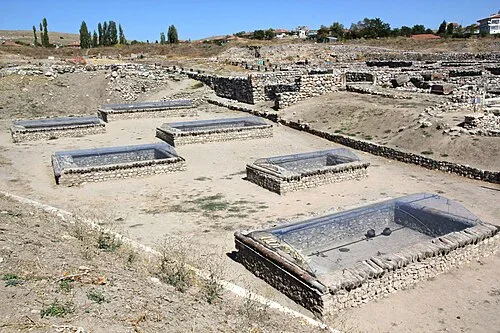 Pre-Hittite Hattian Royal Shaft Tombs
The Royal Shaft Tombs
Long before the Hittites, this mound belonged to the Hattians, the indigenous people of Anatolia's Bronze Age. Below eye level here lie fourteen shaft graves, the burial places of Hattian rulers. They date from 2850 to 2450 BC, which puts them alongside the Royal Tombs of Ur and the second city of Troy in age and ambition. Each was a pit lined with stone, dug into the earth of the mound. The people inside were buried with extraordinary wealth, and the objects that came out of these pits changed what archaeologists thought they knew about Anatolia before the Hittites. Whether the dead were kings, princes or the heads of elite families is not settled. What is certain is that a flourishing culture of real power lived here more than a thousand years before the gate above was carved.
Listen in the appIngeborg Simon · CC BY-SA 3.0
08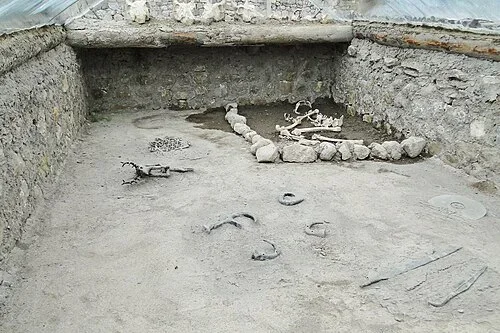 Pre-Hittite Hattian Royal Shaft Tombs
Inside a Royal Tomb
Each tomb was a shaft about a metre and a half deep, sealed over with wooden beams. The dead were laid with their legs folded, facing west. Around them, the mourners placed offerings with care: the heads and legs of bulls, set out on platforms. The bodies themselves were richly adorned, with gold fibulae, diadems and belt buckles. There were thin gold-leaf figures too, hammered into relief from the back. In one tomb a woman was buried with a golden diadem and four sun standards. Her grave also held five pairs of twin gold idols. Another tomb contained vessels of gold and clay, copper mace heads and three female figurines. The stone-lined pit here shows the arrangement: the walls of the shaft, the beam cover above, the offerings in place. Sealed under the beams, these burials lay undisturbed for more than four thousand years.
Listen in the appBernard Gagnon · CC BY-SA 3.0
09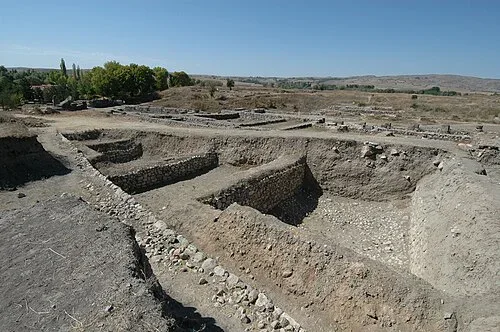 The Stratigraphic Trench and Republican Heritage
The Deep Trench and Atatürk's Excavations
The great trench cut through the mound exposes the site's whole depth in cross-section. Fourteen occupational layers stack here, from the Chalcolithic at the bottom through the Early Bronze Age and the Hittite city to the latest settlement at the top. The uppermost layers hold traces of Phrygian, Roman and Ottoman times. Reading down through them is like reading thousands of years of habitation in one wall of earth. Others had probed the mound before, with brief digs in 1907 and the 1910s, but the systematic work began in 1935. Excavations resumed that year under the archaeologists Remzi Oğuz Arık and Hamit Koşay, on the personal instructions of Atatürk. He contributed to the dig from his own budget, and it became a flagship enterprise of the young Republic. The first campaigns went down more than thirteen metres before they reached virgin soil.
Listen in the appPhoto: Dosseman · CC BY-SA 4.0
10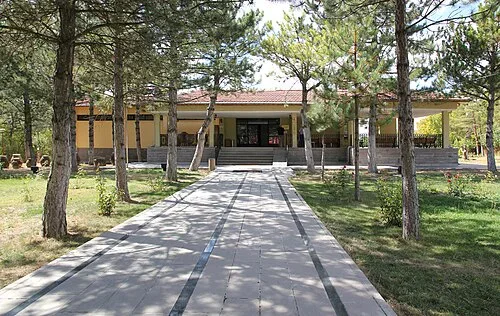 Alacahöyük On-Site Museum Treasures
The On-Site Museum
The museum here has been open to visitors since 1941, and it displays finds from the mound in the landscape they came from. Many of the most famous pieces, though, travelled further. The gold and bronze objects from the Royal Tombs are divided between this museum and the Museum of Anatolian Civilizations in Ankara, where some of the best-known treasures are shown today. Two finds from the mound have the strongest stories: a standard crowned with a stag, and a dagger with a golden hilt.
Listen in the appPhoto: Dosseman · CC BY-SA 4.0
- 11
The Stag Standard
The stag standard, a cast-copper mystery whose solar reading rests on a Hittite letter quoting a man named Zuwa.
- 12
The Meteoritic Iron Dagger
A gold-hilted dagger from Tomb K with an iron blade dated as early as 2500 BC, probably from meteoritic iron.
- 13
Gölpınar Dam: The Great Drought
A Hittite reservoir, probably built under King Tudhaliya IV against a devastating drought, dedicated to the goddess Hebat and holding water again.
- 14
The Dam Embankment: What Endures
At the ancient embankment wall, a closing look at what Alacahöyük's long story adds up to.
Alacahöyük
Frequently asked questions
How much does the guide cost?
Free app download. Listed guide price: $0.99. Guide price shown in the app. Audio guide only. Venue admission is separate.
Can I listen without internet?
Yes. Download the guide’s audio, images, and maps in the app before your visit. Your downloaded content is then available offline.
Can I listen in my language?
This audio guide is available in 15 languages, including English.
Do I need to follow a schedule?
No. This is a self-guided experience. Choose your stops, pause whenever you like, and return to a story at your own pace.
At your own pace
Explore Alacahöyük.
Download Stanza, then search for “Alacahöyük”.
Free app download · Guide price shown in the app
Keep exploring
Audio guides — Turkey
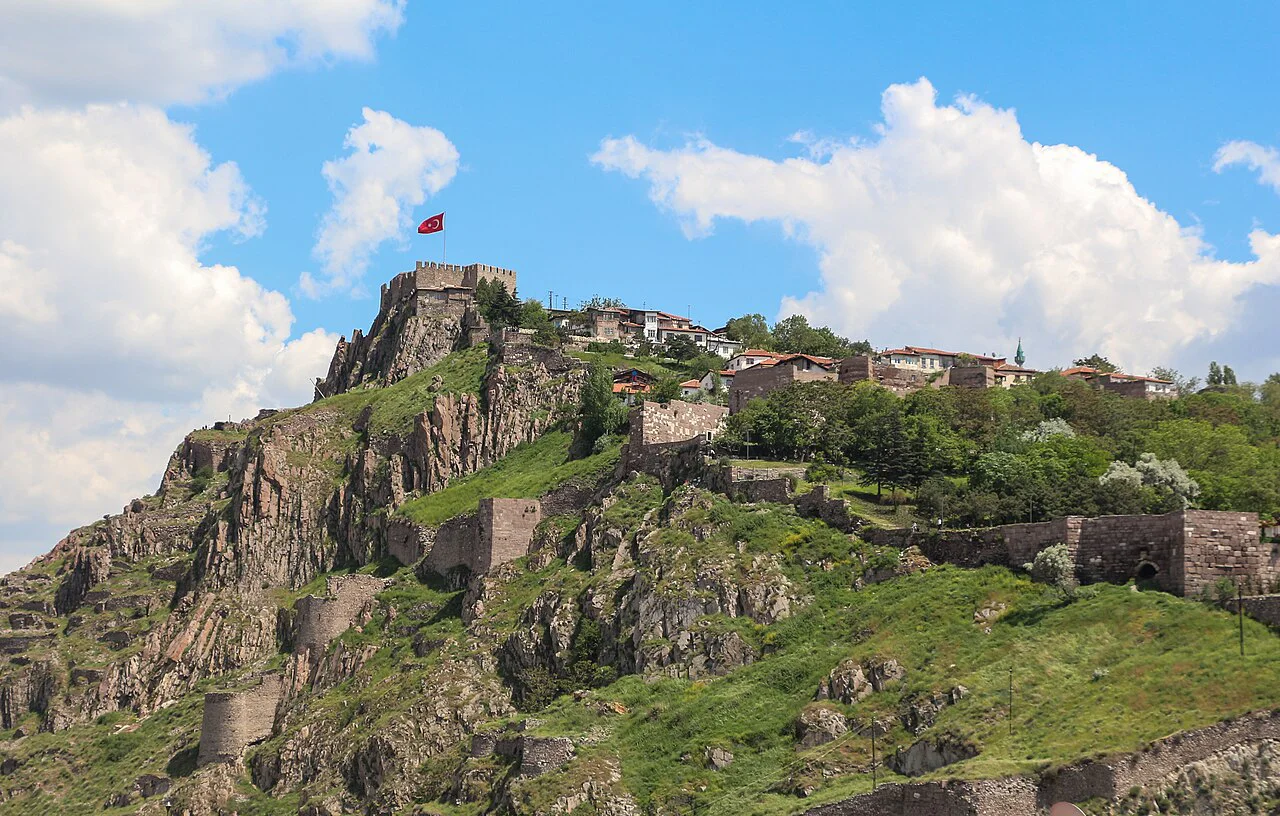
Ankara
Ankara Kalesi
Content & sources
Bernard Gagnon · CC BY-SA 3.0
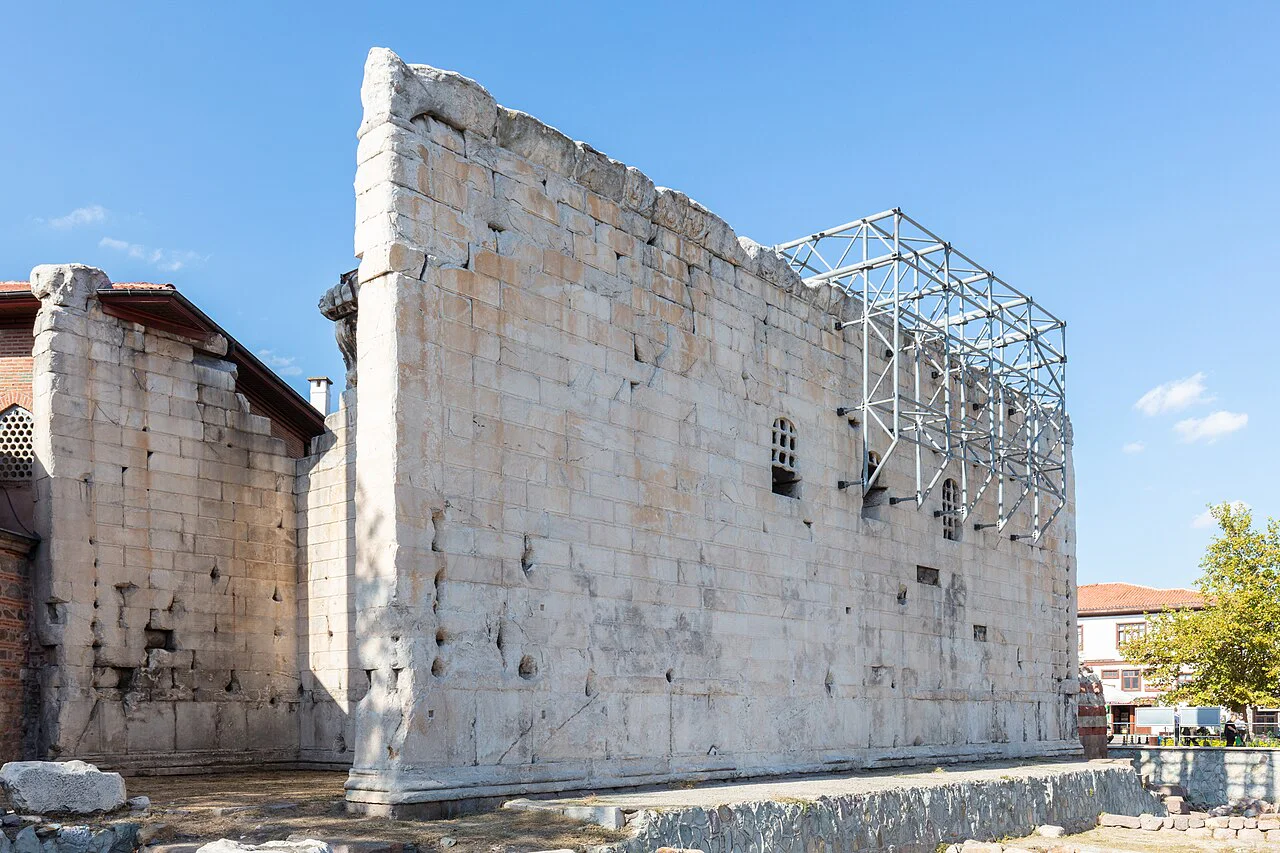
Altındağ
Augustus Tapınağı
Content & sources
Diego Delso · CC BY-SA 4.0
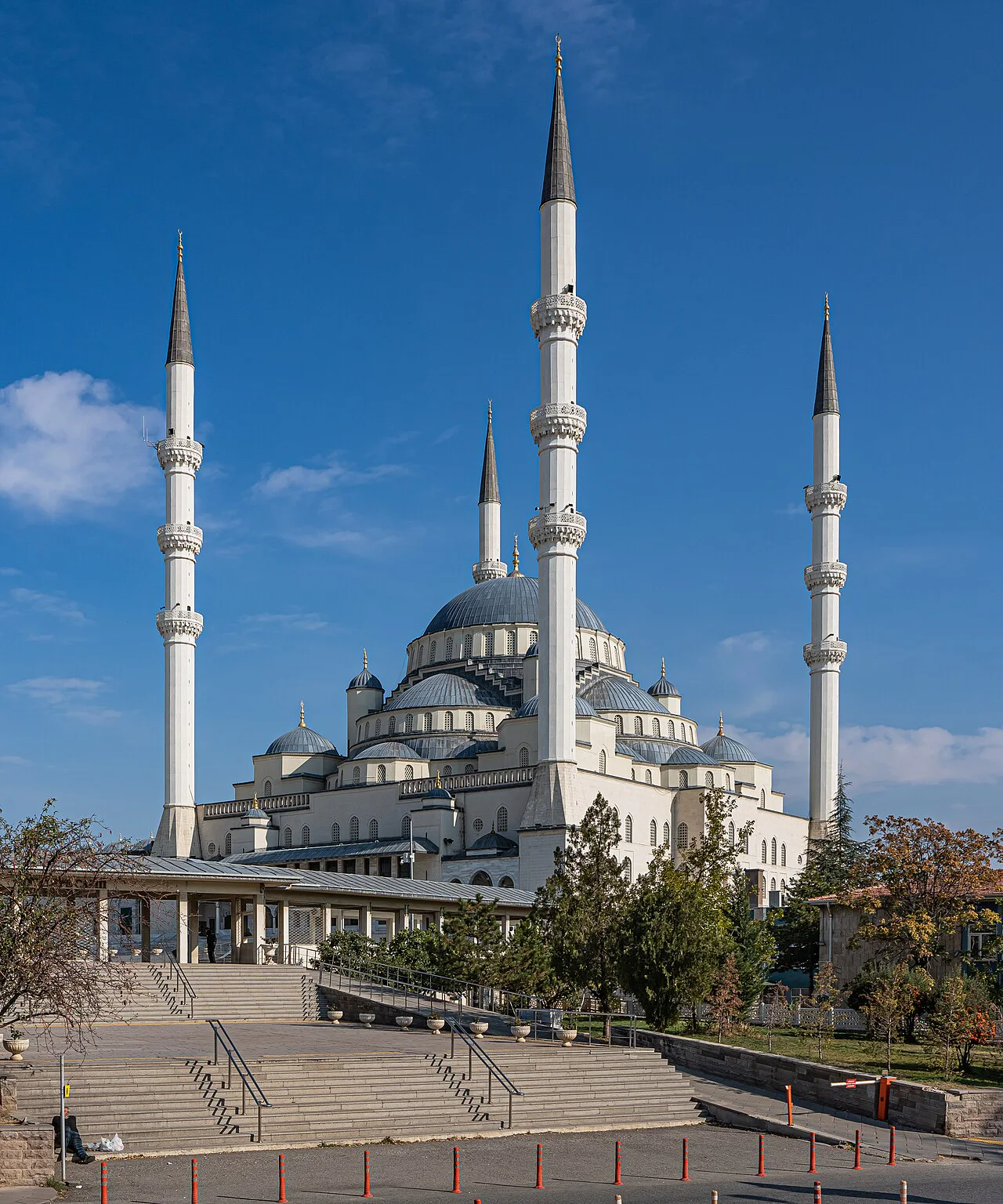
Ankara
Kocatepe Camii
Content & sources
Photo: A.Savin · FAL
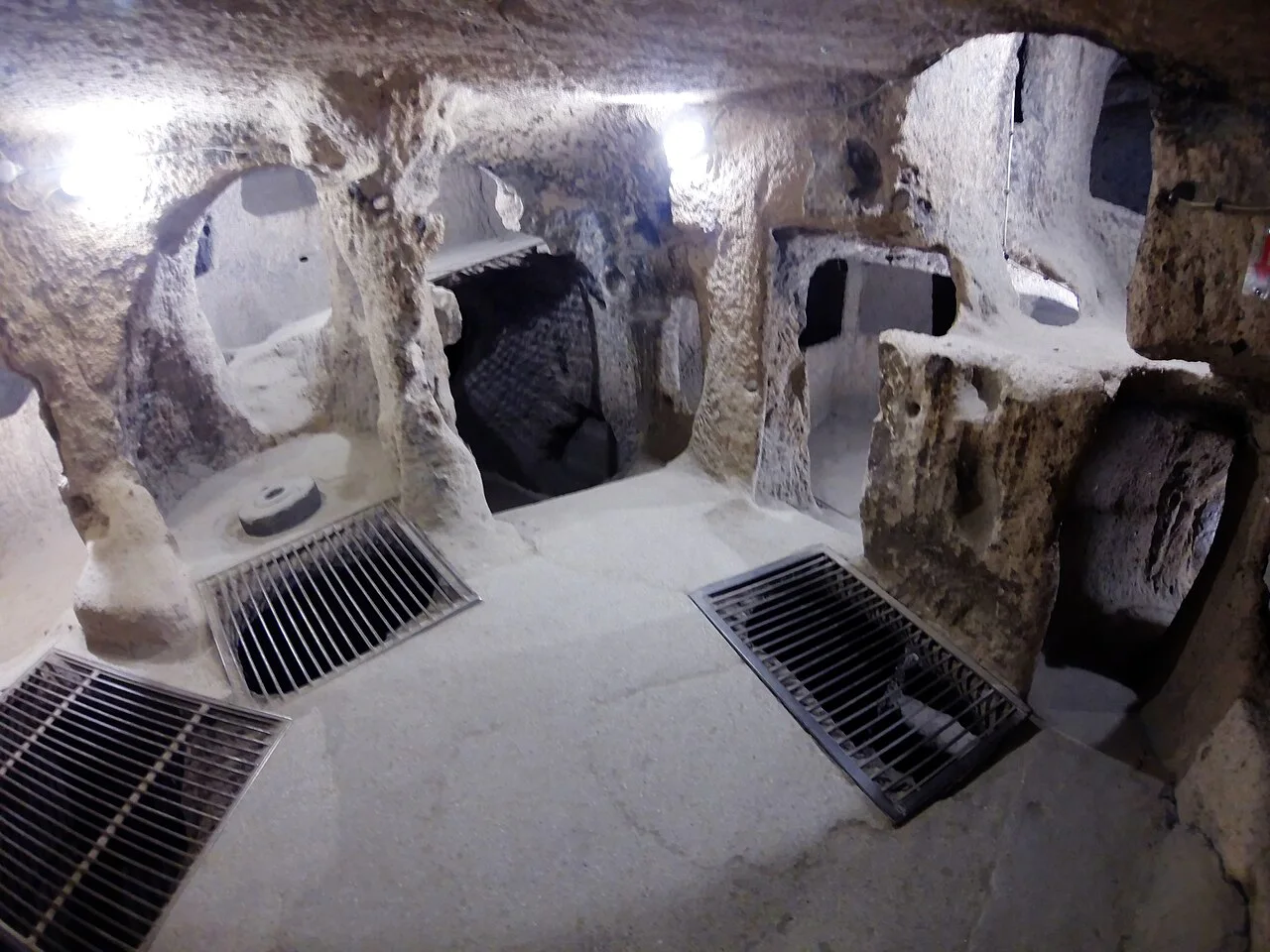
Nevşehir district
Kaymaklı Yeraltı Şehri
Content & sources
Nevit Dilmen (talk) · CC BY-SA 3.0