Stanza · Audio guide
Kocatepe Camii Audio Guide
A place to remember. A story to take with you.
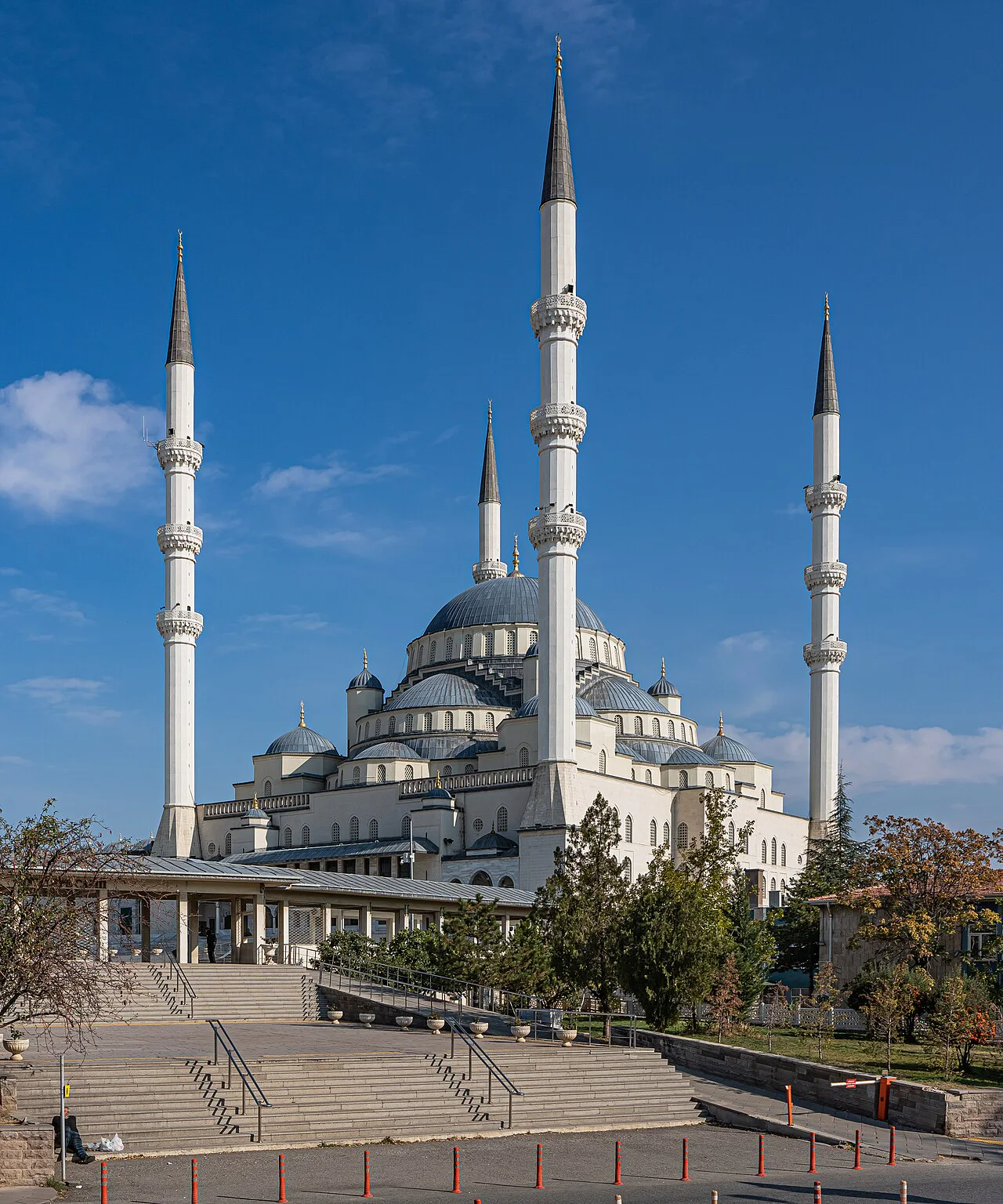
The Kocatepe Mosque is the largest mosque in Ankara, Turkey. Its size and prominent situation have made it a landmark that can be seen from almost anywhere in central Ankara.
Download Stanza, then search for “Kocatepe Camii”.
About the tour
One guide. Your kind of visit.
The Kocatepe Mosque is the largest mosque in Ankara, Turkey. Its size and prominent situation have made it a landmark that can be seen from almost anywhere in central Ankara.
Ready when you are.
- 01Get the free Stanza app.
iOS & Android
- 02Find your guide.
“Kocatepe Camii”
- 03Download before you go.
Works offline
Audio guide / 8 narrated stops
Inside the guide
Get to know a few of the stories before you go. Open a stop to read more.
01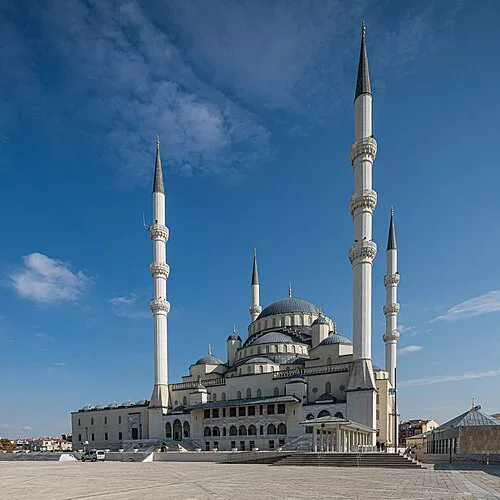 Grand Approach and Courtyard Skyline
Kocatepe Mosque: The Capital's Grand Mosque
Welcome to the Kocatepe Mosque, the largest mosque in Ankara, visible from almost anywhere in the city center. Its pale dome and four slender minarets rise above the Kocatepe quarter near Kızılay, and the hill gives the mosque its name. The idea of a grand mosque for the capital goes back to the 1940s. In December 1944, Ahmet Hamdi Akseki, vice-president of Turkish Religious Affairs, joined seventy-two founding members to establish a society for building a mosque in Yenişehir. Architects were invited to submit designs a few years later, and none was accepted. In 1956, Prime Minister Adnan Menderes secured land for the project. Even then, the building took decades more. In 1981 the Turkish Diyanet Foundation took over the construction and its assets, and the work gathered pace. Prime Minister Turgut Özal opened the finished mosque for worship in 1987. The whole building rises on a vast platform, and its lower levels hold a conference hall, a library, offices, shops and parking. That mix of prayer and daily life follows the külliye, the Ottoman tradition of a mosque complex serving the whole community.
Photo: A.Savin · FAL
02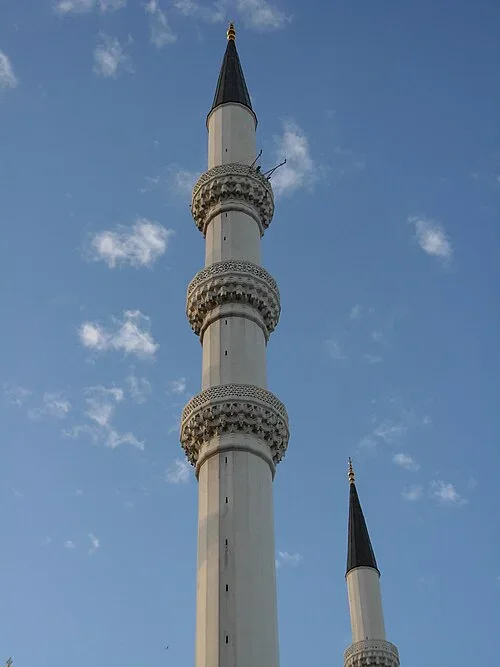 Grand Approach and Courtyard Skyline
The Four Minarets
Four pencil-shaped minarets rise from the corners of the mosque, and each climbs to eighty-eight meters. On the skyline of central Ankara they are the clearest sign of a deliberate choice: this mosque was built in the classical Ottoman imperial manner. That manner was shaped by Mimar Sinan, and the design draws on his Selimiye Mosque in Edirne as well as the Şehzade and Sultan Ahmet mosques in Istanbul. Those buildings, in turn, look back to the Hagia Sophia. Inside each stone shaft, though, sits a thoroughly modern comfort. The balconies are reached both by elevator and by the traditional spiral staircase. So the oldest silhouette in the skyline is worked by the newest machinery.
brewbooks · CC BY-SA 2.0
03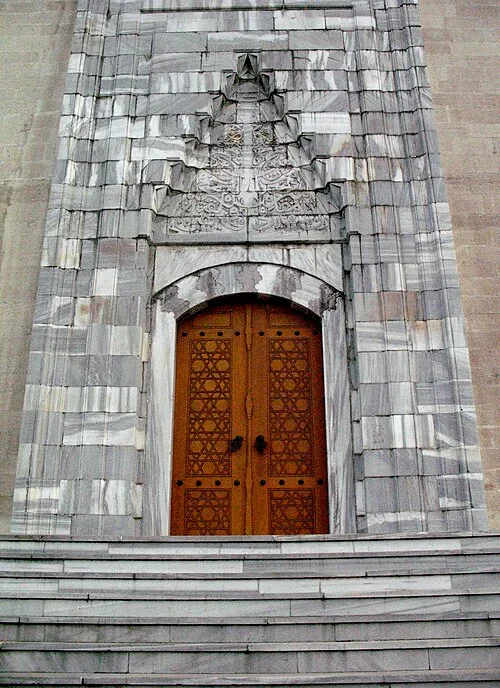 The Imperial Portal
The Entrance Portal and the Tale of Two Mosques
The carved marble portal and its patterned wooden doors hold the mosque's strangest story. A competition in 1957 drew thirty-six entries, and the architects Vedat Dalokay and Nejat Tekelioğlu won it. Their design was innovative and modern, and construction actually began. Then heavy criticism from conservatives, who found the look too modern, stopped the work at foundation level. A third competition in 1967 chose the more conservative design by Hüsrev Tayla and M. Fatin Uluengin, and that is the classical building raised here. Dalokay's unbuilt design was not finished, though. He entered a modified version in an international competition for Islamabad, won it in 1969, and it became the Shah Faisal Mosque in Pakistan, counted among the largest mosques in the world and praised as a frontier of modern Islamic architecture. One lost design, two famous mosques. The doors here were specially designed and finely worked, like the chandeliers, mihrab and minbar throughout the building.
Listen in the appМихал Орела · CC BY 2.0
04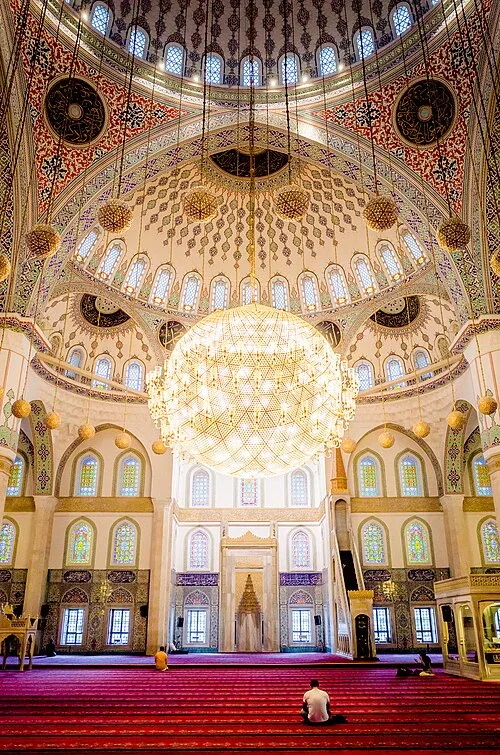 The Sanctuary and Soaring Central Dome
Inside the Prayer Hall
Inside, the prayer hall opens into a vast carpeted space, about sixty-seven meters long and sixty-four meters wide. It was built for congregational worship at national scale, holding roughly twenty-four thousand worshippers in and around the building. Shoes come off before entering, as in any mosque, and the red carpet runs unbroken toward the far wall. Even that carpet has a borrowed pedigree. Its patterns were prepared with reference to the carpet motifs of the Ulu Mosque in Afyonkarahisar, an older house of prayer far to the southwest. Overhead, a great dome hangs above the congregation, and the way it is held up is the next part of the story.
Listen in the appHendrik Wieduwilt · CC BY 2.0
05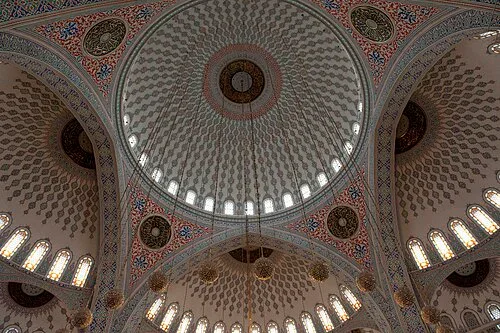 The Sanctuary and Soaring Central Dome
The Central Dome and Elephant Pillars
The whole roof gathers into one central dome, ringed by four semi-domes. The dome rests on four enormous load-bearing piers, so massive that Turks call them elephant feet. This scheme follows the classical Ottoman mosques that inspired the building. Every surface above is painted and patterned in reds, blues and golds. The decorators worked in the classical Ottoman palette: tiles, marble, brass, gold leaf and special paints. The result is an interior of the sixteenth century's language, built in the twentieth.
Listen in the appPhoto: Dosseman · CC BY-SA 4.0
06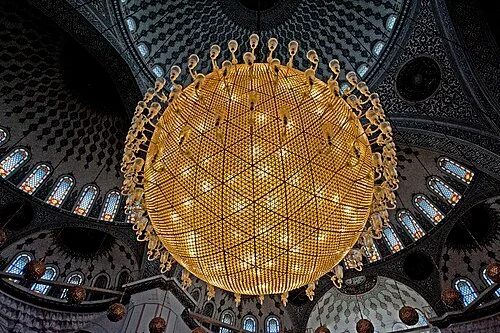 The Sanctuary and Soaring Central Dome
The Great Chandelier
From the apex of the dome hangs the prayer hall's centerpiece: a monumental chandelier shaped like a glowing golden globe. Its light spreads through a lattice of tiers, ringed by smaller chandeliers that echo its form around the hall. Around it run bands of calligraphy and the patterned surfaces of the dome. When the hall is lit, the whole dome seems to hold a second, glowing sphere beneath it.
Listen in the appPhoto: Dosseman · CC BY-SA 4.0
07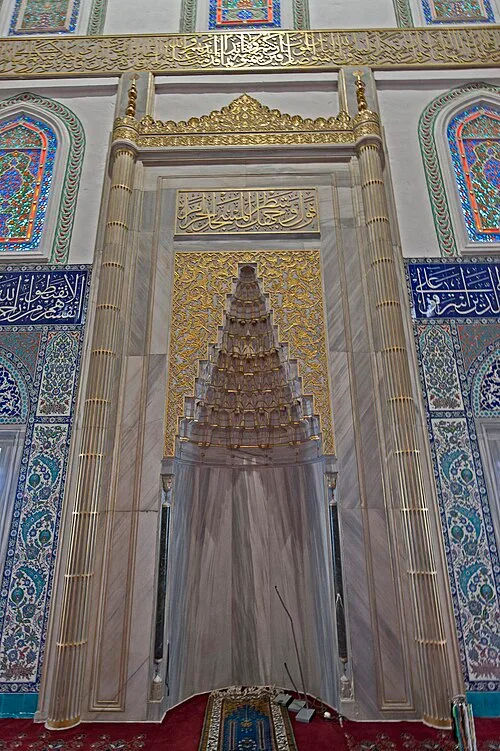 The Qibla Wall: Mihrab and Minbar
The Mihrab
Set into the qibla wall is the mihrab, the prayer niche at the heart of every mosque. In congregational prayer, the whole hall orients toward Mecca, and the niche marks that direction for everyone at once. Kocatepe's mihrab is marble, worked with gold leaf and traditional geometric motifs, and crowned with gilded calligraphy. Blue-and-white tiles and stained glass frame it on either side. The inscriptions throughout the mosque were written by two masters of the art, Hamit Aytaç and Mahmut Öncü. Their lettering turns the walls themselves into a text of prayer.
Listen in the appPhoto: Dosseman · CC BY-SA 4.0
08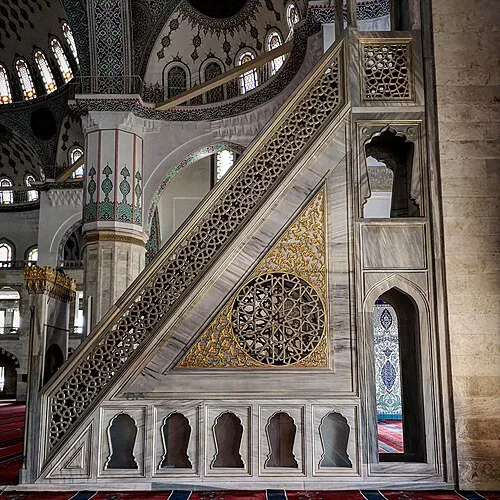 The Qibla Wall: Mihrab and Minbar
The Minbar
Beside the mihrab rises the minbar, the pulpit of the mosque. From its top step the imam delivers the sermon at the main Friday prayer, his voice carrying to the congregation spread across the carpet below. This one is marble, with an inclined carved railing, open geometric lattice and a gilded panel set into the stair. A mosque begun by a society in the 1940s, halted by an argument over style, and finished in classical Ottoman dress, Kocatepe remains the largest mosque in Ankara, built the old way for a congregation that still fills it.
Listen in the appGargarapalvin · CC BY-SA 4.0
Kocatepe Camii
Frequently asked questions
How much does the guide cost?
Free app download. Listed guide price: $0.99. Guide price shown in the app. Audio guide only. Venue admission is separate.
Can I listen without internet?
Yes. Download the guide’s audio, images, and maps in the app before your visit. Your downloaded content is then available offline.
Can I listen in my language?
This audio guide is available in 15 languages, including English.
Do I need to follow a schedule?
No. This is a self-guided experience. Choose your stops, pause whenever you like, and return to a story at your own pace.
At your own pace
Explore Kocatepe Camii.
Download Stanza, then search for “Kocatepe Camii”.
Free app download · Guide price shown in the app
Keep exploring
Audio guides — Turkey
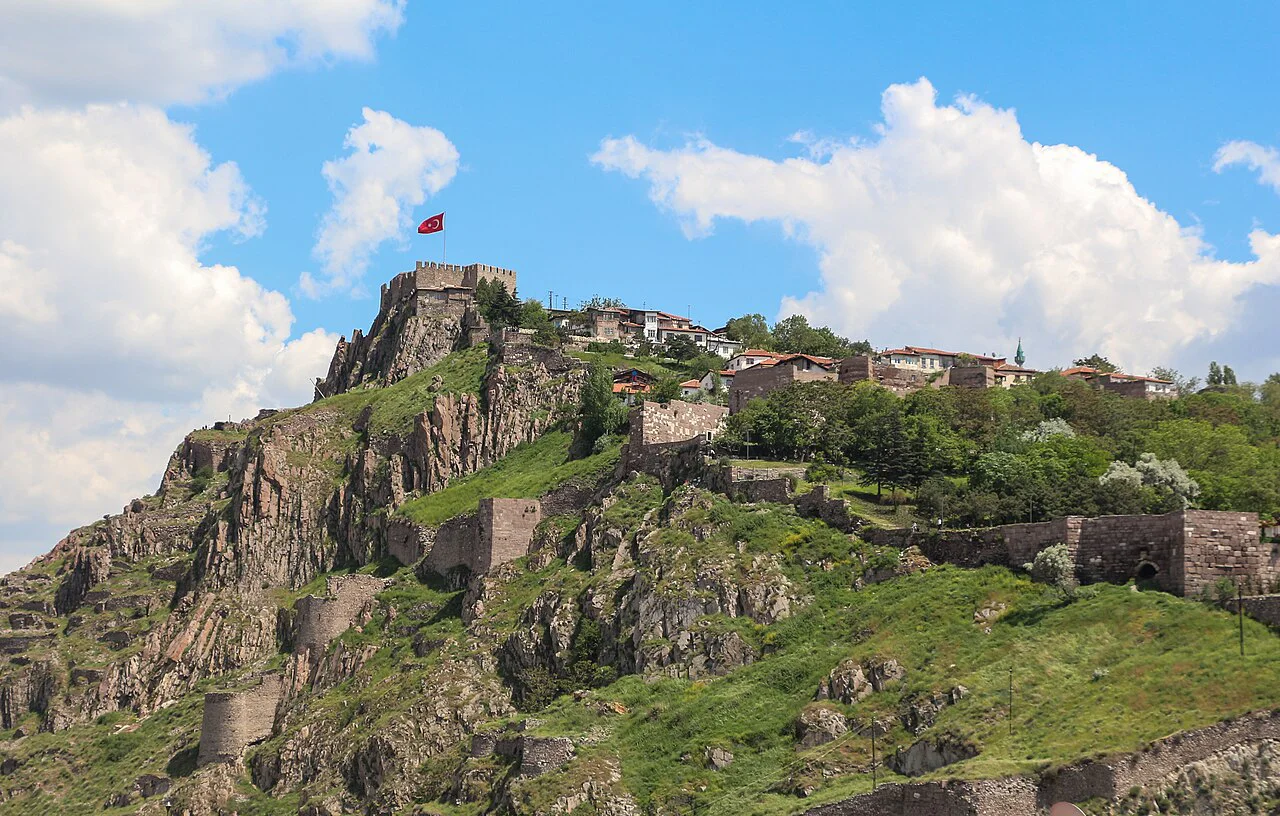
Ankara · 3 km
Ankara Kalesi
Content & sources
Bernard Gagnon · CC BY-SA 3.0
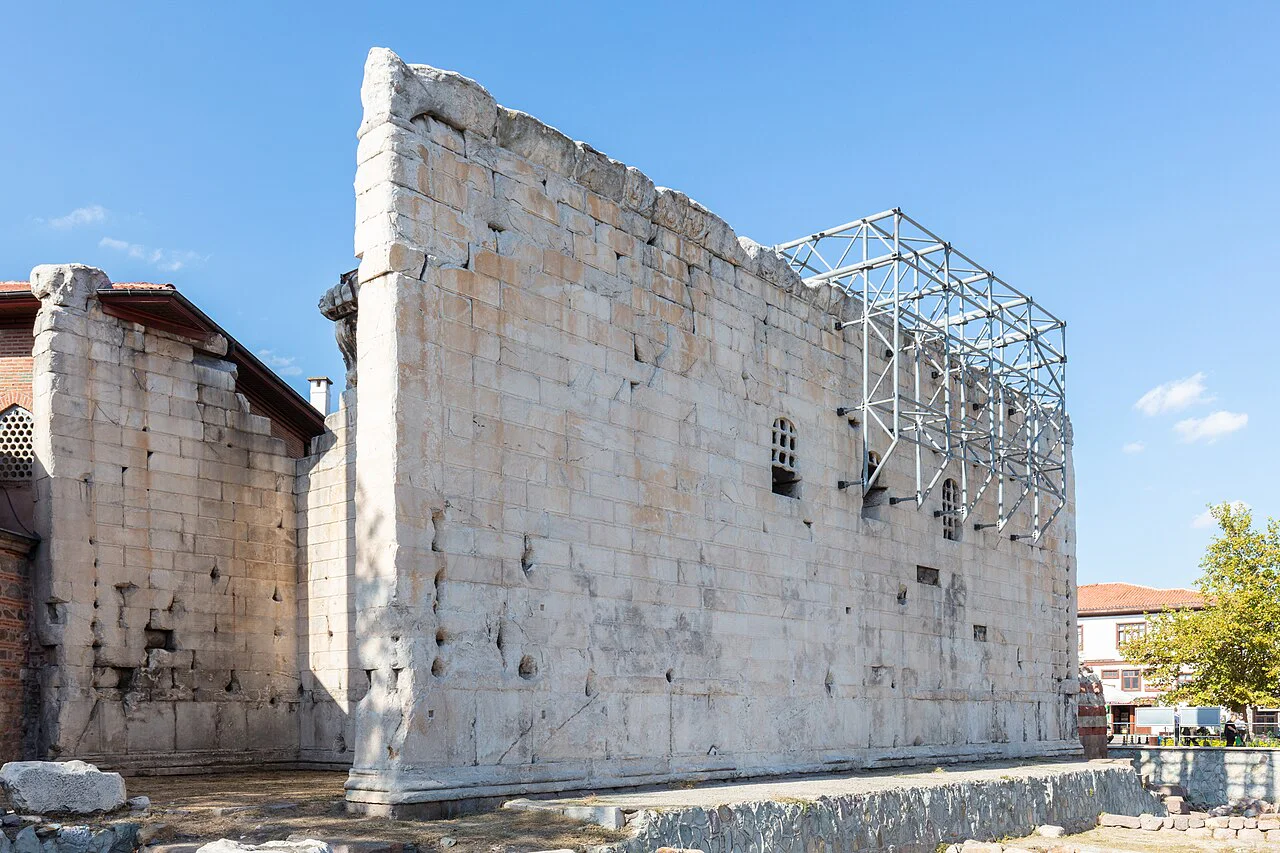
Altındağ · 3 km
Augustus Tapınağı
Content & sources
Diego Delso · CC BY-SA 4.0
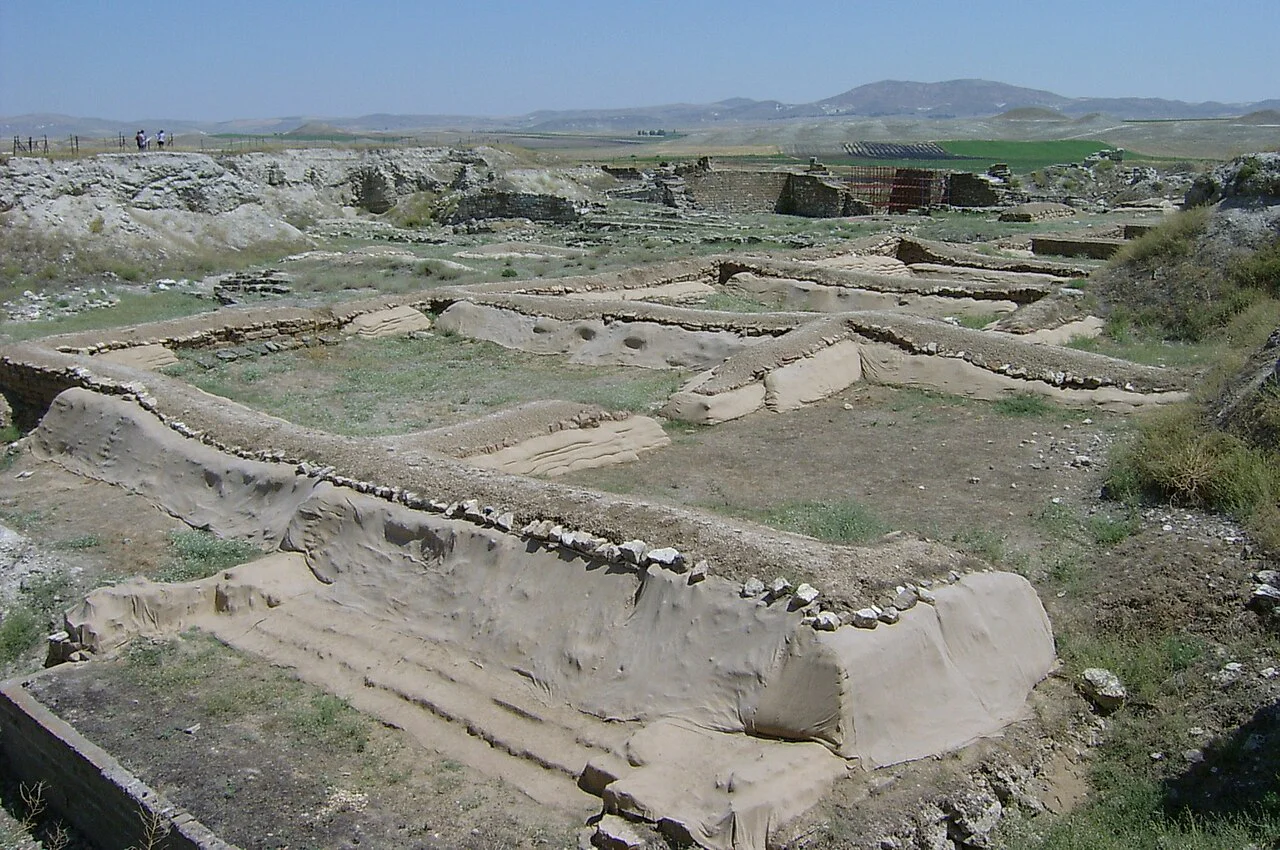
Polatlı · 81 km
Gordion
Content & sources
Stipich Béla · CC BY 2.5
Alaca
Alacahöyük
Content & sources
Bernard Gagnon · CC BY-SA 3.0