Stanza · Audio guide
Gordion Audio Guide
A place to remember. A story to take with you.
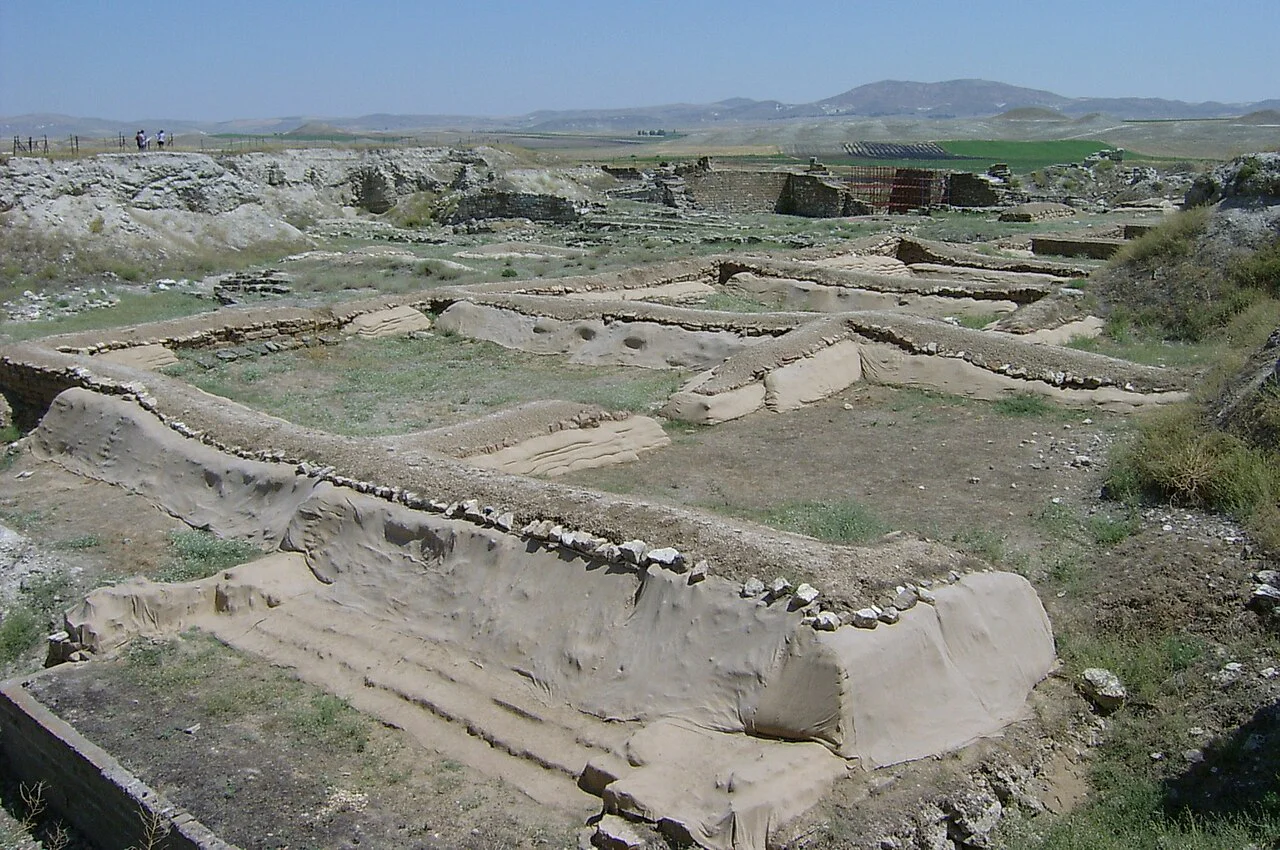
Gordion was the capital city of ancient Phrygia. It is the type site of Phrygian civilization and features a long tradition of tumuli that record elite burial practices.
Download Stanza, then search for “Gordion”.
About the tour
One guide. Your kind of visit.
Gordion was the capital city of ancient Phrygia. It is the type site of Phrygian civilization and features a long tradition of tumuli that record elite burial practices.
Ready when you are.
- 01Get the free Stanza app.
iOS & Android
- 02Find your guide.
“Gordion”
- 03Download before you go.
Works offline
Audio guide / 13 narrated stops
Inside the guide
Get to know a few of the stories before you go. Open a stop to read more.
01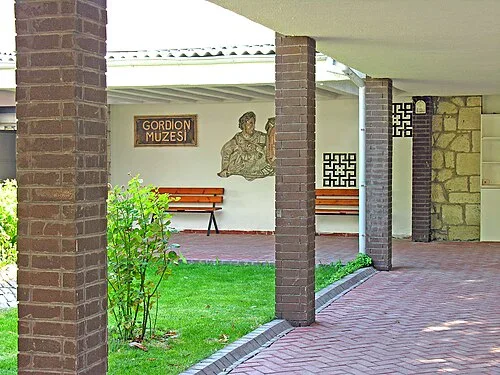 The Gordion Museum and Archaeological Garden
Gordion Museum
Welcome to Gordion, the capital city of the ancient Phrygian kingdom. It lies about seventy kilometers southwest of Ankara, where the Sakarya and Porsuk rivers meet. That crossing of valleys gave the city rich land and a hold on the old road east. A fortified royal citadel stood here, seat of the dynasty of Gordias and Midas, and the place later tied to Alexander and his famous knot. The story runs from the Early Bronze Age all the way to the fourteenth century. Digging began in 1900 with two German brothers, Gustav and Alfred Körte. The University of Pennsylvania took over in 1950 under Rodney Young. His team worked the site until 1973, and excavation continues there still. The finds are shared out between this museum, the Museum of Anatolian Civilizations in Ankara, and the museums of Istanbul.
Dennis G. Jarvis · CC BY-SA 2.0
02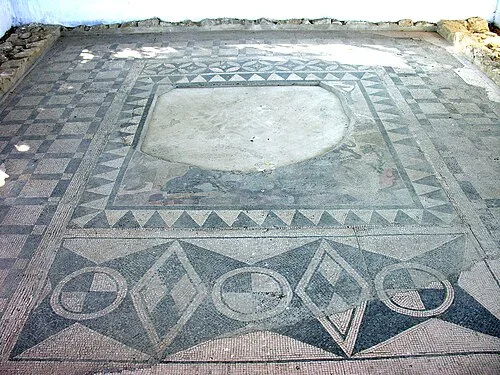 The Gordion Museum and Archaeological Garden
Mosaic Floor in the Museum Garden
A tessellated mosaic lies set out in the museum's garden, a quiet emblem of a site built in layers. The Phrygian kings were only one chapter of it. Persian control came in 546 BCE, after the campaigns of Cyrus the Great. When Alexander the Great arrived in 333 BCE, Greek gods, Greek inscriptions and Greek pottery followed him in. Galatians, a Celtic people who first came to Anatolia as hired soldiers, settled here too. Under Rome, the road from Ancyra to Pessinus ran straight through Gordion, and the town may then have been known as Vindia. Buildings rose and fell on the western mound into the fourth century. People came back in the thirteenth and fourteenth centuries, leaving ovens and storage pits behind. The patterned floor in the garden carries all that afterlife in its stones.
Dennis G. Jarvis · CC BY-SA 2.0
03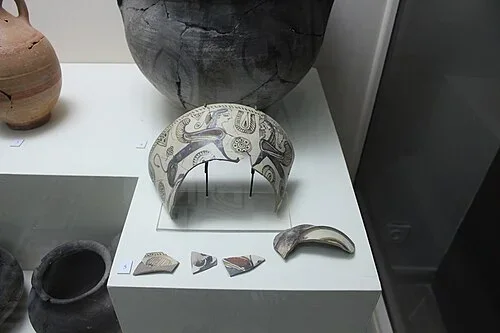 The Gordion Museum and Archaeological Garden
Painted Ceramics in the Museum Case
Long before any Phrygian king, people lived on this ground. Occupation is attested from about 2300 BCE, in the Early Bronze Age. Even then, the local potters' work shows kinship with communities as far west as the Troad, near the coast, and as far east as Cilicia. That is a wide sweep of Anatolia for one settlement's ceramics. Pottery like the vessels in this case is how archaeologists trace such links. Gordion sat where routes met, and styles and goods moved through it in both directions. The kings and the citadel came later. The connections were here first.
Listen in the appGargarapalvin · CC BY 4.0
04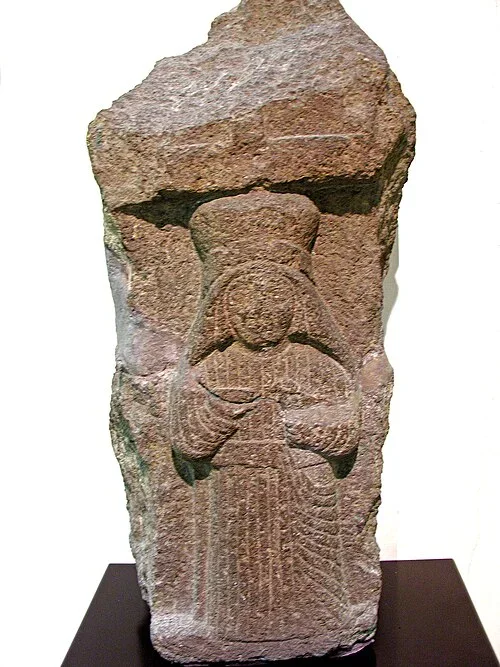 The Gordion Museum and Archaeological Garden
The Matar Relief
A hooded figure is carved inside the niche of this weathered stone slab, her hands drawn up to her chest. It is identified as Matar, the great mother goddess of the Phrygians. The kings of Gordion raised their citadels and their mounds under divine patrons of this kind. One of them left a mark far beyond Anatolia. The Greek historian Herodotus records that King Midas was the first foreigner to make an offering at Delphi, at the temple of Apollo. His gift was the very throne from which he gave judgment. A Phrygian king's piety, remembered by a Greek writer centuries later.
Listen in the appDennis G. Jarvis · CC BY-SA 2.0
05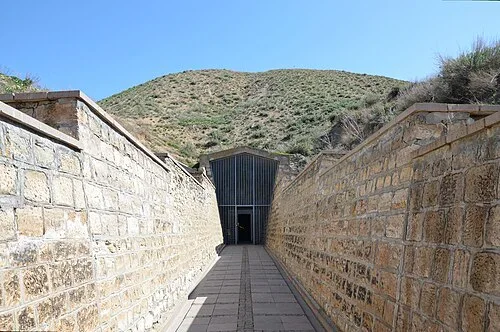 Tumulus MM Entrance Tunnel
Tumulus MM — the Midas Mound
The great mound of Gordion is man-made from base to crown. It stands over fifty meters high and stretches roughly three hundred meters across. Its builders heaped it up around 740 BCE as a royal tomb. At the time it was the largest burial mound in Anatolia. Only some two hundred years later did the Tumulus of Alyattes in Lydia outsize it. Such mounds mark the whole landscape here, raised for the elite from the ninth century to the sixth, and the biggest were traditionally linked with kings. An earlier one, Tumulus W of about 850 BCE, was the first known of its kind anywhere in Anatolia. The gated tunnel in the stone cutting runs straight into the heart of the hill.
Listen in the appCarole Raddato from FRANKFURT, Germany · CC BY-SA 2.0
06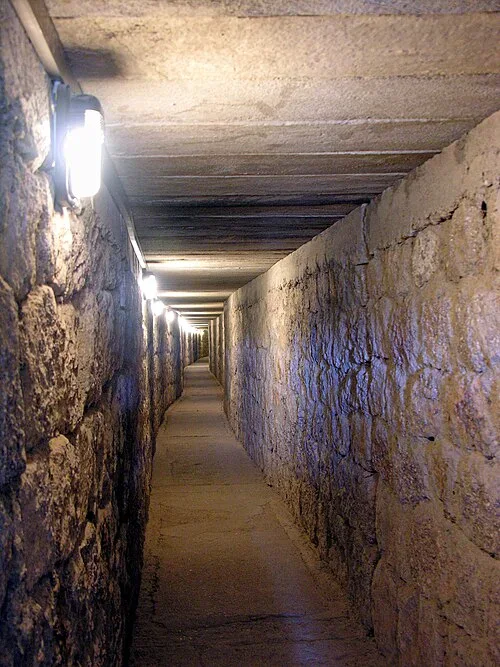 Tumulus MM Entrance Tunnel
The Excavation Tunnel into Tumulus MM
A narrow stone-lined passage runs through the mound, lit by wall lamps at intervals. It was cut so that excavators could reach the chamber at the center without disturbing what lay inside. Rodney Young's team broke through in 1957. Everything they found had lain untouched since the tomb was sealed. Nearly three thousand years of darkness ended in a single season of digging. The chamber beyond was intact, down to its furnishings, when the first light reached it.
Listen in the appDennis G. Jarvis · CC BY-SA 2.0
07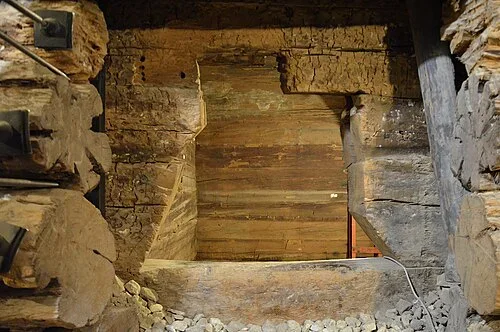 The Royal Wooden Burial Chamber
These stacked logs are the walls of the oldest intact wooden building known in the world. The timbers still stand as they were fitted together around 740 BCE. Inside lay the royal occupant, resting on textiles of purple and gold in an open coffin of logs. Around the body stood bronze vessels, pottery, and carved wooden furniture inlaid with figures, remarkable for its state of preservation. The vessels still held traces of the funeral feast. Scientists reading those residues found that the mourners at the banquet ate lamb or goat stew and drank a mixed fermented beverage. A king was sent off with a proper meal, and the menu survived. The furniture and bronzes from the tomb are now in the Museum of Anatolian Civilizations in Ankara.
Listen in the appCarole Raddato from FRANKFURT, Germany · CC BY-SA 2.0
08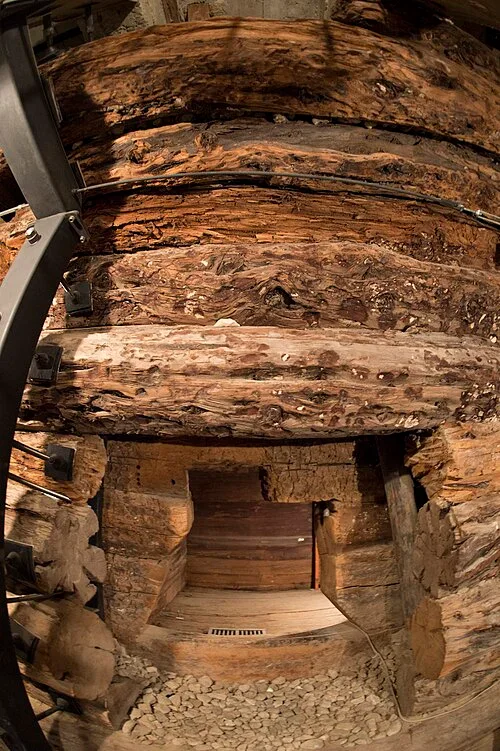 The Royal Wooden Burial Chamber
Inside the Tomb Chamber
No inscription names the man buried in this log-built room. The general assumption is that he was Gordias, father of King Midas. If so, the tomb was probably the first monumental project Midas undertook after coming to power, a son raising a vast mound for his father. The Midas of history is a different figure from the king of the golden touch in Greek myth. Assyrian records of the late eighth century BCE call him Mit-ta-a, a ruling king at Gordion. The mound was Midas's work; the name inside it is his father's.
Listen in the appPhoto: Dosseman · CC BY-SA 4.0
09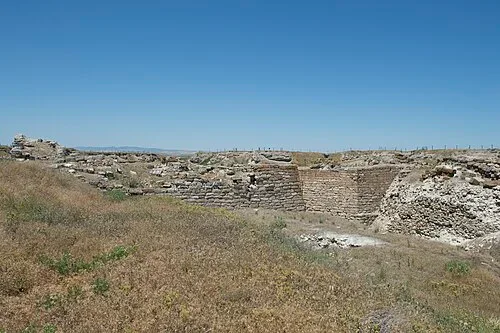 The Monumental East Citadel Gate
The East Citadel Gate
These walls once faced the plain as the front door of a royal capital. In the tenth and ninth centuries BCE the Early Phrygian kings ringed the Citadel Mound with a circuit wall and an extensive gate complex. The East Citadel Gate did two jobs at once: it kept attackers out, and it announced the power of the dynasty to everyone who approached. It still rises to a height of ten meters, which makes it the best-preserved Iron Age city gate in Anatolia. The masonry was built to be read from a distance, a statement before a single word was spoken. Behind it lay the elite buildings of a kingdom that would come to control much of Asia Minor.
Listen in the appPhoto: Dosseman · CC BY-SA 4.0
10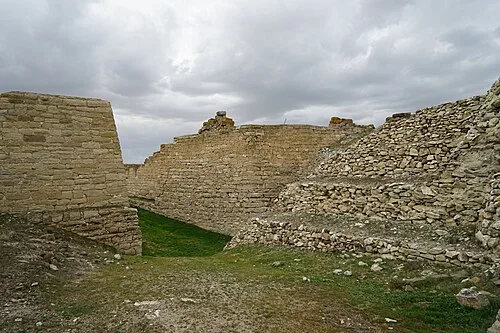 The Monumental East Citadel Gate
The Gate Walls and Their Restoration
These walls survive because people keep repairing them. An earthquake in 1999 cracked the South Bastion of the gate. Conservators spent years on it, consolidating the broken stones and setting them back in the wall faces on stainless-steel supports. They repaired the damaged masonry and rebuilt the drainage, so water would stop working at the structure from above. Since 2009 the same project has also been conserving the Terrace Building Complex, the ancient citadel's industrial quarter. The gate now stands on supports its Phrygian builders never imagined.
Listen in the appPhoto: Canercangul · CC BY-SA 4.0
- 11
The Megarons on the Citadel
The megaron halls of the citadel, and the wagon with the Gordian Knot.
- 12
The Early Phrygian Pebble Mosaics
Pebble floors with geometric designs, among the earliest mosaics of their kind.
- 13
The Terrace Building Complex and the Great Fire
The hundred-meter industrial quarter, the great fire of 800 BCE, and the clay that preserved it all.
Gordion
Frequently asked questions
How much does the guide cost?
Free app download. Listed guide price: $1.99. Guide price shown in the app. Audio guide only. Venue admission is separate.
Can I listen without internet?
Yes. Download the guide’s audio, images, and maps in the app before your visit. Your downloaded content is then available offline.
Can I listen in my language?
This audio guide is available in 15 languages, including English.
Do I need to follow a schedule?
No. This is a self-guided experience. Choose your stops, pause whenever you like, and return to a story at your own pace.
At your own pace
Explore Gordion.
Download Stanza, then search for “Gordion”.
Free app download · Guide price shown in the app
Keep exploring
Audio guides — Turkey
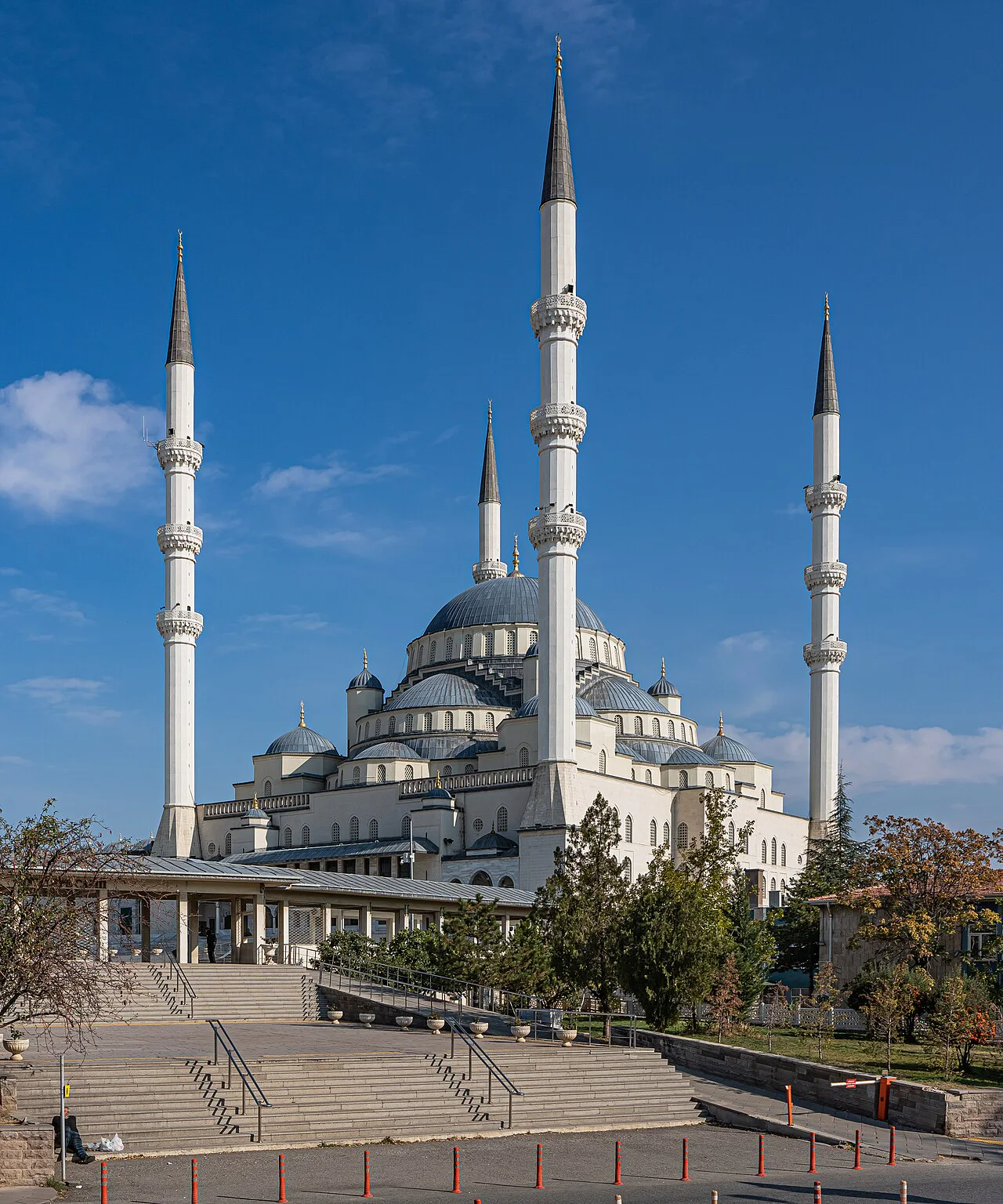
Ankara · 81 km
Kocatepe Camii
Content & sources
Photo: A.Savin · FAL
Altındağ · 82 km
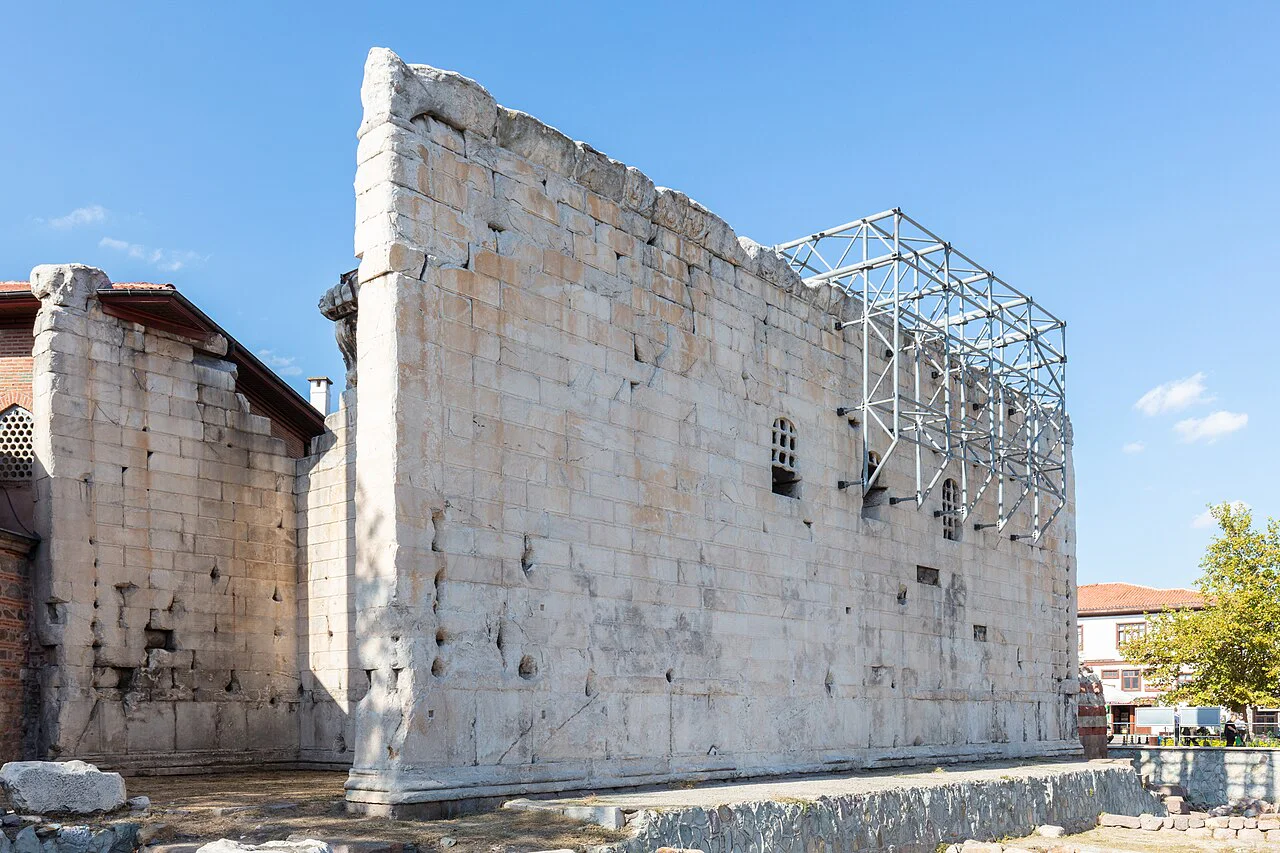
Augustus Tapınağı
Content & sources
Diego Delso · CC BY-SA 4.0
Ankara · 82 km
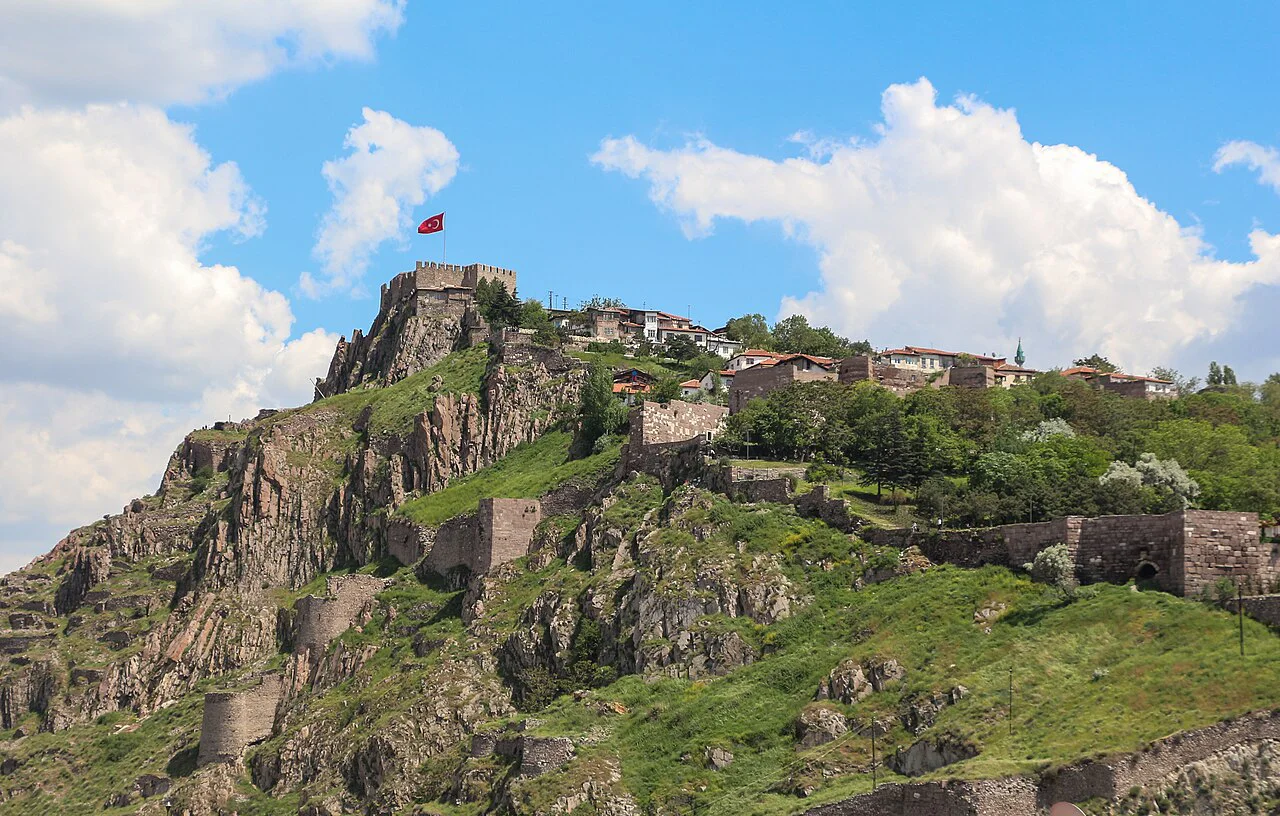
Ankara Kalesi
Content & sources
Bernard Gagnon · CC BY-SA 3.0
Yalvaç
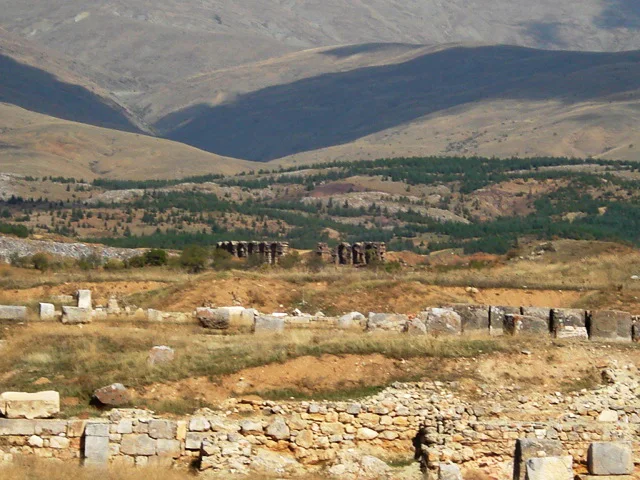
Antioheia
Content & sources
Maderibeyza at Turkish Wikipedia · CC BY-SA 3.0