Stanza · Audio guide
Alâeddin Camii Audio Guide
A place to remember. A story to take with you.
The Alâeddin Mosque is the principal monument on Alaaddin Hill in the centre of Konya, Turkey. It served as the main prayer hall for the Seljuk Sultans of Rum and contains the burial places of several sultans.
Download Stanza, then search for “Alâeddin Camii”.
About the tour
One guide. Your kind of visit.
The Alâeddin Mosque is the principal monument on Alaaddin Hill in the centre of Konya, Turkey. It served as the main prayer hall for the Seljuk Sultans of Rum and contains the burial places of several sultans.
Ready when you are.
- 01Get the free Stanza app.
iOS & Android
- 02Find your guide.
“Alâeddin Camii”
- 03Download before you go.
Works offline
Audio guide / 10 narrated stops
Inside the guide
Get to know a few of the stories before you go. Open a stop to read more.
01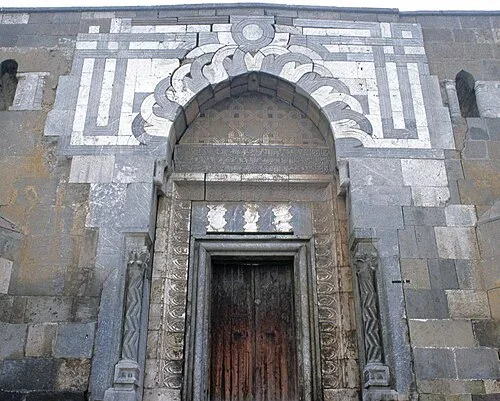 Alâeddin Hill and Main Entrance Portal
The Monumental North Gate
Welcome to the Alâeddin Camii, the great mosque of Seljuk Konya. This was the principal prayer hall of the Sultans of Rum, built in stages from the mid-twelfth to the mid-thirteenth century. The entrance before you is a wall of alternating pale and dark stone, a banded pattern the Seljuks prized. In 1219 Sultan Izzeddin Keykavus I moved the main entrance here to the north, facing the Seljuk palace, and began this monumental facade. He died that same year, and the work passed to his brother, Alaaddin Keykubad I. The brother finished the gate, then had several of Keykavus's inscriptions altered to claim the improvements for himself. The inscription over the entrance says the mosque was completed under Keykubad in the year 617 of the Islamic calendar, which is 1220 or 1221. The mosque still carries his name.
Dosseman · CC BY-SA 4.0
02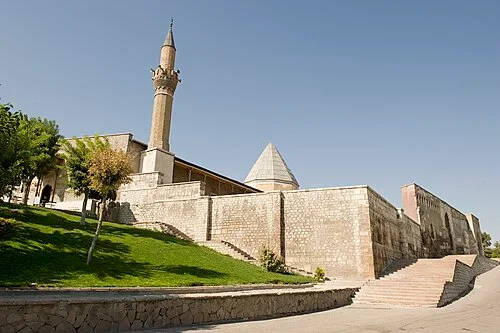 Alâeddin Hill and Main Entrance Portal
Alâeddin Hill and the Mosque Exterior
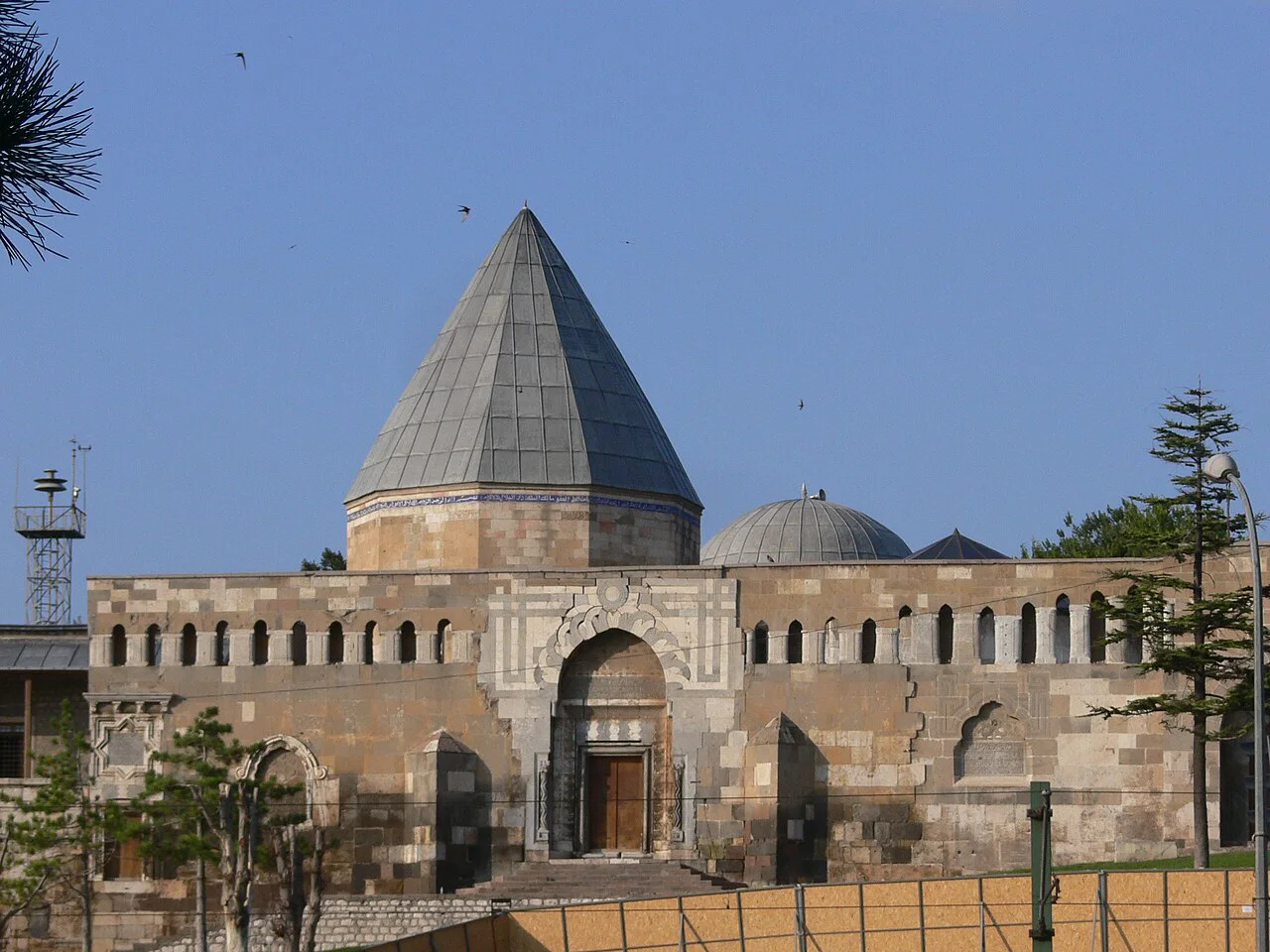
The mosque crowns Alâeddin Hill, a broad mound rising from the centre of Konya. Long before the Seljuks, this hill held the ancient acropolis of the city. The mosque stands inside the old inner citadel, close by the Seljuk Palace, and served the sultans as their own house of prayer. It is the largest and the oldest of the Seljuk mosques to survive in Konya. The slender minaret rising beside the courtyard is a later Ottoman addition, not Seljuk work at all. Behind the long stone walls, the cone of a tomb roof breaks the skyline.
Photo: Dosseman · CC BY-SA 4.0
03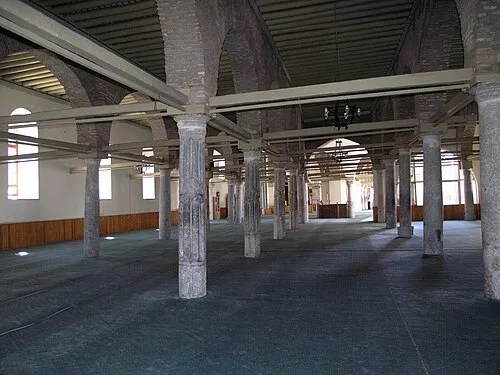 The Spolia Forest of Columns
The Forest of Columns
This eastern prayer hall, added in 1235 by Alaaddin Keykubad I, is unusually open and full of light. Forty-two columns hold it up, and hardly any two are alike. They are spolia, salvaged from older classical buildings and re-carved where needed, carrying brick arches under a flat earthen roof. Excavations in the twentieth century found remains beneath the mosque, and together with these reused columns they support a scholarly hypothesis: the mosque was probably built on the site of an earlier Christian basilica. If so, the stones of the Byzantine city quite literally carry the Seljuk capital's prayers. Exactly which older buildings the columns came from has never been established.
Listen in the appОстровский Александр, Киев · CC BY-SA 3.0
04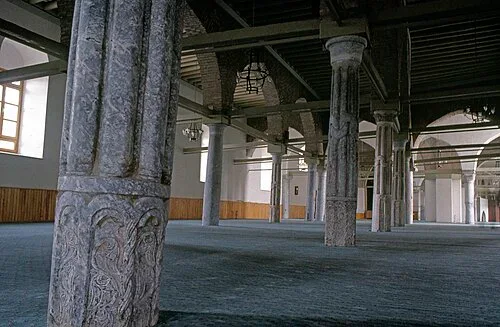 The Spolia Forest of Columns
Carved Capitals, Layered Building
The carved capitals here refuse to match one another, and that is the clue to the whole building. Work began under Sultan Mesud I in 1155. His son Kilicarslan II completed the first, domed section of the mosque. A generation later Izzeddin Keykavus I started the western and eastern wings, and his brother Keykubad finished them after 1219. Four sultans, roughly eighty years, one roof. The result is three different interior arrangements gathered under a single ceiling, and a forest of capitals in every style their builders could salvage or carve. Each mismatched column top marks one of those building campaigns.
Listen in the appPhoto: Dosseman · CC BY-SA 4.0
05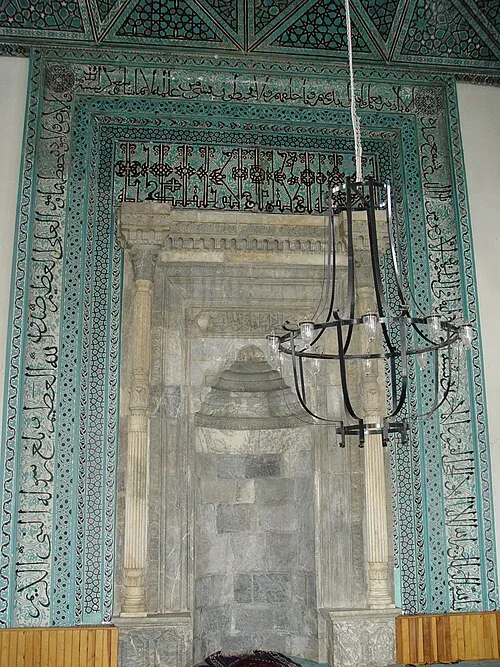 The Mihrab and Tiled Dome Area
The Mihrab
The mihrab is the niche that shows the direction of prayer, the point every worshipper faces. The stone niche here is not Seljuk work; it is an Ottoman replacement in marble, carved in 1891. Around it, though, survives the original glory: a revetment of glazed Seljuk tiles, running in bands of calligraphy and pattern. The colours are the classic Anatolian Seljuk palette, eggplant purple, turquoise and black. The name of the master tilemaker, Kerimüddin Erdişah, is recorded on the tilework itself. The polychrome frame may even reach back to the mosque of Mesud I in the mid-twelfth century, which would make these among the oldest tiles in Anatolia.
Listen in the appPhoto: Dosseman · CC BY-SA 4.0
06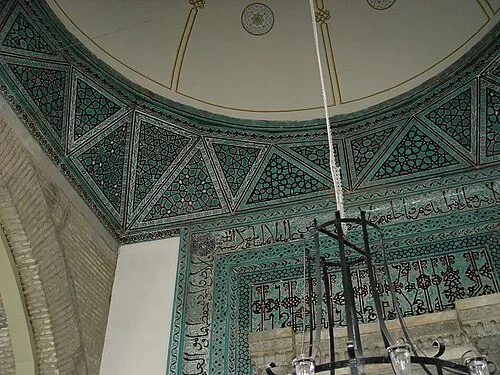 The Mihrab and Tiled Dome Area
The Tiled Dome above the Mihrab
Above the mihrab rises the maksure dome, the vaulted bay reserved for the sultan at prayer. Its drum and dome still carry fragments of Seljuk tilework, geometric star patterns and calligraphy in turquoise, black and purple. These pieces matter because they are evidence. They show that the mosque was once far more richly tiled than it appears now, and they are what scholars use to reconstruct the decoration that has fallen away. The master who signed the mihrab tiles nearby, Kerimüddin Erdişah, may have had a hand in this scheme too. What the full original design looked like, no one can say.
Listen in the appPhoto: Dosseman · CC BY-SA 4.0
07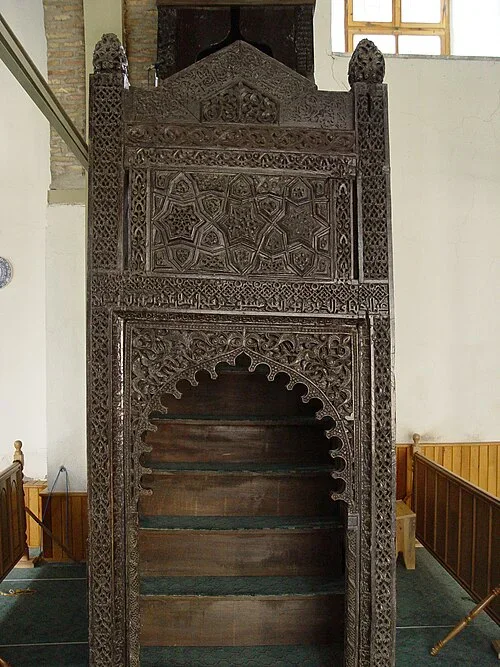 The 1155 Ebony Minbar
The Ebony Minbar of 1155
The minbar is the stepped pulpit from which the Friday sermon is preached, and this one is the most celebrated object in the mosque. It is carved from ebony, dense dark wood that takes detail like stone. Its own craftsman's inscription gives the date, 1155, and the maker, Hacı Mengüm Berti of Ahlat. That inscription makes it the first dated work of Seljuk art in Anatolia, older than nearly everything else in the building. The panels carry deep geometric stars, and below them an arched doorway motif opens onto the stairs. More than eight centuries old, the whole pulpit still stands intact.
Listen in the appDosseman · CC BY-SA 4.0
08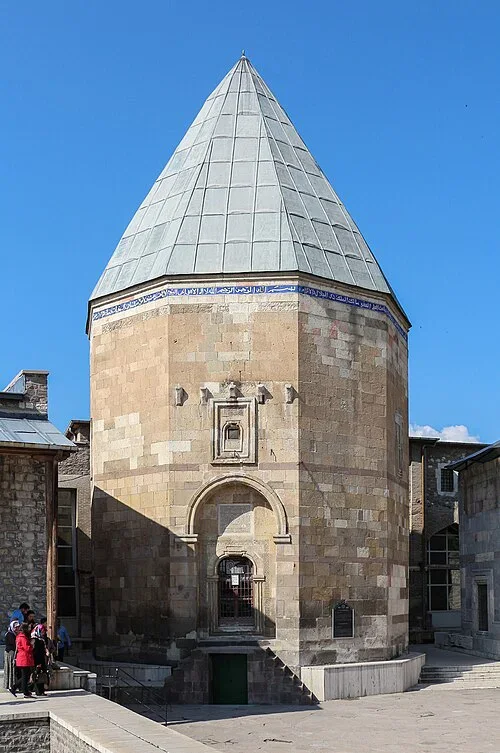 The Seljuk Sultans Dynastic Mausoleum
The Kümbet of Kilij Arslan II
Out in the courtyard, the story turns from prayer to dynasty. Sultan Kilicarslan II commissioned this tomb, a ten-sided tower with a steep conical roof, and set it inside the mosque's own courtyard. An inscription on its facade records his commission. Putting the family dead beside the prayer hall was an unusual choice, and it tells how the mosque served as the stage of the dynasty. Around the base of the roof runs the throne verse from the Quran, a protection text for the dead. A few blue tiles still cling to the roofline, the last trace of the covering that once sheathed the whole cone. Inside waits the dynasty itself.
Listen in the appBernard Gagnon · CC BY-SA 3.0
09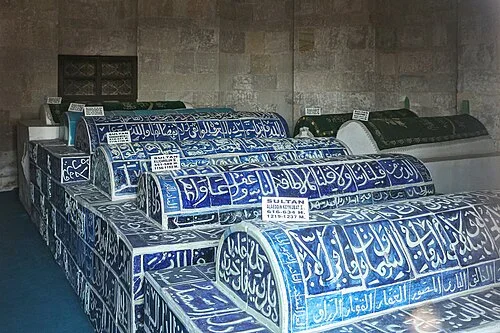 The Seljuk Sultans Dynastic Mausoleum
Sarcophagi of the Sultans
Inside the kümbet stand eight sarcophagi, sheathed in turquoise and cobalt tiles and covered in flowing Arabic calligraphy. They hold the Seljuk sultans of Rum, the dynasty that ruled from Konya. Only one occupant is certain: Kilicarslan II, the sultan who built the tomb. The scholar İ. Konyalı proposed the rest, among them Gıyaseddin Keyhüsrev the First and Alaaddin Keykubad himself, the very sultan who gave the mosque its name, and he listed five more rulers besides. Others have argued the group could include still further sultans. These remain proposals, not certainties. Some of the mightiest men of medieval Anatolia lie here, and most of them are now nameless.
Listen in the appBernard Gagnon · CC BY-SA 3.0
10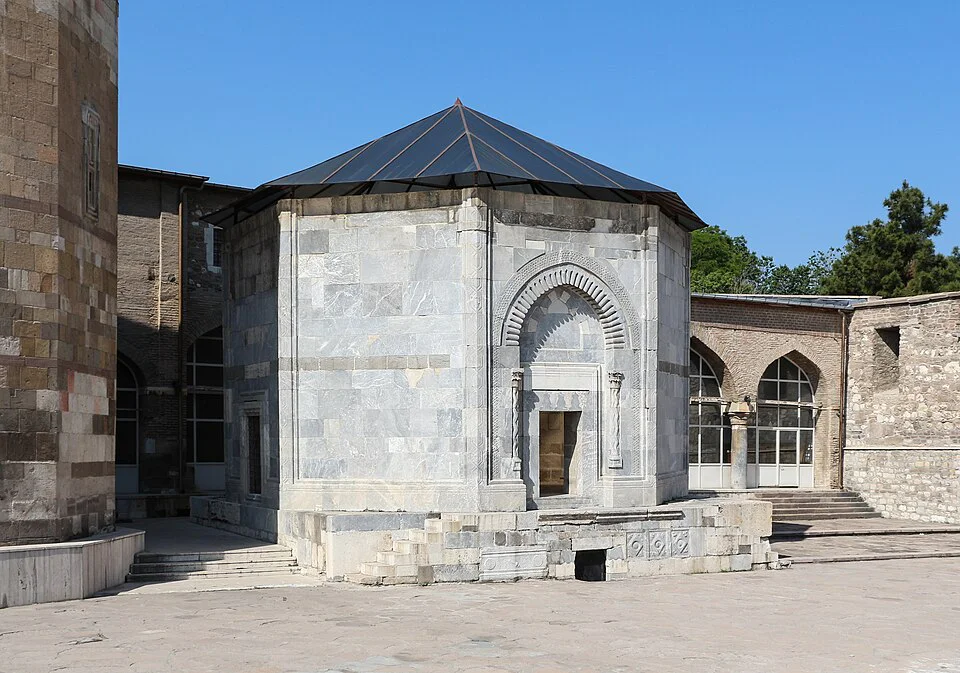 The Nameless Mausoleum (Adsız Türbe)
The Nameless Mausoleum
The second tomb in the courtyard was begun in marble by Sultan Izzeddin Keykavus I, the same sultan who raised the great north facade. His death in 1219 cut the work short, and the octagonal body never received the completion its builder planned. It is called the Adsız Türbe, the Nameless Mausoleum, because the four people buried inside cannot be identified. It was certainly built for one of the Seljuk sultans, but his name has been lost. The man who moved a mosque's gate is remembered mainly by the building he left half done. In this one courtyard, a dynasty marked its faith, its power and its memory, and time has left much of that memory incomplete.
Listen in the appBernard Gagnon · CC BY-SA 3.0
Alâeddin Camii
Frequently asked questions
How much does the guide cost?
Free app download. Listed guide price: $0.99. Guide price shown in the app. Audio guide only. Venue admission is separate.
Can I listen without internet?
Yes. Download the guide’s audio, images, and maps in the app before your visit. Your downloaded content is then available offline.
Can I listen in my language?
This audio guide is available in 15 languages, including English.
Do I need to follow a schedule?
No. This is a self-guided experience. Choose your stops, pause whenever you like, and return to a story at your own pace.
At your own pace
Explore Alâeddin Camii.
Download Stanza, then search for “Alâeddin Camii”.
Free app download · Guide price shown in the app
Keep exploring
Audio guides — Turkey
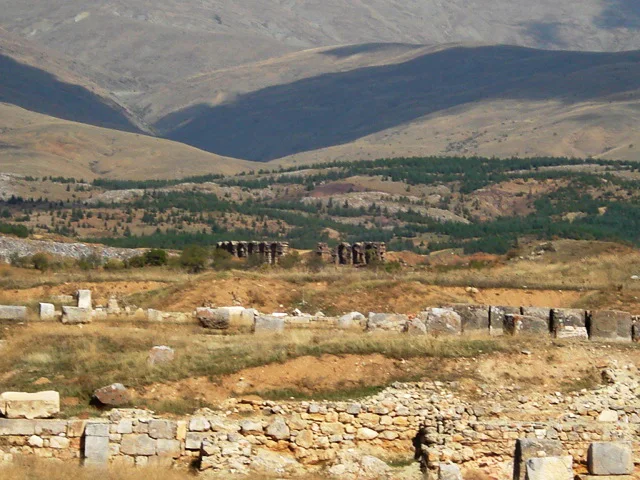
Yalvaç · 124 km
Antioheia
Content & sources
Maderibeyza at Turkish Wikipedia · CC BY-SA 3.0
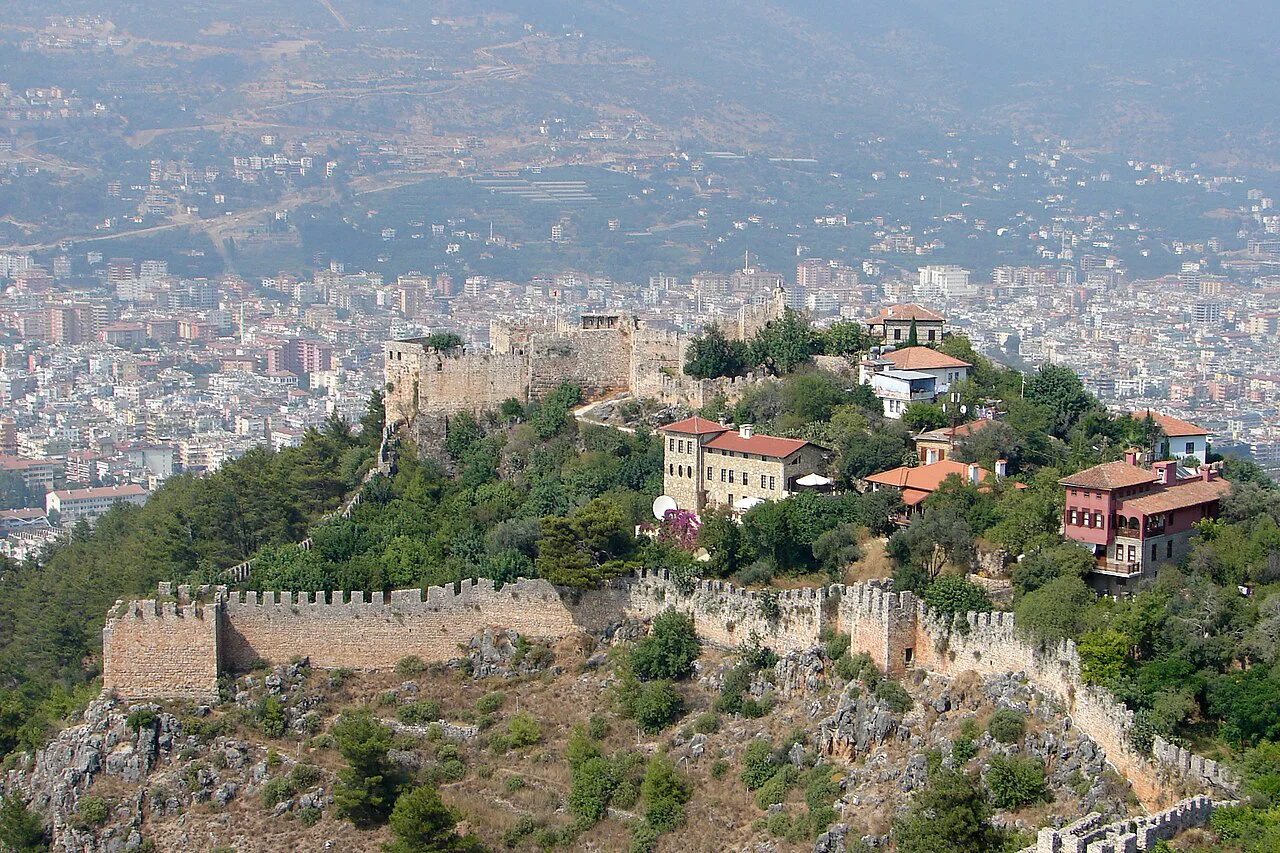
Alanya
Alanya Kalesi
Content & sources
Luke_33 · CC BY 2.5 pl
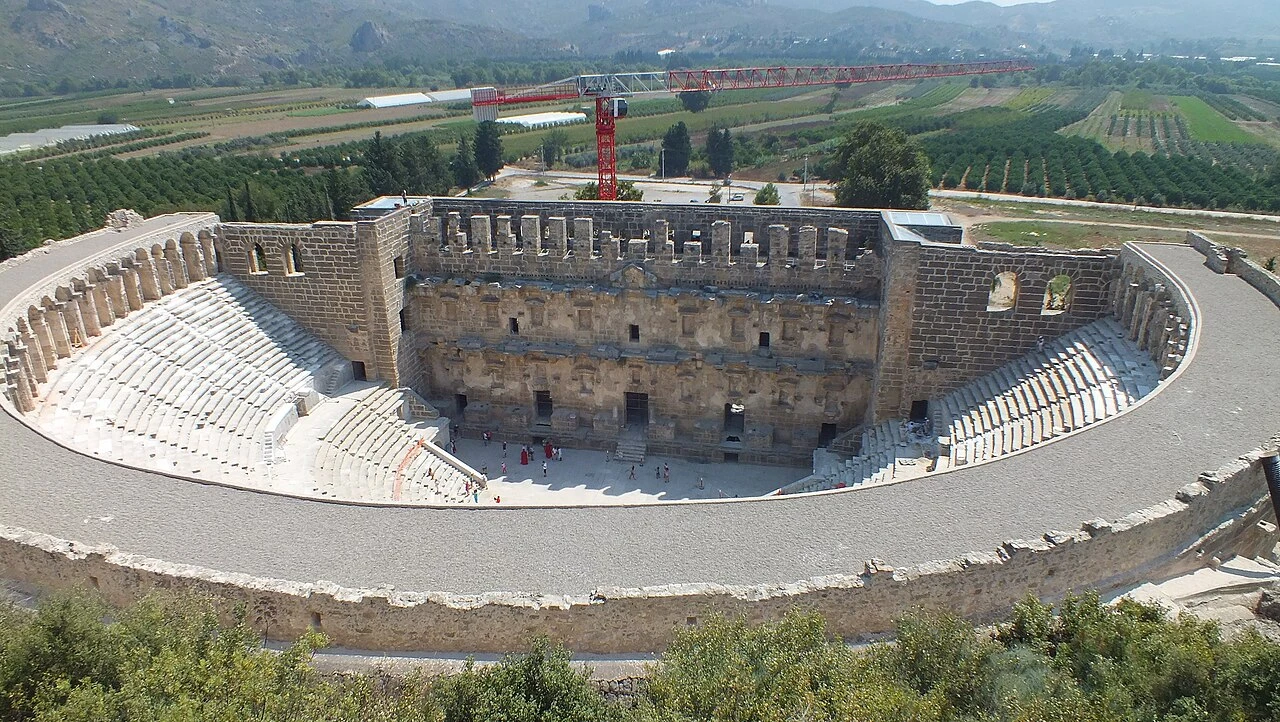
Serik
Aspendos Theatre
Content & sources
Nicola Feola · CC BY 3.0
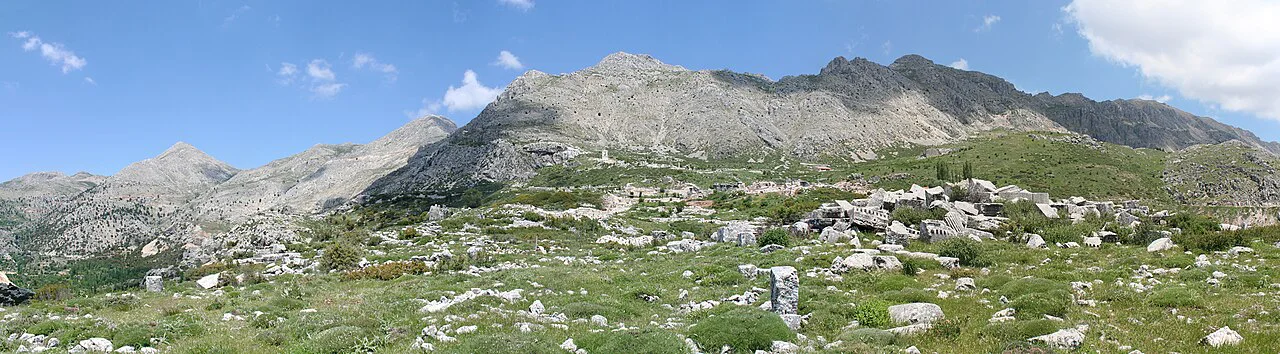
Ağlasun
Sagalassos
Content & sources
Ingo Mehling · CC BY-SA 3.0