Stanza · Audio guide
Sagalassos Audio Guide
A place to remember. A story to take with you.
Sagalassos is an archaeological site located in the Western Taurus Mountains of southwestern Turkey. During the Roman Imperial period, it was known as the first city of Pisidia and served as a major town in…
Download Stanza, then search for “Sagalassos”.
About the tour
One guide. Your kind of visit.
Sagalassos is an archaeological site located in the Western Taurus Mountains of southwestern Turkey. During the Roman Imperial period, it was known as the first city of Pisidia and served as a major town in the region.
Ready when you are.
- 01Get the free Stanza app.
iOS & Android
- 02Find your guide.
“Sagalassos”
- 03Download before you go.
Works offline
Audio guide / 15 narrated stops
Inside the guide
Get to know a few of the stories before you go. Open a stop to read more.
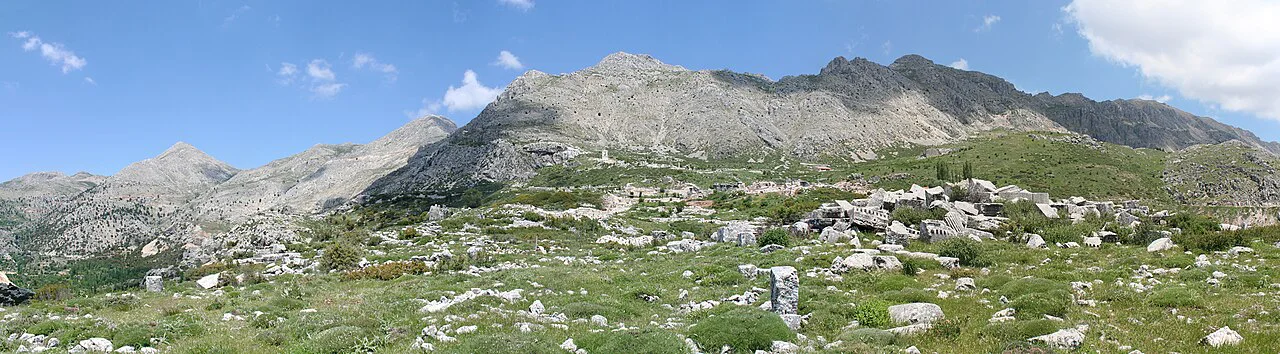
01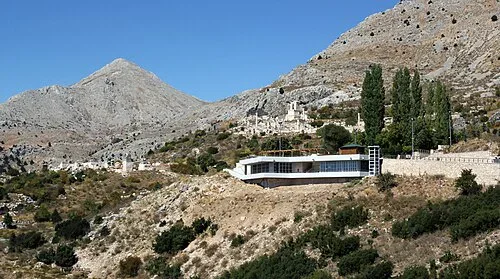 Welcome Center and Alexander's Hill
Arrival at Sagalassos: A City on the Mountain
Welcome to Sagalassos, an ancient city built high on the slopes of Mount Akdağ in southwestern Turkey. The ruins spread across terraces between roughly fourteen hundred and sixteen hundred metres above sea level, seven kilometres from the small town of Ağlasun. This was Pisidia, a rugged mountain region in the western Taurus, and Sagalassos grew into its most important town. What makes the place remarkable is how much survives. Erosion buried the city after it was abandoned, and its remote location may have kept it from being heavily looted. Since 1990 a team from the Catholic University of Leuven in Belgium, led by Marc Waelkens, has been uncovering it block by block. The monumental centre now lies open, and several buildings have been pieced back together. The climb ahead runs through paved streets, market squares, baths and fountains, all the way up to a theatre near the top. It is a whole Roman city, laid out on a mountainside.
Ingeborg Simon · CC BY-SA 3.0
02 Welcome Center and Alexander's Hill
The First City of Pisidia and Alexander's Siege
In 333 BCE, Alexander the Great was marching toward Persia when he reached this mountain region. Sagalassos was then one of the wealthiest cities in Pisidia, with a population of a few thousand. The Pisidians were known as warlike people, and they defended their hilltops against him. The city fell anyway, and its conquest opens the recorded story of Sagalassos. After Alexander's death his successors carved up his empire, and the region passed through several hands, from Antigonus to possibly Lysimachus of Thrace, then the Seleucids of Syria and the Attalids of Pergamon. Something more lasting happened too. The archaeological record shows that the local people took up Greek culture quickly, and the mountain town began its long transformation.
Ingo Mehling · CC BY-SA 3.0
03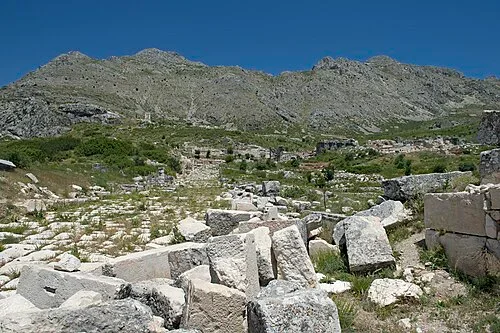 Colonnaded Street and Lower Agora
Climbing the Colonnaded Street
The road into the ancient city climbs gently uphill, paved with great slabs of local limestone, some of them weighing several tonnes. Streets like this were part of a deliberate plan. Sagalassos was laid out on terraces cut into the slope, each level carrying its own streets, squares and monuments. After the Greek conquest, the townspeople built their mountain city in the Hellenic manner, and it kept growing for centuries. The street leads upward toward the agoras, the public squares that formed the heart of the town. Every block here was hauled and fitted by hand, at an altitude where winter snow still closes the site today.
Listen in the appPhoto: Dosseman · CC BY-SA 4.0
04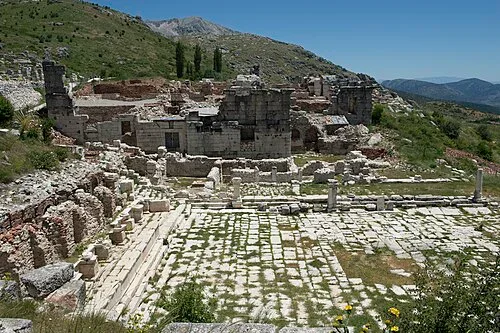 Colonnaded Street and Lower Agora
Lower Agora: Hadrian's Favourite City
A broad square of worn stone paving opens ahead, ringed with the bases of statues that once honoured local worthies. This was one of the city's two agoras, its political and commercial heart. Rome absorbed Pisidia in the first century BCE, and after the last client king died in 25 BCE the region became part of the province of Galatia. The city's great moment came under the emperor Hadrian. He named Sagalassos the first city of the province and made it the centre of the imperial cult, the official worship of the emperors. Buildings raised in his day were fully Roman in style. Dozens of public inscriptions dug up around these squares record the local elite, whose families drove the city's monumental growth. A council hall here, dated to about 100 BCE, marks the town's rise to full city status.
Listen in the appPhoto: Dosseman · CC BY-SA 4.0
05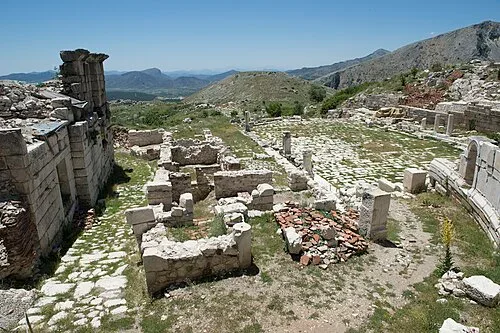 The Roman Imperial Baths
The Imperial Baths: The City's Social Hub
These low walls of stone and brick were once one of the grandest buildings in the city, the Imperial Baths. Construction took roughly forty-five years, from about 120 to 165 CE, and the complex was restored several times over the centuries, most recently in an ambitious campaign after 500. A Roman bath was far more than a place to get clean. It was the social hub of the town, where people exercised, bathed, talked business and gossiped, and this one consumed more water than any other building in Sagalassos. The baths stayed partly in use into the early seventh century, an extraordinarily long life. At the very end, part of the floor became a collection point where human waste was mixed with lime, probably to make fertiliser for the fields nearby. It was also here, in this complex, that diggers came upon some of the most celebrated finds of the whole excavation.
Listen in the appPhoto: Dosseman · CC BY-SA 4.0
06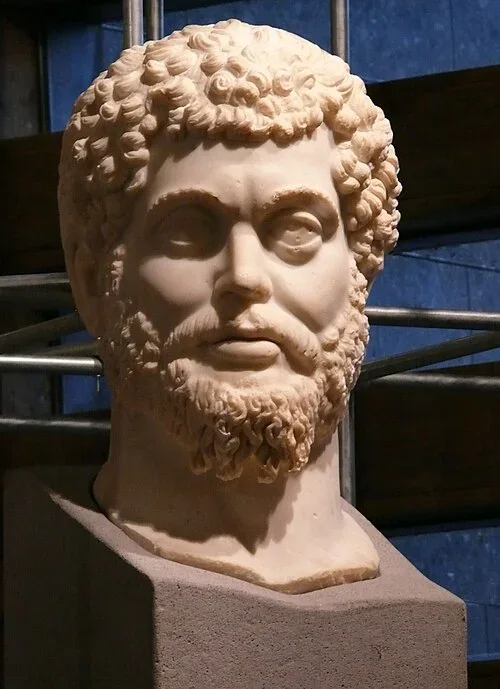 The Roman Imperial Baths
The Colossal Emperors of the Baths
In August 2007, news broke of a sensational discovery in the rubble of the baths. It was a colossal statue of the emperor Hadrian, carved in fine detail and shown in military dress. It is thought to have stood four to five metres tall. The sculptors had worked cleverly, carving the figure in sections and fitting them together with marble tenons on site. Sometime between the late sixth and early seventh centuries, a major earthquake brought the bath vaulting down, and the statue fell apart along its joins. The finds kept coming. In August 2008 a colossal head of Faustina the Elder, wife of Antoninus Pius, turned up in the same spot, and days later a third head, this one of Marcus Aurelius. Carved marble toes drilled for dowel holes hint that a statue of Sabina, Hadrian's consort, may still lie nearby. The head of Marcus Aurelius is now kept in the Burdur Archaeological Museum, beside the head of Hadrian.
Listen in the appPhoto: Ad Meskens · CC BY-SA 3.0
07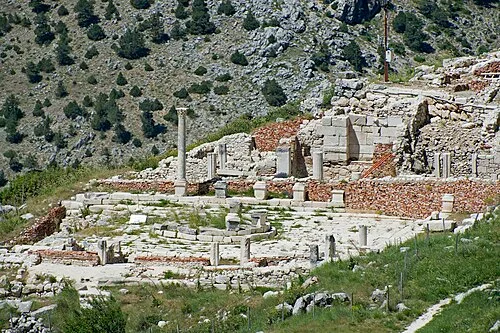 The Macellum
: Buying and Selling in Roman Sagalassos
On its own terrace stands a market building with a circular structure at its centre. In Roman cities, a building like this was called a macellum, a dedicated food market, separate from the general squares. The round central feature, known as a tholos, was typical of the type, often a small temple or fountain at the heart of the commerce. Markets like this supplied the daily bread of a provincial capital, alongside the political life staged in the agoras. For a city that styled itself the first of Pisidia, keeping its people fed was part of keeping its rank.
Listen in the appPhoto: Dosseman · CC BY-SA 4.0
08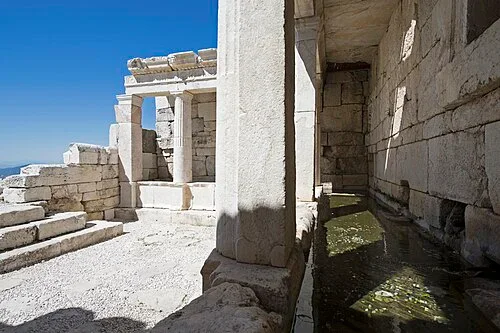 The Doric Fountain House
: Water for the City
Sagalassos was famous for its fountains, and this fountain house shows the practical side of that fame. Buildings like it supplied the city's everyday water, for drinking, cooking and washing, drawn from springs above the town. At least four grand fountains, called nymphaea, adorned the Upper and Lower Agoras in the second century alone. Inside, water ran along stone basins behind a colonnade, and the shade and spray must have offered relief on hot summer days. But the fountains also recorded their own trouble. In the city's final period, the water spouts in these basins were cut back short by their parapets, because the water no longer reached as high as before. The level and flow of the supply were steadily falling, a quiet warning of harder times ahead.
Listen in the appPhoto: Dosseman · CC BY-SA 4.0
09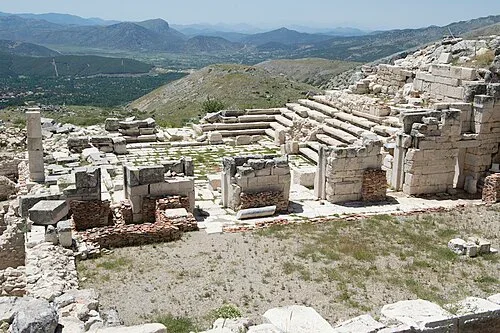 The Bouleuterion
: Governing the City
These tiered ruins belonged to the city's council hall, the bouleuterion, where the governing council of Sagalassos met. A council of citizens was a hallmark of Hellenistic and Roman urban life, and a city that ran its own affairs was a city with real standing. This is the council hall you heard about at the lower agora. Beside it stand the remains of a later Byzantine church, a reminder that Sagalassos lived on into the Christian era. Two buildings, two eras of civic life, sharing one frame.
Listen in the appPhoto: Dosseman · CC BY-SA 4.0
10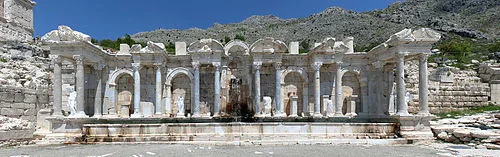 The Upper Agora and Antonine Nymphaeum
The Antonine Nymphaeum: A Monumental Fountain
Along the north edge of the Upper Agora rises the most celebrated building in Sagalassos, the Antonine Nymphaeum. It is a monumental fountain in two storeys, about twenty-eight metres long and nine metres high. Its builders used seven different types of stone, chosen so the facade glows in bands of different colour. The carving dates it to the later second century, the age of the Antonine emperors, whose dynasty gave the fountain its name. Who paid for it, no one knows. A nymphaeum like this turned plain running water into civic theatre, a fitting display for the city Hadrian had called the first of Pisidia.
Listen in the appIngo Mehling · CC BY-SA 3.0
- 11
Water Flows Again: The Modern Restoration
The fountain restored with its own ancient blocks, and the water switched back on.
- 12
A Statue Among the Columns
Sculpture among the columns, and a restoration that reassembles rather than invents.
- 13
The Theatre: Nine Thousand Seats on the Mountain
Nine thousand seats carved into a mountain slope, one of the highest theatres of the ancient world.
- 14
Behind the Stage: The Theatre's Architecture
The stage building that framed the performances, and the debris of its fall.
- 15
The Valley Below: Abandonment and Living Descendants
The city's slow end, and the DNA link between its people and the valley below.
Sagalassos
Frequently asked questions
How much does the guide cost?
Free app download. Listed guide price: $1.99. Guide price shown in the app. Audio guide only. Venue admission is separate.
Can I listen without internet?
Yes. Download the guide’s audio, images, and maps in the app before your visit. Your downloaded content is then available offline.
Can I listen in my language?
This audio guide is available in 15 languages, including English.
Do I need to follow a schedule?
No. This is a self-guided experience. Choose your stops, pause whenever you like, and return to a story at your own pace.
At your own pace
Explore Sagalassos.
Download Stanza, then search for “Sagalassos”.
Free app download · Guide price shown in the app
Keep exploring
Nearby audio guides
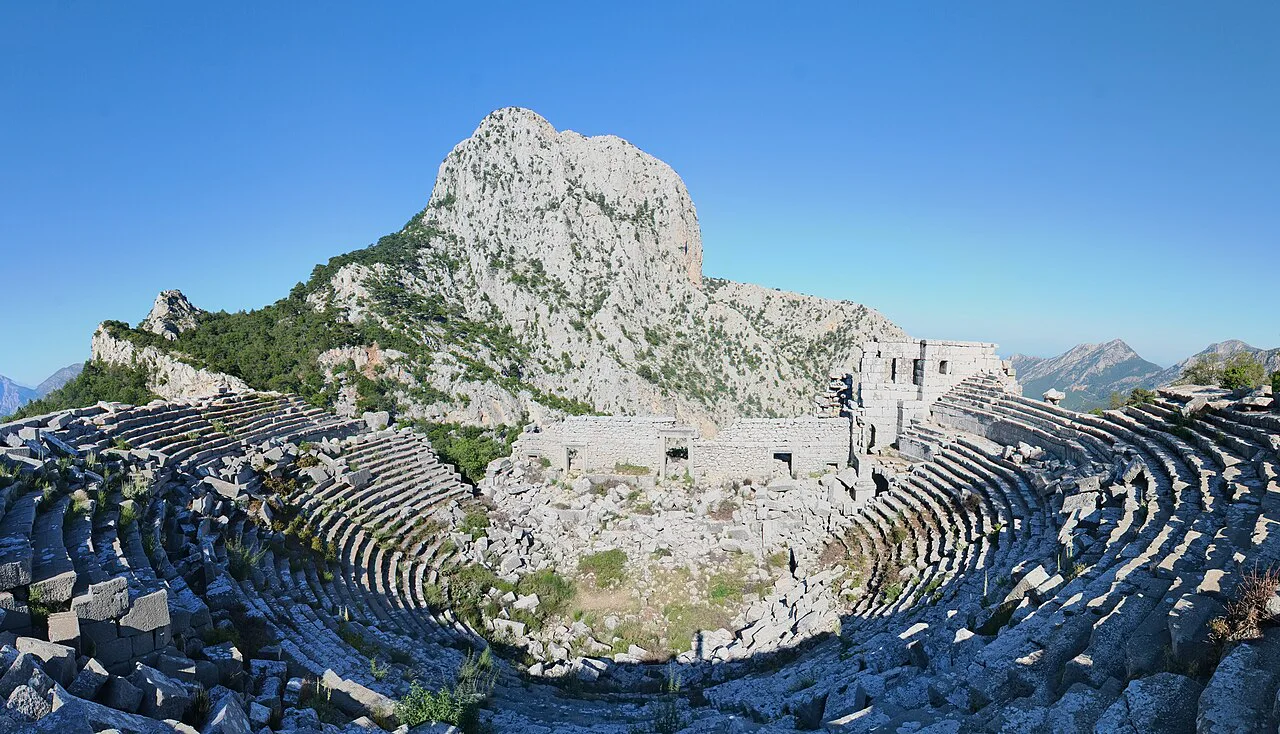
Döşemealtı · 77 km
Termessos
Content & sources
Ingo Mehling · CC BY-SA 3.0
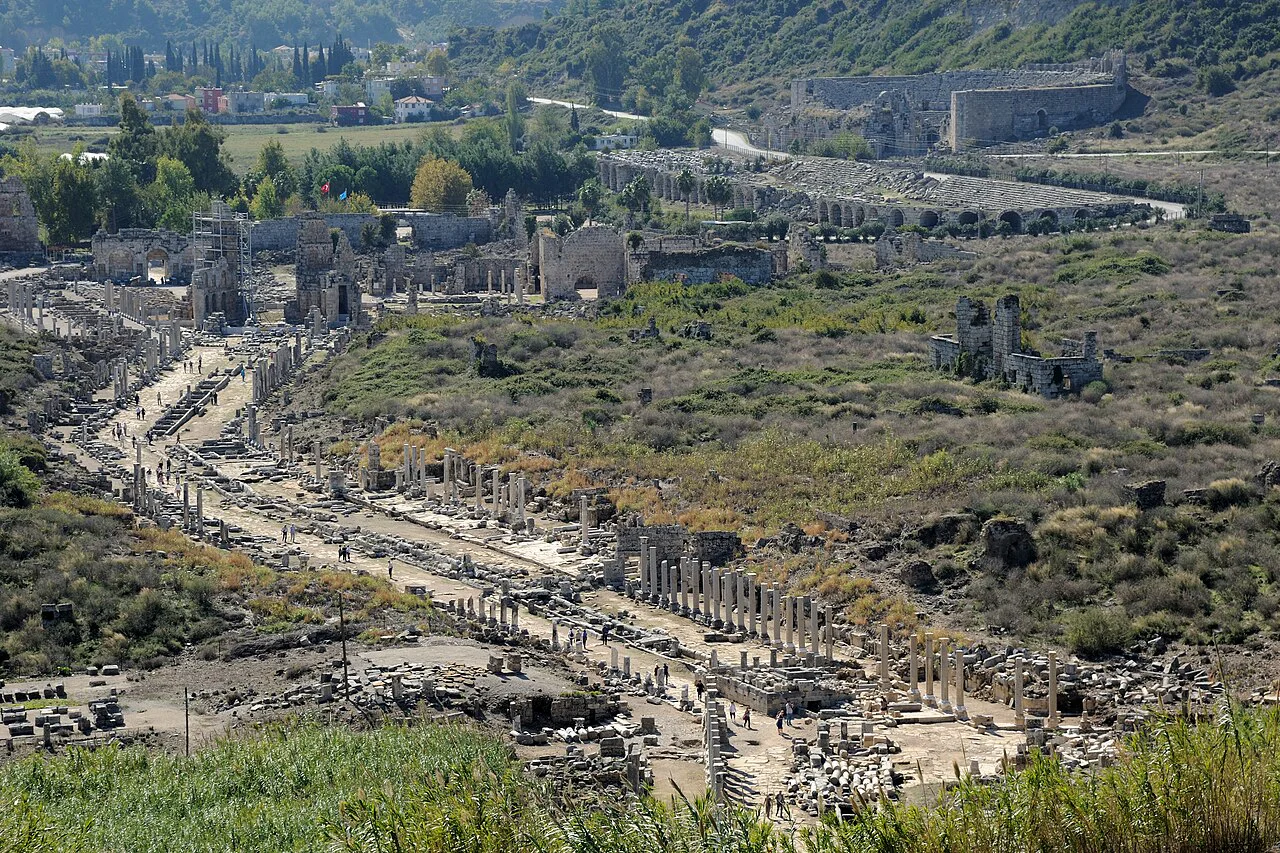
Aksu · 85 km
Perge
Content & sources
Photo: Saffron Blaze · CC BY-SA 3.0
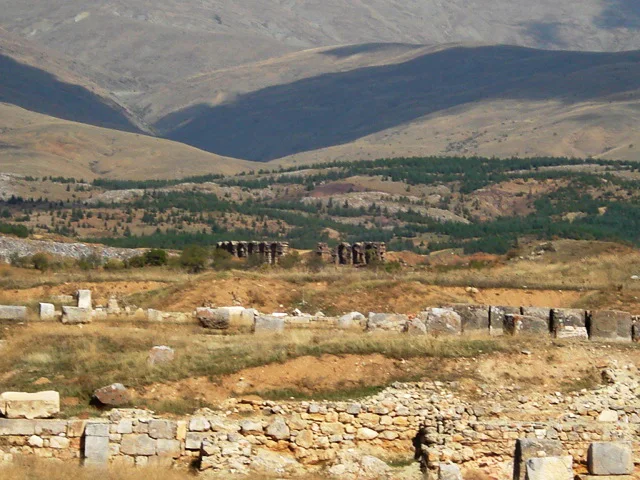
Yalvaç · 91 km
Antioheia
Content & sources
Maderibeyza at Turkish Wikipedia · CC BY-SA 3.0
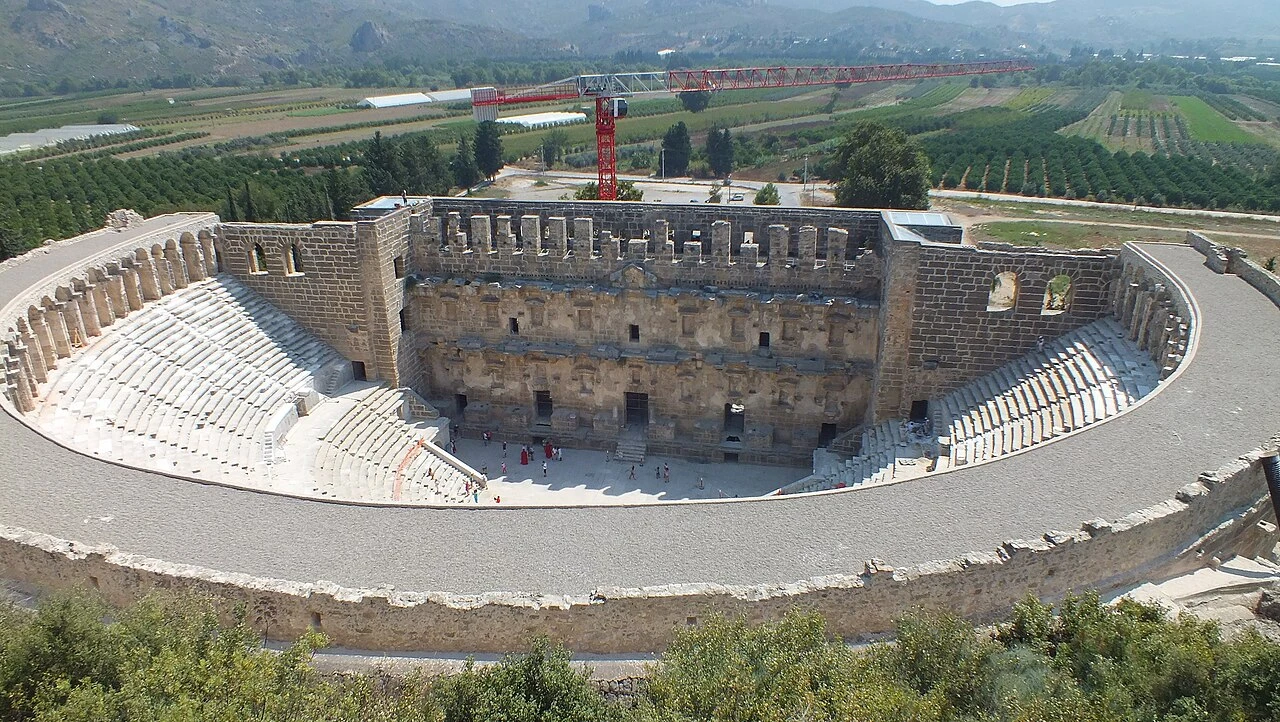
Serik · 100 km
Aspendos Theatre
Content & sources
Nicola Feola · CC BY 3.0