 Stanza / Audio guide
Stanza · Audio guide
Ek Balam Audio Guide
A place to remember. A story to take with you.
Ekʼ Balam is a Yucatec-Maya archaeological site located in the municipality of Temozón, Yucatán, Mexico. It served as the seat of a Mayan kingdom from the Preclassic until the Postclassic period.
Download Stanza, then search for “Ek Balam”.
About the tour
One guide. Your kind of visit.
Ekʼ Balam is a Yucatec-Maya archaeological site located in the municipality of Temozón, Yucatán, Mexico. It served as the seat of a Mayan kingdom from the Preclassic until the Postclassic period.
Ready when you are.
- 01Get the free Stanza app.
iOS & Android
- 02Find your guide.
“Ek Balam”
- 03Download before you go.
Works offline
Audio guide / 13 narrated stops
Inside the guide
Get to know a few of the stories before you go. Open a stop to read more.
01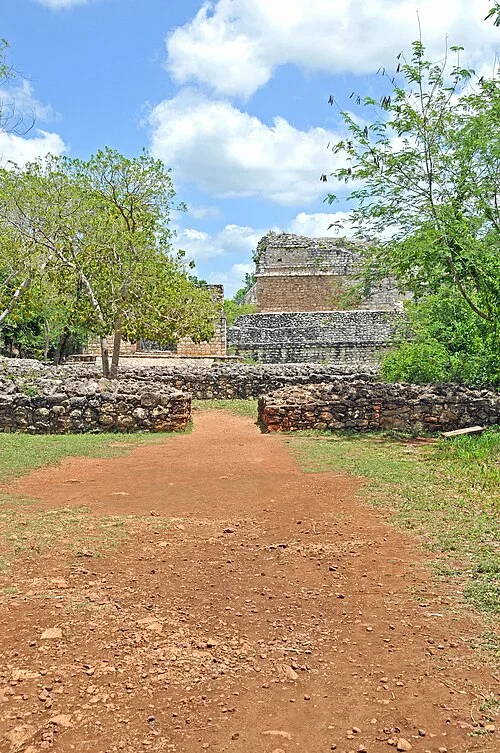 Outer Defensive Wall and Sacred Boundary
Entrance through the Ancient Walls
Welcome to Ek' Balam, an ancient Maya city in the north of the Yucatán peninsula. Its name means star jaguar. The pathway ahead runs straight through broken stone walls, and those walls are the reason this place is so unusual. Ek' Balam was a fortified royal capital, the seat of a kingdom called Talol, which governed part of northeastern Yucatán. People lived here for well over a thousand years, from around three hundred years before our era. A colonial inquiry from the late fifteen hundreds recorded an older tradition: the kingdom was founded by a man named Ek' Balam, also called Coch Cal Balam, who had come from the East. That is legend as the sources preserve it, not something archaeology has confirmed. The city was ringed by two concentric walls, with smaller walls threading between the buildings inside. The inner wall stands about two meters tall and three meters wide, and its stone was once covered in plaster. These were the largest walls in the Yucatán of their day, and they likely spoke of protection and military strength as much as they provided it.
Dennis G. Jarvis · CC BY-SA 2.0
02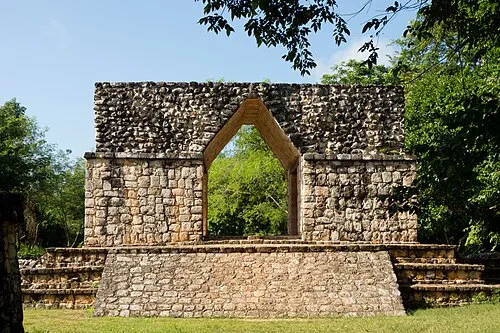 The Four-Legged Entrance Arch
Few Maya cities greeted their visitors with anything like this. The Entrance Arch is a freestanding vaulted gateway built on four legs, raised directly over the road that leads into the city. Its purpose was probably ceremonial, a threshold rather than a checkpoint. The road beneath it is a sacbe, a causeway, and Ek' Balam had a whole network of them. They run outward from the center toward the four cardinal directions, an architectural allusion to a four-part cosmos. Such roads are often understood to have been sacred. So the arch did more than span a street. It marked the passage from the ordinary world into the ordered, sacred heart of the kingdom.
Carlos Delgado · CC BY-SA 3.0
03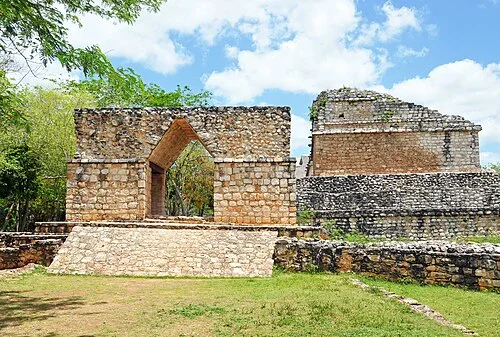 The Four-Legged Entrance Arch
The Arch and the Road into the Sacred Center
Through the arch, the ground opens into the old ceremonial center. Only this core of Ek' Balam has been excavated. Large raised platforms line the inside of the wall, framing the internal plazas where the city's official life unfolded. Beyond the cleared buildings, raised platforms and buried structures continue into the surrounding trees, and much of the ancient city has never been uncovered. What has been dug up so far is a fraction of what the walls once contained.
Listen in the appDennis G. Jarvis · CC BY-SA 2.0
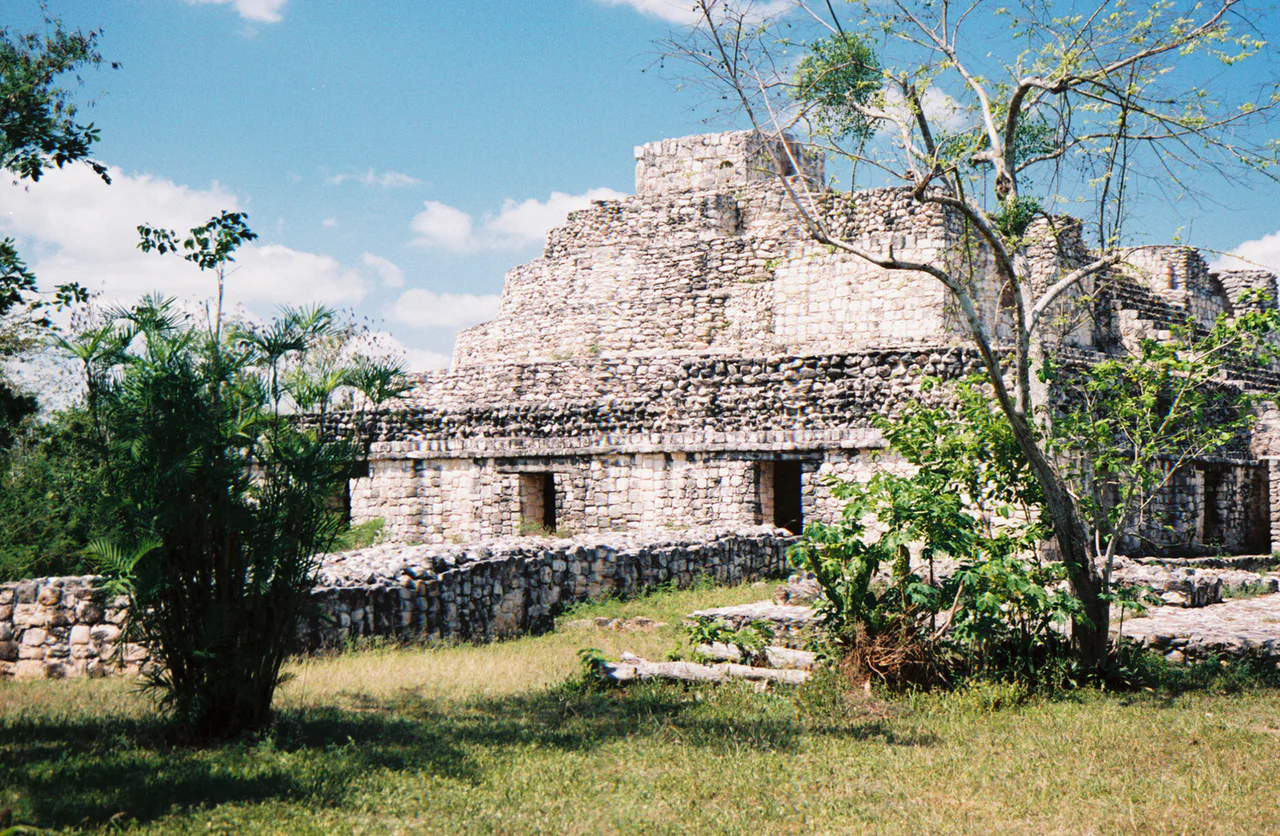
04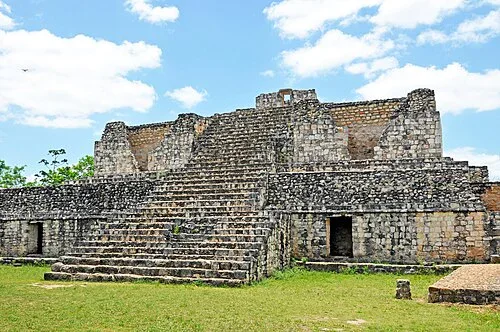 The Oval Palace
Ek' Balam was built mostly in the northern Petén style, like the other great cities of its day. This one curves. The Oval Palace, on the south side of the center, is a rounded, tiered building that stands out sharply against its neighbors. It belonged to the world of the royal court, the elite who resided in the sacred heart of the capital of Talol. When archaeologists investigated it, they found burial relics inside. Which royals those remains belonged to is not known. Whatever its exact uses, a palace built in the round, at a city built mostly in straight lines, says something about the confidence of the court that commissioned it.
Listen in the appDennis G. Jarvis · CC BY-SA 2.0
05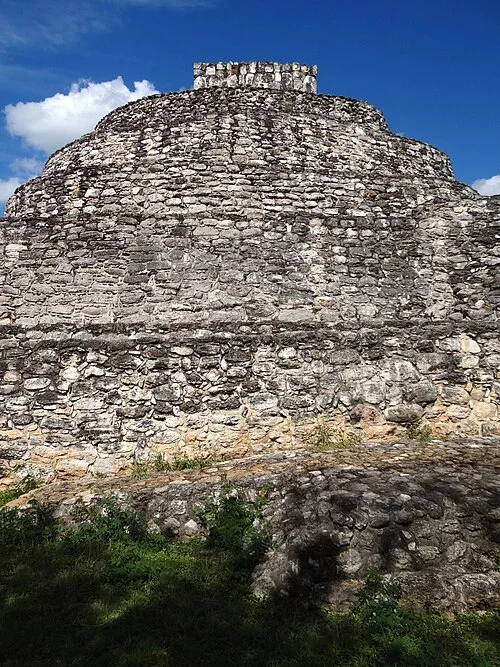 The Oval Palace
 and the Sky
The rounded form of this palace has led archaeologists to an idea. Its alignment, they assume, was connected to cosmological ceremonies. That remains an assumption rather than a demonstrated fact, and no specific star or horizon event has been tied to the building. Still, the care in its construction is easy to see. Each curved terrace was laid in neat, level courses of stone, tier upon tier, rising toward the open sky. For a court that watched the heavens, a building without corners may have been exactly the point.
Listen in the appAdam Jones, Ph.D. · CC BY-SA 3.0
06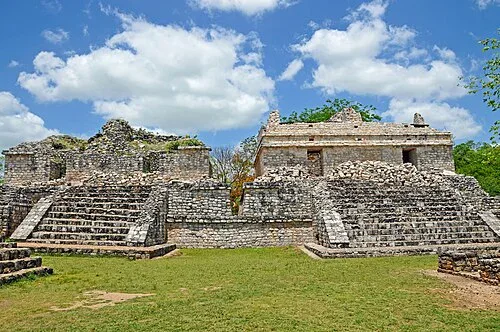 Structure 17 (The Twin Pyramids)
Structure 17: The Twins
Here the planners of Ek' Balam let their taste for order show. Structure 17, known as the Twins, is a single grand platform carrying two temples, one on either side. The two buildings mirror each other, stairway for stairway, roof for roof. This kind of paired symmetry is a hallmark of Classic-period design in the ceremonial center. Whatever ceremonies took place here, they unfolded between two buildings that answered one another perfectly.
Listen in the appDennis G. Jarvis · CC BY-SA 2.0
07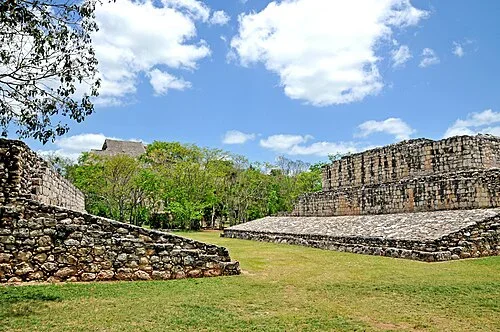 The Ballcourt
The ballcourt at Ek' Balam was completed in the year 841. That date matters. The city's greatest era was drawing to a close, and this was one of its last major works. Across Mesoamerica, the ballgame was far more than sport. Two teams kept a solid rubber ball in play along a corridor between sloping benches, in a ritual that carried deep meaning for the Maya. Courts like this one stood at the center of civic and ceremonial life. At Ek' Balam, the playing corridor runs between the parallel sloping structures, a formal stage built for a game the city may have watched only briefly as its great age ended.
Listen in the appDennis G. Jarvis · CC BY-SA 2.0
08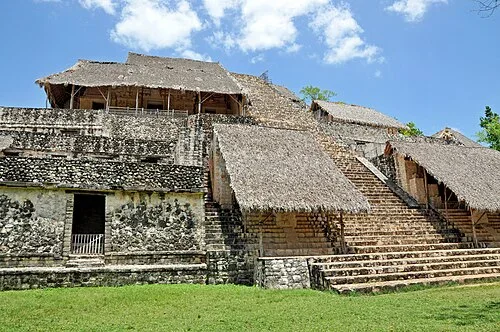 Base of the Acropolis
The Acropolis is the largest structure at Ek' Balam, a palace and pyramid in one. It stretches about a hundred and forty-six meters along the north side of the site and rises some twenty-nine meters. A king was buried inside its mass. What is striking is how recent its recovery is. Excavation began only in 1998, when the whole building was still a featureless mound of earth and stone. Leticia Vargas de la Peña and Víctor Castillo Borges of Mexico's national institute of anthropology and history directed the work that brought it back into view. The thatched roofs above the stairways are part of that effort, shelters raised to protect the fragile art now exposed to sun and rain.
Listen in the appDennis G. Jarvis · CC BY-SA 2.0
09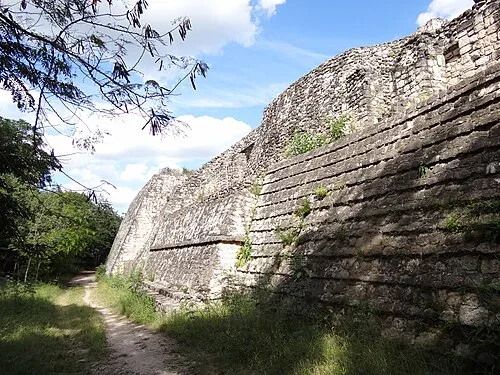 Base of the Acropolis
The Acropolis and Its Lost Paintings
Rooms inside the Acropolis hold remarkable painted art. Among the wall paintings is the Mural of the 96 Glyphs, a masterwork of calligraphy that scholars compare with the Tablet of the 96 Glyphs at Palenque. Another painting shows a mythological scene of a hunted deer, which has been read as a story about the origin of death. Painted vault capstones elsewhere in the building depict the lightning deity, a decoration known from other Yucatec sites as well. There is a catch for anyone hoping to study them closely. The wall paintings have been published only very inadequately, so most of this art remains known only to the specialists who work inside the pyramid's buried rooms.
Listen in the appAdam Jones, Ph.D. · CC BY-SA 3.0
10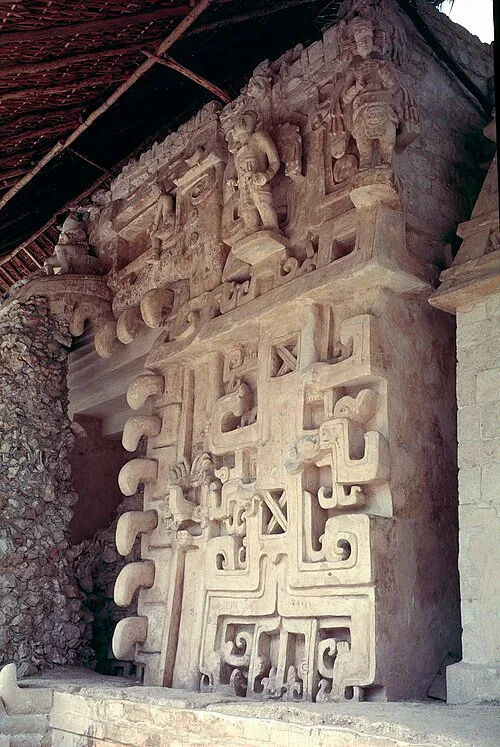 The Stucco Monster Façade and El Trono
The Stucco Monster Façade
The doorway of El Trono is framed as a mouth, wide open, with rows of stucco fangs. It likely depicts a jaguar, or perhaps a serpent, a monster of the underworld whose throat anyone entering would have to pass through. Above the jaws sits the king on his throne, and warriors flank the portal on either side. This kind of monster-mouth decoration appears nowhere else in the region apart from Ek' Balam; its only kin lie in the distant Chenes style of Campeche. The king shown here is Ukit Kan Le'k Tok', who took the throne in 770. One recent study links his enthronement to a comet recorded in China on the very same day, a bright visitor in the dawn sky over northern Yucatán. Accounts differ on the exact day, the twenty-sixth or the thirtieth of May. The comet connection is a proposal for further research, not settled fact, but the king above the monster's jaws is carved in plaster for all to see.
Listen in the appPhoto: HJPD · CC BY 3.0
- 11
The Winged Warriors
Winged warriors in molded plaster, often mistaken for angels, and almost unique in Maya art.
- 12
El Trono: The Tomb of Ukit Kan Le'k Tok'
The burial place of King Ukit Kan Le'k Tok', set inside the city's greatest pyramid.
- 13
From the Summit: The City and Its End
The view from the summit, and the story of how the walled city came to an end.
Ek Balam
Frequently asked questions
How much does the guide cost?
Free app download. Listed guide price: $0.99. Guide price shown in the app. Audio guide only. Venue admission is separate.
Can I listen without internet?
Yes. Download the guide’s audio, images, and maps in the app before your visit. Your downloaded content is then available offline.
Can I listen in my language?
This audio guide is available in 15 languages, including English.
Do I need to follow a schedule?
No. This is a self-guided experience. Choose your stops, pause whenever you like, and return to a story at your own pace.
At your own pace
Explore Ek Balam.
Download Stanza, then search for “Ek Balam”.
Free app download · Guide price shown in the app
Keep exploring
Nearby audio guides
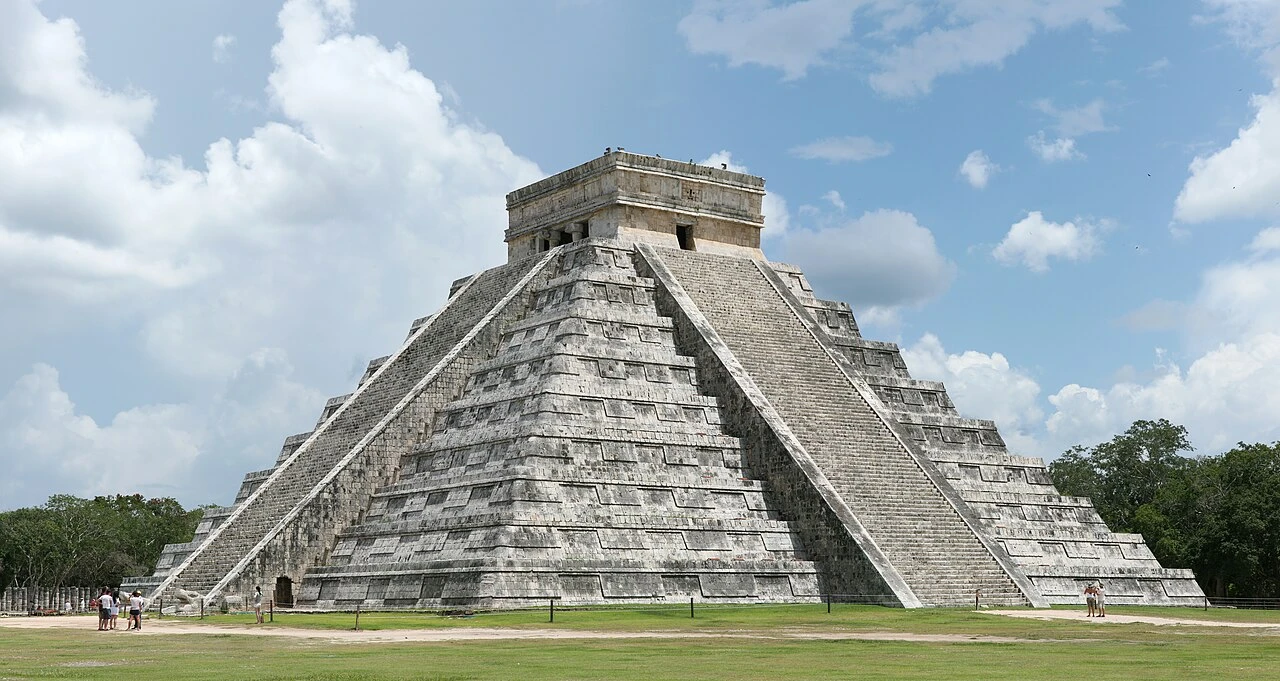
Tinum · 51 km
Chichen Itza
Content & sources
Daniel Schwen · CC BY-SA 4.0
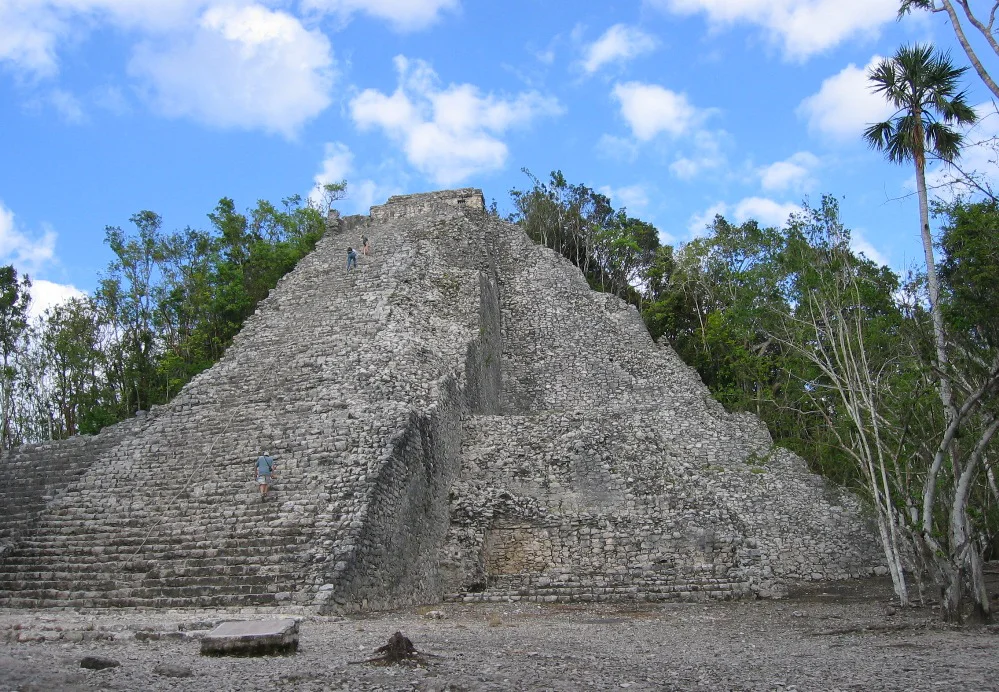
Cobá · 62 km
Cobá
Content & sources
Photo: Elelicht · CC BY-SA 3.0
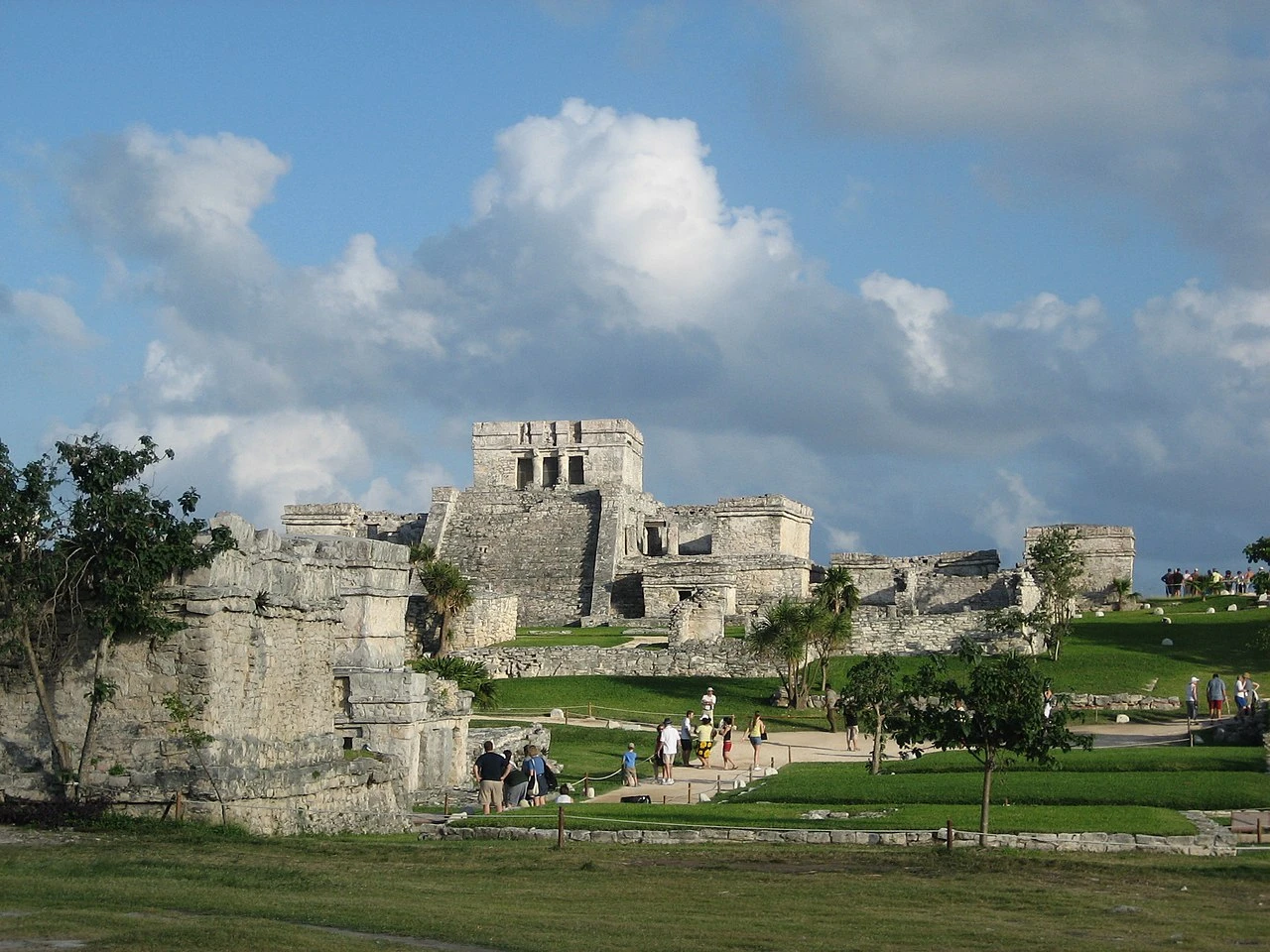
Tulum · 105 km
Tulum Archaeological Site
Content & sources
Gennaro Conte · CC BY-SA 4.0
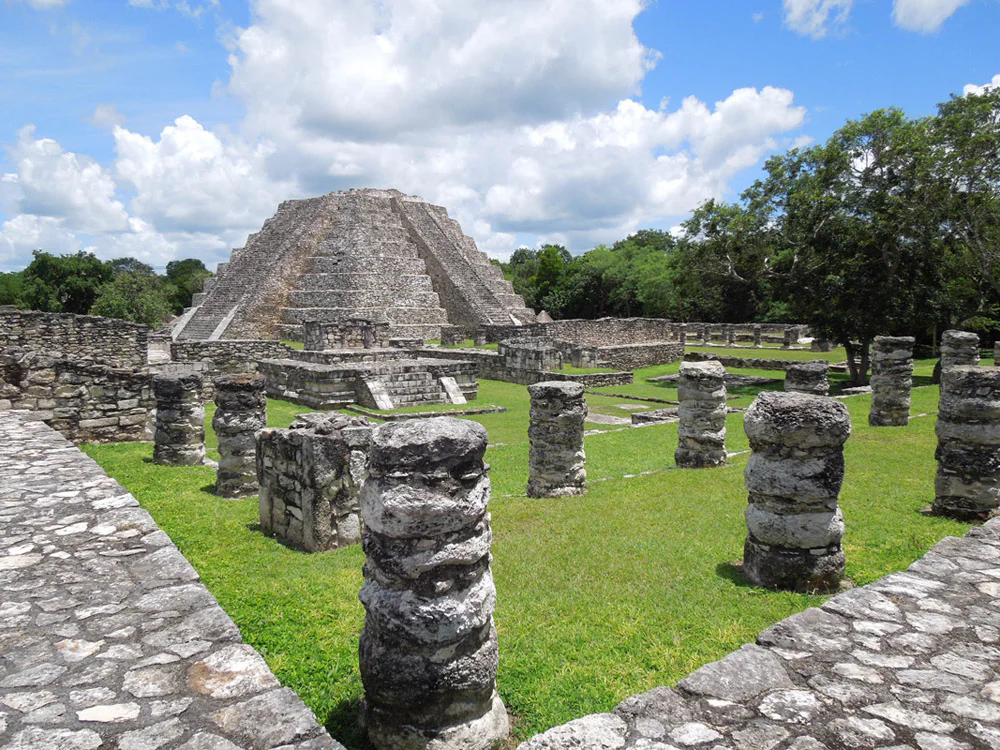
Telchaquillo · 141 km
Mayapán
Content & sources
Photo: Joeldesalvatierra · CC BY-SA 3.0