 Stanza / Audio guide
Content & sources
Stanza · Audio guide
Château du Plessis-Bourré Audio guide
A place to remember. A story to take with you.
Château du Plessis-Bourré is a château in the Loire Valley in France. It was built between 1468 and 1472 and has not been modified externally since its construction.
Download Stanza, then search for “Château du Plessis-Bourré”.
About the tour
One guide. Your kind of visit.
Château du Plessis-Bourré is a château in the Loire Valley in France. It was built between 1468 and 1472 and has not been modified externally since its construction.
Ready when you are.
- 01Get the free Stanza app.
iOS & Android
- 02Find your guide.
“Château du Plessis-Bourré”
- 03Download before you go.
Works offline
Audio guide / 10 narrated stops
Inside the guide
Get to know a few of the stories before you go. Open a stop to read more.
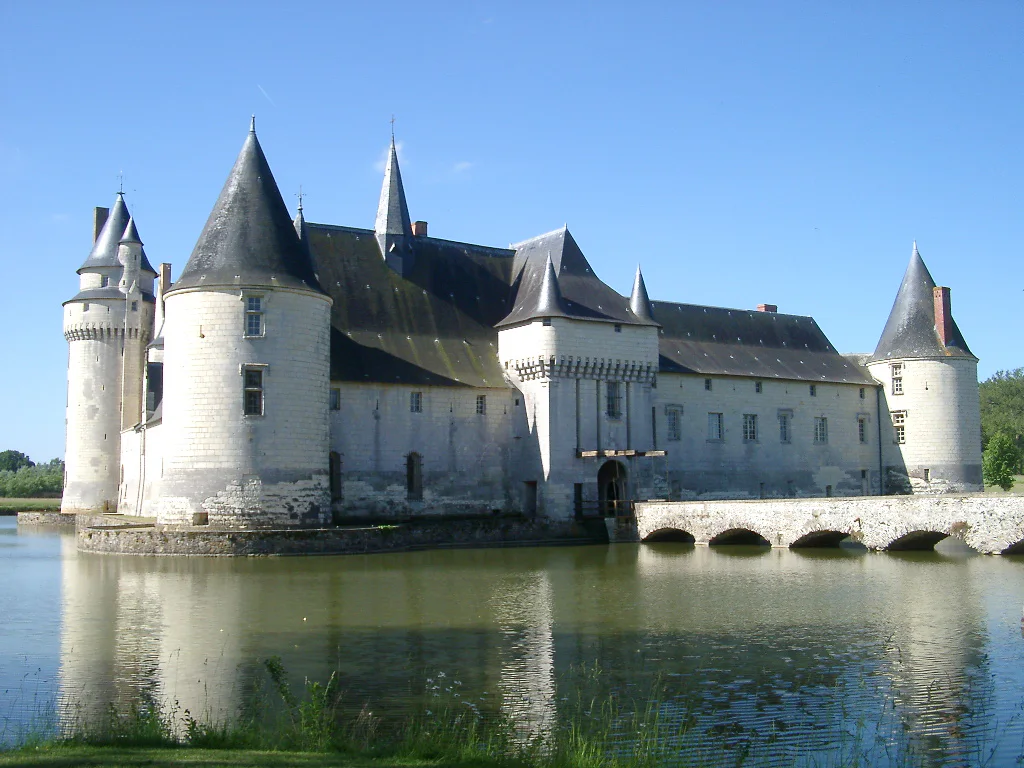
01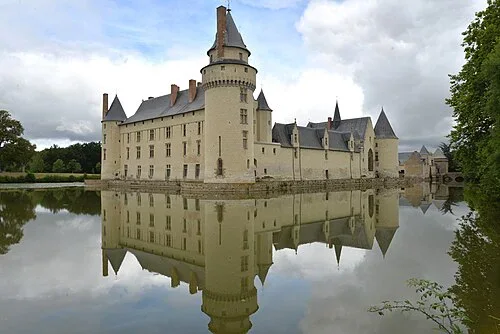 The Floating Fortress and the MoatThe Château Rising from the Water
Welcome to the Château du Plessis-Bourré, in the Loire Valley at Écuillé, north of Angers. The water is the first thing that catches the eye. The moats here are exceptionally wide, and in this still view the whole château seems to rise straight out of its own reflection. It looks like a fortress afloat, and the grounds were arranged to create exactly that illusion. Behind the water stands a real stronghold, built for one of the most powerful men in France. Jean Bourré was finance minister and principal confidant to King Louis the Eleventh. In 1462 he bought an old manor called Plessis-le-Vent, and work on the present château began six years later. The whole build took less than five years. Since then the outside has hardly changed, so the building in this view is essentially the one he finished. The tour follows him across the water, through the gate, and into the rooms his family lived in.
Photo: Calips · CC BY-SA 3.0
02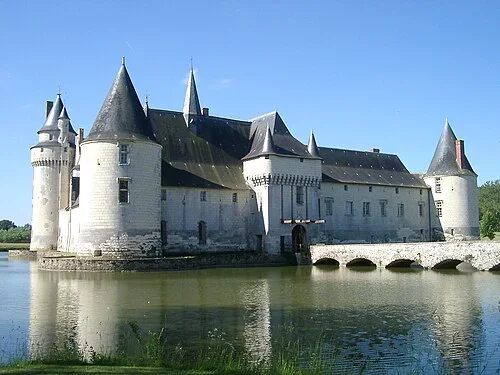 The Floating Fortress and the MoatThe Southeast View: Fortress and Residence in One
From this broad angle the château shows both of its faces at once. Four massive towers, a wall-walk behind the parapets and the moat below all speak the language of a late medieval fortress. Yet the tall mullioned windows and the great salons behind them belong to the Renaissance arriving in France. Historians call this a château of transition, a building standing exactly on the boundary between two ages. It went up at the moment when nobles wanted light, comfort and display as much as defense. The pale stone that makes it all glow is tuffeau, a soft limestone quarried nearby in the Loire valley. It can be carved easily when fresh, and it has kept the Gothic and Renaissance details sharp for centuries. Few châteaux of the Loire have kept their outer architecture so little altered since they were built.
The original uploader was NonNobis at French Wikipedia. · CC BY-SA 3.0
03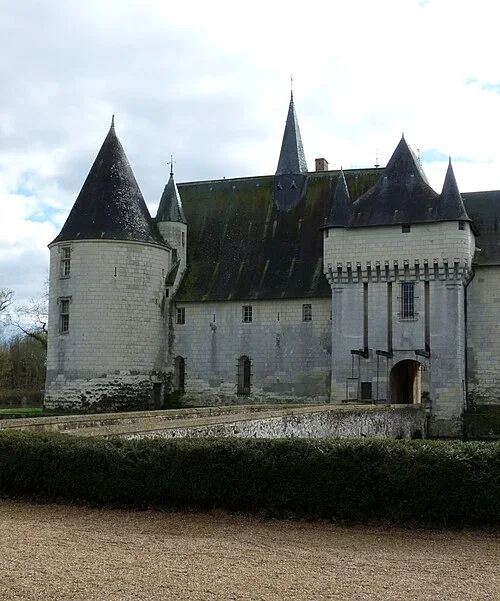 The Stone Bridge and Drawbridge GateThe Stone Bridge and Defensive Terraces
The bridge that crosses the water is stone, and it runs forty-four meters to reach the gatehouse. But the cleverest piece of defense is barely visible from a distance. The moat never actually touches the walls. Between the water and the fortress runs a narrow terrace, three meters wide, encircling the whole château. From it, gunners could take up position all around the building and fire along the foot of the walls. Anyone wading or swimming the moat would land on open ground with no cover, directly under fire. So the wide water that makes the château appear to float also served a military purpose. The gate at the end of the bridge is the next part of the story.
Listen in the appPhoto: GO69 · CC BY 4.0
04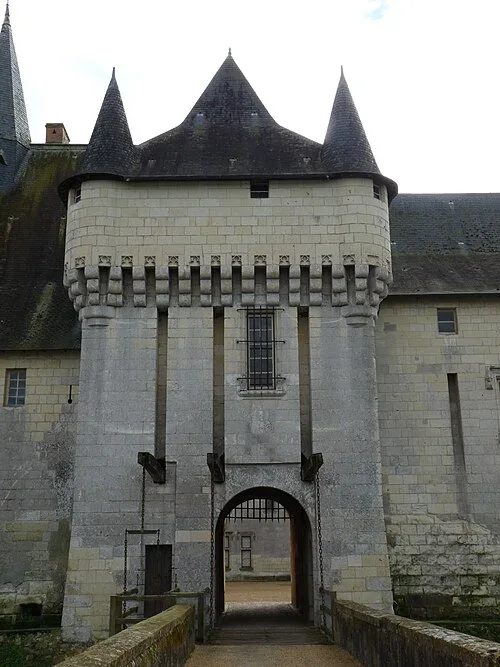 The Stone Bridge and Drawbridge GateThe Drawbridge Gate
Everything about this gatehouse is designed to slow an attacker down. Above the arch, stone brackets project from the wall to form machicolations, openings through which defenders could drop stones on anyone below. The long vertical grooves beside the arch once held the beams of a double drawbridge, and remarkably this one still works. Crossing it today means entering the way people did in the fourteen-seventies. That is because the outside of the château has not been materially altered since it was first built. The gatehouse, the towers and the walls read today much as they did when the building was new.
Listen in the appPhoto: GO69 · CC BY 4.0
05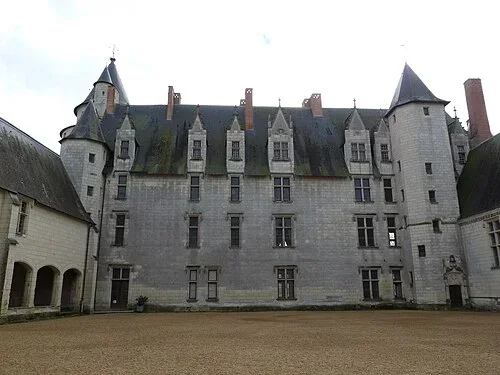 The Inner CourtyardThe Inner Courtyard: the Residence Revealed
Inside the quadrangle, the mood changes completely. The courtyard façades are light and regular, filled with tall windows and the grand salons of a pleasure residence rather than a fighting post. And there is a person behind this domestic side. Jean Bourré was constantly away on the king's business, so the building work was supervised by his wife, Marguerite de Feschal, watching over it from the château de Vaux. The château's unaltered appearance eventually drew film makers to the site. In 1970 Jacques Demy filmed his musical Peau d'Âne here, with Catherine Deneuve and Jean Marais.
Listen in the appPhoto: GO69 · CC BY 4.0
06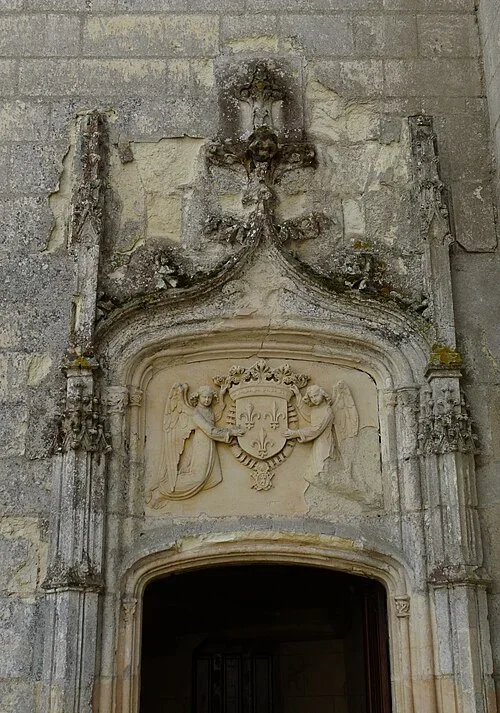 The Inner CourtyardThe Sculpted Portal and the King's Treasurer
Two carved angels hold up a shield stamped with the fleur-de-lis, the emblem of the kings of France, above the finest doorway in the courtyard. It suits the man who built this place. Jean Bourré, born around 1424, was the grand argentier, the keeper of the royal finances, and Louis the Eleventh's closest confidant. Buying the domain of Plessis-le-Vent and raising this château was the statement of a new class, royal administrators with the wealth of nobles. Two kings came to see it. Louis the Eleventh visited in April 1473, on a pilgrimage to Notre-Dame de Béhuard. In 1487 Charles the Eighth arrived with his elder sister, the regent Anne de Beaujeu.
Listen in the appPhoto: Bo35bo35 · CC BY 4.0
07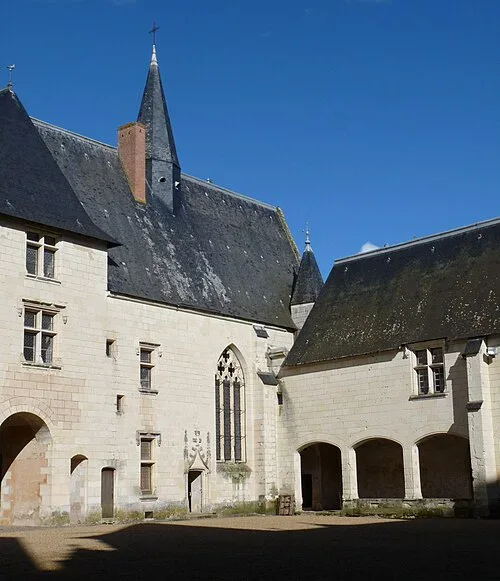 The Chapel of Saint AnneThe Chapel of Saint Anne
A slender spire rises over this side of the courtyard, and it belongs to the chapel of Saint Anne. Its pointed arches and late Gothic lines match the rest of the build, so worship was planned into the château from the start. A private chapel like this meant the household never had to leave the fortress to pray. Devotion could happen at the heart of the residence, under the family's own roof. The dark arched openings beneath the spire lead into that space.
Listen in the appPhoto: GO69 · CC BY 4.0
08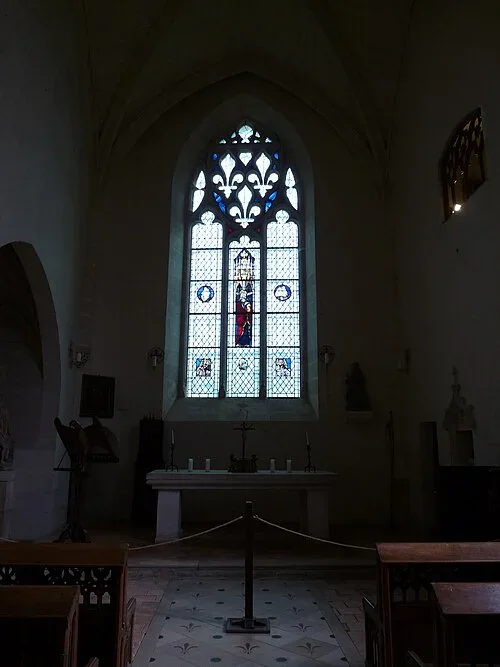 The Chapel of Saint AnneInside the Chapel
Inside, the chapel of Saint Anne is a single vaulted room, quiet and dim. At the far end stands the altar, and above it one tall stained-glass window fills the wall. Its glass carries fleur-de-lis motifs, the royal emblem that also crowns the sculpted portal in the courtyard. The fleur-de-lis of the doorway reappears here in colored glass.
Listen in the appPhoto: Bo35bo35 · CC0
09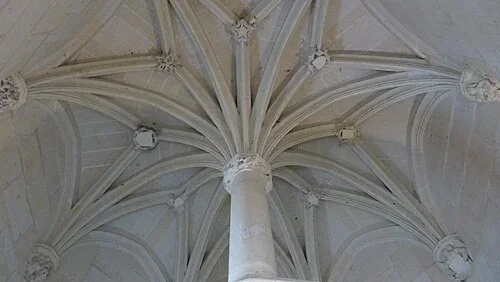 The Escalier de FranceThe Escalier de France and the Painted Ceiling
Overhead spreads a fan of sculpted stone ribs, the vault of the Escalier de France, the great stair that climbs to the château's upper floors. Up on this level lies the guardroom, and its ceiling is the most talked-about object in the building. It is a coffered ceiling of twenty-four painted panels by an anonymous hand. Sixteen of them show the symbolism of the alchemists of the day, with mercury, sulfur and salt at its center. The other eight depict proverbial scenes of such bold and mischievous spirit that in the eighteenth century they were hidden from the view of guests. In 1945 the hermetist Eugène Canseliet claimed the whole ceiling was a secret alchemical guide. Historians have found nothing to support that reading. They point out that interpreting monuments as alchemical texts only became an idea in the seventeenth century, long after this ceiling was painted.
Listen in the appPhoto: Bo35bo35 · CC BY 4.0
10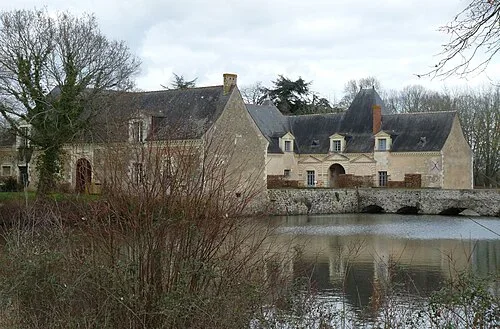 The Outbuildings and SalvationThe Outbuildings: Survival and Succession
Across the water stand the communs, the low outbuildings that once did the estate's daily work. They also mark where the château's survival was decided. By 1850 the property was up for sale, and nobody wanted it. The plan was to break it up as a quarry for its tuffeau stone. A notary from Angers, Victor Avenant, bought the estate in 1851 for five hundred thousand francs, determined to keep the place intact. In 1911 Henri Vaïsse took over, opened the château to the public and laid out the visiting route that is still followed. He left it to his nephew, François Reille-Soult, Duke of Dalmatie, a descendant of the marshals of the Empire. Their descendants manage the château to this day. Since 1931 the whole estate has been listed as a historic monument.
Listen in the appPhoto: GO69 · CC BY 4.0
Château du Plessis-Bourré
Frequently asked questions
How much does the guide cost?
Free app download. Listed guide price: $0.99. Guide price shown in the app. Audio guide only. Venue admission is separate.
Can I listen without internet?
Yes. Download the guide’s audio, images, and maps in the app before your visit. Your downloaded content is then available offline.
Can I listen in my language?
This audio guide is available in 15 languages, including English.
Do I need to follow a schedule?
No. This is a self-guided experience. Choose your stops, pause whenever you like, and return to a story at your own pace.
At your own pace
Explore Château du Plessis-Bourré.
Download Stanza, then search for “Château du Plessis-Bourré”.
Free app download · Guide price shown in the app
Keep exploring
Nearby audio guides
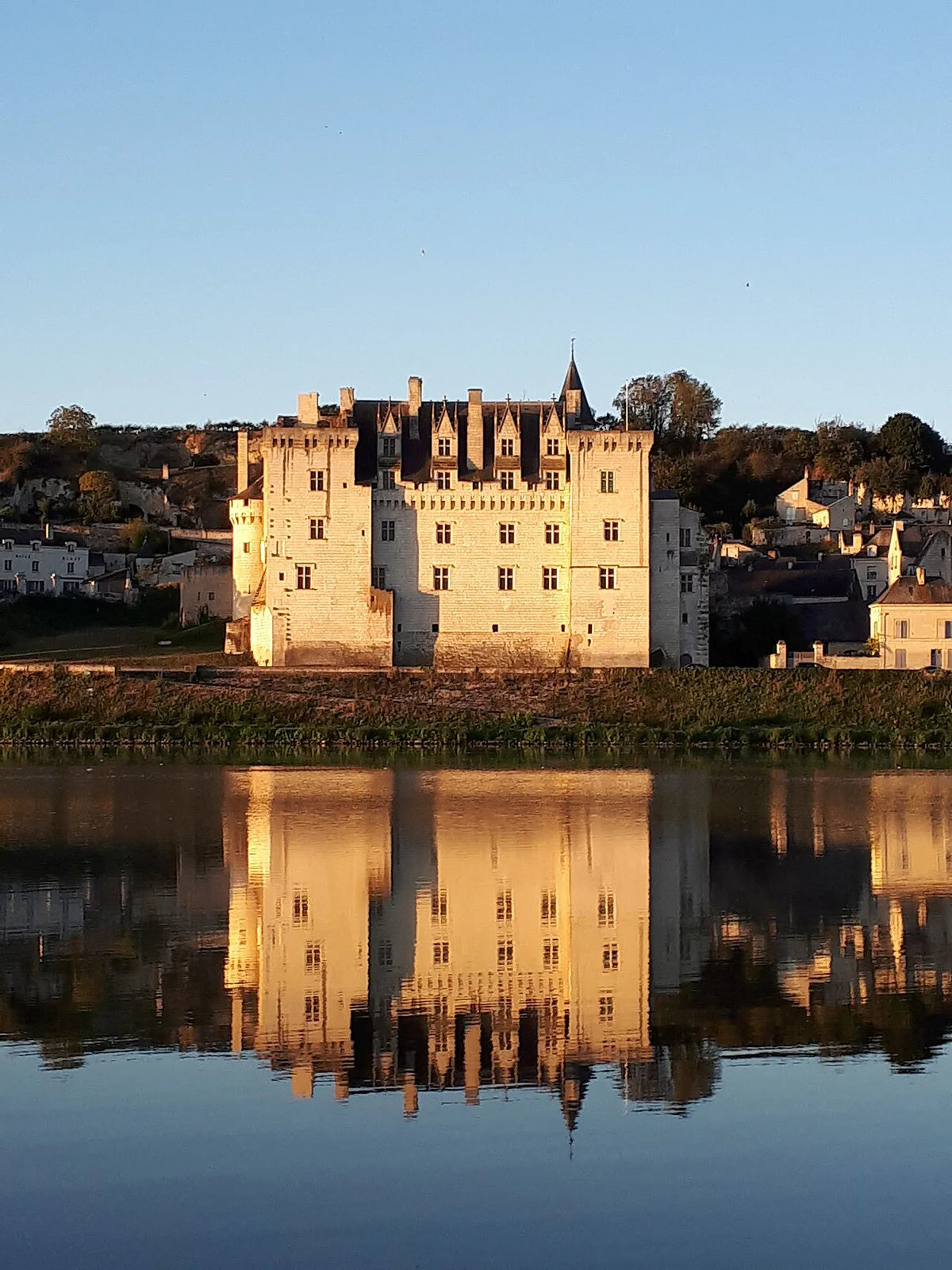
Montsoreau · 63 km
Château de Montsoreau
Content & sources
Photo: Suavemarimagno · CC BY-SA 4.0
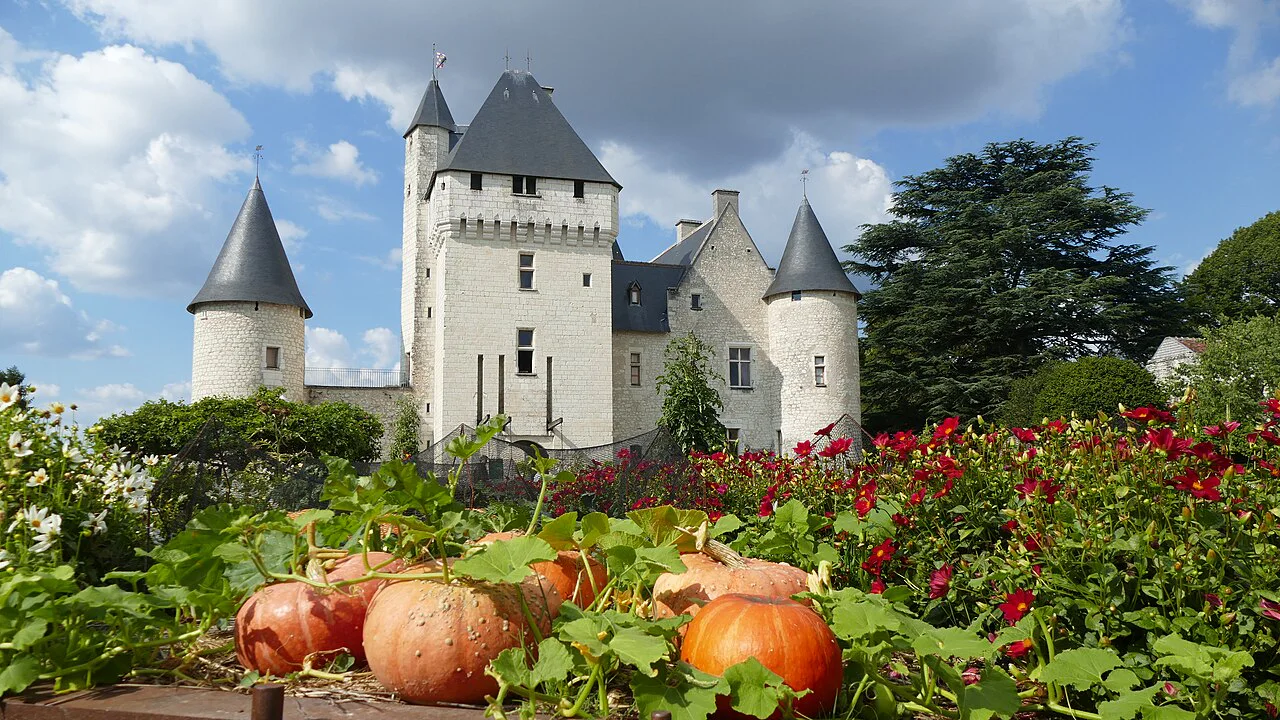
Lémeré · 86 km
Château du Rivau
Content & sources
Photo: Aliasse16 · CC BY-SA 4.0
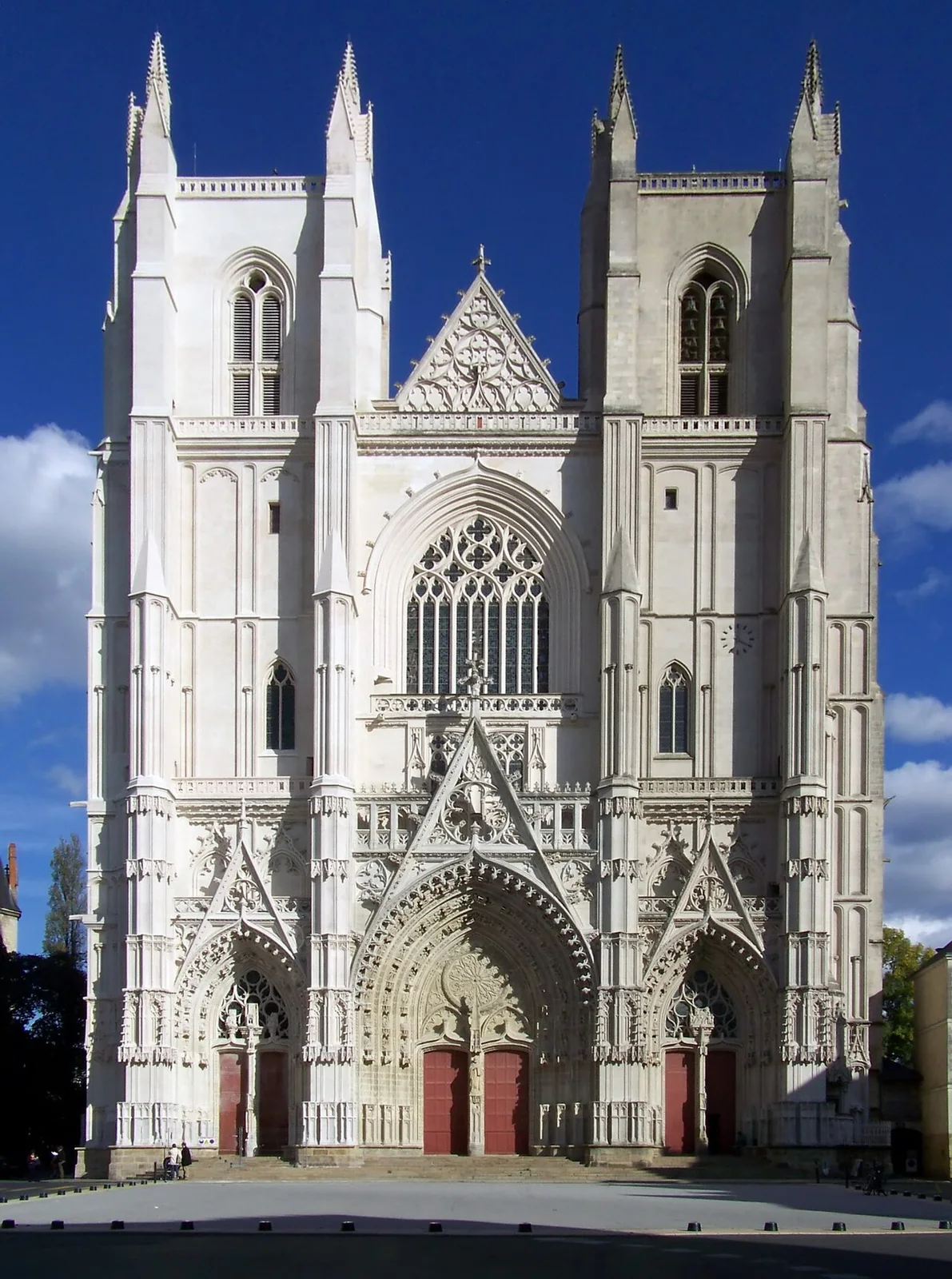
Nantes · 87 km
Cathédrale Saint-Pierre-et-Saint-Paul de Nantes
Content & sources
Photo: Eusebius · Public domain
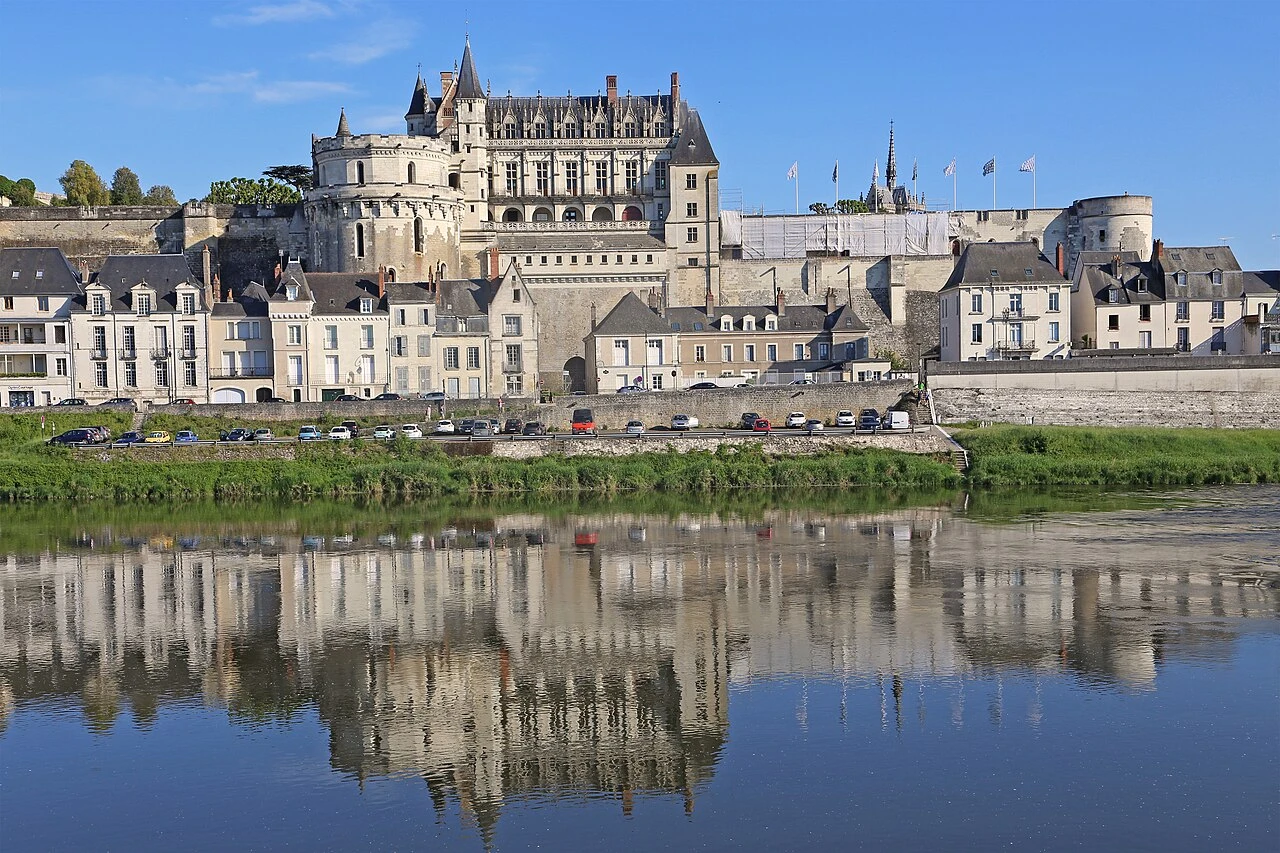
Amboise · 117 km
Château d'Amboise
Content & sources
Photo: W. Bulach · CC BY-SA 4.0