Stanza · Audio guide
Château du Rivau Audio guide
A place to remember. A story to take with you.
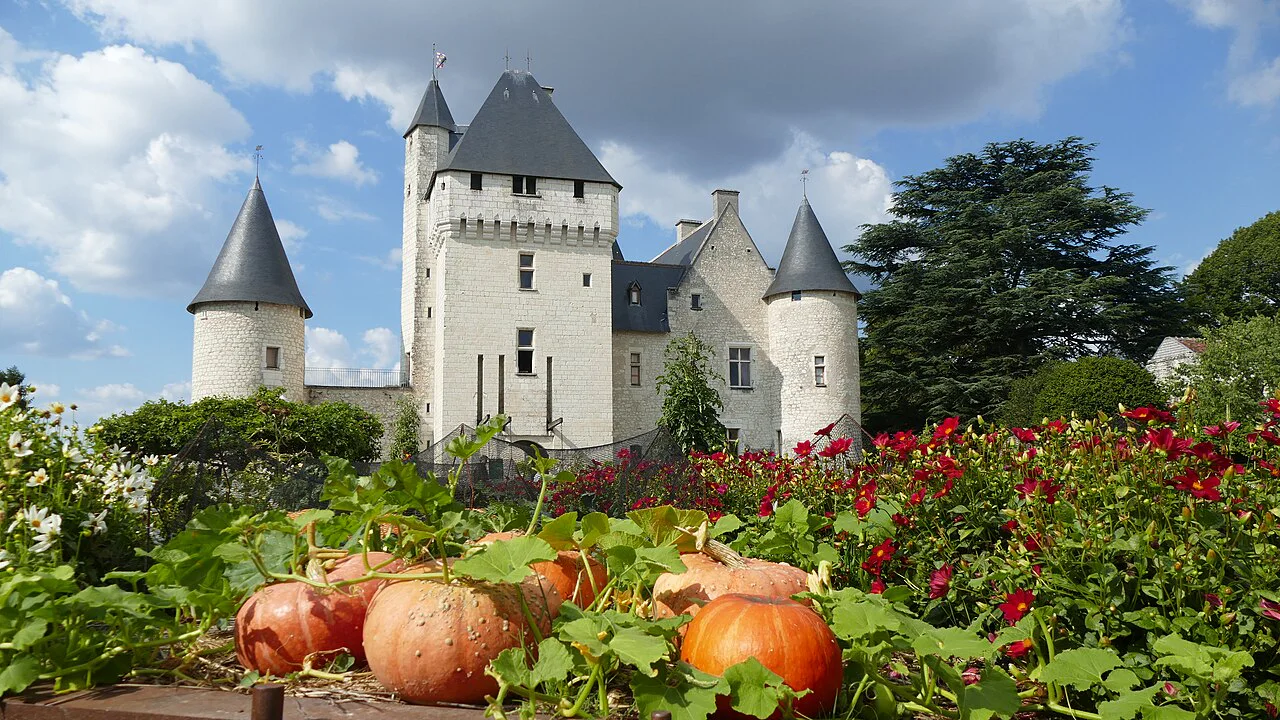
The Château du Rivau is a castle located in the village of Lémeré, France. It is mentioned in Rabelais' book Gargantua as a reward given to captain Tolmere for his victories in the Picrocholean Wars.
Download Stanza, then search for “Château du Rivau”.
About the tour
One guide. Your kind of visit.
The Château du Rivau is a castle located in the village of Lémeré, France. It is mentioned in Rabelais' book Gargantua as a reward given to captain Tolmere for his victories in the Picrocholean Wars.
Ready when you are.
- 01Get the free Stanza app.
iOS & Android
- 02Find your guide.
“Château du Rivau”
- 03Download before you go.
Works offline
Audio guide / 13 narrated stops
Inside the guide
Get to know a few of the stories before you go. Open a stop to read more.
01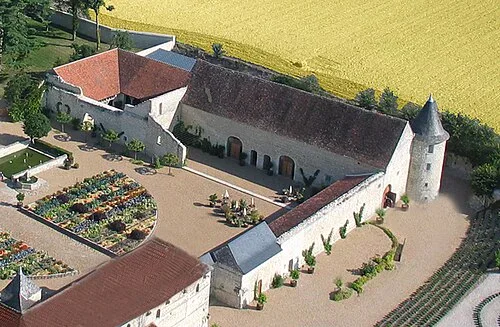 The Renaissance Stables and Outer CourtyardThe Outer Courtyard and the Commons
Welcome to the Château du Rivau, at Lémeré in the Touraine countryside. From up here, the whole estate unfolds like a map. A fortified castle, walled courtyards, long farm buildings called the commons, and gardens stretching out towards the fields. One reputation built all of this: horses. Rivau was renowned for the warhorses raised here. In 1429, deep in the Hundred Years' War, a young woman rode here with her followers. Joan of Arc knew the estate's reputation for its equipage and its destriers. She came to fetch horses for war, then rode on towards the siege of Orléans. The breeding happened where the commons stand today, the long buildings in this view. So the low roofs and courtyards below are not just farm outbuildings. They are the working heart of a story that began with cavalry. From here, the tour follows the horses, the fortress, the families, and finally the gardens.
Photo: Carolai · CC BY-SA 3.0
02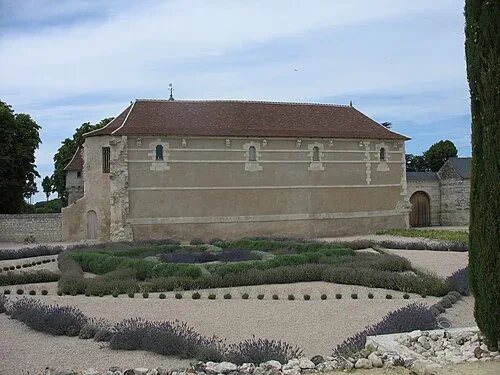 The Renaissance Stables and Outer CourtyardThe Monumental Renaissance Stables
These long stone buildings were once something revolutionary: stables designed by an architect. Until Rivau, castle stables were purely functional, with no ornament at all. Here, for the first time in the history of equestrian architecture, a specialist drew up plans and developed a pioneering style. The story belongs to the Beauvau family. François de Beauvau, the King's chief squire and captain to Francis the First, planned monumental stables on the site of the old Hundred Years' War stables, probably in wood at first. He never saw them finished. He died in 1524 at the battle of Romagne, fighting beside the famous knight Bayard. His heir, Gabriel de Beauvau, took up the project around 1550. He chose a bold new style, influenced by the buildings French lords had discovered on the King's campaigns in Italy. The stables form an L, housing about thirty horses on the ground floor, probably mares on one side and stallions on the other. Upstairs, reached by a staircase built into the walls, the grooms slept beside the stored hay. The stallions they supplied went to the King, and the buildings became the royal stables of Henry the Third. One modern expert, Pascal Liévaux, calls Rivau the finest example of the evolution of equestrian buildings in France.
Esther Westerveld · CC BY 2.0
03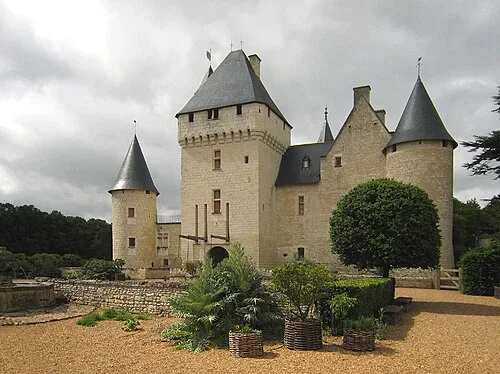 The Moat and Drawbridge EntranceThe Fortress and the Working Drawbridge
The first foundations here go back to the thirteenth century, when Rivau was a maison forte, a fortified house. From that early building survives the quadrilateral: four walls with round towers at the corners, the shape visible in this facade. The castle was rebuilt in the fifteenth century, and it kept its military dress. A square keep rises over the entrance. Dry moats drop away below the walls. A crenellated watchpath runs along the top, where defenders once patrolled. And the moats are crossed by a medieval drawbridge that still works, its chains and timbers moving as they did five centuries ago. Yet Rivau was never purely a machine for war. It is counted among the first ornamental castles, built to impress as much as to defend. Power and display, in the same stone.
Listen in the appPhoto: Manfred Heyde · CC BY-SA 3.0
04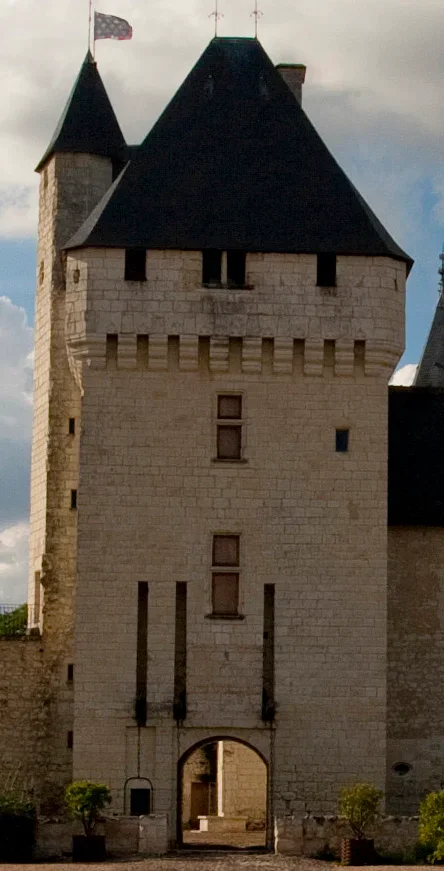 The Moat and Drawbridge EntranceThe Keep and the Guard's Staircase
The square keep was the heart of the castle's fortification, the strong point everything else protected. This entrance tower below it still shows the slots through which the drawbridge chains once ran. Passing under the keep, the way in leads to a spiral staircase, an escalier à vis, winding up inside the tower. The stone of that staircase carries numerous carvings from the fifteenth century, left there to be deciphered. The guards on watch scratched them into the soft tufa as the hours passed. Names, marks, messages cut with a knife, waiting five hundred years for someone to read them again. It is a rare thing, a fortress's hard exterior with the handwriting of the men who manned it still inside.
Listen in the appPhoto: Carolai · CC BY-SA 3.0
05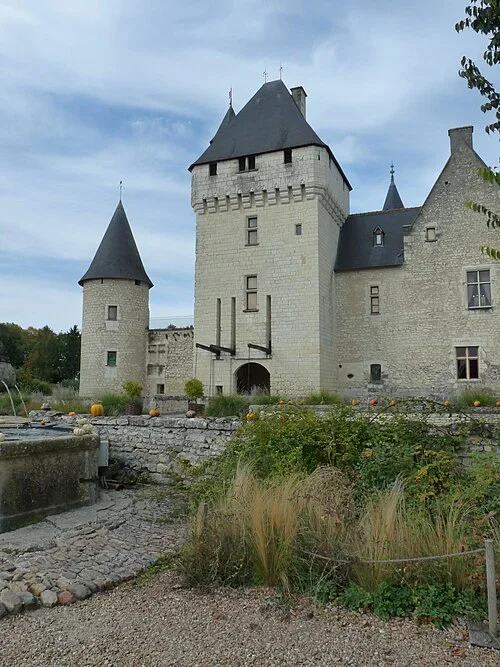 The Moat and Drawbridge EntranceFrom Ruin to Restoration
By the twentieth century, Rivau was threatening ruin. The rescue took several hands across a hundred years. In 1911, the commons were sold off to the farmer working the land, and a wall went up between them and the castle. In 1918, the owner, the sculptor Alphonse de Moncel de Perrin, who had worked on the ornamentation of the Petit-Palais in Paris, managed to have Rivau listed among the Historical Monuments. Later, from 1961, the painter and poster artist Pierre-Laurent Brenot owned the castle and lived in it for three decades. Then, in December 1992, Éric and Patricia Laigneau bought the estate. The castle was in a bad state, and they began restoring it at once, along with the commons and the gardens. In 2000, Rivau opened its doors to the public for the first time in its modern life.
Listen in the appPhoto: Bo35bo35 · CC BY 4.0
06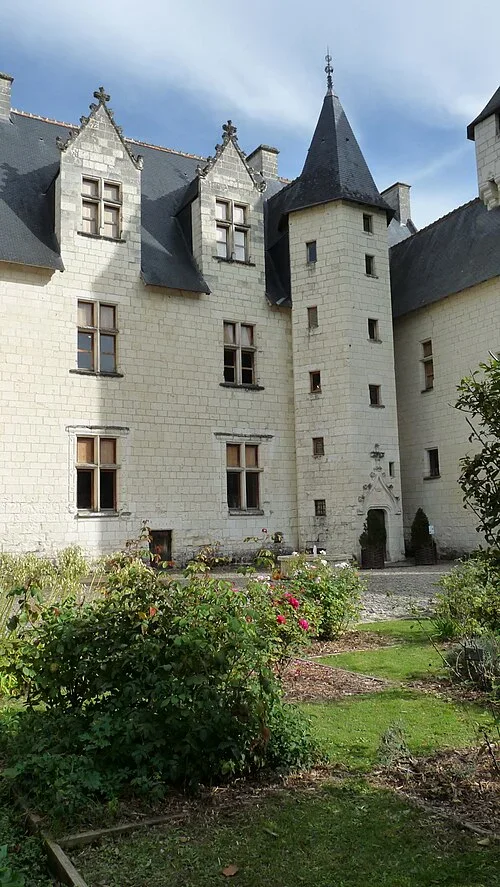 The Inner Courtyard and Castle DoorwaysThe Renaissance Windows of the West Facade
The stonework of this courtyard facade tells of a change of mind. In the sixteenth century, the building that closed off the castle's quadrilateral was torn down entirely. At the same time, the narrow Gothic windows of the west facade were enlarged and adorned with sculpture. The tall openings with their carved frames are the visible result. A fortress deliberately opening itself to light, air and comfort. Rivau became what the French call a château d'agrément, a castle built for pleasant living rather than for fighting. The outer walls and towers stayed, but the life inside had moved on. The avant-cour, the outer court, gained its own prestige in the same era, with the great stables rising nearby. Defence outside, elegance within: that is the Renaissance signature on this stone.
Listen in the appPhoto: Bo35bo35 · CC BY 4.0
07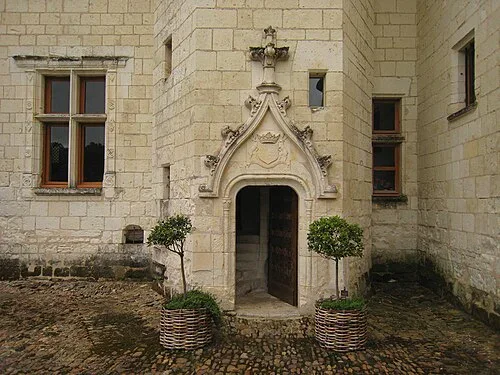 The Inner Courtyard and Castle DoorwaysThe Gothic Portal
This carved Gothic doorway opens onto one of the strangest departures in the castle's history. Jacques de Beauvau, born in 1627, was a marshal of the camps and armies of Louis the Fourteenth. He left Rivau for the court of the Sun King, and in 1664 he had the estate raised to a marquisate. But life at court ruined him. He borrowed eighty thousand livres from a royal counsellor's widow, Marie Damond, and could not repay the debt. In 1697 he had to cede the lands of Rivau. Before handing the castle over, he stripped it. Every door and every window came out of the walls, and he hid them at the house of the curé of Lémeré, the village priest. A castle left hollow, its openings stored in a priest's house. Whatever this portal has seen since, that story of spite and doors is the one it carries.
Listen in the appPhoto: Manfred Heyde · CC BY-SA 3.0
08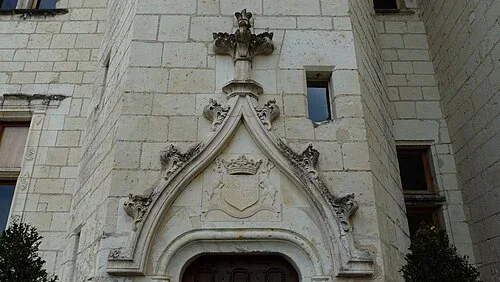 The Inner Courtyard and Castle DoorwaysThe Beauvau Shield
Above the doorway, the sculpted pediment carries the arms of the Beauvau family. Look at the detail: a crest shaped like a boar's head, a nod to their passion for the hunt. In the centre, four crowned lions. On either side, two wild men of medieval imagination, each gripping a war club. Their war cry runs beneath it all: Beauvau sans départir, Beauvau without wavering. The family served the Kings of France from the thirteenth century, related to the Counts of Anjou. They held a rare privilege at acts of homage: they paid their respects to their overlord standing, sword at their side, hats on their heads. In 1454, Isabeau de Beauvau married Jean de Bourbon, tying the family to the royal blood. Centuries later, that network of alliances saved the very walls of this castle. From 1631, Cardinal Richelieu was dismantling every château around his new town, ten kilometres away, to reuse the stone. Rivau alone was spared, because his sister Françoise was married to Jean de Beauvau, the lord here. The family held the estate for two hundred and forty-seven years.
Listen in the appPhoto: Bo35bo35 · CC BY 4.0
09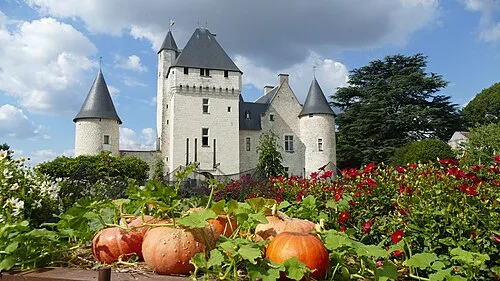 Gargantua's Vegetable GardenGargantua's Vegetable Garden
Rabelais, who grew up in this region, put Rivau into one of his most famous books. In Gargantua, published in 1534, the giant rewards his captain Tolmere for victories in the Picrocholean War. After a magnificent feast, he hands out castles to his men like gifts at a banquet. To Ponocrates, La Roche Clermaud. To Ithybole, Montsoreau. And in the middle of the list: Le Rivau, to Tolmere. It is fiction, a giant's largesse in a comic epic, but Rabelais chose a real place he knew. Five centuries later, the current owners gave the story a garden. Patricia Laigneau created the potager de Gargantua in the heart of the commons court, conceived as a pantagruelian feast, a meal of giant's proportions. The beds of pumpkins and vegetables filling this view are that feast, planted where the castle's farm courts once lay.
Listen in the appPhoto: Aliasse16 · CC BY-SA 4.0
10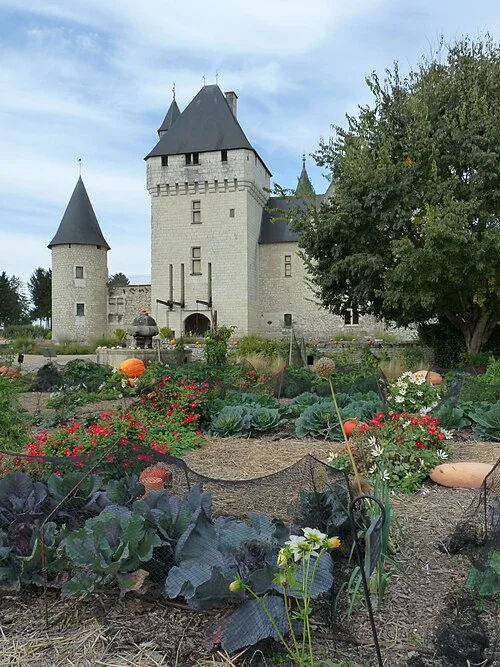 Gargantua's Vegetable GardenThe Vegetable Conservatory
The beds here grow vegetables of pantagruelian ambition. The half-moon of Gargantua's garden is planted on a plessis, a raised bed of woven chestnut. That technique goes back to the Middle Ages, when gardeners raised their beds to protect them from the damage of wildlife. The squash collection counts more than forty-three varieties, making Rivau the vegetable conservatory of the Centre region. Some carry names to match the garden's spirit: the Gargantua pumpkins, the Turbans d'Aladin with their turbans, the bumpy Galeux d'Eysines. There are cabbages of many kinds, Tuscan, red, curly. And the artichokes, it is said, stand in for candlesticks, brought back from Italy by Rabelais himself. Overhead, the vine crinolines shade the paths. Each hoop shelters an ancient regional vine variety, vines that vanished from the countryside after the phylloxera attack, staked and trained as Olivier de Serres described them in the Renaissance.
Listen in the appPhoto: Bo35bo35 · CC BY 4.0
Château du Rivau
Frequently asked questions
How much does the guide cost?
Free app download. Listed guide price: $0.99. Guide price shown in the app. Audio guide only. Venue admission is separate.
Can I listen without internet?
Yes. Download the guide’s audio, images, and maps in the app before your visit. Your downloaded content is then available offline.
Can I listen in my language?
This audio guide is available in 15 languages, including English.
Do I need to follow a schedule?
No. This is a self-guided experience. Choose your stops, pause whenever you like, and return to a story at your own pace.
At your own pace
Explore Château du Rivau.
Download Stanza, then search for “Château du Rivau”.
Free app download · Guide price shown in the app
Keep exploring
Nearby audio guides
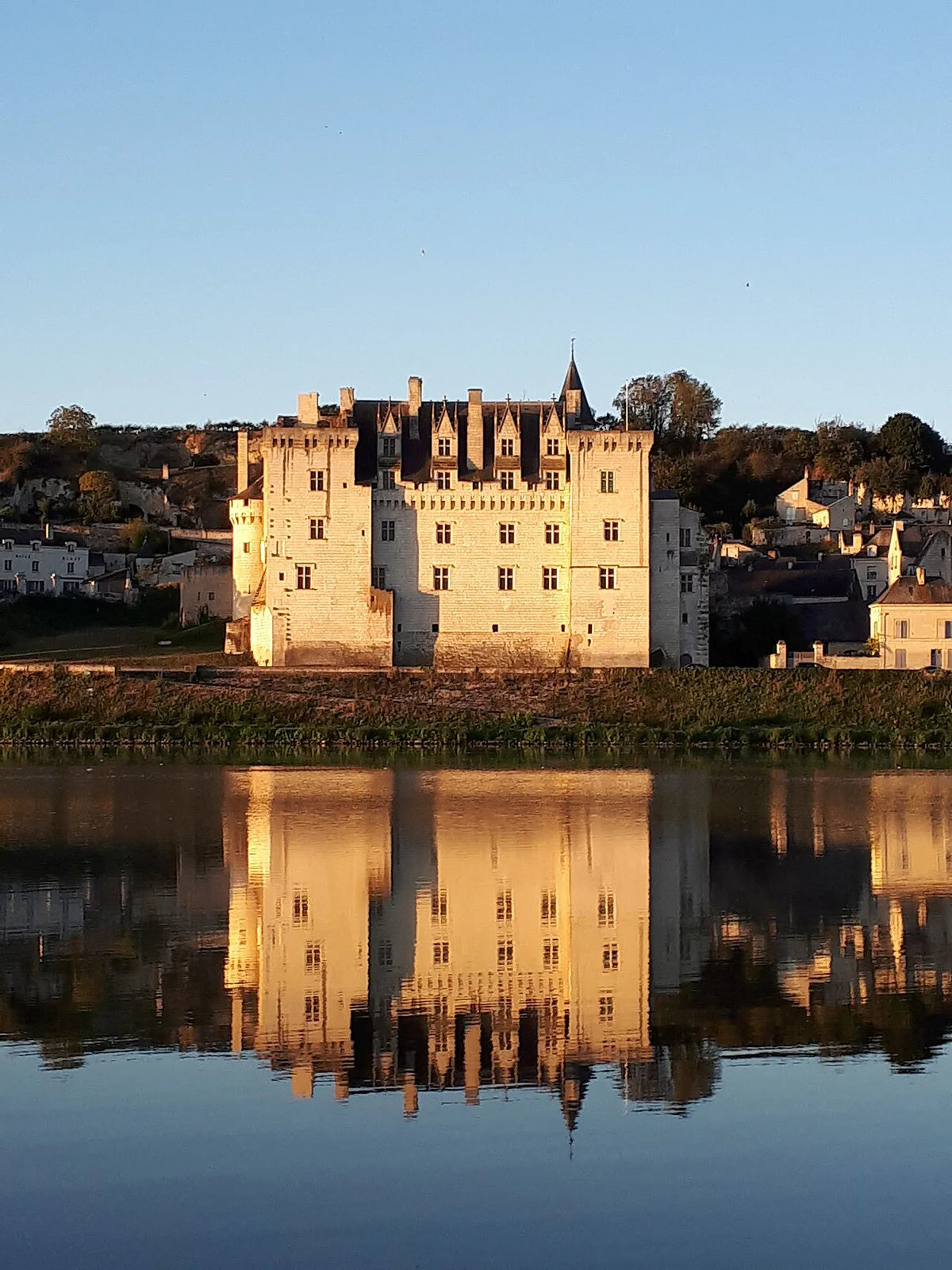
Montsoreau · 23 km
Château de Montsoreau
Content & sources
Photo: Suavemarimagno · CC BY-SA 4.0
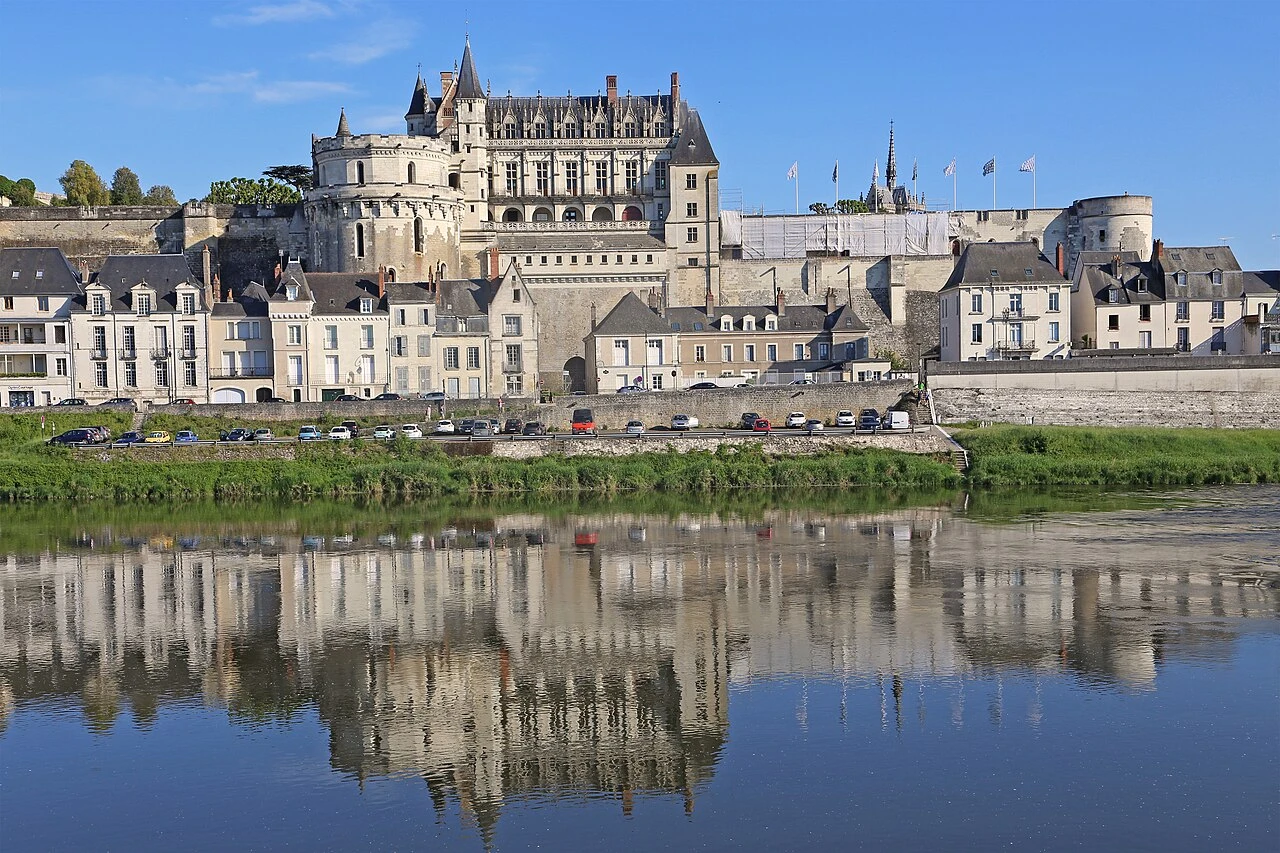
Amboise · 61 km
Château d'Amboise
Content & sources
Photo: W. Bulach · CC BY-SA 4.0
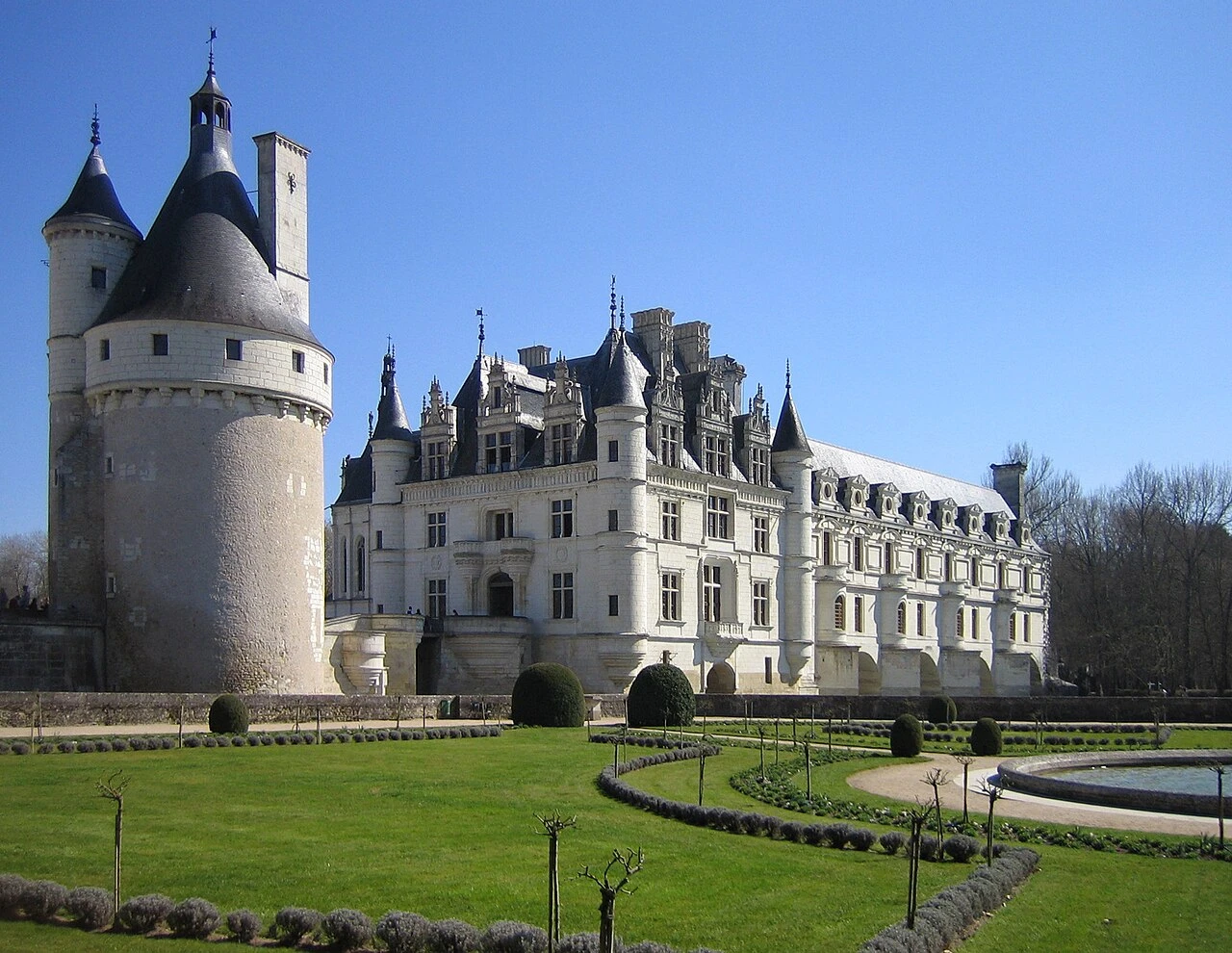
Chenonceaux · 62 km
Château de Chenonceau
Content & sources
Photo: Manfred Heyde · CC BY-SA 3.0
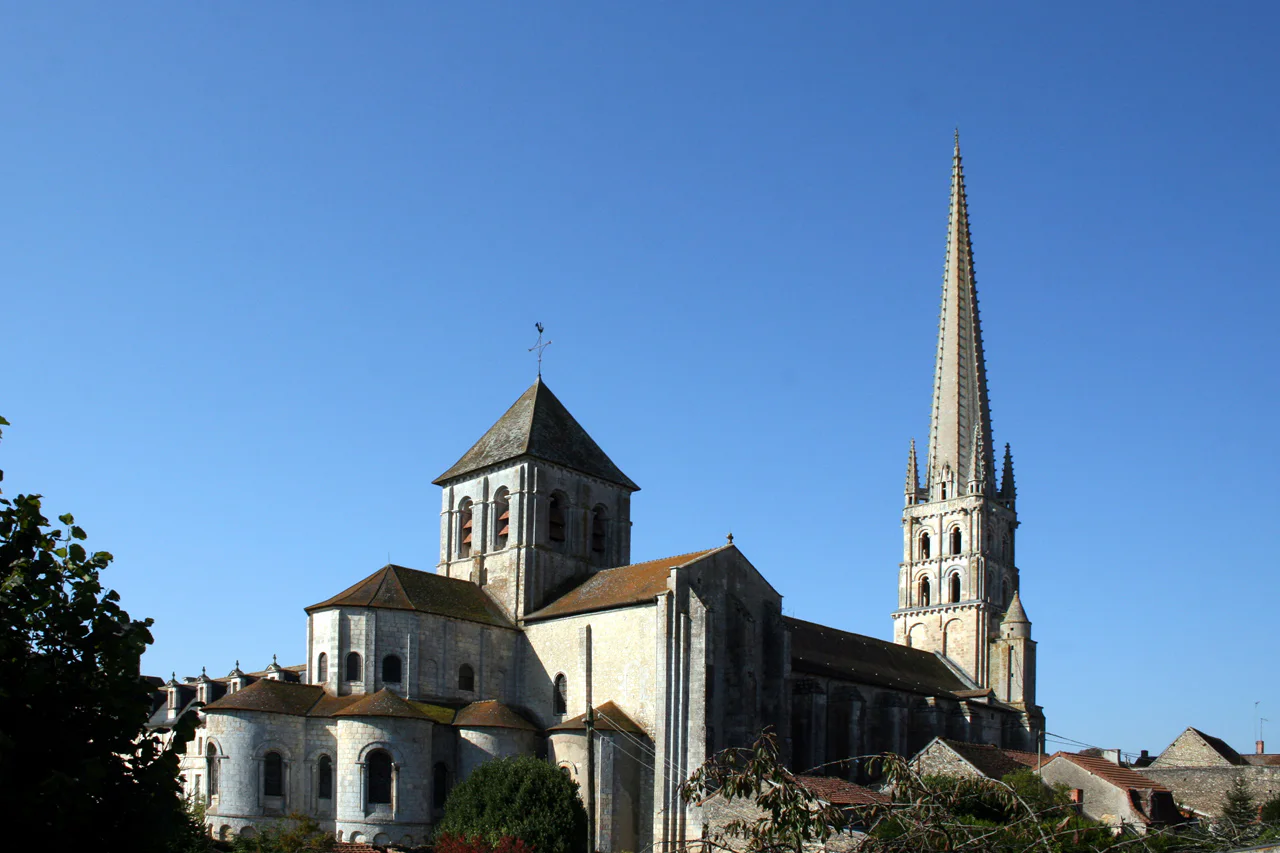
Saint-Savin · 73 km
Abbaye de Saint-Savin-sur-Gartempe
Content & sources
Remi Jouan · CC BY-SA 3.0